
PET Film-Coated Steel Coil Market Size and Forecast 2026 to 2035
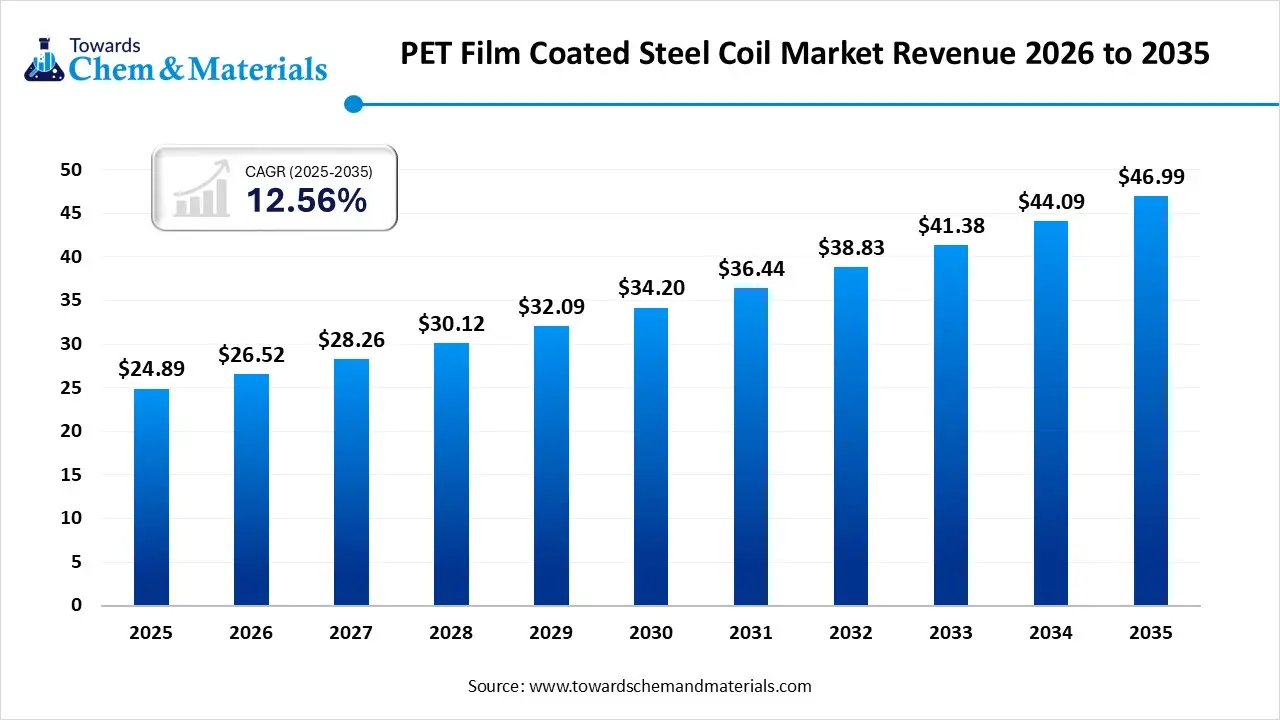
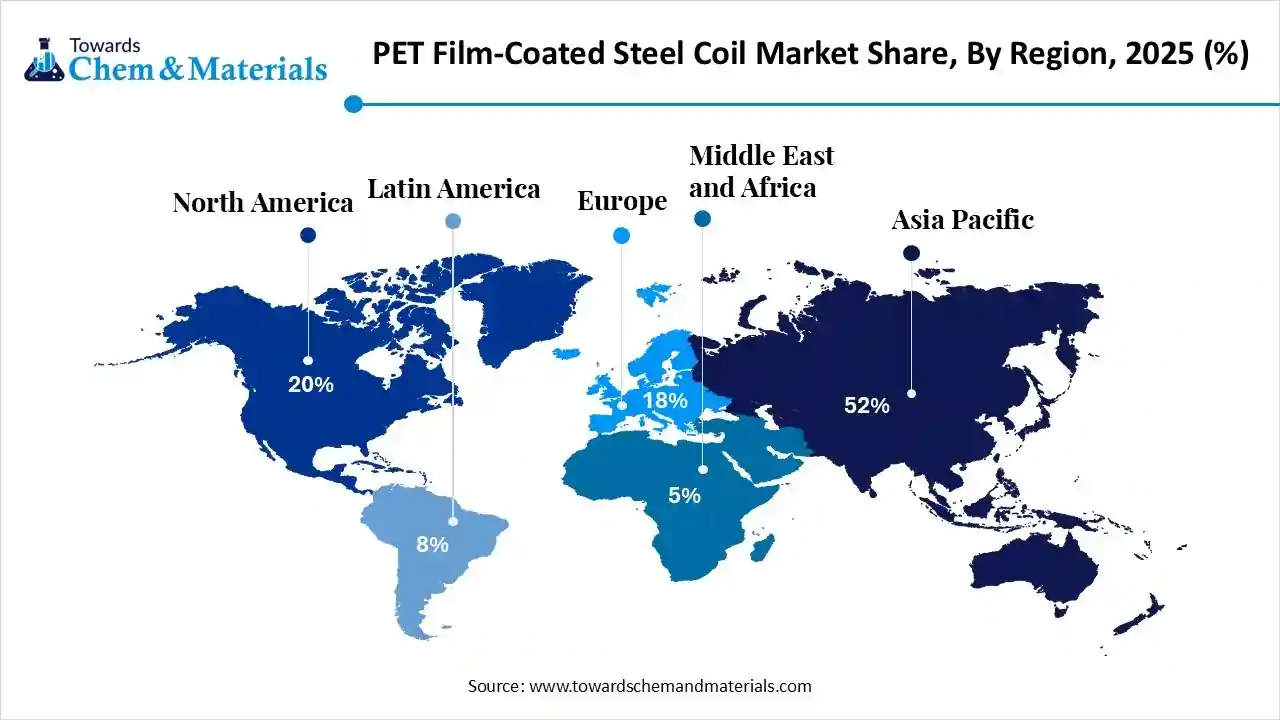
The global PET film-coated steel coil market size was estimated at USD 24.89 billion in 2025 and is expected to increase from USD 26.52 billion in 2026 to USD 46.99 billion by 2035, growing at a CAGR of 12.56% from 2026 to 2035. Asia Pacific dominated the pet film-coated steel coil market with the largest share of 52% in 2025. The growth of the market is driven by technological advances, supportive government policies, growing emerging markets, and the shift from PVC to PET for sustainability and better performance, boosting innovation and efficiency in production. The significance of the PET film-coated steel coil market lies in its unique combination of steels strength with PET films durability, corrosion resistance, aesthetic appeal, and lightweight properties, driving growth in appliances, construction, and automotive sectors for higher performance, eco-friendly, and visually appealing products, reducing costs while enhancing longevity and design flexibility.
Market Highlights
- By region, Asia Pacific led the PET film-coated steel coil market held the share of around 52% in 2025.
- By substrate type, the galvanized sheet segment led the market with the largest share of 53% in 2025.
- By coating type, the single-side PET film coating segment led the market with the largest share of 63% in 2025.
- By application, the home applications segment accounted for the largest share of 41% in 2025.
- By end-use industry, the consumer appliances segment dominated with the largest share of 43% in 2025.
PET Film-Coated Steel Coil Market Growth Trends:
- Sustainability Push: Growing environmental regulations favor PET over PVC, with a focus on lower embodied carbon and recyclability.
- Enhanced Aesthetics & Durability: Offers vibrant finishes, superior corrosion resistance, and visual appeal for appliances and construction.
- Lightweighting: Meets demand for lighter, high-performance materials in various industries.
- Technological Advances: AI in design, better coating processes, and automation boost efficiency and customization
Report Scope
| Report Attribute | Details |
| Market Size and Volume in 2026 | USD 26.52 Billion |
| Revenue Forecast in 2035 | USD 46.99 Billion |
| Growth Rate | CAGR 12.56% |
| Forecast Period | 2026 - 2035 |
| Base Year | 2025 |
| Units Considered | Value (Billion / Million) |
| Dominant Region | Asia Pacific |
| Segment Covered | By Substrate Type, By Coating Type, By Application, By End-user Industry, By Regions |
| Key companies profiled | JSW Steel Ltd. (India), Jiangyin Everest Import and Export Co., Ltd. (China), American Nickeloid Company Inc. (USA), Kolor Metal A/S (Denmark), Uttam Galva Steels Limited (India), Acerinox S.A, Nippon Steel Corporation, YIEH Corp., Jiangyin Everest Import and Export Co., Ltd., Chongqing Youngson Metal, Jiangyin Wofeng Metallic Material Co., Ltd., Boxing County Fuhong New Materials Co., Ltd. |
Key Technological Shifts In The PET Film-Coated Steel Coil Market:
Key technological shifts in the PET film-coated steel coil market reflect a move toward higher performance, sustainability, and digitally enhanced manufacturing. Innovations in coating technologies such as advanced application techniques that improve adhesion, UV resistance, scratch resistance, corrosion protection, and color stability are expanding the material’s usability in demanding sectors like construction, automotive, and appliances. These improvements also support broader customization options (e.g., specialized finishes and functional coatings) tailored to specific end-use requirements.
Trade Analysis Of PET Film-Coated Steel Coil Market: Import & Export Statistics
- According to Global Export data, the world exported 61,090 shipments of Coated Coil from June 2024 to May 2025 (TTM). These exports involved 1,478 exporters and 2,683 buyers, showing a 21% increase compared to the previous twelve months.
- The majority of Coated Coil exports from the World are shipped to Indonesia, the United States, and Vietnam.
- The top three global exporters of Coated Coil are India, China, and Vietnam. India leads with 48,390 shipments, followed by China with 35,293 shipments and Vietnam with 30,804 shipments.
- World exported 12,380 shipments of Color Coated Steel Coil, involving 451 exporters and 912 buyers.
- Most exports of Color Coated Steel Coil from the World go to Indonesia, Malaysia, and Cambodia.
- The leading exporters of Color Coated Steel Coil are Vietnam, China, and India. Vietnam exports the most with 6,819 shipments, then China with 3,864, and India with 1,329 shipments
PET Film-Coated Steel Coil Market Value Chain Analysis
- Material Processing & Coating: PET film-coated steel coils are manufactured through processes such as cold-rolled steel preparation, surface cleaning, primer application, PET film lamination, heat bonding, and coil finishing to enhance corrosion resistance, durability, and aesthetic performance.
- Key players : NSSMC (Nippon Steel Corporation), ArcelorMittal, Tata Steel, ThyssenKrupp AG
- Quality Testing and Certification : PET film-coated steel coils require certifications for coating adhesion, corrosion resistance, mechanical strength, food-contact safety, and environmental compliance. Key certifications include ISO 9001, ISO 14001, ASTM coating standards, RoHS compliance, and food-grade certifications where applicable.
- Key players: ISO (International Organization for Standardization), ASTM International, TÜV SÜD, UL Solutions
- Distribution to Industrial Users: PET film-coated steel coils are supplied to appliance manufacturers, building & construction companies, automotive interior component producers, packaging manufacturers, and consumer durable OEMs.
- Key players: JFE Steel Corporation, BlueScope Steel, POSCO.
PET Film-Coated Steel Coil Regulatory Landscape: Global Regulations
| Country / Region | Regulatory Body | Key Regulations | Focus Areas | Notable Notes |
| North America (USA & Canada) | U.S. EPA (Environmental Protection Agency) OSHA (Occupational Safety and Health Administration) U.S. DOT (Department of Transportation) Environment and Climate Change Canada (ECCC) |
Clean Air Act (CAA) – VOC & particulate limits Clean Water Act (CWA) – NPDES permits OSHA 29 CFR (worker safety) Hazardous Materials Regulations (49 CFR) Canadian Environmental Protection Act (CEPA) |
Emissions from coating lines Wastewater discharge & stormwater control Worker safety and hazard communication Transport of coating chemicals & rolls |
Coating operations must control VOCs and particulates; wastewater from coating/pretreatment requires permits. OSHA/WHMIS ensures SDS and hazard communication. DOT/Transport Canada governs the shipment of hazardous coating chemicals. |
| Europe | European Commission European Chemicals Agency (ECHA) National Environment & Workplace Safety Agencies |
REACH Regulation (EC 1907/2006) CLP Regulation (EC 1272/2008) Industrial Emissions Directive (IED) EU Packaging & Waste Directives |
Chemical registration & hazard classification Emission & effluent controls Workplace health & safety End-of-life management |
Raw materials and coatings must be REACH registered; restrictions on certain substances (e.g., chromium, PFAS) drive reformulation. IED/BAT requirements affect large coating operations. |
| Asia Pacific | China MEE (Ministry of Ecology & Environment) Japan METI/MOE India MoEFCC / CPCB Korea Ministry of Environment (MoE) |
China Air & Water Pollution Prevention Laws Japan CSCL & PRTR Law India PWM Rules & Air/Water Acts Korea K-REACH & Waste Control Act |
Local chemical registration Emission & discharge limits Worker safety & chemical use restrictions Reporting of pollutant releases |
China and Korea require chemical registration and hazard labeling. India’s Plastic Waste Management (PWM) rules influence packaging and coating waste. Japan’s PRTR mandates pollutant release reporting. |
| South America | Brazil IBAMA/ANTT Mexico SEMARNAT/PROFEPA Argentina Ministry of Environment |
National Air & Water Quality Regulations Solid Waste Rules Chemical handling and transport laws |
Emission controls Waste management Import/export compliance |
Regulations vary by country, but most require air emissions permits and waste control for coating operations. Brazil’s IBAMA regulates major plants. |
| Middle East & Africa | UAE Ministry of Climate Change & Environment (MOCCAE) Saudi SASO South Africa DMRE |
National environmental protection laws Hazardous chemical handling & workplace safety rules |
Environmental compliance for coatings Worker safety Import conformity |
Regulatory frameworks are emerging, often aligned with international norms (e.g., GHS). Focus is on environmental protection and safe chemical handling in industrial facilities. |
Segmental Insights
Substrate Type Insights
Which Substrate Type Segment Dominated The PET Film-Coated Steel Coil Market In 2025?
The galvanized sheet segment dominated the market with a share of 53% in 2025. PET film-coated steel coils based on galvanized sheets are widely used due to their strong corrosion resistance, mechanical durability, and cost-effectiveness. The zinc coating provides base-level protection, while the PET film enhances surface aesthetics, chemical resistance, and scratch protection. These substrates are preferred in consumer appliances and electrical enclosures requiring long service life and visual appeal.
The galvalume/aluzinc sheet segment is projected to grow at the fastest CAGR between 2026 and 2035 in the market. Galvalume or aluzinc-based PET film-coated steel coils offer superior corrosion resistance through aluminum-zinc alloy coatings, making them suitable for humid and high-temperature environments. The PET film further improves weatherability and surface protection, supporting applications in premium electrical cabinets and home appliances. Demand is driven by infrastructure modernization and higher durability requirements.
Coating Type Insights
How Did the Single-Sided PET Film Coatings Segment Dominated The PET Film-Coated Steel Coil Market In 2025?
The single-sided PET film coating segment dominated the PET film-coated steel coil market with a share of 63% in 2025. Single-sided PET film-coated steel coils are commonly used where only the exposed surface requires protection and aesthetics, while the reverse side remains functional. It is widely adopted in appliances, panels, and enclosures where internal surfaces face minimal environmental stress.
The antibacterial and functional PET segment is projected to grow at the fastest CAGR between 2026 and 2035 in the market. Antibacterial and functional PET film coatings are gaining traction due to rising hygiene, safety, and regulatory requirements. They are increasingly used in consumer appliances and electrical equipment, particularly in healthcare-adjacent and high-touch environments, supporting premium product differentiation.
Application Insights
Which Application Segment Dominated The PET Film-Coated Steel Coil Market In 2025?
The home applications segment dominated the market with a share of 41% in 2025. In-home applications, PET film-coated steel coils are used in refrigerators, washing machines, air conditioners, and decorative panels. Growth is supported by rising consumer demand for durable, visually appealing, and low-maintenance household appliances.
The electrical cabinets and enclosures segment is projected to grow at the fastest CAGR between 2026 and 2035 in the market. Electrical cabinets and enclosures utilize PET film-coated steel coils for insulation compatibility, corrosion protection, and long-term surface integrity. Increasing investments in power infrastructure, automation, and smart grids are driving demand in this application segment.
End-Use Industry Insights
How Did the Consumer Appliances Segment Dominated The PET Film-Coated Steel Coil Market In 2025?
The consumer appliances segment dominated the market with a share of 43% in 2025. The consumer appliances industry is a major end user of PET film-coated steel coils, leveraging their superior finish, color consistency, and durability. Growing appliance manufacturing, especially in emerging economies, continues to support steady market expansion.
The electrical and electronics segment is projected to grow at the fastest CAGR between 2026 and 2035 in the market. In the electrical and electronics industry, PET film-coated steel coils are used for panels, housings, and structural components. Rising production of electrical equipment, data centers, and industrial electronics is accelerating adoption across this end-use segment.
Regional Insights
The Asia Pacific PET film-coated steel coil market size was valued at USD 12.94 billion in 2025 and is expected to be worth around USD 24.43 billion by 2035, exhibiting at a compound annual growth rate (CAGR) of 15.98% over the forecast period from 2026 to 2035.
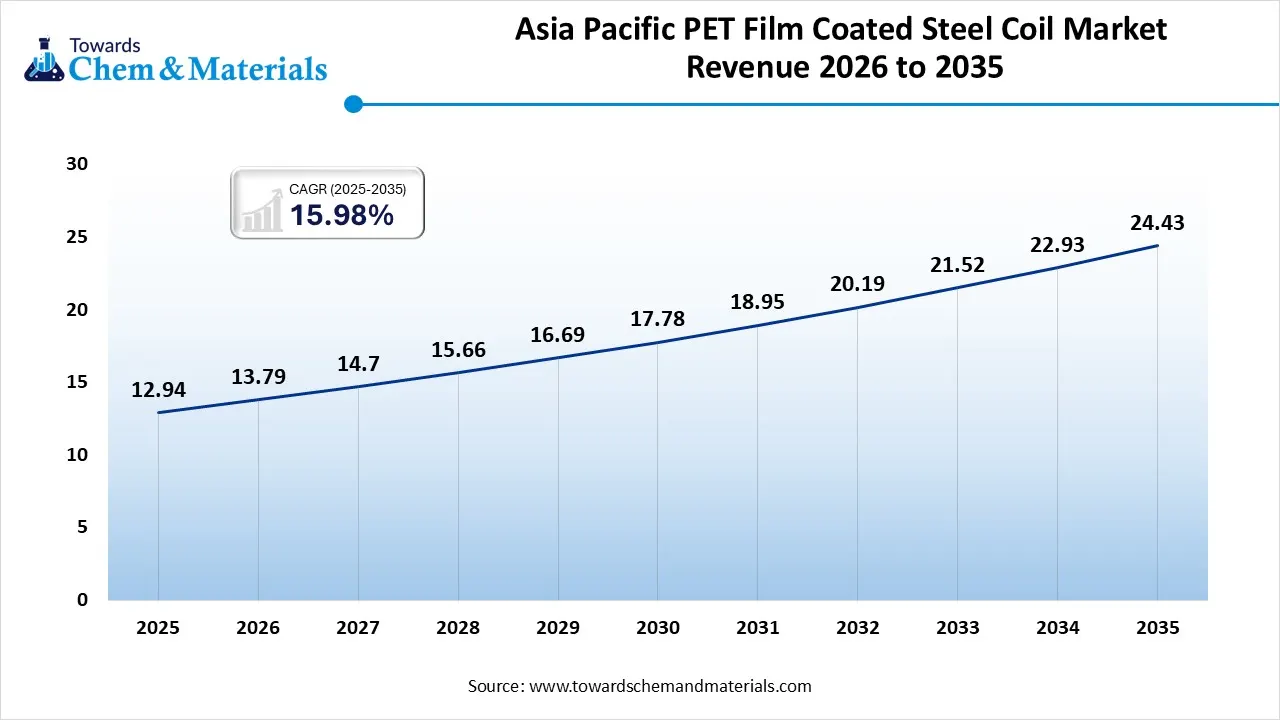
Asia Pacific dominated the market with a share of 52% in 2025. Asia Pacific represents the largest and fastest-growing market for PET film-coated steel coils, driven by rapid industrialization, large-scale infrastructure development, and expanding appliance and construction sectors. Cost-effective manufacturing, abundant raw material availability, and increasing adoption of corrosion-resistant and aesthetically enhanced steel products further strengthen the region’s market position.
China: PET Film-Coated Steel Coil Market Growth Trends
China dominates the Asia Pacific PET film-coated steel coil market due to its massive steel production capacity and extensive use in construction, appliances, and automotive applications. Government-backed infrastructure projects, urban housing development, and high demand for pre-coated steel in consumer durables continue to support steady consumption. Additionally, domestic manufacturers are increasingly focusing on quality enhancement and export-oriented production.
North Americas Growth Is Driven By Growing Environmental Regulations
North America is expected to have fastest growth in the market in the forecast period between 2026 and 2035. The North American market is driven by demand for high-performance, durable, and environmentally compliant building materials. Strict environmental regulations promoting solvent-free and low-VOC coating alternatives have accelerated the shift toward film-coated steel solutions across industrial and architectural applications.
U.S.: PET Film-Coated Steel Coil Market Growth Trends
The U.S. market benefits from strong residential renovation activity, commercial construction, and demand from appliance manufacturers. PET film-coated steel coils are increasingly preferred for their superior corrosion resistance, long service life, and design flexibility. Technological innovation established distribution networks, and the presence of advanced steel processors further support market growth in the country.
Europes Efficient Energy Construction Practices Drive The Growth Of The Market.
Europe’s PET film-coated steel coil market is shaped by sustainability initiatives, energy-efficient construction practices, and stringent environmental standards. Growing emphasis on recyclable materials, long-lasting coatings, and reduced lifecycle costs supports adoption across construction, transportation, and industrial sectors. The region also benefits from advanced coating technologies and strong demand for premium architectural finishes.
Germany: PET Film-Coated Steel Coil Market Growth Trends
Germany plays a central role in the European market, driven by its strong manufacturing base and advanced construction sector. High demand from automotive components, industrial panels, and energy-efficient buildings supports consistent consumption. German manufacturers emphasize high-quality coatings, precision engineering, and compliance with EU environmental regulations, reinforcing the country’s leadership position.
South America: PET Film-Coated Steel Coil Market Manufacturing And Increased Awareness
South America shows moderate but steadily growing demand for PET film-coated steel coils, supported by infrastructure modernization, residential construction, and appliance manufacturing. Increasing awareness of corrosion protection and maintenance cost reduction is encouraging adoption. However, market growth is influenced by economic stability, investment cycles, and fluctuating raw material prices across the region.
Brazil: PET Film-Coated Steel Coil Market Growth Trends
Brazil is the leading market in South America due to its expanding construction sector and domestic steel production capabilities. PET film-coated steel coils are increasingly used in roofing, cladding, and consumer appliances. Government infrastructure initiatives and gradual industrial recovery are expected to create long-term growth opportunities for coated steel products.
Middle East & Africa (MEA): PET Film-Coated Steel Coil Market, Domestic Steel Production Growth
The MEA market is driven by large-scale infrastructure projects, commercial construction, and demand for durable materials suitable for harsh climatic conditions. PET film-coated steel coils are valued for their resistance to corrosion, UV exposure, and extreme temperatures. Growth is supported by urban development, industrial expansion, and rising investments in non-oil sectors.
GCC Countries: PET Film-Coated Steel Coil Market Growth Trends
GCC countries represent the largest share within MEA, supported by megaprojects, smart city developments, and high demand for premium construction materials. PET film-coated steel coils are widely adopted in architectural panels, industrial buildings, and transportation infrastructure. The region’s focus on sustainability and long-life building materials further boosts market adoption.
Recent Developments
- In April 2024, at the American Coatings Show, Arkema highlighted an expansion of its sustainable product range. The companys focus was on three main areas: speeding up sustainable options for buildings, improving performance to boost the use of eco-friendly choices in the industry, and building partnerships throughout the supply chain. (Source :www.arkema.com)
- In April 2025, Jindal (India) Limited, part of the B.C. Jindal Group has entered the renewable energy sector with the launch of Jindalume, a line of aluminum-zinc (Al-Zn) coated steel coils.(Source:www.pv-magazine-india.com )
- In January 2025, the Government of India launched PLI Scheme 1.1, an updated second phase of the Production Linked Incentive (PLI) scheme for the specialty steel sector. This phase utilizes ₹4,000 crore in remaining funds from the initial PLI 1.0 allocation to attract further investment and boost domestic production(Source: www.newindianexpress.com )
- In December 2024, Sumitomo Electric Industries, Ltd. introduced new ultra-thin insulated powder magnetic cores specifically developed for high-performance axial flux motors. These cores are intended to enhance motor efficiency and decrease size and weight, addressing crucial needs in applications such as electric vehicles and robotics.(Source: www.metal-am.com)
Top players in the PET Film-Coated Steel Coil Market & Their Offerings:
- Uttam Galva Steels Limited (India): Uttam Galva offers PET film-coated steel products with strong corrosion resistance and tailored performance for construction, roofing, and consumer durables. The company emphasizes cost-effective solutions for emerging market demand.
- Kolor Metal A/S (Denmark): Kolor Metal supplies PET film-coated steel coils with eco-friendly laminates and extensive warranty coverage, catering to premium architectural, industrial, and appliance applications that require design flexibility and compliance with stringent standards.
- American Nickeloid Company Inc. (USA): American Nickeloid produces decorative PET film-coated steel coils with a focus on versatile designs and high finish quality for interior appliances, wall panels, and specialty industrial applications across North America.
- Jiangyin Everest Import and Export Co., Ltd. (China): This company offers competitively priced PET film-coated steel coils with diverse texture and color options, serving construction, appliances, and general industrial markets with strong supply capacity.
- JSW Steel Ltd. (India): JSW Steel supplies PET film-coated steel coils, leveraging its large mill capacities, targeting appliance and building applications with a focus on sustainable and performance-oriented coated solutions.
Other Top Players Are
- JSW Steel Ltd. (India)
- Jiangyin Everest Import and Export Co., Ltd. (China)
- American Nickeloid Company Inc. (USA)
- Kolor Metal A/S (Denmark)
- Uttam Galva Steels Limited (India)
- Acerinox S.A
- Nippon Steel Corporation
- YIEH Corp.
- Jiangyin Everest Import and Export Co., Ltd.
- Chongqing Youngson Metal
- Jiangyin Wofeng Metallic Material Co., Ltd.
- Boxing County Fuhong New Materials Co., Ltd.
Segments Covered
By Substrate Type
- Cold-Rolled Steel (CR Steel)
- Galvanized Steel
- Galvalume / Aluzinc Steel
- Other Substrate Types
By Coating Type
- Single-side PET Film Coating
- Double-sided PET Film Coating
- UV / Matte / Glossy PET Film Coatings
- Antibacterial and Functional PET Films
By Application
- Home Appliances
- Wall Panels and Roofing Sheets
- Doors and Partition Panels
- Electrical Cabinets and Enclosures
- Shipping Containers and Industrial Shelters
- Other Applications (Elevators, Cladding, Signage)
By End-user Industry
- Construction and Infrastructure
- Consumer Appliances
- Industrial Equipment
- Transportation and Automotive
- Electrical and Electronics
- Other End-user Industries (Retail, Furniture, Interior Décor)
By Regions
- North America
- U.S.
- Canada
- Mexico
- Europe
- Germany
- UK
- France
- Italy
- Spain
- Asia Pacific
- China
- India
- Japan
- South Korea
- Latin America
- Brazil
- Argentina
- Middle East & Africa
- Saudi Arabia
- South Africa
A Seven-Phase Framework
Our methodology is designed to be universally applicable across commodity chemicals, specialty chemicals, petrochemicals, construction chemicals, coatings, electronic chemicals, industrial gases, agrochemicals, water treatment chemicals, and performance materials. Each phase builds upon the last, creating a layered validation structure that minimizes estimation error and maximizes analytical confidence.
The framework ensures comprehensive market coverage, robust cross-validation, and reliable long-term forecasting — producing market estimates that withstand scrutiny from investors, regulators, and corporate strategy teams.

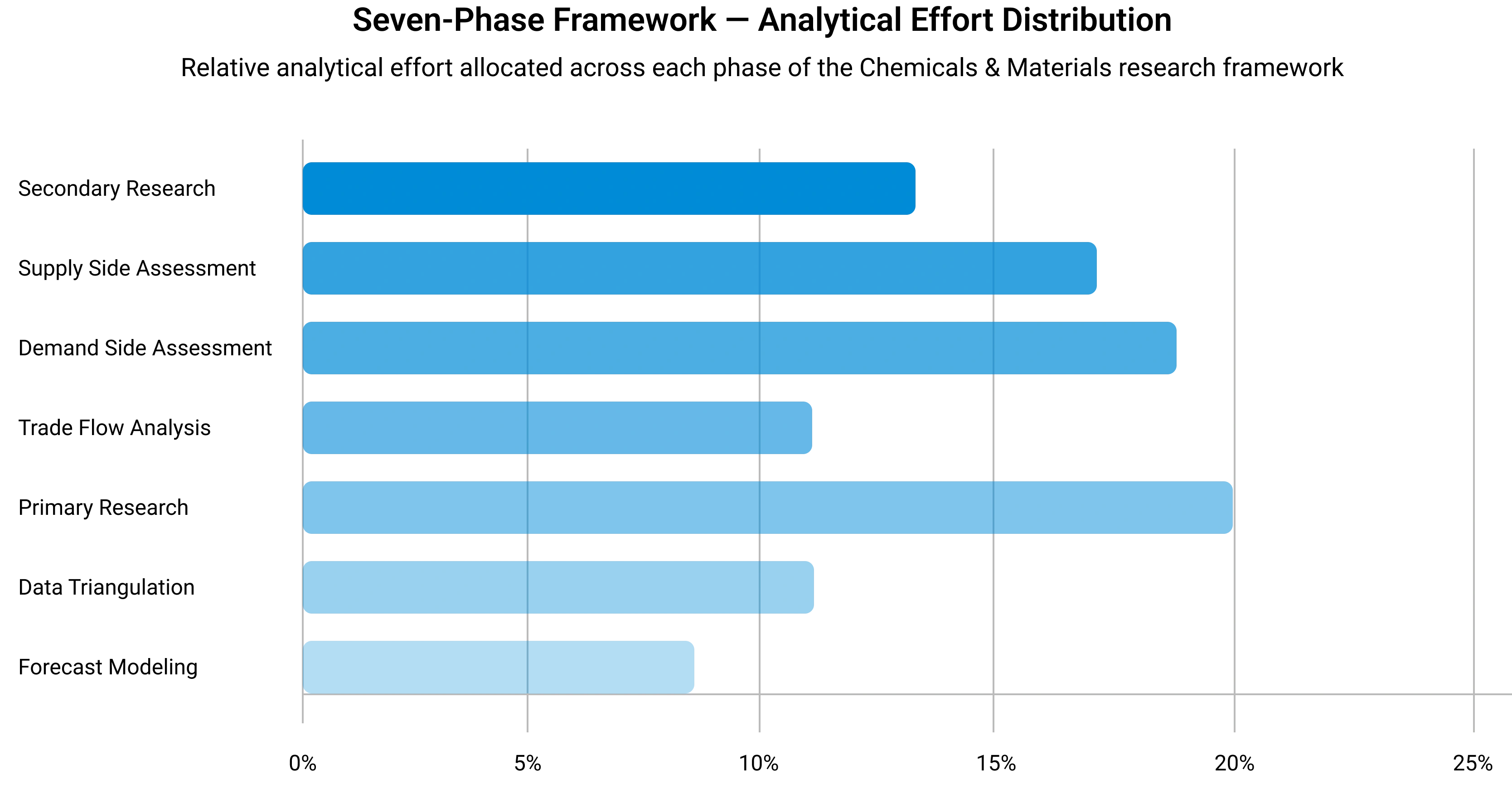
Seven-Phase Framework — Analytical Effort Distribution
Relative analytical effort allocated across each phase of the Chemicals & Materials research framework
Phase 1 - Secondary Research: Establishing the Foundation
Secondary research collects and evaluates publicly available information from authoritative sources, establishing the foundational understanding of market structure, value chain dynamics, competitive landscape, and end-use demand patterns. Every source is evaluated for credibility, recency, geographic relevance, and methodological soundness before inclusion.
Industry Associations
Sources include ACC, CEFIC, ICCA, JCIA, CPCIF, and SOCMA providing production volumes, consumption trends, capacity developments, and sustainability initiatives.
Company Disclosures
Annual reports, investor presentations, earnings transcripts, and regulatory filings reveal product portfolios, manufacturing footprints, capacity expansions, and revenue segmentation.
Government Databases
National statistical offices, customs authorities, environmental agencies, and industrial production databases provide verified statistics on output, trade flows, and regulatory compliance.
Trade Databases
UN Comtrade, ITC, Eurostat, and national customs authorities enable assessment of global product movement, import dependency, and export competitiveness across regions.
Our Secondary Research Sources
- Ministry of Chemicals and Fertilizers
- European Chemicals Agency
- United States Department of Energy
- Ministry of Industry and Information Technology
- Ministry of Economy Trade and Industry
- Ministry of Trade Industry and Energy
- National Institute of Standards and Technology
- Council of Scientific and Industrial Research
- Fraunhofer Society
- National Institute for Materials Science
Phase 2 — Supply-Side Assessment: Mapping Production Capabilities
Production Capacity Analysis
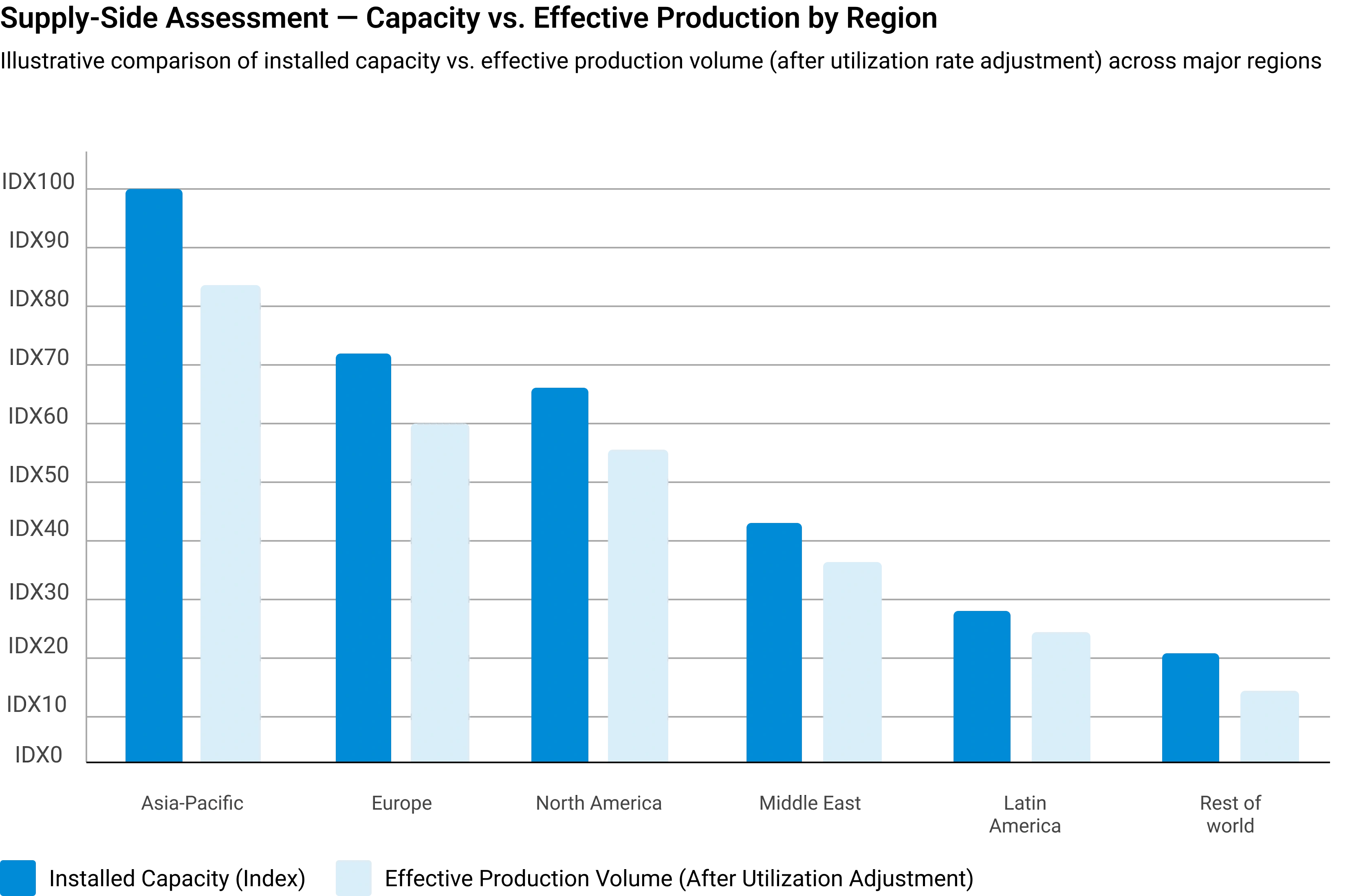
All major manufacturers are assessed for existing installed capacity, planned additions, expansions, new plant announcements, and technology adoption — mapped at global, regional, and country levels.
Capacity Utilization Adjustment
Installed capacity is adjusted using utilization rates based on demand conditions, feedstock availability, plant operating rates, maintenance schedules, and regulatory restrictions.
Manufacturer Revenue Analysis
Product-specific revenues, segment-level performance, regional distribution, average selling prices, and margin trends are evaluated to establish market value estimates.
Supply-Side Assessment — Capacity vs. Effective Production by Region
Illustrative comparison of installed capacity vs. effective production volume (after utilization rate adjustment) across major regions
Phase 3 — Demand-Side Assessment: Quantifying Chemical Consumption
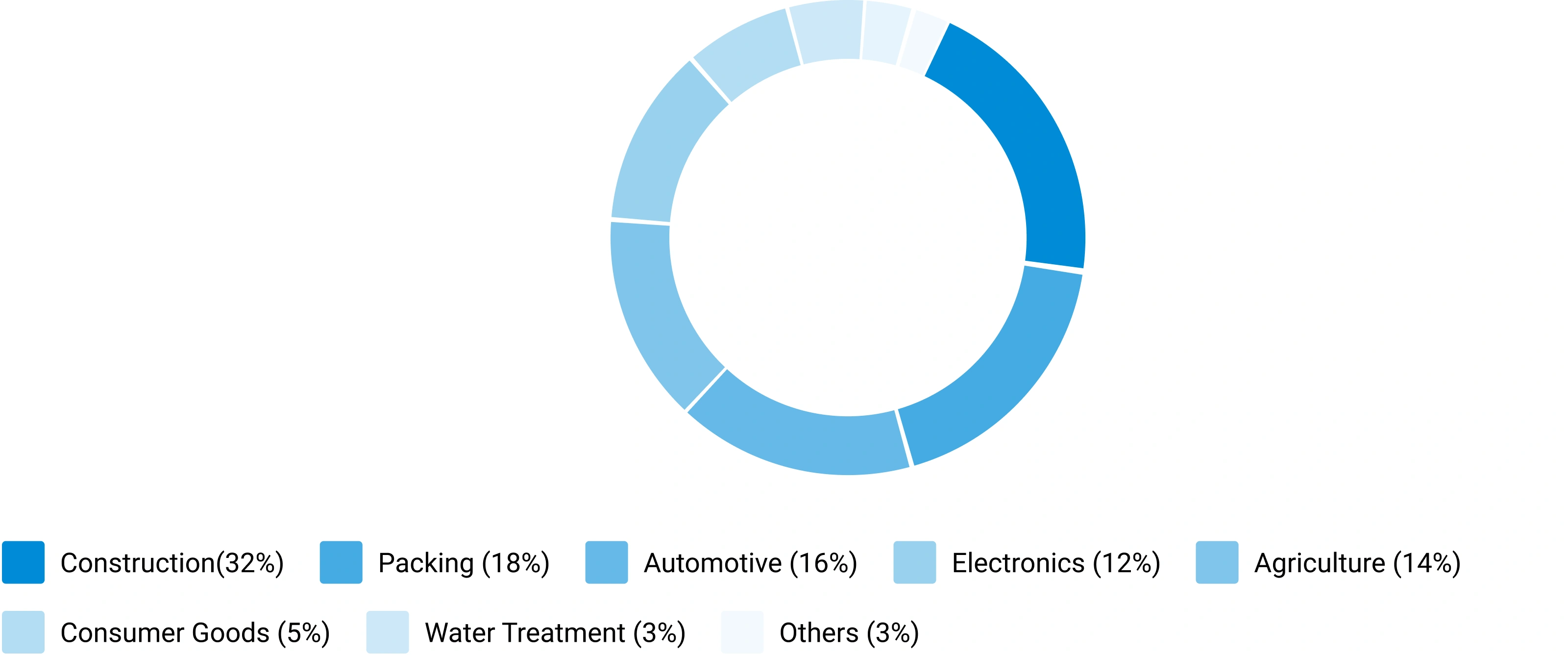
Demand-side analysis quantifies chemical consumption across industries, applications, and geographies — identifying where and how chemicals are consumed throughout the value chain with precision.
End-Use Industry Analysis
Chemical demand is evaluated across automotive, construction, packaging, electronics, agriculture, healthcare, consumer goods, industrial manufacturing, energy and utilities, and water treatment. Industry output, production trends, and consumption intensity are analyzed to determine demand patterns.
Consumption Modeling
Demand is estimated using measurable indicators: kilograms per vehicle, kilograms per square meter of construction, dosage per cubic meter of water treated, kilograms per hectare of agricultural land, and kilograms per ton of manufactured products. Consumption factors are validated through industry publications and primary interviews.
Application Analysis
The market is segmented by application area to understand product performance requirements, formulation trends, technology adoption, customer preferences, and regulatory requirements improving demand accuracy and segmentation granularity.
Demand-Side Assessment — End-Use Industry Demand Distribution
Illustrative distribution of chemical & materials demand across key end-use industries
Phase 4 - Trade Flow Analysis: Balancing Regional Supply and Demand
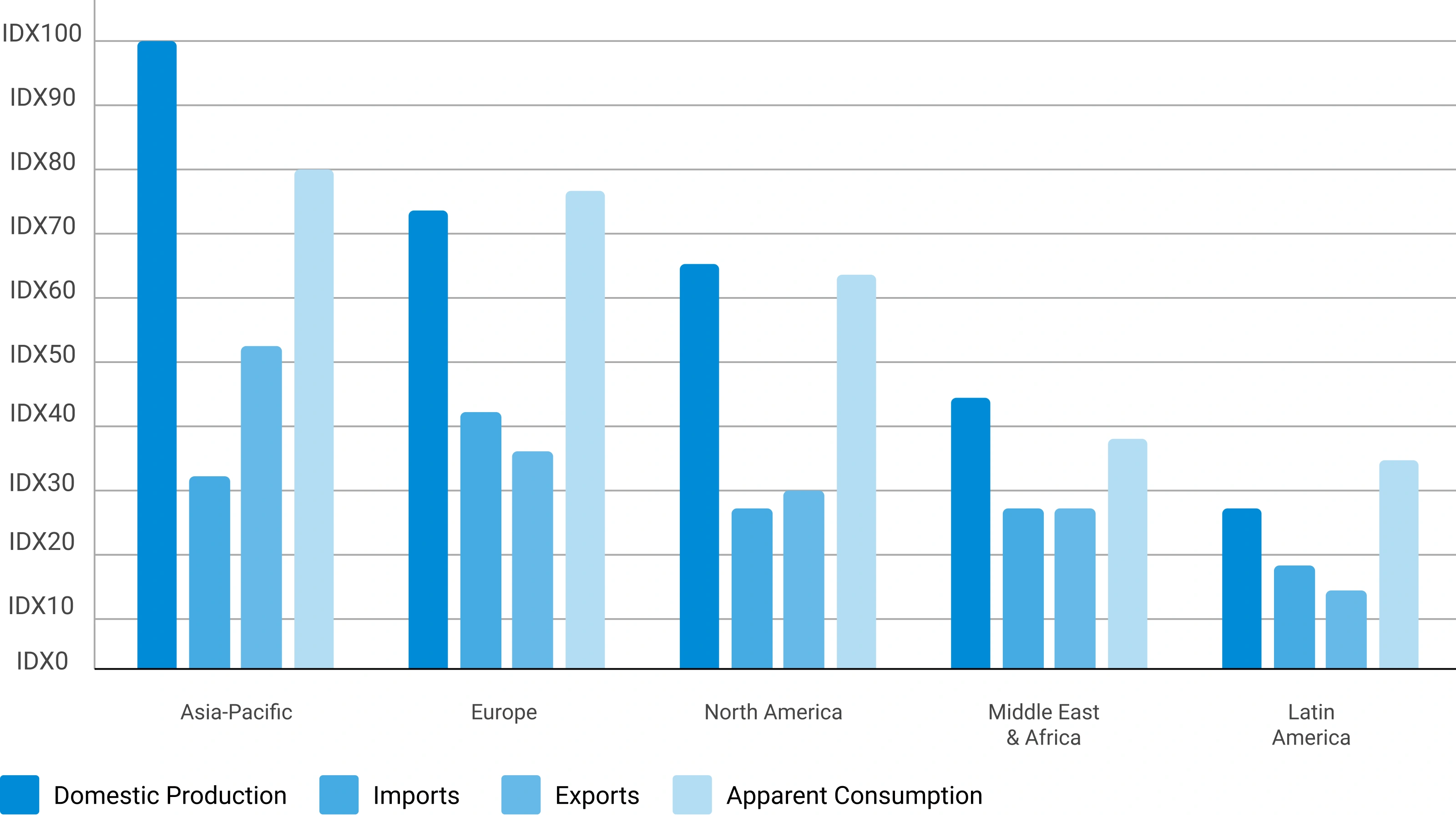
Trade flow analysis reconciles regional supply and demand estimates through import and export data, identifying net supply positions, regional dependencies, and market imbalances. It serves as an independent validation layer that tests the consistency of supply-side and demand-side estimates.
Import Analysis
Import data is evaluated to determine volumes, source countries, product dependency, regional supply gaps, and pricing trends — identifying markets that rely heavily on external supply and where domestic production is insufficient to meet demand.
Export Analysis
Export assessments reveal production surplus, export competitiveness, regional manufacturing strength, and global market participation. Export patterns also help validate domestic production estimates and identify net exporting regions.
Apparent Consumption Model
Regional consumption is assessed using the standard apparent consumption formula:
Results identify net importing regions, net exporting regions, regional deficits, and surpluses — serving as an independent validation of supply and demand estimates.
Trade Flow Analysis — Net Supply Position by Region
Illustrative apparent consumption vs. domestic production across major regions — positive gap indicates net import dependency
Phase 5 — Primary Research: The Critical Validation Layer
Primary research tests and refines findings from secondary research through direct engagement with industry participants across the supply chain, demand side, and expert community. It captures intelligence that no database or published report can provide — the real-world experience of manufacturers, buyers, and specialists operating in the market.

Supply-Side Interviews
Conversations with chemical manufacturers, raw material suppliers, contract manufacturers, technology providers, and plant operators cover production trends, capacity utilization, pricing developments, technology shifts, and competitive dynamics.

Demand-Side Interviews
Engagement with OEMs, industrial consumers, procurement managers, distributors, formulators, and end-use manufacturers focuses on consumption trends, purchasing behavior, product substitution, demand outlook, and emerging applications.

Industry Expert Consultations
Additional interviews with industry consultants, independent experts, regulatory specialists, technical professionals, and research institutions provide deeper market context and validate key analytical assumptions.
Focus Areas of Primary Research:
Market Size & Forecast Validation
Revenue estimates, volume consumption, growth rates, forecast assumptions, regional demand.Supply Chain & Value Chain Assessment
Raw material sourcing, supply chain challenges, distribution networks, procurement practices.Production & Capacity Analysis
Manufacturing capacity, utilization rates, expansion projects, plant investments.Pricing & Cost Structure Analysis
Product pricing trends, feedstock costs, energy costs, margin pressures, pricing outlook.Competitive Landscape Assessment
Volume and value estimates confirmed to be fully consistent with one another before publicationInterview Volume by Market Scope
| Study Scope | Number of Interviews |
|---|---|
| Niche Market | 20 – 30 |
| Mid-Sized Market | 30 – 50 |
| Global Market | 50 – 80 |
| Highly Fragmented Market | 80 – 120 |
Interview Details:
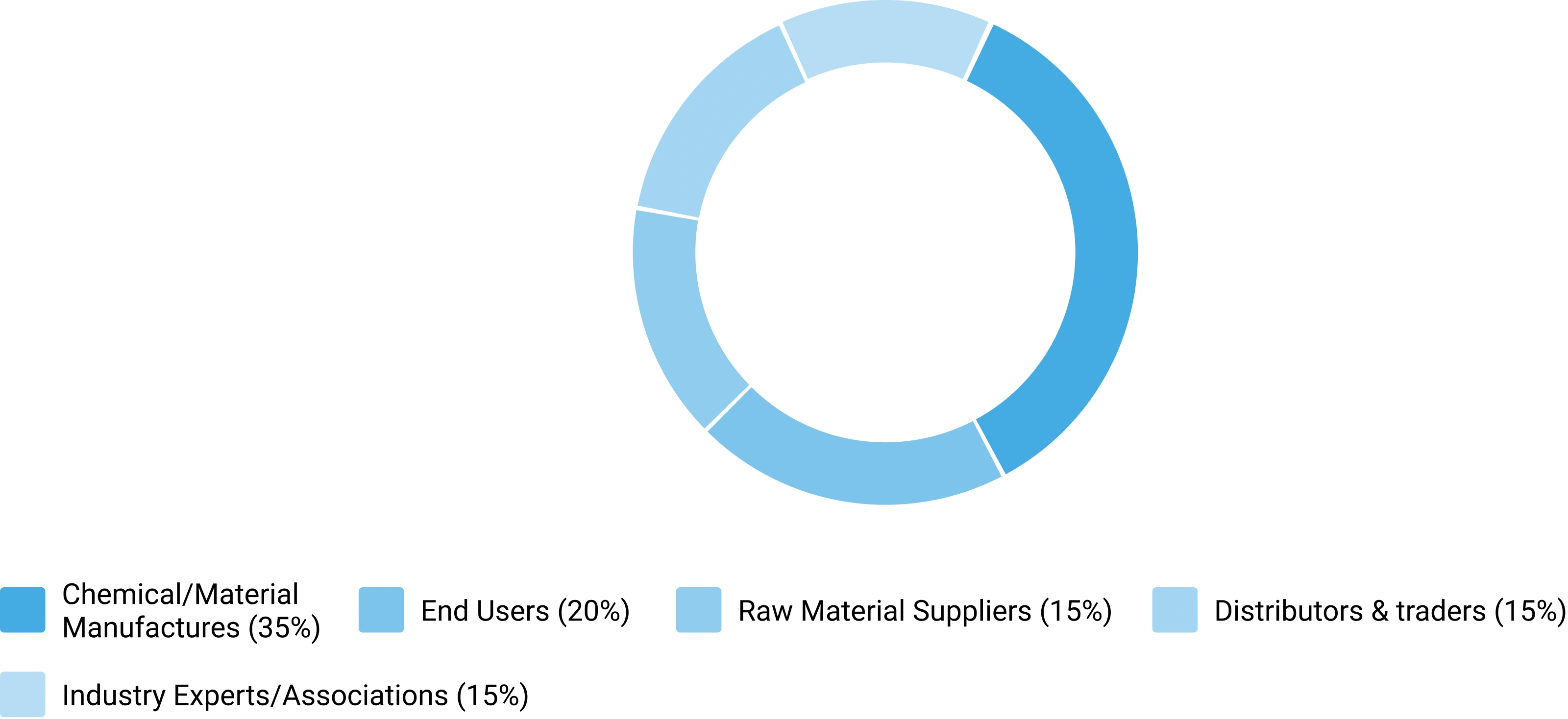
Category : Manufacturers, Suppliers, Distributors, End Users, Experts/Associations
Average Duration : 30–60 Minutes
Interview Mode : Video calls, telephonic interviews, expert consultations
Interview Format : Structured / Semi-Structured questionnaire
Focus Areas of Primary Research:
Market Size & Forecast Validation :
Revenue estimates, volume consumption, growth rates, forecast assumptions, regional demand.
Supply Chain & Value Chain Assessment :
Raw material sourcing, supply chain challenges, distribution networks, procurement practices.
Production & Capacity Analysis :
Manufacturing capacity, utilization rates, expansion projects, plant investments.
Pricing & Cost Structure Analysis :
Product pricing trends, feedstock costs, energy costs, margin pressures, pricing outlook.
Competitive Landscape Assessment :
Market share, competitor positioning, strategic initiatives, partnerships, acquisitions.
Primary Research — Stakeholder Coverage by Category
Distribution of interview respondents across stakeholder categories (% share from PPT data)
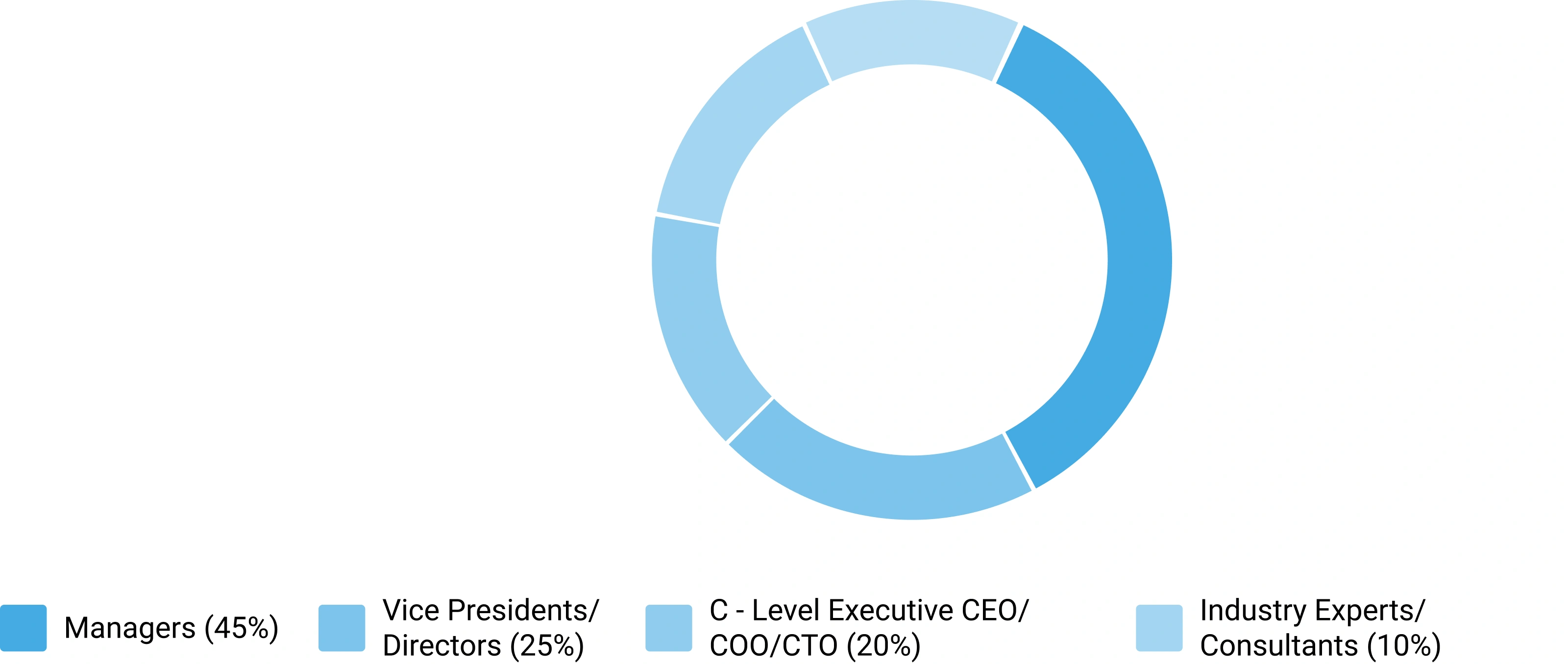
Primary Research — Respondent Designation Profile
Seniority breakdown of interview respondents (% share from PPT data)
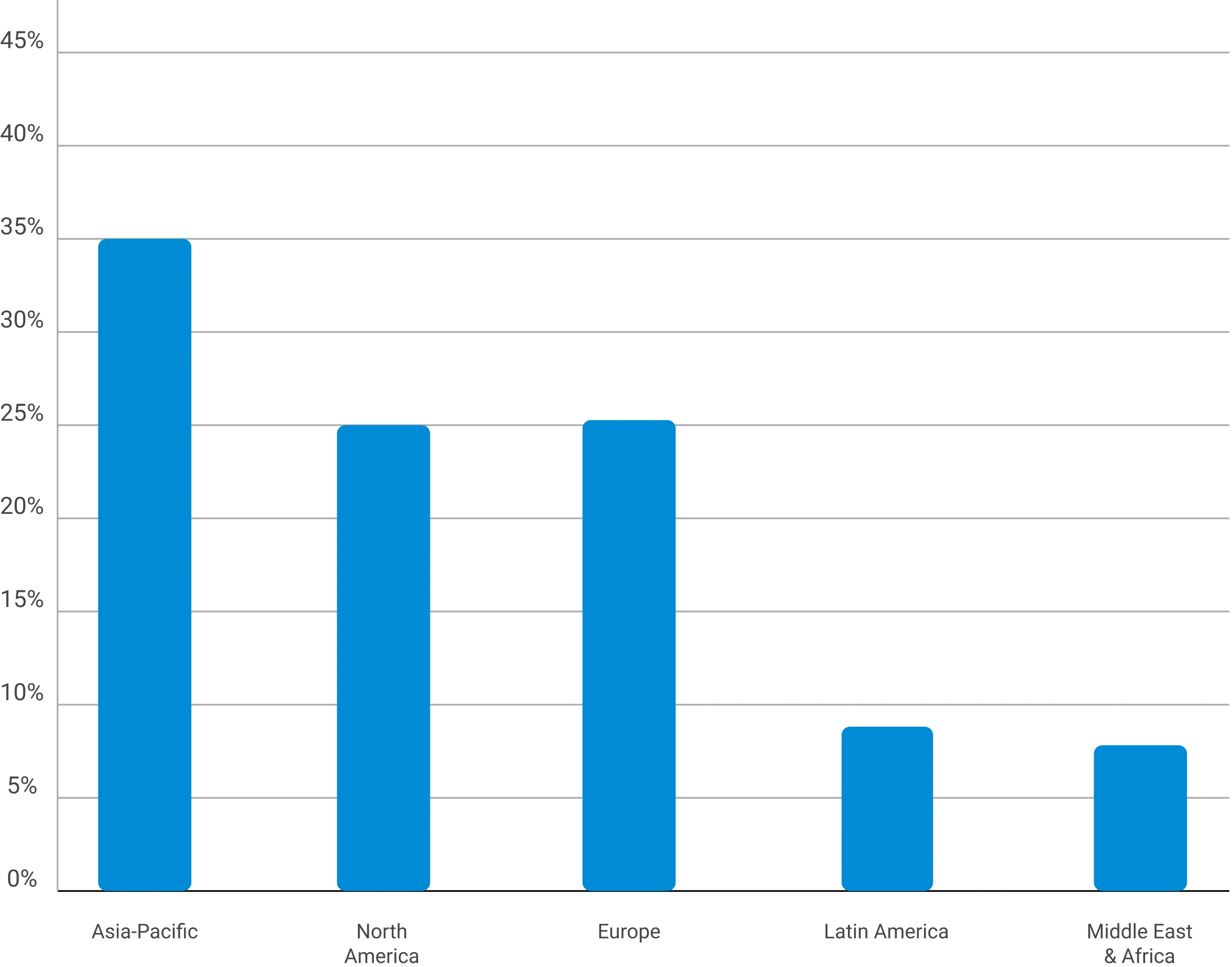
Primary Research — Geographic Coverage of Interviews
Regional distribution of primary research engagement (% share from PPT data)
Phase 6 — Data Triangulation and Market Validation
No single methodology is relied upon in isolation. Multiple independent estimation approaches are combined and reconciled to ensure consistency, accuracy, and analytical defensibility. Any material deviations between approaches are investigated and adjusted through additional validation cycles.
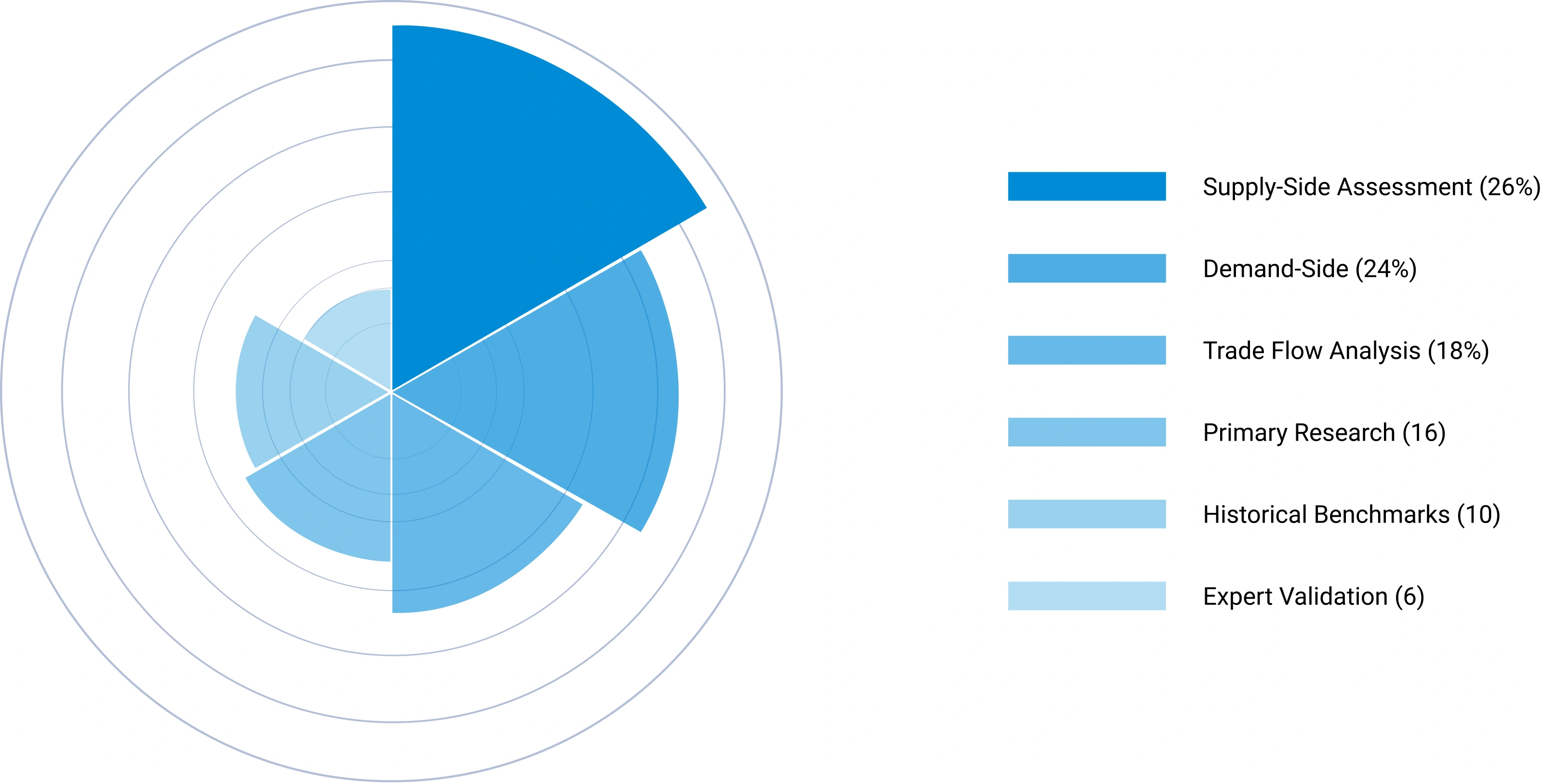
The final market size is derived through weighted triangulation of all validated methodologies. Any material deviations between approaches are investigated and adjusted through additional validation cycles. The outcome represents the most realistic assessment of the market based on available evidence and expert confirmation ensuring that volume and value estimates are fully consistent with one another.
Triangulation Framework — Input Contribution Weight
Relative weight each sizing input contributes to the final reconciled market estimate
Phase 7 — Forecast Modeling: Projecting Future Market Evolution
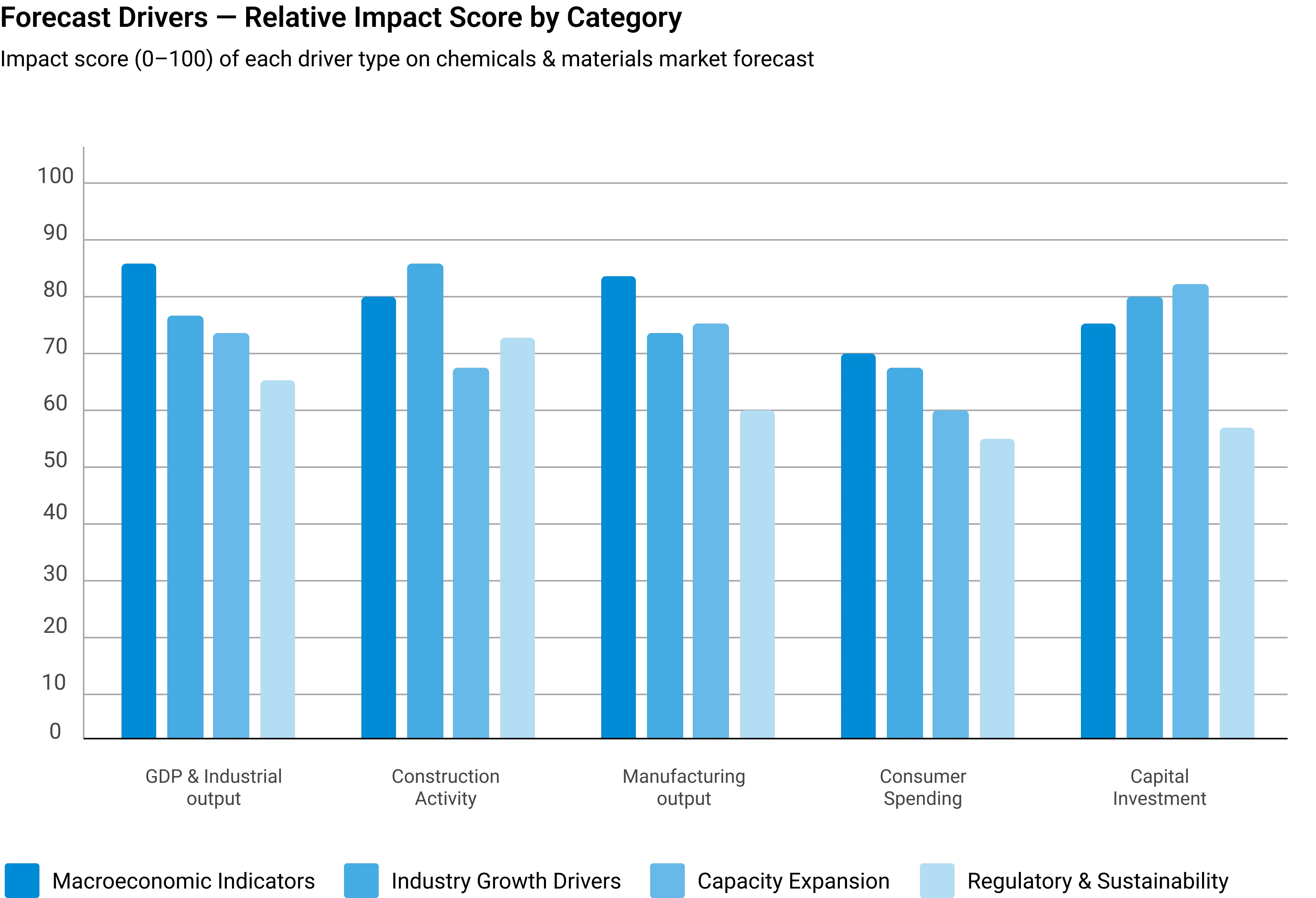
Forecasting evaluates the future trajectory of the market using a combination of quantitative indicators and qualitative assessments across economic, industry, and regulatory dimensions. Rather than simple extrapolation, each driver is independently modeled and integrated into a composite forecast.
Macroeconomic Indicators
GDP growth, industrial production, manufacturing output, construction activity, consumer spending, and capital investment form the quantitative foundation of long-term demand projections. These are applied at country, regional, and global levels.
Industry Growth Drivers
Urbanization, infrastructure development, industrialization, technological innovation, sustainability initiatives, and evolving product performance requirements are assessed at regional and industry levels — capturing both structural and cyclical demand drivers.
Capacity Expansion Analysis
Announced plant expansions, new manufacturing facilities, technology upgrades, and strategic investments are evaluated to determine future supply-demand dynamics and potential market tightness or oversupply situations.
Regulatory & Sustainability
Environmental regulations, chemical safety standards, emission reduction targets, circular economy initiatives, and sustainability requirements are incorporated as they often influence product adoption rates and market growth trajectories.
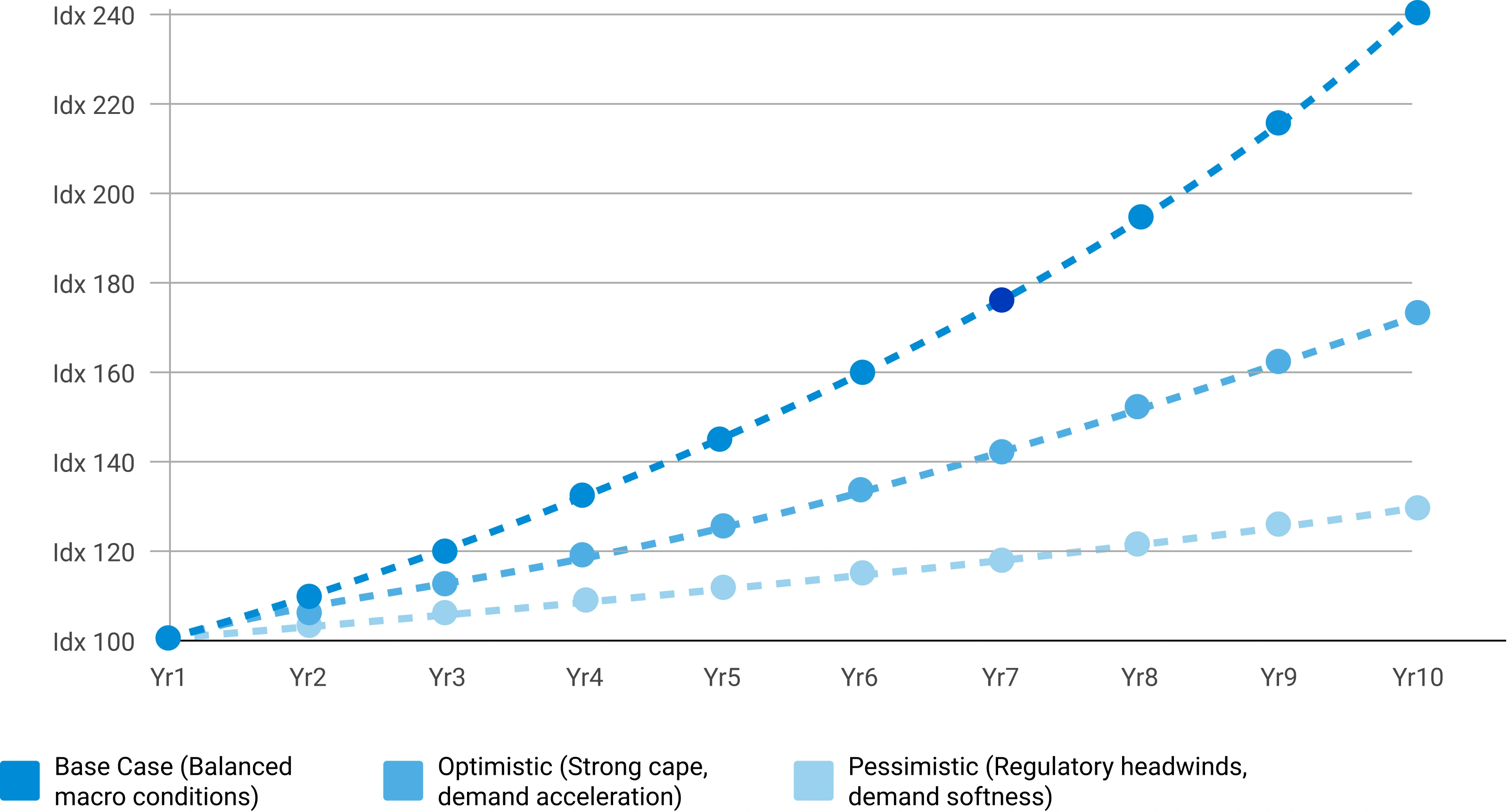
Scenario Forecast Range — Indexed Market Growth (Year 1–10)
Illustrative indexed growth trajectories across Base, Optimistic, and Pessimistic scenarios over a 10-year forecast horizon
Forecast Drivers — Relative Impact Score by Category
Impact score (0–100) of each driver type on chemicals & materials market forecast



Comments
Share your thoughts, ask a question, or provide feedback about this report.