
Gelatin Market Size, Competitive Landscape Analysis Report 2035
The global gelatin market size was valued at USD 4.32 billion in 2025, is estimated to reach USD 4.62 billion in 2026, and is projected to reach USD 8.38 billion by 2035, exhibiting a compound annual growth rate (CAGR) of 6.85% over the forecast period from 2026 to 2035.Asia Pacific dominated the gelatin market with the largest revenue share of 28% in 2025 and is expected to grow at the fastest CAGR of 7.04% during the forecast period. The increased demand for capsules, nutraceuticals, and clean-label foods is driving the growing market. Due to the increased demand for collagen supplements in the food, healthcare, and personal care sectors, as well as the development of new marine and functional gelatin formulations, the collagen market is seeing a steady rise in its adoption rate.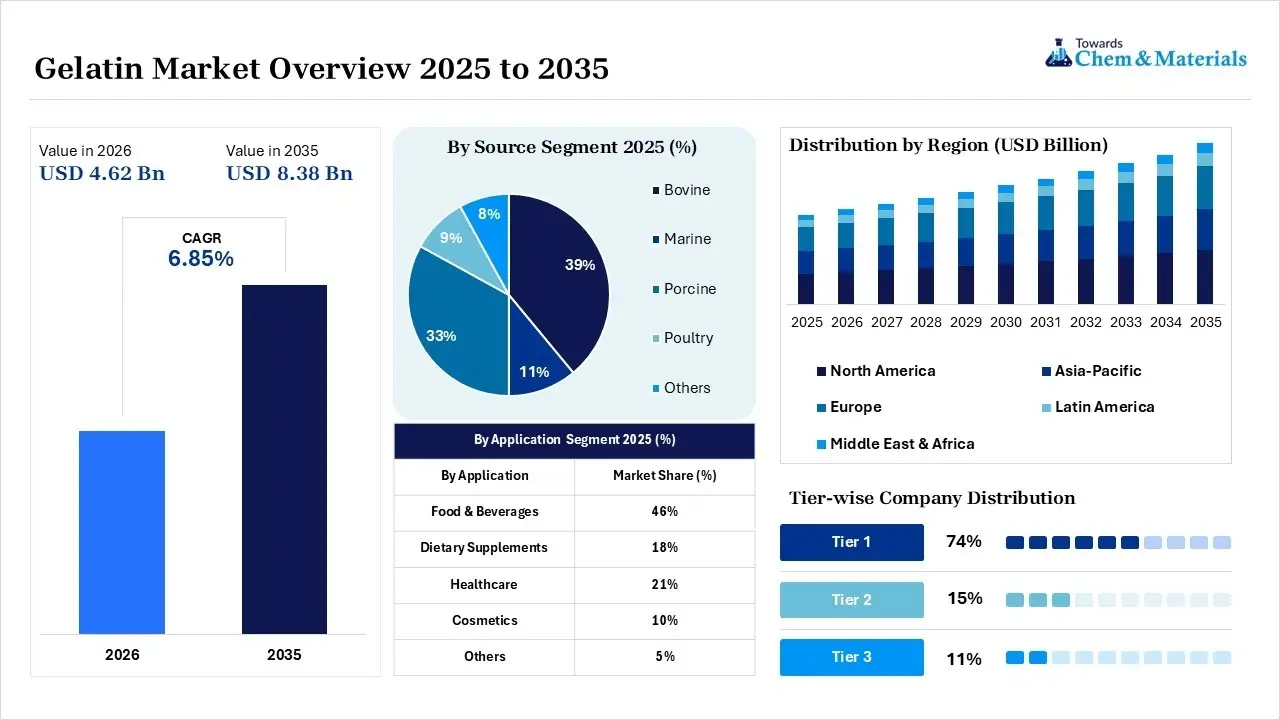
Market Highlights
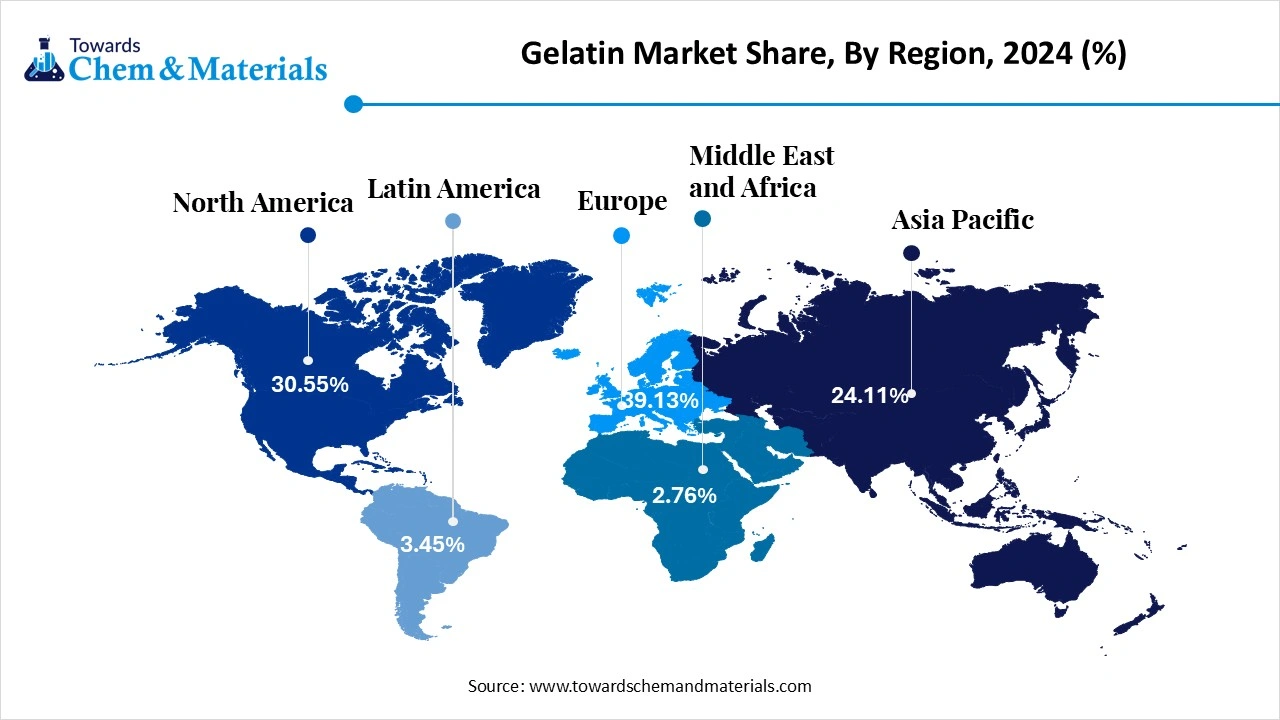
- By region, Asia Pacific dominated the gelatin market by holding 32% share in 2025, and is expected to grow at the fastest with a CAGR of 8.4% during the forecast period, driven by rising disposable incomes and increased processed food consumption.
- By region, Europe held 28% market share in 2025, due to the strong confectionery sector increasing usage.
- By source, the bovine segment dominated the market with the largest share of 39% in 2025, due to the strong availability of cattle by-products.
- By source, the marine segment held 11% market share in 2025 and is expected to grow at the fastest CAGR of 8.1% over the forecast period, driven by growing utilization in nutraceuticals and cosmetics.
- By application, the food & beverages segment dominated the market with the largest share of 46% in 2025 as confectionery and dessert demand remains strong.
- By application, the healthcare segment held 21% market share in 2025 and is expected to grow at the fastest CAGR of 8.3% over the forecast period due to pharmaceutical capsule manufacturing driving usage.
- By function, the stabilizer segment dominated the market with the largest share of 49% in 2025, as clean-label trends support gelatin use.
- By function, the gelling agent segment held 24% market share in 2025 and is expected to grow at the fastest CAGR of 7.2% over the forecast period, driven by confectionery producers that rely on superior gel properties.
According to Towards Chemicals and Materials Analytics and Consulting, the global gelatin market volume was valued at 735.2 thousand tons in 2025 and is expected to surpass around 1,310.4 thousand tons by 2035, accelerating a compound annual growth rate (CAGR) of 5.95% over the forecast period from 2026 to 2035.
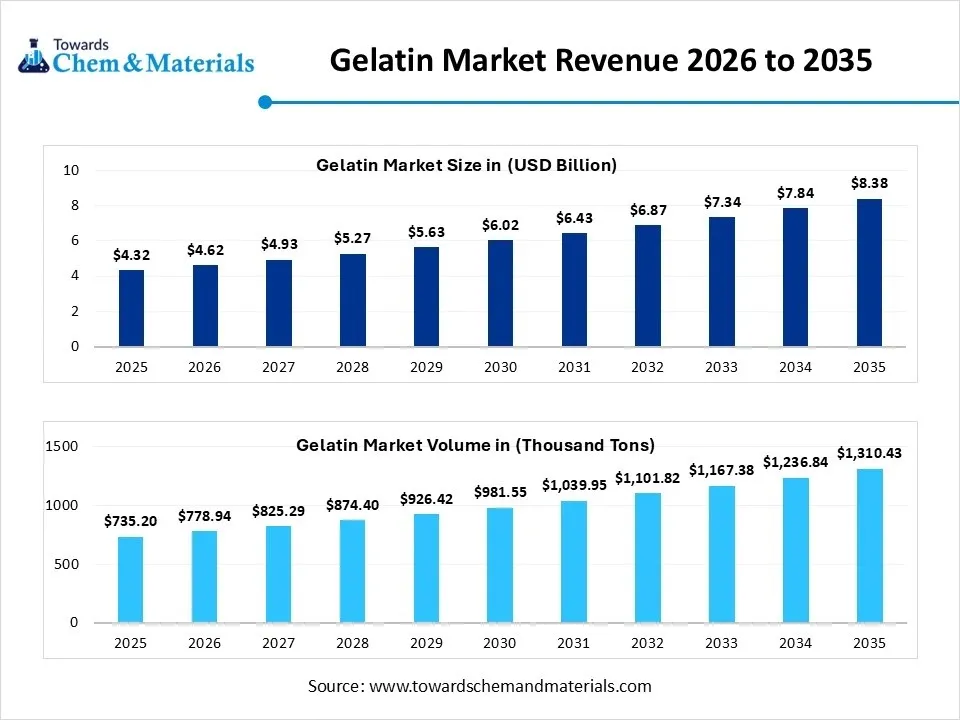
The gelatin market is growing steadily due to its wide range of applications across various pharmaceutical and nutraceutical, food processing, cosmetic, and biomedical industries. Gelatin is the preferred material to make hard and soft capsules due to its excellent film-forming qualities, digestibility, and bioavailability. Collagen supplements, gummies, and functional foods are in demand due to rising consumer awareness of the importance of preventive healthcare and protein-fortified foods.
The trend of using marine-based gelatin as a substitute for traditional bovine gelatin, the use of biodegradable packages, and innovative biomedical applications like tissue engineering and regenerative medicine are also helping the market. Enzymatic extraction techniques are being technologically developed to increase product purity and performance, as well as to promote sustainable production. The many new dietary needs are being addressed by manufacturers by investing in alternative and specialty gelatin solutions.
- For instance, in January 2026, Emsland Group developed Emjel LC 15, an organic starch-based solution that produces gelatin-free confectionery products with enhanced texture and elasticity in January 2026.
(Source:www.foodingredientsfirst.com)
The Growing Demand for Cosmetics & Personal Care Products
The growing demand for various cosmetics and personal care products increases the demand for gelatin. The growing consumer preference for sustainable and natural products increases demand for gelatin. The growing adoption of clean beauty products and affordable personal care products fuels demand for gelatin. The growing disposable incomes increase spending on personal care products like shampoos, moisturizers, and many more. Gelatin is widely used in shampoos, creams, and lotions due to properties like moisture retention & film -forming. It is widely used in various cosmetics, skincare, and haircare products as emulsifiers, thickening agents, gelling agents, and stabilizers. The growing demand for creams and lotions increases the adoption of gelatin.
The growing various skin problems like pimples, blackheads, whiteheads, and skin tightening increase demand for gelatin for the production of face masks. The increasing production of shampoos and conditioners fuels demand for gelatin due to its film-forming properties. The growing demand for temporary hair color and rapid growth in hair treatment utilize gelatin. Products like moisturizer, shampoos, lipsticks, face masks, and many more use gelatin. The growing cosmetics and personal care industry is a key driver for the growth of the gelatin market.
Market Trends
- Growing health awareness: The growing health awareness in consumers increases demand for gelatin for various applications like collagen formation and joint health promotion. Gelatin offers various health benefits, like a source of essential amino acids and proteins. It offers benefits for joint, nail, gut, skin, and hair health.
- Growing demand for clean label products: The growing focus on clean label products in the food industry increases demand for gelatin. It is a natural protein without any synthetic additives. Gelatin widely supports clean-label products and is derived from animals.
- Technological advancements: The growing technological advancements in gelatin manufacturing help in the market growth. Technological advancements like ultrasound-assisted extraction, enzymatic hydrolysis, improving functionality, and optimizing processing equipment. Advancements help to enhance applications in various industries.
Market Report Scope
| Report Attributes | Details |
| Market Size in 2026 | USD 4.62 Billion |
| Expected Size by 2035 | USD 8.38 Billion |
| Growth Rate from 2025 to 2035 | CAGR 6.85% |
| Base Year of Estimation | 2025 |
| Forecast Period | 2025 - 2035 |
| High Impact Region | Asia Pacific |
| Segment Covered | By Source, By Application, By Function, By Region |
| Key Companies Profiled | Rosselot, STERLING GELATIN, Junca Gelatines SL, PAN Biotech GmbH, Tessenderlo Group, GELITA AG, PB Leiner, Weishardt Holdings SA, Nitta Gelatin, Inc., Shanghai AI-Amin Biosource Co., Ltd. |
Market Opportunity
The Growing Pharmaceutical Industry Surges Demand for Gelatin
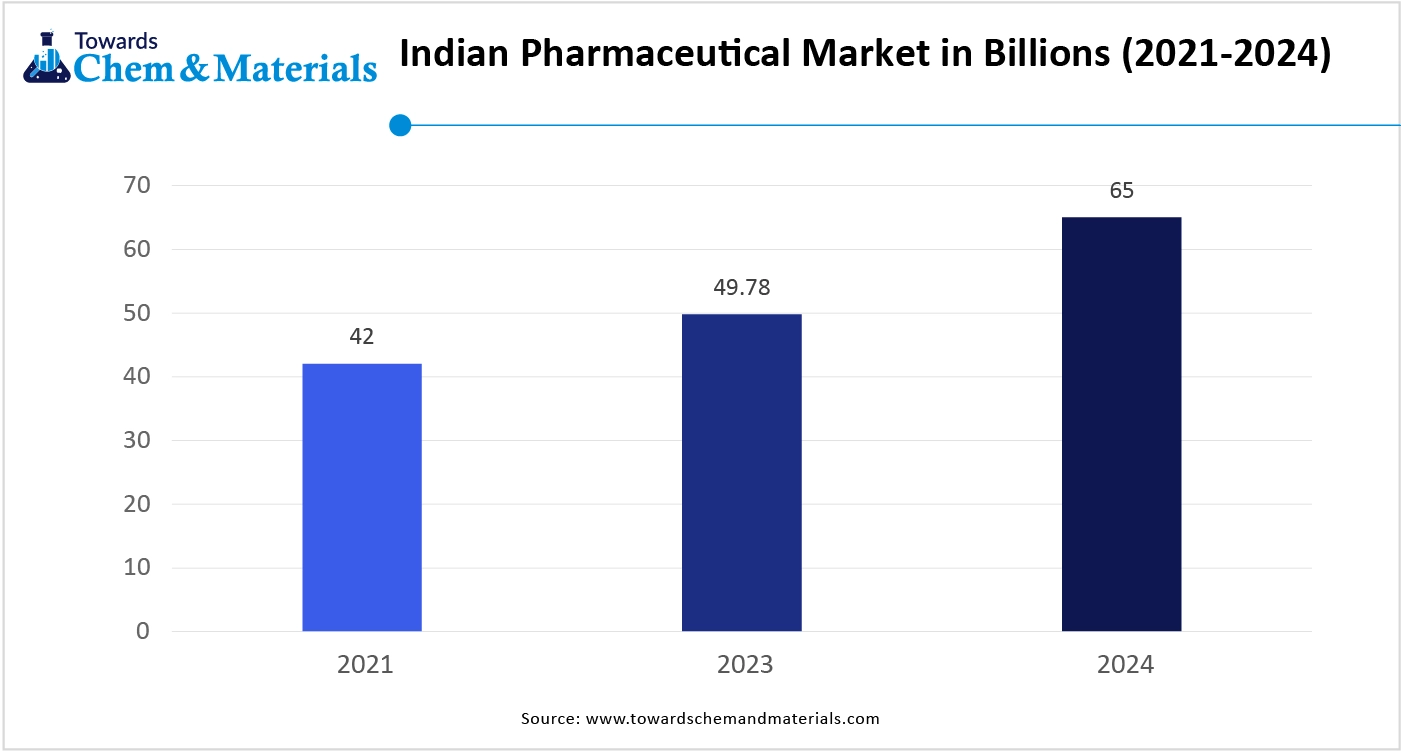
The growing expansion of the pharmaceutical industry in various regions increases demand for gelatin for various pharmaceutical applications. The pharmaceutical industry uses gelatin for applications like drug delivery systems and pharmaceutical formulations. The growing production of soft and hard gelatin capsules increases demand for gelatin. The growing production of various pharmaceutical formulations like tablet coatings, fluid dosages, and sweeteners increases demand for gelatin as stabilizers & thickening agents.
The growing demand for medical applications like wound healing products, hemostatic sponges, and ostomy patches fuels demand for gelatin. The increasing demand for pharmaceutical-grade gelatin for drug delivery systems helps in market growth. The growing production of various vaccines to treat various conditions increases demand for gelatin as stabilizers. Gelatin, like porcine gelatin, is widely used in the pharmaceutical industry. The growing prevalence of chronic diseases increases the production of gelatin to produce long-term medications. The growing pharmaceutical industry creates an opportunity for gelatin market growth.
Market Challenge
Volatility in Raw Materials Limits the Expansion of the Gelatin Market
Despite several benefits of gelatin in various industries, volatility in raw materials restrains market growth. Gelatin is derived from animal-based raw materials, and animals are prone to various diseases like Bovine Spongiform Encephalopathy and African Swine Fever causes volatility in raw materials. Gelatin manufacturing is based on animal connective tissues, hides, and bones, and volatility in livestock availability directly impacts raw materials supply.
The fluctuation in the cost of animal byproducts increases the overall cost. The growing food and mouth diseases in animals can affect the production of gelatin. The fluctuations in feed costs due to various factors like global demand, crop yields, and transportation increase the overall cost of gelatin production. The volatility in raw materials hampers the growth of the market.
Supply Chain Analysis of the Gelatin Market
Feedstock Procurement
- This stage entails procurement of collagen-containing animal by-products like bovine bone, bovine hides, pig skin, and fish processing waste from certified processing units. The consistent supply of raw materials for food and pharma gelatin production is essential to ensure traceability, quality assurance, and sustainable sourcing.
- Collagen Raw Material Sourcing Network: One of the world's largest networks for sourcing collagen raw materials, which ensures secure and sustainable availability of the raw materials.
- Other Key Players: Nitta Gelatin, Tessenderlo Group (PB Leiner).
Chemical synthesis and processing
- Collagen is decollagenated and treated to produce high-purity gelatin via a series of pre-treatment, hydrolysis, extraction, purification, and filtration steps. The use of advanced enzymatic and thermal extraction technologies enhances the functionality, clarity, and performance of gelatin in various applications.
- GELITA AG: Expert in the extraction of advanced collagen and on-demand processing of gelatin products for pharmaceutical and food applications.
- Other Key Players: Weishardt, Lapi Gelatine.
Compounding and Blending
- Purified gelatin is dried, milled, and mixed with additives or functional ingredients as needed for specific end uses. Formulations for confectionery, capsules, nutraceuticals, biomedical products, and specialty food applications are custom-developed.
- Rousselot: Market leader in the formulation of gelatin and collagen, for medical, nutritional, pharmaceutical, and biomedical applications worldwide.
- Other Key Players: PB Leiner, Nitta Gelatin.
Segmental Insights
Source Insights
The bovine sourced segment dominated the gelatin market in 2025. The growing demand for various products like pharmaceuticals, food & beverage, nutritional supplements, and cosmetics helps in the market growth. The growing consumption of kosher and halal food increases demand for the bovine sourced gelatin. The availability of raw materials like hides & bones increases the production of bovine gelatin. The growing demand for pharmaceutical products, desserts, and meat products increases demand for bovine sourced gelatine. This kind of gelatin is used as a thickening agent, gelling agent, & stabilizer and is readily available. The growing demand for functional foods & beverages and rising health awareness increases demand for natural protein sources, contributing to the overall growth of the market.
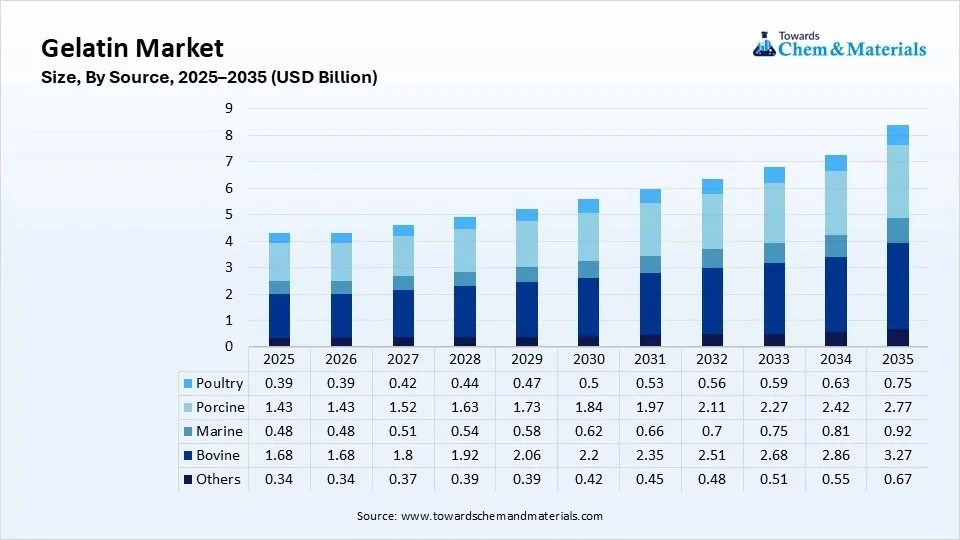
The marine sourced segment expected to experience the fastest growth in the market during the forecast period. The growing demand for nutraceutical and cosmetic products increases demand for marine sourced gelatin. The growing demand for a fat alternative in the food & beverage industry helps in the market growth. The growing focus on environmental sustainability increases demand for marine sourced gelatin, which is a byproduct of fish skin and bones. The growing focus on nutritional value, like lower calorie count, high protein content, and high amino acids, increases demand for marine sourced gelatin. The growing demand for artificial ingredients-free products and clean-label products drives the overall growth of the market.
Application Insights
The food & beverages segment held the largest revenue share of the gelatin market in 2025. The growing expansion of the food & beverage industry and increasing demand for natural & healthy food options help in the market growth. The growing demand for high-protein ingredients to manufacture nutritious food & beverages increases demand for gelatin. The growing demand for bakery products and confectionery items fuels demand for gelatin to provide stability, texture, and structure to food products. The growing demand for desserts and various beverages increases the demand for gelatin. The growing production of gummy candies helps in the market growth. Gelatin is used as a gelling agent, thickener, stabilizer, and protein fortifier in various food & beverages. The growing consumer preference for sustainable and convenient food production increases demand for gelatin, contributing to the market growth.
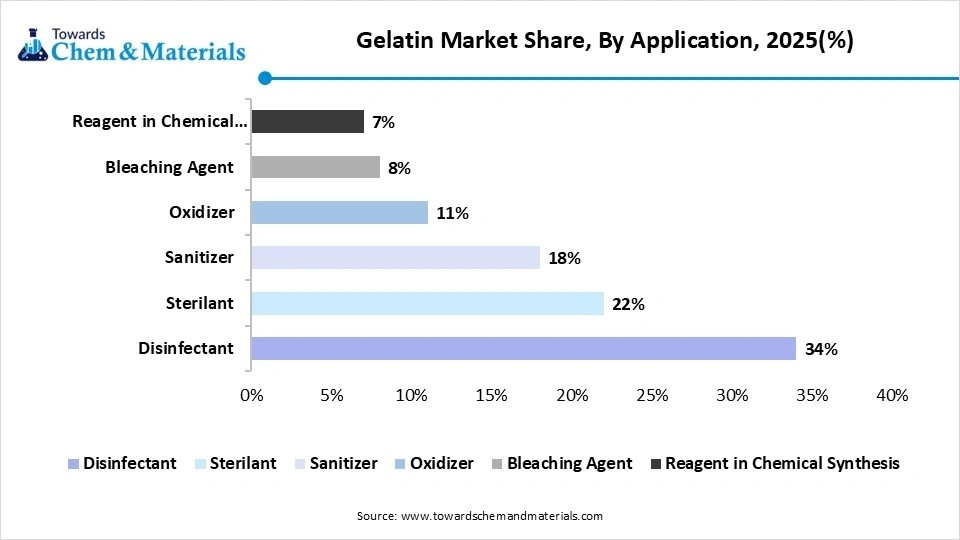
The healthcare segment expects the fastest growth in the market during the forecast period. The aging population and growing prevalence of chronic diseases increase demand for capsules and various medications, fueling the adoption of gelatin. The growing number of chronic wounds increases demand for gelatin-based wound care medications. Gelatin is the main ingredient for the production of tablets & capsules and is used as a stabilizer in the production of vaccines. The growing tissue engineering applications increase demand for gelatin to support the growth of the cells. The growing production of various medical devices like bone plugs, hemostatic sponges, and surgical adhesives drives the overall market growth.
Function Insights
The stabilizer application segment held the highest revenue share of the gelatin market in 2025. The growing demand for various supplements and medications increases the adoption of stabilizers. The growing production of various kinds of vaccines increases demand for stabilizers, helping in the market growth. The growing demand for food products like ice creams, high-fat yogurts, fruit jelly, salads, sausages, and meat products increases demand for gelatin as a stabilizer. The growing demand for convenience & processed foods and rising consumption of food products like jellies, yogurts, and jams support the overall market growth.
The gelling agent application segment expects the fastest growth in the market during the forecast period. The growing demand for clean-label products and minimal additives, and natural products increases demand for gelling agents. The growing demand for various food and beverages helps in the market growth. Gelling agents extend shelf life and offer stability to products. The growing demand for various food products like gummies, cream cheese, low-fat yogurts, desserts, marshmallows, and margarine increases demand for gelatin as a gelling agent. The growing demand for packaged foods like jams, frozen sweets, and fruit snacks fuels demand for gelling agents. The growing demand for dietary supplements like protein bars & others and the increasing production of nutraceuticals drive the overall growth of the market.
Regional Insights
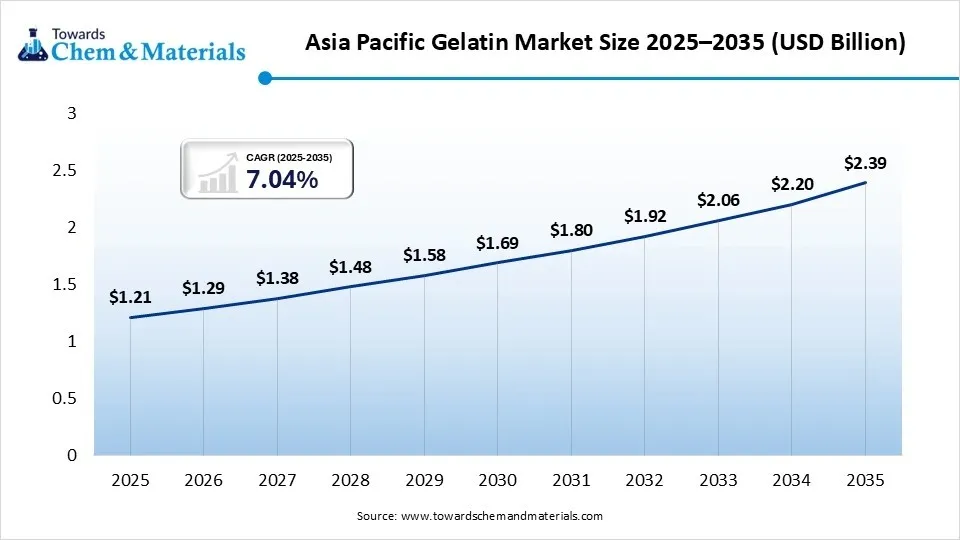
The Asia Pacific gelatin market size was estimated at USD 1.21 billion in 2025 and is projected to reach USD 2.39 billion by 2035, growing at a CAGR of 7.04% from 2026 to 2035. Asia Pacific dominated the market with the largest share of 32% in 2025 and is expected to grow at the fastest CAGR of 8.4% during the forecast period, as the pharmaceutical manufacturing industry is also rapidly expanding, along with growing disposable income, health awareness of the people, and greater consumption of processed food. Increased utilization of gelatin in major economies continued in the expanding nutraceutical industries and high demand for capsule production.
 China
China
- The pharmaceutical and nutraceutical sector is rapidly expanding, and thus, demand for pharmaceutical grades of gelatin is also growing substantially.
- The processed food sector is the major contributor to gelatin-based confectionery and dairy products consumption growth.
- Domestic gelatin production and innovation capabilities are enhanced through the investment in collagen supplements.
India
- Demand for capsule-grade gelatin materials is high, driven by the growth of manufacturing of generic pharmaceutical formulations.
- As people become more health-conscious, their consumption of collagen supplements and protein-rich foods increases.
Europe held 28% market share in 2025, thanks to its developed pharmaceutical industry, the highly developed food processing industry, and the presence of international gelatin manufacturers. The global trend of high-quality standards, broad acceptance of collagen-based nutraceuticals, and rising demand for biomedical-grade gelatin helped in the expansion of regional markets and innovation.
Germany
- Hosts are large gelatin producers that see significant growth in investments in innovations for gelatin in pharmaceutical, nutraceutical, and biomedical applications.
- The market is expected to grow steadily, driven by demand from the capsule manufacturing market and the functional food market.
- Their advanced research capabilities speed the development of specialty collagen/gels and high-purity gelatin products.
France
- Gelatin is in demand as premium confectionery, and clean-label food products are growing.
- The strong cosmetics industry uses ingredients of gelatin and collagen in beauty and anti-aging products.
- Leading gelatin producers provide an export-oriented production and product innovation
North America held 24% market share in 2025. Advanced health care systems, extensive use of nutritional and health supplements, and increasing consumer preference for protein-rich nutrition products boosted demand in North America. The region's market growth was further bolstered by rising investments in biomedical applications, clean-label food ingredients, and regenerative medicine.
United States
- The nutraceutical and dietary supplement markets are strong, leading to a significant demand for collagen ingredients.
- Therapeutic applications in the advanced pharmaceutical field have largely depended on the use of gelatin capsules.
- Specialty gelatin is being adopted in the field of regenerative medicine due to the increasing biomedical research.
Canada
Gelatin demand is fueled by the growing consumer demand for clean-label and natural ingredients.
Collagen-based products benefit from the growth of the healthcare and nutraceutical industries.
The demand for sustainable and marine gelatin opens up new market opportunities.
Latin America held 9% market share in 2025, driven by the growth of food processing, pharmaceutical manufacturing, and nutritional supplement consumption. The region's gelatin production and export continued to be boosted by the availability of livestock raw material and investment in value-added collagen products.
Brazil
- The collagen-rich natural raw materials are available in large numbers in the livestock industry for production.
- Increased demand for food and beverages is expected to fuel the demand for gelatin-based confectionery products.
- The rising sales of collagen supplements and functional ingredients are attributed to the growth of the nutraceutical market.
Chile
- The rising demand for premium food products is an indicator of the higher use of gelatin in different applications.
- The increased aquaculture industry opens up opportunities for gelatin production from the sea.
- The rising popularity of health and well-being movements drives up collagen supplement demand.
The Middle East & Africa held 7% market share in 2025, as there is a rise in the pharmaceutical manufacturing, rising demand for Halal Certified ingredients, and processed food consumption. Improvements in health care facilities and specialty nutrition products also helped to drive increased gelatin use in the region.
 Saudi Arabia
- The growing pharmaceutical production boosts the demand for good-quality capsule gelatin products.
- The growing demand for Halal-certified ingredients drives the growth of the regional gelatin market.
- Investments in healthcare by the government encourage the growth of nutraceutical and biomedical applications.
South Africa
- The food processing industry is growing and is pushing up demand for gelatin in the confectionery and dairy product industry.
- Collagen supplement and nutritional product sales are also boosted by an increasing awareness of health.
The growth of the pharmaceutical industry contributes to the steady requirement for pharmaceutical-grade gelatin.
Recent Developments
- In June 2026, GELITA introduced the new MEDELLAPRO Ultra Low Endotoxin gelatin with a tolerance of less than 10 endotoxin units per gram. The product is aimed to be used in advanced biomedical products, such as surgical sealants, hemostatic agents, tissue scaffolds, and drug delivery systems.
(Source: manufacturingchemist.com) - In February 2026, Simply Desserts launched three new flavor of Protein Pudding and Gelatin Alternative foods. In response to the changing consumer demand for healthier options for desserts, the company added new sugar-free, gluten-free, non-GMO, and nut-free dessert solutions to the product mix.(Source : www.nosh.com)
Top Companies List
- Rosselot
- STERLING GELATIN
- Junca Gelatines SL
- PAN Biotech GmbH
- Tessenderlo Group
- GELITA AG
- PB Leiner
- Weishardt Holdings SA
- Nitta Gelatin, Inc.
- Shanghai AI-Amin Biosource Co., Ltd.
Segments Covered in the Report
By Source
- Bovine
- Marine
- Porcine
- Poultry
- Others
By Application
- Food & Beverages
- Functional Foods
- Functional Beverages
- Confectionery
- Meat Processing
- Dietary Supplements
- Desserts
- Healthcare
- Cosmetics
- Others
By Function
- Stabilizer
- Gelling Agent
- Thickener
- Others
By Region
- North America
- U.S.
- Canada
- Europe
- Germany
- UK
- France
- Italy
- Spain
- Sweden
- Denmark
- Norway
- Asia Pacific
- China
- Japan
- India
- South Korea
- Thailand
- Latin America
- Brazil
- Mexico
- Argentina
- Middle East & Africa
- South Africa
- UAE
- Saudi Arabia
- Kuwait
A Seven-Phase Framework
Our methodology is designed to be universally applicable across commodity chemicals, specialty chemicals, petrochemicals, construction chemicals, coatings, electronic chemicals, industrial gases, agrochemicals, water treatment chemicals, and performance materials. Each phase builds upon the last, creating a layered validation structure that minimizes estimation error and maximizes analytical confidence.
The framework ensures comprehensive market coverage, robust cross-validation, and reliable long-term forecasting — producing market estimates that withstand scrutiny from investors, regulators, and corporate strategy teams.

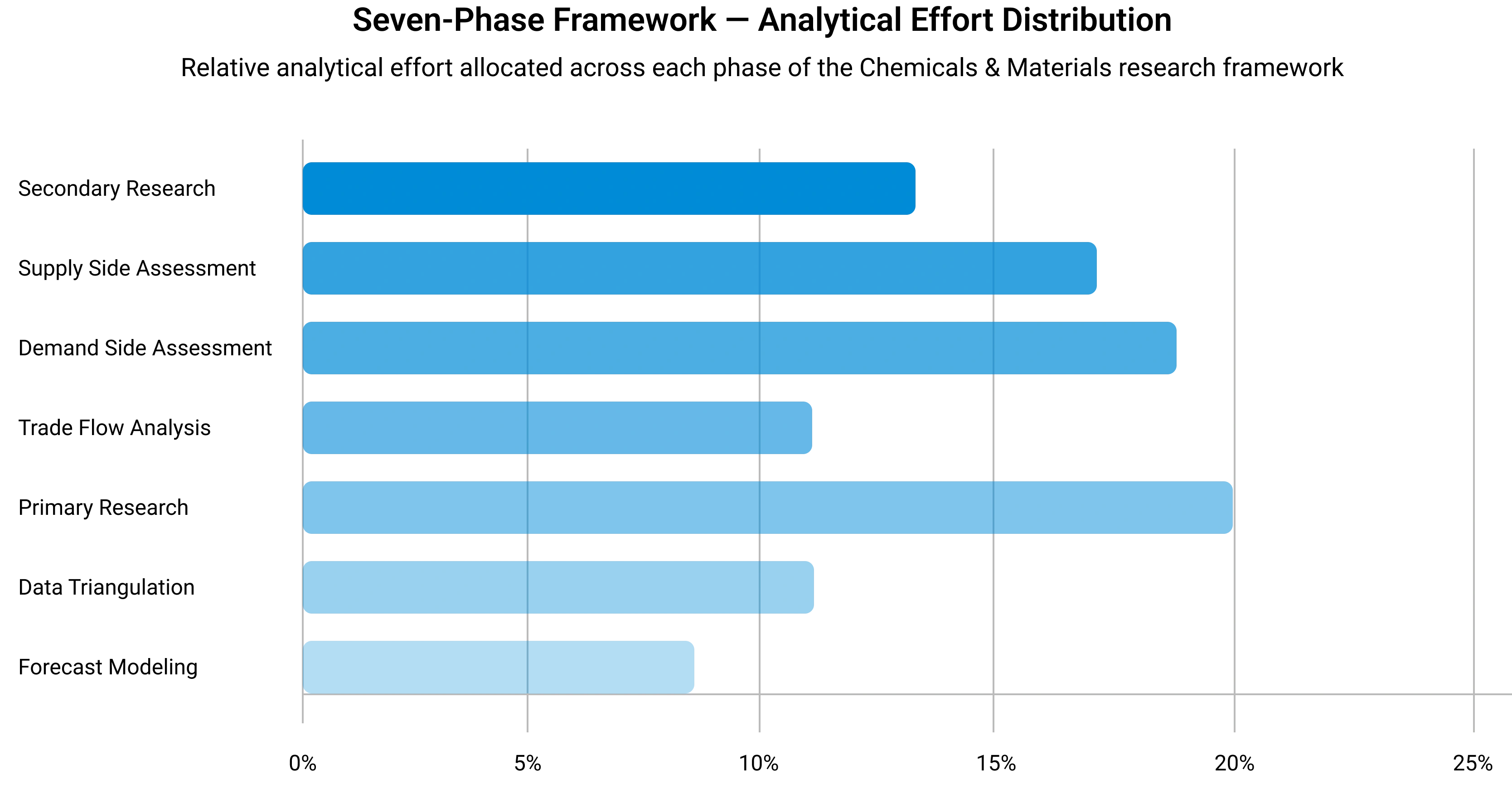
Seven-Phase Framework — Analytical Effort Distribution
Relative analytical effort allocated across each phase of the Chemicals & Materials research framework
Phase 1 - Secondary Research: Establishing the Foundation
Secondary research collects and evaluates publicly available information from authoritative sources, establishing the foundational understanding of market structure, value chain dynamics, competitive landscape, and end-use demand patterns. Every source is evaluated for credibility, recency, geographic relevance, and methodological soundness before inclusion.
Industry Associations
Sources include ACC, CEFIC, ICCA, JCIA, CPCIF, and SOCMA providing production volumes, consumption trends, capacity developments, and sustainability initiatives.
Company Disclosures
Annual reports, investor presentations, earnings transcripts, and regulatory filings reveal product portfolios, manufacturing footprints, capacity expansions, and revenue segmentation.
Government Databases
National statistical offices, customs authorities, environmental agencies, and industrial production databases provide verified statistics on output, trade flows, and regulatory compliance.
Trade Databases
UN Comtrade, ITC, Eurostat, and national customs authorities enable assessment of global product movement, import dependency, and export competitiveness across regions.
Our Secondary Research Sources
- Ministry of Chemicals and Fertilizers
- European Chemicals Agency
- United States Department of Energy
- Ministry of Industry and Information Technology
- Ministry of Economy Trade and Industry
- Ministry of Trade Industry and Energy
- National Institute of Standards and Technology
- Council of Scientific and Industrial Research
- Fraunhofer Society
- National Institute for Materials Science
Phase 2 — Supply-Side Assessment: Mapping Production Capabilities
Production Capacity Analysis
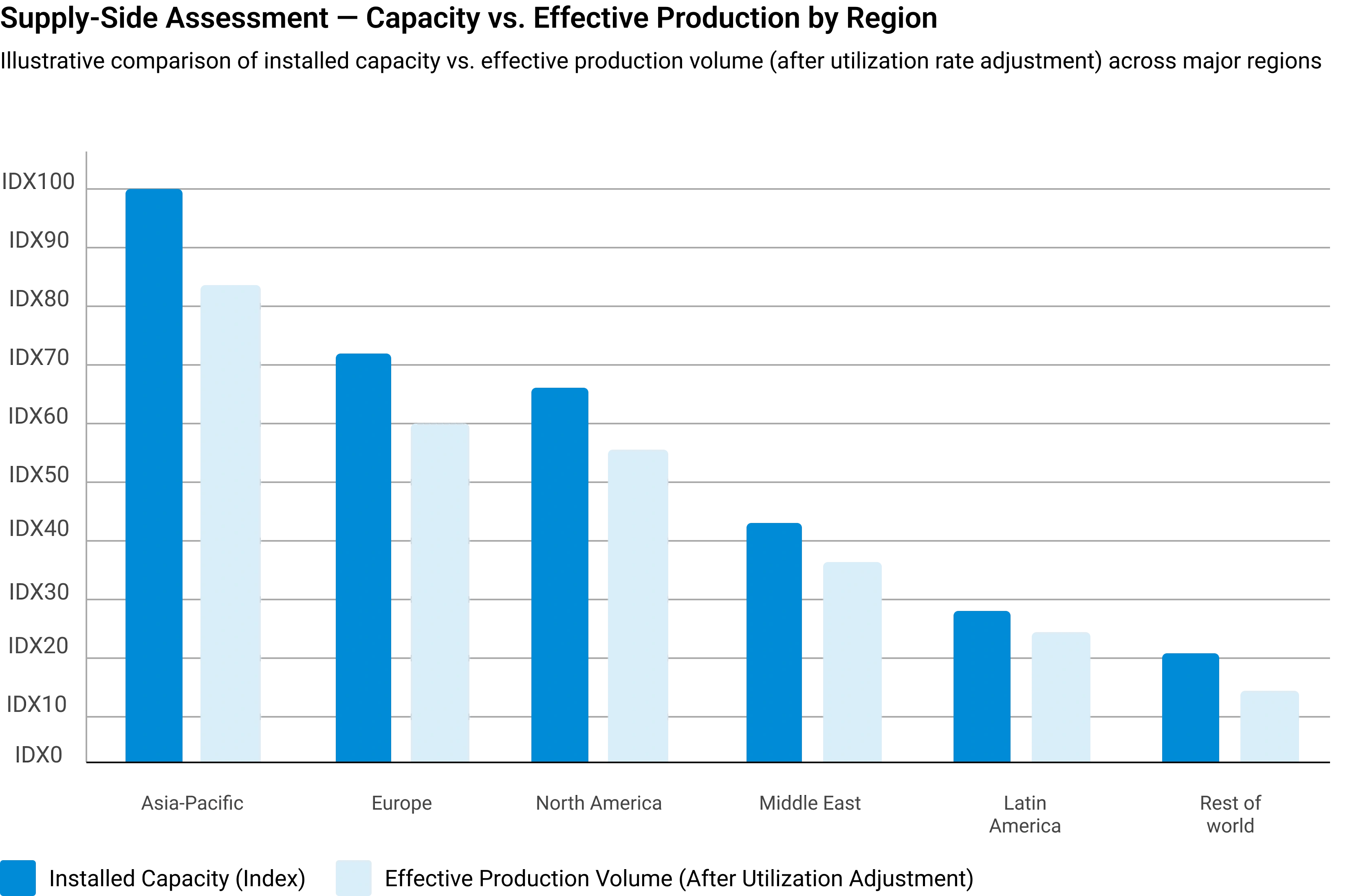
All major manufacturers are assessed for existing installed capacity, planned additions, expansions, new plant announcements, and technology adoption — mapped at global, regional, and country levels.
Capacity Utilization Adjustment
Installed capacity is adjusted using utilization rates based on demand conditions, feedstock availability, plant operating rates, maintenance schedules, and regulatory restrictions.
Manufacturer Revenue Analysis
Product-specific revenues, segment-level performance, regional distribution, average selling prices, and margin trends are evaluated to establish market value estimates.
Supply-Side Assessment — Capacity vs. Effective Production by Region
Illustrative comparison of installed capacity vs. effective production volume (after utilization rate adjustment) across major regions
Phase 3 — Demand-Side Assessment: Quantifying Chemical Consumption
Demand-side analysis quantifies chemical consumption across industries, applications, and geographies — identifying where and how chemicals are consumed throughout the value chain with precision.
End-Use Industry Analysis
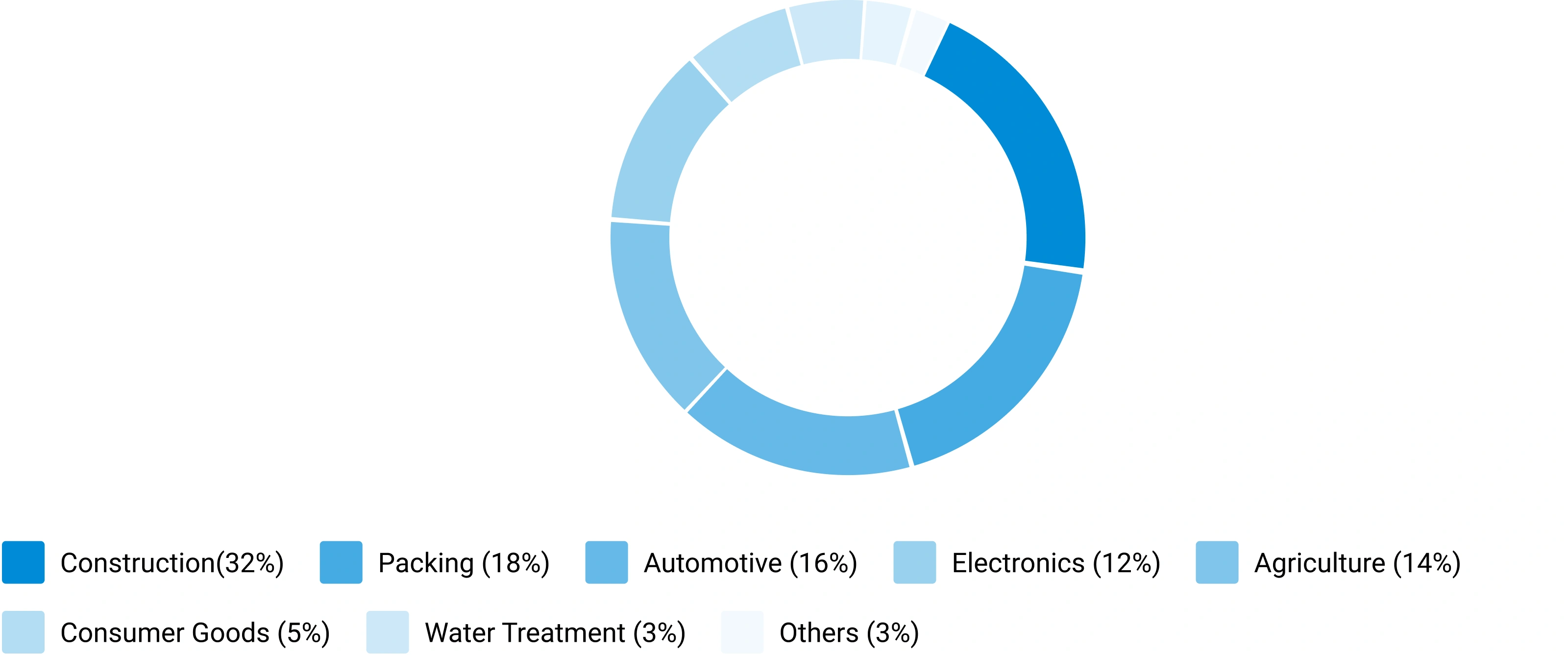
Chemical demand is evaluated across automotive, construction, packaging, electronics, agriculture, healthcare, consumer goods, industrial manufacturing, energy and utilities, and water treatment. Industry output, production trends, and consumption intensity are analyzed to determine demand patterns.
Consumption Modeling
Demand is estimated using measurable indicators: kilograms per vehicle, kilograms per square meter of construction, dosage per cubic meter of water treated, kilograms per hectare of agricultural land, and kilograms per ton of manufactured products. Consumption factors are validated through industry publications and primary interviews.
Application Analysis
The market is segmented by application area to understand product performance requirements, formulation trends, technology adoption, customer preferences, and regulatory requirements improving demand accuracy and segmentation granularity.
Demand-Side Assessment — End-Use Industry Demand Distribution
Illustrative distribution of chemical & materials demand across key end-use industries
Phase 4 - Trade Flow Analysis: Balancing Regional Supply and Demand
Trade flow analysis reconciles regional supply and demand estimates through import and export data, identifying net supply positions, regional dependencies, and market imbalances. It serves as an independent validation layer that tests the consistency of supply-side and demand-side estimates.
Import Analysis
Import data is evaluated to determine volumes, source countries, product dependency, regional supply gaps, and pricing trends — identifying markets that rely heavily on external supply and where domestic production is insufficient to meet demand.
Export Analysis
Export assessments reveal production surplus, export competitiveness, regional manufacturing strength, and global market participation. Export patterns also help validate domestic production estimates and identify net exporting regions.
Apparent Consumption Model
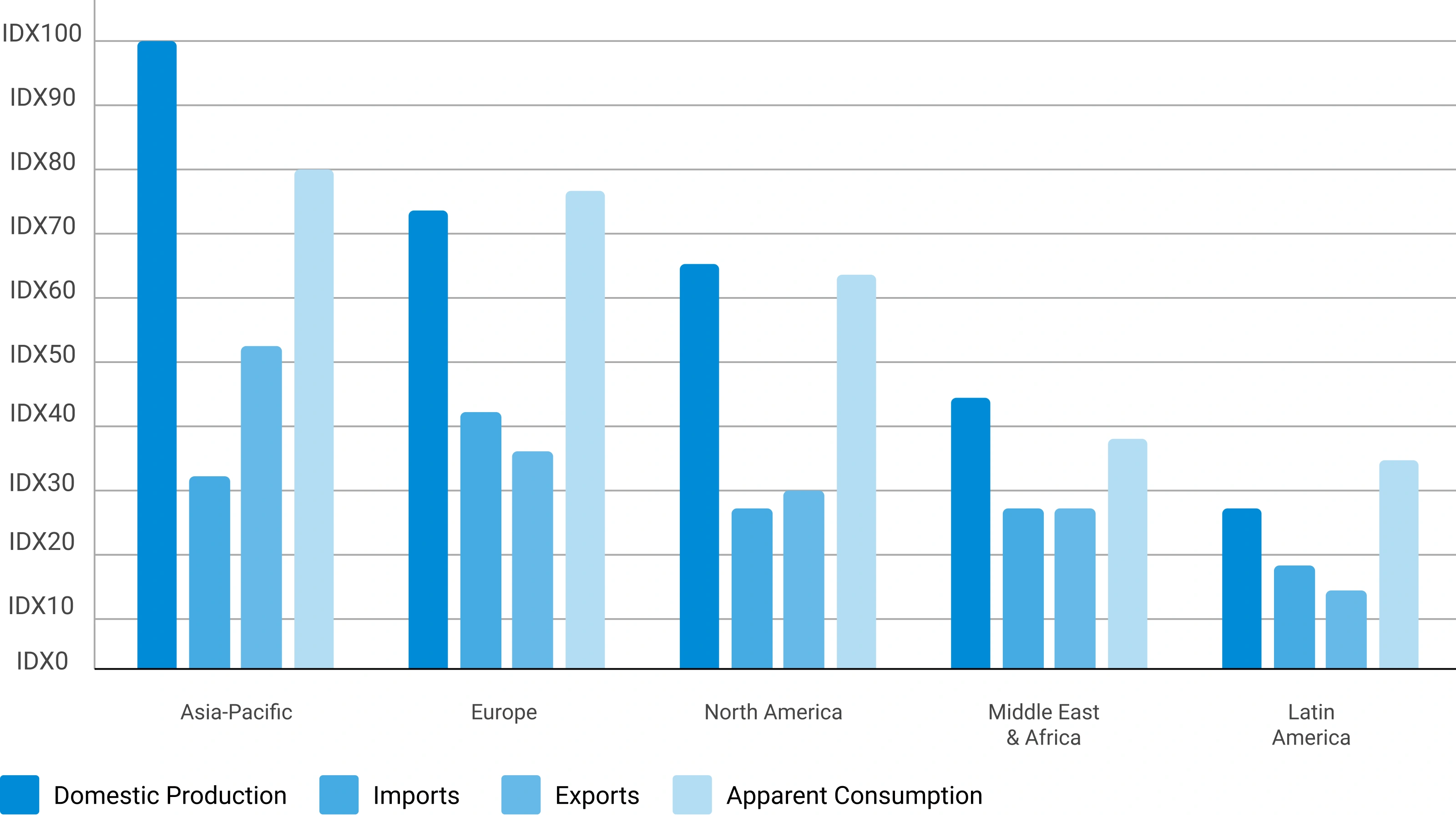
Regional consumption is assessed using the standard apparent consumption formula:
Results identify net importing regions, net exporting regions, regional deficits, and surpluses — serving as an independent validation of supply and demand estimates.
Trade Flow Analysis — Net Supply Position by Region
Illustrative apparent consumption vs. domestic production across major regions — positive gap indicates net import dependency
Phase 5 — Primary Research: The Critical Validation Layer
Primary research tests and refines findings from secondary research through direct engagement with industry participants across the supply chain, demand side, and expert community. It captures intelligence that no database or published report can provide — the real-world experience of manufacturers, buyers, and specialists operating in the market.

Supply-Side Interviews
Conversations with chemical manufacturers, raw material suppliers, contract manufacturers, technology providers, and plant operators cover production trends, capacity utilization, pricing developments, technology shifts, and competitive dynamics.

Demand-Side Interviews
Engagement with OEMs, industrial consumers, procurement managers, distributors, formulators, and end-use manufacturers focuses on consumption trends, purchasing behavior, product substitution, demand outlook, and emerging applications.

Industry Expert Consultations
Additional interviews with industry consultants, independent experts, regulatory specialists, technical professionals, and research institutions provide deeper market context and validate key analytical assumptions.
Focus Areas of Primary Research:
Market Size & Forecast Validation
Revenue estimates, volume consumption, growth rates, forecast assumptions, regional demand.Supply Chain & Value Chain Assessment
Raw material sourcing, supply chain challenges, distribution networks, procurement practices.Production & Capacity Analysis
Manufacturing capacity, utilization rates, expansion projects, plant investments.Pricing & Cost Structure Analysis
Product pricing trends, feedstock costs, energy costs, margin pressures, pricing outlook.Competitive Landscape Assessment
Volume and value estimates confirmed to be fully consistent with one another before publicationInterview Volume by Market Scope
| Study Scope | Number of Interviews |
|---|---|
| Niche Market | 20 – 30 |
| Mid-Sized Market | 30 – 50 |
| Global Market | 50 – 80 |
| Highly Fragmented Market | 80 – 120 |
Interview Details:
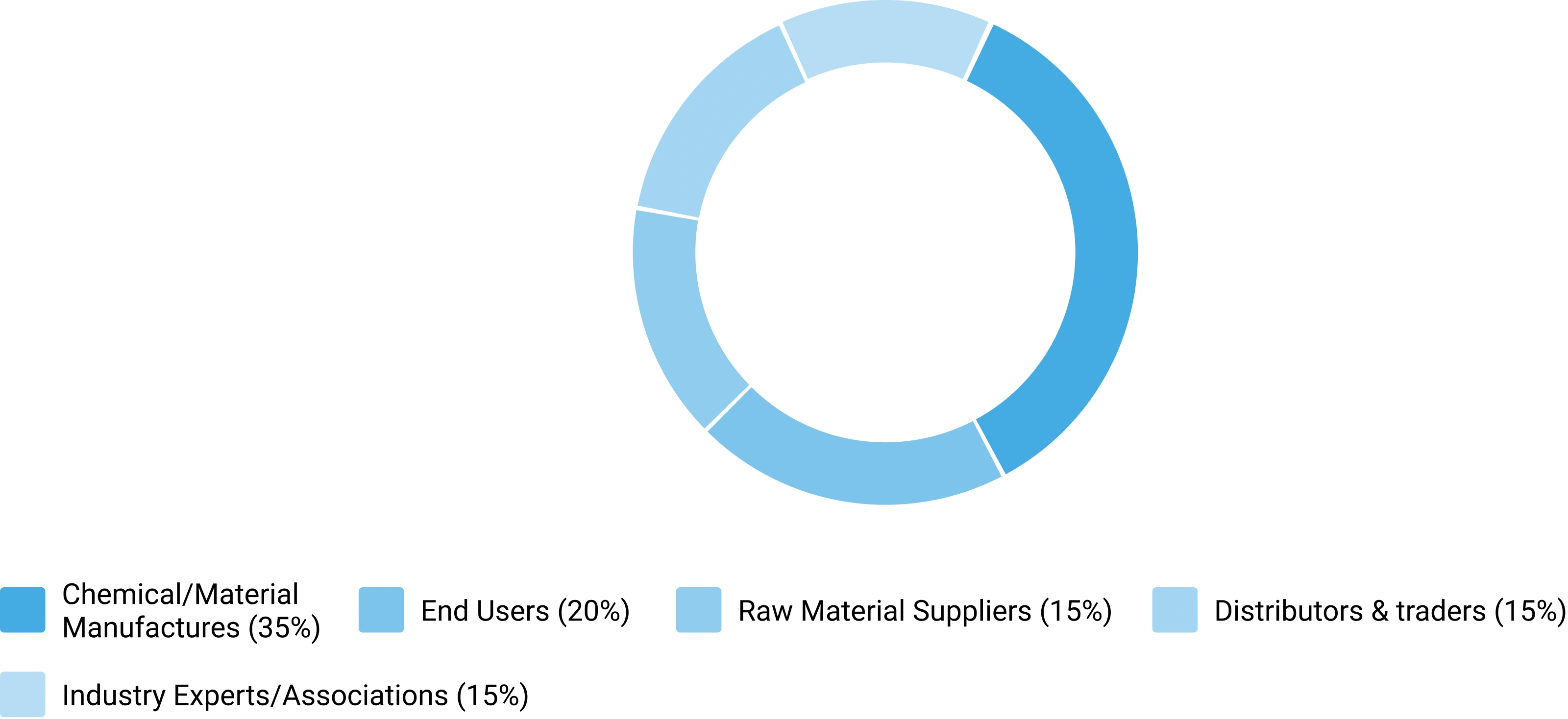
Category : Manufacturers, Suppliers, Distributors, End Users, Experts/Associations
Average Duration : 30–60 Minutes
Interview Mode : Video calls, telephonic interviews, expert consultations
Interview Format : Structured / Semi-Structured questionnaire
Focus Areas of Primary Research:
Market Size & Forecast Validation :
Revenue estimates, volume consumption, growth rates, forecast assumptions, regional demand.
Supply Chain & Value Chain Assessment :
Raw material sourcing, supply chain challenges, distribution networks, procurement practices.
Production & Capacity Analysis :
Manufacturing capacity, utilization rates, expansion projects, plant investments.
Pricing & Cost Structure Analysis :
Product pricing trends, feedstock costs, energy costs, margin pressures, pricing outlook.
Competitive Landscape Assessment :
Market share, competitor positioning, strategic initiatives, partnerships, acquisitions.
Primary Research — Stakeholder Coverage by Category
Distribution of interview respondents across stakeholder categories (% share from PPT data)
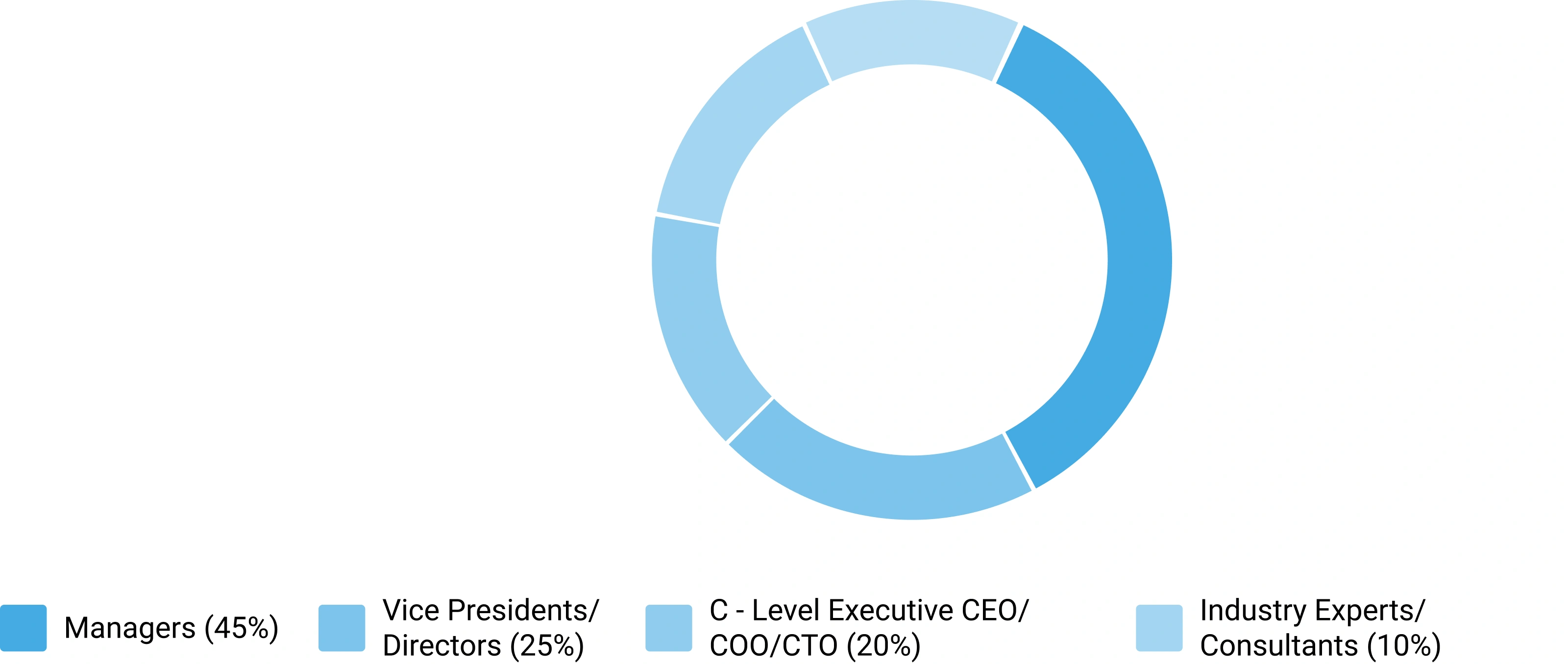
Primary Research — Respondent Designation Profile
Seniority breakdown of interview respondents (% share from PPT data)
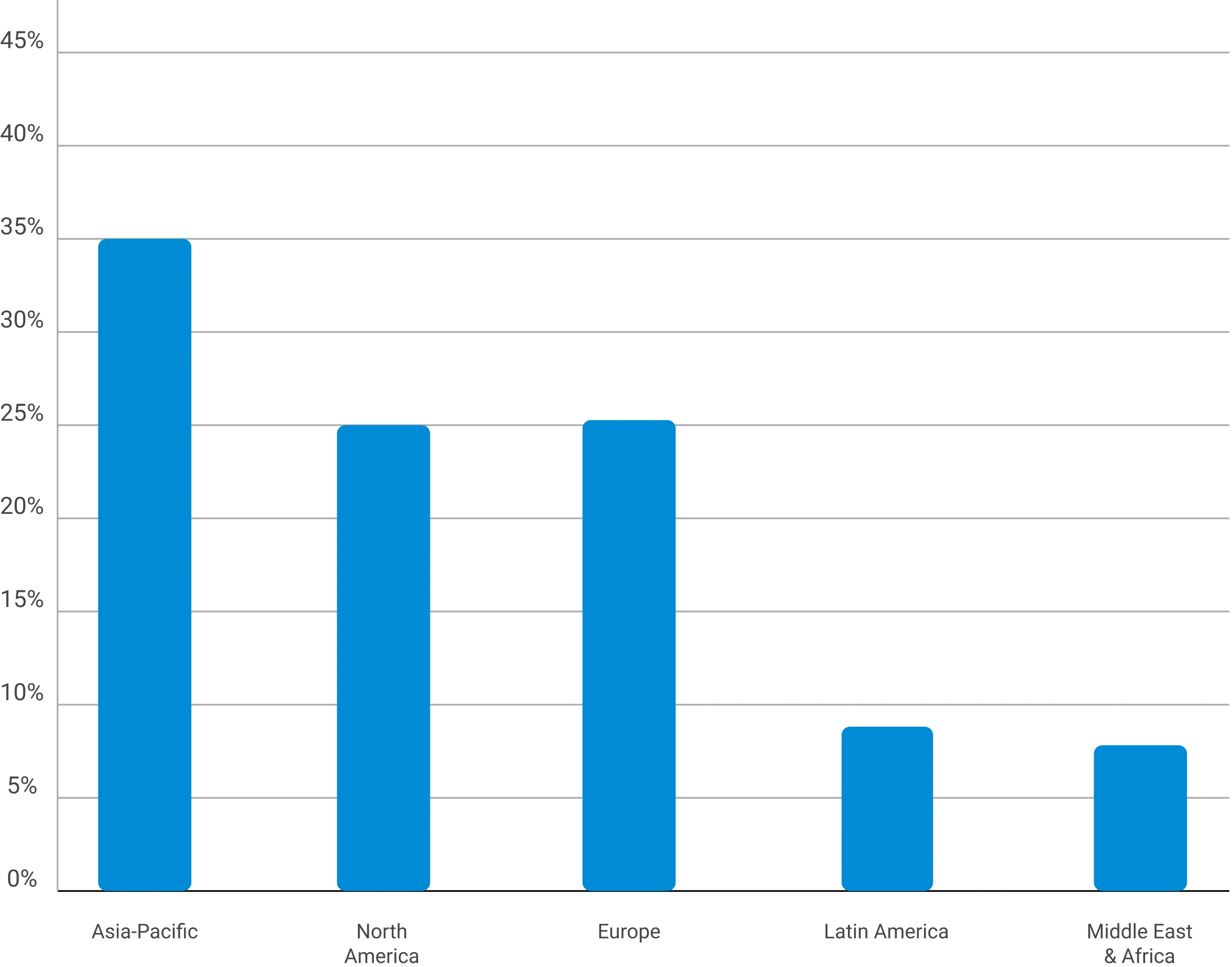
Primary Research — Geographic Coverage of Interviews
Regional distribution of primary research engagement (% share from PPT data)
Phase 6 — Data Triangulation and Market Validation
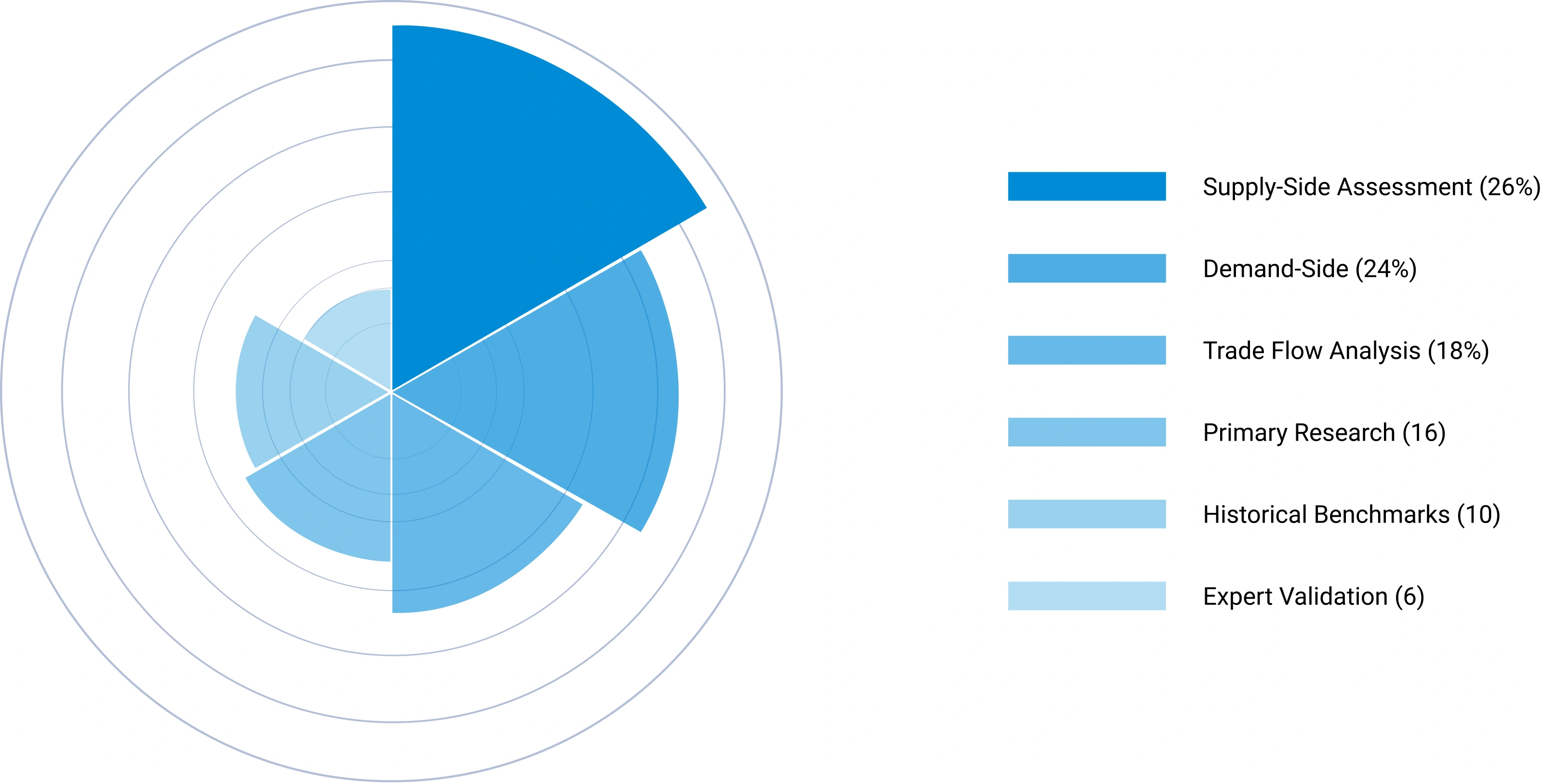
No single methodology is relied upon in isolation. Multiple independent estimation approaches are combined and reconciled to ensure consistency, accuracy, and analytical defensibility. Any material deviations between approaches are investigated and adjusted through additional validation cycles.
The final market size is derived through weighted triangulation of all validated methodologies. Any material deviations between approaches are investigated and adjusted through additional validation cycles. The outcome represents the most realistic assessment of the market based on available evidence and expert confirmation ensuring that volume and value estimates are fully consistent with one another.
Triangulation Framework — Input Contribution Weight
Relative weight each sizing input contributes to the final reconciled market estimate
Phase 7 — Forecast Modeling: Projecting Future Market Evolution
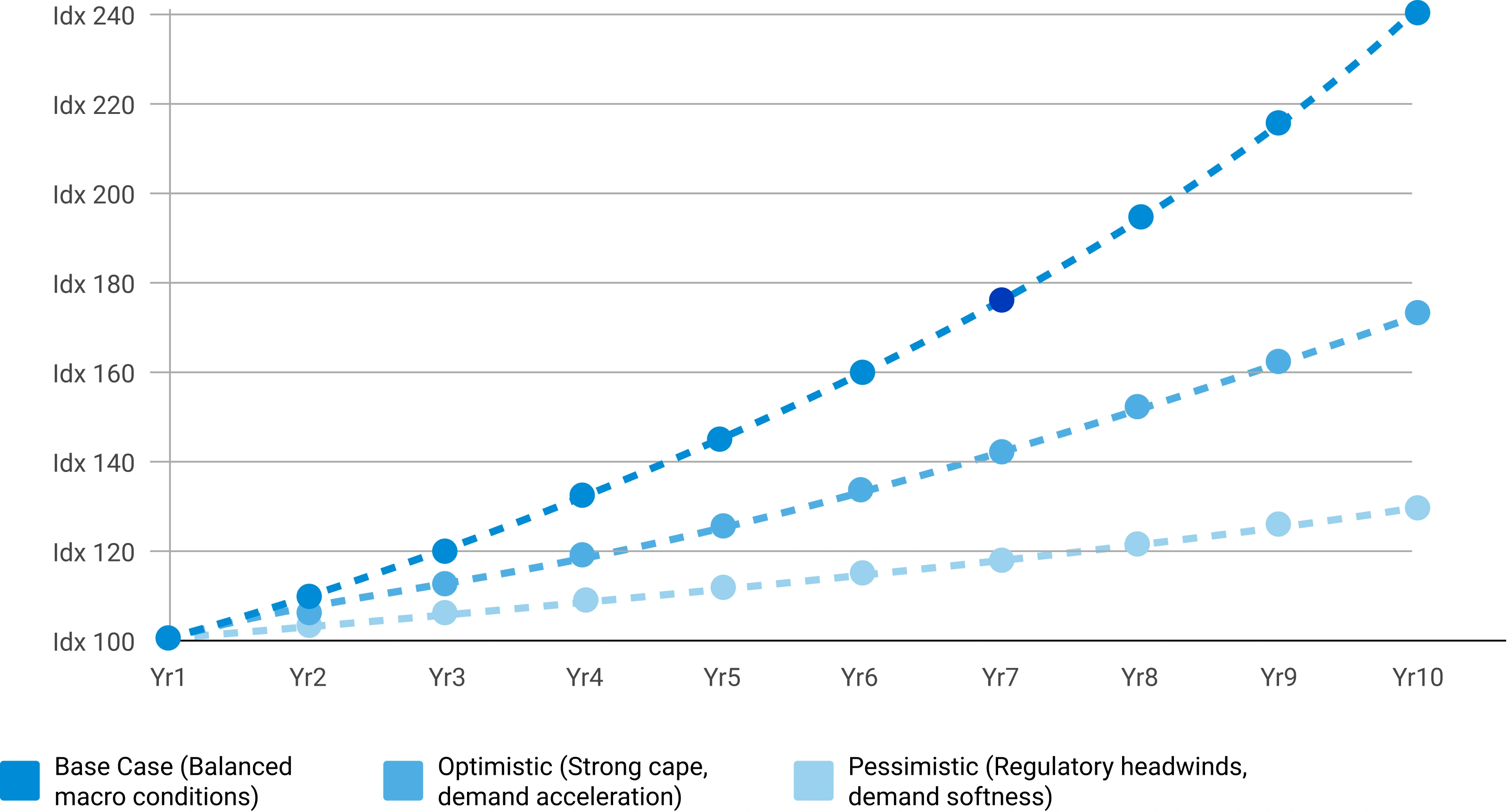
Forecasting evaluates the future trajectory of the market using a combination of quantitative indicators and qualitative assessments across economic, industry, and regulatory dimensions. Rather than simple extrapolation, each driver is independently modeled and integrated into a composite forecast.
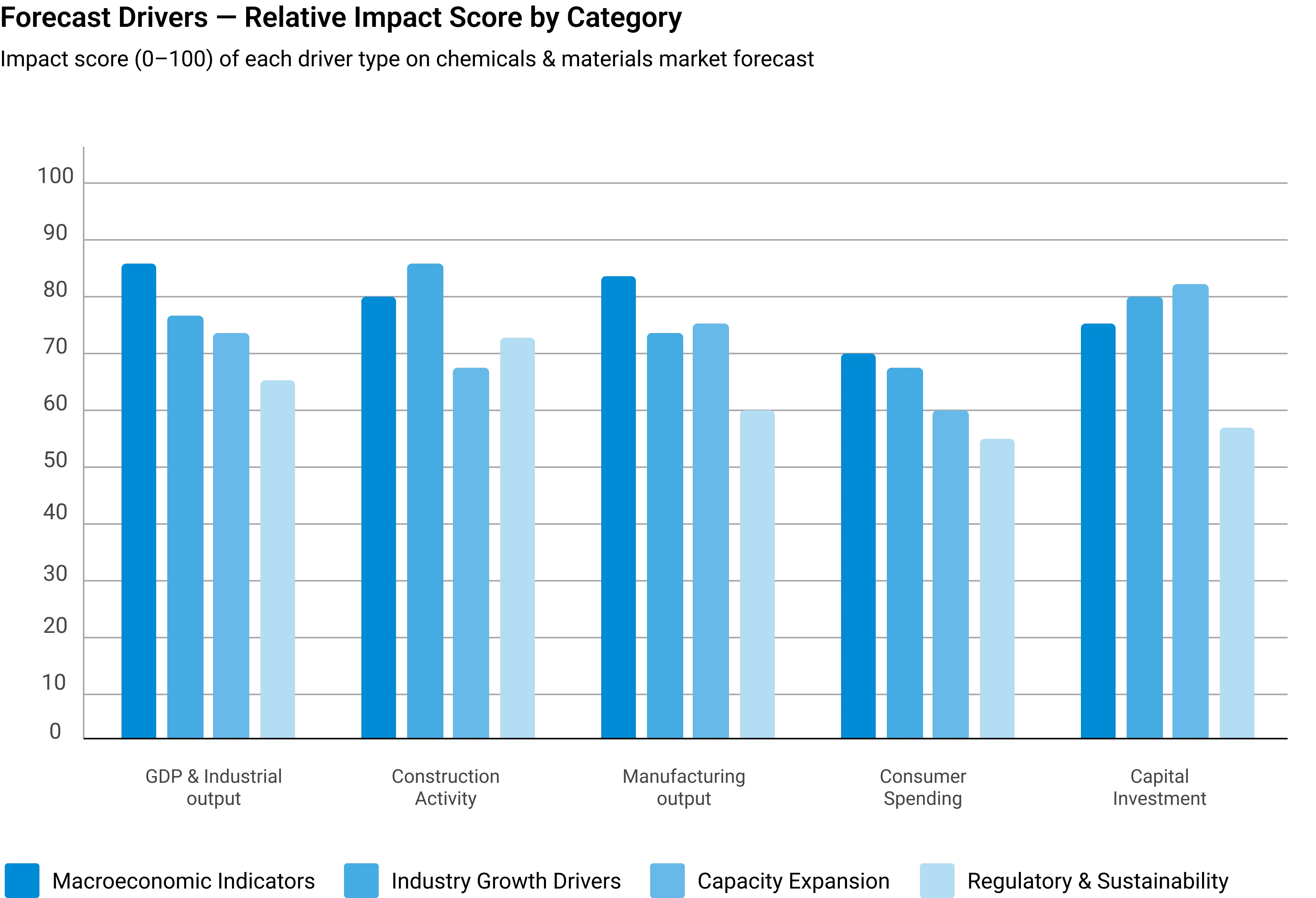
Macroeconomic Indicators
GDP growth, industrial production, manufacturing output, construction activity, consumer spending, and capital investment form the quantitative foundation of long-term demand projections. These are applied at country, regional, and global levels.
Industry Growth Drivers
Urbanization, infrastructure development, industrialization, technological innovation, sustainability initiatives, and evolving product performance requirements are assessed at regional and industry levels — capturing both structural and cyclical demand drivers.
Capacity Expansion Analysis
Announced plant expansions, new manufacturing facilities, technology upgrades, and strategic investments are evaluated to determine future supply-demand dynamics and potential market tightness or oversupply situations.
Regulatory & Sustainability
Environmental regulations, chemical safety standards, emission reduction targets, circular economy initiatives, and sustainability requirements are incorporated as they often influence product adoption rates and market growth trajectories.
Scenario Forecast Range — Indexed Market Growth (Year 1–10)
Illustrative indexed growth trajectories across Base, Optimistic, and Pessimistic scenarios over a 10-year forecast horizon
Forecast Drivers — Relative Impact Score by Category
Impact score (0–100) of each driver type on chemicals & materials market forecast



Comments
Share your thoughts, ask a question, or provide feedback about this report.