
What is the Europe plastic dielectric films market size and share?
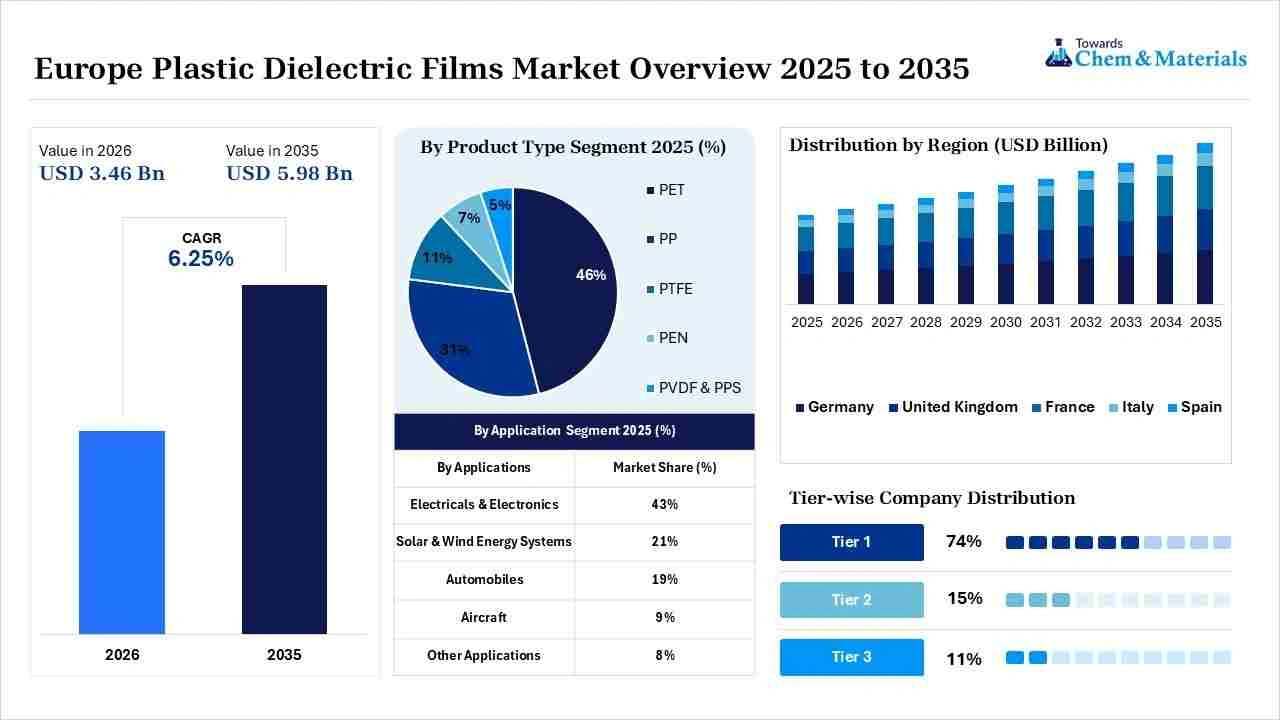
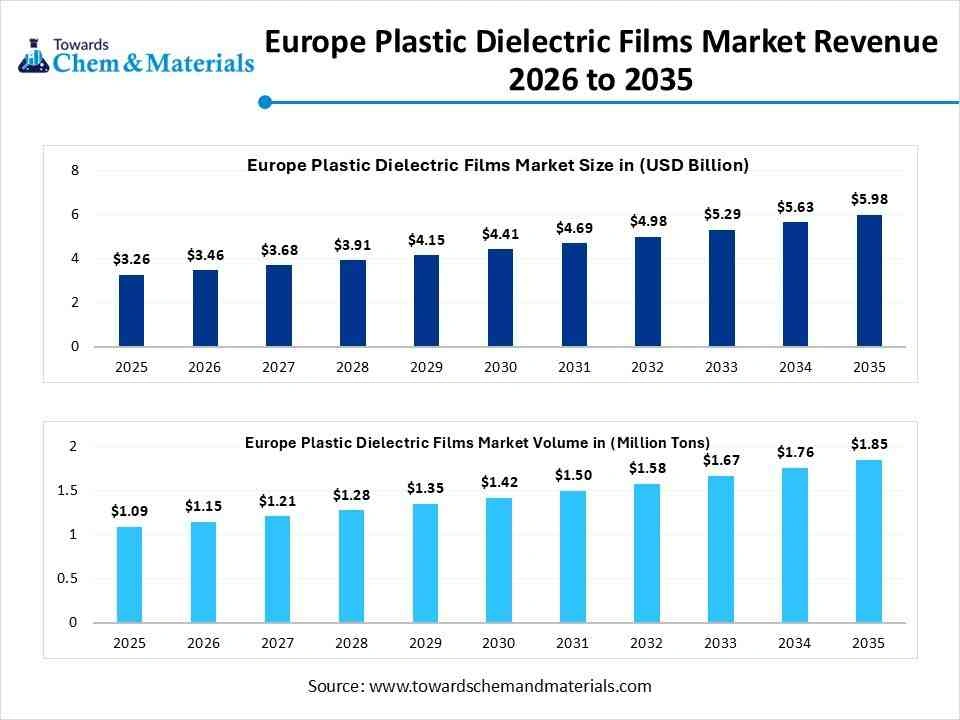
The Europe plastic dielectric films market size was valued at USD 3.26 billion in 2025, is estimated to reach USD 3.46 billion in 2026, and is projected to reach USD 5.98 billion by 2035, exhibiting a compound annual growth rate (CAGR) of 6.25% over the forecast period from 2026 to 2035. Demand for high-voltage components, power conditioning systems, capacitors, and electronic insulation is growing, which reinforces consumption. New developments in modified polypropylene, high-temperature dielectric materials, nanocomposites, and ultra-thin films for advanced applications are being made by manufacturers. Electrification of vehicles, integration of renewable energy, and growing demand for high-performance electrical insulation materials are driving market expansion.
Market Highlights
- Germany dominated Europe The plastic dielectric films market is holding a 35.5% share in 2025 and is expected to grow at a CAGR of 6.27% during the forecast period.
- Spain held 7.4% market share in 2025 and is expected to grow at the fastest with a CAGR of 6.49% during the forecast period.
- By product, the PET segment dominated the market with the largest share of 46% in 2025 and is expected to grow at a CAGR of 5.72% during the forecast period.
- By product, the PP segment held 31% market share in 2025 and is expected to grow at the fastest CAGR of 7.26% over the forecast period.
- By application, the electricals & electronics segment dominated the market with the largest share of 43% in 2025 and is expected to grow at a CAGR of 5.84% during the forecast period.
- By application, the solar & wind energy systems segment held 21% market share in 2025 and is expected to grow at the fastest CAGR of 8.42% over the forecast period.
According to Towards Chemicals and Materials Analytics and Consulting, the Europe Plastic Dielectric Films market volume was valued at 1.09 million tons in 2025 and is expected to surpass around 1.85 million tons by 2035, accelerating a compound annual growth rate (CAGR) of 5.45% over the forecast period from 2026 to 2035.
The Europe plastic dielectric films market involves the use of high-performance polymer materials in electrical insulation, capacitors, and power management applications. Germany is the leader in the market due to its robust automotive and industrial sector. Automotive electrification, deployment of renewable energy, miniaturization, the need for a circular economy, and local value chains keep impacting market development. Modified PP, polyphenylene sulfide (PPS), and polyethylene naphthalate (PEN) are alternatives that can withstand high temperatures and deliver superior electrical characteristics for demanding applications.
Global Investment Movement for the Europe Plastic Dielectric Films Market
The focus of capital allocation is moving towards 800V architectures with thermally stable films, traction inverters, and high-voltage components. Materials, such as polypropylene, polyphenylene sulfide, and polyethylene naphthalate, meet the changing power electronics needs for electric mobility. Investment is now focused on wind power installations, smart-grid and inverter applications for solar power systems, where rugged film capacitors are needed. The increasing penetration of renewables creates some demand for reliable dielectric materials, needed for power conversion and conditioning equipment in European energy systems.
Report Scope
| Report Attributes | Details |
| Market Size in 2026 | USD 3.46 Billion/1.15 Million Tons |
| Expected Size in 2035 | USD 5.98 Billion/1.85 Million Tons |
| Growth Rate | CAGR of 6.25% |
| Base Year of Estimation | 2025 |
| Forecast Period | 2025-2035 |
| Segment Covered | By Product, By Applications |
| Key Companies Profiled | Steiner GmbH & Co. KG, Tervakoski Film, Bolloré Innovative Thin Films, Kopafilm Elektrofolien GmbH, Coveme Spa, Treofan Group, Wacker Chemie, Jindal Films Europe, Birkelbach Kondensatortechnik GmbH, Toray Films Europe, Mitsubishi Polyester Film GmbH |
Market Trends
- Polymer films are being developed that can be used at high temperatures above 150°C for power converters that need high-temperature stability.
- Better temperature resistance can decrease reliance on bulky cooling equipment and increase its applicability in demanding power electronics applications.
- Bio-derived polymers are increasingly being investigated by manufacturers, as the European circular economy goals and other sustainability needs are being addressed.
- This shift helps develop material compositions that are more sustainable in terms of renewable feedstocks, reduced environmental impacts, and alignment with new sustainability standards.
Key Technological Shifts and AI in Europe Plastic Dielectric Films Market
Generative chemistry models based on artificial intelligence can sample over 150 million virtual chemical compositions to identify polymer candidates that can be used in advanced applications such as electric vehicle inverters and aerospace systems, which require higher temperature resistance of over 150°C–200°C. Machine learning models can also predict the dielectric constant, dissipation factor, and temperature stability before physical synthesis. These capabilities enable quicker material discovery and limit unnecessary experimental development cycles.
Supply Chain Analysis of the Europe Plastic Dielectric Films Market
Feedstock Procurement
- The basic raw materials for the production of high-insulation dielectric film are specialized capacitor-grade polypropylene and polyester resins.
- Resin purity and material quality will affect electrical insulation, dielectric reliability, processing performance, and finished film consistency.
- SABIC is a major player in the supply of advanced high-purity polypropylene resins and certified renewable and bio-based feedstocks being used in the production of films in Europe.
- Other Key Players: Borealis AG, TotalEnergies, LyondellBasell.
Chemical Synthesis and Processing
- Raw chemical building blocks are polymerized and processed to structured base materials for use in demanding electrical environments.
- Controlled synthesis and processing set material properties that are needed for thermal resistance, electrical stability, and high-voltage performance.
- Wacker Chemie produces and develops special polymer matrices and advanced chemical additives for thermal stability and electronic properties.
- Other Key Players: BASF SE, Arkema, Covestro.
A compound formulation is used to blend the product.
- The base polymers are selected in conjunction with additives, heat stabilizers, and nucleating agents to create specialized dielectric material formulations.
- The significance of formulation optimization is that it enhances breakdown voltage, thermal thresholds, electrical insulation, and application-specific material performance.
- Lehmann & Voss & Co. manufactures performance masterbatches, plastic compounds, and additive formulations for customized electrical insulation profiles.
- Other Key Players: Constab Polyolefin Additives, A. Schulman - LyondellBasell, Polymer-Chemie GmbH.
Sustainability Analysis:
European plastic dielectric films are subject to environmental issues such as fossil fuel consumption, energy consumption, greenhouse gases, long-lived waste, and microplastic issues. Difficult recycling is due to the strong attachment of metallized films to metal electrodes and the limited number of specialized facilities. Chemical recycling and mono-material capacitor designs are potential circularity enhancements. The EU Green Deal, PPWR, WEEE, REACH, and eco-design push for the use of resources, safer substances, recycling, durability, and environmental impacts.
What are Plastic Dielectric Films?
Plastic dielectric films are insulating materials that are based on polymers and are placed between conductors so that electricity cannot pass through them, but electrical energy is retained. Typical materials are PET, PP, PTFE, PEN, PVDF, and PPS, used for capacitors, insulation, electronics, energy, and high-end electrical components.
Uses of Europe Plastic Dielectric Films
- Film capacitors are a type of capacitor that utilizes plastic dielectric films as its insulating and energy storage layer.
- The electrical characteristics of their dielectrics ensure stability of capacitance, insulation resistance, and reliable operation in challenging electrical conditions.
- In electronics where compact structure and reliable electrical separation are demanded, insulation is provided by thin dielectric films.
- They are dimensionally stable and have good dielectric properties, which facilitate increasingly miniaturized electronic architectures.
- Film-based electrical components are found in solar and wind energy systems in power conversion and conditioning equipment.
- High-performance dielectric materials are used in reliable applications for performance when electrical systems are operating under extreme conditions and high voltage requirements.
Pricing Analysis for the Europe Plastic Dielectric Films Market
European dielectric film pricing reflects the changing demand, technology differentiation, environmental compliance requirements, energy costs, and the cost of petrochemicals. Upstream cost volatility still exists for the petroleum-based polypropylene, PET, and engineering polymers. Across Europe, film processing is energy-intensive and therefore puts pressure on manufacturing. Lower-priced imports compete with standard films, and the ultra-thin, metallized, and high-temperature grades are more competitively priced due to the high-performance requirements and technology differentiation.
Europe Plastic Dielectric Films Market: Global Trade Analysis
Demanding environmental compliance, specialized manufacturing, and downstream electronics requirements shape European trade. Europe is able to produce its own chemical monomers and specialty resins but has to purchase its own end products, electronic components. Germany/France facilitates intra-European transfer of specialized films and substrates; meanwhile, RoHS and REACH act as barriers to importation of non-conforming films and substrates. Automotive electrification and renewables also impact regional procurement and trade.
Segmental Insights
Product Insights
The PET segment dominated the market with the largest share of 46% in 2025 and is expected to grow at a CAGR of 5.72% over the forecast period, owing to the established electrical insulation applications and reliable dielectric performance. PET film offers dimensional stability, processing flexibility, and reliable insulation for capacitors and electronic components. PET adoption is continuing thanks to its use in electrical, electronic, automotive, and industrial applications, and its use of specialty grades meets the growing need for performance in the European market.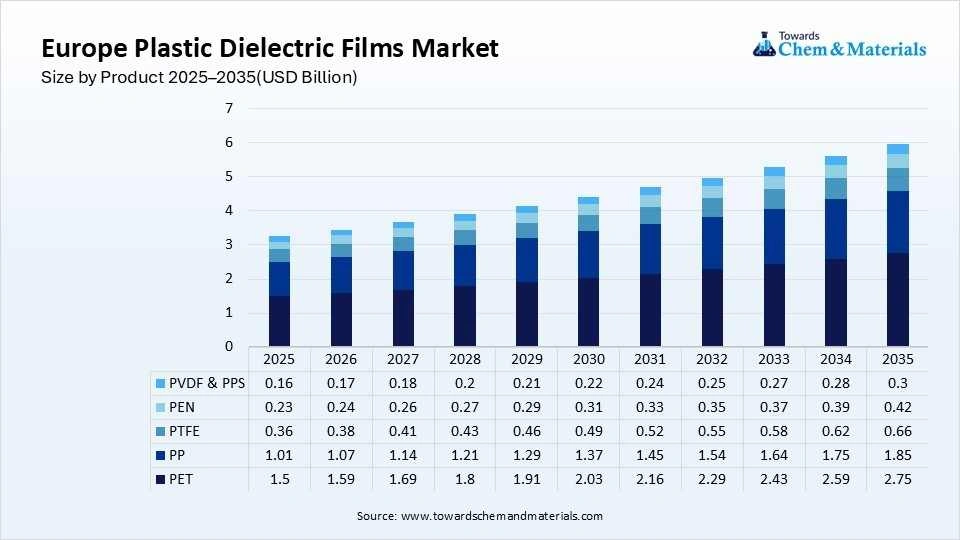
- For instance, in February 2026, Cosmo Films introduced Sealable Peelable Transparent Anti-Fog BOPET lidding film for refrigerated/fresh food packaging. The development illustrates the ongoing innovation in PET film technologies, including visibility, shelf life, sealing, and special applications. (Source: www.cosmofirst.com)
The PP segment held a 31% market share in 2025 and is expected to grow at the fastest CAGR of 7.26% over the forecast period, due to its excellent electrical properties and the demand for next-generation structures of the film. For tough applications, modified polypropylene is used for its high dielectric properties and high thermal resistance. The rise in interest in employing mono-material solutions and energy-related applications continues to drive PP use throughout European electrical and industrial segments.
- For instance, in August 2026, TPL added heat-resistant film types to its BOPP portfolio for high-speed packaging. The solutions focus on dimensional stability, strength, clarity, and mono-material compatibility that meet PPWR needs.(Source: www.packagingstrategies.com)
Europe Plastic Dielectric Films Market Share, By Product, 2025 (%)
| By Product | Market Share (%) |
| PET | 46% |
| PP | 31% |
| PTFE | 11% |
| PEN | 7% |
| PVDF & PPS | 5% |
Application Insights
The electricals & electronics segment dominated the market with the largest share of 43% in 2025 and is expected to grow at a CAGR of 5.84% over the forecast period. High levels of demand for dielectrics in capacitors, insulation films, flexible circuits, and electronic components supported the electricals and electronics application area. The growing electrification and the miniaturization of components are reinforcing the need for reliable insulating materials.
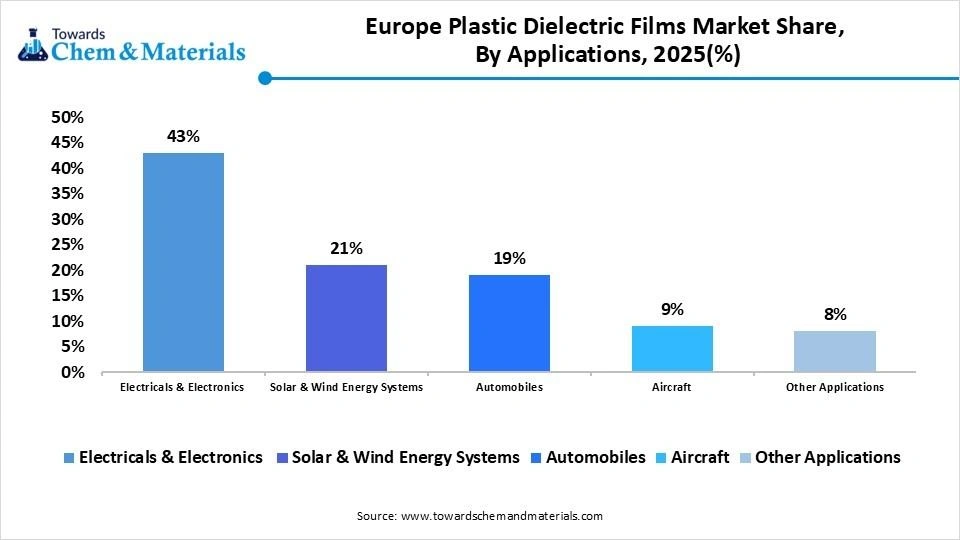
The solar & wind energy systems segment held a 21% market share in 2025 and is expected to grow at the fastest CAGR of 8.42% over the forecast period, reflecting the growth in renewable energy installations and power conditioning needs. The dielectric films are used to support the components of solar modules, to construct inverter systems, and as electrical insulation for wind turbines. The trends in increasing renewable electric generation and conversion are driving the need for high-performance materials to maintain reliable operation in increasingly complex energy generation and conversion systems.
- For instance, in June 2026, GCL SI announced at Intersolar Europe 2026 that the back-contact cell technology will play a key role in its PV roadmap. Multi-layer gradient dielectric films and advanced technology have been combined in its GPC 3.0 module. (Source: finance.yahoo.com)
Europe Plastic Dielectric Films Market Share, By Applications, 2025 (%)
| By Applications | Market Share (%) |
| Electricals & Electronics | 43% |
| Solar & Wind Energy Systems | 21% |
| Automobiles | 19% |
| Aircraft | 9% |
| Other Applications | 8% |
Regional Insights
How Did Germany Dominate the European Plastic Dielectric Films Market in 2025?
Germanys plastic dielectric films market size was estimated at USD 1.16 billion in 2025 and is projected to reach USD 2.13 billion by 2035, growing at a CAGR of 6.27% from 2026 to 2035. Germany dominated the market with the largest share of 35.5% in 2025 and is expected to grow at a CAGR of 4.6% during the forecast period, owing to its robust automotive, industrial, and power electronics ecosystem.
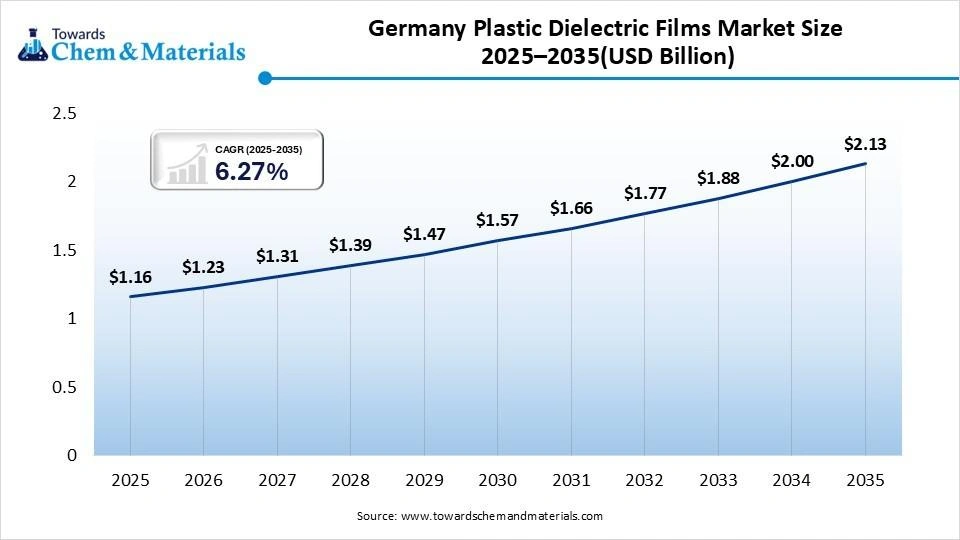
The development of electric vehicles, the infrastructure of renewables, and advanced manufacturing facilities are still driving demand for high-performing dielectric materials. In addition, the countrys well-established industrial base provides specialized film applications such as capacitors, electrical insulation, power conversion systems, and electronic components with reliable thermal and dielectric properties.
- For instance, in June 2026, at PCIM Europe, high-tech power electronics technologies were showcased. Wuxi CRE presented innovative film capacitor products and also held discussions with industry players in the field of green energy. (Source: www.crecapacitors.com)
Spains plastic dielectric films market size was estimated at USD 0.24 billion in 2025 and is projected to reach USD 0.45 billion by 2035, growing at a CAGR of 6.49% from 2026 to 2035. Spain held a 7.4% market share in 2025 and is expected to grow at the fastest CAGR of 4.3% during the forecast period, due to the growth of renewable energies and changes in electrical infrastructure. The growing growth of solar and wind power systems offers opportunities for dielectric films employed in power conditioning and conversion systems. Demand is also influenced by the countrys growing advanced energy ecosystem and larger-scale electrification, industrial applications, electronic components, and special insulation needs.
The UK plastic dielectric films market size was estimated at USD 0.66 billion in 2025 and is projected to reach USD 1.22 billion by 2035, growing at a CAGR of 6.34% from 2026 to 2035. The United Kingdom held a 20.3% market share in 2025 and is expected to grow at a CAGR of 3.5% over the forecast period, backed by electrical and electronic, industrial, and special applications. Demand remains strong across insulation materials, electronic components, and advanced film applications. Development of renewable energy and electrification also provides opportunities for high-performance dielectric materials, and existing industrial experience enables ongoing use in a wide range of applications that require good electrical insulation.
- For instance, in June 2025, KM Packaging released K-Peel 4G, a mono PET lidding film specification that offers excellent sealing performance and functions with APET and rPET trays. (Source: www.kmpackaging.com)
The France plastic dielectric films market size was estimated at USD 0.55 billion in 2025 and is projected to reach USD 1.01 billion by 2035, growing at a CAGR of 6.99% from 2026 to 2035. France held 16.8% market share in 2025 and is expected to grow at a CAGR of 4.1% over the forecast period. France is an important European market with existing industrial capacity and demand for electrical/electronic, automotive, renewable energy, and specialty manufacturing applications. Plastic dielectric films are useful for insulation and capacitors, e.g., electronic components and power systems, etc. requirements.
Italys plastic dielectric films market size was estimated at USD 0.50 billion in 2025 and is projected to reach USD 0.91 billion by 2035, growing at a CAGR of 6.17% from 2026 to 2035. Italy held a 15.2% market share in 2025 and is expected to grow at a CAGR of 3.9% over the forecast period. Italy is an established market in Europe for plastic dielectric films, with manufacturing of the films as well as a wide range of industrial applications. Application areas range from electrical systems and electronics to automotive parts, renewable energy devices, and specialized insulation applications. Demand for effective power systems and the advancement of electronic technologies are increasing, providing opportunities for materials with reliable electrical properties.
Recent Developments
- In August 2026, Panasonic Industry Europe made an announcement about its ECWFJ series of metallized polypropylene film capacitors for power electronics in industry and automotive applications. The series ensures cost-effective designs with safety and reliability. (Source: industry.panasonic.eu)
- In June 2025, EuPC announced the establishment of the European Plastic Films dedicated sector group to foster collaboration, innovation, and sustainable practices among European plastic film companies. (Source: www.plasticsconverters.eu)
Competitive Analysis
Key factors behind the competition in the European plastic dielectric films market include material performance, film quality, sustainability, thermal resistance, product innovation, and application specialization. Top companies are developing high-end polymer films for electrification, renewable energy, miniaturization, and the environment. There is an increasing focus on recyclable structures, high-temperature materials, ultra-thin gauges, and special electrical grades in product portfolios. The impact of regulatory requirements also has implications for competitive positioning as manufacturers develop solutions in line with the changing European environmental and circular economy demands.
- For instance, in May 2026, Jindal Films Europe added new grades to its BOPP portfolio dedicated to mono-material PP packaging applications. The initiative covers solutions that are recyclable and in line with PPWR compliance requirements. (Source: www.jindalfilms.com)
- In December 2025, Taghleef Industries was ready to showcase advanced sustainable film solutions focusing on biobased materials, recycled content, and improved recyclability at Packaging Innovations 2026. (Source: www.ti-films.com)
Top Players in the Market & Their Offerings
| Company | Company Type/Position | Major Headquarters | Geographic Presence | Europe Plastic Dielectric Film Offerings | Key Strength |
| Steiner GmbH & Co. KG | Premium Regional Specialist | Erndtebrück, Germany | European Core | Metallized PP, PET, PPS, and PEN dielectric substrates | High-precision custom metallization |
| Coveme S.p.A. | Advanced European Converter | Bologna, Italy | Global | Engineered dielectric polyester and treated film substrates | Expertise in laminates and structural insulation for solar photovoltaic panels |
Other Key Players
- Steiner GmbH & Co. KG
- Tervakoski Film
- Bolloré Innovative Thin Films
- Kopafilm Elektrofolien GmbH
- Coveme Spa
- Treofan Group
- Wacker Chemie
- Jindal Films Europe
- Birkelbach Kondensatortechnik GmbH
- Toray Films Europe
- Mitsubishi Polyester Film GmbH
Segment Covered in the Report
By Product
- PET
- Standard PET Films
- High-Temperature PET Films
- Metallized PET Films
- Electrical-Grade PET Films
- PP
- BOPP Films
- Cast PP Films
- Electrical-Grade PP Films
- Metallized PP Films
- PTFE
- PTFE Film
- Expanded PTFE Film
- Electrical-Grade PTFE Film
- PEN
- Standard PEN Films
- High-Temperature PEN Films
- Electrical-Grade PEN Films
- PVDF & PPS
- PVDF Films
- PPS Films
- High-Performance Electrical Films
By Applications
- Electricals & Electronics
- Capacitors
- Insulation Films
- Flexible Circuits
- Wire & Cable Insulation
- Electronic Components
- Solar & Wind Energy Systems
- Solar Module Components
- Solar Inverter Components
- Wind Turbine Electrical Insulation
- Energy Storage Systems
- Automobiles
- Electric Vehicle Components
- Motor Insulation
- Battery Systems
- Sensors & Electronic Components
- Aircraft
- Electrical Insulation
- Wiring Systems
- Avionics
- Lightweight Electronic Components
- Other Applications
- Industrial Equipment
- Telecommunications
- Medical Electronics
- Consumer Electronics
European countries
- Germany
- UK
- France
- Italy
- Spain
A Seven-Phase Framework
Our methodology is designed to be universally applicable across commodity chemicals, specialty chemicals, petrochemicals, construction chemicals, coatings, electronic chemicals, industrial gases, agrochemicals, water treatment chemicals, and performance materials. Each phase builds upon the last, creating a layered validation structure that minimizes estimation error and maximizes analytical confidence.
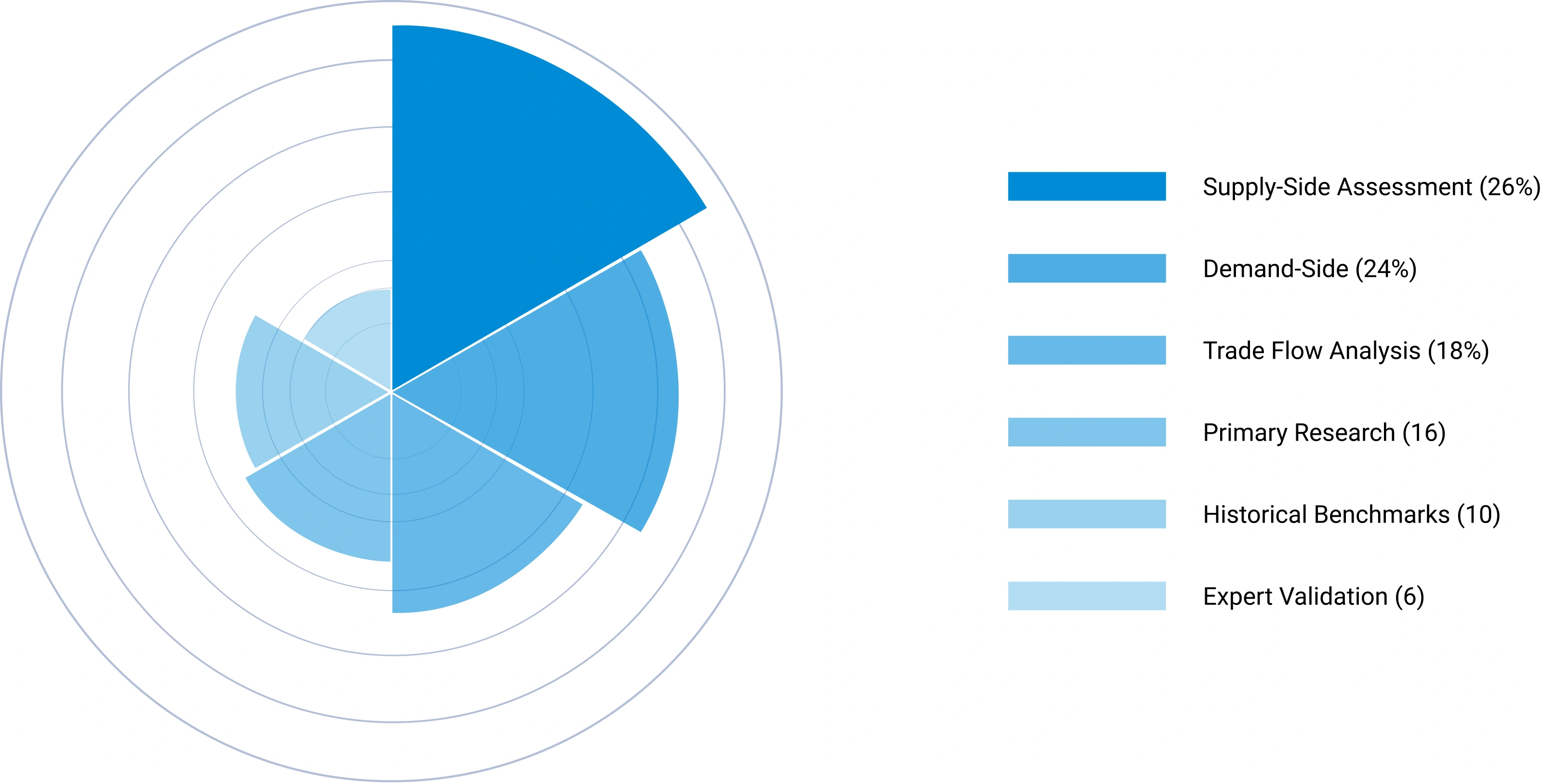
The framework ensures comprehensive market coverage, robust cross-validation, and reliable long-term forecasting — producing market estimates that withstand scrutiny from investors, regulators, and corporate strategy teams.

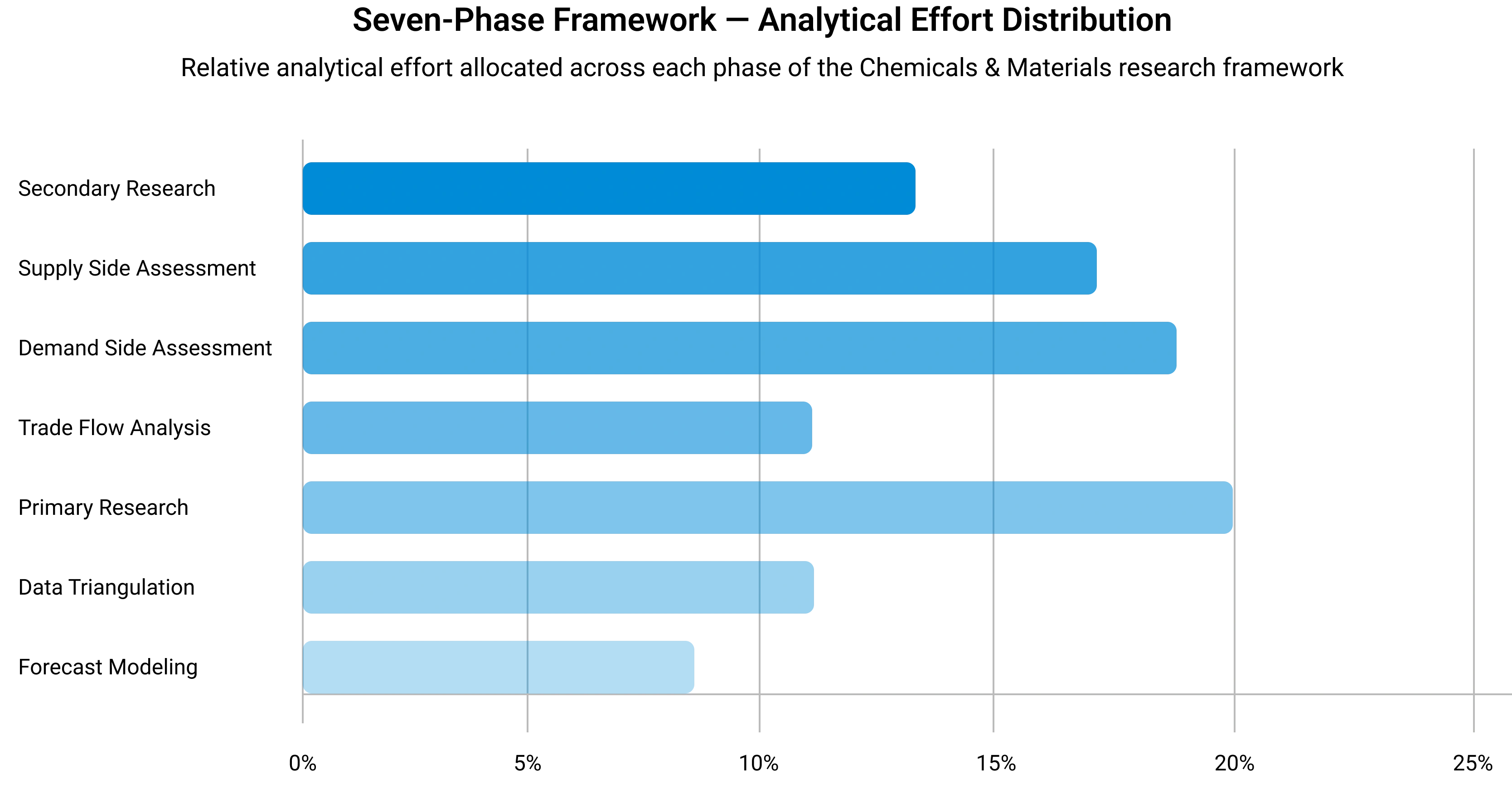
Seven-Phase Framework — Analytical Effort Distribution
Relative analytical effort allocated across each phase of the Chemicals & Materials research framework
Phase 1 - Secondary Research: Establishing the Foundation
Secondary research collects and evaluates publicly available information from authoritative sources, establishing the foundational understanding of market structure, value chain dynamics, competitive landscape, and end-use demand patterns. Every source is evaluated for credibility, recency, geographic relevance, and methodological soundness before inclusion.
Industry Associations
Sources include ACC, CEFIC, ICCA, JCIA, CPCIF, and SOCMA providing production volumes, consumption trends, capacity developments, and sustainability initiatives.
Company Disclosures
Annual reports, investor presentations, earnings transcripts, and regulatory filings reveal product portfolios, manufacturing footprints, capacity expansions, and revenue segmentation.
Government Databases
National statistical offices, customs authorities, environmental agencies, and industrial production databases provide verified statistics on output, trade flows, and regulatory compliance.
Trade Databases
UN Comtrade, ITC, Eurostat, and national customs authorities enable assessment of global product movement, import dependency, and export competitiveness across regions.
Our Secondary Research Sources
- Ministry of Chemicals and Fertilizers
- European Chemicals Agency
- United States Department of Energy
- Ministry of Industry and Information Technology
- Ministry of Economy Trade and Industry
- Ministry of Trade Industry and Energy
- National Institute of Standards and Technology
- Council of Scientific and Industrial Research
- Fraunhofer Society
- National Institute for Materials Science
Phase 2 — Supply-Side Assessment: Mapping Production Capabilities
Production Capacity Analysis
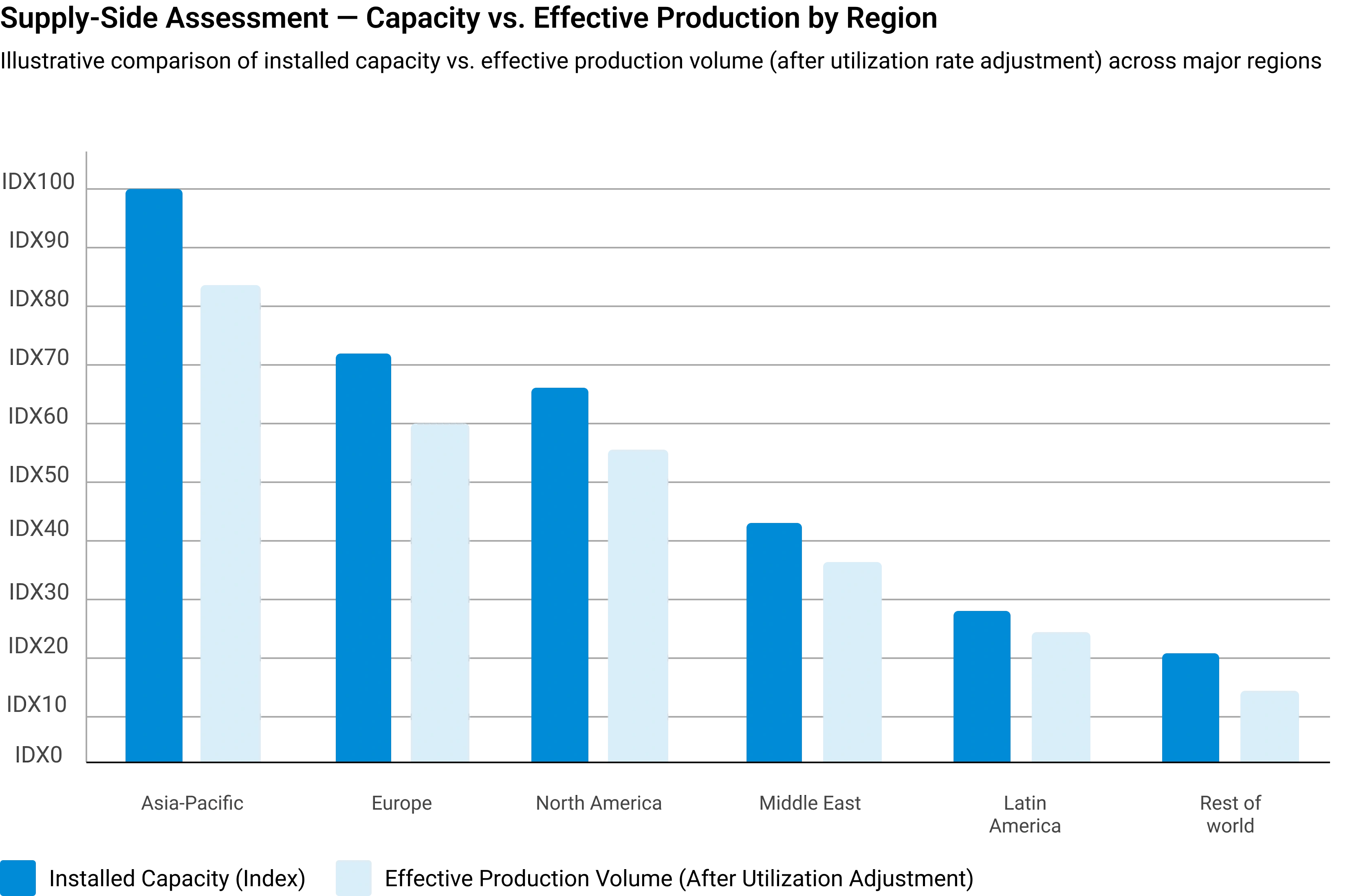
All major manufacturers are assessed for existing installed capacity, planned additions, expansions, new plant announcements, and technology adoption — mapped at global, regional, and country levels.
Capacity Utilization Adjustment
Installed capacity is adjusted using utilization rates based on demand conditions, feedstock availability, plant operating rates, maintenance schedules, and regulatory restrictions.
Manufacturer Revenue Analysis
Product-specific revenues, segment-level performance, regional distribution, average selling prices, and margin trends are evaluated to establish market value estimates.
Supply-Side Assessment — Capacity vs. Effective Production by Region
Illustrative comparison of installed capacity vs. effective production volume (after utilization rate adjustment) across major regions
Phase 3 — Demand-Side Assessment: Quantifying Chemical Consumption
Demand-side analysis quantifies chemical consumption across industries, applications, and geographies — identifying where and how chemicals are consumed throughout the value chain with precision.
End-Use Industry Analysis
Chemical demand is evaluated across automotive, construction, packaging, electronics, agriculture, healthcare, consumer goods, industrial manufacturing, energy and utilities, and water treatment. Industry output, production trends, and consumption intensity are analyzed to determine demand patterns.
Consumption Modeling
Demand is estimated using measurable indicators: kilograms per vehicle, kilograms per square meter of construction, dosage per cubic meter of water treated, kilograms per hectare of agricultural land, and kilograms per ton of manufactured products. Consumption factors are validated through industry publications and primary interviews.
Application Analysis
The market is segmented by application area to understand product performance requirements, formulation trends, technology adoption, customer preferences, and regulatory requirements improving demand accuracy and segmentation granularity.
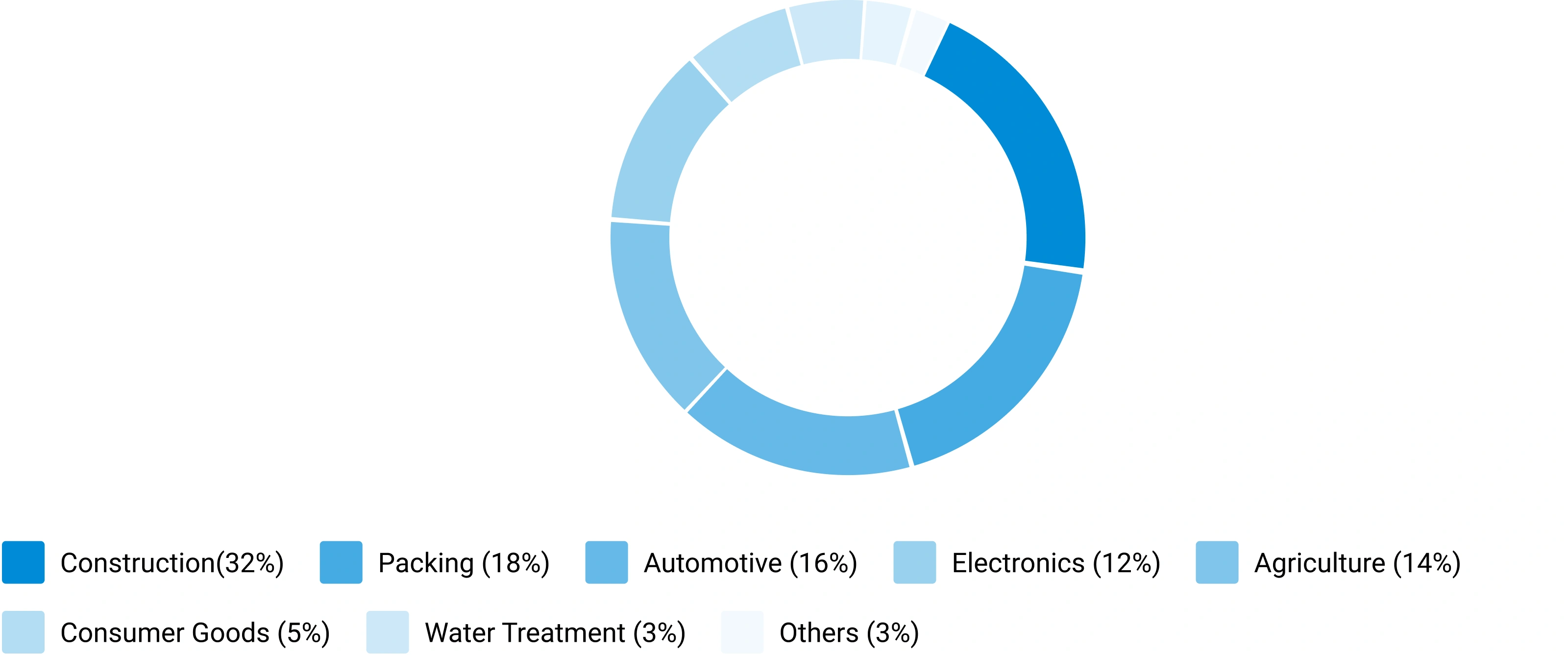
Demand-Side Assessment — End-Use Industry Demand Distribution
Illustrative distribution of chemical & materials demand across key end-use industries
Phase 4 - Trade Flow Analysis: Balancing Regional Supply and Demand
Trade flow analysis reconciles regional supply and demand estimates through import and export data, identifying net supply positions, regional dependencies, and market imbalances. It serves as an independent validation layer that tests the consistency of supply-side and demand-side estimates.
Import Analysis
Import data is evaluated to determine volumes, source countries, product dependency, regional supply gaps, and pricing trends — identifying markets that rely heavily on external supply and where domestic production is insufficient to meet demand.
Export Analysis
Export assessments reveal production surplus, export competitiveness, regional manufacturing strength, and global market participation. Export patterns also help validate domestic production estimates and identify net exporting regions.
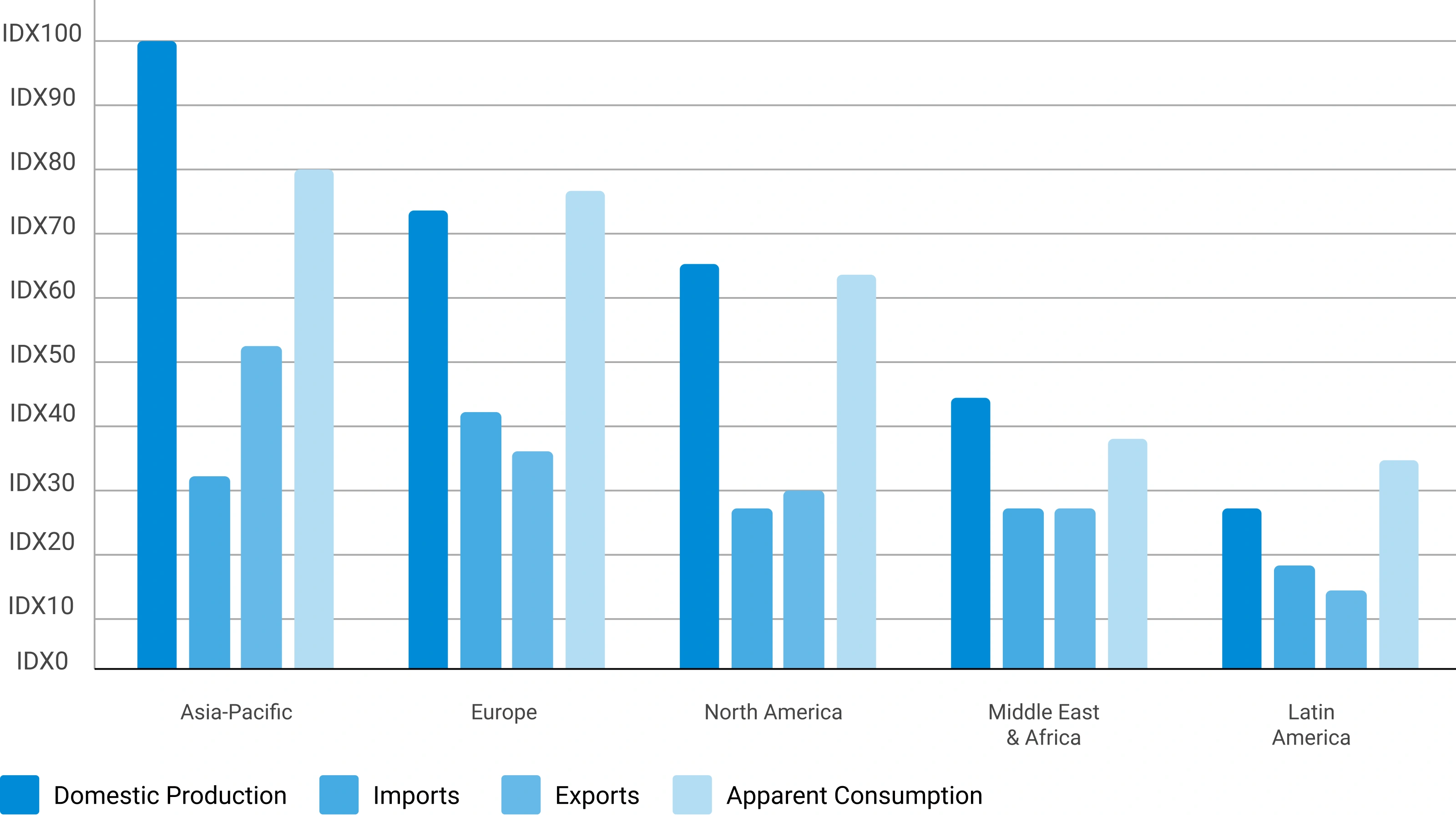
Apparent Consumption Model
Regional consumption is assessed using the standard apparent consumption formula:
Results identify net importing regions, net exporting regions, regional deficits, and surpluses — serving as an independent validation of supply and demand estimates.
Trade Flow Analysis — Net Supply Position by Region
Illustrative apparent consumption vs. domestic production across major regions — positive gap indicates net import dependency
Phase 5 — Primary Research: The Critical Validation Layer
Primary research tests and refines findings from secondary research through direct engagement with industry participants across the supply chain, demand side, and expert community. It captures intelligence that no database or published report can provide — the real-world experience of manufacturers, buyers, and specialists operating in the market.

Supply-Side Interviews
Conversations with chemical manufacturers, raw material suppliers, contract manufacturers, technology providers, and plant operators cover production trends, capacity utilization, pricing developments, technology shifts, and competitive dynamics.

Demand-Side Interviews
Engagement with OEMs, industrial consumers, procurement managers, distributors, formulators, and end-use manufacturers focuses on consumption trends, purchasing behavior, product substitution, demand outlook, and emerging applications.

Industry Expert Consultations
Additional interviews with industry consultants, independent experts, regulatory specialists, technical professionals, and research institutions provide deeper market context and validate key analytical assumptions.
Focus Areas of Primary Research:
Market Size & Forecast Validation
Revenue estimates, volume consumption, growth rates, forecast assumptions, regional demand.Supply Chain & Value Chain Assessment
Raw material sourcing, supply chain challenges, distribution networks, procurement practices.Production & Capacity Analysis
Manufacturing capacity, utilization rates, expansion projects, plant investments.Pricing & Cost Structure Analysis
Product pricing trends, feedstock costs, energy costs, margin pressures, pricing outlook.Competitive Landscape Assessment
Volume and value estimates confirmed to be fully consistent with one another before publicationInterview Volume by Market Scope
| Study Scope | Number of Interviews |
|---|---|
| Niche Market | 20 – 30 |
| Mid-Sized Market | 30 – 50 |
| Global Market | 50 – 80 |
| Highly Fragmented Market | 80 – 120 |
Interview Details:
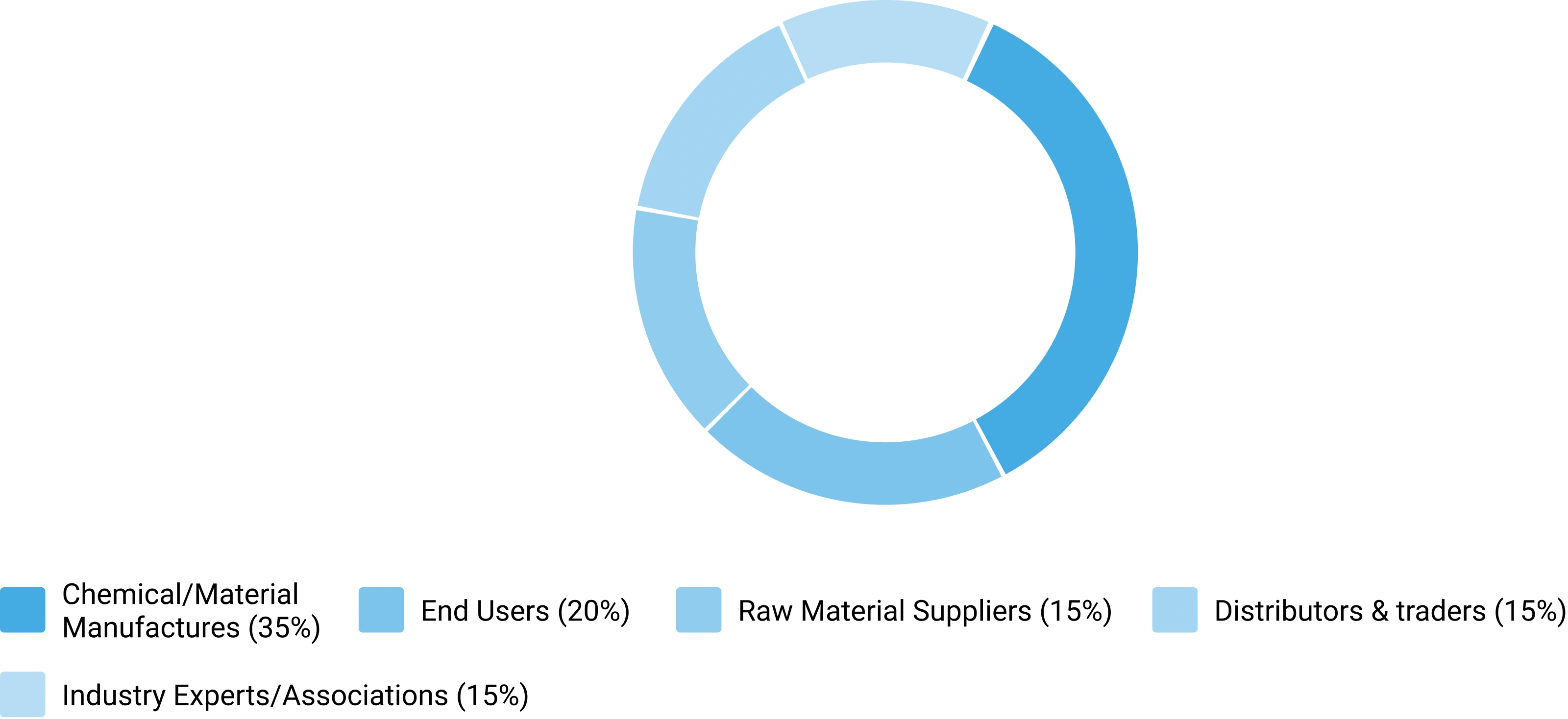
Category : Manufacturers, Suppliers, Distributors, End Users, Experts/Associations
Average Duration : 30–60 Minutes
Interview Mode : Video calls, telephonic interviews, expert consultations
Interview Format : Structured / Semi-Structured questionnaire
Focus Areas of Primary Research:
Market Size & Forecast Validation :
Revenue estimates, volume consumption, growth rates, forecast assumptions, regional demand.
Supply Chain & Value Chain Assessment :
Raw material sourcing, supply chain challenges, distribution networks, procurement practices.
Production & Capacity Analysis :
Manufacturing capacity, utilization rates, expansion projects, plant investments.
Pricing & Cost Structure Analysis :
Product pricing trends, feedstock costs, energy costs, margin pressures, pricing outlook.
Competitive Landscape Assessment :
Market share, competitor positioning, strategic initiatives, partnerships, acquisitions.
Primary Research — Stakeholder Coverage by Category
Distribution of interview respondents across stakeholder categories (% share from PPT data)
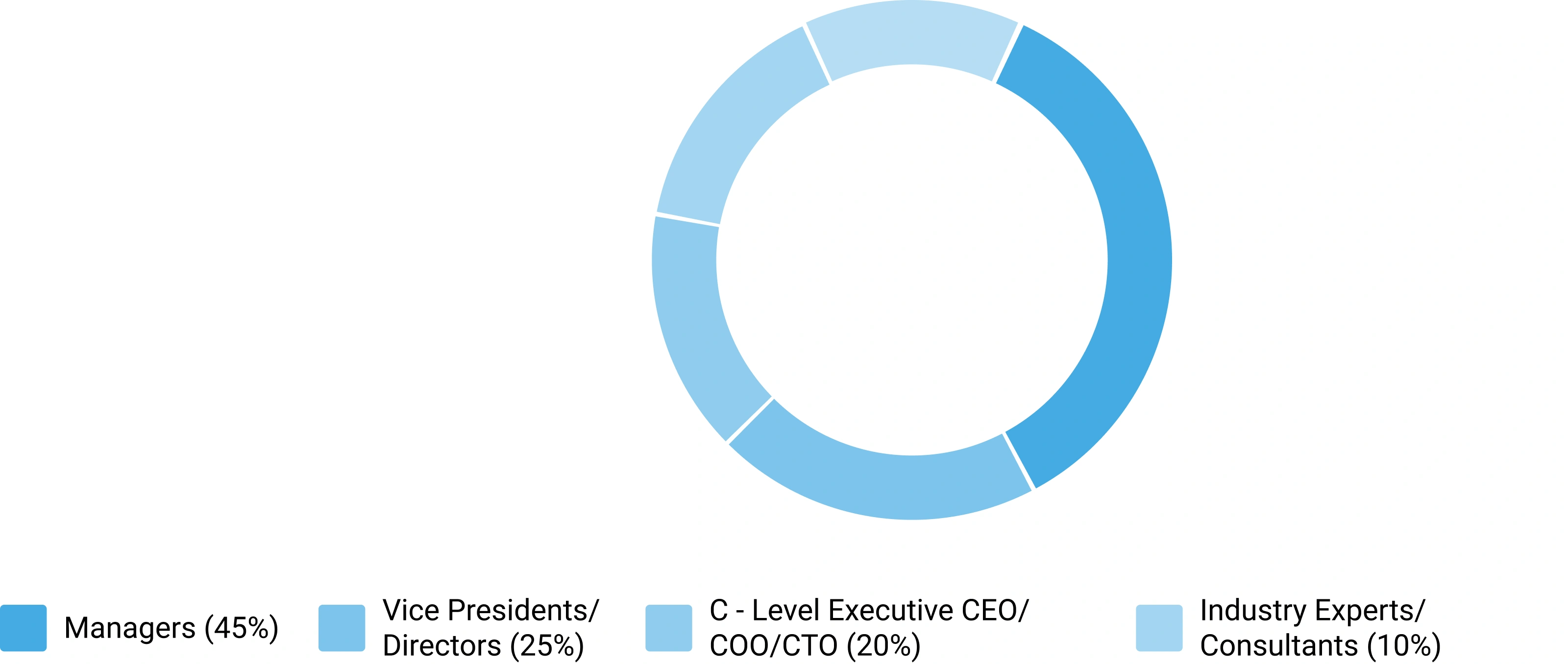
Primary Research — Respondent Designation Profile
Seniority breakdown of interview respondents (% share from PPT data)
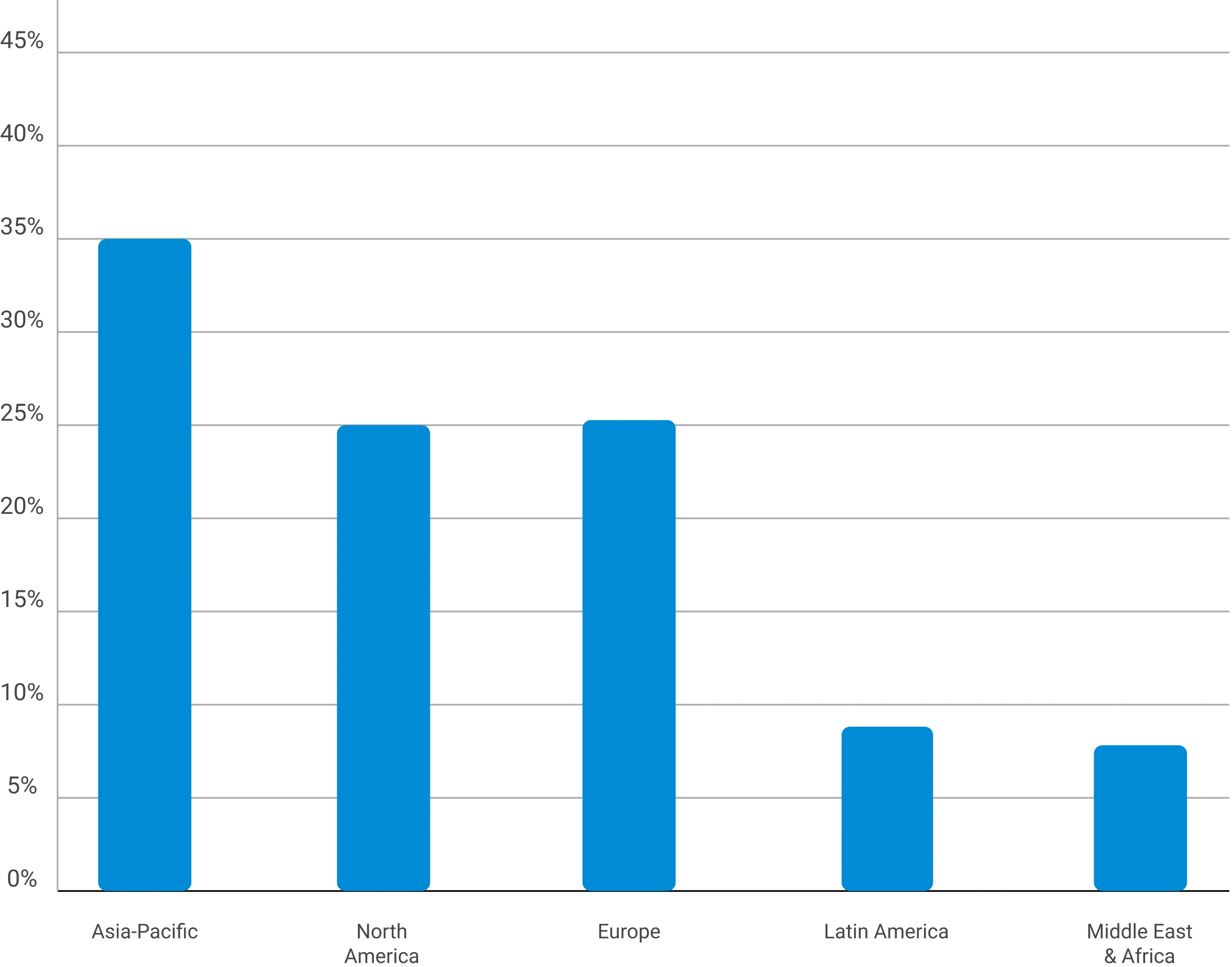
Primary Research — Geographic Coverage of Interviews
Regional distribution of primary research engagement (% share from PPT data)
Phase 6 — Data Triangulation and Market Validation
No single methodology is relied upon in isolation. Multiple independent estimation approaches are combined and reconciled to ensure consistency, accuracy, and analytical defensibility. Any material deviations between approaches are investigated and adjusted through additional validation cycles.
The final market size is derived through weighted triangulation of all validated methodologies. Any material deviations between approaches are investigated and adjusted through additional validation cycles. The outcome represents the most realistic assessment of the market based on available evidence and expert confirmation ensuring that volume and value estimates are fully consistent with one another.
Triangulation Framework — Input Contribution Weight
Relative weight each sizing input contributes to the final reconciled market estimate
Phase 7 — Forecast Modeling: Projecting Future Market Evolution
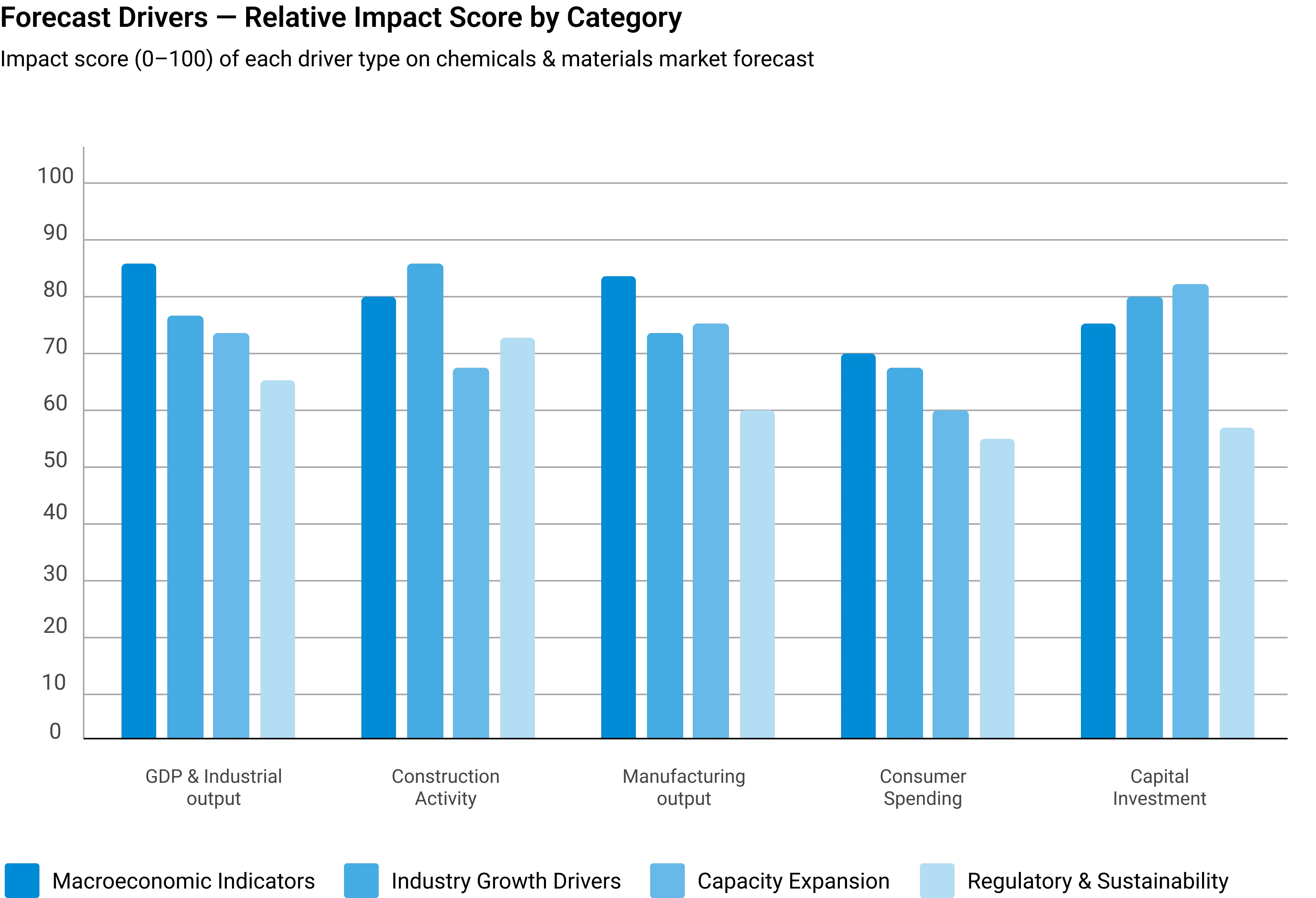
Forecasting evaluates the future trajectory of the market using a combination of quantitative indicators and qualitative assessments across economic, industry, and regulatory dimensions. Rather than simple extrapolation, each driver is independently modeled and integrated into a composite forecast.
Macroeconomic Indicators
GDP growth, industrial production, manufacturing output, construction activity, consumer spending, and capital investment form the quantitative foundation of long-term demand projections. These are applied at country, regional, and global levels.
Industry Growth Drivers
Urbanization, infrastructure development, industrialization, technological innovation, sustainability initiatives, and evolving product performance requirements are assessed at regional and industry levels — capturing both structural and cyclical demand drivers.
Capacity Expansion Analysis
Announced plant expansions, new manufacturing facilities, technology upgrades, and strategic investments are evaluated to determine future supply-demand dynamics and potential market tightness or oversupply situations.
Regulatory & Sustainability
Environmental regulations, chemical safety standards, emission reduction targets, circular economy initiatives, and sustainability requirements are incorporated as they often influence product adoption rates and market growth trajectories.
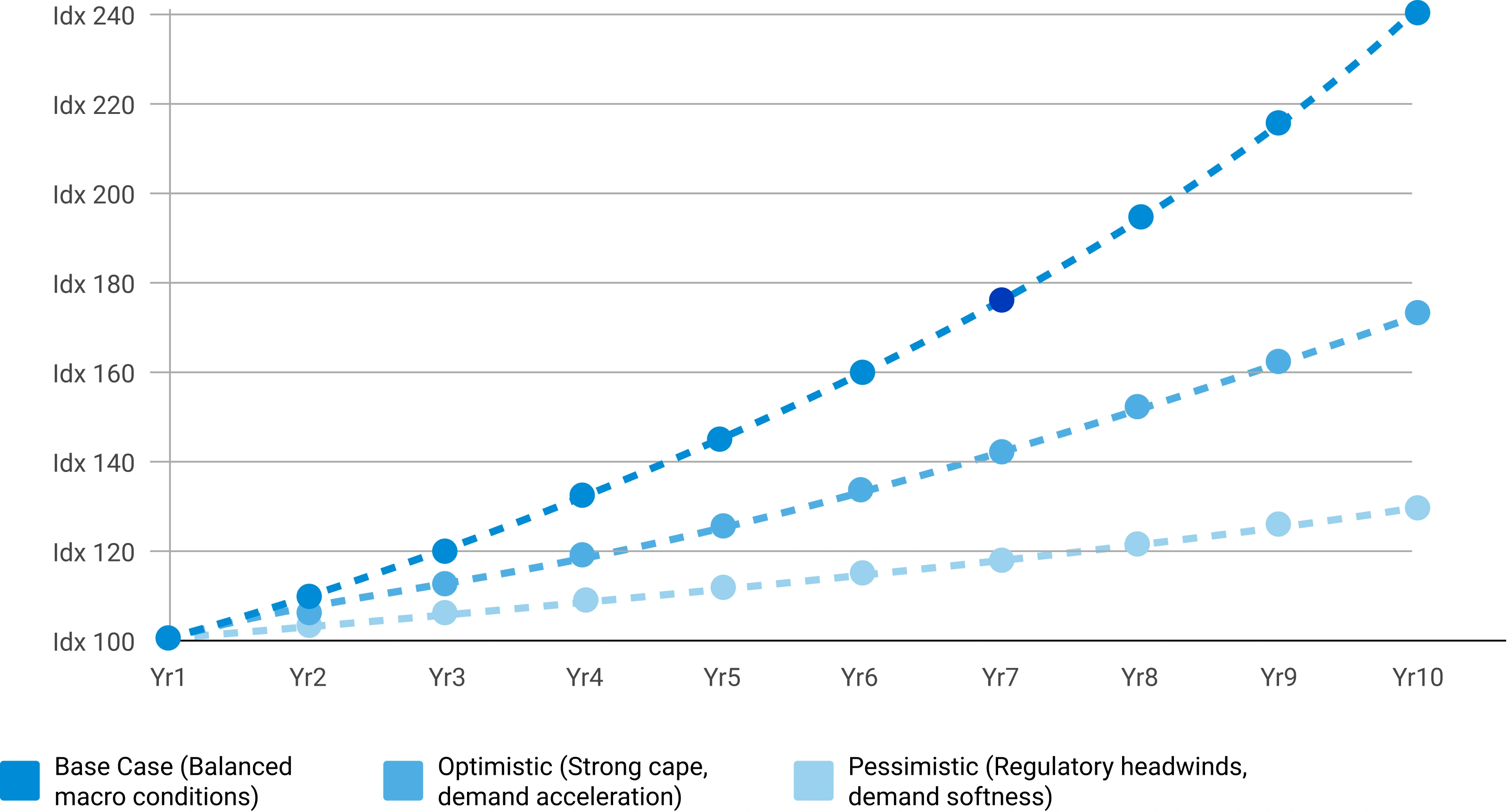
Scenario Forecast Range — Indexed Market Growth (Year 1–10)
Illustrative indexed growth trajectories across Base, Optimistic, and Pessimistic scenarios over a 10-year forecast horizon
Forecast Drivers — Relative Impact Score by Category
Impact score (0–100) of each driver type on chemicals & materials market forecast



Comments
Share your thoughts, ask a question, or provide feedback about this report.