
Emulsion Polymer Market Size Analysis Report 2035
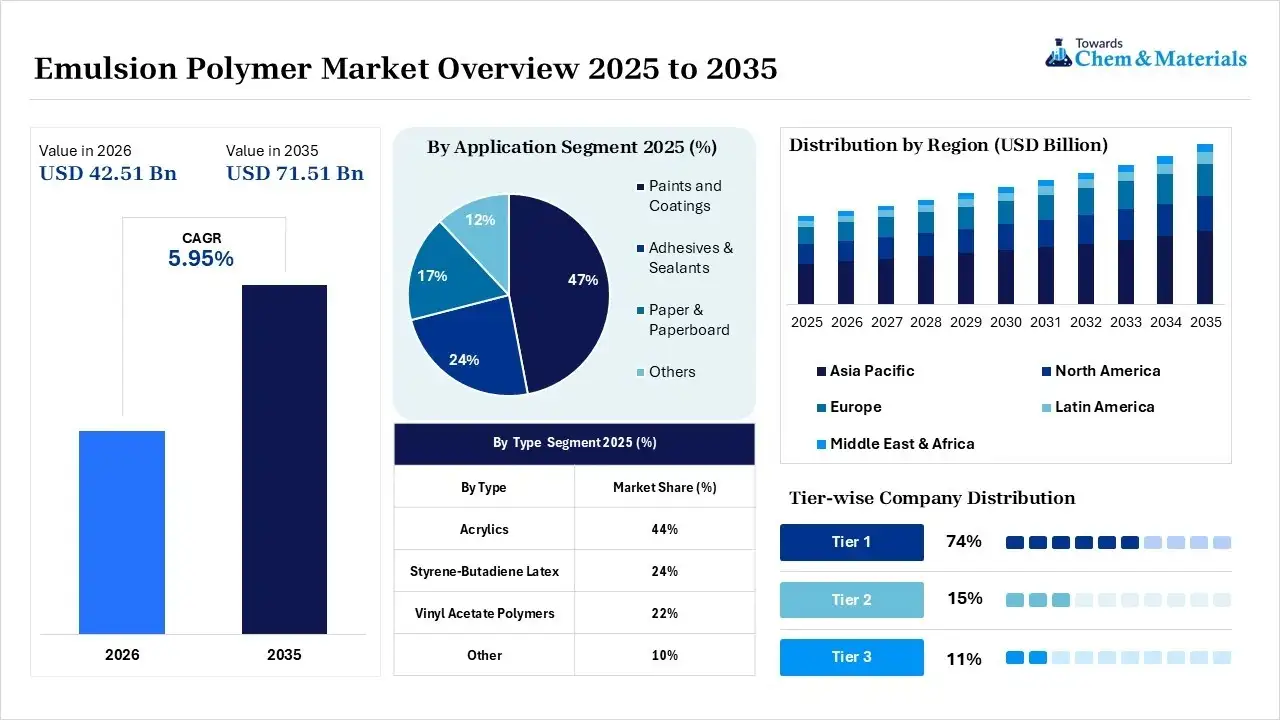
The emulsion polymer market size was valued at USD 40.12 billion in 2025, is estimated to reach USD 42.51billion in 2026, and is projected to reach USD 71.51billion by 2035, exhibiting a compound annual growth rate (CAGR) of 5.95% over the forecast period from 2026 to 2035.Asia Pacific dominated the emulsion polymer market market with the largest revenue share of 46% in 2025 and is expected to grow at the fastest CAGR of 6.06% during the forecast period. In terms of volume, the emulsion polymer market is projected to grow from 18.98 million tons in 2025 to 32.30 million tons by 2035. growing at a CAGR of 5.46% from 2026 to 2035. The construction industry has been leading the emulsion polymer industry, while manufacturers are increasing by releasing innovative and sustainable coatings, paints, and adhesives. Also, the tailored solution is expected to create its own industry presence during the projected time period.
Market Highlights
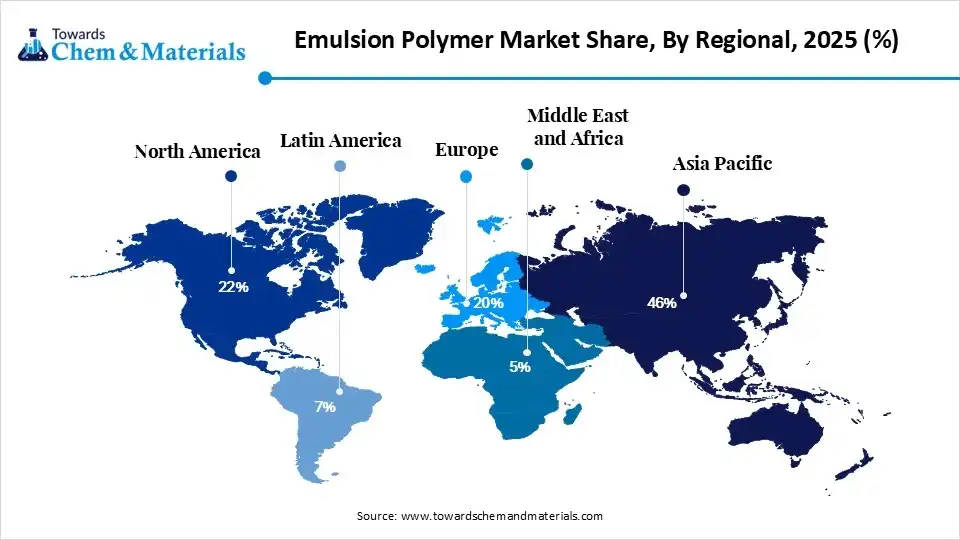
- By region, Asia Pacific dominated the market with a share of 46% in 2025, due to its combination of large-scale manufacturing, rapid urban development, and strong demand from construction, paints, packaging, textiles, and automotive industries.
- By region, North America held 22% market share in 2025 and is expected to be the fastest-growing region in the market, with a CAGR of 6.8% in the forecast period, owing to as industries increasingly adopt sustainable manufacturing practices and high-performance materials.
- By type, the acrylics segment dominated the market with 44% share in 2025, as it offers an excellent balance of durability, weather resistance, flexibility, and long-term performance.
- By type, the vinyl acetate polymers segment held a 22% market share in 2025 and is expected to be the fastest-growing in the market, with a CAGR of 6.40% in the forecast period, owing to increasing use in cost-effective adhesives, construction materials, paper coatings, and packaging products.
- By application, the paints and coatings segment dominated the market with 47% share in 2025, owing to emulsion polymers being essential for producing high-quality water-based coatings with excellent durability and appearance.
- By application, the adhesives & sealants segment held a 24% market share in 2025 and is expected to be the fastest-growing in the market, with a CAGR of 6.6% in the forecast period, owing to industries increasingly requiring lightweight, durable, and environmentally friendly bonding solutions.
- By end use, the building & construction segment dominated the market with 42% share in 2025, owing to emulsion polymers being widely used in architectural paints, waterproof coatings, flooring, roofing systems, cement modification, and insulation materials.
- By end use, the textiles & coatings segment held a 15% market share in 2025 and is expected to be the fastest-growing in the market, with a CAGR of 6.5% in the forecast period, owing to as manufacturers increasingly adopting emulsion polymers to improve fabric quality, durability, softness, wrinkle resistance, and protective finishes.
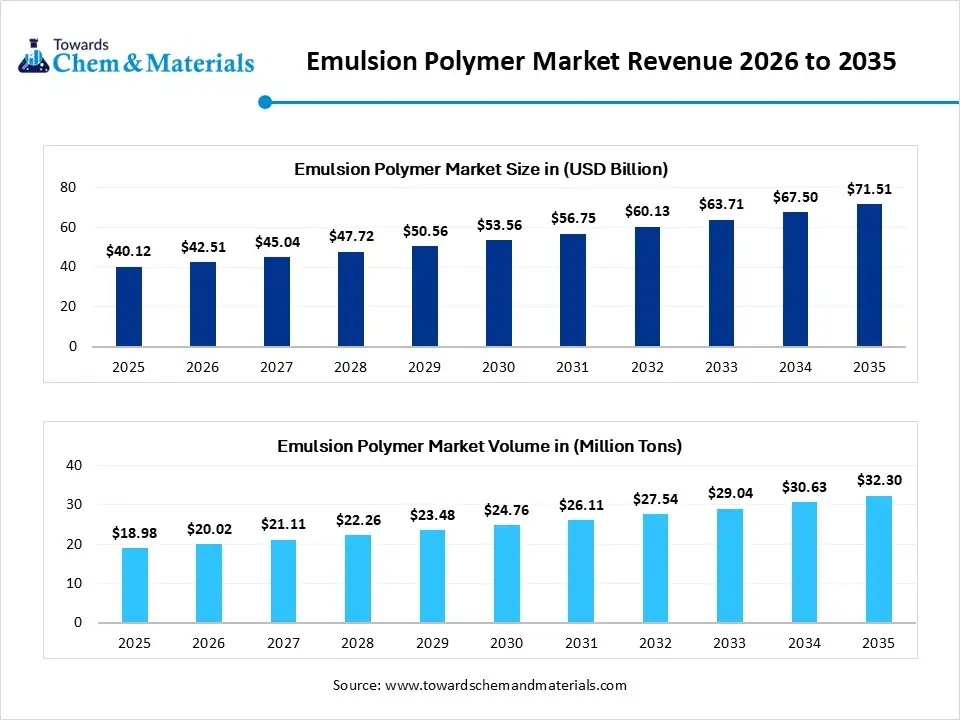
With the processing of heavy construction activities and a greater shift towards innovative coatings are acting as the primary industry leaders in the emulsion polymer industry in recent years. Also, the global implementations of sustainability and lower-emission coating promotions have been creating profitable avenues in the industry, where the manufacturers and producers are shifting from solvent-based manufacturing initiatives to water-based solutions quickly as global standards change and their regional applications nowadays.
- For instance, in April 2026, Nouryon introduced the latest technology that helps manufacturers produce water-based architectural paints that can withstand global low-emission paint demand, as per the companys claim. Also, the newly launched technology is known as the Alcosperse® OTA 100. (Source: www.nouryon.com)
Consumers are seeking durable, flexible, and environmentally friendly materials, which presents innovative business ideas for producers and manufacturers in the past few years. Later, initiatives like green buildings, tougher yet low-cost, and more easy handling material has strengthened industry potential. Furthermore, the automotive and advanced packaging sectors are main business diversions after the construction sector for the emulsion polymer owners.
Global Investment Flow for the Emulsion Polymer Market 2026
Leading companies are investing in new production plants, expanding existing manufacturing facilities, and creating partnerships and acquisitions to meet rising global demand, while these investments help companies improve supply reliability, shorten delivery times, and strengthen their presence in high-growth markets.
Many manufacturers are allocating more funding toward cleaner production methods and energy-efficient manufacturing processes. They are also investing in technologies that reduce emissions, improve resource efficiency, and support the production of environmentally responsible emulsion polymers.
- For Instance, in February 2026, Konishi completed the attainment of the spinoff from Mitsubishi. Also, the main motive of this acquisition is to strengthen the foundation of Konishis acrylic emulsion business with a medium-term management plan as per the published report.(Source: www.indianchemicalnews.com)
- For instance, in February 2026, Dencoat unveiled its latest product line of waterproofing membranes. Also, the newly launched product is named Dencoat DPM and is specifically designed for residential, industrial, and commercial applications as per the companys claim.(Source: dencoat.com)
- Also, the investments are helping companies prepare for stricter environmental regulations while improving long-term competitiveness as per the latest survey.
Emulsion Polymer Market Trends
- The shift towards low-VOC and water-based products has driven the strategic transformation and sectoral scalability in the current period. Also, several major producers are actively investing in their R&D activities go produce environmentally friendly paints and coatings.
- The greater focused towards the high performance has allowed stakeholders to capitalize on growth opportunities in the current period. Moreover, industries such as automotive, packaging, and textiles are seen in demand for tailored or customized solutions according to their needs nowadays.
- The heavy demand in the infrastructure and construction projects is likely to strengthen the foundation for the future sector growth. Also, these materials have been observed to have greater usage in waterproof coating, decorative paints, and adhesives in recent years, which follows the industry sales lead.
Report Scope
| Report Attributes | Details |
| Market Size in 2026 | USD 42.51Billion/ 20.02Million Tons |
| Expected Size in 2035 | USD 71.51 Billion/ 32.30Million Tons |
| Growth Rate | CAGR of 5.95% |
| Base Year of Estimation | 2025 |
| Forecast Period | 2025-2035 |
| Dominant Region | Asia Pacific |
| Segment Covered | By Type, By Application, By End-use, By Region |
| Key Companies Profiled | Dow Chemical Company, Wacker Chemie AG, Synthomer plc, DIC Corporation, Trinseo PLC, Lubrizol Corporation, Organik Kimya |
Innovation Transforming Emulsion Polymer Production
The industry is actively moving toward smarter, cleaner, and more efficient production technologies. Instead of focusing only on increasing production volumes, manufacturers are improving the quality and sustainability of their products. Also, modern polymerization techniques allow companies to develop polymers with better durability, stronger adhesion, and improved weather resistance while using less energy during manufacturing. Furthermore, digital monitoring systems are helping manufacturers maintain consistent product quality and reduce production waste
Supply Chain Analysis of the Emulsion Polymer Market
- Production & Processing:Manufacturing emulsion polymers looks like blending a specialized chemical milk. Factories whip raw monomers into water using liquid soap to create billions of microscopic droplets, then add a starter chemical to kick off the reaction.
- This quickly bonds the liquids into a smooth, stable fluid used for everyday water-based paints and glues.
Celanese Corporation: Celanese Corporation is an absolute heavyweight in the emulsion polymer market, operating massive chemical manufacturing sites worldwide.- Key players: Celanese Corporation, BASF, The Dow Chemical Company, Arkema, and Synthomer
- Quality Testing and Certification:Testing emulsion polymers means confirming the milky fluid stays perfectly smooth and never separates on shelves.
- Labs spin samples at extreme speeds, check the precise size of the plastic droplets, and measure exactly how well the liquid sticks to surfaces. Passing these trials ensures the batch wont clump up inside commercial paint cans or glue bottles.
- BASF: BASF is a premier chemical powerhouse that runs strict quality control setups at its global production plants.
- Key agencies: Synthomer, Wacker Chemie, Trinseo, and Lubrizol Corporation
- Distribution to Industrial Users:Shipping emulsion polymers requires specialized, climate-controlled tanker trucks and sealed drums to stop the milky liquid from freezing or skinning over.
- Logistics teams map out rapid, direct routes to manufacturing plants to prevent the blended fluid from settling over time. This keeps bulk chemical batches completely fresh and stable for factory production lines.
- Univar Solutions: Univar Solutions is a premier global chemical distributor managing a massive, specialized logistics network.
- Key players: The Dow Chemical Company, Arkema, and Synthomer
Emulsion Polymer Market Regulatory Landscape: Regulations
| Country Region | Regulatory Body | Key Regulations | Focus Areas |
| United States | U.S. Environmental Protection Agency (EPA) | TSCA Health & Safety Reporting Rules (40 CFR Part 712/716): Enforces strict data-gathering requirements on chemical feedstocks. | Monomer Reporting & Transparency: Compliance heavily stresses tracking and recording residual unreacted monomers. |
| Europe | European Chemicals Agency (ECHA) | EU REACH Regulation (EC No 1907/2006): Annex XVII, Entry 78 (amended under Commission Regulation (EU) 2026/1168) strictly regulates Synthetic Polymer Microparticles (SPMs). | Microplastics Restrictions & Annual Reporting: Waterborne polymer emulsions often fall under Synthetic Polymer Microparticles (SPMs). |
| China | State Administration for Market Regulation (SAMR) | GB 30981.1-2025: Limit of Harmful Substances of Coatings Part 1: Architectural Coatings | Mandatory Maximums: Waterborne emulsion polymers used across architectural walls and consumer goods must hit strict, non-negotiable numerical limits for harmful substances. |
Emulsion Polymer Market Dynamics
Driver
Premium and Eco-friendly Coating Adoption
The increasing demand for environmentally friendly materials across multiple industries has opened profitable avenues for the manufacturers. Also, the water-based emulsion polymers contain lower volatile organic compound (VOC) emissions than solvent-based alternatives, making them a preferred choice for manufacturers. In the current period, industries such as paints and coatings, construction, adhesives, paper, and textiles are adopting these materials to meet environmental regulations while maintaining product quality.
Restraint
Petrochemical Raw Material Volatility
The changing cost of petrochemical-based raw materials is anticipated to hamper the industry flow in the coming years. Prices of important feedstocks such as acrylic monomers, vinyl acetate, and styrene are influenced by crude oil prices, supply chain disruptions, and global economic conditions. These fluctuations increase production costs and make pricing difficult for manufacturers.
Opportunity
Sustainable and Advanced Material Emergence
As industries continue developing advanced and sustainable products is likely to create significant opportunities for the industry participants during the forecast period. Growing investments in green buildings, electric vehicles, flexible packaging, and modern infrastructure are increasing the demand for high-performance polymer solutions. Manufacturers are introducing innovative formulations with better durability, stronger adhesion, and improved weather resistance to meet evolving customer requirements. Furthermore, emerging economies are experiencing rapid industrialization and urbanization, creating new opportunities for paints, coatings, adhesives, textiles, and specialty applications.
Segmental Insights
Type Insights
The Acrylics Segment Dominated the Emulsion Polymer Market with 44% Market Share in 2025
The acrylics segment dominated the market with 44% share in 2025, as it offers an excellent balance of durability, weather resistance, flexibility, and long-term performance. Acrylic emulsion polymers are widely used in decorative paints, industrial coatings, waterproofing products, and construction materials where consistent quality is essential. In recent years, increasing investments in residential and commercial construction have supported demand for acrylic-based products.
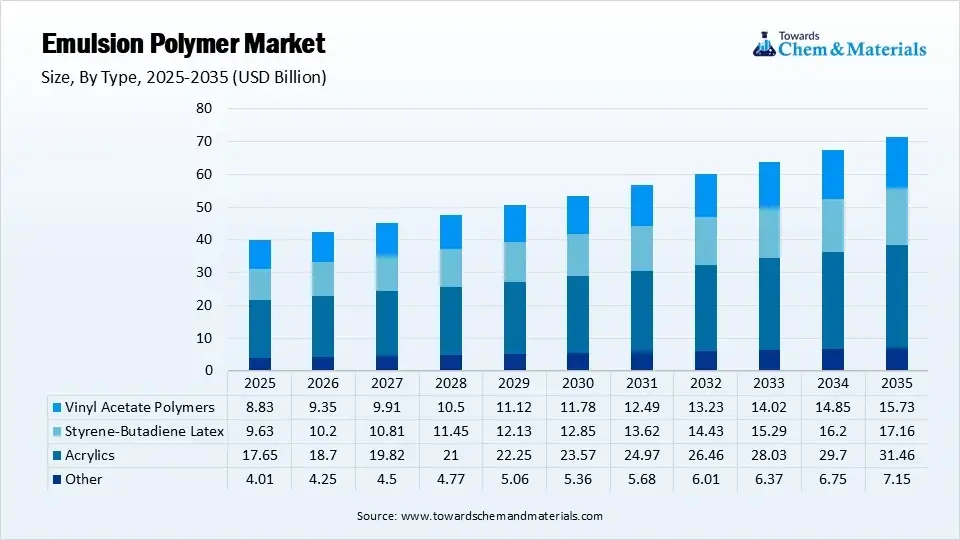 The vinyl acetate polymers segment held a 22% market share in 2025 and is expected to be the fastest-growing in the market, with a CAGR of 6.40% in the forecast period, owing to increasing use in cost-effective adhesives, construction materials, paper coatings, and packaging products. Manufacturers are improving product performance while maintaining competitive pricing, making these polymers attractive for large-scale industrial applications. Furthermore, growing investments in infrastructure, furniture manufacturing, flexible packaging, and sustainable construction materials are expected to increase future demand.
Application Insights
The Paints and Coatings Segment Dominated the Emulsion Polymer Market with 47% Market Share in 2025
The paints and coatings segment dominated the market with 47% share in 2025, owing to emulsion polymers being essential for producing high-quality water-based coatings with excellent durability and appearance. They improve adhesion, flexibility, weather resistance, and color stability while reducing environmental impact. In the current period, rapid construction activities, infrastructure development, and increasing renovation projects have significantly increased the demand for decorative and protective coatings.
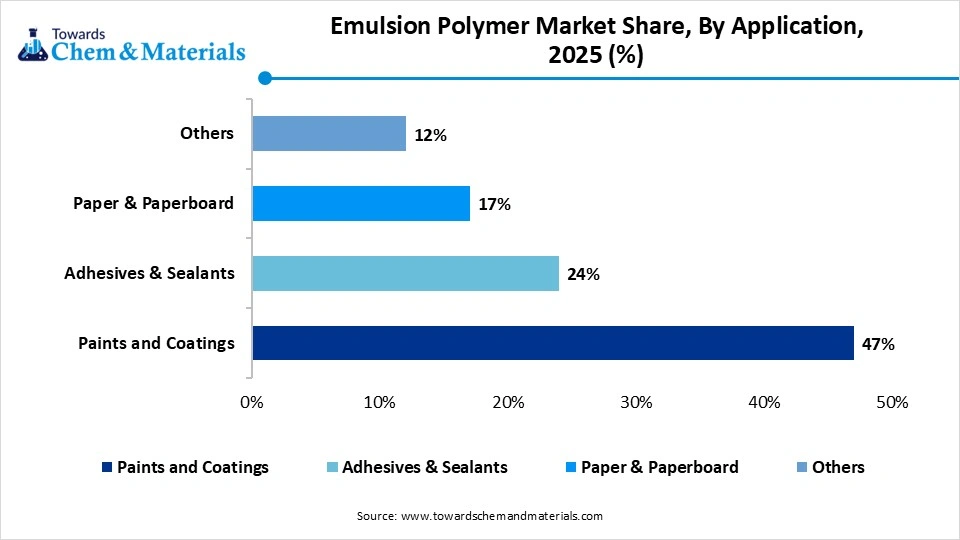 The adhesives & sealants segment held a 24% market share in 2025 and is expected to be the fastest-growing in the market, with a CAGR of 6.6% in the forecast period, owing to industries increasingly requiring lightweight, durable, and environmentally friendly bonding solutions. Rising demand from packaging, automotive, furniture, electronics, and construction sectors is encouraging manufacturers to adopt advanced water-based adhesive technologies. Furthermore, the expansion of e-commerce and flexible packaging industries is increasing the need for reliable adhesive products that offer strong performance with lower environmental impact.
End Use Insights
The Building & Construction Segment Dominated the Emulsion Polymer Market with 42% Market Share in 2025
The building & construction segment dominated the market with 42% share in 2025, owing to emulsion polymers are widely used in architectural paints, waterproof coatings, flooring, roofing systems, cement modification, and insulation materials. These products improve durability, flexibility, crack resistance, and long-term structural performance. In recent years, growing investments in residential housing, commercial buildings, and public infrastructure projects have increased the consumption of emulsion polymer-based materials worldwide.
The textiles & coatings segment held a 15% market share in 2025 and is expected to be the fastest-growing in the market, with a CAGR of 6.5% in the forecast period, owing to as manufacturers increasingly adopting emulsion polymers to improve fabric quality, durability, softness, wrinkle resistance, and protective finishes. Growing consumer demand for functional textiles used in healthcare, sportswear, automotive interiors, and industrial applications is encouraging continuous product innovation. Furthermore, sustainable textile manufacturing practices are increasing the use of water-based polymer technologies that reduce environmental impact while maintaining product performance.
Regional Analysis
How Asia Pacific Dominated the Emulsion Polymer Market in 2025?
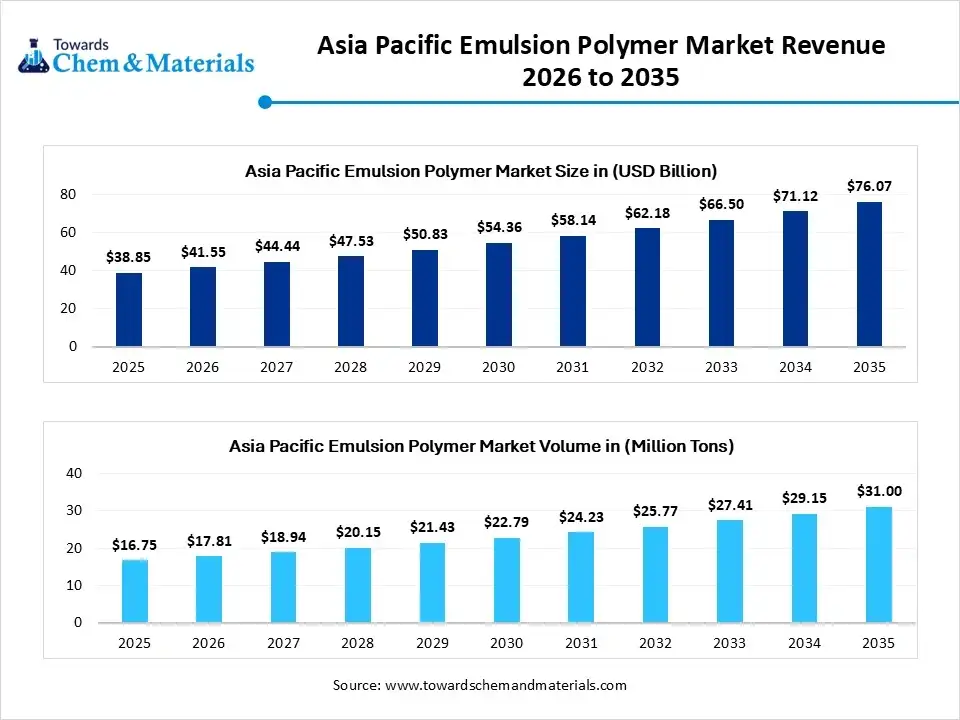
The Asia Pacific emulsion polymer market size was estimated at USD 18.46billion in 2025 and is projected to reach USD 33.25billion by 2035, growing at a CAGR of 6.06% from 2026 to 2035. Asia Pacific dominated the market with a share of 46% in 2025, due to its combination of large-scale manufacturing, rapid urban development, and strong demand from construction, paints, packaging, textiles, and automotive industries. Countries across the region continue investing in infrastructure, affordable housing, and industrial expansion, creating steady demand for water-based polymer products. Furthermore, the presence of major raw material suppliers and manufacturing facilities helps companies produce at competitive costs while serving both domestic and export markets.
 China
China
The country produces large volumes of paints, coatings, adhesives, packaging materials, and construction products that depend on emulsion polymers, while manufacturers have increased investments in environmentally friendly production technologies to comply with stricter environmental regulations. At the same time, ongoing urban redevelopment, industrial modernization, and expanding exports continue supporting market growth.
Japan
- Rather than competing on production volume alone, the companies in Japan highlight innovation, product reliability, and specialty polymer development for automotive, electronics, construction, and industrial applications. Furthermore, manufacturers continue investing in research to improve product durability, sustainability, and production efficiency.
- The countrys strong support for technology development allows local companies to supply premium products to both domestic and international markets.
Emulsion Polymer Market Evaluation in North America
North America held 22% market share in 2025 and is expected to be the fastest-growing region in the market, with a CAGR of 6.8% in the forecast period, owing to as industries increasingly adopting sustainable manufacturing practices and high-performance materials. Growing investments in modern infrastructure, residential renovation, advanced packaging, and industrial coatings are creating new opportunities for emulsion polymer manufacturers. Furthermore, companies across the region continue developing innovative water-based products that meet strict environmental regulations while delivering excellent performance.
United States
The country is actively updating its strong construction, packaging, automotive, and industrial manufacturing sectors. Companies are increasing investments in advanced coating technologies, environmentally friendly adhesives, and high-performance building materials to meet changing customer needs. Furthermore, growing renovation activities, infrastructure improvement projects, and rising demand for sustainable products continue supporting market expansion.
Canada
The country is witnessing growth in the industry as demand increases for sustainable construction materials, protective coatings, and environmentally friendly adhesives. Also, the countrys focus on energy-efficient buildings and green infrastructure projects is encouraging greater use of water-based polymer technologies. Furthermore, growth in packaging, wood processing, and industrial manufacturing is creating additional opportunities for emulsion polymer applications.
Europe Emulsion Polymer Industry Conditions
Europe held a 20% market share in 2025, owing to industries rapidly adopting sustainable and high-performance materials. Strict environmental regulations are encouraging manufacturers to replace solvent-based products with water-based emulsion polymers in paints, coatings, adhesives, and construction materials. Furthermore, increasing investments in energy-efficient buildings, infrastructure renovation, and sustainable packaging are creating new business opportunities.
Germany
Germany remains one of the leading countries in the region as its strong chemical industry and advanced manufacturing capabilities, while demand is supported by automotive production, industrial coatings, construction materials, and high-quality adhesives. In recent years, manufacturers have increased investments in sustainable production technologies and innovative polymer formulations that improve product performance while reducing environmental impact.
Italy
The country is experiencing steady growth in the industry, akin to increasing demand from construction, furniture, decorative coatings, textiles, and packaging industries. Also, the country has a strong manufacturing base that relies on high-quality adhesives, protective coatings, and specialty polymer products. Furthermore, renovation projects, infrastructure improvements, and growing interest in environmentally friendly materials are supporting higher consumption of water-based emulsion polymers.
Emulsion Polymer Market Survey in Latin America
Latin America held a 7% market share in 2025, driven by improving industrial activity and rising investments in construction, packaging, and consumer goods manufacturing. Urban development projects and increasing demand for affordable housing are supporting greater use of paints, coatings, and construction chemicals. Furthermore, manufacturers are adopting water-based polymer technologies to improve product quality and comply with evolving environmental standards.
Brazil
Rising investments in residential housing, commercial buildings, and infrastructure projects continue increasing demand for water-based coatings and construction materials in the country nowadays. Furthermore, growth in packaging, furniture manufacturing, and industrial production is creating additional opportunities for emulsion polymer applications. Local manufacturers are also focusing on improving production efficiency and developing sustainable products to meet changing market expectations.
Argentina
The country is witnessing growing demand from construction, packaging, agriculture, and industrial manufacturing sectors. Increasing renovation activities and infrastructure development are encouraging greater use of paints, coatings, adhesives, and waterproofing materials. Furthermore, manufacturers are gradually adopting modern polymer technologies to improve product quality and production efficiency.
Middle East and Africa Emulsion Polymer Sector Observation
The Middle East and Africa held a 5% market share in 2025, as increasing investments in infrastructure, urban development, and industrial diversification. Demand for high-quality paints, coatings, waterproofing materials, and construction chemicals continues rising as governments expand residential, commercial, and transportation projects. Furthermore, manufacturers are introducing water-based polymer technologies to improve sustainability and meet changing environmental expectations.
 Saudi Arabia
Investments in smart cities, residential housing, tourism facilities, and industrial developments are increasing demand for architectural coatings, waterproofing materials, and advanced construction chemicals. Furthermore, the country is encouraging modern manufacturing and sustainable building practices, creating additional opportunities for water-based polymer products in the current period.
South Africa
The country is gradually expanding its industry through increasing demand from construction, mining, packaging, and industrial manufacturing sectors. Also, the infrastructure maintenance, commercial development, and residential construction projects continue supporting the consumption of paints, coatings, and adhesive products. Furthermore, manufacturers are adopting improved production technologies to deliver better-quality and environmentally friendly polymer solutions.
Recent Development
- In December 2025, Organik Kimya has introduced their latest styrene acrylic and acrylic polymer emulsions called as Orgal® Rooflex 35 and others. Also, these polymer emulsions are specifically designed for roof coatings while has the ability to offer greater resistance to weathering and UV, as per the published report.(Source: www.specialchem.com)
- In May 2025, EPS unveiled the latest acrylic emulsion, which is primarily designed for architectural coatings. Also, the newly launched emulsion is known as the EPS 2731, as per the published report, and this emulsion is able to enhance the performance of the architectural coatings, as per the published report.(Source: www.coatingsworld.com)
Competitive Analysis
global industry is moderately consolidated, with a mix of multinational chemical companies and regional manufacturers competing through product innovation, production expansion, and sustainable solutions. Also, rather than competing only on price, leading companies are focusing on developing high-performance water-based polymers that meet changing environmental regulations and customer expectations.
- BASF continues bolstering its position in the emulsion polymer industry by expanding production capacity and enhancing regional supply capabilities. One of the companys recent investments is the expansion of its dispersions production facility in South Africa through an additional production line.
- Arkema is continuing to expand its advanced materials business through its coating solutions segment. In recent years, the company has introduced new waterborne resin technologies designed to improve coating performance while reducing environmental impact.(Source: www.basf.com )
Top Vendors in the Emulsion Polymer Market & Their Offerings:
| Company | Company Type/Position | Major Headquarters | Geographic Presence | Offerings | Key Strength |
| BASF SE | Market Pioneer & Global Tier-1 Leader | Ludwigshafen, Germany | Global footprints across Europe, North America, South America, and a highly expanding footprint in Asia-Pacific. | Acronal® and Joncryl® acrylic and styrene-acrylic waterborne dispersions. | Massive global R&D ecosystem and unparalleled manufacturing scale for architectural coatings and high-performance industrial barriers. |
| Arkema SA | Specialty Materials & High-Value Segment Leader | Colombes, France | Multi-regional presence with strong core operations in Europe and strategic production facility expansions in Asia. | Encor® and Synaqua® water-borne architectural acrylics, alkyd emulsions, and rheology modifiers. | Industry-leading expertise in high-performance eco-friendly coatings designed to comfortably pass hyper-strict global VOC and environmental regulations. |
| Celanese Corporation | Integrated Intermediate & VAE Segment Leader |
Dallas, Texas, United States | Strong Western and Asian Hubs with integrated large-scale chemical infrastructure networks. | EcoVae® vinyl acetate-ethylene (VAE) emulsions alongside premium vinyl-acrylic copolymer systems. | vertical raw-material integration (controlling its own acetyl chain inputs) which protects margins from raw material price volatility. |
Other Key Players
- Dow Chemical Company
- Wacker Chemie AG
- Synthomer plc
- DIC Corporation
- Trinseo PLC
- Lubrizol Corporation
- Organik Kimya
Segments Covered in the Report
By Type
- Acrylics
- Pure Acrylic Emulsions
- Styrene Acrylic Emulsions
- Acrylic Copolymer Emulsions
- Styrene-Butadiene Latex
- Carboxylated SBR Latex
- Non-Carboxylated SBR Latex
- Vinyl Acetate Polymers
- Polyvinyl Acetate (PVAc)
- Vinyl Acetate-Ethylene (VAE)
- Vinyl Acrylic Copolymers
- Other
- Polyurethane Dispersions
- Vinyl Ester Polymers
- Specialty Emulsion Polymers
By Application
- Paints and Coatings
- Architectural Paints
- Industrial Coatings
- Protective Coatings
- Decorative Coatings
- Adhesives & Sealants
- Construction Adhesives
- Packaging Adhesives
- Pressure Sensitive Adhesives
- Sealants
- Paper & Paperboard
- Paper Coating
- Paper Binding
- Packaging Paper
- Others
- Textile Finishing
- Nonwovens
- Leather Finishing
- Printing Inks
By End-use
- Building & Construction
- Residential Construction
- Commercial Construction
- Infrastructure
- Automotive
- Interior Components
- Exterior Coatings
- OEM Applications
- Chemicals
- Chemical Processing
- Industrial Manufacturing
- Textile & Coatings
- Textile Finishing
- Industrial Fabrics
- Protective Textiles
- Others
- Packaging
- Consumer Goods
- Furniture
By Region
- North America
- Europe
- Asia Pacific
- Middle East & Africa
- Latin America
A Seven-Phase Framework
Our methodology is designed to be universally applicable across commodity chemicals, specialty chemicals, petrochemicals, construction chemicals, coatings, electronic chemicals, industrial gases, agrochemicals, water treatment chemicals, and performance materials. Each phase builds upon the last, creating a layered validation structure that minimizes estimation error and maximizes analytical confidence.
The framework ensures comprehensive market coverage, robust cross-validation, and reliable long-term forecasting — producing market estimates that withstand scrutiny from investors, regulators, and corporate strategy teams.

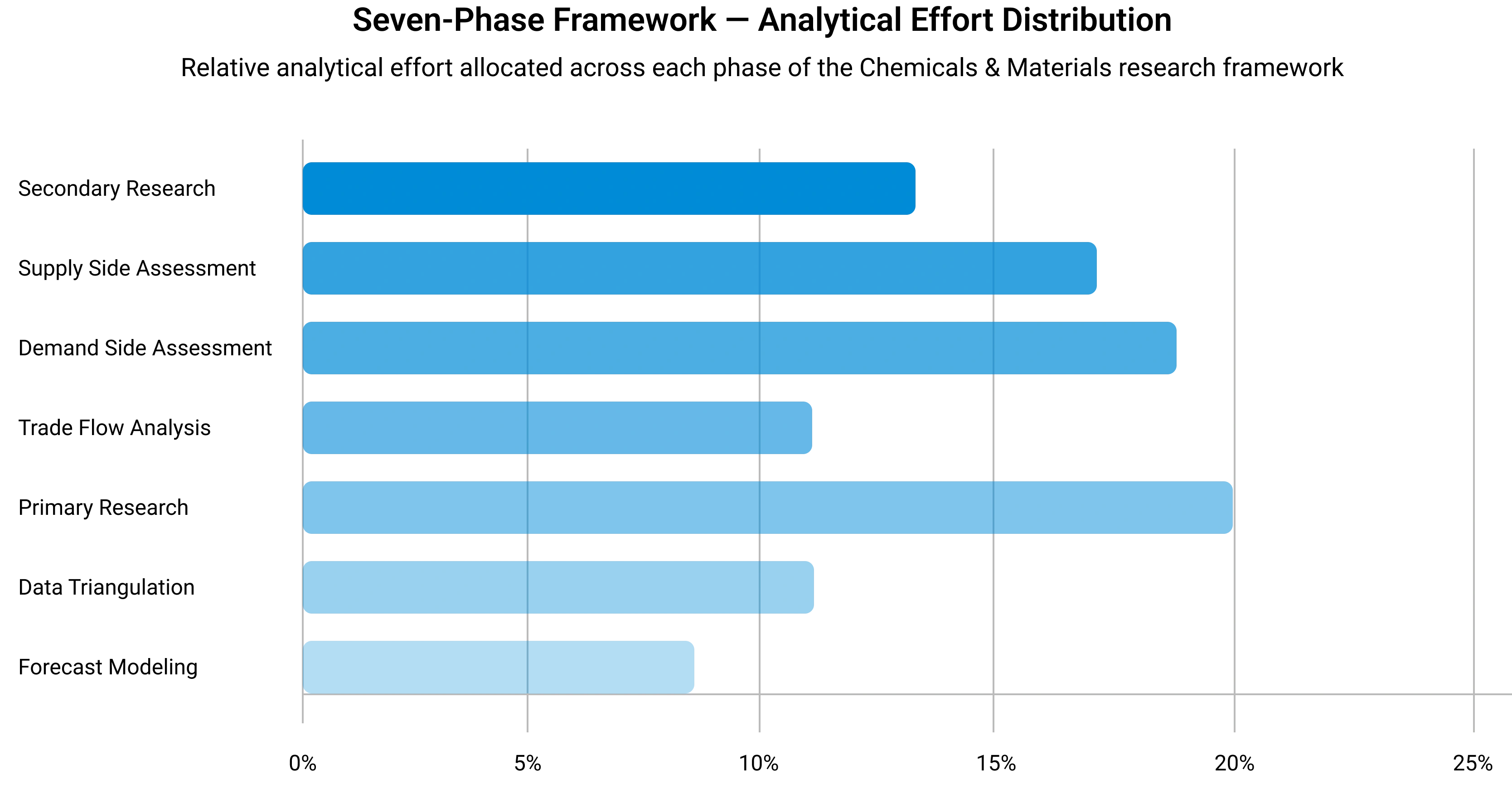
Seven-Phase Framework — Analytical Effort Distribution
Relative analytical effort allocated across each phase of the Chemicals & Materials research framework
Phase 1 - Secondary Research: Establishing the Foundation
Secondary research collects and evaluates publicly available information from authoritative sources, establishing the foundational understanding of market structure, value chain dynamics, competitive landscape, and end-use demand patterns. Every source is evaluated for credibility, recency, geographic relevance, and methodological soundness before inclusion.
Industry Associations
Sources include ACC, CEFIC, ICCA, JCIA, CPCIF, and SOCMA providing production volumes, consumption trends, capacity developments, and sustainability initiatives.
Company Disclosures
Annual reports, investor presentations, earnings transcripts, and regulatory filings reveal product portfolios, manufacturing footprints, capacity expansions, and revenue segmentation.
Government Databases
National statistical offices, customs authorities, environmental agencies, and industrial production databases provide verified statistics on output, trade flows, and regulatory compliance.
Trade Databases
UN Comtrade, ITC, Eurostat, and national customs authorities enable assessment of global product movement, import dependency, and export competitiveness across regions.
Our Secondary Research Sources
- Ministry of Chemicals and Fertilizers
- European Chemicals Agency
- United States Department of Energy
- Ministry of Industry and Information Technology
- Ministry of Economy Trade and Industry
- Ministry of Trade Industry and Energy
- National Institute of Standards and Technology
- Council of Scientific and Industrial Research
- Fraunhofer Society
- National Institute for Materials Science
Phase 2 — Supply-Side Assessment: Mapping Production Capabilities
Production Capacity Analysis
All major manufacturers are assessed for existing installed capacity, planned additions, expansions, new plant announcements, and technology adoption — mapped at global, regional, and country levels.
Capacity Utilization Adjustment
Installed capacity is adjusted using utilization rates based on demand conditions, feedstock availability, plant operating rates, maintenance schedules, and regulatory restrictions.
Manufacturer Revenue Analysis
Product-specific revenues, segment-level performance, regional distribution, average selling prices, and margin trends are evaluated to establish market value estimates.
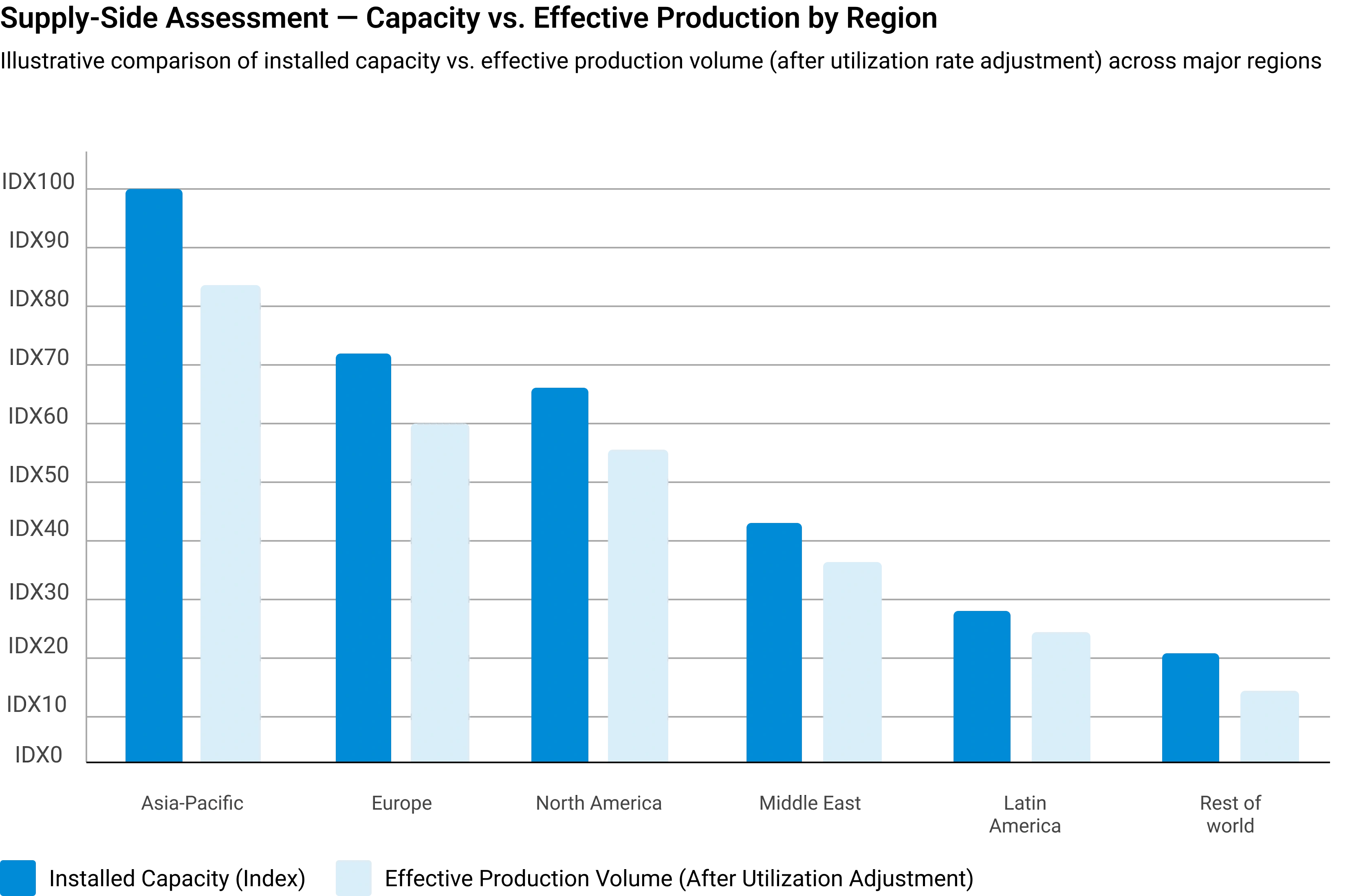
Supply-Side Assessment — Capacity vs. Effective Production by Region
Illustrative comparison of installed capacity vs. effective production volume (after utilization rate adjustment) across major regions
Phase 3 — Demand-Side Assessment: Quantifying Chemical Consumption
Demand-side analysis quantifies chemical consumption across industries, applications, and geographies — identifying where and how chemicals are consumed throughout the value chain with precision.
End-Use Industry Analysis
Chemical demand is evaluated across automotive, construction, packaging, electronics, agriculture, healthcare, consumer goods, industrial manufacturing, energy and utilities, and water treatment. Industry output, production trends, and consumption intensity are analyzed to determine demand patterns.
Consumption Modeling
Demand is estimated using measurable indicators: kilograms per vehicle, kilograms per square meter of construction, dosage per cubic meter of water treated, kilograms per hectare of agricultural land, and kilograms per ton of manufactured products. Consumption factors are validated through industry publications and primary interviews.
Application Analysis
The market is segmented by application area to understand product performance requirements, formulation trends, technology adoption, customer preferences, and regulatory requirements improving demand accuracy and segmentation granularity.
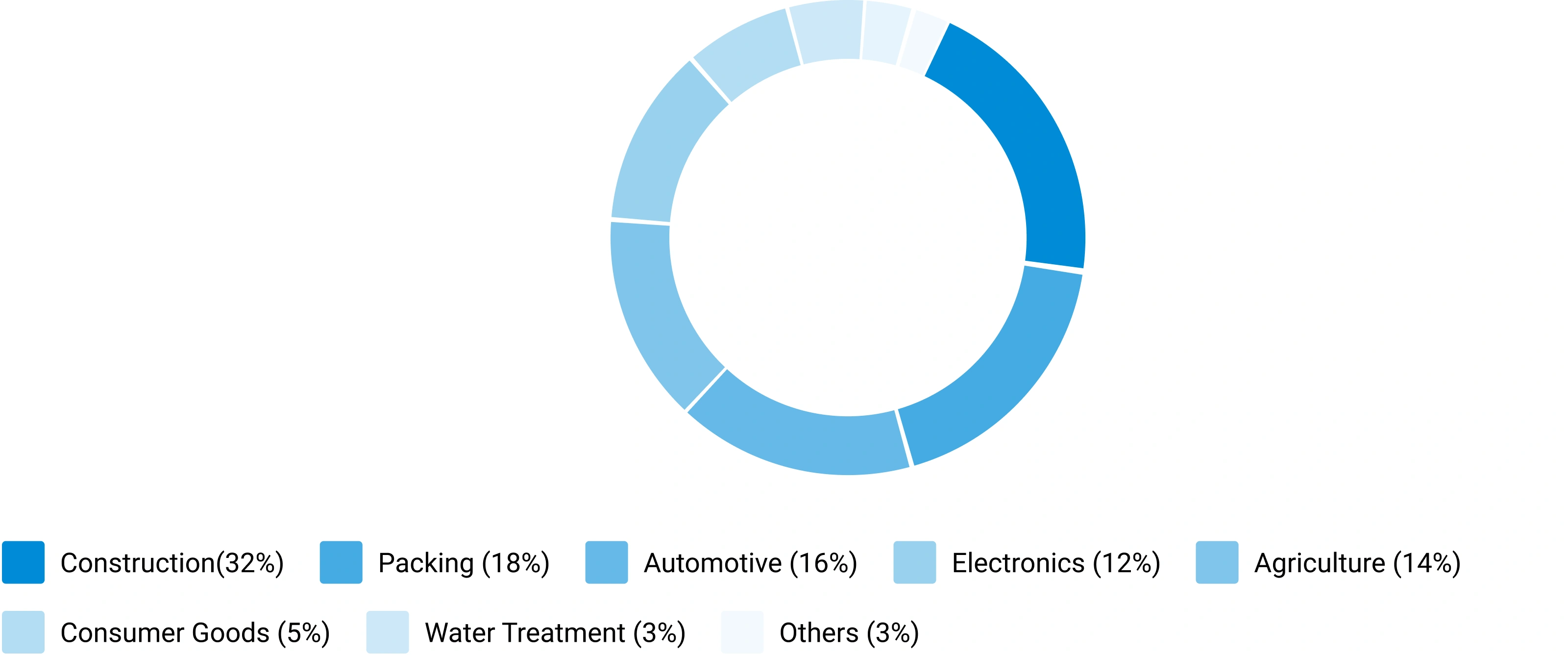
Demand-Side Assessment — End-Use Industry Demand Distribution
Illustrative distribution of chemical & materials demand across key end-use industries
Phase 4 - Trade Flow Analysis: Balancing Regional Supply and Demand
Trade flow analysis reconciles regional supply and demand estimates through import and export data, identifying net supply positions, regional dependencies, and market imbalances. It serves as an independent validation layer that tests the consistency of supply-side and demand-side estimates.
Import Analysis
Import data is evaluated to determine volumes, source countries, product dependency, regional supply gaps, and pricing trends — identifying markets that rely heavily on external supply and where domestic production is insufficient to meet demand.
Export Analysis
Export assessments reveal production surplus, export competitiveness, regional manufacturing strength, and global market participation. Export patterns also help validate domestic production estimates and identify net exporting regions.
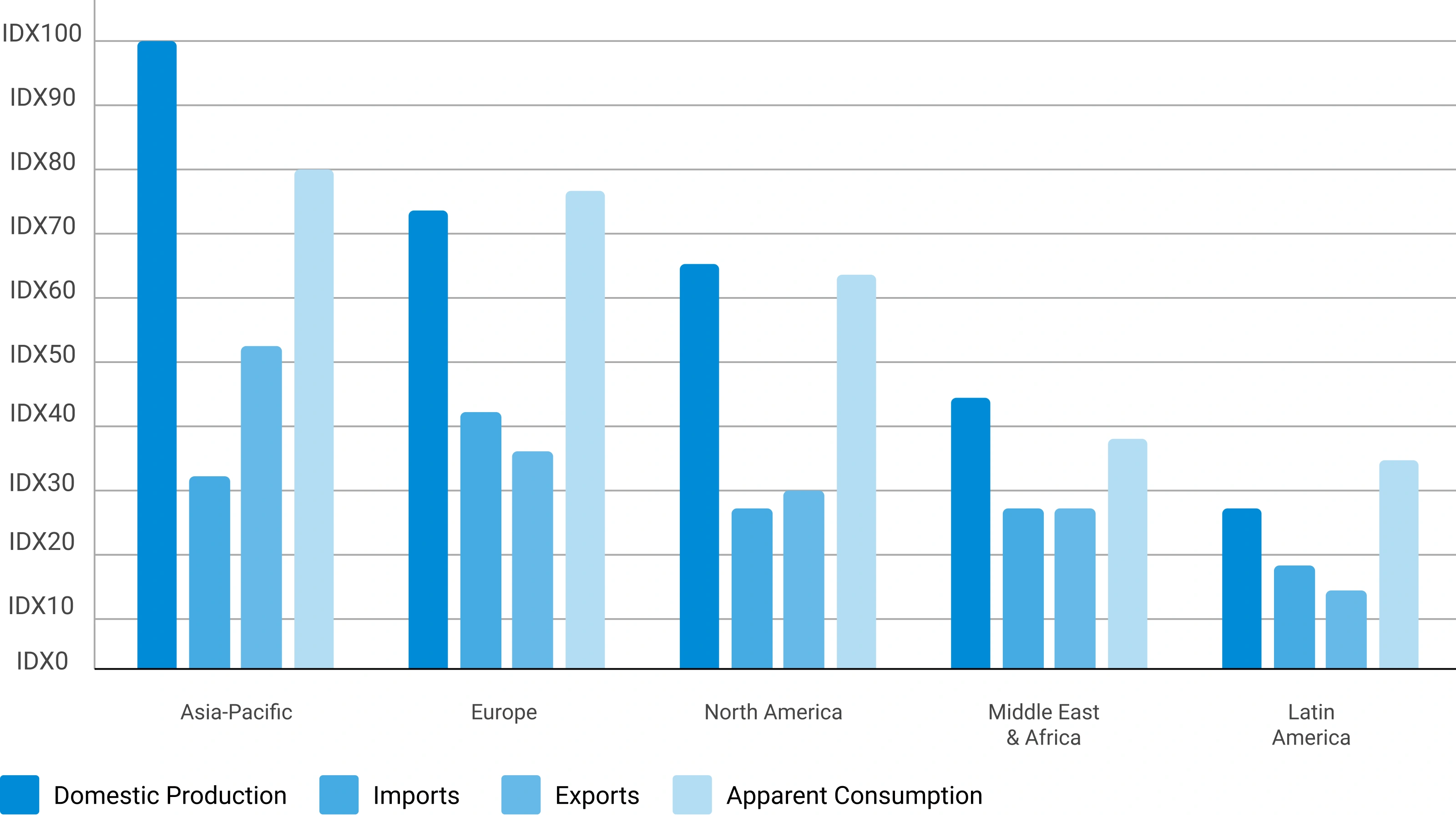
Apparent Consumption Model
Regional consumption is assessed using the standard apparent consumption formula:
Results identify net importing regions, net exporting regions, regional deficits, and surpluses — serving as an independent validation of supply and demand estimates.
Trade Flow Analysis — Net Supply Position by Region
Illustrative apparent consumption vs. domestic production across major regions — positive gap indicates net import dependency
Phase 5 — Primary Research: The Critical Validation Layer
Primary research tests and refines findings from secondary research through direct engagement with industry participants across the supply chain, demand side, and expert community. It captures intelligence that no database or published report can provide — the real-world experience of manufacturers, buyers, and specialists operating in the market.

Supply-Side Interviews
Conversations with chemical manufacturers, raw material suppliers, contract manufacturers, technology providers, and plant operators cover production trends, capacity utilization, pricing developments, technology shifts, and competitive dynamics.

Demand-Side Interviews
Engagement with OEMs, industrial consumers, procurement managers, distributors, formulators, and end-use manufacturers focuses on consumption trends, purchasing behavior, product substitution, demand outlook, and emerging applications.

Industry Expert Consultations
Additional interviews with industry consultants, independent experts, regulatory specialists, technical professionals, and research institutions provide deeper market context and validate key analytical assumptions.
Focus Areas of Primary Research:
Market Size & Forecast Validation
Revenue estimates, volume consumption, growth rates, forecast assumptions, regional demand.Supply Chain & Value Chain Assessment
Raw material sourcing, supply chain challenges, distribution networks, procurement practices.Production & Capacity Analysis
Manufacturing capacity, utilization rates, expansion projects, plant investments.Pricing & Cost Structure Analysis
Product pricing trends, feedstock costs, energy costs, margin pressures, pricing outlook.Competitive Landscape Assessment
Volume and value estimates confirmed to be fully consistent with one another before publicationInterview Volume by Market Scope
| Study Scope | Number of Interviews |
|---|---|
| Niche Market | 20 – 30 |
| Mid-Sized Market | 30 – 50 |
| Global Market | 50 – 80 |
| Highly Fragmented Market | 80 – 120 |
Interview Details:
Category : Manufacturers, Suppliers, Distributors, End Users, Experts/Associations
Average Duration : 30–60 Minutes
Interview Mode : Video calls, telephonic interviews, expert consultations
Interview Format : Structured / Semi-Structured questionnaire
Focus Areas of Primary Research:
Market Size & Forecast Validation :
Revenue estimates, volume consumption, growth rates, forecast assumptions, regional demand.
Supply Chain & Value Chain Assessment :
Raw material sourcing, supply chain challenges, distribution networks, procurement practices.
Production & Capacity Analysis :
Manufacturing capacity, utilization rates, expansion projects, plant investments.
Pricing & Cost Structure Analysis :
Product pricing trends, feedstock costs, energy costs, margin pressures, pricing outlook.
Competitive Landscape Assessment :
Market share, competitor positioning, strategic initiatives, partnerships, acquisitions.
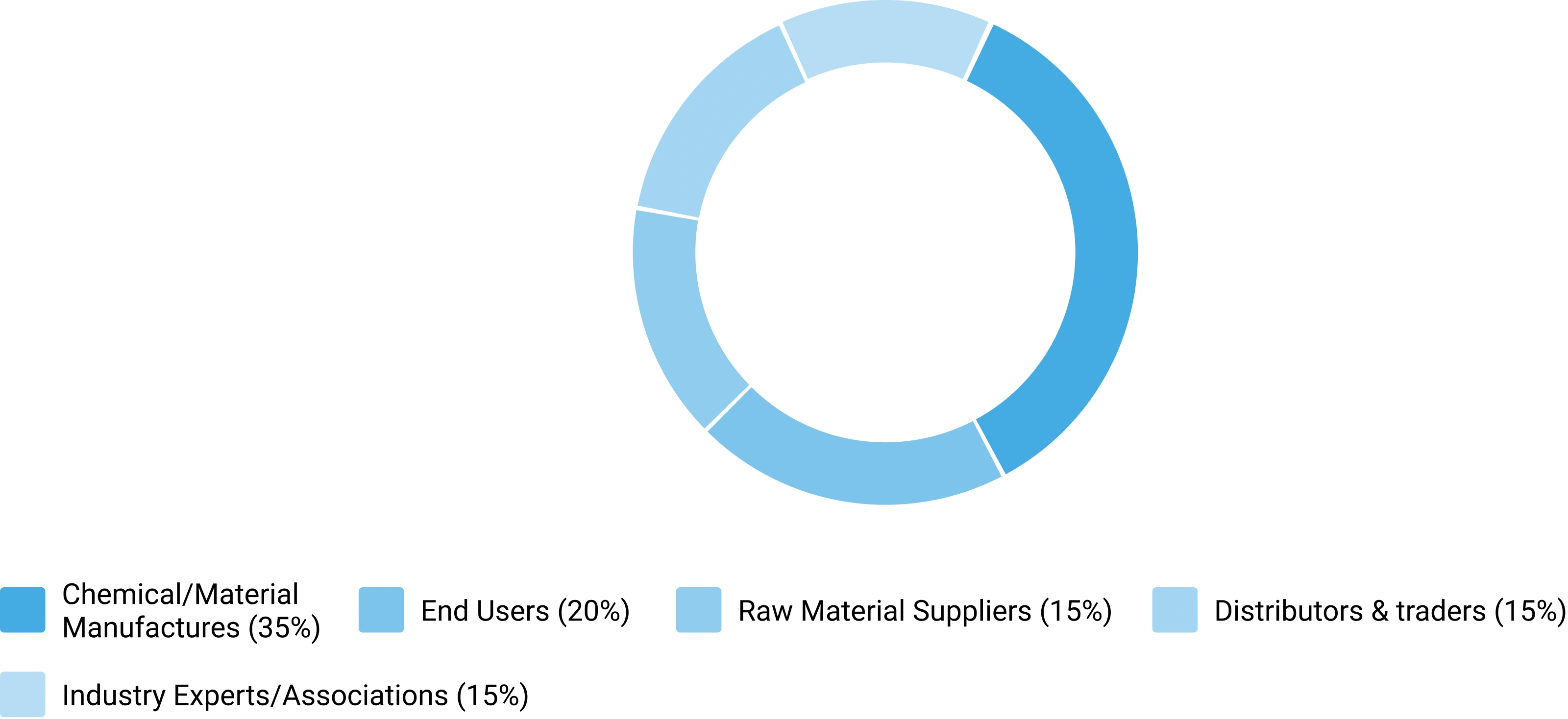
Primary Research — Stakeholder Coverage by Category
Distribution of interview respondents across stakeholder categories (% share from PPT data)
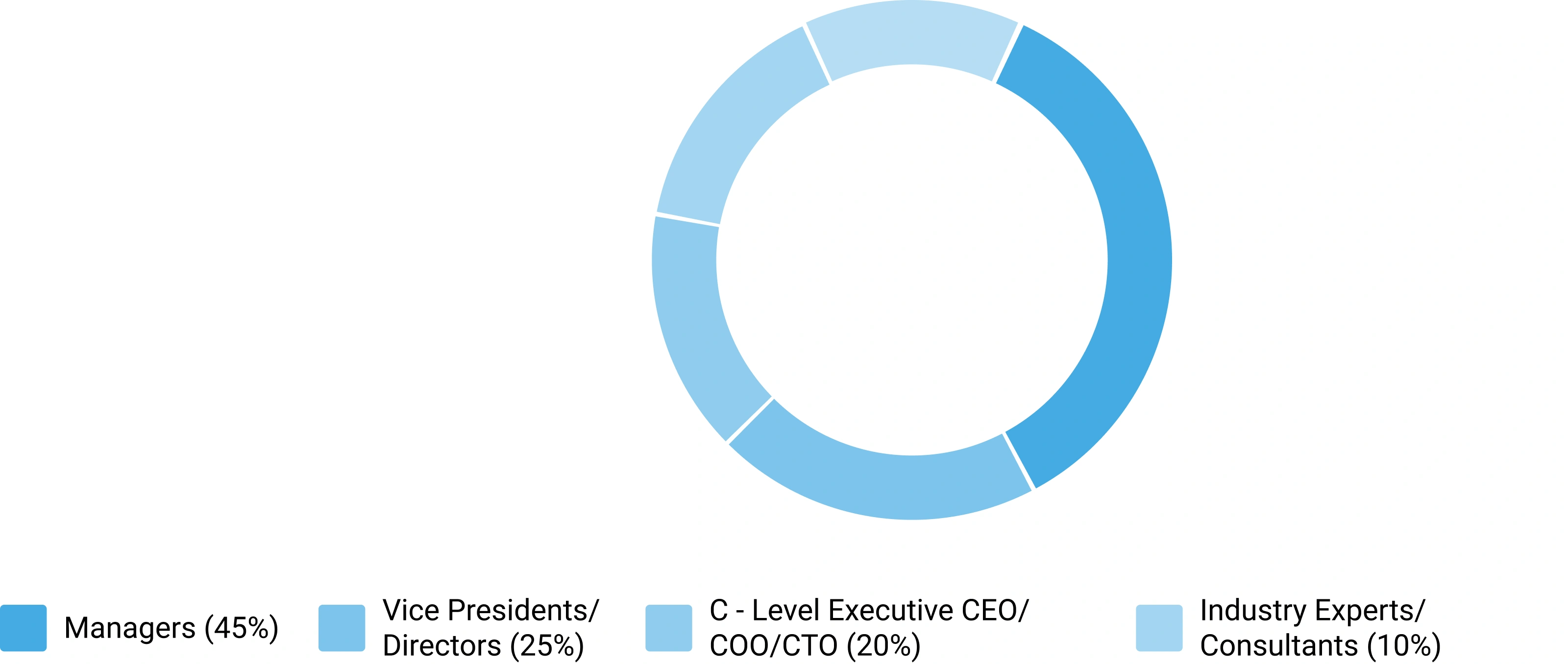
Primary Research — Respondent Designation Profile
Seniority breakdown of interview respondents (% share from PPT data)
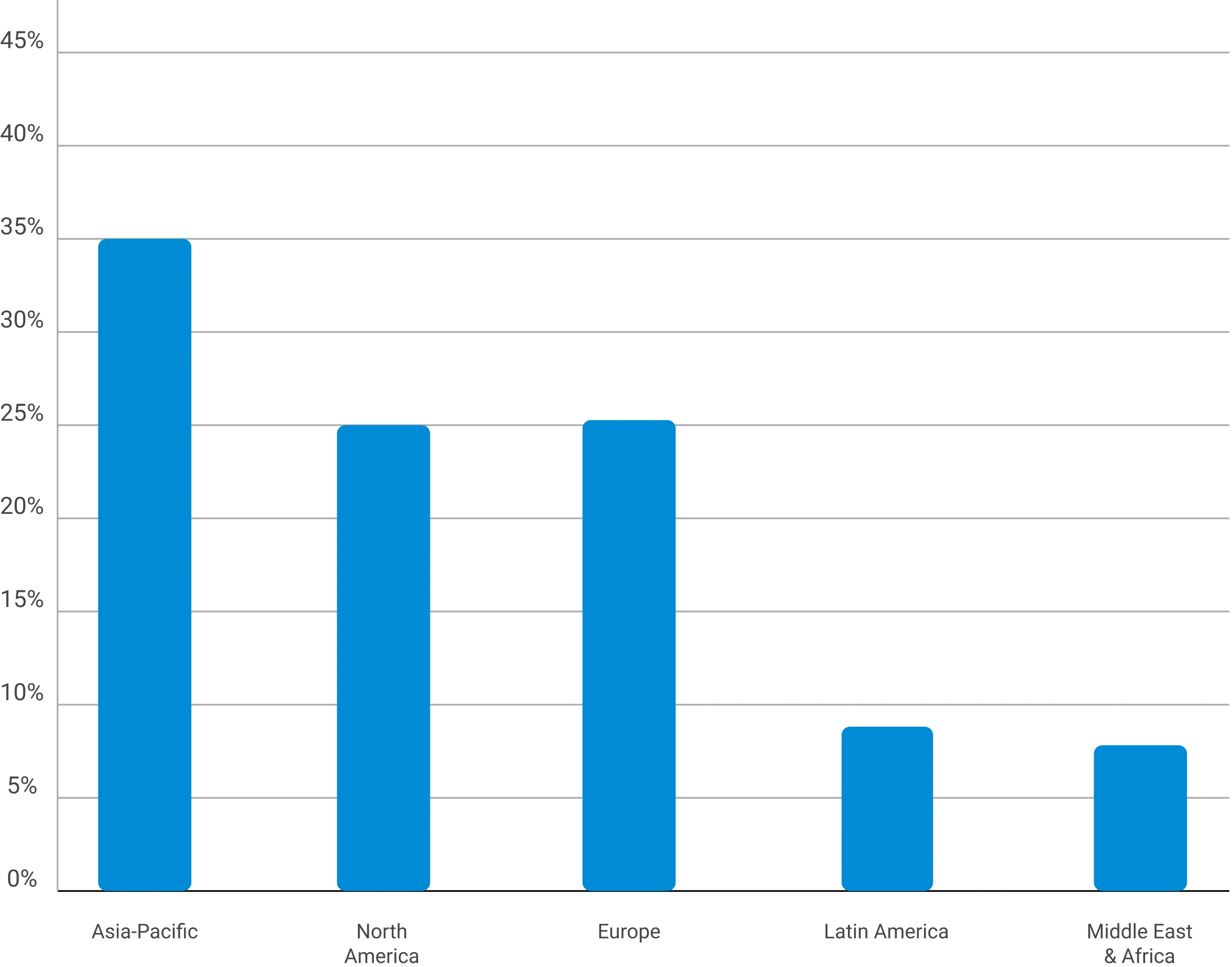
Primary Research — Geographic Coverage of Interviews
Regional distribution of primary research engagement (% share from PPT data)
Phase 6 — Data Triangulation and Market Validation
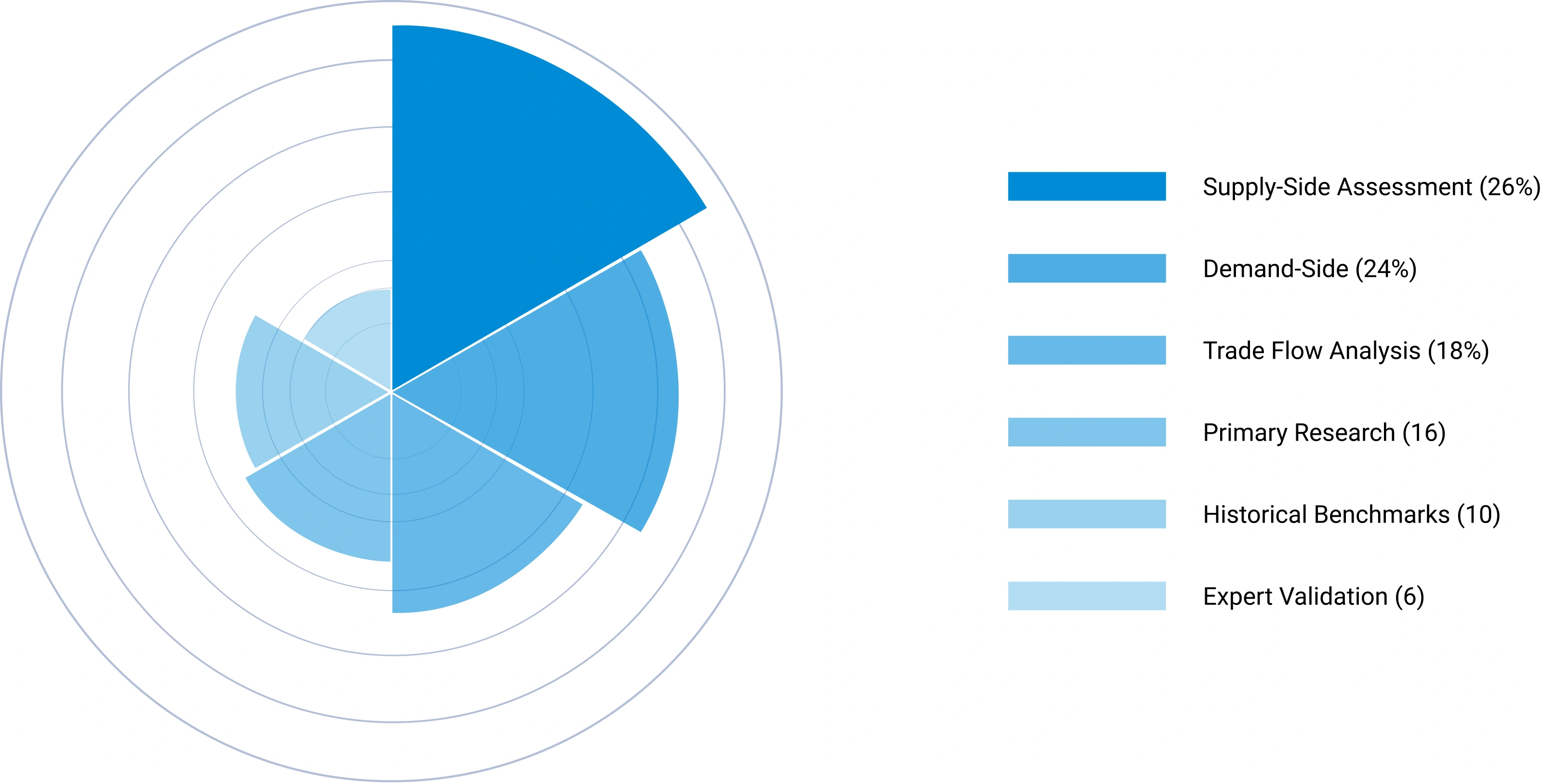
No single methodology is relied upon in isolation. Multiple independent estimation approaches are combined and reconciled to ensure consistency, accuracy, and analytical defensibility. Any material deviations between approaches are investigated and adjusted through additional validation cycles.
The final market size is derived through weighted triangulation of all validated methodologies. Any material deviations between approaches are investigated and adjusted through additional validation cycles. The outcome represents the most realistic assessment of the market based on available evidence and expert confirmation ensuring that volume and value estimates are fully consistent with one another.
Triangulation Framework — Input Contribution Weight
Relative weight each sizing input contributes to the final reconciled market estimate
Phase 7 — Forecast Modeling: Projecting Future Market Evolution
Forecasting evaluates the future trajectory of the market using a combination of quantitative indicators and qualitative assessments across economic, industry, and regulatory dimensions. Rather than simple extrapolation, each driver is independently modeled and integrated into a composite forecast.
Macroeconomic Indicators
GDP growth, industrial production, manufacturing output, construction activity, consumer spending, and capital investment form the quantitative foundation of long-term demand projections. These are applied at country, regional, and global levels.
Industry Growth Drivers
Urbanization, infrastructure development, industrialization, technological innovation, sustainability initiatives, and evolving product performance requirements are assessed at regional and industry levels — capturing both structural and cyclical demand drivers.
Capacity Expansion Analysis
Announced plant expansions, new manufacturing facilities, technology upgrades, and strategic investments are evaluated to determine future supply-demand dynamics and potential market tightness or oversupply situations.
Regulatory & Sustainability
Environmental regulations, chemical safety standards, emission reduction targets, circular economy initiatives, and sustainability requirements are incorporated as they often influence product adoption rates and market growth trajectories.
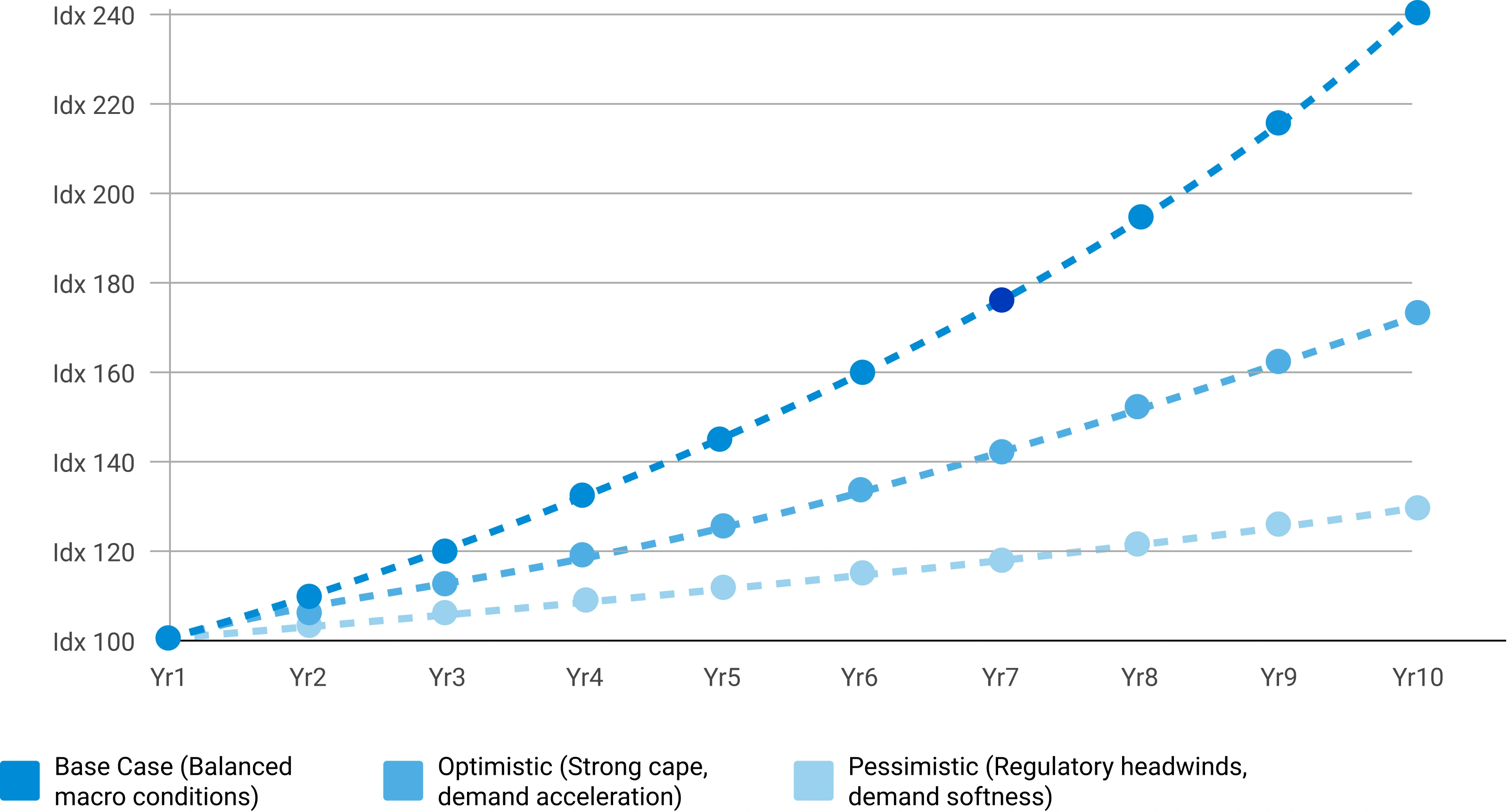
Scenario Forecast Range — Indexed Market Growth (Year 1–10)
Illustrative indexed growth trajectories across Base, Optimistic, and Pessimistic scenarios over a 10-year forecast horizon
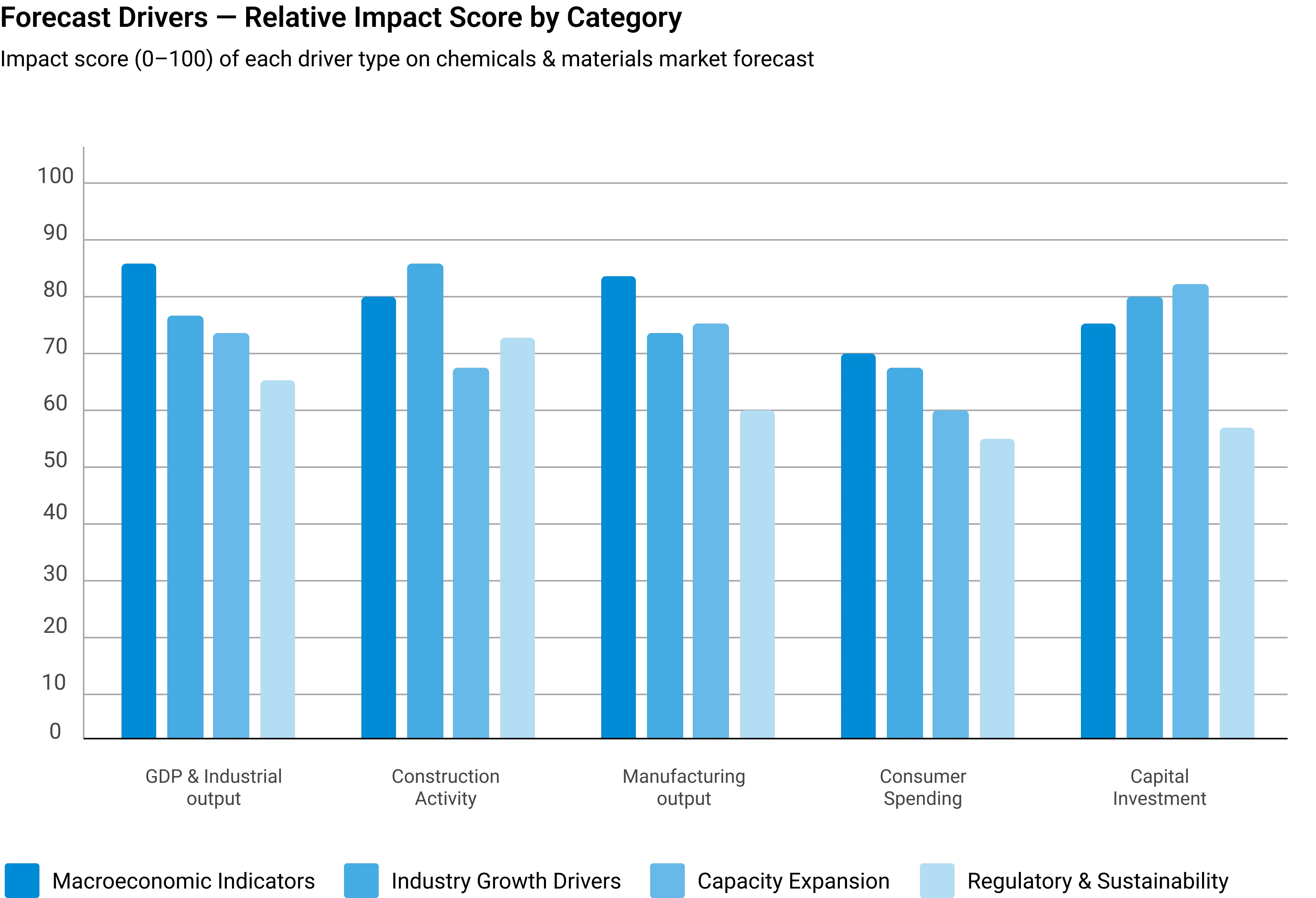
Forecast Drivers — Relative Impact Score by Category
Impact score (0–100) of each driver type on chemicals & materials market forecast



Comments
Share your thoughts, ask a question, or provide feedback about this report.