
CO2 Separation Membrane Market Size, Share, Trends and Forecast 2026 to 2035
The global CO2 separation membrane market size was valued at USD 1.85 billion in 2025, is estimated to reach USD 2.07 billion in 2026, and is projected to reach USD 5.67 billion by 2035, exhibiting a compound annual growth rate (CAGR) of 11.85% over the forecast period from 2026 to 2035.Asia Pacific dominated the CO2 separation membrane market with the largest revenue share of 34% in 2025 and is expected to grow at the fastest CAGR of 12.02% during the forecast period.Market growth is supported by stricter emissions requirements, expanding carbon-capture projects, and increasing membrane use in natural-gas and biogas purification. Advances in membrane materials, public funding, and compact module designs are also supporting adoption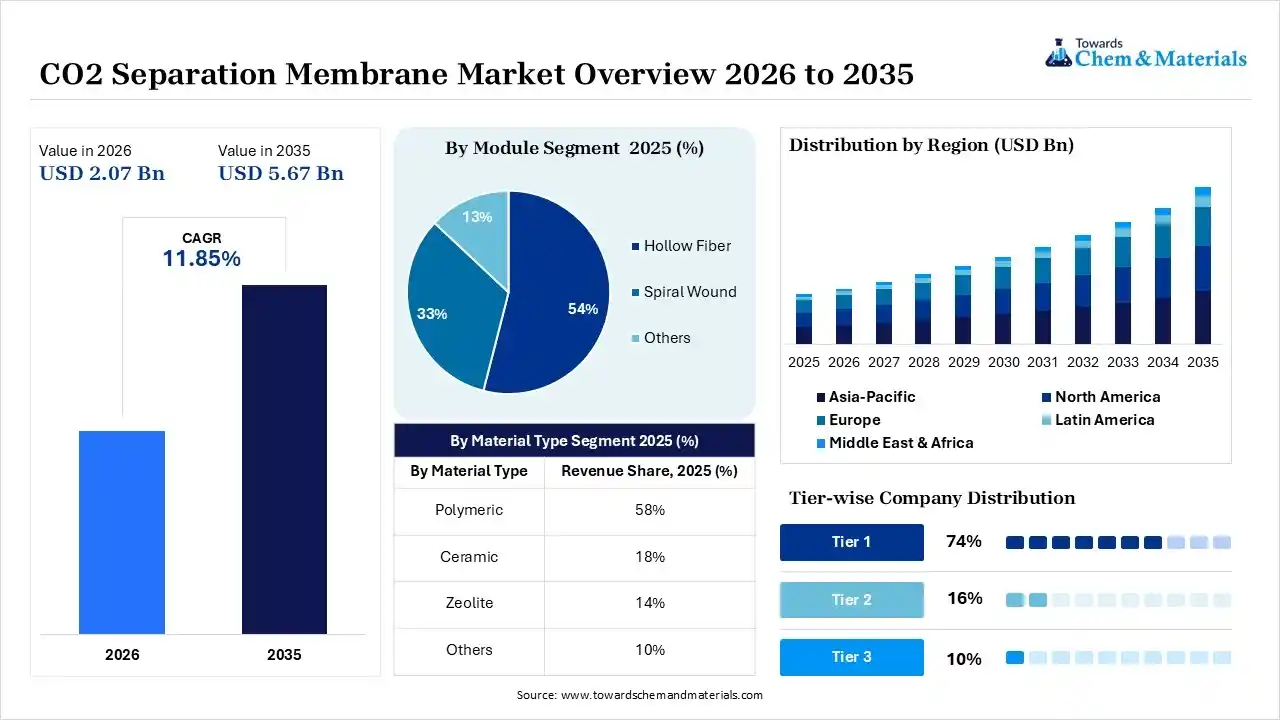
Market Highlights
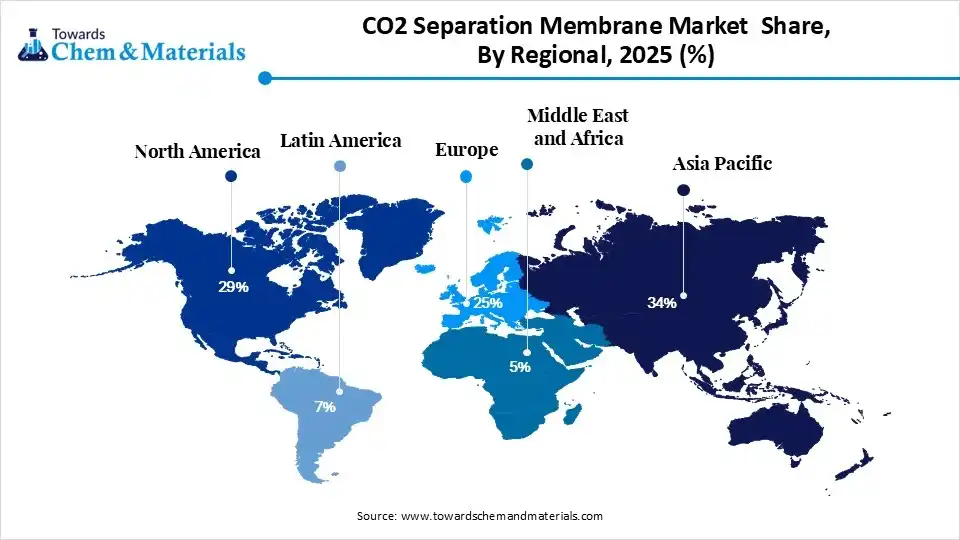
- By region, Asia Pacific dominated the CO2 separation membrane market by holding 34% share in 2025, as it accelerates clean technology adoption.
- By region, Europe held 25% market share in 2025 and is expected to grow at the fastest with a CAGR of 13.40% during the forecast period, driven by the implementation of strict emission reduction regulations.
- By material type, the polymeric segment dominated the market with the largest share of 58% in 2025, as it supports natural gas processing applications.
- By material type, the Zeolite segment held 14% market share in 2025 and is expected to grow at the fastest CAGR of 13.8% over the forecast period as it provides high CO₂ selectivity performance.
- By module, the hollow fiber segment dominated the market with the largest share of 54% in 2025, as it reduces equipment footprint requirements.
- By module, the spiral wound segment held 33% market share in 2025 and is expected to grow at the fastest CAGR of 12.90% over the forecast period, driven by supporting large-volume gas separation systems.
- By application, the post-combustion capture segment dominated the market with the largest share of 42% in 2025, as it receives strong regulatory support worldwide.
- By application, the pre-combustion capture segment held 28% market share in 2025 and is expected to grow at the fastest CAGR of 13.10% over the forecast period as it expands with hydrogen production projects.
- By end-use, the oil & gas segment dominated the market with the largest share of 39% in 2025, as it requires efficient CO₂ removal from gas streams.
- By end-use, the power generation segment held 20% market share in 2025 and is expected to grow at the fastest CAGR of 13.50% over the forecast period because it accelerates the deployment of carbon capture systems.
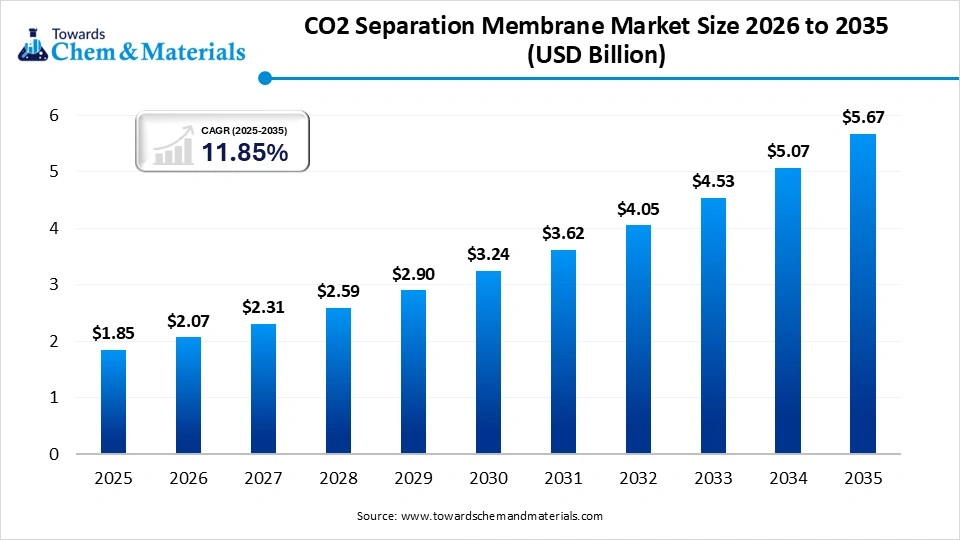
The CO2 separation membrane market is growing rapidly owing to the rise in the overall global efforts to limit carbon emissions from industrial activities and enhance energy efficiency. The use of membrane technologies is becoming widespread because of their lower energy requirements in selected separation processes, miniaturized design, Membrane performance is evaluated using metrics such as permeability, selectivity, recovery, purity, stability, and energy consumption
Presently, most of the market share is occupied by polymeric membranes, such as polyimide and cellulose acetate, which are more commercially mature and are less expensive. Mixed Matrix Membranes (MMMs) and Metal-Organic Frameworks (MOFs) are emerging as promising advanced materials for their excellent selectivity and separation efficiency, however.
Industry players are keen to invest in partnerships, acquisitions, and capacity expansions in order to gain a foothold in the carbon capture, utilization, and storage (CCUS) value chain.
- In January 2026, Toray Industries, Inc. announced that it had made considerable progress in a 12-month test of its all-carbon fiber CO₂ and methane separation membrane at a sewage treatment plant in Osaka Prefecture, Japan. The company said that the technology led to cost savings of almost 70% over conventional moisture removal processes.(Source: compositesworld.com)
Market activity is also supported by government initiatives.Innovation and commercialization of next-generation gas separation technologies are being stimulated across the globe through large-scale investments by India, the United States, and the European Union in CCUS deployment and research into new membranes.
Global Investment Movement for CO2 Separation Membrane Market
Companies are investing to upscale CO₂ separation membranes from laboratory to pilot to commercial scale for cost-effective carbon capture, which will facilitate industrial decarbonization efforts and reduce CO₂ emissions from high-emission industries worldwide.
Market participants are pursuing equity investments and strategic partnerships to drive research, manufacturing growth, and worldwide deployment of membrane technologies, bolstering their commercialization process and helping to facilitate the uptake of advanced gas separation solutions in industrial and carbon capture applications.
- In April 2026, Membrane Technology & Research, Inc., received a USD 27 million equity investment led by Climate Investment and supported by Hartree Partners. The capital will be used to speed up the companys membrane technology deployment for industrial separations and carbon capture projects worldwide.(Source: mtrinc.com)
The industry is investing in membrane technologies for biomethane and renewable natural gas production that can efficiently remove CO₂, while ensuring the methane content remains intact, boosting renewable energy production and facilitating the shift towards a low-carbon and circular energy economy.
Recent Market Trends
- The materials and properties of polymeric membranes are established:Polyimides and polysulfones are still the largest type of CO₂ separation membrane, and together make up over 54% of global market demand. They have been proven to have operational durability, cost competitiveness, ease of manufacturing, and scalability across carbon capture, natural gas processing, and industrial gas separation applications.
- Hollow Fiber Configurations are becoming increasingly popular:The high surface area-to-volume ratio and compact design of hollow fiber modules have made them the market leader with nearly 50% share of the market. These systems offer a higher level of gas contact efficiency, reduced energy usage, better separation performance, and can be a good choice for large-scale carbon capture and industrial gas processing systems.
- An increasing demand for Post-Combustion Carbon Capture:Post-combustion capture continues to be the dominant application segment, accounting for over 44% of market demand. Industries are in the process of implementing membrane technologies to efficiently and economically reduce emissions from existing fossil-fuel power plants and manufacturing processes without the need for significant infrastructure replacement, contributing to the decarbonization efforts worldwide.
Report Scope
| Report Attributes | Details |
| Market Size and Volume in 2026 | USD 2.07 Billion |
| Revenue Forecast in 2035 | USD 5.67 Billion |
| Growth Rate | CAGR 11.85% |
| Base Year of Estimation | 2025 |
| Forecast Period | 2025 - 2035 |
| High Impact Region | Asia Pacific |
| Segment Covered | By Material Type, By Module, By Application, By End-use, By Region |
| Key Companies Profiled | Pentair, Air Products and Chemicals, Inc., Fujifilm Holdings Corporation, Arkema, Honeywell UOP, Evonik Industries AG, SLB, Membrane Technology and Research, Inc. (MTR), NGK Insulators, Ltd., Toray Industries, Inc., Parker Hannifin Corporation, BORSIG GmbH, Linde PLC, GENERON, UBE Corporation, Air Liquide |
(Source:https://www.towardschemandmaterials.com/)
Technology Trends: Advanced Membrane Materials, Modules and AI Applications
Current R&D applications include computational screening of membrane materials, prediction of permeability and selectivity, process optimization, anomaly detection, and maintenance planning.Meanwhile, manufacturers are creating small, retrofit-ready membrane-based post-combustion carbon capture systems and incorporating sensor and real-time monitoring technologies to increase efficiency and energy savings.
AI and machine-learning methods can support membrane-material screening, performance prediction, process optimization, and predictive maintenance when suitable training data and validated models are available.AI-based analytics can support CO₂-capture optimization and maintenance decisions; quantified performance and cost benefits depend on the application and deployment model.
Supply Chain Analysis of the CO2 Separation Membrane Market
- Feedstock procurement: Manufacturers rely on global suppliers to obtain specific grades of polymers, solvents, additives, and porous support materials to maintain a stable, efficient, and sustainable feedstock supply chain for the production of high-performance CO₂ separation membranes.
- Key Players: BASF, Dow, ExxonMobil
- Chemical Synthesis and Processing: Advanced polymer resins and membrane materials with desired permeability, selectivity, and thermal stability needed for efficient gas separation are developed by chemical synthesis and processing of raw materials.
- Representative material suppliers and membrane developers should be identified only where their direct role in CO₂-separation membrane materials is documented
- Compounding Formulation and Blending: Homogeneous material formulations, with additives, plasticizers, and solvents, are synthesized and blended to prepare material formulations with consistent performance characteristics for processing into membrane sheets or hollow fiber configurations.
- Key Players: MTR, GENERON, Air Liquide
Regulatory Framework: CO2 Separation Membrane Market
| Region | Key Regulation/Initiative | Regulatory Focus |
| Asia Pacific | National CCUS and industrial-decarbonization policies; assess China, Japan, South Korea, India and Australia separately | Supports carbon capture deployment and industrial decarbonization. |
| North America | U.S. DOE carbon-capture R&D and demonstration programs | Funds membrane R&D and carbon capture commercialization. |
| Europe | EU climate, industrial decarbonization, CCUS and research-funding frameworks | Promotes low-carbon technologies and membrane innovation. |
Market Dynamics
Drivers
Rapid Expansion of CCUS Projects Drives Market Growth
Carbon Capture, Utilization, and Storage (CCUS) projects are a significant factor in the growth of the CO₂ separation membrane market. Governments and industries are spending substantial sums on the development of carbon capture facilities to meet their decarbonization goals. For large-scale industrial carbon capture applications, Membrane systems can offer compact equipment and potentially lower energy requirements in selected gas-separation applications, although suitability depends on feed composition, pressure, recovery, selectivity, and process conditions.
Restraints
Performance Trade-Offs Remain a Key Technical Challenge
A significant limitation of the market is the intrinsic permeability/selectivity limitations of the membranes known as Robesons Upper Bound. Membrane development faces a permeability-selectivity trade-off in which improvements in permeability can be accompanied by reduced selectivity for many polymeric membrane systems. These properties, however, must be optimized at a commercial scale, and the balance of these properties is a major materials science challenge that will enable wider use in challenging industrial applications.
Opportunities
Advanced Membrane Materials Create Technology Development Opportunities
There are significant opportunities for market growth in the development of next-generation membrane materials. Research is now underway on Mixed Matrix Membranes (MMMs) and facilitated transport membranes, such as amine-rich membranes, which can overcome some of the performance limitations of conventional membranes. Advanced membrane materials may improve CO₂ selectivity, permeability, stability, or energy performance, depending on material architecture and operating conditions
CO2 Separation Membrane Market Segmentation
Material Type Insights
he polymeric segment held the largest share at 58% in 2025; its established manufacturing base and use in gas-separation applications support its market positionThey have desirable permeability, processability, and scalability properties, which have made them popular for various carbon capture, natural gas treatment, and biogas upgrading applications. Their proven manufacturing capabilities and wide industrial acceptance added to their market leadership.
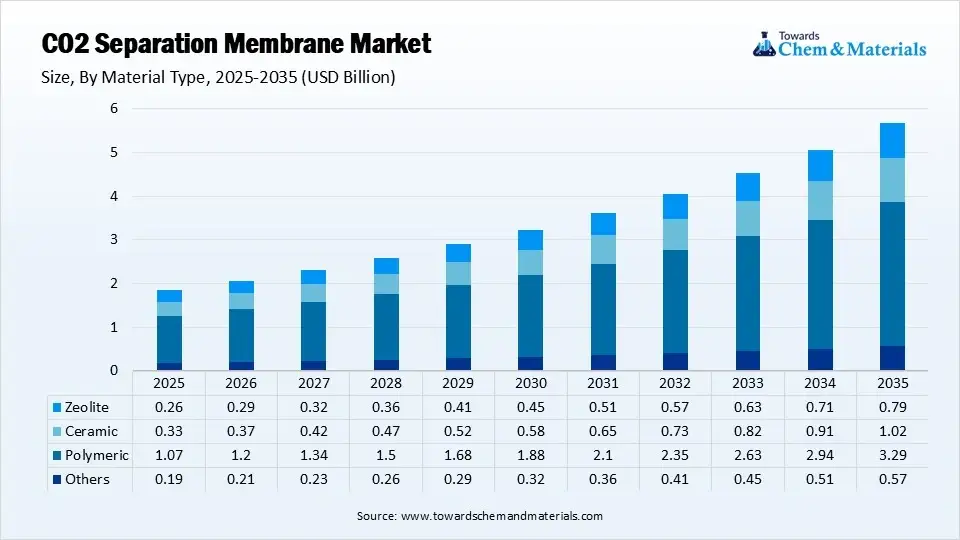 The zeolite segment is projected to grow at a CAGR of 13.8% during the forecast period, due to its impressive molecular sieving capacity, thermal stability, and gas selectivity. While adoption is being boosted by advanced membrane technologies and the demand for high-performance materials for carbon capture applications, investments in them are also increasing. The commercialisation of zeolite-based separation membranes continues to gain momentum with continual research and technological development.
CO2 Separation Membrane Market Share, By Material Type, 2025 (%)
| By Material Type | Revenue Share, 2025 (%) |
| Polymeric | 58% |
| Ceramic | 18% |
| Zeolite | 14% |
| Others | 10% |
Module Insights
The hollow fiber segment dominated the market with the largest share of 54% in 2025, with its high surface-area-to-volume ratio, compact structure, and excellent gas separation efficiency. These modules allow for efficient processing and take up relatively less space for installations. Hollow-fiber modules are widely used in gas-separation applications because their geometry provides high membrane area per unit volume.
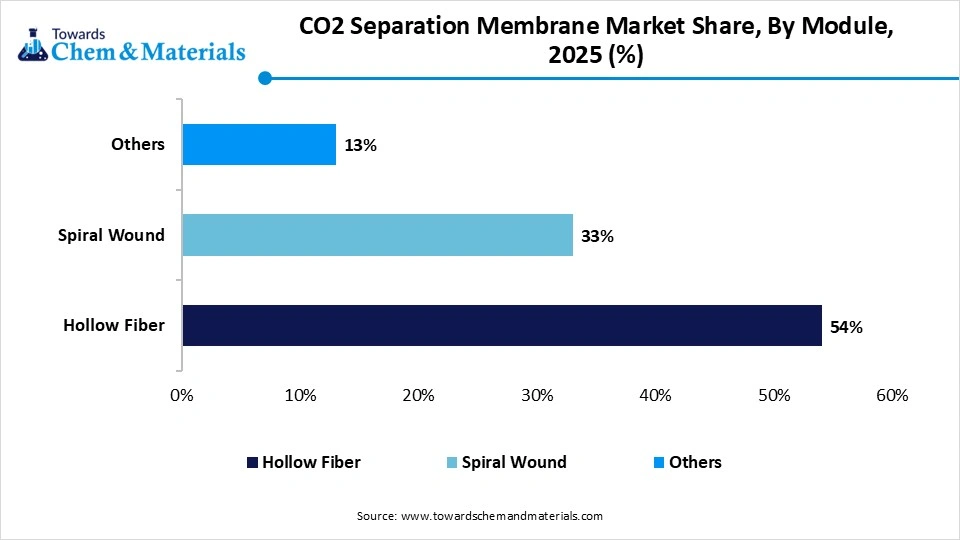 The spiral wound segment held the 33% market share in 2025 and is expected to grow at the fastest CAGR of 12.90% over the forecast period, as it delivers flexibility in operation, efficient membrane area usage, and modularity. These systems are becoming more popular because of their increased scalability and ease of deployment in various gas separation applications, which is a cost-effective approach. The adoption of compact carbon capture technologies with low energy consumption is projected to drive further growth in the segment. Expansion of the segment is expected to be driven by rising investments in low-energy consumption and compact carbon capture technologies.
CO2 Separation Membrane Market Share, By Module, 2025 (%)
| By Module | Revenue Share, 2025 (%) |
| Hollow Fiber | 54% |
| Spiral Wound | 33% |
| Others | 13% |
Application Insights
Post-combustion capture is relevant to existing industrial and power assets where CO₂ must be separated from flue gas streams. Minimizing infrastructure changes and allowing for substantial carbon reduction, membrane systems offer a practical retrofit solution. The increasing decarbonization efforts and tougher emission laws have contributed to the growing trend of using post combustion membrane technologies.
The pre-combustion capture segment is projected to grow at a CAGR of 13.10% during the forecast period. owing to the growing investments in hydrogen production and integrated gasification processes across the industries. The efficient separation of CO₂ is crucial for these applications, as it increases the energy efficiency and reduces emissions. Advanced membranes are emerging with increased opportunities for investments in low-carbon fuels and clean hydrogen projects.
CO2 Separation Membrane Market Share, By Application, 2025 (%)
| By Application | Revenue Share, 2025 (%) |
| Pre-combustion Capture | 28% |
| Post-combustion Capture | 42% |
| Industrial Separation | 30% |
End-Use Insights
The oil & gas segment dominated the market with the largest share of 39% in 2025, as it has been widely applied in natural gas processing, gas purification, and carbon management operations by utilizing membrane technologies. Ongoing investments in operational efficiency and emissions reduction have grown the need for advanced gas separation solutions.
The power-generation segment is projected to grow at a CAGR of 13.5% during the forecast period, due to the increasing usage of carbon capture technology in power generation facilities to curb the emission of GHGs. The increased capital expenditure on low-carbon electricity generation, as well as tougher environmental regulations, are driving up the adoption of membranes. Carbon-pricing mechanisms and decarbonization requirements can influence the economics of carbon-capture projects, with effects varying by jurisdiction.
CO2 Separation Membrane Market Share, By End-use, 2025 (%)
| By End-use | Revenue Share, 2025 (%) |
| Oil & Gas | 39% |
| Chemicals | 24% |
| Power Generation | 20% |
| Food & Beverage | 7% |
| Others | 10% |
Regional Insights
What Is the Asia Pacific CO2 Separation Membrane Market Size?
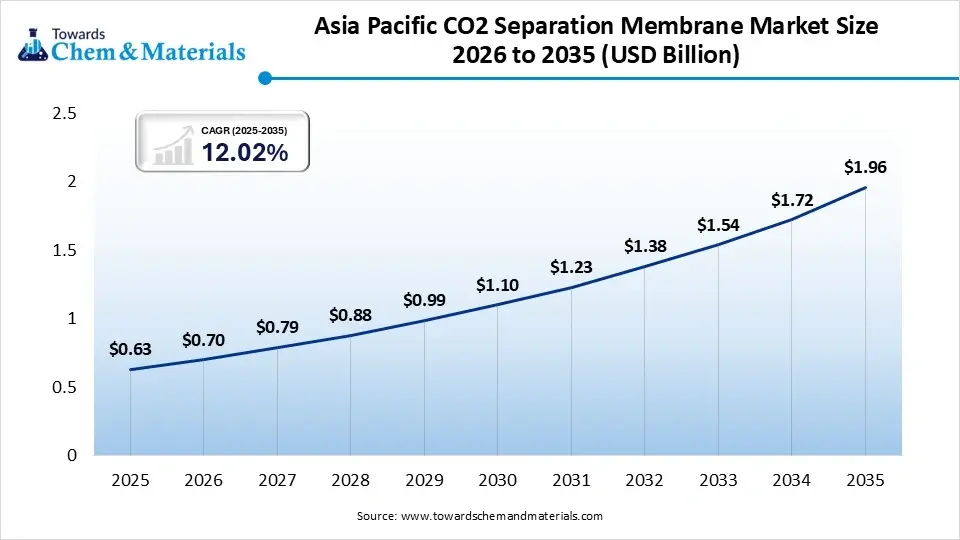
The Asia Pacific co2 separation membrane market size was estimated at USD 0.63 billion in 2025 and is projected to reach USD 1.96 billion by 2035, growing at a CAGR of 12.02% from 2026 to 2035. Asia Pacific dominated the market by holding 34% share in 2025, as industrialization, CO₂ emissions, and increasing investments in carbon capture and clean energy technologies are driving this region. Membrane use has rapidly gained by the expansion of manufacturing, power generation, and petrochemical sectors. The region continued to benefit from government support for decarbonisation and growth of CCUS projects to reinforce its market leadership.
 China
China
- The investments in carbon capture and advanced gas separation technologies are growing in various industrial fields, due to the expansion of carbon neutrality activities.
- The demand for efficient CO₂ separation solutions and emission reduction technologies is growing due to the strong chemical, steel, and power industries.
- Advanced membrane technologies are taking a step towards commercialization with the increasing support by the government for hydrogen and clean energy projects.
India
- Increased industrial emissions are driving the use of membrane carbon capture technologies in hard-to-abate sectors.
- The government is allocating substantial resources to CCUS and low-carbon technologies, which are presenting opportunities for the membrane manufacturers.
- The growing use of petrochemical and power generation facilities is driving the need for improved gas separation technologies.
Europe CO2 Separation Membrane Market Size
The Europe CO2 separation membrane market was estimated at USD 0.46 billion in 2025 and is projected to reach USD 1.45 billion by 2035, representing a CAGR of approximately 12.17% from 2026 to 2035. Europe held a 25% market share in 2025, attributed to the ambitious carbon neutrality initiatives and environment-driven laws. Investments in CCUS infrastructure, clean hydrogen production, & sustainable industrial processes are substantial across the region. The deployment of membrane technology is further gaining momentum, especially with regard to supportive funding mechanisms and robust research capabilities.
Germany
- Carbon capture and gas separation membrane technology is being encouraged through strong policies with regard to industrial decarbonization.
- Substantial investment in hydrogen production is supporting demand for advanced membrane-based gas-separation systems.
- Significant research efforts are driving innovation in next-generation membrane materials and carbon capture technologies.
France
- National decarbonization plans are facilitating investments in CCUS/low-carbon industrial technologies in priority sectors.
- Advanced gas separation membranes are finding new applications in the emerging renewable hydrogen projects.
- Innovative membrane technologies are being rapidly commercialized through public funding and private initiatives.
North America CO2 Separation Membrane Market Size
The North America co2 separation membrane market size was estimated at USD 0.54 billion in 2025 and is projected to reach USD 1.67 billion by 2035, growing at a CAGR of 11.95% from 2026 to 2035. North America held 29% market share in 2025, with significant investments in carbon capture facilities and technological strength. There is an increasing use of membrane technologies in various industries in the region, such as oil and gas, industrial processing, and power generation. Market growth is supported by government incentives, carbon-management programs, and industrial decarbonization initiatives
United States
- Federal research and commercialization initiatives are speeding up the research and commercialization of advanced CCS and membrane technologies.
- In large industrial and power generation plants, investments are being made in emission reduction and gas separation systems.
- The increasing trend of clean hydrogen projects is creating demand for high-performance CO₂ separation membranes.
Canada
- Carbon management projects are driving the spread of membrane technologies in industry.
- Investments in carbon capture and low-carbon energy infrastructure are being helped by government climate targets.
- Advanced gas purification and separation technologies are still in demand due to the continued strong activity in the oil and gas industry.
Latin America held 7% market share in 2025, due to the expansion of industrial activities and a greater interest in renewable energy projects. Increasing investments in biogas production and emission reduction projects, as well as sustainable industry operations, offer new opportunities. The governments are also incentivising cleaner technologies to achieve long-term decarbonisation targets.
Brazil
- As biomethane increases, so does the need for efficient CO₂ removal and methane recovery technologies in the production process.
- The introduction of new gas separation technologies into selected industries is being promoted by industrial decarbonization projects.
- As investments in renewables increase, so are opportunities for membrane-based CCS.
Chile
- National clean energy policies are incentivizing CCSG investments.
- The growing number of projects around green hydrogen is driving the demand for advanced membrane systems.
- Opportunities are emerging in the mining sector for efficient industrial carbon capture solutions thanks to decarbonization activities.
The Middle East & Africa held 5% market share in 2025, with rising investments in industrial decarbonization and gas processing technologies. The increasing emphasis on the transition to clean energy, hydrogen generation, and ongoing emission reduction measures is driving the uptake of membranes. Growing interest in carbon management solutions and the increasing industrial use are also helping to drive market growth.
 Saudi Arabia
- National energy transition plans are promoting investments in carbon capture and advanced gas separation technologies.
- Demand for efficient CO₂ separation solutions is growing for large petrochemical and refining industries.
- Progress in developing the hydrogen economy is supporting demand for membrane-based gas-processing systems.
South Africa
- Efforts to reduce industrial emissions are increasing interest in membrane-based carbon-capture technologies.
- Advanced gas separation applications are emerging as a result of the rise in investments in renewable energy.
- Carbon management technologies are being explored in the mining and heavy industries sector for achieving sustainability and decarbonisation goals.
CO2 Separation Membrane Market Competitive Landscape
Companies are combining membrane-development expertise with materials science capabilities to improve CO₂ separation performance. Companies are pursuing strategic partnerships, technology alliances, and investment in next-generation membranes to improve CO₂ selectivity, permeability, and energy performance.Scalable membrane systems to enable the decarbonization and GHG reduction programs in the industry are also gaining momentum.
- For instance, in January 2025,The collaboration focuses on membrane design and engineering and combines OOYOO’s membrane technology with Arkema’s high-performance polymer expertise.(Source: www.arkema.com)
Selected Companies and Their Offerings
| Company | Headquarters | Country | Key Initiatives in the Market | Key Products & Services |
| Air Liquide | Paris | France | Provides membrane-based gas-separation technologies and industrial-gas solutions. | Gas separation membranes, industrial gases, carbon capture solutions. |
| UBE Corporation | Tokyo | Japan | Remove this claim unless a current UBE primary source confirming the capacity expansion is added. | Hollow-fiber membranes, specialty chemicals, and engineering materials. |
| GENERON | Houston, Texas | United States | Provides membrane systems and gas-processing solutions. | Membrane systems, nitrogen generators, gas processing solutions. |
Other Key Players
- Pentair
- Air Products and Chemicals, Inc.
- Fujifilm Holdings Corporation
- Arkema
- Honeywell UOP
- Evonik Industries AG
- SLB
- Membrane Technology and Research, Inc. (MTR)
- NGK Insulators, Ltd.
- Toray Industries, Inc.
- Parker Hannifin Corporation
- BORSIG GmbH
- Linde PLC
Recent Developments
- In March 2026, EPFL spin-off Divea reported demonstrations of graphene-membrane technology for CO₂ capture from industrial flue gases.
- In August 2025, A South Korean research team unveiled a next-generation separation membrane technology that can be highly effective and stable in a simple process of heat treatment.The researchers reported potential for reducing CO₂-capture costs, but commercial impact remains to be demonstrated.
Segment Covered in the Report
By Material Type
- Polymeric
- Polyimide
- Cellulose Acetate
- Polysulfone
- Polyetherimide
- Ceramic
- Alumina-Based
- Zirconia-Based
- Titania-Based
- Zeolite
- MFI Zeolite
- CHA Zeolite
- DDR Zeolite
- Others
- Mixed Matrix Membranes
- Carbon Molecular Sieve Membranes
- Graphene-Based Membranes
By Module
- Hollow Fiber
- Single Bore Hollow Fiber
- Multi Bore Hollow Fiber
- Spiral Wound
- Standard Spiral Wound
- High-Pressure Spiral Wound
- Others
- Plate & Frame
- Tubular
- Capillary
By Application
- Pre-combustion Capture
- Hydrogen Production
- Gasification Systems
- Post-combustion Capture
- Coal Power Plants
- Gas Power Plants
- Industrial Flue Gas
- Industrial Separation
- Natural Gas Processing
- Biogas Upgrading
- Syngas Processing
By End-use
- Oil & Gas
- Natural Gas Sweetening
- Enhanced Oil Recovery
- Offshore Gas Processing
- Chemicals
- Ammonia Production
- Hydrogen Production
- Petrochemicals
- Power Generation
- Coal-Fired Plants
- Gas-Fired Plants
- Food & Beverage
- Beverage Carbonation
- Food Packaging Gas Recovery
- Others
- Pulp & Paper
- Cement
- Steel
By Regions
- North America
- U.S.
- Canada
- Europe
- Germany
- UK
- France
- Italy
- Spain
- Sweden
- Denmark
- Norway
- Asia Pacific
- China
- Japan
- India
- South Korea
- Thailand
- Latin America
- Brazil
- Mexico
- Argentina
- Middle East and Africa (MEA)
- South Africa
- UAE
- Saudi Arabia
- Kuwait
A Seven-Phase Framework
Our methodology is designed to be universally applicable across commodity chemicals, specialty chemicals, petrochemicals, construction chemicals, coatings, electronic chemicals, industrial gases, agrochemicals, water treatment chemicals, and performance materials. Each phase builds upon the last, creating a layered validation structure that minimizes estimation error and maximizes analytical confidence.
The framework ensures comprehensive market coverage, robust cross-validation, and reliable long-term forecasting — producing market estimates that withstand scrutiny from investors, regulators, and corporate strategy teams.

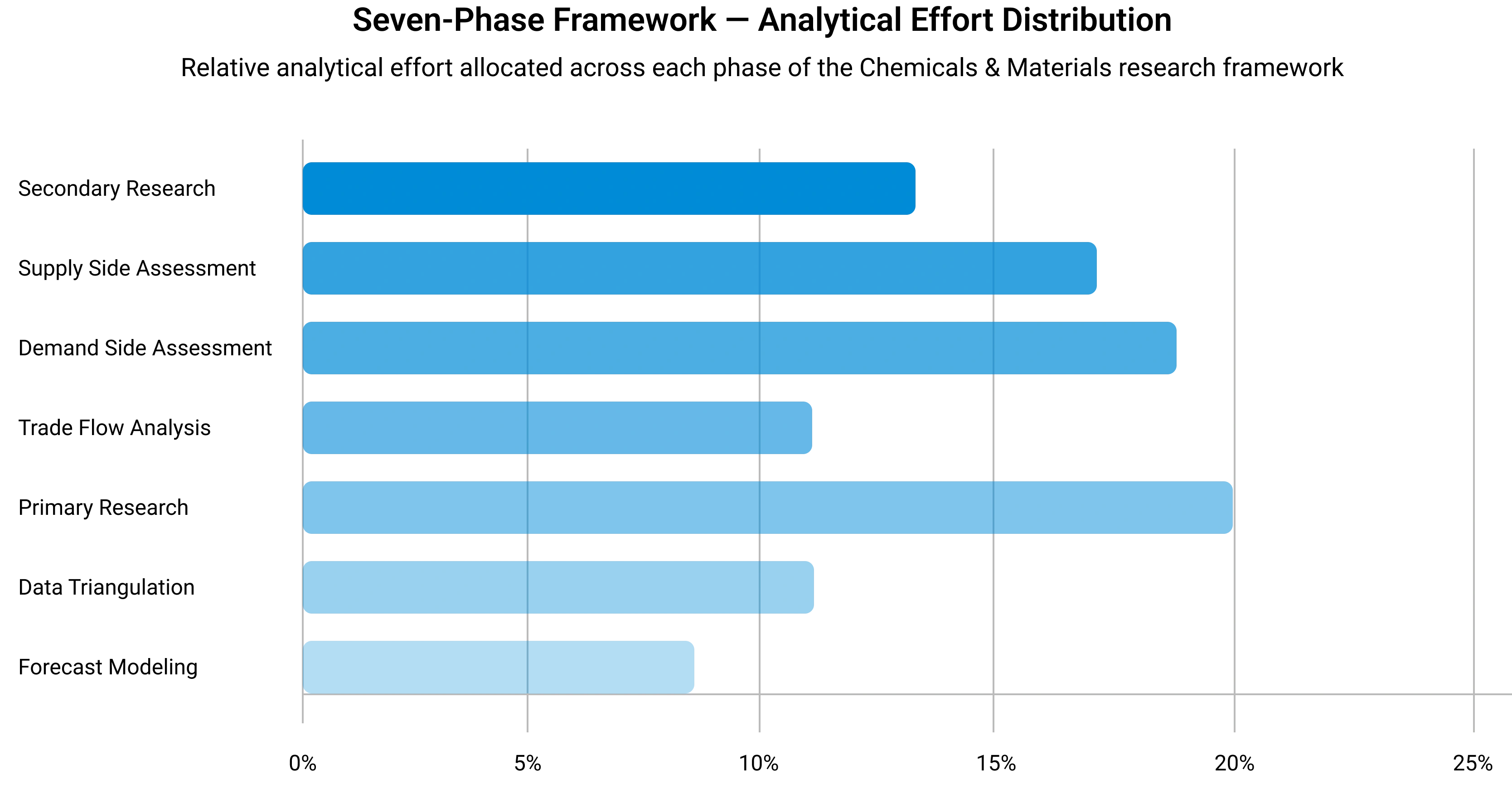
Seven-Phase Framework — Analytical Effort Distribution
Relative analytical effort allocated across each phase of the Chemicals & Materials research framework
Phase 1 - Secondary Research: Establishing the Foundation
Secondary research collects and evaluates publicly available information from authoritative sources, establishing the foundational understanding of market structure, value chain dynamics, competitive landscape, and end-use demand patterns. Every source is evaluated for credibility, recency, geographic relevance, and methodological soundness before inclusion.
Industry Associations
Sources include ACC, CEFIC, ICCA, JCIA, CPCIF, and SOCMA providing production volumes, consumption trends, capacity developments, and sustainability initiatives.
Company Disclosures
Annual reports, investor presentations, earnings transcripts, and regulatory filings reveal product portfolios, manufacturing footprints, capacity expansions, and revenue segmentation.
Government Databases
National statistical offices, customs authorities, environmental agencies, and industrial production databases provide verified statistics on output, trade flows, and regulatory compliance.
Trade Databases
UN Comtrade, ITC, Eurostat, and national customs authorities enable assessment of global product movement, import dependency, and export competitiveness across regions.
Our Secondary Research Sources
- Ministry of Chemicals and Fertilizers
- European Chemicals Agency
- United States Department of Energy
- Ministry of Industry and Information Technology
- Ministry of Economy Trade and Industry
- Ministry of Trade Industry and Energy
- National Institute of Standards and Technology
- Council of Scientific and Industrial Research
- Fraunhofer Society
- National Institute for Materials Science
Phase 2 — Supply-Side Assessment: Mapping Production Capabilities
Production Capacity Analysis
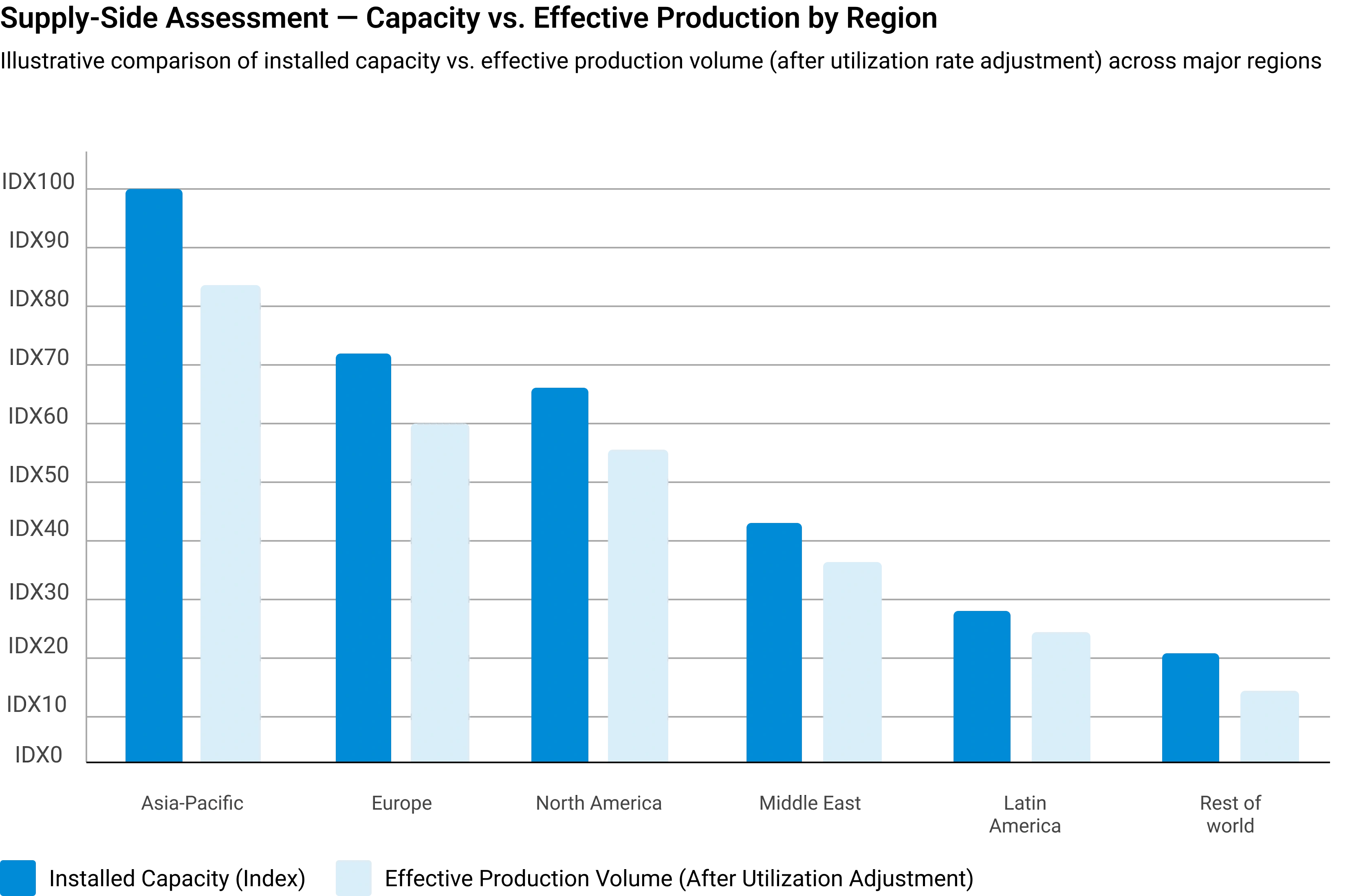
All major manufacturers are assessed for existing installed capacity, planned additions, expansions, new plant announcements, and technology adoption — mapped at global, regional, and country levels.
Capacity Utilization Adjustment
Installed capacity is adjusted using utilization rates based on demand conditions, feedstock availability, plant operating rates, maintenance schedules, and regulatory restrictions.
Manufacturer Revenue Analysis
Product-specific revenues, segment-level performance, regional distribution, average selling prices, and margin trends are evaluated to establish market value estimates.
Supply-Side Assessment — Capacity vs. Effective Production by Region
Illustrative comparison of installed capacity vs. effective production volume (after utilization rate adjustment) across major regions
Phase 3 — Demand-Side Assessment: Quantifying Chemical Consumption
Demand-side analysis quantifies chemical consumption across industries, applications, and geographies — identifying where and how chemicals are consumed throughout the value chain with precision.
End-Use Industry Analysis
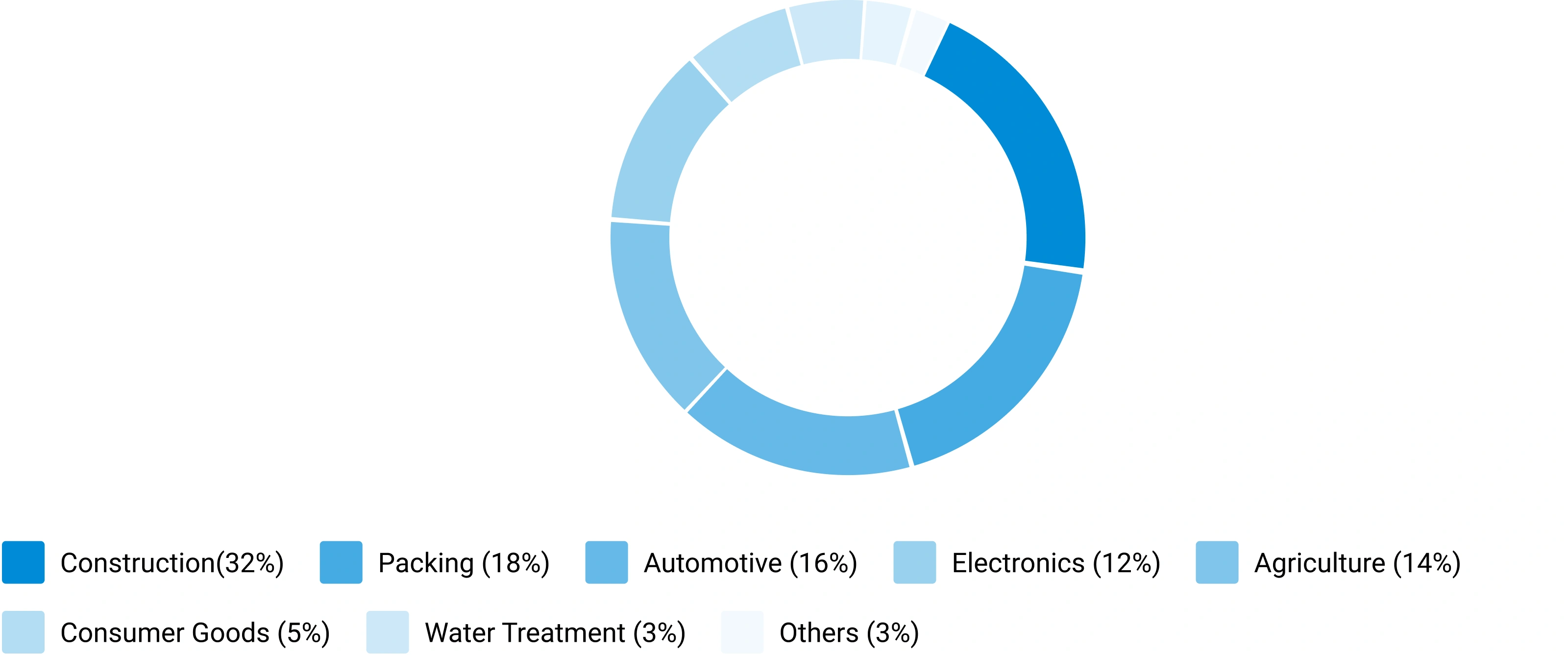
Chemical demand is evaluated across automotive, construction, packaging, electronics, agriculture, healthcare, consumer goods, industrial manufacturing, energy and utilities, and water treatment. Industry output, production trends, and consumption intensity are analyzed to determine demand patterns.
Consumption Modeling
Demand is estimated using measurable indicators: kilograms per vehicle, kilograms per square meter of construction, dosage per cubic meter of water treated, kilograms per hectare of agricultural land, and kilograms per ton of manufactured products. Consumption factors are validated through industry publications and primary interviews.
Application Analysis
The market is segmented by application area to understand product performance requirements, formulation trends, technology adoption, customer preferences, and regulatory requirements improving demand accuracy and segmentation granularity.
Demand-Side Assessment — End-Use Industry Demand Distribution
Illustrative distribution of chemical & materials demand across key end-use industries
Phase 4 - Trade Flow Analysis: Balancing Regional Supply and Demand
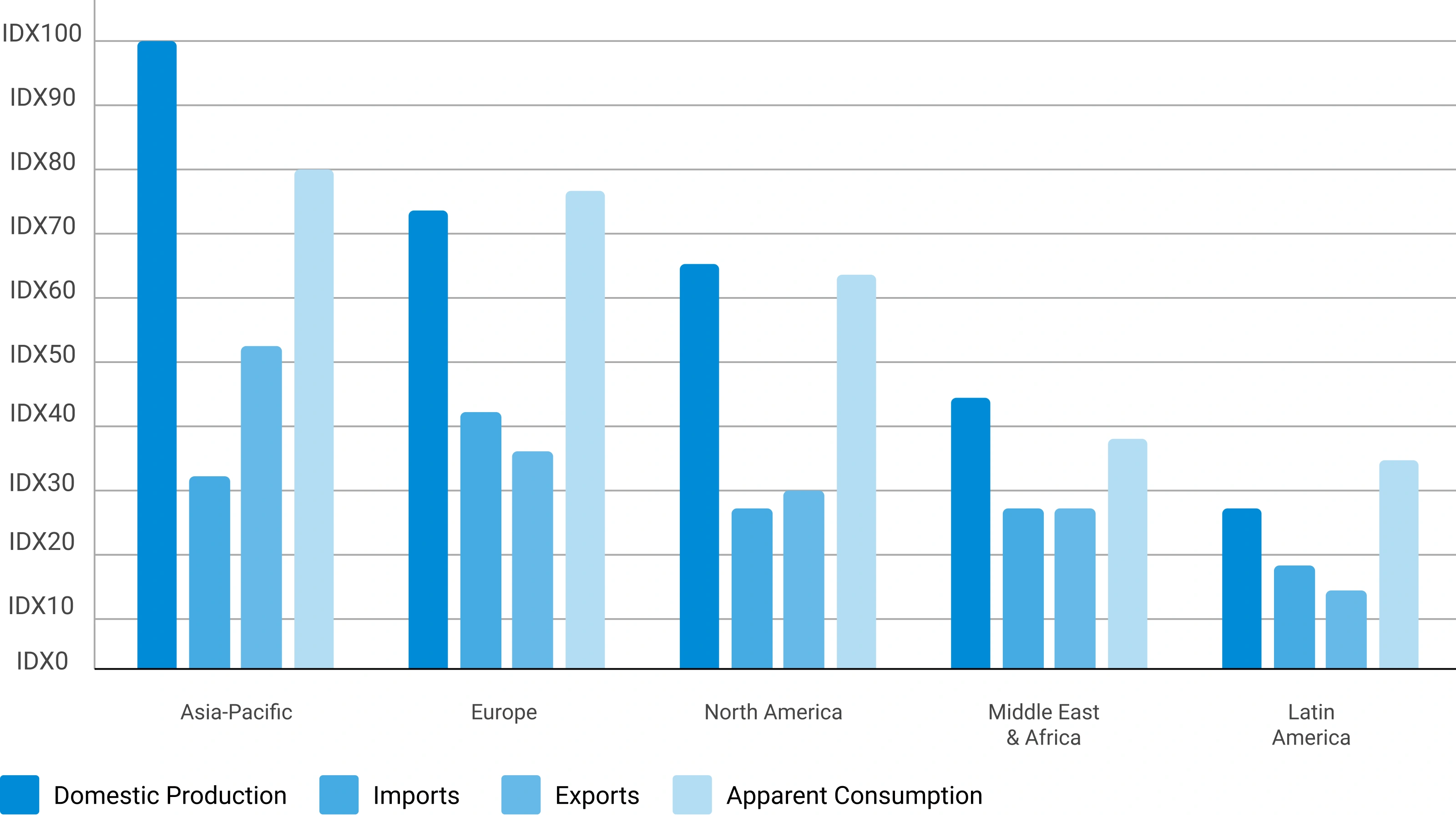
Trade flow analysis reconciles regional supply and demand estimates through import and export data, identifying net supply positions, regional dependencies, and market imbalances. It serves as an independent validation layer that tests the consistency of supply-side and demand-side estimates.
Import Analysis
Import data is evaluated to determine volumes, source countries, product dependency, regional supply gaps, and pricing trends — identifying markets that rely heavily on external supply and where domestic production is insufficient to meet demand.
Export Analysis
Export assessments reveal production surplus, export competitiveness, regional manufacturing strength, and global market participation. Export patterns also help validate domestic production estimates and identify net exporting regions.
Apparent Consumption Model
Regional consumption is assessed using the standard apparent consumption formula:
Results identify net importing regions, net exporting regions, regional deficits, and surpluses — serving as an independent validation of supply and demand estimates.
Trade Flow Analysis — Net Supply Position by Region
Illustrative apparent consumption vs. domestic production across major regions — positive gap indicates net import dependency
Phase 5 — Primary Research: The Critical Validation Layer
Primary research tests and refines findings from secondary research through direct engagement with industry participants across the supply chain, demand side, and expert community. It captures intelligence that no database or published report can provide — the real-world experience of manufacturers, buyers, and specialists operating in the market.

Supply-Side Interviews
Conversations with chemical manufacturers, raw material suppliers, contract manufacturers, technology providers, and plant operators cover production trends, capacity utilization, pricing developments, technology shifts, and competitive dynamics.

Demand-Side Interviews
Engagement with OEMs, industrial consumers, procurement managers, distributors, formulators, and end-use manufacturers focuses on consumption trends, purchasing behavior, product substitution, demand outlook, and emerging applications.

Industry Expert Consultations
Additional interviews with industry consultants, independent experts, regulatory specialists, technical professionals, and research institutions provide deeper market context and validate key analytical assumptions.
Focus Areas of Primary Research:
Market Size & Forecast Validation
Revenue estimates, volume consumption, growth rates, forecast assumptions, regional demand.Supply Chain & Value Chain Assessment
Raw material sourcing, supply chain challenges, distribution networks, procurement practices.Production & Capacity Analysis
Manufacturing capacity, utilization rates, expansion projects, plant investments.Pricing & Cost Structure Analysis
Product pricing trends, feedstock costs, energy costs, margin pressures, pricing outlook.Competitive Landscape Assessment
Volume and value estimates confirmed to be fully consistent with one another before publicationInterview Volume by Market Scope
| Study Scope | Number of Interviews |
|---|---|
| Niche Market | 20 – 30 |
| Mid-Sized Market | 30 – 50 |
| Global Market | 50 – 80 |
| Highly Fragmented Market | 80 – 120 |
Interview Details:
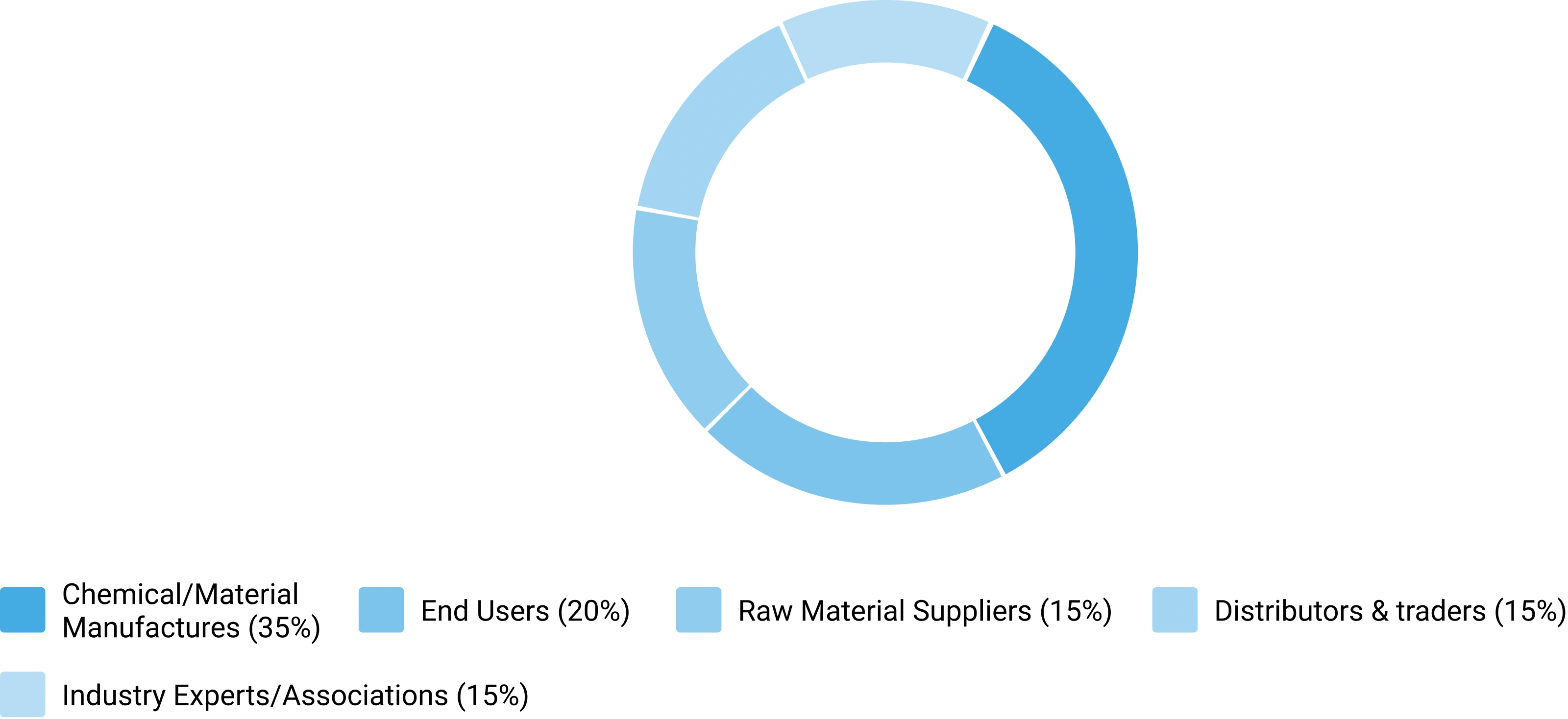
Category : Manufacturers, Suppliers, Distributors, End Users, Experts/Associations
Average Duration : 30–60 Minutes
Interview Mode : Video calls, telephonic interviews, expert consultations
Interview Format : Structured / Semi-Structured questionnaire
Focus Areas of Primary Research:
Market Size & Forecast Validation :
Revenue estimates, volume consumption, growth rates, forecast assumptions, regional demand.
Supply Chain & Value Chain Assessment :
Raw material sourcing, supply chain challenges, distribution networks, procurement practices.
Production & Capacity Analysis :
Manufacturing capacity, utilization rates, expansion projects, plant investments.
Pricing & Cost Structure Analysis :
Product pricing trends, feedstock costs, energy costs, margin pressures, pricing outlook.
Competitive Landscape Assessment :
Market share, competitor positioning, strategic initiatives, partnerships, acquisitions.
Primary Research — Stakeholder Coverage by Category
Distribution of interview respondents across stakeholder categories (% share from PPT data)
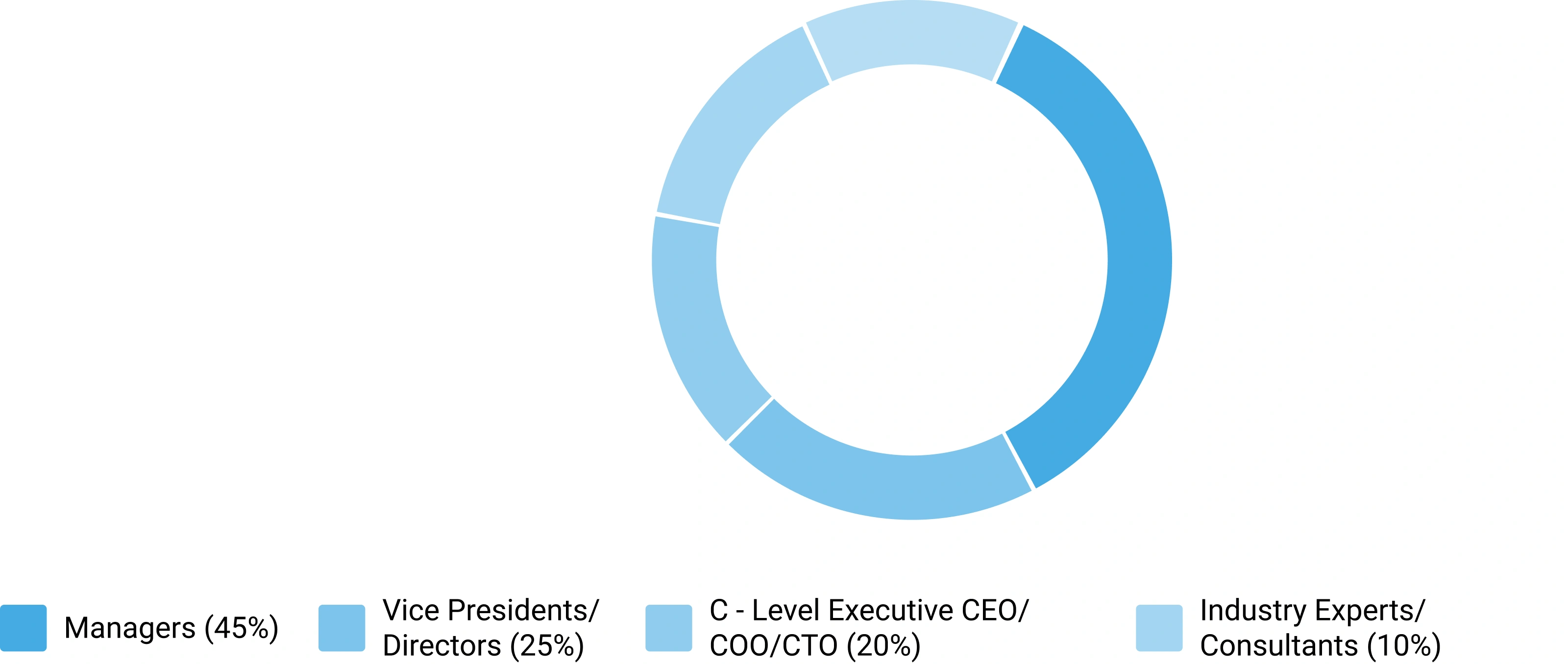
Primary Research — Respondent Designation Profile
Seniority breakdown of interview respondents (% share from PPT data)
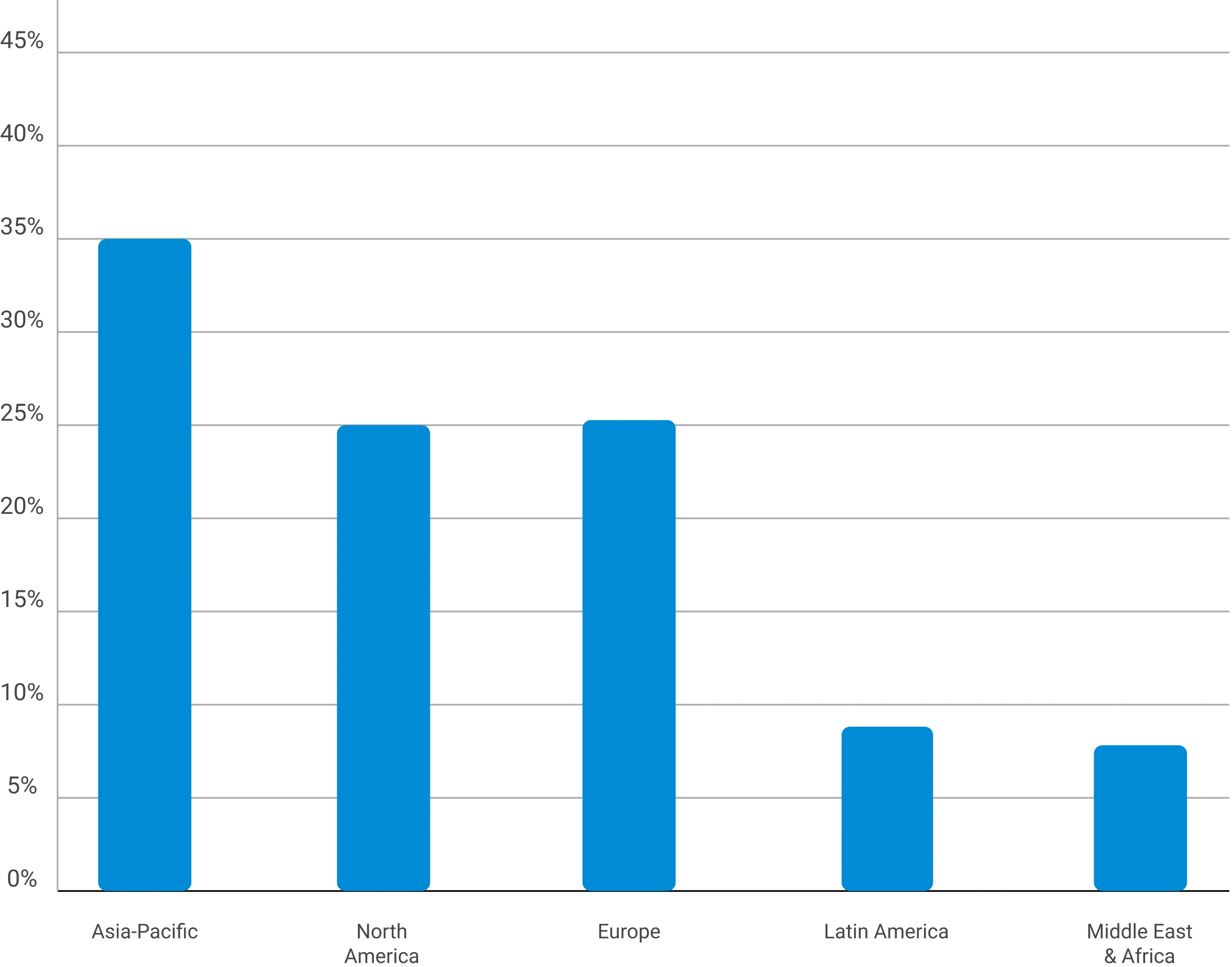
Primary Research — Geographic Coverage of Interviews
Regional distribution of primary research engagement (% share from PPT data)
Phase 6 — Data Triangulation and Market Validation
No single methodology is relied upon in isolation. Multiple independent estimation approaches are combined and reconciled to ensure consistency, accuracy, and analytical defensibility. Any material deviations between approaches are investigated and adjusted through additional validation cycles.
The final market size is derived through weighted triangulation of all validated methodologies. Any material deviations between approaches are investigated and adjusted through additional validation cycles. The outcome represents the most realistic assessment of the market based on available evidence and expert confirmation ensuring that volume and value estimates are fully consistent with one another.
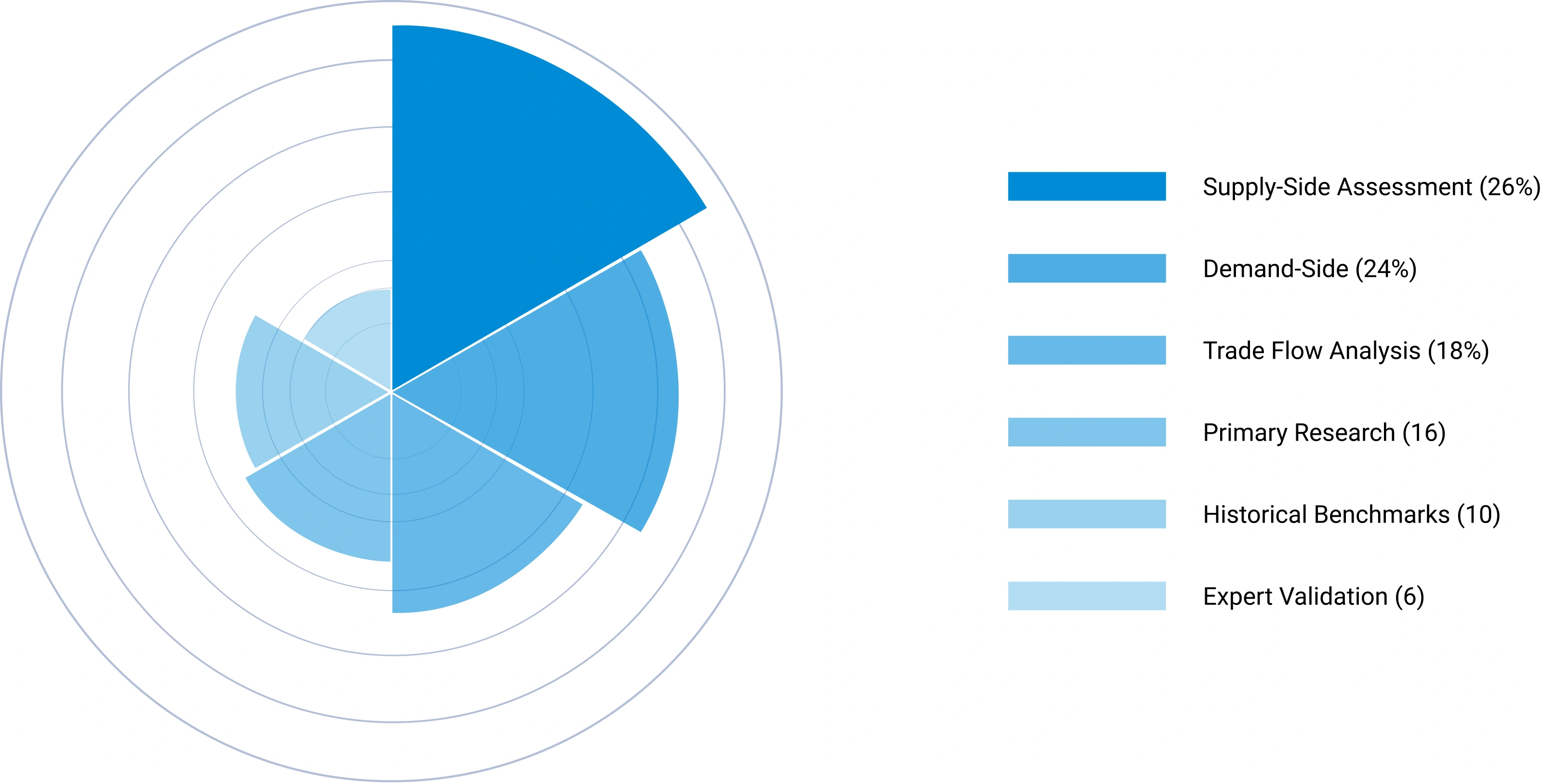
Triangulation Framework — Input Contribution Weight
Relative weight each sizing input contributes to the final reconciled market estimate
Phase 7 — Forecast Modeling: Projecting Future Market Evolution
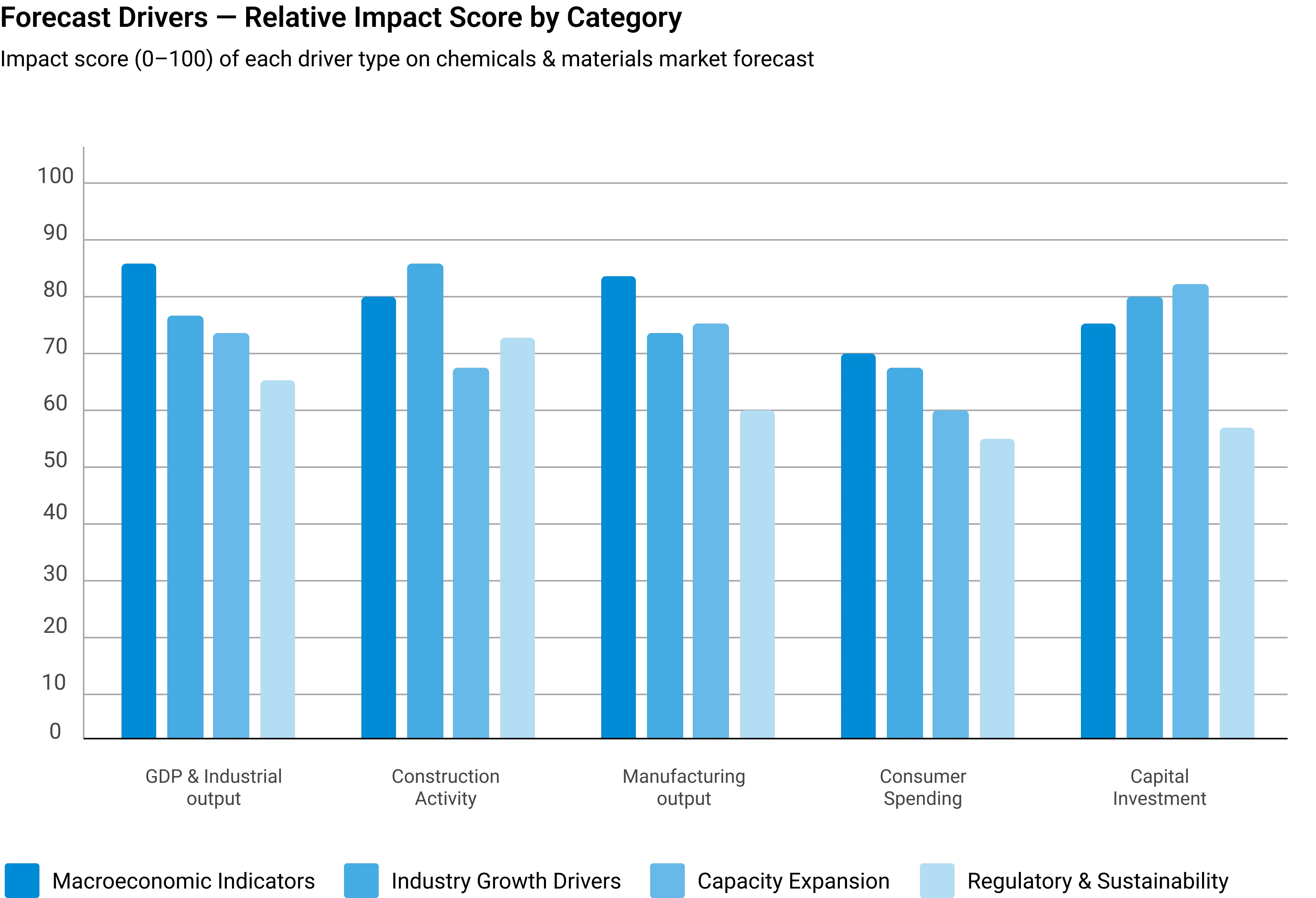
Forecasting evaluates the future trajectory of the market using a combination of quantitative indicators and qualitative assessments across economic, industry, and regulatory dimensions. Rather than simple extrapolation, each driver is independently modeled and integrated into a composite forecast.
Macroeconomic Indicators
GDP growth, industrial production, manufacturing output, construction activity, consumer spending, and capital investment form the quantitative foundation of long-term demand projections. These are applied at country, regional, and global levels.
Industry Growth Drivers
Urbanization, infrastructure development, industrialization, technological innovation, sustainability initiatives, and evolving product performance requirements are assessed at regional and industry levels — capturing both structural and cyclical demand drivers.
Capacity Expansion Analysis
Announced plant expansions, new manufacturing facilities, technology upgrades, and strategic investments are evaluated to determine future supply-demand dynamics and potential market tightness or oversupply situations.
Regulatory & Sustainability
Environmental regulations, chemical safety standards, emission reduction targets, circular economy initiatives, and sustainability requirements are incorporated as they often influence product adoption rates and market growth trajectories.
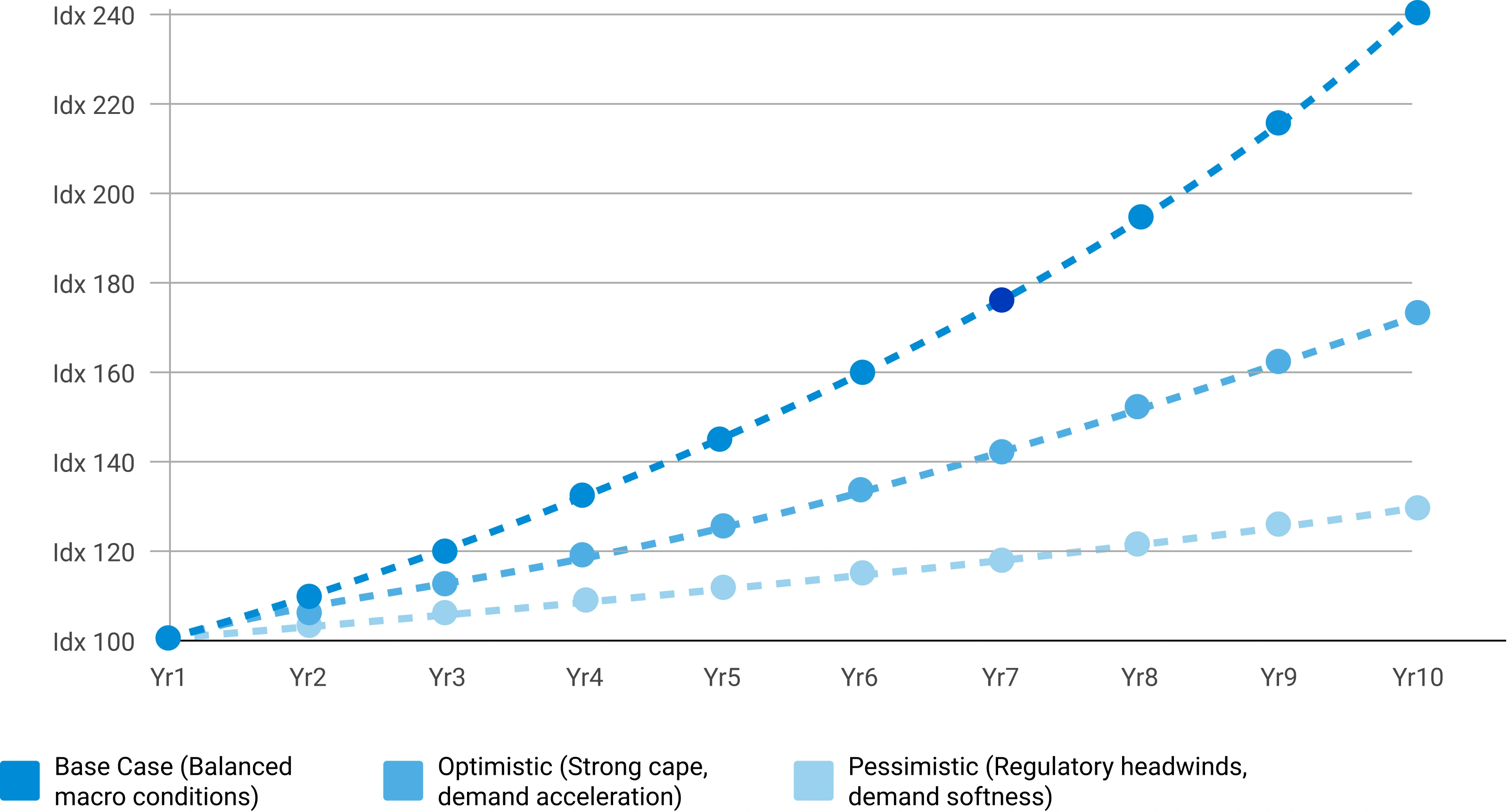
Scenario Forecast Range — Indexed Market Growth (Year 1–10)
Illustrative indexed growth trajectories across Base, Optimistic, and Pessimistic scenarios over a 10-year forecast horizon
Forecast Drivers — Relative Impact Score by Category
Impact score (0–100) of each driver type on chemicals & materials market forecast



Comments
Share your thoughts, ask a question, or provide feedback about this report.