
What is the Asia Pacific Optically Clear Polymer Compounds Market Size and Share?
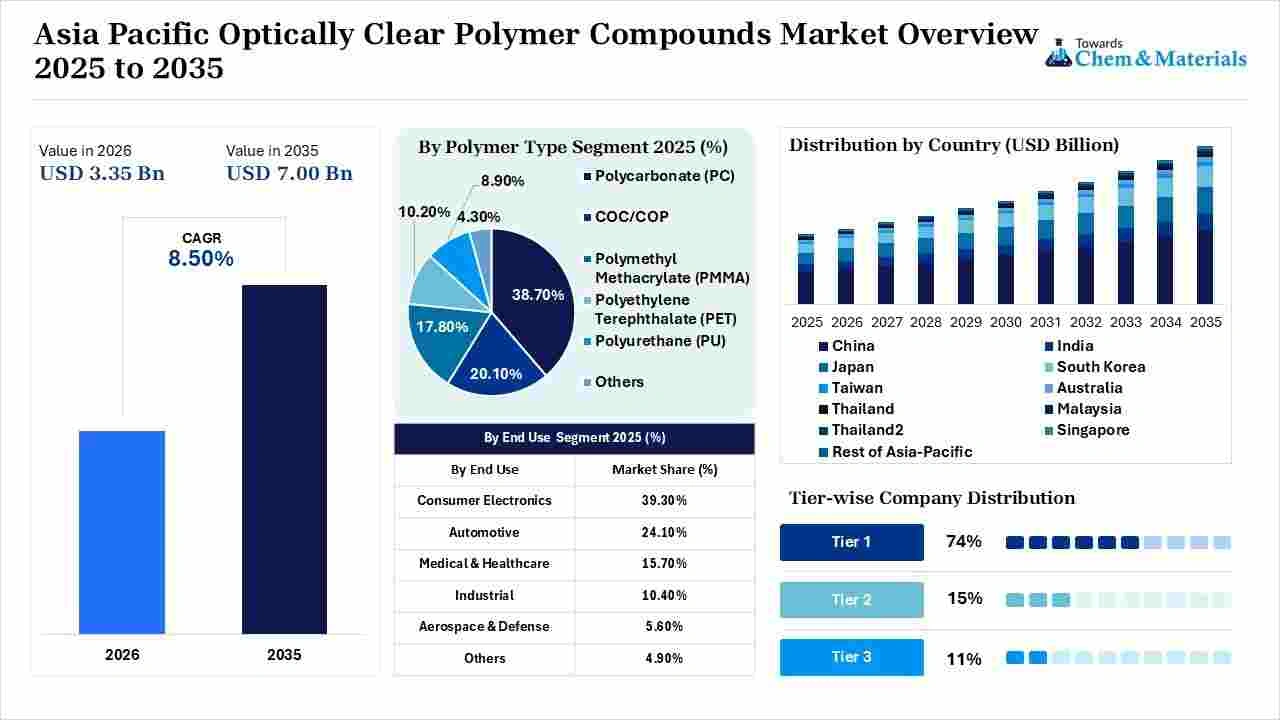
The Asia Pacific Optically Clear Polymer Compounds market size was valued at USD 3.09 billion in 2025, is estimated to reach USD 3.35 billion in 2026, and is projected to reach USD 7 billion by 2035, exhibiting a compound annual growth rate (CAGR) of 8.50% over the forecast period from 2026 to 2035. Increasing globalization and urbanization are the reasons that are letting people lose the transparency of the optical lens; in such cases, optically clear compounds help to see a clear vision and become the eyes for all humans. Optically clear polymer compounds are used to make glasses and help in vision. Not only here but also used in the industry, where it acts like a prism. The optical polymer compound is used versatilely in areas like automation, healthcare, optics, and consumer goods, which are creating significant opportunities for these specialized polymers.
Market Highlights
- By country, China dominated the Asia Pacific optically clear polymer compounds market with a share of 48.00% in 2025 and is expected to grow at a CAGR of 8.67%.
- By country, India held a 10.6% market share in 2025 and is expected to grow at the fastest CAGR of 8.56% during the forecast period.
- By polymer segment, the polycarbonate segment dominated the Asia Pacific optically clear polymer compounds market with 38.70% market share and a CAGR of 8.50%.
- By polymer type, the COC/COP segment held a 20.10% market share in 2025 and is expected to grow at the fastest CAGR of 9.30% over the forecast period.
- By end-user, the consumer electronics segment dominated the Asia Pacific optically clear polymer compounds market with a 39.30% market share in 2025 and a CAGR of 8.50%.
- By end-user, the automotive segment held a 24.10% market share in 2025 and is expected to grow at the fastest CAGR of 9.10% over the forecast period.
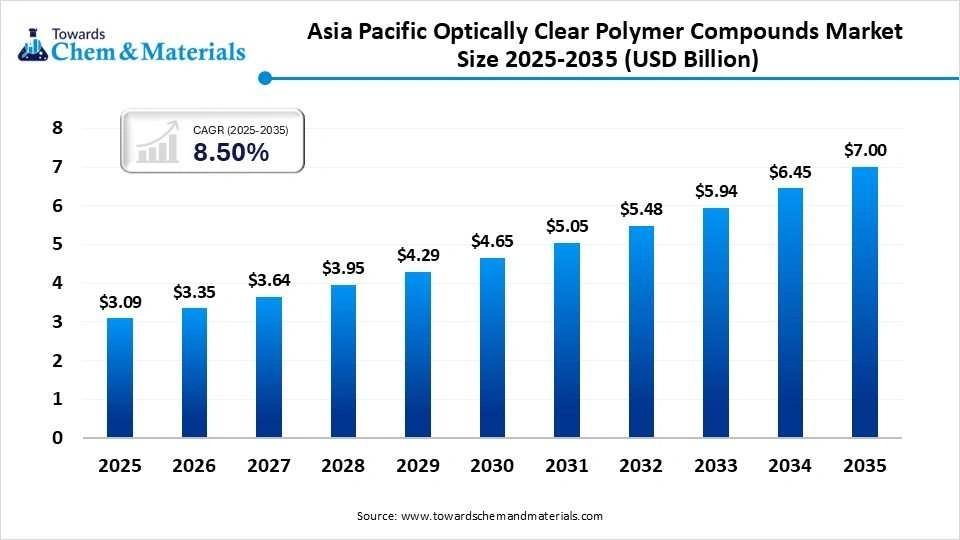
The Asia Pacific optically clear polymer compounds market is growing at a swift pace with the manufacturers growing demand for lightweight, transparent, durable, and high-performance materials. Electronics production, the automotive industry, healthcare equipment, optical devices, and advanced industrial applications across the region support demand. Significant electronics and display technology, polymer processing, and precision manufacturing centers include China, Japan, South Korea, Taiwan, and India. Optically clear compounds, e.g., polycarbonate, PMMA, COC/COP, PET, and special grades of polyurethane, are becoming more significant in applications that demand transparency, dimensional stability, impact resistance, and thermal performance. Other opportunities may arise due to the increased use of electric vehicles, smart displays, wearable devices, medical technologies, and advanced optical systems.
Global Investment Movement for the Asia Pacific Optically Clear Polymer Compounds
- Advanced optical polymer production facilities: Polymer manufacturers are building up additional high-purity production and compounding capacity to meet growing demand for polymers in electronics, healthcare, automotive, and optical applications.
- Research and development centers: Global chemical companies are investing more in the development of specialized R&D centers for improving transparency, refractive-index control, thermal resistance, UV stability, and dimensional performance.
- Investments in display material technologies: Companies in the electronics industry, materials industry, and beyond are investing in technologies supportive of OLED, flexible displays, curved displays, touch, and next-gen display architectures.
Automotive optical-material projects: Investments are growing in polymer materials for head-up displays, lighting, instrument clusters, sensor covers, interior displays, and other advanced vehicle-interface technologies.
Sustainable polymer development: Investments are focused on developing recyclable polymer formulations, recycled-content polymer formulations, bio-based polymer formulations, and low-carbon transparent polymer formulations to reduce their environmental impact without compromising their optical properties.
- In August 2026, MGF Chemical acquired AP Tech to expand its presence in the industrial wastewater treatment sector. The deal brings AP Tech’s solid water treatment chemical products into MFG Chemicals existing portfolio of liquid treatment solutions. The combination is expected to broaden product offerings and strengthen manufacturing, providing customers with more inclusive water treatment solutions. (Source: www.indianchemicalnews.com)
Report Sope
| Report Attributes | Details |
| Market Size in 2026 | USD 3.35 Billion |
| Expected Size in 2035 | USD 7.00 Billion |
| Growth Rate | CAGR of 8.50% |
| Base Year of Estimation | 2025 |
| Forecast Period | 2025-2035 |
| Segment Covered | By Polymer Type, By End User |
| Key Companies Profiled | Kemira Oyj, BASF SE, Ecolab Inc., Solenis LLC, Suez, Dow Chemical Company, SNF Group, AkzoNobel N.V. |
Recent Market Trends
- Consumer electronics: Smartphones, tablets, wearables, cameras, displays, sensors, and other electronic products increasing in demand are driving a growing demand for transparent polymer materials that offer optical clarity, durability, and lightweight.
- Growth in automotive display market: Instruments are becoming bigger; head-up displays, transparent display interfaces, lighting systems, and sensor technologies are being used in modern automotive products, thus presenting new opportunities in the automotive display market for optically clear polymer compounds.
- Move towards lightweight materials: As transparent polymers have lower weight, impact resistance, and design flexibility and are easier to process, manufacturers are making the switch from heavier glass and conventional materials.
- Higher demands for high-performance grades: Customers are shifting towards compounds that have higher UV resistance, heat resistance, chemical stability, low birefringence, scratch resistance, and dimensional stability for a higher demand.
- Growth of electric and connected vehicles: Electrification and vehicle connectivity are driving the use of advanced displays, sensors, cameras, lighting, and optical components, which will drive specialized transparent polymer requirements.
- Sustainability focus: 65% of polymer producers and OEMs are investigating recycled content materials, recyclable formulations, renewable feedstocks, energy-efficient processing techniques, and new material recovery techniques.
- Growth of medical and healthcare applications: Optically clear polymers are becoming more important in the medical and healthcare sectors for diagnostic equipment, medical housings, fluidic components, optical instruments, protective components, and disposable healthcare applications.
Key Technological Shifts and AI in the Asia Pacific Optically Clear Polymer Compounds
The Asia Pacific optically clear polymer compounds market is transforming traditional transparent plastics into specialized compounds that are designed for optical and functional applications. The development of polymer chemistry and compounding allows manufacturers to enhance transparency, to lower the amount of haze and birefringence, and to achieve improved thermal, UV, chemical, and mechanical properties. Precision compounding and injection molding are helping to make complex-shaped optical parts with tighter dimensional tolerances.
The development of technologies continues to be focused on multifunctional materials, which have a combination of optical clarity and a variety of different scratch resistance, impact resistance, conductivity, flame resistance, or improved surface properties. Sustainability is another growing technology trend, as manufacturers are investigating recycled feedstocks, recyclable formulations, bio-based materials, and lower-energy processing. Meanwhile, advanced simulation, automated quality inspection, and digital manufacturing are assisting producers to ensure the consistent optical performance of their products and to minimize production defects.
Supply Chain Analysis of the Asia Pacific Optically Clear Polymer Compounds
Production & Processing
- The raw materials procurement process begins with sourcing polymer resins, chemical feedstocks, stabilizers, additives, and performance-enhancing materials to make optically clear compounds.
Base polymers like polycarbonate, PMMA, COC, COP, and PET and special transparent polymers are produced with utmost purity and uniformity. - The base resins are compounded with specially selected additives and modifiers to be more transparent, impact resistant, heat stable, UV-stable, processable, and have other desired properties.
The final compounds are processed into components by injection molding, extrusion, thermoforming, blow molding, and other precision manufacturing techniques. - Material producers/processors work together to choose the right material grades and optimize the formulations, molding conditions, component designs, and processing parameters.
- Key players: Covestro, SABIC, Mitsubishi Chemical Group, Mitsui Chemicals, Teijin, LG Chem, Zeon Corporation, Röhm, TOPAS Advanced Polymers, and Sumitomo Chemical.
Quality Testing and Certification
- Compounds are tested for transparency, light transmittance, haze, color uniformity, refractive properties, and optical distortion.
- Tensile strength, impact resistance, hardness, elongation, dimensional stability, and other mechanical properties are measured to ensure the product is suitable for its intended application.
- Materials are subjected to heat resistance, aging in the heat, chemical resistance, UV resistance, weathering, and long-term stability tests.
- These are carried out prior to the material being approved for production and include: Melt-flow characteristics, shrinkage, molding behavior, surface finish, moisture content, and processing consistency.
- Manufacturers can comply with the relevant ISO, ASTM, IEC, national, automotive, electronics, or medical standards and support the required technical documentation depending on the application.
- Key players: SGS, Intertek, TÜV Rheinland, Bureau Veritas, and regional polymer-testing laboratories are all important testing and certification organizations.
Distribution to Industrial Users
- Large polymer producers generally supply the big manufacturers directly by way of a well-established sales and technical-service network.
- Specialized distributors: Specialized distributors assist smaller processors and industrial customers in getting specialized grades and also offer inventory control, application support, technical documentation, and delivery services.
- Strategic warehouses located at key manufacturing hubs in Asia support the availability of materials, quick delivery, and minimizing supply chain disruptions.
- Industrial converters: These are the entities that link the raw-material suppliers with the final product manufacturers, such as compounders, injection molders, extruders, optical-component manufacturers, electronics-component producers, and packaging manufacturers.
- The key end users are consumer electronics, automotive, medical/healthcare, optical equipment, lighting, telecommunications, aerospace, and industrial machinery.
- Key players: Covestro, SABIC, Mitsubishi Chemical Group, Mitsui Chemicals, Teijin, LG Chem, Zeon Corporation, TOPAS Advanced Polymers, and Sumitomo Chemical; regional distributors and specialist polymer suppliers also participate.
Sustainability Analysis of Asia Pacific Optically Clear Polymer Compounds?
Increasingly, there are polymer-based compounds that are becoming optically clear and take into account sustainability throughout the life cycle. Manufacturers are investigating recycled content, recyclable formulations, bio-based feedstocks, and lower-energy processing methods, while ensuring transparency and performance. The use of lightweight polymer parts can also help to lower material usage and transportation-related emissions compared to heavier parts. Better durability and longer operating life may further decrease replacement needs. But there are problems to overcome, as optical applications are often for materials of high purity and consistent quality, making it more difficult to include recycled materials without compromising clarity or performance. Improvements in the collection system, new recycling technologies, better manufacturing efficiencies, and materials design can contribute to increased circularity. Sustainability is thus emerging as an important consideration in material choices and product design.
What are Optically Clear Polymer Compounds?
Optically clear polymer compounds are a special type of plastic used for the transmission of light with high transparency and low haze and with controlled optical properties. They are manufactured by mixing a polymer resin with appropriate additives, stabilizers, modifiers, and/or other components to provide desired performance attributes. Polycarbonate, polymethyl methacrylate (PMMA), cyclic olefin polymers, cyclic olefin copolymers, and special transparent polyurethane systems are among the common material families used. Optically clear compounds are different from traditional plastics in that they are formulated to reduce the amount of color variations, internal defects, light scattering, and optical distortion. These can also offer features like lightness, impact resistance, flexibility, chemical resistance, or design freedom.
They have properties that can be modified to suit the needs of various applications such as displays, lenses, lighting components, medical apparatus, motor vehicles, optical sensors, and electronic devices. The ability to combine transparency with other properties like UV resistance, heat resistance, scratch resistance, dimensional stability, and mechanical strength is provided by advanced compounding technologies. These materials are especially useful when it is difficult, such as when they have to be made into complex shapes, are difficult to process, or glass is too heavy or fragile. With the growing need for lightweight and high-performance components in todays industries, optically clear polymer compounds are emerging as key engineering materials in electronics, automotive, healthcare, telecommunications, and optical sectors.
Uses of Optically Clear Polymer Compounds
Polymer compounds with optical transparency are used in consumer electronics in a wide variety of applications, including screens, covers, light guides, camera parts, optical interfaces, etc. They are employed in the automotive industry in instrument displays, head-up displays, lighting systems, sensor covers, interior components, and more. In medicine, they are found in diagnostic apparatus, medical instruments, fluid handling devices, and protection devices. Additional applications range from optical lenses, LED components, telecommunications equipment, augmented-reality devices, protective shields, and special packaging. They are transparent, lightweight, impact-resistant, and can be processed into different shapes, which makes them ideal for use in applications where both optical and mechanical properties are needed.
Pricing Analysis of Optically Transparent Polymers In Asia Pacific
The price of the optically transparent polymers depends on the polymer type, purity, optical properties, additives, processing conditions, volume production, and application specifications. The general rule is that standard transparent grades are less expensive than specialized optical, medical, automotive, and electronic grades, which are higher quality and perform better than the standard grades. Other factors that affect pricing include raw-material costs, energy prices, manufacturing costs, logistics, exchange-rate fluctuations, and conditions in the regions supply-demand dynamics. The additional costs of materials with high purity and specifically tailored compounds are usually due to the specialized production and testing processes. High-volume orders may be cheaper, while low-volume and customized grades are likely to be costlier.
Trade Analysis In Asia Pacific Optically Clear Polymer Compounds
Internationally, polymer resins, specialized plastics, additives, and compounded plastics are traded to support global trade in optically transparent polymers, enabling the manufacture of optical components. The regions with strong electronics, automotive, healthcare, and optical industries are major manufacturing economies. Asia Pacific is a key production and consumption hub thanks to its robust electronics and automotive manufacturing footprint. Specialist high-performance grades also continue to be in demand in North America and Europe. The raw-material supply, the production capacity, the transportation costs, tariffs, currency fluctuations, quality specifications, and the situation of the supply chain in the region have an impact on international trade. The growing need for advanced electronics, electric vehicles, medical devices, and optical applications will spur additional cross-border transfer of specialized transparent polymer materials.
Regulatory Framework: Asia Pacific Optically Clear Polymer Compounds
| Country Region | Regulatory Body | Key Regulations | Focus Areas |
| Asia Pacific | Ministry of Economy, Trade and Industry | CSCL & ISHA | New and existing chemical substance notification |
| North America | Environmental Protection Agency | Toxic Substances Control Act (TSCA) | Pre-manufacturing notices (PMN) for new polymers |
| European Union | European Chemicals Agency (ECHA) | REACH (Registration, Evaluation, Authorisation and Restriction of Chemicals) | Restriction of hazardous substances |
Segmental Insights
By Polymer Type
The polycarbonate segment dominated the Asia Pacific optically clear polymer compounds market with 38.70% market share and a CAGR of 8.50%, driven by the superior optical clarity, impact resistance, lightweight, and durability of polycarbonate, which makes it the top polymer type for the market. It has a high level of mechanical properties and can be used in many demanding applications in electronics, automobiles, healthcare, industrial products, etc. Good thermal stability and design flexibility also help manufacturers manufacture complex and lightweight components of polycarbonate. It is also available with established processing infrastructure, giving it an edge over more specialized transparent polymers. Polycarbonate will continue to play a dominant role as the demand for displays, lighting components, protective covers, optical parts, and all other applications continues.
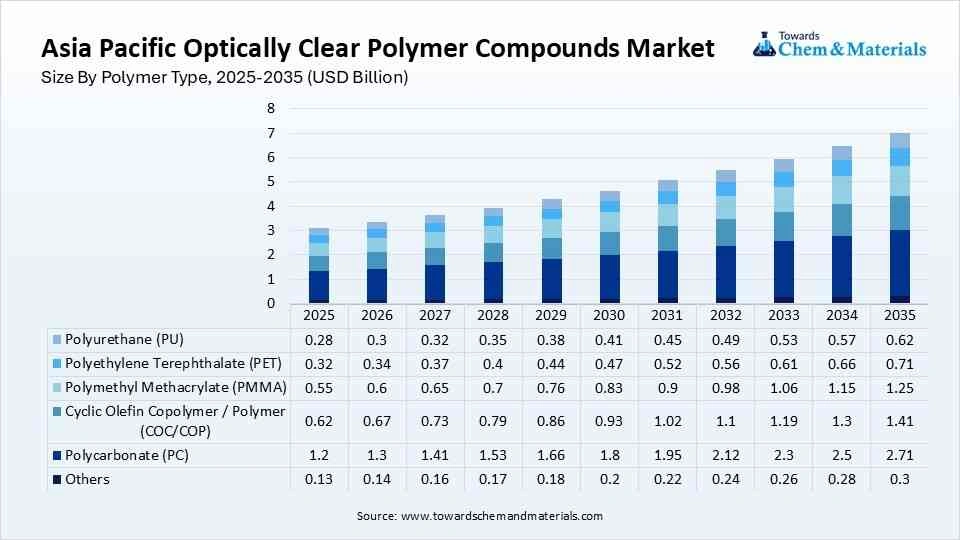
The COC/COP segment held a 20.10% market share in 2025 and is expected to grow at the fastest CAGR of 9.30% over the forecast period, followed by a unique combination of high optical clarity, low moisture absorbency, low birefringence, and dimensional stability. These features make them especially well suited for precision optical, medical, diagnostic, electronic, and other special display applications. The demand for high-purity materials and components that require steady optical performance is bringing new opportunities to COC/COP. That they can deliver dimensional accuracy and optical properties in demanding applications is also promising for manufacturers to explore their use in materials where conventional transparent polymers might have issues. The demand for these materials is expected to increase at a faster pace as these materials are increasingly being used in advanced optical systems, diagnostic devices, sensors, and next-generation electronics.
Asia Pacific Optically Clear Polymer Compounds Market Share, By Polymer Type, 2025 (%)
| By Polymer Type | Market Share (%) |
| Polycarbonate (PC) | 38.70% |
| COC/COP | 20.10% |
| Polymethyl Methacrylate (PMMA) | 17.80% |
| Polyethylene Terephthalate (PET) | 10.20% |
| Polyurethane (PU) | 8.90% |
| Others | 4.30% |
By End User
The consumer electronics segment dominated the Asia Pacific optically clear polymer compounds market with a 39.30% market share in 2025 and a CAGR of 8.50%, due to the use of transparent polymers in smartphones, tablets, and other wearables; displays; cameras; sensors; and electronic devices. As more and more manufacturers demand lightweight, yet impact-resistant and design-flexible materials for excellent transparency, the market is growing. Thinner structures, curved surfaces, touch interfaces, and more complex optical components are possible with optically clear polymer compounds. The demand for high-performance transparent materials is developing continuously due to the continuous evolution of connected devices and advanced display technologies. The dominant end-use segment is consumer electronics, which is further supported by strong electronics manufacturing in the Asian Pacific region.
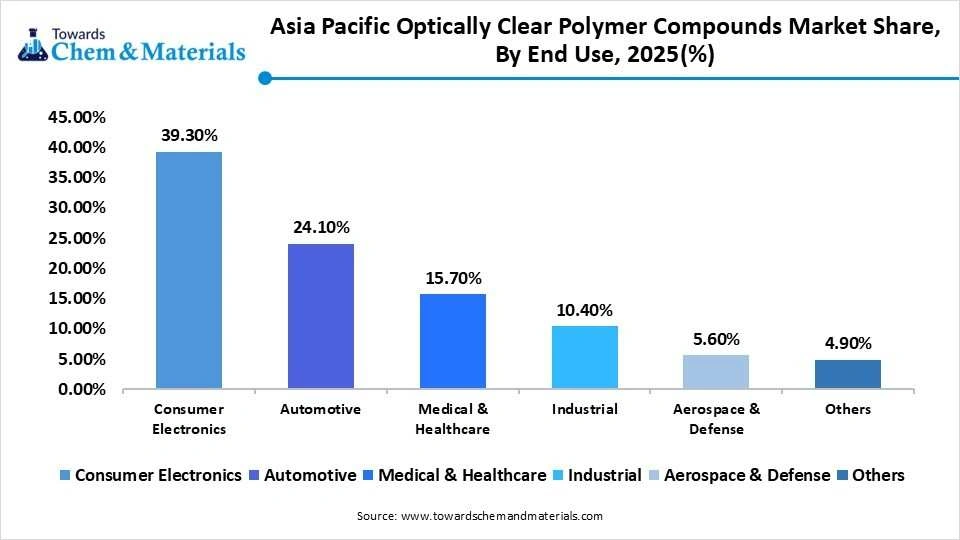
The automotive segment held a 24.10% market share in 2025 and is expected to grow at the fastest CAGR of 9.10% over the forecast period due to the use of digital displays, head-up displays, advanced lighting systems, sensors, cameras, and connected interfaces in automobiles. Optically clear polymers have benefits like lower weight, impact resistance, thermal performance, and the ease of creating complex component shapes. Advancements in display and optical technologies are driving demand for advanced display and optical systems within the modern vehicle cabin, as well as the growing adoption of EVs. The growing adoption of several screens and smart optical elements is leading to the development of new applications for transparent polymer compounds. The use of these materials is likely to increase significantly as automotive manufacturers pay attention to the lightweighting of vehicles, digitalization, and improvements to user interfaces.
Asia Pacific Optically Clear Polymer Compounds Market Share, By End Use, 2025 (%)
| By End Use | Market Share (%) |
| Consumer Electronics | 39.30% |
| Automotive | 24.10% |
| Medical & Healthcare | 15.70% |
| Industrial | 10.40% |
| Aerospace & Defense | 5.60% |
| Others | 4.90% |
Country Analysis
The China optically clear polymer compounds market size was estimated at USD 1.48 billion in 2025 and is projected to reach USD 3.40 billion by 2035, growing at a CAGR of 8.67% from 2026 to 2035. China dominated the Asia Pacific optically clear polymer compounds market with a share of 48.00% in 2025 and is expected to grow at a CAGR of 8.70%, owing to the presence of a well-established electronics, automotive, polymer processing, and polymer manufacturing ecosystem in the country. Transparent polymer materials have strong demand from the nations large-scale manufacturing of smartphones, consumer electronics, displays, vehicles, optical components, and industrial products.
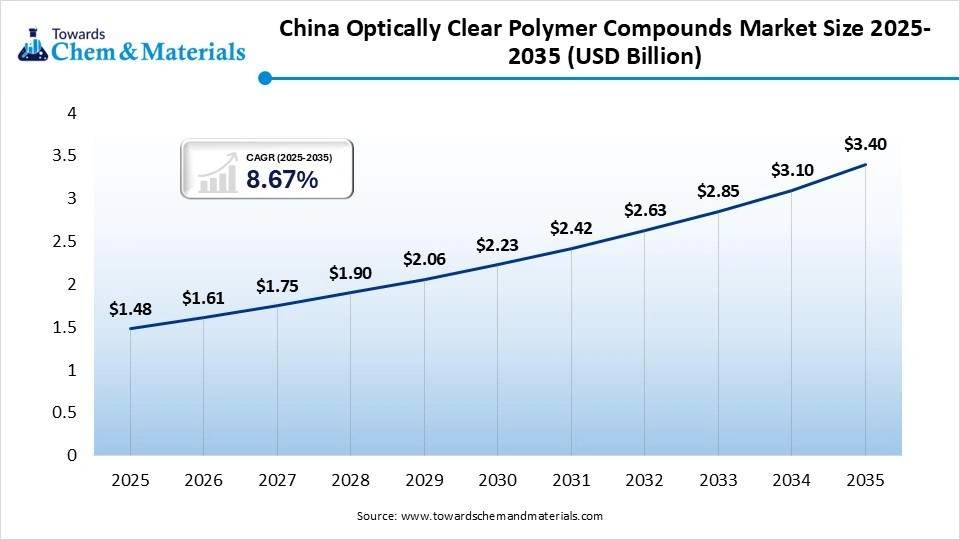
Wide domestic manufacturing also allows for integration of resin producers, compounders, component manufacturers, and finished product manufacturers. New markets for high-performance transparent compounds are emerging with the development of new displays, electric vehicles, smart devices, and optical technologies. Chinas strong industrial base and a large market of customers downstream are likely to maintain its leading position in the regional market.
Indias optically clear polymer compounds market size was estimated at USD 0.33 billion in 2025 and is projected to reach USD 0.75 billion by 2035, growing at a CAGR of 8.56% from 2026 to 2035. India held a 10.6% market share in 2025, driven by growth in domestic production of electronic devices and components, which has led to an increasing demand for transparent polymers for displays, optical components, protective components, and specialty equipment. Optically clear materials are also finding new applications in the field of electric mobility and modern vehicle technologies. The range of applications is likely to grow further with the expansion of medical-device manufacturing and investment in advanced manufacturing capabilities. The expansion of medical-device manufacturing, coupled with investment in advanced manufacturing capabilities, is likely to continue to expand the range of applications. Indias market is likely to see robust long-term growth as a result of rising industrialization, more technology uptake, and development of domestic manufacturing capabilities.
Recent Developments
- In July 2026, India is exploring polymer-based currency as the RBI takes initial steps towards introducing ₹10 and ₹20 polymer notes. The move is intended to enhance durability, security, and circulation life while reducing replacement frequency and improving the overall efficiency of currency management.
- Your Next Rs 10 Note Could Be Plastic As RBI Takes First Step Towards Polymer Currency; All You Nee…(Source: www.timesnownews.com)
Competitive Analysis
Rising globalization and urbanization are causing a loss of optical clarity in many contexts; thus, optically clear compounds play a crucial role in providing clear vision, essentially becoming the eyes for humanity. These clear polymer compounds are used to manufacture glasses and aid in vision correction. Beyond that, they are employed in industry as plastics and are versatile in applications like automation, healthcare, optical, and consumer goods, opening up substantial opportunities for these specialized polymers.
The Asia Pacific market for optically clear polymer compounds is expanding rapidly, driven by manufacturers increasing demand for lightweight, transparent, durable, and high-performance materials. The demand is supported by sectors such as electronics, automotive, healthcare, optical devices, and advanced industrial applications. Key regions include China, Japan, South Korea, Taiwan, and India, which host major centers for electronics, display technology, polymer processing, and precision manufacturing.
Polymers like polycarbonate, PMMA, COC/COP, PET, and specialized polyurethane grades are becoming vital in applications requiring transparency, dimensional stability, impact resistance, and thermal performance. Growing trends like electric vehicles, smart displays, wearable tech, medical technologies, and advanced optical systems are expected to create additional opportunities.
- In March 2026, Boston Micro Fabrication launched the micro-precision 3D printing machine to showcase the extreme transparency of optical cleanliness. The launch aims to provide the world with a vision that is clear yet consistent with the quality of a prism at the same time. The spectrum that they set is the very collectible machines that are workable anywhere. This product launch is an example to the world and the globes greatest discovery of the year.
- BMF Launches BMF Clear: Optically Transparent 3D Printing Resin: BMF Boston Micro Fabrication (Source: bmf3d.com)
- In August 2026, the chemical industry is aspiring to build a USD 1 trillion India by 2040 and wants investments, investments in infrastructure, investments in R&D, investments in making processes easier to approve, and the ability to weather the global storm by being ‘supply chain resilient to be globally competitive and grow.
- Polymerupdate Press Release - Union Minister for Chemicals and Fertilizers chairs CEO Roundtable to discuss priorities to transform India into a global chemical manufacturing and innovation hub. (Source: polymerupdate.com)
- In February 2026, at PLASTINDIA 2026, Milliken demonstrated next-generation polymer technologies, such as enhanced clarity, efficiency, resource reduction, rapid processing, barrier performance, and solutions to enable sustainable production of plastics and converters.
- Milliken Highlights Next-Generation Polymer Solutions at PLASTINDIA 2026 (Source: www.prnewswire.com)
- In June 2026, LOréals $100m investment in Innovist, Indias beauty startup, boosts its footprint in the countrys personal-care industry as the founders maintain a minority stake and control in a significant D2C deal.
- L’Oréal acquires Innovist in big D2C deal; Dhan’s FY26 profit shrinks. (Source: economictimes.indiatimes.com)
Top Players in the Market & Their Offerings
| Company | Company Type/Position | Major Headquarters | Geographic Presence | Offerings | Key Strength |
| Ecolab (NalcoWater) | Global Market Leader | Saint Paul, Minnesota, USA | Global | Cooling/boiler treatments, | Integrated on-site services |
| Kemira | Specialty Chemical Leader | Helsinki, Finland | Europe, North America, Asia-Pacific | Coagulants, flocculants | Unmatched expertise in water-soluble polymers |
| Solenis | Specialty Chemical provider | Andrézieux-Bouthéon, France | Global | Pure-play Polymer Manufacturer | Worlds largest capacity for polyacrylamide production |
Other Key Players
- Kemira Ojy
- BASF SE
- Ecolab Inc.
- Solenis LLC
- Suez
- Dow Chemical company
- SNF group
- Akzo Nobel NV
Segment Covered in the Report
By Polymer Type
- Polycarbonate (PC)
- Optical-grade PC
- Impact-modified PC
- UV-stabilized PC
- Flame-retardant PC
- High-heat PC
- Cyclic Olefin Copolymer / Cyclic Olefin Polymer (COC/COP)
- Medical-grade COC/COP
- Optical-grade COC/COP
- High-purity COC/COP
- Low-birefringence COC/COP
- Polymethyl Methacrylate (PMMA)
- Optical-grade PMMA
- Impact-modified PMMA
- UV-resistant PMMA
- Heat-resistant PMMA
- High-transparency PMMA
- Polyethylene Terephthalate (PET)
- Optical-grade PET
- High-clarity PET
- UV-stabilized PET
- Recycled-content PET
- Polyurethane (PU)
- Thermoplastic polyurethane (TPU)
- Optical-grade PU
- Aliphatic PU
- Transparent flexible PU
- Others
- Polystyrene (PS)
- Polyamide (PA)
- Polyether ether ketone (PEEK)
- Silicone-based polymers
- Specialty optical polymers
By End User
- Consumer Electronics
- Smartphones
- Tablets & laptops
- Wearables
- Displays & touchscreens
- Cameras & optical modules
- Smart home devices
- Automotive
- Head-up displays
- Interior displays
- Lighting systems
- Instrument clusters
- ADAS optical components
- Sensors & camera modules
- Medical & Healthcare
- Diagnostic devices
- Microfluidic devices
- Medical tubing
- Surgical instruments
- Drug-delivery devices
- Medical packaging
- Aerospace & Defense
- Cockpit displays
- Optical systems
- Sensor housings
- Transparent protective components
- Avionics components
- Industrial
- Optical sensors
- Machine-vision systems
- Industrial displays
- Lighting components
- Protective covers
- Automation equipment
- Others
- Telecommunications
- Lighting
- Optical instruments
- Consumer products
- Renewable-energy equipment
By Country
- China
- Japan
- India
- South Korea
- Taiwan
- Rest Of Asia Pacific
A Seven-Phase Framework
Our methodology is designed to be universally applicable across commodity chemicals, specialty chemicals, petrochemicals, construction chemicals, coatings, electronic chemicals, industrial gases, agrochemicals, water treatment chemicals, and performance materials. Each phase builds upon the last, creating a layered validation structure that minimizes estimation error and maximizes analytical confidence.
The framework ensures comprehensive market coverage, robust cross-validation, and reliable long-term forecasting — producing market estimates that withstand scrutiny from investors, regulators, and corporate strategy teams.

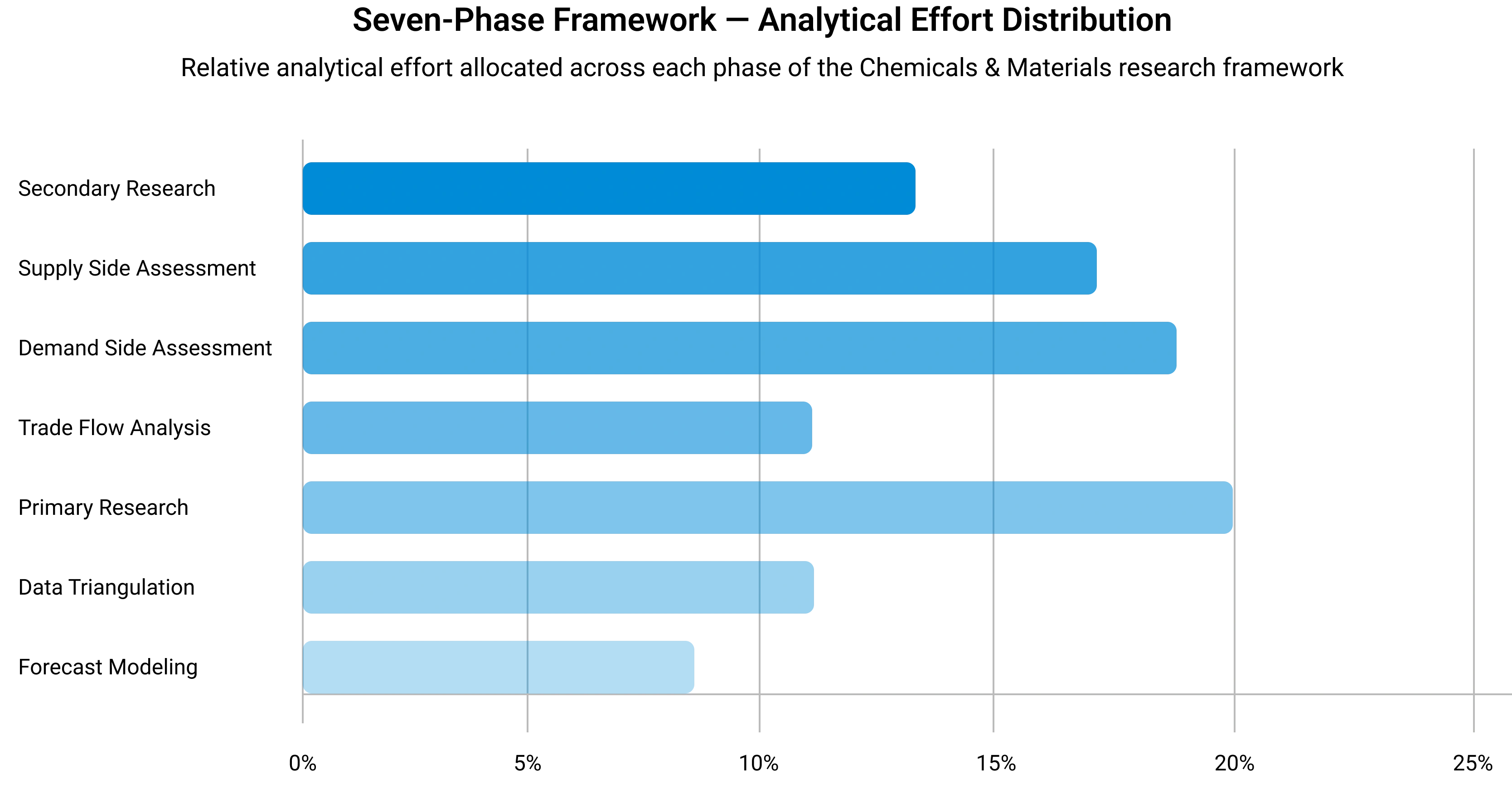
Seven-Phase Framework — Analytical Effort Distribution
Relative analytical effort allocated across each phase of the Chemicals & Materials research framework
Phase 1 - Secondary Research: Establishing the Foundation
Secondary research collects and evaluates publicly available information from authoritative sources, establishing the foundational understanding of market structure, value chain dynamics, competitive landscape, and end-use demand patterns. Every source is evaluated for credibility, recency, geographic relevance, and methodological soundness before inclusion.
Industry Associations
Sources include ACC, CEFIC, ICCA, JCIA, CPCIF, and SOCMA providing production volumes, consumption trends, capacity developments, and sustainability initiatives.
Company Disclosures
Annual reports, investor presentations, earnings transcripts, and regulatory filings reveal product portfolios, manufacturing footprints, capacity expansions, and revenue segmentation.
Government Databases
National statistical offices, customs authorities, environmental agencies, and industrial production databases provide verified statistics on output, trade flows, and regulatory compliance.
Trade Databases
UN Comtrade, ITC, Eurostat, and national customs authorities enable assessment of global product movement, import dependency, and export competitiveness across regions.
Our Secondary Research Sources
- Ministry of Chemicals and Fertilizers
- European Chemicals Agency
- United States Department of Energy
- Ministry of Industry and Information Technology
- Ministry of Economy Trade and Industry
- Ministry of Trade Industry and Energy
- National Institute of Standards and Technology
- Council of Scientific and Industrial Research
- Fraunhofer Society
- National Institute for Materials Science
Phase 2 — Supply-Side Assessment: Mapping Production Capabilities
Production Capacity Analysis
All major manufacturers are assessed for existing installed capacity, planned additions, expansions, new plant announcements, and technology adoption — mapped at global, regional, and country levels.
Capacity Utilization Adjustment
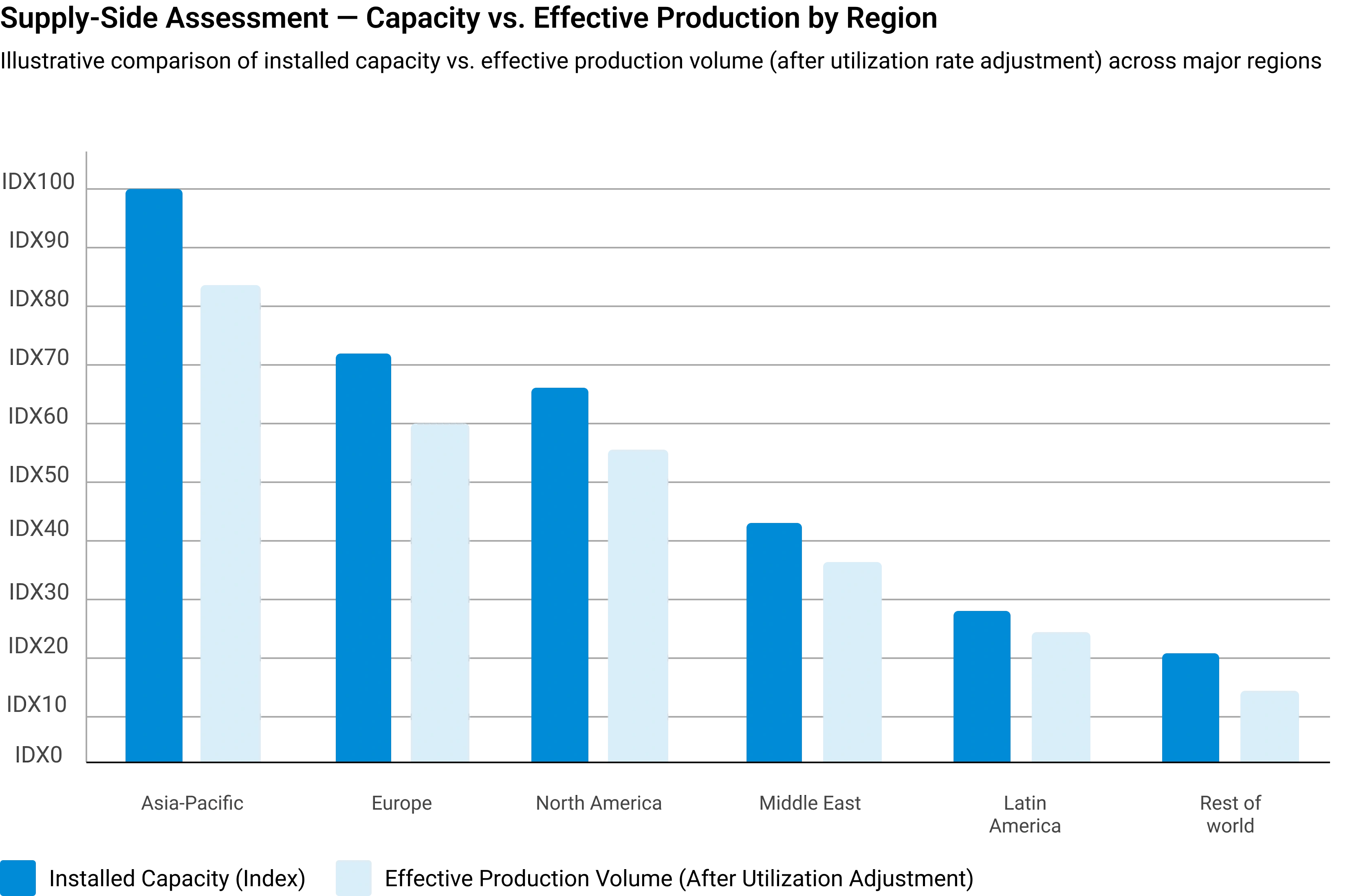
Installed capacity is adjusted using utilization rates based on demand conditions, feedstock availability, plant operating rates, maintenance schedules, and regulatory restrictions.
Manufacturer Revenue Analysis
Product-specific revenues, segment-level performance, regional distribution, average selling prices, and margin trends are evaluated to establish market value estimates.
Supply-Side Assessment — Capacity vs. Effective Production by Region
Illustrative comparison of installed capacity vs. effective production volume (after utilization rate adjustment) across major regions
Phase 3 — Demand-Side Assessment: Quantifying Chemical Consumption
Demand-side analysis quantifies chemical consumption across industries, applications, and geographies — identifying where and how chemicals are consumed throughout the value chain with precision.
End-Use Industry Analysis
Chemical demand is evaluated across automotive, construction, packaging, electronics, agriculture, healthcare, consumer goods, industrial manufacturing, energy and utilities, and water treatment. Industry output, production trends, and consumption intensity are analyzed to determine demand patterns.
Consumption Modeling
Demand is estimated using measurable indicators: kilograms per vehicle, kilograms per square meter of construction, dosage per cubic meter of water treated, kilograms per hectare of agricultural land, and kilograms per ton of manufactured products. Consumption factors are validated through industry publications and primary interviews.
Application Analysis
The market is segmented by application area to understand product performance requirements, formulation trends, technology adoption, customer preferences, and regulatory requirements improving demand accuracy and segmentation granularity.
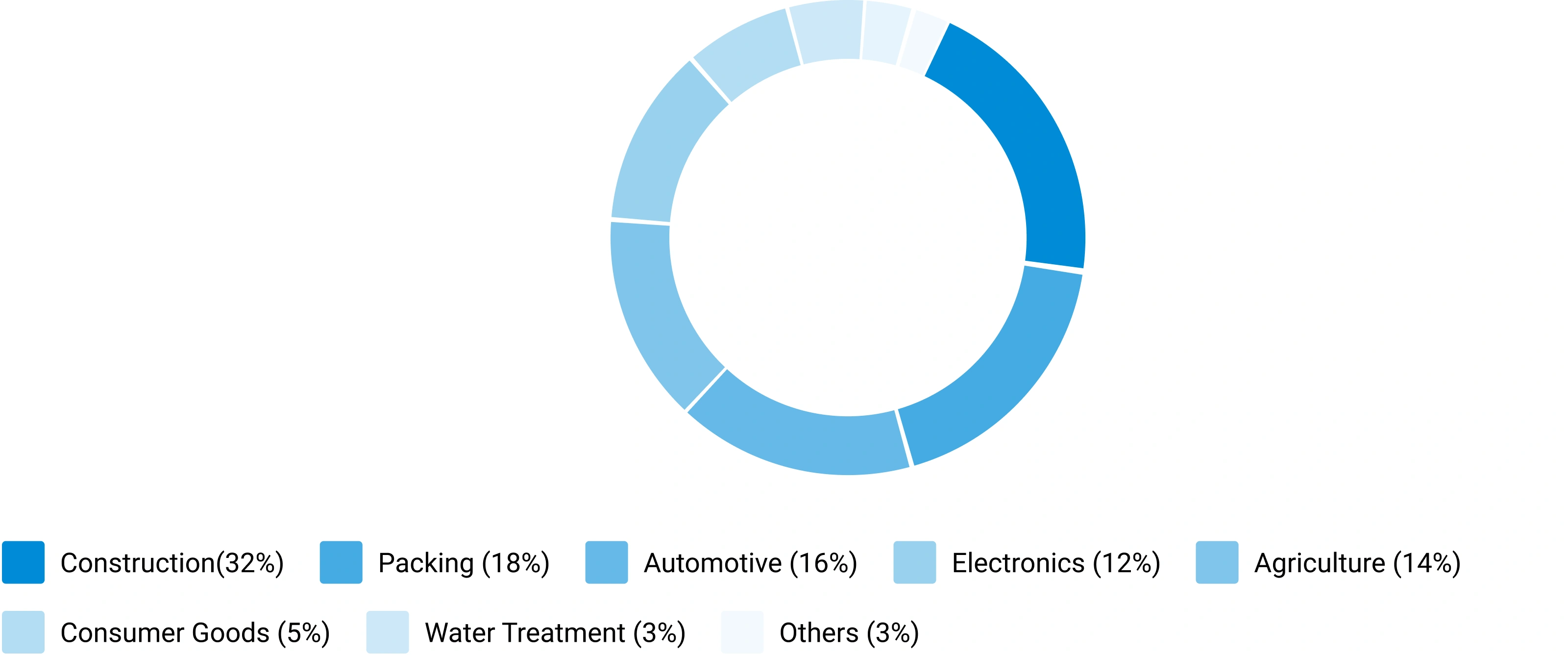
Demand-Side Assessment — End-Use Industry Demand Distribution
Illustrative distribution of chemical & materials demand across key end-use industries
Phase 4 - Trade Flow Analysis: Balancing Regional Supply and Demand
Trade flow analysis reconciles regional supply and demand estimates through import and export data, identifying net supply positions, regional dependencies, and market imbalances. It serves as an independent validation layer that tests the consistency of supply-side and demand-side estimates.
Import Analysis
Import data is evaluated to determine volumes, source countries, product dependency, regional supply gaps, and pricing trends — identifying markets that rely heavily on external supply and where domestic production is insufficient to meet demand.
Export Analysis
Export assessments reveal production surplus, export competitiveness, regional manufacturing strength, and global market participation. Export patterns also help validate domestic production estimates and identify net exporting regions.
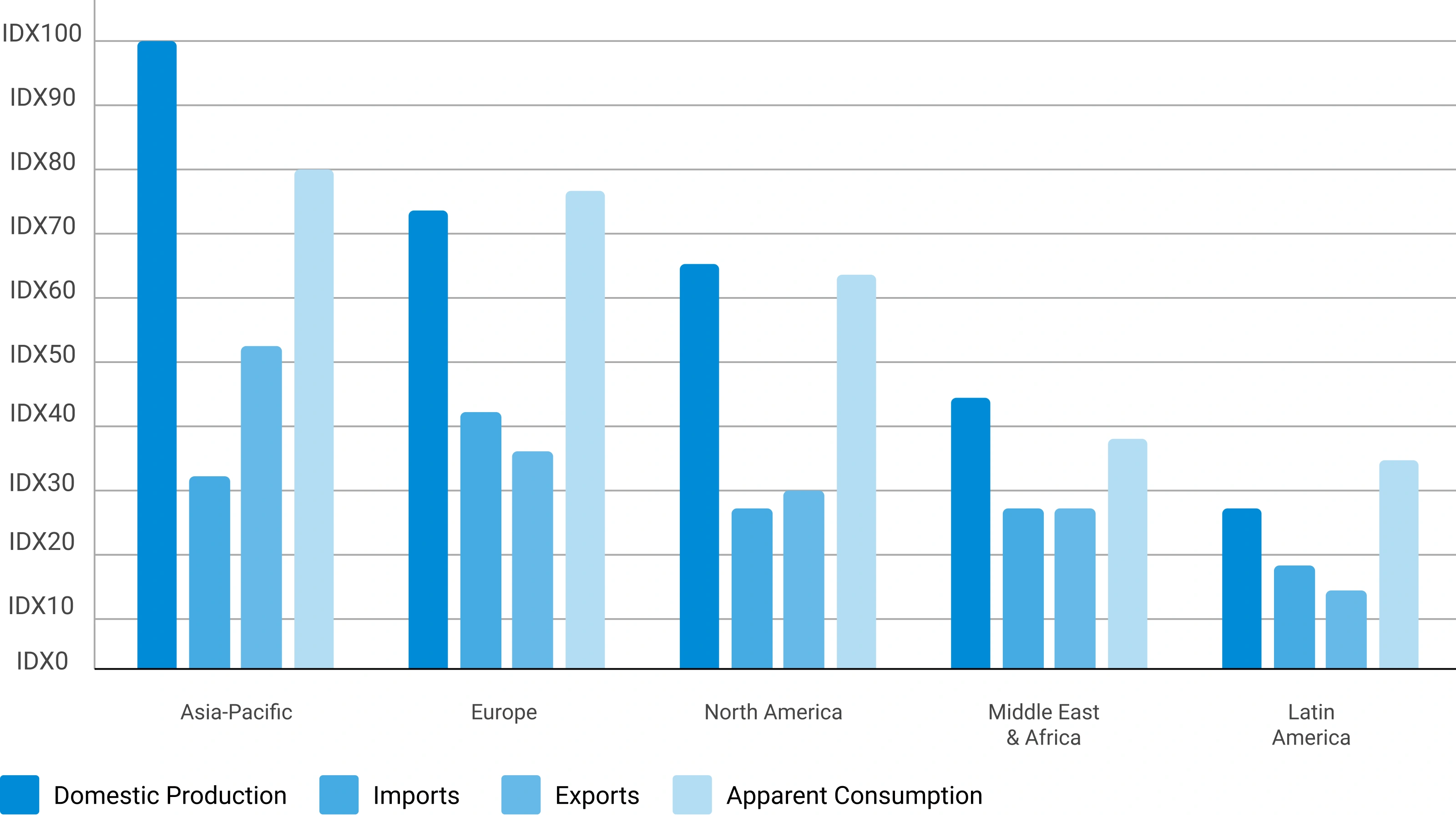
Apparent Consumption Model
Regional consumption is assessed using the standard apparent consumption formula:
Results identify net importing regions, net exporting regions, regional deficits, and surpluses — serving as an independent validation of supply and demand estimates.
Trade Flow Analysis — Net Supply Position by Region
Illustrative apparent consumption vs. domestic production across major regions — positive gap indicates net import dependency
Phase 5 — Primary Research: The Critical Validation Layer
Primary research tests and refines findings from secondary research through direct engagement with industry participants across the supply chain, demand side, and expert community. It captures intelligence that no database or published report can provide — the real-world experience of manufacturers, buyers, and specialists operating in the market.

Supply-Side Interviews
Conversations with chemical manufacturers, raw material suppliers, contract manufacturers, technology providers, and plant operators cover production trends, capacity utilization, pricing developments, technology shifts, and competitive dynamics.

Demand-Side Interviews
Engagement with OEMs, industrial consumers, procurement managers, distributors, formulators, and end-use manufacturers focuses on consumption trends, purchasing behavior, product substitution, demand outlook, and emerging applications.

Industry Expert Consultations
Additional interviews with industry consultants, independent experts, regulatory specialists, technical professionals, and research institutions provide deeper market context and validate key analytical assumptions.
Focus Areas of Primary Research:
Market Size & Forecast Validation
Revenue estimates, volume consumption, growth rates, forecast assumptions, regional demand.Supply Chain & Value Chain Assessment
Raw material sourcing, supply chain challenges, distribution networks, procurement practices.Production & Capacity Analysis
Manufacturing capacity, utilization rates, expansion projects, plant investments.Pricing & Cost Structure Analysis
Product pricing trends, feedstock costs, energy costs, margin pressures, pricing outlook.Competitive Landscape Assessment
Volume and value estimates confirmed to be fully consistent with one another before publicationInterview Volume by Market Scope
| Study Scope | Number of Interviews |
|---|---|
| Niche Market | 20 – 30 |
| Mid-Sized Market | 30 – 50 |
| Global Market | 50 – 80 |
| Highly Fragmented Market | 80 – 120 |
Interview Details:
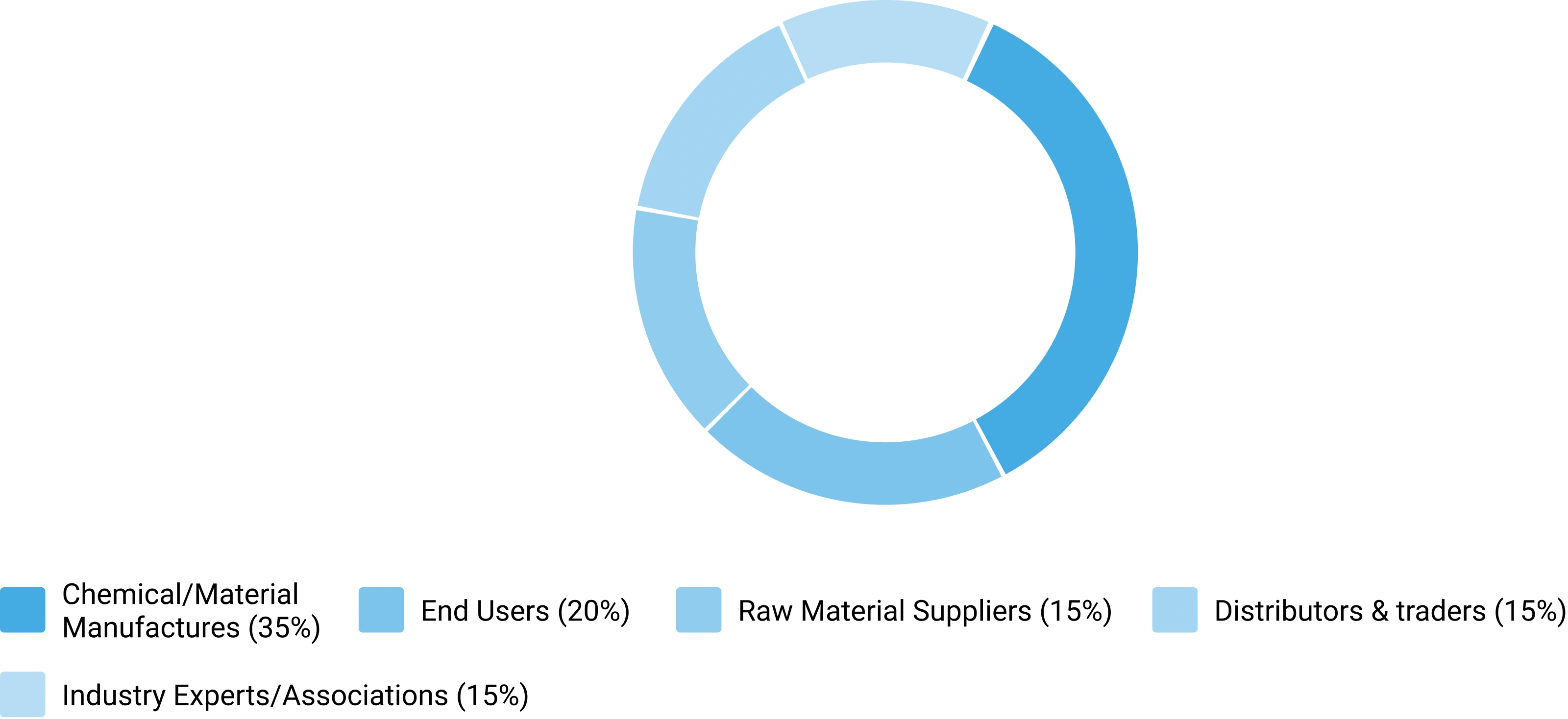
Category : Manufacturers, Suppliers, Distributors, End Users, Experts/Associations
Average Duration : 30–60 Minutes
Interview Mode : Video calls, telephonic interviews, expert consultations
Interview Format : Structured / Semi-Structured questionnaire
Focus Areas of Primary Research:
Market Size & Forecast Validation :
Revenue estimates, volume consumption, growth rates, forecast assumptions, regional demand.
Supply Chain & Value Chain Assessment :
Raw material sourcing, supply chain challenges, distribution networks, procurement practices.
Production & Capacity Analysis :
Manufacturing capacity, utilization rates, expansion projects, plant investments.
Pricing & Cost Structure Analysis :
Product pricing trends, feedstock costs, energy costs, margin pressures, pricing outlook.
Competitive Landscape Assessment :
Market share, competitor positioning, strategic initiatives, partnerships, acquisitions.
Primary Research — Stakeholder Coverage by Category
Distribution of interview respondents across stakeholder categories (% share from PPT data)
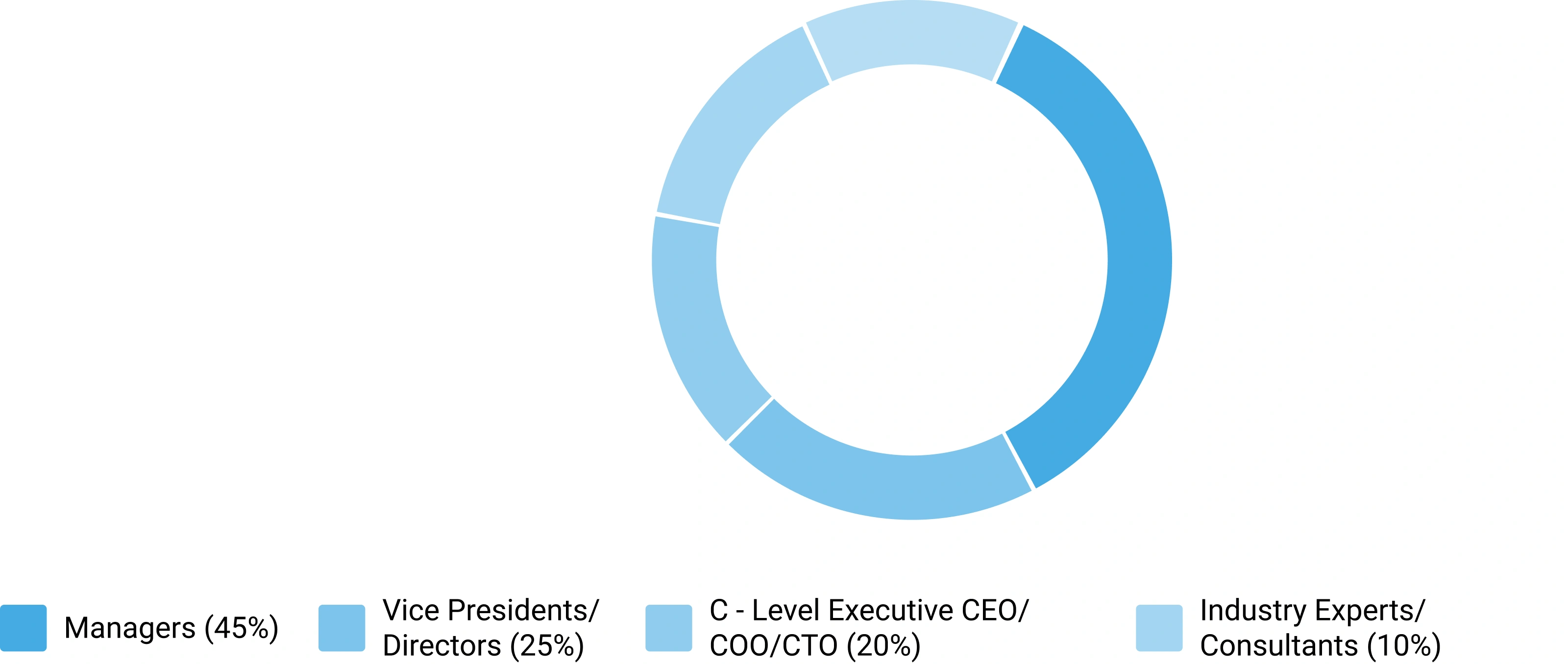
Primary Research — Respondent Designation Profile
Seniority breakdown of interview respondents (% share from PPT data)
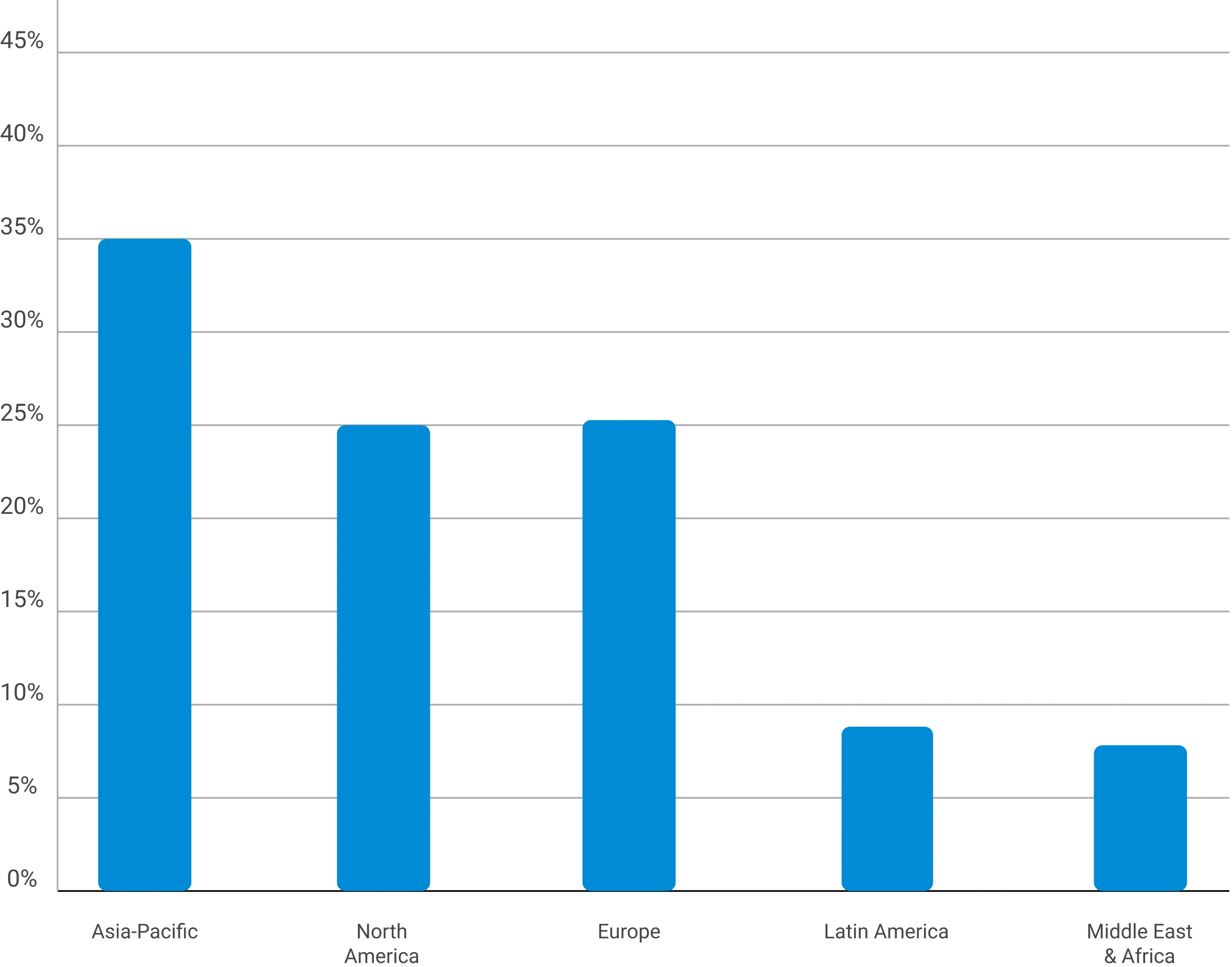
Primary Research — Geographic Coverage of Interviews
Regional distribution of primary research engagement (% share from PPT data)
Phase 6 — Data Triangulation and Market Validation
No single methodology is relied upon in isolation. Multiple independent estimation approaches are combined and reconciled to ensure consistency, accuracy, and analytical defensibility. Any material deviations between approaches are investigated and adjusted through additional validation cycles.
The final market size is derived through weighted triangulation of all validated methodologies. Any material deviations between approaches are investigated and adjusted through additional validation cycles. The outcome represents the most realistic assessment of the market based on available evidence and expert confirmation ensuring that volume and value estimates are fully consistent with one another.
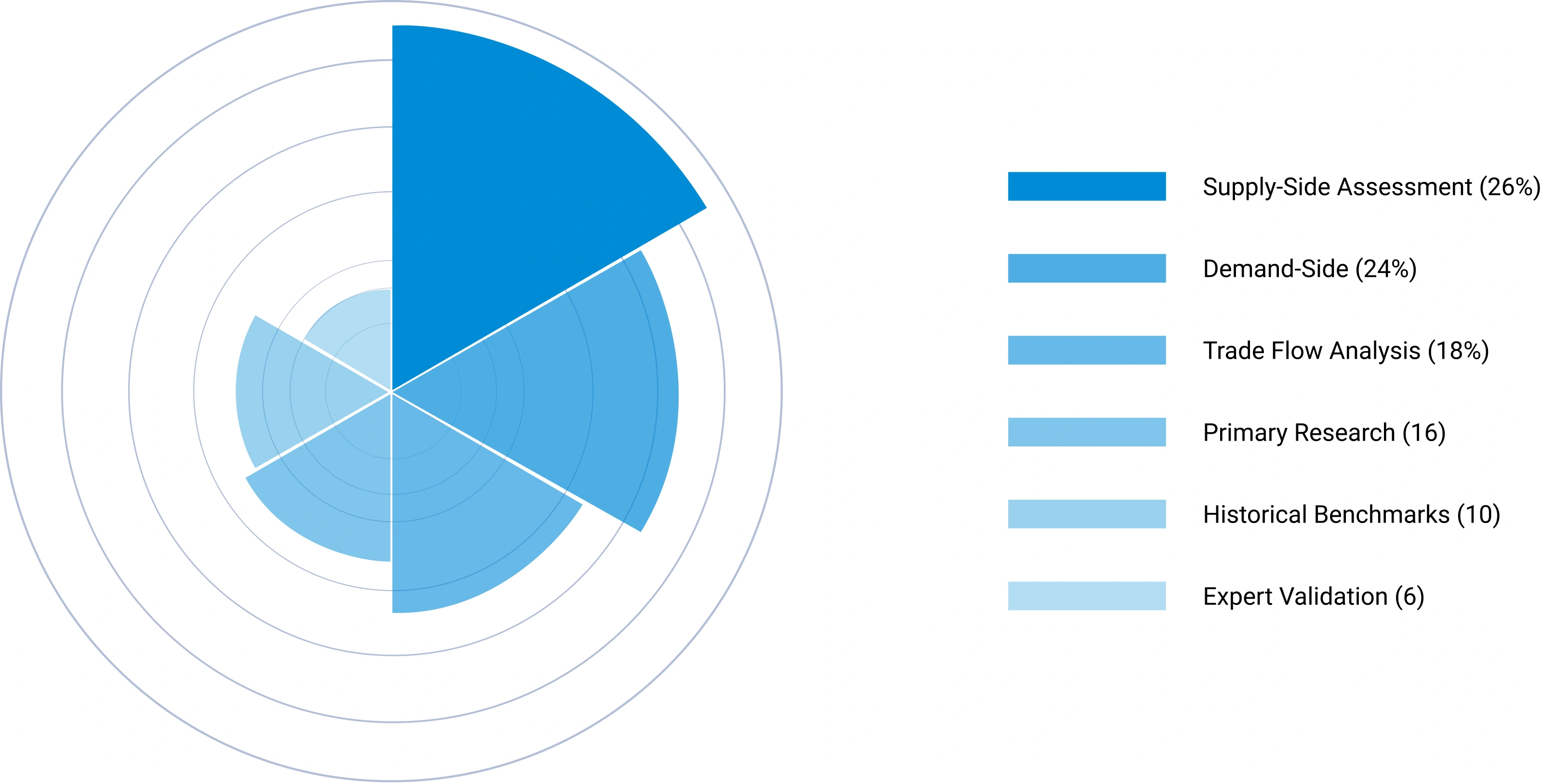
Triangulation Framework — Input Contribution Weight
Relative weight each sizing input contributes to the final reconciled market estimate
Phase 7 — Forecast Modeling: Projecting Future Market Evolution
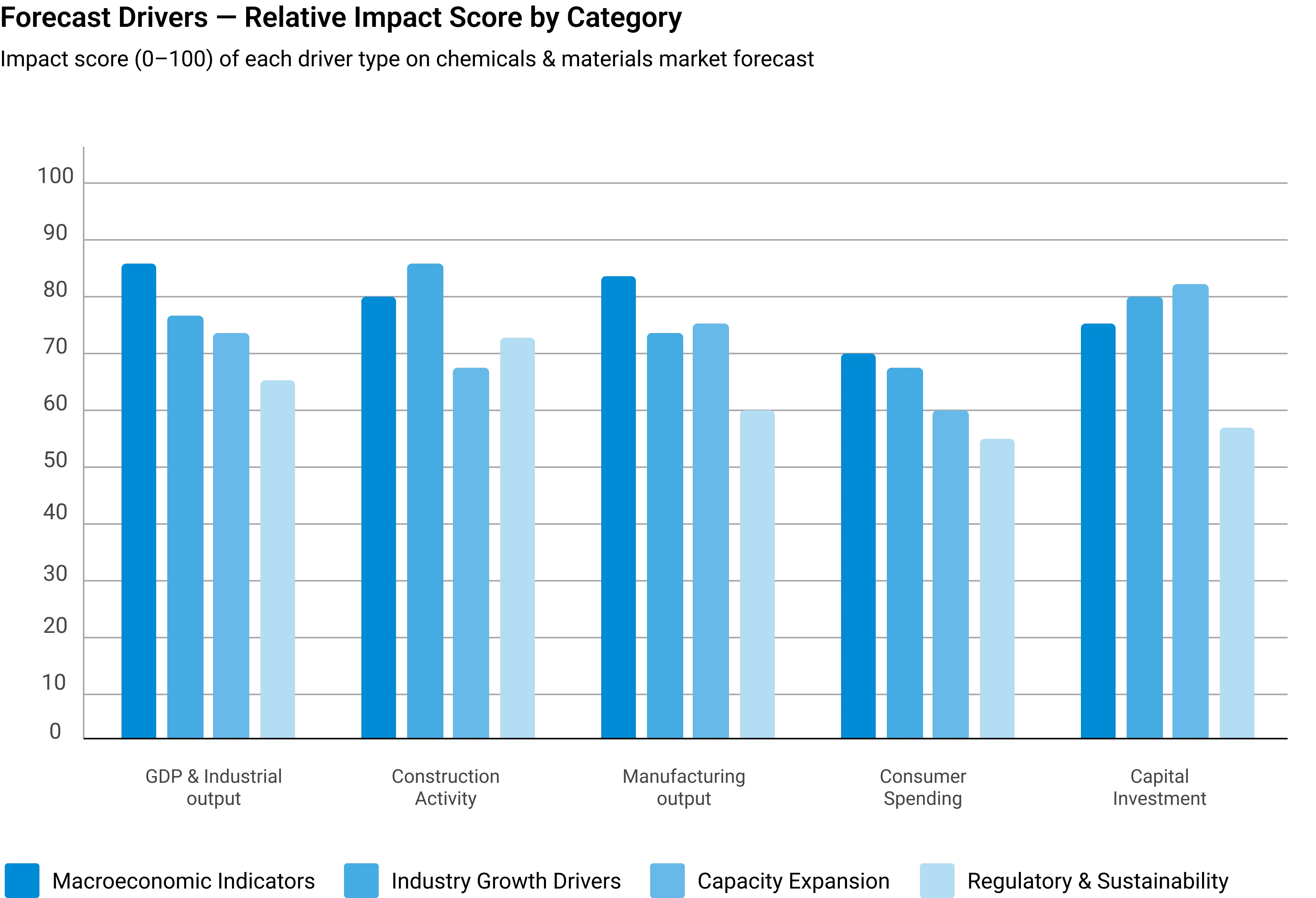
Forecasting evaluates the future trajectory of the market using a combination of quantitative indicators and qualitative assessments across economic, industry, and regulatory dimensions. Rather than simple extrapolation, each driver is independently modeled and integrated into a composite forecast.
Macroeconomic Indicators
GDP growth, industrial production, manufacturing output, construction activity, consumer spending, and capital investment form the quantitative foundation of long-term demand projections. These are applied at country, regional, and global levels.
Industry Growth Drivers
Urbanization, infrastructure development, industrialization, technological innovation, sustainability initiatives, and evolving product performance requirements are assessed at regional and industry levels — capturing both structural and cyclical demand drivers.
Capacity Expansion Analysis
Announced plant expansions, new manufacturing facilities, technology upgrades, and strategic investments are evaluated to determine future supply-demand dynamics and potential market tightness or oversupply situations.
Regulatory & Sustainability
Environmental regulations, chemical safety standards, emission reduction targets, circular economy initiatives, and sustainability requirements are incorporated as they often influence product adoption rates and market growth trajectories.
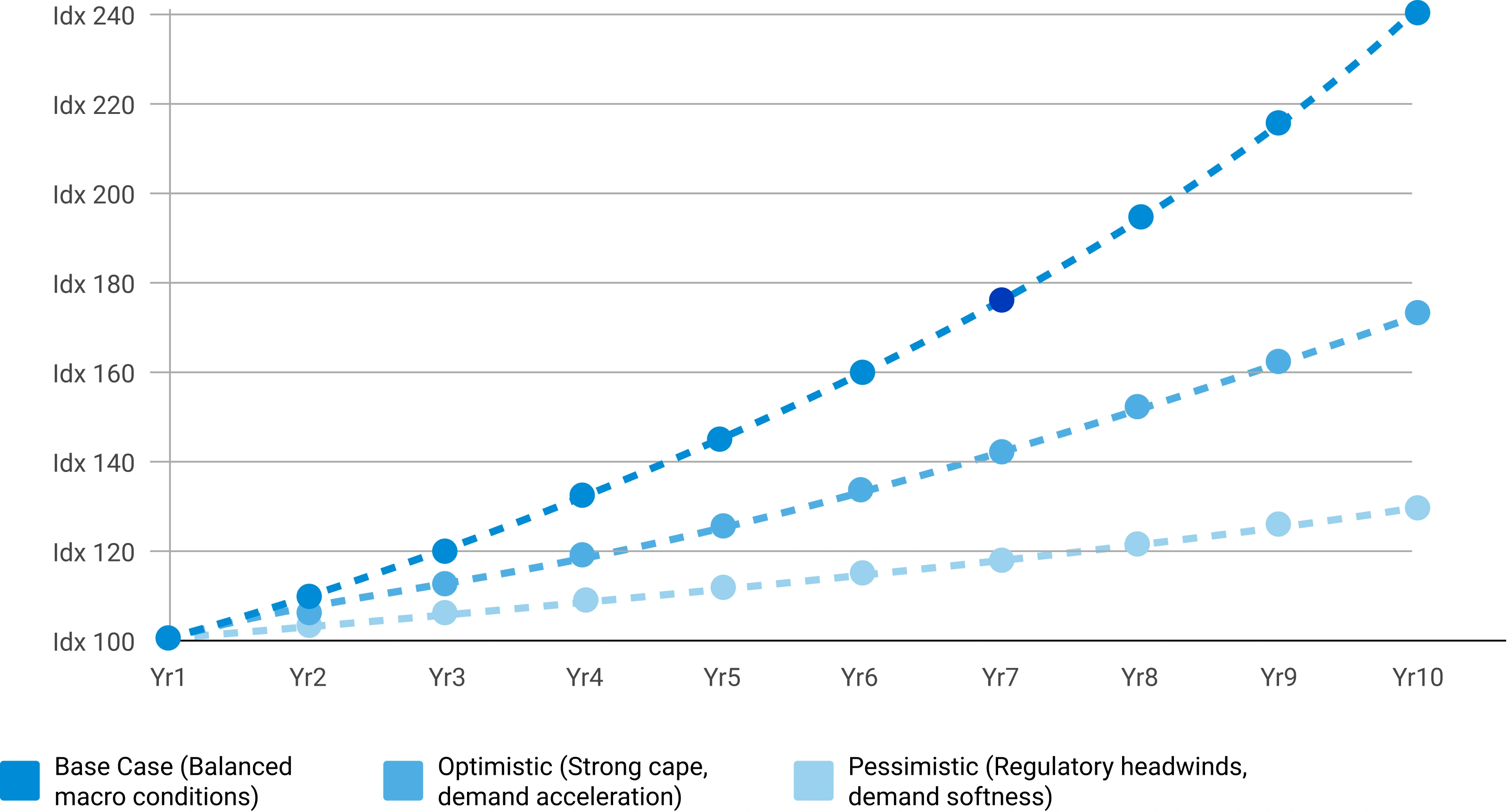
Scenario Forecast Range — Indexed Market Growth (Year 1–10)
Illustrative indexed growth trajectories across Base, Optimistic, and Pessimistic scenarios over a 10-year forecast horizon
Forecast Drivers — Relative Impact Score by Category
Impact score (0–100) of each driver type on chemicals & materials market forecast



Comments
Share your thoughts, ask a question, or provide feedback about this report.