
Asia Pacific Building and Construction Sheets Market Size and Forecast 2026 to 2035
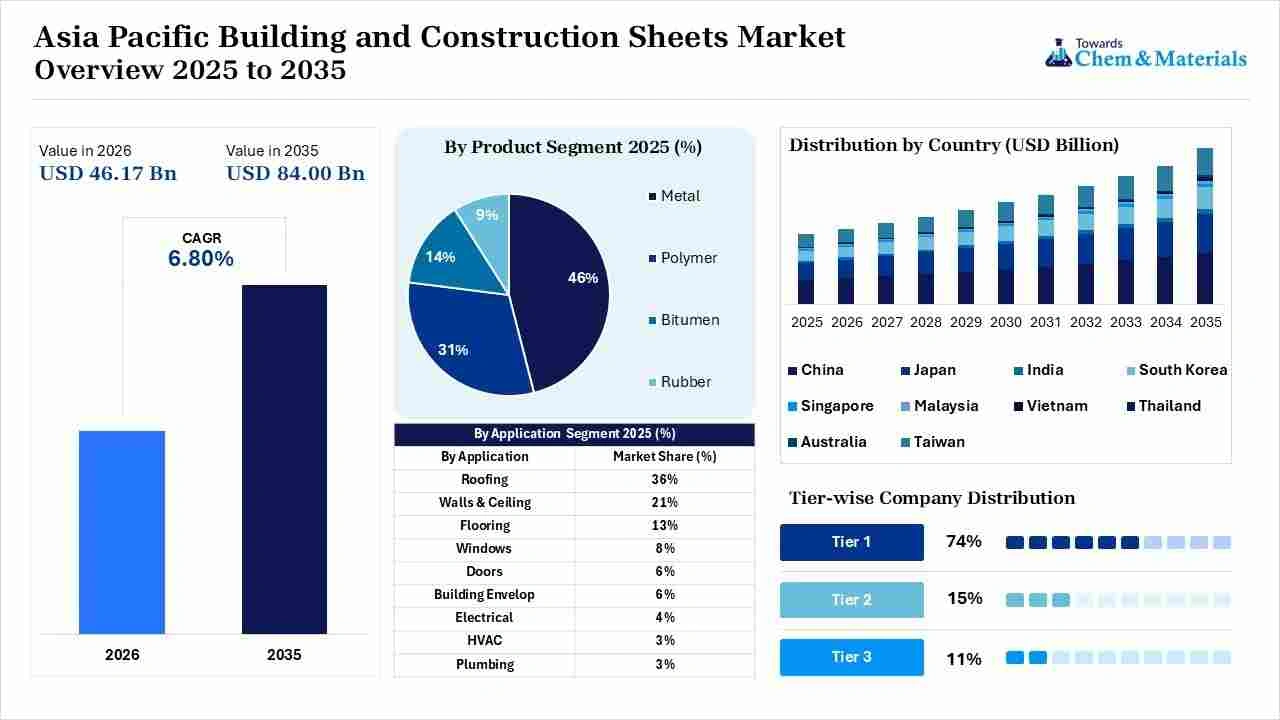
The Asia Pacific building and construction sheets market size was estimated at USD 43.20 billion in 2025 and is projected to grow from USD 46.17 billion in 2026 to approximately USD 84.00 billion by 2035, at a CAGR of 6.80% from 2026 to 2035. The rapid urbanization and infrastructural investment by the government led to mega projects like the national infrastructure pipeline and smart city development plans, which are major growth factors in the market. The supply chain and technological shifts in the adoption of modular and prefabricated construction and green building practices led to the growth of the market. The presence of major players and regional partnerships for cross-border rail and transit, like China Railway Construction Corporation and associated Chinese engineering firms, collaborates with railways to improve logistics.
Market Highlights
- By country, China dominated the Asia Pacific building and construction sheets market with a share of 46% in 2025 and is expected to grow at a CAGR of 6.99% over the forecast period.
- By country, India held a 22% market share in the Asia Pacific building and construction sheets market in 2025 and is expected to experience the fastest growth with a CAGR of 9.26% in the forecast period.
- By product, the metal segment dominated the market with a 46% share in 2025 and is expected to grow at a CAGR of 6.60% over the forecast period.
- By product, the polymer segment held a 31% market share in 2025 and is expected to have the fastest growth with a CAGR of 7.50% in the forecast period.
- By application, the roofing process segment dominated the market with a 36% share in 2025 and is expected to grow at a CAGR of 6.80% over the forecast period.
- By application, the walls and ceiling segment held a 21% market share in 2025 and is expected to have the fastest growth with a CAGR of 7.30% in the forecast period.
- By function, the protection segment dominated the market with a 28% share in 2025 and is expected to grow at a CAGR of 6.40% over the forecast period.
- By function, the insulation segment held a 25% market share in 2025 and is expected to have the fastest growth with a CAGR of 7.80% in the forecast period.
- By end use, the residential segment dominated the market with a 42% share in 2025 and is expected to grow at a CAGR of 6.70% over the forecast period.
- By end use, the industrial segment held a 27% market share in 2025 and is expected to have the fastest growth with a CAGR of 7.30% in the forecast period.
- By distribution channel, the direct segment dominated the market with a 72% share in 2025 and is expected to grow at a CAGR of 6.40% over the forecast period.
- By distribution channel, the third-party segment held 28% market share in 2025 and is expected to have the fastest growth with a CAGR of 8% in the forecast period.
Market Overview
Asia Pacific Building and Construction Sheets Market: Structural Building Engagement
The Asia Pacific building and construction sheets market is rapidly increasing due to rapid urbanization and heavy infrastructure spending through government-based initiatives and investment in green building initiatives and investment in smart cities and transportation networks, which continue to boost the demand for structural building materials like wall sheets, flooring sheets, and roofing. The growing populations in urban centers across regions like India, China, and Indonesia drive demand for residential and commercial development.
Industrial relocation through supply chain shifts and factory setups is moving to Vietnam and Indonesia, which in turn fuels commercial and industrial warehouse construction, increasing the consumption of sheets and boosting market growth. Sustainability and material collaborations for a net-zero carbon network and material technology integration, like the joining of forces of chemical and material giants such as Sika’s integration of MBCC Group across regional markets including Japan and Vietnam, boost the growth of the market.
- For instance, firms like AEC Group and Pan-United Corporation collaborate with bodies like the World Green Building Council to drive decarbonization targets across APAC supply chains. (Source: worldgbc.org)
Global Investment Flow for Asia Pacific Building and Construction Sheets Market 2026
- The Asia Pacific building and construction sheets market is heavily driven by public infrastructure outlays and private corporate manufacturing investments through national projects such as Indias National Infrastructure Pipeline.
- Dominant firms like Asia Poly Industrial, Hindalco Industries, Mitsubishi Chemical, and regional acrylic producers invest in production, and domestic production increases to lower logistics costs.
- Private corporations invest heavily in commercial real estate, data centers, and advanced manufacturing units, raising the demand for specialized insulated metal panels and polymer sheets.
- XinFeng Steel, which is a Chinese company that plans to invest 10 billion dollars in the development of industrial complexes in Egypt, which aim to produce steel and services. (Source: gmk.center)
Growth Trends
- The rising population and development of nations, which demand residential and commercial spaces through large-scale investors in smart city projects and public housing, accelerate material consumption, which is a major growth trend.
- The growing demand for lightweight and prefabricated materials for modular construction and for durable construction sheets that cut down assembly time fuels the growth of the market.
- The increasing focus on eco-friendly innovation in green building drives demand for energy-efficient insulation, soundproofing, and fire-resistant composite sheets, which is a major trend that supports the growth of the market.
Asia Pacific Building and Construction Sheets Market: Material Innovation
The Asia Pacific building and construction sheets market is shifting rapidly towards advanced and high-performance materials as there is increased demand for lightweight composites and nano-coated metal panels, which help enhance thermal insulation, superior flame retardancy, and self-cleaning surfaces, which demand material innovation and boost growth. The shift towards smart, eco-friendly, and multi-function alternatives to traditional materials through modular and prefabrication material integration enhanced growth, further supporting expansion of the market in the region.
Supply Chain Analysis of Asia Pacific Building and Construction Sheets Market
Synthesis and Processing
- The building and construction sheets are processed by converting raw materials like polymers and metal into flat and structured sheets, which are extensively used in the construction of residential and commercial buildings and used as roofing, glazing, and cladding.
- Fletcher Building Limited provides comprehensive steel and lightweight metal roofing, architectural cladding solutions, and structural building sheets
- Key players: China National Building Materials (CNBM) and AGC Inc.
Quality Testing and Certification
- Building and construction require high calibration standards like ISO/IEC 17025; regional or national marks such as BIS, PSB, JIS, and GB, which depend on the manufacturing destination; and third-party verification like Intertek
- Building Products Certification or APAVE Asia, which is provided by global agencies.
Hindalco Industries Ltd. offers high-grade aluminum flat-rolled products, roofing sheets, and coils used in industrial and commercial building envelopes. - Key players: BIS and JIS standards
Distribution to Industrial Users
- The building and construction materials are distributed to residential, commercial, industrial, and infrastructure sectors. These products supply critical applications like roofing, wall cladding, and waterproofing.
- Mitsubishi Chemical Corporation manufactures advanced high-performance polymer and polycarbonate sheets suited for transparent roofing, glazing, and thermal insulation.
- Key players: Hindalco Industries Ltd., Fletcher Building Limited, Mitsubishi Chemical, and Asia Poly Industrial Sdn Bhd.
Sustainability Analysis of Asia Pacific Building and Construction Sheets Market
The building and construction sheets market is experiencing strong growth as there is a shift towards structural pivots towards sustainability, which is fueled by rapid urbanization, tightening carbon regulations, and rising demand for energy-efficient materials, which are fueled by the adoption of eco-friendly thermoplastics, solar-integrated, and insulated metal sheets that drive the adoption and growth of the market.
What are Building and Construction Sheets?
Building and construction sheets are flat, corrugated, or structural panels that are made from metals, plastics, wood, and composites, which provide structural integrity to the material. They are widely used for roofing, wall cladding, flooring, insulation, and protective moisture barriers. Common types of sheets include fiber cement sheets, plastic and polymer sheets, drywall/gypsum sheets, wood and panel sheets, and metal sheets.
Asia Pacific Building and Construction Sheets Premium Pricing Analysis
In the Asia Pacific region, premium building and construction sheets spanning specialized metal, reinforced polymer, and high-performance acoustic or fire-rated gypsum boards command an upper-tier pricing structure driven by urbanization, strict green building compliance, and material innovation. Premium segments experience strong demand despite higher upfront costs.
Asia Pacific Building and Construction Sheets Market Carbon Tax Analysis
Carbon taxes and pricing mechanisms across the Asia-Pacific region are actively reshaping the building and construction sheets market, including metal, plastic, and composite panels. By penalizing carbon-intensive manufacturing such as steel, aluminum, and energy-heavy polymers, carbon pricing forces a structural shift toward low-carbon alternatives, inflating short-term material costs while accelerating green innovation. Domestic carbon pricing implementation across APAC acts as a protective offset mechanism, ensuring carbon revenues are retained locally rather than surrendered as punitive tariffs at EU borders.
Asia Pacific Building and Construction Sheets Regulatory Landscape
| Country / Region | Regulatory Body | Key Regulations | Focus Areas | Notable Notes |
| China | Ministry of Housing and Urban-Rural Development, Ministry of Ecology and Environment | Green Building Action Plan, Carbon Neutrality Targets | Green infrastructure, eco-friendly construction | China is investing heavily in low-carbon building materials and sustainable urban infrastructure development. |
| India | Bureau of Energy Efficiency, Ministry of Environment, Forest and Climate Change | Energy Conservation Building Code, Green Building Guidelines | Energy-efficient buildings, sustainable urbanization | India promotes sustainable construction materials through smart city projects and green infrastructure policies. |
| Japan | Ministry of Land, Infrastructure, Transport and Tourism | Building Energy Efficiency Act, CASBEE Standards | Earthquake-resistant sustainable materials, energy conservation | Japan emphasizes sustainable and resilient construction materials for advanced infrastructure projects. |
Market Dynamics
Drivers: Infrastructure and Industrial Expansion
The Asia Pacific building and construction sheets market is experiencing growth driven by rapid urbanization and population growth due to rural-to-urban migration, which increases the need for new buildings. The growth in housing demand is supported by government funds to expand shelter for urban populations. The growing investment by the government in infrastructure and industrial expansion boosts manufacturing hubs, and the building of new factories and warehouses boosts the demand for building sheets, which drives the growth of the market.
Challenges: Economic and Cost Pressures
The Asia Pacific building and construction sheets market faces several challenges, such as severe skilled labor shortages and execution bottlenecks due to a lack of expertise, which increases safety risks during installation, which is a major challenge. Economic and cost pressures due to price volatility resulting from fluctuating costs for raw materials directly affect the profit margins for sheet manufacturers, which is a major challenge that hinders growth along with financial hurdles.
Opportunities: Advanced and Sustainable Materials
The Asia Pacific building and construction sheets market is experiencing rapid growth; the key growth opportunity is the use of advanced and sustainable materials due to high demand for lightweight, impact-resistant, and transparent roofing materials like polycarbonate and thermoplastic sheets. Tighter building energy codes are influenced by the addition of energy-efficient insulation for specialized waterproofing and thermal-insulating layers, which boosts the growth of the market.
Segmental Insights
Product Insights
The metal segment dominated the market with a 46% share in 2025 and is expected to grow at a CAGR of 6.60% over the forecast period, driven by rapid urbanization. The demand for lightweight and durable materials like steel and aluminum for insulation, cladding, and roofing is increasing the growth of the market. Steel dominated usage due to its properties like high strength, widespread local manufacturing, and cost-effectiveness, which boosts growth and also helps with corrosion resistance and design flexibility.
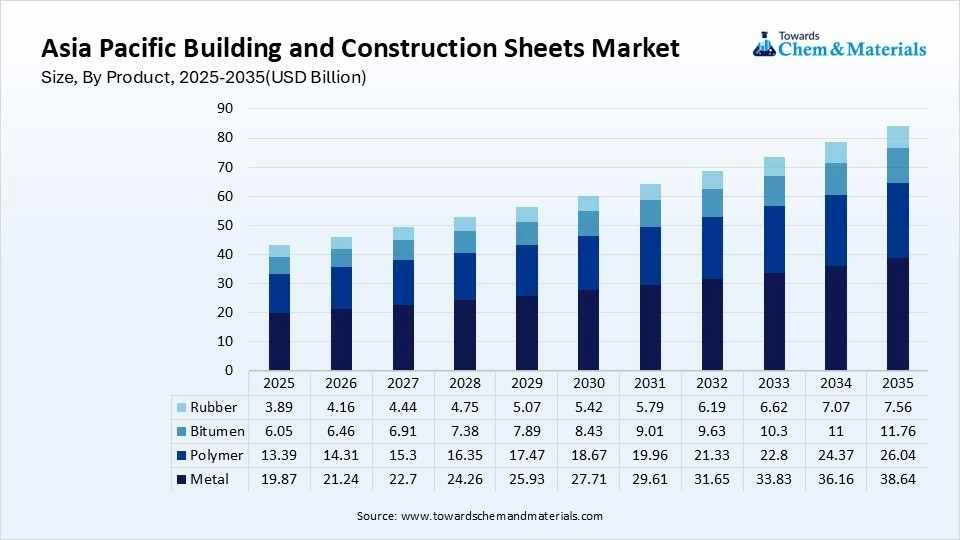
The polymer segment held a 31% market share in 2025 and is expected to have the fastest growth with a CAGR of 7.50% in the forecast period, driven by heavy demand for flexible and transparent products like polycarbonate and PVC sheets, especially demand from countries like China and India, where there is growing investment in smart city projects. The shift towards sustainability and the use of eco-friendly, recyclable polymers helps lower the carbon footprint, which also helps align with the green building initiatives and standards supporting the growth of the market.
Asia Pacific Building and Construction Sheets Market Share, By Product, 2025 (%)
| By Product | Market Share (%) |
| Metal | 46% |
| Polymer | 31% |
| Bitumen | 14% |
| Rubber | 9% |
Application Insights
The roofing process segment dominated the market with a 36% share in 2025 and is expected to grow at a CAGR of 6.80% over the forecast period, driven by massive demand, urban expansion, and government-backed housing programs. Monsoon-heavy climate changes and harsh conditions drive demand for advanced waterproofing and single-ply roofing membranes. The demand for core roofing sheets from countries like India, Indonesia, and China, due to a surge in residential and industrial projects in the nation, boosts growth and accelerates the production of materials supporting expansion.
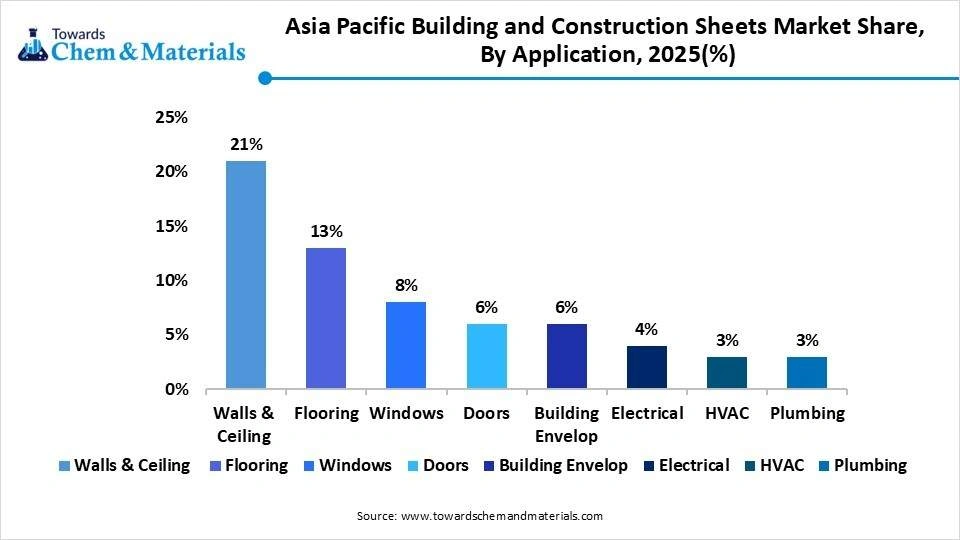
The walls and ceiling segment held a 21% market share in 2025 and is expected to have the fastest growth with a CAGR of 7.30% in the forecast period, driven by the growing demand for prefabricated and pre-decorated boards that help reduce installation time and labor costs, which helps in the growth of the market. The surge in the demand for interior wall and ceiling sheets for high-rise developments in the region for commercial and institutional spaces boosts the growth and expansion of the market.
Asia Pacific Building and Construction Sheets Market Share, By Application, 2025 (%)
| By Application | Market Share (%) |
| Roofing | 36% |
| Walls & Ceiling | 21% |
| Flooring | 13% |
| Windows | 8% |
| Doors | 6% |
| Building Envelop | 6% |
| Electrical | 4% |
| HVAC | 3% |
| Plumbing | 3% |
Function Insights
The protection segment dominated the market with a 28% share in 2025 and is expected to grow at a CAGR of 6.40% over the forecast period, driven by the demand for resistance and installation of water-resistant and waterproof sheets for protection from extreme weather like frequent monsoons, high UV rays, and heat waves, which supports growth. Preference for high-performance materials and support for corrosion and moisture protection of commercial and residential buildings increases the demand.
The insulation segment held a 25% market share in 2025 and is expected to have the fastest growth with a CAGR of 7.80% in the forecast period, expanding rapidly driven by massive urban migration, high demand for insulated metal and plastic composite sheets in and across regions, especially India and China, for residential and industrial projects. The green focus, prefab setups, and acoustic needs support further growth and expansion of the market.
Asia Pacific Building and Construction Sheets Market Share, By Function, 2025 (%)
| By Function | Market Share (%) |
| Protection | 28% |
| Insulation | 25% |
| Waterproofing | 22% |
| Glazing | 14% |
| Bonding | 11% |
End Use Insights
The residential segment dominated the market with a 42% share in 2025 and is expected to grow at a CAGR of 6.70% over the forecast period. Rising disposable income and rapid urbanization in the region are driving demand for the building of residential buildings through affordable housing programs, which is boosting demand for roofing and thermal insulation materials, boosting growth. This increased housing boom in the region has also shifted the green building standards, like favorable energy savings, recyclable materials, and sheets for better thermal insulation, propelling growth.
The industrial segment held a 27% market share in 2025 and is expected to have the fastest growth with a CAGR of 7.30% in the forecast period, driven by manufacturing expansion and supply chain shifts through growing investments in projects like Make in India and industrial upgrades in the region, which drive factory and warehouse construction supporting growth. The energy transition, digital infrastructure, and green standards, which drive the development of data centers and semiconductor cleanroom construction, boost the demand for protective sheets.
Asia Pacific Building and Construction Sheets Market Share, By End-use, 2025 (%)
| By End-use | Market Share (%) |
| Residential | 42% |
| Commercial | 31% |
| Industrial | 27% |
Distribution Channel Insights
The direct segment dominated the market with a 72% share in 2025 and is expected to grow at a CAGR of 6.40% over the forecast period. This helps lower costs as it helps manufacturers to bypass the middle agents and helps in streamlining the supply chains and meeting the rising demand for large-scale commercial and industrial projects across the region. It also helps maintain direct relations between buyers and manufacturers, aligns with better services, and supports the large infrastructure push through bulk, direct-from-factory procurement.
The third-party segment held 28% market share in 2025 and is expected to have the fastest growth with a CAGR of 8% in the forecast period. This helps with flexibility and scalability through seasonal shifts and volatile project timelines, which is made easier through a third party. This also helps reduce the overhead by cutting down the logistics and warehousing costs in the regional market. The development across the region demands a local dealer network supporting the growth of the segment.
Asia Pacific Building and Construction Sheets Market Share, By Distribution Channel, 2025 (%)
| By Distribution Channel | Market Share (%) |
| Direct | 72% |
| Third Party | 28% |
Contry Analysis
How did China dominate the Asia Pacific building and construction sheets market in 2025?
They dominated the China building and construction sheets market with a share of 46% in 2025, and the market size was estimated at USD 19.87 billion in 2025 and is projected to reach USD 39.06 billion by 2035, growing at a CAGR of 6.99% from 2026 to 2035.
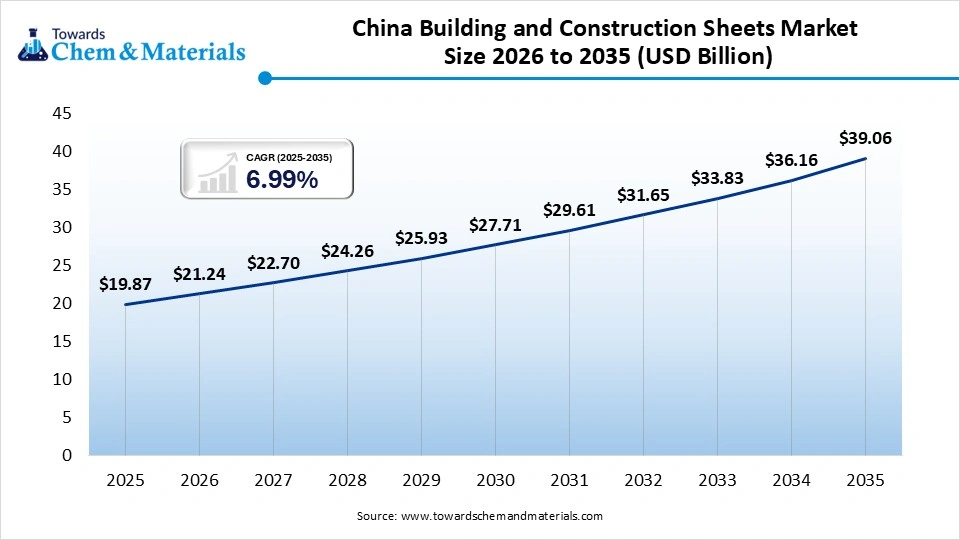
China is experiencing growth due to local government special bonds, as China is investing immense funding for the development of smart cities and underground utilities, transit corridors, and expansion of Belt and Road initiatives; these projects consume millions of square meters of waterproofing bitumen membranes, structural panels, and protective barriers. The governments across the country are enforcing stricter energy performance codes, steering public sector building projects towards solar-integrated and insulated composite roofing and wall sheets, which fuels the growth of the market.
India Building and Construction Sheets Market National Projects
India held a 22% market share in the Asia Pacific building and construction sheets market in 2025, and market size was estimated at USD 9.50 billion in 2025 and is projected to reach USD 18.90 billion by 2035, growing at a CAGR of 7.12% from 2026 to 2035. India is experiencing growth through mega infrastructure projects under the National Infrastructure Pipeline and massive federal infrastructure packages. India is experiencing scaled construction activity due to rising demand, a result of the rising population in the country. This has led to increased demand for durable metal roofing, cladding sheets, and advanced composites for various departments. The heavy investment by the government in transport and civic infrastructure has increased demand for the utilization of corrugated and flat construction sheets, which boosts the growth of the market.
Competitive Analysis
- The Asia Pacific building and construction sector is collaborating and forming joint ventures among mega-contractors like China State Construction Engineering Corporation, Larsen & Toubro, and Obayashi Corporation.
- The major regional partnerships and cross-border projects include aviation and infrastructure execution, modular and prefabricated housing alliances, cross-border rail and transit, and sustainability and material collaboration, along with technological and digital transformation, which are major competitive factors.
- Architectural and engineering leaders such as AECOM, Aedas, and DP Architects partner with technology providers to scale up building information modeling, artificial intelligence planning, and digital twin management.
- Chemical and material giants Sika and MBCC Group join forces to deploy low-carbon concrete and sustainable chemical admixtures across regional markets, including Japan. (Source: www.sika.com)
Top players in the Asia Pacific Building and Construction Sheets Market & Their Offerings
| Company | Company Type/Position | Major Headquarters | Geographic Presence | Building & Construction Sheet Offerings | Key Offering/Strength |
| Kingspan Group plc | Global building materials and insulation manufacturer | Kingscourt, Ireland | Asia Pacific, Europe, North America | Insulated sandwich panels, architectural panels, roofing and wall systems | Strong expertise in energy-efficient insulated panels and sustainable building solutions |
| Tata Steel Limited | Integrated steel and building materials manufacturer | Mumbai, India | Asia Pacific, Europe, Middle East | Roofing sheets, wall cladding, structural sheets, and coated steel products | Strong steel manufacturing capabilities and extensive building product portfolio |
| LIXIL Corporation | Building and housing products manufacturer | Tokyo, Japan | Asia Pacific, North America, Europe | Exterior cladding sheets, wall panels, roofing and building envelope products | Broad building solutions portfolio with strong design and material innovation |
| Etex N.V. | Sustainable building materials manufacturer | Brussels, Belgium | Asia Pacific, Europe, North America, Latin America | Fiber-cement sheets, drywall systems, roofing sheets, and facade panels | Strong expertise in lightweight and durable sheet-based construction materials |
| Nichiha Corporation | Fiber-cement building materials manufacturer | Nagoya, Japan | Asia Pacific, North America | Fiber-cement siding, exterior wall panels, architectural facade sheets, and cladding systems | Advanced architectural sheet solutions with a strong focus on aesthetics, durability, and weather resistance |
Other Top Players Are
- Asia Poly Industrial Sdn Bhd
- Hindalco Industries Ltd.
- Mitsubishi Chemical Corporation
- Ray Chung Acrylic
- Shen Chuen Acrylic
- Fletcher Building Limited
- Kashyap Unitex Corporation
- Kansal Colour Roofings India Pvt. Ltd.
- Exodus Ispat Pvt. Ltd.
- Bansal Roofing Products Ltd.
- Tuflite Polymers
- Advance Roof & Building System
- J.N. Sons
- Kingspan Jindal
- China National Building Material Group (CNBM)
- China Lesso Group
- Saint-Gobain India / APAC
- BlueScope Steel
- Tata Steel BSL
- Nippon Steel Corporation
Segments Covered:
Complete Market Segmentation Listing
By Product
- Bitumen
- Modified Bitumen Sheets
- Bituminous Membranes
- Asphalt-Based Sheets
- Rubber
- EPDM Sheets
- SBR Rubber Sheets
- Neoprene Sheets
- Recycled Rubber Sheets
- Metal
- Steel Sheets
- Galvanized Steel
- Galvalume / Al-Zn Coated Steel
- Pre-painted Steel
- Stainless Steel
- Aluminum Sheets
- Plain Aluminum
- Coated Aluminum
- Copper Sheets
- Steel Sheets
- Polymer
- PVC Sheets
- Polycarbonate Sheets
- Acrylic Sheets
- HDPE Sheets
- Polypropylene Sheets
- FRP / Composite Polymer Sheets
- Polyurethane / PIR Sheets
By Application
- Flooring
- Industrial Flooring
- Commercial Flooring
- Residential Flooring
- Walls & Ceiling
- Wall Cladding
- Interior Wall Panels
- Ceiling Panels
- Partition Systems
- Windows
- Glazing Sheets
- Transparent Roofing / Window Panels
- Polycarbonate Window Sheets
- Doors
- Door Panels
- Insulated Door Sheets
- Composite Door Sheets
- Roofing
- Corrugated Roofing
- Standing Seam Roofing
- Insulated Roofing Panels
- Transparent Roofing
- Building Envelope
- Facade Cladding
- Rainscreen Systems
- Insulated Envelope Panels
- Weather Barriers
- Electrical
- Electrical Enclosure Sheets
- Cable Protection Sheets
- Insulating Sheets
- HVAC
- Duct Sheets
- Insulation-Facing Sheets
- HVAC Panel Systems
- Plumbing
- Waterproofing Sheets
- Pipe Protection Sheets
- Plumbing Barrier Sheets
By Function
- Bonding
- Adhesive-Backed Sheets
- Bonding Membranes
- Composite Bonding Sheets
- Protection
- Impact Protection
- Corrosion Protection
- Fire Protection
- Surface Protection
- Insulation
- Thermal Insulation
- Acoustic Insulation
- Fire-Resistant Insulation
- Glazing
- Transparent Sheets
- Translucent Sheets
- Safety Glazing Sheets
- Waterproofing
- Roof Waterproofing
- Wall Waterproofing
- Basement Waterproofing
- Wet-Area Waterproofing
By End-use
- Residential
- New Residential Construction
- Renovation & Remodeling
- Affordable Housing
- Commercial
- Offices
- Retail & Shopping Centers
- Hotels & Hospitality
- Educational Buildings
- Healthcare Buildings
- Industrial
- Manufacturing Facilities
- Warehouses & Logistics
- Industrial Sheds
- Power & Utility Facilities
- Data Centers
By Distribution Channel
- Direct
- Direct Manufacturer Sales
- Project-Based Procurement
- Institutional / Contract Sales
- Third Party
- Distributors
- Dealers
- Building Material Retailers
- Online B2B Platforms
By Regions
- China
- Japan
- India
- South Korea
- Taiwan
- Rest Of Asia Pacific
A Seven-Phase Framework
Our methodology is designed to be universally applicable across commodity chemicals, specialty chemicals, petrochemicals, construction chemicals, coatings, electronic chemicals, industrial gases, agrochemicals, water treatment chemicals, and performance materials. Each phase builds upon the last, creating a layered validation structure that minimizes estimation error and maximizes analytical confidence.
The framework ensures comprehensive market coverage, robust cross-validation, and reliable long-term forecasting — producing market estimates that withstand scrutiny from investors, regulators, and corporate strategy teams.

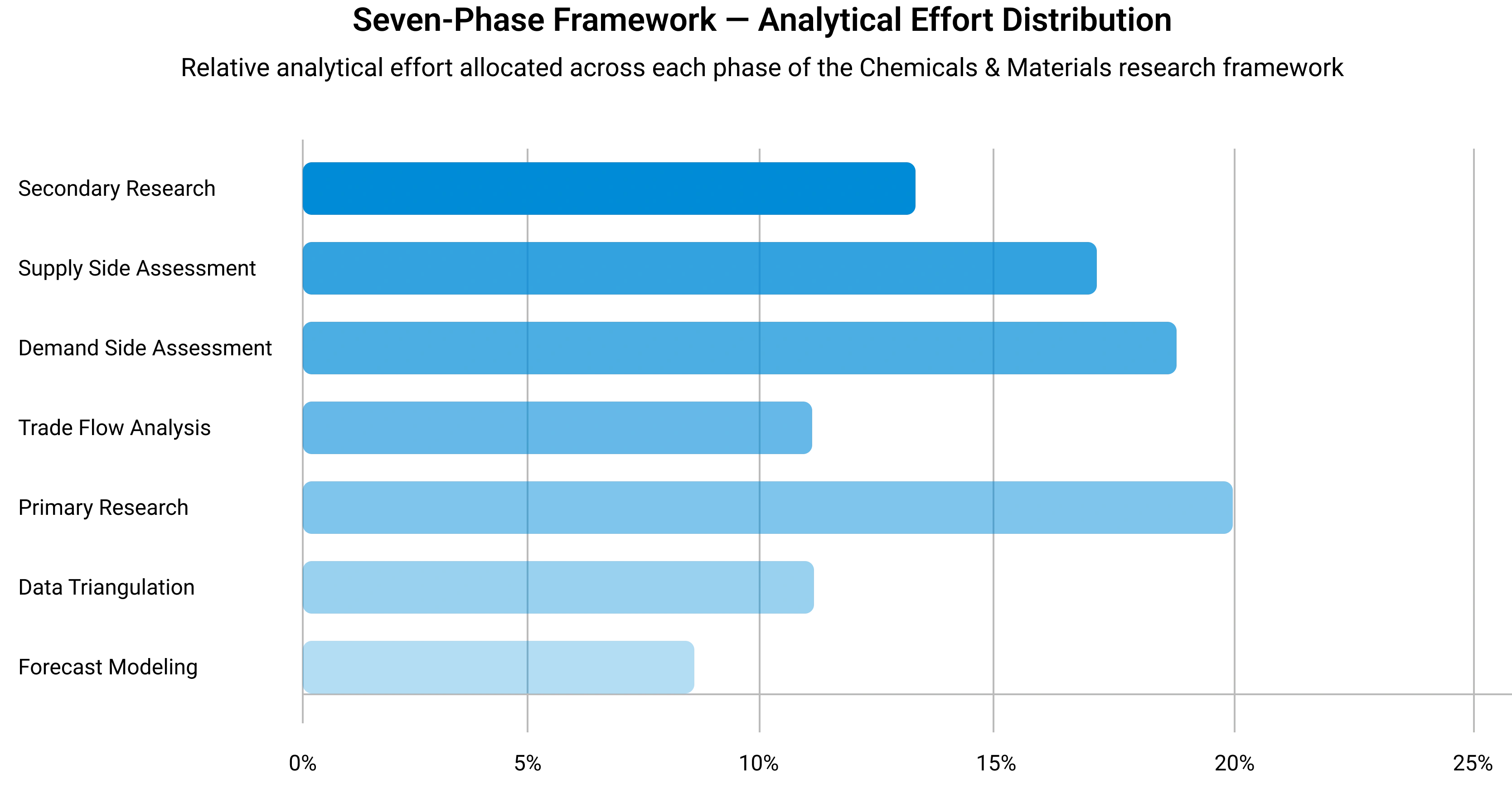
Seven-Phase Framework — Analytical Effort Distribution
Relative analytical effort allocated across each phase of the Chemicals & Materials research framework
Phase 1 - Secondary Research: Establishing the Foundation
Secondary research collects and evaluates publicly available information from authoritative sources, establishing the foundational understanding of market structure, value chain dynamics, competitive landscape, and end-use demand patterns. Every source is evaluated for credibility, recency, geographic relevance, and methodological soundness before inclusion.
Industry Associations
Sources include ACC, CEFIC, ICCA, JCIA, CPCIF, and SOCMA providing production volumes, consumption trends, capacity developments, and sustainability initiatives.
Company Disclosures
Annual reports, investor presentations, earnings transcripts, and regulatory filings reveal product portfolios, manufacturing footprints, capacity expansions, and revenue segmentation.
Government Databases
National statistical offices, customs authorities, environmental agencies, and industrial production databases provide verified statistics on output, trade flows, and regulatory compliance.
Trade Databases
UN Comtrade, ITC, Eurostat, and national customs authorities enable assessment of global product movement, import dependency, and export competitiveness across regions.
Our Secondary Research Sources
- Ministry of Chemicals and Fertilizers
- European Chemicals Agency
- United States Department of Energy
- Ministry of Industry and Information Technology
- Ministry of Economy Trade and Industry
- Ministry of Trade Industry and Energy
- National Institute of Standards and Technology
- Council of Scientific and Industrial Research
- Fraunhofer Society
- National Institute for Materials Science
Phase 2 — Supply-Side Assessment: Mapping Production Capabilities
Production Capacity Analysis
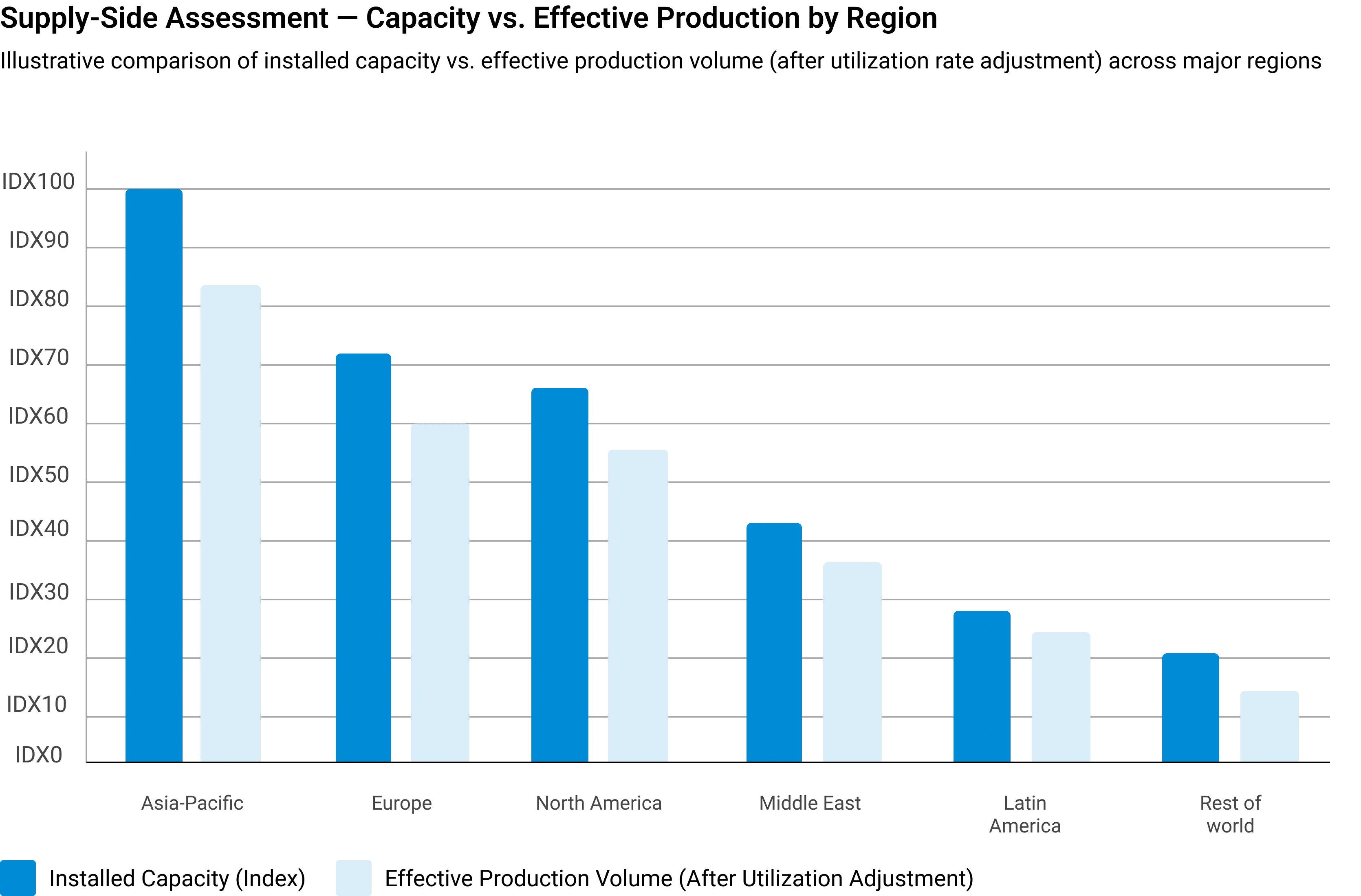
All major manufacturers are assessed for existing installed capacity, planned additions, expansions, new plant announcements, and technology adoption — mapped at global, regional, and country levels.
Capacity Utilization Adjustment
Installed capacity is adjusted using utilization rates based on demand conditions, feedstock availability, plant operating rates, maintenance schedules, and regulatory restrictions.
Manufacturer Revenue Analysis
Product-specific revenues, segment-level performance, regional distribution, average selling prices, and margin trends are evaluated to establish market value estimates.
Supply-Side Assessment — Capacity vs. Effective Production by Region
Illustrative comparison of installed capacity vs. effective production volume (after utilization rate adjustment) across major regions
Phase 3 — Demand-Side Assessment: Quantifying Chemical Consumption
Demand-side analysis quantifies chemical consumption across industries, applications, and geographies — identifying where and how chemicals are consumed throughout the value chain with precision.
End-Use Industry Analysis
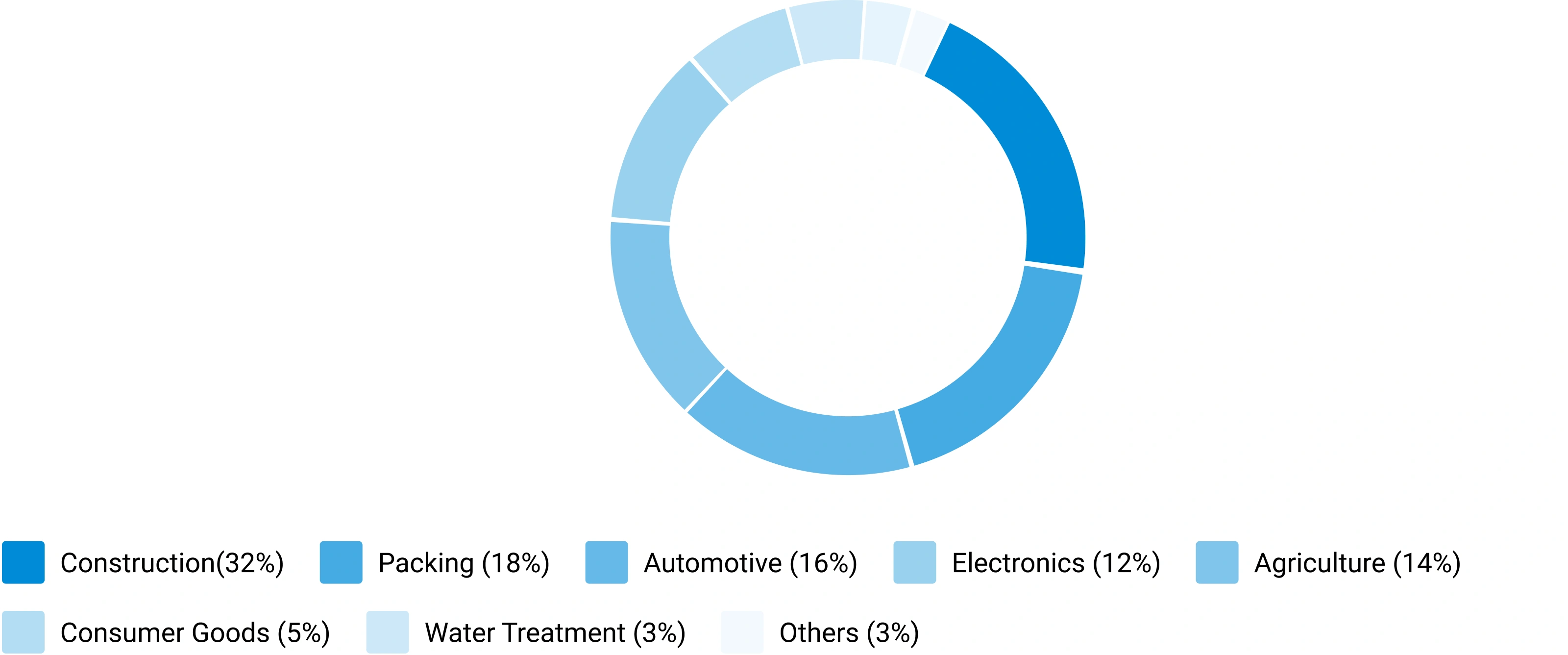
Chemical demand is evaluated across automotive, construction, packaging, electronics, agriculture, healthcare, consumer goods, industrial manufacturing, energy and utilities, and water treatment. Industry output, production trends, and consumption intensity are analyzed to determine demand patterns.
Consumption Modeling
Demand is estimated using measurable indicators: kilograms per vehicle, kilograms per square meter of construction, dosage per cubic meter of water treated, kilograms per hectare of agricultural land, and kilograms per ton of manufactured products. Consumption factors are validated through industry publications and primary interviews.
Application Analysis
The market is segmented by application area to understand product performance requirements, formulation trends, technology adoption, customer preferences, and regulatory requirements improving demand accuracy and segmentation granularity.
Demand-Side Assessment — End-Use Industry Demand Distribution
Illustrative distribution of chemical & materials demand across key end-use industries
Phase 4 - Trade Flow Analysis: Balancing Regional Supply and Demand
Trade flow analysis reconciles regional supply and demand estimates through import and export data, identifying net supply positions, regional dependencies, and market imbalances. It serves as an independent validation layer that tests the consistency of supply-side and demand-side estimates.
Import Analysis
Import data is evaluated to determine volumes, source countries, product dependency, regional supply gaps, and pricing trends — identifying markets that rely heavily on external supply and where domestic production is insufficient to meet demand.
Export Analysis
Export assessments reveal production surplus, export competitiveness, regional manufacturing strength, and global market participation. Export patterns also help validate domestic production estimates and identify net exporting regions.
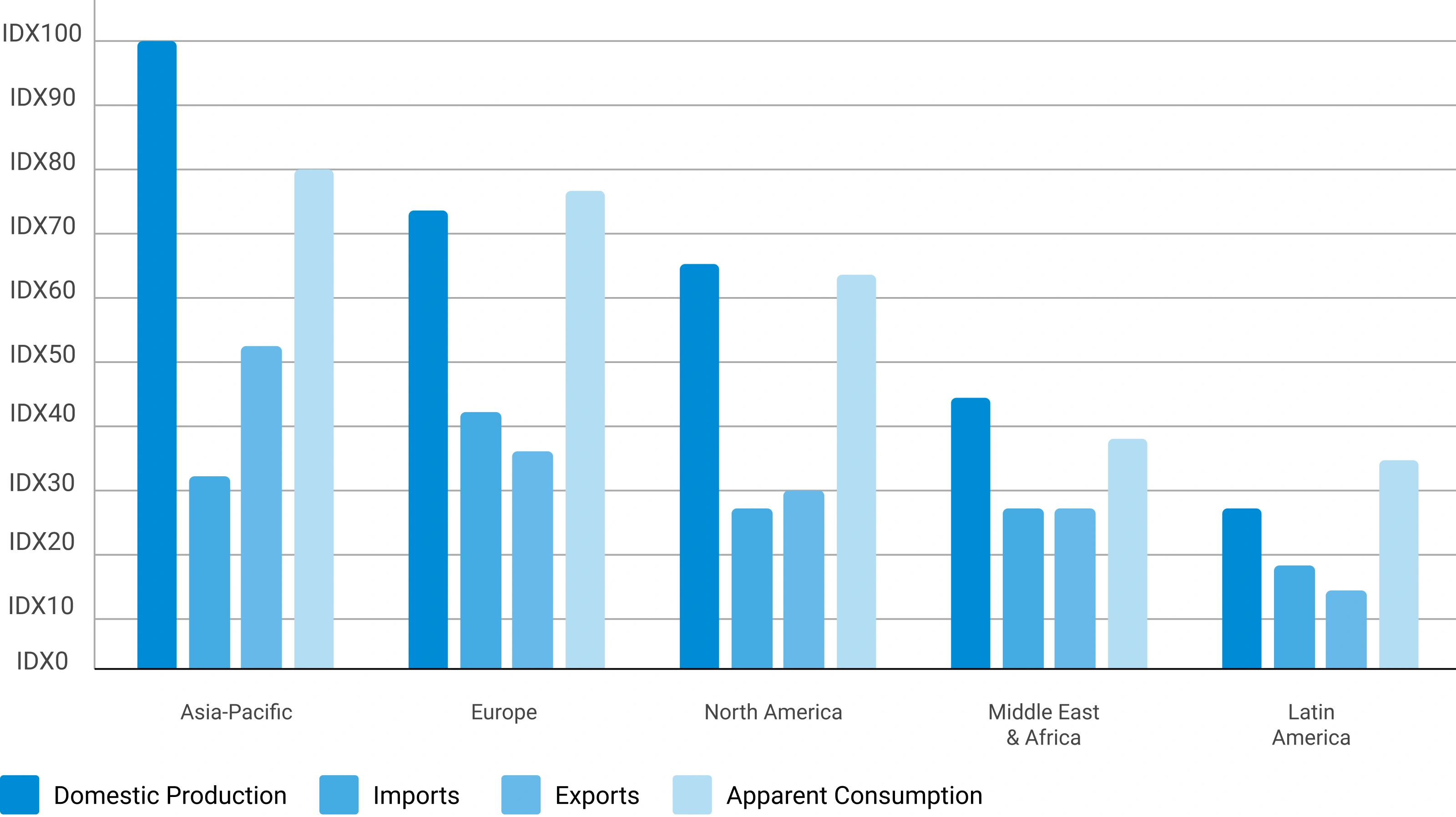
Apparent Consumption Model
Regional consumption is assessed using the standard apparent consumption formula:
Results identify net importing regions, net exporting regions, regional deficits, and surpluses — serving as an independent validation of supply and demand estimates.
Trade Flow Analysis — Net Supply Position by Region
Illustrative apparent consumption vs. domestic production across major regions — positive gap indicates net import dependency
Phase 5 — Primary Research: The Critical Validation Layer
Primary research tests and refines findings from secondary research through direct engagement with industry participants across the supply chain, demand side, and expert community. It captures intelligence that no database or published report can provide — the real-world experience of manufacturers, buyers, and specialists operating in the market.

Supply-Side Interviews
Conversations with chemical manufacturers, raw material suppliers, contract manufacturers, technology providers, and plant operators cover production trends, capacity utilization, pricing developments, technology shifts, and competitive dynamics.

Demand-Side Interviews
Engagement with OEMs, industrial consumers, procurement managers, distributors, formulators, and end-use manufacturers focuses on consumption trends, purchasing behavior, product substitution, demand outlook, and emerging applications.

Industry Expert Consultations
Additional interviews with industry consultants, independent experts, regulatory specialists, technical professionals, and research institutions provide deeper market context and validate key analytical assumptions.
Focus Areas of Primary Research:
Market Size & Forecast Validation
Revenue estimates, volume consumption, growth rates, forecast assumptions, regional demand.Supply Chain & Value Chain Assessment
Raw material sourcing, supply chain challenges, distribution networks, procurement practices.Production & Capacity Analysis
Manufacturing capacity, utilization rates, expansion projects, plant investments.Pricing & Cost Structure Analysis
Product pricing trends, feedstock costs, energy costs, margin pressures, pricing outlook.Competitive Landscape Assessment
Volume and value estimates confirmed to be fully consistent with one another before publicationInterview Volume by Market Scope
| Study Scope | Number of Interviews |
|---|---|
| Niche Market | 20 – 30 |
| Mid-Sized Market | 30 – 50 |
| Global Market | 50 – 80 |
| Highly Fragmented Market | 80 – 120 |
Interview Details:
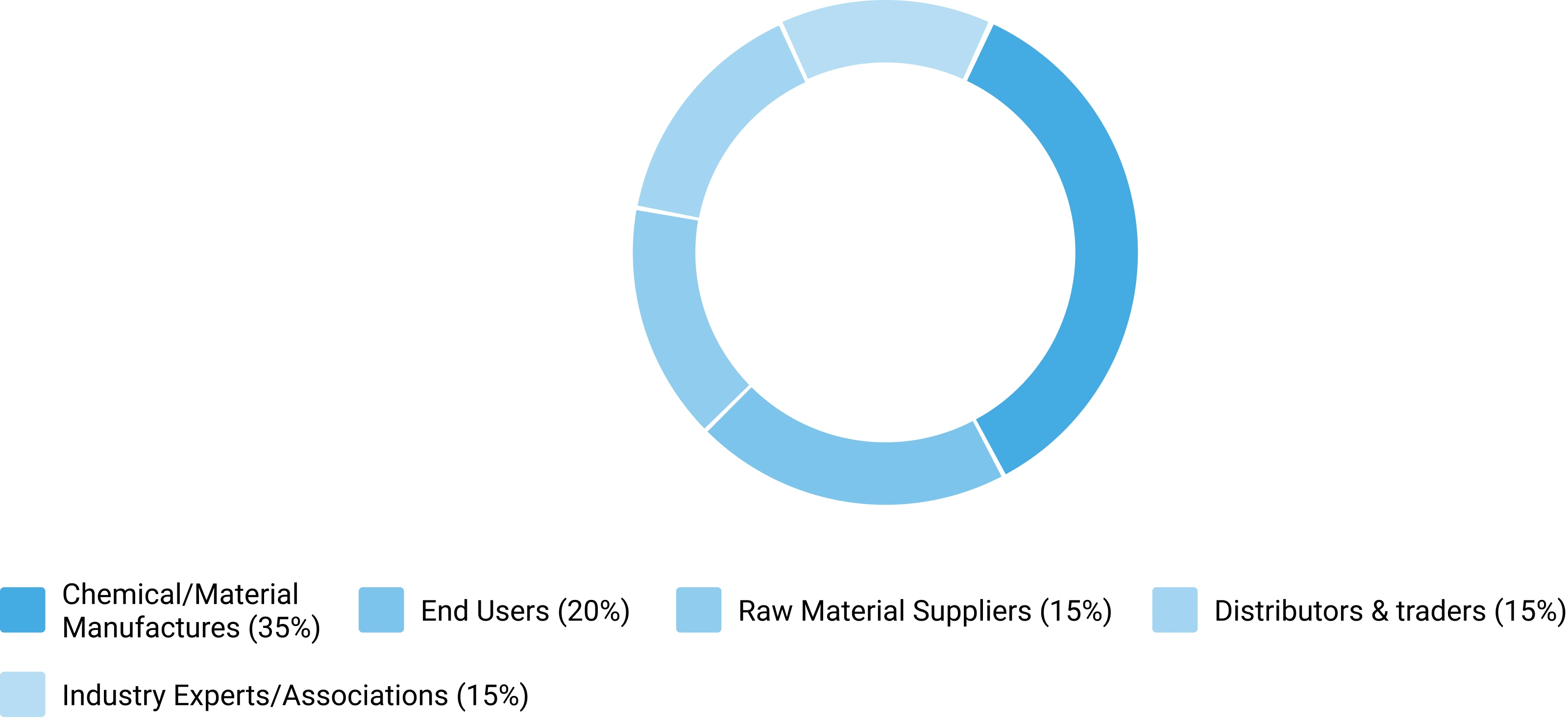
Category : Manufacturers, Suppliers, Distributors, End Users, Experts/Associations
Average Duration : 30–60 Minutes
Interview Mode : Video calls, telephonic interviews, expert consultations
Interview Format : Structured / Semi-Structured questionnaire
Focus Areas of Primary Research:
Market Size & Forecast Validation :
Revenue estimates, volume consumption, growth rates, forecast assumptions, regional demand.
Supply Chain & Value Chain Assessment :
Raw material sourcing, supply chain challenges, distribution networks, procurement practices.
Production & Capacity Analysis :
Manufacturing capacity, utilization rates, expansion projects, plant investments.
Pricing & Cost Structure Analysis :
Product pricing trends, feedstock costs, energy costs, margin pressures, pricing outlook.
Competitive Landscape Assessment :
Market share, competitor positioning, strategic initiatives, partnerships, acquisitions.
Primary Research — Stakeholder Coverage by Category
Distribution of interview respondents across stakeholder categories (% share from PPT data)
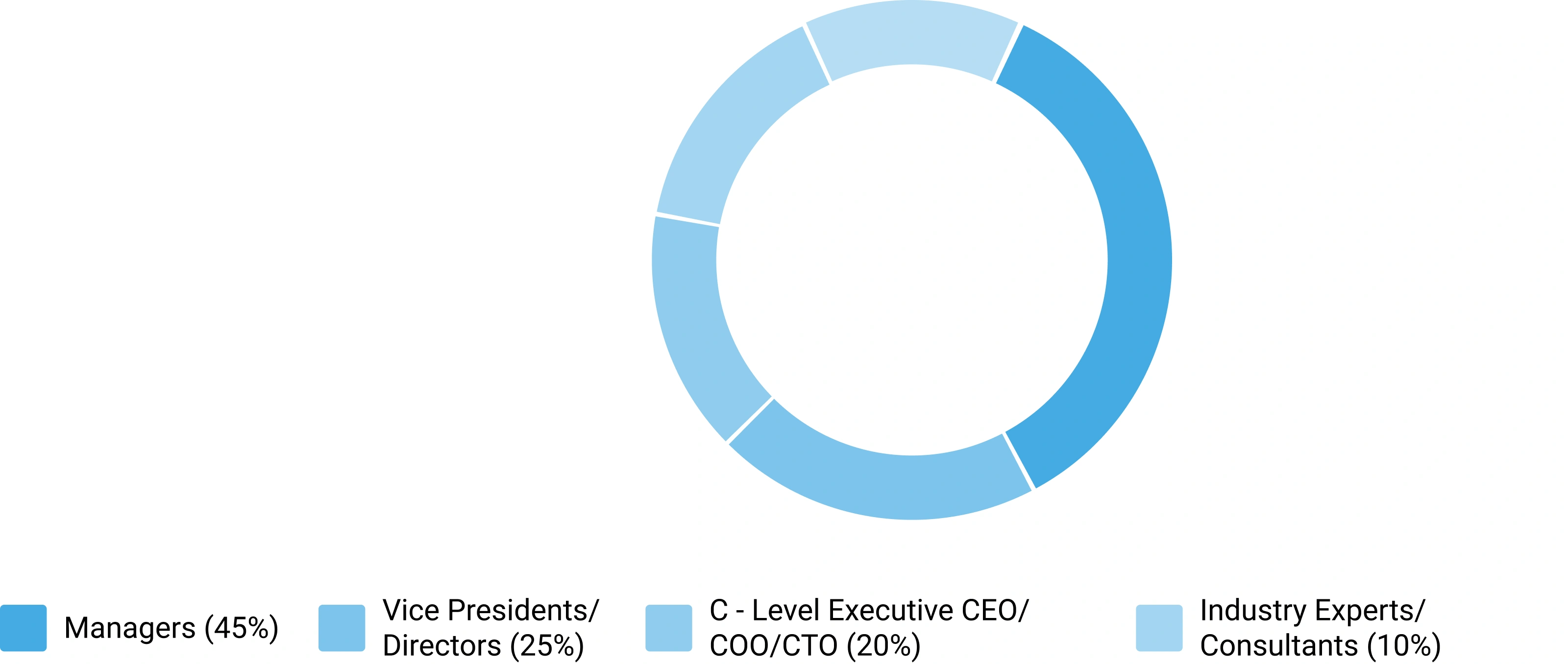
Primary Research — Respondent Designation Profile
Seniority breakdown of interview respondents (% share from PPT data)
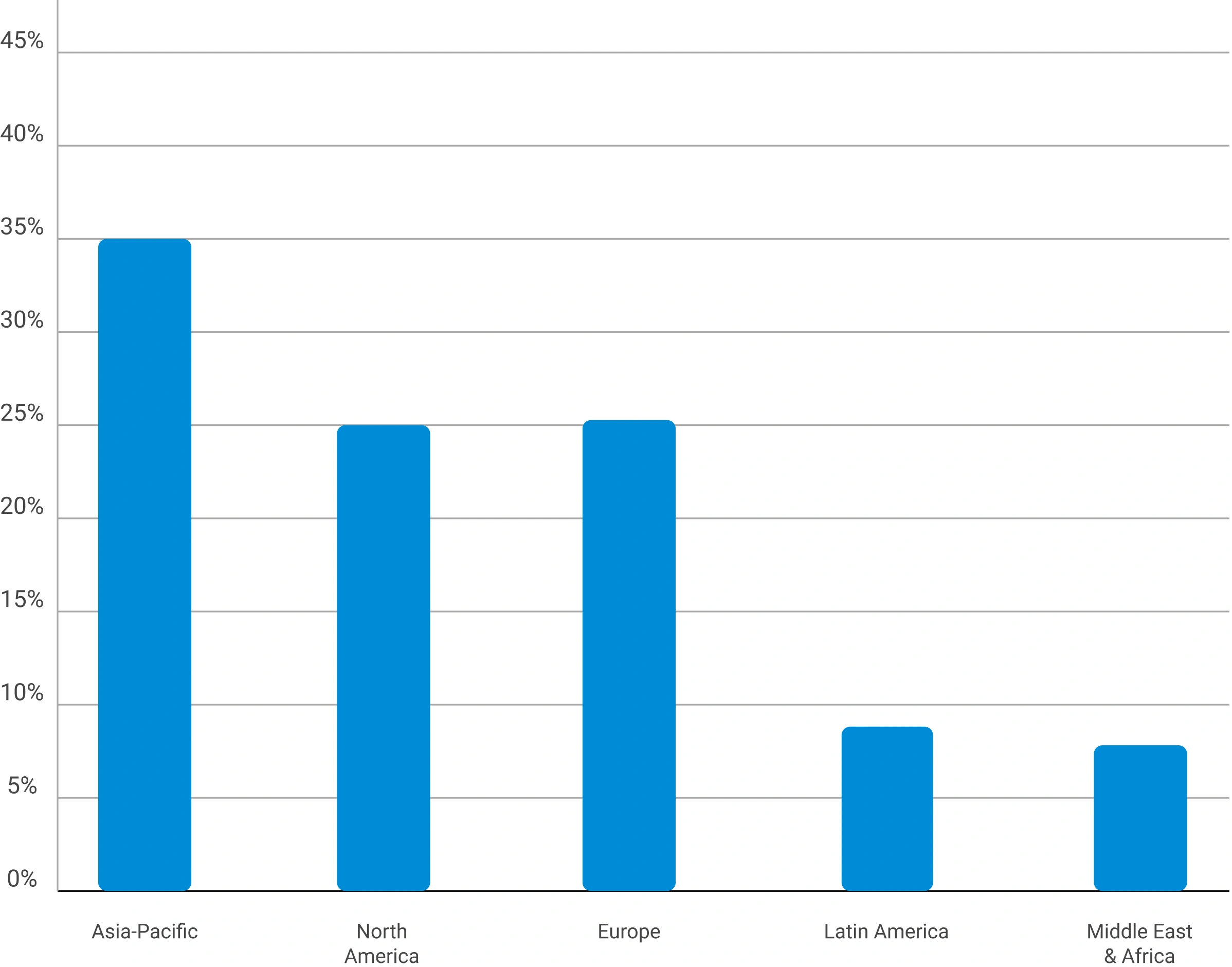
Primary Research — Geographic Coverage of Interviews
Regional distribution of primary research engagement (% share from PPT data)
Phase 6 — Data Triangulation and Market Validation
No single methodology is relied upon in isolation. Multiple independent estimation approaches are combined and reconciled to ensure consistency, accuracy, and analytical defensibility. Any material deviations between approaches are investigated and adjusted through additional validation cycles.
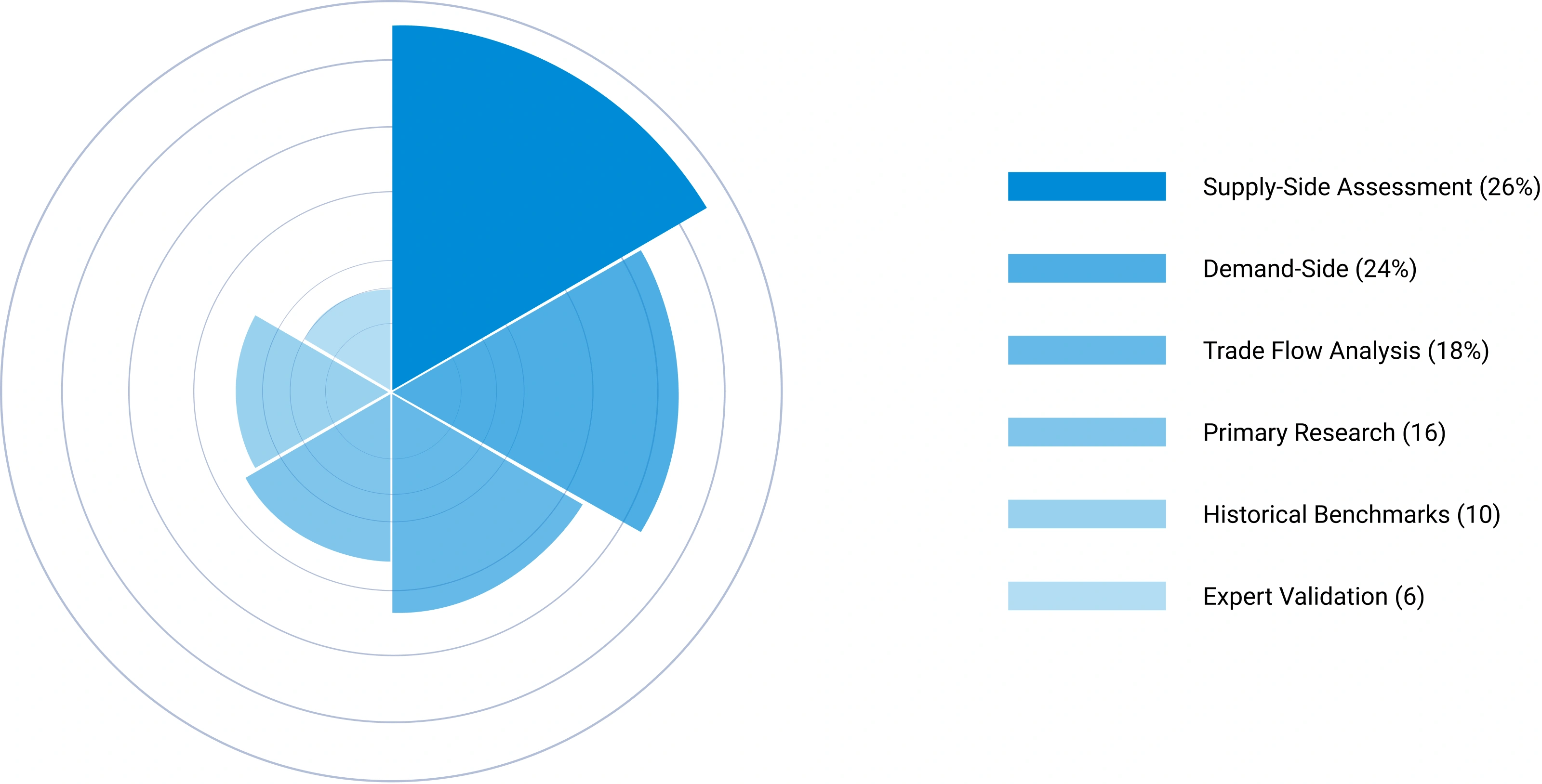
The final market size is derived through weighted triangulation of all validated methodologies. Any material deviations between approaches are investigated and adjusted through additional validation cycles. The outcome represents the most realistic assessment of the market based on available evidence and expert confirmation ensuring that volume and value estimates are fully consistent with one another.
Triangulation Framework — Input Contribution Weight
Relative weight each sizing input contributes to the final reconciled market estimate
Phase 7 — Forecast Modeling: Projecting Future Market Evolution
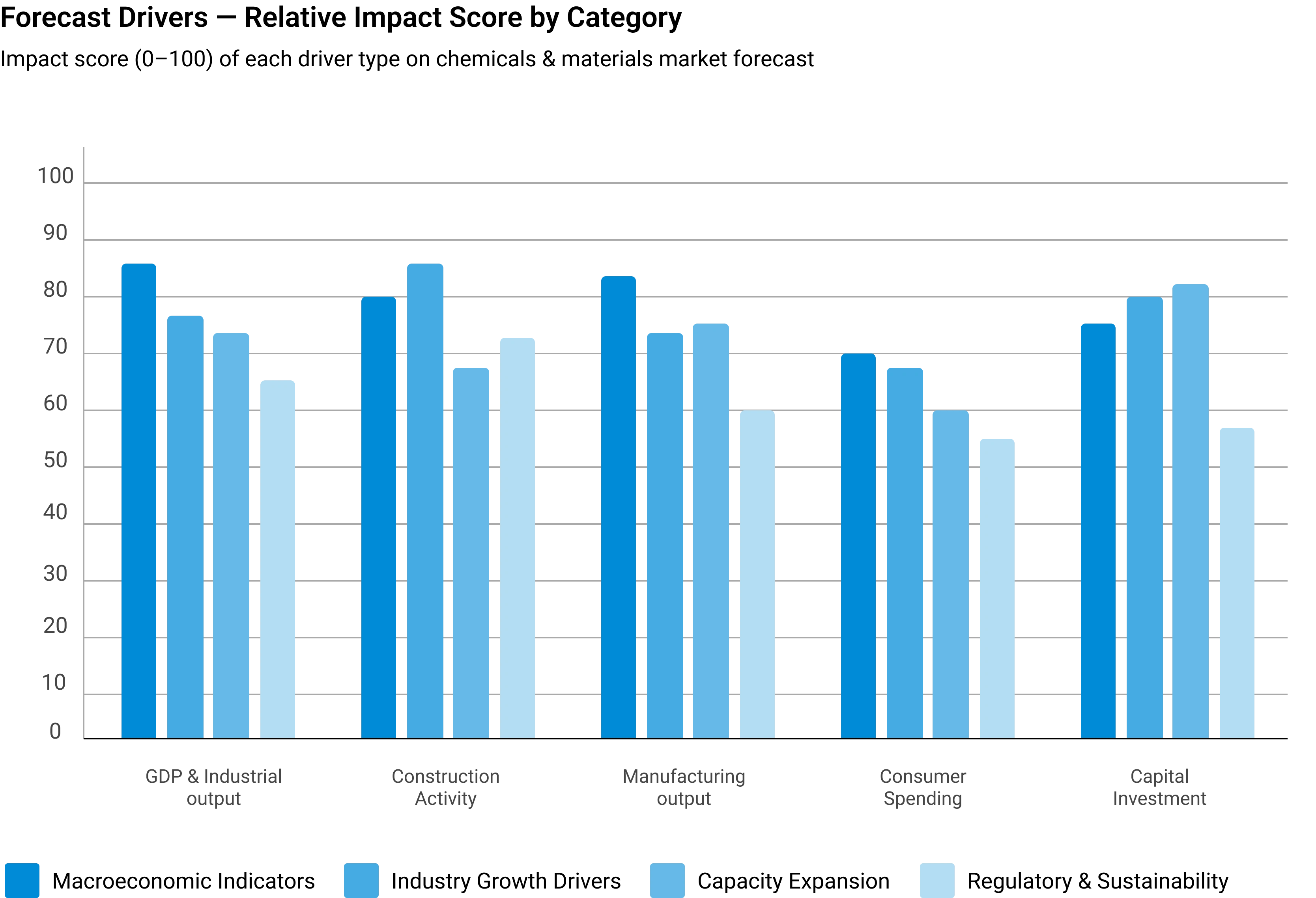
Forecasting evaluates the future trajectory of the market using a combination of quantitative indicators and qualitative assessments across economic, industry, and regulatory dimensions. Rather than simple extrapolation, each driver is independently modeled and integrated into a composite forecast.
Macroeconomic Indicators
GDP growth, industrial production, manufacturing output, construction activity, consumer spending, and capital investment form the quantitative foundation of long-term demand projections. These are applied at country, regional, and global levels.
Industry Growth Drivers
Urbanization, infrastructure development, industrialization, technological innovation, sustainability initiatives, and evolving product performance requirements are assessed at regional and industry levels — capturing both structural and cyclical demand drivers.
Capacity Expansion Analysis
Announced plant expansions, new manufacturing facilities, technology upgrades, and strategic investments are evaluated to determine future supply-demand dynamics and potential market tightness or oversupply situations.
Regulatory & Sustainability
Environmental regulations, chemical safety standards, emission reduction targets, circular economy initiatives, and sustainability requirements are incorporated as they often influence product adoption rates and market growth trajectories.
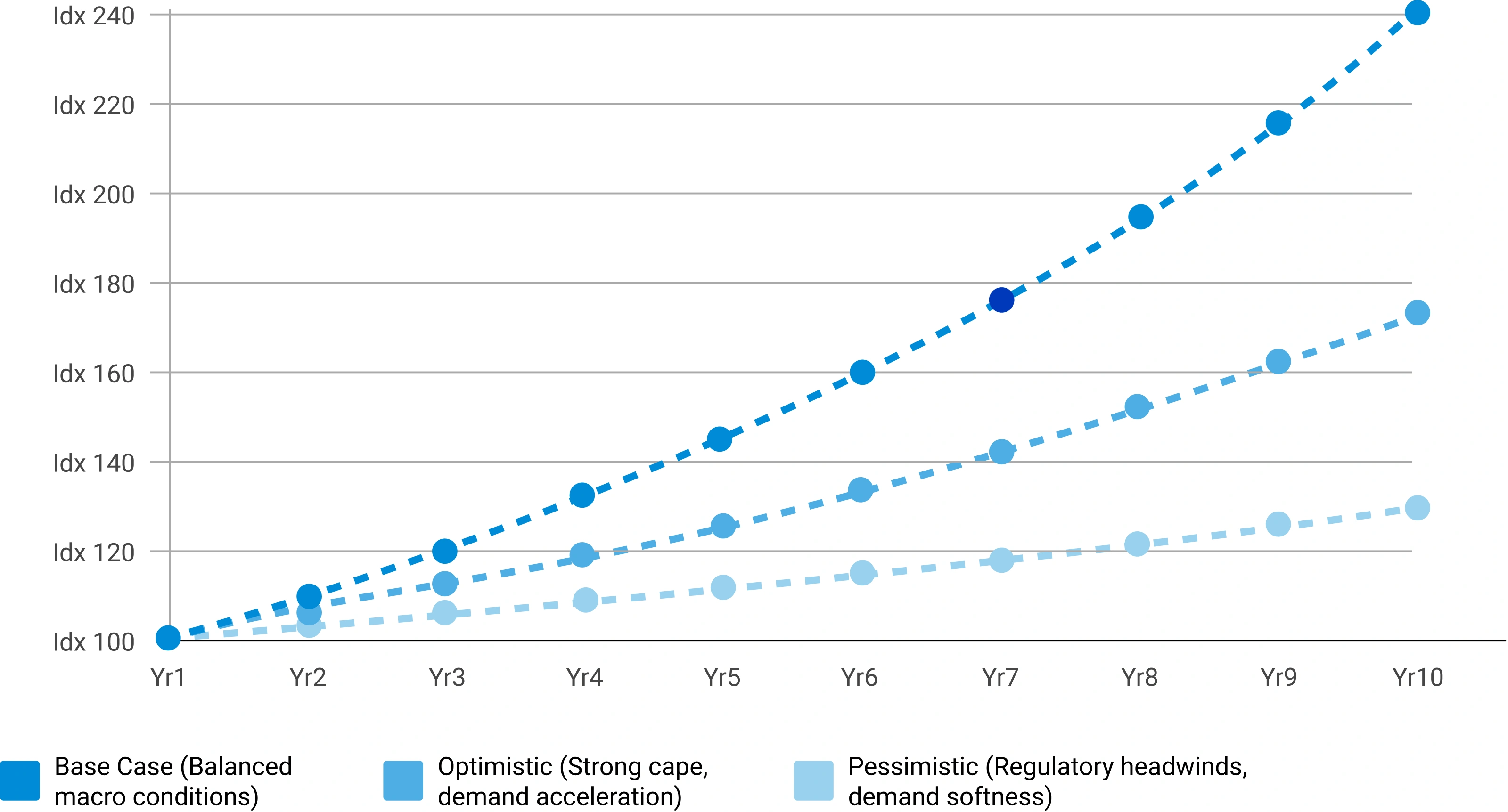
Scenario Forecast Range — Indexed Market Growth (Year 1–10)
Illustrative indexed growth trajectories across Base, Optimistic, and Pessimistic scenarios over a 10-year forecast horizon
Forecast Drivers — Relative Impact Score by Category
Impact score (0–100) of each driver type on chemicals & materials market forecast



Comments
Share your thoughts, ask a question, or provide feedback about this report.