
What is the Asia Pacific Battery Separator Films Market Size and Share?
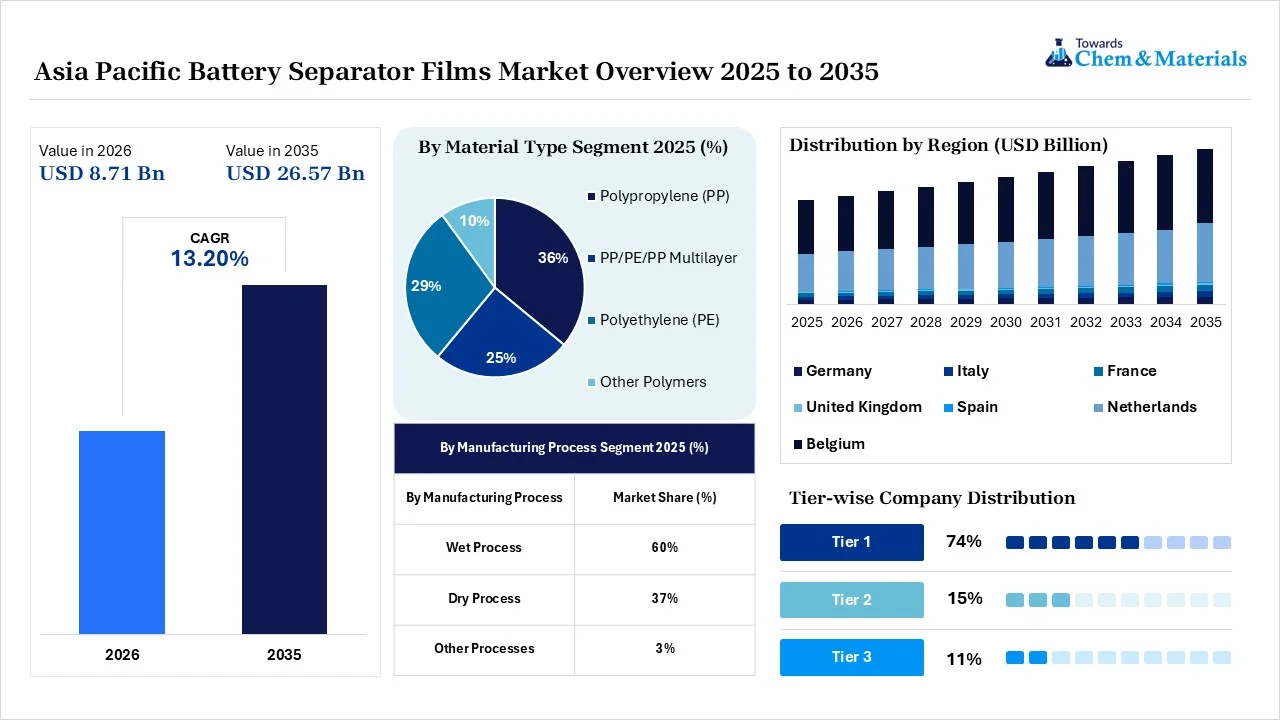
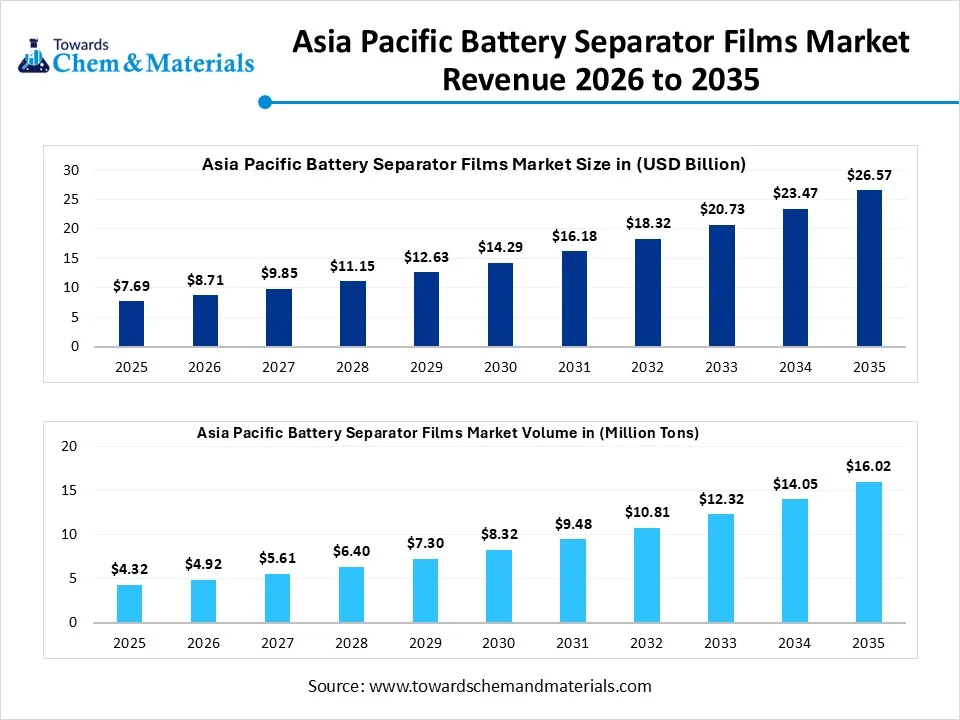
The Asia Pacific Battery Separator Films Market size was valued at USD 7.69 billion in 2025 and is projected to grow from USD 8.71 billion in 2026 to USD 26.57 billion by 2035, exhibiting a CAGR of 13.20% during the forecast period. China dominated the Asia Pacific Battery Separator Films industry with a 48% share in 2025. Battery production, uptake of EVs, energy storage deployments, and electronics manufacturing all contribute to market expansion. There is an increasing demand for high-performance separator films that have good thermal stability, controlled porosity, high mechanical strength, and better safety.
Market Highlights
- China dominated the Asia Pacific battery separator films market by holding a 48% share in 2025 and is expected to grow at a CAGR of 13.6% during the forecast period.
- India held an 8.4% market share in 2025 and is expected to grow at the fastest CAGR of 21.8% during the forecast period.
- By material type, the polypropylene (PP) segment dominated the market with the largest share of 35.8% in 2025 and is expected to grow at a CAGR of 13.8% during the forecast period.
- By material type, the PP/PE/PP multilayer segment held 25.2% market share in 2025 and is expected to grow at the fastest CAGR of 14.6% during the forecast period.
- By manufacturing process, the wet process segment dominated the market with the largest share of 59.8% in 2025 and is expected to grow at a CAGR of 13.4% during the forecast period.
- By manufacturing process, the other processes segment held 3% market share in 2025 and is expected to grow at the fastest CAGR of 17% during the forecast period.
- By coating type, the uncoated separator films segment dominated the market with the largest share of 55.2% in 2025 and is expected to grow at a CAGR of 11.8% during the forecast period.
- By coating type, the ceramic-coated films segment held 28.6% market share in 2025 and is expected to grow at the fastest CAGR of 20.3% during the forecast period.
- By battery type, the lithium-ion batteries segment dominated the market with the largest share of 88.6% in 2025 and is expected to grow at a CAGR of 13.5% during the forecast period.
- By battery type, the other rechargeable batteries segment held a 3.2% market share in 2025 and is expected to grow at the fastest CAGR of 15.1% during the forecast period.
- By end-use, the electric vehicles segment dominated the market with the largest share of 39.3% in 2025 and is expected to grow at a CAGR of 13.9% during the forecast period.
- By end-use, the consumer electronics segment held a 24.2% market share in 2025 and is expected to grow at the fastest CAGR of 14.3% during the forecast period.
Market Overview
According to Towards Chemicals and Materials Analytics and Consulting, the Asia Pacific Battery Separator Films market volume was valued at 4.32 million tons in 2025 and is expected to surpass around 16.02 million tons by 2035, accelerating a compound annual growth rate (CAGR) of 14.00% over the forecast period from 2026 to 2035.
The Asia Pacific battery separator films market is enjoying the advantages of integrated battery manufacturing in the region, which includes countries such as China, Japan, South Korea, and India. Separator demand is still being driven by continued growth in EV production, energy storage deployment, and electronics manufacturing. Thermal stability, controlled porosity, mechanical strength, and electrolyte compatibility are becoming more and more important attributes in battery applications, especially for manufacturers. As battery manufacturers seek enhanced safety and performance, coated separators and multilayer architectures are gaining more attention. Regional localization policies are also promoting local manufacturing.
Global Investment Movement for the Asia Pacific Battery Separator Films Market
- Companies are working on capacity for ceramic and special coatings to enhance the thermal stability, safety, and product differentiation of the separator.
- Larger industry actors are increasingly focusing their investments on areas of lithium-ion battery and electric vehicle production in China, Japan and South Korea.
- Investment is now focusing on domestic manufacturing and recycling capabilities in emerging manufacturing hubs such as India and Southeast Asia.
- More and more funding for development of wet-process, dry-process and advanced separators for higher energy density and faster charging.
- For instance, in July 2026, Bengaluru-based STEER World bagged an export order of less than Rs. 60 crore for the manufacturing technology of separators supplied to China.(Source: economictimes.indiatimes.com )
Report Scope
| Report Attributes | Details |
| Market Size in 2026 | USD 8.71 Billion/ 4.92 Million Tons |
| Expected Size in 2035 | USD 26.57 Billion/ 16.02 Million Tons |
| Growth Rate | CAGR of 13.20% |
| Base Year of Estimation | 2025 |
| Forecast Period | 2025-2035 |
| Dominant Region | Asia Pacific |
| Segment Covered | By Material Type, By Manufacturing Process, By Coating Type, By Battery Type, By End Use |
| Key Companies Profiled | SEMCORP, Asahi Kasei Corporation, Toray Industries, SK IE Technology, Shenzhen Senior Technology Material, W-SCOPE Corporation, UBE Corporation, Sumitomo Chemical Co., Ltd., Sinoma Lithium Film Co., Ltd., Teijin Limited, Cangzhou Mingzhu Plastic, Hebei Gellec New Energy Science & Technology, Mitsubishi Paper Mills, Ltd., Foshan Jinhui Hi-Tech |
Market Trends
- More manufacturers are transitioning to ceramic coatings because the special coatings allow for better thermal stability and more safety of the battery under tough operating conditions.
- Increased active-material utilization with required mechanical performance and separator function is achieved within the range of 2 µm to 20 µm for ultra-thin membranes.
- New solid-state polymer and composite separator solutions are being increasingly evaluated by manufacturers and researchers for new battery architectures and new applications.
- Governments and industry across Asia Pacific feel a need to strengthen the integration of the battery supply chain, and domestic manufacturing capabilities are also growing in the region.
Key Technological Shifts and AI in the Asia Pacific Battery Separator Films Market
Defect detection and analysis, material research, process optimization, and predictive maintenance are all areas where AI is playing a significant role in assisting separator manufacturers. During the production of films, computer vision and machine-learning systems detect minute defects, pinholes, and inconsistencies in the coating at high speed. The ceramic formulation, polymer blends, and nanoparticles can be assessed using an AI model prior to the testing phase. Machine-learning systems are also used to optimize the stretching, drying, and coating parameters to achieve more uniform products and reduced production waste.
Supply Chain Analysis of the Asia Pacific Battery Separator Films Market
Feedstock Procurement
- The procurement of feedstocks includes obtaining high-purity polymer-based materials such as ultra-high-molecular-weight polyethylene and polypropylene.
- Guaranteeing resin quality is still essential to the manufacturing of separators that have predictable physical and performance properties.
- Asahi Kasei uses its chemical supply network to acquire polyolefin resins and helps maintain material consistency when manufacturing separators.
- Other Key Players: Toray Industries, SEMCORP and SK IE Technology (SKIET).
Chemical Synthesis and Processing
- Chemical synthesis and processing refers to the use of melting, extrusion, and stretching of polymers to form controlled microporous structures by wet or dry methods.
- SEMCORP has high-capacity wet process extrusion equipment to manufacture ultra-thin and uniform porous separator base films.
- Other Key Players: Asahi Kasei Corporation, Toray Industries, Shenzhen Senior Technology Material.
Compound Formulation and Blending
- Formulation and blending is the process of applying or making organic and/or inorganic coatings such as ceramic alumina and boehmite on base films of separators.
- Toray Industries' multilayer formulations and advanced ceramic coating technologies contribute to providing excellent thermal stability in harsh operating conditions.
- Other Key Players: SK IE Technology (SKIET), W-SCOPE and Sinoma Lithium Film.
Sustainability Analysis:
Increasing efficiency in manufacturing processes, materials and recycling systems for separators in the Asia Pacific region has become more and more important for sustainability. Traditional polyethylene and polypropylene separator technology continues to rely on fossil fuels. Energy use and processing of material may also be significant for wet and dry manufacturing. There are potential pathways towards a lower material intensity based on advanced materials, thinner films, biodegradable polymers, and bio-derived alternatives.
What is Battery Separator Films?
Battery separator films are thin, porous films placed between the battery electrodes to keep them apart, but allow the flow of ions. They often employ polyolefin materials, and can be formulated with coatings that enhance thermal stability, safety and performance.
Uses of Battery Separator Films
- Separator films can be used to separate the electrodes and allow ions to flow through the battery in passenger electric vehicles and electric commercial vehicle applications.
- Separator films are useful for battery construction in smartphones, laptop computers, tablets, wearables, and other small electronic devices that have an interior structure and electrochemical activity that has to be under controlled conditions.
- Separator films are added to batteries in grid-scale, residential, and commercial energy storage applications that demand long service life and man-made separation between the electrodes.
Pricing Analysis for the Asia Pacific Battery Separator Films Market
The regional overcapacity, manufacturing scale and strong competition are putting downward pressure on Asia Pacific battery separator film prices. The integrated resin production can lower material cost, and, in general, the wet process would need more capital than the dry process. The cost of material and processing is higher for ceramic coatings. As more products are becoming commoditized in well-established battery manufacturing applications, the standard polyolefin films are under margin pressure.
Asia Pacific Battery Separator Films Market: Global Trade Analysis
Asia Pacific has a robust battery separator manufacturing supply chain, driven by the growth of electric vehicles, lithium-ion batteries, consumer electronics and energy storage applications. The advantages of China are size of production, and for Japan and Korea it's technical expertise, coatings, and research. Investment in batteries from within India is positioning India as an emerging production centre. Regional trade is increasingly more indicative of localized manufacturing, sophisticated separator technology, coated products, and the rising demand from battery manufacturing centers.
Segmental Insights
Material Type Insights
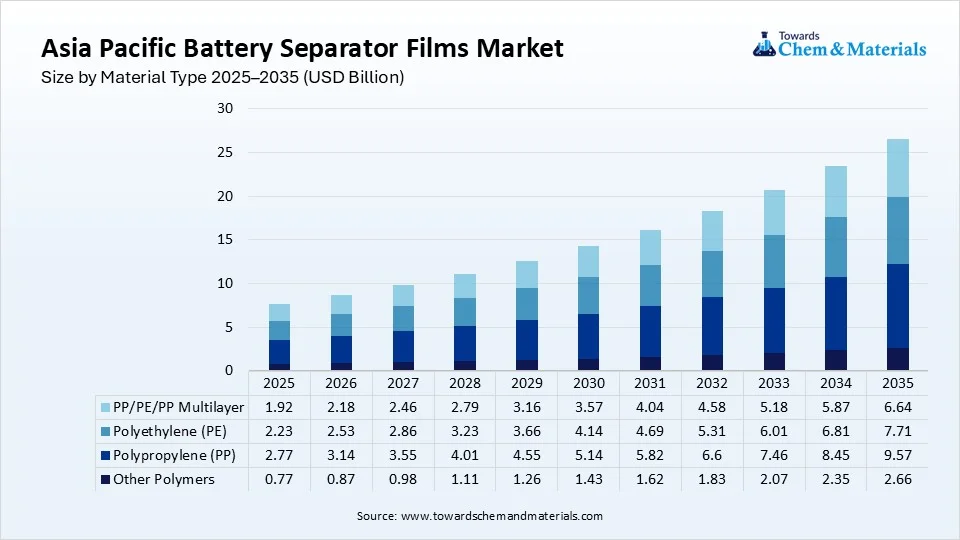
The polypropylene (PP) segment dominated the market with the largest share of 35.8% in 2025 and is expected to grow at a CAGR of 13.8% during the forecast period, as its polypropylene technology ensures the continuation of the established manufacturing processes and separator structure. Polypropylene-based structures are still being developed by manufacturers to meet the challenging requirements of battery manufacturing for separator durability, ion transport, thermal performance, and manufacturability.
- For instance, in June 2026, Under Cosmo's Cosmo Synthetic Paper vertical, Cosmo Films introduced a co-extruded polypropylene film for high-end digital printing applications as CSP DigiLux-MW. (Source: whattheythink.com )
The PP/PE/PP multilayer segment held a 25.2% market share in 2025 and is expected to grow at the fastest CAGR of 14.6% during the forecast period, because battery manufacturers are more and more demanding a combination of characteristics of different polymers in a single structure for separator. Rising concerns over battery safety and performance are driving the creation of advanced multilayer designs in the electric vehicle, energy storage, consumer electronics, and other rechargeable battery segments across Asia Pacific.
Asia Pacific Battery Separator Films Market Share, By Material Type, 2025(%)
| By Material Type | Market Share (%) |
| Polypropylene (PP) | 36% |
| PP/PE/PP Multilayer | 25% |
| Polyethylene (PE) | 29% |
| Other Polymers | 10% |
Manufacturing Process Insights
The wet process segment dominated the market with the largest share of 59.8% in 2025 and is expected to grow at a CAGR of 13.4% during the forecast period, as it makes it possible to create well-controlled microporous structures for use in high-performance batteries. Manufacturing capabilities in the leading producing economies in Asia remain in place to continue to enable battery adoption, and steady process improvements assist manufacturers to meet requirements to support high-volume production and advanced rechargeable battery applications.
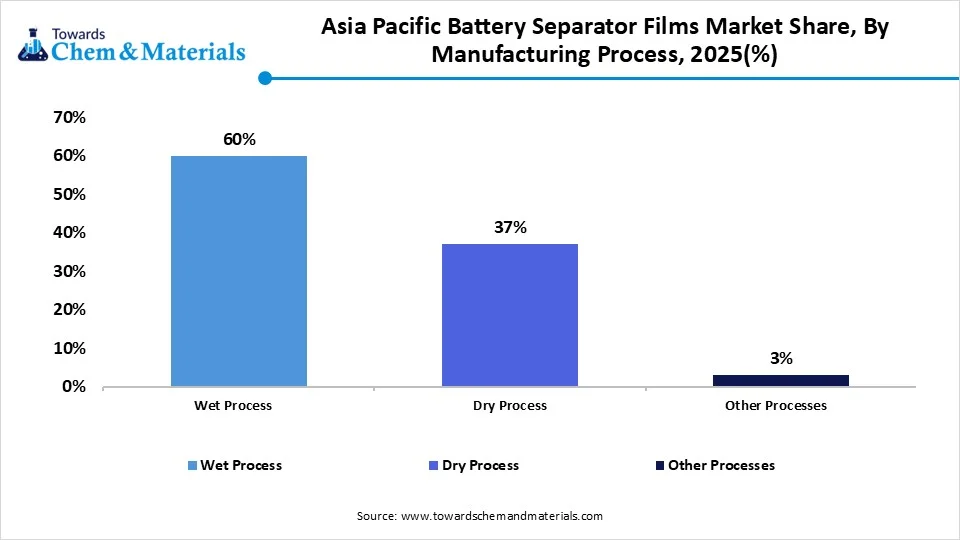
The other processes segment held a 3% market share in 2025 and is expected to grow at the fastest CAGR of 17% during the forecast period. Manufacturers are experimenting with different processes to manufacture the other segment of the pie, the dry and wet separator segment. The opportunities for developing separators with differentiated performance characteristics are composite membrane processing and advanced coating-integrated processing. These technologies could enable new battery architectures that are more demanding in terms of thermal, mechanical, electrolyte or surface characteristics.
Asia Pacific Battery Separator Films Market Share, By Manufacturing Process, 2025(%)
| By Manufacturing Process | Market Share (%) |
| Wet Process | 60% |
| Dry Process | 37% |
| Other Processes | 3% |
Coating Type Insights
The uncoated separator films segment dominated the market with the largest share of 55.2% in 2025 and is expected to grow at a CAGR of 11.8% during the forecast period, due to the continued use of conventional polypropylene, polyethylene, and multilayer structures. While advanced coatings are becoming the focus, uncoated films are still being used in applications where the performance, manufacturing compatibility, cost, and existing production facilities of the conventional separator play a significant role in the regional battery supply chain.
The ceramic-coated films segment held a 28.6% market share in 2025 and is expected to grow at the fastest CAGR of 20.3% during the forecast period, because battery manufacturers are focusing more on ensuring thermal stability, safety, and separator performance in challenging operating conditions. Alumina and boehmite are ceramic coatings that can toughen up separator structures and alleviate thermal deformation worries. The developments are also helping to facilitate widespread adoption of advanced separator technologies in Asia Pacific commercialization.
Asia Pacific Battery Separator Films Market Share, By Coating Type, 2025(%)
| By Coating Type | Market Share (%) |
| Uncoated Separator Films | 55% |
| Ceramic-Coated Films | 29% |
| Polymer-Coated Films | 11% |
| Hybrid/Functional Coatings | 5% |
Battery Type Insights
The lithium-ion batteries segment dominated the market with the largest share of 88.6% in 2025 and is expected to grow at a CAGR of 13.5% during the forecast period, due to the need of the lithium-ion cells to have separator films which separate the electrodes while allowing the controlled movement of ions. Power tools, electric vehicles, consumer electronics and energy storage systems all use lithium-ion batteries as well as industrial uses.
- For instance, in February 2025, ProLogium Technology was to carry out pilot manufacturing of its fourth-generation lithium ceramic battery, which will have a higher inorganic electrolyte content, higher energy density, faster charging speed, and low-temperature and safety properties. (Source: chargedevs.com)
The other rechargeable batteries segment held a 3.2% market share in 2025 and is expected to grow at the fastest CAGR of 15.1% during the forecast period. The other rechargeable batteries segment is developing with the emergence of new battery formats, which generate new needs for specific separator technologies. Improvements in separator structures are being investigated that will provide operation under various conditions, materials, and performance beyond the lithium-ion system.
Asia Pacific Battery Separator Films Market Share, By Battery Type, 2025(%)
| By Battery Type | Market Share (%) |
| Lithium-Ion Batteries | 89% |
| Lithium-Ion Polymer Batteries | 8% |
| Other Rechargeable Batteries | 3% |
End-Use Insights
The electric vehicles segment dominated the market with the largest share of 39.3% in 2025 and is expected to grow at a CAGR of 13.9% during the forecast period, due to the need for separators that enable the electrodes to remain isolated, conduct ions, withstand temperature, and ensure reliable cell performance. The rising production of electric vehicles in the region is further boosting demand for battery components and separator films in Asia Pacific.
- For instance, in May 2026, even though Honda Canada paused its plan to invest in electric vehicles, the construction of Asahi Kasei's battery separator plant in Port Colborne went on. (Source: www.cbc.ca )
The consumer electronics segment held a 24.2% market share in 2025 and is expected to grow at the fastest CAGR of 14.3% during the forecast period, because the energy storage and safety requirements of batteries for smartphones, laptops, tablets, wearables, and other devices call for compact batteries. With miniaturizing device size, the demands for thinner, more highly engineered separator films that are both mechanically sound and electrochemically functional are greater.
Asia Pacific Battery Separator Films Market Share, By End Use, 2025(%)
| By End Use | Market Share (%) |
| Electric Vehicles | 39% |
| Consumer Electronics | 24% |
| Energy Storage Systems | 20% |
| Power Tools | 8% |
| Industrial Batteries | 6% |
| Others | 3% |
Regional Insights
How Did China Dominate the Asia Pacific Carbon Nanotube Reinforced Polymers Market in 2025?
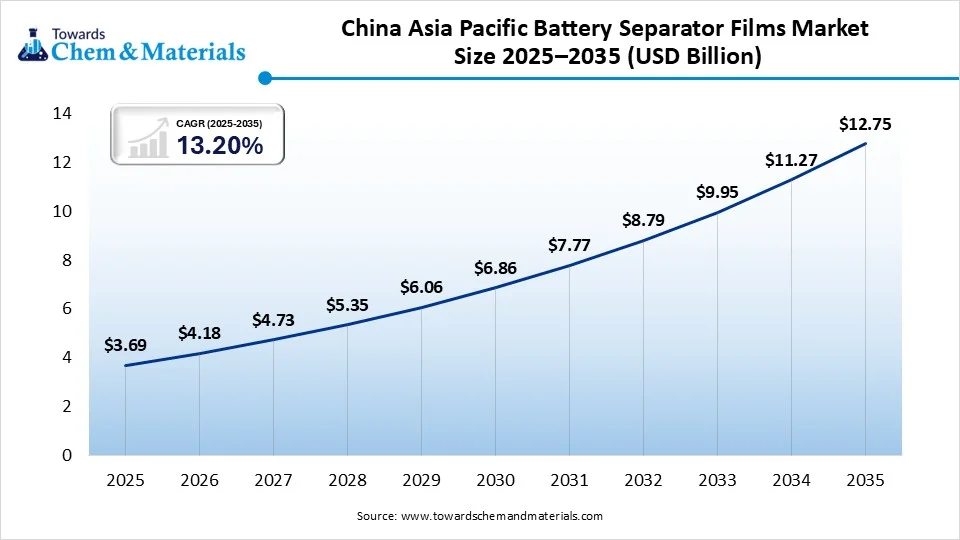
China Carbon Nanotube Reinforced Polymers market size was estimated at USD 3.69 billion in 2025 and is projected to reach USD 12.75 billion by 2035, growing at a CAGR of 13.20% from 2026 to 2035. China dominated the market with the largest share of 48% in 2025 and is expected to grow at a CAGR of 13.6% during the forecast period. Asia Pacific battery separator films market is in the center stage, as China has a comprehensive battery manufacturing infrastructure and integrated supply chains. The company has significant internal demand due to its excellent production strength in polymer, separator processing, battery-cell manufacturing, electric vehicle production, and electronics. The scale of production and established industrial networks also offer benefits to manufacturers.
India
India market size was estimated at USD 0.65 billion in 2025 and is projected to reach USD 2.23 billion by 2035, growing at a CAGR of 13.12% from 2026 to 2035. India held an 8.4% market share in 2025 and is expected to grow at the fastest CAGR of 21.8% during the forecast period. India is building up its battery separator industry along with the growth of battery manufacturing and green energy projects. Advanced chemistry cell manufacturing and government localization initiatives are driving more local involvement in the battery value chain. Electric mobility growth and energy storage needs can also contribute to the growth of the separator market.
Japan
Japan market size was estimated at USD 1.09 billion in 2025 and is projected to reach USD 3.77 billion by 2035, growing at a CAGR of 13.21% from 2026 to 2035. Japan held a 14.2% market share in 2025 and is expected to grow at a CAGR of 10.8% over the forecast period. Japan has a strong stake in the regional separator market, especially in terms of materials technology, as well as complex manufacturing techniques and battery technology development. Japanese companies are involved in all battery value chain activities, including separator production, polymer materials, coatings, and battery supply.
- In July 2025, Asahi Kasei signed an agreement with Toyota Tsusho for the supply of lithium-ion battery separators in North America to enhance their supply chains in the region and to facilitate manufacturing in North America. (Source: www.electrive.com )
South Korea
South Korea market size was estimated at USD 1.05 billion in 2025 and is projected to reach USD 3.61 billion by 2035, growing at a CAGR of 13.14% from 2026 to 2035. South Korea held a 13.6% market share in 2025 and is expected to grow at a CAGR of 12.1% over the forecast period. Advanced technology development networks, highly skilled battery manufacturing expertise, and high-level R&D support networks enable South Korea to support the region's separator industry. Demand for high-performance separator films for EVs, energy storage, and consumer electronics is expected to persist due to the country's battery ecosystem.
Taiwan
Taiwan held a 3.4% market share in 2025 and is expected to grow at a CAGR of 11.7% over the forecast period. Taiwan's role in the regional battery industry includes superior battery manufacturing capacity and robust industrial infrastructure related to electronics products. The manufacturing setting is conducive to developing special battery materials and components for technology-intensive applications. Compact electronics, energy storage, and new battery technologies could come into play to drive separator demand.
Indonesia
Indonesia held a 2.6% market share in 2025 and is expected to grow at a CAGR of 18.2% over the forecast period. As regional electric mobility and energy-storage supply chains are growing, Indonesia is building its battery-related industrial ecosystem. As the country ramps up battery production, there are opportunities to support components such as separator films. Domestic and regional integration in the supply chain can be promoted by the increase in localisation efforts and industrial development.
Vietnam
Vietnam held a 1.9% market share in 2025 and is expected to grow at a CAGR of 18.8% over the forecast period. As electric mobility, electronics, and energy storage industries grow, Vietnam is consolidating its position in the regional manufacturing value chain. These sectors can generate new demand for battery materials such as separator films possessing appropriate mechanical, thermal, and electrochemical properties. The growing integration of manufacturing offers opportunities for separator suppliers to be a part of the new supply chains.
Thailand
Thailand held a 1.8% market share in 2025 and is expected to grow at a CAGR of 16.9% over the forecast period. Thailand has established capabilities in automotive manufacturing, which can be the basis for the development of EV battery supply chains and component needs. As the OEMs are producing cars with electrified features in larger volumes, the need for this battery material and components can grow. Separator films are a vital element of rechargeable battery cells, helping to keep the electrodes separated and facilitate the flow of ions.
Malaysia
Malaysia held a 1.7% market share in 2025 and is expected to grow at a CAGR of 14.8% over the forecast period. Malaysia is building up its capacity to produce separators, with investments in commercial production of lithium-ion batteries. The country has the infrastructure and the regional supply chain to cater to the needs of the electric vehicle and battery industries in the region. New separator manufacturing plants can enhance the available supply of components in the area as well as promote battery manufacturing growth.
- For instance, in June 2025, the company INV New Material Technology (INV) opened a lithium-ion battery separator plant, becoming the first company to install the facility in Malaysia to build commercial lithium-ion battery separators to help Malaysia move forward in the Southeast Asian electric vehicle (EV) market. (Source: www.mida.gov.my)
Philippines
Philippines held a 1.1% market share in 2025 and is expected to grow at a CAGR of 15.4% over the forecast period. The Philippines offers emerging opportunities for battery-related manufacturing with the growth of electric mobility, electronics and energy storage industries. As more people join regional supply chains, these requirements can include battery components and materials, such as separator films. As industry continues to develop, the possibility for more battery-related activities to be localised may increase, and relationships with existing manufacturing hubs may become closer.
Singapore
Singapore held a 0.7% market share in 2025 and is expected to grow at a CAGR of 13.2% over the forecast period. Advanced manufacturing, research, and technology development continue to be supported in Singapore for battery supply chains in Asia Pacific. Being in an industrial environment with technology, it can enable special development of battery materials and cooperation among potential applications. Research on advanced materials, coatings, and battery performance can create opportunities related to the separator.
Australia
Australia held a 2.6% market share in 2025 and is expected to grow at a CAGR of 14.6% over the forecast period. Australia's role in the regional battery ecosystem is in materials capabilities, energy-transition activities, and the creation of battery supply-chain opportunities. There is a growing interest in energy storage and battery technologies which can lead to further demand for specialist components, such as separator films. The opportunities for collaboration lie in materials, manufacturing and battery applications, with Australia's location in Asia Pacific supply networks.
Recent Developments
- In June 2026, UBE MAXELL announced a new Sakai separator base-film facility to cater to the demand for lithium-ion batteries in the automotive market and increase the capacity of separator production. (Source: www.indianchemicalnews.com )
Competitive Analysis
The Asia Pacific Battery Separator Films Market comprises established battery separator film manufacturers that operate in the wet process and dry process technology, multilayer technology, coated technology, and functional technology. The major players in the competition are based on their manufacturing capacity, product development, coating technology, technology alliances, customer base, and regional expansion. Important industry players include SEMCORP, Asahi Kasei, Toray Industries, SK IE Technology, UBE MAXELL, W-SCOPE, and Shenzhen Senior Technology Material. Capacity growth and new technology partnerships highlight ongoing rivalry in the areas of scale, technology, localisation, and next-generation batteries.
- For instance, in August 2026, SEMCORP Yuxi started its first production line in Phase II in August 2026, launching separator film manufacturing and further progressing its capacity expansion plan. (Source: www.semcorp.com)
- For instance, in February 2026, Arkema and Senior strengthened their technical and commercial partnership in the area of battery materials, separator technologies, development, validation, and industrialisation. (Source: www.arkema.com )
Top Players in the Market & Their Offerings
| Company | Company Type/Position | Major Headquarters | Geographic Presence | Asia Pacific Battery Separator Films Offerings | Key Strength |
| Toray Industries, Inc. | Tier-1 Premium Producer | Tokyo, Japan | Global | SETELA® microporous film (High-performance Lithium-ion battery separator film). | Excellent mechanical strength and thermal stability suited for high-energy-density EV batteries. |
| SEMCORP Group | World's Largest Lithium-ion Separator Supplier | Shanghai / Yunnan, China | Mass-scale production across China | Wet-process base micro-porous films and advanced functional ceramic/polymer coated separator lines | Unmatched economies of scale and low-cost manufacturing structure |
Other Key Players
- SEMCORP
- Asahi Kasei Corporation
- Toray Industries
- SK IE Technology
- Shenzhen Senior Technology Material
- W-SCOPE Corporation
- UBE Corporation
- Sumitomo Chemical Co., Ltd.
- Sinoma Lithium Film Co., Ltd.
- Teijin Limited
- Cangzhou Mingzhu Plastic
- Hebei Gellec New Energy Science & Technology
- Mitsubishi Paper Mills, Ltd.
- Foshan Jinhui Hi-Tech
Segment Covered in the Report
By Material Type
- Polypropylene (PP)
- Dry-process PP
- Microporous PP
- PP/PE/PP Multilayer
- Three-layer PP/PE/PP
- Coated PP/PE/PP
- Polyethene (PE)
- Wet-process PE
- Dry-process PE
- Other Polymers
- PVDF/polymer-coated films
- Composite polymer films
- Aramid/nonwoven polymer films
By Manufacturing Process
- Wet Process
- Phase-inversion process
- Thermally induced phase separation
- Solvent extraction and stretching
- Dry Process
- Melt extrusion
- Cold stretching
- Hot stretching
- Other Processes
- Composite membrane processing
- Advanced coating-integrated processing
By Coating Type
- Uncoated Separator Films
- PP
- PE
- PP/PE/PP
- Ceramic-Coated Films
- Alumina
- Boehmite
- Silica
- Polymer-Coated Films
- PVDF
- PMMA
- PVDF-HFP
- Hybrid/Functional Coatings
- Ceramic-polymer hybrid
- Flame-retardant coating
- Surface-functionalized coating
By Battery Type
- Lithium-Ion Batteries
- LFP
- NMC
- NCA
- LCO
- LMO
- Lithium-Ion Polymer Batteries
- Pouch-cell batteries
- Flexible lithium-ion batteries
- Other Rechargeable Batteries
- Asia Pacific Battery Separator Films-based batteries
- Advanced industrial rechargeable batteries
By End Use
- Electric Vehicles
- Passenger EVs
- Electric commercial vehicles
- Electric two-wheelers
- Consumer Electronics
- Smartphones
- Laptops/tablets
- Wearables
- Energy Storage Systems
- Grid-scale storage
- Residential storage
- Commercial & industrial storage
- Power Tools
- Cordless power tools
- Garden tools
- Professional tools
- Industrial Batteries
- Material-handling equipment
- Backup power
- Industrial mobility
- Others
- Medical devices
- Aerospace
- Speciality electronics
A Seven-Phase Framework
Our methodology is designed to be universally applicable across commodity chemicals, specialty chemicals, petrochemicals, construction chemicals, coatings, electronic chemicals, industrial gases, agrochemicals, water treatment chemicals, and performance materials. Each phase builds upon the last, creating a layered validation structure that minimizes estimation error and maximizes analytical confidence.
The framework ensures comprehensive market coverage, robust cross-validation, and reliable long-term forecasting — producing market estimates that withstand scrutiny from investors, regulators, and corporate strategy teams.

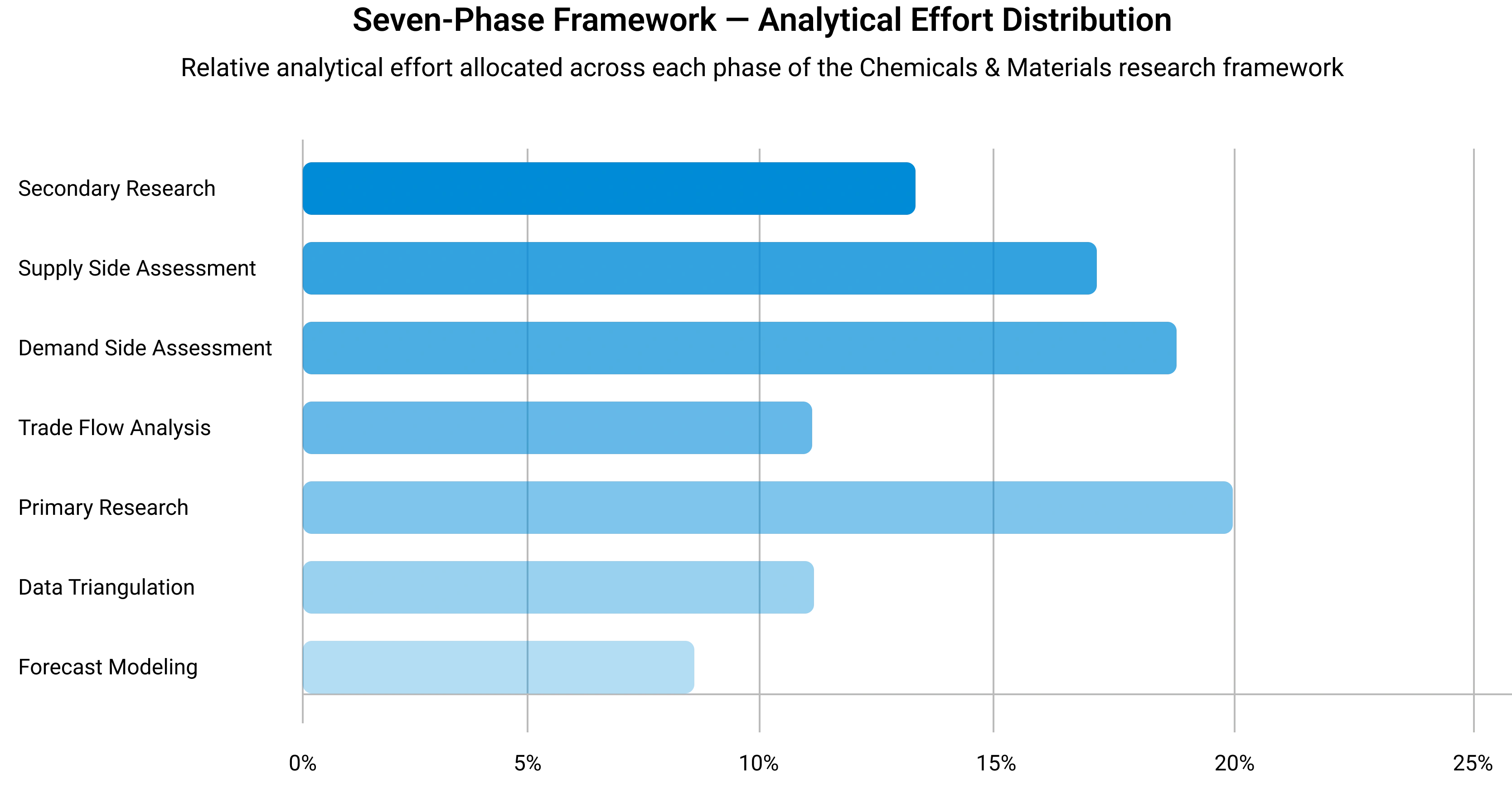
Seven-Phase Framework — Analytical Effort Distribution
Relative analytical effort allocated across each phase of the Chemicals & Materials research framework
Phase 1 - Secondary Research: Establishing the Foundation
Secondary research collects and evaluates publicly available information from authoritative sources, establishing the foundational understanding of market structure, value chain dynamics, competitive landscape, and end-use demand patterns. Every source is evaluated for credibility, recency, geographic relevance, and methodological soundness before inclusion.
Industry Associations
Sources include ACC, CEFIC, ICCA, JCIA, CPCIF, and SOCMA providing production volumes, consumption trends, capacity developments, and sustainability initiatives.
Company Disclosures
Annual reports, investor presentations, earnings transcripts, and regulatory filings reveal product portfolios, manufacturing footprints, capacity expansions, and revenue segmentation.
Government Databases
National statistical offices, customs authorities, environmental agencies, and industrial production databases provide verified statistics on output, trade flows, and regulatory compliance.
Trade Databases
UN Comtrade, ITC, Eurostat, and national customs authorities enable assessment of global product movement, import dependency, and export competitiveness across regions.
Our Secondary Research Sources
- Ministry of Chemicals and Fertilizers
- European Chemicals Agency
- United States Department of Energy
- Ministry of Industry and Information Technology
- Ministry of Economy Trade and Industry
- Ministry of Trade Industry and Energy
- National Institute of Standards and Technology
- Council of Scientific and Industrial Research
- Fraunhofer Society
- National Institute for Materials Science
Phase 2 — Supply-Side Assessment: Mapping Production Capabilities
Production Capacity Analysis
All major manufacturers are assessed for existing installed capacity, planned additions, expansions, new plant announcements, and technology adoption — mapped at global, regional, and country levels.
Capacity Utilization Adjustment
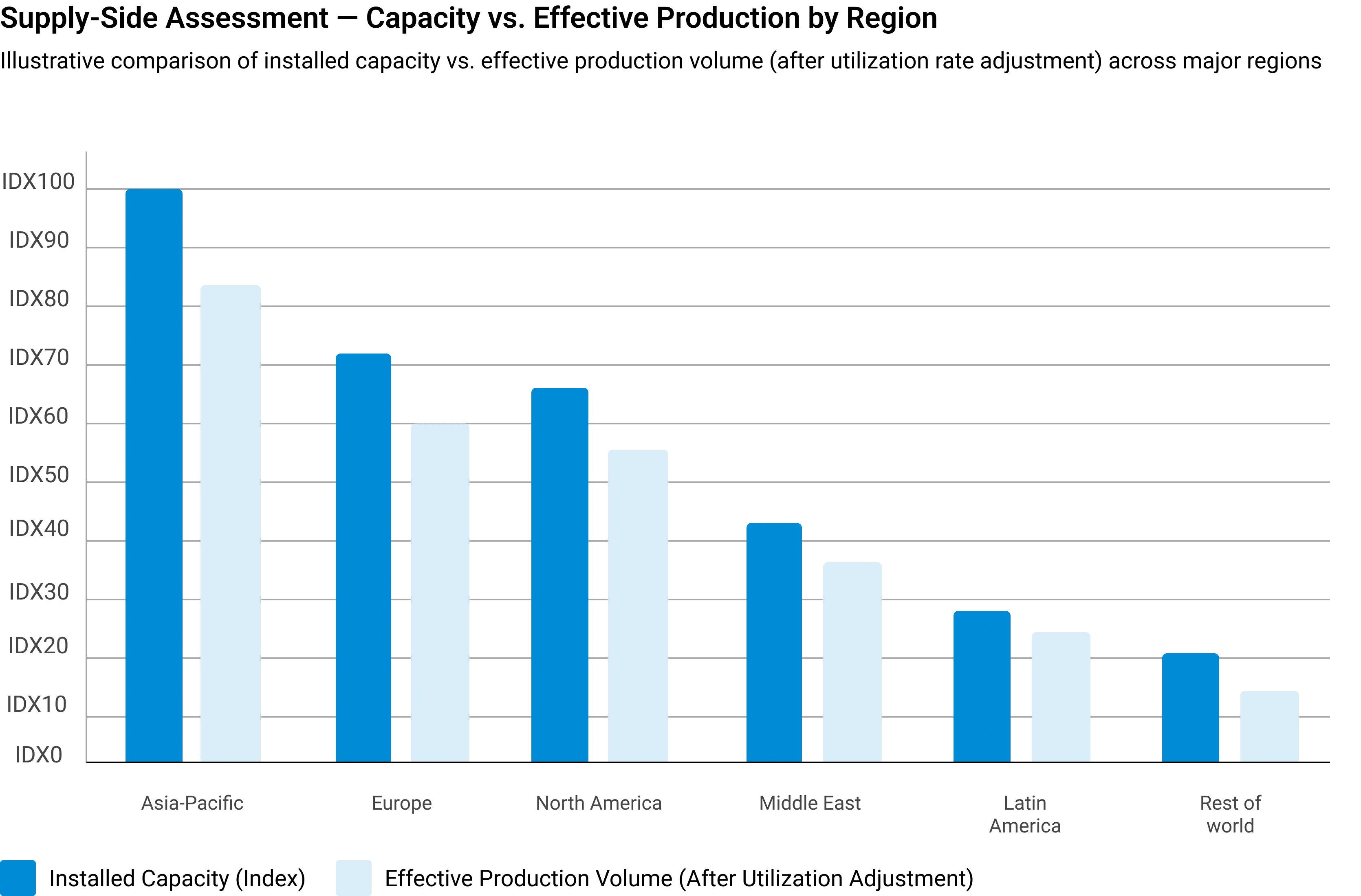
Installed capacity is adjusted using utilization rates based on demand conditions, feedstock availability, plant operating rates, maintenance schedules, and regulatory restrictions.
Manufacturer Revenue Analysis
Product-specific revenues, segment-level performance, regional distribution, average selling prices, and margin trends are evaluated to establish market value estimates.
Supply-Side Assessment — Capacity vs. Effective Production by Region
Illustrative comparison of installed capacity vs. effective production volume (after utilization rate adjustment) across major regions
Phase 3 — Demand-Side Assessment: Quantifying Chemical Consumption
Demand-side analysis quantifies chemical consumption across industries, applications, and geographies — identifying where and how chemicals are consumed throughout the value chain with precision.
End-Use Industry Analysis
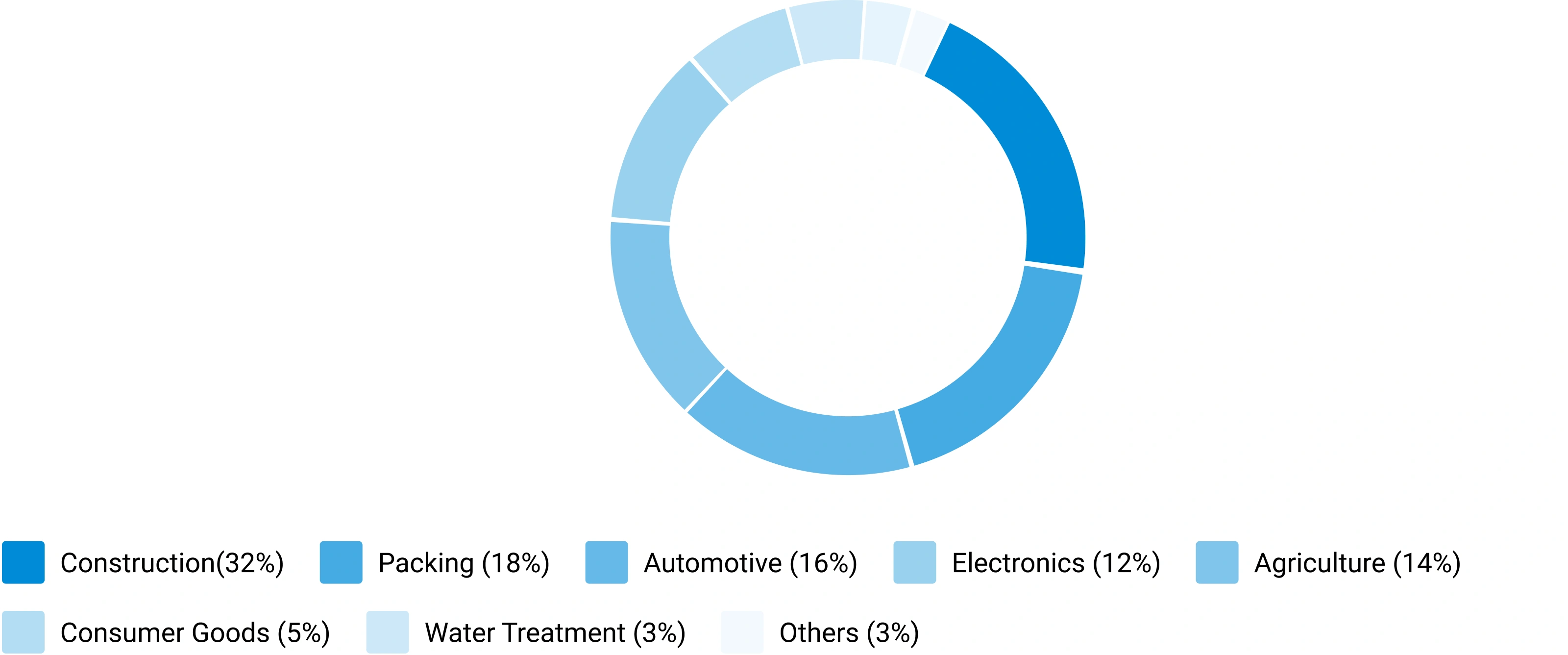
Chemical demand is evaluated across automotive, construction, packaging, electronics, agriculture, healthcare, consumer goods, industrial manufacturing, energy and utilities, and water treatment. Industry output, production trends, and consumption intensity are analyzed to determine demand patterns.
Consumption Modeling
Demand is estimated using measurable indicators: kilograms per vehicle, kilograms per square meter of construction, dosage per cubic meter of water treated, kilograms per hectare of agricultural land, and kilograms per ton of manufactured products. Consumption factors are validated through industry publications and primary interviews.
Application Analysis
The market is segmented by application area to understand product performance requirements, formulation trends, technology adoption, customer preferences, and regulatory requirements improving demand accuracy and segmentation granularity.
Demand-Side Assessment — End-Use Industry Demand Distribution
Illustrative distribution of chemical & materials demand across key end-use industries
Phase 4 - Trade Flow Analysis: Balancing Regional Supply and Demand
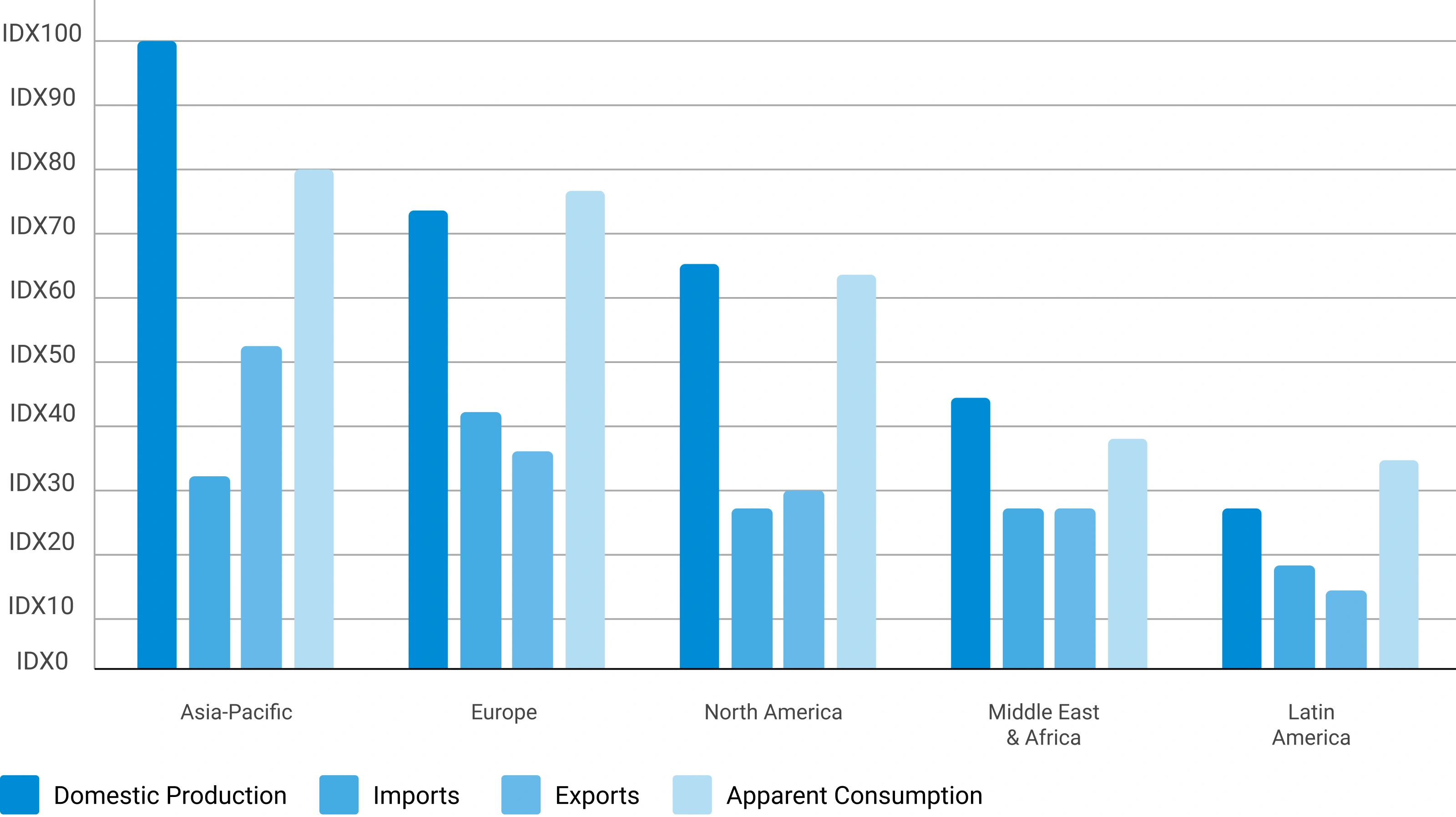
Trade flow analysis reconciles regional supply and demand estimates through import and export data, identifying net supply positions, regional dependencies, and market imbalances. It serves as an independent validation layer that tests the consistency of supply-side and demand-side estimates.
Import Analysis
Import data is evaluated to determine volumes, source countries, product dependency, regional supply gaps, and pricing trends — identifying markets that rely heavily on external supply and where domestic production is insufficient to meet demand.
Export Analysis
Export assessments reveal production surplus, export competitiveness, regional manufacturing strength, and global market participation. Export patterns also help validate domestic production estimates and identify net exporting regions.
Apparent Consumption Model
Regional consumption is assessed using the standard apparent consumption formula:
Results identify net importing regions, net exporting regions, regional deficits, and surpluses — serving as an independent validation of supply and demand estimates.
Trade Flow Analysis — Net Supply Position by Region
Illustrative apparent consumption vs. domestic production across major regions — positive gap indicates net import dependency
Phase 5 — Primary Research: The Critical Validation Layer
Primary research tests and refines findings from secondary research through direct engagement with industry participants across the supply chain, demand side, and expert community. It captures intelligence that no database or published report can provide — the real-world experience of manufacturers, buyers, and specialists operating in the market.

Supply-Side Interviews
Conversations with chemical manufacturers, raw material suppliers, contract manufacturers, technology providers, and plant operators cover production trends, capacity utilization, pricing developments, technology shifts, and competitive dynamics.

Demand-Side Interviews
Engagement with OEMs, industrial consumers, procurement managers, distributors, formulators, and end-use manufacturers focuses on consumption trends, purchasing behavior, product substitution, demand outlook, and emerging applications.

Industry Expert Consultations
Additional interviews with industry consultants, independent experts, regulatory specialists, technical professionals, and research institutions provide deeper market context and validate key analytical assumptions.
Focus Areas of Primary Research:
Market Size & Forecast Validation
Revenue estimates, volume consumption, growth rates, forecast assumptions, regional demand.Supply Chain & Value Chain Assessment
Raw material sourcing, supply chain challenges, distribution networks, procurement practices.Production & Capacity Analysis
Manufacturing capacity, utilization rates, expansion projects, plant investments.Pricing & Cost Structure Analysis
Product pricing trends, feedstock costs, energy costs, margin pressures, pricing outlook.Competitive Landscape Assessment
Volume and value estimates confirmed to be fully consistent with one another before publicationInterview Volume by Market Scope
| Study Scope | Number of Interviews |
|---|---|
| Niche Market | 20 – 30 |
| Mid-Sized Market | 30 – 50 |
| Global Market | 50 – 80 |
| Highly Fragmented Market | 80 – 120 |
Interview Details:
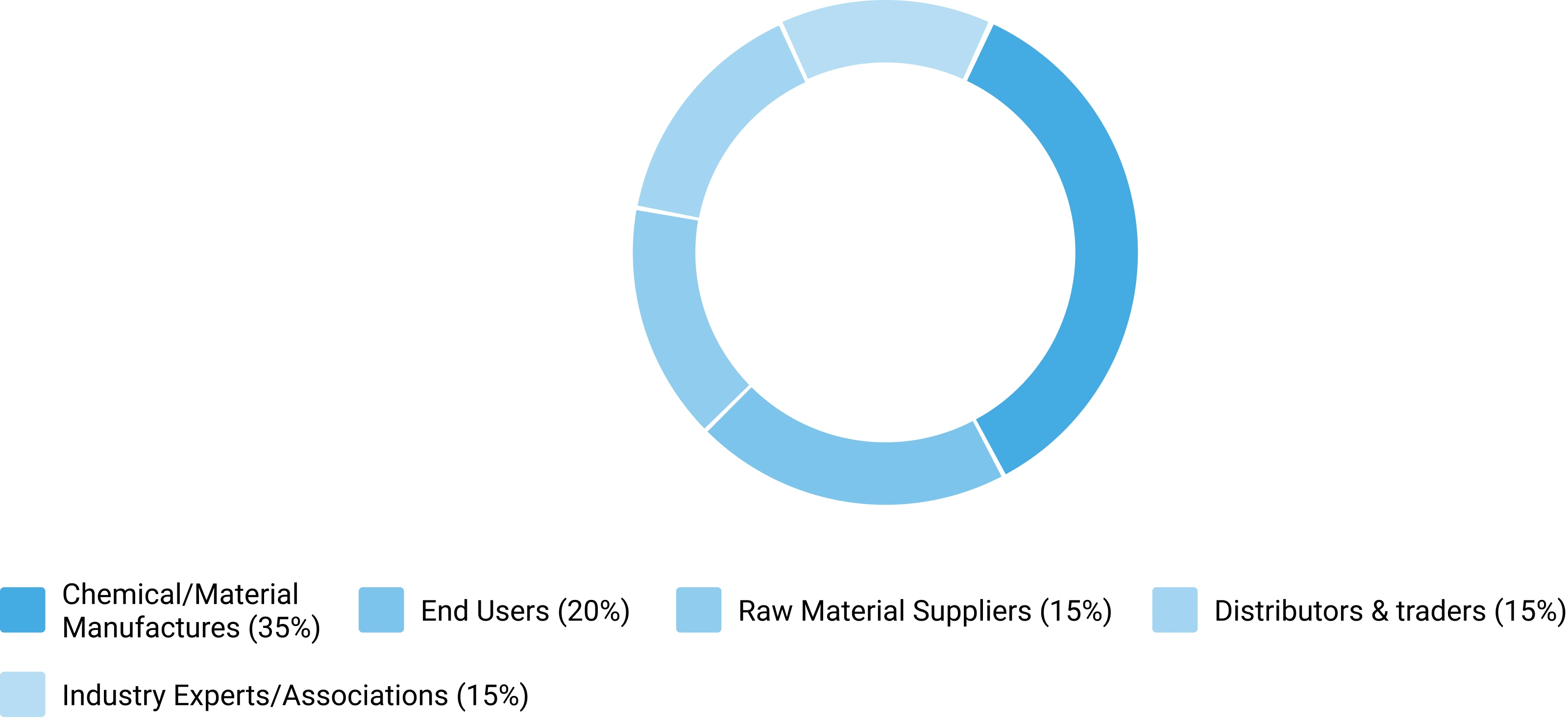
Category : Manufacturers, Suppliers, Distributors, End Users, Experts/Associations
Average Duration : 30–60 Minutes
Interview Mode : Video calls, telephonic interviews, expert consultations
Interview Format : Structured / Semi-Structured questionnaire
Focus Areas of Primary Research:
Market Size & Forecast Validation :
Revenue estimates, volume consumption, growth rates, forecast assumptions, regional demand.
Supply Chain & Value Chain Assessment :
Raw material sourcing, supply chain challenges, distribution networks, procurement practices.
Production & Capacity Analysis :
Manufacturing capacity, utilization rates, expansion projects, plant investments.
Pricing & Cost Structure Analysis :
Product pricing trends, feedstock costs, energy costs, margin pressures, pricing outlook.
Competitive Landscape Assessment :
Market share, competitor positioning, strategic initiatives, partnerships, acquisitions.
Primary Research — Stakeholder Coverage by Category
Distribution of interview respondents across stakeholder categories (% share from PPT data)
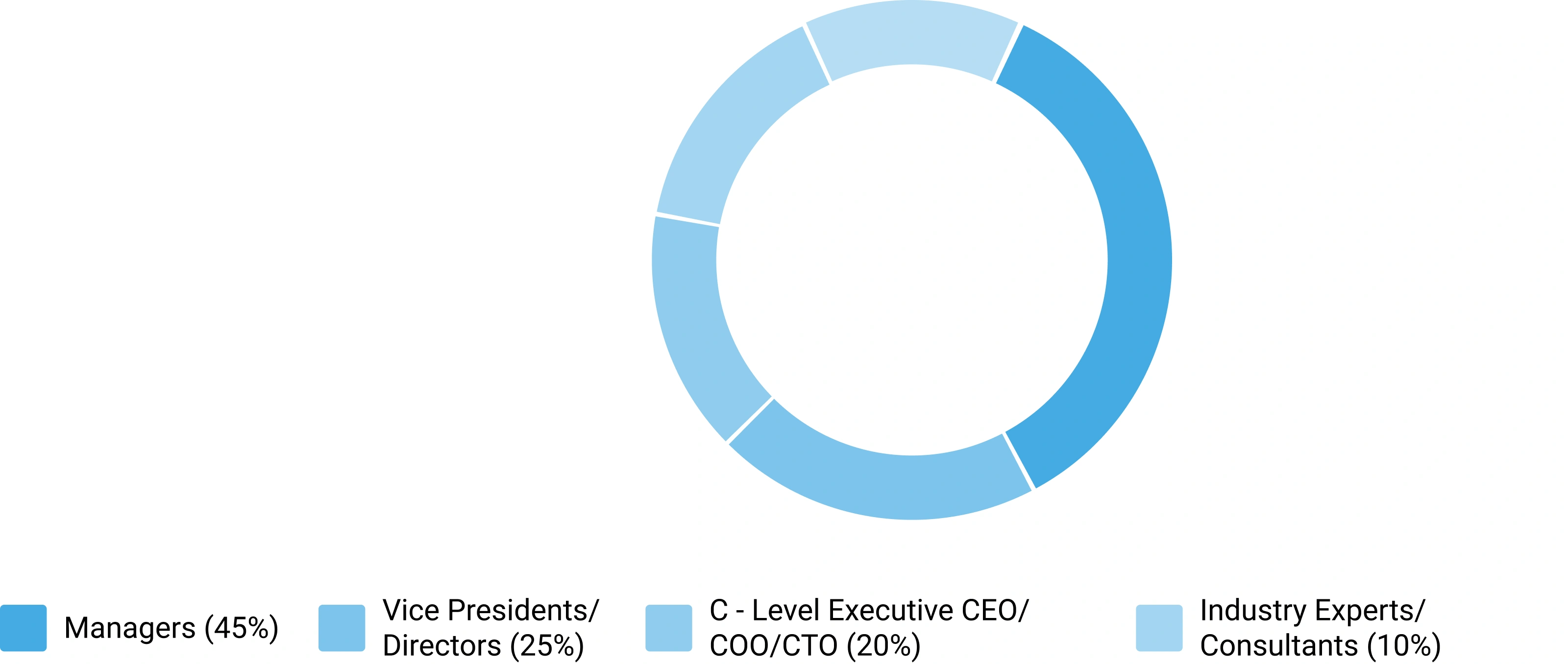
Primary Research — Respondent Designation Profile
Seniority breakdown of interview respondents (% share from PPT data)
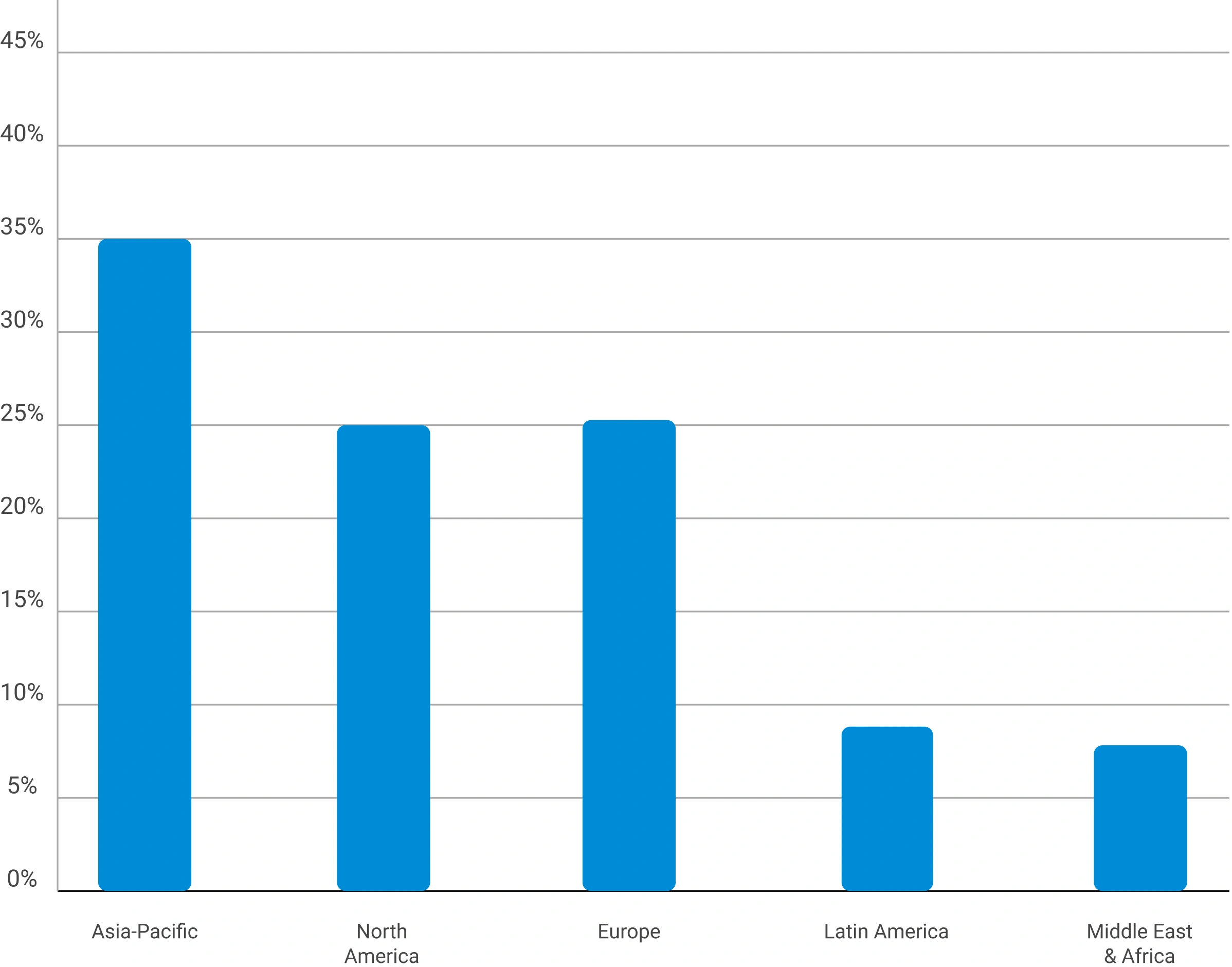
Primary Research — Geographic Coverage of Interviews
Regional distribution of primary research engagement (% share from PPT data)
Phase 6 — Data Triangulation and Market Validation
No single methodology is relied upon in isolation. Multiple independent estimation approaches are combined and reconciled to ensure consistency, accuracy, and analytical defensibility. Any material deviations between approaches are investigated and adjusted through additional validation cycles.
The final market size is derived through weighted triangulation of all validated methodologies. Any material deviations between approaches are investigated and adjusted through additional validation cycles. The outcome represents the most realistic assessment of the market based on available evidence and expert confirmation ensuring that volume and value estimates are fully consistent with one another.
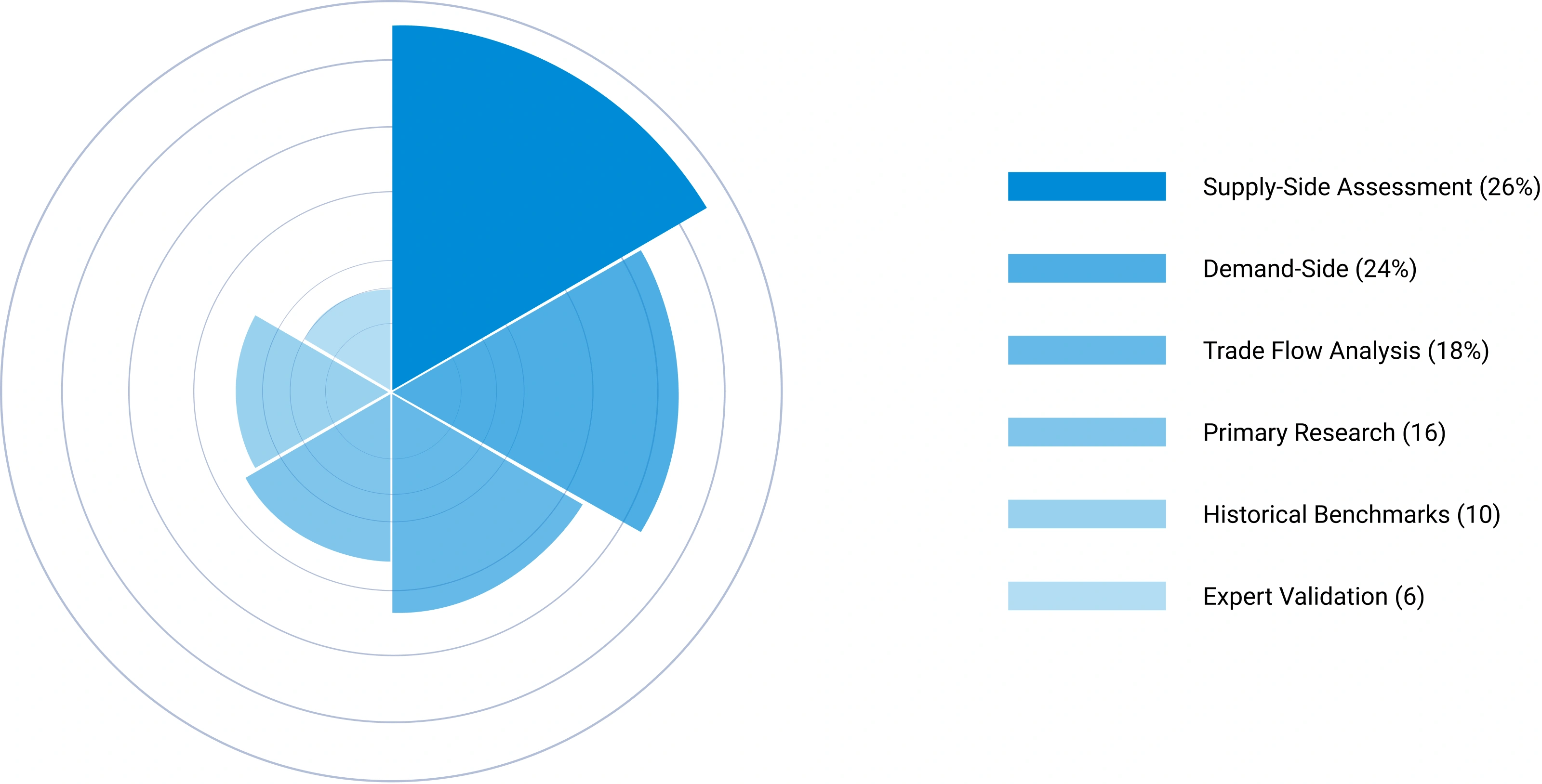
Triangulation Framework — Input Contribution Weight
Relative weight each sizing input contributes to the final reconciled market estimate
Phase 7 — Forecast Modeling: Projecting Future Market Evolution
Forecasting evaluates the future trajectory of the market using a combination of quantitative indicators and qualitative assessments across economic, industry, and regulatory dimensions. Rather than simple extrapolation, each driver is independently modeled and integrated into a composite forecast.
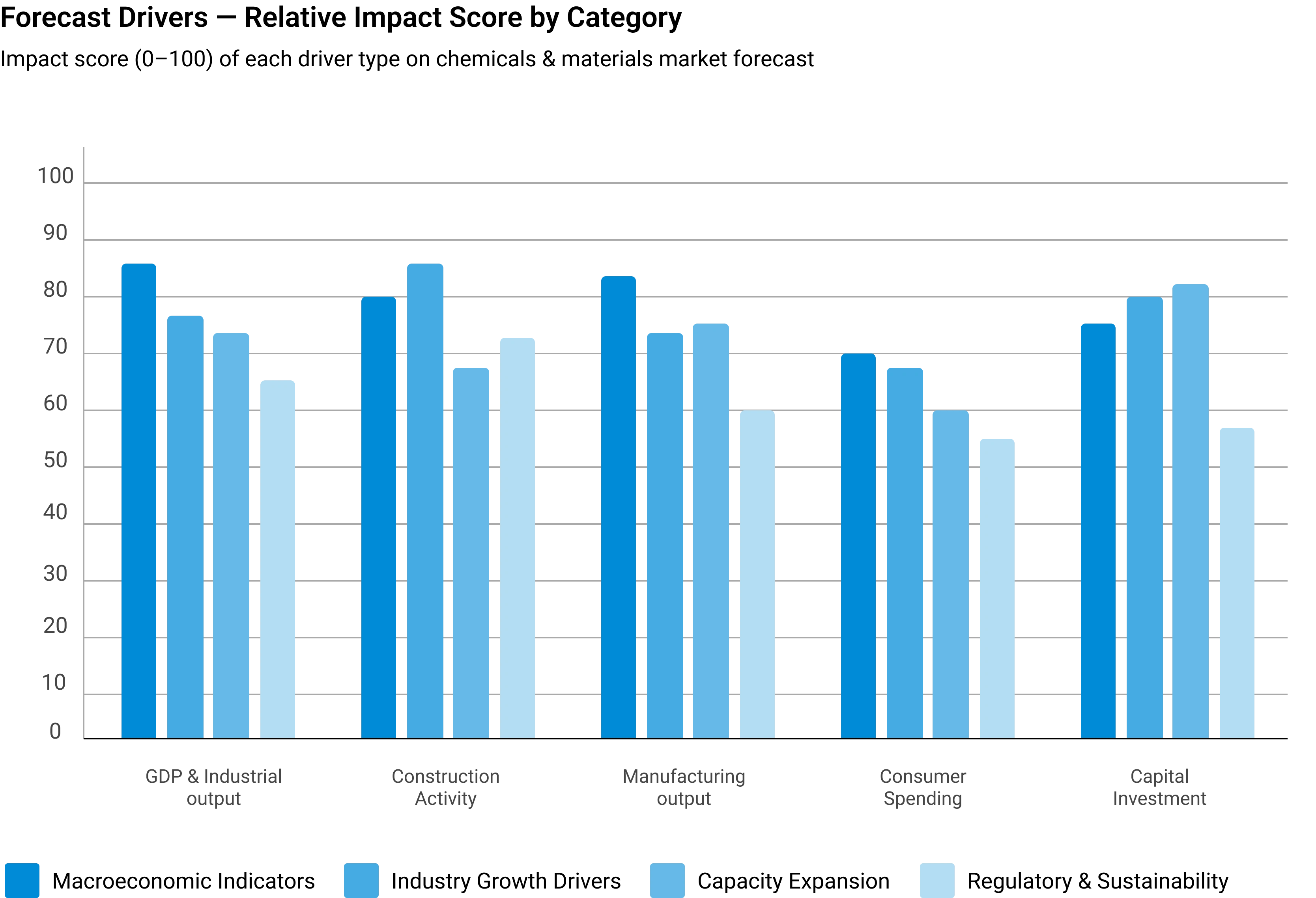
Macroeconomic Indicators
GDP growth, industrial production, manufacturing output, construction activity, consumer spending, and capital investment form the quantitative foundation of long-term demand projections. These are applied at country, regional, and global levels.
Industry Growth Drivers
Urbanization, infrastructure development, industrialization, technological innovation, sustainability initiatives, and evolving product performance requirements are assessed at regional and industry levels — capturing both structural and cyclical demand drivers.
Capacity Expansion Analysis
Announced plant expansions, new manufacturing facilities, technology upgrades, and strategic investments are evaluated to determine future supply-demand dynamics and potential market tightness or oversupply situations.
Regulatory & Sustainability
Environmental regulations, chemical safety standards, emission reduction targets, circular economy initiatives, and sustainability requirements are incorporated as they often influence product adoption rates and market growth trajectories.
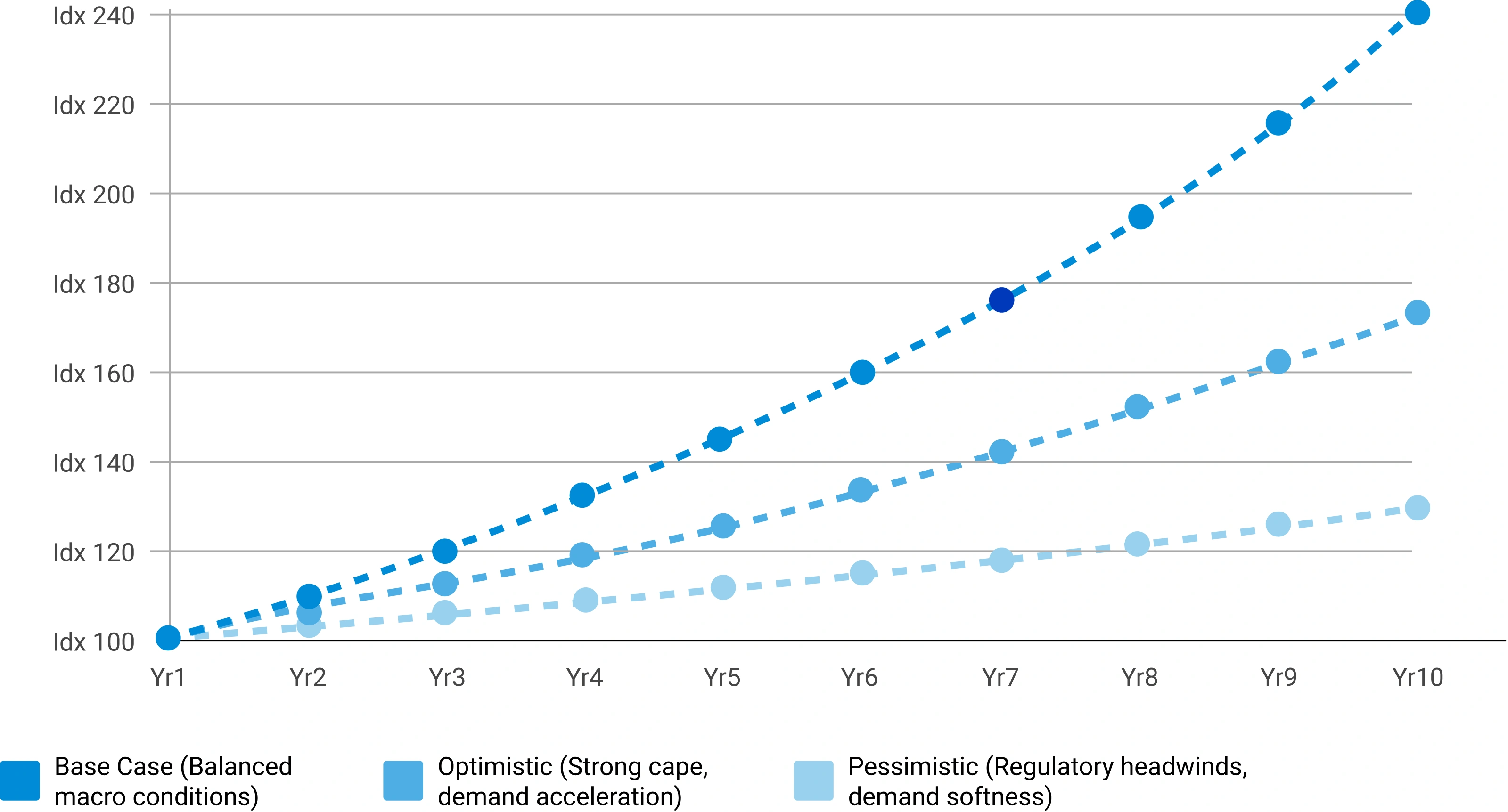
Scenario Forecast Range — Indexed Market Growth (Year 1–10)
Illustrative indexed growth trajectories across Base, Optimistic, and Pessimistic scenarios over a 10-year forecast horizon
Forecast Drivers — Relative Impact Score by Category
Impact score (0–100) of each driver type on chemicals & materials market forecast



Comments
Share your thoughts, ask a question, or provide feedback about this report.