Content
What is the Current Advanced Ceramics Market Size and Share?
The global advanced ceramics market size was estimated at USD 120.19 billion in 2025 and is expected to increase from USD 124.59 billion in 2026 to USD 172.18 billion by 2035, growing at a CAGR of 3.66% from 2026 to 2035. Asia Pacific dominated the advanced ceramics market with the largest revenue share of 41% in 2025. The demand for high thermal stability, corrosion resistance, and light-strength material, and advanced applications, drives the demand for the advanced ceramic material market.
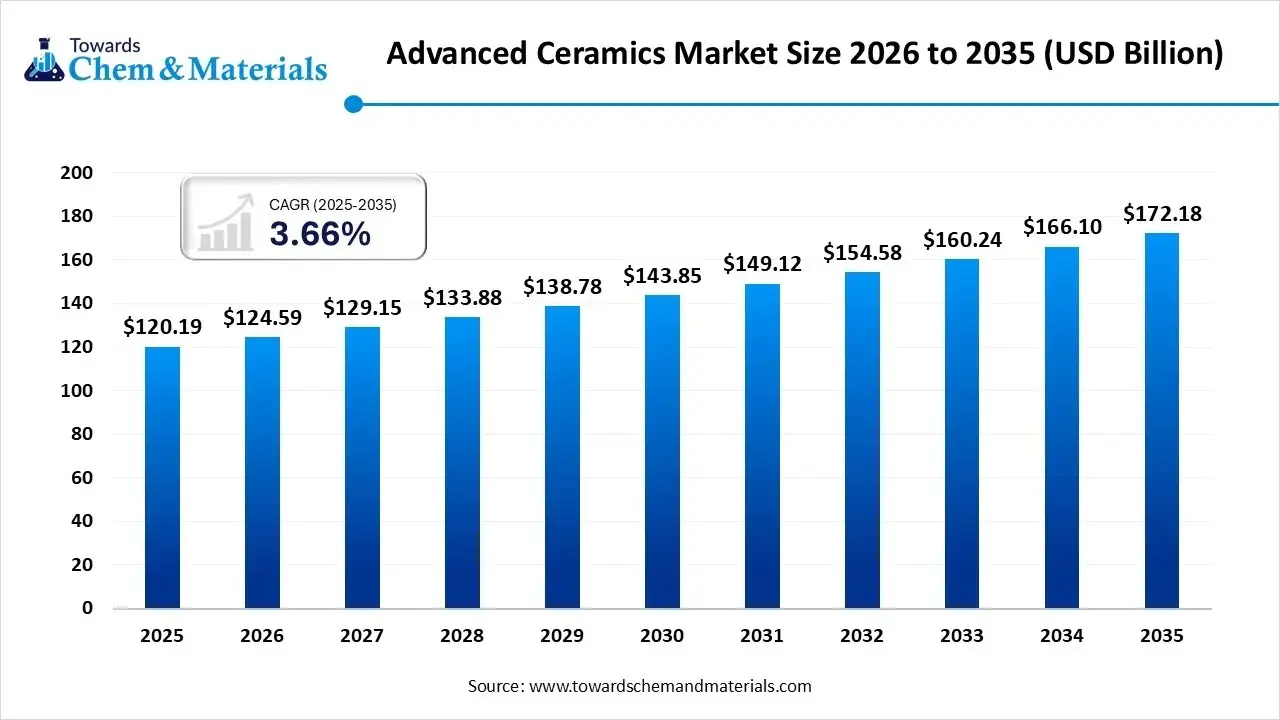
Market Highlights
- The Asia-Pacific dominated the advanced ceramics market with the largest revenue share of 41% in 2025.
- By Material, the alumina material segment dominated the market and accounted for the largest revenue share of 36.61% in 2025.
- By application, the electronic devices segment led the market with the largest revenue share of 50.04% in 2025.
- By product, the monolithic segment dominated the market and accounted for the largest revenue share of 80.33% in 2025.
- By end use, the electrical and electronics segment led the market with the largest revenue share of 59.42% in 2025.
Rising Demand for High-Performance Materials
Advanced ceramics are strong, hard, and resistant to wear, as well as being highly stable in extreme temperatures and harsh chemical environments. These characteristics make them ideal for use in critical and high-stress applications across industries like aerospace, automotive, electronics, and healthcare.
Common applications include cutting tools, engine parts, electronic circuit substrates, and medical implants. Moreover, advanced ceramics offer low thermal conductivity and excellent dielectric properties, which enhance their value in thermal insulation and electrical systems. As research in materials science progresses, advanced ceramics continue to play a crucial role in the development of lighter, more durable, and more efficient components in modern technology and industry.
The advanced ceramics market is primarily driven by rising demand across industries such as electronics, healthcare, automotive, and aerospace. In electronics, ceramics offer excellent insulation, heat resistance, which makes them essential in semiconductors and sensors.
The healthcare sector benefits from biocompatible ceramics used in implants and diagnostic devices. Additionally, ongoing advancements in manufacturing technologies, such as 3D printing, have enabled cost-effective and complex ceramic components. These diverse applications and innovations collectively fuel the strong growth of the market.
Market Trends
- The adoption of wide bandgap semiconductors like silicon carbide and gallium nitride is increasingly replacing the traditional silicon in power electronics.
- Expansion of ceramic matrix composites is gaining attention due to their enhanced toughness and resistance to high temperatures.
- Integration of nanotechnology in advanced ceramics to increase and enhance their properties like strength, durability, and functionality.
- Growth in medical and defense applications like medical implants and devices, as they provide resistance to high temperatures.
Report Scope
| Report Attributes | Details |
| Market Size in 2026 | USD 124.59 Billion |
| Expected Size in 2035 | USD 172.18 Billion |
| Growth Rate | CAGR of 3.66% |
| Base Year of Estimation | 2025 |
| Forecast Period | 2025-2035 |
| Dominant Region | Asia Pacific |
| Segment Covered | By Material, By Product, By Application, By End Use, By Region |
| Key Companies Profiled | 3M,AGC Ceramics Co., Ltd.,CeramTec GmbH,CoorsTek Inc.,Elan Technology,KYOCERA Corporation,Morgan Advanced Materials,Murata Manufacturing Co., Ltd., Nishimura Advanced Ceramics Co., Ltd.,Ortech Advanced Ceramics,Saint-Gobain |
Market Opportunity
The Increasing Demand for Advanced Ceramic Materials from Medical and Biomedical Applications
Healthcare and biomedical innovations present a significant opportunity for the market to grow. Bioceramics such as alumina and zirconia are widely used in dental implants, joint replacements, bone grafts, and prosthetics due to their biocompatibility, wear resistance, and non-toxicity.
Additionally, ceramics are being integrated into diagnostic devices, surgical instruments, and drug delivery systems. As global populations age and demand for minimally invasive procedures and long-lasting implants rises, the need for high-performance materials grows.
Advanced ceramics meet these needs by offering durability, compatibility with human tissues, and resistance to harsh sterilization processes, driving innovation across modern medical and biotech applications, which results in the growth of the advanced ceramics market.
Market Challenge
High Production Cost Results in High Cost of the Final Product
High production cost remains a major challenge in the market. The manufacturing process involves high-purity raw materials, precise formulation, and energy-intensive processing at elevated temperatures, all of which contribute to increased expenses. Additionally, complex shaping, machining, and finishing of ceramic components require specialized equipment and skilled labor, further raising operational costs, which in turn results in high final product cost.
Unlike metals and polymers, ceramics are difficult to process without cracking or structural flaws, leading to higher rejection rates and wastage. These factors make it challenging for manufacturers to scale up production affordably, limiting the widespread adoption of advanced ceramics, especially in cost-sensitive industries, which results in a hindrance to the growth of the advanced ceramics market.
Value Chain Analysis
Raw Material Sourcing and Processing
- This involves the sourcing and preparation of high-purity synthetic powders and chemical additives.
- Key Players: 3M, Alteo, Tosoh Corporation, H.C. Starck, Saint-Gobain, and Applied Ceramics.
Research and Development (R&D)
- This focuses on developing new ceramic compounds, enhancing toughness, thermal conductivity, and electrical insulation properties.
- Key Players: Kyocera, CoorsTek, Morgan Advanced Materials, CeramTec, and 3M.
Manufacturing
- This involves highly specialized, energy-intensive production, followed by high-temperature sintering and precision machining.
- Key Players: Kyocera, CeramTec, CoorsTek, Murata Manufacturing, NGK Insulators, and Morgan Advanced Materials.
Specialized Finishing and Logistics
- In this, ceramic parts often require diamond grinding, coating, or plating to achieve extremely low tolerances and surface finishes.
- Key Players: CeramTec, Oerlikon Surface Solutions, and Precision Ceramics.
Application and Commercialization
- This involves the integration of the finished ceramic components into final products within high-value sectors.
- Key Players: Kyocera, Murata, Maruwa, Ferrotec, CeramTec, CoorsTek, GE Aerospace, and Saint-Gobain.
Segmental Insights
By Material Insights
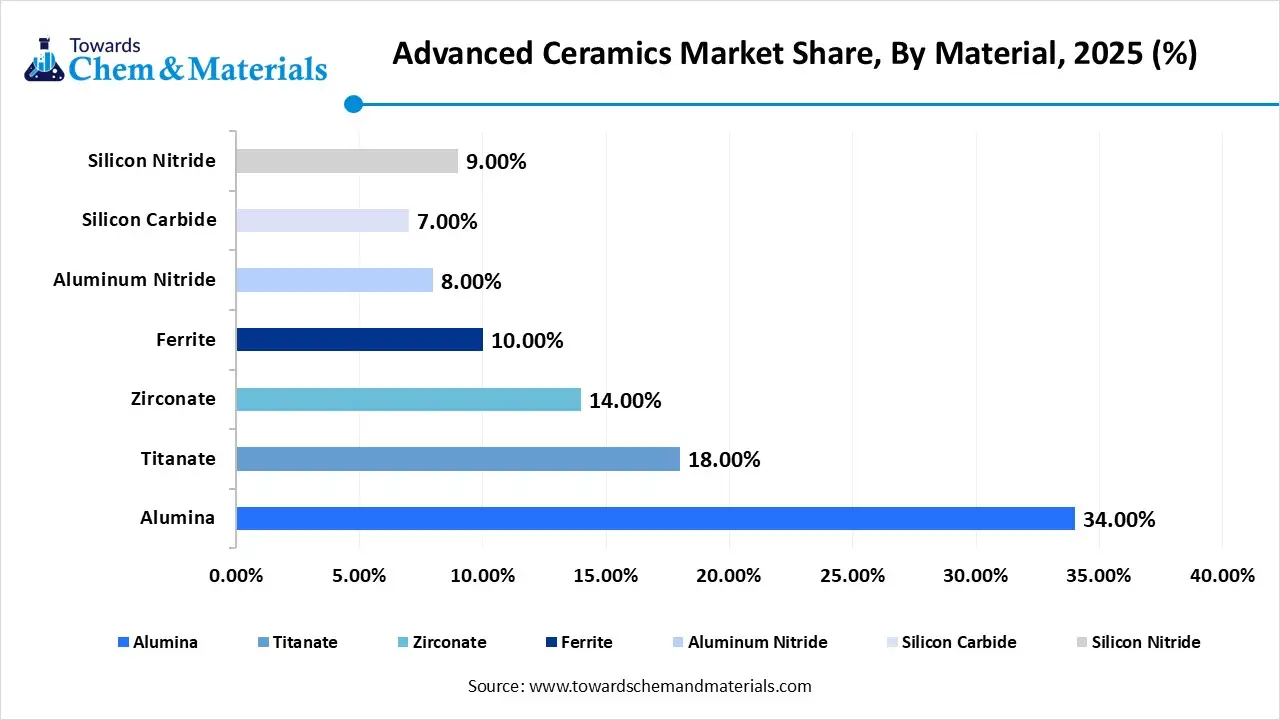
The alumina segment dominated the advanced ceramics market in 2025, accounting for 34% of revenue. Alumina, or aluminum oxide, is one of the most widely used materials in the market due to its excellent combination of mechanical, thermal, and electrical properties. It is highly resistant to wear, corrosion, and high temperatures, making it ideal for a variety of demanding applications.
Alumina ceramics are extensively used in electronic substrates, spark plugs, cutting tools, biomedical implants, and sealing components. Their high dielectric strength and thermal conductivity also make them essential in semiconductor manufacturing and circuit design. Furthermore, alumina’s affordability compared to other advanced ceramics contributes to its widespread adoption across industries, which drives the market growth.
The titanate segment expects significant growth in the advanced ceramics market during the forecast period. Titanate ceramics, particularly barium titanate and lead titanate, are known for their exceptional dielectric, piezoelectric, and ferroelectric properties. These materials are widely used in electronic applications such as capacitors, sensors, actuators, and transducers. Titanates also play a significant role in energy storage and signal conversion technologies. Their ability to respond to mechanical stress and electric fields makes them vital in smart systems and high-frequency devices, especially as the demand for miniaturized electronics grows, which helps the market to grow.
Advanced Ceramics Market Share, By Material, 2025 (%)
| By Material | Revenue Share, 2025 (%) |
| Alumina | 34.00% |
| Titanate | 18.00% |
| Zirconate | 14.00% |
| Ferrite | 10.00% |
| Aluminum Nitride | 8.00% |
| Silicon Carbide | 7.00% |
| Silicon Nitride | 9.00% |
By Product Insights
The monolithic segment dominated the advanced ceramics market in 2025, accounting for 79% of total revenue. Monolithic ceramics are dense, single-phase materials that form the backbone of the market due to their strength, hardness, and thermal stability. These ceramics are manufactured from materials like alumina, zirconia, and silicon carbide and are widely used in structural, electrical, and mechanical components.
Monolithic ceramics perform exceptionally well under high temperatures and corrosive environments, making them ideal for use in electronics, aerospace, and chemical processing industries. Their cost-effectiveness and reliability further support their dominance, especially where high-performance and long-term durability are required.
Advanced Ceramics Market Share, By Product, 2025 (%)
| By Product | Revenue Share, 2025 (%) |
| Monolithic | 79.00% |
| Ceramic Coatings | 10.00% |
| Ceramic Matrix Composites (CMCs) | 6.00% |
| Others | 5.00% |
These factors drive the growth of the market.The ceramic matrix composites segment expects significant growth in the advanced ceramics market during the forecast period. Ceramic Matrix Composites are advanced materials made by reinforcing ceramic matrices with ceramic fibers, enhancing toughness, thermal shock resistance, and fracture strength compared to traditional monolithic ceramics.
These composites are engineered to withstand extreme environments, making them ideal for aerospace, defense, and energy applications. As high-performance demands increase, CMCs are gaining attention as a next-generation solution for critical applications, which helps grow the market.
By Application Insights
The electronic devices segment dominated the advanced ceramics market in 2025 accounting for 32% of revenue. Advanced ceramics play a critical role in the electronics industry due to their excellent electrical insulation, thermal conductivity, and stability under extreme conditions. They are widely used in components such as capacitors, insulators, substrates, sensors, and semiconductors.
Advanced ceramics also support high-frequency and high-power applications by minimizing energy loss and heat buildup. As electronic devices become more compact and efficient, the demand for reliable, high-performance ceramic components continues to grow rapidly across consumer and industrial technologies in the market.
Advanced Ceramics Market Share, By Application , 2025 (%)
| By Application | Revenue Share, 2025 (%) |
| Electric Equipment | 25.00% |
| Catalyst Supports | 18.00% |
| Electronic Devices | 32.00% |
| Wear Parts | 8.00% |
| Engine Parts | 6.00% |
| Filters | 4.00% |
| Bioceramic | 3.00% |
| Others | 4.00% |
The bioceramic segment expects significant growth in the advanced ceramics market during the forecast period. Bioceramics are a specialized class of advanced ceramics designed for medical and dental applications due to their excellent biocompatibility, wear resistance, and chemical stability.
Commonly made from materials like alumina, zirconia, and hydroxyapatite, bioceramics are used in orthopedic implants, dental crowns, bone grafts, and joint replacements. Bioceramics also find use in surgical tools and regenerative medicine. With the rising demand for minimally invasive surgeries, aging populations, and advancements in medical technology, the use of bioceramics in healthcare is expanding rapidly and steadily.
By End Use Insights
The electric and electronics segment dominated the advanced ceramics market in 2025 accounting for 57% of revenue . Advanced ceramics are essential in electric and electronic applications due to their outstanding electrical insulation, thermal stability, and resistance to wear and corrosion. These materials are used in a wide range of components, including insulators, substrates, capacitors, piezoelectric devices, and semiconductors.
Alumina and titanate-based ceramics are particularly vital in multilayer ceramic capacitors (MLCCs), circuit boards, and high-frequency communication devices. In power electronics, ceramics ensure safe and efficient energy transfer by managing heat and preventing electrical loss. As a result, the demand for advanced ceramics in electric and electronic systems continues to rise significantly, which helps the advanced ceramics market to grow.
Advanced Ceramics Market Share, By End Use , 2025 (%)
| By End Use | Revenue Share, 2025 (%) |
| Electric & Electronics | 57.00% |
| Automotive | 15.00% |
| Machinery | 10.00% |
| Environmental | 8.00% |
| Medical | 6.00% |
| Others | 4.00% |
The medical segment expects significant growth in the advanced ceramics market during the forecast period. Advanced ceramics are increasingly used in the medical field due to their biocompatibility, chemical inertness, and mechanical strength. These materials are ideal for applications such as orthopedic implants, dental prosthetics, bone substitutes, and surgical tools.
Bioceramics like alumina and zirconia are commonly used in joint replacements, offering high wear resistance and a long lifespan. Their precision, safety, and durability make them indispensable in modern healthcare and regenerative medicine, which drives the growth of the market.
Regional Insights
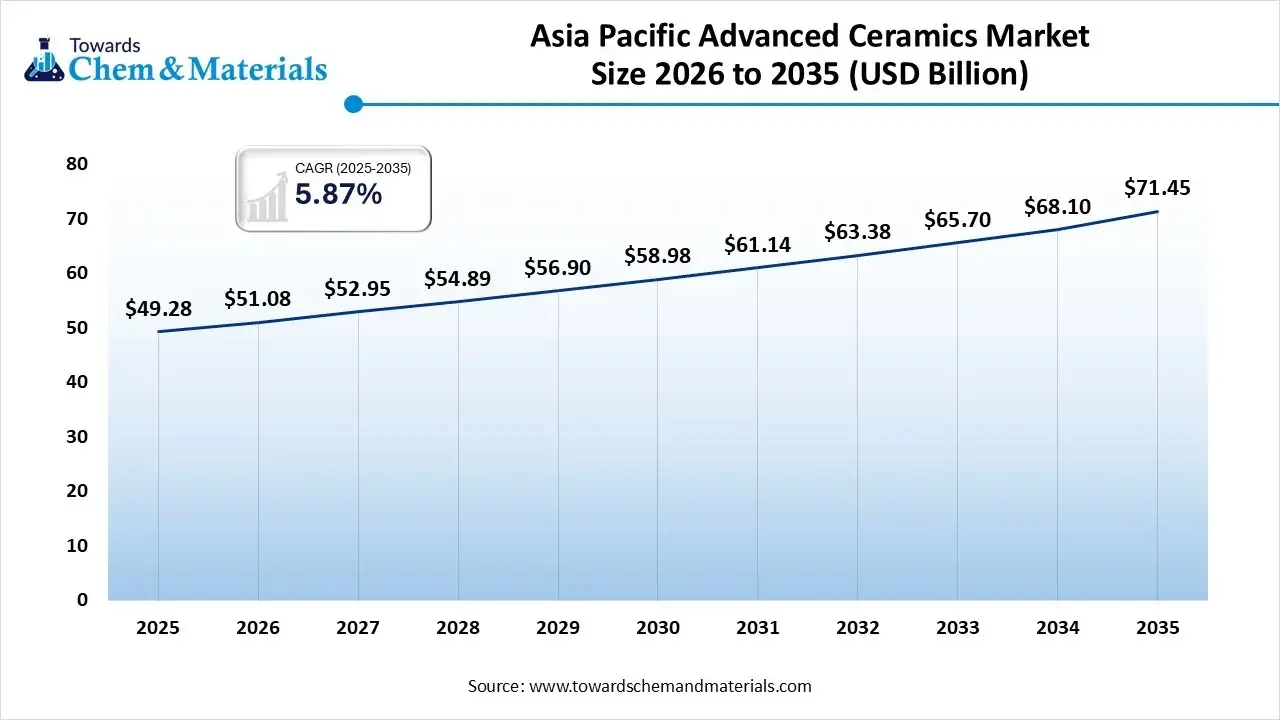
The Asia Pacific advanced ceramics market size was valued at USD 49.28 billion in 2025 and is expected to be worth around USD 71.45 billion by 2035, exhibiting at a compound annual growth rate (CAGR) of 5.87% over the forecast period from 2026 to 2035. Asia Pacific dominated the advanced ceramics market in 2025 accounting for 41% of revenue. The growth of the market in the region is driven by rapid industrialization, technological advancements, and strong demand across sectors like electronics, automotive, healthcare, and renewable energy.
As the region continues to witness high growth in manufacturing and infrastructure, there is an increased need for materials that offer high-performance characteristics such as thermal resistance, electrical insulation, and durability. With an expanding middle class and growing demand for consumer electronics and electric vehicles, advanced ceramics are becoming essential in meeting these needs. Additionally, the region is a leader in medical technology, where advanced ceramics are used in implants, prosthetics, and diagnostics, which drives the growth of the market.
China is poised to lead the market in Asia-Pacific, driven by its expansive manufacturing sector, technological advancements, and significant investments in research and development. China’s growing focus on electric vehicles and renewable energy technologies has further spurred demand for advanced ceramics in applications such as battery components, thermal management systems, and high-performance coatings.
Additionally, the country’s strong government support for industries like semiconductor production and aerospace has led to an increase in the adoption of advanced ceramics for specialized applications. As China continues to innovate and expand its technological capabilities, the demand for advanced ceramics is set to grow, making it a key driver in the region’s market expansion.
North American is anticipated to grow in the advanced ceramics market in the forecasted period. North America is a key player in the market, driven by robust industrial development and technological advancements. In addition, industries such as aerospace and defense are increasingly relying on advanced ceramics for lightweight, high-performance components, while the healthcare sector continues to use them in implants and medical devices.
The focus on sustainability and energy efficiency also drives the demand for advanced ceramics in clean energy applications such as fuel cells and solar energy systems, which drives the growth of the market in the region.
The United States plays a pivotal role in the advanced ceramics market in North America, with widespread adoption of these materials in high-tech industries like aerospace, electronics, and healthcare. The demand for advanced ceramics is particularly strong in the aerospace sector, where ceramics are used in turbine components and thermal protection systems due to their ability to withstand extreme conditions.
The healthcare industry also contributes significantly to the market, using bioceramics in implants and prosthetics. With increasing investments in R&D and the rise of emerging technologies, such as electric vehicles and renewable energy, the United States is expected to maintain its leadership in the market, driving further innovation and adoption of these high-performance materials, which drives the market growth.
How will Europe be considered a notable region in the Advanced Ceramics Market?
Europe is a notably growing region in the global market, primarily driven by a combination of technological innovation, high-performance requirements, and stringent environmental regulations. The European Green Deal and related regulations are creating a demand for materials that facilitate cleaner industrial processes. Advanced ceramics, like silicon carbide and alumina, provide exceptional thermal stability, high electrical insulation, and durability, attributes that are critical for electric mobility. The aerospace and defense sectors in Europe are increasingly utilizing ceramic matrix composites and structural ceramics.
Germany Advanced Ceramics Market Trends
Germany is at the forefront of this growth, supported by its robust automotive, medical, and industrial sectors. The transition to electric vehicles is generating a rising demand for ceramics in batteries and power electronics. Germany is also recognized as a technology leader, specializing in high-performance materials and advanced manufacturing techniques, with major companies, CeramTec GmbH and Rauschert GmbH, making significant investments in research and development.
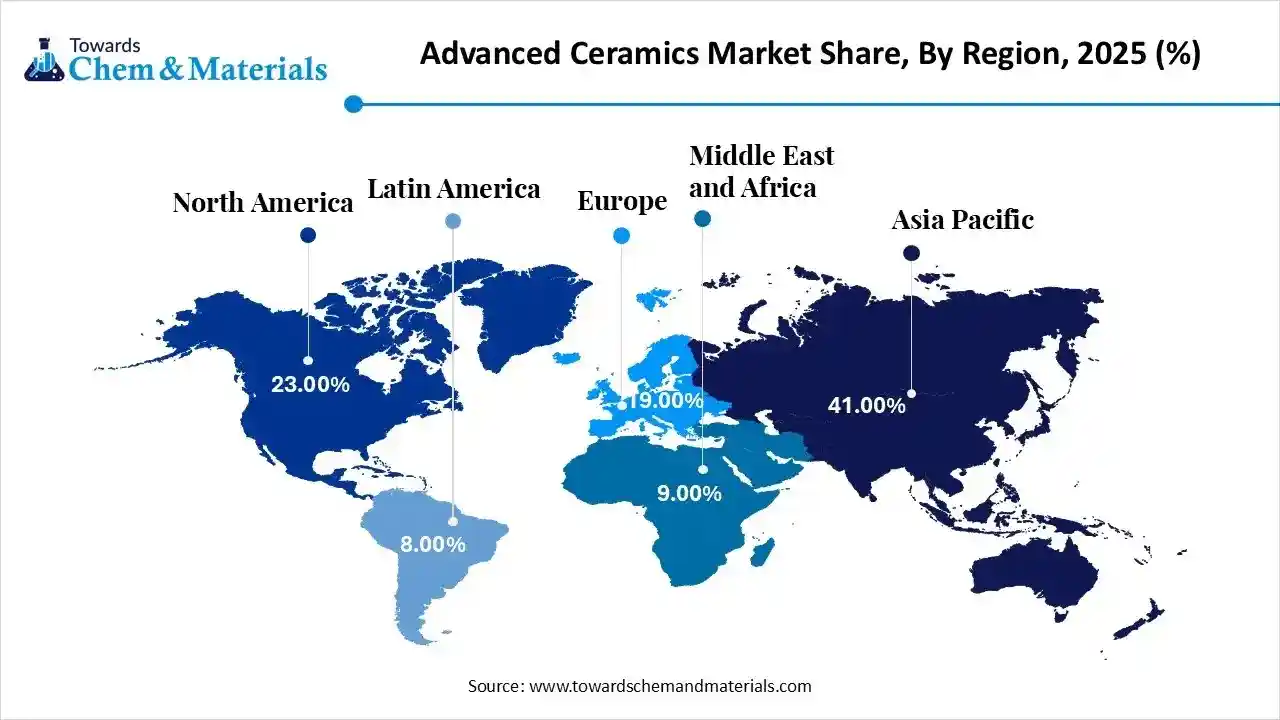
Advanced Ceramics Market Share,By Region, 2025 (%)
| By Region | Revenue Share, 2025 (%) |
| North America | 23.00% |
| Europe | 19.00% |
| Asia Pacific | 41.00% |
| Latin America | 8.00% |
| Middle East & Africa | 9.00% |
Emergence of Latin America in the Advanced Ceramics Market
Latin America is emerging as a notable region in the global market, particularly as countries like Brazil and Mexico transition towards electric vehicles and smart manufacturing. There is an increasing demand for advanced electroceramics, thermal management systems, and ceramic brake components. Additionally, the need for corrosion-resistant, high-temperature components in the petrochemical industry is driving the adoption of engineered technical ceramics. Government initiatives aimed at industrial modernization and, in some cases, promoting local production, encouraging the replacement of traditional metal parts.
Brazil Advanced Ceramics Market Trends
Brazil holds a unique position within Latin America as an emerging hub for manufacturing and consumption, especially in the electronics, automotive, and industrial sectors. The increasing adoption of AI and automation in manufacturing improves efficiency and reduces defect rates. Furthermore, strong growth in the electronics sector, particularly in ceramic backplanes and dielectric ceramic powders for capacitors. The Minha Casa Minha Vida housing program is contributing to market growth.
How will the Middle East and Africa contribute to the Advanced Ceramics Market?
The Middle East and Africa are significant contributors to the global market, driven by rapid economic diversification, substantial infrastructure investments, and a shift toward high-performance industrial materials. The region's strong oil and gas industry demands high-performance materials, and advanced ceramics are used in oil exploration, drilling components, and chemical refining due to their exceptional thermal stability and corrosion resistance. The expanding healthcare infrastructure in the GCC and South Africa is promoting the use of specialized bioceramics for medical and dental implants.
The UAE Advanced Ceramics Market Trends
The UAE stands out as a mature market within this region, leveraging its economic diversification, high-tech focus, and strategic location to become a leader in advanced materials. The country has established itself as a strategic innovation hub, particularly for high-temperature, high-performance ceramics used in the aerospace, defense, and energy sectors. Government-backed initiatives aimed at diversifying the economy away from oil include investments in nanotechnology and the 3D printing of ceramics.
Recent Development
- In November 2025, CeramTec obtained a European patent for a composite ceramic material containing chromium oxide. This additive gave the company’s hip and knee joint components a distinct pink color, becoming closely associated with CeramTec’s products for osteosynthesis, articular surface replacement, and bone spacer blocks. Their offerings include hip joint balls, hip joint sockets, and parts for knee joints, all intended for sale to manufacturers of implants.(Source: www.iamstobbs.com )
Market Top Companies List
- 3M
- AGC Ceramics Co., Ltd.
- CeramTec GmbH
- CoorsTek Inc.
- Elan Technology
- KYOCERA Corporation
- Morgan Advanced Materials
- Murata Manufacturing Co., Ltd.
- Nishimura Advanced Ceramics Co., Ltd.
- Ortech Advanced Ceramics
- Saint-Gobain
Segments Covered in the Report
By Material
- Alumina
- Titanate
- Zirconate
- Ferrite
- Aluminum Nitride
- Silicon Carbide
- Silicon Nitride
By Product
- Monolithic
- Ceramic Coatings
- Ceramic Matrix Composites (CMCs)
By Application
- Electric Equipment
- Catalyst Supports
- Electronic Devices
- Wear Parts
- Engine Parts
- Filters
- Bioceramic
- Others
By End-Use
- Electric & Electronics
- Automotive
- Machinery
- Environmental
- Medical
- Others
By Regional
- North America
- U.S.
- Canada
- Europe
- Germany
- UK
- France
- Italy
- Spain
- Sweden
- Denmark
- Norway
- Asia Pacific
- China
- Japan
- India
- South Korea
- Thailand
- Latin America
- Brazil
- Mexico
- Argentina
- Middle East and Africa (MEA)
- South Africa
- UAE
- Saudi Arabia
- Kuwait
Tags
FAQ's




Select User License to Buy
Figures (5)









 sales@towardschemandmaterials.com
 Download Sample
 Schedule a Meeting