
Pre-Engineered Metal Building Market Size Analysis Report 2035
The global pre-engineered metal building market size was estimated at USD 22.45 billion in 2025 and is expected to increase from USD 24.37 billion in 2026 to USD 50.99 billion by 2035, growing at a CAGR of 8.55% from 2026 to 2035. In terms of volume, the market is projected to grow from 315.85 million square meters in 2025 to 660.12 million square meters by 2035. growing at a CAGR of 7.65% from 2026 to 2035. Asia Pacific dominated the pre-engineered metal building market with the largest share of 46% in 2025.The greater shift towards energy-efficient and flexible building structures has fueled the industry's growth in recent years.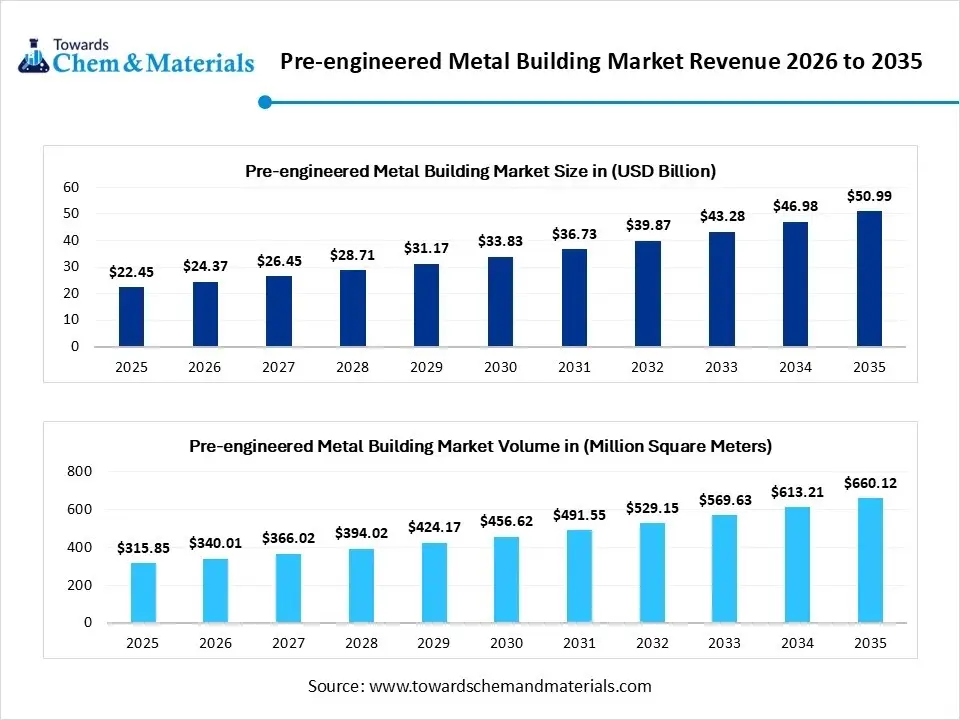
Market Highlights
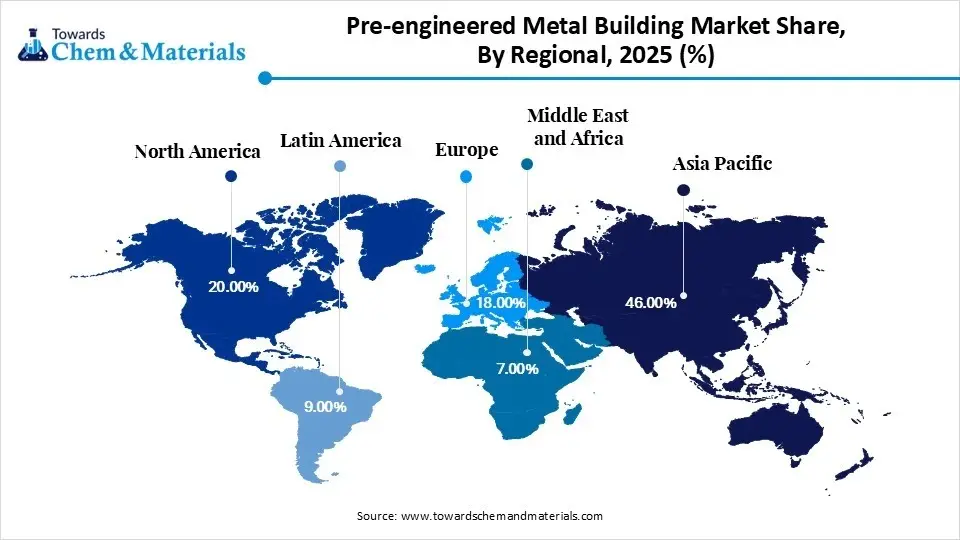
- By region, Asia Pacific dominated the pre-engineered metal building market in 2025, with 46% industry share expected to sustain its position while growing with a CAGR of 7.8% in the forecast period, as regional companies are building factories, warehouses, and commercial spaces at a high speed.
- By region, North America held the second largest share of 20% in 2025 and expects the notable growth with the CAGR of 6.90% during the forecast period, due to its focus on better performance and smarter buildings.
- By structure type, the single-storey buildings segment dominated the market with 64% share in 2025, owing to how most businesses actually work.
- By structure type, the multi-storey buildings segment expects the fastest growth in the market with 7.6% CAGR during the forecast period, as cities are becoming more active, and companies prefer vertical growth to stay close to markets.
- By component, the primary framing segment dominated the market with 34% share in 2025, owing to its definition of the strength and shape of the entire building.
- By component, the roofing and wall systems segment expects the fastest growth in the market with 7.4% CAGR during the forecast period, due to they directly affect how people experience the building every day.
- By application, the industrial segment dominated the market with 38% share in 2025, owing to PEMB, which fits perfectly with how industries operate.
- By application, the commercial segment expects the fastest growth in the market with 7.5% CAGR during the forecast period, due to businesses wanting faster ways to open and expand their presence.
- By end use, the warehousing and logistics segment dominated the market with 32% share in 2025, owing to the need for space that supports fast movement and storage.
- By end use, the infrastructure segment expects the fastest growth in the market with 7.4% CAGR during the forecast period due to the need for development projects to require faster and more organized construction methods.
Future Construction Powered by Planned Efficiency
The pre-engineered metal building refers to a planned full structure before construction starts, not during the development. Also, reducing uncertainty in construction is actively strengthening the foundation of future sector growth. Also, the trend towards energy-efficient building and construction sustainability has been heavily supported this trend in recent years.
Growth Market Trends
- The heavy shift towards the standardization of designs is driven by strategic transformation and sectoral scalability in recent years. Moreover, the major companies are actively reusing design logic instead of rebuilding from scratch.
- The need for better construction speed has positioned the industry for long-term expansion in the coming years. Also, the clients have free hand to finalize layouts, timelines, and costs in this innovative development nowadays.
- The increasing demand for flexible assets has allowed stakeholders to capitalize on growth opportunities during the forecast period. Also, the consumers do not really want permanent assets these days, while considering assets that they will modify, expand, and even relocate sometimes.
Smarter Designs Powered by Past Data
The industry is actively shifting toward systems where design learns from past projects. Also, the companies are building internal databases of previous designs, mistakes, and improvements. New projects are optimized using this stored knowledge. This reduces overdesign and improves efficiency. Instead of designing each building independently, systems are becoming smarter over time.
Supply Chain Analysis of the Pre-Engineered Metal Building Market:
Distribution to Industrial Users
- Industrial distribution of Pre-Engineered Metal Buildings (PEMB) relies on a direct-to-erector or franchised builder network.
- Components, including primary frames, secondary members, and cladding, are flat-packed and shipped via specialized flatbed trucking from fabrication plants to construction sites, ensuring synchronized delivery for rapid, bolt-together assembly in industrial zones.
Chemical Synthesis and Processing
- Chemical synthesis and processing of PEMBs focus on metallurgy and anti-corrosion coatings. High-strength steel undergoes hot-rolling or cold-forming into precise profiles.
- Chemical processing includes hot-dip galvanization or zinc-phosphate pretreatment, followed by electrochemical painting or high-performance polyester coatings to ensure structural integrity and weather resistance in industrial environments.
Regulatory Compliance and Safety Monitoring
- Regulatory compliance for PEMBs involves adhering to the International Building Code (IBC) and AISC 360 for structural integrity. Safety monitoring focuses on OSHA Subpart R for steel erection, emphasizing fall protection and crane safety.
- Rigorous third-party inspections of weld quality and bolt torque ensure buildings meet site-specific wind and snow loads.
Pre-Engineered Metal Building Market Regulatory Landscape: Regulations
| Country Region | Regulatory Body | Key Regulations | Focus Areas |
| United States | ICC (International Code Council) & AISC | IBC Chapter 17 (Special Inspections); AISC 360 (Structural Steel Specification); ASCE 7 (Minimum Design Loads) | Seismic and wind loads, fabrication quality control via AC472 accreditation, and tapered member design. |
| Europe | CEN (European Committee for Standardization) | EN 1993 (Eurocode 3); EN 1090-1/2 (Execution of Steel Structures); Regulation 2024/3110 (New CPR) | Structural integrity, fire resistance, CE Marking compliance, and harmonized safety for prefabricated systems. |
| China | SAC (Standardization Administration of China) | GB 50017-2017 (Design of Steel Structures); GB/T 51232-2016 (Prefabricated Steel Buildings); GB 50011 (Seismic Design) | Activity index for steel, material durability, high-strength low-alloy steels, and mandatory safety certifications. |
Segmental Insights
Structure Type Insights
The Single-Storey Buildings Segment Dominated the Pre-Engineered Metal Building Market with 64% Market Share in 2025
The single-storey buildings segment dominated the market with 64% share in 2025, owing to they match how most businesses actually work. Activities like storage, production, and movement need wide horizontal space, not height. PEMB is naturally strong in creating large open spans without internal obstacles. This makes operations smooth and efficient.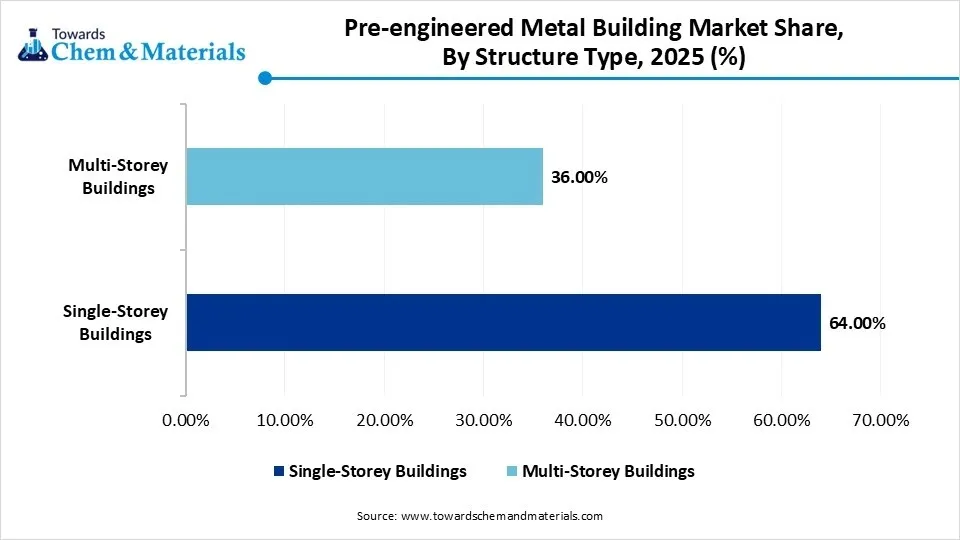
The multi-storey buildings segment is expected to be the fastest growing in the market with 7.6% CAGR during the forecast period, as cities are becoming more active, and companies prefer vertical growth to stay close to markets. New design methods now make multi-level steel buildings more practical and efficient. Businesses also like separating activities floor by floor, such as storage below and offices above.
Pre-engineered Metal Building Market Share, By Structure Type, 2025 (%)
| By Structure Type | Revenue Share, 2025 (%) |
| Single-Storey Buildings | 64.00% |
| Multi-Storey Buildings | 36.00% |
- Single-Storey Buildings: The dominant structure type, accounting for 64.00% of the market share in 2025. Single-storey pre-engineered metal buildings are highly popular due to their cost-effectiveness, faster construction timelines, and flexibility, making them ideal for industrial, commercial, and agricultural applications.
- Multi-Storey Buildings: Representing 36.00% of the market, multi-storey pre-engineered metal buildings are increasingly gaining traction in urban areas and commercial developments. These structures offer the benefits of reduced construction time and are typically used in applications such as office buildings, residential complexes, and mixed-use developments.
Component Insights
The Primary Framing Segment Dominated the Market with 34% Market Share in 2025
The primary framing segment dominated the market with 34% share in 2025, owing to its definition of the strength and shape of the entire building. It is the main system that carries all loads and keeps the structure stable. Every project starts by focusing on this part, making it the most important investment. Businesses rely on strong framing to ensure safety and long-term performance.
The roofing and wall systems segment is expected to be the fastest-growing in the market, with 7.4% CAGR during the forecast period, as they directly affect how people experience the building every day. These systems control temperature, light, and protection from the weather. Businesses now want buildings that feel comfortable and reduce energy use. Modern panels offer better insulation and a cleaner appearance.
The secondary framing segment held the third largest share of 22% in 2025 due to its completion of the structure and support of daily functionality. It connects the main frame and creates a base for the roof and wall panels. This makes installation smooth and organized. It also helps maintain shape and balance across the building.
The accessories segment held the fourth largest share of 16% in 2025, owing to they bring life to the building. Without doors, windows, ventilation, and small fittings, a structure cannot be used properly. These elements allow movement, airflow, light, and safety. Businesses often customize these features based on their exact needs, which increases demand.
Pre-engineered Metal Building Market Share, By Component, 2025 (%)
| By Component | Revenue Share, 2025 (%) |
| Primary Framing | 34.00% |
| Secondary Framing | 22.00% |
| Roofing & Wall Systems | 28.00% |
| Accessories | 16.00% |
- Primary Framing: The largest component, accounting for 34.00% of the market share in 2025. Primary framing refers to the main structural framework of a pre-engineered metal building, typically consisting of columns, beams, and trusses. It provides the core support for the entire structure and is essential for ensuring the building's stability and durability.
- Secondary Framing: Representing 22.00% of the market, secondary framing includes the purlins, girts, and other supporting components that help distribute the load and support the roofing and wall systems. It plays a key role in strengthening the structure and facilitating efficient construction.
- Roofing & Wall Systems: Comprising 28.00% of the market, roofing and wall systems are crucial for protecting the building from external elements. These systems often use high-performance materials that are designed for weather resistance, energy efficiency, and ease of maintenance, making them vital for the longevity and functionality of the building.
- Accessories: Accounting for 16.00% of the market, accessories include items like doors, windows, skylights, insulation, and other supplemental components that enhance the functionality, aesthetics, and energy efficiency of the pre-engineered metal building.
Application Insights
The Industrial Segment Dominated the Pre-Engineered Metal Building Market with 38% Market Share in 2025
The industrial segment dominated the market with 38% share in 2025, owing to PEMB, which fits perfectly with how industries operate. Factories need strong, open, and flexible spaces for machines and workflow. PEMB provides this without unnecessary complexity. Industries also prefer faster project completion so they can start production early.
The commercial segment is expected to be the fastest-growing in the market with 7.5% CAGR during the forecast period due to businesses wanting faster ways to open and expand their presence. Shops, offices, and showrooms need flexible and attractive spaces. PEMB is improving in design, allowing modern and clean-looking buildings. Business owners like a quick setup because it helps them start earning sooner.
The institutional segment held the third-largest share of 18% in 2025, owing to its focus on serving people efficiently. Buildings like schools, hospitals, and training centers need to be ready quickly and function smoothly. PEMB allows fast construction and clear layouts, which are useful for large groups of people.
The residential segment held the fourth largest share of 16% in 2025 due to people exploring smarter & fastest ways to build homes. PEMB offers quick construction and strong structures. Some homeowners like modern designs and open layouts, which PEMB can provide easily. It also allows future changes without major effort.
Pre-engineered Metal Building Market Share, By Application 2025 (%)
| By Application | Revenue Share, 2025 (%) |
| Industrial | 38.00% |
| Commercial | 28.00% |
| Institutional | 18.00% |
| Residential | 16.00% |
- Industrial: The largest application segment, accounting for 38.00% of the market share in 2025. Pre-engineered metal buildings are widely used in industrial settings for warehouses, manufacturing plants, and storage facilities due to their cost-effectiveness, durability, and quick construction times.
- Commercial: Representing 28.00% of the market, commercial applications of pre-engineered metal buildings include office buildings, retail spaces, and recreational facilities. These structures are valued for their flexibility, energy efficiency, and suitability for rapid construction in commercial developments.
- Institutional: Holding 18.00% of the market share, institutional applications include schools, healthcare facilities, and government buildings. Pre-engineered metal buildings are often chosen for their cost-effectiveness, durability, and ability to meet specific architectural and functional requirements for public institutions.
- Residential: Comprising 16.00% of the market, residential applications involve the use of pre-engineered metal buildings for homes, garages, and small residential complexes. These buildings are favored for their affordability, quick construction, and low maintenance requirements.
End Use Insights
The Warehousing & Logistics Segment Dominated the Market with 32% Market Share in 2025
The warehousing and logistics segment dominated the market with 32% share in 2025, owing to the need for space that supports fast movement and storage. PEMB creates large open areas without internal barriers, making operations smooth. Companies can organize goods easily and handle high volumes efficiently. Speed of construction is also important because businesses want to respond quickly to demand. The manufacturing segment held the second largest share of 24% in 2025, owing to its requirement for dependable and adaptable building space. PEMB provides strong structures that support heavy equipment and continuous activity. Layouts can be designed based on production flow, improving efficiency. Businesses also like the option to expand when production increases.
The infrastructure segment is forecast to grow at 7.4% CAGR during the stated forecast period, according to the report’s estimates. Governments and planners want buildings that can be completed on time and used immediately. PEMB supports this by reducing delays and simplifying execution. It is also useful for transport hubs, service centers, and utility buildings.
The agriculture segment held the fourth largest share of 14% in 2025, owing to its need for reliable and simple structures for daily use. Farmers and agribusinesses require storage for crops, equipment, and livestock protection. PEMB offers strong and easy-to-install buildings that work well in different conditions. These structures can be expanded as needs grow.
Pre-engineered Metal Building Market Share, By End-Use 2025 (%)
| By End-Use | Revenue Share, 2025 (%) |
| Warehousing & Logistics | 32.00% |
| Manufacturing | 24.00% |
| Infrastructure | 18.00% |
| Agriculture | 14.00% |
| Aviation | 12.00% |
- Warehousing & Logistics: The largest end-use segment, accounting for 32.00% of the market share in 2025. Pre-engineered metal buildings are highly favored in warehousing and logistics due to their quick construction times, large clear spans, and ability to accommodate storage needs for goods, equipment, and inventory.
- Manufacturing: Representing 24.00% of the market, pre-engineered metal buildings are extensively used in the manufacturing sector for factory buildings, production plants, and assembly facilities. Their ability to provide large, open spaces and flexibility makes them ideal for manufacturing operations.
- Infrastructure: Holding 18.00% of the market share, pre-engineered metal buildings are used in various infrastructure projects, including bridges, highways, and utility facilities. They are appreciated for their strength, durability, and quick construction, which is crucial for time-sensitive infrastructure projects.
- Agriculture: Comprising 14.00% of the market, pre-engineered metal buildings are utilized in agriculture for storage sheds, barns, and animal housing. Their cost-effectiveness, adaptability, and weather resistance make them a popular choice for agricultural applications.
- Aviation: Accounting for 12.00% of the market, pre-engineered metal buildings are used in aviation for hangars, terminals, and maintenance facilities. These buildings provide the necessary space, durability, and ability to withstand the operational demands of the aviation industry.
By Material Type
In the Pre-engineered Metal Building Market, steel dominates the material type segment with a substantial share of 72%. Steel is widely preferred due to its high strength, durability, and cost-effectiveness, making it the material of choice for various construction applications, including warehouses, industrial buildings, and commercial structures. The inherent resistance of steel to harsh environmental conditions and its ability to be easily fabricated and assembled contribute significantly to its market share. Steel's versatility also enables customization in terms of design, which further boosts its demand in pre-engineered buildings.
Aluminum, with a share of 16%, is used in applications where lightweight materials are required, such as smaller structures, residential buildings, or structures in coastal areas prone to corrosion. Aluminum offers excellent corrosion resistance and is highly valued for its aesthetic appeal and ease of maintenance.
The hybrid materials segment, combining steel and aluminum, is emerging as a solution to capitalize on the strengths of both materials. These materials offer a balance between weight, strength, and corrosion resistance, making them ideal for specialized applications that require both durability and flexibility in design.
Pre-engineered Metal Building Market Share, By Material Type 2025 (%)
| By Material Type | Revenue Share, 2025 (%) |
| Steel | 72.00% |
| Aluminum | 16.00% |
| Hybrid Materials | 12.00% |
- Steel: The dominant material type, accounting for 72.00% of the market share in 2025. Steel is the preferred material for pre-engineered metal buildings due to its high strength, durability, versatility, and cost-effectiveness. It is widely used in industrial, commercial, and infrastructure applications where structural integrity and longevity are key requirements.
- Aluminum: Representing 16.00% of the market, aluminum is used in pre-engineered metal buildings where lighter materials are required, such as in specific commercial or residential applications. Aluminum is valued for its corrosion resistance, lightweight nature, and aesthetic appeal, making it suitable for certain specialized projects.
- Hybrid Materials: Comprising 12.00% of the market, hybrid materials, which combine steel, aluminum, and other materials, are increasingly used for specific applications that require the unique properties of each material. These hybrid structures offer enhanced performance, such as better insulation or corrosion resistance, for buildings that need to meet specific environmental or functional criteria.
Regional Insights
Asia Pacific Pre-engineered Metal Building Market Trends
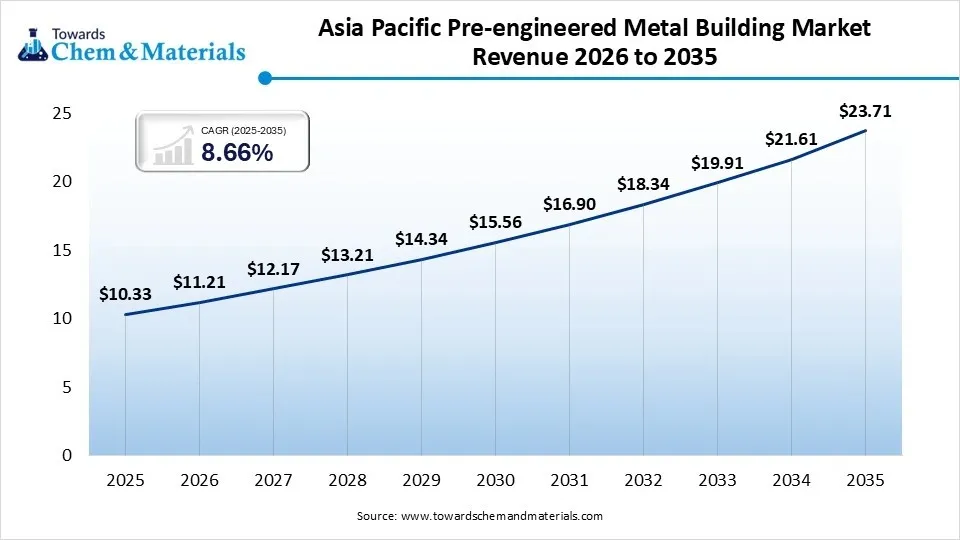
The Asia Pacific pre-engineered metal building market size was valued at USD 10.33 billion in 2025 and is expected to be worth around USD 23.71 billion by 2035, exhibiting at a compound annual growth rate (CAGR) of 8.66% over the forecast period from 2026 to 2035.Asia Pacific dominated the market with a share of 46% in 2025 and is expected to sustain its position while growing with a CAGR of 7.8% in the forecast period, as regional companies are building factories, warehouses, and commercial spaces at a high speed. They need buildings that are quick, practical, and cost-efficient. PEMB fits this need very well. Also, many countries in this region prefer solutions that reduce time and simplify work. There is a strong demand for organized infrastructure. People and businesses want results quickly, not long construction delays.
China’s Pre-Engineered Metal Building Market
China is one of the markets discussed in the report’s Asia Pacific analysis. Industries in China prefer systems that support speed and efficiency. PEMB allows factories and warehouses to be built quickly, which matches business goals. The country also has strong steel production, making materials easily available. Urban development is very active, so demand for structured buildings is high.
Pre-Engineered Metal Building Market Evaluation in North America
North America held the second largest share of 20% in 2025 and expects the notable growth with the CAGR of 6.90% during the forecast period, owing to its focus on better performance and smarter buildings. Businesses want buildings that are flexible, efficient, and easy to manage. PEMB supports all these needs. Companies prefer solutions that help them grow quickly without complexity. There is also a strong focus on planning and organized construction.
Speed-Driven Growth of the United States Pre-Engineered Metal Building Market
The United States is expected to emerge as a prominent country for the pre-engineered metal building market in the coming years, due to businesses' focus on speed, flexibility, and smart investment. Companies want buildings that help them start operations quickly and adjust easily later. PEMB supports this need very well. The country has strong activity in logistics, retail, and services, which require efficient spaces. Businesses also prefer structured planning, and PEMB reduces uncertainty in construction.
Recent Development
- In July 2025, Aludecor unveiled its latest precision-engineered metal shading system in India. Also, the newly launched system is known as Alubreeze Metal Louvers, and it has the ability to curb solar heat gains as per the company's claim. (Source: www.ptinews.com)
Pre-Engineered Metal Building (PEMB) Market Competitive Landscape Analysis
Tier 1 Companies
|
Rank
|
Company Name | Headquarters | Country | Why Relevant to This Market | https://www.evonik.com/en/products.html |
| 1 | BlueScope Steel Limited | Melbourne, Victoria | Australia | Global leader in engineered steel building solutions through its Butler and Varco Pruden brands | Pre-engineered steel buildings, structural steel systems, roofing and wall systems |
| 2 | Nucor Corporation | Charlotte, North Carolina | United States | One of North America's largest PEMB manufacturers with integrated steel production | Pre-engineered metal buildings, steel framing systems, structural steel components |
| 3 | Cornerstone Building Brands, Inc. | Cary, North Carolina | United States | Major supplier of metal building systems for commercial and industrial construction | Metal building systems, insulated panels, metal roofing and wall panels |
| 4 | Kirby Building Systems | Dubai | United Arab Emirates | Leading global provider of pre-engineered steel buildings with strong presence in Asia and the Middle East | Industrial steel buildings, warehouse structures, aircraft hangars |
| 5 | Zamil Steel Holding Company Ltd. | Dammam | Saudi Arabia | International manufacturer of pre-engineered steel buildings serving more than 90 countries | Pre-engineered buildings, steel structures, storage facilities, commercial buildings |
Tier 2 Companies
|
Rank
|
Company Name | Headquarters | Country | Why Relevant to This Market | Key Products / Material Portfolio |
| 1 | PEBS Pennar | Hyderabad, Telangana | India | One of Asia's leading manufacturers of customized pre-engineered steel buildings | Industrial buildings, warehouses, logistics facilities, commercial structures |
| 2 | Interarch Building Products Limited | Noida, Uttar Pradesh | India | Leading supplier of turnkey pre-engineered building solutions across India | Steel building systems, roofing, cladding, structural steel |
| 3 | Tiger Steel Engineering LLC | Sharjah | United Arab Emirates | Regional leader in industrial and commercial steel building construction | Steel warehouses, factories, logistics buildings |
| 4 | Astron Buildings | Diekirch | Luxembourg | European provider of customized steel building systems | Industrial buildings, commercial buildings, agricultural steel structures |
| 5 | Jindal Buildsys Limited | New Delhi | India | Integrated supplier of pre-engineered buildings and steel construction systems | PEB structures, roofing systems, structural steel solutions |
Tier 3 Companies
|
Rank
|
Company Name | Headquarters | Country | Why Relevant to This Market | Key Products / Material Portfolio | |
| 1 | Lindab International AB | Grevie, Skåne County | Sweden | European manufacturer of steel building systems and construction components | Steel framing systems, roofing, wall systems | |
| 2 | Epic Metals Corporation | Rankin, Pennsylvania | United States | Supplies steel decking and structural systems for pre-engineered buildings | Steel decking, composite floor systems, structural components | |
| 3 | Steel Authority of India Limited | New Delhi | India | Supplies structural steel products supporting the PEMB industry | Structural steel sections, steel plates, construction steel | |
| 4 | PEB Steel Buildings Co., Ltd. | Ho Chi Minh City | Vietnam | Leading supplier of pre-engineered steel buildings across Southeast Asia | Industrial buildings, logistics warehouses, factory buildings | |
| 5 | Armtec Infrastructure Inc. | Guelph, Ontario | Canada | Supplies engineered steel structures for infrastructure and industrial projects | Engineered steel building systems, structural solutions | |
Top Vendors in the Pre-Engineered Metal Building Market & Their Offerings:
- BlueScope Steel Limited: Headquartered in Melbourne, Australia, BlueScope is a global leader in metal coating and painting. Founded in 1885, it operates in 18 countries with a focus on high-margin branded products like COLORBOND and BUTLER. In early 2026, the company rejected an $8.8 billion takeover bid while expanding its defense and land portfolios.
- Nucor Corporation: Based in Charlotte, USA, Nucor is North America’s largest steel producer and a pioneer in electric arc furnace (EAF) technology. The company operates 26 steel mills and over 100 fabrication centers. By 2026, it maintained its position as the world's 16th largest steelmaker, generating over $32 billion in revenue.
- Zamil Steel Holding Company: Founded in 1977 in Saudi Arabia, Zamil Steel is a premier global supplier of pre-engineered buildings and structural steel. Its Dammam facility is the world's largest single PEB factory. With a total annual production capacity exceeding 555,000 tons, the company serves industrial, commercial, and aviation sectors across 90 countries.
- Kirby Building Systems: A subsidiary of Alghanim Industries, Kirby pioneered PEB technology in the Middle East and India. It operates seven manufacturing facilities across Kuwait, Saudi Arabia, the UAE, Vietnam, and India. By 2026, its total capacity will reach 615,000 MT per annum, supported by a global network of 70 sales offices.
- Cornerstone Building Brands, Inc.
- Lindab Group
- Butler Manufacturing
- PEB Steel Buildings Co., Ltd.
- Astron Buildings
- ATCO Ltd.
Pre-Engineered Metal Building Market Segments List
By Structure Type
- Single-Storey Buildings
- Industrial Sheds
- Warehouses
- Multi-Storey Buildings
- Commercial Complexes
- Office Buildings
By Component
- Primary Framing
- Columns
- Rafters
- Secondary Framing
- Purlins
- Girts
- Roofing & Wall Systems
- Insulated Panels
- Metal Sheets
- Accessories
- Doors & Windows
- Skylights & Ventilators
By Application
- Industrial
- Manufacturing Facilities
- Workshops
- Commercial
- Retail Stores
- Office Spaces
- Institutional
- Schools
- Hospitals
- Residential
- Modular Housing
- Garages
By End-Use
- Warehousing & Logistics
- Manufacturing
- Infrastructure
- Agriculture
- Aviatio
By Material Type
- Steel
- Carbon Steel
- Galvanized Steel
- Aluminum
- Hybrid Materials
By Regions
- North America
- U.S.
- Canada
- Mexico
- Europe
- Germany
- UK
- France
- Italy
- Spain
- Asia Pacific
- China
- India
- Japan
- South Korea
- Latin America
- Brazil
- Argentina
- Middle East & Africa
- Saudi Arabia
- South Africa
A Seven-Phase Framework
Our methodology is designed to be universally applicable across commodity chemicals, specialty chemicals, petrochemicals, construction chemicals, coatings, electronic chemicals, industrial gases, agrochemicals, water treatment chemicals, and performance materials. Each phase builds upon the last, creating a layered validation structure that minimizes estimation error and maximizes analytical confidence.
The framework ensures comprehensive market coverage, robust cross-validation, and reliable long-term forecasting — producing market estimates that withstand scrutiny from investors, regulators, and corporate strategy teams.

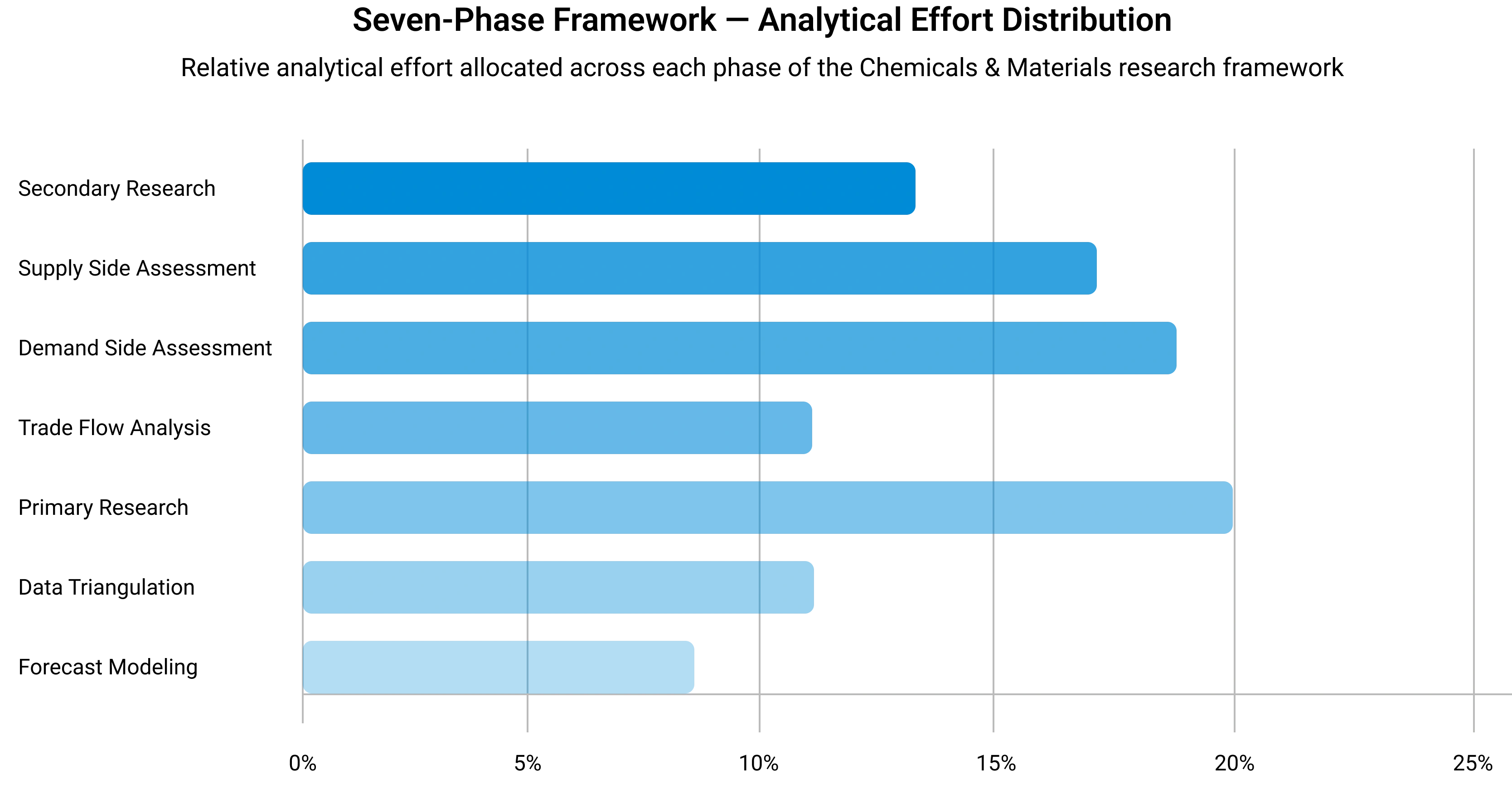
Seven-Phase Framework — Analytical Effort Distribution
Relative analytical effort allocated across each phase of the Chemicals & Materials research framework
Phase 1 - Secondary Research: Establishing the Foundation
Secondary research collects and evaluates publicly available information from authoritative sources, establishing the foundational understanding of market structure, value chain dynamics, competitive landscape, and end-use demand patterns. Every source is evaluated for credibility, recency, geographic relevance, and methodological soundness before inclusion.
Industry Associations
Sources include ACC, CEFIC, ICCA, JCIA, CPCIF, and SOCMA providing production volumes, consumption trends, capacity developments, and sustainability initiatives.
Company Disclosures
Annual reports, investor presentations, earnings transcripts, and regulatory filings reveal product portfolios, manufacturing footprints, capacity expansions, and revenue segmentation.
Government Databases
National statistical offices, customs authorities, environmental agencies, and industrial production databases provide verified statistics on output, trade flows, and regulatory compliance.
Trade Databases
UN Comtrade, ITC, Eurostat, and national customs authorities enable assessment of global product movement, import dependency, and export competitiveness across regions.
Our Secondary Research Sources
- Ministry of Chemicals and Fertilizers
- European Chemicals Agency
- United States Department of Energy
- Ministry of Industry and Information Technology
- Ministry of Economy Trade and Industry
- Ministry of Trade Industry and Energy
- National Institute of Standards and Technology
- Council of Scientific and Industrial Research
- Fraunhofer Society
- National Institute for Materials Science
Phase 2 — Supply-Side Assessment: Mapping Production Capabilities
Production Capacity Analysis
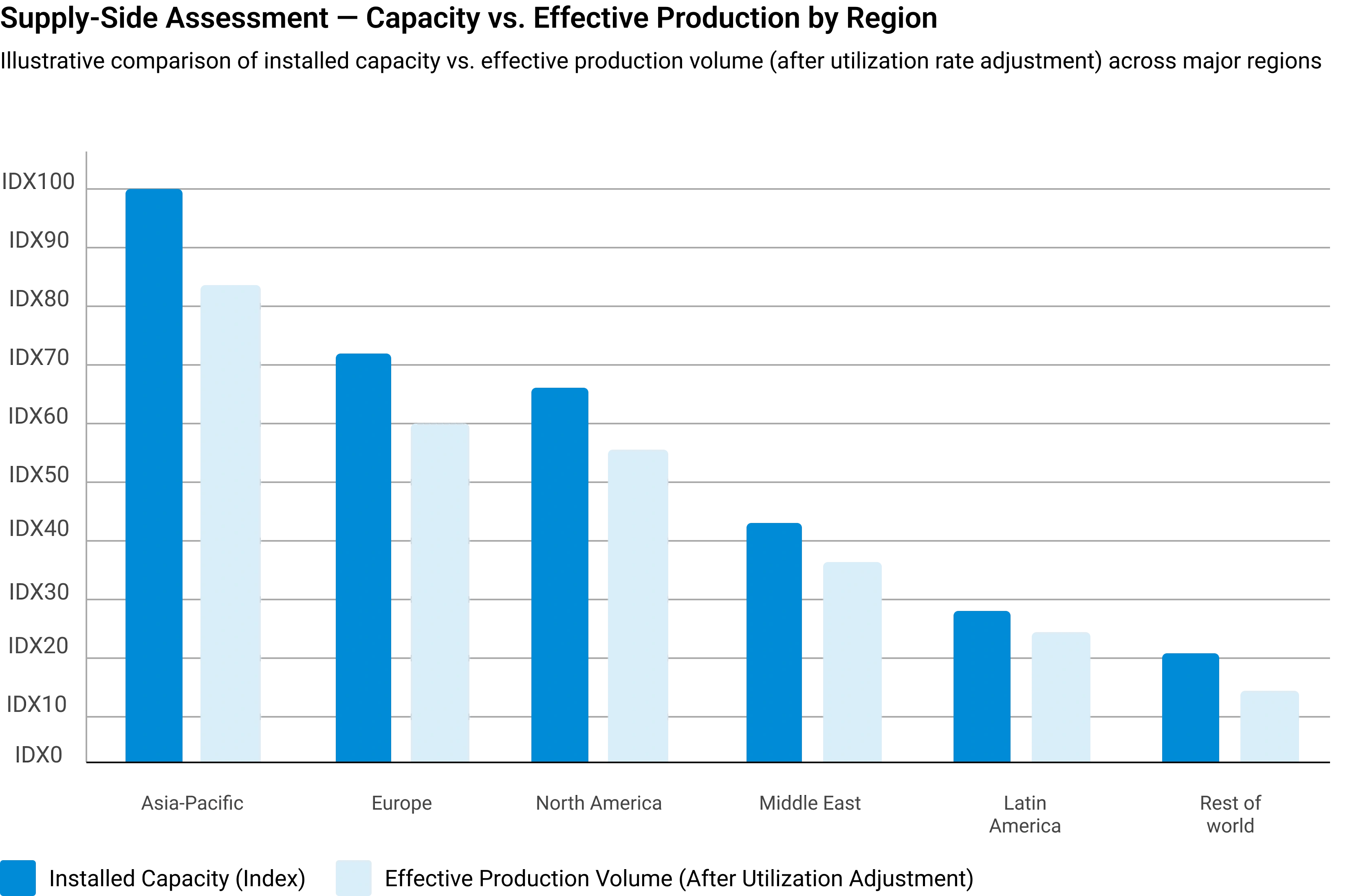
All major manufacturers are assessed for existing installed capacity, planned additions, expansions, new plant announcements, and technology adoption — mapped at global, regional, and country levels.
Capacity Utilization Adjustment
Installed capacity is adjusted using utilization rates based on demand conditions, feedstock availability, plant operating rates, maintenance schedules, and regulatory restrictions.
Manufacturer Revenue Analysis
Product-specific revenues, segment-level performance, regional distribution, average selling prices, and margin trends are evaluated to establish market value estimates.
Supply-Side Assessment — Capacity vs. Effective Production by Region
Illustrative comparison of installed capacity vs. effective production volume (after utilization rate adjustment) across major regions
Phase 3 — Demand-Side Assessment: Quantifying Chemical Consumption
Demand-side analysis quantifies chemical consumption across industries, applications, and geographies — identifying where and how chemicals are consumed throughout the value chain with precision.
End-Use Industry Analysis
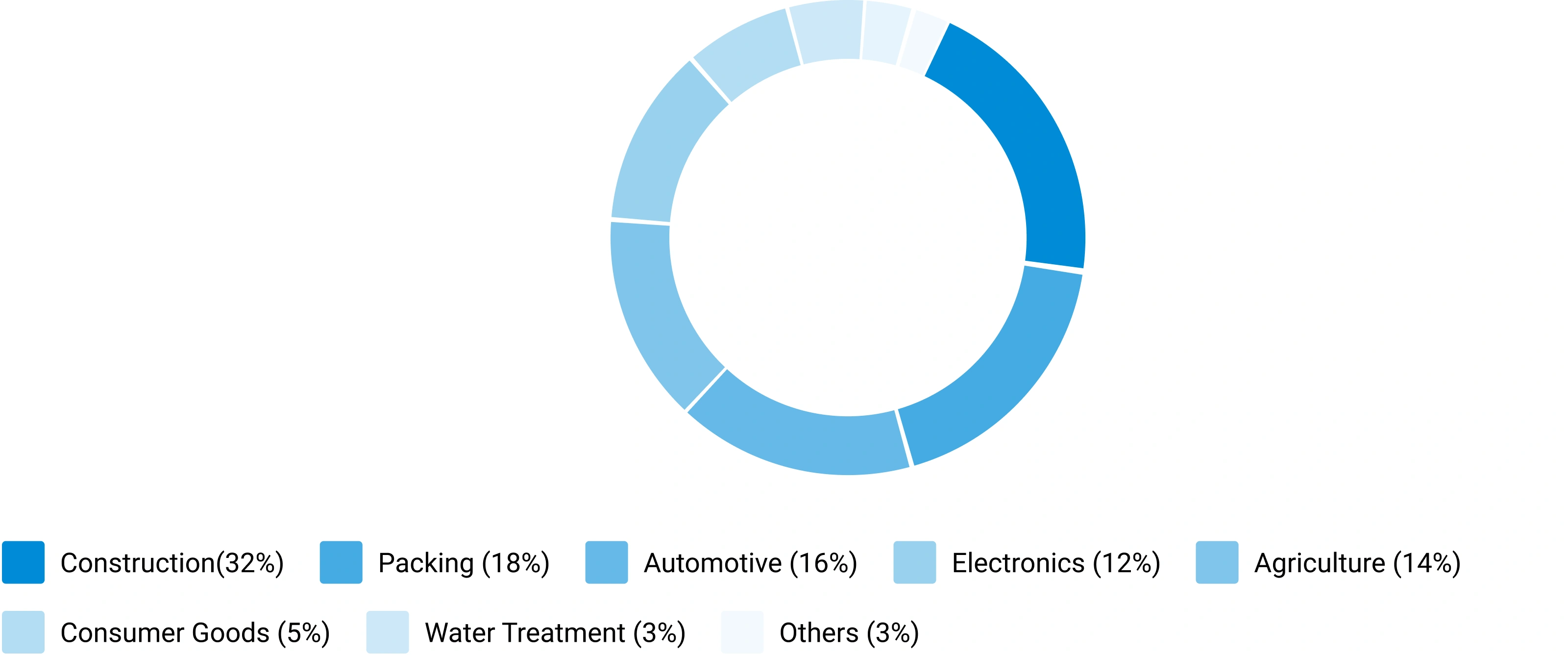
Chemical demand is evaluated across automotive, construction, packaging, electronics, agriculture, healthcare, consumer goods, industrial manufacturing, energy and utilities, and water treatment. Industry output, production trends, and consumption intensity are analyzed to determine demand patterns.
Consumption Modeling
Demand is estimated using measurable indicators: kilograms per vehicle, kilograms per square meter of construction, dosage per cubic meter of water treated, kilograms per hectare of agricultural land, and kilograms per ton of manufactured products. Consumption factors are validated through industry publications and primary interviews.
Application Analysis
The market is segmented by application area to understand product performance requirements, formulation trends, technology adoption, customer preferences, and regulatory requirements improving demand accuracy and segmentation granularity.
Demand-Side Assessment — End-Use Industry Demand Distribution
Illustrative distribution of chemical & materials demand across key end-use industries
Phase 4 - Trade Flow Analysis: Balancing Regional Supply and Demand
Trade flow analysis reconciles regional supply and demand estimates through import and export data, identifying net supply positions, regional dependencies, and market imbalances. It serves as an independent validation layer that tests the consistency of supply-side and demand-side estimates.
Import Analysis
Import data is evaluated to determine volumes, source countries, product dependency, regional supply gaps, and pricing trends — identifying markets that rely heavily on external supply and where domestic production is insufficient to meet demand.
Export Analysis
Export assessments reveal production surplus, export competitiveness, regional manufacturing strength, and global market participation. Export patterns also help validate domestic production estimates and identify net exporting regions.
Apparent Consumption Model
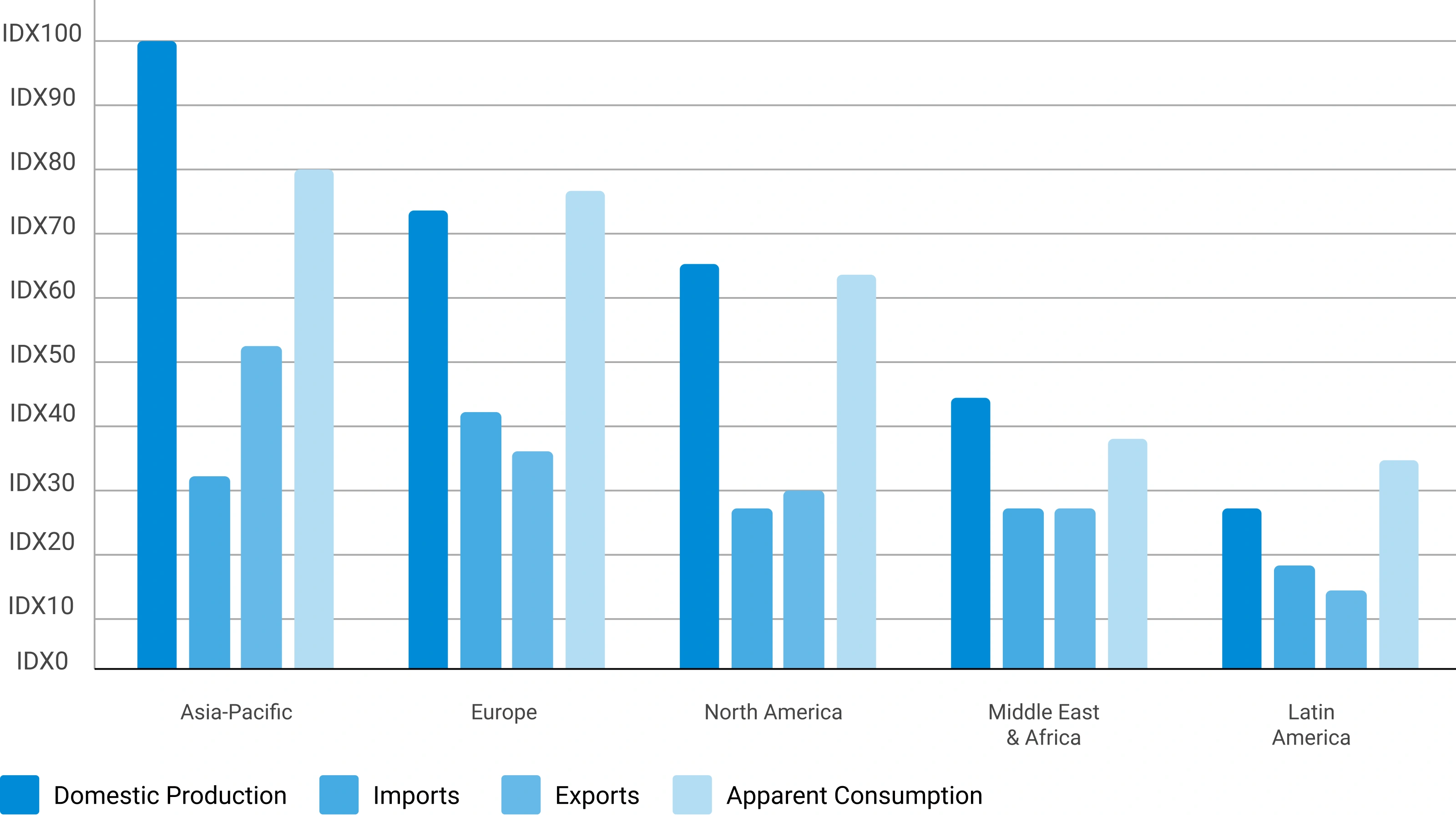
Regional consumption is assessed using the standard apparent consumption formula:
Results identify net importing regions, net exporting regions, regional deficits, and surpluses — serving as an independent validation of supply and demand estimates.
Trade Flow Analysis — Net Supply Position by Region
Illustrative apparent consumption vs. domestic production across major regions — positive gap indicates net import dependency
Phase 5 — Primary Research: The Critical Validation Layer
Primary research tests and refines findings from secondary research through direct engagement with industry participants across the supply chain, demand side, and expert community. It captures intelligence that no database or published report can provide — the real-world experience of manufacturers, buyers, and specialists operating in the market.

Supply-Side Interviews
Conversations with chemical manufacturers, raw material suppliers, contract manufacturers, technology providers, and plant operators cover production trends, capacity utilization, pricing developments, technology shifts, and competitive dynamics.

Demand-Side Interviews
Engagement with OEMs, industrial consumers, procurement managers, distributors, formulators, and end-use manufacturers focuses on consumption trends, purchasing behavior, product substitution, demand outlook, and emerging applications.

Industry Expert Consultations
Additional interviews with industry consultants, independent experts, regulatory specialists, technical professionals, and research institutions provide deeper market context and validate key analytical assumptions.
Focus Areas of Primary Research:
Market Size & Forecast Validation
Revenue estimates, volume consumption, growth rates, forecast assumptions, regional demand.Supply Chain & Value Chain Assessment
Raw material sourcing, supply chain challenges, distribution networks, procurement practices.Production & Capacity Analysis
Manufacturing capacity, utilization rates, expansion projects, plant investments.Pricing & Cost Structure Analysis
Product pricing trends, feedstock costs, energy costs, margin pressures, pricing outlook.Competitive Landscape Assessment
Volume and value estimates confirmed to be fully consistent with one another before publicationInterview Volume by Market Scope
| Study Scope | Number of Interviews |
|---|---|
| Niche Market | 20 – 30 |
| Mid-Sized Market | 30 – 50 |
| Global Market | 50 – 80 |
| Highly Fragmented Market | 80 – 120 |
Interview Details:
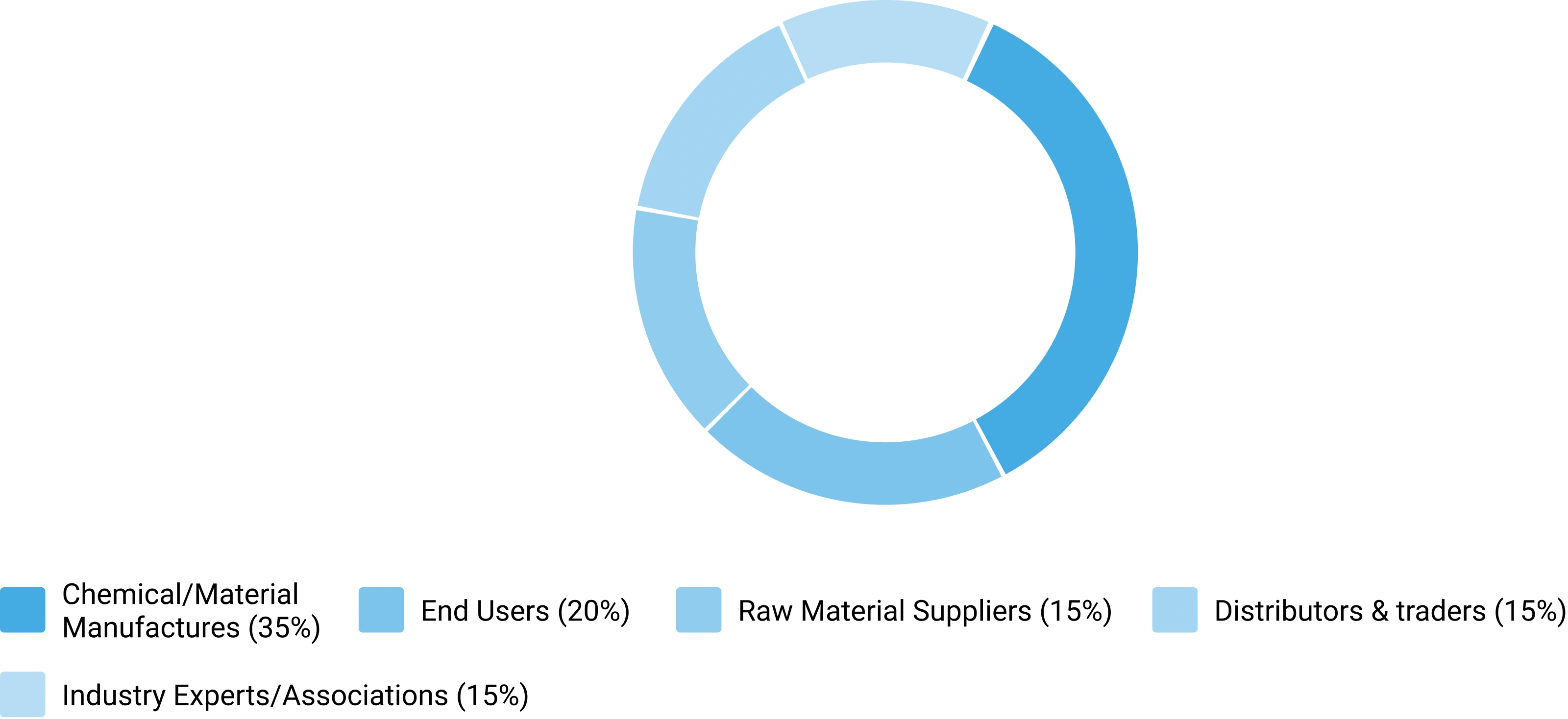
Category : Manufacturers, Suppliers, Distributors, End Users, Experts/Associations
Average Duration : 30–60 Minutes
Interview Mode : Video calls, telephonic interviews, expert consultations
Interview Format : Structured / Semi-Structured questionnaire
Focus Areas of Primary Research:
Market Size & Forecast Validation :
Revenue estimates, volume consumption, growth rates, forecast assumptions, regional demand.
Supply Chain & Value Chain Assessment :
Raw material sourcing, supply chain challenges, distribution networks, procurement practices.
Production & Capacity Analysis :
Manufacturing capacity, utilization rates, expansion projects, plant investments.
Pricing & Cost Structure Analysis :
Product pricing trends, feedstock costs, energy costs, margin pressures, pricing outlook.
Competitive Landscape Assessment :
Market share, competitor positioning, strategic initiatives, partnerships, acquisitions.
Primary Research — Stakeholder Coverage by Category
Distribution of interview respondents across stakeholder categories (% share from PPT data)
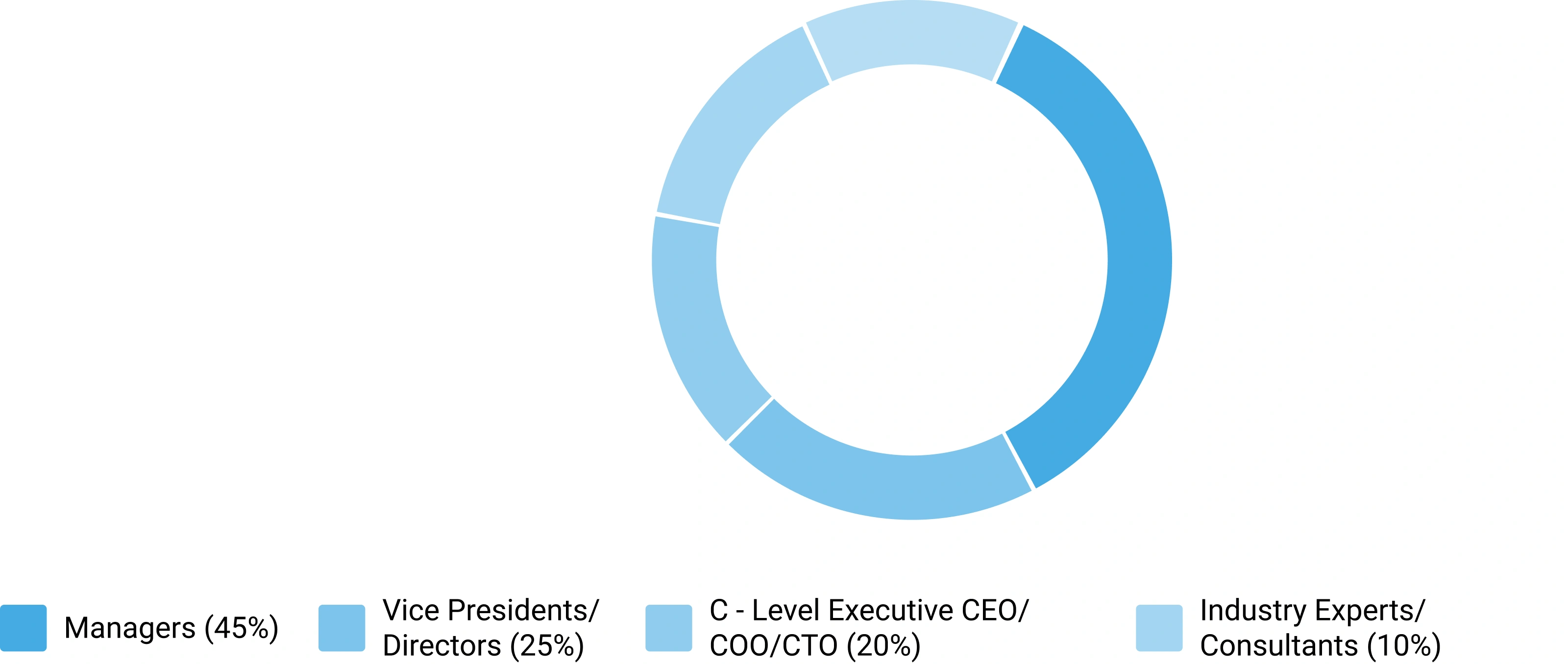
Primary Research — Respondent Designation Profile
Seniority breakdown of interview respondents (% share from PPT data)
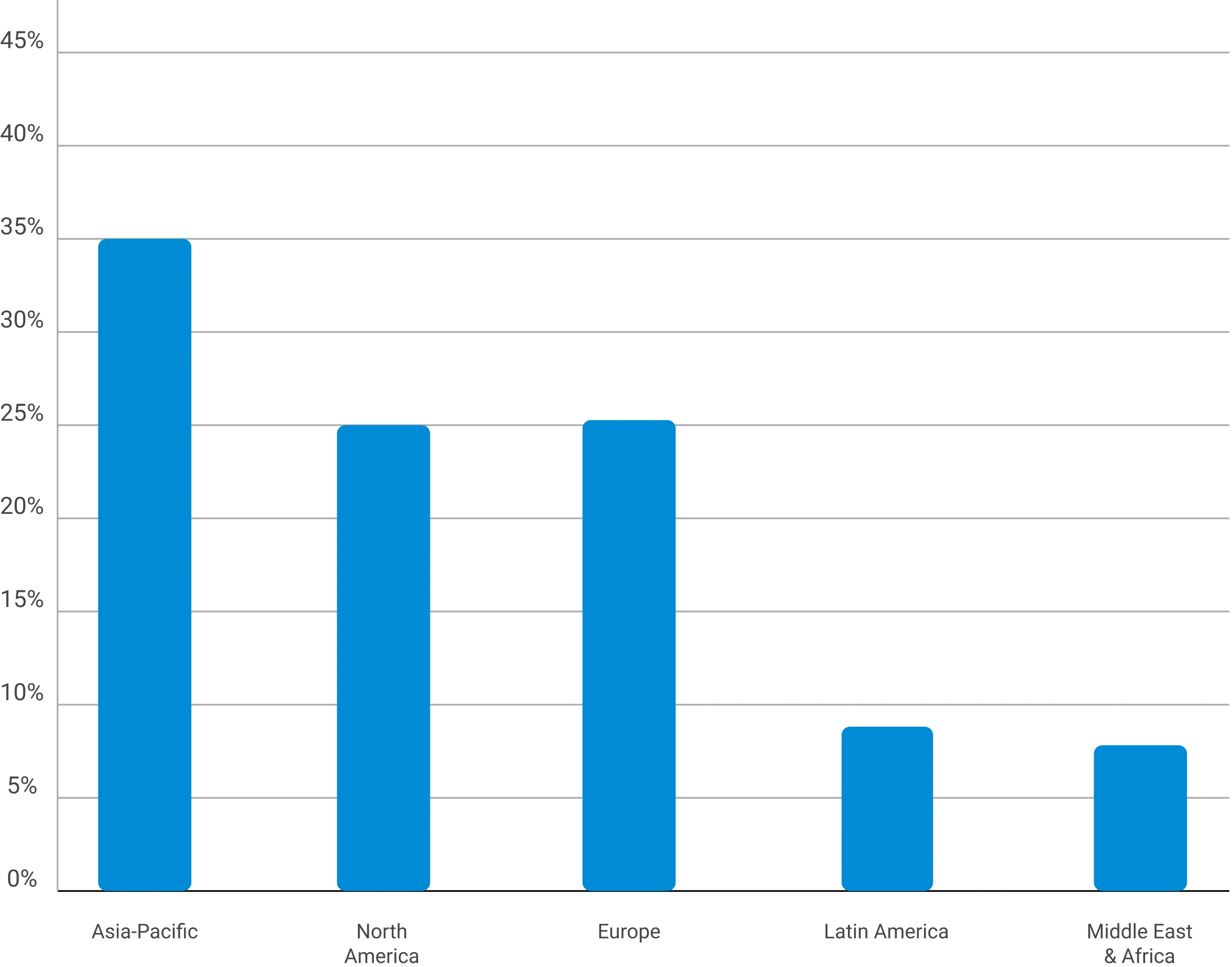
Primary Research — Geographic Coverage of Interviews
Regional distribution of primary research engagement (% share from PPT data)
Phase 6 — Data Triangulation and Market Validation
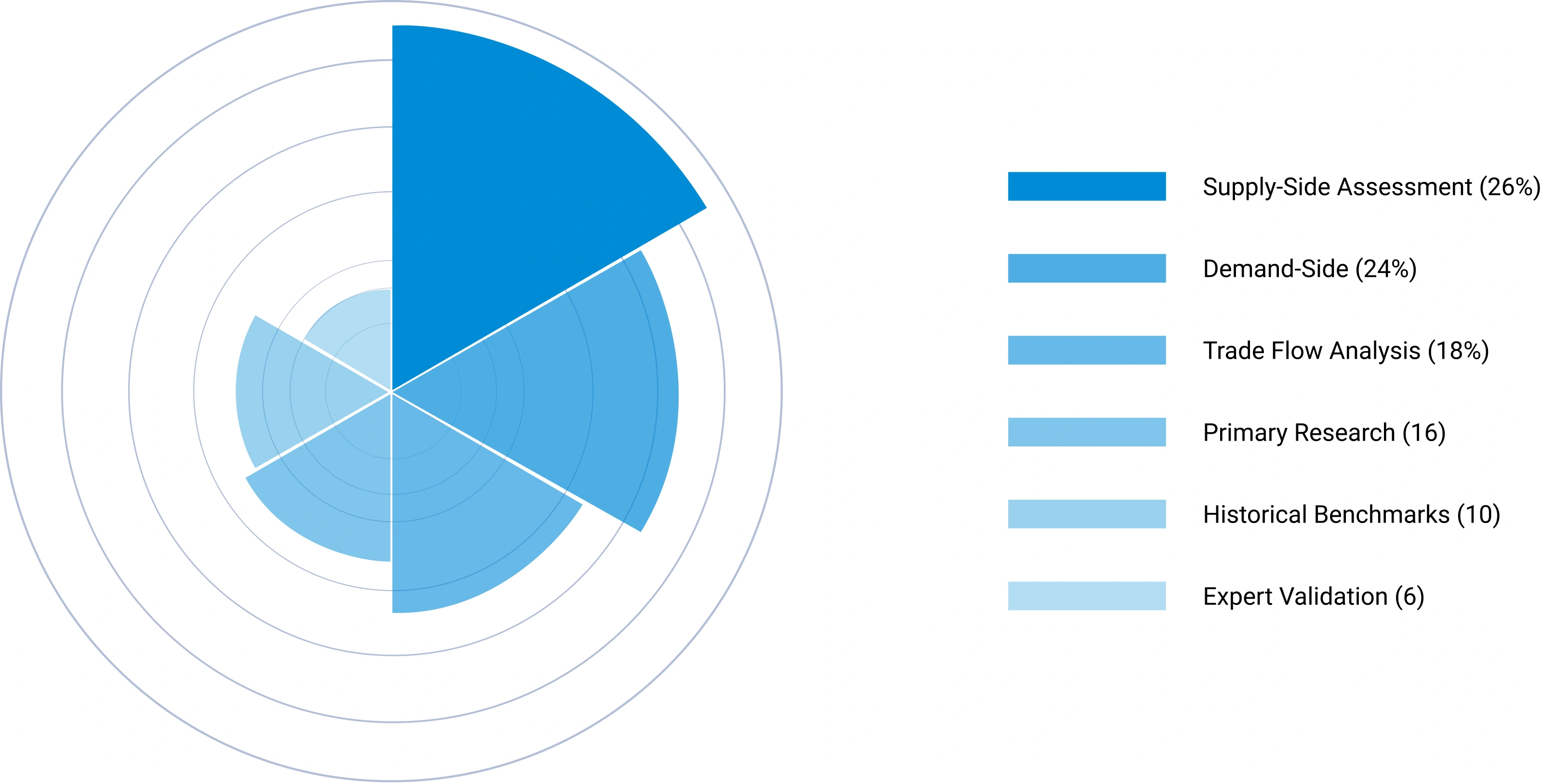
No single methodology is relied upon in isolation. Multiple independent estimation approaches are combined and reconciled to ensure consistency, accuracy, and analytical defensibility. Any material deviations between approaches are investigated and adjusted through additional validation cycles.
The final market size is derived through weighted triangulation of all validated methodologies. Any material deviations between approaches are investigated and adjusted through additional validation cycles. The outcome represents the most realistic assessment of the market based on available evidence and expert confirmation ensuring that volume and value estimates are fully consistent with one another.
Triangulation Framework — Input Contribution Weight
Relative weight each sizing input contributes to the final reconciled market estimate
Phase 7 — Forecast Modeling: Projecting Future Market Evolution
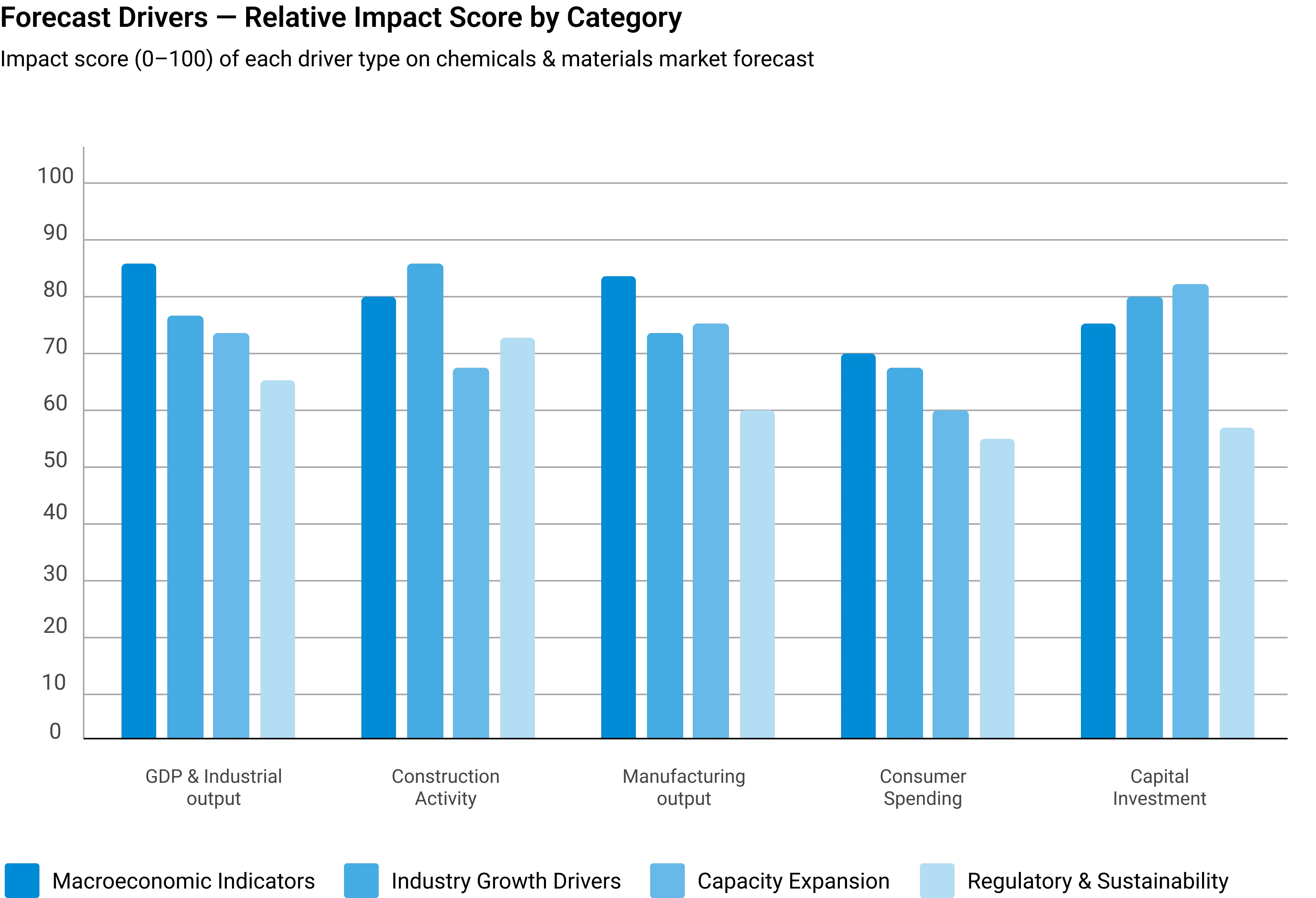
Forecasting evaluates the future trajectory of the market using a combination of quantitative indicators and qualitative assessments across economic, industry, and regulatory dimensions. Rather than simple extrapolation, each driver is independently modeled and integrated into a composite forecast.
Macroeconomic Indicators
GDP growth, industrial production, manufacturing output, construction activity, consumer spending, and capital investment form the quantitative foundation of long-term demand projections. These are applied at country, regional, and global levels.
Industry Growth Drivers
Urbanization, infrastructure development, industrialization, technological innovation, sustainability initiatives, and evolving product performance requirements are assessed at regional and industry levels — capturing both structural and cyclical demand drivers.
Capacity Expansion Analysis
Announced plant expansions, new manufacturing facilities, technology upgrades, and strategic investments are evaluated to determine future supply-demand dynamics and potential market tightness or oversupply situations.
Regulatory & Sustainability
Environmental regulations, chemical safety standards, emission reduction targets, circular economy initiatives, and sustainability requirements are incorporated as they often influence product adoption rates and market growth trajectories.
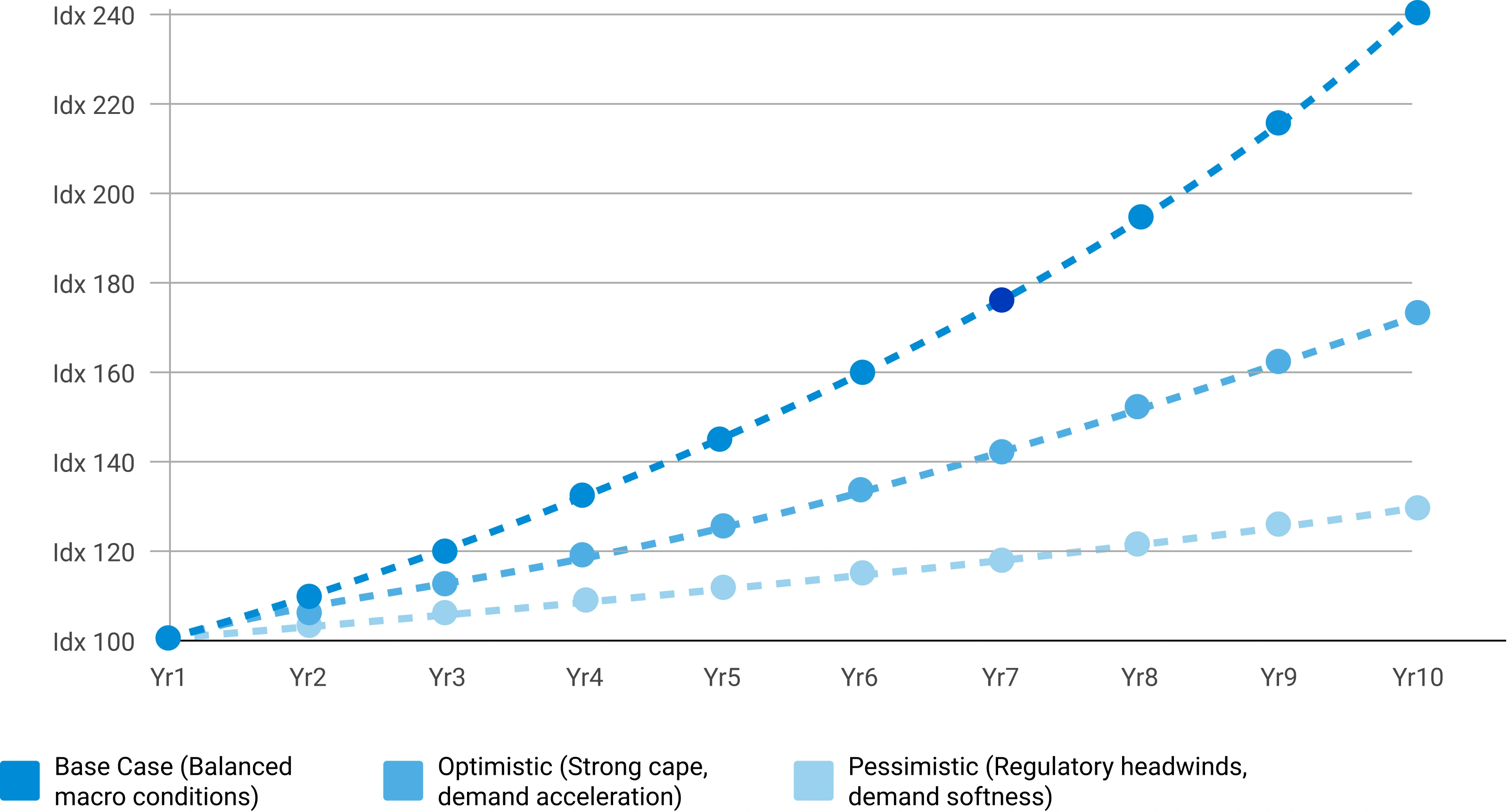
Scenario Forecast Range — Indexed Market Growth (Year 1–10)
Illustrative indexed growth trajectories across Base, Optimistic, and Pessimistic scenarios over a 10-year forecast horizon
Forecast Drivers — Relative Impact Score by Category
Impact score (0–100) of each driver type on chemicals & materials market forecast



Comments
Share your thoughts, ask a question, or provide feedback about this report.