
Fire Fighting Chemicals Market Size Analysis Report 2035
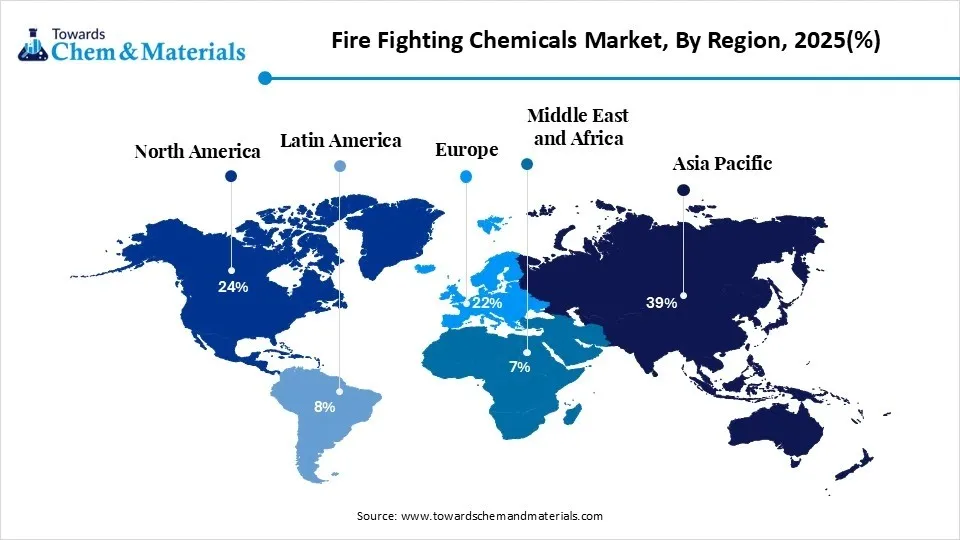
The fire fighting chemicals market size was valued at USD 3.04 billion in 2025, is estimated to reach USD 3.23 billion in 2026, and is projected to reach USD 5.51 billion by 2035, exhibiting a compound annual growth rate (CAGR) of 6.13% over the forecast period from 2026 to 2035.Asia Pacific dominated the firefighting chemicals market with the largest revenue share of 39% in 2025 and is expected to grow at the fastest CAGR of 6.24% during the forecast period.
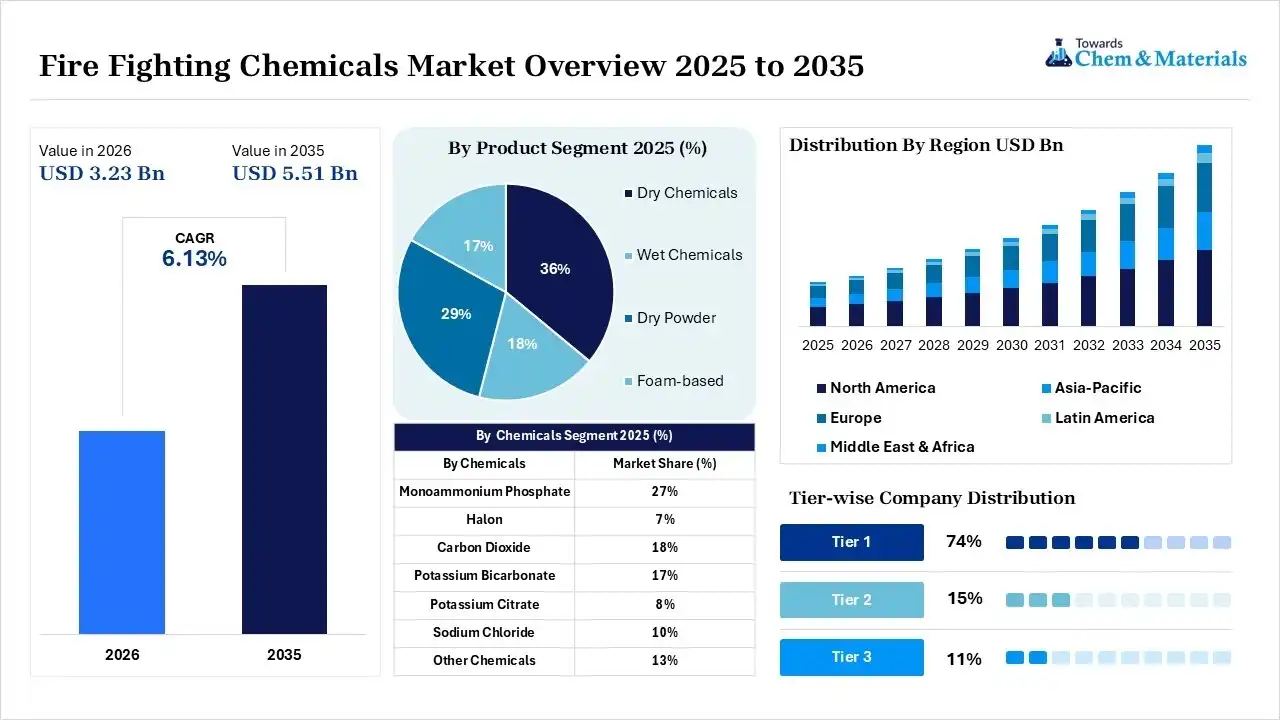
Strict fire safety laws, investments in high-risk industrial facilities, heightened demand for environmentally friendly firefighting formulations, and the swift development of commercial and residential construction are all factors driving market growth. The growing use of advanced suppression systems and the shift to chemicals without fluorine continue to drive long-term growth in the market among a variety of end-use industries.
Market Highlights
- By region, Asia Pacific dominated the firefighting chemicals market by holding 39% share in 2025 and is expected to grow at a CAGR of 5.11% during the forecast period.
- By region, North America held 24% market share in 2025 and is expected to grow at the fastest with a CAGR of 6.72% during the forecast period.
- By product type, the dry chemicals segment dominated the market with the largest share of 36% in 2025 and is expected to grow at a CAGR of 5.4% during the forecast period.
- By product type, the dry powder segment held 29% market share in 2025 and is expected to grow at the fastest CAGR of 6.42% over the forecast period.
- By chemicals, the monoammonium phosphate segment dominated the market with the largest share of 27% in 2025 and is expected to grow at a CAGR of 5.73% during the forecast period.
- By chemicals, the potassium bicarbonate segment held 17% market share in 2025 and is expected to grow at the fastest CAGR of 6.68% over the forecast period.
- By application, the portable fire extinguishers segment dominated the market with the largest share of 41% in 2025 and is expected to grow at a CAGR of 5.54% during the forecast period.
- By application, the automatic fire sprinklers segment held 29% market share in 2025 and is expected to grow at the fastest CAGR of 6.51% over the forecast period.
Building Safer Fire Protection Through Advanced Chemical Solutions
According to Towards Chemicals and Materials Analytics and Consulting, the global firefighting chemicals market volume was valued at 2.00 million metric tons in 2025 and is expected to surpass around 3.32 million metric tons by 2035, accelerating a compound annual growth rate (CAGR) of 5.21% over the forecast period from 2026 to 2035.
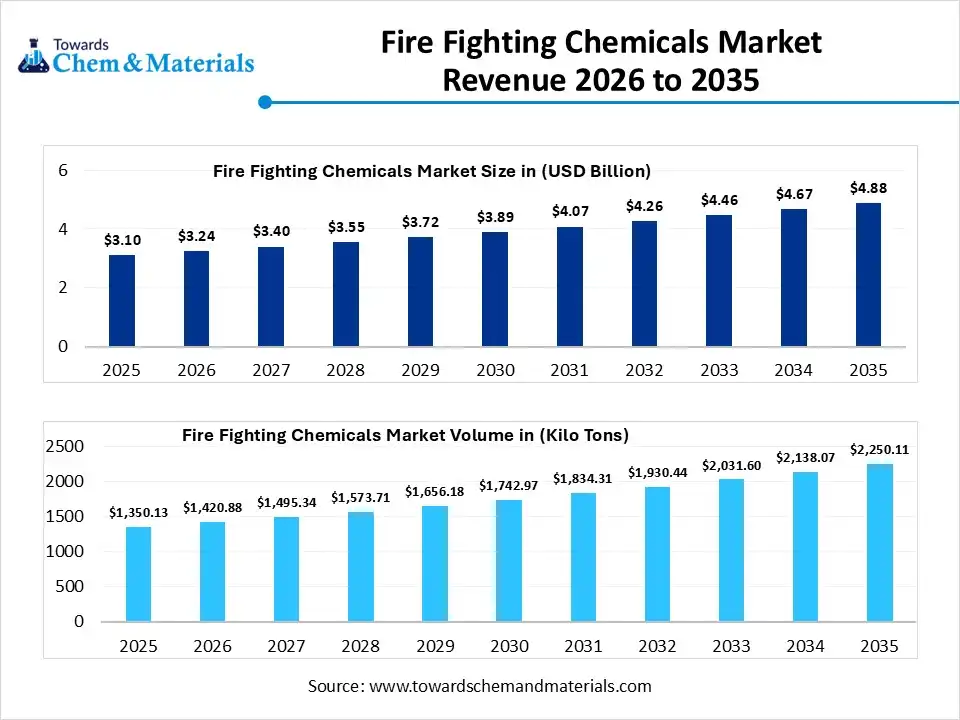
Governments, industries, and commercial facilities are intensifying measures to prevent fire incidents and adapt to changing safety regulations, and this is driving the positive growth of the firefighting chemicals market. Growth in the chemical manufacturing industry, oil and gas pipelines, data centers, smart buildings, and transportation infrastructure continues to drive demand for efficient suppression chemicals. The environmental issues associated with PFAS used as firefighting foam are stimulating manufacturers to create alternatives that are more environmentally friendly without the use of fluorinated materials. At the same time, new technology such as clean-agent systems, nanotechnology-based flame retardants, Internet of Things (IoT) monitoring, and artificial intelligence (AI) systems are making responses more efficient and reducing the damage to property. Long-term market growth can be anticipated as continuous development of chemical formulations, tight building codes, and increased infrastructure development are expected to drive the market.
- For instance, in April 2026, FM won the Guinness World Record for the worlds largest fire sprinkler display, which underscored its continuing efforts in protecting properties and highlighted the increasing significance of innovative fire suppression systems in enhancing worldwide fire safety knowledge and innovation.(Source: www.fm.com)
Fire fighting chemicals are chemical substances that are used to extinguish fire through chemical inhibition, cooling, and smothering. The various types of chemicals are foams, fire retardants, dry chemical powders, carbon dioxide, and wet chemicals. The diverse chemical agents are made to combat various fire classes. They offer benefits like increasing water efficiency, enhancing fire suppression, minimizing collateral damage, and increasing safety.
The fire fighting chemicals market growth is driven by the increasing renewable energy adoption, increasing use of firefighting foams, stricter fire safety regulations, growing development of data centers, high production of smart fire suppression chemicals, increased awareness about fire prevention, and the growth of electric vehicles.
Global Investment Movement for Fire Fighting Chemicals Market
As regulators continue to limit the use of PFAS-based chemicals in firefighting, investments are increasingly being made toward environmentally friendly alternatives. Manufacturers are investing in producing foam concentrates that are non-fluorinated and biodegradable, in new surfactant technologies, and in a new generation of suppression chemicals that meet new environmental regulations.
Dry chemical technologies also continue to be strong investments, especially those in monoammonium phosphate technologies, due to their low cost and wide compatibility for many fire classes. At the same time, high-risk industries such as oil and gas, aviation, chemical processing plants, and data centers are still investing in fixed suppression systems and specialized fire-fighting chemicals to improve the safety of the operation and compliance with regulatory requirements.
- For instance, in January 2026, the "Your Home Is a Trust" campaign was launched in January 2026 by the Abu Dhabi Civil Defence Authority to boost awareness among citizens about domestic fire safety, promote fire prevention methods, and help build safer homes by encouraging the community to take steps towards preparedness and education. (Source: gulfnews.com)
Market Trends:
- As environmental regulations speed up the replacement of existing formulations containing PFAS, the shift to fluorine-free firefighting foams is driving change in product development.
- Manufacturers are steadily increasing production of suppression agents that are biodegradable and offer the same performance as traditional agents, but arent harmful to the environment over the long run.
- As EV and battery energy storage systems become more prevalent, new chemicals are needed to react to thermal runaway events. The transition is stimulating innovation in wet chemicals, encapsulation techniques, and advanced cooling formulations for Lithium-Ion battery fires.
Report Scope
| Report Attribute | Details |
| Market Size and Volume in 2026 | USD 3.23 Billion / 2.10 Million Metric Tons |
| Revenue Forecast in 2035 | USD 5.51 Billion / 3.32 Million Metric Tons |
| Growth Rate | CAGR 6.13% |
| Forecast Period | 2026 - 2035 |
| Base Year | 2025 |
| Dominant Region | Asia Pacific |
| Segment Covered | By Product, By Chemicals, By Application, By Region |
| Key companies profiled | Johnson Controls International plc, Solvay S.A, 3M, ICL Group, Dr. Sthamer (Hamburg GmbH), Fire Safety Devices Pvt. Ltd., Linde plc, Angus Fire, Safequip Pty Ltd, BASF SE, BIO EX |
Transforming the Fire Fighting Chemicals Market Through AI
AI is transforming the fire fighting chemicals market by allowing quicker detection, precise risk analysis, and intelligent activation of suppression systems. Environmental monitoring systems powered by artificial intelligence, connected to IoT sensors, can continuously monitor the environment, detect abnormal heat patterns, and automatically respond before fires break out. Machine learning algorithms enable firefighters to make more informed decisions during emergencies by offering real-time situational awareness, predictive fire behavior analysis, and optimized resource allocation.
Digital innovations also enable remote monitoring of industrial facilities, ensuring that the operator complies with regulations under optimum operation without any disruption. In an era of rapid digital transformation, AI-driven fire protection systems are likely to become even more crucial in bolstering public safety, minimizing property damage, and contributing to the evolution of more intelligent and sustainable fire protection systems.
Supply Chain Analysis of the Fire Fighting Chemicals Market
Feedstock Procurement
- Feedstock procurement is the base of the firefighting chemicals supply chain that supplies the necessary raw materials comprising surfactants, foaming agents, chemical compounds, and specialty additives used in the production of suppression chemicals.
- Ensuring the reliability of procurement guarantees consistent product quality, uninterrupted production, and adherence to environmental standards.
- Dow: Dow supplies critical hydrocarbon and surfactant feedstocks used in manufacturing a wide range of firefighting suppressants.
- Other Key Players: BASF, Solvay
Chemical Synthesis and Processing
- The stage involves a series of chemical processing steps to produce active firefighting chemicals like fluorosurfactants, dry chemical powders, clean agents, and special suppressant chemicals from the raw chemical feedstocks.
- Efficient synthesis directly improves the efficiency of the product, compliance with regulations, and environmental performance, and facilitates manufacturers creating innovative fluorine-free alternatives.
- DuPont: DuPont creates cutting-edge fluorochemicals and fluorine-free intermediates for use in next-generation firefighting chemical formulations.
- Other Key Players: Oakville, IL 61356 USA
Blend and Compound the Formulation
- The process of compounding is a critical process that requires very special attention to the accurate mixing of active chemicals, stabilizers, additives, and water into the desired product, in this case, a firefighting product, including AFFF, Fluoro Free, and ABC dry chemical powders.
- Accurate formulation is crucial for maintaining consistent suppression capabilities, product stability, and adherence to rigorous fire safety requirements in various industrial applications.
- Tyco Fire Protection: Tyco Fire Protection Products is a manufacturer and packager of high-performance, industrial, and commercial firefighting foam concentrates and suppression formulations.
- Other Key Players: KV Fire Chemicals, Ansul, Ceasefire
Benefits of the Fire Fighting Chemicals
- Rapid Fire Suppression: Fire extinguishing chemicals that rapidly extinguish fires by cooling burning materials, interrupting combustion reactions, or providing a barrier to prevent oxygen from reaching the burning materials. They respond quickly, which reduces property damage, protects critical infrastructure, and enhances emergency response effectiveness in industrial, commercial, and residential settings.
- Prevention of Fire Reignition: Special suppression chemicals form a protective barrier over combustible materials or flammable liquids after a fire is extinguished, so that the oxygen cannot reach the ignition sources. This is a function that decreases the possibility of summer fires and makes operations safer in the long term in hazardous environments.
- Protection of Sensitive Assets: Clean agents will not leave behind any residues and can be used in the protection of electronic equipment, communication systems, healthcare facilities, museums, and valuable archives. They limit the secondary damage and help businesses avoid disruption of operations when critical technologies are involved.
- Effective Versatile Multi-Class Fire Protection: Modern firefighting chemicals are designed to fight multiple types of fires, including solid, liquid, gas, electrical, and cooking oil. With their versatility, organizations can implement full fire protection systems in various industrial applications with fewer, more versatile fire suppression products.
- Enhanced Regulatory Compliance: By phasing out PFAS-based products and switching to PFAS-free ones, advanced firefighting chemicals enable the transition to more stringent fire safety regulations and environmental regulations. Compliance enhances workers safety and minimises legal liability for hazardous chemical use.
Versatile Uses in Wide Industrial Application of Fire Fighting Chemicals
- Industrial Manufacturing Facilities: Fire-fighting chemicals are widely used in manufacturing plants, chemical processing facilities, power stations, and heavy industrial operations to quickly extinguish high-risk fires that involve combustible materials, electrical equipment, and hazardous chemicals, which will help minimize production downtime and keep workers safe.
- Specialized Firefighting Foams for Oil, Gas, and Aviation Operations: These foams are extensively used throughout refineries, fuel storage terminals, offshore oil and gas rigs, airports, and aviation maintenance facilities to extinguish fires from flammable liquids promptly and avoid the possibility of catastrophic events involving volatile hydrocarbons and aviation fuels.
- Commercial Buildings & Public Infrastructure: Offices, shopping malls, hospitals, education facilities, hotels, and public buildings use firefighting chemicals in portable extinguishers and automatic sprinkler systems to improve building occupants safety against fire, as well as meet rigorous building fire protection code requirements.
- Data Centers & Telecommunications: Clean agent suppression systems extinguish fires on servers, networking equipment, and communication equipment without the danger of corrosive residue, which means that critical digital equipment can remain in operation while equipment replacement costs are reduced.
- Food Processing and Commercial Kitchens: Wet chemical suppression agents are specially engineered for commercial kitchens, restaurants, hotels, cafeterias, and food processing plants where cooking oils and grease present a special fire hazard that must be rapidly cooled and effectively suppressed by saponification.
Regulatory Framework: Firefighting Chemicals Market
| Country Region | Regulatory Body | Key Regulations | Focus Areas |
| Asia Pacific | Ministry of Environment | National Building Code (NBC) 2016 | Proper classification of AFFF/foam storage and handling of hazardous chemicals. |
| North America | U.S. EPA | National Defense Authorization Act (NDAA) | Military phase-out of AFFF; drinking water contamination tracking |
| European Union | European Chemicals Agency (ECHA) | REACH Regulation (EU) 2025/1988 | Mandatory phase-out timelines; wastewater containment |
What are the firefighting chemicals?
Fire-fighting chemicals are chemical agents specifically formulated to control, extinguish, and prevent fires in residential, commercial, industrial, aviation, marine, and critical infrastructure applications. How these chemicals work is by cooling combustibles, interrupting combustion reactions, displacing oxygen, or producing a barrier to prevent flames from spreading and to prevent a flame from reigniting. Products that are sold in the market include fire-fighting foam, dry chemical powders, clean agents, carbon dioxide systems, wet chemicals, and specialty dry powders for specific fire classes.
Types of Firefighting Chemicals
- Firefighting Foams : Firefighting foams such as AFFF and fluorine-free foams are made with hydrocarbon-based surfactants and other chemicals that can quickly extinguish a fire and create a protective blanket over flammable liquids. These act as an effective oxygen suppressant; they reduce vapor release, and they will prevent reignition, and so are ideal for high-risk industrial, aviation, and petroleum applications.
- Dry Chemical Powders : Common dry chemical powders are either monoammonium phosphate or sodium and potassium bicarbonate, which disrupt the chemical chain reaction that causes combustion. They are one of the most common suppression agents available in industrial, commercial, and portable fire extinguishers, due to their versatility with class A, B, and C fires.
- Carbon Dioxide (CO₂) :Carbon dioxide is used as an inert gaseous suppression agent that does not leave chemical residues and displaces oxygen around the fire very quickly. It is also well-suited to protect electrical equipment, server rooms, labs, telecom facilities, and other areas with sensitive electronics for its residue-free properties.
- Wet Chemicals :Wet chemical products consist of alkaline salts in water, e.g., potassium acetate, potassium carbonate, and potassium citrate. In commercial kitchens and food preparation areas, they combine with hot cooking oils by saponification to form a cooling foam layer that can inhibit the re-ignition of the oil and suppress oxygen in the oil.
- Specialty Dry Powders : Specialty dry powders are used for fires involving combustible metals that contain magnesium, sodium, titanium, and other metals that are reactive. Under very hazardous operating conditions, these powders provide a protective crust over burning metals and help to isolate oxygen, thus stopping further combustion.
- Clean Agents: Clean agents are gaseous fire suppression agents that extinguish a fire by blocking the combustion process physically and/or chemically but do not leave any powder or water residue. They are widely used in mission-critical facilities where protecting valuable electronic equipment and ensuring uninterrupted operations are essential.
Market Dynamics
Driver: Strengthening Fire Safety Regulations Driving Market Growth
The strict fire safety regulations in place by the authorities in both commercial and industrial, as well as residential sectors are a key factor in stimulating the growth in the firefighting chemicals market. Compliant fire suppression systems that have effective firefighting solutions installed and maintained are required by regulatory agencies like the
National Fire Protection Association (NFPA) and the Occupational Safety and Health Administration (OSHA). The demand for advanced firefighting chemicals is also bolstered by increasing investments in hazardous industries, growing infrastructure, and the growing emphasis on safety in the workplace. The regulatory requirements drive manufacturers to keep creating high-performance suppression agents that meet changing environmental and safety regulations.
Restraint: Environmental Restrictions Limiting Conventional Foam Adoption
PFAS are not used in traditional firefighting foams and are facing increasingly strict regulations on their use in the market. The implementation of regulatory measures in Europe and North America is forcing organisations to implement alternative suppression systems using fluorine that are available. Such compliance costs add to the operating costs of industries and may form temporary barriers to adoption. Besides that, reformulating products to meet the changing environmental regulations can be a costly and difficult task for manufacturers, as they have to balance cost and effectiveness with adequate suppression capabilities.
Opportunity: Growing Transition Toward Sustainable Fire Suppression Solutions
As firefighting chemicals get more eco-friendly, manufacturers of fluorine-free foams and advanced clean-agent technologies stand to gain big. Demand for "biodegradable" suppression solutions that provide high fire-extinguishing effectiveness while minimizing environmental harm continues to grow due to growing environmental awareness and increased regulatory requirements.
Segmental Insights
Product Type Insights
The dry chemicals segment dominated the market with the largest share of 36% in 2025 and is expected to grow at a CAGR of 5.4% over the forecast period, as the product is compatible with a wide range of fire classes and can be used to extinguish fires quickly, is cost-effective, and is used in portable firefighting equipment and industrial suppression systems. Dry chemical fire extinguishers are filled with a dry chemical agent that can be used in commercial buildings, manufacturing spaces, warehouses, transportation facilities, and institutional uses to provide efficient fire control by interrupting combustion reactions. Their availability, low maintenance, and protection of various environments make them available and utilized in fire safety systems around the world.
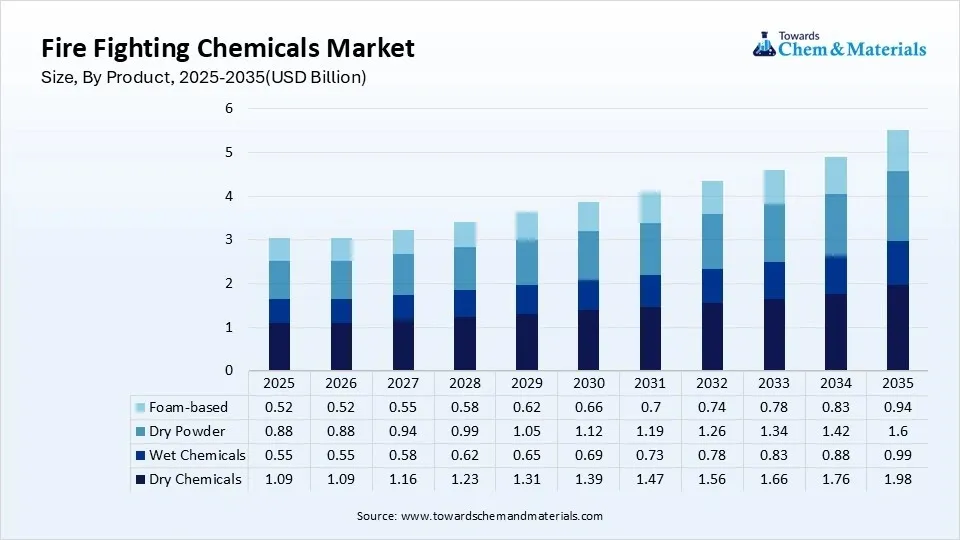
The dry powder segment held a 29% market share in 2025 and is expected to grow at the fastest CAGR of 6.42% over the forecast period because of its compact, reliable, and versatile fire suppression capabilities in various applications such as residential, commercial, and industrial. Dry powders are effective against flammable liquids and gases, electrical equipment, and special fire hazards and are used for rapid fire knockdown. The agents operate efficiently and are easily kept, so they are widely used in manufacturing plants, chemical facilities, garages, transportation systems, and industrial workshops. The increased safety awareness and the need for portable fire extinguishers are also aiding the use of dry powder extinguishers.
- For instance, in February 2026, SafeQuips compact disposable dry chemical powder and foam fire extinguishers were released, which are aimed at enhancing accessibility, maintenance, and emergency response times in the day-to-day environment.(Source: www.arrivealive.co.za)
Fire Fighting Chemicals Market Share, By Product, 2025(%)
| By Product | Market Share (%) |
| Dry Chemicals | 36% |
| Wet Chemicals | 18% |
| Dry Powder | 29% |
| Foam-based | 17% |
Chemicals Insights
The monoammonium phosphate segment dominated the market with the largest share of 27% in 2025 and is expected to grow at a CAGR of 5.73% over the forecast period, due to its excellent multi-class fire suppression capability, affordability, and extensive use in ABC dry chemical extinguishers. The chemical works to extinguish Class A fires involving solid combustible materials, Class B fires involving flammable liquids, and Class C electrical fires by interrupting the combustion reactions. Because of its reliability, storage stability, and versatility, it is widely used for commercial buildings, industrial facilities, warehouses, transportation, and manufacturing applications. The need for fire suppression systems based on monoammonium phosphate remains high, with regulations focusing more and more on fire safety in the workplace.
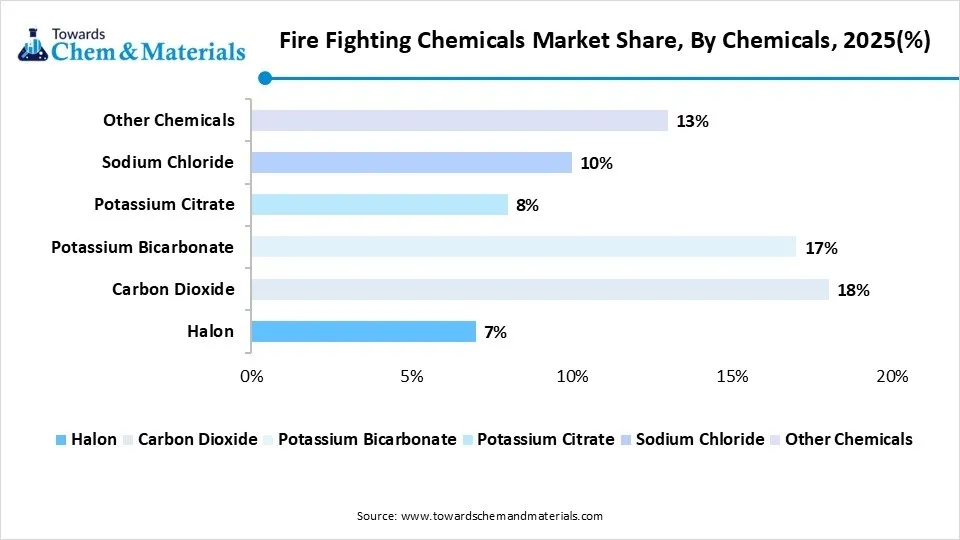 The potassium bicarbonate segment held a 17% market share in 2025 and is expected to grow at the fastest CAGR of 6.68% over the forecast period, due to its high effectiveness in controlling flammable liquid and gas fires. Potassium bicarbonate is used for rapid fire control, which is matrix-disrupting, and is suitable for high-risk situations, where a quick response is needed. It is widely utilized in aircraft hangars, oil and gas installations, chemical processing plants, fuel storage facilities, and industrial manufacturing units. The rise of investments in hazardous industries and the increasing trend of using advanced firefighting systems in applications where rapid-fire suppression and asset protection are vital are fostering the use of potassium bicarbonate-based agents.
Firefighting Chemicals Market Share, By Chemicals, 2025(%)
| By Chemicals | Market Share (%) |
| Monoammonium Phosphate | 27% |
| Halon | 7% |
| Carbon Dioxide | 18% |
| Potassium Bicarbonate | 17% |
| Potassium Citrate | 8% |
| Sodium Chloride | 10% |
| Other Chemicals | 13% |
Application Insights
The portable fire extinguishers segment dominated the market with the largest share of 41% in 2025 and is expected to grow at a CAGR of 5.54% over the forecast period, as the requirement for fire extinguishers tends to grow with the regulations; there is a high rate of fire extinguishers being installed in residential and commercial buildings, and awareness regarding early fire response is increasing. Portable extinguishers can be used immediately in the initial stages of a fire to quickly put out a small fire and are available in various chemical types such as dry powder, foam, CO₂, and wet chemical. They are widely used in offices, schools, hospitals, factories, stores, buses, and public buildings. The demand for portable firefighting equipment remains strong globally as the safety expectations and rules governing fire protection in the workplace continue to rise.
- For instance, in May 2026, Rely Innovations introduced the Rely FX series of industrial-grade, portable fire extinguishers with enhanced corrosion resistance, durability, and ease of maintenance in challenging industrial conditions.(Source: www.firehouse.com)
The automatic fire sprinklers segment held a 29% market share in 2025 and is expected to grow at the fastest CAGR of 6.51% over the forecast period, as it is expected to be used in smart infrastructure projects, data centers, smart buildings, smart health, and smart industrial buildings. An automatic sprinkler system detects and extinguishes fires quickly and automatically when the temperature level reaches a preprogrammed threshold, which helps to limit the spread of fire and property damage. Growth in urbanisation, legislation on building safety, and the rising investment in automated protection systems are driving the deployment of systems in developed and emerging economies.
Fire Fighting Chemicals Market Share, By Application, 2025(%)
| By Application | Market Share (%) |
| Portable Fire Extinguishers | 41% |
| Automatic Fire Sprinklers | 29% |
| Fire Retardant Bulkhead | 11% |
| Fire Dampers | 9% |
| Other Applications | 10% |
Regional Insights
How Did the Asia Pacific Dominate the Fire Fighting Chemicals Market In 2025?
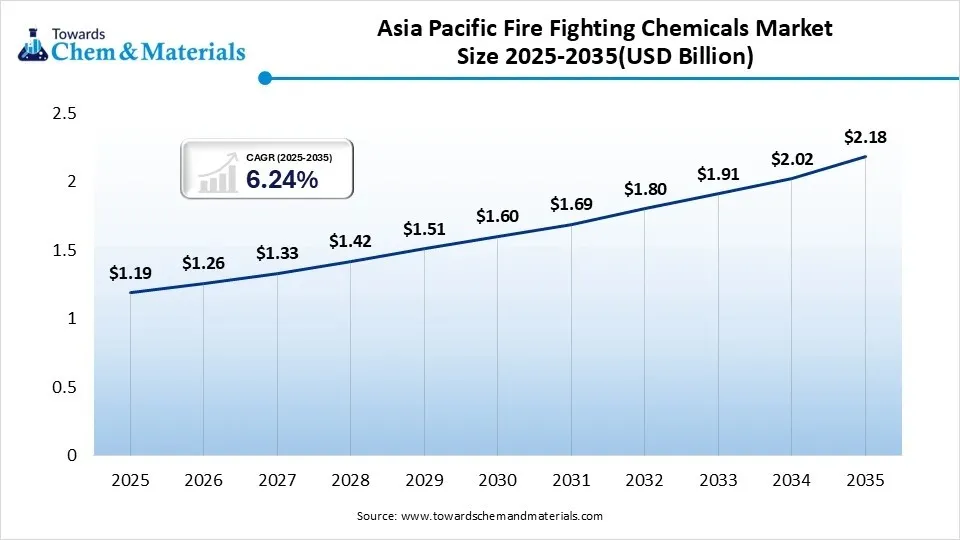
The Asia Pacific firefighting chemicals market size was estimated at USD 1.19 billion in 2025 and is projected to reach USD 2.18 billion by 2035, growing at a CAGR of 6.24% from 2026 to 2035. Asia Pacific dominated the market with the largest share of 39% in 2025 and is expected to grow at a CAGR of 5.11% during the forecast period. Expansion is facilitated by the regions rapid industrialisation, growing infrastructure development, growing fire safety awareness, and strict fire safety requirements for manufacturing, energy, and commercial industries. Faster and faster investments are being made in chemical plants, warehouses, data centers, and infrastructure in urban environments, driving the use of advanced fire suppression systems. Moreover, the governments of most of the worlds major economies are tightening fire safety laws and promoting the upgrading of existing fire safety systems to incorporate the latest chemical solutions.
Strengthening Chinas Fire Safety Through Regulatory Enforcement
China is a large market for firefighting chemicals as it has a well-established industrial pyramid, tons of infrastructure projects, and a growing emphasis on workplace safety compliance. The fire suppression agents market in the country is gaining momentum due to their demand in the chemical, manufacturing, energy, and construction industries.
- For instance, in July 2026, China embarked on a series of cross-agency initiatives to combat the illegal and non-standard workplace safety conditions in major industry areas such as mining, chemicals, and fire safety, in an effort to improve workplace safety standards across the board.(Source: www.chinadaily.com.cn)
Advancing Indias Fire Protection Infrastructure Through Smart Innovation
The rising urban infrastructure, industrial growth, and the increasing use of smart safety technologies in India are fueling the demand for the use of advanced firefighting chemicals and suppression systems. The demand for dependable fire protection solutions is growing with investments in commercial buildings, manufacturing plants, transportation, and energy projects.
- For instance, in June 2026, Kirloskar Brothers Ltd unveiled its Smart Skid Mounted Fire Pump Set, marking a step toward intelligent fire protection solutions to cater to the evolving built environment in India and enhance fire safety infrastructure.(Source: www.manufacturingtodayindia.com)
North America Firefighting Chemicals Market Trends Analysis
The North America firefighting chemicals market size was estimated at USD 0.73 billion in 2025 and is projected to reach USD 1.35 billion by 2035, growing at a CAGR of 6.34% from 2026 to 2035. North America held 24% market share in 2025 and is expected to grow at the fastest CAGR of 6.72% during the forecast period. Strict fire safety codes, upgrading of aging fire suppression equipment, and the use of environmentally friendly chemical fire suppression agents are fueling the regions expansion. With the ban on PFAS-containing firefighting foams, industries are being more proactive in changing to alternatives that do not contain fluorine. Industrial, aerospace, data center, and oil & gas applications are driving another increase in the use of clean agents, specialty foams, and advanced suppression technologies.
Expanding the United States Fire Protection Through Sustainable Technologies
Governments have been active in North America in enforcing regulations that favor the firefighting chemicals market, with industrial and safety standards high and automated fire protection systems prevalent in the region. NFPA, OSHA, and other groups have ongoing impacts on fire safety practices in commercial and industrial buildings. The use of legacy foams is being phased out as alternative firefighting methods are being developed in response to the growing issues of PFAS contamination. Also, with increased investment in data centers, EV plants, and energy infrastructure, specific fire suppression chemicals are needed.
Enhancing Canadas Industrial Fire Safety Infrastructure
Canadas firefighting chemicals market is backed by the strict building safety regulations, growing wildfire management needs, and industrial expansion. As environmental stewardship is in the spotlight in the country, more sustainable fire suppression solutions, such as biodegradable retardants and fire foams that do not contain fluorine, are being adopted. As the mining, energy, transportation, and commercial sectors continue to grow, there is a need for advanced fire protection systems. A staggering rise in the number of wildfires is also stimulating investment in specialized chemical retardants and long-duration suppression technologies to enhance emergency management capabilities.
Europe Firefighting Chemicals Market Trends Analysis
The Europe firefighting chemicals market size was estimated at USD 0.67 billion in 2025 and is projected to reach USD 1.24 billion by 2035, growing at a CAGR of 6.35% from 2026 to 2035. Europe held 22% market share in 2025 and is expected to grow at a CAGR of 5.29% over the forecast period. Regional regulations and standards for environmental protection, industrial safety, and the shift toward environmentally friendly firefighting solutions significantly affect the regional market. This has led to a growing interest in a range of fluorinated-free foam technologies by the manufacturers and end users, due to the strict regulations introduced on PFAS use. The growing installation of renewable energy resources, manufacturing plants, transport systems, and commercial constructions is also contributing to demand for advanced fire protection chemicals.
Driving Germanys Fire Protection Through Sustainable Chemical Production
The German market for firefighting chemicals is significant in Europe, driven by the advanced manufacturing sector, workplace safety legislation, and the robust industrial base. The automotive, chemical, machinery, and energy sectors of the country demand dedicated fire protection solutions to control operating risks. With the rising demand for environmentally friendly firefighting agents, there is a growing incentive to find alternative formulations for firefighting agents that are safer.
- For instance, in July 2026, to expand its supply chain for customers worldwide, LANXESS announced it would start manufacturing the Reolube fire-resistant hydraulic fluids locally at its Jhagadia facility in India. (Source: manufacturing.economictimes.indiatimes.com)
Supporting Frances Industrial Fire Safety Development
Stringent safety precautions, development of industrial infrastructure, and growing environmental protection efforts are key growth enablers of Frances firefighting chemicals market. Aerospace, energy, transportation, and manufacturing industries in the country demand a reliable fire suppression system to protect high-value assets. The use of sustainable products for firefighting, such as clean agents and foams that do not contain fluorine, is promoted by the growing regulatory pressure on hazardous substances. The investment trend has also pushed forward the requirements for sophisticated fire detection and suppression systems for smart buildings and connected safety systems.
Latin America Firefighting Chemicals Market Trends Analysis
The Latin America firefighting chemicals market size was estimated at USD 0.24 billion in 2025 and is projected to reach USD 0.47 billion by 2035, growing at a CAGR of 6.95% from 2026 to 2035. Latin America held 8% market share in 2025 and is expected to grow at a CAGR of 5.76% over the forecast period, as the levels of industrial activities, infrastructure development, and awareness about workplace safety rise in the region. The mining, oil & gas, manufacturing, and commercial building sectors are growing and demanding reliable fire suppression solutions. Governments and industries are raising standards for increased safety, with modernization of industrial facilities promoting the utilization of newer chemical agents, such as dry powder, foam-based, and clean agents.
Strengthening Brazils Industrial Fire Protection Infrastructure
Brazil is a key market in Latin America because of its size in the industrial market, massive energy infrastructure, and increasing commercial building projects. Industries and processes involved in mining, oil & gas, agricultural processing, and manufacturing across the nation are exposed to fire hazards and need effective fire protection systems to respond to these hazards. Government regulations have begun to pay more attention to safety in industry and modernization of infrastructure, which are helping in the adoption of firefighting chemicals.
Advancing Chiles Fire Safety Through Industrial Development
The firefighting chemicals market in Chile is driven by the growing safety demand from the high-risk sectors, mining, and industrial growth. Fire protection solutions to meet the specific needs of the countrys mining industry, especially copper production, are needed for both heavy equipment and processing and storage areas. Since the installation of international safety codes has been gaining popularity, industries are making a stronger effort to improve fire suppression systems.
Middle East & Africa Firefighting Chemicals Market Trends Analysis
The Middle East & Africa firefighting chemicals market size was estimated at USD 0.21 billion in 2025 and is projected to reach USD 0.41 billion by 2035, growing at a CAGR of 6.92% from 2026 to 2035. The Middle East & Africa held 7% market share in 2025 and is expected to grow at a CAGR of 5.95% over the forecast period.
The Saudi Arabia firefighting chemicals market is significant because of the presence of a large number of oil & gas infrastructure, petrochemical plants, and construction activities in the country. The industrial diversification program is boosting the growth of industrial facilities, commercial complexes, and smart infrastructure that demand high-tech solutions for fire protection. Specialized firefighting foams, dry chemicals, and clean agents are seeing increased demand due to investments in fire safety systems in energy and industrial applications.
Advancing South Africas Industrial Fire Protection Systems
Occupational safety, industrial operations, and mining activities are propelling the growth of South Africas firefighting chemicals market. Mining, manufacturing, and energy industries need to be adequately equipped with fire suppression systems to safeguard personnel, machinery, and assets. New developments in environmentally responsible formulations, fluorine-free technologies, and smart fire suppression systems are enhancing the safety performance and aiding compliance with the ever-changing environmental and fire protection legislation.
Recent Developments
- For instance, in January 2025, Nantucket Memorial Airport announced its plan to eliminate PFAS in its use of Aqueous Film-Forming Foam (AFFF) in favor of a new foam technology called Synthetic Fluorine-Free Foam (SFFF), which will be phased in by early June 2025, marking a broader trend in the industry to replace AFFFs with safer technology for fire suppression.(Source: nantucketcurrent.com )
Competitive Analysis
The global firefighting chemicals market is expected to be competitive, with key chemical manufacturers, fire protection solution providers, and specialized fire suppression system companies driving the market with sustainable formulations, advanced fire safety technologies, and regulatory compliance. The key players are focusing on developing alternatives to the use of fluorine in foams, smart fire detection systems, industrial fire suppression systems, and environmentally friendly chemical suppressants to meet changing safety needs. The innovation, strategic partnerships, and technology development of companies are also enhancing their presence in industrial, commercial, and infrastructure sectors by diversifying their portfolios.
- For instance, in March 2026, Siemens Smart Infrastructure announced its Sinteso Nova and Cerberus Nova fire detector product family, with the aim of providing proactive and connected fire safety with advanced fire detection technology, cloud connectivity, and data-driven services for sectors such as healthcare, education, data centres, and commercial buildings.(Source: press.siemens.com)
- In April 2026, Perimeter Solutions announced SOLBERG SPARTAN™ 1% Fluorine-Free Class A/B Foam Concentrate, which will give firefighters the performance they desire for structural, wildland, vehicle, gasoline, and dumpster fires while offering the pathway to PFAS-free firefighting solutions.
(Source: www.globenewswire.com)
Top Players in the Market & Their Offerings
| Company Name | Company Type/Position | Major Headquarters | Geographic Presence | Fire Fighting Chemicals Offerings | Key Strength |
| Perimeter Solutions | Manufacturer / Major Player | Clayton, Missouri, USA | Global | Fire suppression foams, water-enhancing gels | Industry leader in environmentally friendly, fluorine-free (PFOA/PFOS-free) firefighting foam |
| Foamtech Antifire | Manufacturer | Haryana, India | Asia, UK, Canada | AFFF, AR-AFFF, DCP | State-of-the-art production facility in Asia with comprehensive, globally certified |
| DIC Corporation | Chemical Conglomerate | Tokyo, Japan | Global | Fluorosurfactants, specialty fire extinguishing foam agents | Integration in chemical raw materials |
Other Key Players
- Johnson Controls International plc
- Solvay S.A
- 3M
- ICL Group
- Dr. Sthamer (Hamburg GmbH)
- Fire Safety Devices Pvt. Ltd.
- Linde plc
- Angus Fire
- Safequip Pty Ltd
- BASF SE
- BIO EX
Segment Covered in the Report
By Product
- Dry Chemicals
- Wet Chemicals
- Dry Powder
- Foam-based
By Chemicals
- Monoammonium Phosphate
- Halon
- Carbon Dioxide
- Potassium Bicarbonate
- Potassium Citrate
- Sodium Chloride
- Other Chemicals
- Ammonium Sulfate
- Sodium Bicarbonate
- Urea-based Compounds
- Fluorine-Free Additives
- Specialty Suppressant Chemicals
By Application
- Portable Fire Extinguishers
- Automatic Fire Sprinklers
- Fire Retardant Bulkhead
- Fire Dampers
- Other Applications
- Industrial Fire Suppression Systems
- Aircraft Fire Protection
- Marine Fire Protection
- Mining Fire Protection
- Data Center Fire Protection
By Region
- North America
- U.S.
- Canada
- Mexico
- Europe
- Germany
- UK
- France
- Italy
- Spain
- Asia Pacific
- China
- India
- Japan
- South Korea
- Latin America
- Brazil
- Argentina
- Middle East & Africa
- Saudi Arabia
- South Africa



Comments
Share your thoughts, ask a question, or provide feedback about this report.