
Coal to Chemical Market Size, Share, and Forecast by 2035
According to Videsh Research, which specializes in research of specialty chemical advancements and new and innovative chemical technology launches that align with industrial needs and optimization and market research. Research helps in analyzing the key growth opportunities and market expansion in the coming decades and helps understand the growth of the coal-to-chemical market across the globe. The global coal-to-chemical market size was estimated at USD 168.65 billion in 2025 and is predicted to increase from USD 178.82 billion in 2026 to approximately USD 302.88 billion by 2035 and is expected to grow at a CAGR of 6.03% during 2025-2035, as major regions and economies are leveraging the domestic coal reserves to produce industrial feedstock, which reduces import dependency due to domestic production and also helps strengthen the energy security due to oil price volatility. The key players and suppliers are prevalent across regions like China Energy Investment Corporation, Sasol Limited, Ningxia Baofeng Energy Group Co., China Petroleum & Chemical Corporation, and Air Products and Chemicals, Inc., who specialize in supplying and producing chemicals that help boost the growth of the market.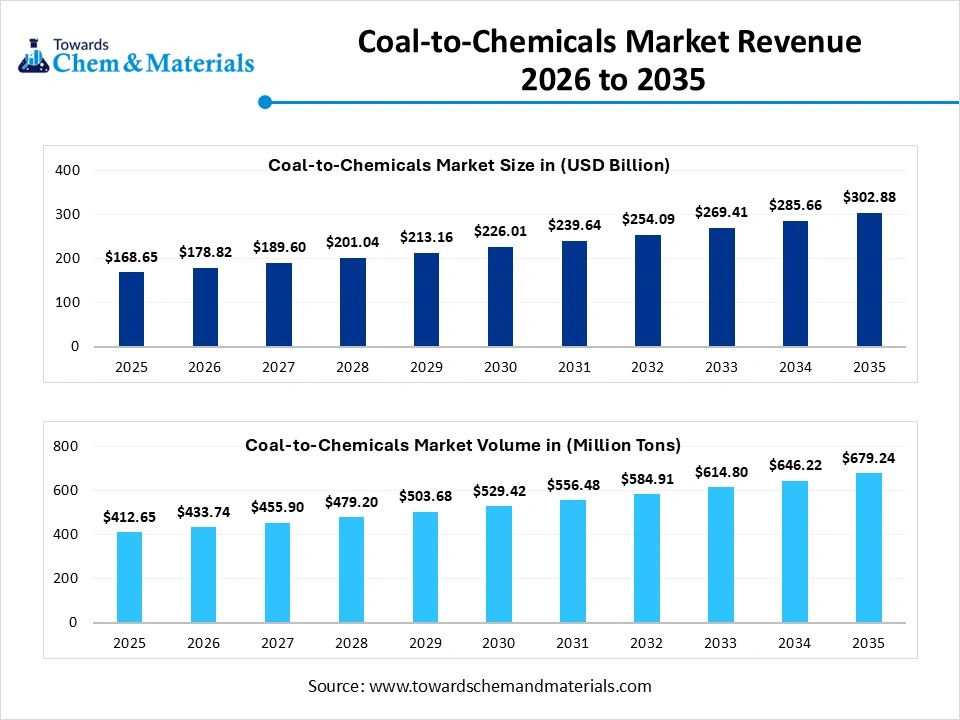
Key Takeaway
- By region, Asia Pacific dominated the coal-to-chemicals market with a share of 71% in 2025 and is expected to grow at a CAGR of 4.36% over the forecast period.
- By region, North America held 8% market share in the coal-to-chemicals market in 2025 and is expected to experience the fastest growth with a CAGR of 6.34% in the forecast period.
- By product type/ output chemical, the methanol segment dominated the market with a 34% share in 2025 and is expected to grow at a CAGR of 5.70% over the forecast period.
- By product type/ output chemical, the olefins segment held 22% market share in 2025 and is expected to have the fastest growth with a CAGR of 6.92% in the forecast period.
- By feedstock, the bituminous coal segment dominated the market with a 46% share in 2025 and is expected to grow at a CAGR of 5.94% over the forecast period.
- By feedstock, the coal waste and coal by-products segment held 12% market share in 2025 and is expected to have the fastest growth with a CAGR of 6.65% in the forecast period.
- By conversion technology, the coal gasification segment dominated the market with a 58% share in 2025 and is expected to grow at a CAGR of 6.13% over the forecast period.
- By conversion technology, the pyrolysis segment held 8% market share in 2025 and is expected to have the fastest growth with a CAGR of 6.84% in the forecast period.
- By application, the petrochemical and chemical intermediate segment dominated the market with a 37% share in 2025 and is expected to grow at a CAGR of 6.08% over the forecast period.
- By application, the plastics and polymer segment held 17% market share in 2025 and is expected to have the fastest growth with a CAGR of 6.76% in the forecast period.
Market Overview
Global Coal-to-Chemicals Market Hits USD 168.65 Billion in 2025
The coal-to-chemicals market is experiencing growth driven by heavy reliance on domestic production and a reduction in dependency on imports of the material, which fuels production across regions, driving growth. Coal remains a major and relevant feedstock in the chemical industries, especially for fertilizers and plastics, due to large-scale conversion projects that increase the demand for basic building blocks like methanol, ethylene, propylene, and ammonia. The heavy reliance and utilization of gasification to reduce reliance on imports of crude oil and energy supplies propels further growth.
Advancements in gasification efficiency and higher conversion rates improve the viability of modern processing, boosting growth of the market. Through research, it was found that government policies and subsidies played a major role in the development of coal gasification infrastructure. The global coal-to-chemicals market size was estimated at USD 168.45 billion in 2025 and is expected to grow at a CAGR of 5.82% during 2025-2035.
- Key Insight: The coal-to-chemicals market is experiencing growth as coal has a relevant role as a chemical feedstock for major chemical industries.
Source: Towards Chemical and Materials
Market Set to Nearly Double by 2035 as CAGR Holds at 5.82%
The coal-to-chemicals market is valued at USD 168.4 billion in 2025 and is expected to grow exceptionally at a CAGR of 5.82 for the period 2025-2035, and is projected to witness a market value of USD 295.8 billion in 2035. The growth is expected to be driven by the growing demand from industries and producers for chemical feedstock. The growth of the market indicates expanding and consistent investment through governmental organizations and also the private sector, as well as technological advancements in the coal conversion processes, which help in the formulation of chemicals. The growth is also driven by rising demand for coal-derived chemicals from various sectors and companies for industrial applications, which supports the markets long-term growth and supports expansion of the market in the coming years.
- Key Insight: The coal-to-chemicals market is poised to grow at a CAGR of 5.82% in the forecast period, significantly increasing due to growing demand for chemical feedstock and demand from industries for domestic production.
Source: Towards Chemical and Materials
A Decade of Compounding Growth: The 2025-2035 Revenue Curve
According to the research performed, the year-by-year revenue growth of the coal-to-chemicals market from 2025 to 2035 demonstrates the effect of a 5.82% CAGR over the forecast period. The market is expected to grow from USD 168.4 billion in 2025 to USD 296.6 billion in 2035, with growth accelerating at a compounding effect. This steady growth of the graph upwards reflects that the annual revenue is accelerating over a period of time and has not remained constant, indicating growth that is supported by the increasing demand for coal-derived chemicals across sectors like industries, fertilizers, and petrochemicals due to their applications. The growth is also expected due to innovation in the production and processing of coal through advanced gasification and conversion technologies.
Rising investments by the government in domestic chemical production and expansion of downstream chemical manufacturing and use of coal as chemical feedstock are further expected to drive market growth over the forecast period.
- Key Insight: Revenue growth is expected by the compounding effect and is accelerated over a period of time.
Source: Towards Chemical and Materials
Physical Output: 412.60 Million Tons Processed in 2025
According to my research, it was observed that the coal-to-chemicals market processed approximately 412.60 million tons in 2025. This is due to annual crude steel production and substantial physical production capacity, which contributes to the growth. The high volume indicates the growing demand for coal-derived products or chemicals like olefins, methanol, and ammonia across industries specially fertilizer. Market expansion is driven by the presence of coal reserves in leading countries, which support sustained production volumes and also help in long-term market growth.
- Key Insight: 412.60 million tons of processing due to annual crude steel production and major industry demand.
Volume Growth Lags Value Growth A Sign of Rising Product Value-Mix
According to my research, the graph represents and helps in understanding the profit margin by comparing market value and market volume in the coal-to-chemicals market. The market value is projected to grow at a CAGR of 5.82%, and market volume growth is projected at 4.94% CAGR in the market from 2025 to 2035. This growth indicates the shift towards high-value coal-derived products, which helps improve the overall value mix of the industry. The growth is driven by growing demand for specialty and high-value chemicals and derivatives, which enhances production efficiency and quality of the products, supporting stronger revenue growth.
- Key Insight: shift towards higher-margin and high-value output of chemicals like olefins.
Source: Towards Chemical and Materials
Volume Trajectory: From 412.6 Million Tons to a Projected 668 Million Tons by 2035
According to the research and through graph prediction, it is estimated that the growth is projected from 413.6 million tons in 2025 to approximately 668 million tons by 2035, representing a CAGR of 4.94% during the forecast period. The rising and steady increase in production volume represents rising demand for coal-based chemicals across industrial manufacturing sectors. The domestic production facilities and chemical production are expected to support sustained volume expansion throughout the forecast period.
- Key Insight: The cumulative volume growth due to expansion of coal handling and logistics supports growth.
Source: Towards Chemical and Materials
Manufacturing Cost Benchmark: USD 358 per Metric Ton in 2025
According to the research and through graph prediction, representing average manufacturing cost for coal-derived chemicals, approximately estimated at USD 358 per metric ton in 2025, which serves as a key factor for assessing production efficiency and profitability across industries. Continuous advancement in the optimization of processing and coal feedstock for chemicals plays a major role in manufacturing prices. The cost structure is influenced by coal pricing, energy consumption, plant scale, and operational efficiency; cost competitiveness will support the markets long-term growth.
- Key Insight: Manufacturing cost competitiveness and industrial growth.
Source: Towards Chemical and Materials
Manufacturing vs. Selling Price: The 2025 Cost-to-Market Bridge (Waterfall)
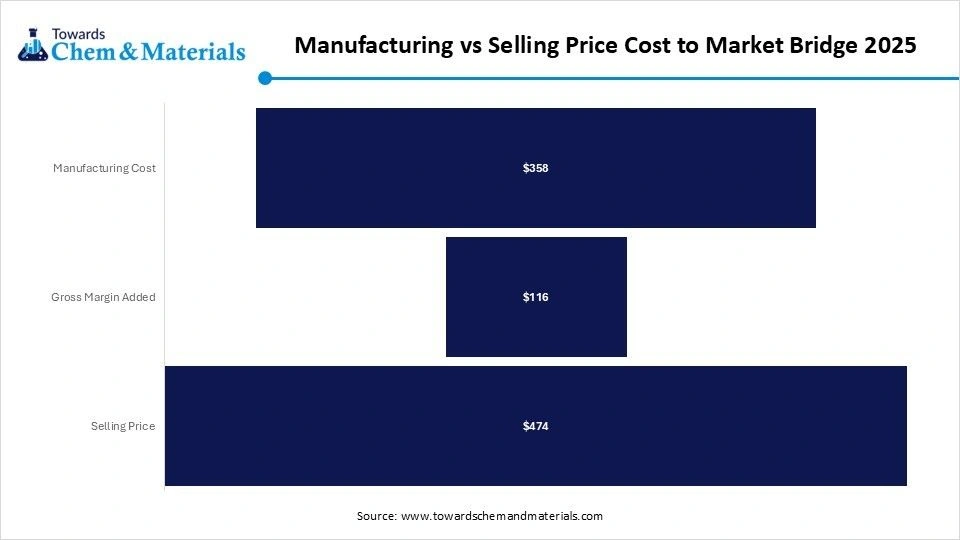 According to the research and graph prediction, the average manufacturing cost and selling price of coal-derived chemicals in 2025 represent profitability potential. The average manufacturing cost is at USD 358 per ton, while the average selling price reaches USD 474 per ton, resulting in a gross margin of USD 116 per ton. This growth and profitability indicate the increasing value of coal chemical products and growing demand for high-value chemicals across industrial applications. The improved production and process efficiencies, which help manufacturers maintain cost competitiveness, are expected to sustain and support long-term market growth.
- Key Insight: The gap represents the product cost and selling price with obtaining an efficient profit margin.
Source: Towards Chemical and Materials
Manufacturing vs. Selling Price: USD 474 per Ton, a 32.4% Markup Over Cost
According to my research, it was observed that the average manufacturing price and selling price of chemicals derived from chemicals in 2025 were observed, highlighting a 32.4% markup over manufacturing cost. The average manufacturing price is estimated at USD 358 per ton, while the average selling price reaches USD 474 per ton, highlighting pricing profitability, which is a major factor. The growth is driven by the growing demand for value-added coal derivatives and improved technologies and enhanced operational efficiencies across production facilities, which will help strengthen pricing power and sustain long-term market growth.
- Key Insight: Every $1 reduction in per-ton manufacturing cost converts almost directly into incremental margin.
Source: Towards Chemical and Materials
Pricing Set to Rise Modestly at 2.91% CAGR Through 2035
The graph represents the research conducted, where the values are increases in the average selling price of coal-derived chemicals from USD 474 per ton in 2025 to approximately USD 634 per ton by 2035, representing a CAGR of 2.91% over the forecast period. The growth is expected to have a steady upward trend, which reflects the improvement of product quality and increasing demand for processing and production of coal to chemicals, which produces are used across industries, which supports growth. The growing applications and sustained industrial demand are expected to support gradual price growth while maintaining the markets long-term competitiveness.
Key Insight: With pricing growth roughly half the pace of value growth, volume expansion is the dominant growth engine.
Segmental Analysis
By Product Type / Output Chemical
The methanol segment dominated the market with a 34% share in 2025 and is expected to grow at a CAGR of 5.70% over the forecast period, with methanol accounting for the largest share at 34%, followed by olefins (22%), ammonia (15%), fertilizers (13%), aromatics (8%), specialty chemicals (5%), and other products (3%). Methanol maintains its leading position due to its extensive use as a feedstock for formaldehyde, acetic acid, olefins, and fuel applications. The strong share of olefins and ammonia is supported by rising demand from the petrochemical, plastics, and fertilizer industries. Growing investments in coal gasification technologies, expanding downstream chemical production, and increasing industrial demand further propelled the growth.
- Key insight: Methanol and olefins together account for 56% of the entire product mix.
Source: Towards Chemical and Materials
Olefins Grow Fastest at 6.92% Specialty Chemicals a Close Second
The olefins segment held 22% market share in 2025 and is expected to have the fastest growth with a CAGR of 6.92% in the forecast period, followed by specialty chemicals (6.34%), methanol (5.70%), aromatics (5.65%), fertilizers (5.53%), ammonia (5.24%), and others (4.78%). The rapid growth of olefins is driven by rising demand from the plastics, packaging, automotive, and construction industries, while specialty chemicals are benefiting from increasing adoption in high-performance industrial applications. Growing production and the growing focus on producing higher-value chemical derivatives are expected to accelerate the growth of these segments over the forecast period.
- Key insight: Olefins is both the second-largest segment by share and the fastest-growing, the clearest reinvestment priority.
Source: Towards Chemical and Materials
By Feedstock
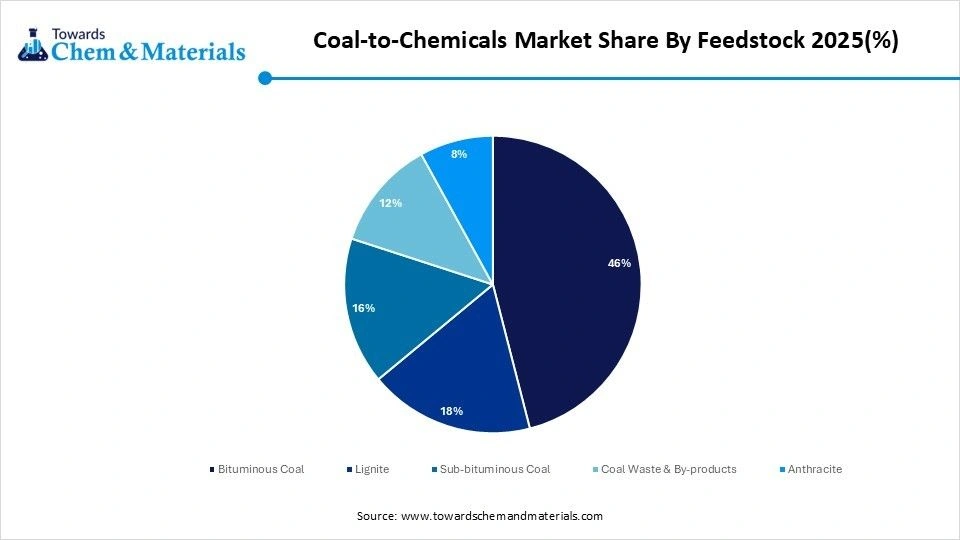
Bituminous Coal Feeds Nearly Half of All Chemical Conversion
The bituminous coal segment dominated the market with a 46% share in 2025 and is expected to grow at a CAGR of 5.94% over the forecast period, followed by lignite (18%), sub-bituminous coal (16%), coal waste & by-products (12%), and anthracite (8%). Bituminous coal dominates the market due to its high carbon content, favorable calorific value, and suitability for coal gasification and chemical conversion processes. The increasing availability of bituminous coal, expanding investments in coal-to-chemicals infrastructure, and growing demand for coal-derived chemicals continue to support its leading position. At the same time, the utilization of coal waste and by-products is gaining attention as industries focus on improving resource efficiency, reducing waste, and supporting more sustainable production practices.
- Key Insight: Bituminous coals 46% share is nearly three times the next-largest feedstock.
Source: Towards Chemical and Materials
Coal waste & By-Products Is the Fastest-Growing Feedstock at 6.65%
The coal waste and coal by-products segment held 12% market share in 2025 and is expected to have the fastest growth with a CAGR of 6.65% in the forecast period, followed by bituminous coal (5.94%), sub-bituminous coal (5.37%), lignite (5.10%), and anthracite (4.82%). The rapid growth of coal waste and by-products is driven by increasing emphasis on resource efficiency, circular economy initiatives, and the utilization of industrial waste to reduce raw material costs and environmental impact. Rising investments in advanced coal conversion technologies, supportive sustainability initiatives, and growing demand for cost-effective feedstocks are expected to accelerate the adoption of coal waste and by-products, while conventional coal feedstocks continue to support stable market expansion.
- Key Insight: Coal Waste & By-products is growing 38% faster than the dominant Bituminous Coal segment.
Source: Towards Chemical and Materials
By Conversion Technology
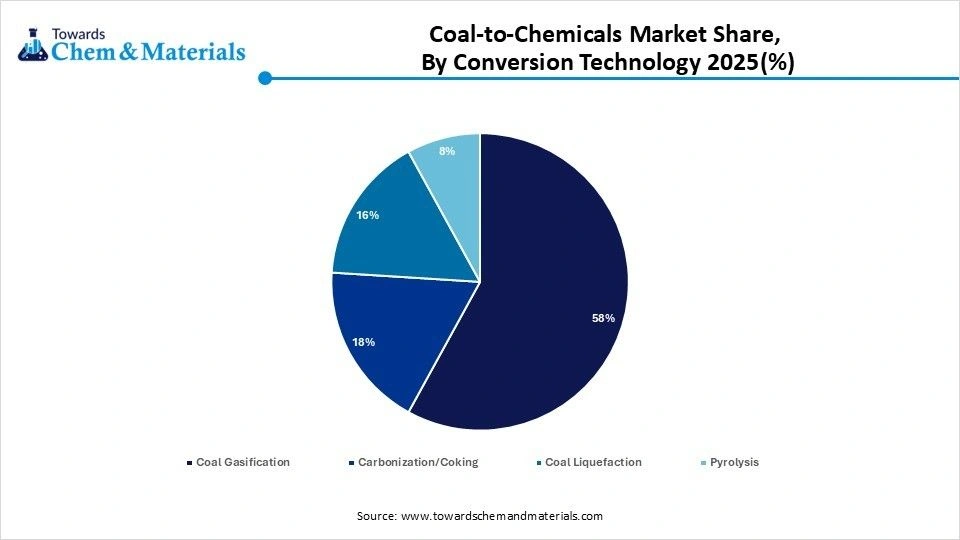
Coal Gasification Powers 58% of All Coal-to-Chemicals Conversion
The coal gasification segment dominated the market with a 58% share in 2025 and is expected to grow at a CAGR of 6.13% over the forecast period, followed by carbonization/coking (18%), coal liquefaction (16%), and pyrolysis (8%). Coal gasification dominates the market due to its high conversion efficiency, ability to produce a wide range of chemical feedstocks such as syngas, methanol, and ammonia, lower emissions compared to direct coal combustion, and increasing investments in advanced gasification technologies that support large-scale industrial chemical production, which supports the growth and expansion of the market.
- Key Insight: Gasifications majority share confirms the market is structurally a syngas-platform industry.
Source: Towards Chemical and Materials
Pyrolysis Is the Fastest-Growing Conversion Technology at 6.84%
The pyrolysis segment held 8% market share in 2025 and is expected to have the fastest growth with a CAGR of 6.84% in the forecast period, followed by Coal Gasification (6.13%), coal liquefaction (5.46%); Carbonization/Coking (4.71%). The rapid growth of pyrolysis is driven by its ability to process low-grade coal, coal waste, and by-products into valuable chemicals and fuels, increasing focus on waste valorization, advancements in thermal conversion technologies, and growing demand for more resource-efficient and environmentally sustainable chemical production processes, which will help in the growth of the market in the coming years.
- Key Insight: The technology with the smallest current footprint has the fastest growth rate, a small but scaling profile.
Source: Towards Chemical and Materials
By Application
Petrochemicals & Chemical Intermediates Absorb 37% of All Output
The petrochemical and chemical intermediate segment dominated the market with a 37% share in 2025 and is expected to grow at a CAGR of 6.08% over the forecast period, followed by Agriculture (21%), Plastics & Polymers (17%), Energy & Fuels (13%), Other Industrial (8%), and Pharmaceuticals (4%). Petrochemical and chemical intermediates dominate the market due to their extensive use as essential feedstocks for producing plastics, synthetic fibers, resins, solvents, and other industrial chemicals. Growing demand from the packaging, automotive, construction, and consumer goods industries, along with expanding petrochemical manufacturing capacity and investments in integrated coal-to-chemicals facilities, continues to strengthen the segments market leadership.
- Key Insight: Petrochemicals and Plastics & Polymers combined represent 54% of total application demand.
Source: Towards Chemical and Materials
Plastics and Polymers is the Fastest-Growing Application at 6.76%.
The plastics and polymers segment held 17% market share in 2025 and is expected to have the fastest growth with a CAGR of 6.76% in the forecast period, followed by petrochemicals (6.08%), Pharmaceuticals (5.88%), Energy & Fuels (5.43%), Agriculture (5.31%), Other Industrial (5.22%%). The rapid growth of plastics and polymers is driven by rising demand for lightweight, durable, and high-performance materials across the packaging, automotive, construction, electronics, and consumer goods industries. Increasing investments in downstream polymer production, expanding manufacturing capacity, and growing consumption of coal-derived olefins and chemical intermediates are expected to further accelerate the segments growth.
- Key Insight: Plastics and Polymers above-average growth confirms coal-to-olefins investment is where the next decade concentrates.
Source: Towards Chemical and Materials
Regional Analysis
Asia-Pacific Commands 71% of the Global Coal-to-Chemicals Market
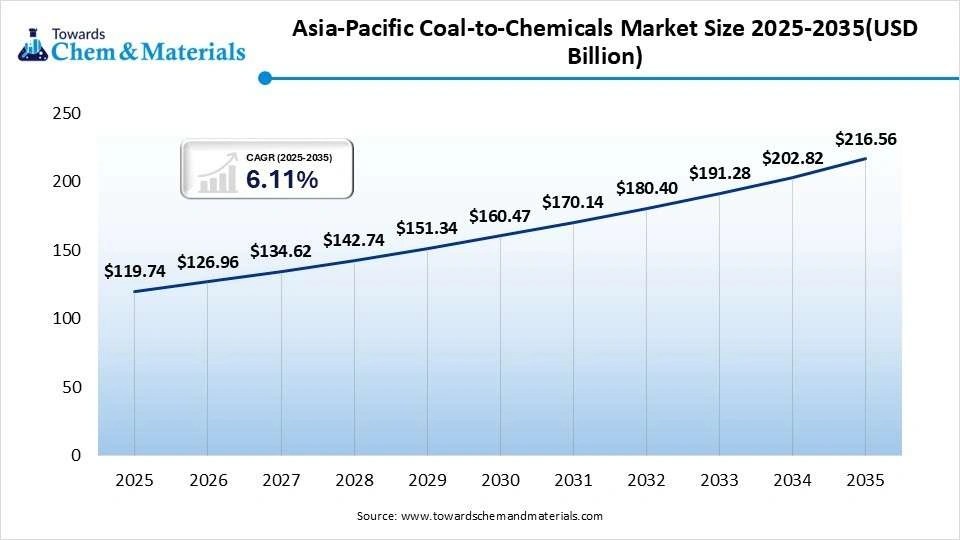
According to research, Asia Pacific dominated the coal-to-chemicals market with a share of 71% in 2025 and is expected to grow at a CAGR of 4.36% over the forecast period, driven by the presence of domestic production facilities in the region, which helps reduce reliance on imports of coal-derived chemicals, fueling growth. The growing fertilizer demand and production, especially in India, and expanding chemical capacity are also major growth-driving factors for the market. The growing investment in coal-to-chemicals production and capacity development in China boosts the growth of the market. Integrated projects and the presence of abundant coal reserves in the region are major growth and expansion factors in the region.
- Key Insight: Asia Pacific growth is driven by the presence of domestic production facilities and has dominated the market.
Source: Towards Chemical and Materials
North America is the fastest-growing region at 6.34% CAGR
According to Research, North America held an 8% market share in the coal-to-chemicals market in 2025 and is expected to experience the fastest growth with a CAGR of 6.34% in the forecast period, driven by growing technological advancements in the production of coal-derived chemicals, which help support niche projects in the region. The growing industrial chemical demand and stable growth through growing manufacturing support growth. The growing initiatives and innovation for carbon utilization due to strict regulation in North America boost production and processing through advanced methods, driving growth.
- Key Insight: North America is experiencing the fastest growth of 6.34% CAGR due to technological advancements
Source: Towards Chemical and Materials
Middle East & Africa Emerges as the Third-Fastest-Growing Region
According to Research, the Middle East and Africa held a 9% market share in the coal-to-chemicals market in 2025, driven by the acceleration of projects in the region and growing investments in industrial infrastructure development for expansion of capacity to reduce dependency on imports, which boosts growth. Growth of the market and expansion is also supported by the growing demand for fertilizers by consumers and demand for chemical feedstock by industries or producers, driving growth.
- Key Insight: The Middle East and Africa are seen to have a 9% share in the market, driven by growing innovation
Europe: Smallest Growth Rate of Any Region.
According to Research, Europe held a 7% market share in the coal-to-chemicals market in 2025, driven by the growing production of specialty chemicals due to growing demand from customers for the production of advanced materials supporting growth. Market competitiveness helps in improving efficiency and upgrading market innovation, supporting growth. Due to strict EU regulations and strict demand for sustainable and low-carbon emission support, modernization is supported through circular economy initiatives, which support the growth of the market and its expansion.
- Key Insight: Growth is seen in the region due to regulatory pressure shrinking footprint.
Source: Towards Chemical and Materials
Latin America: The Smallest Base, Steady Mid-Single-Digit Growth
According to research, Latin America held a 5% market share in the coal-to-chemicals market in 2025, driven by increased chemical consumption by the region for production, which is supported by industrial expansion. The growing investment in the region is influenced by the resource development driving expansion of the market. The growth is further driven in the region through growing regional fertilizer demand and support, which boosts the growth of the market.
- Key Insight: The growth is driven by resource development and demand for domestic fertilizer.
Source: Towards Chemical and Materials
Recent Developments
- In September 2026, SVOLT Energy Technology will begin series production of its hybrid semi-solid-state batteries, moving up its timeline to secure a competitive market position. These 100 kWh packs aim for cost parity with conventional lithium-ion batteries while offering an energy density of approximately 300 Wh/kg. (Source:www.electrive.com)
- In June 2026, Prime Minister Narendra Modi laid the foundation stone for Indias first commercial-scale coal-to-ammonium nitrate project in Lakhanpur, Odisha, a ₹25,016 crore investment aimed at enhancing energy security and reducing imports. Developed by BHEL and Coal India Limited using indigenous technology, the facility is expected to be commissioned by September 2029.(Source:www.business-standard.com)
- In April 2026, the CAS Liquid Sunshine (Shawan) Green Hydrogen-Integrated Methanol Project in Xinjiang, China, officially launched its construction phase in early April 2026. Powered by a massive 13.5GW solar array, the worlds second-largest facility represents a massive step toward blending renewable energy with heavy chemical production.(Source:www.hydrogeninsight.com)
- In March 2026, Union Minister G. Kishan Reddy and Maharashtra Chief Minister Devendra Fadnavis performed the Bhoomi Pujan for two major private coal gasification projects in Chandrapur, Maharashtra, on March 14, 2026. Backed by central government financial incentive schemes, these projects mark a significant milestone toward Indias goal of gasifying 100 million tonnes of coal by 2030.(Source:www.newsage.in)
| Date | Development | Source |
| Dec 2025 | China Shenhua adjusted its asset-reorganization plan and confirmed it will acquire 100% equity of China Shenhua Coal to Liquid and Chemical Co., Ltd. and 12 other enterprises from its parent, National Energy Investment Group, for RMB 133.598 billion. | Baidu Baike corporate filing summary, Dec 2025 |
| Aug 1, 2025 | China Shenhua announced intent to acquire coal, pit-head coal power, coal-to-liquid, coal-to-gas, and coal-chemical assets held by its controlling shareholder, via share issuance and cash payment. | China Shenhua public announcement |
| Aug 2025 | Shaanxi Coal and Chemical Industry Group, with the China Aerospace Science and Technology Corporation Sixth Academy, completed a 130-ton rocket engine long-duration test using coal-tar-based aerospace kerosene. | Shaanxi Coal and Chemical Industry Group disclosure |
| Jul 2025 | Main structure of the air separation unit topped out at a major CTO demonstration project integrating green hydrogen — designed for 13.25M tons/yr methanol and 5M tons/yr olefins, targeted as the worlds largest single-site CTO base. | Blooming Global, project tracking, Aug 2025 |
| Jan 2025 | A Shanxi coal-to-liquids facility surpassed the 1-million-ton annual production threshold for the first time in 2024, generating revenue exceeding RMB 7.3 billion, with per-ton costs reduced to ~RMB 650. | Regional industry reporting |
| Dec 10, 2025 | Government of India confirmed a target of 100 million tonnes of coal gasification by 2030 with ₹85,000 crore outlay, two of seven planned projects to begin shortly. | Govt. of India, Ministry of Coal, Lok Sabha reply |
| 2026 | Indias Cabinet approved the National Investment Policy for Urea 2026 (NIPU-2026), targeting 10 million tonnes of fresh domestic urea capacity, and opening a pathway for coal-gasification-derived ammonia to feed future plants. | Govt. of India, Ministry of Chemicals & Fertilizers, GTRC-India |
| Dec 2025 | Sasols destoning plant at Sasol Mining reached beneficial operation, improving coal quality feeding the Secunda Operations coal-to-liquids complex. | Sasol Limited, H1 FY26 update, Feb 2026 |
Top players in the coal-to-chemicals market & Their Offerings:
- China Shenhua Energy Co. : Its headquarters is located in Beijing, China; its core business relies on coal mining, power, coal chemicals, and coal to liquid/ gas. RMB 133.598B asset reorganization to consolidate coal-to-liquid subsidiary, investment of 79.836B in Shenhua Yulin Circular Economy Project, and winner of National S and T Progress Award.
- Shaanxi Coal and Chemical Industry Group: Its headquarters is located in Xian, China, its core business involves coal mining, coal electricity integration, and coal chemicals, generating revenue of US$74.777B, net income US$1.114B, ~140,142 employees in FY 203m and also ranked at 209 Fortune Global 500 in 2022, with development of coal tar aerospace kerosene in 2025.
- China Coal Energy Co : Its headquarters is located in Beijing, China, its core business involves coal mining, coal chemicals like methanol, urea, and polyolefins, with year-to-date October 2022 methanol production of 1.6 million tonnes and monthly production disclosures across polyethylene, polypropylene, urea, and ammonium nitrate.
- Sasol Limited : Its headquarters is located in Sandton, South Africa, its core business integrates energy/chemicals and is one of the worlds largest coal-to-liquid operators. In FY2025, revenue generated was with revenue generation of 249.09 billion and net income of R9.5B, ~27,411 employees, oil breakeven $59/bbl, Secunda Operations volumes -4% YoY on coal-quality issues.
- Dakota Gasification Company : Its headquarters is located in Bismarck, North Dakota, USA, its core business is Lignite gasification to SNG and ammonia, with by-products. Operates the Great Plains Synfuels Plant, the only commercial-scale U.S. coal gasification facility, which captures ~2.25M tonnes of CO2/yr for the worlds largest CCS-linked EOR project.
- China National Petroleum Corp. (CNPC) : Its headquarters is located in Beijing, China, is a State-owned oil, gas, and integrated coal-chemical complex. Identified alongside Shenhua as a leading developer of large-scale integrated coal-chemical complexes
- Yanzhou Coal Mining (Yankuang Energy) : Its headquarters is located in Zoucheng, Shandong, China. Its core business includes coal mining, coal chemicals, and methanol/olefins polygeneration. Long-standing developer of commercial-scale coal polygeneration technology.
- Talcher Fertilizers Limited: Its headquarters is located in Odisha, India. It is a Coal-gasification-based urea manufacturing company, a government-backed PSU joint venture building a 12.7 LMTPA greenfield urea plant using the coal gasification route.
Other Top Players Are
- Ningxia Baofeng Energy Group Co.
- China Petroleum & Chemical Corporation (Sinopec)
- Yankuang Energy Group Company Limited
- China National Coal Group (China Coal)
- Shandong Energy Group
- Inner Mongolia Yitai Coal Co., Ltd.
- Air Products and Chemicals, Inc.
- Linde plc
- Air Liquide
- Reliance Industries Limited (RIL)
- Adani Enterprises
- Coal India Limited (CIL)
- Jindal Steel & Power Limited (JSPL)
- Henan Energy and Chemical Group
- Shanxi Coking Coal Group
- Eastman Chemical Company
Expert insight
According to my research and assessment, the market is shifting towards specialty chemical manufacturing due to extensive use in various sectors: fertilizers, steel, and industrial applications. Domestic production across sectors and regions lowers reliance on imports of necessary chemicals, which is a major growth factor.
Our Experts
Videsh Swar led the primary market research, analysis of trends, segmentation, development of methodology, growth opportunities, pricing analysis, volume and supply chain analysis, competition, regional insights, and performance optimization and forecasts.
Aman was responsible for company insights, regulations, statistical analysis, partnerships and collaborations, and the qualitative data that help strengthen the market estimation.
Aditi reviewed the entire research document, performed quality checks, validated findings, refined content, corrected inconsistencies, and finalized the report to ensure accuracy, clarity, credibility, and readiness for publication.
Complete Market Segmentation Listing
By Product Type / Output Chemical
- Methanol
- Fuel-grade Methanol
- Chemical-grade Methanol
- Olefins
- Ethylene
- Propylene
- Ammonia
- Anhydrous Ammonia
- Industrial Ammonia
- Fertilizers
- Urea
- Ammonium Nitrate
- Ammonium Sulfate
- Aromatics
- Benzene
- Toluene
- Xylene
- Specialty Chemicals
- Solvents
- Fine Chemicals
- Performance Chemicals
- Others
- Acetic Acid
- Dimethyl Ether
- Carbon Materials
By Feedstock
- Lignite
- Sub-bituminous Coal
- Bituminous Coal
- Anthracite
- Coal Waste & Coal By-products
By Conversion Technology
- Coal Gasification
- Entrained Flow Gasification
- Fixed Bed Gasification
- Fluidized Bed Gasification
- Coal Liquefaction
- Direct Coal Liquefaction
- Indirect Coal Liquefaction
- Carbonization/Coking
- Metallurgical Coking
- Chemical Coking
- Pyrolysis
- Conventional Pyrolysis
- Fast Pyrolysis
By Application
- Agriculture
- Nitrogen Fertilizers
- Soil Nutrients
- Petrochemicals & Chemical Intermediates
- Basic Chemicals
- Intermediate Chemicals
- Plastics & Polymers
- Polyolefins
- Engineering Plastics
- Energy & Fuels
- Synthetic Fuels
- Industrial Fuels
- Pharmaceuticals
- Drug Intermediates
- Solvents
- Other Industrial Applications
- Textiles
- Mining
- Construction Chemicals
By Regions
- North America
- Europe
- Asia Pacific
- Middle East & Africa
- Latin America
References used:
- Client-supplied Coal-to-Chemicals Market dataset (market size, volume, pricing, full segmentation hierarchy), 2025.
- Energy Institute, Statistical Review of World Energy (2025 edition, 2024 data) — global coal production and reserves by country.
- International Energy Agency (IEA), Coal 2024 — market report and executive summary, December 2024.
- Statistics Canada / Natural Resources Canada, Energy Fact Book 2024–2025 — global proved coal reserves by country.
- Government of India, Ministry of Coal — Coal Gasification Mission statement, newsonair.gov.in, December 10, 2025.
- Government of India, Ministry of Chemicals & Fertilizers / Department of Fertilizers — urea production data and NIPU-2026.
- China Shenhua Energy Company Limited — public corporate disclosures, 2025.
- Shaanxi Coal and Chemical Industry Group Co., Ltd. — corporate financial and operational disclosures, 2023–2025.
- China Coal Energy Company Limited — monthly/YTD production disclosures, 2025.
- Sasol Limited — Audited Financial Results FY2025, Business Performance Metrics Q1 FY26, H1 FY26 update. Filed via sasol.com investor relations.
- Dakota Gasification Company (Basin Electric Power Cooperative) — corporate fact sheets.
- U.S. Department of Energy, National Energy Technology Laboratory (NETL) — Gasifipedia, Great Plains Synfuels Plant.
- Blooming Global industry research — China coal chemical industry and CTO project tracking reports.
- Mordor Intelligence — Global Methanol Market report (cited only for coal-to-methanol capacity-addition context).
- Verified Market Reports — Global Coal Chemical Products Market (company landscape context).
A Seven-Phase Framework
Our methodology is designed to be universally applicable across commodity chemicals, specialty chemicals, petrochemicals, construction chemicals, coatings, electronic chemicals, industrial gases, agrochemicals, water treatment chemicals, and performance materials. Each phase builds upon the last, creating a layered validation structure that minimizes estimation error and maximizes analytical confidence.
The framework ensures comprehensive market coverage, robust cross-validation, and reliable long-term forecasting — producing market estimates that withstand scrutiny from investors, regulators, and corporate strategy teams.

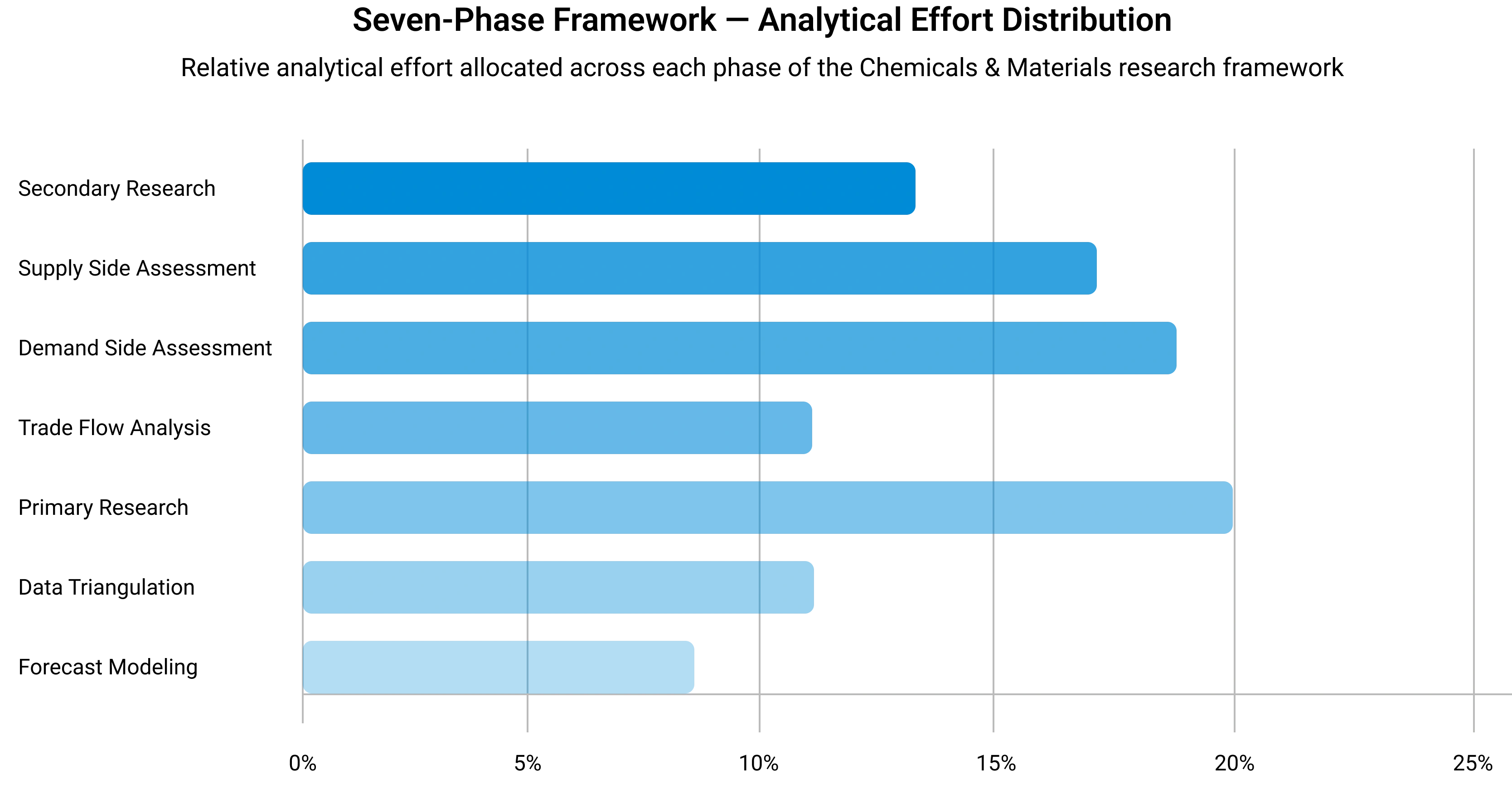
Seven-Phase Framework — Analytical Effort Distribution
Relative analytical effort allocated across each phase of the Chemicals & Materials research framework
Phase 1 - Secondary Research: Establishing the Foundation
Secondary research collects and evaluates publicly available information from authoritative sources, establishing the foundational understanding of market structure, value chain dynamics, competitive landscape, and end-use demand patterns. Every source is evaluated for credibility, recency, geographic relevance, and methodological soundness before inclusion.
Industry Associations
Sources include ACC, CEFIC, ICCA, JCIA, CPCIF, and SOCMA providing production volumes, consumption trends, capacity developments, and sustainability initiatives.
Company Disclosures
Annual reports, investor presentations, earnings transcripts, and regulatory filings reveal product portfolios, manufacturing footprints, capacity expansions, and revenue segmentation.
Government Databases
National statistical offices, customs authorities, environmental agencies, and industrial production databases provide verified statistics on output, trade flows, and regulatory compliance.
Trade Databases
UN Comtrade, ITC, Eurostat, and national customs authorities enable assessment of global product movement, import dependency, and export competitiveness across regions.
Our Secondary Research Sources
- Ministry of Chemicals and Fertilizers
- European Chemicals Agency
- United States Department of Energy
- Ministry of Industry and Information Technology
- Ministry of Economy Trade and Industry
- Ministry of Trade Industry and Energy
- National Institute of Standards and Technology
- Council of Scientific and Industrial Research
- Fraunhofer Society
- National Institute for Materials Science
Phase 2 — Supply-Side Assessment: Mapping Production Capabilities
Production Capacity Analysis
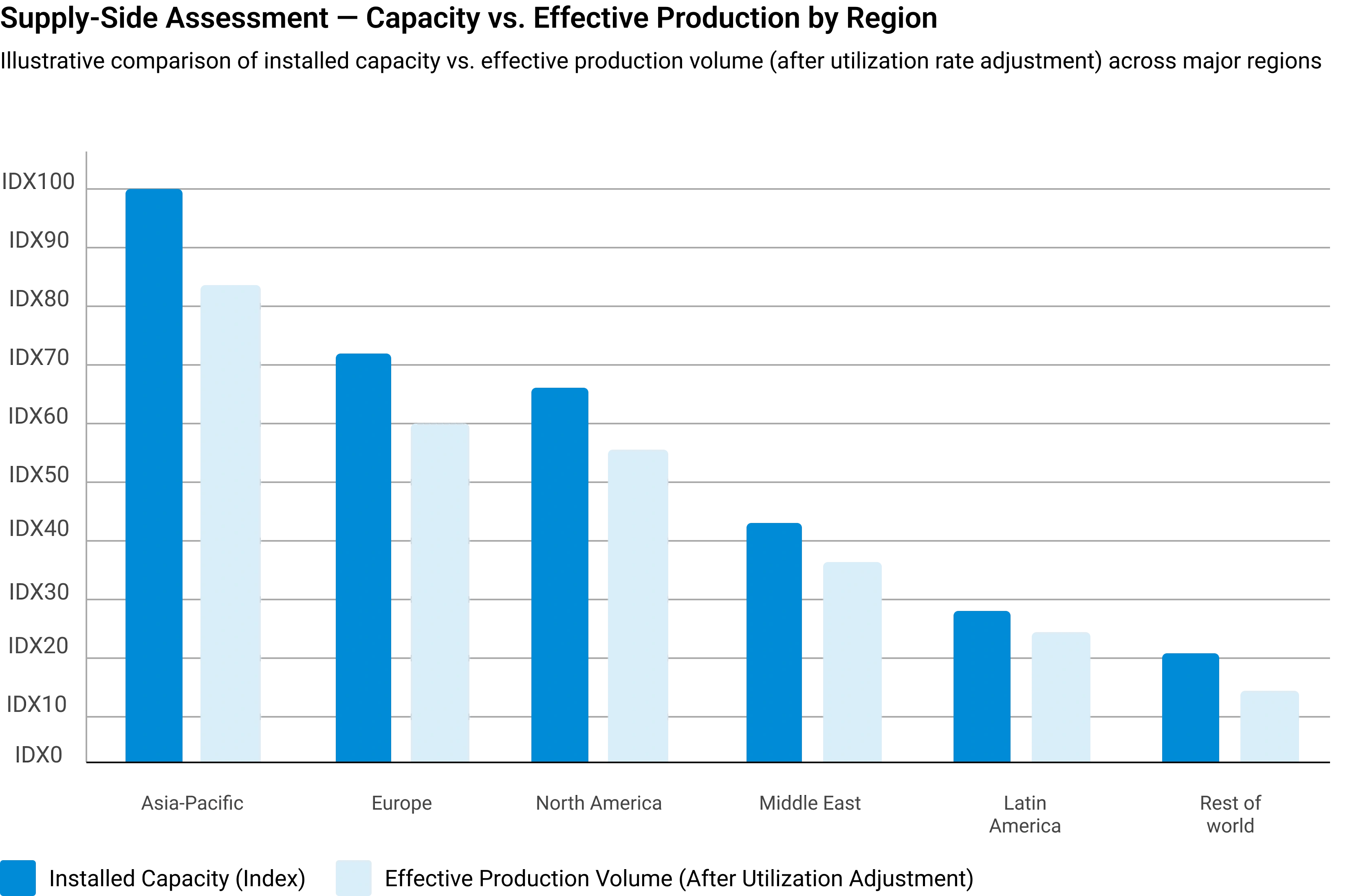
All major manufacturers are assessed for existing installed capacity, planned additions, expansions, new plant announcements, and technology adoption — mapped at global, regional, and country levels.
Capacity Utilization Adjustment
Installed capacity is adjusted using utilization rates based on demand conditions, feedstock availability, plant operating rates, maintenance schedules, and regulatory restrictions.
Manufacturer Revenue Analysis
Product-specific revenues, segment-level performance, regional distribution, average selling prices, and margin trends are evaluated to establish market value estimates.
Supply-Side Assessment — Capacity vs. Effective Production by Region
Illustrative comparison of installed capacity vs. effective production volume (after utilization rate adjustment) across major regions
Phase 3 — Demand-Side Assessment: Quantifying Chemical Consumption
Demand-side analysis quantifies chemical consumption across industries, applications, and geographies — identifying where and how chemicals are consumed throughout the value chain with precision.
End-Use Industry Analysis
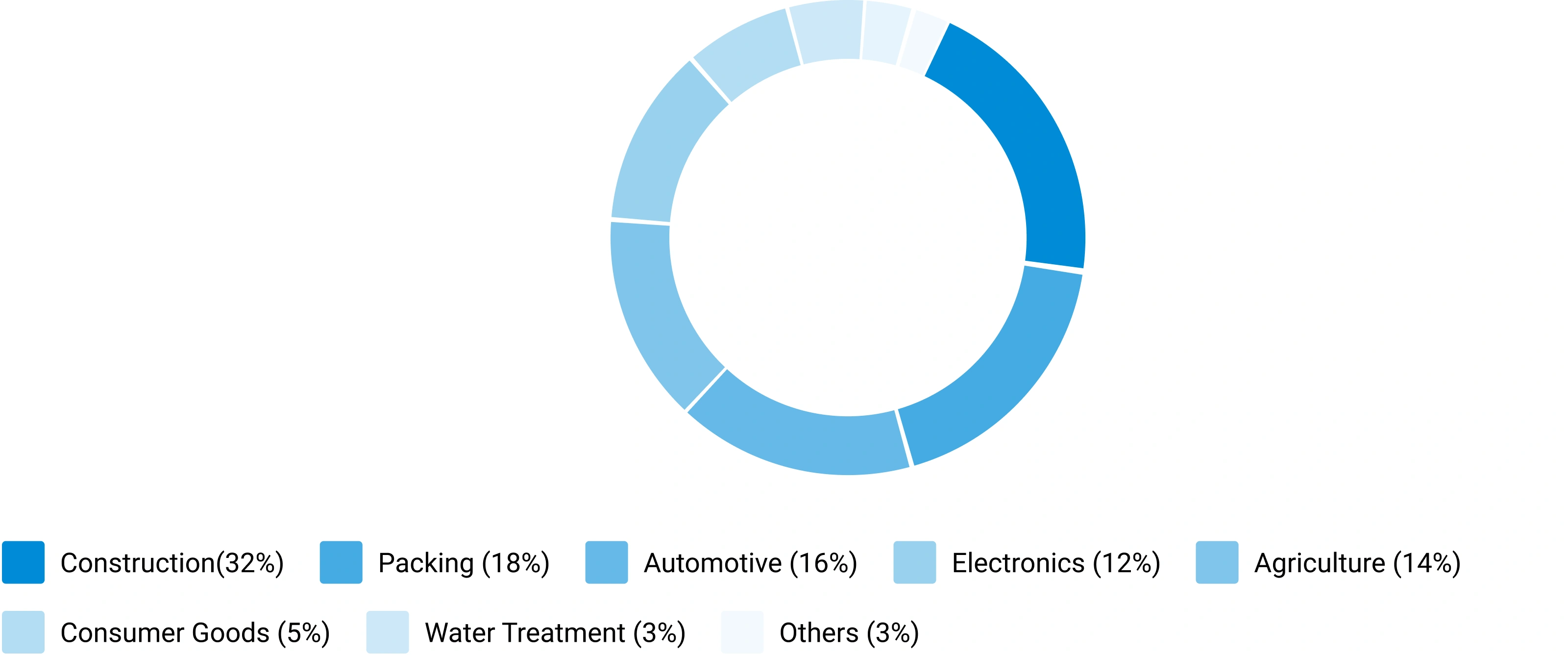
Chemical demand is evaluated across automotive, construction, packaging, electronics, agriculture, healthcare, consumer goods, industrial manufacturing, energy and utilities, and water treatment. Industry output, production trends, and consumption intensity are analyzed to determine demand patterns.
Consumption Modeling
Demand is estimated using measurable indicators: kilograms per vehicle, kilograms per square meter of construction, dosage per cubic meter of water treated, kilograms per hectare of agricultural land, and kilograms per ton of manufactured products. Consumption factors are validated through industry publications and primary interviews.
Application Analysis
The market is segmented by application area to understand product performance requirements, formulation trends, technology adoption, customer preferences, and regulatory requirements improving demand accuracy and segmentation granularity.
Demand-Side Assessment — End-Use Industry Demand Distribution
Illustrative distribution of chemical & materials demand across key end-use industries
Phase 4 - Trade Flow Analysis: Balancing Regional Supply and Demand
Trade flow analysis reconciles regional supply and demand estimates through import and export data, identifying net supply positions, regional dependencies, and market imbalances. It serves as an independent validation layer that tests the consistency of supply-side and demand-side estimates.
Import Analysis
Import data is evaluated to determine volumes, source countries, product dependency, regional supply gaps, and pricing trends — identifying markets that rely heavily on external supply and where domestic production is insufficient to meet demand.
Export Analysis
Export assessments reveal production surplus, export competitiveness, regional manufacturing strength, and global market participation. Export patterns also help validate domestic production estimates and identify net exporting regions.
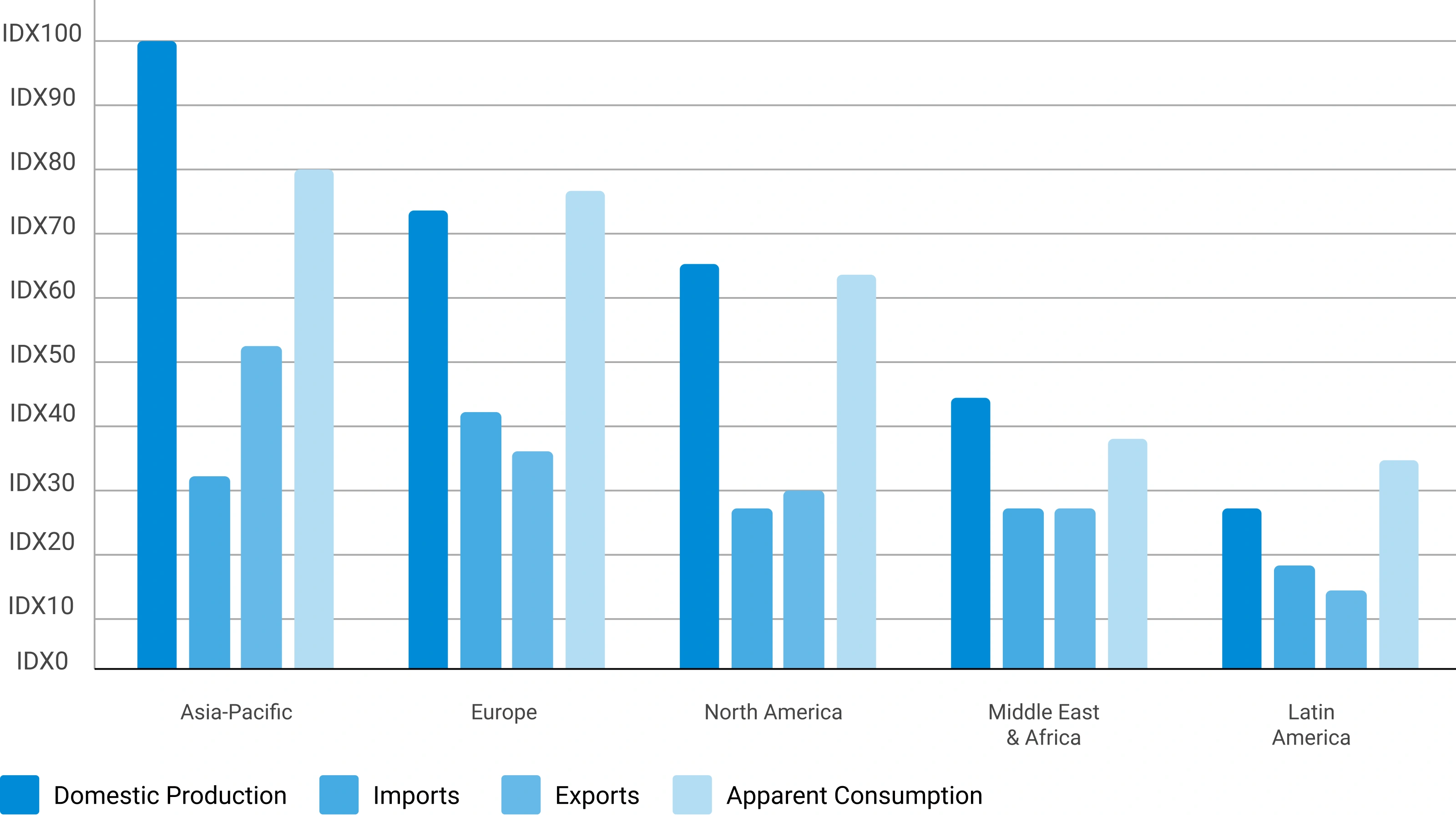
Apparent Consumption Model
Regional consumption is assessed using the standard apparent consumption formula:
Results identify net importing regions, net exporting regions, regional deficits, and surpluses — serving as an independent validation of supply and demand estimates.
Trade Flow Analysis — Net Supply Position by Region
Illustrative apparent consumption vs. domestic production across major regions — positive gap indicates net import dependency
Phase 5 — Primary Research: The Critical Validation Layer
Primary research tests and refines findings from secondary research through direct engagement with industry participants across the supply chain, demand side, and expert community. It captures intelligence that no database or published report can provide — the real-world experience of manufacturers, buyers, and specialists operating in the market.

Supply-Side Interviews
Conversations with chemical manufacturers, raw material suppliers, contract manufacturers, technology providers, and plant operators cover production trends, capacity utilization, pricing developments, technology shifts, and competitive dynamics.

Demand-Side Interviews
Engagement with OEMs, industrial consumers, procurement managers, distributors, formulators, and end-use manufacturers focuses on consumption trends, purchasing behavior, product substitution, demand outlook, and emerging applications.

Industry Expert Consultations
Additional interviews with industry consultants, independent experts, regulatory specialists, technical professionals, and research institutions provide deeper market context and validate key analytical assumptions.
Focus Areas of Primary Research:
Market Size & Forecast Validation
Revenue estimates, volume consumption, growth rates, forecast assumptions, regional demand.Supply Chain & Value Chain Assessment
Raw material sourcing, supply chain challenges, distribution networks, procurement practices.Production & Capacity Analysis
Manufacturing capacity, utilization rates, expansion projects, plant investments.Pricing & Cost Structure Analysis
Product pricing trends, feedstock costs, energy costs, margin pressures, pricing outlook.Competitive Landscape Assessment
Volume and value estimates confirmed to be fully consistent with one another before publicationInterview Volume by Market Scope
| Study Scope | Number of Interviews |
|---|---|
| Niche Market | 20 – 30 |
| Mid-Sized Market | 30 – 50 |
| Global Market | 50 – 80 |
| Highly Fragmented Market | 80 – 120 |
Interview Details:
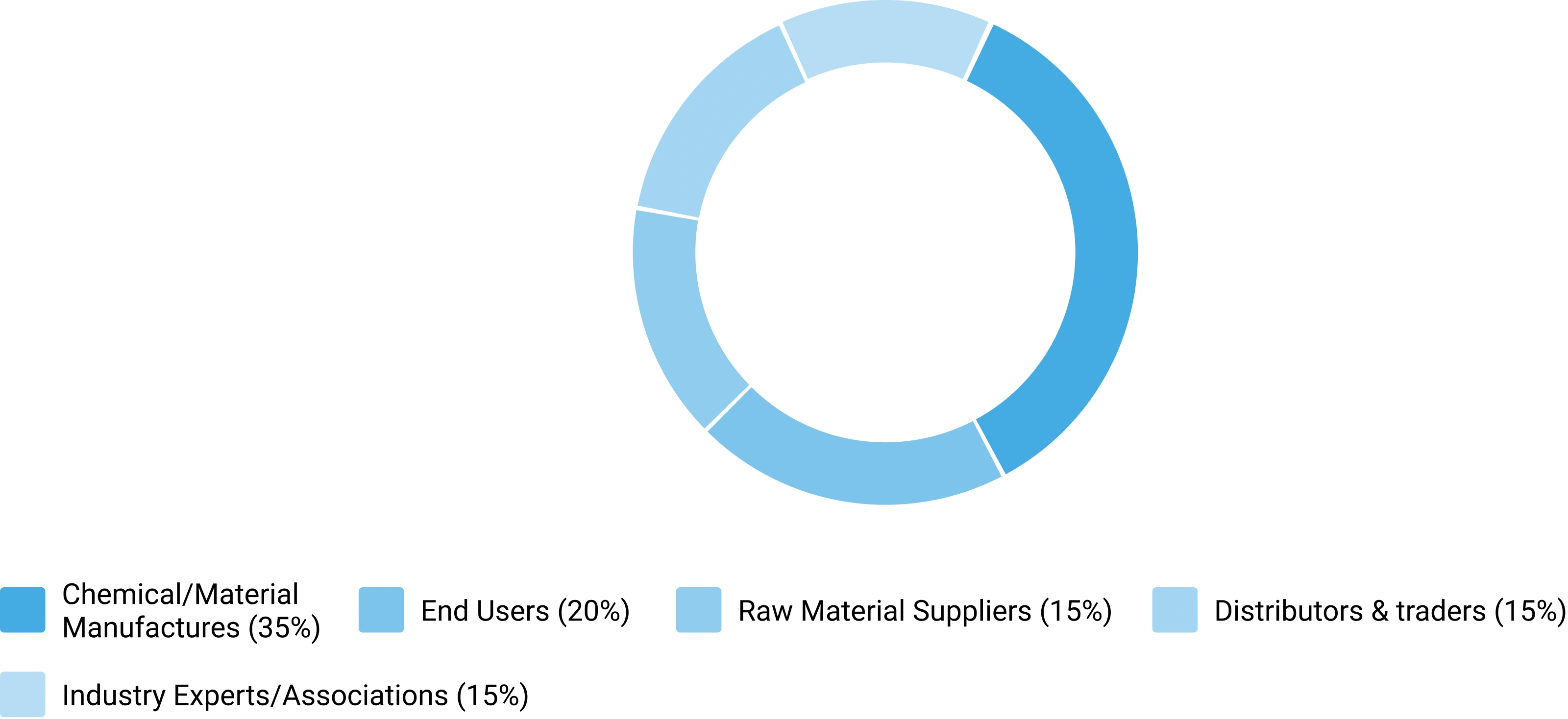
Category : Manufacturers, Suppliers, Distributors, End Users, Experts/Associations
Average Duration : 30–60 Minutes
Interview Mode : Video calls, telephonic interviews, expert consultations
Interview Format : Structured / Semi-Structured questionnaire
Focus Areas of Primary Research:
Market Size & Forecast Validation :
Revenue estimates, volume consumption, growth rates, forecast assumptions, regional demand.
Supply Chain & Value Chain Assessment :
Raw material sourcing, supply chain challenges, distribution networks, procurement practices.
Production & Capacity Analysis :
Manufacturing capacity, utilization rates, expansion projects, plant investments.
Pricing & Cost Structure Analysis :
Product pricing trends, feedstock costs, energy costs, margin pressures, pricing outlook.
Competitive Landscape Assessment :
Market share, competitor positioning, strategic initiatives, partnerships, acquisitions.
Primary Research — Stakeholder Coverage by Category
Distribution of interview respondents across stakeholder categories (% share from PPT data)
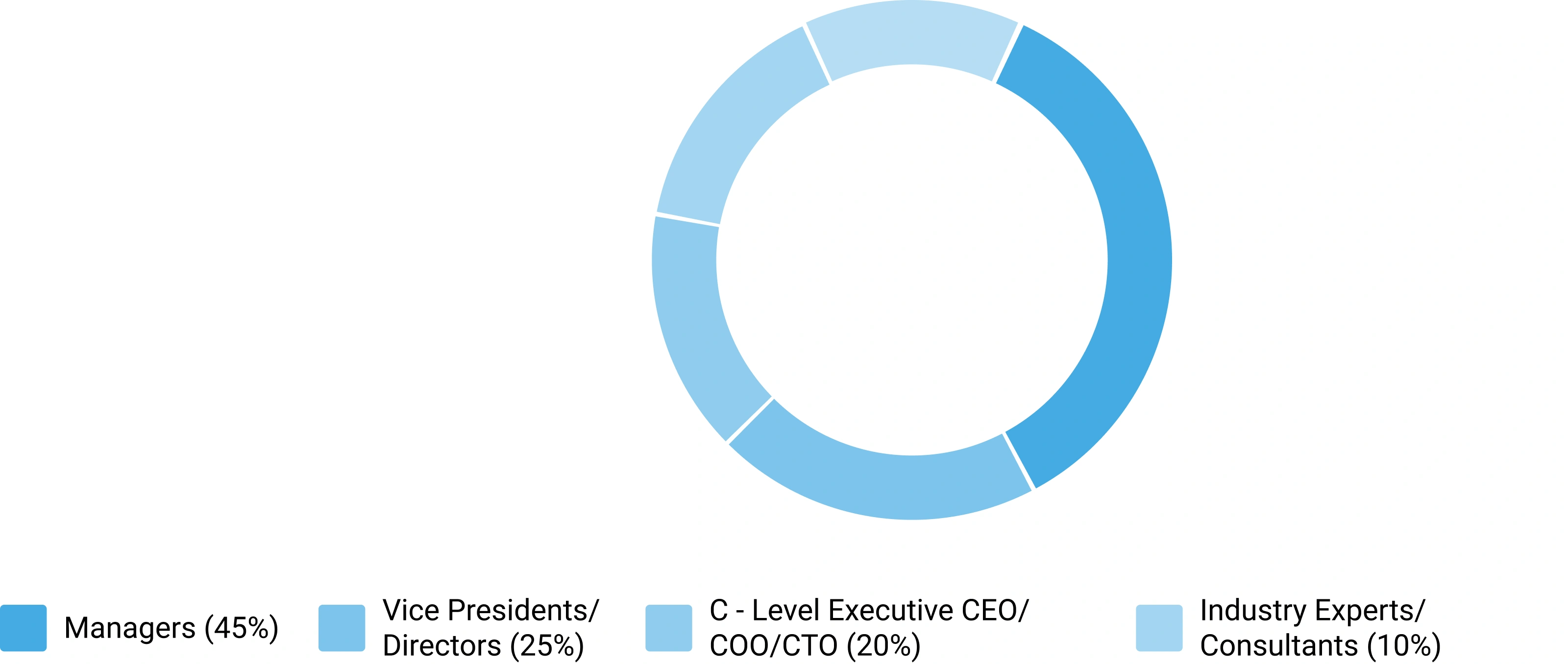
Primary Research — Respondent Designation Profile
Seniority breakdown of interview respondents (% share from PPT data)
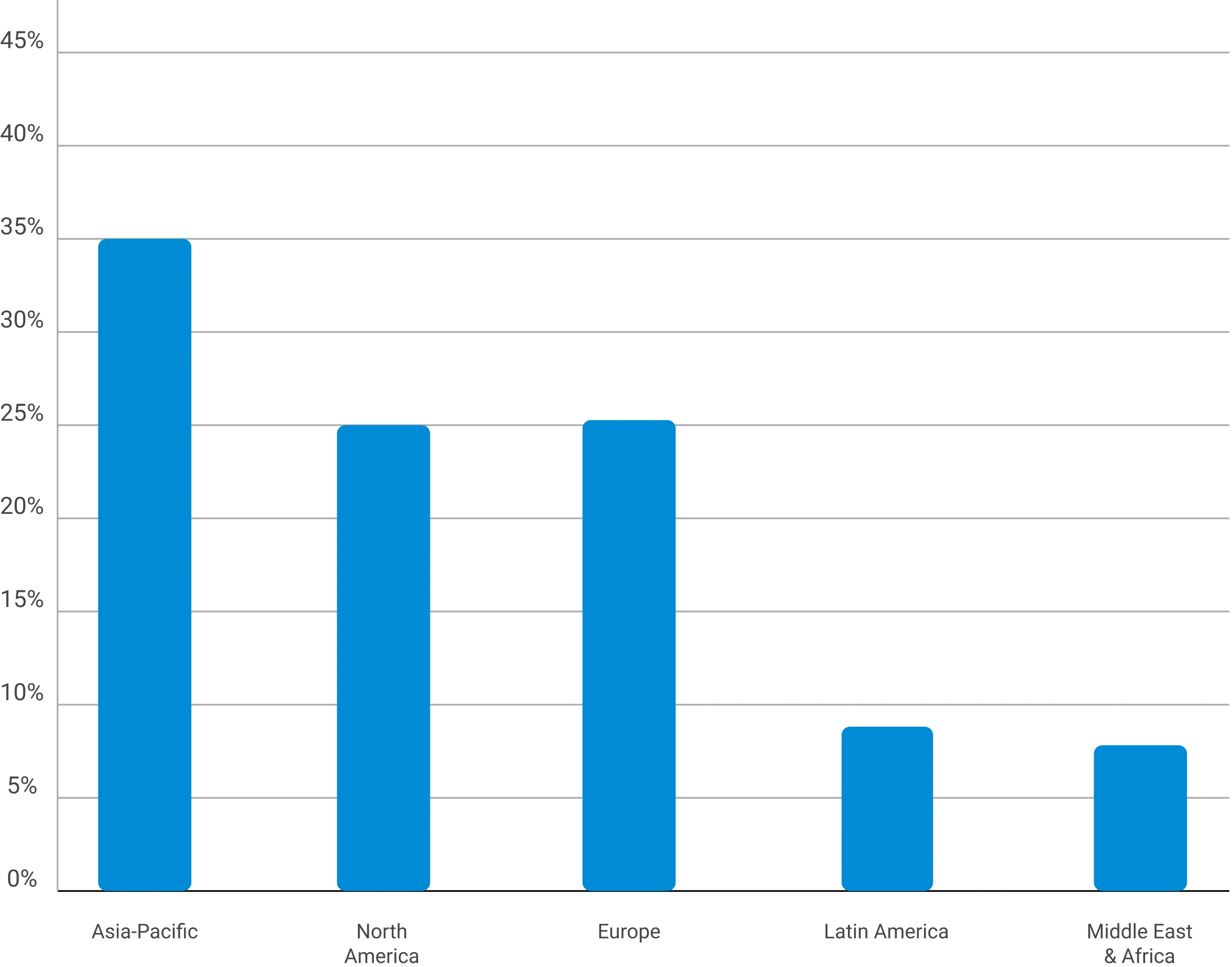
Primary Research — Geographic Coverage of Interviews
Regional distribution of primary research engagement (% share from PPT data)
Phase 6 — Data Triangulation and Market Validation
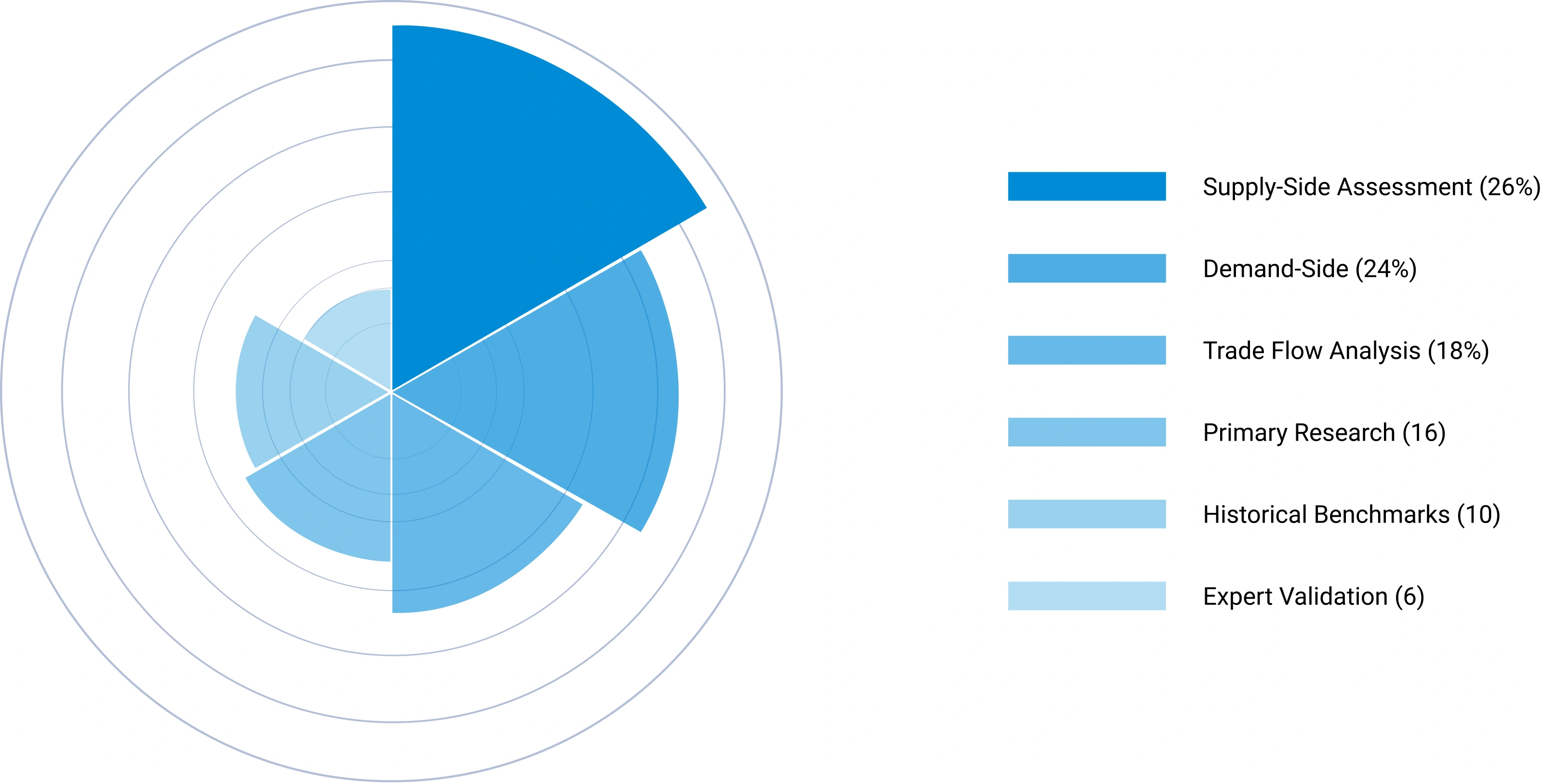
No single methodology is relied upon in isolation. Multiple independent estimation approaches are combined and reconciled to ensure consistency, accuracy, and analytical defensibility. Any material deviations between approaches are investigated and adjusted through additional validation cycles.
The final market size is derived through weighted triangulation of all validated methodologies. Any material deviations between approaches are investigated and adjusted through additional validation cycles. The outcome represents the most realistic assessment of the market based on available evidence and expert confirmation ensuring that volume and value estimates are fully consistent with one another.
Triangulation Framework — Input Contribution Weight
Relative weight each sizing input contributes to the final reconciled market estimate
Phase 7 — Forecast Modeling: Projecting Future Market Evolution
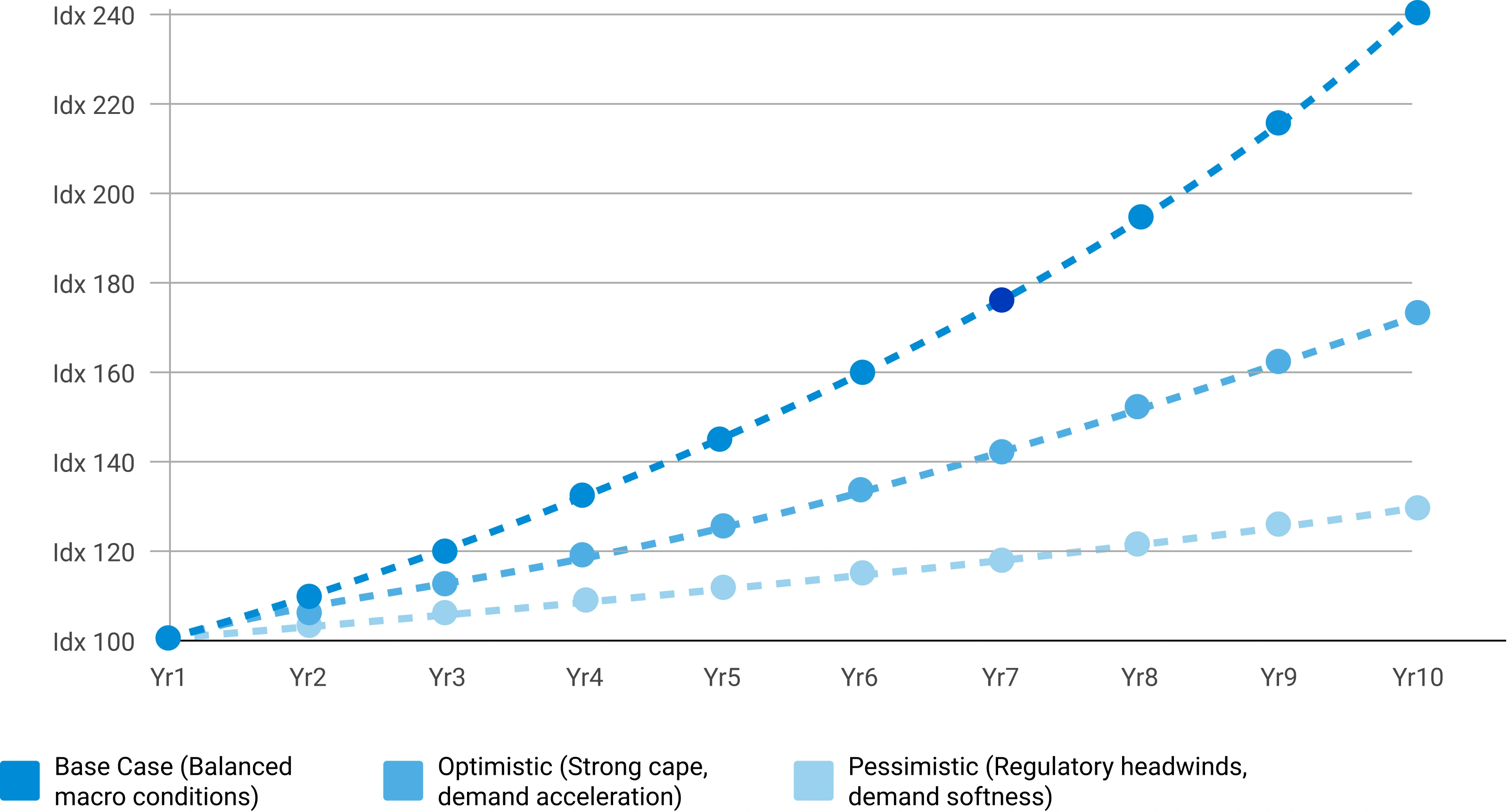
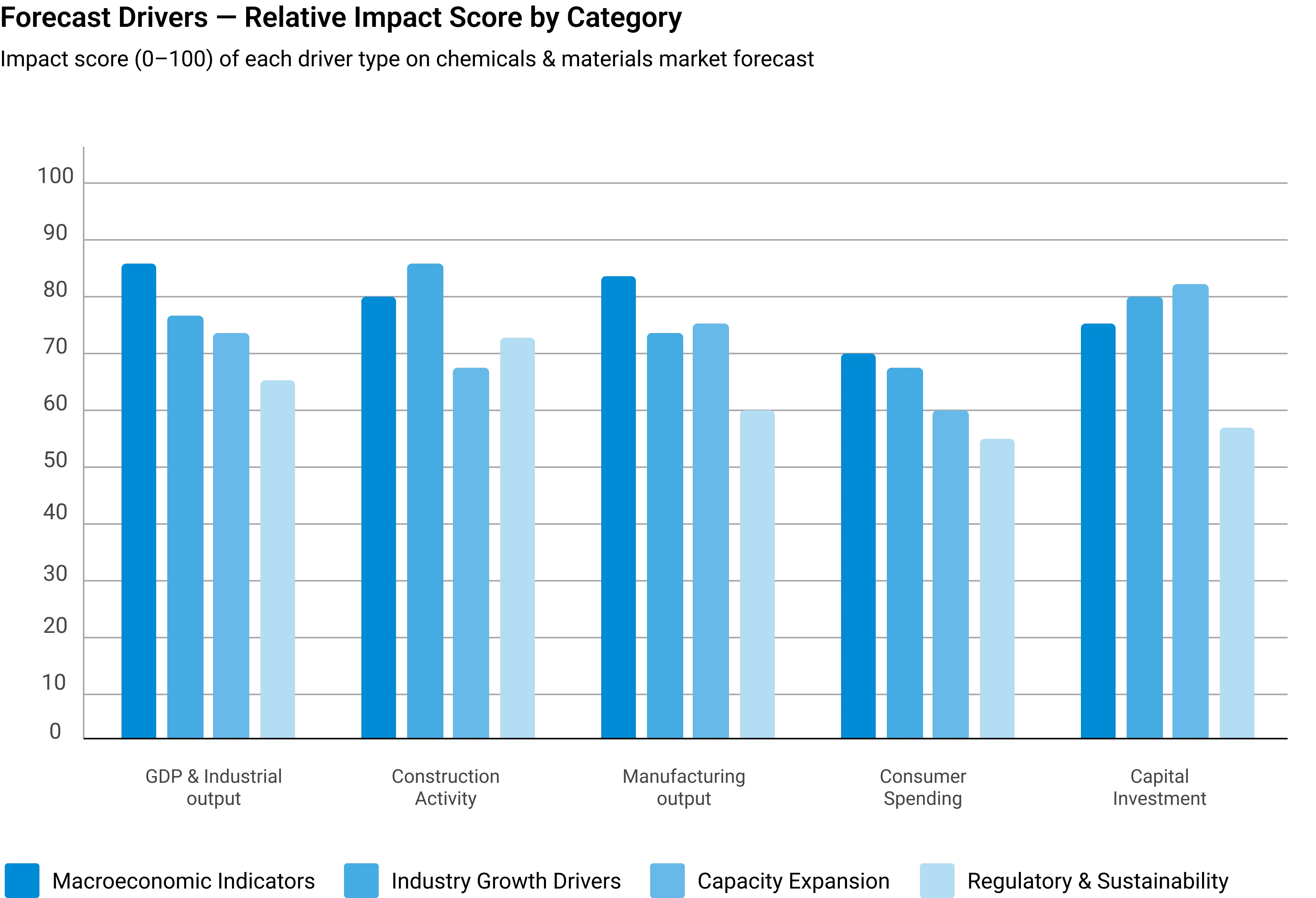
Forecasting evaluates the future trajectory of the market using a combination of quantitative indicators and qualitative assessments across economic, industry, and regulatory dimensions. Rather than simple extrapolation, each driver is independently modeled and integrated into a composite forecast.
Macroeconomic Indicators
GDP growth, industrial production, manufacturing output, construction activity, consumer spending, and capital investment form the quantitative foundation of long-term demand projections. These are applied at country, regional, and global levels.
Industry Growth Drivers
Urbanization, infrastructure development, industrialization, technological innovation, sustainability initiatives, and evolving product performance requirements are assessed at regional and industry levels — capturing both structural and cyclical demand drivers.
Capacity Expansion Analysis
Announced plant expansions, new manufacturing facilities, technology upgrades, and strategic investments are evaluated to determine future supply-demand dynamics and potential market tightness or oversupply situations.
Regulatory & Sustainability
Environmental regulations, chemical safety standards, emission reduction targets, circular economy initiatives, and sustainability requirements are incorporated as they often influence product adoption rates and market growth trajectories.
Scenario Forecast Range — Indexed Market Growth (Year 1–10)
Illustrative indexed growth trajectories across Base, Optimistic, and Pessimistic scenarios over a 10-year forecast horizon
Forecast Drivers — Relative Impact Score by Category
Impact score (0–100) of each driver type on chemicals & materials market forecast



Comments
Share your thoughts, ask a question, or provide feedback about this report.