
Botanical Ingredients Market Size, Share, Trends and Forecast 2025 to 2035
The botanical ingredients market covers plant-derived ingredients supplied as powders, liquids, extracts, and related botanical preparations for use across food and beverages, dietary supplements, personal care and cosmetics, pharmaceuticals, and other industrial applications.
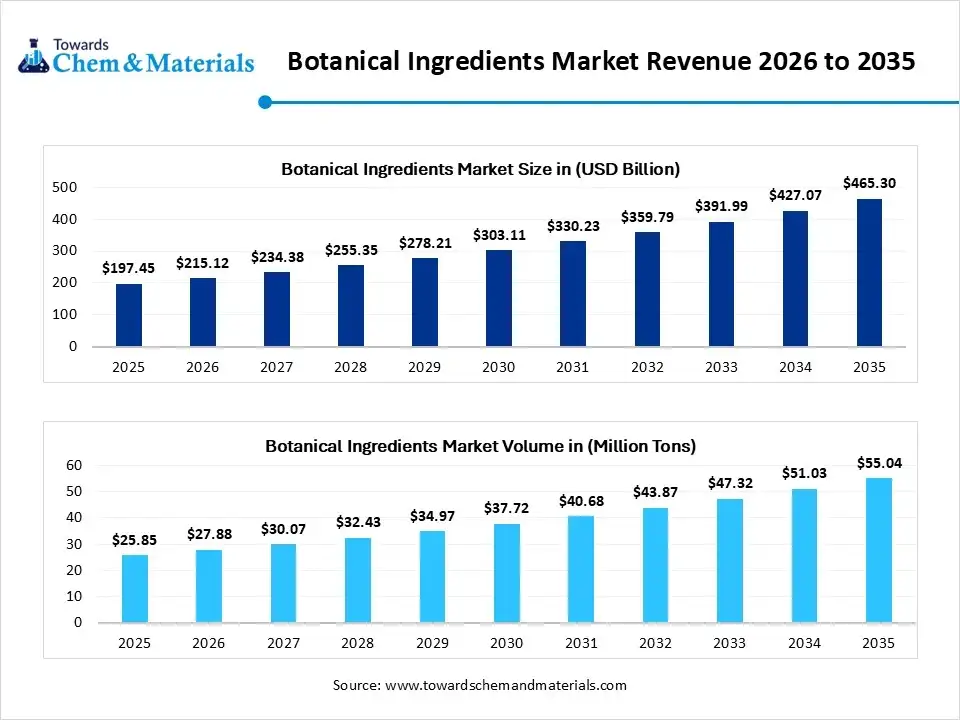
The global botanical ingredients market size was valued at USD 197.45 billion in 2025, is estimated to reach USD 215.12 billion in 2026, and is projected to reach USD 465.30 billion by 2035, exhibiting a compound annual growth rate (CAGR) of 8.95% over the forecast period from 2026 to 2035.Asia Pacific dominated the botanical ingredients market with the largest revenue share of 33% in 2025 and is expected to grow at the fastest CAGR of 9.11% during the forecast period. In terms of volume, the botanical ingredients market is projected to grow from 25.85 million tons in 2025 to 55.04 million tons by 2035, representing a CAGR of 7.85% from 2025 to 2035.The industry and lifestyle changes, such as sustainability and more natural product consumption, have created greater pathways for the industry in the past few years. Also, the clean-labeled products and wellness industry are Clean-label positioning and wellness applications are important demand factors for botanical ingredients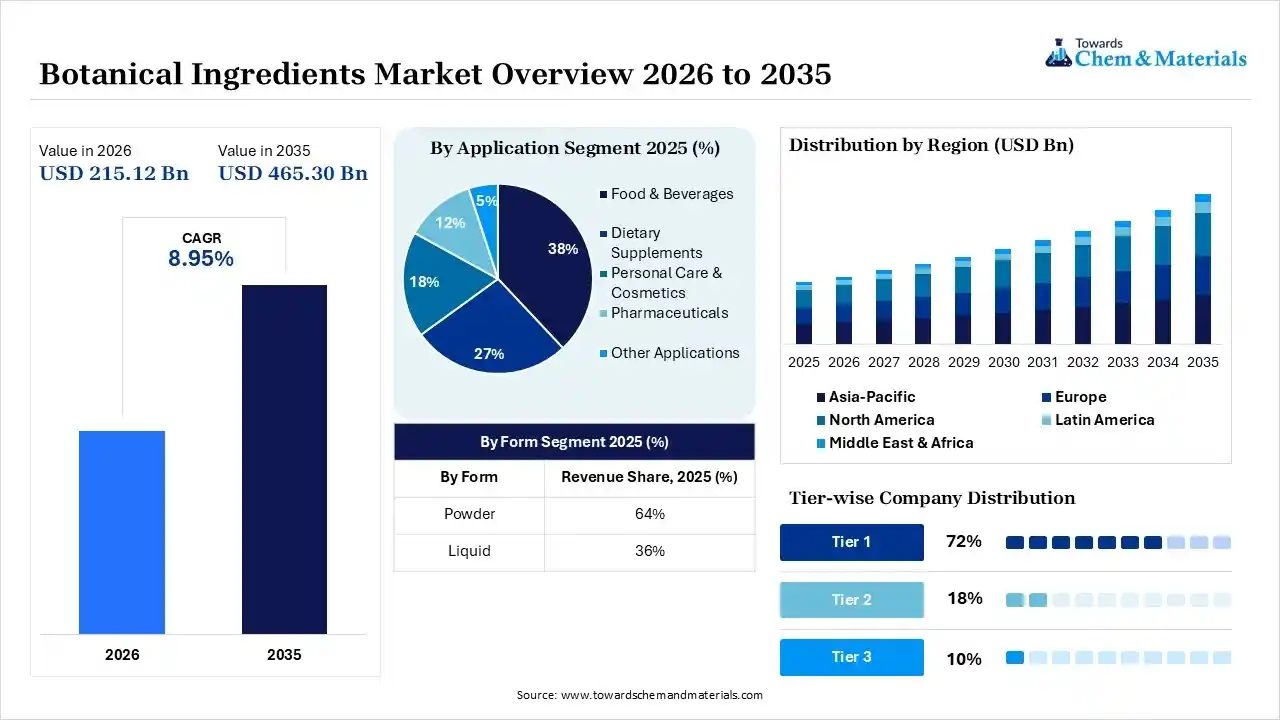
Market Highlights
- By region, Asia Pacific dominated the market with a share of 33% in 2025, due to its strong agricultural foundation, rich biodiversity, and extensive cultivation of herbs, spices, flowers, and medicinal plants.
- By region, North America is notably growing with 29% market share in 2025 and is expected to be the fastest-growing region in the market, with a CAGR of 9% in the forecast period, owing to consumers strongly favoring natural, clean-label, and wellness-oriented products.
- By form, the powder segment dominated the market with 64% share in 2025, as it provides superior convenience for storage, transportation, and manufacturing applications.
- By form, the liquid segment held the 36% market share in 2025 and is expected to be the fastest-growing in the market, with a CAGR of 8.80% in the forecast period, owing to increasing demand for ready-to-consume products and functional beverages.
- By source, the herbs segment dominated the market with 31% share in 2025, owing to herbs have traditionally been used across the food, healthcare, and personal care industries for many years.
- By source, the spices segment held the 24% market share in 2025 and is expected to be the fastest-growing in the market, with a CAGR of 8.70% in the forecast period, owing to increasing consumer demand for ingredients that provide both flavor and functionality.
- By application, the food & beverages segment dominated the market with 38% share in 2025, owing to it representing the largest application area for plant-derived ingredients.
- By application, the dietary supplements segment held the 27% market share in 2025 and is expected to be the fastest-growing in the market, with a CAGR of 9.10% in the forecast period, owing to consumers increasingly prioritizing preventive healthcare and wellness management.
Quick Stats at a Glance
- Market in Size 2025: USD 197.45 Billion | CAGR (2026–2035): 8.95%
- Market Estimated Size in 2026: USD 215.12 Billion
- Market Projected Size by 2035: USD 465.30 Billion
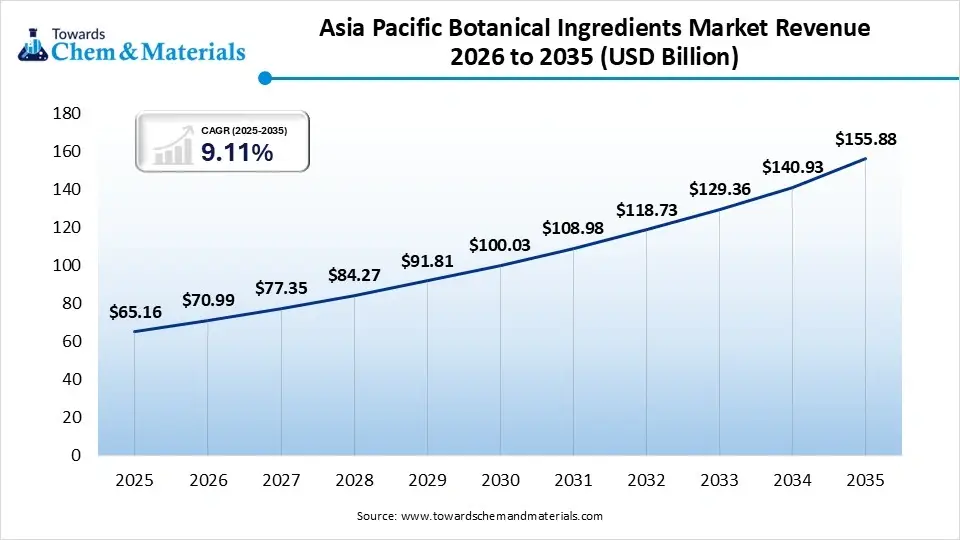
- Asia Pacific: largest Regional Market Revenue Share of 33% in 2025|USD 65.16 Billion
- North America: Fastest-growing Regional Market Revenue Share of 29% in 2025|USD 57.26 Billion
- By country: The China held the largest Market share of 40% in 2025
- Market Volume in 2025: 25.85 Million Tons| Volume CAGR (2026–2035): 5.15%
- Market Estimated Volume in 2026: 27.88 Million Tons
- Market Projected Volume by 2035: 55.04 Million Tons
- Market Pricing (2025):
- Average Manufacturing Price: USD 5.20/Kg
- Average Selling Price: USD 8.10/Kg
- Pricing CAGR (2026–2035): 3.45%
Clean Label Movement
The consumers of food, healthcare, cosmetics, and personal care sectors have been increasingly turning toward plant-derived products or more natural products via the clean label initiative. Moreover, specifically in the healthcare practices, individuals are seen in greater shifting towards the traditional plant-based practices and Ayurveda, which has enabled the sectors to explore untapped potential in recent years, as per a survey. Furthermore, the popularity of the wellness industry and its products is actively driving the strategic transformation and sectoral scalability in the sector nowadays.
- For instance, in January 2026, the Om Botanical introduced its latest generation of skincare product lines. Also, these newly launched skincare products belong to the food-grade category and comply with modern biotechnology and Ayurvedic principles as per the published report.
(Source: www.knoxnews.com)
Furthermore, regions such as the Asia-Pacific remain an important production region because of their rich agricultural base and diverse plant varieties. Meanwhile, North America and Europe continue to witness strong demand due to growing consumer preference for natural products. In recent years, botanical ingredients have moved beyond traditional applications and are now being used in a wider range of innovative products, according to recent reports.
Global Investment Flow for Botanical Ingredients Market 2026
The companies are actively observed under the greater investment in botanical extraction manufacturing. Also, the major key players are actively focusing on the establishment of the integrated production facilities nowadays.
- For instance, in July 2025, BioVivo Science plans to invest in increasing the domestic production capacity of botanical ingredient extraction. Also, the company is expected to invest around $70 million, as per the published report. Moreover, the company is expected to establish a 1000000 square foot manufacturing facility as per the published report.(Source: bevnet )
Companies are increasingly investing in farmer partnerships, contract cultivation programs, and traceable sourcing systems to ensure a consistent supply of high-quality botanical raw materials. These investments help reduce supply risks and support long-term sustainability goals.
Manufacturers are allocating more resources toward developing advanced botanical extracts, standardized formulations, and high-value plant-derived ingredients. Investment in research and product development is helping companies create differentiated products for food, healthcare, nutraceutical, and cosmetic applications
Market Trends
- The greater attention towards the naturally derived ingredients has opened profitable avenues for manufacturers in recent years. Moreover, several companies are actively trying to replace harmful artificial ingredients in their products.
- The heavy expansion of the botanical products in functional products is generating value-added opportunities for industry participants in the current period. Also, the manufacturers are increasingly including these ingredients in products such as beverages, supplements, snacks, and other daily consumables, which is leading the growth of the industry.
- The focus towards the more sustainable ingredient sourcing is expected to support the long-term expansion of the manufacturing operations during the forecast period. Also, the companies are involved in sourcing the ingredients that can easily be compost where the product is totally used or not used means waste.
Report Scope
Market revenue represents botanical ingredients supplied to manufacturers and other commercial users and excludes finished consumer products unless the revenue is attributable to the botanical ingredient itself.
| Report Attributes | Details |
| Market Size and Volume in 2026 | USD 215.12 Billion / 27.88 Million Tons |
| Revenue Forecast in 2035 | USD 465.30 Billion / 55.04 Million Tons |
| Growth Rate | CAGR 8.95% |
| Base Year of Estimation | 2025 |
| Forecast Period | 2025 - 2035 |
| High Impact Region | Asia Pacific |
| Segment Covered | By Form, By Source, By Application, By Region |
| Key Companies Profiled | Martin Bauer Group, Indena, Nexira, Synergy Flavors, Naturex (Givaudan), Frutarom, PLT Health Solutions, Bio-Botanica, Vidya Herbs, Arjuna Natural |
Precision Extraction Enhancement
The industry is heavily shifting toward modern processing technologies that improve ingredient quality while reducing resource consumption. Also, the companies are adopting precision extraction systems, digital monitoring tools, and advanced purification methods to obtain higher-value botanical compounds. Moreover, this shift is helping manufacturers improve efficiency, consistency, and sustainability across production operations.
Supply Chain Analysis of the Botanical Ingredients Market:
- Production & Processing:The production of botanical ingredients transforms raw plants, roots, and leaves into concentrated botanical materials containing selected plant-derived compounds. After careful harvesting and drying, manufacturers utilize extraction technologies such as supercritical-fluid extraction may be used to isolate selected botanical compounds, to isolate active bioactives. These liquid extracts are then Liquid extracts may be spray-dried to produce stable powdered ingredients, depending on the formulation and processing requirements tailored for clean-label supplements and skincare.
- Key players: Martin Bauer Group, Indena, and Sabinsa Corporation.
- Quality Testing and Certification:Labs verify botanical purity using high-tech testing like chromatography to catch contamination or synthetic fillers. Verifying the exact plant species guarantees product safety and potency. Earning respected certifications, such as USDA Organic or USP, gives brands the verified credibility needed to build trust with safety-conscious consumers worldwide.
- Key players: Eurofins Scientific, SGS, Intertek, and NSF International
- Distribution to Industrial Users:Connecting raw plant extracts with global manufacturers requires a reliable, transparent supply chain. Distributors bridge this gap by shipping custom batches of powders and oils to supplement food and cosmetic plants. Because Some botanical compounds are sensitive to temperature, oxygen, light, moisture, or time, making appropriate storage and transport controls important, specialized climate-controlled shipping and real-time tracking preserve their potency from warehouse to production line.
Botanical Ingredients Market Regulatory Landscape: Regulations
| Country Region | Regulatory Body | Key Regulations | Focus Areas |
| United States | FDA (Food and Drug Administration) | United States-FDA-Dietary Supplement Health and Education Act of 1994 (DSHEA); dietary supplement current good manufacturing practices are established under 21 CFR Part 111. | Species Verification: Utilizing advanced analytical methods like chromatography or DNA barcoding to guarantee raw botanical powders match the exact Latin binomial declared on the label. |
| Europe | EFSA (European Food Safety Authority) | European Union- European Commission/Member States -Regulation (EU) 2015/2283; foods without significant human consumption in the EU before 15 May 1997 may fall within the novel-food authorization framework. | European authorities assess risks from naturally occurring contaminants such as pyrrolizidine alkaloids, while applicable maximum levels and controls are established through relevant EU food-safety measures. |
| China | SAMR (State Administration for Market Regulation) | Dual-Track Registration Measures: Operating under China's primary Food Safety Law. This system creates a fast filing track for common, standard plants but requires deep, multi-year reviews for unusual plant formulations. | Food-Medicine Cross-Listings: Managing a strict government catalog of approved traditional roots and herbs that are legally allowed to cross over from medicine into commercial snacks and drinks. |
Botanical Ingredients Market Dynamics
Driver
Plant-Based Product Surge
The growing preference for natural and plant-based products across the food, beverage, healthcare, and personal care industries is enhancing industry readiness and future industry capability nowadays. Also, the consumers are becoming more selective about product ingredients and increasingly choosing products made from recognizable plant sources. This shift is encouraging manufacturers to replace synthetic ingredients with botanical alternatives. Furthermore, rising awareness regarding wellness, preventive healthcare, and clean-label products is creating additional demand.
Restraint
Harvests Variability Challenges
The dependence on agricultural production and environmental conditions is expected to create growth barriers for the industry during the projected period. Also, since botanical ingredients originate from plants, changes in weather patterns, droughts, floods, and crop diseases can directly impact raw material availability and quality. Furthermore, fluctuations in harvest yields may create supply shortages and price instability.
Opportunity
Sudden Growth in Wellness-Focused Consumers
The rapid expansion of wellness-focused products and personalized nutrition solutions is likely to create lucrative opportunities for the key players in the coming years. Also, consumers are increasingly seeking products that support immunity, digestion, mental well-being, and overall health. This trend is creating opportunities for manufacturers to develop innovative botanical formulations across supplements, functional foods, and beverages. Furthermore, growing consumer awareness in emerging economies is opening new markets for botanical ingredient suppliers.
Segmental Insights
Form Insights
The powder segment dominated the market with 64% share in 2025, as it provides superior convenience for storage, transportation, and manufacturing applications. Powdered botanical ingredients are easy to handle and can be incorporated into a wide variety of food, beverage, supplement, and personal care products. Furthermore, powder formulations generally offer longer shelf life and greater stability during storage compared to other forms.
The liquid segment held the 36% market share in 2025 and is expected to be the fastest-growing in the market, with a CAGR of 8.80% in the forecast period, owing to increasing demand for ready-to-consume products and functional beverages. Manufacturers are increasingly using liquid botanical extracts because they offer easier blending, improved solubility, and enhanced formulation flexibility. Furthermore, liquid ingredients are particularly suitable for modern product categories such as wellness shots, herbal drinks, liquid supplements, and premium beauty products.
Botanical Ingredients Market Share, By Form, 2025 (%)
| By Form | Revenue Share, 2025 (%) |
| Powder | 64% |
| Liquid | 36% |
Source Insights
The herbs segment dominated the market with 31% share in 2025, owing to herbs have traditionally been used across the food, healthcare, and personal care industries for many years. Ingredients derived from mint, basil, rosemary, chamomile, and similar herbs are widely recognized by consumers and accepted across various applications. Furthermore, herbal ingredients are readily available through established cultivation networks and global supply chains.
The spices segment held the 24% market share in 2025 and is expected to be the fastest-growing in the market, with a CAGR of 8.70% in the forecast period, owing to increasing consumer demand for ingredients that provide both flavor and functionality. Spices such as turmeric, ginger, cinnamon, and black pepper are gaining popularity in wellness products, functional foods, and beverages. Furthermore, consumers increasingly associate spice-based ingredients with natural product positioning and healthy lifestyles.
Botanical Ingredients Market Share, By Source, 2025 (%)
| By Source | Revenue Share, 2025 (%) |
| Herbs | 31% |
| Leaves | 22% |
| Spices | 24% |
| Flowers | 11% |
| Other Sources | 12% |
Application Insights
The food & beverages segment dominated the market with 38% share in 2025, owing to it representing the largest application area for plant-derived ingredients. Manufacturers use botanical ingredients for flavoring, coloring, preservation, and product differentiation purposes. Furthermore, growing demand for clean-label foods and naturally positioned beverages has encouraged companies to increase botanical ingredient usage.
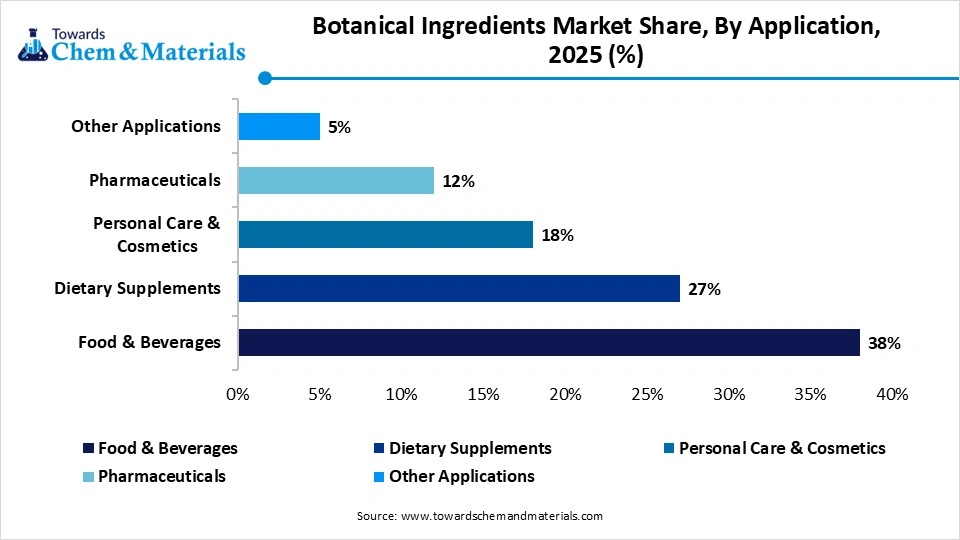
The dietary supplements segment held the 27% market share in 2025 and is expected to be the fastest-growing in the market, with a CAGR of 9.10% in the forecast period, owing to consumers increasingly prioritizing preventive healthcare and wellness management. Botanical ingredients are widely used in supplements designed to support immunity, digestion, energy, stress management, and overall well-being. Furthermore, growing awareness regarding plant-based health solutions is encouraging consumers to choose botanical supplements over synthetic alternatives.
Botanical Ingredients Market Share, By Application, 2025 (%)
| By Application | Revenue Share, 2025 (%) |
| Food & Beverages | 38% |
| Dietary Supplements | 27% |
| Personal Care & Cosmetics | 18% |
| Pharmaceuticals | 12% |
| Other Applications | 5% |
Regional Analysis
How will Asia Pacific Dominate the Botanical Ingredients Market in 2025?
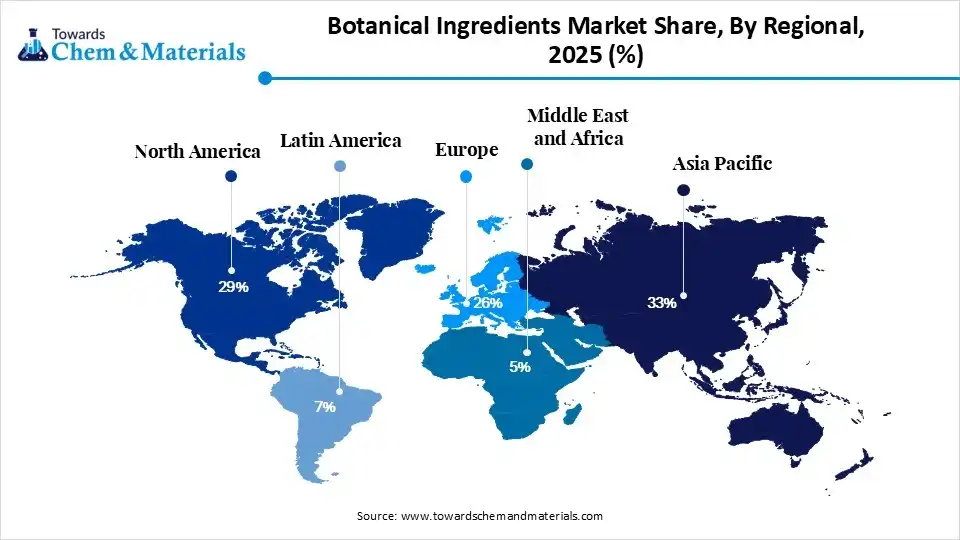
The Asia Pacific botanical ingredients market size was estimated at USD 65.16 billion in 2025 and is projected to reach USD 155.88 billion by 2035, growing at a CAGR of 9.11% from 2026 to 2035.Asia Pacific dominated the market with a share of 33% in 2025, due to its strong agricultural foundation, rich biodiversity, and extensive cultivation of herbs, spices, flowers, and medicinal plants. The region supplies a significant portion of the world's botanical raw materials and benefits from well-established production networks. Furthermore, growing populations, rising incomes, and increasing consumer interest in natural products are supporting market expansion.
 China
China
- Manufacturers in China are focusing on improving extraction technologies, ingredient quality, and export competitiveness while the domestic demand for natural wellness products is increasing as consumers seek healthier lifestyles.
- The companies are investing in value-added botanical ingredients rather than focusing solely on bulk production.
Japan
- Country is experiencing growing demand for premium botanical ingredients, particularly in wellness, nutrition, and personal care applications where consumers increasingly prefer products that combine natural ingredients with high quality and safety standards.
- Also, the country's aging population is supporting demand for health-focused products that utilize botanical extracts.
Botanical Ingredients Market Evaluation in North America
The North America botanical ingredients market size was estimated at USD 57.26 billion in 2025 and is projected to reach USD 137.26 billion by 2035, growing at a CAGR of 9.14% from 2026 to 2035.North America is notably growing with 29% market share in 2025 and is expected to be the fastest-growing region in the market, with a CAGR of 9% in the forecast period, owing to consumers strongly favoring natural, clean-label, and wellness-oriented products. The region benefits from advanced manufacturing capabilities, strong distribution networks, and a highly developed dietary supplement industry. Furthermore, growing interest in functional nutrition and plant-based lifestyles is supporting market growth. Manufacturers are introducing innovative botanical formulations to address evolving consumer preferences.
United States
- The consumers increasingly prefer products containing natural and plant-derived ingredients across supplements, beverages, snacks, and beauty products. While manufacturers are investing heavily in product innovation to meet growing demand for wellness-focused solutions.
- Also, the country remains a leader in functional food and dietary supplement development, creating substantial opportunities for botanical ingredient suppliers.
Canada
- Consumers in Canada are showing greater interest in plant-based lifestyles, wellness products, and clean-label formulation, while the manufacturers are emphasizing sustainable sourcing and ingredient transparency to meet evolving market expectations.
- The country's strong focus on quality and product safety supports consumer confidence in botanical formulations.
Europe Botanical Ingredients Industry Conditions
The Europe botanical ingredients market size was estimated at USD 51.34 billion in 2025 and is projected to reach USD 123.30 billion by 2035, growing at a CAGR of 9.16% from 2026 to 2035.Europe held the 26% market share in 2025, owing to strong consumer demand for sustainability, natural products, and premium-quality formulations. Consumers are paying closer attention to ingredient sourcing and environmental impact, encouraging manufacturers to prioritize responsible production practices. Furthermore, the growing demand for botanical ingredients in food, supplements, cosmetics, and personal care products is supporting market expansion.
Germany
- Manufacturers in Germany are increasingly utilizing botanical ingredients in supplements, functional beverages, and personal care products, while innovation remains a key priority as companies develop advanced botanical formulations to meet changing consumer preferences.
- The country's strong manufacturing infrastructure and research capabilities continue to support market development.
Italy
- Consumers in the country are appreciating products that combine natural ingredients with premium quality and traditional expertise, while manufacturers are incorporating botanical extracts into innovative product formulations designed for health-conscious consumers.
- Also, the country's strong food culture supports demand for herbs, spices, and plant-based ingredients.
Botanical Ingredients Market Survey in Latin America
The Latin America botanical ingredients market size was estimated at USD 13.82 billion in 2025 and is projected to reach USD 34.90 billion by 2035, growing at a CAGR of 9.71% from 2026 to 2035.Latin America held the 7% market share in 2025 due to its rich biodiversity and growing consumer awareness regarding natural products. The region possesses extensive plant resources that support ingredient innovation and product development. Furthermore, rising disposable incomes and urbanization are increasing demand for wellness-focused and clean-label products. Manufacturers are exploring local botanical resources to create differentiated products for domestic and export markets.
Botanical Ingredients Market Share, By Regional, 2025 (%)
| Regional | Revenue Share, 2025 (%) |
| North America | 29% |
| Europe | 26% |
| Asia-Pacific | 33% |
| Latin America | 7% |
| Middle East & Africa | 5% |
Brazil
- Brazil plays a significant role in the botanical ingredients market due to its exceptional biodiversity and abundant natural resources, while the manufacturers are increasingly exploring native plants for use in food, cosmetics, supplements, and wellness products.
- The companies in Brazil are investing in responsible sourcing programs and value-added botanical ingredient development.
Argentina
- Manufacturers are expanding their use of plant-based ingredients across food, beverage, and supplement applications while the country's agricultural sector provides opportunities for local sourcing and ingredient development.
- The companies are investing in innovative formulations to address changing consumer preferences and create differentiated products.
Middle East and Africa Botanical Ingredients Sector Observation
The Middle East and Africa botanical ingredients market size was estimated at USD 9.87 billion in 2025 and is projected to reach USD 25.59 billion by 2035, growing at a CAGR of 10.00% from 2026 to 2035.The Middle East and Africa held the 5% market share in 2025, akin to increasing awareness regarding natural products and healthier lifestyles. Consumers are becoming more interested in plant-based ingredients across food, beverage, healthcare, and personal care applications. Furthermore, economic diversification initiatives and investments in food processing industries are supporting market development. Rising urbanization and changing consumer preferences are creating new opportunities for botanical ingredient suppliers.
Saudi Arabia
- Saudi Arabia is witnessing increasing demand for botanical ingredients as consumers actively seek healthier and more natural product alternatives, while the food manufacturers are introducing products containing botanical extracts to meet changing consumer preferences.
- The government's efforts to strengthen local manufacturing and diversify the economy are creating favorable conditions for ingredient suppliers.
UAE
- Consumers in the country increasingly prefer products containing natural and plant-derived ingredients, while the country's position as a major trade and distribution hub supports the movement of botanical ingredients across the region.
- Also, the manufacturers and retailers are responding to changing consumer preferences by introducing innovative botanical-based products.
Competitive Analysis
The global botanical ingredients market is becoming increasingly competitive as manufacturers focus on sustainability, innovation, traceable sourcing, and premium plant-based solutions. As competition increases, innovation, global sourcing networks, and sustainability initiatives are becoming key factors that differentiate leading companies.
- Givaudan continues to strengthen its position in natural and botanical ingredients through investments and expansion activities. Also, the company has launched its upcoming strategies and initiatives while installing its new manufacturing plants.
- DSM-Firmenich is focusing on nutrition, health, beauty, and ingredient innovation to strengthen its global market position. In recent years, the company has reported continued investment in innovation-driven growth and expansion across its nutrition and health portfolio. Also, the company is likely to strengthen its global operations footprint in the coming years.(Source:givaudan.com ),(Source:dsm-firmenich ),(Source: annualreport)
Top Vendors in the Botanical Ingredients Market & Their Offerings
| Company | Company Type/Position | Major Headquarters | Geographic Presence | Offerings | Key Strength |
| Martin Bauer Group | Primary Processor | Vestenbergsgreuth, Germany | Global networks across Europe, North America, and the Asia-Pacific. | High-quality herbal infusions, loose botanical raw materials, and standardized plant powders. | Unmatched sustainable farm sourcing and total supply chain traceability from seed to shelf |
| Indena | Premium Pharmaceutical-Grade Specialist | East Windsor, New Jersey | Global presence spanning major labs and offices in the Americas, India, Japan, and Europe. | Patented phytonutrients, standardized herbal blends, and specialized bio-availability enhancers | Owner of a massive international patent portfolio focused on clinically backed wellness ingredients. |
| Nexira | Global Functional Food Leader | Rouen, France | Extensive distribution networks spanning five continents with specialized African sourcing hubs. | Soluble dietary fibers, natural premium texturizers, and active weight-management botanicals. | The world’s undisputed top supplier of sustainably harvested, organic acacia fiber gum. |
Other Key Players
- Synergy Flavors
- Naturex (Givaudan)
- Frutarom
- PLT Health Solutions
- Bio-Botanica
- Vidya Herbs
- Arjuna Natural
Recent Development
- In May 2026, Agrizy introduced the new phytochemistry R&D lab. Also, the motive behind the launch of the advanced lab is to develop standardized botanical ingredients as per the company's claim. Moreover, the company is likely to strengthen its presence in the global wellness market in the coming years, as per the published report.(Source: asiafoodjournal.com)
Segments Covered in the Report
By Form
- Powder
- Spray-Dried Powder
- Freeze-Dried Powder
- Standard Ground Powder
- Liquid
- Extract Concentrates
- Essential Oil Extracts
- Water-Based Extracts
By Source
- Herbs
- Ashwagandha
- Ginseng
- Tulsi
- Other Herbal Sources
- Leaves
- Green Tea Leaves
- Moringa Leaves
- Neem Leaves
- Other Leaf Sources
- Spices
- Turmeric
- Ginger
- Cinnamon
- Other Spice Sources
- Flowers
- Chamomile
- Hibiscus
- Lavender
- Other Floral Sources
- Other Sources
- Roots
- Fruits
- Seeds
- Bark Extracts
By Application
- Food & Beverages
- Functional Foods
- Beverages
- Natural Flavoring Systems
- Clean-Label Ingredients
- Dietary Supplements
- Capsules
- Tablets
- Powder Supplements
- Liquid Supplements
- Personal Care & Cosmetics
- Skin Care
- Hair Care
- Fragrances
- Oral Care
- Pharmaceuticals
- OTC Formulations
- Herbal Medicines
- Therapeutic Extracts
- Other Applications
- Animal Nutrition
- Household Products
- Agricultural Inputs
By Region
- North America
- U.S.
- Canada
- Europe
- Germany
- UK
- France
- Italy
- Spain
- Sweden
- Denmark
- Norway
- Asia Pacific
- China
- Japan
- India
- South Korea
- Thailand
- Latin America
- Brazil
- Mexico
- Argentina
- Middle East and Africa (MEA)
- South Africa
- UAE
- Saudi Arabia
- Kuwait
A Seven-Phase Framework
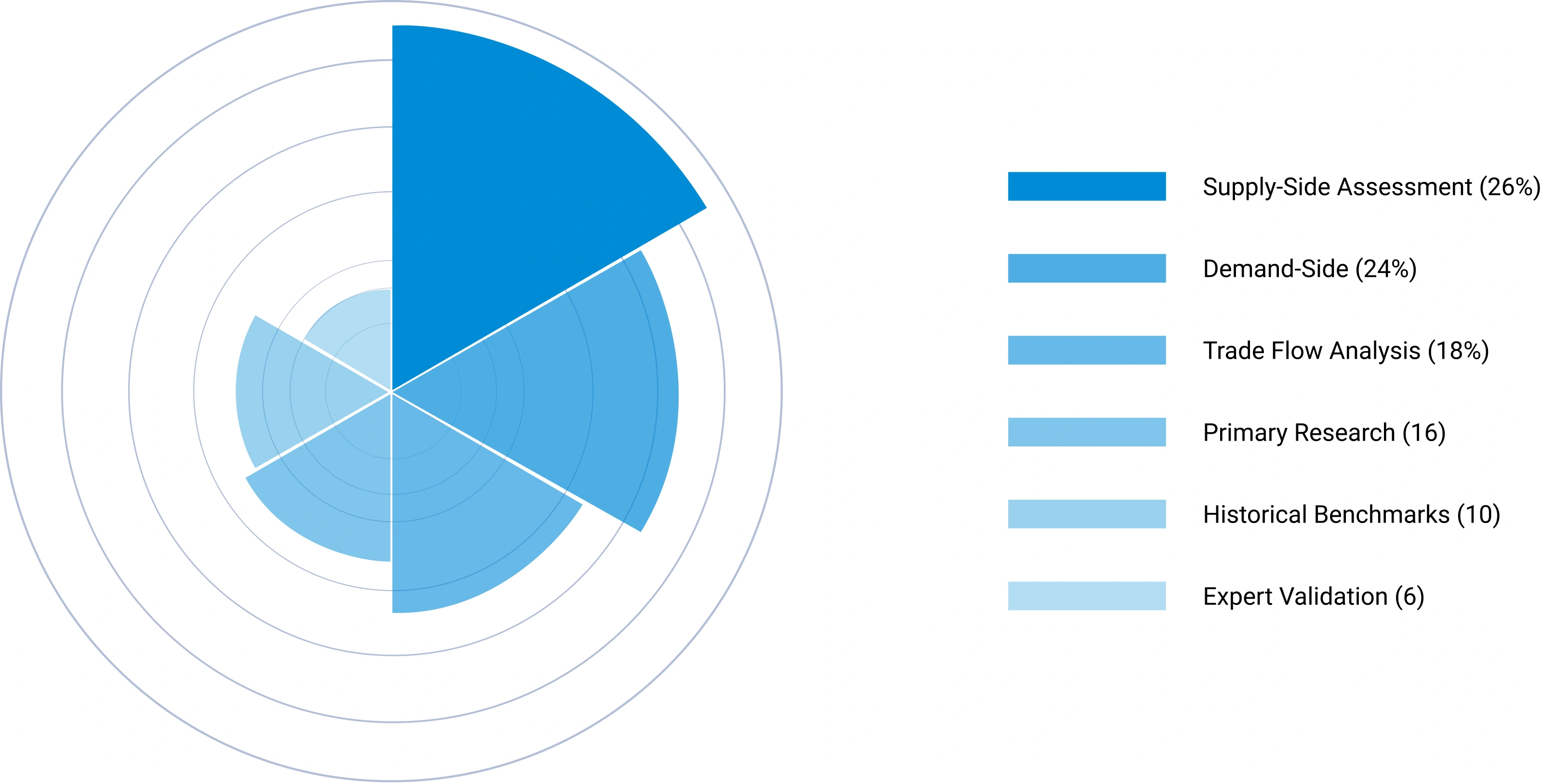
Our methodology is designed to be universally applicable across commodity chemicals, specialty chemicals, petrochemicals, construction chemicals, coatings, electronic chemicals, industrial gases, agrochemicals, water treatment chemicals, and performance materials. Each phase builds upon the last, creating a layered validation structure that minimizes estimation error and maximizes analytical confidence.
The framework ensures comprehensive market coverage, robust cross-validation, and reliable long-term forecasting — producing market estimates that withstand scrutiny from investors, regulators, and corporate strategy teams.

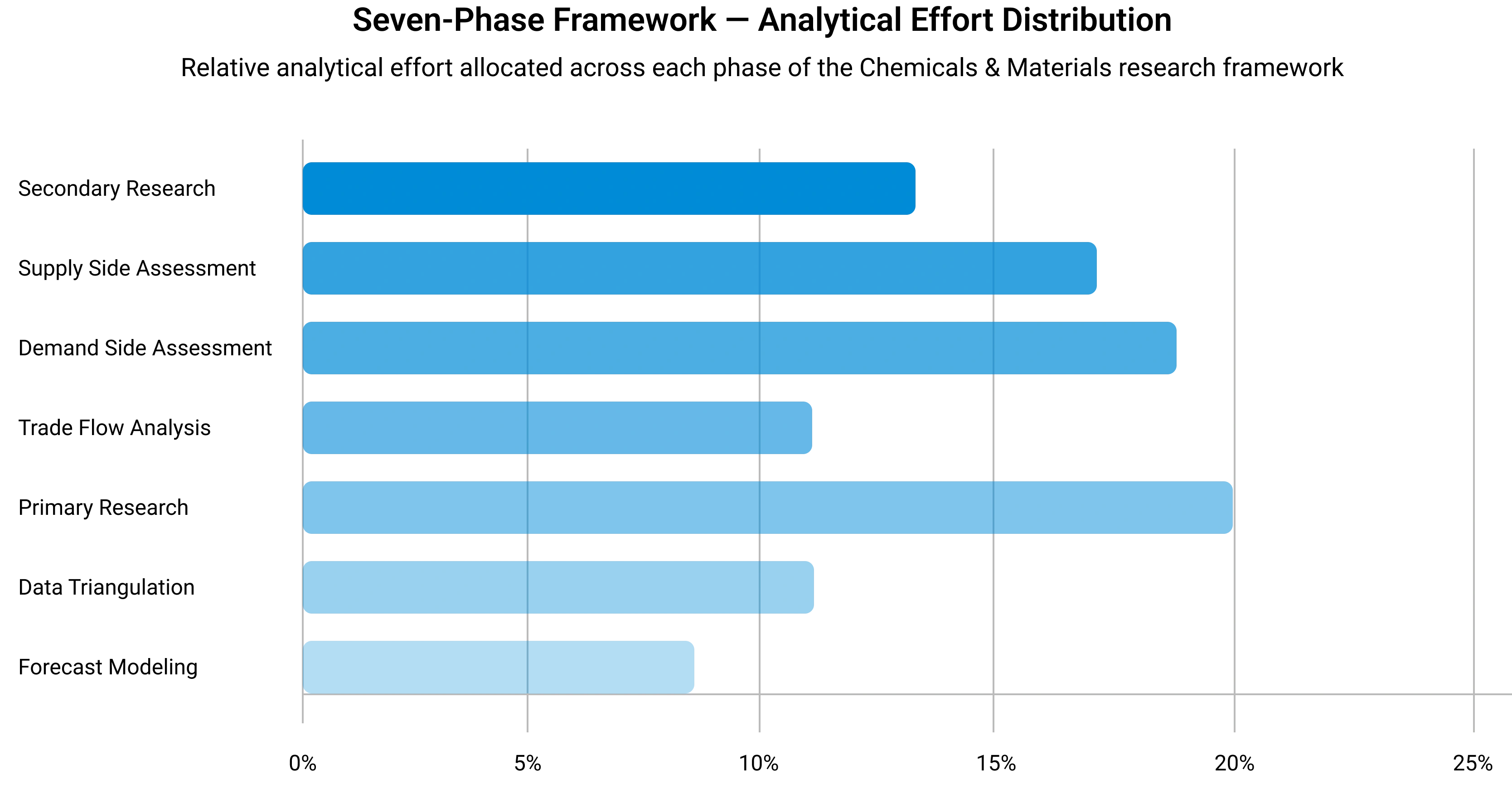
Seven-Phase Framework — Analytical Effort Distribution
Relative analytical effort allocated across each phase of the Chemicals & Materials research framework
Phase 1 - Secondary Research: Establishing the Foundation
Secondary research collects and evaluates publicly available information from authoritative sources, establishing the foundational understanding of market structure, value chain dynamics, competitive landscape, and end-use demand patterns. Every source is evaluated for credibility, recency, geographic relevance, and methodological soundness before inclusion.
Industry Associations
Sources include ACC, CEFIC, ICCA, JCIA, CPCIF, and SOCMA providing production volumes, consumption trends, capacity developments, and sustainability initiatives.
Company Disclosures
Annual reports, investor presentations, earnings transcripts, and regulatory filings reveal product portfolios, manufacturing footprints, capacity expansions, and revenue segmentation.
Government Databases
National statistical offices, customs authorities, environmental agencies, and industrial production databases provide verified statistics on output, trade flows, and regulatory compliance.
Trade Databases
UN Comtrade, ITC, Eurostat, and national customs authorities enable assessment of global product movement, import dependency, and export competitiveness across regions.
Our Secondary Research Sources
- Ministry of Chemicals and Fertilizers
- European Chemicals Agency
- United States Department of Energy
- Ministry of Industry and Information Technology
- Ministry of Economy Trade and Industry
- Ministry of Trade Industry and Energy
- National Institute of Standards and Technology
- Council of Scientific and Industrial Research
- Fraunhofer Society
- National Institute for Materials Science
Phase 2 — Supply-Side Assessment: Mapping Production Capabilities
Production Capacity Analysis
All major manufacturers are assessed for existing installed capacity, planned additions, expansions, new plant announcements, and technology adoption — mapped at global, regional, and country levels.
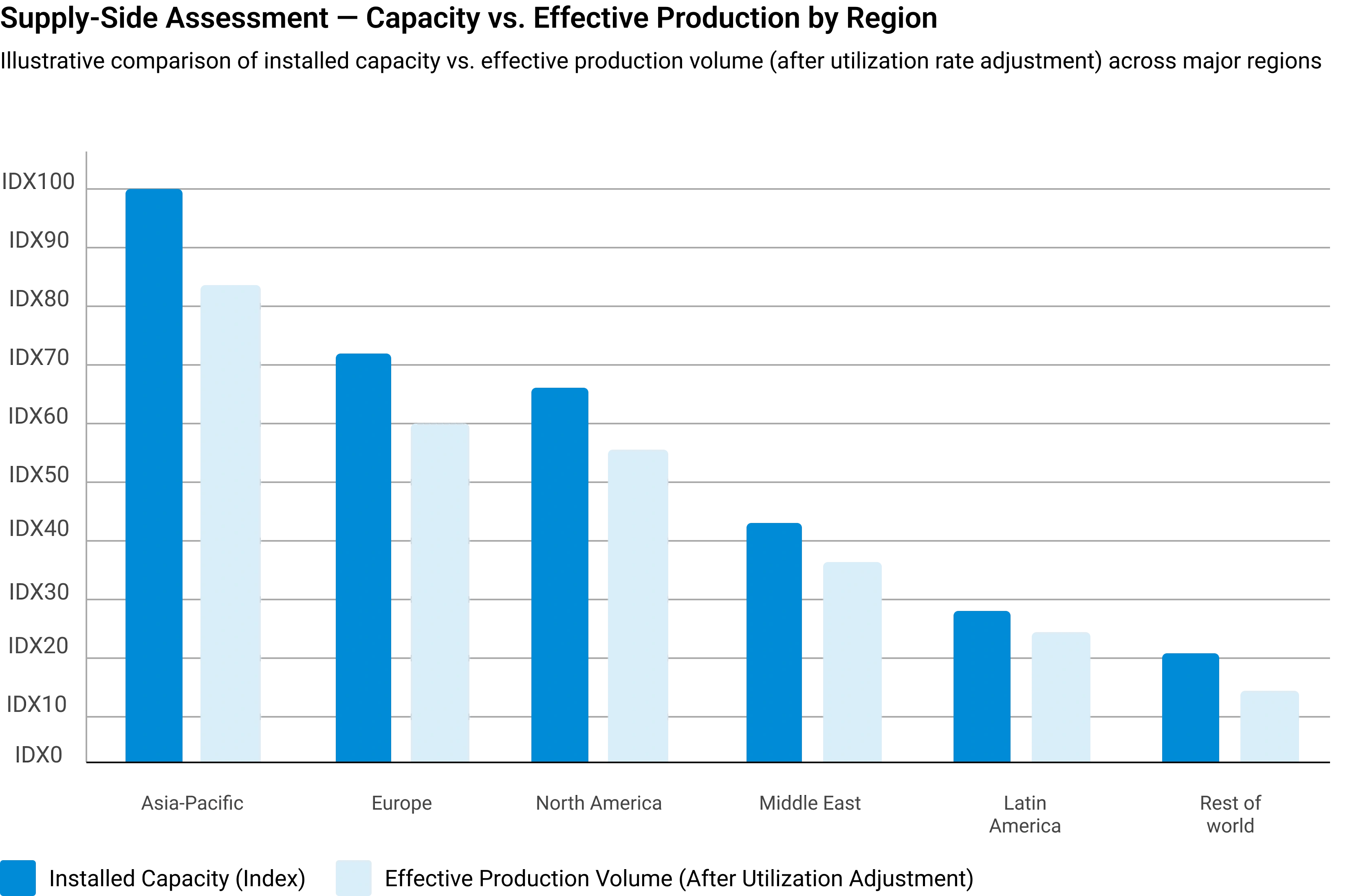
Capacity Utilization Adjustment
Installed capacity is adjusted using utilization rates based on demand conditions, feedstock availability, plant operating rates, maintenance schedules, and regulatory restrictions.
Manufacturer Revenue Analysis
Product-specific revenues, segment-level performance, regional distribution, average selling prices, and margin trends are evaluated to establish market value estimates.
Supply-Side Assessment — Capacity vs. Effective Production by Region
Illustrative comparison of installed capacity vs. effective production volume (after utilization rate adjustment) across major regions
Phase 3 — Demand-Side Assessment: Quantifying Chemical Consumption
Demand-side analysis quantifies chemical consumption across industries, applications, and geographies — identifying where and how chemicals are consumed throughout the value chain with precision.
End-Use Industry Analysis
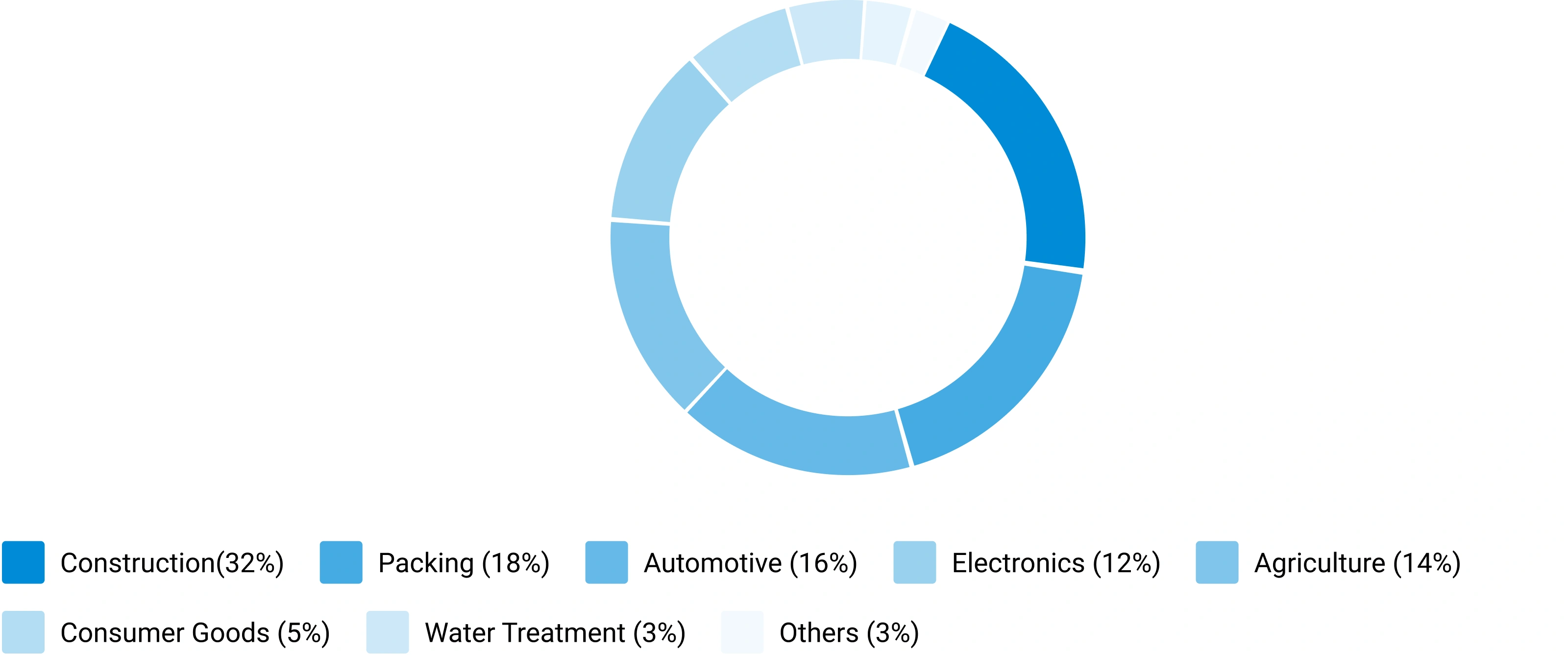
Chemical demand is evaluated across automotive, construction, packaging, electronics, agriculture, healthcare, consumer goods, industrial manufacturing, energy and utilities, and water treatment. Industry output, production trends, and consumption intensity are analyzed to determine demand patterns.
Consumption Modeling
Demand is estimated using measurable indicators: kilograms per vehicle, kilograms per square meter of construction, dosage per cubic meter of water treated, kilograms per hectare of agricultural land, and kilograms per ton of manufactured products. Consumption factors are validated through industry publications and primary interviews.
Application Analysis
The market is segmented by application area to understand product performance requirements, formulation trends, technology adoption, customer preferences, and regulatory requirements improving demand accuracy and segmentation granularity.
Demand-Side Assessment — End-Use Industry Demand Distribution
Illustrative distribution of chemical & materials demand across key end-use industries
Phase 4 - Trade Flow Analysis: Balancing Regional Supply and Demand
Trade flow analysis reconciles regional supply and demand estimates through import and export data, identifying net supply positions, regional dependencies, and market imbalances. It serves as an independent validation layer that tests the consistency of supply-side and demand-side estimates.
Import Analysis
Import data is evaluated to determine volumes, source countries, product dependency, regional supply gaps, and pricing trends — identifying markets that rely heavily on external supply and where domestic production is insufficient to meet demand.
Export Analysis
Export assessments reveal production surplus, export competitiveness, regional manufacturing strength, and global market participation. Export patterns also help validate domestic production estimates and identify net exporting regions.
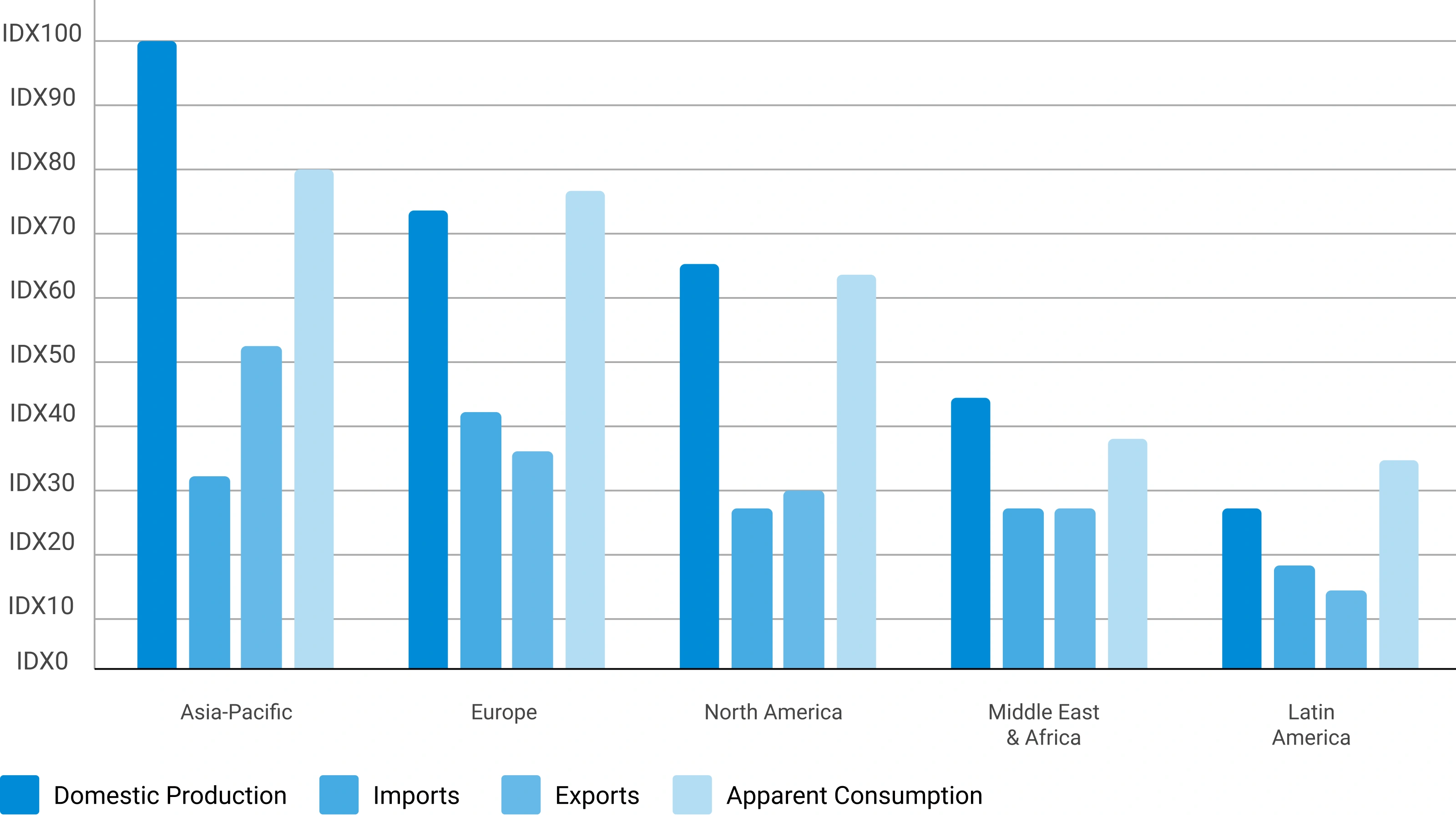
Apparent Consumption Model
Regional consumption is assessed using the standard apparent consumption formula:
Results identify net importing regions, net exporting regions, regional deficits, and surpluses — serving as an independent validation of supply and demand estimates.
Trade Flow Analysis — Net Supply Position by Region
Illustrative apparent consumption vs. domestic production across major regions — positive gap indicates net import dependency
Phase 5 — Primary Research: The Critical Validation Layer
Primary research tests and refines findings from secondary research through direct engagement with industry participants across the supply chain, demand side, and expert community. It captures intelligence that no database or published report can provide — the real-world experience of manufacturers, buyers, and specialists operating in the market.

Supply-Side Interviews
Conversations with chemical manufacturers, raw material suppliers, contract manufacturers, technology providers, and plant operators cover production trends, capacity utilization, pricing developments, technology shifts, and competitive dynamics.

Demand-Side Interviews
Engagement with OEMs, industrial consumers, procurement managers, distributors, formulators, and end-use manufacturers focuses on consumption trends, purchasing behavior, product substitution, demand outlook, and emerging applications.

Industry Expert Consultations
Additional interviews with industry consultants, independent experts, regulatory specialists, technical professionals, and research institutions provide deeper market context and validate key analytical assumptions.
Focus Areas of Primary Research:
Market Size & Forecast Validation
Revenue estimates, volume consumption, growth rates, forecast assumptions, regional demand.Supply Chain & Value Chain Assessment
Raw material sourcing, supply chain challenges, distribution networks, procurement practices.Production & Capacity Analysis
Manufacturing capacity, utilization rates, expansion projects, plant investments.Pricing & Cost Structure Analysis
Product pricing trends, feedstock costs, energy costs, margin pressures, pricing outlook.Competitive Landscape Assessment
Volume and value estimates confirmed to be fully consistent with one another before publicationInterview Volume by Market Scope
| Study Scope | Number of Interviews |
|---|---|
| Niche Market | 20 – 30 |
| Mid-Sized Market | 30 – 50 |
| Global Market | 50 – 80 |
| Highly Fragmented Market | 80 – 120 |
Interview Details:
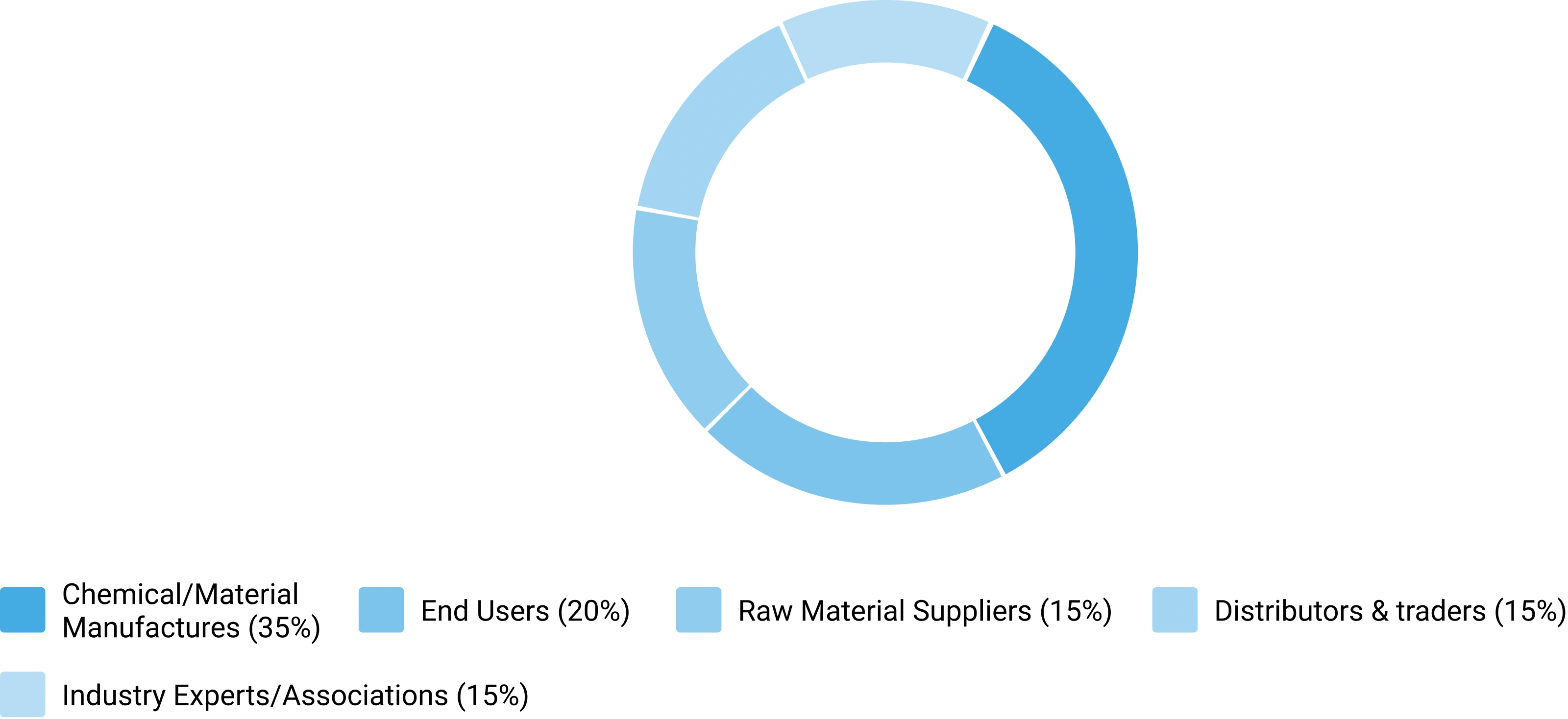
Category : Manufacturers, Suppliers, Distributors, End Users, Experts/Associations
Average Duration : 30–60 Minutes
Interview Mode : Video calls, telephonic interviews, expert consultations
Interview Format : Structured / Semi-Structured questionnaire
Focus Areas of Primary Research:
Market Size & Forecast Validation :
Revenue estimates, volume consumption, growth rates, forecast assumptions, regional demand.
Supply Chain & Value Chain Assessment :
Raw material sourcing, supply chain challenges, distribution networks, procurement practices.
Production & Capacity Analysis :
Manufacturing capacity, utilization rates, expansion projects, plant investments.
Pricing & Cost Structure Analysis :
Product pricing trends, feedstock costs, energy costs, margin pressures, pricing outlook.
Competitive Landscape Assessment :
Market share, competitor positioning, strategic initiatives, partnerships, acquisitions.
Primary Research — Stakeholder Coverage by Category
Distribution of interview respondents across stakeholder categories (% share from PPT data)
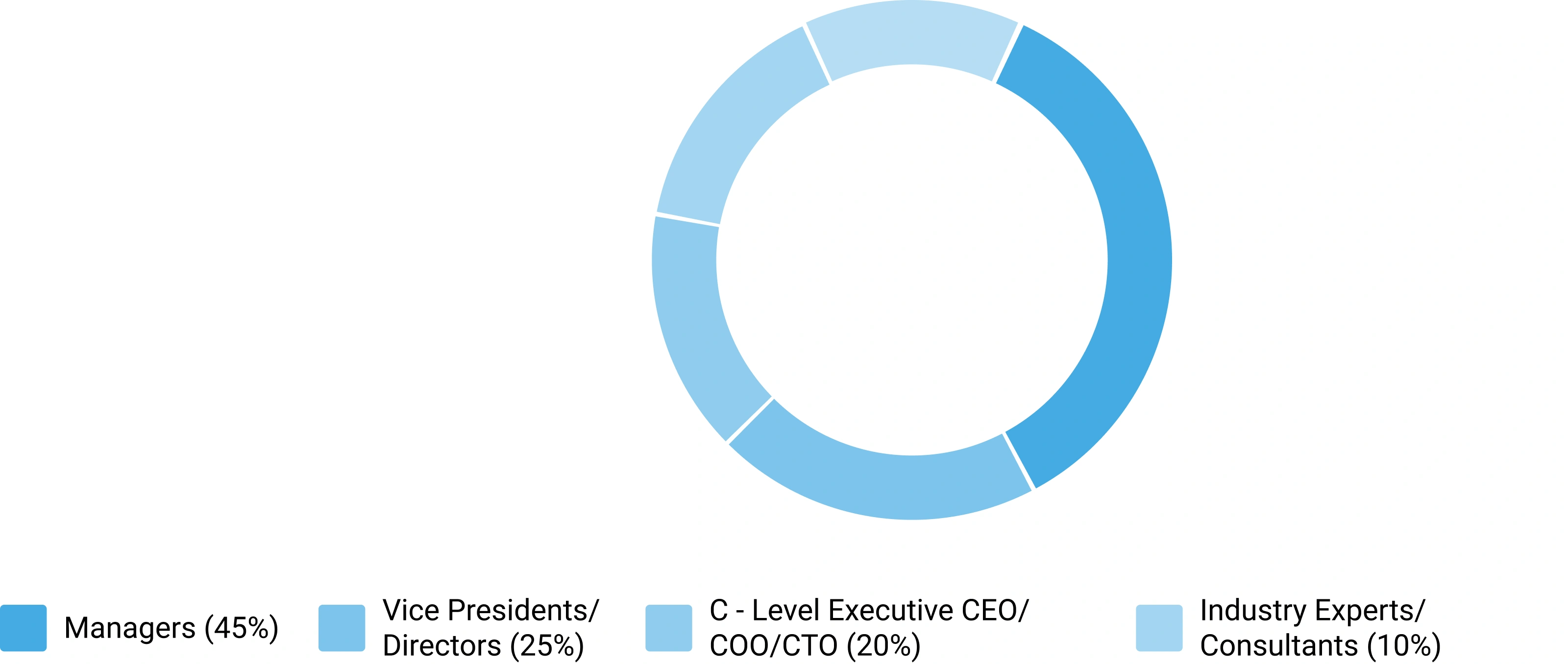
Primary Research — Respondent Designation Profile
Seniority breakdown of interview respondents (% share from PPT data)
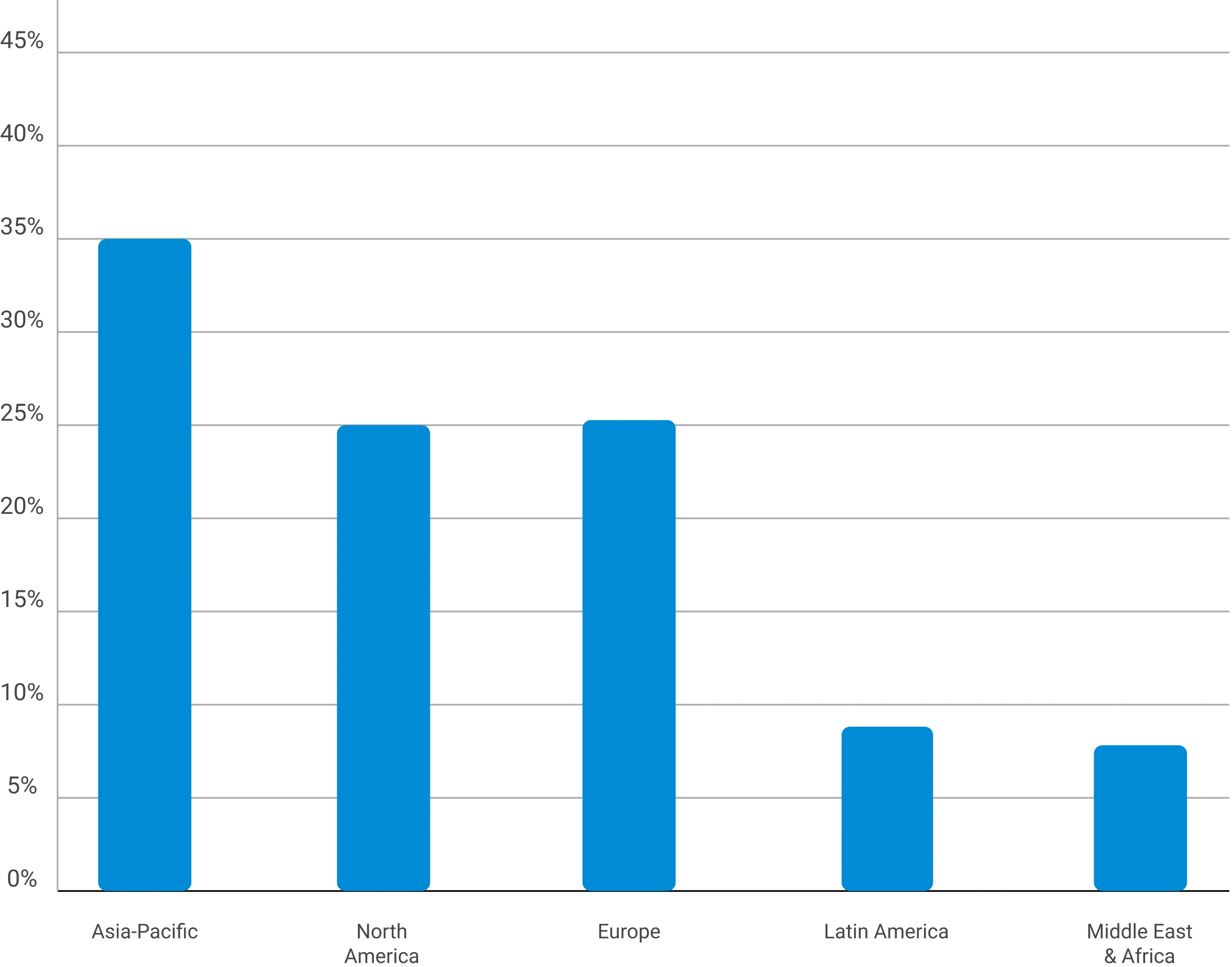
Primary Research — Geographic Coverage of Interviews
Regional distribution of primary research engagement (% share from PPT data)
Phase 6 — Data Triangulation and Market Validation
No single methodology is relied upon in isolation. Multiple independent estimation approaches are combined and reconciled to ensure consistency, accuracy, and analytical defensibility. Any material deviations between approaches are investigated and adjusted through additional validation cycles.
The final market size is derived through weighted triangulation of all validated methodologies. Any material deviations between approaches are investigated and adjusted through additional validation cycles. The outcome represents the most realistic assessment of the market based on available evidence and expert confirmation ensuring that volume and value estimates are fully consistent with one another.
Triangulation Framework — Input Contribution Weight
Relative weight each sizing input contributes to the final reconciled market estimate
Phase 7 — Forecast Modeling: Projecting Future Market Evolution
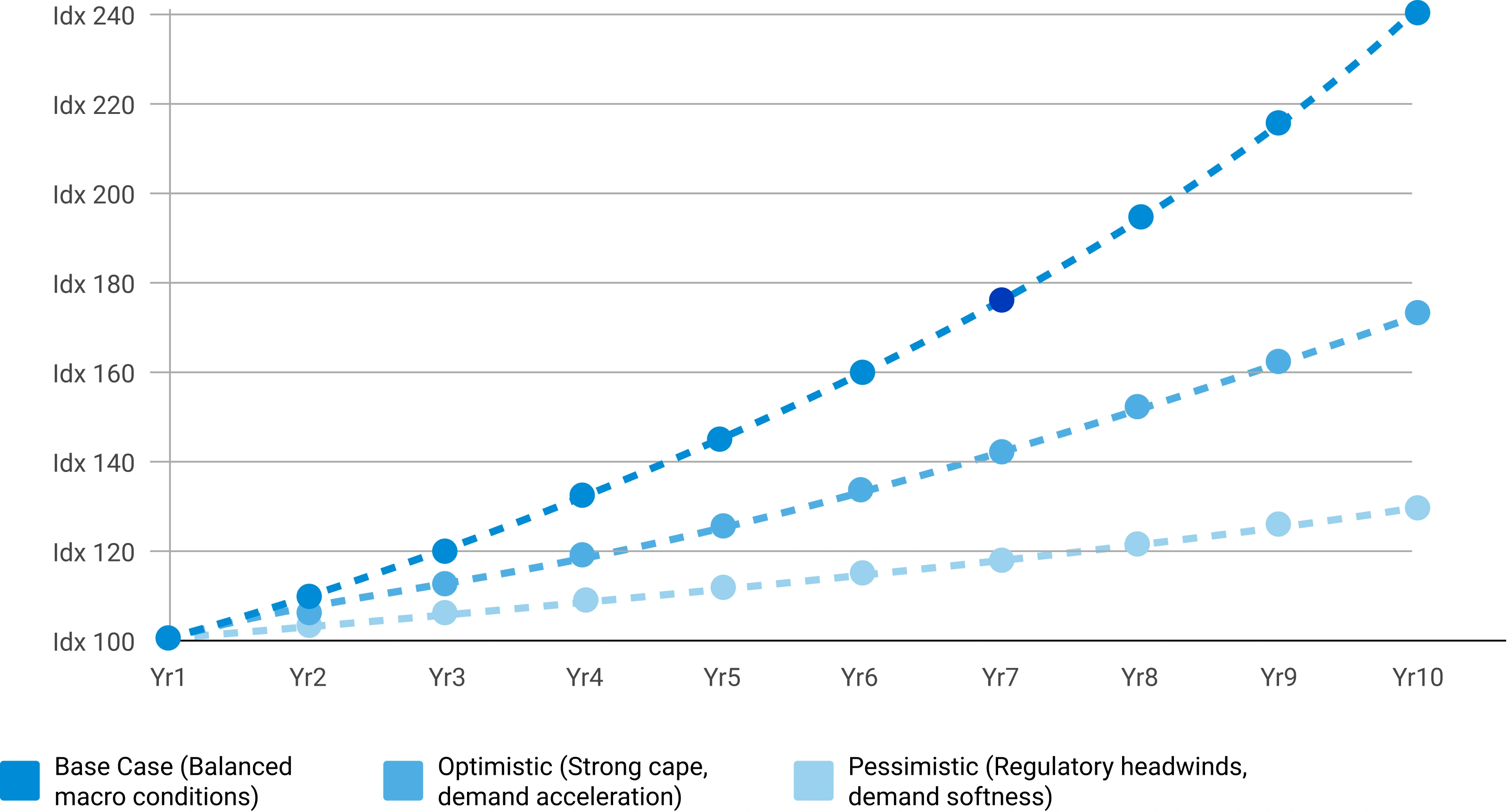
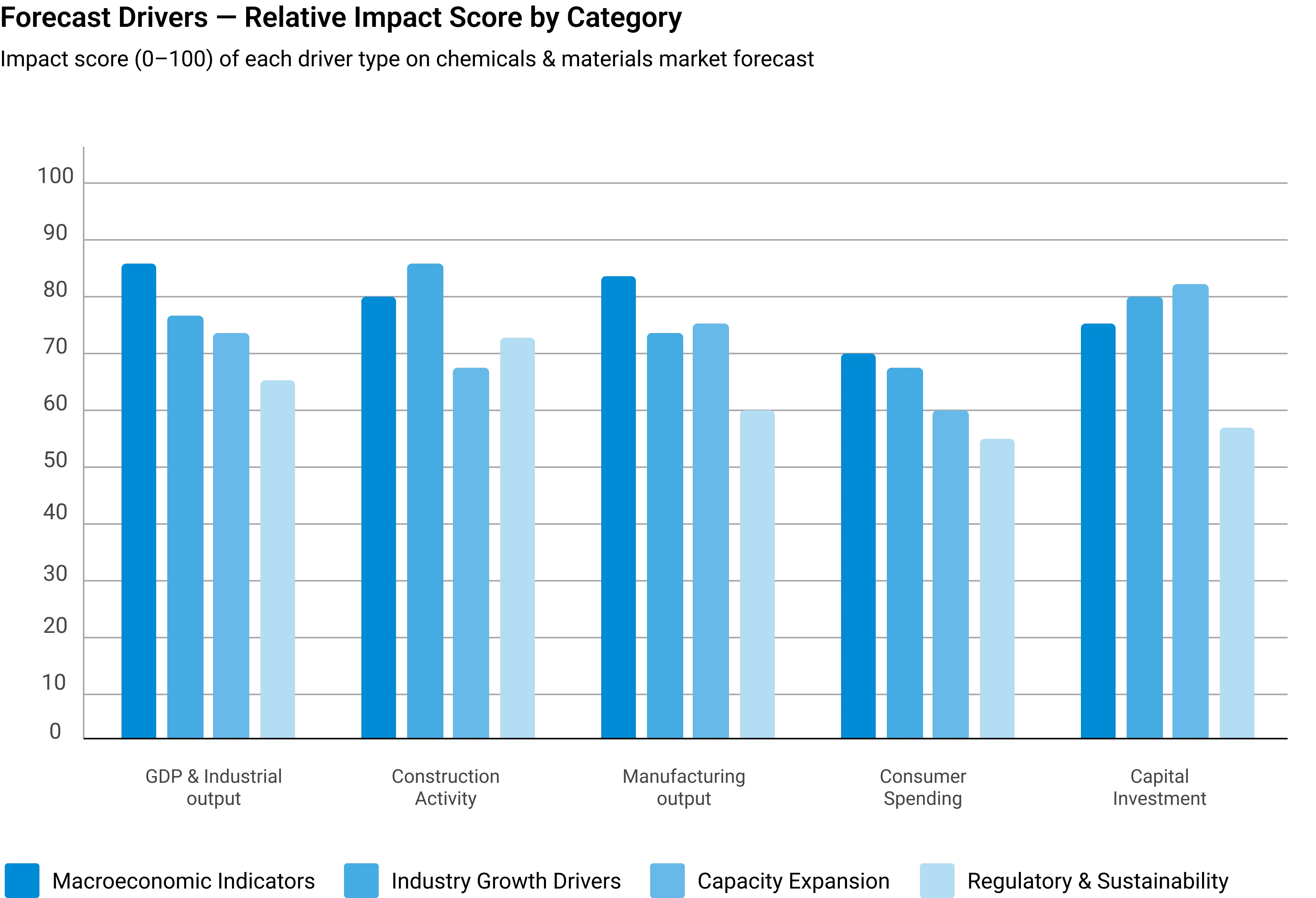
Forecasting evaluates the future trajectory of the market using a combination of quantitative indicators and qualitative assessments across economic, industry, and regulatory dimensions. Rather than simple extrapolation, each driver is independently modeled and integrated into a composite forecast.
Macroeconomic Indicators
GDP growth, industrial production, manufacturing output, construction activity, consumer spending, and capital investment form the quantitative foundation of long-term demand projections. These are applied at country, regional, and global levels.
Industry Growth Drivers
Urbanization, infrastructure development, industrialization, technological innovation, sustainability initiatives, and evolving product performance requirements are assessed at regional and industry levels — capturing both structural and cyclical demand drivers.
Capacity Expansion Analysis
Announced plant expansions, new manufacturing facilities, technology upgrades, and strategic investments are evaluated to determine future supply-demand dynamics and potential market tightness or oversupply situations.
Regulatory & Sustainability
Environmental regulations, chemical safety standards, emission reduction targets, circular economy initiatives, and sustainability requirements are incorporated as they often influence product adoption rates and market growth trajectories.
Scenario Forecast Range — Indexed Market Growth (Year 1–10)
Illustrative indexed growth trajectories across Base, Optimistic, and Pessimistic scenarios over a 10-year forecast horizon
Forecast Drivers — Relative Impact Score by Category
Impact score (0–100) of each driver type on chemicals & materials market forecast



Comments
Share your thoughts, ask a question, or provide feedback about this report.