Content


What is the Asia Pacific iron and steel market size and share?
The Asia Pacific iron and steel market size was valued at USD 1.19 trillion in 2025 and is projected to grow from USD 1.25 trillion in 2026 to USD 1.92 trillion by 2035, exhibiting a CAGR of 4.90% during the forecast period. China dominated the iron and steel industry with a 71.20% share in 2025. Hydrogen-based DRI, electric arc furnace, smart foundries, digital twins, automation, and advanced metallurgy are among the technological shifts that are increasingly a part of the picture. Investment activity also targets low-emission production, lightweight materials, renewable infrastructure, and special grades of steel for electric vehicles and other advanced manufacturing uses.
Market Highlights
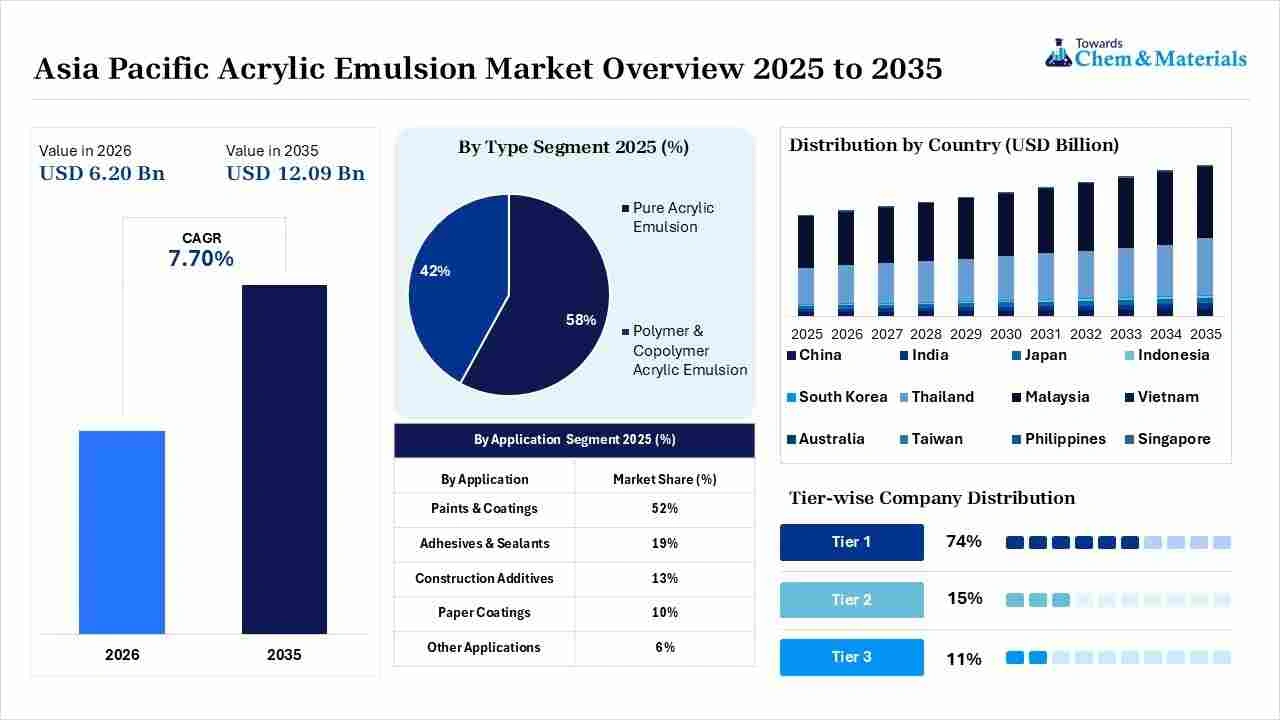
- China dominated the Asia Pacific iron and steel market by holding a 71.20% share in 2025.
- India held a 12.20% market share in 2025 and is expected to grow at the fastest CAGR in the coming years.
- By type, the steel segment dominated the market with the largest share of 92% in 2025 and is expected to grow at a CAGR of 4.98% during the forecast period.
- By type, the iron segment held 8% market share in 2025 and is expected to grow at the fastest CAGR of 5.32% over the forecast period.
- By iron production technology, the blast furnace process segment dominated the market with the largest share of 72% in 2025 and is expected to grow at a CAGR of 4.32% during the forecast period.
- By iron production technology, the DRI process segment held 28% market share in 2025 and is expected to grow at the fastest CAGR of 7.14% over the forecast period.
- By steel production technology, the basic oxygen furnace segment dominated the market with the largest share of 72% in 2025 and is expected to grow at a CAGR of 4.24% during the forecast period.
- By steel production technology, the electric arc furnace segment held a 25% market share in 2025 and is expected to grow at the fastest CAGR of 6.85% over the forecast period.
- By end-use, the building & construction segment dominated the market with the largest share of 52% in 2025 and is expected to grow at a CAGR of 4.51% during the forecast period.
- By end-use, the automotive & transportation segment held an 18% market share in 2025 and is expected to grow at the fastest CAGR of 6.42% over the forecast period.
Market Overview
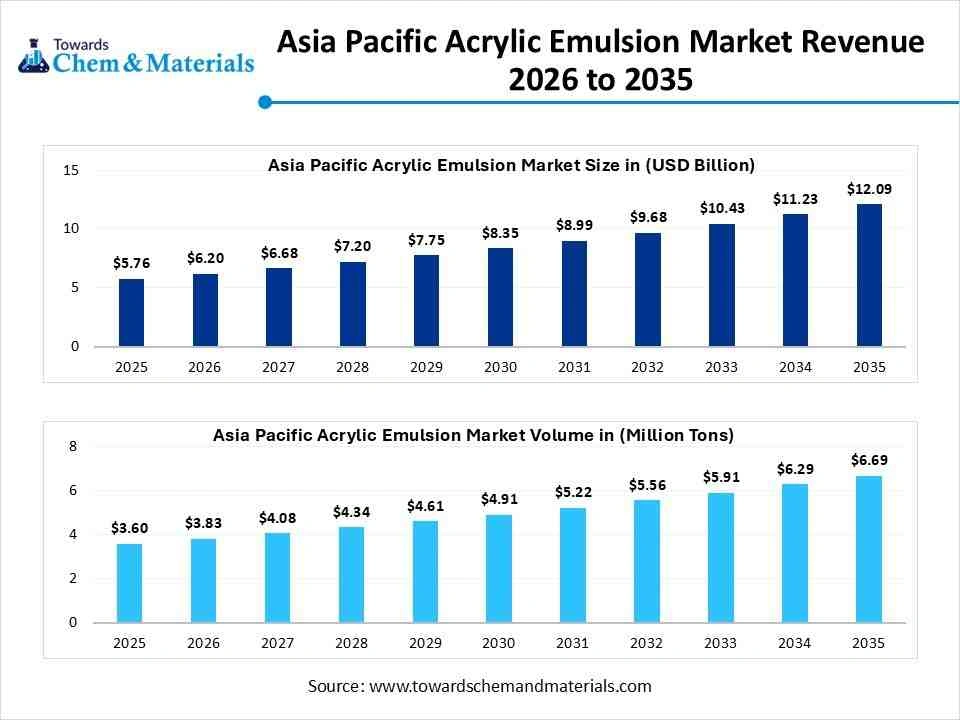
According to Towards Chemicals and Materials Analytics and Consulting, the Asia Pacific iron and steel market volume was valued at 1,385.00 million tons in 2025 and is expected to surpass around 1,623.26 million tons by 2035, accelerating a compound annual growth rate (CAGR) of 1.60% over the forecast period from 2026 to 2035.
The Asia Pacific iron and steel market is a significant production and consumption hub, contributing to the infrastructure, construction, manufacturing, automotive, and energy development sectors. China and India are significant regional markets, with continued growth in industrial capacity in Southeast Asian economies. Structural and flat steel products are relied upon by urbanization and infrastructure projects, while high-strength and specialized grades are required by automotive manufacturing. The demand for durable steel components is increasing with the installation of renewable energy infrastructure.
Global Investment Movement for the Asia Pacific Iron and Steel Market
- Real estate growth: There is a growing focus on residential/commercial development in the developing world, such as China and India, increasing the demand for structural steel.
- Modular Construction: Investment in prefabricated construction methods promotes the more widespread use of specialized sections of structural steel and engineered building elements.
- Low-Emission Production: Steelmakers are increasingly seeking cleaner production technologies such as direct reduced iron processes that aim to minimize emissions associated with production.
Report Scope
| Report Attributes | Details |
| Market Size in 2026 | USD 1.25 Trillion/1,407.16 Million Tons |
| Expected Size in 2035 | USD 1.92 Trillion/1,623.26 Million Tons |
| Growth Rate | CAGR of 4.90% |
| Base Year of Estimation | 2025 |
| Forecast Period | 2025-2035 |
| Segment Covered | By Type, By Iron Production Technology, By Steel Production Technology, By End-use Industry |
| Key Companies Profiled | China Baowu Steel Group, Ansteel Group, Nippon Steel Corporation, POSCO Holdings, HBIS Group, Jiangsu Shagang Group, JFE Steel Corporation, Tata Steel Limited, JSW Steel, Steel Authority of India Limited (SAIL) |
Market Trends
- Substantial requirements for steel products remain across emerging Asian economies for government-backed transportation, housing, smart-city, and infrastructure investments.
- The demand for lightweight, high-strength steel grades and electrical steel is growing for electric vehicle production and advanced automotive production.
- Solar and wind projects demand special structural steel products that support the growing renewable energy market.
- The dampening of domestic demand in China has led to overcapacity in the region and thus a higher level of international trade and pricing pressure.
Key Technological Shifts and AI in the Asia Pacific Iron and Steel Market
The modern APAC iron and steel industry is becoming greener, more digital, and increasingly autonomous in iron and steel production. Hydrogen-based DRI can help to minimize the use of carbon-based reducing agents, and electric arc furnaces can help with production using scrap. Industry 4.0 is about linking plant machines to IoT sensors, enterprise systems, analytics, and even predictive maintenance. Digital twins can be used for process optimization and quality monitoring. The accuracy, reliability, and specialty of steelmaking are reinforced by automated testing, vacuum degassing, argon oxygen decarburization, and advanced metallurgy.
Supply Chain Analysis of the Asia Pacific Iron and Steel Market
Feedstock Procurement
- A characteristic of feedstock procurement is that it encompasses the procurement of iron ore, metallurgical coking coal, limestone, and recycled steel scrap for steelmaking.
- BHP provides iron ore and coal for steelmaking needs. It holds a portfolio that is specifically comprised of those that deal with iron ore and steelmaking coal.
- Other Key Players: Rio Tinto, Vale, and Fortescue Metals Group.
- This stage removes iron ore and purifies the molten ore prior to producing crude steel via traditional steelmaking processes.
- Processing affects chemical makeup, production efficiencies, material quality, and suitability for downstream rolling/fabrication applications.
- China Baowu Steel Group is a large-scale steelmaking enterprise, and it is an important player in the field of steelmaking in the region.
- Other Key Players: Nippon Steel Corporation, POSCO, and Ansteel Group.
Compound Formulation and Blending
- Alloying elements such as chromium, nickel, manganese, and vanadium are introduced into the metallurgical formulation to produce special grades of steel.
- Microstructure, mechanical properties, corrosion resistance, strength, durability, and suitability for specific applications are controlled by alloy formulation.
- Nippon Steel Corporation is developing steel products and technologies that include steelmaking, fabrication, materials, engineering, and related applications.
- Other Key Players: JFE Steel Corporation, Tata Steel, and Hyundai Steel.
Sustainability Analysis:
The Asia Pacific iron and steel industry is undergoing a transition towards cleaner production by way of hydrogen-based Direct Reduced Iron (DRI) and electric arc furnace (EAF) based on scrap. Decarbonization pressures help to drive down emissions, while the availability of clean energy, green hydrogen costs, and scrap limitations are factors. Possible strategic pathways are hydrogen reduction, smelting reduction, demand aggregation, and policy integration. Japan is also contributing to the development of the green-steel market via its GX activities such as demand-side and supply-side measures.
What is iron and steel?
Ferrous materials are used in construction, transportation, manufacturing, energy, machinery, appliances, and industry, including iron and steel. Iron products are pig iron and direct reduced iron, and steel products are made of iron with controlled alloying elements, aiming to obtain the desired properties of the product.
Uses of Iron and Steel
- Iron and steel offer structural frameworks, reinforcement products, sections, plates, pipes, and other parts that are used for residential, commercial, industrial, and infrastructure construction projects.
- Steel is used in the manufacture of vehicle bodies and structural parts, mobility systems, railway components, shipbuilding, and unique automotive parts, which demand strength, durability, safety, and lightweight properties.
- Steel is used to build renewable energy power generation systems, utility structures, power transmission equipment, pipelines, and parts that are needed to withstand harsh operating conditions.
Pricing Analysis for the Asia Pacific Iron and Steel Market
The prices of iron and steel in the Asia Pacific region are governed by the demand, raw material costs, energy costs, production technologies, and environmental requirements. Consumption is backed by infrastructure and automotive demand, and supply gaps can spur imports. Both iron ore and scrap volatility have an impact on production economics; blast furnace and EAF routes have different operating cost structures. The carbon-border policy and the demand for low-emission steel may also introduce regional and international differentiation in steel prices.
Asia Pacific Iron and Steel Market: Global Trade Analysis
The Asia Pacific iron and steel trade market is witnessing the transformation of the production centers, imbalanced demand, export pressures, and growing protectionism. China is a market with low demand, while India has high demand due to infrastructure. Economies in Southeast Asia are becoming more and more capable of developing local manufacturing. Japan and South Korea have a specialized production line and export premium steel. Excess capacity and production pressures remain key factors driving international steel markets, according to OECD analysis.
Segmental Insights
Type Insights
The steel segment dominated the market with the largest share of 92% in 2025 and is expected to grow at a CAGR of 4.98% over the forecast period. In industries such as construction, automotive, infrastructure, manufacturing, energy, and consumer applications, steel has a wide range of applications. The wide range of product diversity allows producers to meet the structural, specific, coated, high-strength, and industrial needs of the fast-growing regional market.
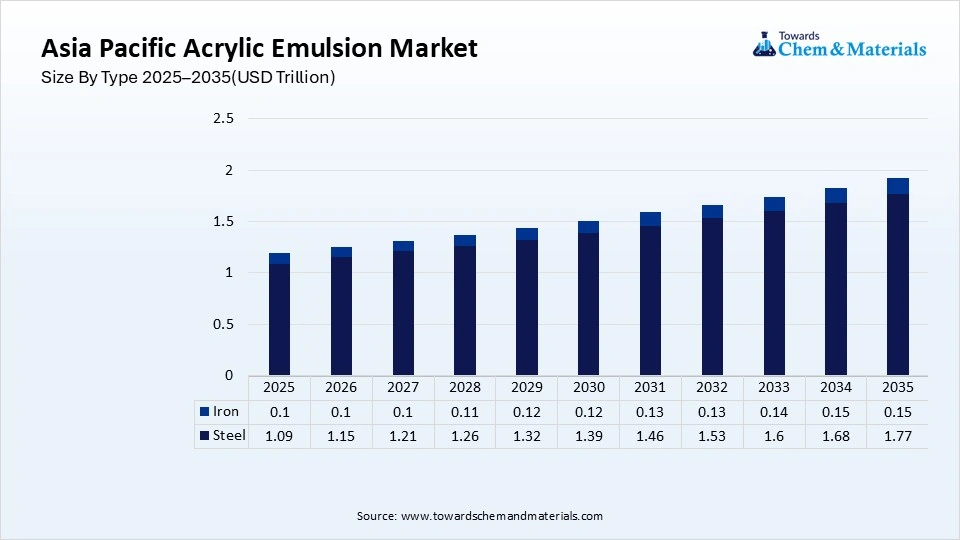
The iron segment held an 8% market share in 2025 and is expected to grow at the fastest CAGR of 5.32% over the forecast period. Demand continues to be linked to steelmaking needs, and DRI development provides opportunities for lower-emission iron production. Increased direct reduced iron utilization will enhance the contribution of direct reduced iron in future regional steelmaking systems.
- In August 2026, Lloyds Metals and Energy Limited was also set to introduce TMT bars in the building project markets in the central and southern parts of India.
(Source: timesofindia.indiatimes.com)
Iron Production Technology Insights
The blast furnace process segment dominated the market with the largest share of 72% in 2025 and is expected to grow at a CAGR of 4.32% over the forecast period. Integrated production systems that need a fixed ironmaking facility are still making use of blast furnaces. But pressures for decarbonization are growing to drive efficiency improvements, the use of alternative reducing agents, and a search for lower-emission technologies.
The DRI process segment held a 28% market share in 2025 and is expected to grow at the fastest CAGR of 7.14% over the forecast period. DRI technologies offer flexibility for changing decarbonization strategies: use of alternative reducing agents and flexibility to integrate with electric arc furnaces. Hydrogen-based DRI is a good fit for reducing reliance on conventional ironmaking processes that rely on carbon.
Steel Production Technology Insights
The basic oxygen furnace segment dominated the market with the largest share of 72% in 2025 and is expected to grow at a CAGR of 4.24% over the forecast period. The BOF technology is still combined with existing blast furnace manufacturing systems and is suitable for large-scale crude steelmaking. Producers in the region are still investing in capacity expansion and, at the same time, are looking for technologies to lower production-related emissions.
- In September 2025, Jindal Steel has ordered a 250 MT Basic Oxygen Furnace (BOF) Converter at Angul to boost its crude steelmaking capacity by 3 MTPA.
(Source: www.aninews.in)
The electric arc furnace segment held a 25% market share in 2025 and is expected to grow at the fastest CAGR of 6.85% over the forecast period. Steel scrap can be used in EAFs, and DRI can be used in conjunction with EAFs. The growing contribution is in line with regional decarbonization efforts, renewable electricity usage, circular-material approaches, and investments in low-emission steelmaking facilities.
End-Use Insights
The building & construction segment dominated the market with the largest share of 52% in 2025 and is expected to grow at a CAGR of 4.51% over the forecast period. Structural steel, reinforcement bars, sections, plates, sheets, pipes, and tubes are used during construction. Infrastructure modernization and urban development are expected to facilitate wide steel demand in regional markets.
The automotive & transportation segment held an 18% market share in 2025 and is expected to grow at the fastest CAGR of 6.42% over the forecast period. There is an increased demand for lightweight, high-strength, coated, electrical, and specialized steels as a result of EV manufacturing. The producers are increasingly creating special grades to meet a vehicle's safety, efficiency, corrosion protection, and evolving mobility architectures.
- In June 2026, AM/NS India launched its new Zinc-Aluminum-Magnesium-coated steel, Zagnelis® Protect, for advanced automotive applications in India. (Source: themachinemaker.com)
Regional Insights
How Did China Dominate the Asia Pacific Iron and Steel Market in 2025?
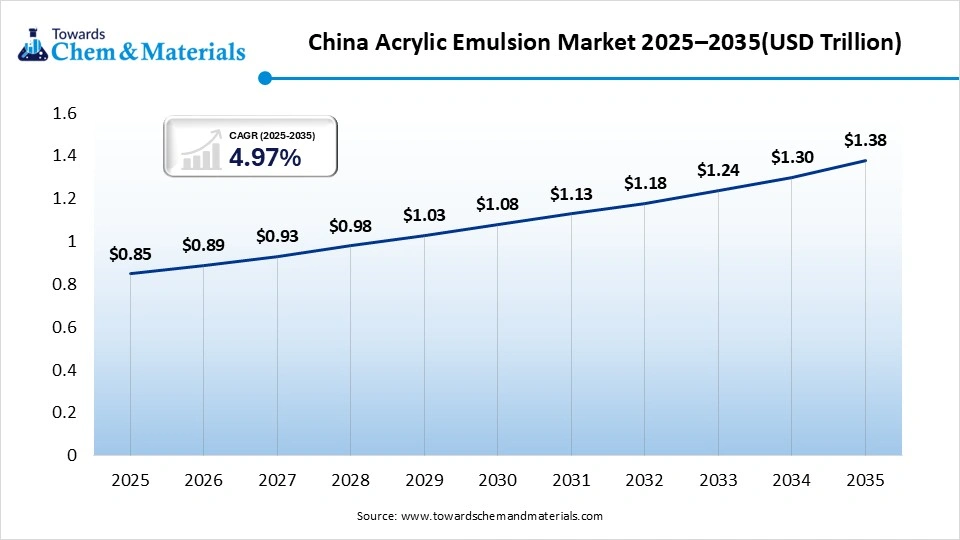 China's iron and steel market size was estimated at USD 0.85 billion in 2025 and is projected to reach USD 1.38 billion by 2035, growing at a CAGR of 4.97% from 2026 to 2035. China dominated the market with the largest share of 71.2% in 2025. There is still demand for steel in China due to strong construction, infrastructure, manufacturing, and automotive and industrial activities. China's leading position in the regional and global iron and steel production industry is strengthened by its proven production capacity and wide downstream applications.
India
The India iron and steel market size was estimated at USD 0.15 billion in 2025 and is projected to reach USD 0.24 billion by 2035, growing at a CAGR of 4.81% from 2026 to 2035. India held a 12.2% market share in 2025. Domestic iron and steel consumption continues to be supported by growing requirements in the automotive, transportation, energy, and industrial sectors. Development of steelmaking capacities and downstream development further augment India's contribution to the regional market.
Japan
Japan's iron and steel market size was estimated at USD 0.07 billion in 2025 and is projected to reach USD 0.12 billion by 2035, growing at a CAGR of 5.54% from 2026 to 2035. Japan held a 6% market share in 2025, owing to the existence of a steel manufacturing industry and a diversified industrial manufacturing base. Other sources of steel demand include special applications and infrastructure, alongside electronics, machinery, and automotive. Overall, the steel industry is continuing to grow and cooperate within the Asia Pacific region, giving Japan its stance in the market.
- In December 2026, JSW Steel announced a 50:50 joint venture with JFE Steel to acquire Bhushan Power and Steel's integrated plant in Odisha. The stake in the joint venture would be worth around 270 billion Japanese yen, or nearly ₹15,750 crore, for JFE Steel. (Source: www.indiainfoline.com)
South Korea
South Korea's iron and steel market size was estimated at USD 0.05 billion in 2025 and is projected to reach USD 0.09 billion by 2035, growing at a CAGR of 6.05% from 2026 to 2035. South Korea held a 4.6% market share in 2025, thanks to its wide range of industrial uses and well-established steel-making capabilities. Domestic steel needs include automotive, shipbuilding, construction, manufacturing, and infrastructure. Hydrogen-based production methods are also helping the country move towards more modern steelmaking methods.
- In April 2026, South Korea approved the site for POSCO's steel facility in Pohang that will use hydrogen as its raw material, which was followed by the development of a 300,000-ton-per-year HyREX pilot plant by 2028.
(Source: gmk.center)
Vietnam
Vietnam held a 1.8% market share in 2025, with a growing manufacturing and industrial sector. Domestic iron and steel usage includes that of construction, infrastructure, and manufacturing. Continued industrial expansion allows opportunities to bolster the demand for steel and regional supply-chain involvement.
Indonesia
The Indonesia iron and steel market size was estimated at USD 0.02 billion in 2025 and is projected to reach USD 0.04 billion by 2035, growing at a CAGR of 7.18% from 2026 to 2035. Indonesia held a 1.4% market share in 2025, as the country develops its industry and demand for locally produced steel grows. Other industrial sectors such as construction, manufacturing, infrastructure, and other industrial activities are responsible for the consumption of steel in the country. The establishment of integrated production plants will further enhance the local supply capacity and decrease the reliance on imports of materials.
- In April 2026, PT Krakatau Steel planned to begin construction of a carbon and stainless steel integrated steel plant worth IDR 30 trillion in Cilacap. (Source: yieh.com)
Taiwan
Taiwan held a 1.3% market share in 2025, supported by the existing manufacturing and industrial base in Taiwan. The nation's iron and steel needs are also satisfied by electronics, machinery, construction, and other manufacturing uses. The continued development of specialized industrial applications enables Taiwan to play a part in the regional steel market.
Malaysia
Malaysia held a 0.6% market share in 2025. Manufacturing, construction, infrastructure, and industrial activities helped Malaysia to gain a market share. Consumption of steel is linked to downstream industrial use and countrywide economic growth. The region's trade process and industrial development can help maintain the continuing involvement in the steel market chain in Asia Pacific.
Australia
Australia held a 0.4% market share in 2025. Australia's resource base is also part of the regional iron and steel ecosystem. Steelmaking industries in the Asia Pacific region are supported by the availability of iron ore and metallurgical resources. As Australia's skills in the resource sector continue to grow, it can increase its position in the steel supply chains in the region.
Thailand
Thailand held a 0.4% market share in 2025. Manufacturing, construction, infrastructure, and industrial activities underpinned Thailand's market share in 2025. Demand for steel products is also generated through downstream applications such as automotive & other manufacturing industries. Thailand's involvement in the Asia Pacific iron and steel market is supported by continued industrial development and the growing integration of the region's supply chains.
Philippines
The Philippines held a 0.1% market share in 2025, as construction, infrastructure, manufacturing, and industrial activities are helping to meet the local demand for steel. Increased industrial investments can boost local manufacturing capacity and boost the overall steel value chain. More activity in the manufacturing sector also leads to more use of steel in downstream manufacturing applications.
- In May 2026, a Chinese steel company was to begin construction of its $1-billion plant in Sarangani's town of Maasim as part of its multi-billion-dollar expansion in the Philippines.
(Source: business.inquirer.net)
Recent Developments
- In March 2026, ArcelorMittal Nippon Steel India (AMNSI) announced plans to start work on an integrated steel plant in Andhra Pradesh with an investment of Rs 70,000 crore and 8.2 million tonnes per annum capacity in its first phase. (Source: economictimes.indiatimes.com)
Competitive Analysis
The Asia Pacific iron steel market is highly competitive and includes integrated producers, specialized steel makers, raw material suppliers, and technology manufacturers. Businesses go head-to-head with each other by producing in large volumes, specializing in one product, integrating downstream, advancing technologies, conducting sustainability efforts, and expanding regions. The automotive industry is characterized by the development of lightweight grades by leading participants, specialized automotive steels, lower-emission production routes, and digital manufacturing capabilities.
- In May 2025, AM/NS India introduced two new additions of premium color-coated steel products in its infrastructure applications portfolio—Optigal Prime and Optigal Pinnacle.
(Source: business-standard.com) - In September 2026, Tata Steel Meramandali announced a project for the injection of Coke Oven Gas, which will help in achieving their goal of reaching Net Zero by 2045.
(Source: www.tatasteel.com )
Top Players in the Market & Their Offerings
| Company | Company Type/Position | Major Headquarters | Geographic Presence | Asia Pacific Iron and Steel Offerings | Key Strength |
| Tata Steel Limited | Pioneer integrated steel maker | Mumbai, Maharashtra | Operations in 26+ countries | Cold/Hot rolled coils, wire rods | Captive iron ore mines isolate it from price volatility. |
| JSW Steel Limited | India's Largest Private Sector Steel Maker | Mumbai, Maharashtra | Pan-India footprint; exports to over 100 countries across APAC | Hot Rolled Coils, Galvanized/Color-Coated Steel, Electrical Steel | Operates the largest single-location plant in India |
Other Key Players
- China Baowu Steel Group
- Ansteel Group
- Nippon Steel Corporation
- POSCO Holdings
- HBIS Group
- Jiangsu Shagang Group
- JFE Steel Corporation
- Tata Steel Limited
- JSW Steel
- Steel Authority of India Limited (SAIL
Segment Covered in the Report
By Type
- Iron
- Pig Iron
- Direct Reduced Iron (DRI)
- Hot Briquetted Iron (HBI)
- Other Iron Products
- Steel
- Carbon Steel
- Low Carbon Steel
- Medium Carbon Steel
- High Carbon Steel
- Alloy Steel
- Low Alloy Steel
- High Alloy Steel
- Stainless Steel
- Austenitic
- Ferritic
- Martensitic
- Duplex
- Carbon Steel
- Tool Steel
- Other Steel Products
By Iron Production Technology
- Blast Furnace Process
- Coke-Based Blast Furnace
- Pulverized Coal Injection
- Hydrogen-Enriched Blast Furnace
- DRI Process
- Gas-Based DRI
- Coal-Based DRI
- Hydrogen-Based DRI
By Steel Production Technology
- Basic Oxygen Furnace
- Integrated BF-BOF Route
- Hot Metal-Based Steelmaking
- Electric Arc Furnace
- Scrap-Based EAF
- DRI-Based EAF
- HBI-Based EAF
- Other Production Technologies
- Open Hearth
- Induction Furnace
- Electric Smelting
- Emerging Low-Carbon Technologies
By End-Use Industry
- Building & Construction
- Structural Steel
- Reinforcement Bars
- Steel Sections
- Plate & Sheet
- Pipes & Tubes
- Automotive & Transportation
- Passenger Vehicles
- Commercial Vehicles
- Railways
- Shipbuilding
- EV Components
- Consumer Goods
- Appliances
- Packaging
- Furniture
- Kitchenware
- Heavy Industries
- Machinery & Equipment
- Energy & Power
- Mining
- Oil & Gas
- Industrial Infrastructure
- Other End-use Industries
- Aerospace & Defense
- Electronics
- Medical Equipment
- Agriculture
- Renewable Energy
Tags
FAQ's




Select User License to Buy
Figures (5)









 sales@towardschemandmaterials.com
 Download Sample
 Schedule a Meeting