
What is the Asia Pacific Circular Economy Chemicals Market Size and Share?
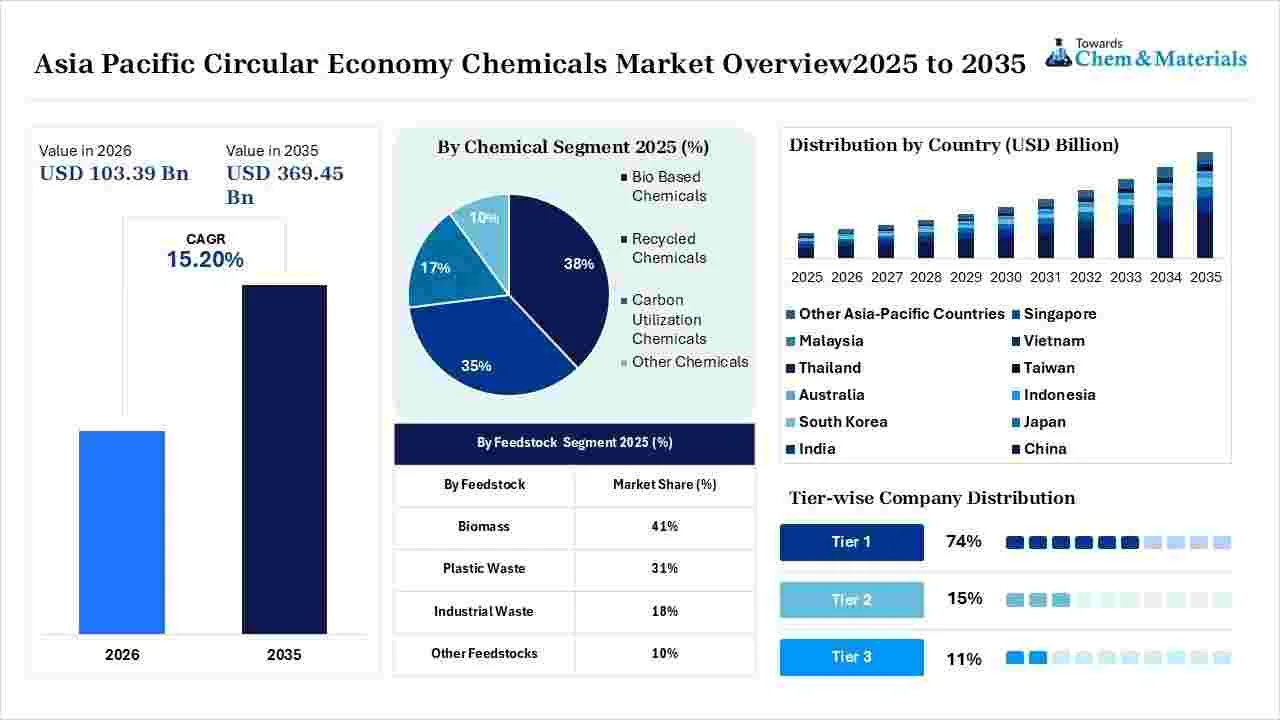
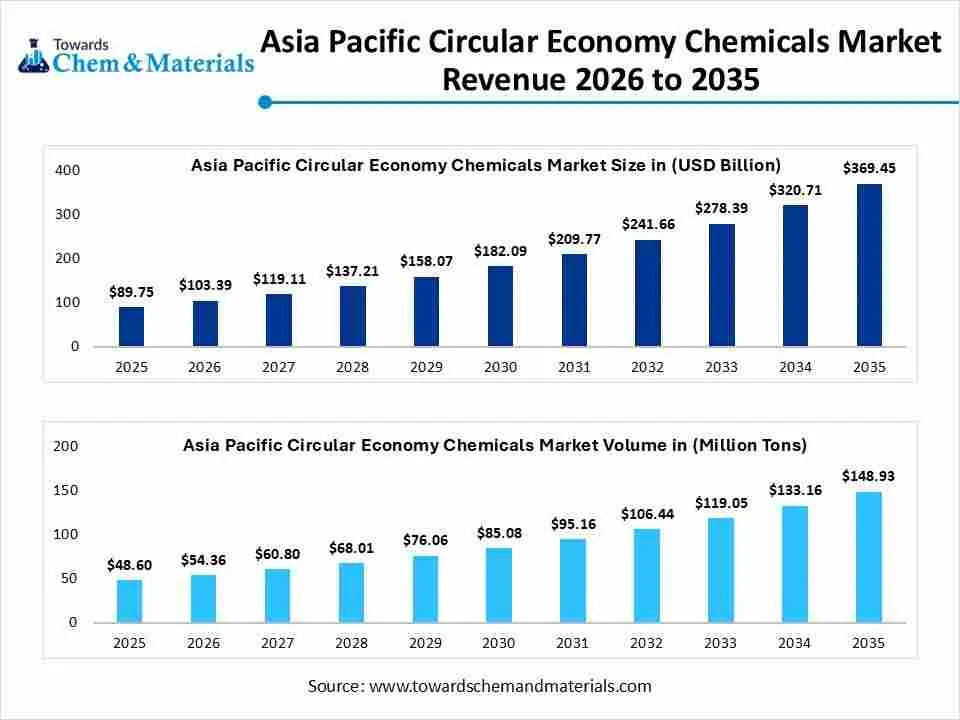
The Asia Pacific circular economy chemicals market size was valued at USD 89.75 billion in 2025, is estimated to reach USD 103.39 billion in 2026, and is projected to reach USD 369.45 billion by 2035, exhibiting a compound annual growth rate (CAGR) of 15.20% over the forecast period from 2026 to 2035. Advanced pyrolysis, gasification, chemical depolymerization, solvolysis, and solvent-based selective dissolution enable difficult waste streams to be converted. The recovery efficiency and quality of the material are continuously enhanced by the use of artificial intelligence and automatic sorting systems.
Market Highlights
- China dominated the Asia Pacific circular economy chemicals market by holding a 48% share in 2025 and is expected to grow at a CAGR of 16.2% during the forecast period.
- India held a 15.8% market share in 2025 and is expected to grow at the fastest CAGR of 18.1% during the forecast period.
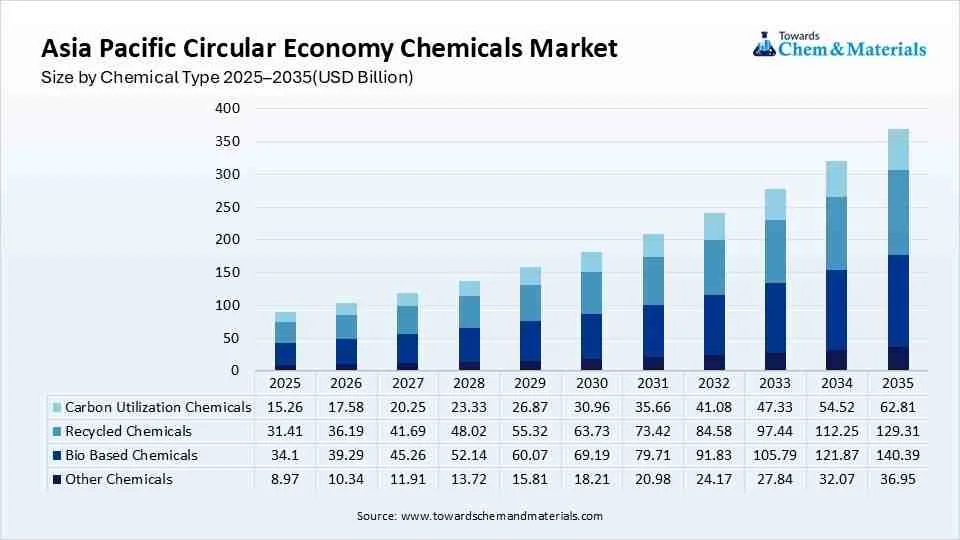
- By chemical, the bio-based chemicals segment dominated the market with the largest share of 38% in 2025 and is expected to grow at a CAGR of 14.62% during the forecast period.
- By chemical, the recycled chemicals segment held a 35% market share in 2025 and is expected to grow at the fastest CAGR of 16.84% over the forecast period.
- By feedstock, the biomass segment dominated the market with the largest share of 41% in 2025 and is expected to grow at a CAGR of 14.38% during the forecast period.
- By feedstock, the plastic waste segment held a 31% market share in 2025 and is expected to grow at the fastest CAGR of 17.86% over the forecast period.
- By end-use, the packaging segment dominated the market with the largest share of 24% in 2025 and is expected to grow at a CAGR of 16.32% during the forecast period.
- By end-use, the chemical and petrochemicals segment held an 18% market share in 2025 and is expected to grow at the fastest CAGR of 17.42% over the forecast period.
According to Towards Chemicals and Materials Analytics and Consulting, the Asia Pacific circular economy chemicals market volume was valued at 48.60 million metric tons in 2025 and is expected to surpass around 148.93 million metric tons by 2035, accelerating a compound annual growth rate (CAGR) of 11.85% over the forecast period from 2026 to 2035.
Market Overview
Recycling, recovery, renewable feedstocks, and resource-efficient processing are driving the Asia Pacific Circular Economy Chemicals Market to become closed-loop systems. China, India, Japan, and South Korea drive the region with manufacturing skills, waste production, policies, and technology use. Circular polymers, recovered chemicals and sustainable inputs are demanded in packaging, consumer electronics, the automotive industry and chemical industries.
Global Investment Movement for the Asia Pacific Circular Economy Chemicals Market
- Capital is increasingly flowing towards advanced recycling facilities that can accept contaminated and mixed plastic streams.
- Pyrolysis, depolymerization, and other technologies are being considered as a means to produce alternative chemical raw materials from challenging waste streams.
- Renewable feedstocks and bio-refineries are becoming more important for chemical producers as a way to lessen reliance on petroleum-based feedstocks.
- Alternative chemical production pathways (ACPPs) in Asia Pacific exist in the form of biomass, agricultural waste, and captured carbon.
- There is a growing appetite among specialized investment managers for circular infrastructure capital from the early innovation stage through to commercialization.
Report Scope
| Report Attributes | Details |
| Market Size in 2026 | USD 103.39 Billion/54.36 Million Tons |
| Expected Size in 2035 | USD 369.45 Billion/ 148.93 Million Tons |
| Growth Rate | CAGR of 15.20% |
| Base Year of Estimation | 2025 |
| Forecast Period | 2025-2035 |
| Segment Covered | By Chemical, By Feedstock, By End Use |
| Key Companies Profiled | Mitsubishi Chemical Group Corporation, LG Chem, Indorama Ventures Public Company Limited, Siam Cement Group (SCG Chemicals), SABIC, BASF SE, The Dow Chemical Company, Covestro AG, LyondellBasell Industries N.V., Evonik Industries AG, Eastman Chemical Company, JEPLAN, Inc., Toray Industries |
Recent Market Trends
- Chemical recycling is also growing because of the ability to process problematic, contaminated, and mixed plastics with advanced chemical processes.
- Increasingly, technologies are being considered by regional chemical producers that can convert waste into chemical feedstocks.
- AI and automation technologies are now being integrated into recycling centres.
- These technologies can facilitate better waste identification, waste sorting efficiency, material purity, process monitoring, and increase the overall resource recovery of circular chemical processes.
- Pressure on producers to better recover resources is growing as a result of Extended Producer Responsibility policies and carbon-neutrality goals.
- Efforts are being made for increased use of recycled materials, green chemistry, traceability, and circular production through regulatory developments.
Key Technological Shifts and AI in the Asia Pacific Circular Economy Chemicals Market
The AI era has brought circular chemical operations closer to reality by linking process data, material identification, molecular research, and supply-chain monitoring. Generative AI and Large Language Models can aid in the prediction of chemical behaviour and the identification of promising molecular structures, thereby speeding up molecular and catalyst discovery. Blockchain systems and digital product passports can help manage material traceability and facilitate automated sustainability verification.
Supply Chain Analysis of the Asia Pacific Circular Economy Chemicals Market
Feedstock Procurement
- The collected plastic waste, biomass, industrial by-products, and other alternative raw materials for circular chemical processing are called feedstocks.
- Reliable feedstock availability is a prerequisite for recycling capacity and production continuity, the quality of the materials, and the economic viability of circular chemical facilities.
- SUEZ Recycling and Recovery Asia strengthens the collection and sorting framework in the region, enabling higher-quality plastic waste for chemical recycling supply.
- Others key players: Veolia Environnement S.A.; JEPLAN, Inc.; CleanEdge.
Chemical Synthesis and Processing
- The collected waste and alternative raw materials are transformed into chemical building blocks (monomers, intermediates, and other circular materials).
- Processing technologies dictate the quality of the recovery, conversion efficiency, product quality, and compatibility with existing chemical processing systems.
- BASF SE works on a novel pyrolysis process with the ChemCycling program, processing mixed plastic waste into circular chemical feedstocks.
- Other Key Players: Covestro AG, Indorama Ventures, Green Li-ion.
Compound Formulation and Blending
- Formulation of compound using recycled or bio-based intermediates with additives to create performance-oriented circular chemical compounds and polymer materials.
- It is important that recycled inputs have the appropriate processing properties, performance properties, and application compatibility with other industries in the downstream.
Evonik Industries AG creates specialty additive portfolios, such as the TEGO Cycle technologies, to assist in recycled-plastic processing and performance. - Other Key Players: Mitsubishi Chemical Group, Dow Inc., Greenitio.
Sustainability Analysis:
The Asia Pacific chemical industry is creating a closed loop in resource management and a circular manufacturing process. Other sources of feedstocks for chemical production include: bio-based inputs, captured carbon, and plastic waste. Recycling can help to minimize landfill use and retain valuable materials in production systems. Design for recycling methods facilitate easier recovery, and better formulations can decrease issues regarding hazardous additives.
What are Circular Economy Chemicals?
Circular Economy Chemicals are chemical products and systems of chemical production that are derived from recycled, recovered, renewable, or alternative sources. These methods aim to keep the value of materials by processing, recovering, reusing, and converting them over and over.
Uses of Asia Pacific Circular Economy Chemicals
- Circular chemicals help packaging producers look for recycled and bio-based materials.
- The materials support producers in meeting their sustainability pledges and in keeping existing manufacturing processes and adapting to new needs for more resource-efficient packaging production.
- Selected parts can be made out of circular polymers and recovered chemical inputs by automotive manufacturers.
- These materials offer resource efficiency benefits and enable manufacturers to integrate the use of recycled feedstocks into general sustainability and supply-chain approaches.
- Circular technologies for electronics recycling enable the recovery of valuable materials.
- Advanced processing has the ability to fractionate and recover complex materials and produce valuable chemical feedstocks, thus enabling the recovery of resources within electronics manufacturing and recycling value chains.
Pricing Analysis for the Asia Pacific Circular Economy Chemicals Market
Chemical pricing factors that influence circular pricing include sustainability premiums, feedstock availability, regulatory compliance, technological complexity, and competition from traditional chemicals. Discontinuous waste collection may raise procurement and logistics costs in regional markets. Advanced recycling technologies typically involve higher processing investments, which affect the price of the product. Sustainability premiums might be more accepted in mature markets, and conventional fossil-based chemical movements are still a concern for circular products.
Asia Pacific Circular Economy Chemicals Market: Global Trade Analysis
Sustainability demands, alternative feedstocks, and changing recycling capacity are key factors affecting Asia Pacific circular chemical trade. There are policies in place to promote recycling and careful use of resources, and brands are increasingly looking for recycled content. New material flows are emerging with chemical recycling, the use of bio-based feedstocks, and cross-industry partnerships. Regional manufacturers are creating local supply chains, and circular chemical manufacturers are looking for consistent recovered feedstocks and business partnerships.
Segmental Insights
Chemical Insights
The bio-based chemicals segment dominated the market with the largest share of 38% in 2025 and is expected to grow at a CAGR of 14.62% over the forecast period, owing to the increasing focus on renewable feedstocks and sustainable chemical production. Opportunities exist for green solvents, biopolymers, and renewable chemical intermediates using agricultural resources and biomass. Further pressure for more sustainable commitments and resource security issues push manufacturers to consider bio-based alternatives.
- For instance, in April 2026, CovationBio announced mechanical completion of its first commercial C4 product platform plant and introduced new bioPTMEG products under the Xatryx brand. (Source: www.prnewswire.com)
The recycled chemicals segment held a 35% market share in 2025 and is expected to grow at the fastest CAGR of 16.84% over the forecast period, as recovered chemical inputs are expected to gain momentum and circular production systems are projected to be in greater use. Advanced recycling technologies can handle complex, contaminated, and mixed waste streams. Adoption of recycled chemical methods for a variety of regional manufacturing applications is further bolstered by the ability to make useful chemical feedstocks through chemical depolymerization, pyrolysis, gasification, and selective dissolution.
Asia Pacific Circular Economy Chemicals Market Share,By Chemical ,2025(%)
| By Chemical | Market Share (%) |
| Bio Based Chemicals | 38% |
| Recycled Chemicals | 35% |
| Carbon Utilization Chemicals | 17% |
| Other Chemicals | 10% |
Feedstock Insights
The biomass segment dominated the market with the largest share of 41% in 2025 and is expected to grow at a CAGR of 14.38% over the forecast period. Alternative feedstocks for the production of chemicals, biopolymers, and green solvents are derived from agricultural residues and biomass waste. Biomass utilization is further boosted by increasing investments in bio-refineries and bio-based chemistry platforms. These are both developments that assist chemical producers to diversify their feedstocks and to build circular production models.
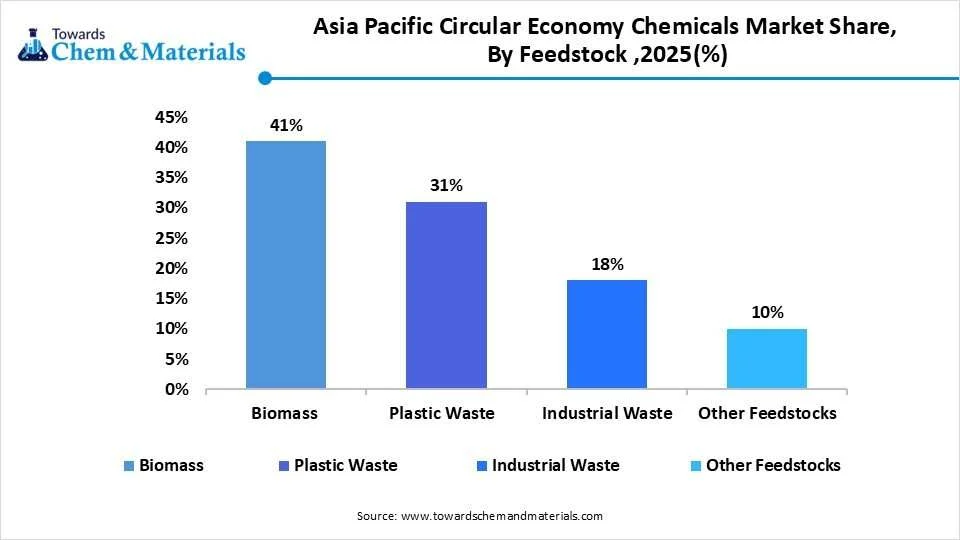
The plastic waste segment held a 31% market share in 2025 and is expected to grow at the fastest CAGR of 17.86% over the forecast period, due to the urgent need for chemical producers to find alternative feedstocks for circular production. For complex waste, advanced pyrolysis, gasification, depolymerization, and solvent-based technologies enhance recovery. The increasing regulations, commitments from brands, and the availability of urban plastic waste drive investments in systems where discarded plastics are used as valuable chemical feedstocks.
Asia Pacific Circular Economy Chemicals Market Share,By Feedstock ,2025(%)
| By Feedstock | Market Share (%) |
| Biomass | 41% |
| Plastic Waste | 31% |
| Industrial Waste | 18% |
| Other Feedstocks | 10% |
End Use Insights
The Packaging segment dominated the market with the largest share of 24% in 2025 and is expected to grow at a CAGR of 16.32% over the forecast period. Circular chemicals are a source of recycled and bio-based chemicals for packaging production and contribute to resource efficiency. Regulatory policies concerning plastic waste also push the use of circular materials by manufacturers. Conveyors are used in packaging to move raw materials from one point to another.
The chemical and petrochemicals segment held an 18% market share in 2025 and is expected to grow at the fastest CAGR of 17.42% over the forecast period, with the use of recovered and renewable feedstocks becoming more common. The advanced recycling technologies allow waste materials to be converted into chemical building blocks and alternative raw materials. As resource-security issues and vulnerabilities in supply chains increase, producers are being motivated to create local circular systems, which can go a long way toward increasing the adoption of circular systems in the chemical manufacturing sector.
Asia Pacific Circular Economy Chemicals Market Share, By End Use ,2025(%)
| By End Use | Market Share (%) |
| Packaging | 24% |
| Automotive | 13% |
| Building and Construction | 11% |
| Chemical and Petrochemicals | 18% |
| Consumer Goods | 10% |
| Electronics | 7% |
| Healthcare and Pharmaceuticals | 6% |
| Paper and Textile | 7% |
| Other End Use Industries | 4% |
Regional Insights
How Did China Dominate the Asia Pacific Circular Economy Chemicals Market In 2025?
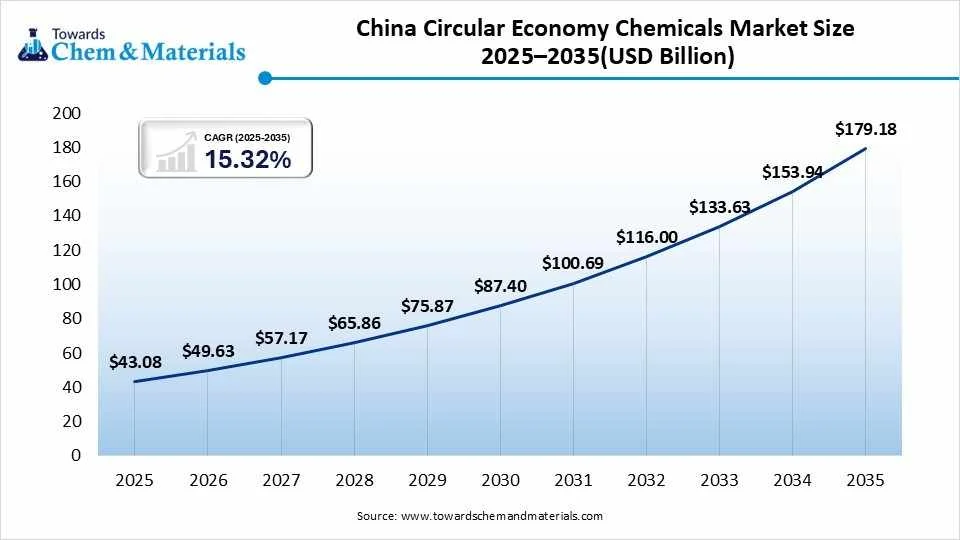 China circular economy chemicals market size was estimated at USD 43.08 billion in 2025 and is projected to reach USD 179.18 billion by 2035, growing at a CAGR of 15.32% from 2026 to 2035. China dominated the market with the largest share of 48% in 2025 and is expected to grow at a CAGR of 16.2% during the forecast period. China has a lot of manufacturing and a lot of waste generation and has established resource-recovery capability that backs up its position. The Government is still promoting resource circulation, waste use, and more robust circular-economy systems. The new circular-economy planning in China once again highlights the full circular economy chain and upgrading of industries, to continue development of recycling and resource utilization industries.
India
India circular economy chemicals market size was estimated at USD 14.18 billion in 2025 and is projected to reach USD 58.67 billion by 2035, growing at a CAGR of 15.26% from 2026 to 2035. India held 15.8% market share in 2025 and is expected to grow at the fastest CAGR of 18.1% during the forecast period. The growth in production of circular chemicals in India is driven by a rise in waste management needs, producer-responsibility frameworks, and a growing number of producers. The recovery of plastics, digital reporting, recycling, and the use of resources have become more and more in focus of national policy.
- For instance, in October 2025, India successfully started a five-year-long project under GEF-UNDP, supported by MeitY, to shift to a circular economy for electronics.
(Source: www.aninews.in )https://www.aninews.in/news/business/india-launches-gef-undp-backed-project-to-boost-circular-economy-in-electronics-sector20251016123903/
Japan
Japan circular economy chemicals market size was estimated at USD 9.60 billion in 2025 and is projected to reach USD 40.09 billion by 2035, growing at a CAGR of 15.37% from 2026 to 2035. Japan held a 10.7% market share in 2025 and is expected to grow at a CAGR of 12.4% over the forecast period. The recycling, waste reduction, and circular product design policy environment in Japan has matured. Increasingly, the government is linking resource movement to industrial innovation, urging businesses to enhance the recyclability of their products and the utilization of their resources. In addition, the Japanese Plastic Resource Circulation Act has been enacted to support known product designs that facilitate recycling and resource circulation.
South Korea
South Korea held an 8.6% market share in 2025 and is expected to grow at a CAGR of 14.7% over the forecast period. South Korea is an important regional manufacturing economy, and demand for circular chemicals exists in the plastics, automotive, electronics, and petrochemical value chains. Strengthening recovered-feedstock utilization, chemical recycling, and circular material development through industry collaboration. Further linkage between chemical manufacturers and resource-recovery operators can enhance supply security and circular manufacturing in the region.
Indonesia
Indonesia held a 4.5% market share in 2025 and is expected to grow at a
CAGR of 16.8% over the forecast period. Indonesia is a market with potential for circular chemical development because manufacturing activities are increasing, there is an increasing availability of waste as resources, and the potential for regional integration of supply chains. Plastic recovery, alternative feedstocks, and local processing can be supported by circular investments.
Taiwan
Taiwan held a 2.7% market share in 2025 and is expected to grow at a CAGR of 13.9% over the forecast period. The framework of the circular economy legislation and Taiwans advanced manufacturing capabilities assist the development of the circular economy. The countrys policy framework is focused on the conservation of natural resources, waste reduction, and creation of a circular society. The Resource Circulation Promotion Act is a policy support for wider resource recovery and circular-material development.
- For instance, in July 2026, MassChallenge partnered with DCB and IIA, two of the top startup success organizations in Taiwan and Israel, respectively, to launch Breakthrough Bio to provide startups with opportunities for commercialization.(Source: www.prnewswire.com)
Thailand
Thailand held a 2.2% market share in 2025 and is expected to grow at a CAGR of 15.4% over the forecast period. The State of Thailand adopts the Bio-Circular-Green Economy model, which combines resource efficiency with the potential of biotechnology and green development, in implementing the national circular economy development. The framework enables circular production, use of renewable resources, minimizing waste, and maximizing value from biological resources. The BCG model is officially considered one of the important approaches in national economic-development in Thailand.
Australia
Australia held a 3.4% market share in 2025 and is expected to grow at a CAGR of 13.9% over the forecast period. Australia is supported by a national resource efficiency, recovery, waste reduction, and material productivity-focused circular economy transition framework. The key Government priorities are industry, resources, agriculture and built environments. The framework in Australia offers businesses the opportunity to innovate, while also helping to better align regulation, investment and the development of a circular economy.
- For instance, in September 2025, Integrity BioChem was joined by ICD BioChem to introduce sustainable mining chemistry technology to Australia and develop local manufacturing capability.
(Source: www.businesswire.com)
Recent Developments
- In April 2026, Merck introduced a new bio-based solvent portfolio specifically tailored for high-performance liquid chromatography applications, made from renewable feedstocks.
(Source: www.merckgroup.com) - In February 2026, Lummus Technology and Sumitomo Chemical today announced that their Polymethyl Methacrylate Chemical Recycling technology is commercially available. The technology boosts the chemical recycling capacity and enables other petrochemical value chains to achieve circularity.
(Sourcec: www.prnewswire.com)
Competitive Analysis
Asia Pacific Circular Economy Chemicals Market consists of chemical producers, recycling experts, technology developers, and waste management firms. Advanced recycling technologies, sourcing alternative feedstocks, circular product development, and processing technologies are increasingly at the heart of competition. Competition is shifting from traditional recycling to integrated solutions that seek to address the entire value chain, including feedstock sourcing, chemical recycling, formulation, digital traceability, and downstream offtake agreements.
- For instance, in March 2026, Sinopec Recycling Technology officially opened its plant in Nanjing, boosting comprehensive waste plastic recycling with the capacity for recycling, regeneration, and high-value use.(Source: chemxplore.com)
- In February 2025, Evonik also enhanced its pyrolysis oil capabilities with the introduction of Purocel 505, 510 and 515 adsorbents; rejuvenated hydrotreating catalysts; and the Rocket polishing skid in February 2025. (Source: www.evonik.com )
Top Players in the Market & Their Offerings
| Company | Company Type/Position | Major Headquarters | Geographic Presence | Asia Pacific Circular Economy Chemicals Offerings | Key Strength |
| Indorama Ventures | Global chemical producer | Bangkok, Thailand | Global | Recycled PET | Strong vertical integration |
| SCG Chemicals (SCGC) | Major regional chemical leader | Bangkok, Thailand | Southeast Asia | SCGC GREEN POLYMER™ | Advanced chemical recycling technology |
Other Key Players
- Mitsubishi Chemical Group Corporation
- LG Chem
- Indorama Ventures Public Company Limited
- Siam Cement Group (SCG Chemicals)
- SABIC
- BASF SE
- The Dow Chemical Company
- Covestro AG
- LyondellBasell Industries N.V.
- Evonik Industries AG
- Eastman Chemical Company
- JEPLAN, Inc.
- Toray Industries
Segment Covered in the Report
By Chemical
- Bio-based Chemicals
- Bio-based Alcohols
- Bio-based Acids
- Bio-based Solvents
- Bio-based Polymers
- Bio-based Surfactants
- Recycled Chemicals
- Chemically Recycled Polymers
- Recycled Solvents
- Recycled Monomers
- Recycled Hydrocarbons
- Recycled Chemical Intermediates
- Carbon Utilization Chemicals
- CO₂-Derived Fuels
- CO₂-Derived Polymers
- CO₂-Derived Chemicals
- Carbon-to-Chemicals Intermediates
- Other Chemicals
- Waste-Derived Specialty Chemicals
- Circular Additives
- Recovered Industrial Chemicals
- Regenerated Chemical Products
By Feedstock
- Biomass
- Agricultural Residues
- Forestry Residues
- Food Waste
- Energy Crops
- Algae
- Plastic Waste
- PET Waste
- PE Waste
- PP Waste
- PS Waste
- Mixed Plastic Waste
- Industrial Waste
- Industrial Gases
- Waste Solvents
- Chemical Process Residues
- Steel and Cement Waste Streams
- Manufacturing By-products
- Other Feedstocks
- Municipal Solid Waste
- Food & Organic Waste
- Textile Waste
- Wastewater-Derived Resources
- Recovered Carbon Streams
By End Use
- Packaging
- Food Packaging
- Beverage Packaging
- Flexible Packaging
- Rigid Packaging
- Automotive
- Interior Components
- Exterior Components
- Under-the-Hood Components
- Tires & Rubber Components
- Building and Construction
- Insulation Materials
- Pipes & Fittings
- Flooring
- Coatings & Adhesives
- Chemical and Petrochemicals
- Chemical Intermediates
- Polymers & Resins
- Solvents
- Petrochemical Feedstocks
- Consumer Goods
- Household Products
- Personal Care
- Durable Consumer Products
- Appliances
- Electronics
- Electronic Components
- Semiconductor Materials
- Circuit Boards
- Encapsulation & Packaging Materials
- Healthcare and Pharmaceuticals
- Pharmaceutical Intermediates
- Medical Packaging
- Medical Devices
- Specialty Chemicals
- Paper and Textile
- Recycled Fiber Chemicals
- Textile Chemicals
- Coatings
- Processing Chemicals
- Other End Use Industries
- Agriculture
- Energy
- Water Treatment
- Industrial Manufacturing
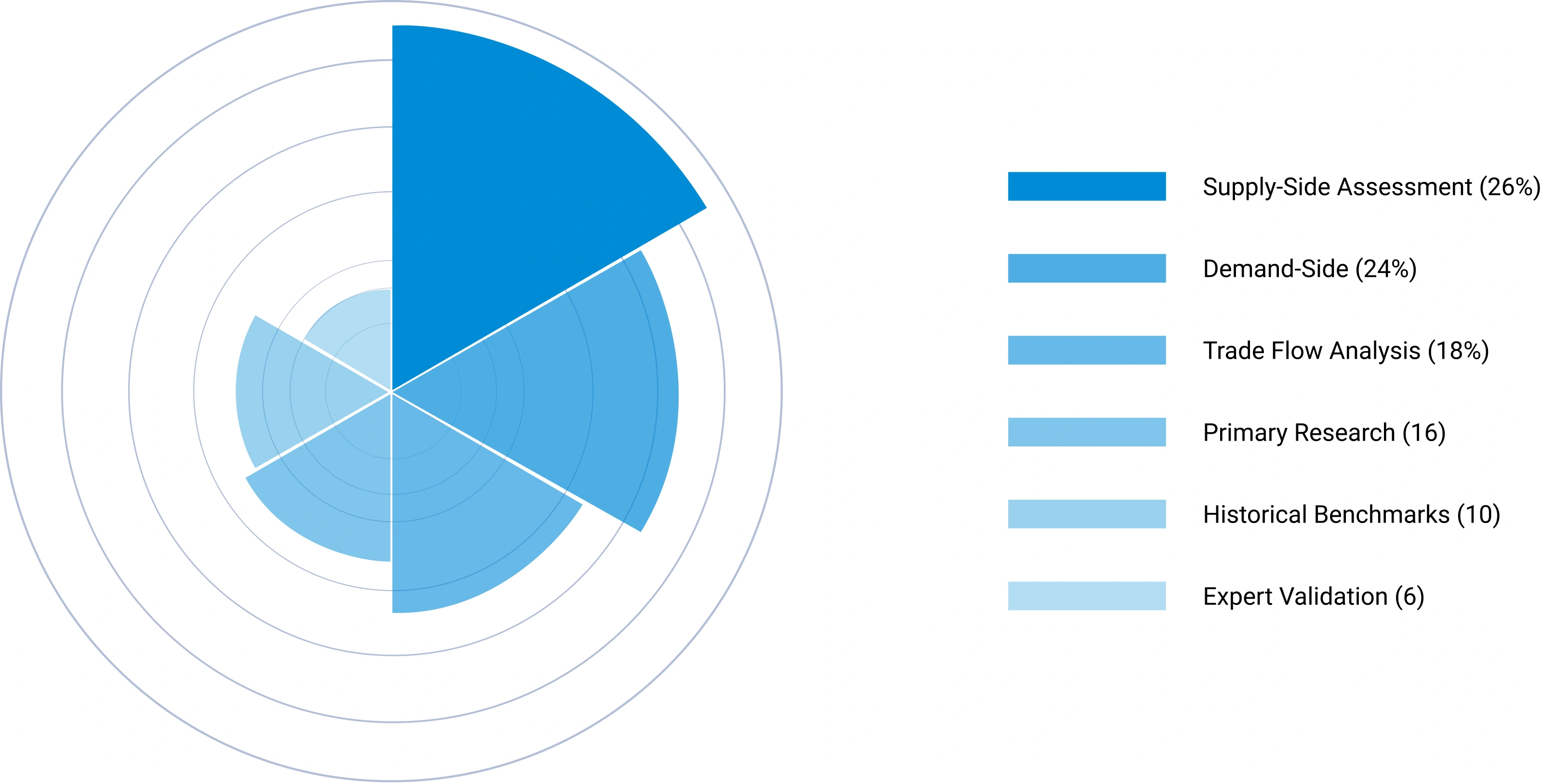
A Seven-Phase Framework
Our methodology is designed to be universally applicable across commodity chemicals, specialty chemicals, petrochemicals, construction chemicals, coatings, electronic chemicals, industrial gases, agrochemicals, water treatment chemicals, and performance materials. Each phase builds upon the last, creating a layered validation structure that minimizes estimation error and maximizes analytical confidence.
The framework ensures comprehensive market coverage, robust cross-validation, and reliable long-term forecasting — producing market estimates that withstand scrutiny from investors, regulators, and corporate strategy teams.

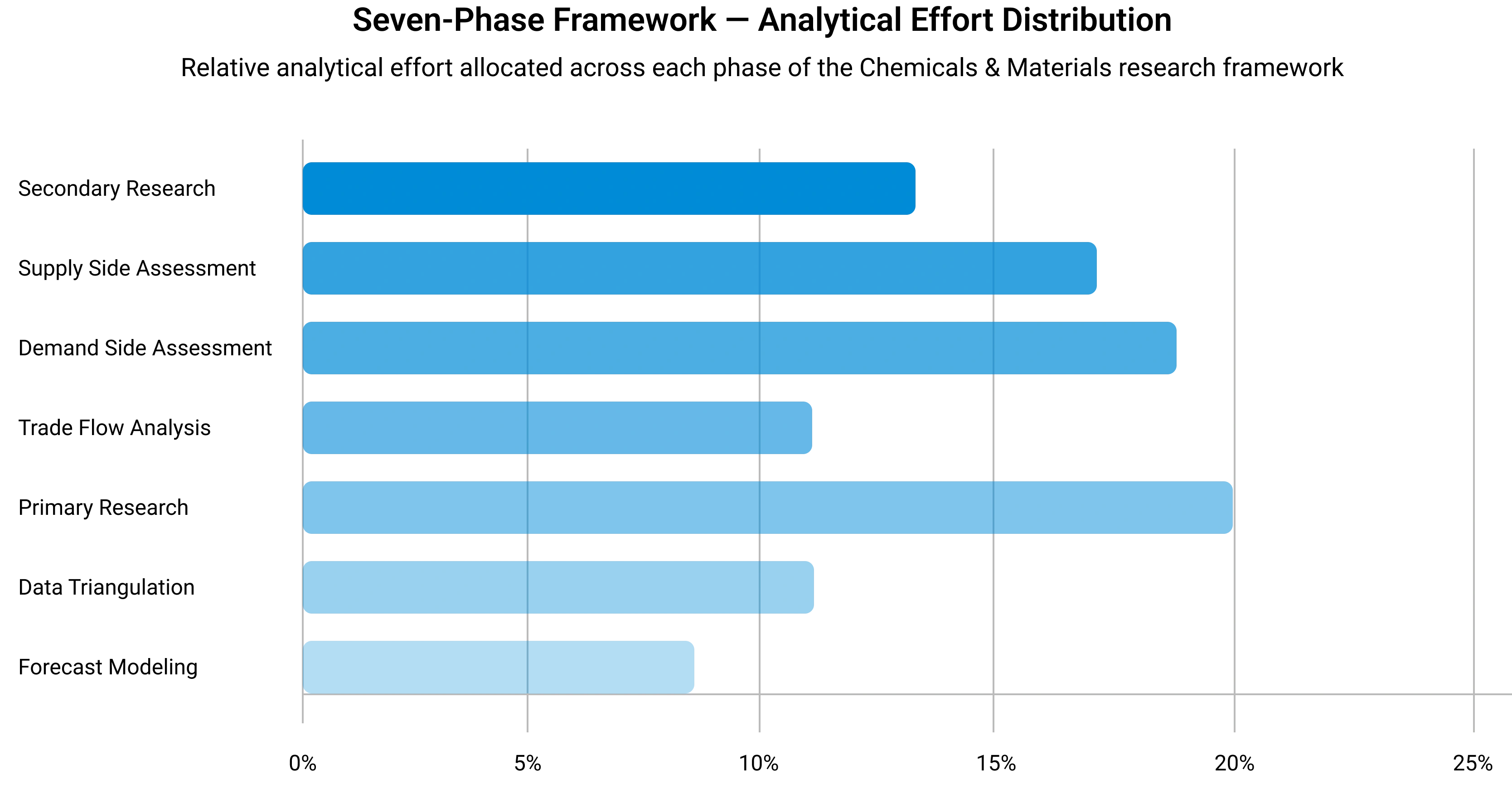
Seven-Phase Framework — Analytical Effort Distribution
Relative analytical effort allocated across each phase of the Chemicals & Materials research framework
Phase 1 - Secondary Research: Establishing the Foundation
Secondary research collects and evaluates publicly available information from authoritative sources, establishing the foundational understanding of market structure, value chain dynamics, competitive landscape, and end-use demand patterns. Every source is evaluated for credibility, recency, geographic relevance, and methodological soundness before inclusion.
Industry Associations
Sources include ACC, CEFIC, ICCA, JCIA, CPCIF, and SOCMA providing production volumes, consumption trends, capacity developments, and sustainability initiatives.
Company Disclosures
Annual reports, investor presentations, earnings transcripts, and regulatory filings reveal product portfolios, manufacturing footprints, capacity expansions, and revenue segmentation.
Government Databases
National statistical offices, customs authorities, environmental agencies, and industrial production databases provide verified statistics on output, trade flows, and regulatory compliance.
Trade Databases
UN Comtrade, ITC, Eurostat, and national customs authorities enable assessment of global product movement, import dependency, and export competitiveness across regions.
Our Secondary Research Sources
- Ministry of Chemicals and Fertilizers
- European Chemicals Agency
- United States Department of Energy
- Ministry of Industry and Information Technology
- Ministry of Economy Trade and Industry
- Ministry of Trade Industry and Energy
- National Institute of Standards and Technology
- Council of Scientific and Industrial Research
- Fraunhofer Society
- National Institute for Materials Science
Phase 2 — Supply-Side Assessment: Mapping Production Capabilities
Production Capacity Analysis
All major manufacturers are assessed for existing installed capacity, planned additions, expansions, new plant announcements, and technology adoption — mapped at global, regional, and country levels.
Capacity Utilization Adjustment
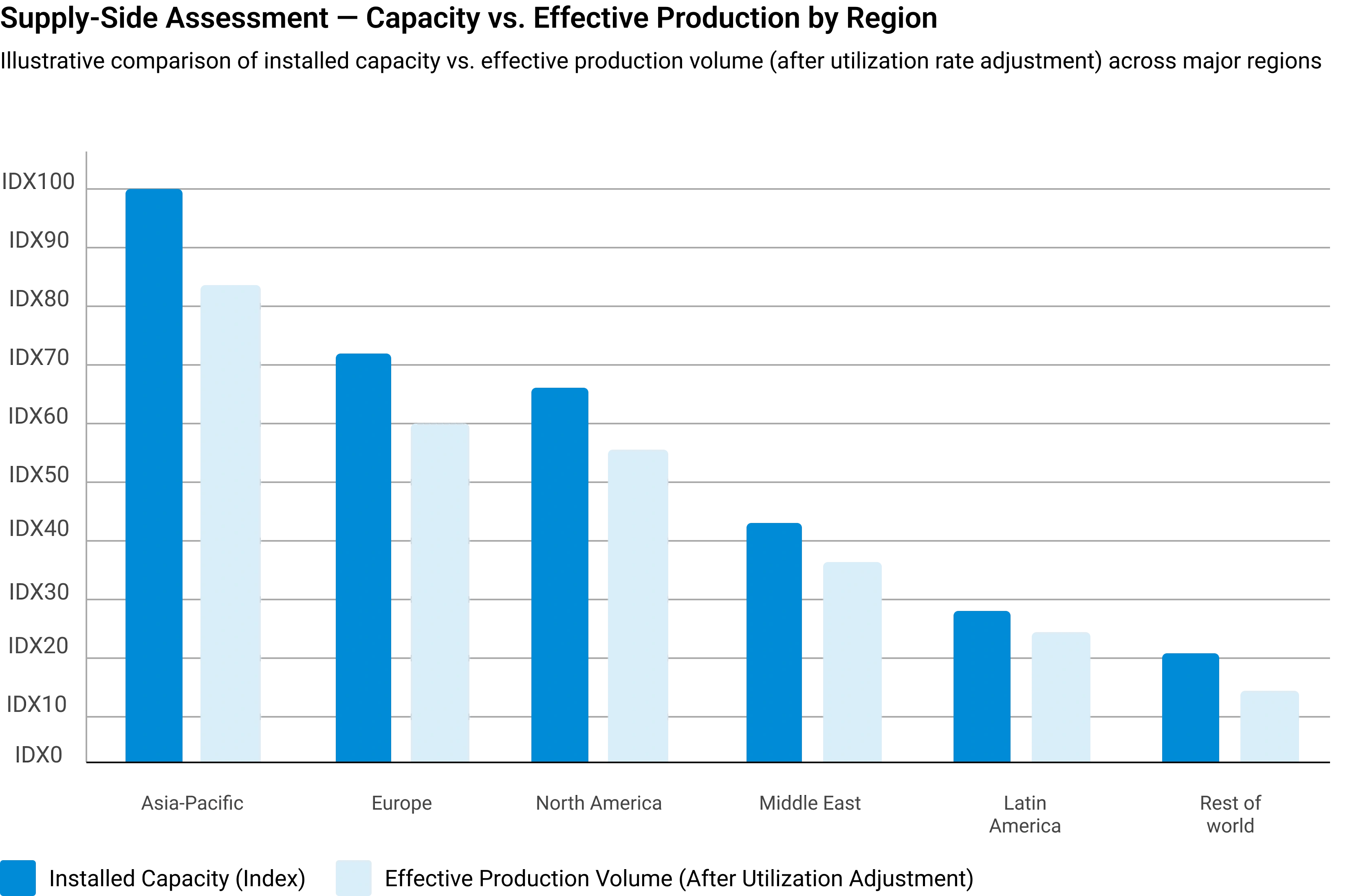
Installed capacity is adjusted using utilization rates based on demand conditions, feedstock availability, plant operating rates, maintenance schedules, and regulatory restrictions.
Manufacturer Revenue Analysis
Product-specific revenues, segment-level performance, regional distribution, average selling prices, and margin trends are evaluated to establish market value estimates.
Supply-Side Assessment — Capacity vs. Effective Production by Region
Illustrative comparison of installed capacity vs. effective production volume (after utilization rate adjustment) across major regions
Phase 3 — Demand-Side Assessment: Quantifying Chemical Consumption
Demand-side analysis quantifies chemical consumption across industries, applications, and geographies — identifying where and how chemicals are consumed throughout the value chain with precision.
End-Use Industry Analysis
Chemical demand is evaluated across automotive, construction, packaging, electronics, agriculture, healthcare, consumer goods, industrial manufacturing, energy and utilities, and water treatment. Industry output, production trends, and consumption intensity are analyzed to determine demand patterns.
Consumption Modeling
Demand is estimated using measurable indicators: kilograms per vehicle, kilograms per square meter of construction, dosage per cubic meter of water treated, kilograms per hectare of agricultural land, and kilograms per ton of manufactured products. Consumption factors are validated through industry publications and primary interviews.
Application Analysis
The market is segmented by application area to understand product performance requirements, formulation trends, technology adoption, customer preferences, and regulatory requirements improving demand accuracy and segmentation granularity.
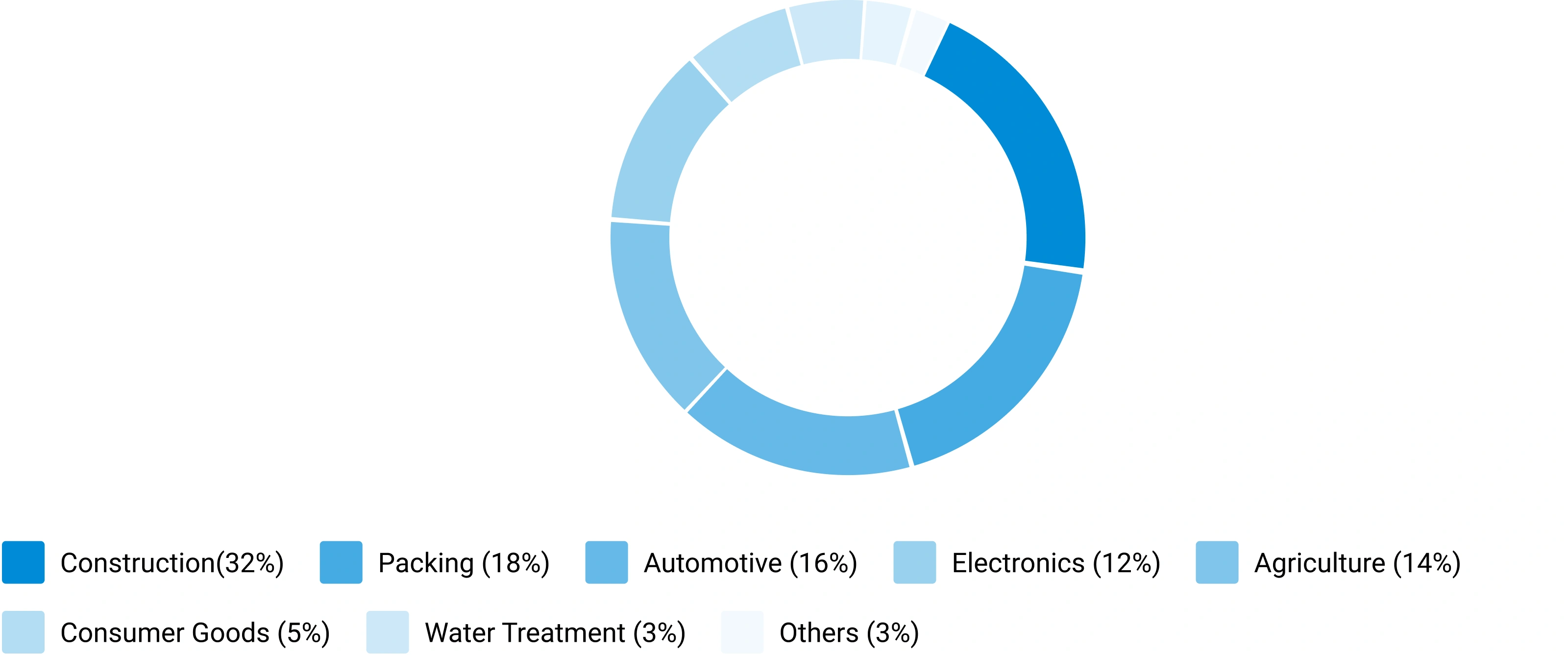
Demand-Side Assessment — End-Use Industry Demand Distribution
Illustrative distribution of chemical & materials demand across key end-use industries
Phase 4 - Trade Flow Analysis: Balancing Regional Supply and Demand
Trade flow analysis reconciles regional supply and demand estimates through import and export data, identifying net supply positions, regional dependencies, and market imbalances. It serves as an independent validation layer that tests the consistency of supply-side and demand-side estimates.
Import Analysis
Import data is evaluated to determine volumes, source countries, product dependency, regional supply gaps, and pricing trends — identifying markets that rely heavily on external supply and where domestic production is insufficient to meet demand.
Export Analysis
Export assessments reveal production surplus, export competitiveness, regional manufacturing strength, and global market participation. Export patterns also help validate domestic production estimates and identify net exporting regions.
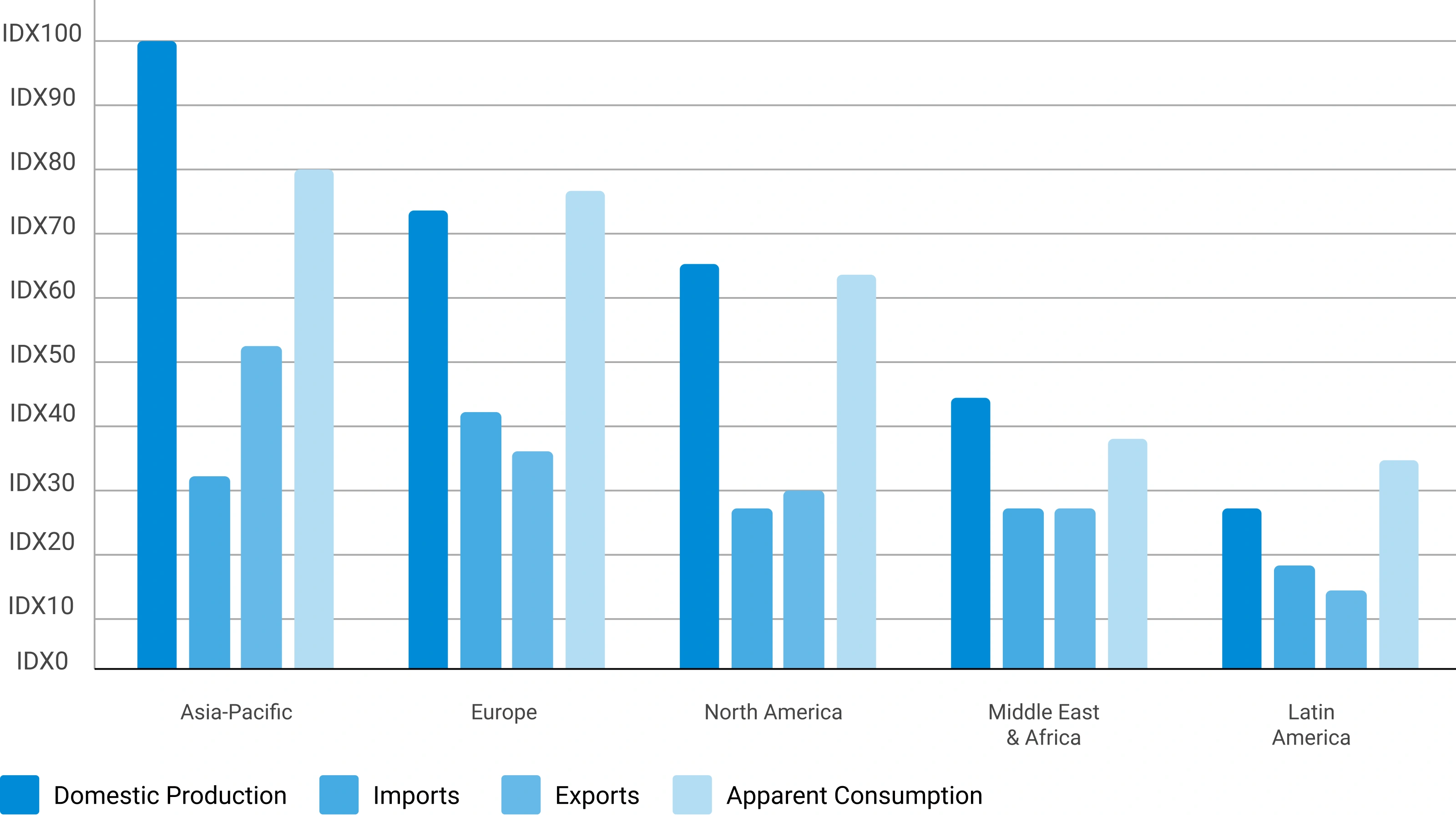
Apparent Consumption Model
Regional consumption is assessed using the standard apparent consumption formula:
Results identify net importing regions, net exporting regions, regional deficits, and surpluses — serving as an independent validation of supply and demand estimates.
Trade Flow Analysis — Net Supply Position by Region
Illustrative apparent consumption vs. domestic production across major regions — positive gap indicates net import dependency
Phase 5 — Primary Research: The Critical Validation Layer
Primary research tests and refines findings from secondary research through direct engagement with industry participants across the supply chain, demand side, and expert community. It captures intelligence that no database or published report can provide — the real-world experience of manufacturers, buyers, and specialists operating in the market.

Supply-Side Interviews
Conversations with chemical manufacturers, raw material suppliers, contract manufacturers, technology providers, and plant operators cover production trends, capacity utilization, pricing developments, technology shifts, and competitive dynamics.

Demand-Side Interviews
Engagement with OEMs, industrial consumers, procurement managers, distributors, formulators, and end-use manufacturers focuses on consumption trends, purchasing behavior, product substitution, demand outlook, and emerging applications.

Industry Expert Consultations
Additional interviews with industry consultants, independent experts, regulatory specialists, technical professionals, and research institutions provide deeper market context and validate key analytical assumptions.
Focus Areas of Primary Research:
Market Size & Forecast Validation
Revenue estimates, volume consumption, growth rates, forecast assumptions, regional demand.Supply Chain & Value Chain Assessment
Raw material sourcing, supply chain challenges, distribution networks, procurement practices.Production & Capacity Analysis
Manufacturing capacity, utilization rates, expansion projects, plant investments.Pricing & Cost Structure Analysis
Product pricing trends, feedstock costs, energy costs, margin pressures, pricing outlook.Competitive Landscape Assessment
Volume and value estimates confirmed to be fully consistent with one another before publicationInterview Volume by Market Scope
| Study Scope | Number of Interviews |
|---|---|
| Niche Market | 20 – 30 |
| Mid-Sized Market | 30 – 50 |
| Global Market | 50 – 80 |
| Highly Fragmented Market | 80 – 120 |
Interview Details:
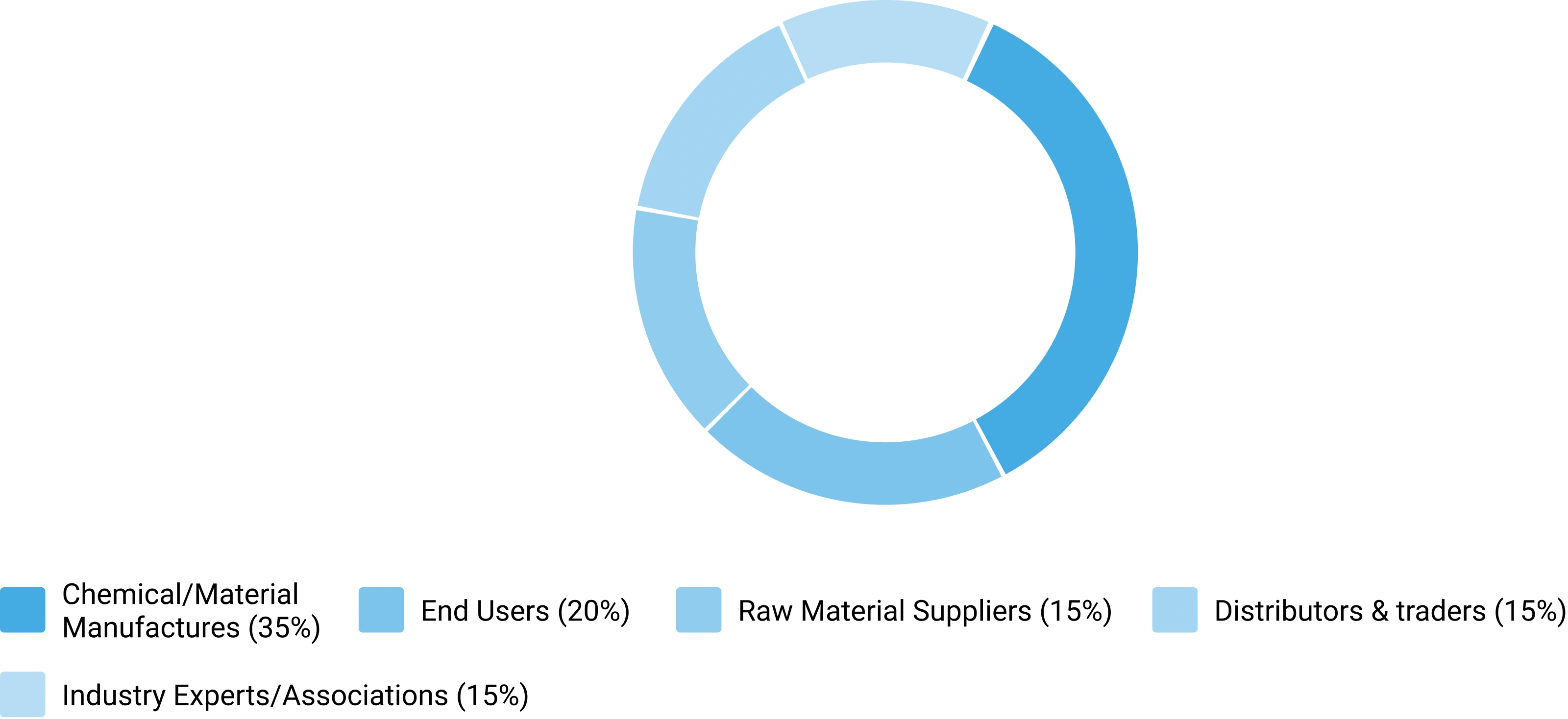
Category : Manufacturers, Suppliers, Distributors, End Users, Experts/Associations
Average Duration : 30–60 Minutes
Interview Mode : Video calls, telephonic interviews, expert consultations
Interview Format : Structured / Semi-Structured questionnaire
Focus Areas of Primary Research:
Market Size & Forecast Validation :
Revenue estimates, volume consumption, growth rates, forecast assumptions, regional demand.
Supply Chain & Value Chain Assessment :
Raw material sourcing, supply chain challenges, distribution networks, procurement practices.
Production & Capacity Analysis :
Manufacturing capacity, utilization rates, expansion projects, plant investments.
Pricing & Cost Structure Analysis :
Product pricing trends, feedstock costs, energy costs, margin pressures, pricing outlook.
Competitive Landscape Assessment :
Market share, competitor positioning, strategic initiatives, partnerships, acquisitions.
Primary Research — Stakeholder Coverage by Category
Distribution of interview respondents across stakeholder categories (% share from PPT data)
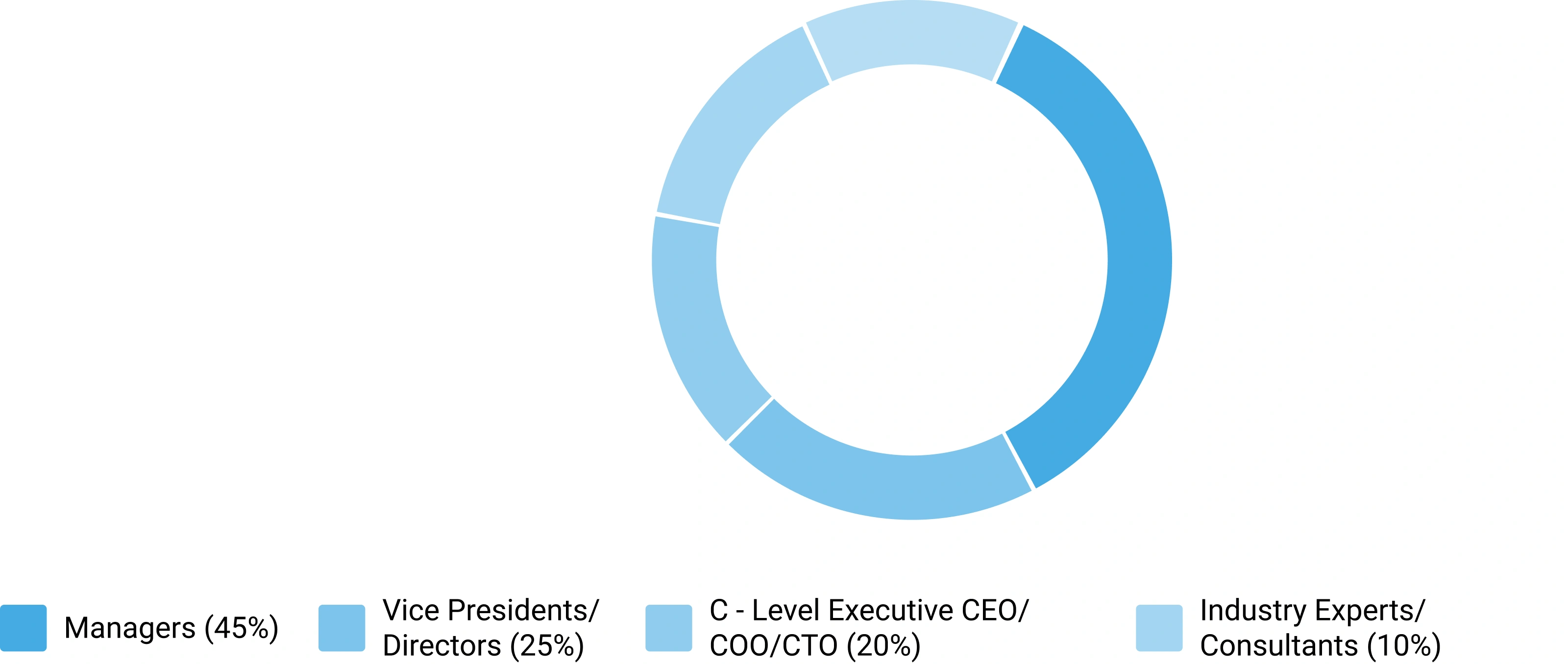
Primary Research — Respondent Designation Profile
Seniority breakdown of interview respondents (% share from PPT data)
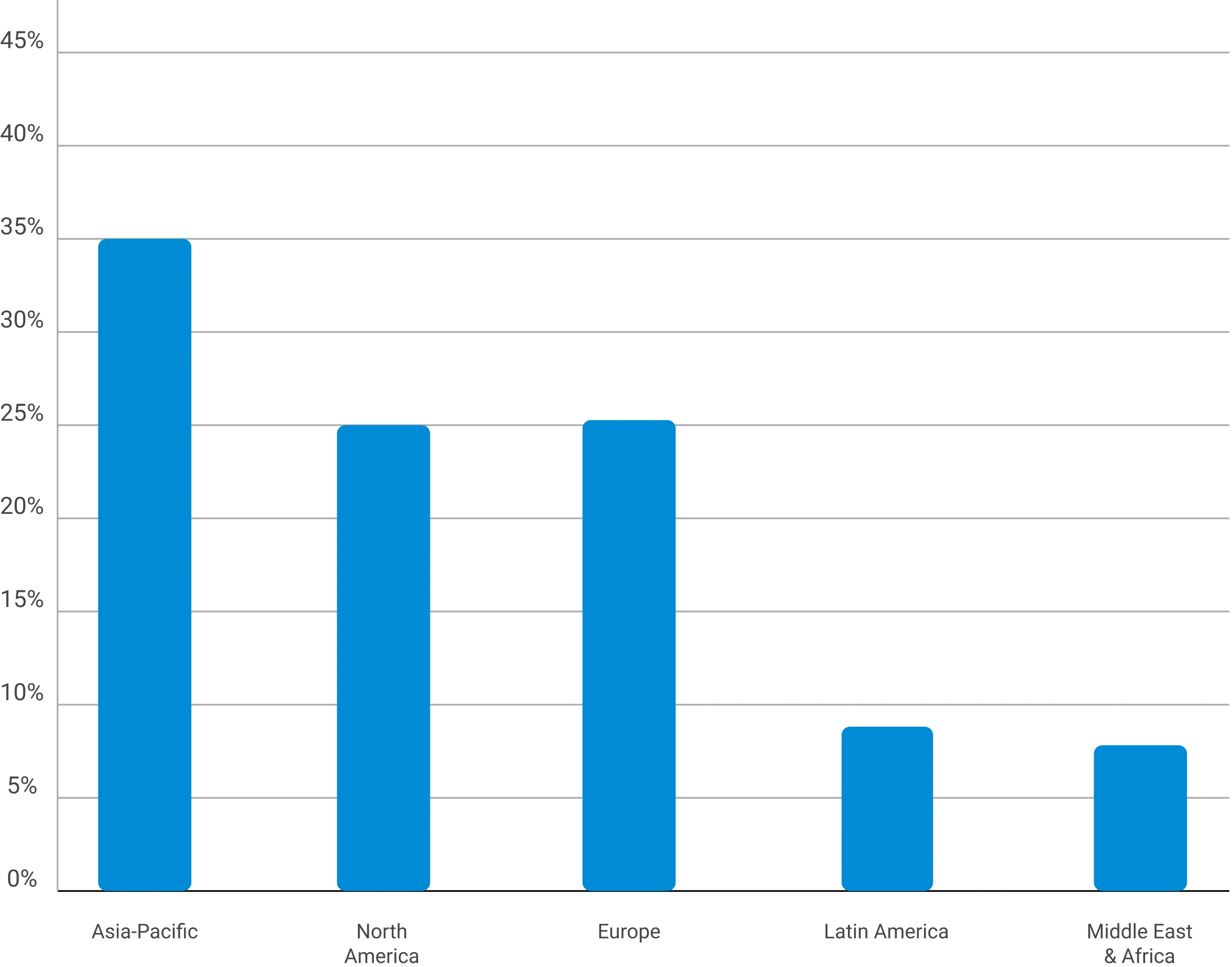
Primary Research — Geographic Coverage of Interviews
Regional distribution of primary research engagement (% share from PPT data)
Phase 6 — Data Triangulation and Market Validation
No single methodology is relied upon in isolation. Multiple independent estimation approaches are combined and reconciled to ensure consistency, accuracy, and analytical defensibility. Any material deviations between approaches are investigated and adjusted through additional validation cycles.
The final market size is derived through weighted triangulation of all validated methodologies. Any material deviations between approaches are investigated and adjusted through additional validation cycles. The outcome represents the most realistic assessment of the market based on available evidence and expert confirmation ensuring that volume and value estimates are fully consistent with one another.
Triangulation Framework — Input Contribution Weight
Relative weight each sizing input contributes to the final reconciled market estimate
Phase 7 — Forecast Modeling: Projecting Future Market Evolution
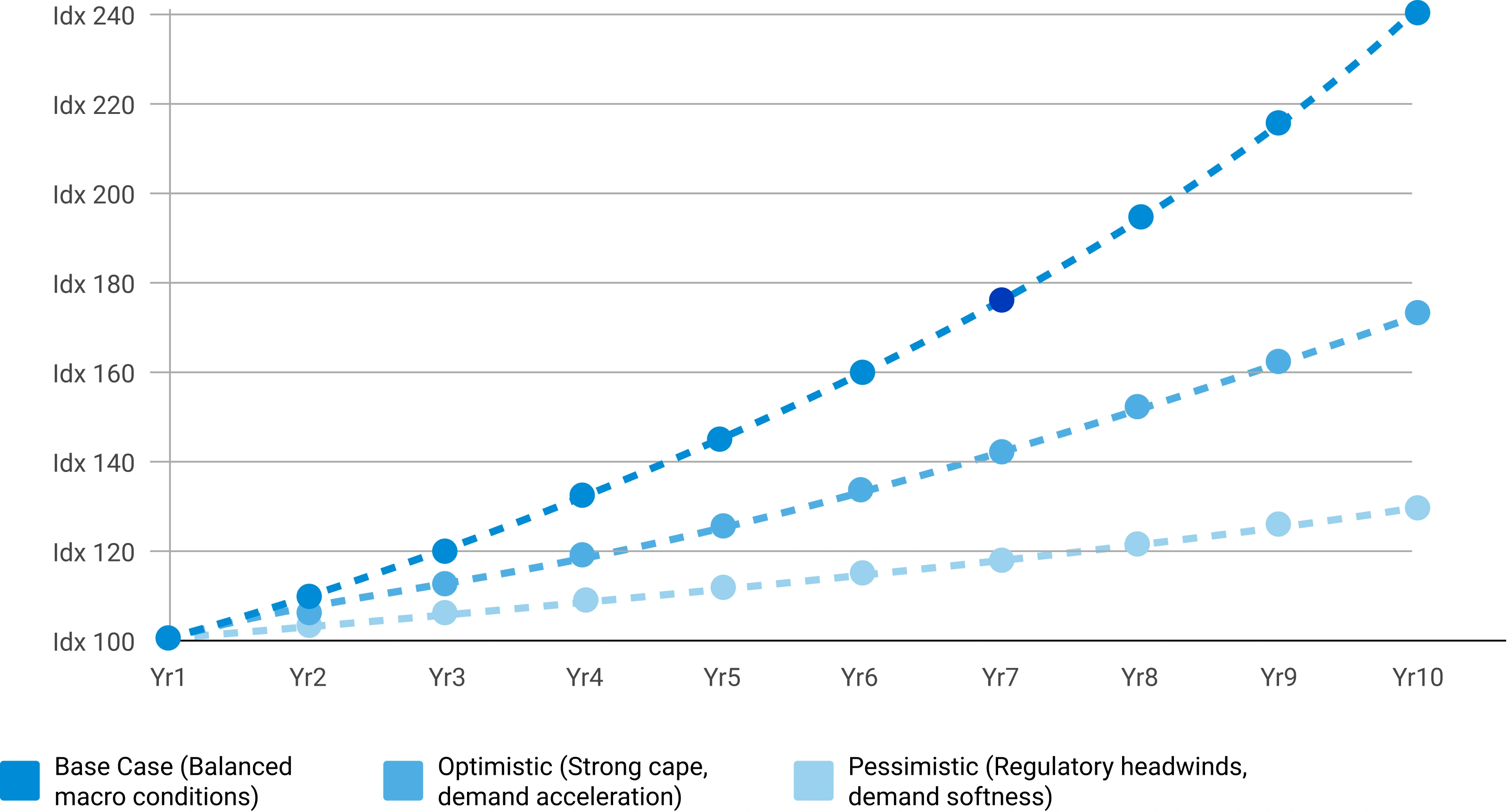
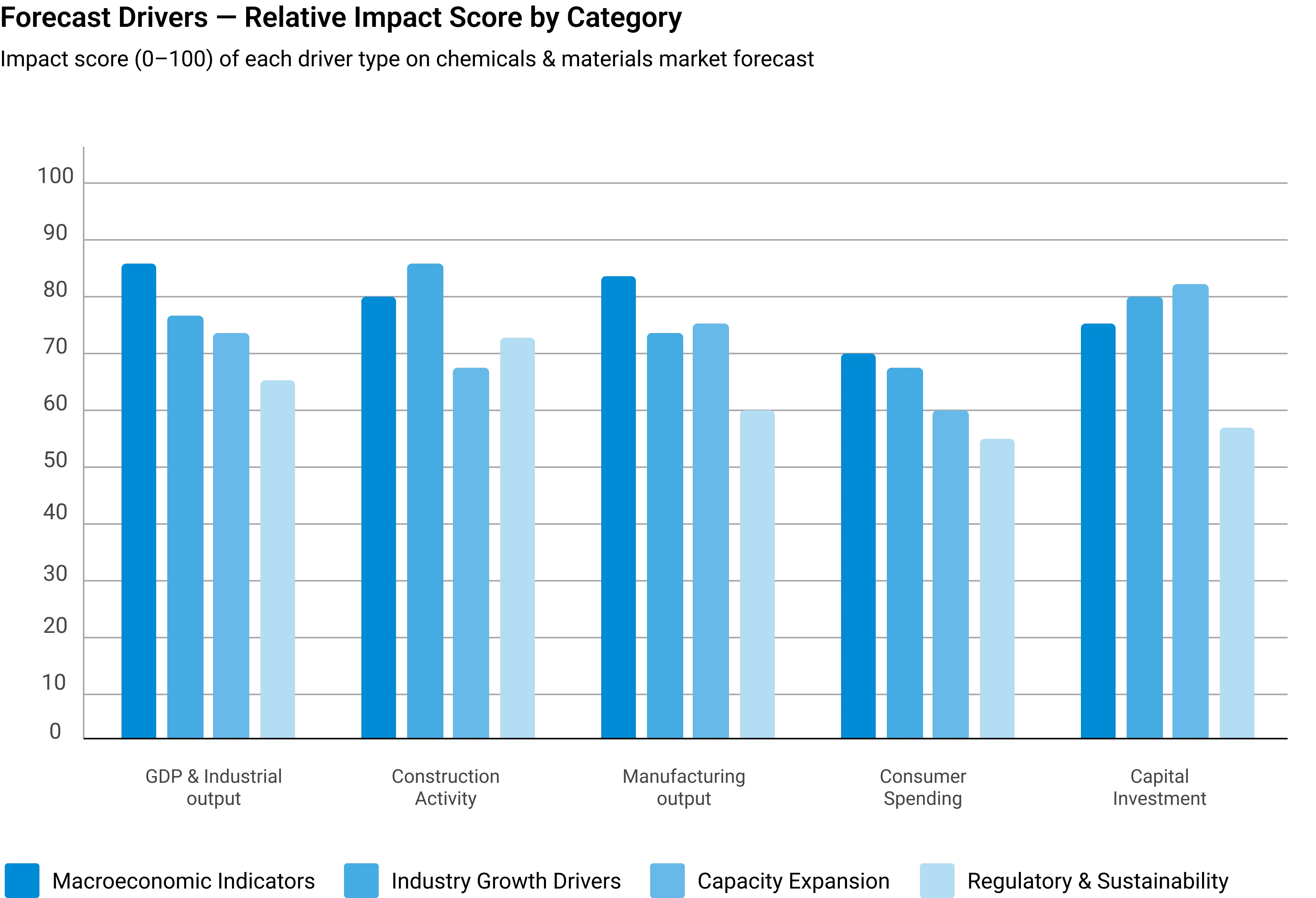
Forecasting evaluates the future trajectory of the market using a combination of quantitative indicators and qualitative assessments across economic, industry, and regulatory dimensions. Rather than simple extrapolation, each driver is independently modeled and integrated into a composite forecast.
Macroeconomic Indicators
GDP growth, industrial production, manufacturing output, construction activity, consumer spending, and capital investment form the quantitative foundation of long-term demand projections. These are applied at country, regional, and global levels.
Industry Growth Drivers
Urbanization, infrastructure development, industrialization, technological innovation, sustainability initiatives, and evolving product performance requirements are assessed at regional and industry levels — capturing both structural and cyclical demand drivers.
Capacity Expansion Analysis
Announced plant expansions, new manufacturing facilities, technology upgrades, and strategic investments are evaluated to determine future supply-demand dynamics and potential market tightness or oversupply situations.
Regulatory & Sustainability
Environmental regulations, chemical safety standards, emission reduction targets, circular economy initiatives, and sustainability requirements are incorporated as they often influence product adoption rates and market growth trajectories.
Scenario Forecast Range — Indexed Market Growth (Year 1–10)
Illustrative indexed growth trajectories across Base, Optimistic, and Pessimistic scenarios over a 10-year forecast horizon
Forecast Drivers — Relative Impact Score by Category
Impact score (0–100) of each driver type on chemicals & materials market forecast



Comments
Share your thoughts, ask a question, or provide feedback about this report.