
White Oil Market Size Analysis Report 2035
The global white oil market size was estimated at USD 2.85 billion in 2025 and is expected to increase from USD 2.98 billion in 2026 to USD 4.43 billion by 2035, growing at a CAGR of 4.52% from 2026 to 2035. Asia Pacific dominated the white oil market with the largest revenue share of 54.00% in 2025.The growth of the market is driven by rising demand in personal care, cosmetics, and pharmaceuticals due to its high purity, non-toxicity, and moisture-resistant properties.
Market Highlights
- The Asia Pacific dominated white oil market with the largest revenue share of 54.00% in 2025. Massive industrial bases increased demand for white oil as a lubricant
- By region, North America is expected to have the fastest growth in the market in the forecast period between 2026 and 2035. Growing consumer preference fuels the growth of the market.
- By application, the personal care and cosmetics segment dominated the market share 26.00% in 2025. The growing demand and application fuel the growth of the market.
- By application, the adhesives segment is projected to grow at the fastest CAGR between 2026 and 2035. The increased demand from the coating industry drives the growth.
What Is the Significance of The White Oil Market?
The market is highly significant due to its essential, non-toxic, and stable role in personal care (cosmetics, lotions), pharmaceuticals (ointments, laxatives), and food-grade lubricants. Its high purity, odor-free, and colorless nature drives demand for safe, hypoallergenic, and food-safe products worldwide. It is a vital component in the personal care industry (baby oils, lotions, hair care) and as an excipient in pharmaceuticals to dilute or carry active ingredients.
Key Technological Shifts In The White Oil Market:
The market is shifting toward high-purity, specialty grades for pharmaceuticals and personal care, driven by advancements in hydrocracking, ultra-purification, and AI-driven quality control. Key trends include the adoption of sustainable, bio-based alternatives, enhanced, consistent, and safe production for specialized applications, and improved regulatory compliance. The industry is adopting AI for real-time monitoring and predictive analytics to maintain strict viscosity and purity tolerances, reducing waste and optimizing production consistency.
What are the Benefits of White Oil?
- Non-Toxic and Safe for Use in Cosmetics and Pharmaceuticals: White oil is safe for use in personal care products like lotions, creams, ointments, and baby care products because it is non-toxic, non-irritating, and does not cause allergic reactions. It is commonly used as a base for topical medicinal ointments due to its ability to create a protective barrier on the skin, preventing moisture loss and promoting healing.
- Excellent Lubricating Properties: White oil is widely used as a lubricant in various mechanical and industrial applications, especially in food processing machinery and medical equipment. It helps to reduce friction and wear, improving the lifespan of equipment and machinery. Its high viscosity index ensures that it performs well under a wide range of temperatures.
- Hydrating and Moisturizing for Skin: In personal care, white oil acts as an emollient, helping to soften and moisturize the skin by locking in moisture. It is often used in formulations for dry skin conditions and as a soothing agent in balms and moisturizers.
- Use in Food Industry: White oil is sometimes used in the food industry as a release agent on food processing equipment, preventing food from sticking to machines and ensuring smooth production lines. It is also used in the production of food-grade coatings and as an ingredient in certain food products.
- Stability and Longevity: One of the major advantages of white oil is its long shelf life and stability. It does not oxidize or go rancid easily, making it ideal for use in products that need to remain effective over time, such as cosmetic formulations, lubricants, and medicinal products.
- Versatile in Industrial Applications: White oil is used in plastics, rubber, and other industries as a plasticizer to improve flexibility and durability of materials. It is also used in paints and coatings as a carrier for pigments. In the textile industry, white oil is used as a softening agent for fabrics and yarns, improving their feel and appearance.
- Solvent in Chemical Formulations: Due to its purity and lack of odor, white oil is often used as a solvent in various chemical formulations, such as paints, coatings, and adhesives. Its neutral properties make it compatible with many substances.
- Food Safety and Compliance: White oil is often designated as food-grade and meets specific regulatory standards, making it safe for use in applications that come in contact with food, such as food processing, pharmaceutical manufacturing, and in food packaging.
- Environmentally Friendly: When compared to some other oils, white oil is considered relatively environmentally friendly due to its high level of refinement, making it less likely to release harmful substances into the environment. It is biodegradable, making it safer for use in various applications.
- Stable in Extreme Conditions: White oil can withstand extreme temperatures and harsh conditions, making it a reliable choice for lubrication in high-performance or high-temperature environments.
Trade Analysis Of White Oil Market: Import & Export Statistics
- According to Global Export Data, the world exported 9,317 White Oil shipments between June 2024 and May 2025 (TTM) through 1,464 verified exporters and 2,300 buyers, marking a 1% YoY change.
- Vietnam, Tanzania, and Kenya lead as the top White Oil importers, while India with 13,150 shipments, the United
- States with 3,464, and South Korea with 3,035, rank as the largest global White Oil exporters.
Top-performing Global White Oil Exporters by volume:
- Apar Industries Ltd: 1,168 shipments (36%)
- Mi Chang Oil Ind Co Ltd: 341 shipments (10%)
- COLUMBIA PETRO CHEM PVT LTD: 289 shipments (9%)
Market Trends:
- Personal Care & Cosmetics Demand: As a key ingredient in moisturizers, hair care, and baby products, this sector is a major driver, with increasing consumer demand for high-purity, hypoallergenic, and non-toxic formulations.
- Shift Towards Ultra-High Purity: Due to stringent regulatory requirements in the pharmaceutical and food processing sectors, there is a push for high-purity, specialized, and highly stable white oil variants.
- Emerging Sustainable Solutions: Manufacturers are investing in producing bio-based alternatives and more eco-friendly, refined white oils to meet sustainability goals.
White Oil Market Supply Chain Analysis
Oil Refining & Processing
- White oil (mineral oil) is produced through refining and hydro-treatment of petroleum fractions to remove impurities, aromatics, and sulfur, resulting in highly purified oils used in pharmaceutical, cosmetic, and industrial applications.
- Key players: ExxonMobil, Sonneborn, Sasol, Calumet Specialty Products Partners.
Quality Testing and Certification
- White oil must meet pharmaceutical, cosmetic, and industrial purity standards, including stringent safety and contaminant limits.
- Key players: U.S. Food and Drug Administration, European Pharmacopoeia Commission, International Organization for Standardization, ASTM International.
Distribution to Industrial Users
- White oil is supplied to pharmaceutical manufacturers, cosmetic and personal care companies, food processing industries, textile manufacturers, and plastic processing sectors.
- Key players: ExxonMobil, Sonneborn, Sasol
White Oil Regulatory Landscape: Global Regulations
| Country / Region | Regulatory Body | Key Regulations | Focus Areas | Notable Notes |
| US | Food and Drug Administration (FDA); Environmental Protection Agency (EPA) | Federal Food, Drug, and Cosmetic Act; Toxic Substances Control Act (TSCA) | Pharmaceutical-grade oils, food safety, and chemical safety | White oil used in pharmaceuticals, cosmetics, and food processing must meet stringent purity and safety standards set by the FDA. |
| Europe | European Chemicals Agency (ECHA); European Food Safety Authority (EFSA) | REACH Regulation; Cosmetic Regulation (EC) No. 1223/2009 | Chemical registration, cosmetic safety, food-grade oils | The EU regulates white oil for use in cosmetics, pharmaceuticals, and food applications with strict purity and labeling requirements. |
| China | National Medical Products Administration (NMPA); State Administration for Market Regulation (SAMR) | Cosmetic Supervision and Administration Regulation; Food Safety Law | Cosmetic ingredient safety, pharmaceutical excipients | White oil used in personal care and pharmaceutical products must comply with quality and safety regulations. |
| India | Central Drugs Standard Control Organization (CDSCO); Bureau of Indian Standards (BIS) | Drugs and Cosmetics Act; BIS Standards for Mineral Oils | Pharmaceutical excipients, cosmetic ingredients, and industrial oils | In India, white oil must comply with pharmaceutical and cosmetic safety standards and quality specifications. |
| Japan | Ministry of Health, Labour and Welfare (MHLW); Ministry of Economy, Trade and Industry (METI) | Pharmaceutical and Medical Device Act (PMD Act); Chemical Substances Control Law (CSCL) | Cosmetic ingredients, pharmaceutical-grade oils, and chemical safety | Japan regulates white oil use in pharmaceuticals and cosmetics through strict quality and chemical safety requirements. |
| Brazil | National Health Surveillance Agency (ANVISA); Brazilian Institute of Environment and Renewable Natural Resources (IBAMA) | Cosmetic Regulations; Environmental Safety Laws | Cosmetic ingredient approval, environmental protection | White oil used in personal care and pharmaceutical products must meet ANVISA safety and quality standards. |
Segmental Insights
Application Insight
How Did The Personal Care And Cosmetics Segment Dominate The White Oil Market In 2025?
The personal care and cosmetics segment dominated the market share 26.00% in 2025, driven by high demand for superior-grade, non-toxic, and odorless ingredients in skin, hair, and baby care products, alongside strong consumer demand for moisturizing and anti-aging applications, fueling the growth of the market. The White oil's inertness, high purity, and safety (non-toxic) make it indispensable for products that come into direct contact with skin. It is a key ingredient in lotions, creams, hair oils, makeup, and pharmaceuticals, ensuring product stability and texture.

The adhesives segment is projected to grow at the fastest CAGR between 2026 and 2035 in the market, driven by surging demand for high-performance adhesives in packaging, automotive, and construction industries. White oil acts as a crucial plasticizer, providing excellent lubrication, thermal stability, and, in many cases, enhanced, non-toxic, or environmentally friendly formulations. Increasing manufacturing activities, particularly infrastructure and construction projects in emerging markets, are accelerating demand. Rising adoption of eco-friendly, non-toxic, and sustainable adhesive formulations has increased the reliance on high-quality white oils.
White Oil Market Share,By Application, 2025 (%)
| By Application | Revenue Share, 2025 (%) |
| Adhesives | 15.00% |
| Agriculture | 13.00% |
| Food | 8.00% |
| Pharmaceutical | 6.00% |
| Personal Care | 26.00% |
| Textile | 4.00% |
| Polymers | 16.00% |
| Others | 12.00% |
- Personal Care – Dominating with a 26.00% share, extensive use in skincare, cosmetics, and baby care products due to its purity and safety profile drives strong demand.
- Polymers – With a 16.00% share, its role as a plasticizer and processing aid in polymer manufacturing supports significant industrial usage.
- Adhesives – Holding a 15.00% share, consistent demand from packaging and construction industries contributes to steady market presence.
- Agriculture – With a 13.00% share, its use in crop protection sprays and pesticide formulations supports moderate growth in agricultural applications.
- Others – Making up 12.00% of the market, diverse niche applications provide supplementary demand but lack scale for dominance.
- Food – With an 8.00% share, usage in food-grade lubricants and processing is limited by strict regulatory standards, restricting broader adoption.
- Pharmaceutical – Holding a 6.00% share, demand is driven by medicinal formulations and laxatives, but remains constrained by specialized usage.
- Textile – With a 4.00% share, limited application in fabric processing results in the smallest contribution to the market.
Regional Insights
The Asia Pacific white oil market size was valued at USD 1.54 billion in 2025 and is expected to be worth around USD 2.41 billion by 2035, exhibiting at a compound annual growth rate (CAGR) of 4.58% over the forecast period from 2026 to 2035.Asia Pacific dominated the market share 54.00% in 2025, driven by surging demand from the personal care, cosmetics, pharmaceutical, and industrial sectors, alongside rapid urbanization, a growing middle class, and strong manufacturing output in China and India. Rising consumer demand for skincare, baby care, and anti-aging products accelerated the need for high-purity, cosmetic-grade white oil. Major players like Sinopec, ExxonMobil, and others expanded their footprint in the region, supporting the supply chain.
China White Oil Market Growth Factor
The China white oil market is experiencing robust growth driven by booming personal care, pharmaceutical, and polymer industries, with demand for high-purity, non-toxic, and colorless mineral oil rising, fueling the growth of the market. Rapid expansion in cosmetics, increased pharmaceutical manufacturing, and stricter food safety regulations are the major factors for growth. China’s massive and growing, high-end skincare and personal care market is the primary driver, as white oil is heavily used in creams, lotions, and hair care for its moisturizing, hypoallergenic, and non-comedogenic properties.
North America White Oil Market Growth Factor
North America is expected to have the fastest growth in the market share 17.00% in the forecast period between 2026 and 2035, driven by high demand in the personal care, cosmetics, and pharmaceutical industries, fueling the growth in the region. Growth is fueled by the need for high-purity, non-toxic, and odorless ingredients in skincare, baby products, and drug formulations, alongside strong demand from food processing, plastics, and lubricant sectors, which drives growth in the market. The market is also supported by a shift towards sustainable, eco-friendly products and improvements in refining technologies, such as hydrocracking, which improve efficiency and purity.
U.S. White Oil Market Growth Factor
The U.S. white oil market is primarily driven by rising demand in the personal care, cosmetic, and pharmaceutical industries, alongside strict regulatory standards for food-grade lubricants, fueling the growth of the market in the country. Its use as an inert, safe ingredient in skin/baby care, growing adoption in medical formulations, and high demand for polymers/plastics are some of the major factors that propel the growth of the market in the US. Stringent FDA, USP, and NF standards necessitate high-purity, refined white oils, ensuring steady market demand.

Europe White Oil Market Growth Factor
The Europe white oil market segment accounted for the major revenue share of 19.00% in 2025.The European white oil market growth is primarily driven by high demand for high-purity, safe, and regulatory-compliant ingredients (REACH, USP, EP) in the pharmaceutical, cosmetic, and personal care sectors. The rising demand for skin treatments, premium cosmetics, and specialized industrial applications is a major growth driver in the country. Growing demand for white oil in the production of plastics, polymers, and food-grade lubricants continues to provide a steady, high-volume market base.
Germany White Oil Market Growth Factor
The German white oil market is projected to grow, driven by high demand in the pharmaceutical, personal care, and cosmetic sectors, the increasing need for high-purity, inert lubricants in food processing, and the booming demand for skin-friendly ingredients in beauty products. Stringent European quality standards for purity encourage the use of certified white oils, benefiting established suppliers. Major companies contributing to the market in Germany include Sasol Germany GmbH, Sonneborn Refined Products B.V., H&R Group, and TotalEnergies SE., which play a major role in the country's growth.
White Oil Market Share, By Regional, 2025 (%)
| Regional | Revenue Share, 2025 (%) |
| North America | 17.00% |
| Europe | 19.00% |
| Asia Pacific | 54.00% |
| Latin America | 6.00% |
| Middle East & Africa | 4.00% |
- Asia Pacific – Dominating with a 54.00% share, rapid growth in personal care, pharmaceuticals, and polymer industries, along with strong manufacturing bases, drives high consumption.
- Europe – With a 19.00% share, well-established cosmetic and pharmaceutical sectors support steady demand, though strict regulatory frameworks moderate expansion.
- North America – Holding a 17.00% share, mature end-use industries and consistent demand from healthcare and personal care maintain stable market presence.
- Latin America – With a 6.00% share, growing industrial and agricultural activities contribute to gradual market development but remain limited in scale.
- Middle East & Africa – Making up 4.00% of the market, emerging industrialization and relatively lower consumption levels restrict overall market contribution.
Recent Developments
- In April 2025, Tata Simply Better expanded its portfolio with the launch of Cold Pressed Olive Oil and Cold Pressed Sesame Oil, both produced via a cold-pressing technique to preserve natural nutrients and flavor. These new additions strengthen the brand’s focus on clean-label, premium cooking oils following the earlier release of Coconut, Groundnut, and Mustard variants.(Source: www.business-standard.com)
- In June 2025, Brenntag Specialties extended its partnership with ExxonMobil to distribute high-purity white oils (Marcol™ and Primol™) across EMEA, expanding coverage to Iberia, the Netherlands, and Israel. The deal leverages Brenntag's GMP-compliant facility in Hamburg to supply regulated pharmaceutical, personal care, and food industries.(Source: corporate.brenntag.com)
Top players in the White Oil Market & Their Offerings:
- Sasol Limited: Sasol supplies high-purity white oils primarily used in cosmetics, pharmaceuticals, and industrial lubricants. Its hydrogenation technologies allow the production of ultra-refined mineral oils with very low aromatic content and high chemical stability.
- Sonneborn LLC: Sonneborn specializes in ultra-pure white oils and petrolatum used in pharmaceutical, cosmetic, and food applications. The company has global production facilities and a strong distribution network supporting the healthcare and personal care industries.
- Calumet Specialty Products Partners: Calumet produces white mineral oils and specialty petroleum products used in personal care, pharmaceuticals, and industrial manufacturing. Its Penreco division focuses on highly refined hydrocarbon products.
- Bharat Petroleum Corporation Limited: Bharat Petroleum manufactures white oils and specialty petroleum derivatives used in pharmaceuticals, personal care products, and industrial processing applications across domestic and export markets.
- ExxonMobil Corporation
- Chevron Corporation
- Shell plc
- APAR Industries Ltd.
- Savita Oil Technologies Limited
- Gandhar Oil Refinery (India) Limited
- Bharat Petroleum Corporation Limited
- Raj Petro
- Velvex
- Eastern Petroleum Pvt. Ltd.
- China Petroleum & Chemical Corporation (Sinopec)
White Oil Market Segments List
By Application
- Adhesives
- Agriculture
- Food
- Pharmaceutical
- Personal Care
- Textile
- Polymers
- Others
By Regions
- North America
- U.S.
- Canada
- Mexico
- Europe
- Germany
- UK
- France
- Italy
- Spain
- Asia Pacific
- China
- India
- Japan
- South Korea
- Latin America
- Brazil
- Argentina
- Middle East & Africa
- Saudi Arabia
- South Africa
A Seven-Phase Framework
Our methodology is designed to be universally applicable across commodity chemicals, specialty chemicals, petrochemicals, construction chemicals, coatings, electronic chemicals, industrial gases, agrochemicals, water treatment chemicals, and performance materials. Each phase builds upon the last, creating a layered validation structure that minimizes estimation error and maximizes analytical confidence.
The framework ensures comprehensive market coverage, robust cross-validation, and reliable long-term forecasting — producing market estimates that withstand scrutiny from investors, regulators, and corporate strategy teams.

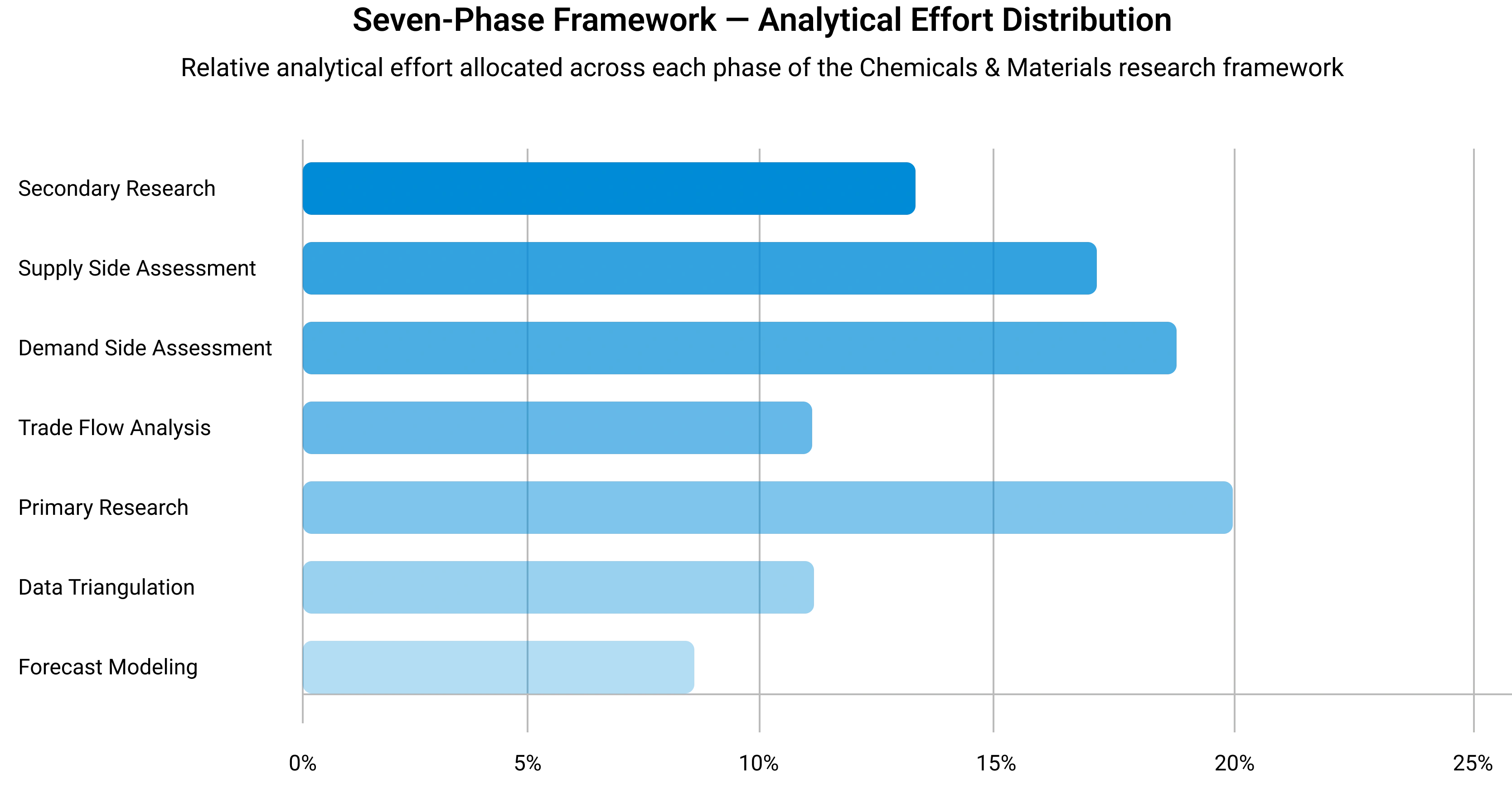
Seven-Phase Framework — Analytical Effort Distribution
Relative analytical effort allocated across each phase of the Chemicals & Materials research framework
Phase 1 - Secondary Research: Establishing the Foundation
Secondary research collects and evaluates publicly available information from authoritative sources, establishing the foundational understanding of market structure, value chain dynamics, competitive landscape, and end-use demand patterns. Every source is evaluated for credibility, recency, geographic relevance, and methodological soundness before inclusion.
Industry Associations
Sources include ACC, CEFIC, ICCA, JCIA, CPCIF, and SOCMA providing production volumes, consumption trends, capacity developments, and sustainability initiatives.
Company Disclosures
Annual reports, investor presentations, earnings transcripts, and regulatory filings reveal product portfolios, manufacturing footprints, capacity expansions, and revenue segmentation.
Government Databases
National statistical offices, customs authorities, environmental agencies, and industrial production databases provide verified statistics on output, trade flows, and regulatory compliance.
Trade Databases
UN Comtrade, ITC, Eurostat, and national customs authorities enable assessment of global product movement, import dependency, and export competitiveness across regions.
Our Secondary Research Sources
- Ministry of Chemicals and Fertilizers
- European Chemicals Agency
- United States Department of Energy
- Ministry of Industry and Information Technology
- Ministry of Economy Trade and Industry
- Ministry of Trade Industry and Energy
- National Institute of Standards and Technology
- Council of Scientific and Industrial Research
- Fraunhofer Society
- National Institute for Materials Science
Phase 2 — Supply-Side Assessment: Mapping Production Capabilities
Production Capacity Analysis
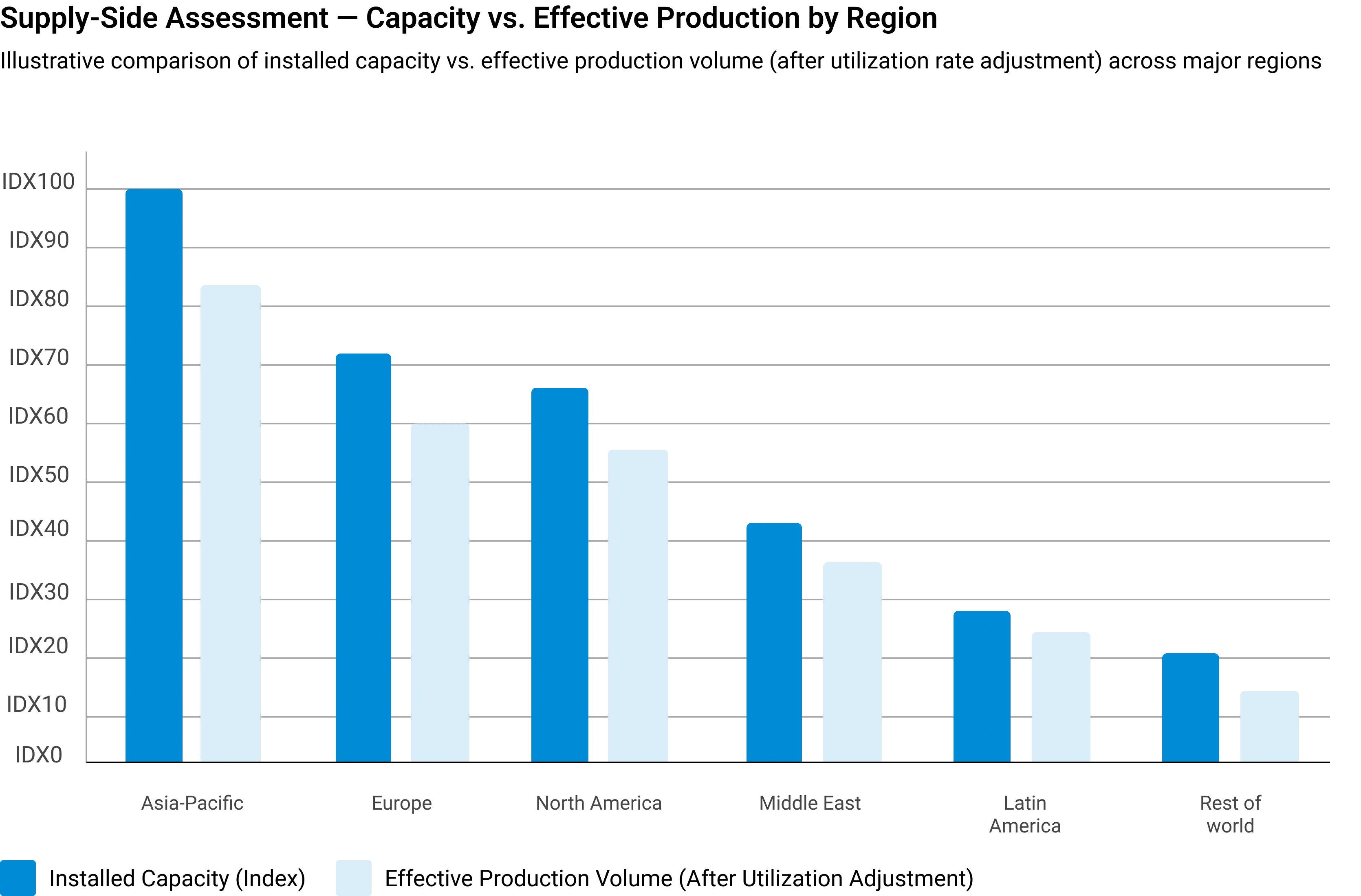
All major manufacturers are assessed for existing installed capacity, planned additions, expansions, new plant announcements, and technology adoption — mapped at global, regional, and country levels.
Capacity Utilization Adjustment
Installed capacity is adjusted using utilization rates based on demand conditions, feedstock availability, plant operating rates, maintenance schedules, and regulatory restrictions.
Manufacturer Revenue Analysis
Product-specific revenues, segment-level performance, regional distribution, average selling prices, and margin trends are evaluated to establish market value estimates.
Supply-Side Assessment — Capacity vs. Effective Production by Region
Illustrative comparison of installed capacity vs. effective production volume (after utilization rate adjustment) across major regions
Phase 3 — Demand-Side Assessment: Quantifying Chemical Consumption
Demand-side analysis quantifies chemical consumption across industries, applications, and geographies — identifying where and how chemicals are consumed throughout the value chain with precision.
End-Use Industry Analysis
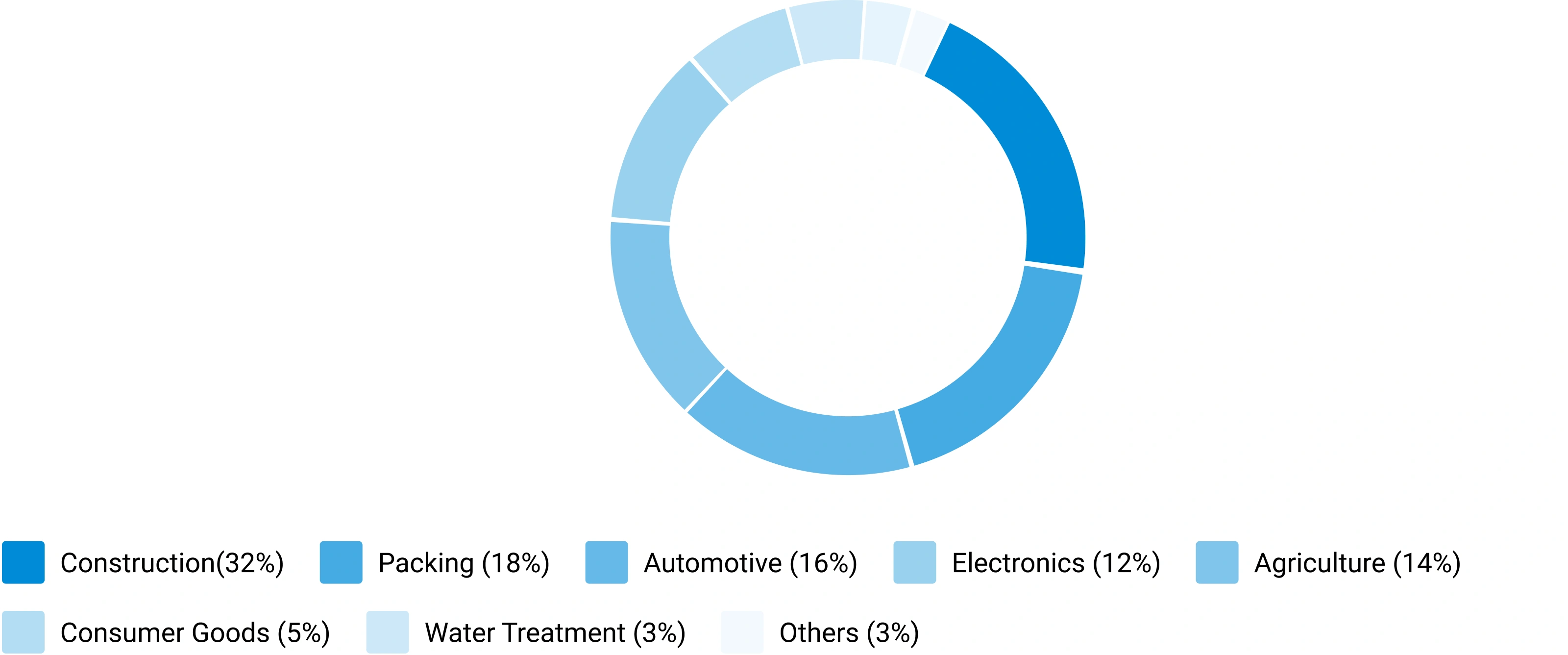
Chemical demand is evaluated across automotive, construction, packaging, electronics, agriculture, healthcare, consumer goods, industrial manufacturing, energy and utilities, and water treatment. Industry output, production trends, and consumption intensity are analyzed to determine demand patterns.
Consumption Modeling
Demand is estimated using measurable indicators: kilograms per vehicle, kilograms per square meter of construction, dosage per cubic meter of water treated, kilograms per hectare of agricultural land, and kilograms per ton of manufactured products. Consumption factors are validated through industry publications and primary interviews.
Application Analysis
The market is segmented by application area to understand product performance requirements, formulation trends, technology adoption, customer preferences, and regulatory requirements improving demand accuracy and segmentation granularity.
Demand-Side Assessment — End-Use Industry Demand Distribution
Illustrative distribution of chemical & materials demand across key end-use industries
Phase 4 - Trade Flow Analysis: Balancing Regional Supply and Demand
Trade flow analysis reconciles regional supply and demand estimates through import and export data, identifying net supply positions, regional dependencies, and market imbalances. It serves as an independent validation layer that tests the consistency of supply-side and demand-side estimates.
Import Analysis
Import data is evaluated to determine volumes, source countries, product dependency, regional supply gaps, and pricing trends — identifying markets that rely heavily on external supply and where domestic production is insufficient to meet demand.
Export Analysis
Export assessments reveal production surplus, export competitiveness, regional manufacturing strength, and global market participation. Export patterns also help validate domestic production estimates and identify net exporting regions.
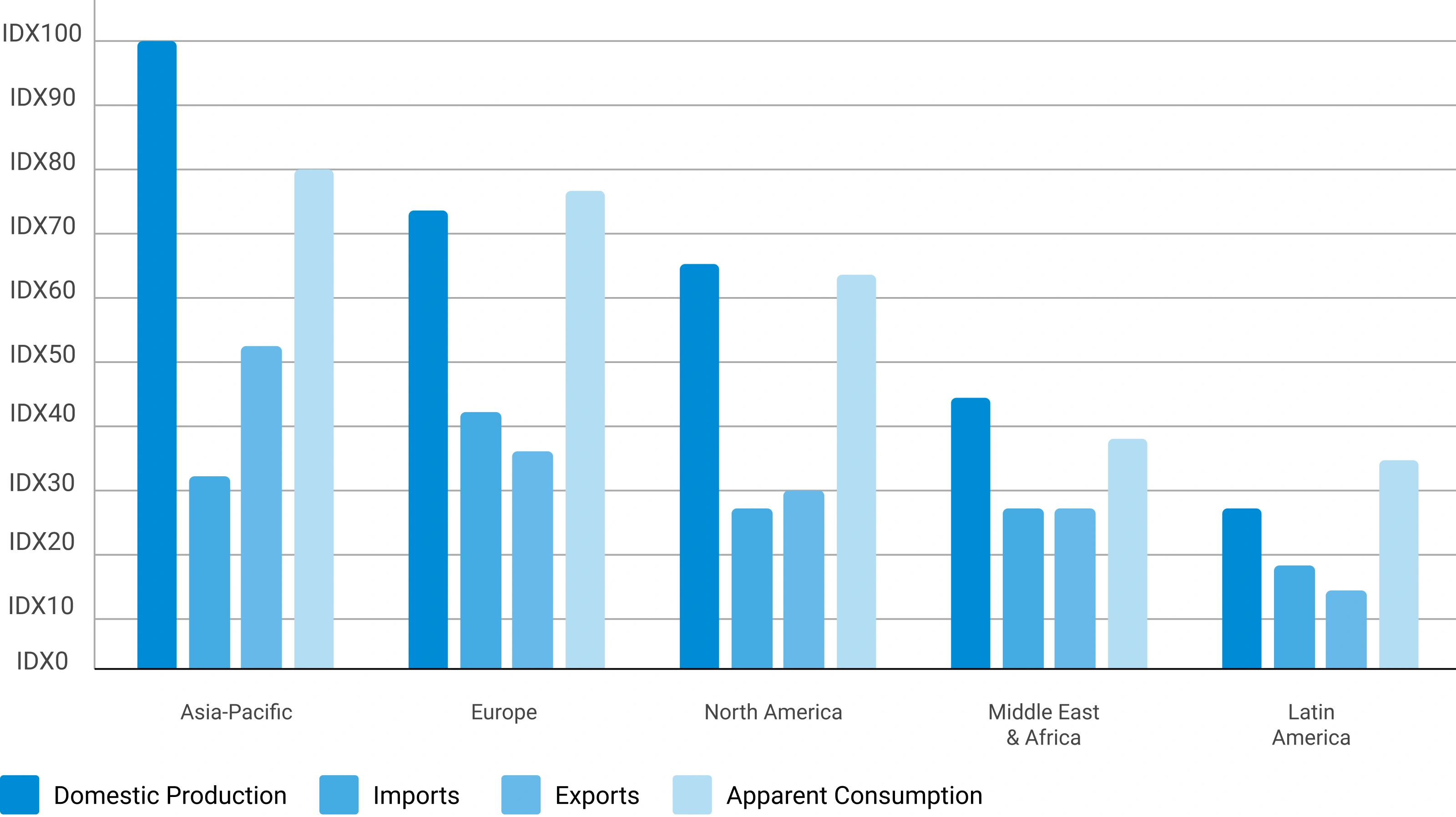
Apparent Consumption Model
Regional consumption is assessed using the standard apparent consumption formula:
Results identify net importing regions, net exporting regions, regional deficits, and surpluses — serving as an independent validation of supply and demand estimates.
Trade Flow Analysis — Net Supply Position by Region
Illustrative apparent consumption vs. domestic production across major regions — positive gap indicates net import dependency
Phase 5 — Primary Research: The Critical Validation Layer
Primary research tests and refines findings from secondary research through direct engagement with industry participants across the supply chain, demand side, and expert community. It captures intelligence that no database or published report can provide — the real-world experience of manufacturers, buyers, and specialists operating in the market.

Supply-Side Interviews
Conversations with chemical manufacturers, raw material suppliers, contract manufacturers, technology providers, and plant operators cover production trends, capacity utilization, pricing developments, technology shifts, and competitive dynamics.

Demand-Side Interviews
Engagement with OEMs, industrial consumers, procurement managers, distributors, formulators, and end-use manufacturers focuses on consumption trends, purchasing behavior, product substitution, demand outlook, and emerging applications.

Industry Expert Consultations
Additional interviews with industry consultants, independent experts, regulatory specialists, technical professionals, and research institutions provide deeper market context and validate key analytical assumptions.
Focus Areas of Primary Research:
Market Size & Forecast Validation
Revenue estimates, volume consumption, growth rates, forecast assumptions, regional demand.Supply Chain & Value Chain Assessment
Raw material sourcing, supply chain challenges, distribution networks, procurement practices.Production & Capacity Analysis
Manufacturing capacity, utilization rates, expansion projects, plant investments.Pricing & Cost Structure Analysis
Product pricing trends, feedstock costs, energy costs, margin pressures, pricing outlook.Competitive Landscape Assessment
Volume and value estimates confirmed to be fully consistent with one another before publicationInterview Volume by Market Scope
| Study Scope | Number of Interviews |
|---|---|
| Niche Market | 20 – 30 |
| Mid-Sized Market | 30 – 50 |
| Global Market | 50 – 80 |
| Highly Fragmented Market | 80 – 120 |
Interview Details:
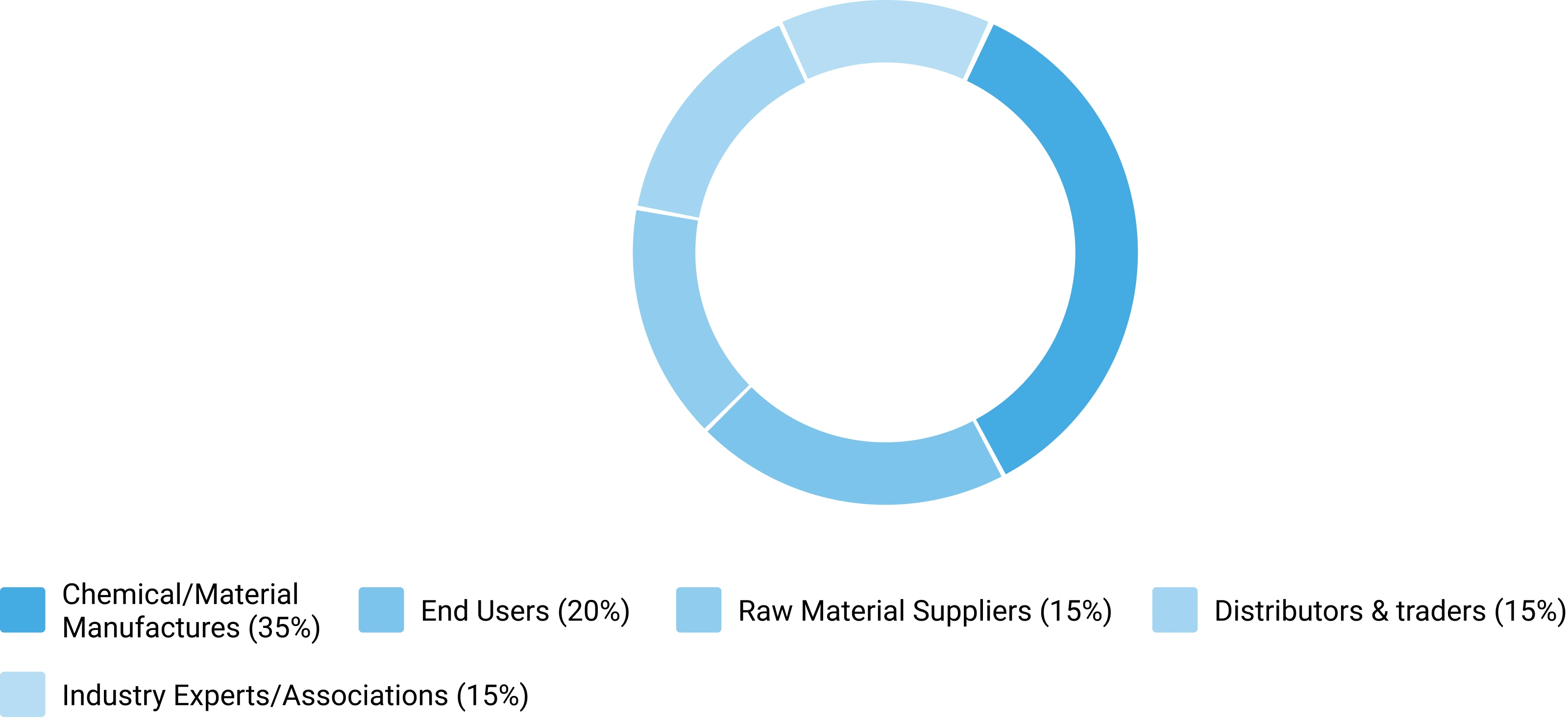
Category : Manufacturers, Suppliers, Distributors, End Users, Experts/Associations
Average Duration : 30–60 Minutes
Interview Mode : Video calls, telephonic interviews, expert consultations
Interview Format : Structured / Semi-Structured questionnaire
Focus Areas of Primary Research:
Market Size & Forecast Validation :
Revenue estimates, volume consumption, growth rates, forecast assumptions, regional demand.
Supply Chain & Value Chain Assessment :
Raw material sourcing, supply chain challenges, distribution networks, procurement practices.
Production & Capacity Analysis :
Manufacturing capacity, utilization rates, expansion projects, plant investments.
Pricing & Cost Structure Analysis :
Product pricing trends, feedstock costs, energy costs, margin pressures, pricing outlook.
Competitive Landscape Assessment :
Market share, competitor positioning, strategic initiatives, partnerships, acquisitions.
Primary Research — Stakeholder Coverage by Category
Distribution of interview respondents across stakeholder categories (% share from PPT data)
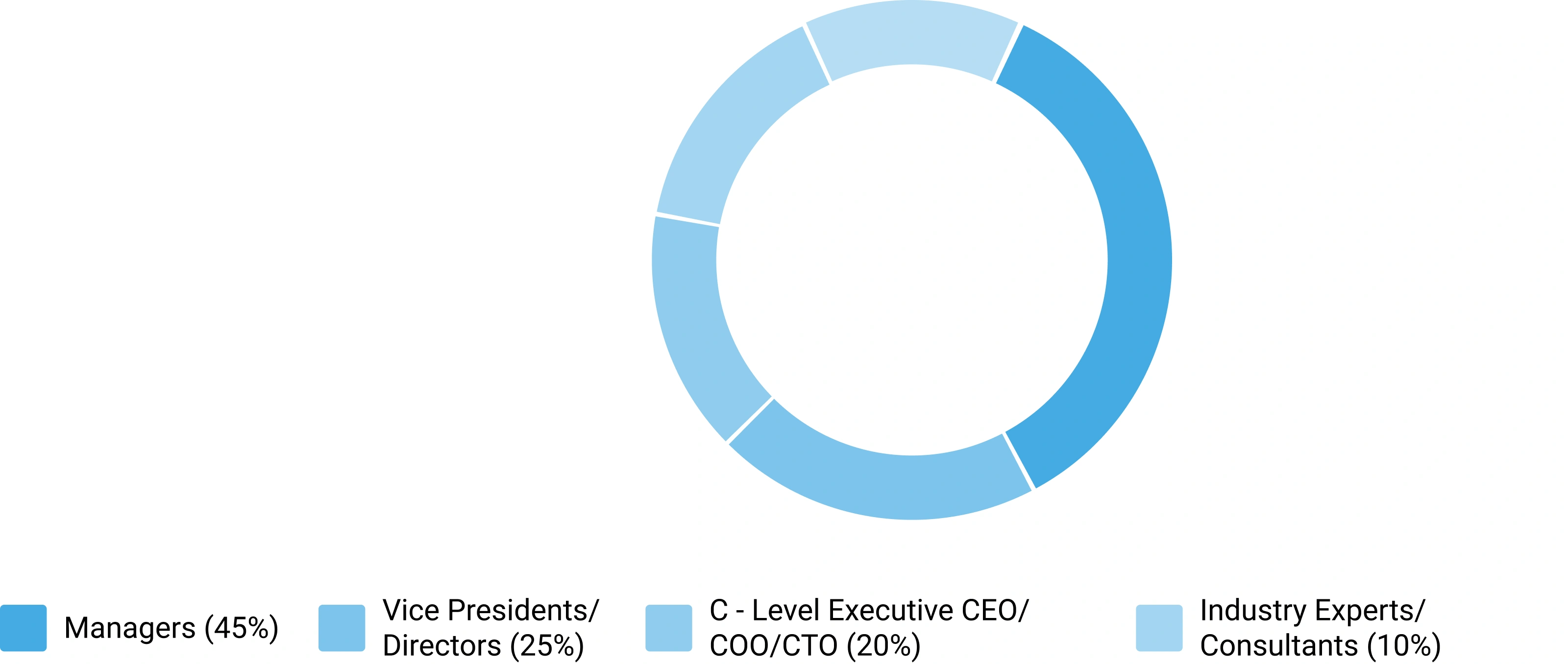
Primary Research — Respondent Designation Profile
Seniority breakdown of interview respondents (% share from PPT data)
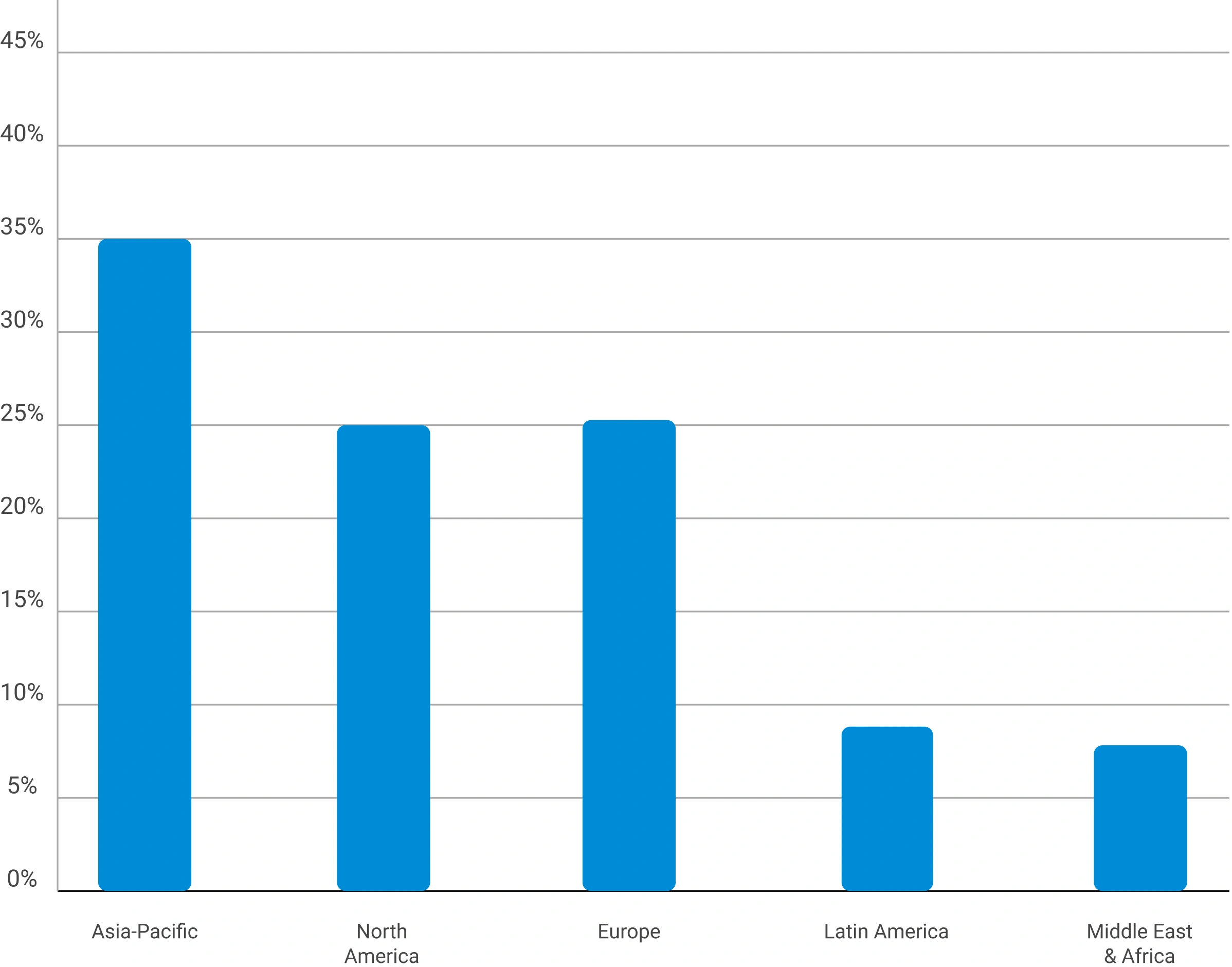
Primary Research — Geographic Coverage of Interviews
Regional distribution of primary research engagement (% share from PPT data)
Phase 6 — Data Triangulation and Market Validation
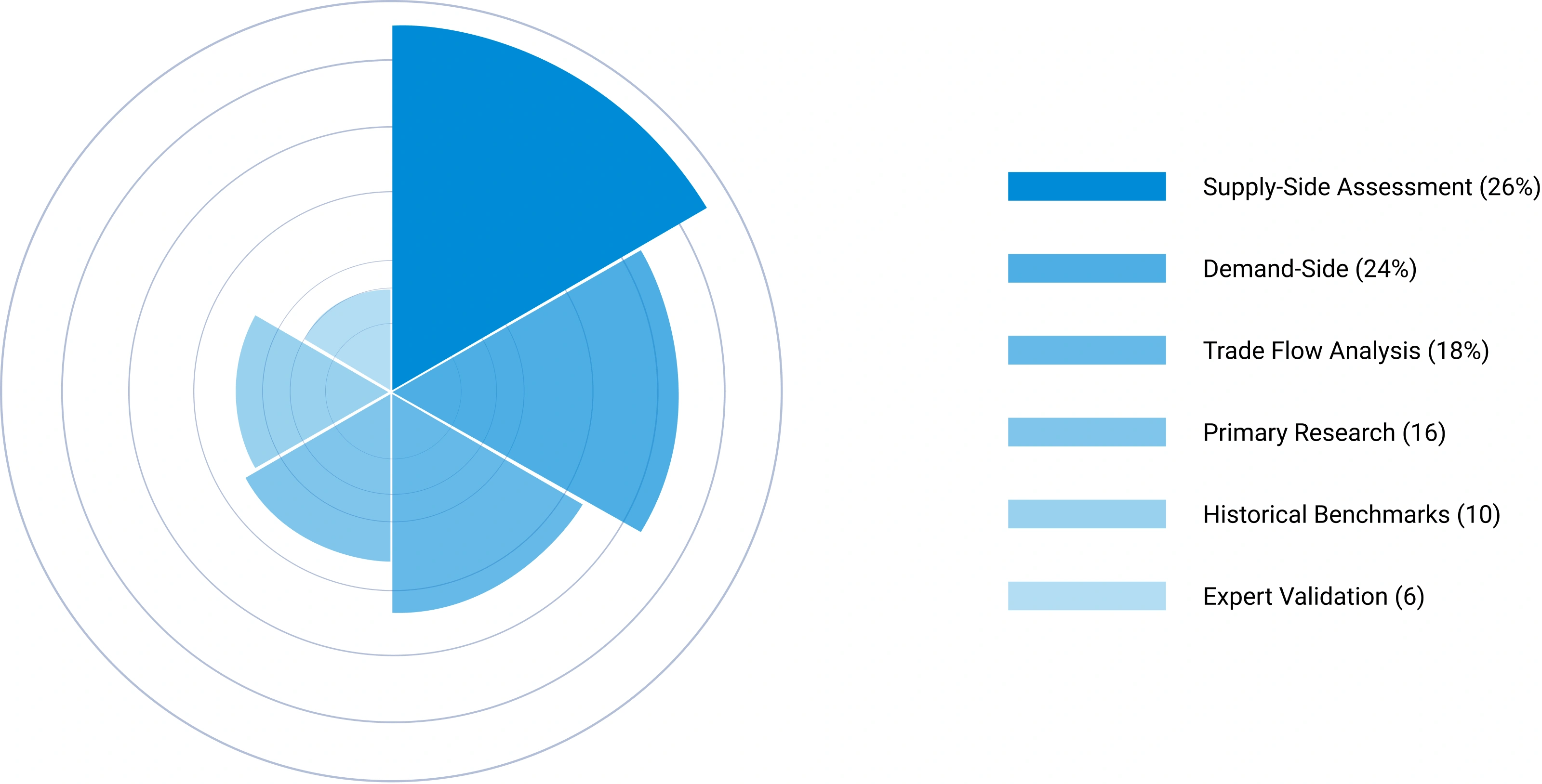
No single methodology is relied upon in isolation. Multiple independent estimation approaches are combined and reconciled to ensure consistency, accuracy, and analytical defensibility. Any material deviations between approaches are investigated and adjusted through additional validation cycles.
The final market size is derived through weighted triangulation of all validated methodologies. Any material deviations between approaches are investigated and adjusted through additional validation cycles. The outcome represents the most realistic assessment of the market based on available evidence and expert confirmation ensuring that volume and value estimates are fully consistent with one another.
Triangulation Framework — Input Contribution Weight
Relative weight each sizing input contributes to the final reconciled market estimate
Phase 7 — Forecast Modeling: Projecting Future Market Evolution
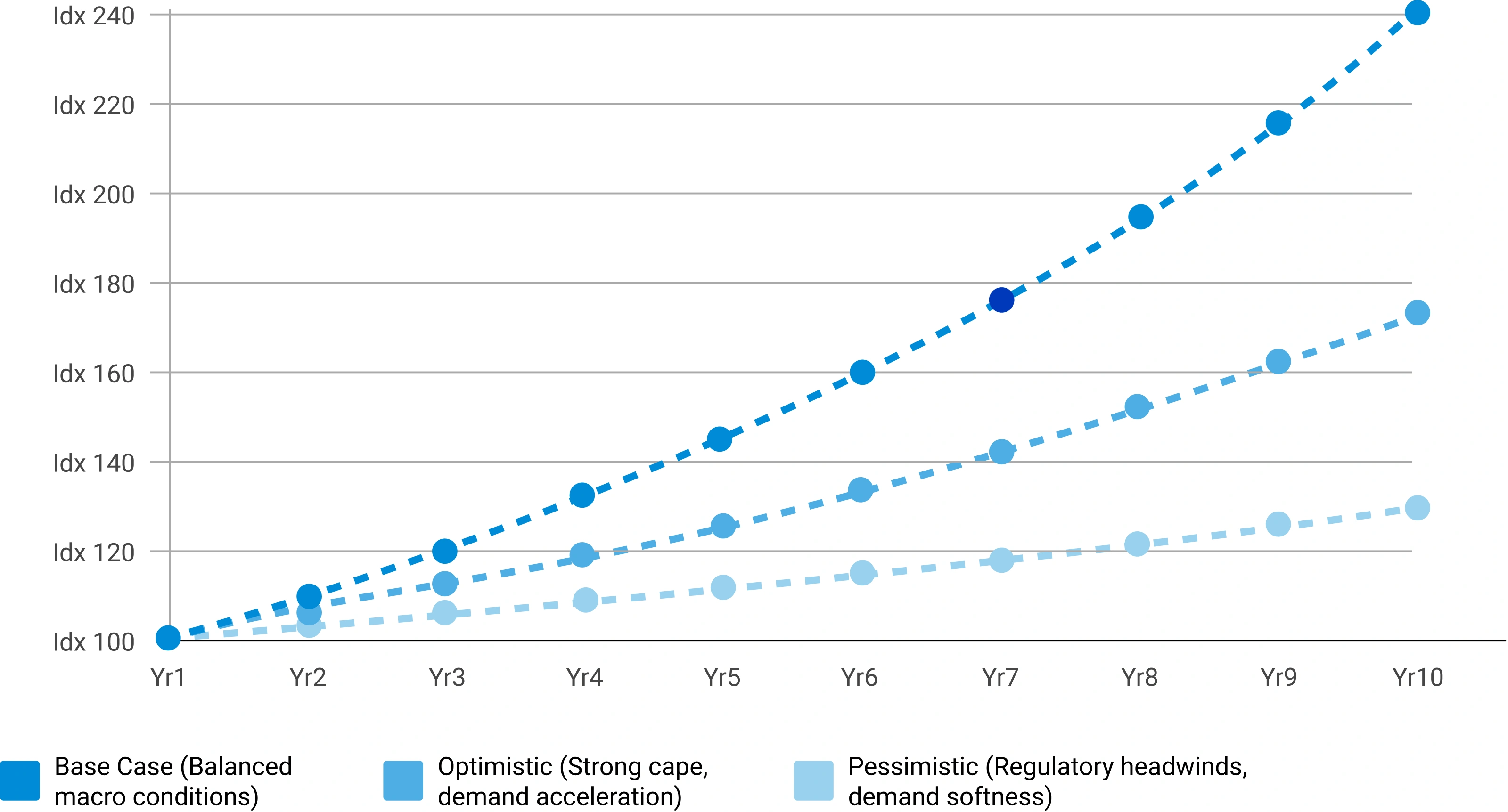
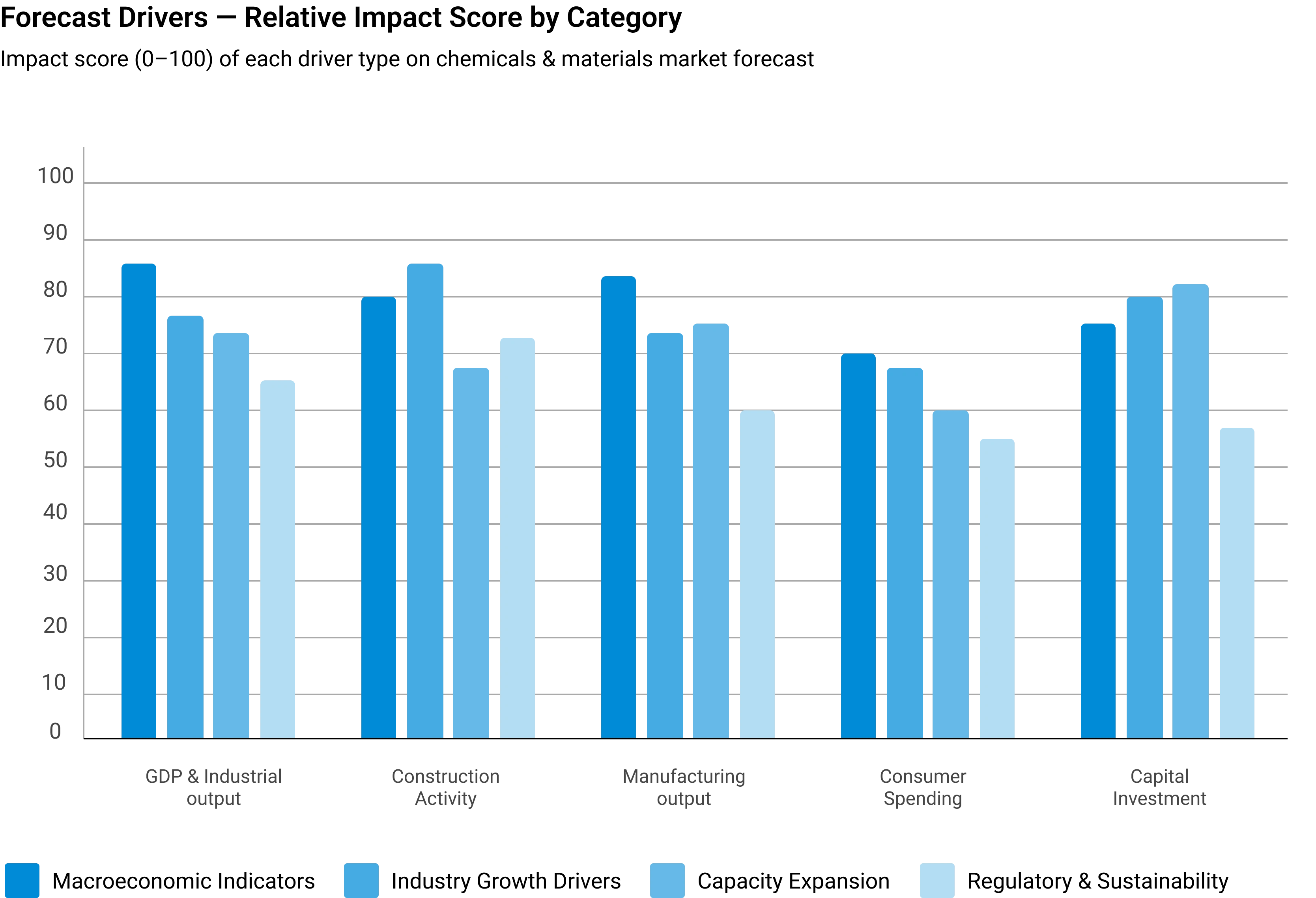
Forecasting evaluates the future trajectory of the market using a combination of quantitative indicators and qualitative assessments across economic, industry, and regulatory dimensions. Rather than simple extrapolation, each driver is independently modeled and integrated into a composite forecast.
Macroeconomic Indicators
GDP growth, industrial production, manufacturing output, construction activity, consumer spending, and capital investment form the quantitative foundation of long-term demand projections. These are applied at country, regional, and global levels.
Industry Growth Drivers
Urbanization, infrastructure development, industrialization, technological innovation, sustainability initiatives, and evolving product performance requirements are assessed at regional and industry levels — capturing both structural and cyclical demand drivers.
Capacity Expansion Analysis
Announced plant expansions, new manufacturing facilities, technology upgrades, and strategic investments are evaluated to determine future supply-demand dynamics and potential market tightness or oversupply situations.
Regulatory & Sustainability
Environmental regulations, chemical safety standards, emission reduction targets, circular economy initiatives, and sustainability requirements are incorporated as they often influence product adoption rates and market growth trajectories.
Scenario Forecast Range — Indexed Market Growth (Year 1–10)
Illustrative indexed growth trajectories across Base, Optimistic, and Pessimistic scenarios over a 10-year forecast horizon
Forecast Drivers — Relative Impact Score by Category
Impact score (0–100) of each driver type on chemicals & materials market forecast



Comments
Share your thoughts, ask a question, or provide feedback about this report.