Find the Right Market Report
Search thousands of industry reports, market insights, and research studies in one place.
Not sure where to start? Try one of these:
Market Size & Growth Outlook
Regional Market Spotlight
Segmental Spotlight
The bioactive materials market is estimated at USD 4.04 billion in 2026 and is projected to reach USD 9.93 billion by 2035, expanding at a CAGR of 10.50% from 2026 to 2035. The market was valued at USD 3.66 billion in 2025, the base year. The market includes synthetic materials that bond with and stimulate living tissue, including bioactive glasses such as 45S5 and S53P4, calcium phosphate ceramics such as hydroxyapatite and beta-tricalcium phosphate, and bioactive composites and coatings. Bioactive materials are available as powders, granules, putties, cements, strips, and scaffolds for orthopedic and spinal bone grafting, dental restoration, endodontics, wound care, and tissue engineering.
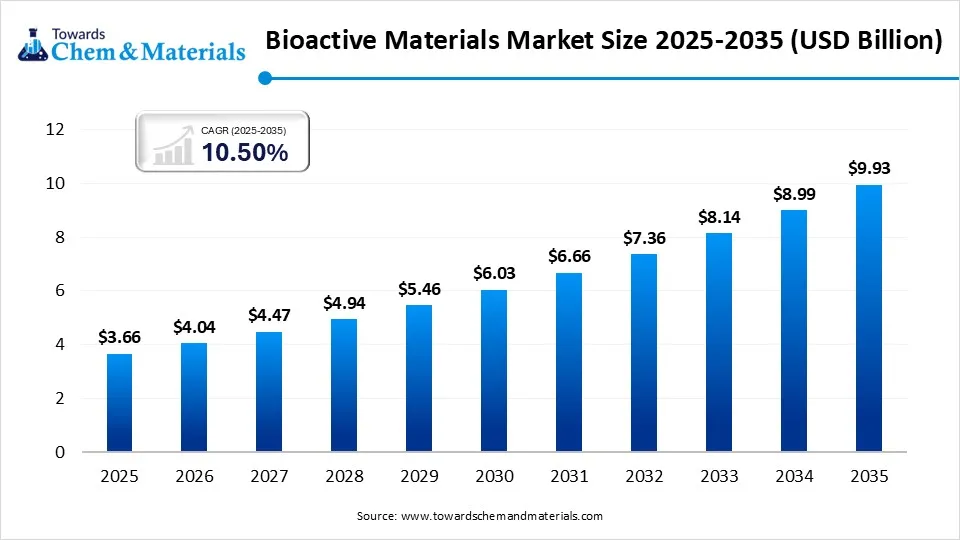
Note: 2025 is the base year; 2026-2035 values are forecasts.
Sources: Expert interviews, secondary sources, the Towards Chemical and Materials database, and Towards Chemical and Materials analysts.
Bioactive glass accounted for the largest material share in 2025, at 36.40%, because it bonds to bone, releases ions that stimulate bone growth, and has antibacterial properties, supporting its use in bone graft substitutes, dental products, and wound care. North America accounted for 39.80% of revenue in 2025, supported by high volumes of spinal fusion, orthopedic and dental procedures, and leading medical device companies. Factors causing demand for biomaterials include increasing numbers of people growing old and undergoing surgery related to orthopedics and spine; changing preference from autografts and allografts towards synthetic bone grafts; growth of dental implants and restoration procedures; and research into tissue engineering and 3D printed scaffolds. Manufacturers are launching moldable and putty-form grafts, combining ceramics with collagen and developing bioactive dental materials and 3D-printed implants.
The bioactive materials market is projected to grow from USD 3.66 billion in 2025 to USD 9.93 billion by 2035 because aging populations need more orthopedic, spinal, and dental procedures, and surgeons increasingly use synthetic bioactive grafts to avoid the drawbacks of harvesting the patient's own bone. Moldable grafts, collagen-ceramic composites, bioactive dental material, and 3D printing-based scaffolds will expand the scope of applications and help the market reach USD 9.93 billion by 2035 with a CAGR of 10.50% during 2026-2035.
Analyst View: We built the estimate from orthopedic, spinal, trauma, and dental procedures using bioactive materials by region, multiplied by material usage per procedure and average prices, together with wound care and research uses, by material, form, and application. Procedure numbers reflect aging populations, surgical volumes, and dental treatment trends, and usage reflects the adoption of synthetic grafts. The total was cross-checked against the synthetic bone graft and bioactive dental product revenue of leading companies and against published estimates, which places our base year slightly above the highest credible comparable figure. Growth rate is due to increased surgical volumes and acceptance of synthetic grafts, tempered by reimbursement constraints and competition from allografts.
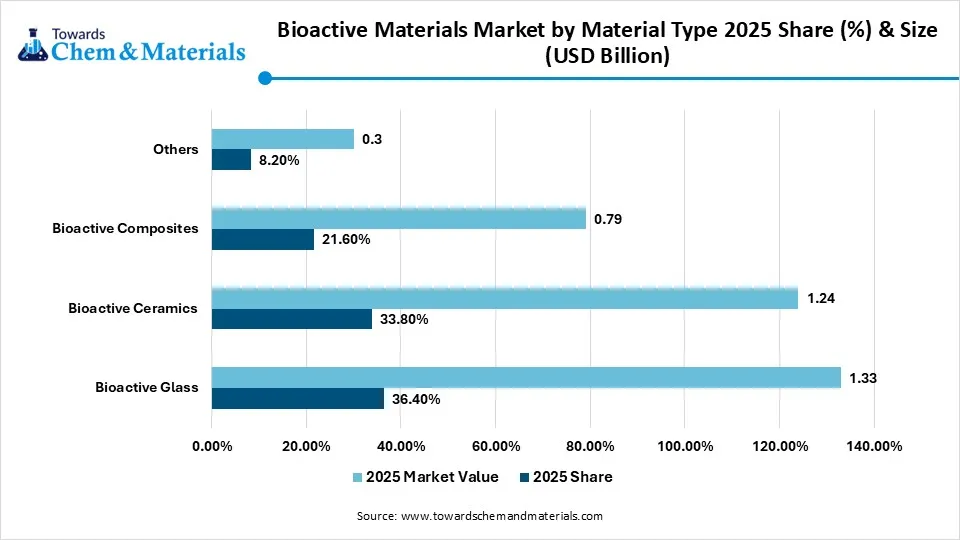
Note: 2025 is the base year.
Sources: Expert interviews, secondary sources, Towards Chemical and Materials database, and Towards Chemical and Materials analysts.
Bioactive glass accounted for 36.40% (USD 1.33 billion) in 2025 because it bonds strongly with bone, stimulates regeneration, and has antibacterial effects. Bioactive ceramics account for 33.80% (USD 1.24 billion), mainly hydroxyapatite and beta-tricalcium phosphate grafts. Bioactive composites, at 21.60% (USD 0.79 billion), are the fastest-growing material, as ceramics are combined with collagen and polymers for handling and performance. Others account for 8.20% (USD 0.30 billion).
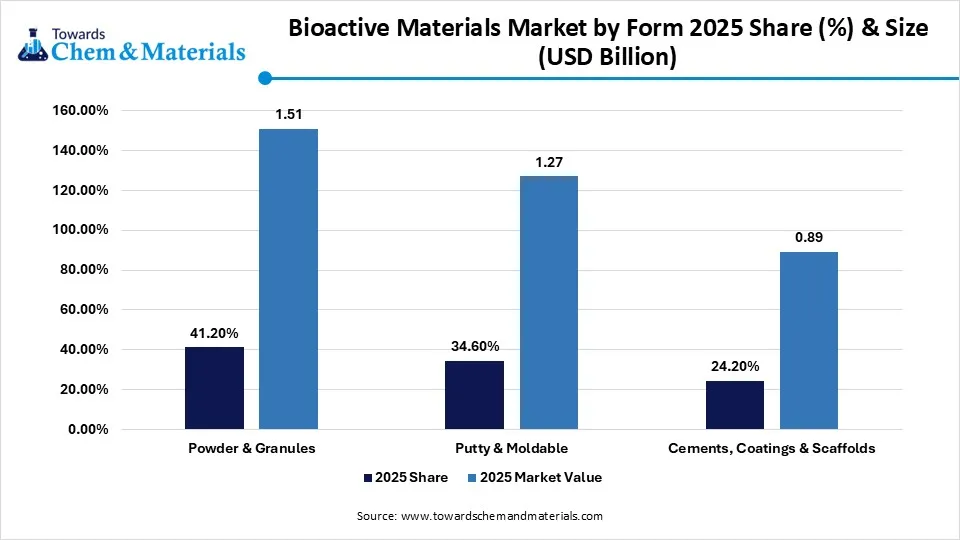
Note: 2025 is the base year.
Sources: Expert interviews, secondary sources, Towards Chemical and Materials database, and Towards Chemical and Materials analysts.
Powder and granules accounted for 41.20% (USD 1.51 billion) in 2025 because they are used to fill bone defects and in dental products. Putty and moldable forms account for 34.60% (USD 1.27 billion) and are the fastest-growing form because surgeons prefer easy-to-handle grafts that fill irregular defects. Cements, coatings, and scaffolds account for 24.20% (USD 0.89 billion).
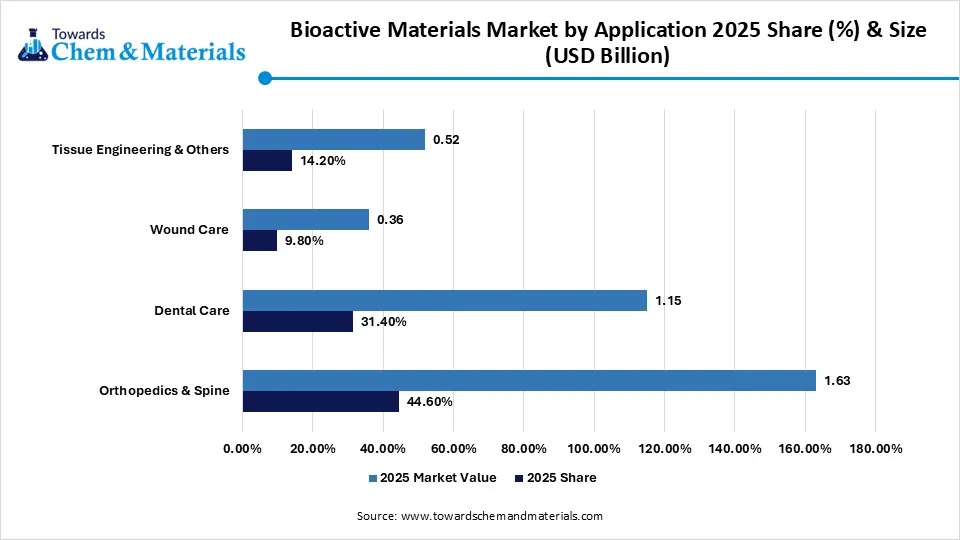
Note: 2025 is the base year.
Sources: Expert interviews, secondary sources, Towards Chemical and Materials database, and Towards Chemical and Materials analysts.
Orthopedics and spine accounted for 44.60% (USD 1.63 billion) in 2025 because spinal fusion, trauma, and joint revision procedures use large volumes of bone graft substitutes. Dental care accounts for 31.40% (USD 1.15 billion), including bone grafting for implants, pulp capping, and desensitizing products. Wound care accounts for 9.80% (USD 0.36 billion), and tissue engineering and others for 14.20% (USD 0.52 billion).
Analyst View: Segment valuations were established based on matching procedures, usages, and pricing to material, form, and application based on corporate revenue distribution and surgery information. Bioactive glass, powders, and orthopedics lead because of established bone graft use. Composites, putties, and dental materials are estimated to gain market share.
Note: 2025 is the base year.
Sources: Expert interviews, secondary sources, Towards Chemical and Materials database, and Towards Chemical and Materials analysts.
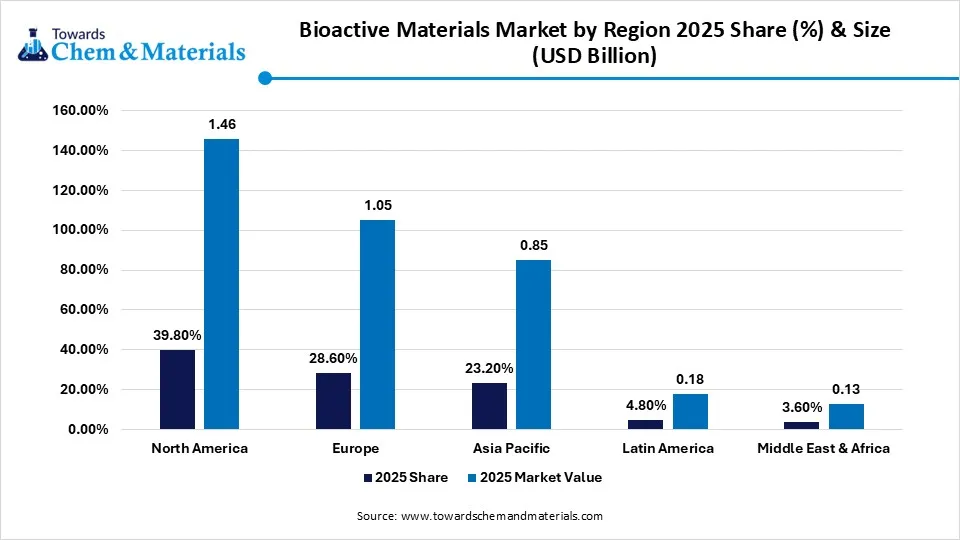
North America accounted for 39.80% (USD 1.46 billion) in 2025, supported by high spinal fusion and orthopedic volumes, dental implant demand, and companies such as Stryker, DePuy Synthes, Medtronic, Zimmer Biomet, and Orthofix. Europe, at 28.60% (USD 1.05 billion), is supported by orthopedic and dental markets and bioactive material pioneers in Finland, France, and the UK. Asia Pacific, at 23.20% (USD 0.85 billion), is the fastest-growing region, supported by aging populations, rising surgical capacity, and dental care in China, Japan, South Korea, and India. Latin America, at 4.80% (USD 0.18 billion), and the Middle East and Africa, at 3.60% (USD 0.13 billion), are growing with healthcare investment.
Analyst View: Regional shares were built from procedures, usage, and prices in each region. North America leads because of surgical volumes and device company presence. We assign Asia Pacific the highest growth premium because aging and surgical capacity are expanding fastest there.
| Rank | Company Name | Market-Specific Revenue (USD Billion) | 2025 Share | Key Products/Business | Headquarters |
| 1 | Stryker | 0.3 | 8.20% | Vitoss bioactive bone graft substitutes | United States |
| 2 | DePuy Synthes | 0.28 | 7.65% | Bone graft substitutes | United States |
| 3 | Medtronic | 0.22 | 6.01% | Synthetic bone grafts | Ireland |
| 4 | Zimmer Biomet | 0.2 | 5.46% | Bone healing and graft products | United States |
| 5 | Septodont | 0.12 | 3.28% | Biodentine bioactive dentin substitute | France |
| 6 | Baxter | 0.1 | 2.73% | Active bone graft substitute | United States |
| 7 | Bioventus | 0.1 | 2.73% | Bone graft substitutes | United States |
| 8 | Orthofix | 0.08 | 2.19% | OsteoCove bioactive synthetic graft | United States |
| 9 | Biocomposites | 0.07 | 1.91% | Calcium sulfate and bioactive bone fillers | United Kingdom |
| 10 | Arthrex | 0.07 | 1.91% | Bone graft and biologic products | United States |
Note: Company revenues and shares are 2025 estimates.
Sources: Company press releases, expert interviews, secondary sources, the Towards Chemical and Materials database, and Towards Chemical and Materials analysts.
Stryker led the bioactive materials market with an estimated 8.20% (USD 0.30 billion) of 2025 revenue, followed by DePuy Synthes at 7.65% (USD 0.28 billion) and Medtronic at 6.01% (USD 0.22 billion). Stryker leads through its Vitoss bioactive bone graft substitutes used in spinal and orthopedic procedures. DePuy Synthes offers bone graft substitutes within its orthopedic and spine portfolio, and Medtronic supplies synthetic bone grafts for spinal surgery. Zimmer Biomet, Septodont, Baxter, Bioventus, Orthofix, Biocomposites, and Arthrex compete through bone healing products, bioactive dental materials, silicate-substituted grafts, synthetic graft lines, and calcium-based fillers.
10 leading companies were responsible for an estimated 42.08% (USD 1.54 billion) of revenue generated in 2025, whereas the remaining 57.92% (USD 2.12 billion) market share was held by specialists in biomaterials, dental materials, and regional bone grafting companies. The bioactive materials market is moderately concentrated among large orthopedic companies, and competition centers on clinical evidence of bone formation, handling properties, resorption rates, regulatory clearances, surgeon relationships, and pricing. Specialty firms compete with new types of glasses, composites, and dentistry.
The bioactive materials ecosystem links raw material and powder producers with biomaterial manufacturers, medical device and dental companies, regulators, and surgeons and dentists.
| Ecosystem Stage | Role in the Market | Key Companies |
| Raw Materials | Produce bioactive glass, calcium phosphates, and collagen | Specialty glass makers, calcium phosphate producers, collagen suppliers |
| Biomaterial Manufacturers | Formulate bioactive powders, putties, and scaffolds | Cam Bioceramics, Biocomposites, bioactive glass specialists |
| Medical Device & Dental Companies | Develop and sell finished products | Stryker, DePuy Synthes, Medtronic, Zimmer Biomet, Septodont |
| Regulators | Clear and oversee products | FDA, EU notified bodies, national regulators |
| Clinicians & Hospitals | Use bioactive materials in procedures | Orthopaedic and spine surgeons, dentists, hospitals |
Sources: Company press releases, expert interviews, secondary sources, Towards Chemical and Materialsdatabase and Towards Chemical and Materialsanalysts.
The Towards Chemical and MaterialsCompanies Quadrant positions key participants in the bioactive materials market by market strength, reflecting revenue scale, market share and geographic reach, and by innovation and growth strategy, reflecting product portfolio breadth, R&D intensity and partnerships. Positions reflect each company's estimated 2025 bioactive materials revenue and our assessment of its product innovation, clinical evidence, and distribution.
By Material Type
By Form
By Application
By Region
The bioactive materials market refers to bioactive glasses, bioactive ceramics, composites, and coatings used in orthopedic, spinal, dental, wound care, and tissue engineering applications, worldwide. The 2025 base year was built bottom-up from procedures using bioactive materials by application and region, material usage per procedure and average prices, and checked top-down against the synthetic bone graft and bioactive dental product revenue of leading companies. Segment, regional, and company values were allocated from material types, forms, applications, and regional demand. Key estimates were verified by cross-checking company disclosures, regulatory, and industry data and published third-party estimates, and inputs that could not be reconciled were excluded. All segment, regional, and company figures were reconciled to the same 2025 base year, and the 2026-2035 forecast, which applies a constant CAGR from the 2025 base, was recalculated and validated.
The bioactive materials market is growing as synthetic grafts and bioactive dental products replace traditional options in an ageing population. The forecast will monitor surgical, dental, and technological volumes because the valuation is linked to demand through procedures, applications, and price. Composites, dentistry, and 3D printing are the key benefits; allograft competition and reimbursement are the drawbacks.
Reliable market intelligence and data-driven insights across the global chemicals and materials industry, helping businesses understand trends, competition, pricing, and emerging opportunities.
Schedule a Demo