
Cement Paints Market Size Analysis Report 2035
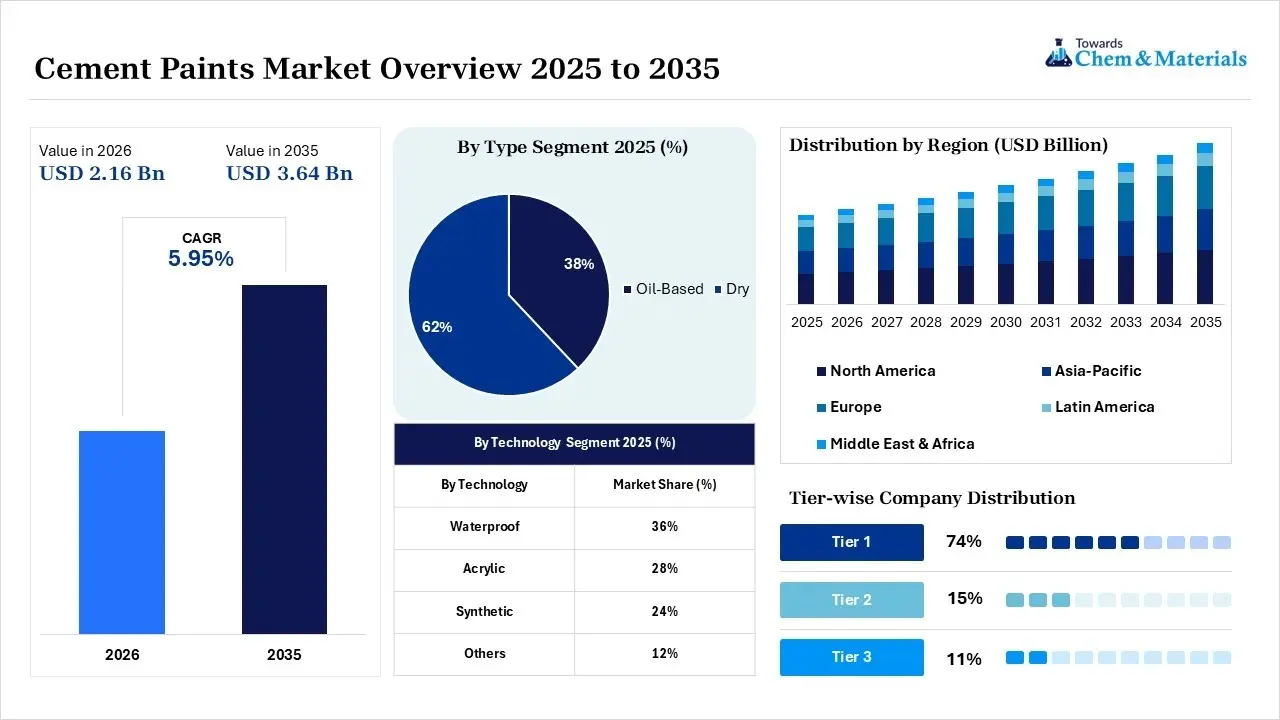
The cement paints market size was valued at USD 2.04 billion in 2025, is estimated to reach USD 2.16 billion in 2026, and is projected to reach USD 3.64 billion by 2035, exhibiting a compound annual growth rate (CAGR) of 5.95% over the forecast period from 2026 to 2035.Asia Pacific dominated the cement paints market with the largest revenue share of 46% in 2025 and is expected to grow at the fastest CAGR of 5.92% during the forecast period. The market is expanding as the urbanization level rises, infrastructure development projects continue, and cost-effective exterior paints become more popular. Incorporation of improved weather resistance, protection from moisture, and low VOC formulations is fueling market growth, and advances in waterproofing and decorative finishes are adding to the variety of applications in residential and commercial construction.
Market Highlights
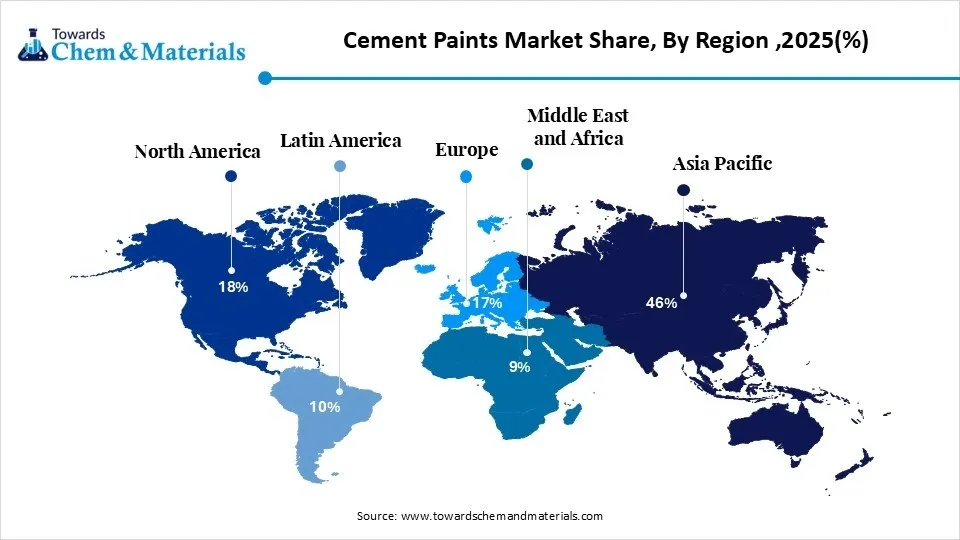
- By region, Asia Pacific dominated the cement paints market by holding 46% share in 2025, as rapid urbanization fuels construction activities.
- By region, North America held 18% market share in 2025 and is expected to grow at the fastest, with a CAGR of 7.1% during the forecast period as commercial building upgrades increase coating demand.
- By type, the dry segment dominated the market with the largest share of 62% in 2025 as it gained demand from cost-effective construction activities.
- By type, the oil-based segment held 38% market share in 2025 and is expected to grow at the fastest CAGR of 6.6% over the forecast period due to its remaining preference in industrial and exterior projects.
- By technology, the waterproof segment dominated the market with the largest share of 36% in 2025, as infrastructure projects require enhanced durability.
- By technology, the acrylic segment held 28% market share in 2025 and is expected to grow at the fastest CAGR of 6.8% over the forecast period, driven by technological improvements that enhance performance.
- By application, the exterior segment dominated the market with the largest share of 58% in 2025, as weather protection requirements drive product adoption.
- By application, the interior segment held 42% market share in 2025 and is expected to grow at the fastest CAGR of 6.4% over the forecast period, driven by residential remodeling, which stimulates interior coating demand.
- By end-use, the residential segment dominated the market with the largest share of 54% in 2025, as government housing programs support demand.
- By end-use, the commercial segment held 28% market share in 2025 and is expected to grow at the fastest CAGR of 6.5% over the forecast period, driven by hospitality developments that require aesthetic coatings.
According to Towards Chemicals and Materials Analytics and Consulting, the global cement paints market market volume was valued at 1.76 million tons in 2025 and is expected to surpass around 2.94 million tons by 2035, accelerating a compound annual growth rate (CAGR) of 5.25% over the forecast period from 2026 to 2035.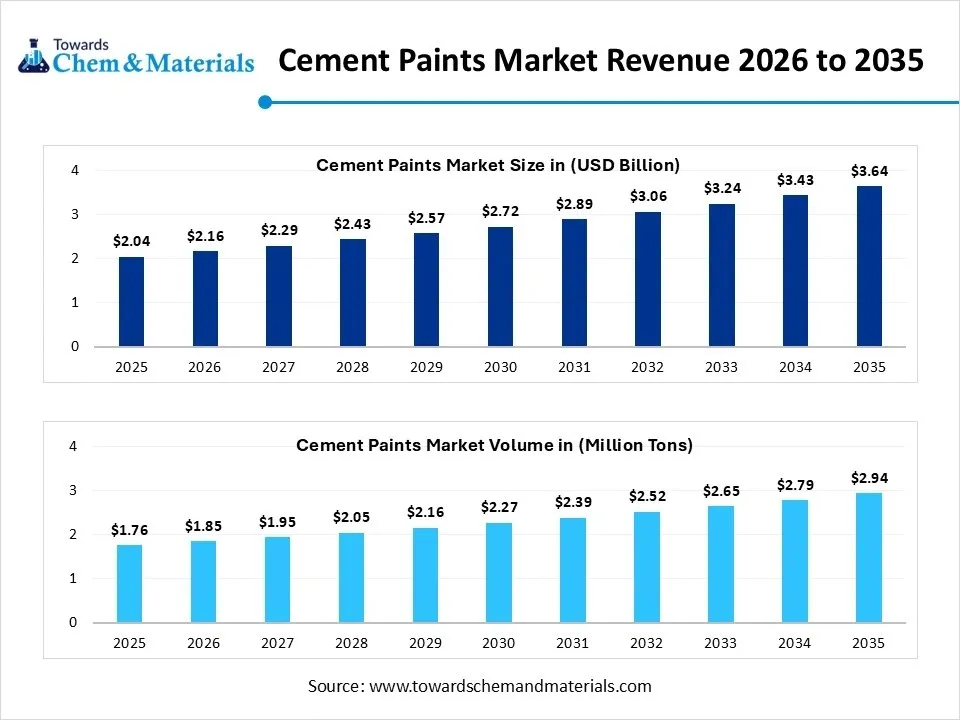
The cement paints market is seeing pretty steady expansion, mostly because of fast urban development, more residential construction, and rising investments in infrastructure projects. Sometimes, it feels like all of it happens at once. Cement paints still stay a favored coating option, thanks to their affordability, strength, breathability, plus that useful ability to shield surfaces from moisture, UV exposure, and tough weather conditions.
On top of that, technological upgrades are moving forward, like acrylic-modified cement paints, anti-carbonation coatings, waterproof additives, and self-cleaning nanotechnology. These kinds of features are basically boosting overall product performance and helping extend service life. Renovation activity is also picking up, and government-backed affordable housing programs are giving another push to market demand. Manufacturers are also using innovative pigments and energy-saving additives to enhance aesthetic and thermal properties.
- For instance, Asian Paints began the commercial production at its white cement plant in Fujairah, UAE, in October 2025, adding to its building material offering and enhancing its supply strength in the region. (Source:scanx.trade)
Accelerating Urbanization Rises Demands for Cement Paints
Rising urbanization in the world is the leading factor for the growth of cement paints. Rapid growth in construction rates due to urbanization demands durable and affordable paint options for interior and exterior coating surfaces. Rise construction in infrastructure projects like roads, bridges, and public buildings demands cement paints due to their water-resistant and corrosion-resistant properties. The availability of disposable income encourages people to renovate their homes to give them a pleasant look.
Industries like automotive and manufacturing demand cement coating to protect equipment from corrosion. Growing environmental concerns in urbanized areas demand lower volatile organic compounds that increase the demand for cement paints. Growing commercial areas such as retail, offices, restaurants, and businesses demand a pleasant aesthetic look to create a nice environment. As urban region extends, the requirement of housing and commercial construction also increases that is key driver for the market.
Market Trends
- Lower maintenance: Cement paints easily clean dirt, dust, and stains on surfaces due to this, it is easy to maintain. Homeowners, builders, and contractors demand this kind of paint.
- Growing construction: Rising commercial and residential construction demands durable, long-lasting, and cost-effective solutions.
- Rising adoption of eco-friendly products: Consumers are aware of various environmental concerns, and they are giving preference to eco-friendly products that increase demand for cement paints due to their lower volatile compound emission.
- Customization & personalization: Cement paints provide customization options to their consumer by offering different colors, finishes, and textures. Consumers can create personalized designs and styles.
- Rising social media: Consumers can see various designs and aesthetics on social media that help in the growth of the market. Companies can easily advertise their product through social media and gain consumers' attention easily.
- Cost-effectiveness and versatility: Cement paints can be applied to various surfaces like walls, ceilings, concrete, and many more due to their affordable nature. Cement paints are applied to the internal and external surfaces of buildings and offices.
Report Scope
| Report Metric | Details |
| Market Size in 2026 | USD 2.16 Billion/ 1.85 Million Tons |
| Expected Market Size in 2035 | USD 3.64 Billion/ 2.94 Million Tons |
| Growth Rate | CAGR of 5.95% |
| Base Year For Estimation | 2025 |
| Forecast Period | 2025-2035 |
| Dominant Region | Asia Pacific |
| Segement Covered | By Type, Technology,Application,End use,Region |
| Key Companies Profile | BASF Coatings, Asian Paints, Jotun, Nippon Paint Holding Co., Ltd., Asian Paints ,Africa Paints, Dulux, Berger Paints India, PPG Industries, Kansai Nerolac Paints Ltd.,Shawcor Ltd., Tata Pigments, Johnson Paints, Farrow & Ball Ltd., The Sherwin-Williams Company, Acro Paints Ltd., Sika AG, Kreidezeit |
Market Opportunity
Advancements Transform the Journey of Cement Paints
Technological advancements are creating key opportunities in the growth of the cement paints market. An increased focus on creating sustainability and reducing carbon footprints attracts eco-conscious consumers. Advancement in enhancing durability, strong weather resistance, and high humid resistance creates an opportunity for the market. The creation of strong adhesion and flexibility in cement paints reduced the risk of scratches, cracks, and peeling.
Enhancing colors options in cement paints influences more consumer and changes their perception. Improving the drying time of cement paint can influence people. Developing innovative, odourless paint can attract consumers who are sensitive to strong smell. Advancement in digital visualization is going to create a strong opportunity for cement paints.
Market Challenge
Fluctuating Raw Material Prices Hamper Market Growth
Despite several advantages of cement paints, fluctuating raw material prices may hamper the growth of the market. Cement paints require raw materials like cement, pigments, and additives. These raw materials prices are dependent on factors like supply, demand, and transportation of material. Supply chain disruptions of raw materials result in increased prices and material shortages that collectively restraining the growth of the cement paints market.
Supply Chain Analysis of the Cement Paints Market
Feedstock Procurement
- In this stage, it is sourcing necessary raw materials needed for the production of cement paints, which include white cement, limestone, titanium dioxide, mineral fillers, pigments, and specialty additives. Trustworthy suppliers, consistent material quality, and cost-effectiveness are among the key considerations for manufacturers in assuring product quality and maintaining production continuity.
- UltraTech Cement: A leading supplier of white cement and limestone, which is used for manufacturing coatings for the construction sector.
- Other Key Players: JK Cement, Birla White.
Chemical synthesis and processing
- The raw materials are ground, calcined, treated with pigments, and chemically treated to develop the required particle size, durability, colour stability, and weather resistance. This step is an important one to improve the performance and long-term surface protection offered by the coating.
- Asian Paints: We use state-of-the-art processing technology to produce high-quality pigments, binders, and special additives for cement paints.
- Other Key Players: Nippon Paint, Berger Paints.
Compound formulation and blending
- The resulting products are processed materials combined with pigments, waterproofing chemicals, acrylic modifying agents, fillers, and performance-enhancing chemicals to produce long-lasting, breathable cement paint products. The formulation is precise so that it is consistent in color, adhesion, crack resistance, and moisture protection.
- Grasim Industries (Birla White): A specialist in the formulation and blending of white cement-based decorative and protective coating solutions.
- Other Key Players: JK Cement Paints, Berger Paints.
Segmental Insights Cement Paints Market
By Type
The oil-based segment dominated the cement paints market share 38% in 2025. The rising demand for durable, water-resistant, and moisture-resistant paints drives the growth of the market. This kind of paint provides a strong barrier and protects from damage caused by moisture, weather, and environmental factors. The wide application of paint on various surfaces like concrete, walls, doors, metals, windows, and wood drives the growth of the market.
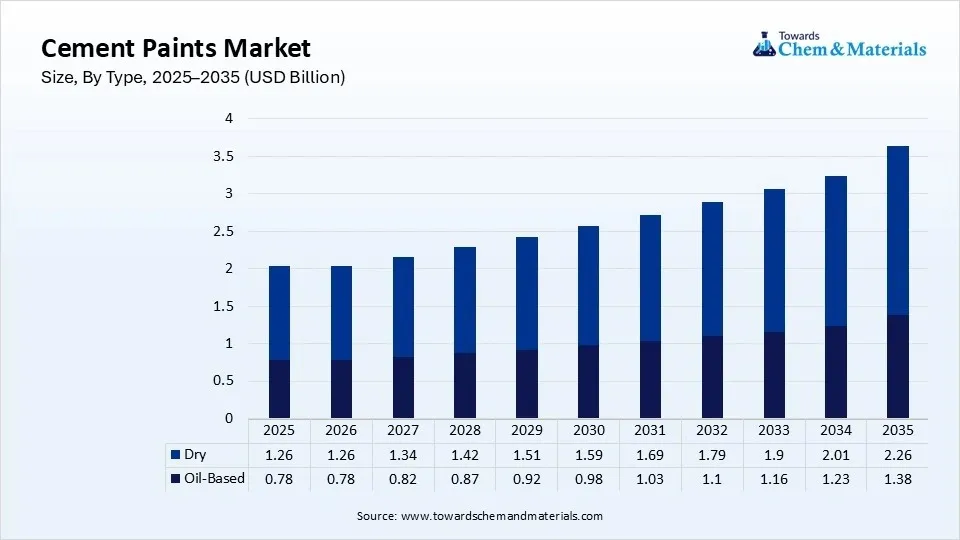
The dry paints expect the fastest growth in the cement paints market during the forecast period. Its growing application in both interior and exterior surfaces due to its cost-effectiveness and easy application drives the growth of the market. These paints consist of lower volatile organic compounds, and this makes them an eco-friendly choice. Rising construction worldwide and the long-lasting effect of dry cement fuels the growth of the market.
Cement Paints Market Share, By Type,2025(%)
| By Type | Market Share (%) |
| Oil-Based | 38% |
| Dry | 62% |
By Technology
The waterproof segment dominated the cement paints market share 36.0% in 2025. The ability to protect from water damage and extend the lifespan of construction drives the growth of the market. It protects buildings' internal walls, external walls, and foundations from corrosion, deterioration, and structural failure. Rising technological innovations in waterproof paints that enhance the performance of solutions. Furthermore, growing urbanization and wide applications of cement paints in basements, roofs, retaining walls, and many more fuels the market growth.
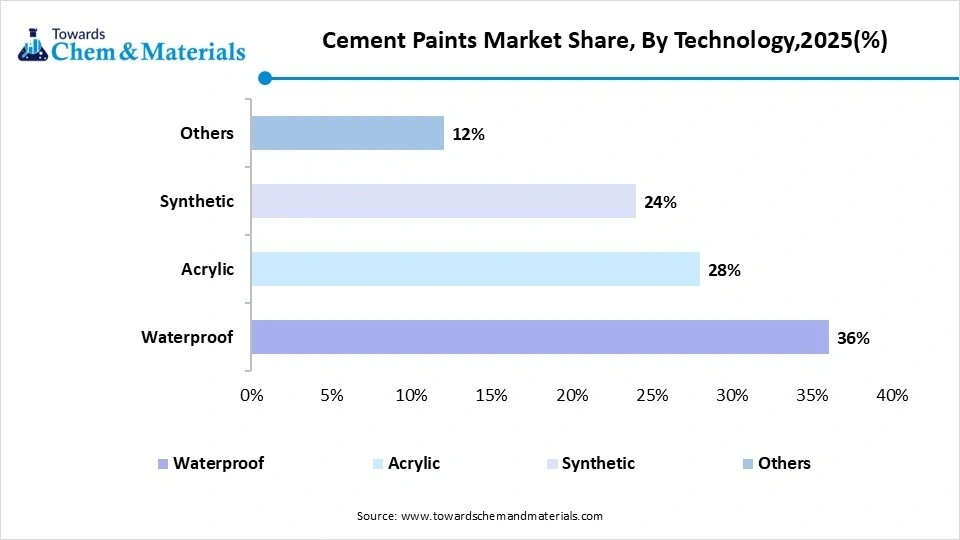 The acrylic segment expects the notable growth in the market during the forecast period. Rising consumer awareness regarding environmental concerns demands paints that have lower volatile organic compound fuels the growth of the market. The strong colors retention property and versatile applications in both interior and exterior surfaces drive the growth of the market. Additionally, increasing demand from the automotive and manufacturing industries fuels the market growth.
Cement Paints Market Share, By Technology,2025(%)
| By Technology | Market Share (%) |
| Waterproof | 36.0% |
| Acrylic | 28% |
| Synthetic | 24% |
| Others | 12% |
By Application
The exterior segment dominated the cement paints market share 42.00% in 2025. Cement paints provide strong protection against water penetration, stormy weather, dust, and dirt, which fuels the growth of the market. This paint sustains in extreme weather conditions such as heavy rain, high temperatures, UV rays, and humidity and protects the exterior surfaces of buildings and infrastructure. Cement paints protect exterior surfaces from algae and fungi growth and provide a pleasant appearance. Additionally, the wide application of cement paints on surfaces like concrete, plaster, and brick drives the market growth.
The interior paints segment expects the fastest growth in the cement paints market during the forecast period. Rising demand for sustainable and eco-friendly choices and low maintenance cost drives the market growth. Cement paints create an aesthetic look inside houses and offices. Furthermore, cement paints are cost-effective than other paints, and their longer lifespan lowers the need for frequent internal painting driving the market growth.
Cement Paints Market Share, By Application,2025(%)
| By Application | Market Share (%) |
| Interior | 42.00% |
| Exterior | 58.00% |
By End Use
The residential segment holds the largest share of the cement paints market share 54.00% in 2025. Rapid growth in home construction and renovations demands durable, long-lasting, and water-resistant paints, driving the market growth. Growing homeowners' demand for aesthetic look helps in the growth of the market. Additionally, government initiatives regarding affordable houses and large-scale infrastructure projects propel the market growth.
The commercial segment expects the significant growth in the market during the forecast period. The rising demand from offices, retail spaces, and hospitality venues for creating aesthetic looks drives the growth of the market. It is widely used in exterior walls due to its water resistance and dirt retention ability.
Cement Paints Market Share,By End Use, 2025(%)
| By End-Use | Market Share (%) |
| Residential | 54.0% |
| Industrial | 18.00% |
| Commercial | 28.00% |
Regional Insights
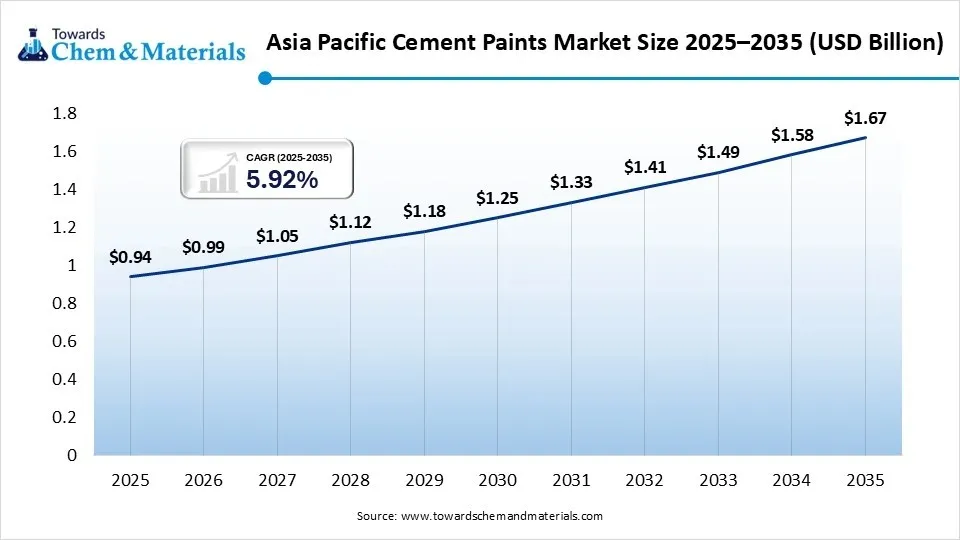
The Asia Pacific cement paints market size was estimated at USD 0.94 billion in 2025 and is projected to reach USD 1.67 billion by 2035, growing at a CAGR of 5.92% from 2026 to 2035.Asia Pacific dominated the market with the largest share of 46% in 2025, owing to rapid urbanization, large-scale housing developments, growing investments in infrastructure, and demand for cost-effective exterior coatings. The tropical weather conditions, heavy rainfall, and humidity in the region encouraged the use of those weather-resistant mortar coatings for such projects as residential, commercial, and public constructions.
China
- Strong demand was found in massive residential and infrastructure building projects for exterior cement coatings.
- The government-funded urban redevelopment schemes boosted the use of wall finishes for protection and decoration.Low VOC cement paint formulations were adopted due to the increasing awareness of sustainable construction.
India
- With affordable housing on the rise, there was a greater demand for affordable cement-based coating solutions.
- Cement paints were more favored for moisture-resistant qualities and to protect exterior walls in monsoon-prone areas.
- The construction sector was propped up, and it encouraged widespread use in both commercial and residential applications.
North America held 18% market share in 2025 and is expected to grow at the fastest CAGR of 7.1% during the forecast period, with the rise in renovations, infrastructure improvements, and greater interest in exterior coatings that last. Additionally, the growing demand for durable protective finishes in both residential and commercial buildings, sustainability efforts, and cutting-edge waterproofing solutions drove market expansion.
United States
- Infrastructure modernization projects drove up the need for durable cement-based protective coatings.
- Rising renovation activity helped drive the use of exterior paint that was more resistant to the weather.
- The increasing standards for green buildings influenced the use of low-emission cement paint products.
Canada
- There was a strong demand for moisture-resistant and tough wall coatings due to the harsh climatic conditions.
- Trends in sustainable construction technology facilitated the use of eco-friendly paints.
- The growth was due to increased residential renovation activities.
Europe held 17% market share in 2025, with building renovation, sustainability, and the restoration of old infrastructure all contributing. The use of durable and environmentally friendly cement-based paints with superior durability and environmental performance has been promoted by the growing demand for energy-efficient building materials and environmentally-conscious coatings.
Germany
- Demand for durable and weatherproof façade coatings increased, as the strong renewal sector boosted demand.
- Low VOC cement paint solutions were adopted due to the support of sustainable construction regulations.
- Protective masonry coatings and other masonry coatings were used more in infrastructure maintenance operations.
France
- The breathability of cement-based coatings was found to be in demand for historic building restoration projects.
- Environmentally friendly paint products were encouraged by the green construction projects.
- Market growth was driven by increasing refurbishment work at homes.
Latin America held 10% market share in 2025, driven by expanding urban populations, infrastructure investments, and housing construction. There was a strong demand for low-cost, weather-resistant coatings that would resist tropical climate conditions and provide long-lasting protection on exterior building surfaces.
Brazil
- The growing number of residential homes stimulated demand for inexpensive coating options.
- Moisture-resistant cement paints were widely used because of the high humidity.
- Expansion of infrastructure-related projects added to protective coating requirements.
Chile
- Consumption of durable exterior paints was stimulated by commercial building growth.
- Environmental conditions along the coast made a need for weather-resistant coating technologies.
- Renewal work helped to sustain market growth.
The Middle East & Africa held 9% market share in 2025, because of increasing investments in residential and commercial constructions, increasing urbanization, and infrastructure development. Demand for durable, protective, and heat-resistant coatings continued to be strong, especially in areas that are subject to extreme temperatures and harsh environmental conditions.
Saudi Arabia
- With the large-scale construction projects, there was a rise in demand for durable cement-based exterior coatings.
- The use of heat- and weather-resistant paints was encouraged by the extreme climatic conditions.
- In the long term, market growth was sustained by vision-driven infrastructure investments.
South Africa
- The number of homes being built rose, which led to more use of affordable construction coatings.
- Demand for moisture-resistant wall protection contributed to market growth.
- Product utilization remained high as a result of infrastructure rehabilitation projects.
Recent Developments
- In June 2026, Pittsburgh Paints Company introduced a new brand called Pittsburgh Paints Protective Coatings. The program continued to grow its industrial coating product and technology offering and also established a leadership position as the sole distributor of PPG Protective & Marine Coatings products and technologies.(Source: www.coatingsworld.com)
In May 2026, JSW Paints introduced a new campaign for its JSW Halo luxury paint range. The campaign highlighted improved surface protection alongside the desirable aesthetic qualities of Advanced Defense technology as it was applied in contemporary homes. (Source: www.campaignindia.in)
Market Top Companies List

- BASF Coatings
- Asian Paints
- Jotun
- Nippon Paint Holding Co., Ltd.
- Asian Paints
- Africa Paints
- Dulux
- Berger Paints India
- PPG Industries
- Kansai Nerolac Paints Ltd.
- Shawcor Ltd.
- Tata Pigments
- Johnson Paints
- Farrow & Ball Ltd.
- The Sherwin-Williams Company
- Acro Paints Ltd.
- Sika AG
- Kreidezeit
Segments Covered In The Report
By Type
- Oil-Based
- Dry
By Technology
- Waterproof
- Acrylic
- Synthetic
- Others
By Application
- Interior
- Exterior
By End-Use
- Residential
- Industrial
- Commercial
By Regional
- North America
- Asia Pacific
- Europe
- Latin America
- Middle East & Africa
A Seven-Phase Framework
Our methodology is designed to be universally applicable across commodity chemicals, specialty chemicals, petrochemicals, construction chemicals, coatings, electronic chemicals, industrial gases, agrochemicals, water treatment chemicals, and performance materials. Each phase builds upon the last, creating a layered validation structure that minimizes estimation error and maximizes analytical confidence.
The framework ensures comprehensive market coverage, robust cross-validation, and reliable long-term forecasting — producing market estimates that withstand scrutiny from investors, regulators, and corporate strategy teams.

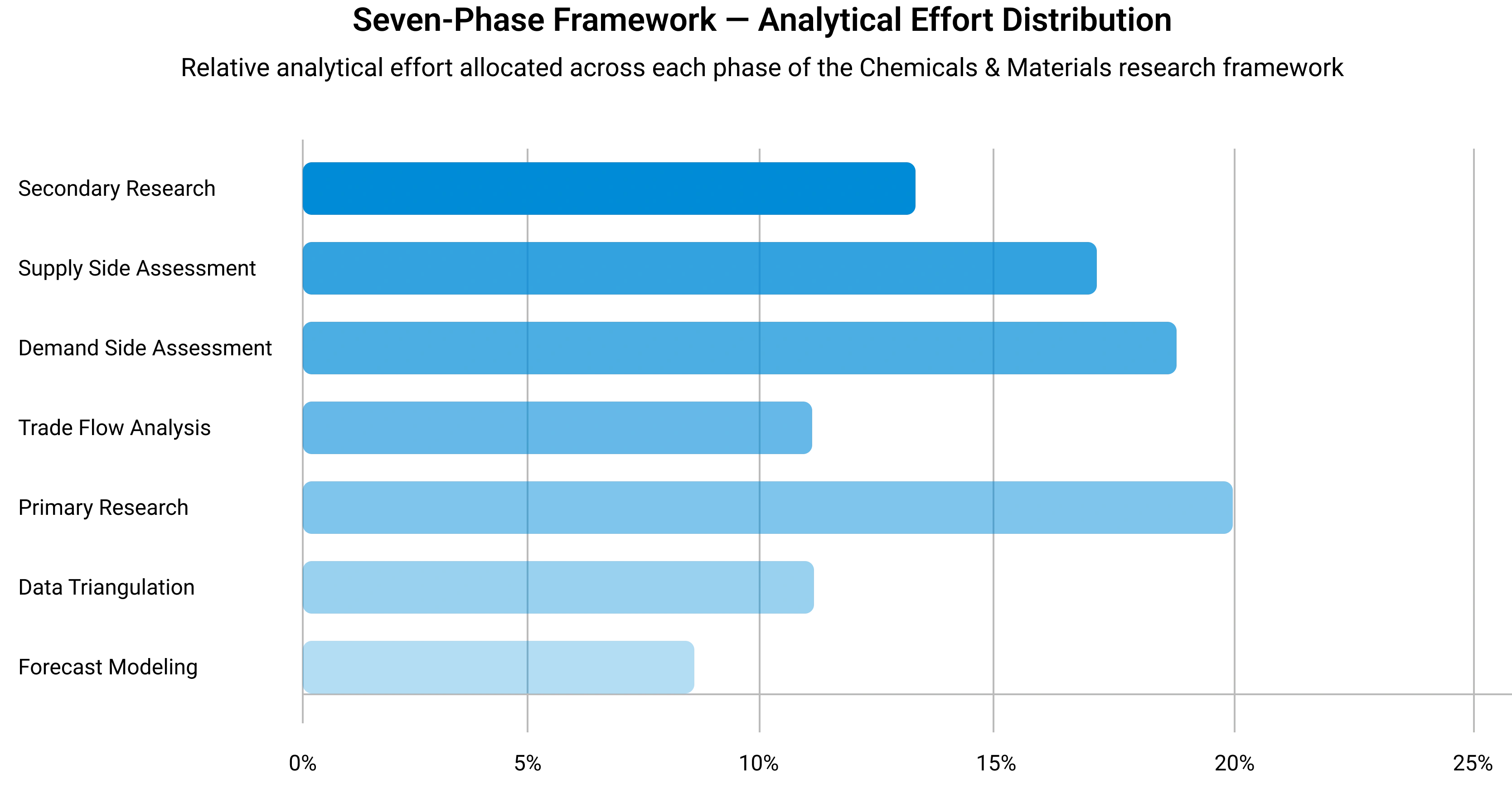
Seven-Phase Framework — Analytical Effort Distribution
Relative analytical effort allocated across each phase of the Chemicals & Materials research framework
Phase 1 - Secondary Research: Establishing the Foundation
Secondary research collects and evaluates publicly available information from authoritative sources, establishing the foundational understanding of market structure, value chain dynamics, competitive landscape, and end-use demand patterns. Every source is evaluated for credibility, recency, geographic relevance, and methodological soundness before inclusion.
Industry Associations
Sources include ACC, CEFIC, ICCA, JCIA, CPCIF, and SOCMA providing production volumes, consumption trends, capacity developments, and sustainability initiatives.
Company Disclosures
Annual reports, investor presentations, earnings transcripts, and regulatory filings reveal product portfolios, manufacturing footprints, capacity expansions, and revenue segmentation.
Government Databases
National statistical offices, customs authorities, environmental agencies, and industrial production databases provide verified statistics on output, trade flows, and regulatory compliance.
Trade Databases
UN Comtrade, ITC, Eurostat, and national customs authorities enable assessment of global product movement, import dependency, and export competitiveness across regions.
Our Secondary Research Sources
- Ministry of Chemicals and Fertilizers
- European Chemicals Agency
- United States Department of Energy
- Ministry of Industry and Information Technology
- Ministry of Economy Trade and Industry
- Ministry of Trade Industry and Energy
- National Institute of Standards and Technology
- Council of Scientific and Industrial Research
- Fraunhofer Society
- National Institute for Materials Science
Phase 2 — Supply-Side Assessment: Mapping Production Capabilities
Production Capacity Analysis
All major manufacturers are assessed for existing installed capacity, planned additions, expansions, new plant announcements, and technology adoption — mapped at global, regional, and country levels.
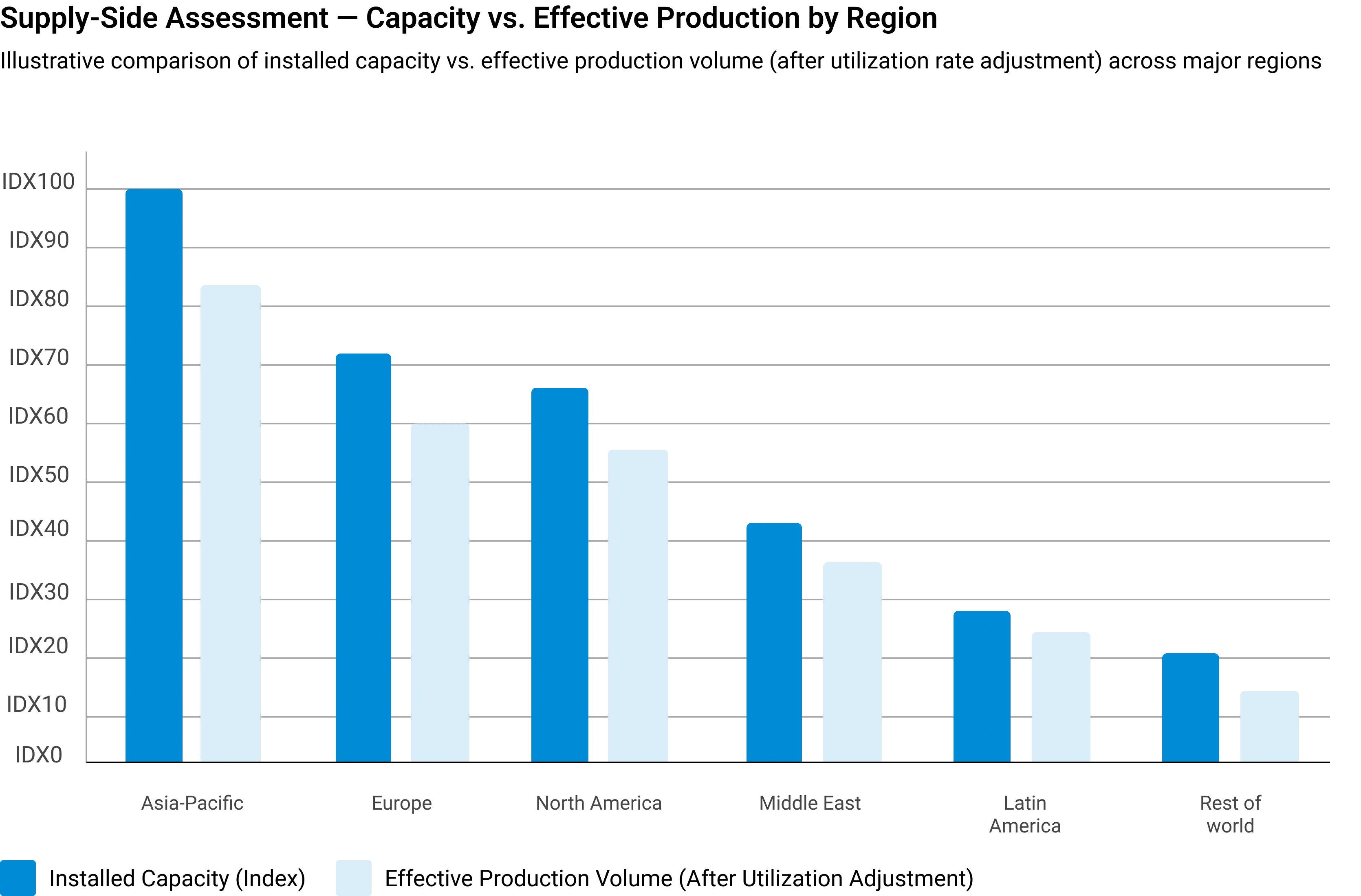
Capacity Utilization Adjustment
Installed capacity is adjusted using utilization rates based on demand conditions, feedstock availability, plant operating rates, maintenance schedules, and regulatory restrictions.
Manufacturer Revenue Analysis
Product-specific revenues, segment-level performance, regional distribution, average selling prices, and margin trends are evaluated to establish market value estimates.
Supply-Side Assessment — Capacity vs. Effective Production by Region
Illustrative comparison of installed capacity vs. effective production volume (after utilization rate adjustment) across major regions
Phase 3 — Demand-Side Assessment: Quantifying Chemical Consumption
Demand-side analysis quantifies chemical consumption across industries, applications, and geographies — identifying where and how chemicals are consumed throughout the value chain with precision.
End-Use Industry Analysis
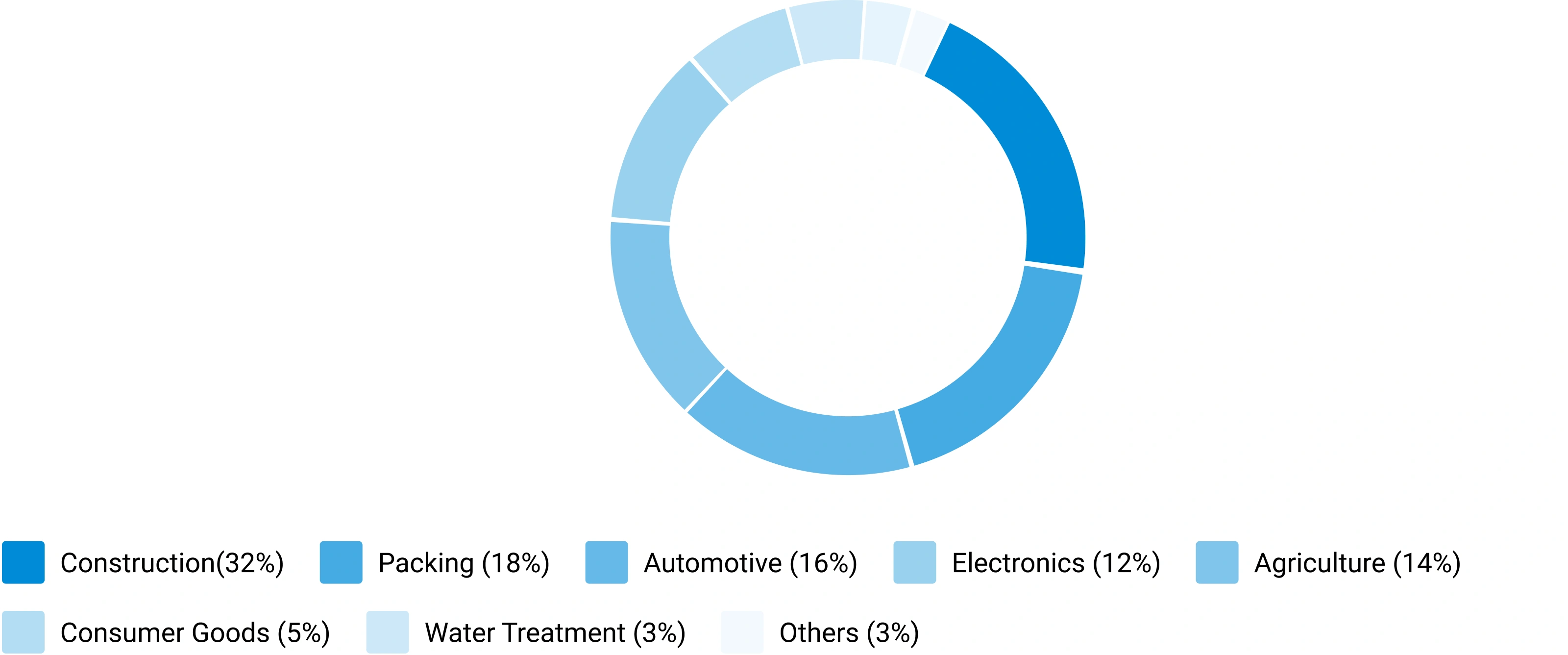
Chemical demand is evaluated across automotive, construction, packaging, electronics, agriculture, healthcare, consumer goods, industrial manufacturing, energy and utilities, and water treatment. Industry output, production trends, and consumption intensity are analyzed to determine demand patterns.
Consumption Modeling
Demand is estimated using measurable indicators: kilograms per vehicle, kilograms per square meter of construction, dosage per cubic meter of water treated, kilograms per hectare of agricultural land, and kilograms per ton of manufactured products. Consumption factors are validated through industry publications and primary interviews.
Application Analysis
The market is segmented by application area to understand product performance requirements, formulation trends, technology adoption, customer preferences, and regulatory requirements improving demand accuracy and segmentation granularity.
Demand-Side Assessment — End-Use Industry Demand Distribution
Illustrative distribution of chemical & materials demand across key end-use industries
Phase 4 - Trade Flow Analysis: Balancing Regional Supply and Demand
Trade flow analysis reconciles regional supply and demand estimates through import and export data, identifying net supply positions, regional dependencies, and market imbalances. It serves as an independent validation layer that tests the consistency of supply-side and demand-side estimates.
Import Analysis
Import data is evaluated to determine volumes, source countries, product dependency, regional supply gaps, and pricing trends — identifying markets that rely heavily on external supply and where domestic production is insufficient to meet demand.
Export Analysis
Export assessments reveal production surplus, export competitiveness, regional manufacturing strength, and global market participation. Export patterns also help validate domestic production estimates and identify net exporting regions.
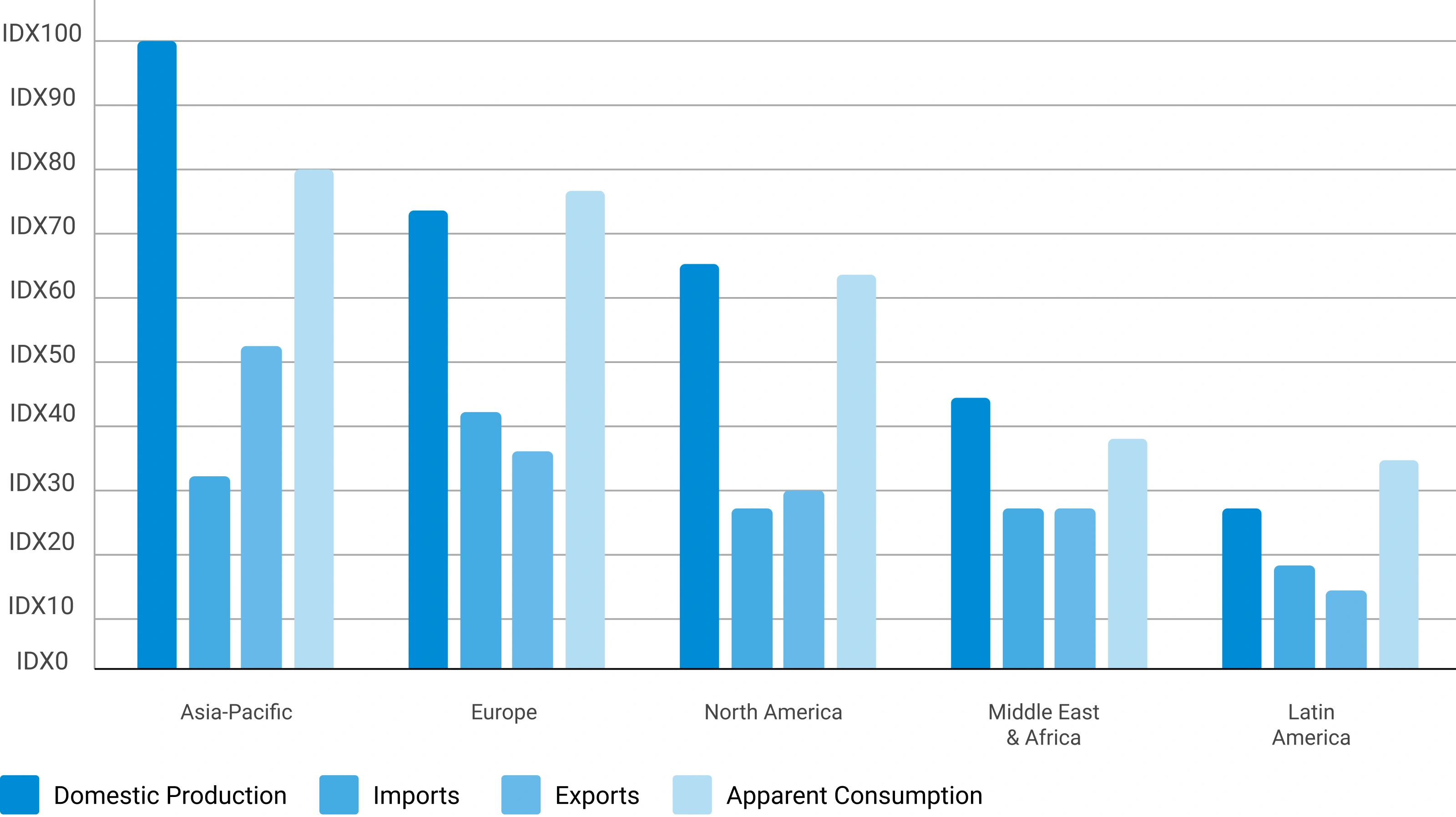
Apparent Consumption Model
Regional consumption is assessed using the standard apparent consumption formula:
Results identify net importing regions, net exporting regions, regional deficits, and surpluses — serving as an independent validation of supply and demand estimates.
Trade Flow Analysis — Net Supply Position by Region
Illustrative apparent consumption vs. domestic production across major regions — positive gap indicates net import dependency
Phase 5 — Primary Research: The Critical Validation Layer
Primary research tests and refines findings from secondary research through direct engagement with industry participants across the supply chain, demand side, and expert community. It captures intelligence that no database or published report can provide — the real-world experience of manufacturers, buyers, and specialists operating in the market.

Supply-Side Interviews
Conversations with chemical manufacturers, raw material suppliers, contract manufacturers, technology providers, and plant operators cover production trends, capacity utilization, pricing developments, technology shifts, and competitive dynamics.

Demand-Side Interviews
Engagement with OEMs, industrial consumers, procurement managers, distributors, formulators, and end-use manufacturers focuses on consumption trends, purchasing behavior, product substitution, demand outlook, and emerging applications.

Industry Expert Consultations
Additional interviews with industry consultants, independent experts, regulatory specialists, technical professionals, and research institutions provide deeper market context and validate key analytical assumptions.
Focus Areas of Primary Research:
Market Size & Forecast Validation
Revenue estimates, volume consumption, growth rates, forecast assumptions, regional demand.Supply Chain & Value Chain Assessment
Raw material sourcing, supply chain challenges, distribution networks, procurement practices.Production & Capacity Analysis
Manufacturing capacity, utilization rates, expansion projects, plant investments.Pricing & Cost Structure Analysis
Product pricing trends, feedstock costs, energy costs, margin pressures, pricing outlook.Competitive Landscape Assessment
Volume and value estimates confirmed to be fully consistent with one another before publicationInterview Volume by Market Scope
| Study Scope | Number of Interviews |
|---|---|
| Niche Market | 20 – 30 |
| Mid-Sized Market | 30 – 50 |
| Global Market | 50 – 80 |
| Highly Fragmented Market | 80 – 120 |
Interview Details:
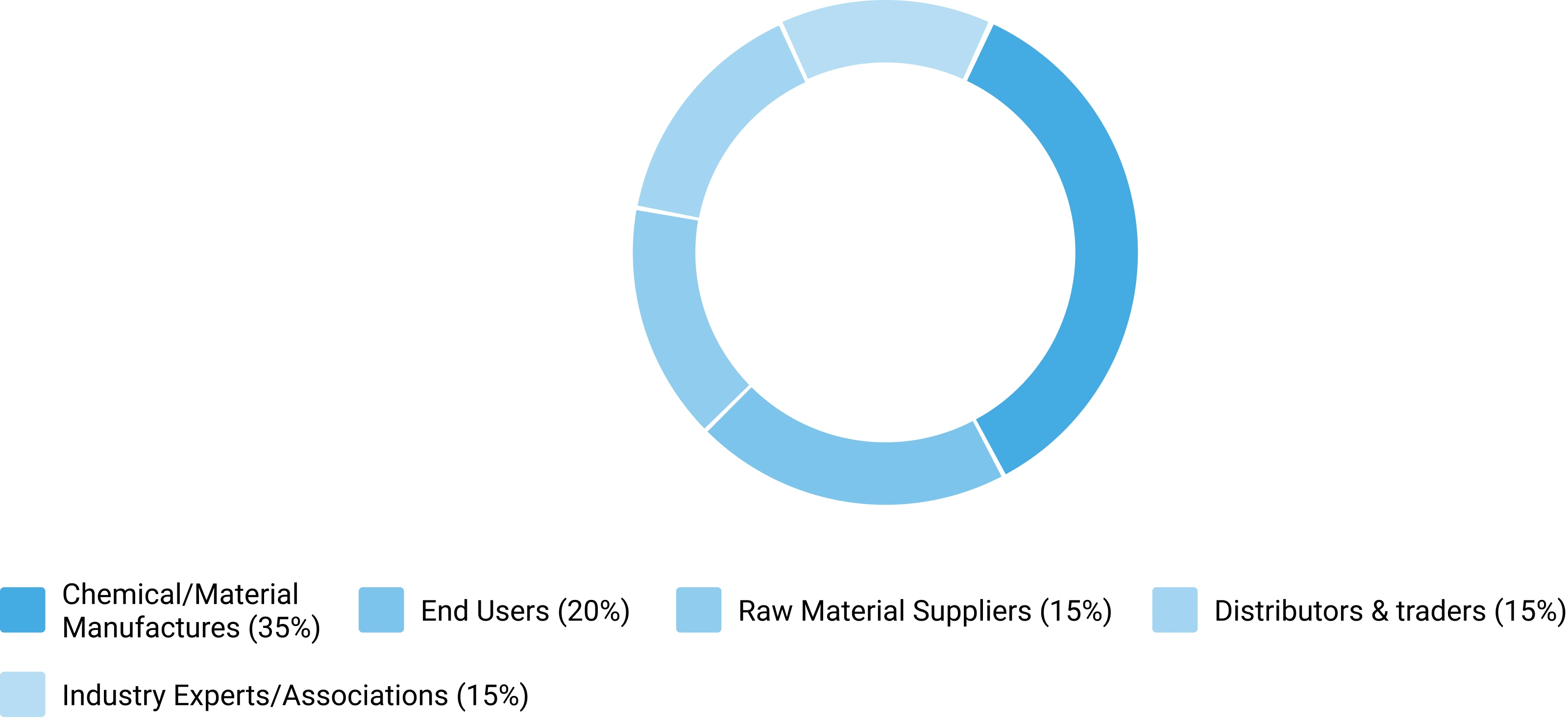
Category : Manufacturers, Suppliers, Distributors, End Users, Experts/Associations
Average Duration : 30–60 Minutes
Interview Mode : Video calls, telephonic interviews, expert consultations
Interview Format : Structured / Semi-Structured questionnaire
Focus Areas of Primary Research:
Market Size & Forecast Validation :
Revenue estimates, volume consumption, growth rates, forecast assumptions, regional demand.
Supply Chain & Value Chain Assessment :
Raw material sourcing, supply chain challenges, distribution networks, procurement practices.
Production & Capacity Analysis :
Manufacturing capacity, utilization rates, expansion projects, plant investments.
Pricing & Cost Structure Analysis :
Product pricing trends, feedstock costs, energy costs, margin pressures, pricing outlook.
Competitive Landscape Assessment :
Market share, competitor positioning, strategic initiatives, partnerships, acquisitions.
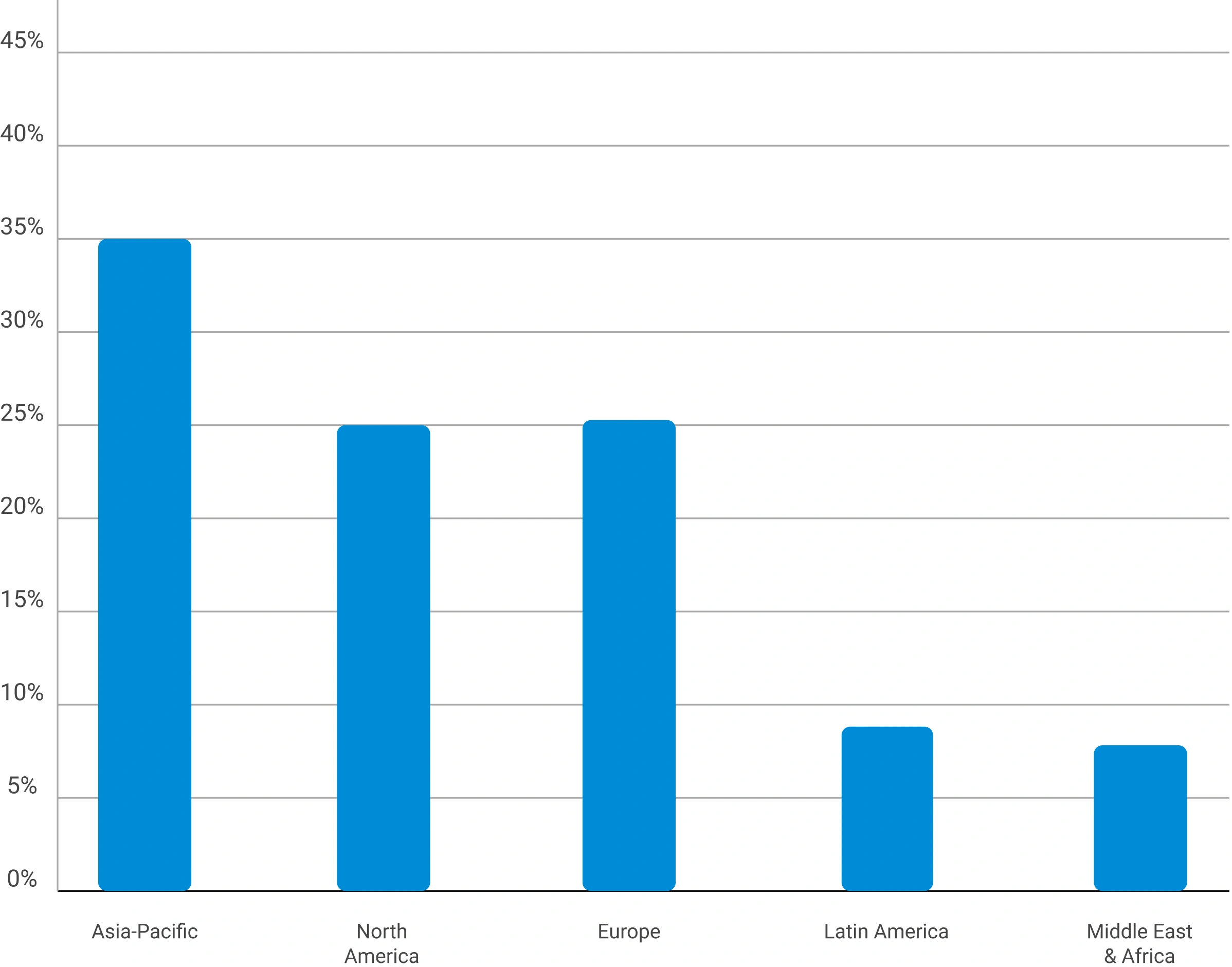
Primary Research — Stakeholder Coverage by Category
Distribution of interview respondents across stakeholder categories (% share from PPT data)
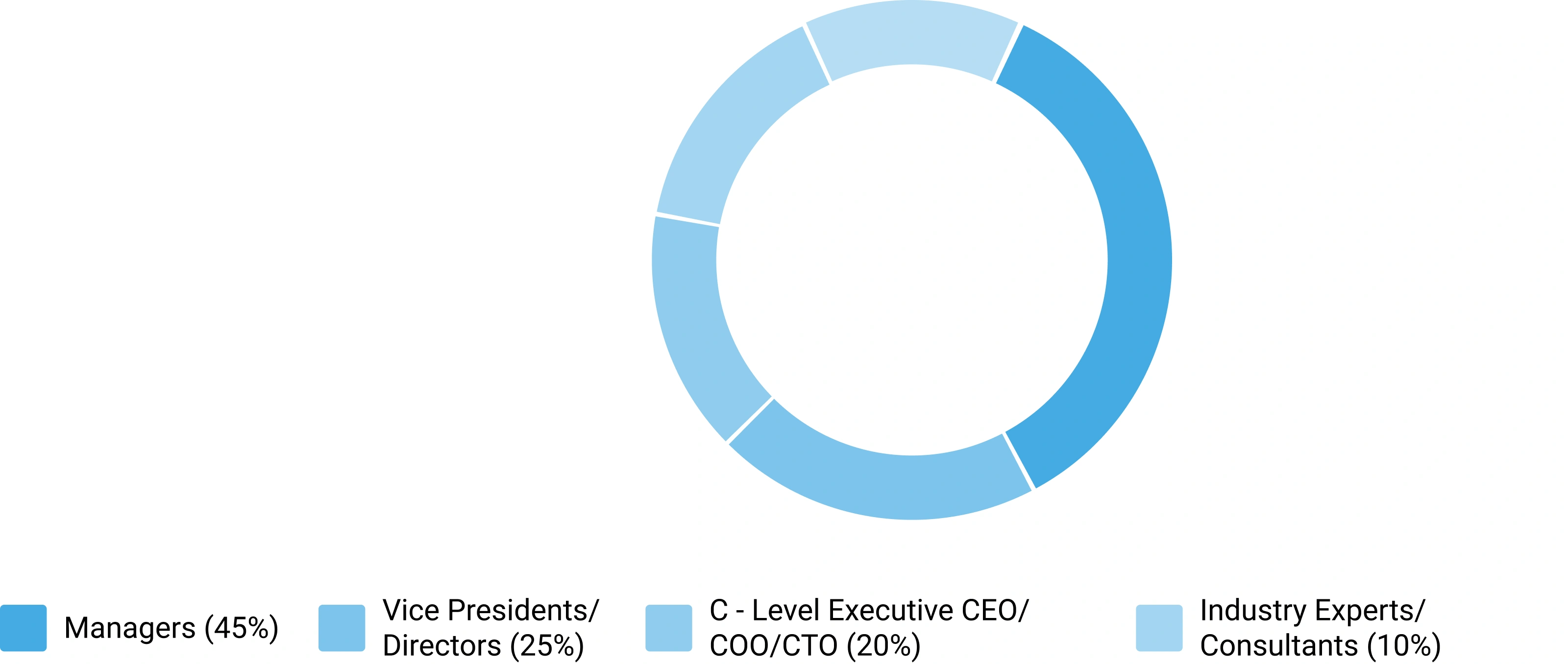
Primary Research — Respondent Designation Profile
Seniority breakdown of interview respondents (% share from PPT data)
Primary Research — Geographic Coverage of Interviews
Regional distribution of primary research engagement (% share from PPT data)
Phase 6 — Data Triangulation and Market Validation
No single methodology is relied upon in isolation. Multiple independent estimation approaches are combined and reconciled to ensure consistency, accuracy, and analytical defensibility. Any material deviations between approaches are investigated and adjusted through additional validation cycles.
The final market size is derived through weighted triangulation of all validated methodologies. Any material deviations between approaches are investigated and adjusted through additional validation cycles. The outcome represents the most realistic assessment of the market based on available evidence and expert confirmation ensuring that volume and value estimates are fully consistent with one another.
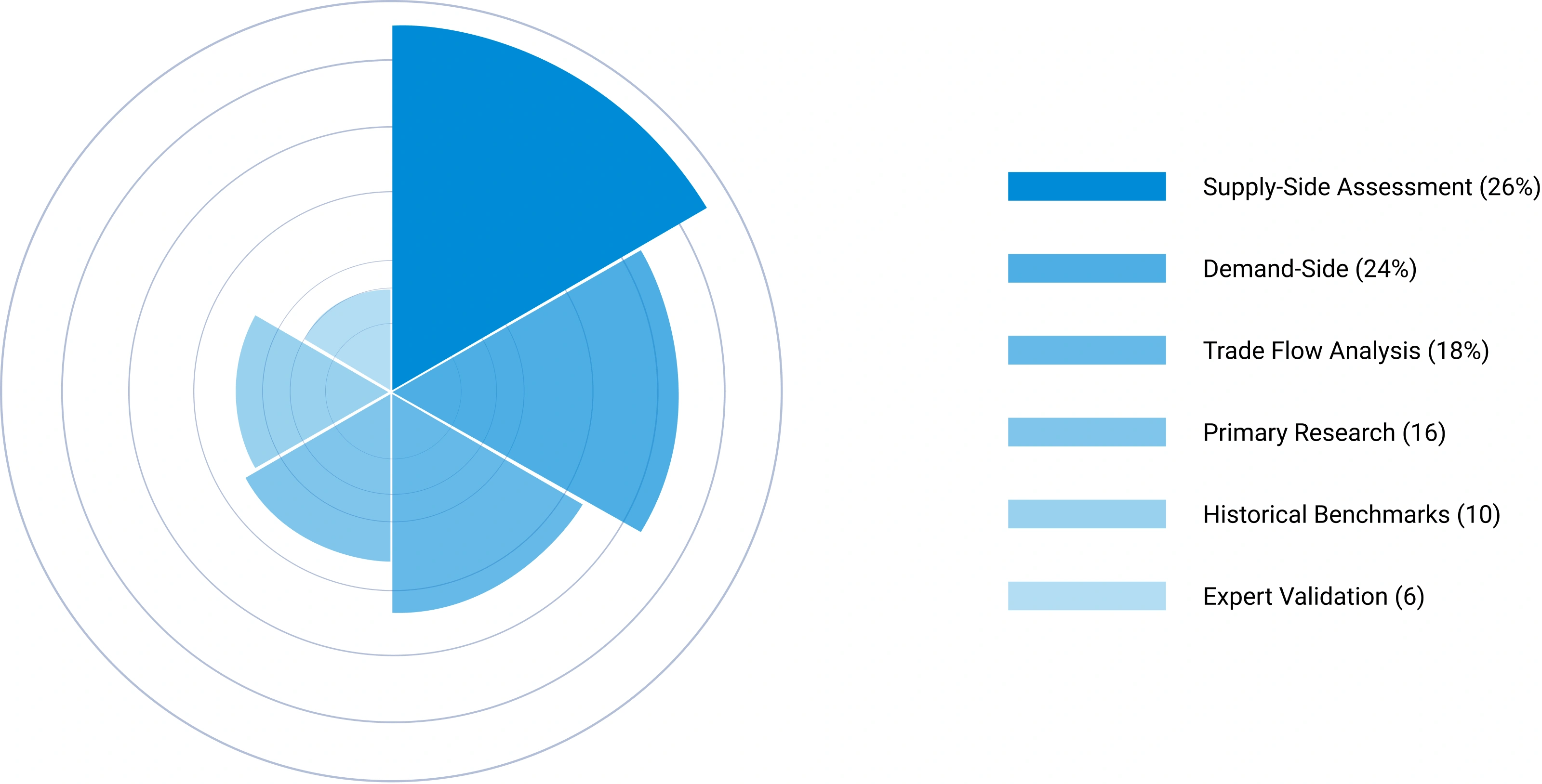
Triangulation Framework — Input Contribution Weight
Relative weight each sizing input contributes to the final reconciled market estimate
Phase 7 — Forecast Modeling: Projecting Future Market Evolution
Forecasting evaluates the future trajectory of the market using a combination of quantitative indicators and qualitative assessments across economic, industry, and regulatory dimensions. Rather than simple extrapolation, each driver is independently modeled and integrated into a composite forecast.
Macroeconomic Indicators
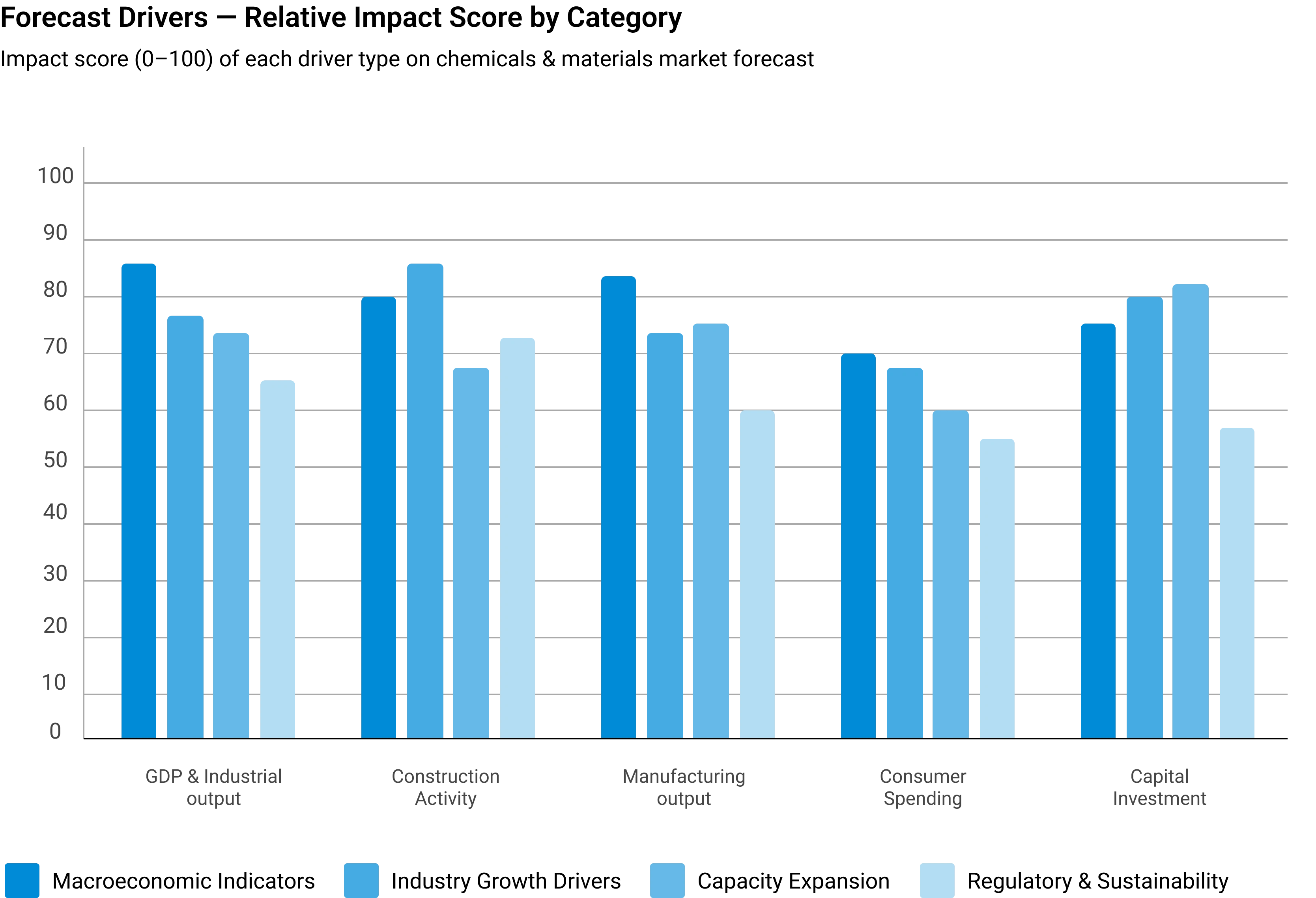
GDP growth, industrial production, manufacturing output, construction activity, consumer spending, and capital investment form the quantitative foundation of long-term demand projections. These are applied at country, regional, and global levels.
Industry Growth Drivers
Urbanization, infrastructure development, industrialization, technological innovation, sustainability initiatives, and evolving product performance requirements are assessed at regional and industry levels — capturing both structural and cyclical demand drivers.
Capacity Expansion Analysis
Announced plant expansions, new manufacturing facilities, technology upgrades, and strategic investments are evaluated to determine future supply-demand dynamics and potential market tightness or oversupply situations.
Regulatory & Sustainability
Environmental regulations, chemical safety standards, emission reduction targets, circular economy initiatives, and sustainability requirements are incorporated as they often influence product adoption rates and market growth trajectories.
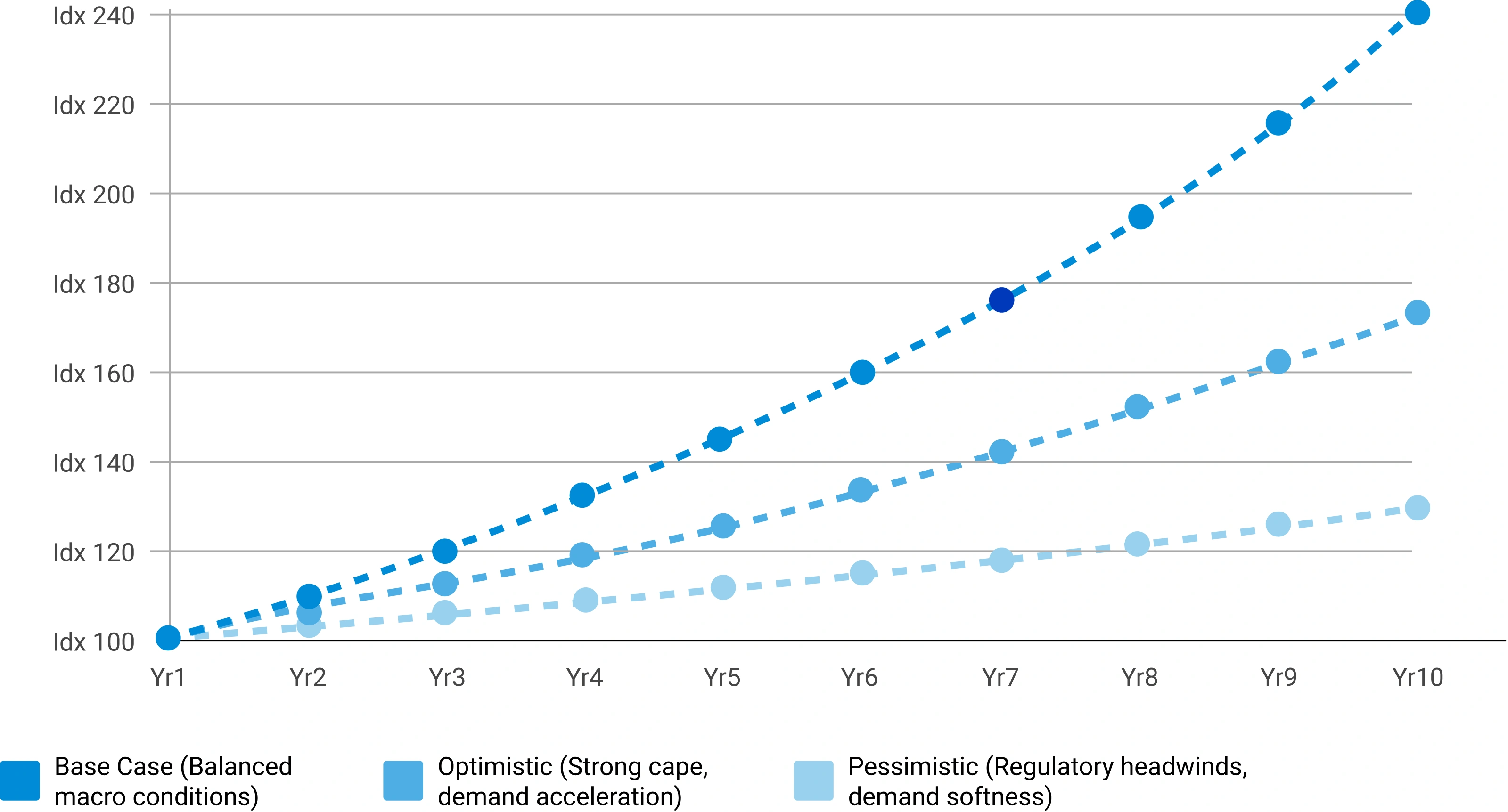
Scenario Forecast Range — Indexed Market Growth (Year 1–10)
Illustrative indexed growth trajectories across Base, Optimistic, and Pessimistic scenarios over a 10-year forecast horizon
Forecast Drivers — Relative Impact Score by Category
Impact score (0–100) of each driver type on chemicals & materials market forecast



Comments
Share your thoughts, ask a question, or provide feedback about this report.