
Bio-Based Construction Polymer Market Size and Forecast 2026 to 2035
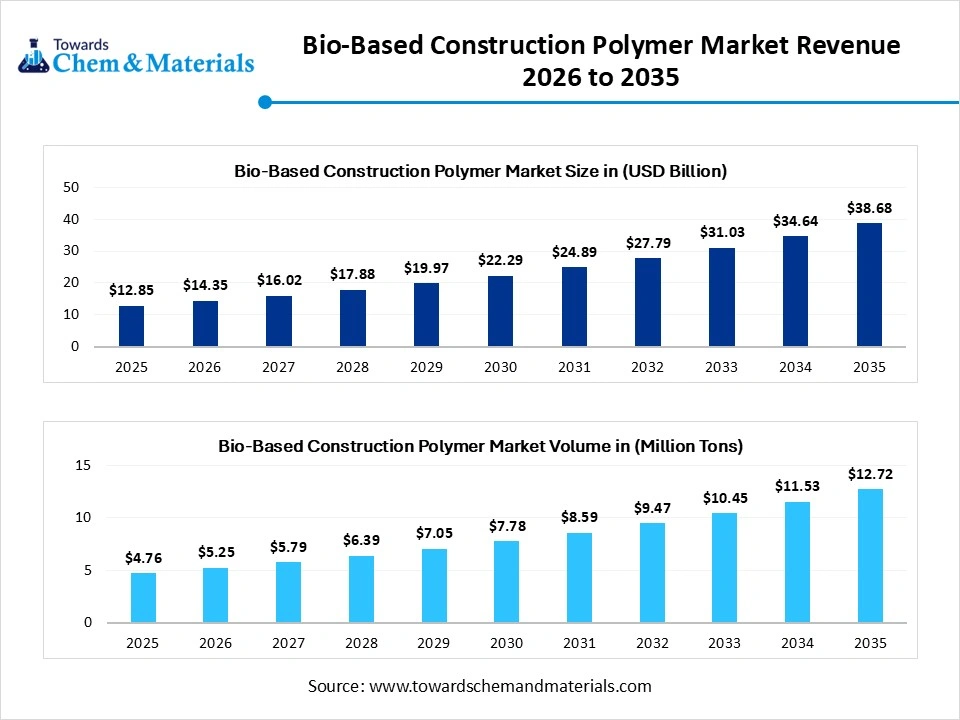
- Market Estimated Size (2025): USD 12.85 Billion | CAGR (2026–2035): 11.65%
- Market Projected Size (2035): USD 38.68 Billion
- Market Volume (2025): 4.76 Million Tons | Volume CAGR (2026–2035): 10.33%
- Market Projected Volume (2035): 12.72 Million Tons
- Market Pricing (2025):
- Average Manufacturing Price: USD 2,659/Ton
- Average Selling Price: USD 3,346/Ton
- Pricing CAGR (2026–2035): 4.5%
The global bio-based construction polymer market was valued at USD 12.85 billion in 2025, is estimated to reach USD 14.35 billion in 2026, and is projected to reach USD 38.68 billion by 2035, growing at a CAGR of 11.65% from 2026 to 2035. In terms of volume, the bio-based construction polymer market is projected to grow from 4.76 million tons in 2025 to 12.72 million tons by 2035. growing at a CAGR of 10.33% from 2026 to 2035. The specific materials that are primarily used in building that are made from more natural elements, such as crop waste, plants, and organic matter, instead of regular synthetic material, are known as the biobased construction polymer. Moreover, by playing a major role in applications like insulation, coatings, and adhesives, the biobased construction polymer has gained huge industry attention in recent years.
Key Takeaways
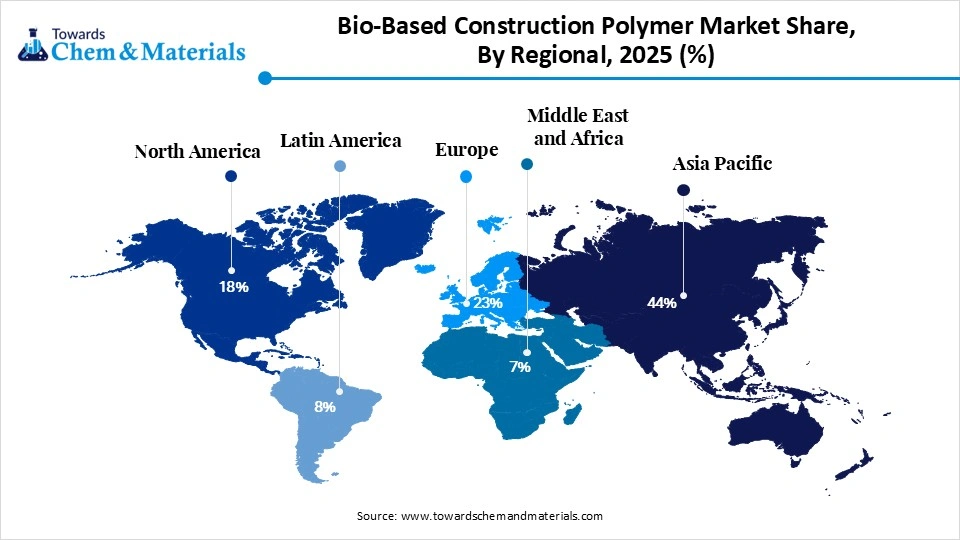
- By region, Asia Pacific dominated the market with 44% share in 2025.
- By region, the Middle East & Africa held the 7% market share in 2025 and is expected to be the fastest-growing region in the market, with a CAGR of 12.90% in the forecast period.
- By polymer type, the bio-based polyethylene (Bio-PE) segment dominated the market with 26% share in 2025.
- By polymer type, the polyhydroxyalkanoates (PHA) segment held the 8% market share in 2025 and is expected to be the fastest-growing segment in the market, with a CAGR of 13.60% in the forecast period.
- By application, the insulation materials segment dominated the market with 29% share in 2025.
- By application, the composites segment held the 15% market share in 2025 and is expected to be the fastest-growing in the market, with a CAGR of 12.80% in the forecast period.
- By end-use sector, the residential construction segment dominated the market with 38% share in 2025.
- By end-use sector, the infrastructure segment held the 21% market share in 2025 and is expected to be the fastest-growing in the market, with a CAGR of 12.40% in the forecast period.
- By form, the foams segment dominated the market with 33% share in 2025.
- By functionality, the structural materials segment dominated the market with a 30% share in 2025.
- By functionality, the waterproofing materials segment held the 18% market share in 2025 and is expected to be the fastest-growing in the market, with a CAGR of 12.70% in the forecast period.
Bio-Based Construction Polymer Market Trends:
- The trend towards more sustainable construction has contributed to the stronger cash flows for manufacturing enterprises. Manufacturers increasingly incorporate sustainability into their core marketing strategies
- The heavy shift towards the long-term value product has elevated the earning potential for producers in recent years. Individuals are choosing valued products instead of low-cost ones nowadays.
- The greater approach of region-specific material innovation is expected to result in high-yield outcomes for industrial players in the coming years. Also, the companies are producing products according to local conditions by observing humidity, high heat, and cold environments in recent years.
Seamless Shift to Compatible Bio-Based Polymers
The heavy shift is the move toward creating bio-based polymers that behave exactly like traditional plastics without requiring changes in construction processes in the current period. Also, earlier eco-friendly materials often needed special handling or had performance limits. Now, advanced development is focused on making them fully compatible with existing tools, machines, and systems.
Supply Chain Analysis of the Bio-Based Construction Polymer Market:
Distribution to Industrial Users
- To distribute bio-based construction polymers, manufacturers prioritize technical B2B partnerships and bulk fulfillment. Sales teams target industrial contractors and civil engineers directly to ensure proper material application.
- By leveraging regional warehouses and specialized chemical logistics, they provide a reliable supply chain for large-scale green infrastructure and sustainable building projects.
Chemical Synthesis and Processing
- The chemical synthesis of bio-based construction polymers transforms renewable feedstocks, like plant oils or agricultural residues, into high-performance resins through catalytic polymerization.
- Controlled processing techniques, including extrusion and precision moulding, refine these biopolymers into durable structural components. This eco-conscious manufacturing reduces carbon footprints while maintaining the rigorous mechanical integrity required for modern infrastructure.
Regulatory Compliance and Safety Monitoring
- Adherence to international building codes and environmental certifications ensures bio-based construction polymers meet stringent safety benchmarks. Continuous monitoring protocols assess fire resistance, structural load-bearing capacity, and chemical stability.
- By integrating rigorous life-cycle assessments and real-time toxicity tracking, manufacturers guarantee that sustainable materials provide long-term reliability for industrial infrastructure.
Bio-Based Construction Polymer Market Regulatory Landscape: Regulations
| Country Region | Regulatory Body | Key Regulations | Focus Areas |
| United States | Environmental Protection Agency (EPA) | 7 CFR 2902 (BioPreferred Program framework); 40 CFR §723.250 (TSCA Polymer Exemption); ASTM D6866 (Bio-content verification) | Federal procurement mandates, bio-based content verification (min. 8% for insulation), and VOC emission limits. |
| Europe | European Commission, | Regulation (EU) 2024/3110 (Revised CPR - fully applicable Jan 2026); REACH (EC 1907/2006); EN 16785 (Bio-based content) | Mandatory environmental data in Declarations of Performance (DoP), life-cycle Global Warming Potential (GWP), and Digital Product Passports. |
| China | SAMR, SAC | GB/T 39514-2020 (Terminology & Identification of bio-based materials); GB 30981.1/2-2025 (Harmful substance limits) | Standardized labeling/terminology, strict heavy metal limits (e.g., Lead ≤ 50mg/kg), and transition from fossil to bio-based coatings. |
Market Dynamics
Driver
Rising Demand for Low-Carbon Building Solutions
The growing need for sustainable and low-carbon building materials has actually driven the industry's potential in recent years. As environmental concerns increase, builders and developers are actively looking for alternatives to traditional plastics.
Restraint
Initial Cost Slowing Bio-Based Material Adoption
The higher initial cost compared to traditional petroleum-based materials is expected to hinder the industry's growth in recent years. Many builders still focus on short-term budgets, making it harder for bio-based polymers to gain quick acceptance.
Opportunity
Smart Cities Fueling Sustainable Material Demand
The growing demand for green buildings and smart cities is likely to create lucrative opportunities for manufacturers in the coming years. As urban areas expand, there is a strong need for materials that are both sustainable and efficient. Bio-based construction polymers fit perfectly into this need.
Segmental Insights
Polymer Type Insights
The Bio-based Polyethylene (Bio-PE) Segment Dominated the Bio-Based Construction Polymer Market with 26% Market Share in 2025
The bio-based polyethylene (Bio-PE) segment dominated the market with 26% share in 2025, owing to its very similar properties to traditional polyethylene, making it easy to use without changing existing systems. Builders and manufacturers prefer materials that do not require new equipment or training. It is widely used in pipes, films, and protective layers, making it highly versatile.
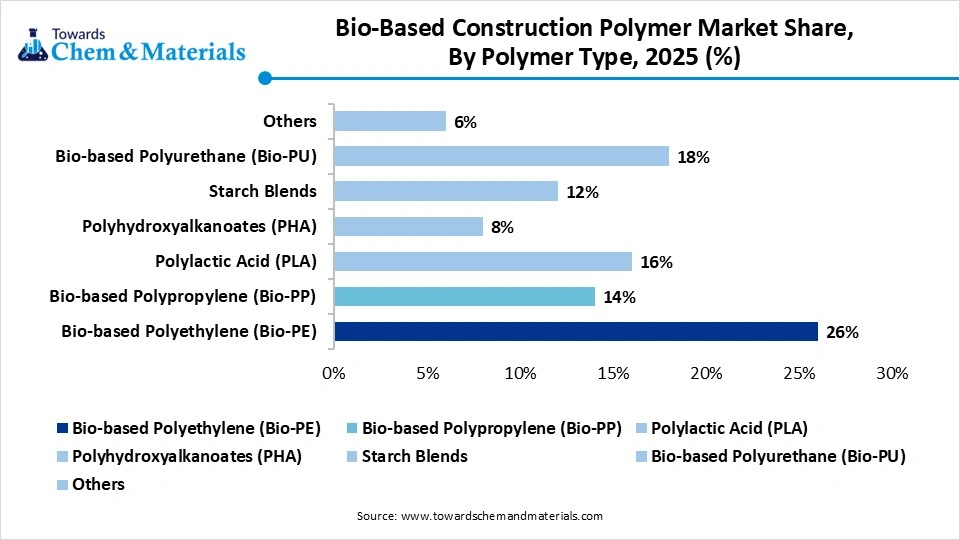
The bio-based polyurethane (Bio-PU) segment held the 18% market share in 2025, due to its flexibility and wide range of applications. It is used in foams, coatings, insulation, and sealants, making it highly valuable in construction. Its ability to provide both strength and comfort, such as in insulation and cushioning, increases its demand.
The polyhydroxyalkanoates (PHA) segment held the 8% market share in 2025 and is expected to be the fastest-growing in the market, with a CAGR of 13.60% in the forecast period, owing to their full biodegradability and produced naturally by microorganisms. As environmental regulations become stricter, demand for materials that leave no long-term waste will increase. These polymers offer a unique advantage in reducing environmental impact without compromising functionality.
Application Insights
The Insulation Materials Segment Dominated the Market with 29% Market Share in 2025.
The insulation materials segment dominated the market with 29% share in 2025 due to energy efficiency having become a major focus in construction. Buildings need to maintain temperature effectively, and bio-based polymers provide excellent thermal insulation. This helps reduce energy consumption for heating and cooling, which is both cost-effective and environmentally friendly.
Bio-Based Construction Polymer Market Share, By Application, 2025 (%)
| By Application | Revenue Share, 2025 (%) |
| Insulation Materials | 29% |
| Adhesives & Sealants | 18% |
| Coatings | 16% |
| Composites | 15% |
| Pipes & Fittings | 12% |
| Flooring Materials | 10% |
The adhesives and sealants segment held the 18% market share in 2025, owing to modern construction requiring strong bonding solutions that are also flexible and durable. Bio-based polymers offer good adhesion while reducing harmful emissions compared to traditional chemicals. This makes them safer for both workers and occupants.
The composites segment held the 15% market share in 2025 and is expected to be the fastest-growing in the market, with a CAGR of 12.80% in the forecast period, owing to their combination of strength, lightweight properties, and design flexibility. Bio-based polymer composites can replace heavier traditional materials, making construction faster and more efficient. They are especially useful in modern architectural designs that require both performance and aesthetics.
End-Use Sector Insights
The Residential Construction Segment Dominated the Bio-Based Construction Polymer Market with 38% Market Share in 2025
The residential construction segment dominated the market with 38% share in 2025, owing to the volume of housing demand worldwide. Homes require a wide range of materials, including insulation, pipes, coatings, and adhesives, where bio-based polymers are widely used. Increasing awareness among homeowners about sustainability is also driving demand.
Bio-Based Construction Polymer Market Share, By End-Use Sector, 2025 (%)
| By End-Use Sector | Revenue Share, 2025 (%) |
| Residential Construction | 38% |
| Commercial Construction | 27% |
| Infrastructure | 21% |
| Industrial Construction | 14% |
The commercial construction segment held the 27% market share in 2025, owing to the expansion of offices, malls, and commercial spaces that require high-performance materials. These projects often focus on energy efficiency, durability, and modern design, which align well with bio-based polymers. Companies are also adopting sustainability goals, pushing them to use eco-friendly materials in their buildings.
The infrastructure segment held the 21% market share in 2025 and is expected to be the fastest-growing in the market, with a CAGR of 12.40% in the forecast period, due to the large-scale government investments in roads, bridges, and public systems. These projects require massive quantities of durable and sustainable materials. Bio-based polymers offer long-term performance and reduced environmental impact, making them suitable for such applications.
Form Insights
The Foams Segment Dominated the Market with 33% Market Share in 2025
The foams segment dominated the market with 33% share in 2025 owing to they are widely used in insulation, cushioning, and structural support. Bio-based polymer foams are lightweight, energy-efficient, and easy to install, making them highly practical for construction. They help improve thermal and acoustic performance in buildings, which is increasingly important.
Bio-Based Construction Polymer Market Share, By Form, 2025 (%)
| By Form | Revenue Share, 2025 (%) |
| Foams | 33% |
| Resins | 24% |
| Sheets & Panels | 18% |
| Fibers | 11% |
| Liquids | 14% |
The resins segment held the 24% market share in 2025, owing to they are essential for coatings, adhesives, and composite materials. Bio-based resins offer strong bonding and protective properties while reducing environmental impact. They are increasingly used in modern construction where durability and appearance both matter.
The liquids segment held the 14% market share in 2025 and is expected to be the fastest-growing in the market, with a CAGR of 12.60% during the forecast period, owing to the they are easy to apply and highly adaptable. They can be used in coatings, sealants, and waterproofing systems, making them very versatile. Liquid materials allow for better coverage and can reach complex surfaces, improving efficiency in construction.
Functionality Insights
The Structural Materials Segment Dominated the Market with 30% Market Share in 2025
The structural materials segment dominated the market with a 30% share in 2025, owing to these materials, which are essential for supporting buildings and ensuring safety. Their growing use reflects increasing confidence in their performance. Builders are adopting them not only for sustainability but also for reliability. Since every construction project requires structural components, this segment naturally leads in demand.
Bio-Based Construction Polymer Market Share, By Functionality, 2025 (%)
| By Functionality | Revenue Share, 2025 (%) |
| Structural Materials | 30% |
| Insulating Materials | 26% |
| Waterproofing Materials | 18% |
| Decorative Materials | 26% |
The waterproofing materials segment held the 18% market share in 2025 and is expected to be the fastest-growing in the market, with a CAGR of 12.70% in the forecast period, owing to protection against water damage is critical in construction. Bio-based polymers offer effective sealing while being environmentally friendly. They are used in roofs, basements, and walls to prevent leakage and moisture damage.
The insulating materials segment held the 26% market share in 2025 owing to the growing focus on energy efficiency. Buildings need to reduce energy consumption, and insulation is one of the most effective ways to achieve this. Bio-based insulating polymers provide excellent thermal performance while being sustainable.
Regional Insights
How will Asia Pacific Dominate the Bio-Based Construction Polymer Market in 2025?
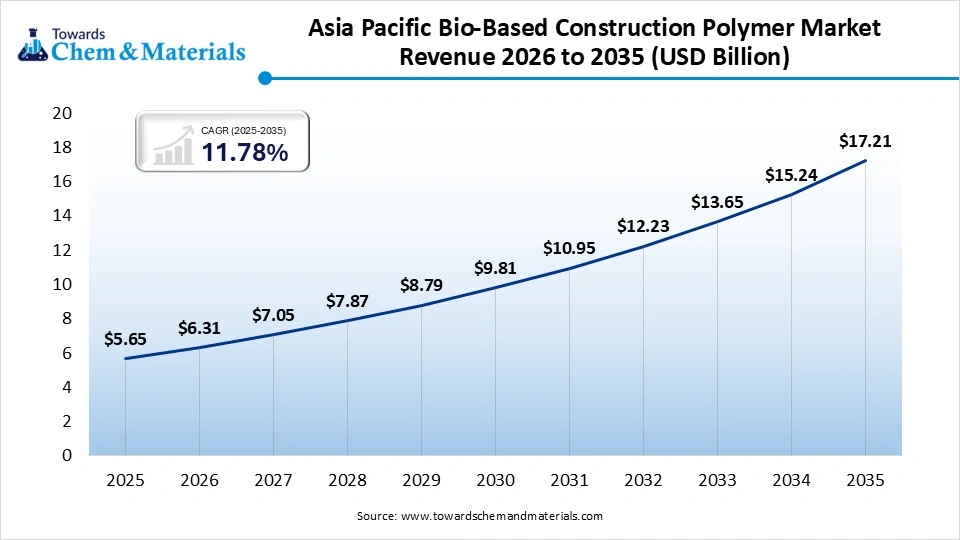
The Asia Pacific bio-based construction polymer market size was estimated at USD 5.65 billion in 2025 and is projected to reach USD 17.21 billion by 2035, growing at a CAGR of 11.78% from 2026 to 2035. Countries in this region are experiencing strong population growth, leading to increased demand for housing and infrastructure. Governments are also promoting sustainable construction practices, which support the use of bio-based polymers.
China Dominates with Strong Manufacturing Power
China maintained its dominance in the market, owing to its massive construction industry and strong manufacturing capabilities. The country is investing heavily in sustainable development and green building practices. This creates a strong demand for bio-based construction polymers. China also benefits from large-scale production facilities, which help reduce costs and increase availability.
Bio-Based Construction Polymer Market Evaluation in the Middle East & Africa
Middle East & Africa held the 7% market share in 2025 and is expected to be the fastest-growing region in the market, with a CAGR of 12.90% in the forecast period, owing to increasing infrastructure and smart city projects. Governments are investing heavily in modern construction, creating demand for advanced materials. There is also a growing focus on sustainability, especially in new urban developments. Bio-based polymers can help reduce environmental impact while meeting performance needs.
Mega Projects Boosting Bio-Based Polymer Adoption
Saudi Arabia is expected to emerge as a prominent country for the bio-based construction polymer market in the coming years, due to its large-scale development projects and vision for sustainable growth. The country is investing in modern cities and infrastructure, increasing demand for advanced construction materials. There is a strong focus on reducing environmental impact, which supports the use of bio-based polymers.
Recent Development
- In June 2025, BASF introduced the latest range of bio-based Ethyl Acrylate (EA) and called Rheovis®. Also, this newly launched product line has a very low carbon footprint and supports the global sustainability trend of building materials, as per the company's claim.
Bio-Based Construction Polymer Market Competitive Landscape Analysis
Tier 1 Companies
|
Rank
|
Company Name | Headquarters | Country | Why Relevant to This Market | Key Products / Material Portfolio |
| 1 | BASF SE | Ludwigshafen, Rhineland-Palatinate | Germany | Leading supplier of bio-based polyols, polyurethane systems, and sustainable construction materials | Bio-based polyols, polyurethane systems, construction polymers, coatings |
| 2 | Covestro AG | Leverkusen, North Rhine-Westphalia | Germany | Major innovator in bio-based polyurethane and construction material solutions | Bio-attributed polyurethanes, insulation materials, coatings, adhesives |
| 3 | Evonik Industries AG | Essen, North Rhine-Westphalia | Germany | Strong presence in specialty bio-based polymers and construction additives | Bio-based additives, specialty polymers, construction chemicals |
| 4 | DuPont de Nemours, Inc. | Wilmington, Delaware | United States | Significant provider of sustainable construction materials and bio-based polymer technologies | Bio-based resins, Sorona® polymer, adhesives, insulation materials |
| 5 | Arkema S.A. | Colombes, Île-de-France | France | Global leader in specialty materials with expanding bio-based construction polymer portfolio | Bio-based polyamides, specialty resins, coatings, adhesives |
Tier 2 Companies
| Rank | Company Name | Headquarters | Country | Why Relevant to This Market | Key Products / Material Portfolio |
| 1 | NatureWorks LLC | Plymouth, Minnesota | United States | Leading PLA producer supplying bio-based materials for construction composites and interiors | Ingeo™ PLA biopolymers, construction composites, sustainable plastics |
| 2 | Mitsubishi Gas Chemical Company, Inc. | Tokyo | Japan | Active developer of sustainable engineering polymers for construction applications | Bio-based engineering plastics, specialty resins |
| 3 | Kaneka Corporation | Tokyo | Japan | Major supplier of biodegradable and bio-based polymer technologies | Green Planet™ PHA, specialty construction polymers |
| 4 | SK Chemicals Co., Ltd. | Seongnam, Gyeonggi-do | South Korea | Leading producer of bio-based polyester materials and sustainable polymers | ECOZEN®, bio-polyesters, sustainable construction plastics |
| 5 | Teijin Limited | Tokyo | Japan | Advanced materials company supplying bio-derived engineering polymers and composites | Bio-based composites, engineering plastics, construction materials |
Tier 3 Companies
| Rank | Company Name | Headquarters | Country | Why Relevant to This Market | Key Products / Material Portfolio |
| 1 | Novamont S.p.A. | Novara, Piedmont | Italy | Pioneer in renewable and biodegradable polymers with applications in sustainable construction | Mater-Bi® biopolymers, bio-based compounds |
| 2 | Braskem S.A. | São Paulo, São Paulo | Brazil | Global leader in renewable polyethylene from sugarcane feedstocks | I'm Green™ bio-based polyethylene, construction plastics |
| 3 | Avient Corporation | Avon Lake, Ohio | United States | Developer of customized bio-based polymer compounds for construction applications | Bio-based compounds, engineered polymer solutions |
| 4 | Green Dot Bioplastics, Inc. | Cottonwood Falls, Kansas | United States | Specialized supplier of bio-based and compostable polymer formulations | Terratek® bioplastics, sustainable compounds |
| 5 | BEWI ASA | Trondheim | Norway | Expanding presence in sustainable polymer materials and insulation solutions | Bio-based insulation materials, polymer foams |
Top Vendors in the Bio-Based Construction Polymer Market & Their Offerings:
- BASF SE: This German powerhouse leads in high-performance bio-polymers, offering renewable solutions like the Ecoio brand for construction applications. BASF focuses on integrating mass-balance approaches to swap fossil feedstocks with circular raw materials. Their portfolio emphasizes reducing carbon footprints in insulation, coatings, and adhesives while maintaining rigorous industrial durability standards.
- Arkema S.A.: A French specialty materials leader, Arkema is renowned for its Rilsan polyamide 11, derived entirely from castor oil. This bio-based polymer is critical for durable construction piping and cable coatings. The company prioritizes "Advanced Bio-circular" materials, leveraging sustainable sourcing to provide high-strength, heat-resistant alternatives to traditional petroleum plastics.
- Evonik Industries AG: Evonik specializes in high-performance bio-based additives and polymers, such as its VESTAMID Terra series. These materials are engineered for construction components requiring high mechanical strength and chemical resistance. By focusing on sustainable monomers, Evonik enables the development of eco-friendly coatings and structural elements that support green building certifications.
- Mitsubishi Chemical Group
- Cargill, Incorporated
- Covestro AG
- NatureWorks LLC
- Corbion N.V.
Bio-Based Construction Polymer Market Segments List
By Polymer Type
- Bio-based Polyethylene (Bio-PE)
- HDPE
- LDPE
- Bio-based Polypropylene (Bio-PP)
- Polylactic Acid (PLA)
- Rigid Grade
- Flexible Grade
- Polyhydroxyalkanoates (PHA)
- Starch Blends
- Thermoplastic Starch
- Starch-Based Composites
- Bio-based Polyurethane (Bio-PU)
- Rigid Foam
- Flexible Foam
- Others
- Bio-based Epoxy Resins
- Cellulose Derivatives
By Application
- Insulation Materials
- Rigid Foam Panels
- Spray Foam
- Adhesives & Sealants
- Structural Adhesives
- Joint Sealants
- Coatings
- Protective Coatings
- Decorative Coatings
- Composites
- Fiber-Reinforced Composites
- Wood-Plastic Composites
- Pipes & Fittings
- Flooring Materials
By End-Use Sector
- Residential Construction
- New Construction
- Renovation
- Commercial Construction
- Offices
- Retail Spaces
- Hospitality
- Infrastructure
- Roads & Bridges
- Utilities
- Industrial Construction
By Form
- Foams
- Resins
- Sheets & Panels
- Fibers
- Liquids
By Functionality
- Structural Materials
- Insulating Materials
- Waterproofing Materials
- Decorative Materials
By Regions
- North America:
- U.S.
- Canada
- Mexico
- Rest of North America
- Latin America:
- Brazil
- Argentina
- Rest of Latin America
- Europe:
- Western Europe
- Germany
- Italy
- France
- Netherlands
- Spain
- Portugal
- Belgium
- Ireland
- UK
- Iceland
- Switzerland
- Poland
- Rest of Western Europe
- Eastern Europe
- Austria
- Russia & Belarus
- Türkiye
- Albania
- Rest of Eastern Europe
- Asia Pacific:
- China
- Taiwan
- India
- Japan
- Australia and New Zealand,
- ASEAN Countries (Singapore, Malaysia)
- South Korea
- Rest of APAC
- MEA:
- GCC Countries
- Saudi Arabia
- United Arab Emirates (UAE)
- Qatar
- Kuwait
- Oman
- Bahrain
- South Africa
- Egypt
- Rest of MEA
- MEA:
A Seven-Phase Framework
Our methodology is designed to be universally applicable across commodity chemicals, specialty chemicals, petrochemicals, construction chemicals, coatings, electronic chemicals, industrial gases, agrochemicals, water treatment chemicals, and performance materials. Each phase builds upon the last, creating a layered validation structure that minimizes estimation error and maximizes analytical confidence.
The framework ensures comprehensive market coverage, robust cross-validation, and reliable long-term forecasting — producing market estimates that withstand scrutiny from investors, regulators, and corporate strategy teams.

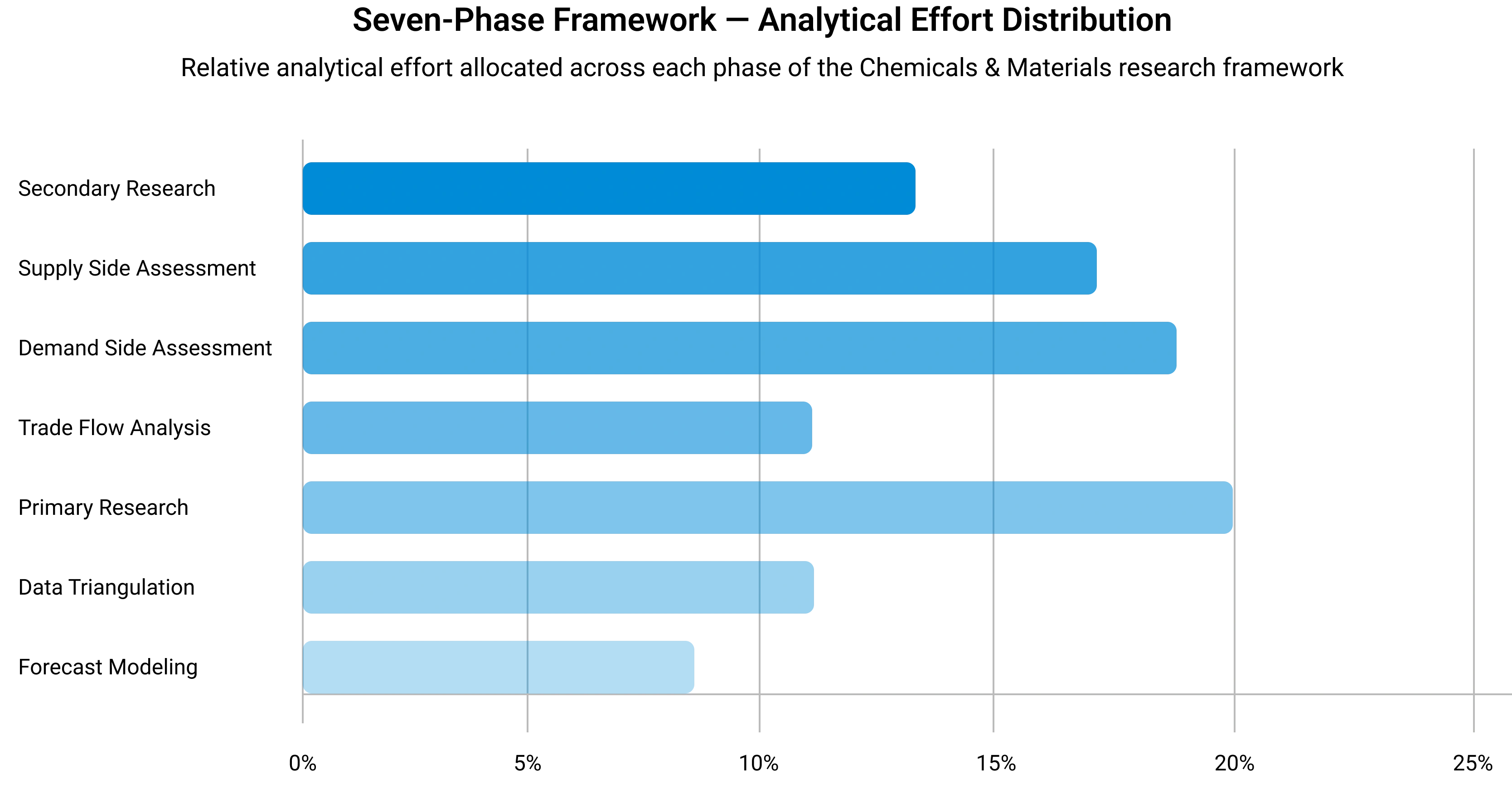
Seven-Phase Framework — Analytical Effort Distribution
Relative analytical effort allocated across each phase of the Chemicals & Materials research framework
Phase 1 - Secondary Research: Establishing the Foundation
Secondary research collects and evaluates publicly available information from authoritative sources, establishing the foundational understanding of market structure, value chain dynamics, competitive landscape, and end-use demand patterns. Every source is evaluated for credibility, recency, geographic relevance, and methodological soundness before inclusion.
Industry Associations
Sources include ACC, CEFIC, ICCA, JCIA, CPCIF, and SOCMA providing production volumes, consumption trends, capacity developments, and sustainability initiatives.
Company Disclosures
Annual reports, investor presentations, earnings transcripts, and regulatory filings reveal product portfolios, manufacturing footprints, capacity expansions, and revenue segmentation.
Government Databases
National statistical offices, customs authorities, environmental agencies, and industrial production databases provide verified statistics on output, trade flows, and regulatory compliance.
Trade Databases
UN Comtrade, ITC, Eurostat, and national customs authorities enable assessment of global product movement, import dependency, and export competitiveness across regions.
Our Secondary Research Sources
- Ministry of Chemicals and Fertilizers
- European Chemicals Agency
- United States Department of Energy
- Ministry of Industry and Information Technology
- Ministry of Economy Trade and Industry
- Ministry of Trade Industry and Energy
- National Institute of Standards and Technology
- Council of Scientific and Industrial Research
- Fraunhofer Society
- National Institute for Materials Science
Phase 2 — Supply-Side Assessment: Mapping Production Capabilities
Production Capacity Analysis
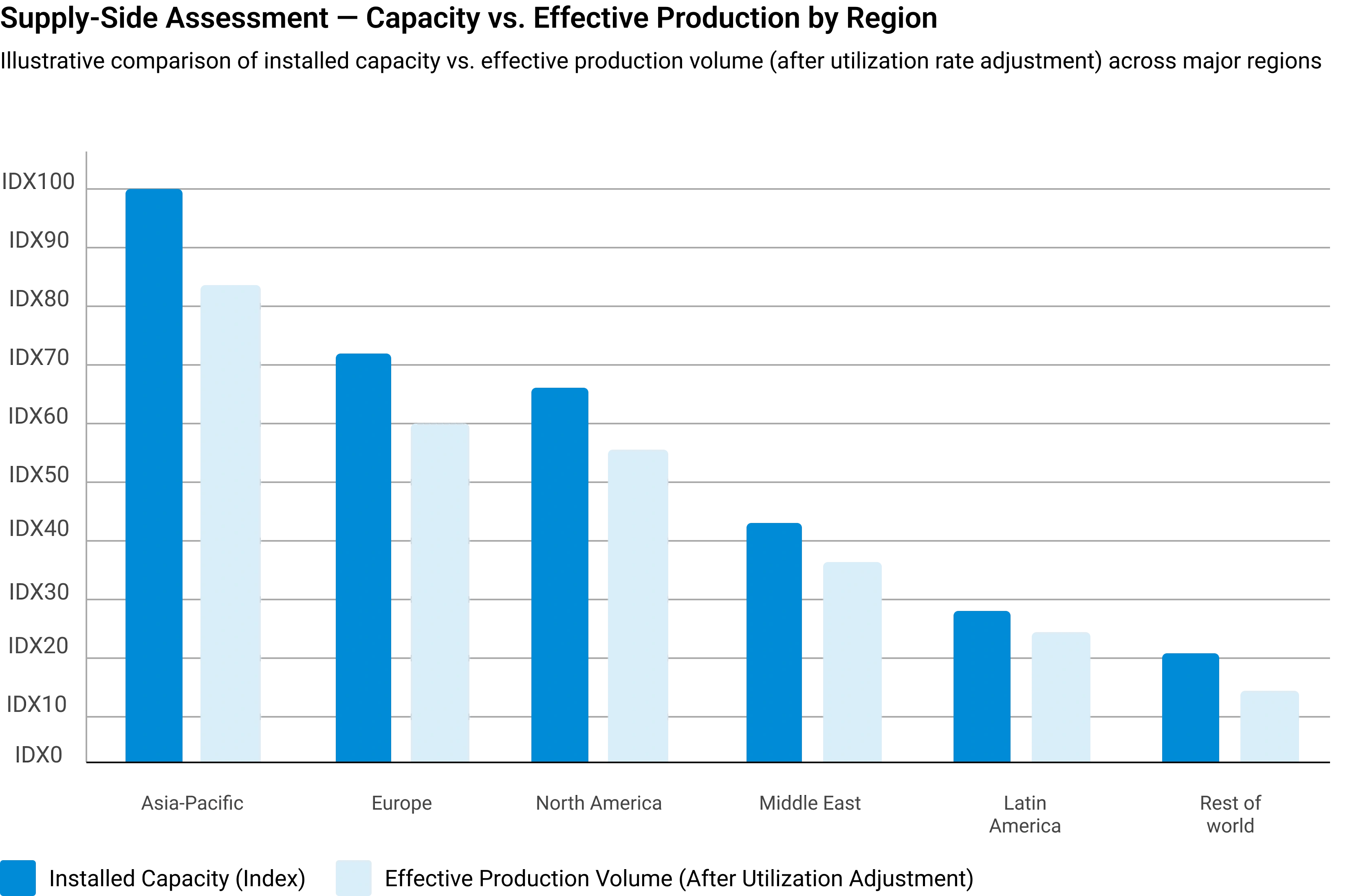
All major manufacturers are assessed for existing installed capacity, planned additions, expansions, new plant announcements, and technology adoption — mapped at global, regional, and country levels.
Capacity Utilization Adjustment
Installed capacity is adjusted using utilization rates based on demand conditions, feedstock availability, plant operating rates, maintenance schedules, and regulatory restrictions.
Manufacturer Revenue Analysis
Product-specific revenues, segment-level performance, regional distribution, average selling prices, and margin trends are evaluated to establish market value estimates.
Supply-Side Assessment — Capacity vs. Effective Production by Region
Illustrative comparison of installed capacity vs. effective production volume (after utilization rate adjustment) across major regions
Phase 3 — Demand-Side Assessment: Quantifying Chemical Consumption
Demand-side analysis quantifies chemical consumption across industries, applications, and geographies — identifying where and how chemicals are consumed throughout the value chain with precision.
End-Use Industry Analysis
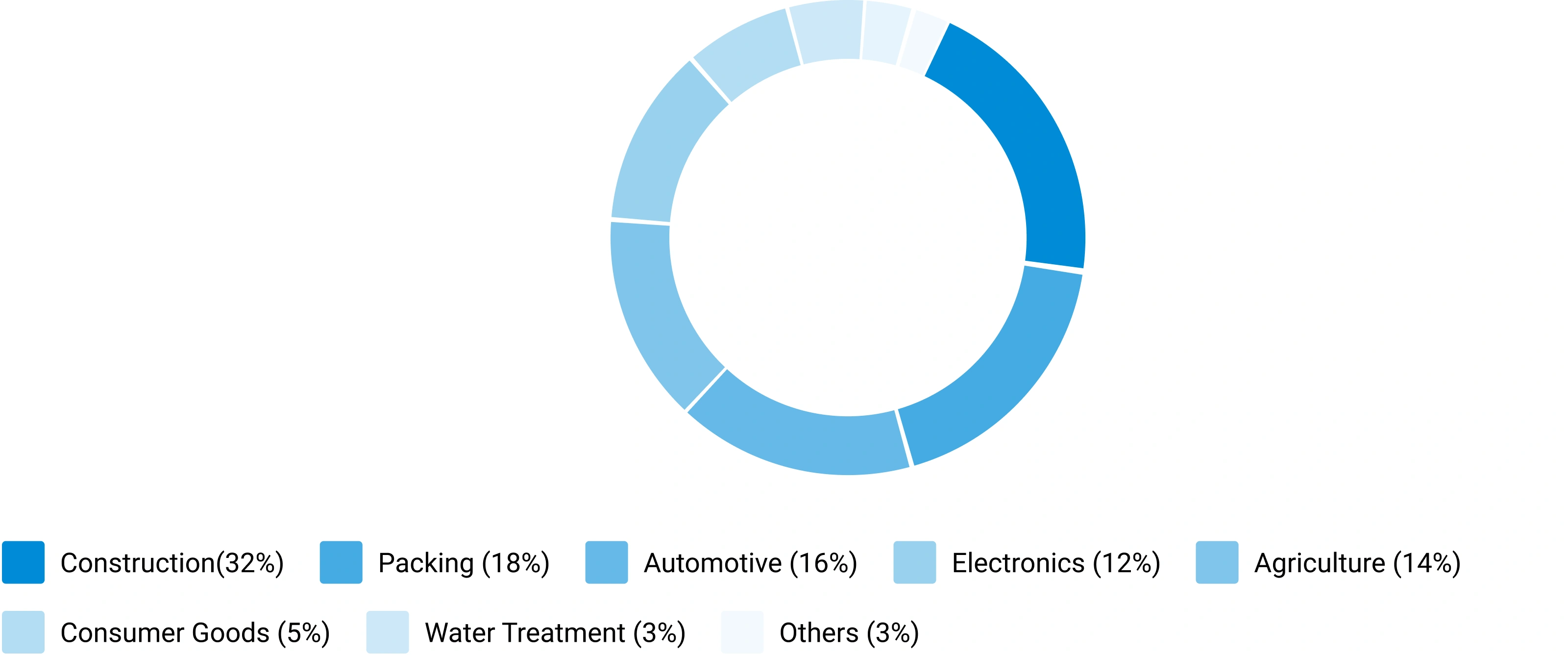
Chemical demand is evaluated across automotive, construction, packaging, electronics, agriculture, healthcare, consumer goods, industrial manufacturing, energy and utilities, and water treatment. Industry output, production trends, and consumption intensity are analyzed to determine demand patterns.
Consumption Modeling
Demand is estimated using measurable indicators: kilograms per vehicle, kilograms per square meter of construction, dosage per cubic meter of water treated, kilograms per hectare of agricultural land, and kilograms per ton of manufactured products. Consumption factors are validated through industry publications and primary interviews.
Application Analysis
The market is segmented by application area to understand product performance requirements, formulation trends, technology adoption, customer preferences, and regulatory requirements improving demand accuracy and segmentation granularity.
Demand-Side Assessment — End-Use Industry Demand Distribution
Illustrative distribution of chemical & materials demand across key end-use industries
Phase 4 - Trade Flow Analysis: Balancing Regional Supply and Demand
Trade flow analysis reconciles regional supply and demand estimates through import and export data, identifying net supply positions, regional dependencies, and market imbalances. It serves as an independent validation layer that tests the consistency of supply-side and demand-side estimates.
Import Analysis
Import data is evaluated to determine volumes, source countries, product dependency, regional supply gaps, and pricing trends — identifying markets that rely heavily on external supply and where domestic production is insufficient to meet demand.
Export Analysis
Export assessments reveal production surplus, export competitiveness, regional manufacturing strength, and global market participation. Export patterns also help validate domestic production estimates and identify net exporting regions.
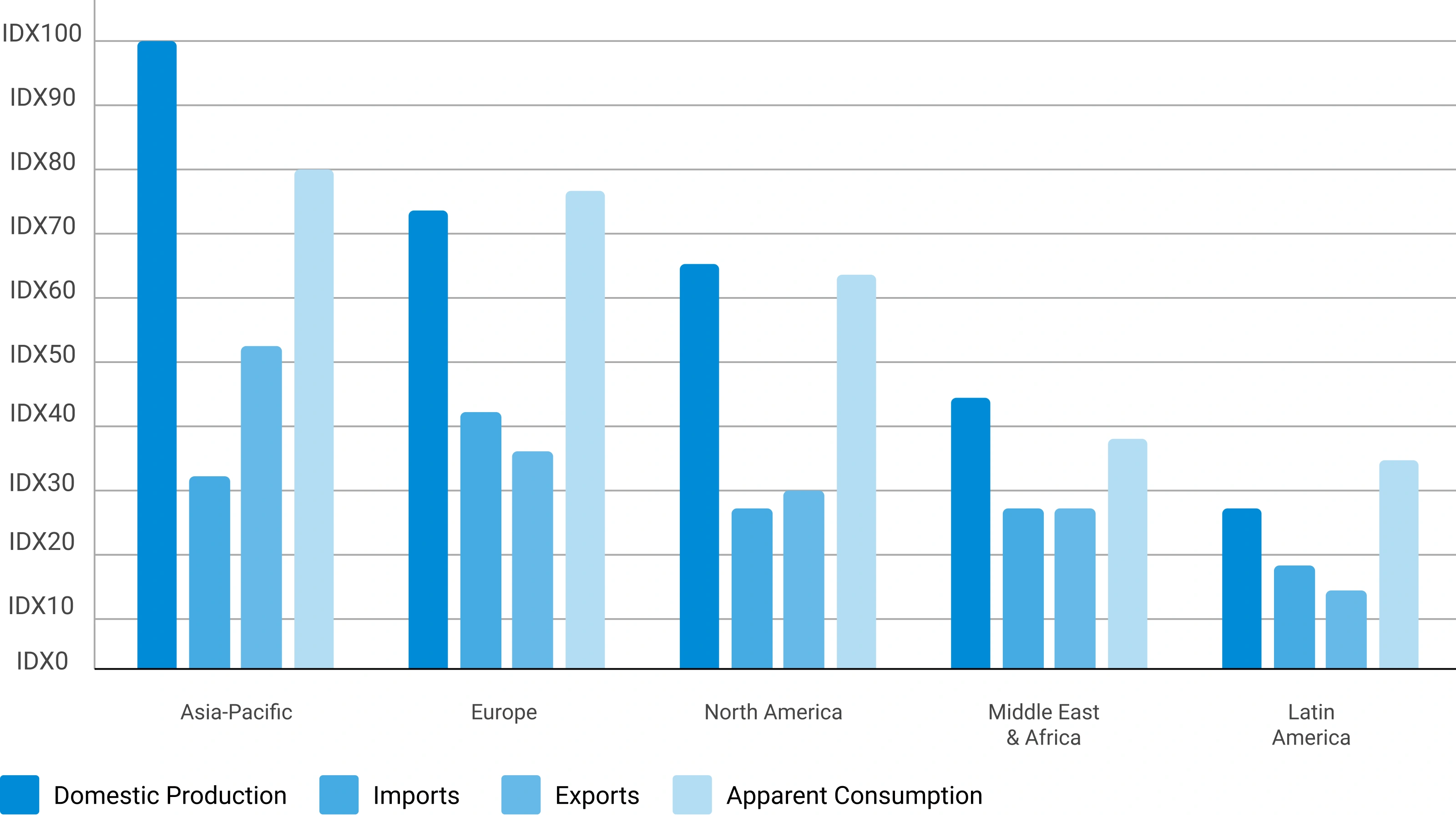
Apparent Consumption Model
Regional consumption is assessed using the standard apparent consumption formula:
Results identify net importing regions, net exporting regions, regional deficits, and surpluses — serving as an independent validation of supply and demand estimates.
Trade Flow Analysis — Net Supply Position by Region
Illustrative apparent consumption vs. domestic production across major regions — positive gap indicates net import dependency
Phase 5 — Primary Research: The Critical Validation Layer
Primary research tests and refines findings from secondary research through direct engagement with industry participants across the supply chain, demand side, and expert community. It captures intelligence that no database or published report can provide — the real-world experience of manufacturers, buyers, and specialists operating in the market.

Supply-Side Interviews
Conversations with chemical manufacturers, raw material suppliers, contract manufacturers, technology providers, and plant operators cover production trends, capacity utilization, pricing developments, technology shifts, and competitive dynamics.

Demand-Side Interviews
Engagement with OEMs, industrial consumers, procurement managers, distributors, formulators, and end-use manufacturers focuses on consumption trends, purchasing behavior, product substitution, demand outlook, and emerging applications.

Industry Expert Consultations
Additional interviews with industry consultants, independent experts, regulatory specialists, technical professionals, and research institutions provide deeper market context and validate key analytical assumptions.
Focus Areas of Primary Research:
Market Size & Forecast Validation
Revenue estimates, volume consumption, growth rates, forecast assumptions, regional demand.Supply Chain & Value Chain Assessment
Raw material sourcing, supply chain challenges, distribution networks, procurement practices.Production & Capacity Analysis
Manufacturing capacity, utilization rates, expansion projects, plant investments.Pricing & Cost Structure Analysis
Product pricing trends, feedstock costs, energy costs, margin pressures, pricing outlook.Competitive Landscape Assessment
Volume and value estimates confirmed to be fully consistent with one another before publicationInterview Volume by Market Scope
| Study Scope | Number of Interviews |
|---|---|
| Niche Market | 20 – 30 |
| Mid-Sized Market | 30 – 50 |
| Global Market | 50 – 80 |
| Highly Fragmented Market | 80 – 120 |
Interview Details:
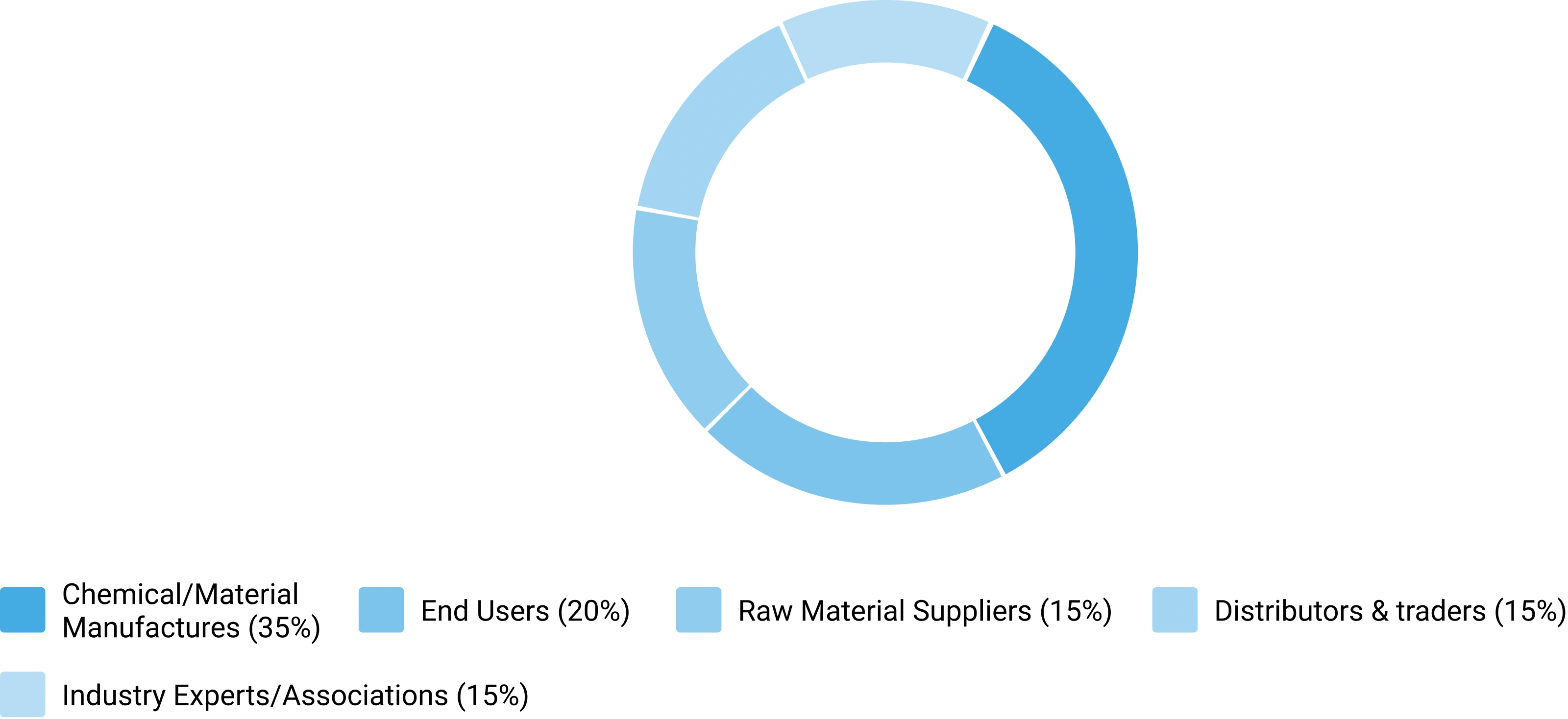
Category : Manufacturers, Suppliers, Distributors, End Users, Experts/Associations
Average Duration : 30–60 Minutes
Interview Mode : Video calls, telephonic interviews, expert consultations
Interview Format : Structured / Semi-Structured questionnaire
Focus Areas of Primary Research:
Market Size & Forecast Validation :
Revenue estimates, volume consumption, growth rates, forecast assumptions, regional demand.
Supply Chain & Value Chain Assessment :
Raw material sourcing, supply chain challenges, distribution networks, procurement practices.
Production & Capacity Analysis :
Manufacturing capacity, utilization rates, expansion projects, plant investments.
Pricing & Cost Structure Analysis :
Product pricing trends, feedstock costs, energy costs, margin pressures, pricing outlook.
Competitive Landscape Assessment :
Market share, competitor positioning, strategic initiatives, partnerships, acquisitions.
Primary Research — Stakeholder Coverage by Category
Distribution of interview respondents across stakeholder categories (% share from PPT data)
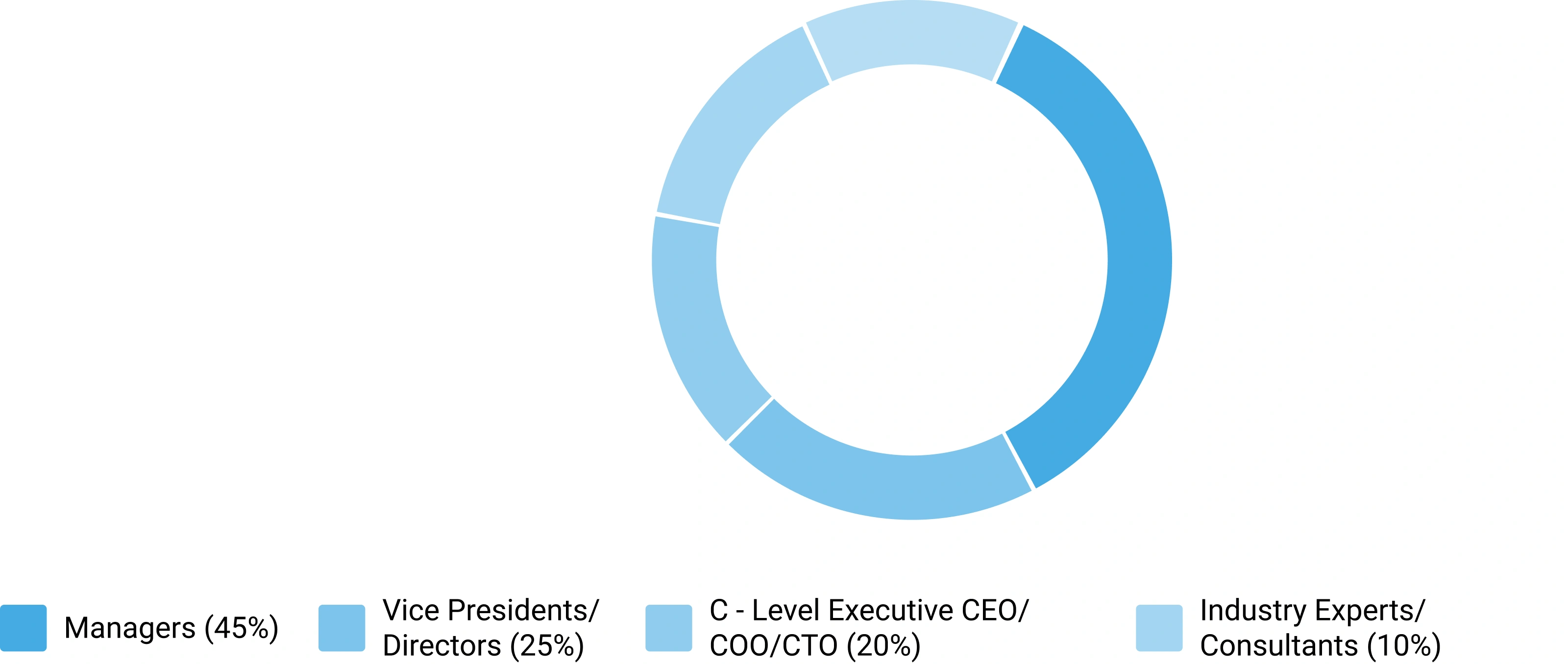
Primary Research — Respondent Designation Profile
Seniority breakdown of interview respondents (% share from PPT data)
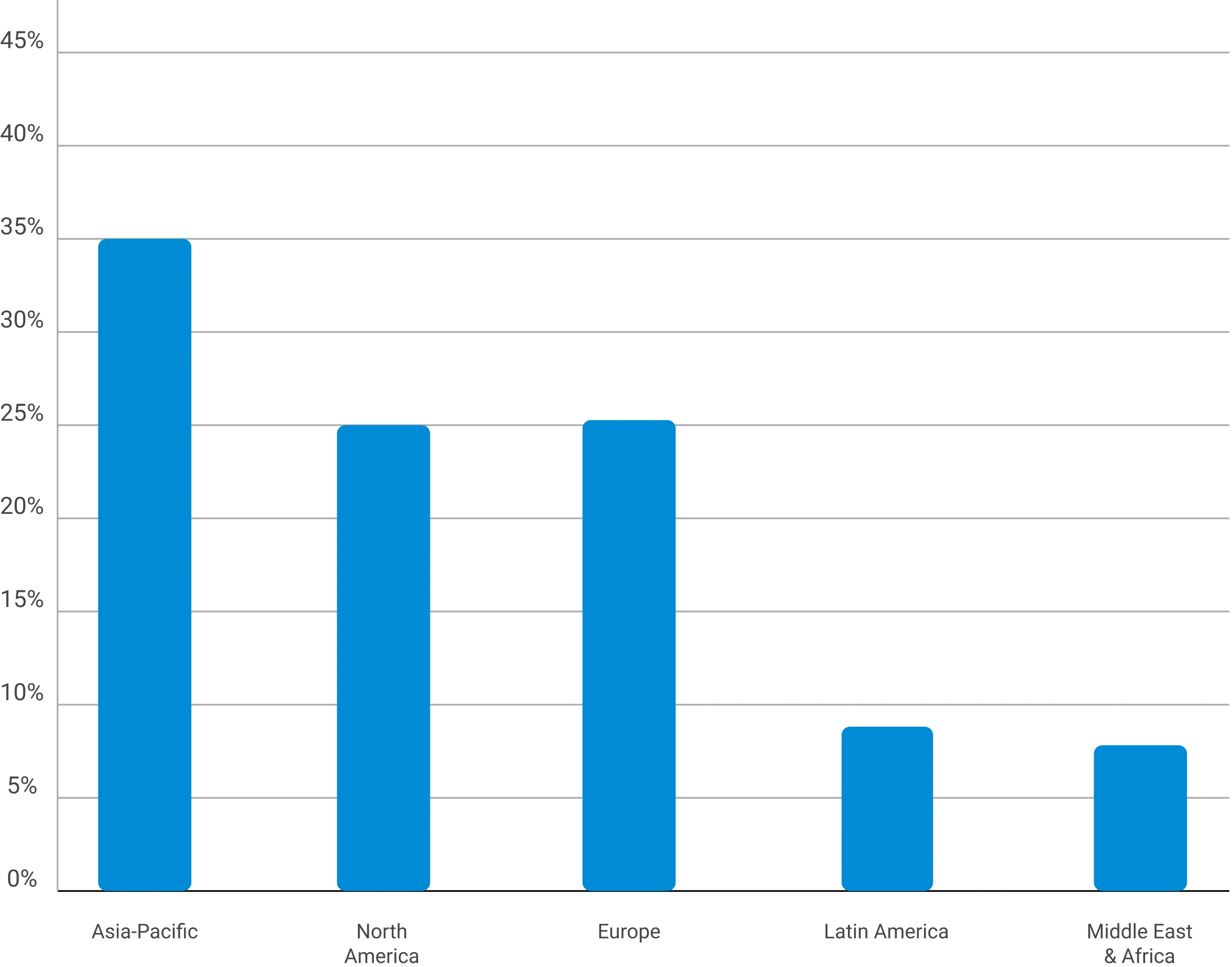
Primary Research — Geographic Coverage of Interviews
Regional distribution of primary research engagement (% share from PPT data)
Phase 6 — Data Triangulation and Market Validation
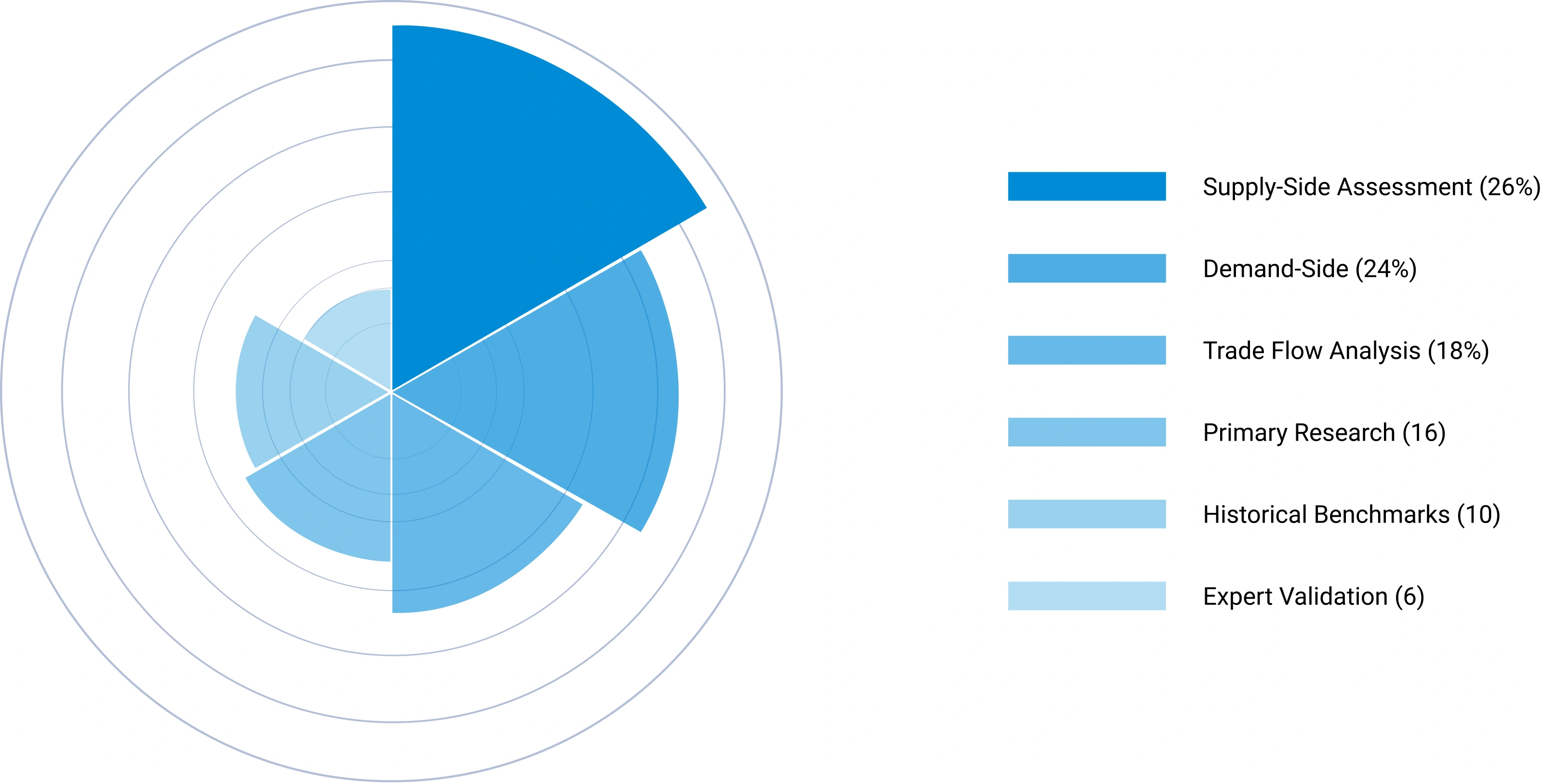
No single methodology is relied upon in isolation. Multiple independent estimation approaches are combined and reconciled to ensure consistency, accuracy, and analytical defensibility. Any material deviations between approaches are investigated and adjusted through additional validation cycles.
The final market size is derived through weighted triangulation of all validated methodologies. Any material deviations between approaches are investigated and adjusted through additional validation cycles. The outcome represents the most realistic assessment of the market based on available evidence and expert confirmation ensuring that volume and value estimates are fully consistent with one another.
Triangulation Framework — Input Contribution Weight
Relative weight each sizing input contributes to the final reconciled market estimate
Phase 7 — Forecast Modeling: Projecting Future Market Evolution
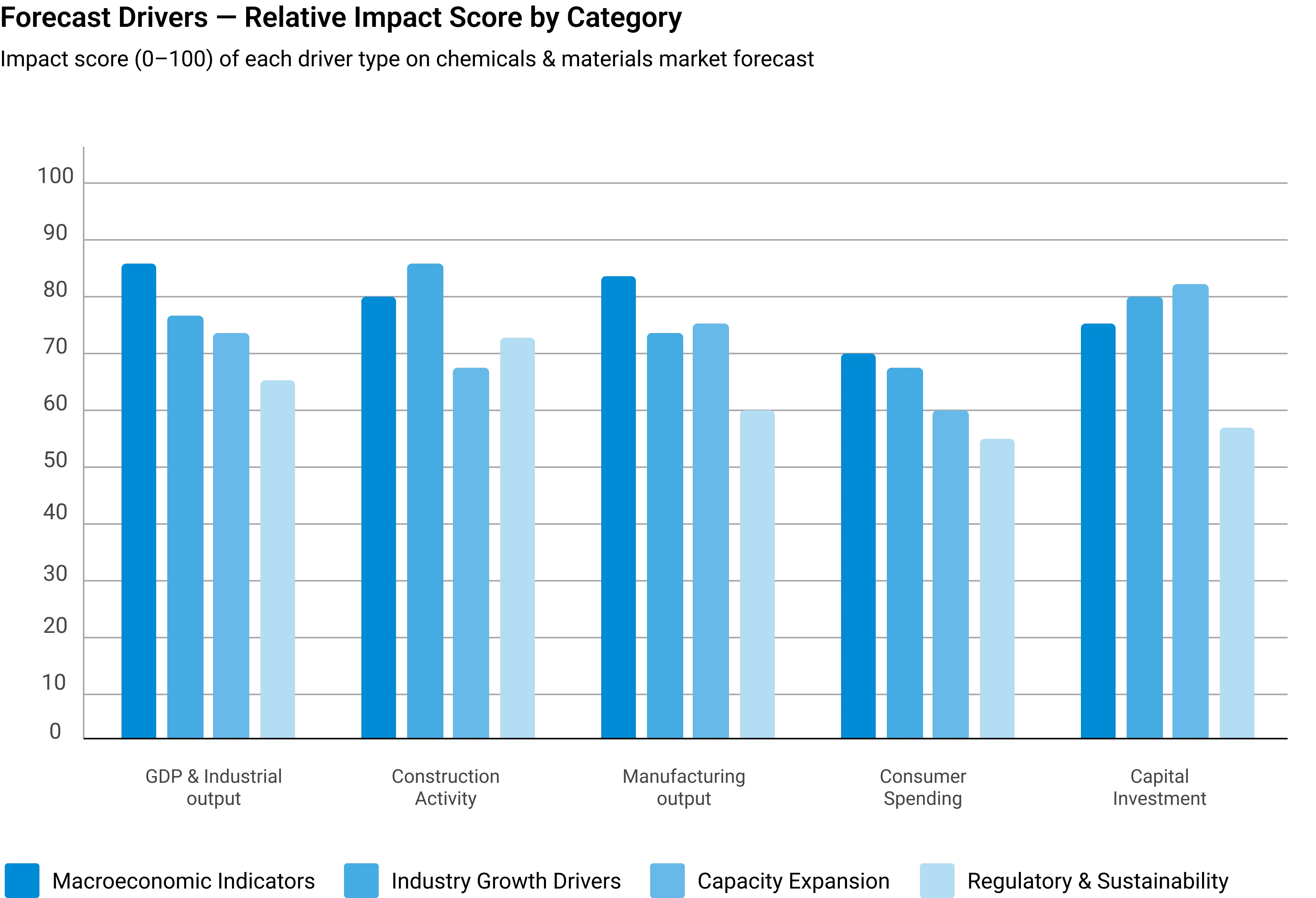
Forecasting evaluates the future trajectory of the market using a combination of quantitative indicators and qualitative assessments across economic, industry, and regulatory dimensions. Rather than simple extrapolation, each driver is independently modeled and integrated into a composite forecast.
Macroeconomic Indicators
GDP growth, industrial production, manufacturing output, construction activity, consumer spending, and capital investment form the quantitative foundation of long-term demand projections. These are applied at country, regional, and global levels.
Industry Growth Drivers
Urbanization, infrastructure development, industrialization, technological innovation, sustainability initiatives, and evolving product performance requirements are assessed at regional and industry levels — capturing both structural and cyclical demand drivers.
Capacity Expansion Analysis
Announced plant expansions, new manufacturing facilities, technology upgrades, and strategic investments are evaluated to determine future supply-demand dynamics and potential market tightness or oversupply situations.
Regulatory & Sustainability
Environmental regulations, chemical safety standards, emission reduction targets, circular economy initiatives, and sustainability requirements are incorporated as they often influence product adoption rates and market growth trajectories.
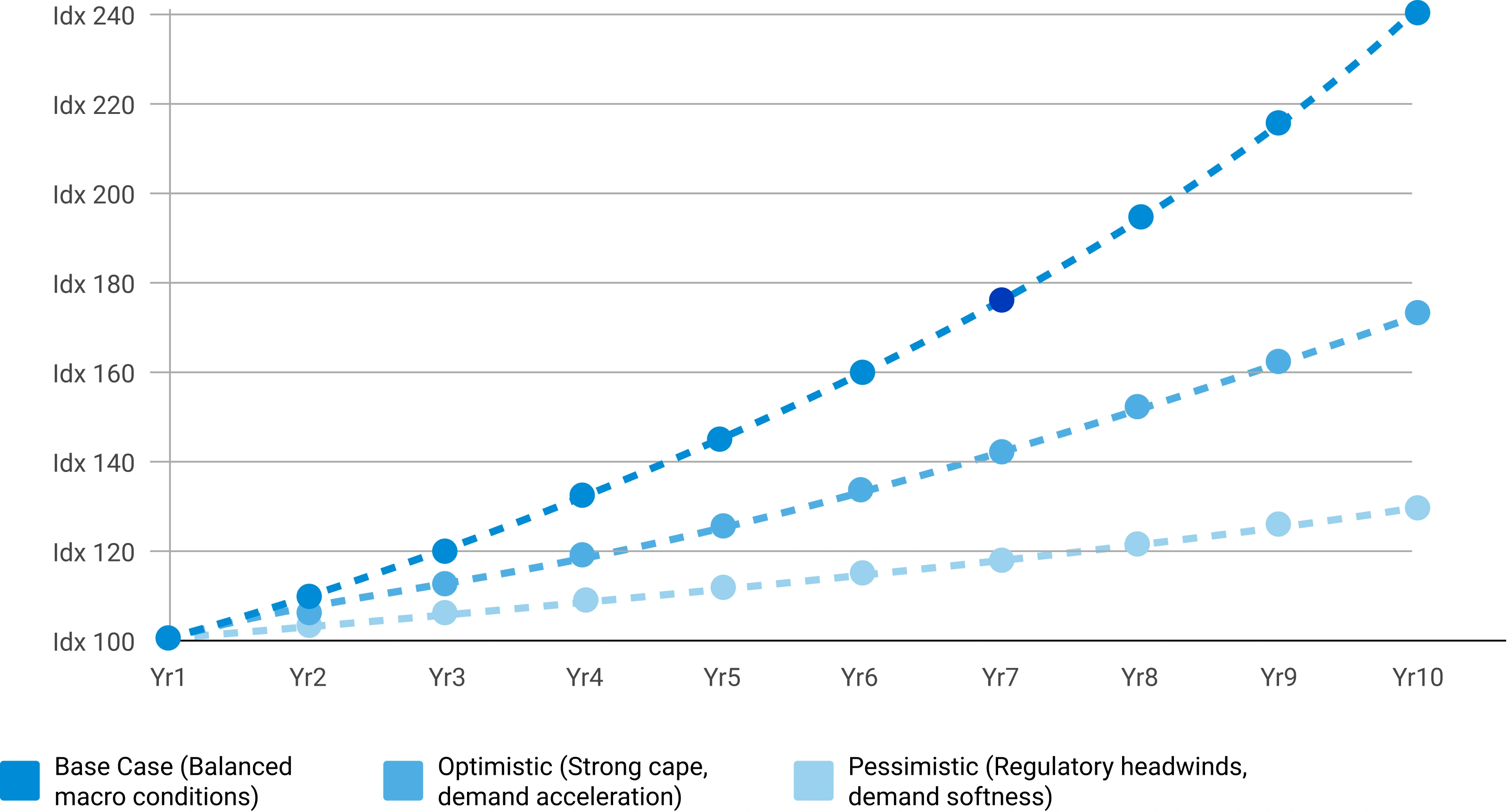
Scenario Forecast Range — Indexed Market Growth (Year 1–10)
Illustrative indexed growth trajectories across Base, Optimistic, and Pessimistic scenarios over a 10-year forecast horizon
Forecast Drivers — Relative Impact Score by Category
Impact score (0–100) of each driver type on chemicals & materials market forecast



Comments
Share your thoughts, ask a question, or provide feedback about this report.