
What are the barium titanate market size and share?
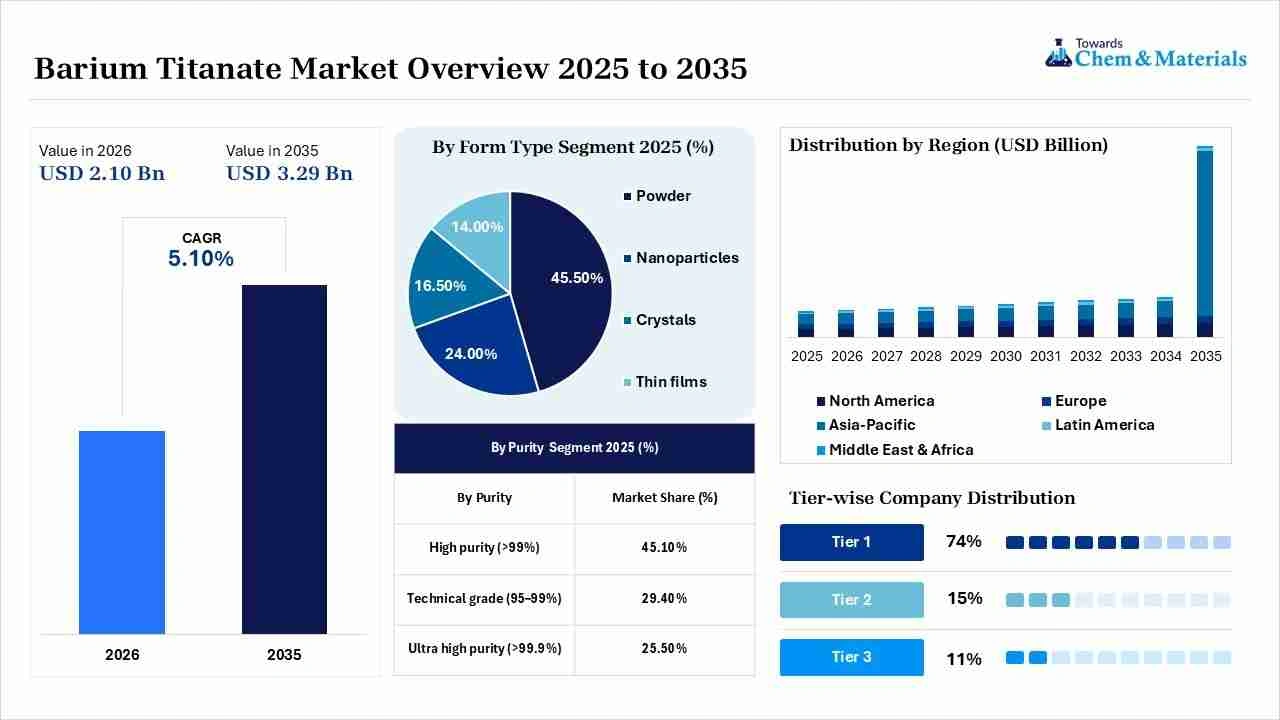
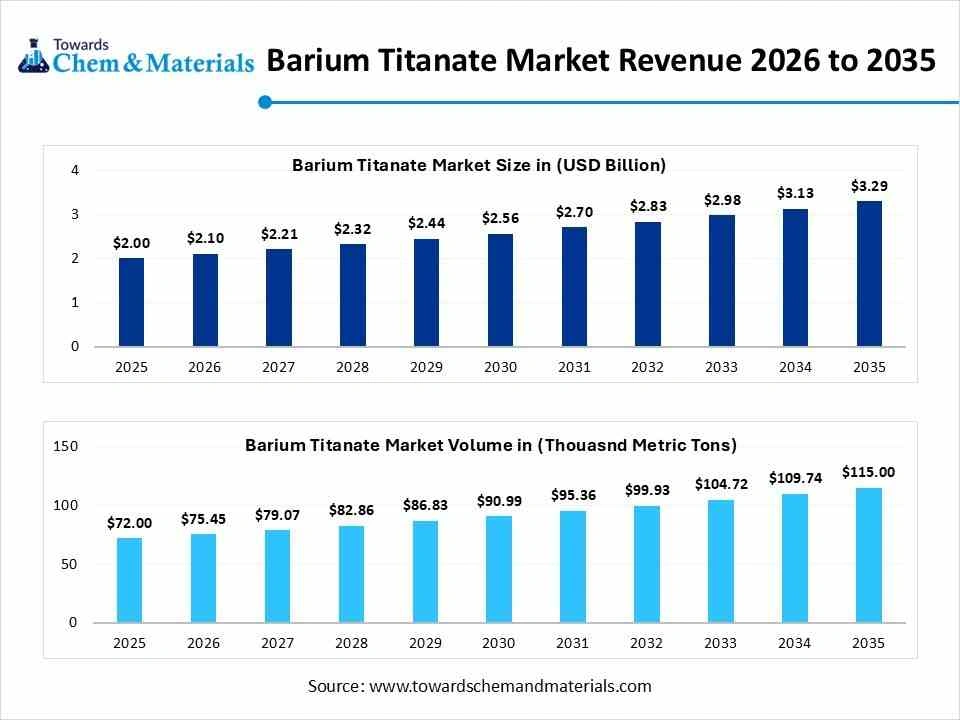
The global barium titanate market size was valued at USD 2 billion in 2025 and is projected to grow from USD 2.10 billion in 2026 to USD 3.29 billion by 2035, at a CAGR of 5.10% from 2026 to 2035. Asia Pacific dominated the market, accounting for a revenue share of 38% in 2025. Barium titanate is used extensively in advanced telecommunication infrastructure and miniaturized electronic components, along with vehicle electrification, which fuels the growth of the market. For fast data transmission, barium titanate is used for dielectric resonators and filters for fast networking. The presence of key players in the market and growing focus on research and development and joint technological innovation for eco-friendly manufacturing by prominent companies like CeramTec, Morgan Advanced Materials, Merck KGaA, and Solvay play a significant role in the growth.
Market Highlights
- By region, Asia Pacific dominated the barium titanate market with a share of 38% in 2025 and is expected to grow at a CAGR of 5.20% over the forecast period.
- By region, Europe held a 17.87% market share in the barium titanate market in 2025 and is expected to experience the fastest growth with a CAGR of 5.60% in the forecast period.
- By form, the powder segment dominated the market with a 45.5% share in 2025 and is expected to grow at a CAGR of 5.20% over the forecast period.
- By form, the nanoparticles segment held a 24.0% market share in 2025 and is expected to have the fastest growth with a CAGR of 6.60% in the forecast period.
- By purity, the high purity segment dominated the market with 45.1% share in 2025 and is expected to grow at a CAGR of 5.10% over the forecast period.
- By purity, the ultra-high purity segment held 25.5% market share in 2025 and is expected to have the fastest growth with a CAGR of 6.50% in the forecast period.
- By application, the capacitors segment dominated the market with 35.5% share in 2025 and is expected to grow at a CAGR of 5.30% over the forecast period.
- By application, the PTC thermistor segment held 22.0% market share in 2025 and is expected to have the fastest growth with a CAGR of 6.00% in the forecast period.
- By end use, the electronics and semiconductors segment dominated the market with a 28.5% share in 2025 and is expected to grow at a CAGR of 5.40% over the forecast period.
- By end use, the automotive segment held 20.0% market share in 2025 and is expected to have the fastest growth with a CAGR of 6.70% in the forecast period.
Market Overview
Barium Titanate: Research and Advanced Innovation
According to Towards Chemicals and Materials Analytics and Consulting, the global Barium Titanate market volume was valued at 72.00 million metric tons in 2025 and is expected to surpass around 115.00 million metric tons by 2035, accelerating a compound annual growth rate (CAGR) of 4.80% over the forecast period from 2026 to 2035.
Barium titanate is extensively used in the manufacturing of multilayer ceramic capacitors, which are found in smart forms, IoT devices, and computers as a vital ferroelectric ceramic, which increases growth. The growing shift towards automation and electrification, as there is demand for high-performance and heat-tolerant electronic components, especially in electric vehicles and AI infrastructure like electric mobility, 5G networks, and AI server hardware which promotes the growth of the market. The industry demand for supercapacitors and demand for small and energy-efficient storage for advancements in non-scalable power processing, and growing miniaturization trends, fuels the growth of the market.
The growing infrastructure development of 5G data enhancement, miniaturized electronics, and electric vehicles, which is aligned with companies’ innovation and operations in barium titanate and high permittivity ceramic and for scaling production and for specialized applications by companies like Murata Manufacturing, TDK Corporation, Kyocera, Samsung Electro-Mechanics, Taiyo Yuden, and CeramTec. The major collaborations and partnerships with academic institutions and the optimization of advanced synthesis techniques support the growth of the market.
- For instance, in January 2026, Boston College researchers developed a promising approach using barium titanate piezoelectric nanoparticles to activate immune cells with ultrasound. This helps in fighting infections and tumors. The technique enables precise, on-demand immune activation and reduces systemic drug toxicity, with potential applications in targeted cancer therapy.(Source: www.eurekalert.org)
Global Investment Flow for Barium Titanate Market 2026
The growing investments by key players in electric vehicles and green energy infrastructure by chemical and ceramic producers like Nippon Chemical Industrial, Mitsubishi Chemical, Kyocera Corporation, Toshiba Materials, and Samsung Electro-Mechanics play a major role in the expansion of the market.The leading companies are scaling production capacities for advanced formulations, and government and organizational initiatives for green tech push through government policies that help reduce carbon emissions.
- PsiQuantum signed a USD 100 letter of intent with the U.S. Department of Commerce to support the development of its quantum computing technology. The agreement aims to strengthen the U.S. leadership in quantum computing by advancing PsiQuantums large-scale, fault-tolerant quantum systems. This initiative aims to support technological innovation, semiconductor manufacturing capabilities, and the broader U.S. quantum technology ecosystem.(Source: thequantuminsider.com)
Market Growth Trends
- The integration of nanotechnology for synthesis and improvement of dielectric and piezoelectric properties boosts the growth of the market. This is because the growing demand for telecommunications and the deployment of 5G infrastructure and IoT devices accelerate growth.
- The growing shift towards electrification and smart automotive systems, which integrate advanced sensors, actuators, and power components, increases the demand for barium titanate, supported by growing production.
Regulatory shifts and lead-free alternatives, with alignment of environmental safety standards due to heavy EV production and rapid manufacturing growth across the globe, are a growing trend in the growth of the market.
Key Technological Shifts in the Barium Titanate Market: Process Optimization and Synthesis
Barium titanate is actively transforming through AI integration for active transformation by accelerating material optimization. AI integration and formulation accelerate the discovery of novel barium titanate compositions, precise doping, and crystal structures with enhanced properties like thermal stability, promoting growth. Process optimization and synthesis of high-purity and uniform product through digitization is a major growth factor in the market. The other major technological advances are smart manufacturing, quality control, and support for AI infrastructure demand, which fuels growth.
Supply Chain Analysis of Barium Titanate Market
Chemical Synthesis and Processing
- Barium titanate is a vital ferroelectric and dielectric ceramic that is produced by solid-state and advanced wet chemical synthesis, which help to achieve fine, uniform nanoparticles for multilayer ceramic capacitors.
- Murata Manufacturing produces high-permittivity ceramic materials that are tailored according to the needs and applications for consumer electronics and automotive.
- Key players: Murata Manufacturing, Kyocera, and Taiyo Yuden.
Quality Testing and Certification
- Barium titanate requires ISO 21813 standards for fine and advanced technical ceramics; suppliers provide certificates of analysis and safety data sheets, requiring NIOSH/MSHA or EN 149/EN 136-approved respirators for dust exposure.
- American Elements and H.C. Starck are global manufacturers and suppliers of high-purity barium titanate and ceramic powders which are used in electronics and dielectrics.
- Key players: ASTM International and UL Solutions
Distribution to Industrial Users
- Barium titanate is distributed widely to electronic industries, automotive, telecommunications, energy and power, and healthcare sectors.
- CeramTec is an advanced manufacturer of electronics and piezoceramic materials, which are lead-free alternatives to replace lead-based components like bismuth titanate and barium titanate.
- Key players: CeramTec, Sakai Chemical Industry & Fuji Titanium Industry, and American Elements & H.C. Starck.
Sustainability Analysis in Barium Titanate
Barium titanate is a lead-free ferroelectric perovskite which are non-toxic and aligns with sustainability regulations, also used in green electronic components and wastewater remediation. It acts as a catalyst to degrade organic pollutants in pharmaceutical dyes and antibiotics in industrial wastewater. It also acts as a sustainable energy harvester where mechanical vibrations are converted into electrical energy. And also is involved in green synthesis innovation, shifting towards eco-friendly techniques.
What is Barium Titanate?
Barium titanate is a white or grey powder that is an inorganic chemical compound which is a vital component in ceramic materials for various indusial sector. They are large crystals that are transparent. It is a strong electrical insulator in its purest form, having a high dielectric constant and storing a large amount of electrical energy. It is used in capacitors, transducers, sensors, actuators, and optics.
Barium Titanate Premium Pricing Analysis
Premium barium titanate is premium pricing in its purity and trace-metal basis, which is priced around 8,942 for 25g to 23,503 for 100g; this pricing is through a specialty chemical supplier. Price depends upon its nature and grade, which is used, and demand. The pricing is driven by its ultra-high assay standards and low impurity thresholds. The price also depends on particle size and synthesized nanoscale variants due to complex synthesis demand.
Barium Titanate Market Carbon Tax Analysis
A carbon tax directly increases the cost of production of barium titanate by penalizing energy-intensive calcination and precursor manufacturing processes, impacting production and the supply chain. Manufacturers are shifting towards green energy and renewable energy to lower emissions and avoid direct tax penalties. Increased component pricing and rising, aggressive carbon pricing face higher domestic manufacturing. Market opportunities and the shift towards EVs and global decarbonization policies are major factors in the long-term demand for barium titanate.
Barium Titanate Market Regulatory Landscape
| Country / Region | Regulatory Body | Key Regulations | Focus Areas | Notable Notes |
| United States | Environmental Protection Agency, Occupational Safety and Health Administration | Toxic Substances Control Act, OSHA Hazard Communication Standard | Chemical safety, electronic materials, workplace safety | The U.S. market is supported by demand for barium titanate in multilayer ceramic capacitors, PTC thermistors, electronic ceramics, and advanced dielectric applications. |
| European Union | European Chemicals Agency, European Commission | REACH Regulation, RoHS Directive | Chemical compliance, hazardous-substance restrictions, electronics sustainability | Europe emphasizes REACH and RoHS compliance for electronic components and supports lead-free, high-dielectric materials such as barium-titanate-based ceramics. |
| China | Ministry of Ecology and Environment, Ministry of Industry and Information Technology | Environmental Protection Law, Electronic Component Standards | Electronics manufacturing, advanced ceramics, material quality | China is a major hub for electronics and MLCC manufacturing, supporting strong demand for high-purity barium titanate powders. |
| Japan | Ministry of Economy, Trade and Industry, Ministry of the Environment | Chemical Substances Control Law, Japanese Industrial Standards | High-performance ceramics, electronic components | Japan focuses on high-purity barium titanate for MLCCs, sensors, capacitors, and other precision electronic applications. |
| South Korea | Ministry of Environment, Ministry of Trade, Industry and Energy | K-REACH, Electrical and Electronic Equipment Standards | Advanced electronics, dielectric materials | South Koreas strong electronics and semiconductor ecosystem supports demand for high-performance barium titanate used in compact, high-capacitance components. |
| India | Ministry of Environment, Forest and Climate Change, Bureau of Indian Standards | Environment Protection Act, BIS Standards for Electronic Components | Electronics manufacturing, advanced materials | India is developing its electronics manufacturing ecosystem, creating opportunities for barium titanate in capacitors, electronic ceramics, and other advanced material applications. |
Market Dynamics
Drivers
Barium Titanate Market: Electric Vehicles and Auto Electrification
The growth of the barium titanate market is driven by the rising demand for consumer electronics, as it is an important material in cell phones, laptops, and smart home devices for capacitors, as there is an increased shift towards smart electronic gadgets. The shift towards electrification and electric vehicles drives demand for smart sensors and high-performance capacitors, which propels growth. The other key growth drivers are miniaturization of electronics, new manufacturing and nanotechnology integration, and 5G infrastructure and telecom growth, which support the growth and expansion of the market.
Challenges
Barium Titanate Market: Strict Environmental and Toxicity Regulations
The barium titanate market experienced some challenges, especially strict environmental and toxicity regulations due to hazardous waste management during production and disposal. Regulatory shifts toward eco-friendly alternatives required costly adaptation in processing and synthesis. The other key challenges are high production and materials costs, technical and integration complexities, and competition from alternative materials, which hinders the growth of the market.
Opportunities
Barium Titanate Market: Energy Storage Systems
The key growth opportunity of the barium titanate market is energy storage systems, as there is a shift towards the adoption of renewable energy integration through solar and wind energy systems, which require advanced and stable capabilities. Supercapacitors use barium titanate, offering high energy density storage for green energy applications. The other major opportunities are emerging applications like smart and flexible materials and eco-friendly alternatives due to sustainability demand supporting growth.
Segmental Insights
Form Insights
The powder segment dominated the market with a 45.5% share in 2025 and is expected to grow at a CAGR of 5.20% over the forecast period, driven by high demand for miniaturized electronics, which drives demand for powder barium titanate due to its ease of use in industrial manufacturing. Advanced manufacturing demand for controlled particle size drives demand for ultrafine and nano-scale powders, which helps in producing modern micro-electronics supporting growth of the market.
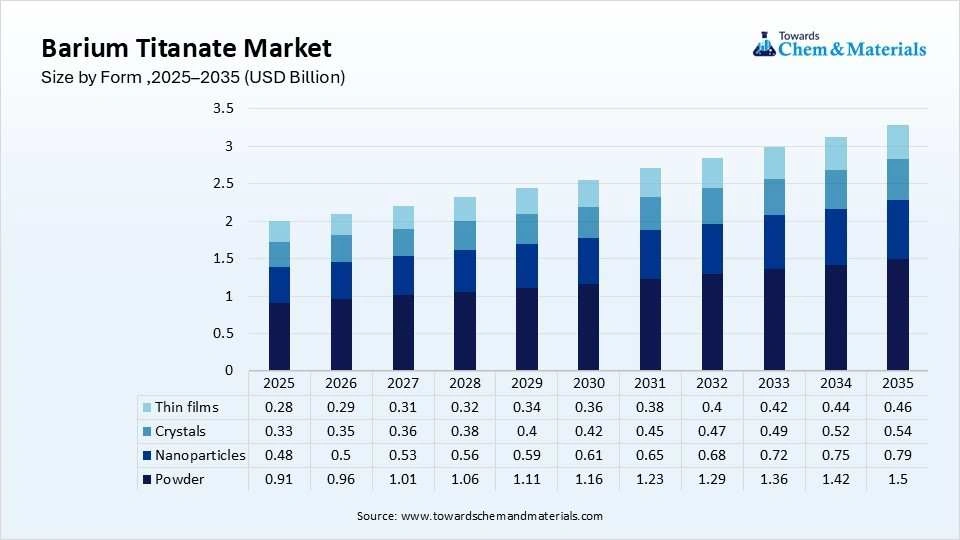
The nanoparticles segment held 24.0% market share in 2025 and is expected to have the fastest growth with a CAGR of 6.60% in the forecast period, driven by demand for advanced electronics and research infrastructure, which propels growth. Advancements in technology for 5G infrastructure and electric vehicle requirement which demand for high dielectric performance, which allows manufacturers to use nanoparticles while maintaining high capacitance. Industry demand and production methods with high-energy milling drive demand for the product and also used in biomedical imaging, flexible nanogenerators, and energy storage.
Barium Titanate Market Share, By Form, 2025(%)
| By Form | Market Share (%) |
| Powder | 45.50% |
| Nanoparticles | 24.00% |
| Crystals | 16.50% |
| Thin films | 14.00% |
Purity Insights
The high purity (>99%) segment dominated the market with a 45.1% share in 2025 and is expected to grow at a CAGR of 5.10% over the forecast period, driven by rapid expansion as there is rising demand for high purity barium titanates, as it is used as the core high permittivity dielectric materials for multilayer ceramic capacitors which is largely used in telecommunications and automotive systems. The high-purity materials are used in sensors and actuators for precise performance in industrial automation and smart devices, which supports the growth of the market.
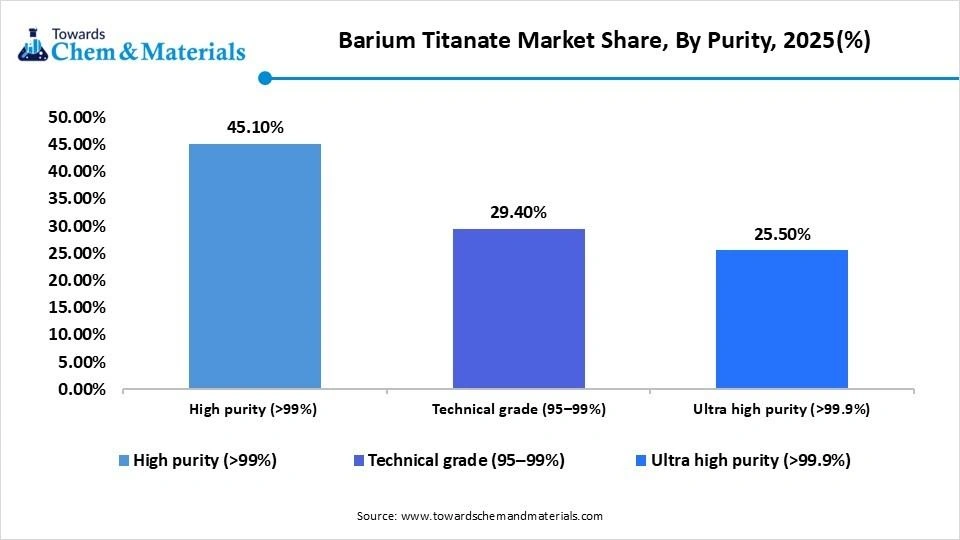
The ultra-high purity (>99.9%) segment held a 25.5% market share in 2025 and is expected to have the fastest growth with a CAGR of 6.50% in the forecast period, driven by advanced production and demand compared to standard commercial grades. Adoption of hydrothermal, sol-gel, and oxalate methods helps manufacturers achieve tighter particle-size distributions and lower trace impurities. The emerging applications and production of thinner ceramic capacitors for use in various devices precisely support growth.
Barium Titanate Market Share, By Purity, 2025(%)
| By Purity | Market Share (%) |
| High purity (>99%) | 45.10% |
| Technical grade (95–99%) | 29.40% |
| Ultra high purity (>99.9%) | 25.50% |
Application Insights
The capacitors segment dominated the market with a 35.5% share in 2025 and is expected to grow at a CAGR of 5.30% over the forecast period, driven by growing demand for multilayer ceramic capacitors due to their various applications in consumer electronics, telecommunications, and industrial automation, which increases growth and use. Vehicle electrification due to rapid adoption across regions is a key catalyst in the use of barium titanate-based capacitors for inverters, and battery management further supporting growth of the market.
The PTC thermistor segment held 22.0% market share in 2025 and is expected to have the fastest growth with a CAGR of 6.00% in the forecast period, driven by the growing demand for highly reliable electronics. Barium titanate PTC thermistors are preferred for their robustness and high-voltage power applications for electronics. Key applications like overcurrent and circuit protection, automotive and industrial sensors, and heating elements, due to its temperature limiting capabilities, increase the demand, supporting growth of the market.
Barium Titanate Market Share, By Application, 2025(%)
| By Application | Market Share (%) |
| Capacitors | 35.50% |
| PTC thermistor | 22.00% |
| Electronic ceramics | 21.00% |
| Reinforcement of composite | 12.50% |
| Others | 9.00% |
End Use Insights
The electronics and semiconductors segment dominated the market with a 28.5% share in 2025 and is expected to grow at a CAGR of 5.40% over the forecast period, driven by the growing role in modern electronic components, which allows manufacturers to adopt new technologies in the development of 5G networks and IoT devices due to high-performance ceramic materials supporting growth. Increased manufacturing of chip production helps reduce current leakage and improve circuit reliability, further supporting growth.
The automotive segment held 20.0% market share in 2025 and is expected to have the fastest growth with a CAGR of 6.70% in the forecast period, driven by growing electrification and a shift towards EV adoption, which uses barium titanate-based components for precise electronic sensors. The adoption of sensors and actuators for pressure monitoring and in advanced ignition systems and mechanical feedback helps in easy management and maintenance of the vehicle.
Barium Titanate Market Share, By End User, 2025(%)
| By End User | Market Share (%) |
| Electronics and semiconductors | 28.50% |
| Automotive | 20.00% |
| Telecommunications | 14.50% |
| Medical devices | 9.50% |
| Aerospace and defense | 8.00% |
| Energy and power | 12.00% |
| Research and academia | 7.50% |
Regional Analysis
How North America dominate the Barium Titanate Market in 2025?
The North American barium titanate market size was estimated at USD 0.65 billion in 2025 and is projected to reach USD 1.09 billion by 2035, growing at a CAGR of 5.31% from 2026 to 2035. North America held a market share of 32.5% in 2025, driven by the mature sector presence like electronics and automotive, supporting growth of the market.
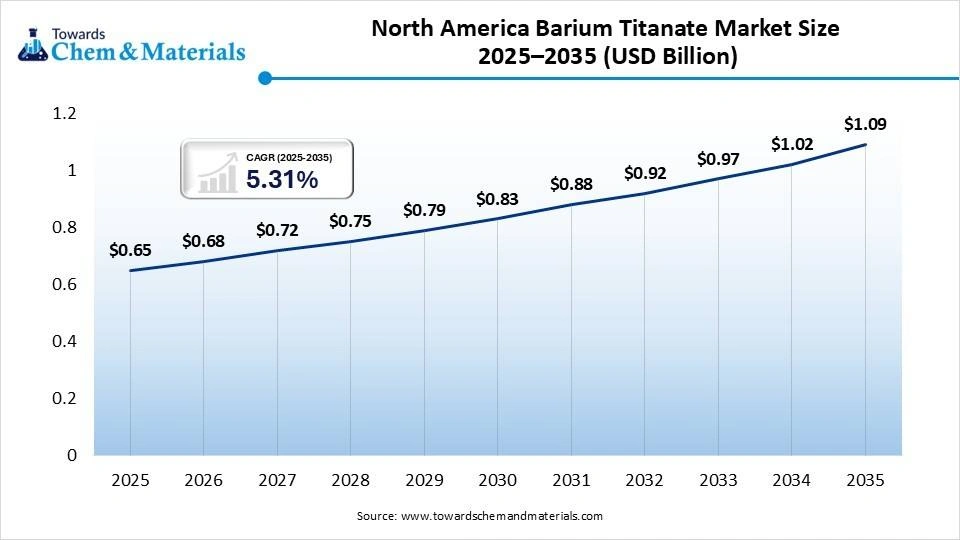
The high demand for miniaturized multilayer ceramic capacitors, which are used extensively for manufacturing smartphones and computing infrastructure, supports growth. The growing investment in renewable energy storage and advanced piezoelectric devices further propels the growth and expansion of the market. In countries like the US and Canada, being major consumers of electronics and automotive, investment in research and development of high-tech digital infrastructure further supports the growth of the market.
Asia Pacific
The Asia Pacific barium titanate market size was estimated at USD 0.76 billion in 2025 and is projected to reach USD 12.67 billion by 2035, growing at a CAGR of 32.49% from 2026 to 2035. Asia Pacific dominated the barium titanate market with a share of 38% in 2025 and is expected to grow at a CAGR of 5.20% over the forecast period, driven by the growing demand and use of electronics, telecommunications, and electric vehicles, which increases the demand for the market. China is a major and massive consumer and producer of electronic ceramics and raw materials, which makes it a dominant player in the region. In Japan and South Korea, the countries serve as advanced manufacturing and high-tech clusters for consumer electronics and automotive parts, which makes them key players for market growth. In India, the consumer market is growing, as there is expansion in the electronics and automotive sectors. The presence of key players in the region, like Murata Manufacturing Co., Ltd., TDK Corporation, Samsung Electro-Mechanics, and Fuji Titanium Industry Co., Ltd. Nippon Chemical Industrial, through joint ventures, propels the growth of the market.
- For instance, the joint venture between Murata Manufacturing, Ishihara Sangyo Kaisha, and Fuji Titanium Industry is named MF Material Co., Ltd., and it plans to open a new barium titanate plant in Nobeoka City, Miyazaki Prefecture, Japan, which is scheduled to begin operations in 2027.(Source: corporate.murata.com)
Europe Barium Titanate Market Growth Factor
The Europe barium titanate market size was estimated at USD 0.36 billion in 2025 and is projected to reach USD 0.59 billion by 2035, growing at a CAGR of 5.06% from 2026 to 2035. Europe held a 17.87% market share in the barium titanate market in 2025 and is expected to experience the fastest growth with a CAGR of 5.60% in the forecast period, driven by the growing shift towards electric vehicles as there is presence of major players like BMW, Volkswagen, and
Mercedes-Benz which increased the demand for sensors and varistors in advanced driver assistance system and power distribution to enhance vehicle electrification. Germany serves as a primary manufacturing and innovation hub, expanding Industry 4.0 automation, increasing supply chain, and advancing ceramic research and development in the country, which fuels the growth of the market. In the UK, France, and Italy, established sectors like automotive, aerospace, and electronics make them major consumers of barium titanate, propelling growth.
Latin America Barium Titanate Market Growth Factor
The Latin America barium titanate market size was estimated at USD 0.13 billion in 2025 and is projected to reach USD 0.21 billion by 2035, growing at a CAGR of 4.91% from 2026 to 2035. Latin America held a market share of 6.40% in 2025, driven by technological innovation in particle size control and nanoscale powder synthesis, which help sin improvement of the materials dielectric properties, resulting in expansion of commercial use.
The regional shift towards the use of sustainable energy and smart infrastructure is creating growth opportunities for energy storage applications, which drives demand for the barium titanate market. Brazil and Mexico are primary regional anchors as there is an established manufacturing hub and supplier base which supports the growth. The presence of local and domestic industrial and technological integration in Argentina supports the specialised component demand for various sectors, supporting expansion of the market.
Middle East and Africa Barium Titanate Market Growth Factor
The Middle East and Africa barium titanate market size was estimated at USD 0.10 billion in 2025 and is projected to reach USD 0.17 billion by 2035, growing at a CAGR of 5.45% from 2026 to 2035. The Middle East and Africa held a market share of 5.23% in 2025, driven by the growing investment in renewable energy, smart infrastructure, and industrialization in the region, which helps improve power distribution efficiency and sustainability. The expansion of manufacturing hubs, telecommunications, and automotive adoption creates great localized demand for advanced materials. Countries like the United Arab Emirates, Saudi Arabia, and South Africa are leading regional adoption through smart city projects and sustainable energy initiatives.
Recent Developments
- In August 2026, Nippon Chemical Industrial, located at the Fukushima No. 1 Factory in Koriyama, Fukushima Prefecture, is expanding its production capacity for barium titanate to meet surging demand for multilayer ceramic capacitors (MLCCs) driven by the rapid growth of AI servers and data centers.
Nippon Chemical expands barium titanate capacity as AI drives MLCC demand.(Source: www.indianchemicalnews.com) - In September 2025, La Luce Cristallina announced the launch of its new 200-mm (8-inch) barium titanate wafer and the opening of a modern manufacturing facility in Austin, TX. This new plant increases production capacity for wafer-scale fabrication of its crystal-on-glass BaTiO₃ substrates, catering to rising demand from sectors like data centers, telecommunications, sensing, computing, and integrated photonics.
(Source: lalucecristallina.com)
Competitive Analysis
The key players collaboration through strategic partnerships, research and development, and joint development by key players like Imec and Veeco Instruments to integrate the material into the platform is a key factor.
- Veeco Instruments, a manufacturer of semiconductor process equipment, collaborated with imec to create a 300-mm process suitable for high-volume manufacturing. This process allows for the integration of barium titanate on a silicon photonics platform. BTO, known for its electro-optical properties, is used for high-speed, low-power light modulation in emerging fields like high-speed optical transceivers, quantum computing, lidar, and AR/VR.(Source: www.photonics.com)
The alliance between academia and government for manufacturing advanced dielectric and nanomaterial scalability, like CeramTec and Morgan Advanced Materials, routinely partners with university research centers and government labs in the US and UK.
Powder producers like Kyocera, Taiyo Yuden, and Murata Manufacturing collaborate closely with original equipment manufacturers to tailor high-permittivity formulations for next-generation multi-layer ceramic capacitors and automotive electronics.
- La Luce Cristallina has announced the launch of its new 200-mm (8-inch) barium titanate wafer. Equipped by Finnish manufacturer DCA Instruments, the facility will facilitate closer collaboration with partners and customers worldwide by maintaining a secure U.S.-based supply chain. Orders for the 200-mm wafer are now being accepted, with delivery expected in early Q1 2026.(Source: lalucecristallina.com)
Top Players in the Barium Titanate & Their Offerings:
| Company | Company Type/Position | Major Headquarters | Geographic Presence | Key Offering/Strength |
| Sakai Chemical Industry Co., Ltd | Global manufacturer of fine, spherical, and high-purity barium titanate and other electronic ceramic materials | Sakai, Osaka, Japan | Japan, Asia, North America, Middle East and Africa, Europe | High-purity titanium powder for multilayer capacitors and dielectric applications |
| Fuji Titanium Industry Co., Ltd. | Specialty manufacturer of titanium compounds and advanced electronic ceramic materials | Osaka, Japan | Japan and International Markets | BESPA BY barium titanate with different particle size grades for MLCC capacitors, dielectric fillers and electronic materials |
| Nippon Chemical Industrial Co., Ltd. | Chemical manufacturer with expertise in electric ceramics and barium-based materials | Tokyo, Japan | Japan, China, Taiwan, Thailand, US, and international markets | Solid-phase processed barium titanate, high-purity oxalate method barium titanate, and MLCC compounding materials |
| Shandong Sinocera Functional Material Co., Ltd. | Advanced functional ceramic materials manufacturer and major Chinese producer | Dongying, Shandong, China | China, Asia, Europe, America | High-purity barium titanate powders and electronic ceramic materials |
| Murata Manufacturing Co., Ltd. | Global electronic component manufacturer | Nagaokakyo, Kyoto, Japan | Asia, North America, Europe | Barium titanate and other dielectric ceramic capacitors |
Other Top Players Are
- Kyocera Corporation (Japan)
- Taiyo Yuden Co., Ltd. (Japan)
- TDK Corporation (Japan)
- Samsung Electro-Mechanics (South Korea)
- Yageo Corporation (Taiwan/Global)
- KEMET Corporation / Yageo (United States/Japan)
- American Elements (United States)
- Merck KGaA (Germany)
- Thermo Fisher Scientific Inc. (United States)
- Ferro Corporation (United States)
- Toho Titanium Co., Ltd. (Japan)
- KCM Corporation (Japan)
- Solvay S.A. (Belgium)
- CeramTec GmbH (Germany)
- Inframat Advanced Materials LLC (United States)
Segments Covered
By Form
- Powder
- Micron-size powder
- Submicron powder
- Fine dielectric powder
- Nanoparticles
- 10–50 nm
- 50–100 nm
- 100–500 nm
- Crystals
- Single crystals
- Polycrystalline forms
- Thin films
- Sol-gel films
- Chemical-vapor-deposited films
- Sputtered films
By Purity
- High purity (>99%)
- 99.0–99.5%
- 99.5–99.9%
- Technical grade (95–99%)
- 95–97%
- 97–99%
- Ultra-high purity (>99.9%)
- 99.9–99.95%
- 99.95%
By Application
- Capacitors
- Multilayer ceramic capacitors (MLCCs)
- Single-layer ceramic capacitors
- Embedded capacitors
- High-voltage capacitors
- PTC thermistor
- Overcurrent protection
- Temperature sensing
- Heating elements
- Electronic ceramics
- Piezoelectric devices
- Ferroelectric components
- Sensors and actuators
- Reinforcement of composites
- Polymer composites
- Ceramic composites
- Functional nanocomposites
- Others
- Energy-storage devices
- Electro-optic devices
- Memory devices
- Biomedical/electronic devices
By End User
- Electronics and semiconductors
- Consumer electronics
- Semiconductor components
- Industrial electronics
- Automotive
- Electric vehicles
- Advanced driver-assistance systems
- Automotive sensors
- Telecommunications
- 5G infrastructure
- RF components
- Communication modules
- Medical devices
- Imaging systems
- Diagnostic sensors
- Biomedical electronics
- Aerospace and defense
- Radar systems
- Avionics
- Electronic warfare systems
- Energy and power
- Power electronics
- Energy storage
- Renewable-energy systems
- Research and academia
- Materials research
- Nanotechnology research
- Advanced electronics research
By Geography
- North America
- Europe
- Asia-Pacific
- LAMEA
A Seven-Phase Framework
Our methodology is designed to be universally applicable across commodity chemicals, specialty chemicals, petrochemicals, construction chemicals, coatings, electronic chemicals, industrial gases, agrochemicals, water treatment chemicals, and performance materials. Each phase builds upon the last, creating a layered validation structure that minimizes estimation error and maximizes analytical confidence.
The framework ensures comprehensive market coverage, robust cross-validation, and reliable long-term forecasting — producing market estimates that withstand scrutiny from investors, regulators, and corporate strategy teams.

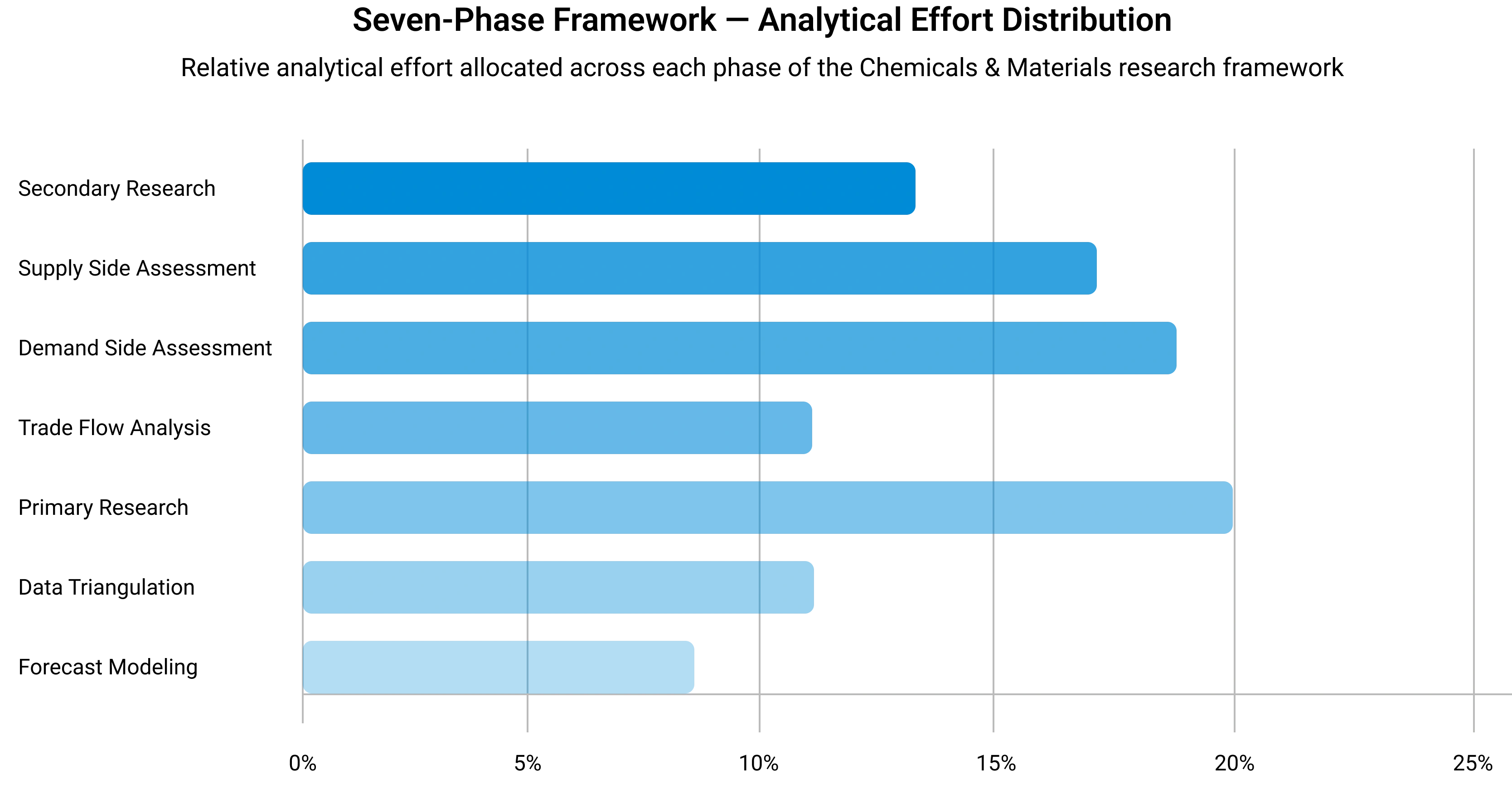
Seven-Phase Framework — Analytical Effort Distribution
Relative analytical effort allocated across each phase of the Chemicals & Materials research framework
Phase 1 - Secondary Research: Establishing the Foundation
Secondary research collects and evaluates publicly available information from authoritative sources, establishing the foundational understanding of market structure, value chain dynamics, competitive landscape, and end-use demand patterns. Every source is evaluated for credibility, recency, geographic relevance, and methodological soundness before inclusion.
Industry Associations
Sources include ACC, CEFIC, ICCA, JCIA, CPCIF, and SOCMA providing production volumes, consumption trends, capacity developments, and sustainability initiatives.
Company Disclosures
Annual reports, investor presentations, earnings transcripts, and regulatory filings reveal product portfolios, manufacturing footprints, capacity expansions, and revenue segmentation.
Government Databases
National statistical offices, customs authorities, environmental agencies, and industrial production databases provide verified statistics on output, trade flows, and regulatory compliance.
Trade Databases
UN Comtrade, ITC, Eurostat, and national customs authorities enable assessment of global product movement, import dependency, and export competitiveness across regions.
Our Secondary Research Sources
- Ministry of Chemicals and Fertilizers
- European Chemicals Agency
- United States Department of Energy
- Ministry of Industry and Information Technology
- Ministry of Economy Trade and Industry
- Ministry of Trade Industry and Energy
- National Institute of Standards and Technology
- Council of Scientific and Industrial Research
- Fraunhofer Society
- National Institute for Materials Science
Phase 2 — Supply-Side Assessment: Mapping Production Capabilities
Production Capacity Analysis
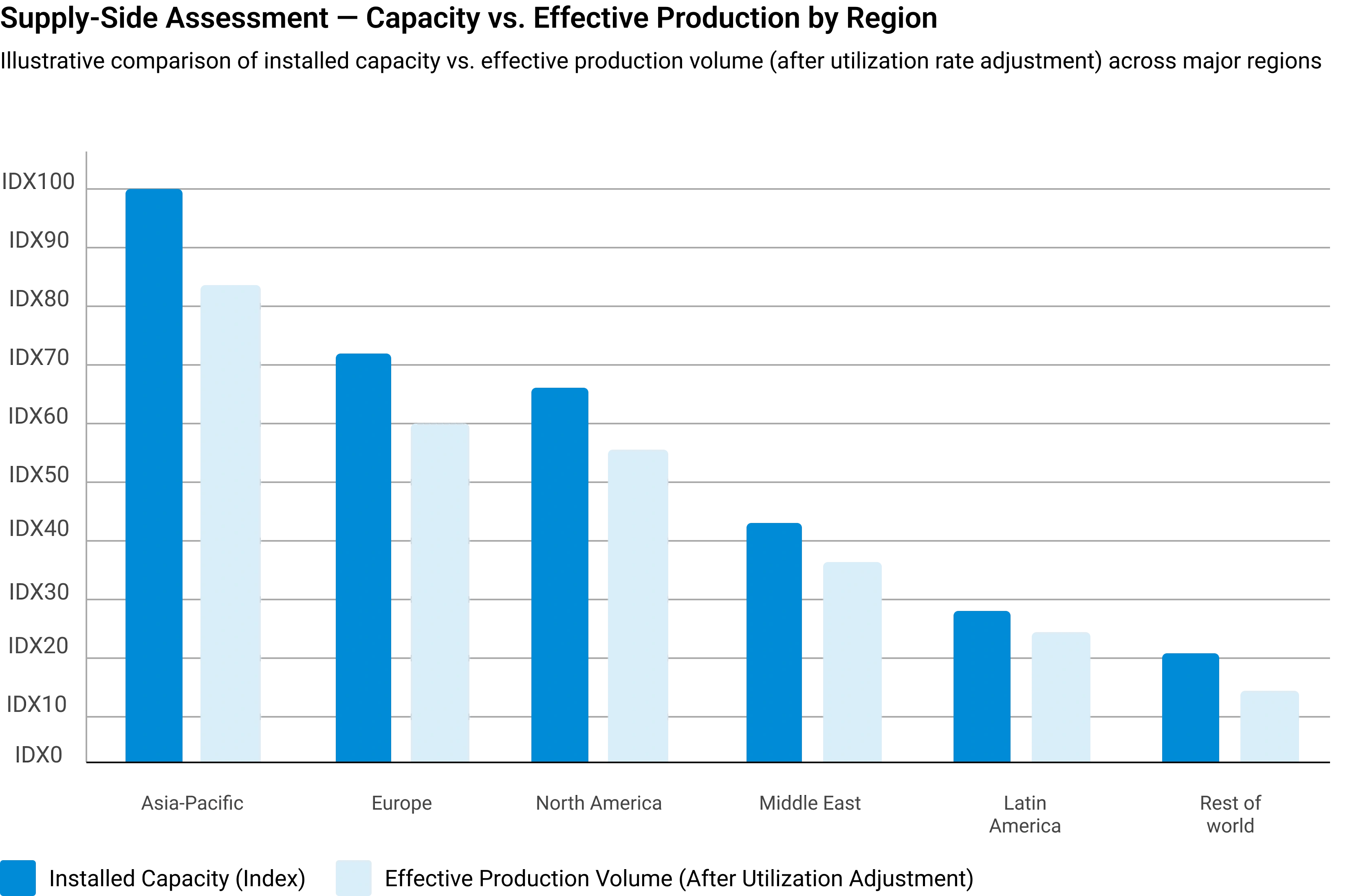
All major manufacturers are assessed for existing installed capacity, planned additions, expansions, new plant announcements, and technology adoption — mapped at global, regional, and country levels.
Capacity Utilization Adjustment
Installed capacity is adjusted using utilization rates based on demand conditions, feedstock availability, plant operating rates, maintenance schedules, and regulatory restrictions.
Manufacturer Revenue Analysis
Product-specific revenues, segment-level performance, regional distribution, average selling prices, and margin trends are evaluated to establish market value estimates.
Supply-Side Assessment — Capacity vs. Effective Production by Region
Illustrative comparison of installed capacity vs. effective production volume (after utilization rate adjustment) across major regions
Phase 3 — Demand-Side Assessment: Quantifying Chemical Consumption
Demand-side analysis quantifies chemical consumption across industries, applications, and geographies — identifying where and how chemicals are consumed throughout the value chain with precision.
End-Use Industry Analysis
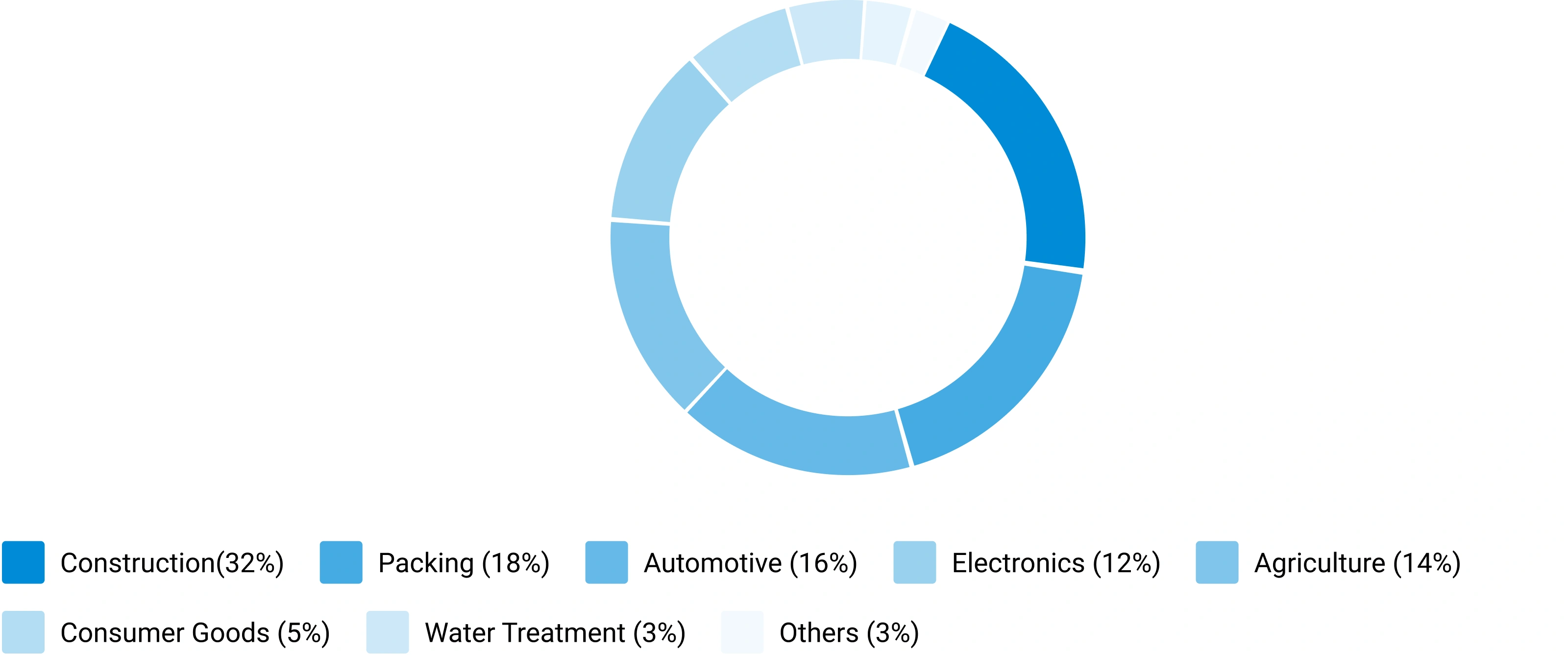
Chemical demand is evaluated across automotive, construction, packaging, electronics, agriculture, healthcare, consumer goods, industrial manufacturing, energy and utilities, and water treatment. Industry output, production trends, and consumption intensity are analyzed to determine demand patterns.
Consumption Modeling
Demand is estimated using measurable indicators: kilograms per vehicle, kilograms per square meter of construction, dosage per cubic meter of water treated, kilograms per hectare of agricultural land, and kilograms per ton of manufactured products. Consumption factors are validated through industry publications and primary interviews.
Application Analysis
The market is segmented by application area to understand product performance requirements, formulation trends, technology adoption, customer preferences, and regulatory requirements improving demand accuracy and segmentation granularity.
Demand-Side Assessment — End-Use Industry Demand Distribution
Illustrative distribution of chemical & materials demand across key end-use industries
Phase 4 - Trade Flow Analysis: Balancing Regional Supply and Demand
Trade flow analysis reconciles regional supply and demand estimates through import and export data, identifying net supply positions, regional dependencies, and market imbalances. It serves as an independent validation layer that tests the consistency of supply-side and demand-side estimates.
Import Analysis
Import data is evaluated to determine volumes, source countries, product dependency, regional supply gaps, and pricing trends — identifying markets that rely heavily on external supply and where domestic production is insufficient to meet demand.
Export Analysis
Export assessments reveal production surplus, export competitiveness, regional manufacturing strength, and global market participation. Export patterns also help validate domestic production estimates and identify net exporting regions.
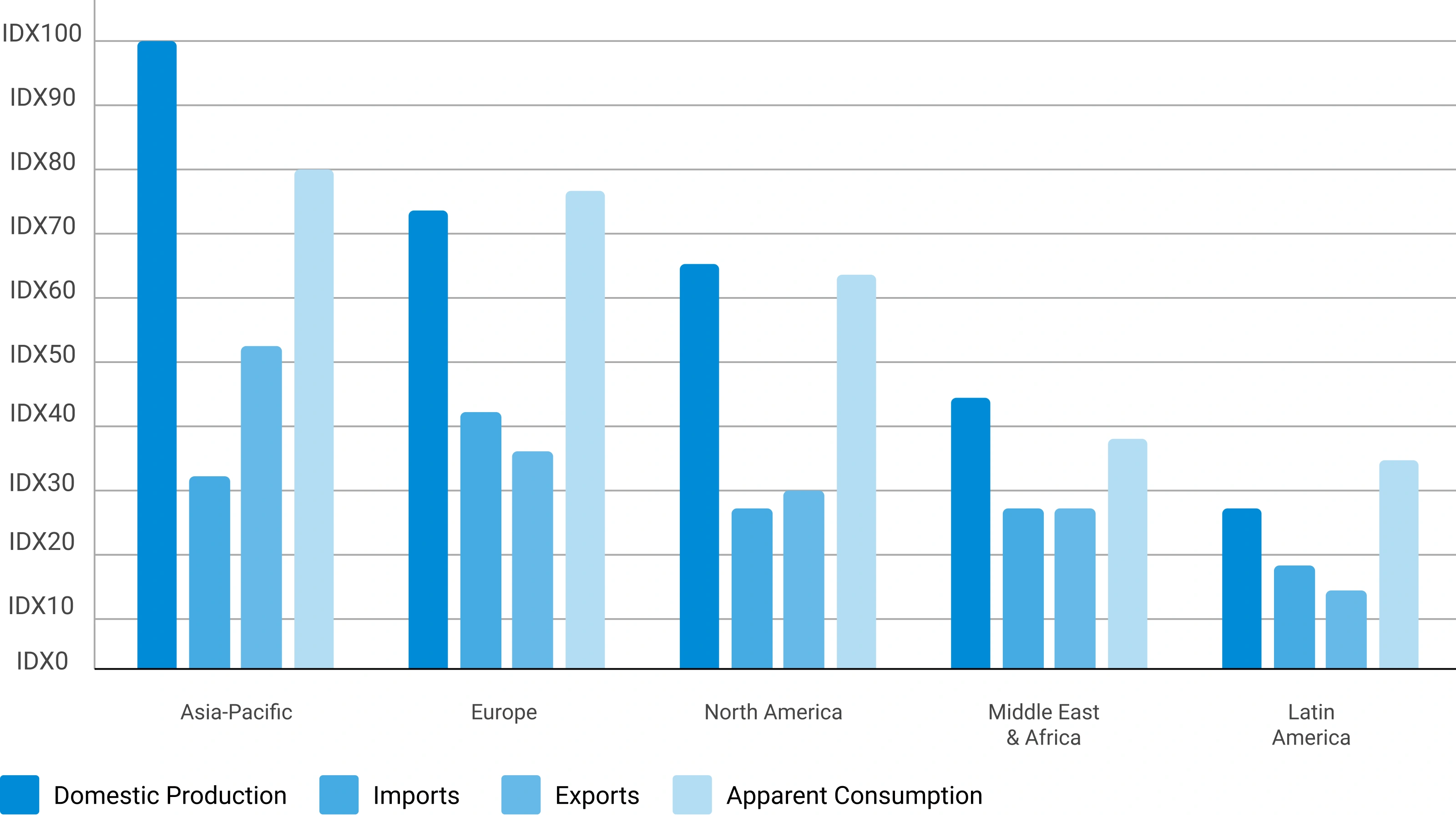
Apparent Consumption Model
Regional consumption is assessed using the standard apparent consumption formula:
Results identify net importing regions, net exporting regions, regional deficits, and surpluses — serving as an independent validation of supply and demand estimates.
Trade Flow Analysis — Net Supply Position by Region
Illustrative apparent consumption vs. domestic production across major regions — positive gap indicates net import dependency
Phase 5 — Primary Research: The Critical Validation Layer
Primary research tests and refines findings from secondary research through direct engagement with industry participants across the supply chain, demand side, and expert community. It captures intelligence that no database or published report can provide — the real-world experience of manufacturers, buyers, and specialists operating in the market.

Supply-Side Interviews
Conversations with chemical manufacturers, raw material suppliers, contract manufacturers, technology providers, and plant operators cover production trends, capacity utilization, pricing developments, technology shifts, and competitive dynamics.

Demand-Side Interviews
Engagement with OEMs, industrial consumers, procurement managers, distributors, formulators, and end-use manufacturers focuses on consumption trends, purchasing behavior, product substitution, demand outlook, and emerging applications.

Industry Expert Consultations
Additional interviews with industry consultants, independent experts, regulatory specialists, technical professionals, and research institutions provide deeper market context and validate key analytical assumptions.
Focus Areas of Primary Research:
Market Size & Forecast Validation
Revenue estimates, volume consumption, growth rates, forecast assumptions, regional demand.Supply Chain & Value Chain Assessment
Raw material sourcing, supply chain challenges, distribution networks, procurement practices.Production & Capacity Analysis
Manufacturing capacity, utilization rates, expansion projects, plant investments.Pricing & Cost Structure Analysis
Product pricing trends, feedstock costs, energy costs, margin pressures, pricing outlook.Competitive Landscape Assessment
Volume and value estimates confirmed to be fully consistent with one another before publicationInterview Volume by Market Scope
| Study Scope | Number of Interviews |
|---|---|
| Niche Market | 20 – 30 |
| Mid-Sized Market | 30 – 50 |
| Global Market | 50 – 80 |
| Highly Fragmented Market | 80 – 120 |
Interview Details:
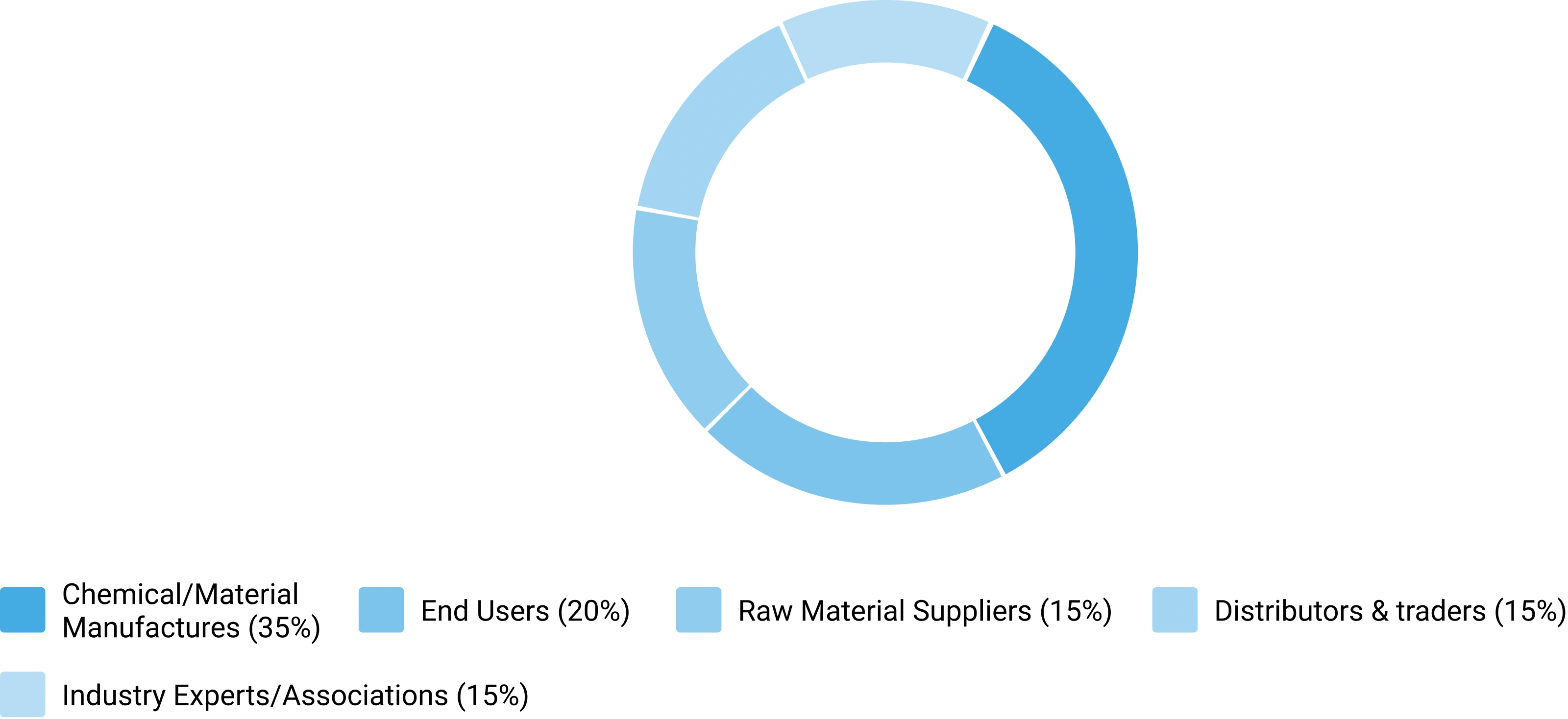
Category : Manufacturers, Suppliers, Distributors, End Users, Experts/Associations
Average Duration : 30–60 Minutes
Interview Mode : Video calls, telephonic interviews, expert consultations
Interview Format : Structured / Semi-Structured questionnaire
Focus Areas of Primary Research:
Market Size & Forecast Validation :
Revenue estimates, volume consumption, growth rates, forecast assumptions, regional demand.
Supply Chain & Value Chain Assessment :
Raw material sourcing, supply chain challenges, distribution networks, procurement practices.
Production & Capacity Analysis :
Manufacturing capacity, utilization rates, expansion projects, plant investments.
Pricing & Cost Structure Analysis :
Product pricing trends, feedstock costs, energy costs, margin pressures, pricing outlook.
Competitive Landscape Assessment :
Market share, competitor positioning, strategic initiatives, partnerships, acquisitions.
Primary Research — Stakeholder Coverage by Category
Distribution of interview respondents across stakeholder categories (% share from PPT data)
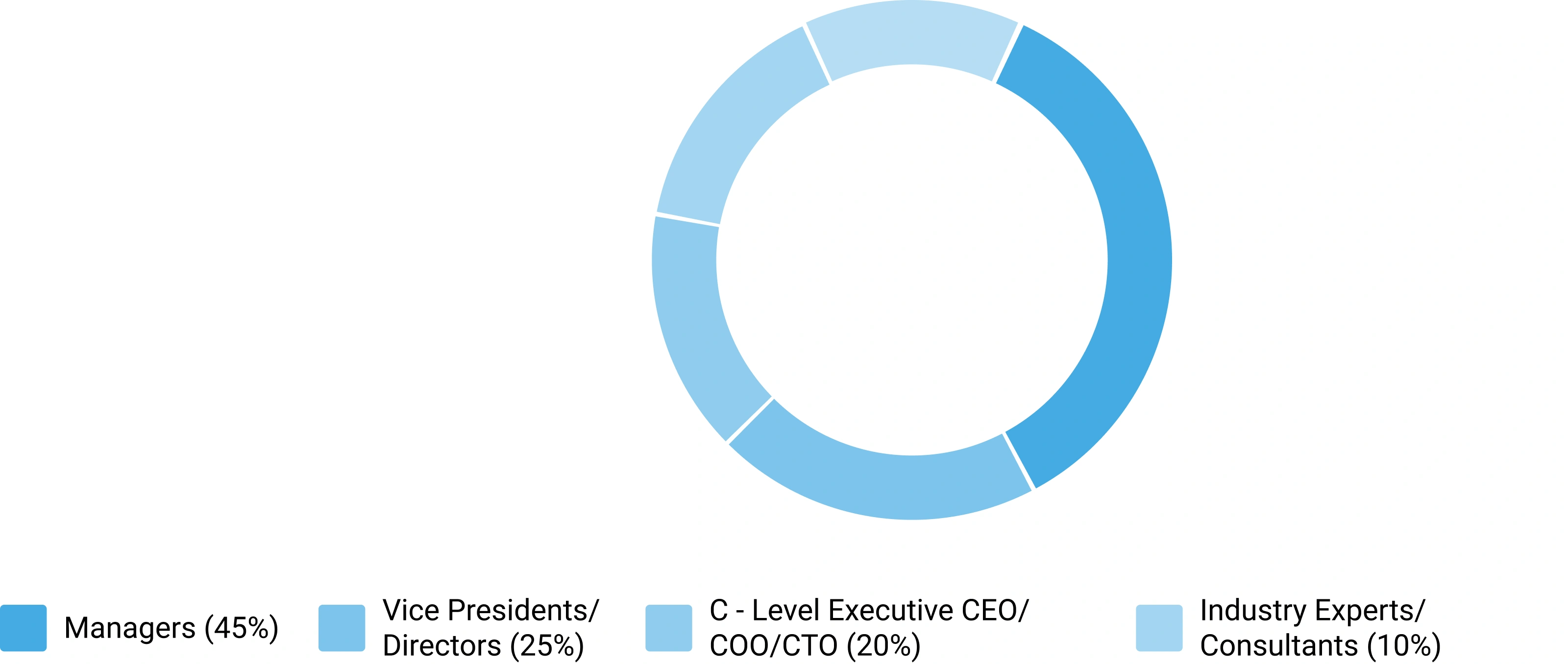
Primary Research — Respondent Designation Profile
Seniority breakdown of interview respondents (% share from PPT data)
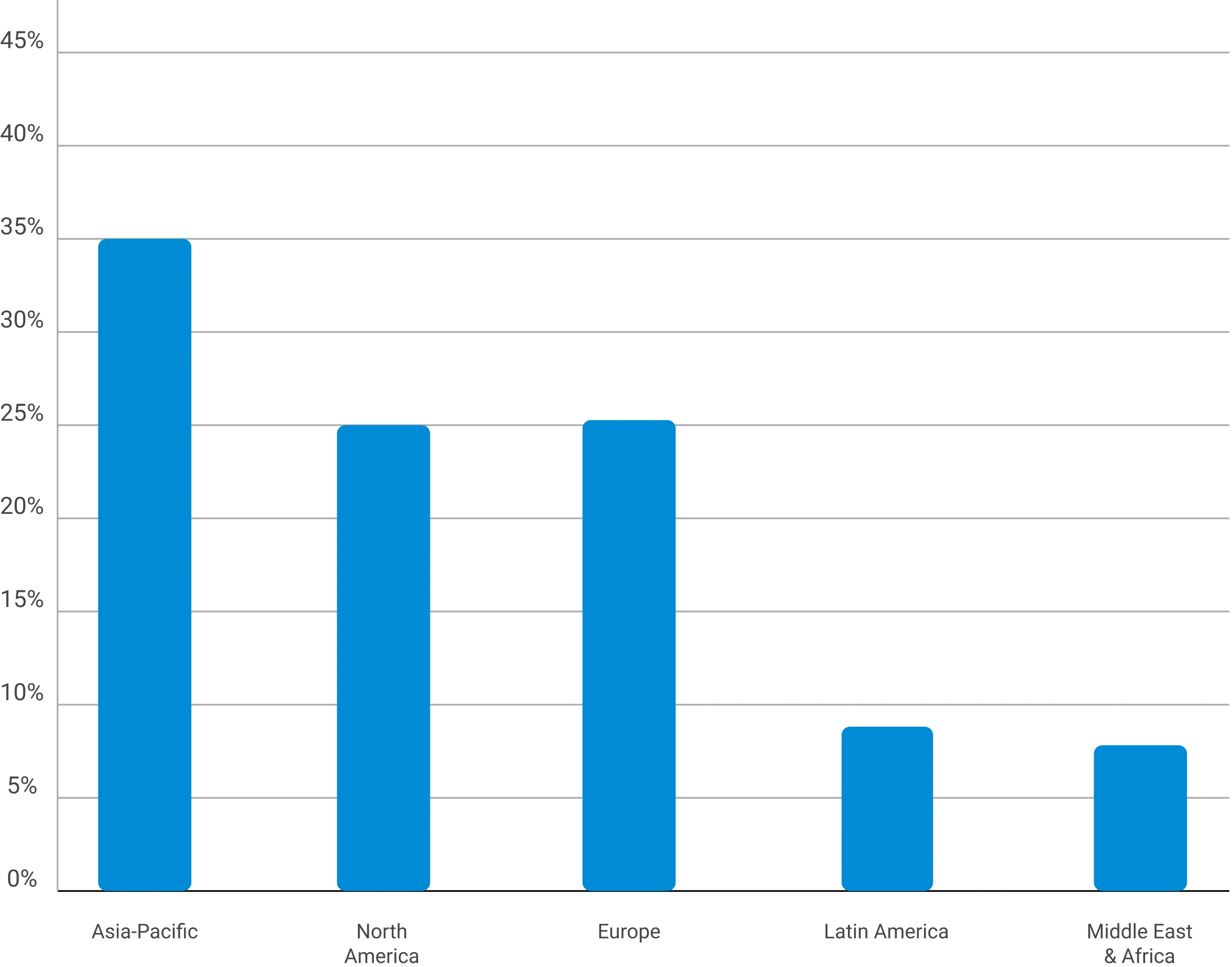
Primary Research — Geographic Coverage of Interviews
Regional distribution of primary research engagement (% share from PPT data)
Phase 6 — Data Triangulation and Market Validation
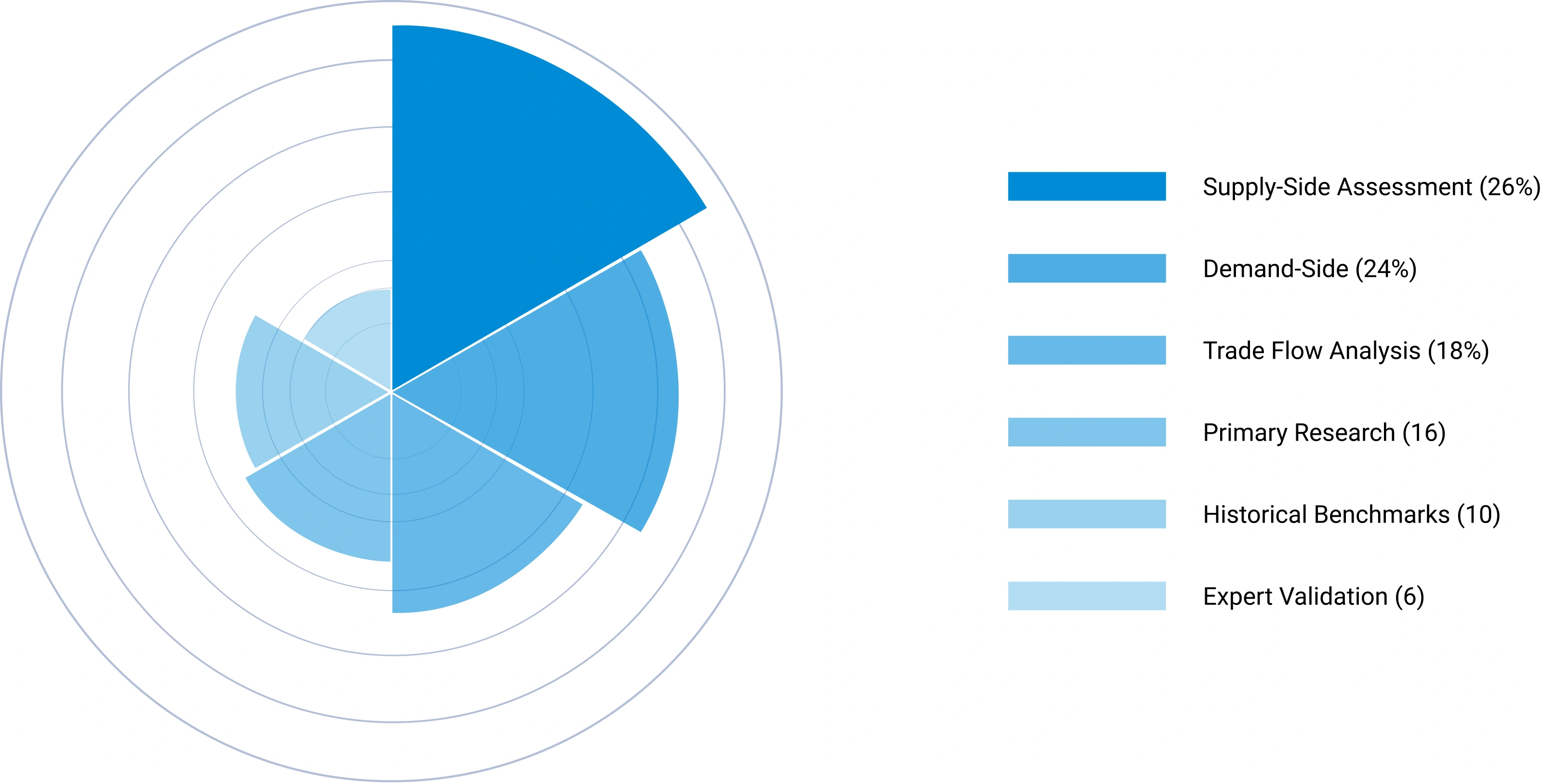
No single methodology is relied upon in isolation. Multiple independent estimation approaches are combined and reconciled to ensure consistency, accuracy, and analytical defensibility. Any material deviations between approaches are investigated and adjusted through additional validation cycles.
The final market size is derived through weighted triangulation of all validated methodologies. Any material deviations between approaches are investigated and adjusted through additional validation cycles. The outcome represents the most realistic assessment of the market based on available evidence and expert confirmation ensuring that volume and value estimates are fully consistent with one another.
Triangulation Framework — Input Contribution Weight
Relative weight each sizing input contributes to the final reconciled market estimate
Phase 7 — Forecast Modeling: Projecting Future Market Evolution
Forecasting evaluates the future trajectory of the market using a combination of quantitative indicators and qualitative assessments across economic, industry, and regulatory dimensions. Rather than simple extrapolation, each driver is independently modeled and integrated into a composite forecast.
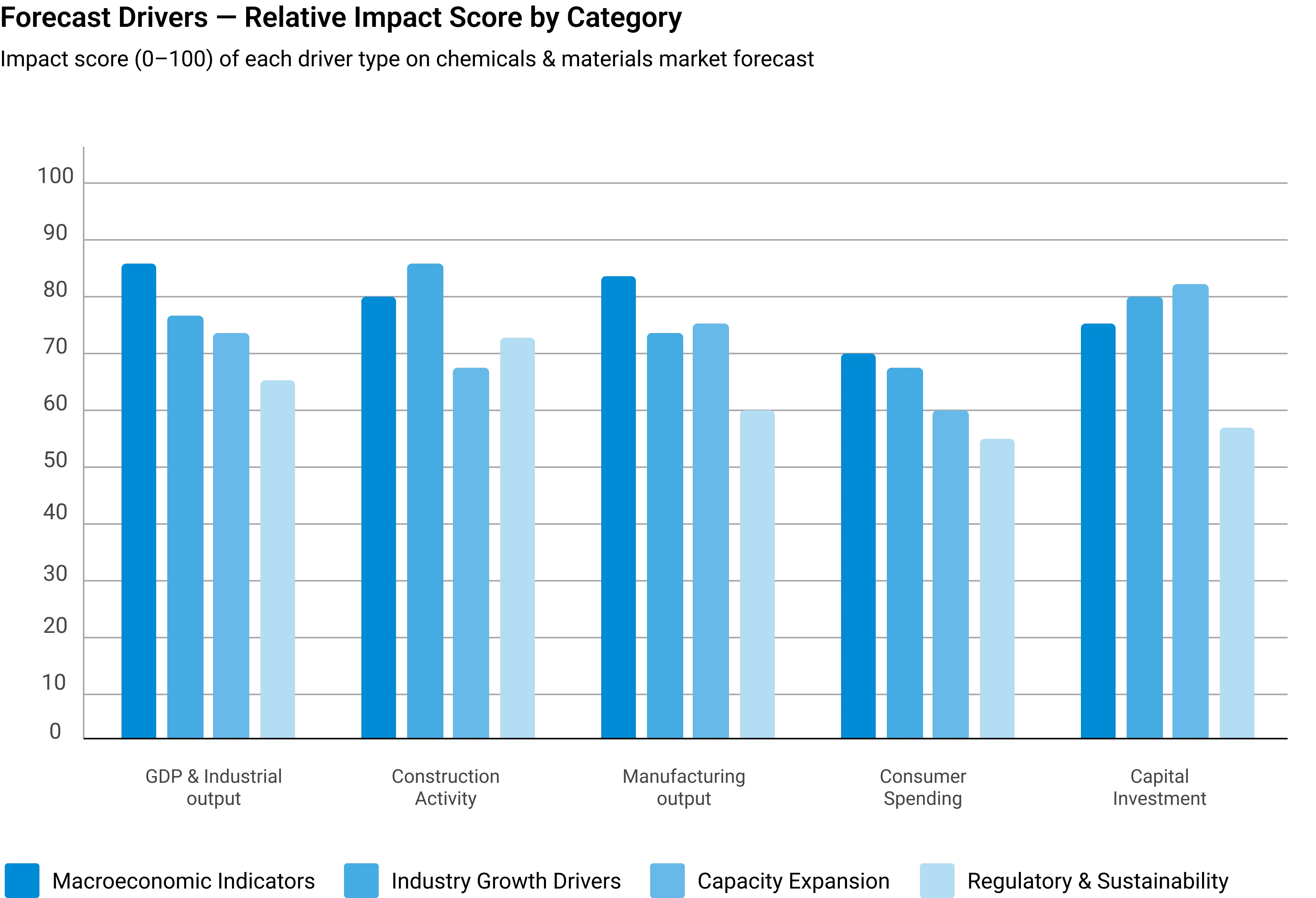
Macroeconomic Indicators
GDP growth, industrial production, manufacturing output, construction activity, consumer spending, and capital investment form the quantitative foundation of long-term demand projections. These are applied at country, regional, and global levels.
Industry Growth Drivers
Urbanization, infrastructure development, industrialization, technological innovation, sustainability initiatives, and evolving product performance requirements are assessed at regional and industry levels — capturing both structural and cyclical demand drivers.
Capacity Expansion Analysis
Announced plant expansions, new manufacturing facilities, technology upgrades, and strategic investments are evaluated to determine future supply-demand dynamics and potential market tightness or oversupply situations.
Regulatory & Sustainability
Environmental regulations, chemical safety standards, emission reduction targets, circular economy initiatives, and sustainability requirements are incorporated as they often influence product adoption rates and market growth trajectories.
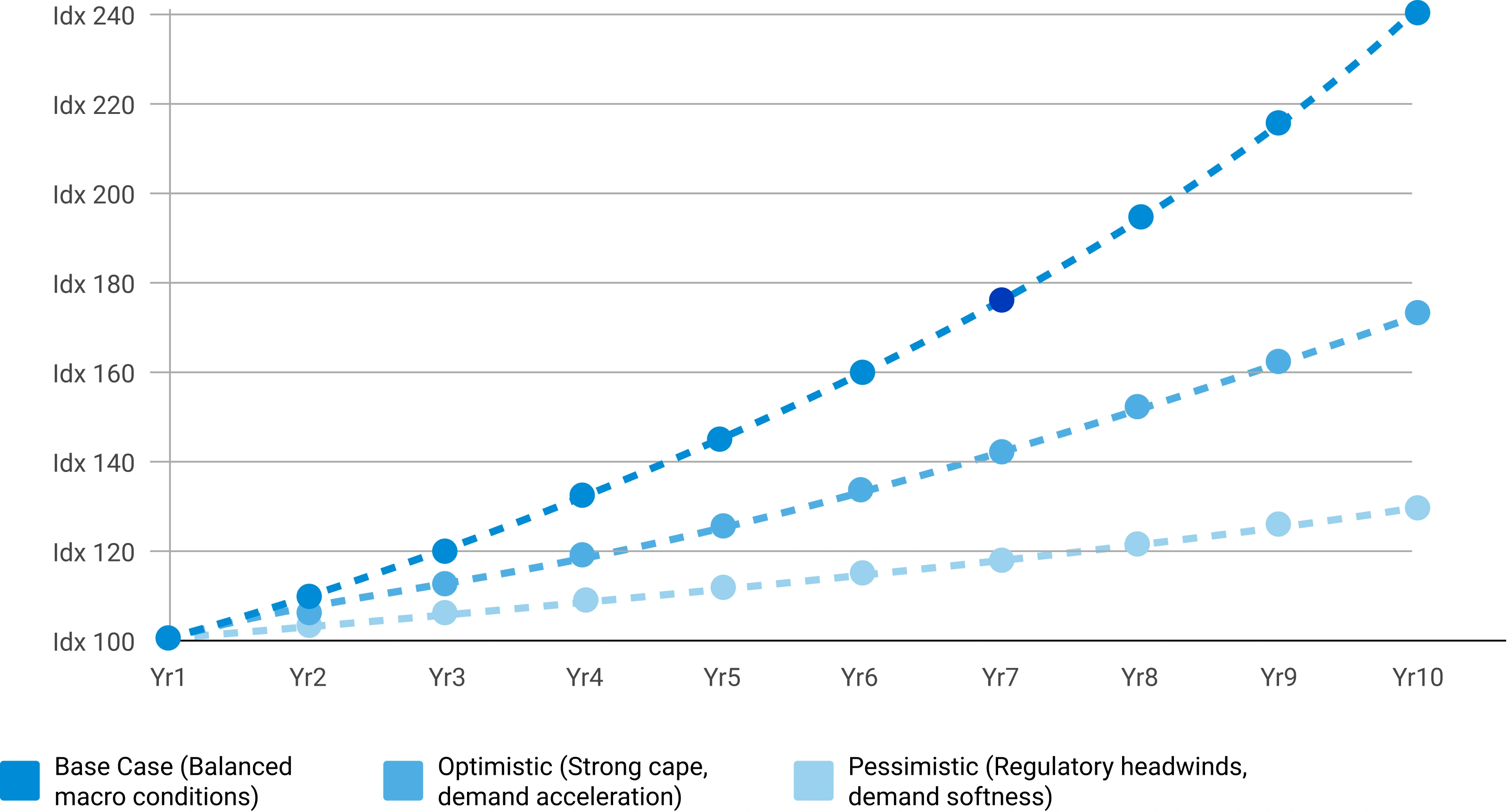
Scenario Forecast Range — Indexed Market Growth (Year 1–10)
Illustrative indexed growth trajectories across Base, Optimistic, and Pessimistic scenarios over a 10-year forecast horizon
Forecast Drivers — Relative Impact Score by Category
Impact score (0–100) of each driver type on chemicals & materials market forecast



Comments
Share your thoughts, ask a question, or provide feedback about this report.