
Asia Pacific Dyestuff Market Size and Forecast 2026 to 2035
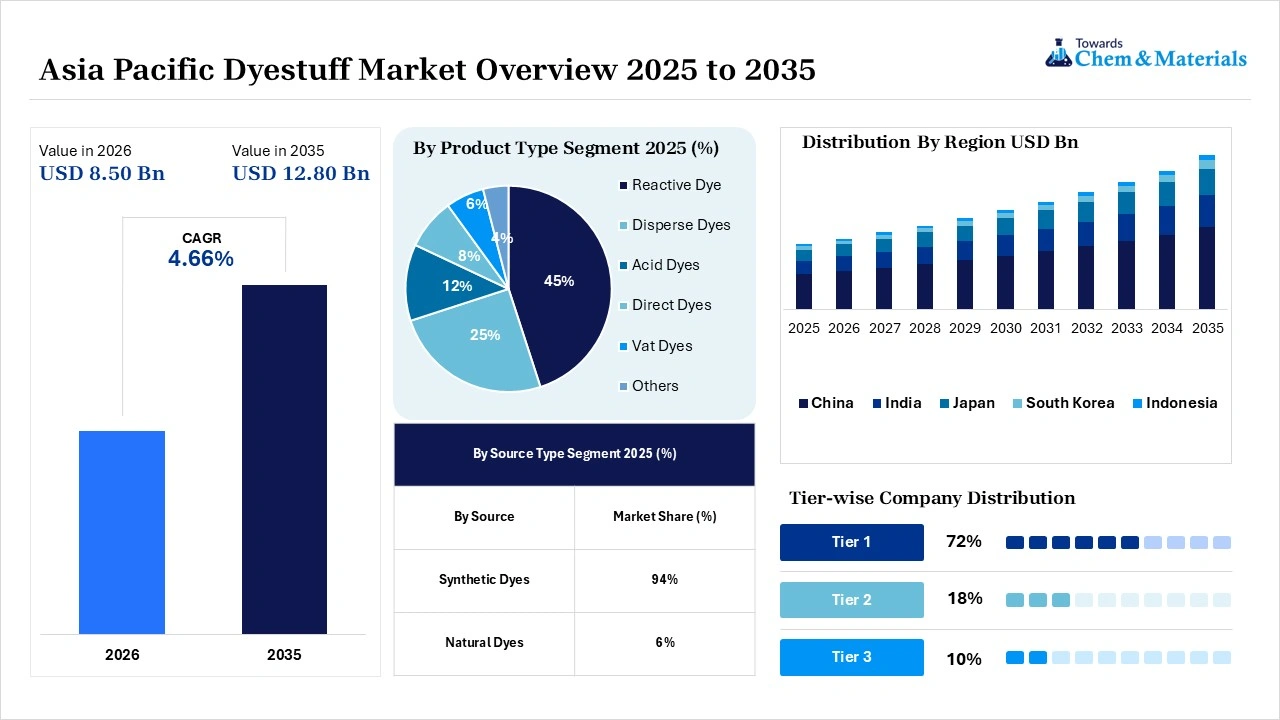
The Asia Pacific dyestuff market is estimated to be valued at USD 8.12 billion in 2025 and is expected to reach USD 12.80 billion by 2035. A wide range of textile production and growing industrial uses contribute to growth in regional economies. The market for dyes continues to be strong, both for reactive dyes and for synthetic dyes; natural dyes are on the agenda, together with environmental concerns. In the regional centers of dyestuff production, digital textile printing, liquid formulations, automation, Internet of Things technologies, waterless dyeing, and cleaner production methods have increasingly become part of the manufacturing processes and investments.
Market Highlights
- China dominated the Asia Pacific dyestuff market by holding a 43.5% share in 2025.
India held a 26.1% market share in 2025. - By product, the reactive dyes segment dominated the market with the largest share of 45.2% in 2025 and is expected to grow at a CAGR of 4.9% during the forecast period.
- By product, the disperse dyes segment held a 25% market share in 2025 and is expected to grow at the fastest CAGR of 5.2% over the forecast period.
- By source, the synthetic dyes segment dominated the market with the largest share of 94% in 2025 and is expected to grow at a CAGR of 4.5% during the forecast period.
- By source, the natural dyes segment held 6% market share in 2025 and is expected to grow at the fastest CAGR of 7.2% over the forecast period.
- By application, the textiles segment dominated the market with the largest share of 78.4% in 2025 and is expected to grow at a CAGR of 4.7% during the forecast period.
- By application, the plastics segment held 4.9% market share in 2025 and is expected to grow at the fastest CAGR of 5.4% over the forecast period.
According to Towards Chemicals and Materials Analytics and Consulting, the Asia Pacific Dyestuff Market volume was valued at 1.65 million metric tons in 2025 and is expected to surpass around 2.47 million metric tons by 2035, accelerating a compound annual growth rate (CAGR) of 4.55% over the forecast period from 2026 to 2035.
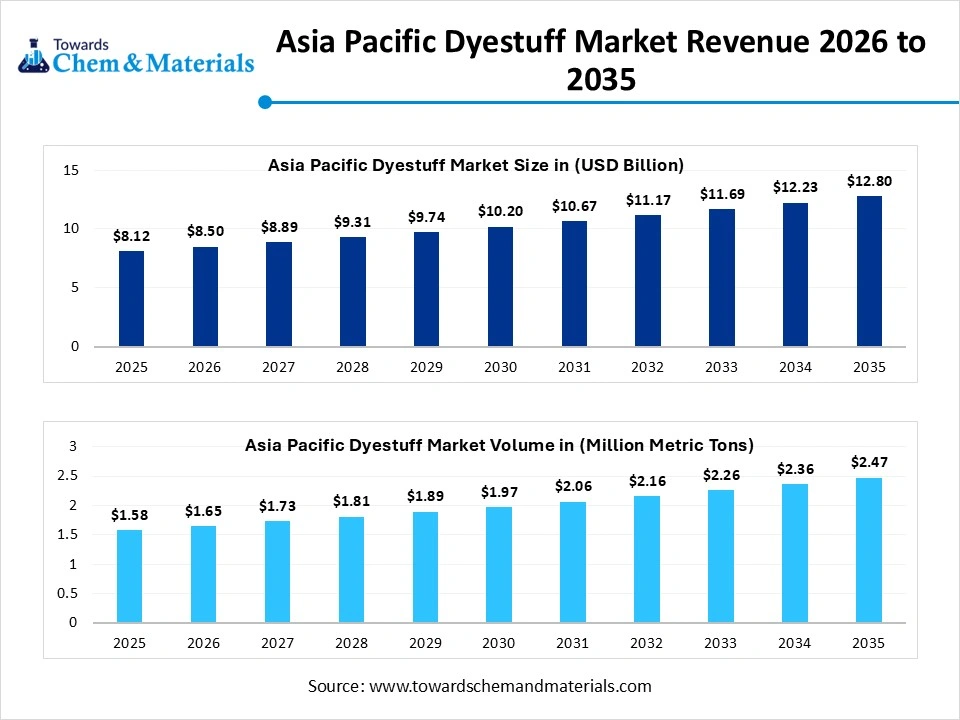
The Asia Pacific dyestuff market continues to be a significant hub for the production and use of dyestuffs globally, with significant textile manufacturing and industrial processes. Demand for textile products creates persistent demand for synthetic and reactive dyes, and growth in the automotive, construction, packaging, plastics, leather, and cosmetics sectors spreads the use of dyes. With the growing environmental requirements and evolving customer preferences, sustainable production is becoming increasingly significant.
Global Investment Movement for the Asia Pacific Dyestuff Market
Governments and private companies are increasingly making investments in dedicated chemical and textile parks (infrastructure upgrades). The facilities enhance the ability to integrate the supply chain and help the growing regional manufacturing capacities.
Closed-loop water systems and advanced wastewater treatment facilities are becoming the focus of investment for sustainable manufacturing. Manufacturers are also helping to ensure more environmentally friendly processes to meet increasingly stringent environmental standards. Liquid dye dispersions and high-performance reactive dyes. In addition, the use of synthetic substitutes that are environmentally friendly is also becoming a priority for manufacturers looking for a niche product.
Spending is continuing to grow on digital printing, automation, and connected manufacturing systems in key production centers in the region. These technologies help reduce resource usage and improve manufacturing flexibility. To diversify production across emerging Asian economies to mitigate risks to the supply chain, manufacturers are increasingly diversifying. Regional capacity shifts also help to satisfy local demand and enhance export potential.
Market Trends
- Environmental Considerations and Sustainable Dye Adoption: Manufacturers are now looking towards sustainable dyes, which are eco-friendly and made from bio-based dyes, to meet environmental needs. Cleaner textile production is also promoted by low-water dyeing technologies in regional markets.
- For instance, in January 2026, Sensient Technologies picked Reverie Pink as its Color of the Year for 2026. This choice came as buyers started to care more about well-being and steady emotions. (Source: asiafoodbeverages.com)
- Reactive Dye Demand: Reactive dyes are still in high demand due to their ability to deliver vibrant hues and superior fabric cohesion. Their regional demand is met by a wide variety of uses for cotton and cellulose.
- Chemical Regulation: Governments are increasingly eliminating hazardous chemicals, like chromium and lead. Manufacturers thus are producing safer organic alternatives to satisfy new environmental standards.
- Digital printing: As a digital printing method, it is more and more used in the textile industry to meet personalized color schemes and small batch orders. The liquid formulations enable the handling of the material without dust and high-speed printing efficiency.
- Smart Manufacturing: The factories in the region are becoming more and more smart by incorporating the Internet of Things, automation, and connected machinery. These systems enable an increase in the efficiency of the resources used and the performance of the operations carried out in manufacturing facilities.
Report Scope
| Report Attributes | Details |
| Market Size in 2026 | USD 8.50 Billion / 0.39 Million Metric Tons |
| Expected Size in 2035 | USD 12.80 Billion / 1.13 Million Metric Tons |
| Growth Rate | CAGR of 4.66% |
| Base Year of Estimation | 2025 |
| Forecast Period | 2025-2035 |
| Segment Covered | By Product Type, By Source Type, By Application |
| Key Companies Profiled | Zhejiang Longsheng Group Co., Ltd., Huntsman Corporation, Zhejiang Runtu Co., Ltd., Jiangsu Yabang Dye Co., Ltd., Clariant AG, Colourtex Industries Private Limited, Kiri Industries Limited, Atul Ltd., Kyung-In Synthetic Corporation, DyStar Group, BASF SE, Nippon Kayaku Co., Ltd., Archroma, Sumitomo Chemical Co., Ltd., Everlight Chemical Industrial Corporation, Bodal Chemicals Limited, Jay Chemical Industries Limited |
Key Technological Shifts and AI in the Asia Pacific Dyestuff Market
The market and environmental law are driving companies to decrease their reliance on traditional chemical products. Businesses are turning to bio-based dyes, waterless dyeing methods, and cleaner technologies that promote reduced environmental impacts. Digital textile printing and small-batch manufacturing requirements are becoming an ever-growing companion to traditional mass production. Digital systems allow easy color changes and palette development, which will help dye houses to formulate specifically for digital printing. Liquid dye formulations also complement the dust-free handling and high-speed production efficiency of modern production environments. The use of connected machines, automation, and the Internet of Things (IoT) is becoming widespread through manufacturing plants in key regional centers.
Supply Chain Analysis of the Asia Pacific Dyestuff Market
Feedstock Procurement
- Feedstock procurement is the process of obtaining raw materials such as crude petrochemicals, intermediates, and basic organic chemicals used in dyestuff manufacturing.
- A reliable supply of raw materials enables regular production processes and helps in maintaining the supply chain between regional production sites.
- BASF SE wins high-volume basic chemical inputs and intermediates in regional supply hubs for production facilities.
- Other Key Players: Clariant AG, Atul Ltd., Kiri Industries Ltd.
Chemical Synthesis and Processing
- Chemical synthesis involves specific reactions, thermal processes, purification, and other manufacturing methods to convert raw materials into basic dye molecules.
- Efficiency of synthesis defines formulation consistency, production reliability, and the possibility of making special dyestuff products.
- Huntsman Corporation is a major player in the chemical manufacturing of high-performance dyes, both reactive and acid.
- Other Key Players: Sumitomo Chemical Co., Ltd., Bodal Chemicals Ltd., Jay Chemical Industries Ltd.
Compound Formulation and Blending
- Formulation is the process of mixing or blending synthetic dye ingredients with additives and carriers to create standardized liquid or powder dye.
- Appropriate blending allows manufacturers to create formulations that meet the needs of the application, its performance expectations, and handling requirements.
- Archroma provides textile and leather dye formulations that are eco-compliant and specialized according to the product requirements of the major players.
- Other Key Players: DIC Corp., Nippon Kayaku Co., Ltd., and CHT Group.
Sustainability Analysis of the Asia Pacific Dyestuff
The Asia Pacific dyestuff market is moving toward sustainable production, as it is expected to be the dominant region in the production of dyestuffs, which is also aligned with the stringent and rising environmental demands of the environment in the region. China, India, Bangladesh, and Vietnam are leaders in textile production, and the industry has become more eco-friendly due to the need to produce at high volumes. There is a growing awareness among export-oriented manufacturers with respect to international environmental standards, and government measures promote wastewater treatment modernization. Waterless dyeing, green chemistry, bio-based dyes, and advanced infrastructure for the treatment of effluents are becoming increasingly adopted to help reach sustainability goals. In 2026, China also enacted a new environmental control standard for its textile industry, further tightening environmental controls.
What is Asia Pacific Dyestuff?
"Asia Pacific Dyestuff" refers to the colorant products produced, supplied, and utilized by industries in the Asia Pacific region, especially in the textile industry and other industrial applications. These products comprise reactive, disperse, acid, direct, vat, basic, synthetic, and natural dyes for various material and processing needs.
Uses of Asia Pacific Dyestuff
- Dyestuffs are used in cotton, polyester, nylon, wool, viscose, acrylic, and blended fabrics for apparel, accessories, upholstery, and automotive leather applications.
- Dyestuffs are used to impart color to leather goods such as footwear, upholstery, automotive leather, garments, and accessories that need to have specific appearance properties.
- Dyestuffs are used in the following paper applications to provide color in writing, printing, packaging, tissue, and specialty papers, allowing manufacturers to give differentiated visual properties to paper products.
- Applications that demand a uniform and distinct appearance of the material (in packaging, engineering, and consumer plastics) use coloring by means of dyestuffs.
- Colorants find applications in various categories, including beverages, confectionery, and processed food, as well as in hair color, make-up, and personal-care products, where coloration is controlled.
Pricing Analysis for the Asia Pacific Dyestuff Market
The competition in the Asia Pacific dyestuffs market, cost of feedstocks, labor cost, environmental compliance regulations, and product specialization are some of the factors that affect pricing in the market. The availability of raw materials and the cost of intermediate products of the petrochemical industry are direct determinants of manufacturing economics. Competitive production costs can be achieved within key centers through local labor availability. As environmental standards get higher, wastewater treatment costs rise. The competition from suppliers is high, which puts pressure on pricing, while high-performance formulations are specialized, which can help in positioning the product at a premium price and in value addition.
Asia Pacific Dyestuff Market: Global Trade Analysis
The Asia Pacific is one of the prime manufacturing and export bases for dyestuffs with a thick textile and industrial base. Large demand for reactive, disperse, vat, and acid dyes in China, India, Vietnam, and Bangladesh. The competitiveness of the region is based on the availability of raw materials and on the availability of labor, while export orientation increases compliance requirements. The trend of manufacturers seeking integration solutions and longer-term feedstock deals is increasing as they seek to control the volatility of feedstocks and improve supply continuity.
Segmental Insights
Product Insights
The reactive dyes segment dominated the market with the largest share of 45.2% in 2025 and is expected to grow at a CAGR of 4.9% over the forecast period, owing to its excellent coloring performance and compatibility with cotton and cellulose fibers. These dyes give brilliant colors and offer better fabric cohesiveness, which helps extensive fabric production in the region. They have been commonly used in the textile industry and are in high demand in the production centers in the Asia Pacific region, which further strengthens their position in the dyestuff market in the region.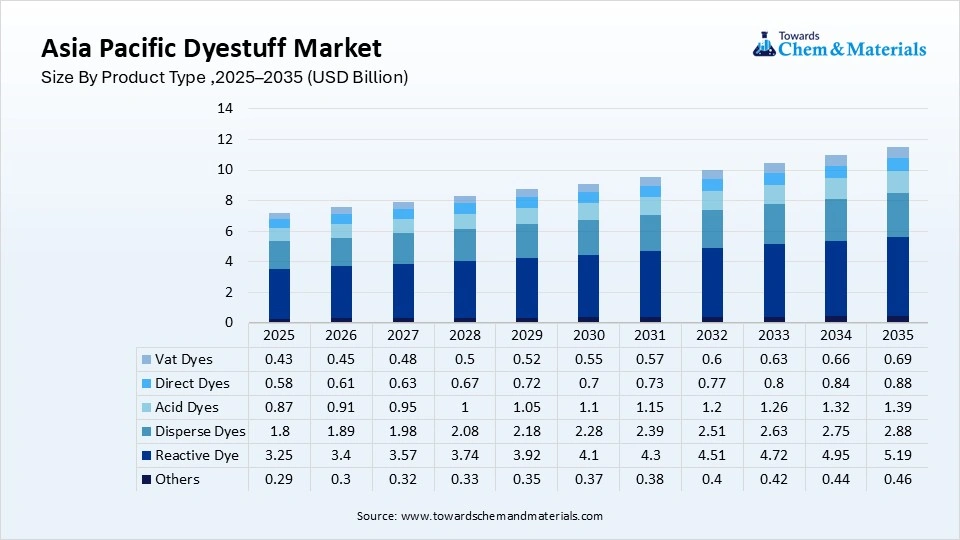
The disperse dyes segment held a 25% market share in 2025 and is expected to grow at the fastest CAGR of 5.2% over the forecast period, driven by rising demand for dyes in synthetic textile materials. There is a growing demand for production and efficient dyeing solutions, providing an opportunity for disperse dye manufacturers. They are highly compatible with polyester and other synthetic fibers, enabling them to be used in a wide range of textile manufacturing and processing industries in the region.
Asia Pacific Dyestuff Market Share, By Product Type, 2025 (%)
| By Product Type | Market Share (%) |
| Reactive Dye | 45% |
| Disperse Dyes | 25% |
| Acid Dyes | 12% |
| Direct Dyes | 8% |
| Vat Dyes | 6% |
| Others | 4% |
Source Insights
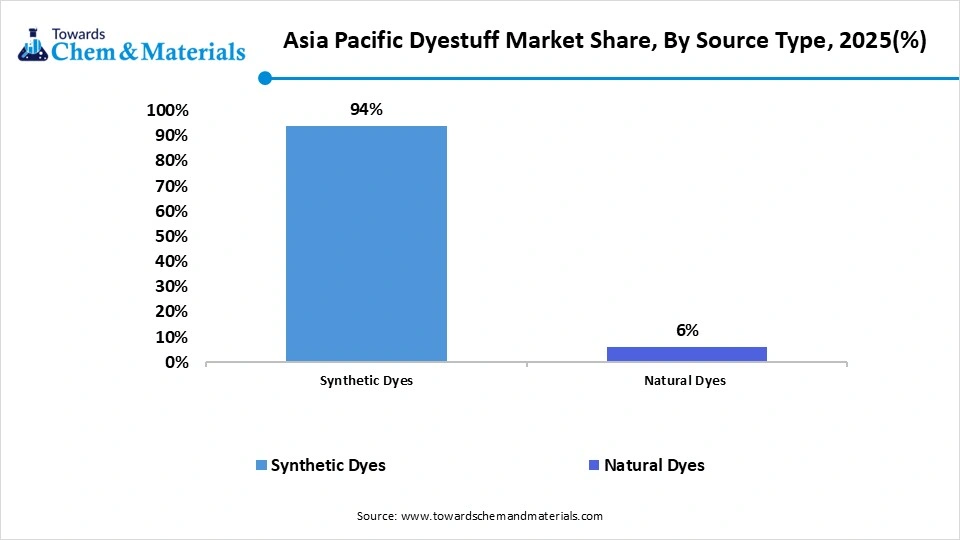
The synthetic dyes segment dominated the market with the largest share of 94% in 2025 and is expected to grow at a CAGR of 4.5% over the forecast period due to its widespread industrial availability, manufacturing support, and application in textile and industrial processes. A range of product requirements are met through petroleum-derived intermediates, coal-tar-derived intermediates, and high-performance synthetic formulations. Synthetic dyes have been gaining their foothold in the regional dyestuff market thanks to their existing supply chains and wide-ranging industrial applications.
- For instance, in June 2026, Cosmo Films boosted its Cosmo Synthetic Paper brand with a new addition in the form of CSP DigiLux-MW, which meets the demand for durable and aesthetically pleasing materials used in high-end digital printing applications. (Source: www.indianchemicalnewswastewateral)
The natural dyes segment held a 6% market share in 2025 and is expected to grow at the fastest CAGR of 7.2% over the forecast period, with manufacturers and customers becoming more aware of the various environmentally friendly alternatives to dyeing. Plant-based dyes, animal-based dyes, and microbial/biotechnology-based dyes offer ways to decrease the use of traditional synthetic dyes. A growing number of priorities and changing preferences in food, cosmetics, and textile applications are contributing to the general trend for natural coloring solutions.
- For instance, in June 2026, M&Ms released another version of its product without artificial dyes, indicating a shift toward the use of natural dyes and eliminating two of its iconic colors. (Source: eciks.org)
Asia Pacific Dyestuff Market Share, By Source, 2025 (%)
| By Source | Market Share (%) |
| Synthetic Dyes | 94% |
| Natural Dyes | 6% |
Application Insights
The textiles segment dominated the market with the largest share of 78.4% in 2025 and is expected to grow at a CAGR of 4.7% over the forecast period, owing to the presence of a large number of textile manufacturing and processing activities. Dyestuffs are extensively used in cotton, polyester, nylon, wool, viscose, acrylic, and blended fabrics. Garments, accessories, upholstery, and automotive leather are additional applications driving demand, and all of these have ties to the textile industry, making this the key application in the region for both demand and production of dyestuffs.
- For instance, in December 2025, Archroma and Innovo Fiber announced a sustainable textile partnership, introducing low-temperature, caustic-free bleaching techniques and innovative applications for the dyeing of textile mills and brands. (Source: www.indianchemicalnews.com)
The plastics segment held a 4.9% market share in 2025 and is expected to grow at the fastest CAGR of 5.4% over the forecast period, as packaging, engineering, and consumer plastics have more and more need for specialized color. The demand for appropriate dye formulations is backed by increased industrial activity and increased production of plastic products. To support varying appearance demands, manufacturers can use special colorants to provide further opportunities for dyestuff suppliers in the Asia Pacific for different plastic applications.
Asia Pacific Dyestuff Market Share, By Application, 2025 (%)
| By Application | Market Share (%) |
| Textiles | 78% |
| Leather | 9% |
| Paper & Pulp | 6% |
| Plastics | 5% |
| Cosmetics | 1% |
| Food | 1% |
| Others | 1% |
Regional Insights
How Did China Dominate the Asia Pacific Dyestuff Market in 2025?
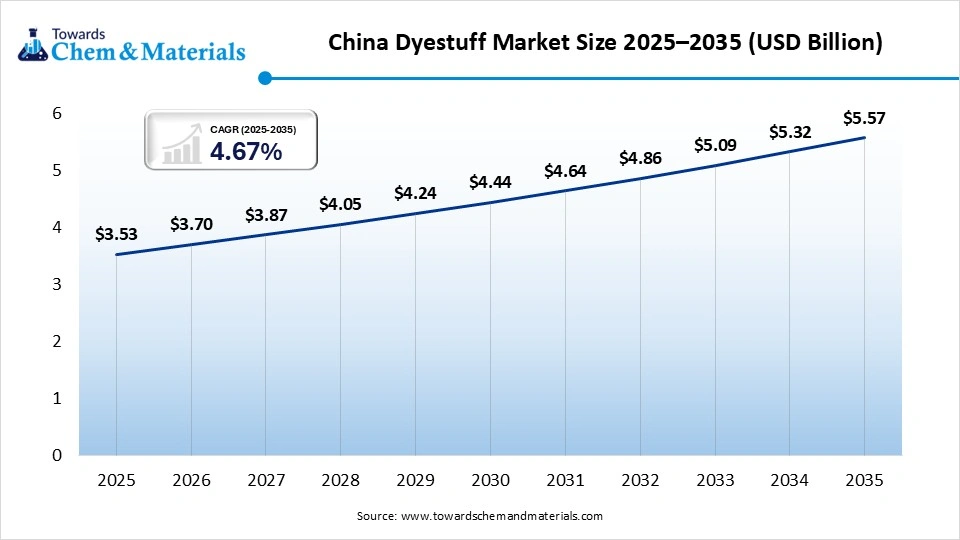
The China dyestuff market size was estimated at USD 296.08 billion in 2025 and is projected to reach USD 975.77 billion by 2035, growing at a CAGR of 12.67% from 2026 to 2035. China dominated the market with the largest share of 43.5% in 2025. China is the biggest player in the regional dyestuff market, with significant manufacturing capacities, a large textile industry, and well-developed chemical supply chains. The country has a wide industrial base, which provides substantial demand in textile industries and other applications. Environmental needs are growing, and factories are increasingly taking steps to enhance water usage and use cleaner technology. These changes will have a profound impact on the future of Chinas dyestuff industry.
India
Indias dyestuff market size was estimated at USD 58.57 billion in 2025 and is projected to reach USD 193.54 billion by 2035, growing at a CAGR of 12.70% from 2026 to 2035. India held a 26.1% market share in 2025. India has a good position in the regional dyestuff market due to the large size of the textile industry, the ability to produce dyes, and industrial activity aimed at exports. Better wastewater management and cleaner manufacturing are being promoted through increased environmental requirements. Integrated production capabilities offer increased control of supply chains for producers, and expanding textile demand continues to create significant opportunity for the continued growth of reactions, synthetics, natural dyes, and specialty dyes.
- For instance, in October 2025, Shree Pushkar Chemicals & Fertilisers enhanced its impact in the textile industry in Bangladesh, showcasing its backward integration and sustainable dye innovation initiatives in line with the countrys growing textile sector. (Source: www.textiletoday.com)
Japan
Japans dyestuff market size was estimated at USD 93.09 billion in 2025 and is projected to reach USD 307.76 billion by 2035, growing at a CAGR of 12.70% from 2026 to 2035. Japan held a 9.2% market share in 2025. Thanks to its cutting-edge industrial technology and its research on special uses of chemicals, Japan continues to play a significant role in the regional market. There is growing interest in cleaner technologies and natural colorants, as the sustainability aspect is addressed. Studies on the plant-based remediation of colorants offer opportunities for lessening reliance on petrochemicals. The countrys technological capacities have contributed to further development of specialized formulations for various industrial and consumer uses.
South Korea
The South Korea dyestuff market size was estimated at USD 68.38 billion in 2025 and is projected to reach USD 225.83 billion by 2035, growing at a CAGR of 12.69% from 2026 to 2035. South Korea held a 6.8% market share in 2025. South Korea is a key regional market, backed by existing manufacturing capabilities and greater interest in alternative coloration methods. Natural colorants can be used in food and cosmetic applications in addition to the traditional industrial applications. Manufacturers are shifting towards finding alternatives to artificial dyes; fermentation-derived solutions are gaining in significance. These are important achievements for improving the diversity of South Koreas use of dyes.
- For instance, in September 2025, Michroma collaborated with CJ CheilJedang to increase the production of a fermentation-based natural red dye for food and cosmetic applications, reflecting a growing trend in the industry toward using natural dyes. (Source: www.greenqueen.com)
Indonesia
Indonesias dyestuff market size was estimated at USD 29.44 billion in 2025 and is projected to reach USD 97.88 billion by 2035, growing at a CAGR of 12.77% from 2026 to 2035. Indonesia held a 4.8% market share in 2025. Dyestuff manufacturers in Indonesia have growing opportunities, given the increasing interest in natural coloration methods as a result of textile activity and sustainability issues. Plant dyes offer opportunities in consumer and industrial products. Exploiting partnerships between natural color solution providers can enhance market access and distribution capacity. Expanding the focus on eco-friendly products will contribute to the wider adoption of sustainable coloration technologies.
- For instance, in January 2026, GNT Group joined with PT United Chemicals Inter Aneka in expanding the availability of plant-based EXBERRY® colorings throughout Indonesia to increase the availability of sustainable colorings. (Source: millingmea.com)
Recent Developments
- In August 2026, Brenntag entered an exclusive agreement with Sudarshan Chemical Industries for cosmetic-grade pigments and specialty colorants in Southeast Asia. The deal brings color solutions for beauty and personal-care products to more people in Indonesia, Malaysia, the Philippines, Singapore, Thailand, and Vietnam. (Source: www.brenntag.com)
Competitive Analysis
The Asia Pacific dyestuffs market consists of well-established manufacturers, integrated production capabilities, special formulations, and growing demand for sustainable dyestuffs in the market. Manufacturers spend increasing amounts on cleaning up their technologies, wastewater management, and sustainable formulations, and this has become a major influence on competitiveness, while environmental compliance itself becomes more and more important. To boost competitive positions in Asia Pacific, major players are increasingly adopting a strategy of meeting all the demands of manufacturing scale, specialized products, sustainability efforts, technological capabilities, and geographic expansion.
- For instance, in March 2026, DyStar received ISO 14001 accreditation in its Gabus plant. The development supports environmental management, operational excellence, sustainability commitments, and responsible manufacturing practices. (Source: www.dystar.com)
- In August 2026, Sudarshan Chemical Industries signed a deal to buy Clariant Additives Swiss-based aluminum dyes and chemicals manufacturing plant in August 2026. The agreement boosts Sudarshans international manufacturing capabilities and its reach in the domain of specialty dyes and chemicals.
(Source: www.alchempro.com) - In February 2025, Epson India showcased direct-to-fabric printing solutions and introduced an upcoming direct-to-film printer. The development bolsters Epsons digital textile printing portfolio and meets the changing demands of the textile production industry. (Source: www.indiantextilemagazine.in)
Top Players in the Market & Their Offerings
| Company | Company Type/Position | Major Headquarters | Geographic Presence | Asia Pacific Dyestuff Offerings | Key Strength |
| DyStar Singapore Pte Ltd | Manufacturer | Singapore | Global | Reactive dyes, Disperse dyes | Strong regional headquarters in Singapore with robust supply chain networks |
| Kiri Industries Ltd. | Manufacturer & Exporter | Ahmedabad, Gujarat, India | Asia-Pacific, Europe | Basic dyes, Acid dyes | Cost-effective, large-scale manufacturing infrastructure |
| Jay Chemical Industries Ltd. | Manufacturer & Supplier | Ahmedabad, Gujarat, India | Global | Reactive dyes | Deep penetration in regional textile hubs with integrated production capacities |
Other Key Players
- Zhejiang Longsheng Group Co., Ltd.
- Huntsman Corporation
- Zhejiang Runtu Co., Ltd.
- Jiangsu Yabang Dye Co., Ltd.
- Clariant AG
- Colortex Industries Private Limited
- Kiri Industries Limited
- Atul Ltd.
- Kyung-In Synthetic Corporation
- DyStar Group
- BASF SE
- Nippon Kayaku Co., Ltd.
- Archroma
- Sumitomo Chemical Co., Ltd.
- Everlight Chemical Industrial Corporation
- Bodal Chemicals Limited
- Jay Chemical Industries Limited
Segment Covered in the Report
By Product Type
- Reactive Dyes
- Monochlorotriazine
- Dichlorotriazine
- Vinyl sulfone
- Bifunctional reactive dyes
- Disperse Dyes
- Low-energy disperse dyes
- Medium-energy disperse dyes
- High-energy disperse dyes
- Acid Dyes
- Leveling acid dyes
- Milling acid dyes
- Metal-complex acid dyes
- Direct Dyes
- Standard direct dyes
- High-fastness direct dyes
- Vat Dyes
- Indigo
- Anthraquinone vat dyes
- Other vat dyes
- Others
- Basic dyes
- Solvent dyes
- Mordant dyes
By Source
- Synthetic Dyes
- Petroleum-derived synthetic dyes
- Coal-tar-derived intermediates
- High-performance synthetic dyes
- Natural Dyes
- Plant-based dyes
- Animal-derived dyes
- Microbial/biotechnology-derived dyes
By Application
- Textiles
- Cotton
- Polyester
- Nylon
- Wool
- Viscose/rayon
- Acrylic
- Blended fabrics
- Leather
- Footwear
- Upholstery
- Automotive leather
- Garments and accessories
- Paper & Pulp
- Writing and printing paper
- Packaging paper
- Tissue and specialty paper
- Plastics
- Packaging plastics
- Engineering plastics
- Consumer plastics
- Cosmetics
- Hair colors
- Makeup
- Personal-care products
- Food
- Beverages
- Confectionery
- Processed foods
- Others
- Inks
- Wood
- Agricultural products
- Industrial coatings
By Regions
- North America
- Latin America
- Europe
- Asia Pacific
- MEA
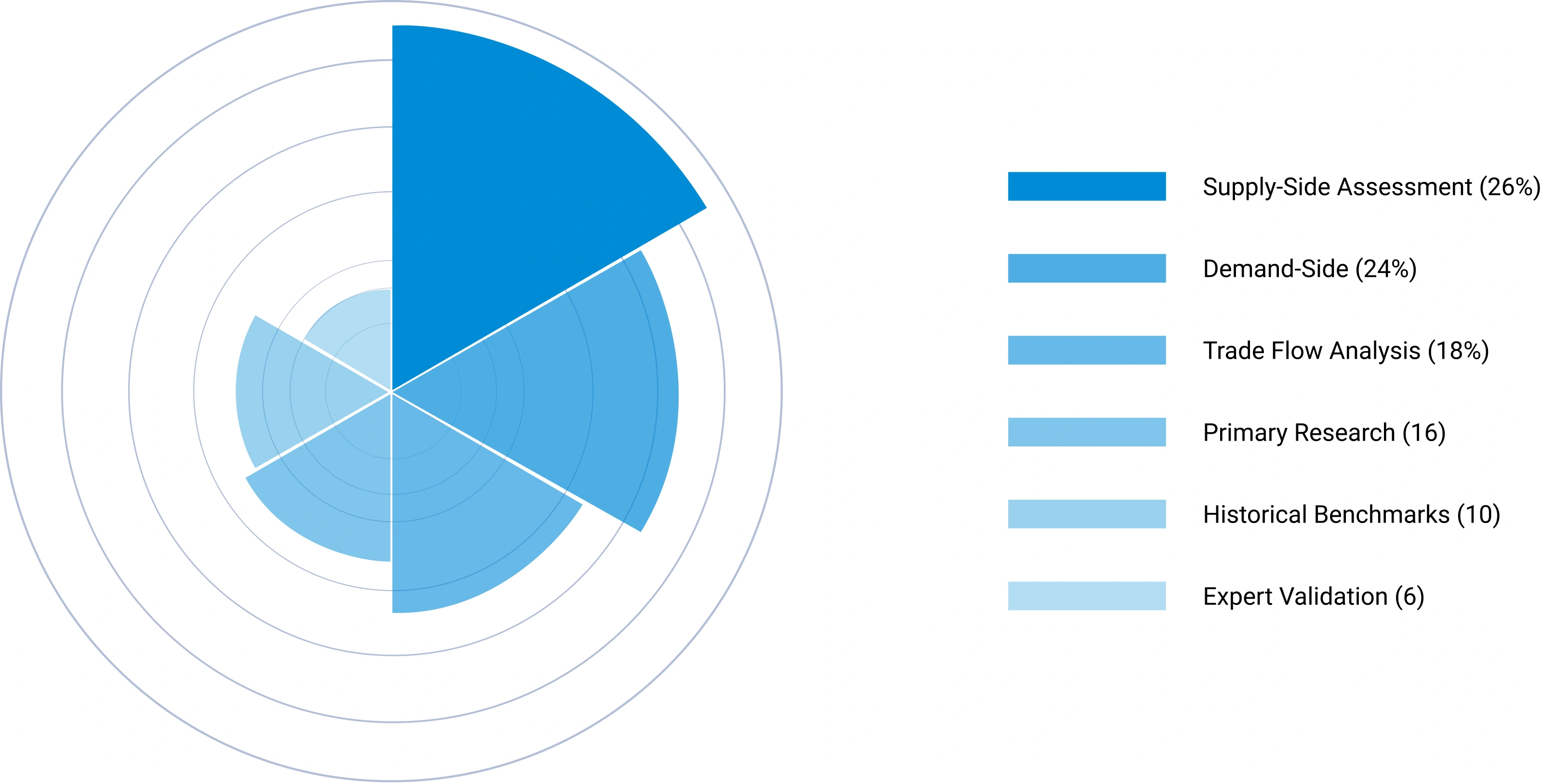
A Seven-Phase Framework
Our methodology is designed to be universally applicable across commodity chemicals, specialty chemicals, petrochemicals, construction chemicals, coatings, electronic chemicals, industrial gases, agrochemicals, water treatment chemicals, and performance materials. Each phase builds upon the last, creating a layered validation structure that minimizes estimation error and maximizes analytical confidence.
The framework ensures comprehensive market coverage, robust cross-validation, and reliable long-term forecasting — producing market estimates that withstand scrutiny from investors, regulators, and corporate strategy teams.

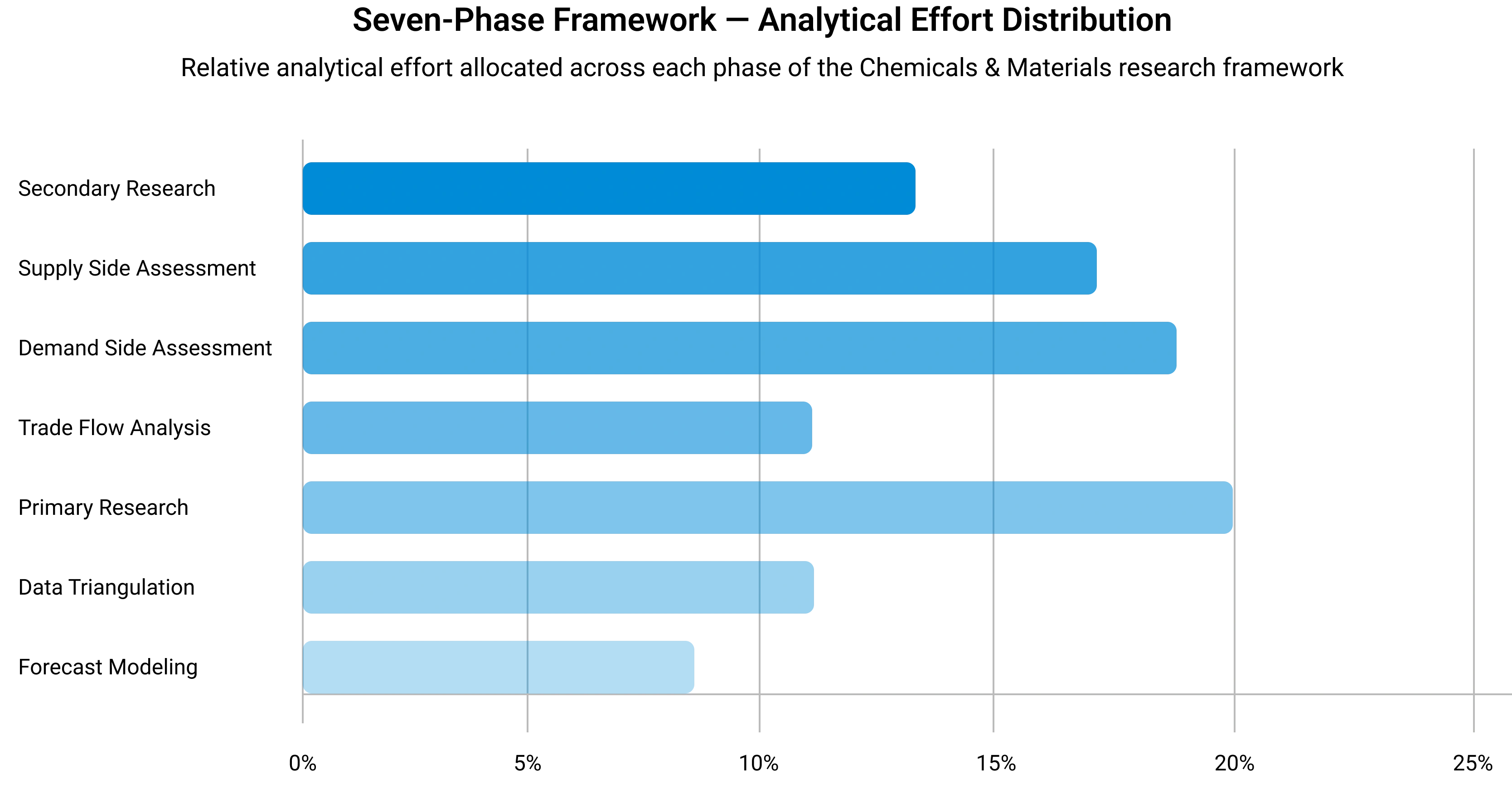
Seven-Phase Framework — Analytical Effort Distribution
Relative analytical effort allocated across each phase of the Chemicals & Materials research framework
Phase 1 - Secondary Research: Establishing the Foundation
Secondary research collects and evaluates publicly available information from authoritative sources, establishing the foundational understanding of market structure, value chain dynamics, competitive landscape, and end-use demand patterns. Every source is evaluated for credibility, recency, geographic relevance, and methodological soundness before inclusion.
Industry Associations
Sources include ACC, CEFIC, ICCA, JCIA, CPCIF, and SOCMA providing production volumes, consumption trends, capacity developments, and sustainability initiatives.
Company Disclosures
Annual reports, investor presentations, earnings transcripts, and regulatory filings reveal product portfolios, manufacturing footprints, capacity expansions, and revenue segmentation.
Government Databases
National statistical offices, customs authorities, environmental agencies, and industrial production databases provide verified statistics on output, trade flows, and regulatory compliance.
Trade Databases
UN Comtrade, ITC, Eurostat, and national customs authorities enable assessment of global product movement, import dependency, and export competitiveness across regions.
Our Secondary Research Sources
- Ministry of Chemicals and Fertilizers
- European Chemicals Agency
- United States Department of Energy
- Ministry of Industry and Information Technology
- Ministry of Economy Trade and Industry
- Ministry of Trade Industry and Energy
- National Institute of Standards and Technology
- Council of Scientific and Industrial Research
- Fraunhofer Society
- National Institute for Materials Science
Phase 2 — Supply-Side Assessment: Mapping Production Capabilities
Production Capacity Analysis
All major manufacturers are assessed for existing installed capacity, planned additions, expansions, new plant announcements, and technology adoption — mapped at global, regional, and country levels.
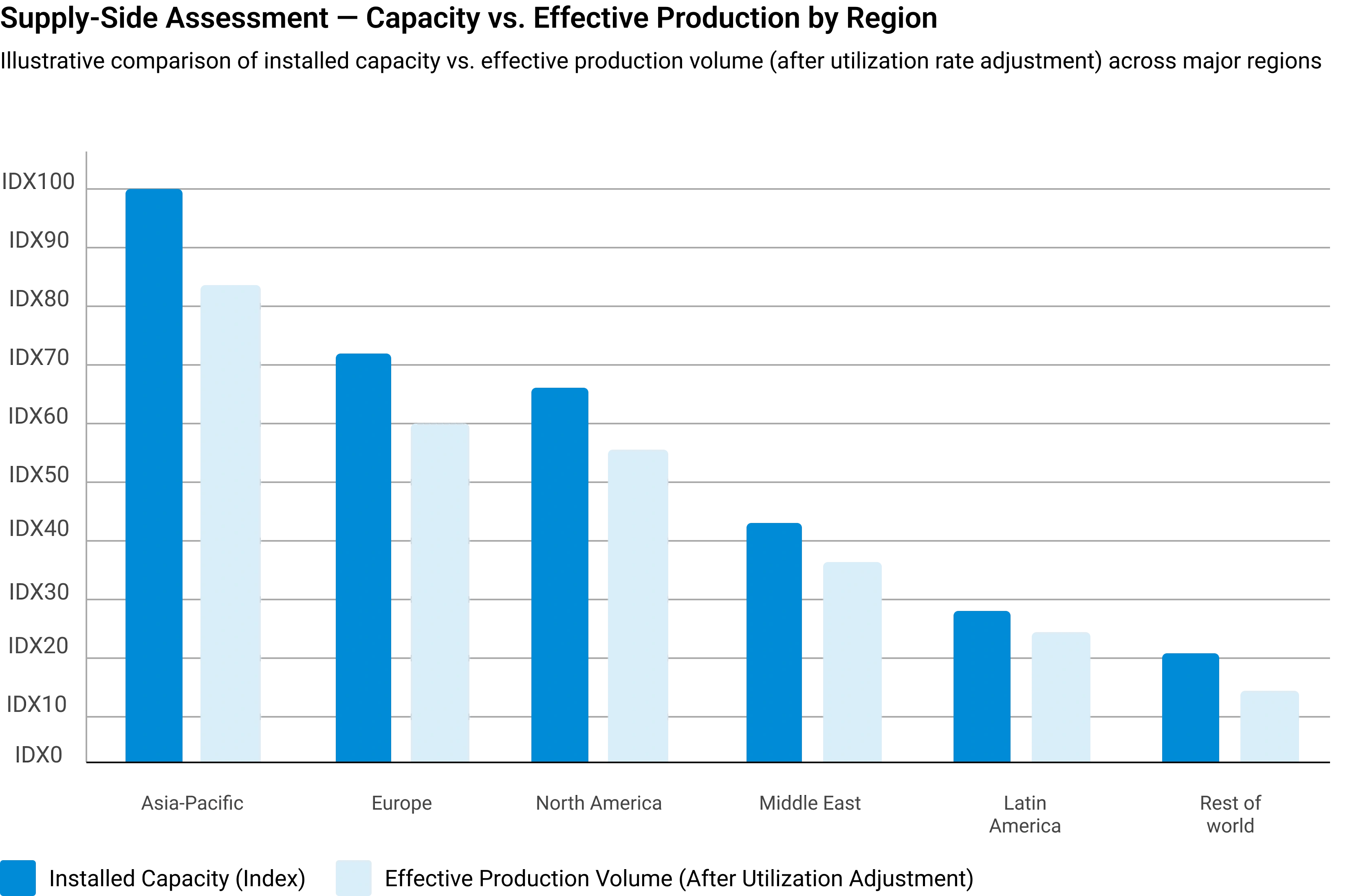
Capacity Utilization Adjustment
Installed capacity is adjusted using utilization rates based on demand conditions, feedstock availability, plant operating rates, maintenance schedules, and regulatory restrictions.
Manufacturer Revenue Analysis
Product-specific revenues, segment-level performance, regional distribution, average selling prices, and margin trends are evaluated to establish market value estimates.
Supply-Side Assessment — Capacity vs. Effective Production by Region
Illustrative comparison of installed capacity vs. effective production volume (after utilization rate adjustment) across major regions
Phase 3 — Demand-Side Assessment: Quantifying Chemical Consumption
Demand-side analysis quantifies chemical consumption across industries, applications, and geographies — identifying where and how chemicals are consumed throughout the value chain with precision.
End-Use Industry Analysis
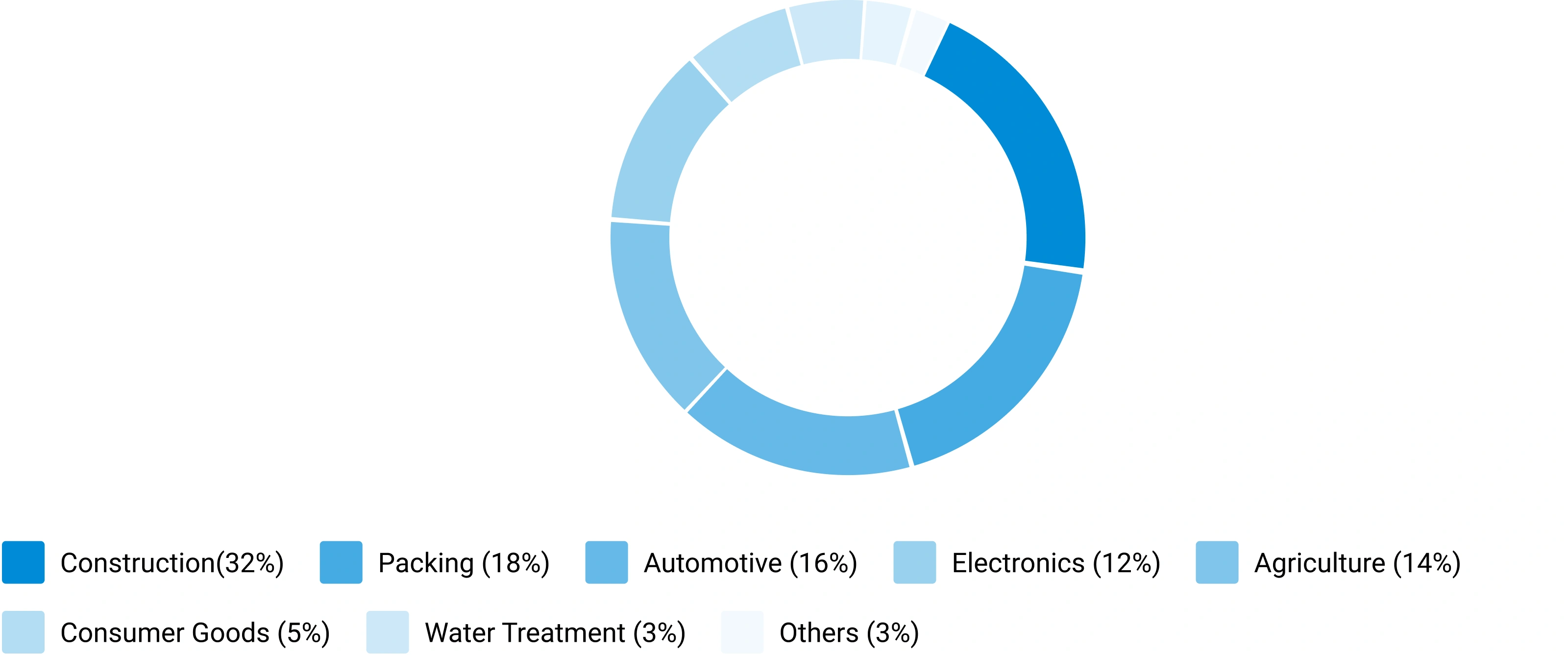
Chemical demand is evaluated across automotive, construction, packaging, electronics, agriculture, healthcare, consumer goods, industrial manufacturing, energy and utilities, and water treatment. Industry output, production trends, and consumption intensity are analyzed to determine demand patterns.
Consumption Modeling
Demand is estimated using measurable indicators: kilograms per vehicle, kilograms per square meter of construction, dosage per cubic meter of water treated, kilograms per hectare of agricultural land, and kilograms per ton of manufactured products. Consumption factors are validated through industry publications and primary interviews.
Application Analysis
The market is segmented by application area to understand product performance requirements, formulation trends, technology adoption, customer preferences, and regulatory requirements improving demand accuracy and segmentation granularity.
Demand-Side Assessment — End-Use Industry Demand Distribution
Illustrative distribution of chemical & materials demand across key end-use industries
Phase 4 - Trade Flow Analysis: Balancing Regional Supply and Demand
Trade flow analysis reconciles regional supply and demand estimates through import and export data, identifying net supply positions, regional dependencies, and market imbalances. It serves as an independent validation layer that tests the consistency of supply-side and demand-side estimates.
Import Analysis
Import data is evaluated to determine volumes, source countries, product dependency, regional supply gaps, and pricing trends — identifying markets that rely heavily on external supply and where domestic production is insufficient to meet demand.
Export Analysis
Export assessments reveal production surplus, export competitiveness, regional manufacturing strength, and global market participation. Export patterns also help validate domestic production estimates and identify net exporting regions.
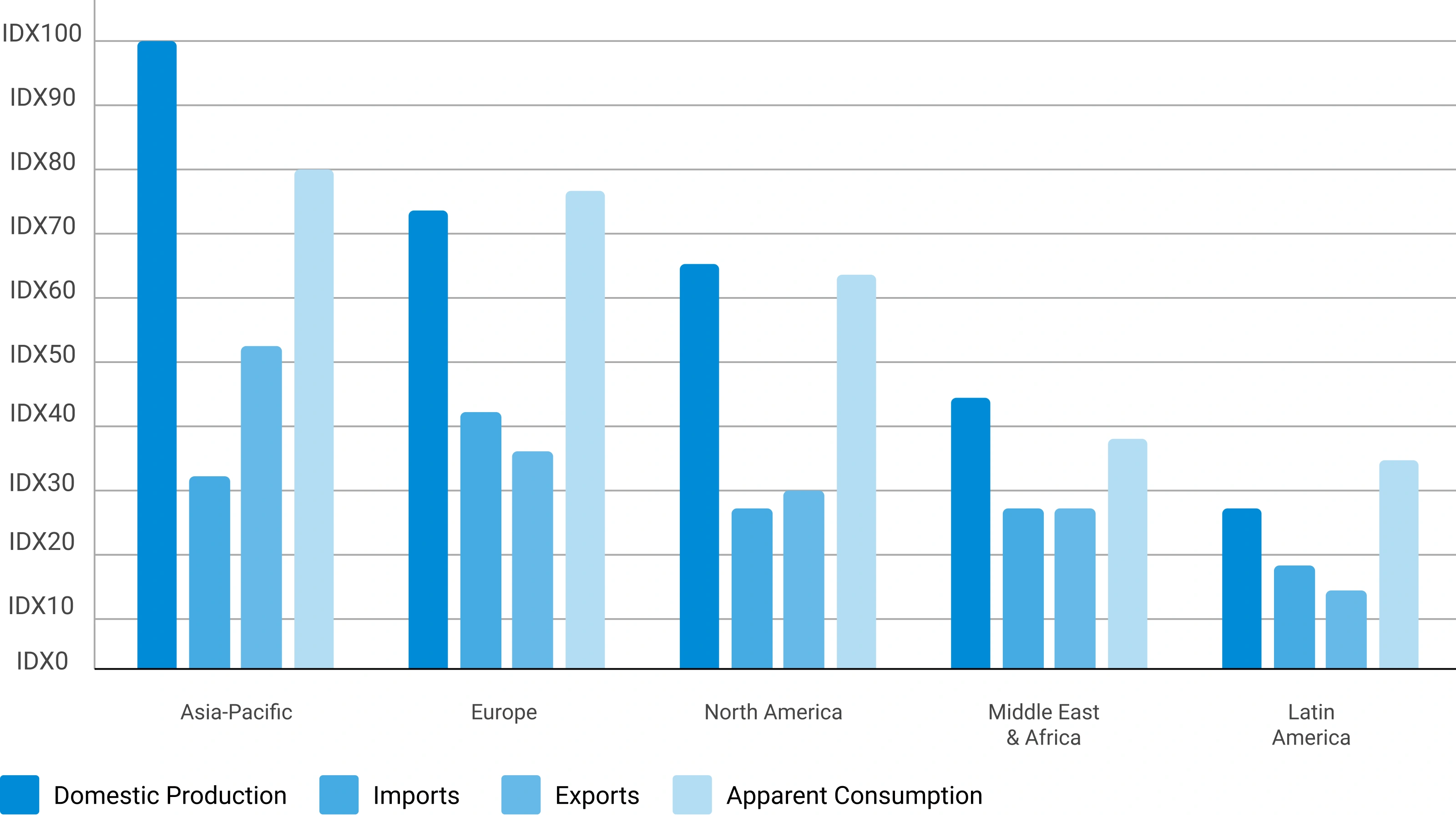
Apparent Consumption Model
Regional consumption is assessed using the standard apparent consumption formula:
Results identify net importing regions, net exporting regions, regional deficits, and surpluses — serving as an independent validation of supply and demand estimates.
Trade Flow Analysis — Net Supply Position by Region
Illustrative apparent consumption vs. domestic production across major regions — positive gap indicates net import dependency
Phase 5 — Primary Research: The Critical Validation Layer
Primary research tests and refines findings from secondary research through direct engagement with industry participants across the supply chain, demand side, and expert community. It captures intelligence that no database or published report can provide — the real-world experience of manufacturers, buyers, and specialists operating in the market.

Supply-Side Interviews
Conversations with chemical manufacturers, raw material suppliers, contract manufacturers, technology providers, and plant operators cover production trends, capacity utilization, pricing developments, technology shifts, and competitive dynamics.

Demand-Side Interviews
Engagement with OEMs, industrial consumers, procurement managers, distributors, formulators, and end-use manufacturers focuses on consumption trends, purchasing behavior, product substitution, demand outlook, and emerging applications.

Industry Expert Consultations
Additional interviews with industry consultants, independent experts, regulatory specialists, technical professionals, and research institutions provide deeper market context and validate key analytical assumptions.
Focus Areas of Primary Research:
Market Size & Forecast Validation
Revenue estimates, volume consumption, growth rates, forecast assumptions, regional demand.Supply Chain & Value Chain Assessment
Raw material sourcing, supply chain challenges, distribution networks, procurement practices.Production & Capacity Analysis
Manufacturing capacity, utilization rates, expansion projects, plant investments.Pricing & Cost Structure Analysis
Product pricing trends, feedstock costs, energy costs, margin pressures, pricing outlook.Competitive Landscape Assessment
Volume and value estimates confirmed to be fully consistent with one another before publicationInterview Volume by Market Scope
| Study Scope | Number of Interviews |
|---|---|
| Niche Market | 20 – 30 |
| Mid-Sized Market | 30 – 50 |
| Global Market | 50 – 80 |
| Highly Fragmented Market | 80 – 120 |
Interview Details:
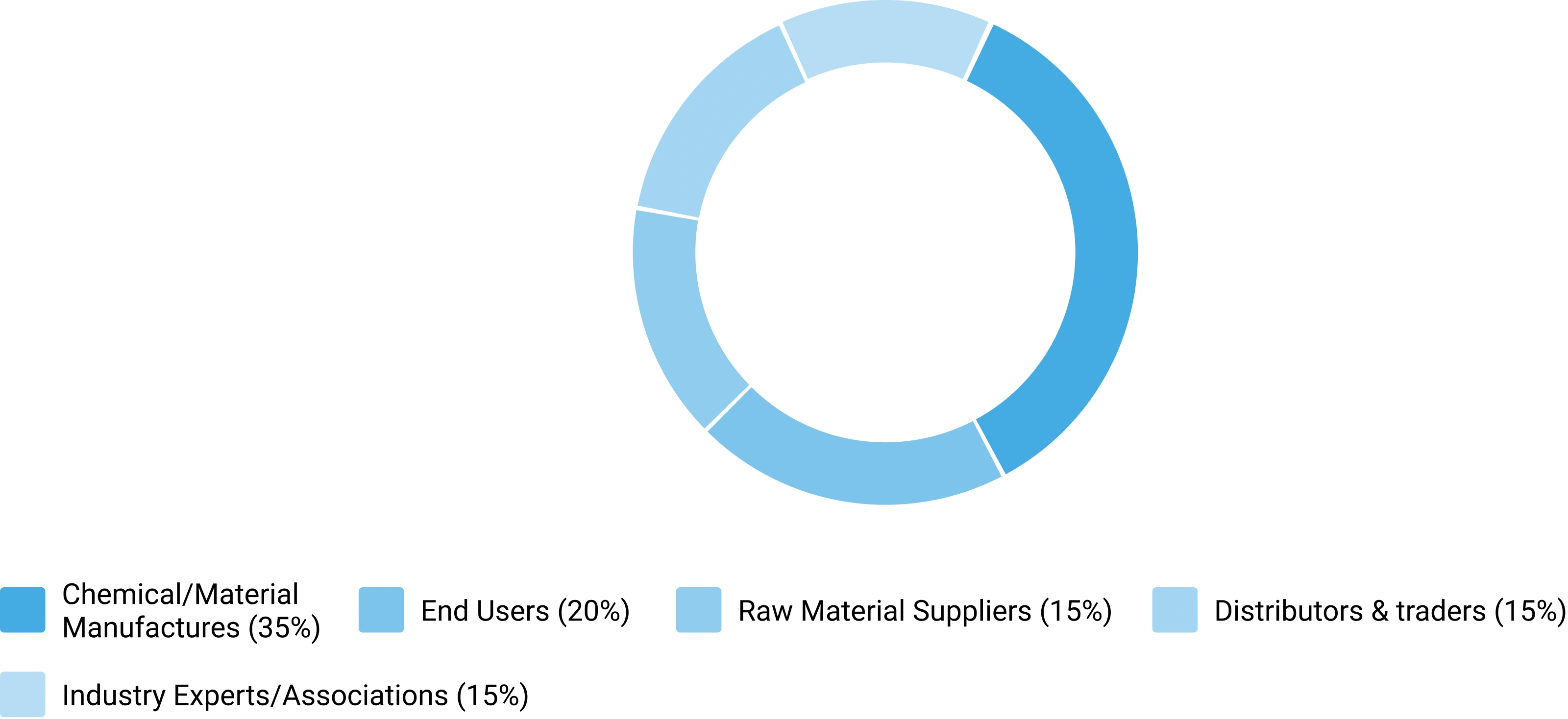
Category : Manufacturers, Suppliers, Distributors, End Users, Experts/Associations
Average Duration : 30–60 Minutes
Interview Mode : Video calls, telephonic interviews, expert consultations
Interview Format : Structured / Semi-Structured questionnaire
Focus Areas of Primary Research:
Market Size & Forecast Validation :
Revenue estimates, volume consumption, growth rates, forecast assumptions, regional demand.
Supply Chain & Value Chain Assessment :
Raw material sourcing, supply chain challenges, distribution networks, procurement practices.
Production & Capacity Analysis :
Manufacturing capacity, utilization rates, expansion projects, plant investments.
Pricing & Cost Structure Analysis :
Product pricing trends, feedstock costs, energy costs, margin pressures, pricing outlook.
Competitive Landscape Assessment :
Market share, competitor positioning, strategic initiatives, partnerships, acquisitions.
Primary Research — Stakeholder Coverage by Category
Distribution of interview respondents across stakeholder categories (% share from PPT data)
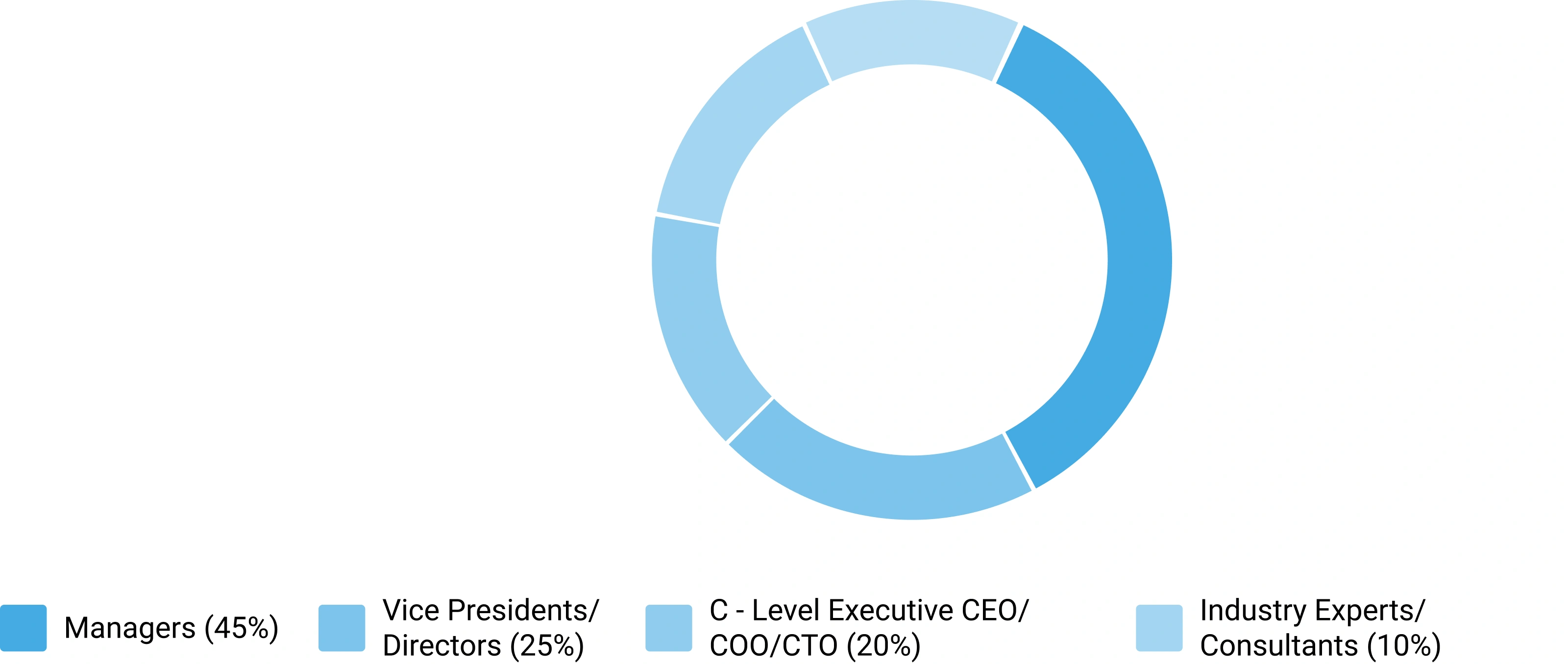
Primary Research — Respondent Designation Profile
Seniority breakdown of interview respondents (% share from PPT data)
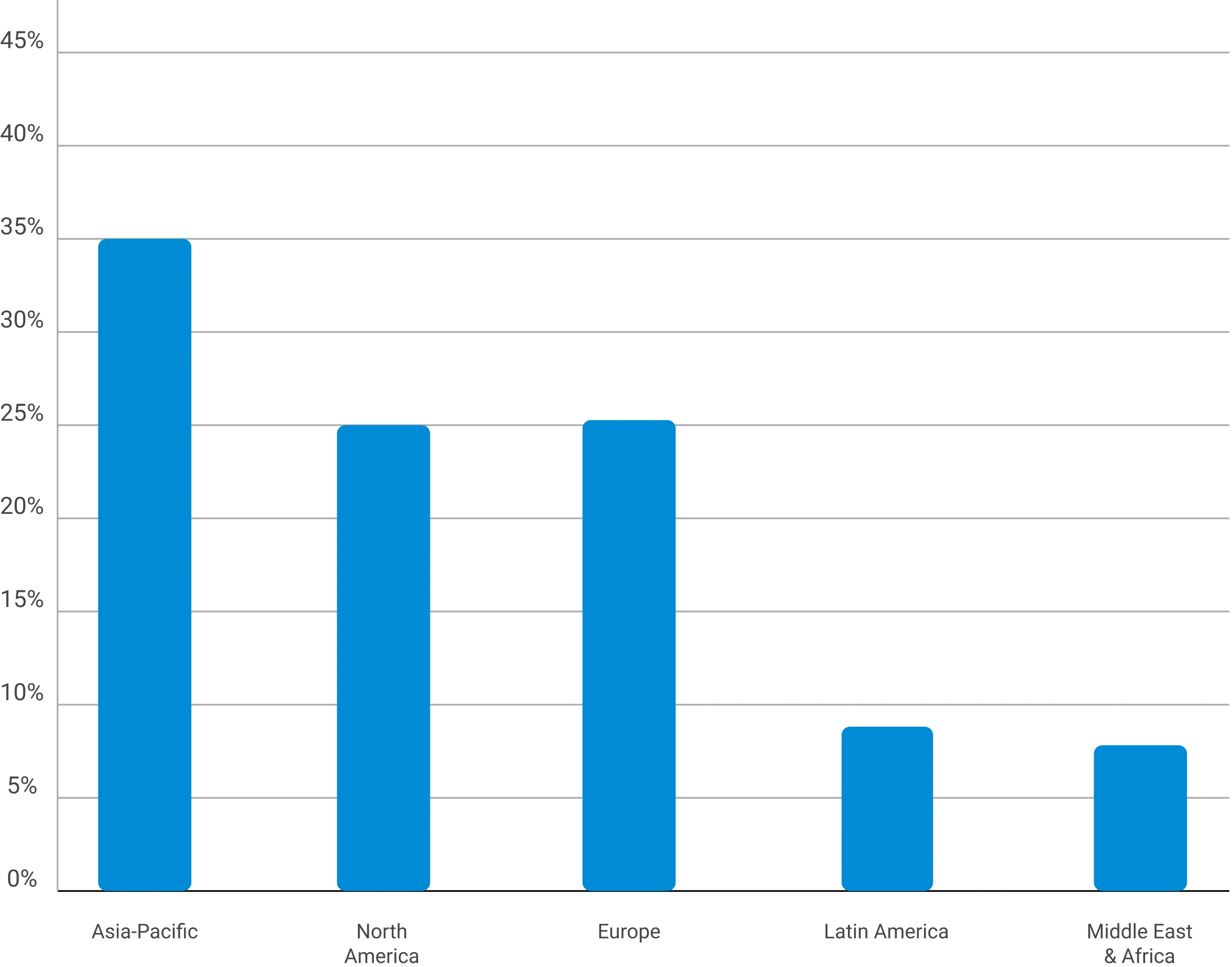
Primary Research — Geographic Coverage of Interviews
Regional distribution of primary research engagement (% share from PPT data)
Phase 6 — Data Triangulation and Market Validation
No single methodology is relied upon in isolation. Multiple independent estimation approaches are combined and reconciled to ensure consistency, accuracy, and analytical defensibility. Any material deviations between approaches are investigated and adjusted through additional validation cycles.
The final market size is derived through weighted triangulation of all validated methodologies. Any material deviations between approaches are investigated and adjusted through additional validation cycles. The outcome represents the most realistic assessment of the market based on available evidence and expert confirmation ensuring that volume and value estimates are fully consistent with one another.
Triangulation Framework — Input Contribution Weight
Relative weight each sizing input contributes to the final reconciled market estimate
Phase 7 — Forecast Modeling: Projecting Future Market Evolution
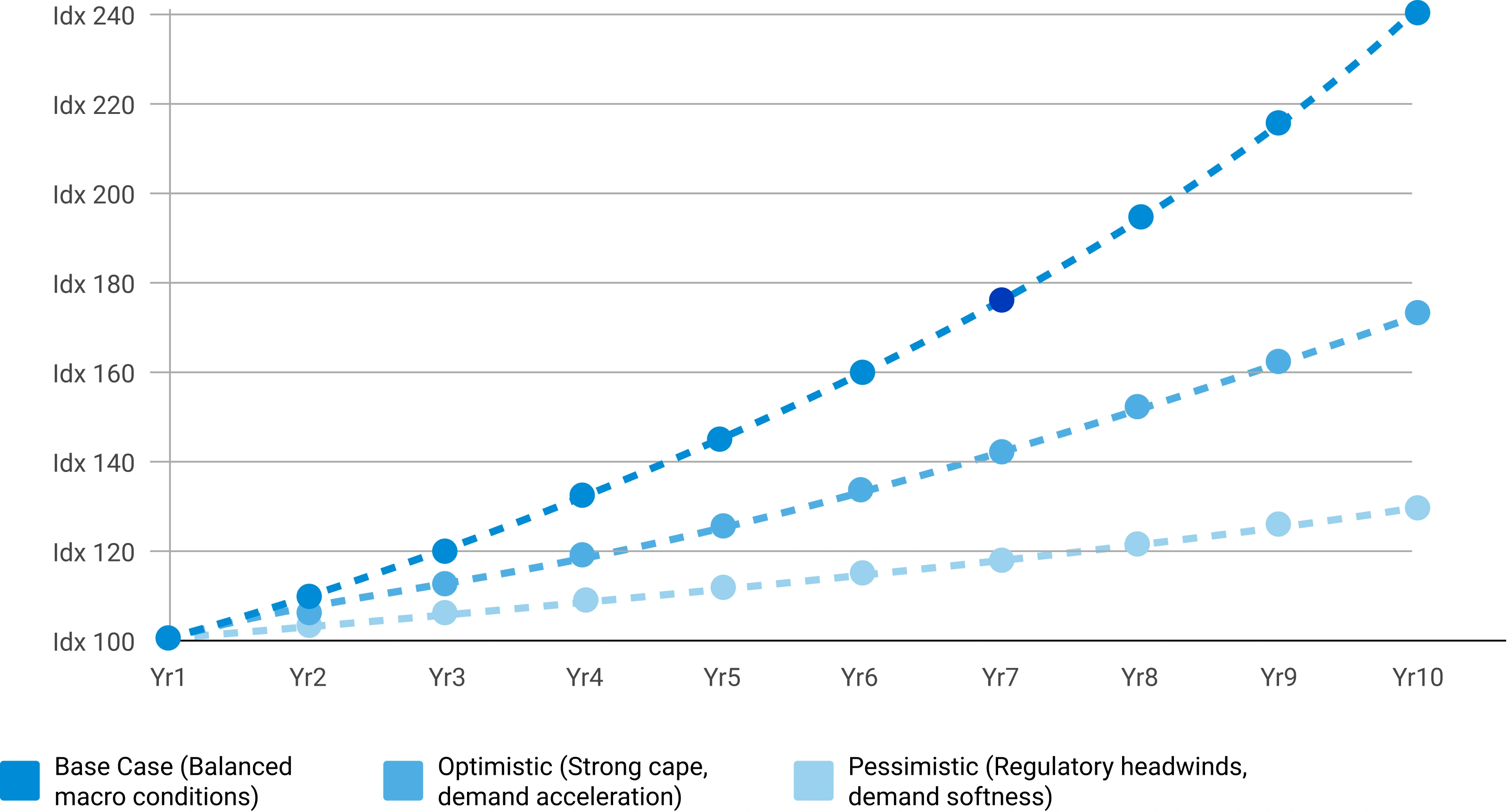
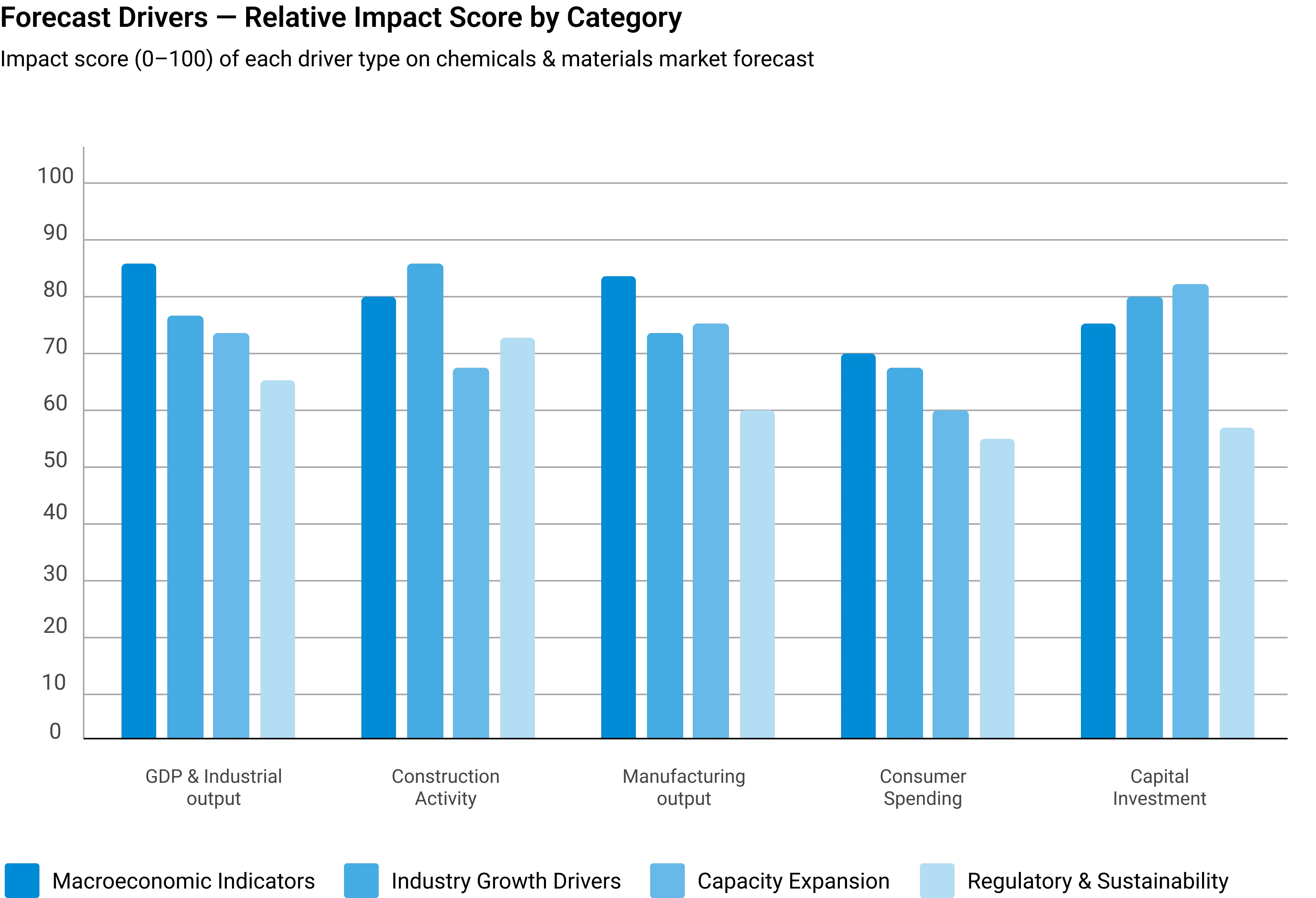
Forecasting evaluates the future trajectory of the market using a combination of quantitative indicators and qualitative assessments across economic, industry, and regulatory dimensions. Rather than simple extrapolation, each driver is independently modeled and integrated into a composite forecast.
Macroeconomic Indicators
GDP growth, industrial production, manufacturing output, construction activity, consumer spending, and capital investment form the quantitative foundation of long-term demand projections. These are applied at country, regional, and global levels.
Industry Growth Drivers
Urbanization, infrastructure development, industrialization, technological innovation, sustainability initiatives, and evolving product performance requirements are assessed at regional and industry levels — capturing both structural and cyclical demand drivers.
Capacity Expansion Analysis
Announced plant expansions, new manufacturing facilities, technology upgrades, and strategic investments are evaluated to determine future supply-demand dynamics and potential market tightness or oversupply situations.
Regulatory & Sustainability
Environmental regulations, chemical safety standards, emission reduction targets, circular economy initiatives, and sustainability requirements are incorporated as they often influence product adoption rates and market growth trajectories.
Scenario Forecast Range — Indexed Market Growth (Year 1–10)
Illustrative indexed growth trajectories across Base, Optimistic, and Pessimistic scenarios over a 10-year forecast horizon
Forecast Drivers — Relative Impact Score by Category
Impact score (0–100) of each driver type on chemicals & materials market forecast



Comments
Share your thoughts, ask a question, or provide feedback about this report.