
Wood Bio-Products Market Size and Forecast 2026 to 2035
The global wood bio-products market size was valued at USD 328.89 billion in 2025, is estimated to reach USD 355.69 billion in 2026, and is projected to reach USD 719.97 billion by 2035, exhibiting a compound annual growth rate (CAGR) of 8.15% over the forecast period from 2026 to 2035. In terms of volume, the wood bio-products market is projected to grow from 486.95 million tons in 2025 to 953.44 million tons by 2035. growing at a CAGR of 6.95% from 2026 to 2035.The increasing demand for sustainable materials is the key factor driving market growth. Also, stringent environmental regulations and innovations in biorefinery technology can fuel market growth further.
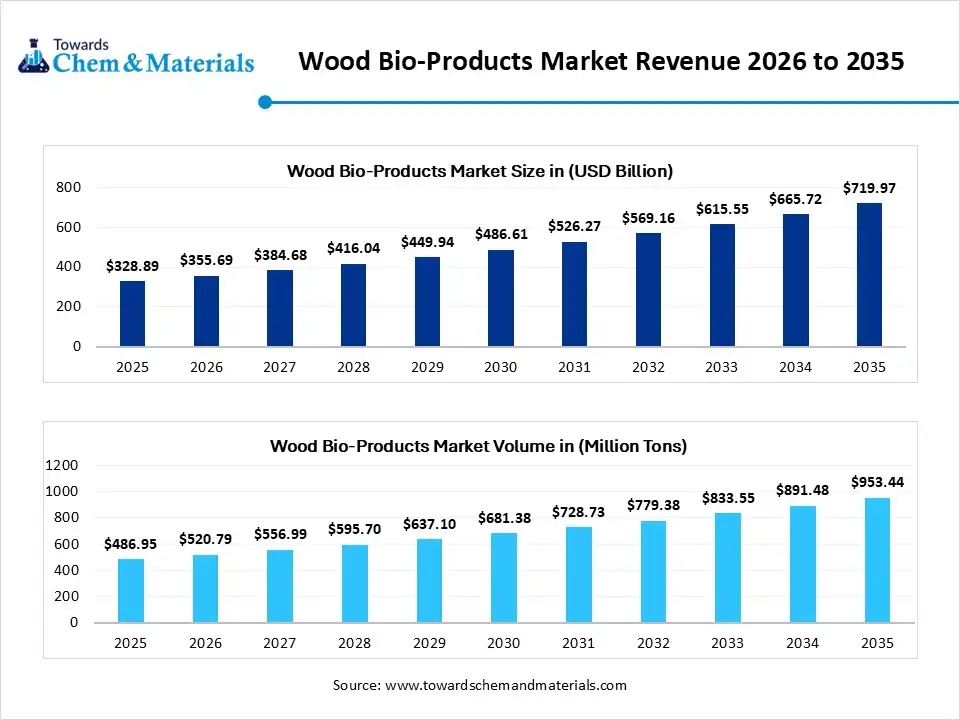
The Wood Bio-Products Market includes commercially traded energy, materials, chemicals, and other products derived from woody biomass within the defined product segments; conventional timber, untreated lumber, and products outside the listed bio-product categories are excluded
The market encompasses the sales of energy, materials, and chemicals derived from wood components using sustainable, generally biotechnological processes. It acts as a biodegradable and renewable alternative to fossil-based materials in sectors such as packaging, construction, and automotive, with a significant market value driven by increasing demand for sustainability.
The global transition toward sustainable energy systems has intensified the focus on renewable alternatives, with wood-based biofuels, specifically wood pellets and chips, gaining significant traction as viable substitutes for fossil fuels. These lignocellulosic resources are increasingly utilized across multiple sectors, including residential heating, industrial power generation, and the production of transportation fuels. Wood-sourced materials are increasingly transitioning from laboratory experimentation to commercial adoption as firms seek to replace petrochemical inputs with sustainable alternatives.
Market Highlights
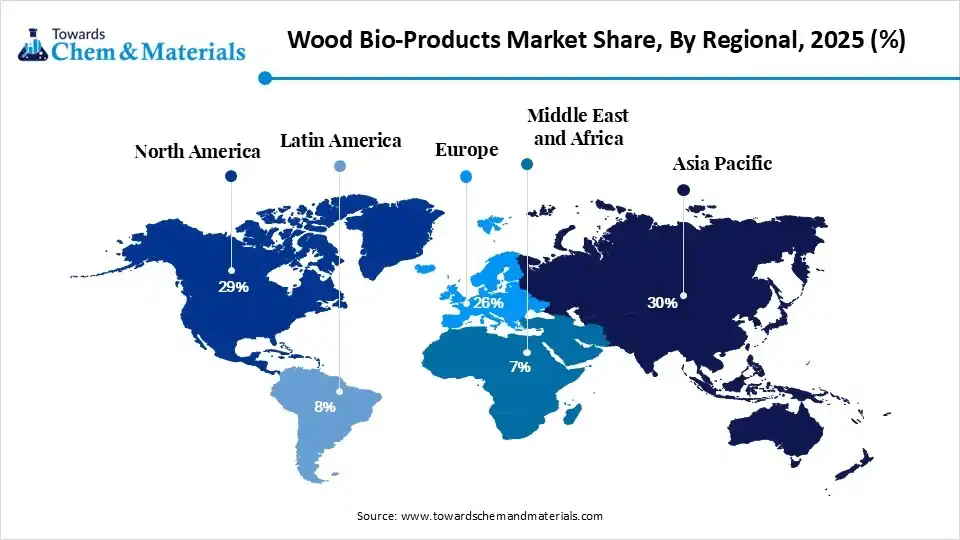
- By region, Europe dominated the market with the largest share of 33% in 2025. The dominance of the region can be attributed to the ongoing innovation in biorefinery and lignin technologies.
- By region, Asia Pacific held the market share of 27% in 2025 and is expected to grow at the fastest CAGR of 9.4% over the forecast period. The growth of the region can be credited to the increasing industrialization among emerging countries.
- By product type, the wood pellets segment dominated the market with the largest share of 31% in 2025. The dominance of the segment can be attributed to the increasing pellet consumption.
- By product type, the biochar segment is expected to grow at the fastest CAGR of 10.4% over the forecast period The growth of the segment can be credited to the agricultural industries increasingly adopting biochar.
- By feedstock, the forestry residues segment dominated the market with the largest share of 36% in 2025. The dominance of the segment can be driven by ongoing logging and thinning applications.
- By feedstock, the recycled wood waste segment is expected to grow at the fastest CAGR of 9.4% over the forecast period. The growth of the segment is owing to the surge in the recycling of wood waste.
- By technology, the thermochemical conversion segment dominated the market with the largest share of 39% in 2025. The dominance of the segment can be attributed to the growing investment in advanced reactors.
- By technology, the chemical processing segment is expected to grow at the fastest CAGR of 9.3% over the forecast period. The growth of the segment can be credited to the increasing demand for advanced renewable chemicals.
- By application, the energy generation segment dominated the market with the largest share of 34% in 2025. The dominance of the segment can be driven by increasing energy security concerns.
- By application, the packaging segment is expected to grow at the fastest CAGR of 9.9% during the projected period. The growth of the segment is owed to the ongoing e-commerce growth.
- By distribution channel, the direct sales segment dominated the market with the largest share of 44% in 2025. The dominance of the segment can be attributed to the ongoing long-term procurement.
- By distribution channel, the online B2B platforms segment is expected to grow at the fastest CAGR of 10.2% over the study period. The growth of the segment can be credited to the market players increasingly adopting online supply chain management platforms.
At a Glance
- Market Estimated Size (2025): USD 328.89 Billion | CAGR (2026–2035): 8.15%
- Market Projected Size (2035): USD 719.97 Billion
- Europe: largest Market Revenue Share of 33% in 2025.
- Market Estimated Volume (2025): 486.95 Million Tons | Volume CAGR (2026–2035): 6.95%
- Market Projected Volume (2035): 953.44 Million Tons
- Market Pricing (2025):
- Average Manufacturing Price (2025): USD 486/Ton
- Average Selling Price (2025): USD 643/Ton
- Pricing CAGR (2025–2035): 3.85%
How Cutting-Edge Technologies Are Revolutionizing the Wood Bio-Products Market?
Advanced technologies are transforming the market by converting conventional forestry materials into sustainable and high-value alternatives to fossil-based products. Furthermore, nanaceullose integration allows wood fibers to be utilised in biomedical devices, flexible electronics, and cutting-edge filtration systems. Nanomaterials enhance wood preservation by deeply penetrating wood cell walls, resulting in superior stability and decay resistance.
Wood Bio-Products Market Trends
- Increasing demand for sustainable materials is the latest trend in the market, shaping positive market growth. There is a growing demand for substituting conventional non-renewable materials with sustainable ones in both industrial and consumer goods.
- Technological innovations in wood processing are another major trend shaping positive market growth. Emerging technologies, like engineered wood composites and nanotechnology, are increasing the overall functional efficiency and growing the diversified potential uses of wood-based products.
- The increasing demand for furniture and flooring products is anticipated to boost the growth of the market in the upcoming years. Also, furniture and flooring products include interior furnishings like tables, chairs, and sofas, as well as floor covering materials such as laminate, hardwood, and carpet.
Supply Chain Analysis of the Wood Bio-Products Market
- Feedstock Procurement:It involves the sustainable sourcing, collection, aggregation, and transportation of woody biomass to produce biochemicals, bioenergy, and biomaterials.
- Major Players: Stora Enso, UPM-Kymmene Corporation
- Chemical Synthesis and Processing :It includes the chemical transformation of raw forest biomass into high-value intermediates, biochemicals, and renewable materials to replace fossil-based alternatives.
- Major Players: Borregaard ASA, Stora Enso Oyj
- Packaging and Labeling :It emphasizes the use of wood-derived and renewable materials to create sustainable packaging and compliant tracking solutions.
- Major Players: Mondi Group, UFP Industries, Inc
- Regulatory Compliance and Safety Monitoring :It involves adhering to international and regional standards regarding sustainability, chemical usage, and product safety to ensure that products are legally non-toxic, sourced, and environmentally responsible.
- Major Plyers: Georgia-Pacific LLC, Sappi Limited
Wood Bio-Products Markets Regulatory Landscape: Global Regulations
| Country/Region | Key Regulations |
| European Union (EU) | EU Deforestation Regulation (EUDR): Replaces the older EUTR; mandates strict geolocation traceability back to the plot of land to guarantee wood products do not originate from deforested areas. |
| United States | Inflation Reduction Act (IRA): Provides tax credits and funding mechanisms accelerating domestic Bioenergy Carbon Capture and Storage (BECCS) deployment and clean fuel production. |
| China | The government is focusing on building a "low-carbon" bioeconomy, promoting high-efficiency utilization of biomass and reducing dependence on traditional timber sources. |
Market Dynamics
Drivers
Technological Innovations in Wood Processing
Cutting-edge technologies, including engineered wood composites and nanotechnology, are raising the functional efficiency and increasing the variety of potential uses of wood-based products, which is the major factor driving market growth. They help in deriving key chemicals and materials out of wood, like bioplastics, biofuels, and bio-based chemicals. In addition, advanced wood processing technologies, such as precision cutting and eco-friendly harvesting, significantly optimize raw material utilization. By minimizing waste and improving sustainability from production inception, these innovations can reduce operational costs, and these technologies can improve material utilization and processing efficiency, supporting the commercial competitiveness of selected wood-derived products.
Restraints
Economic and Financial Hurdles
Establishing innovative biorefineries and production lines for engineered wood or biochemicals needs extensive initial infrastructure investment, which is the major factor hindering market expansion. Extracting and isolating tedious wood elements such as lignin and cellulose derivatives needs intensive, expensive biochemical methods. Selected wood-derived materials can face moisture sensitivity, UV-related degradation, or lower durability depending on composition, processing, formulation, and application.
Opportunity
Supply chain collaboration
Key players, including suppliers and producers of wood residues, who offer the raw materials and logistics companies, focus on effective management of these materials, which is the key factor reating additional commercial opportunities in the market. Furthermore, strategic coordination among all stakeholders is imperative to ensure a seamless and uninterrupted biomass supply chain. Deficiencies in collaboration can lead to operational downtime, logistics delays, and substantial financial losses, ultimately impacting industry viability. Therefore, maintaining robust information exchange and close communication between producers is crucial.
Segmental Insights
Product Type Insights
The wood pellets segment dominated the market with the largest share of 31% in 2025. The dominance of the segment can be attributed to the increasing pellet consumption across the globe due to biomass power generation and government support for renewable heating solutions through carbon reduction technology.
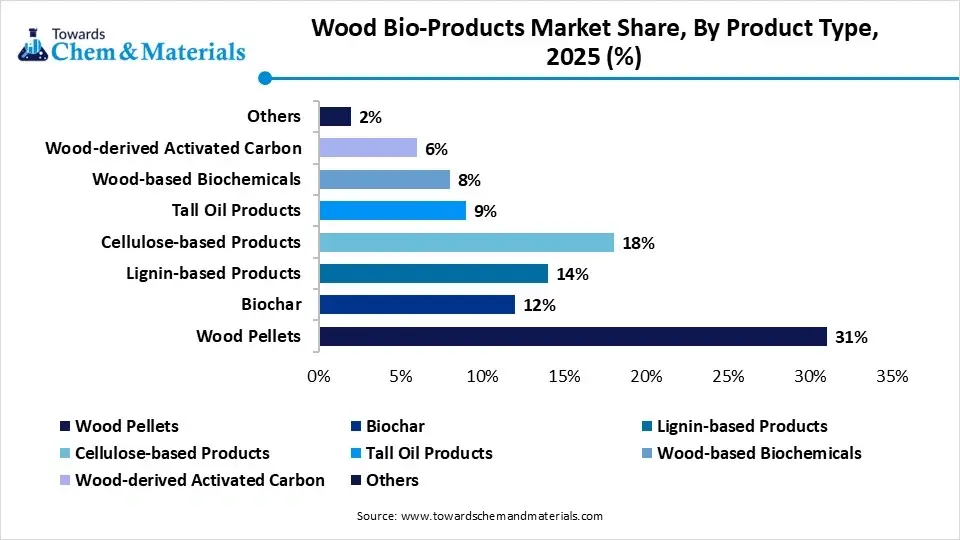
The biochar segment held the market share of 12% in 2025 and is expected to grow at the fastest CAGR of 10.4% over the forecast period. The growth of the segment can be credited to the agricultural industries increasingly adopting biochar for soil enhancement and carbon sequestration applications. Market players are expanding biochar utilization in filtration.
The cellulose-based products segment held a market share of 18% in 2025. The growth of the segment can be linked to the increasing demand for biodegradable and lightweight materials, along with the ongoing research investment in processing technology. The packaging industry is also increasingly adopting nanocellulose fibers.
Wood Bio-Products Market Share, By Product Type, 2025 (%)
| By Product Type | Revenue Share, 2025 (%) |
| Wood Pellets | 31% |
| Biochar | 12% |
| Lignin-based Products | 14% |
| Cellulose-based Products | 18% |
| Tall Oil Products | 9% |
| Wood-based Biochemicals | 8% |
| Wood-derived Activated Carbon | 6% |
| Others | 2% |
Feedstock Insights
The forestry residues segment dominated the market with the largest share of 36% in 2025. The dominance of the segment can be driven by ongoing logging and thinning applications generating abundant biomass feedstock for wood bio-product manufacturing and forest management, encouraging residue utilization to reduce wildfire risks.
Wood Bio-Products Market Share, By Feedstock, 2025 (%)
| By Feedstock | Revenue Share, 2025 (%) |
| Forestry Residues | 36% |
| Sawmill Residues | 33% |
| Recycled Wood Waste | 19% |
| Energy Crops | 12% |
The recycled wood waste segment held the market share of 19% in 2025 and is expected to grow at the fastest CAGR of 9.4% over the forecast period. The growth of the segment is owing to the surge in recycling of wood waste into bio-based products, along with the implementation of stringent landfill diversion by the government in many regions.
The sawmill residues segment held the market share of 33% in 2025. The growth of the segment is due to increasing monetization of bark, sawdust, and wood chips for bio product applications and circular economy initiatives, strengthening industrial residue utilization.
Technology Insights
The thermochemical conversion segment dominated the market with the largest share of 39% in 2025. The dominance of the segment can be attributed to the growing investment in advanced reactors and industrial biomass operations seeking efficient biomass conversion systems. Pyrolysis and gasification techniques are expanding rapidly across sectors.
Wood Bio-Products Market Share, By Technology, 2025 (%)
| By Technology | Revenue Share, 2025 (%) |
| Thermochemical Conversion | 39% |
| Biochemical Conversion | 21% |
| Mechanical Processing | 24% |
| Chemical Processing | 16% |
The chemical processing segment held the market share of 16% in 2025 and is expected to grow at the fastest CAGR of 9.3% over the forecast period. The growth of the segment can be credited to the increasing demand for advanced renewable chemicals, accelerating commercial scale adoption, along with the companies developing enzyme technologies to enhance biomass processing efficiency.
The mechanical processing segment held the market share of 24% in 2025. The growth of the segment can be linked to the expanding pellet export market and companies increasingly developing enzyme technologies to enhance biomass processing efficiency. Fermentation technology is supporting biochemical production capacity.
Application Insights
The energy generation segment dominated the market with the largest share of 34% in 2025. The dominance of the segment can be driven by increasing energy security concerns, boosting biomass adoption, and the government introducing incentives for coal-to-biomass conversion projects.
Wood Bio-Products Market Share, By Application, 2025 (%)
| By Application | Revenue Share, 2025 (%) |
| Energy Generation | 34% |
| Agriculture | 14% |
| Construction Materials | 16% |
| Packaging | 13% |
| Automotive | 7% |
| Chemicals & Materials | 11% |
| Water & Air Purification | 5% |
The packaging segment held the market share of 13% in 2025 and is expected to grow at the fastest CAGR of 9.9% during the projected period. The growth of the segment is owing to the ongoing e-commerce growth expanding sustainable packaging demand, coupled with the growing adoption of molded fiber materials. Consumer brands are accelerating their transition towards bio-based solutions.
The construction materials segment held the market share of 16% in 2025. The growth of the segment is due to construction industries increasingly adopting bio-based panels, adhesives, and insulation materials, along with green building certification supporting renewable materials utilization.
Distribution Channel Insights
The direct sales segment dominated the market with the largest share of 44% in 2025. The dominance of the segment can be attributed to the ongoing long-term procurement ensuring stable feedstock and product supply, along with technical support and logistics supporting direct partnerships. Large biomass producers are maintaining direct contracts with utilities.
Wood Bio-Products Market Share, By Distribution Channel, 2025 (%)
| By Distribution Channel | Revenue Share, 2025 (%) |
| Direct Sales | 44% |
| Distributors & Traders | 31% |
| Online B2B Platforms | 11% |
| Retail Supply Networks | 14% |
The online B2B platforms segment held the market share of 11% in 2025 and is expected to grow at the fastest CAGR of 10.2% over the study period. The growth of the segment can be credited to the market players increasingly adopting online supply chain management platforms and the rapid integration of e-commerce, improving transaction transparency.
The distributors & traders segment held the market share of 31% in 2025. The growth of the segment can be linked to the rising export activities supporting distribution channel growth, and small and medium manufacturers depend on distributor inventory management. Regional distributors are expanding their supply network rapidly.
Regional Insights
How did Europe Dominate the Wood Bio-Products Market in 2025?
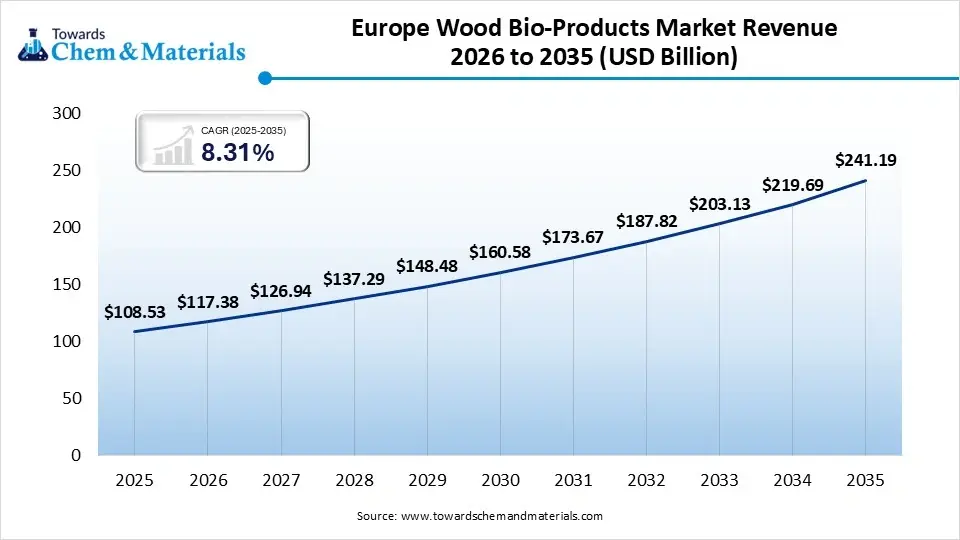
The Europe wood bio-products market size was estimated at USD 108.53 billion in 2025 and is projected to reach USD 241.19 billion by 2035, growing at a CAGR of 8.31% from 2026 to 2035. Europe dominated the market with the largest share of 33% in 2025. The dominance of the region can be attributed to the ongoing innovation in biorefinery and lignin technologies, along with the growing adoption of bio-based materials from various sectors. In addition, increasing utilization of engineered wood products (such as CLT) in sustainable commercial and residential construction replaces carbon-intensive materials like steel and concrete.
Germany Wood Bio-Products Market Trends
In Europe, Germany dominated the market owing to the increase in demand for sustainable building materials and robust policy initiatives focused on a circular bioeconomy, promoted by strong regional forestry resources. Also, growing adoption of wood-based and biodegradable packaging solutions to fulfil consumer demand within the e-commerce sector is driving positive market growth further.
Asia Pacific Wood Bio-Products Market Size
Asia Pacific held a 27% market share in 2025 and is projected to expand at a 9.4% CAGR from 2026 to 2035. The growth of the region can be credited to the increasing industrialization among emerging countries, driving demand for bio-based chemicals, and ongoing government investment in innovative infrastructure projects. Furthermore, the region boasts wide forestry resources and robust manufacturing hubs for wood processing, especially in India, China, Indonesia, and Vietnam.
China Wood Bio-Products Market Trends
The growth of the market in the country is due to the increasing demand for engineered wood products for interior construction and tall buildings, coupled with innovations in biotechnology and wood processing. Moreover, the demand for biodegradable and sustainable packaging solutions for e-commerce promotes the growth of wood-based packaging materials.
Recent Development
- In December 2025, UPM, a global leader in sustainable material solutions, achieved a significant milestone with the commercial production launch of wood-based chemicals at its Leuna biorefinery in Germany. This facility represents the largest industrial-scale investment in biochemicals within Europe and has commenced the production and commercial distribution of industrial sugars.(Source: www.upm.com)
Wood Bio-Products Market Competitive Landscape Analysis
Tier 1 Companies
|
Rank
|
Company Name | Headquarters | Country | Why Relevant to This Market | Key Products / Material Portfolio |
| 1 | Stora Enso Oyj | Helsinki, Uusimaa | Finland | Global leader in renewable materials with extensive wood-based biomaterials and packaging operations | Lignin products, biocomposites, wood-based packaging materials, biomaterials |
| 2 | UPM-Kymmene Corporation | Helsinki, Uusimaa | Finland | Operates advanced biorefineries producing renewable chemicals and wood-derived materials | Biofuels, biochemicals, lignin products, wood-based biomaterials |
| 3 | Sappi Limited | Johannesburg, Gauteng | South Africa | Major producer of cellulose-based biomaterials and specialty wood-derived products | Dissolving pulp, nanocellulose, bio-based chemicals, lignin derivatives |
| 4 | West Fraser Timber Co. Ltd. | Vancouver, British Columbia | Canada | One of the worlds largest wood products manufacturers with expanding bio-product initiatives | Engineered wood products, wood residues for bioenergy, renewable wood materials |
| 5 | Mercer International Inc. | Vancouver, British Columbia | Canada | Significant producer of pulp, tall oil, bioenergy, and wood-derived bioproducts | Cellulose pulp, bioenergy products, tall oil derivatives, wood biochemicals |
Tier 2 Companies
| Rank | Company Name | Headquarters | Country | Why Relevant to This Market | Key Products / Material Portfolio |
| 1 | Borregaard ASA | Sarpsborg, Viken | Norway | Global leader in advanced biorefining of wood biomass | Specialty cellulose, lignin products, bioethanol, biovanillin |
| 2 | Suzano S.A. | São Paulo, São Paulo | Brazil | Major eucalyptus-based pulp producer investing heavily in biomaterials and bioeconomy projects | Market pulp, lignin products, nanocellulose, bio-based materials |
| 3 | Metsä Group | Espoo, Uusimaa | Finland | Significant Nordic forest industry player developing wood-based bio-products | Biochemicals, wood fibers, pulp, bioenergy products |
| 4 | Domtar Corporation | Fort Mill, South Carolina | United States | Leading producer of pulp and cellulose-based bio-products | Specialty cellulose, pulp derivatives, wood-based biomaterials |
| 5 | Rayonier Advanced Materials Inc. | Jacksonville, Florida | United States | Specialized producer of high-purity cellulose and bio-based materials | Cellulose specialties, lignin derivatives, bio-based chemicals |
Tier 3 Companies
| Rank | Company Name | Headquarters | Country | Why Relevant to This Market | Key Products / Material Portfolio |
| 1 | LignoPure GmbH | Hamburg | Germany | Specialized developer of high-value lignin products from wood biomass | Purified lignin, bio-based additives, sustainable material ingredients |
| 2 | CelluForce Inc. | Montreal, Quebec | Canada | Pioneer in commercial nanocrystalline cellulose production | Nanocrystalline cellulose (NCC), advanced cellulose materials |
| 3 | Stora Enso Biomaterials Division Competitors – FineCell AB | Sundsvall, Västernorrland | Sweden | Emerging nanocellulose technology provider | Microfibrillated cellulose, cellulose-based performance materials |
| 4 | GranBio Technologies Ltd. | São Paulo, São Paulo | Brazil | Developer of biomass conversion technologies utilizing wood and lignocellulosic feedstocks | Advanced biofuels, biochemicals, biomass processing technologies |
| 5 | Lignolix GmbH | Vienna | Austria | Focused on lignin valorization and sustainable wood-based chemicals | Lignin ingredients, bio-based chemicals, renewable material solutions |
Wood Bio-Products Market Companies
- UPM: UPM-Kymmene Corporation (UPM) is a major player in the global wood bio-products market, positioning itself as a "material solutions company" that converts woody biomass into renewable materials.
- Stora Enso: Stora Enso is a leading global provider of renewable materials, specializing in wood-based packaging, biomaterials, and engineered wood construction products. As a key player in the wood bio-products market, the company focuses on replacing fossil-based materials with sustainable alternatives.
Other Companies in the Market
- West Fraser Timber Co.
- Enviva Inc.
- Metsä Group
- Sappi Ltd
- Canadian Forest Products Ltd.
- Drax Group plc
- Georgia-Pacific LLC
- Borregaard ASA
Segments Covered in the Report
By Product Type
- Wood Pellets
- Industrial Wood Pellets
- Residential Heating Pellets
- Biochar
- Agricultural Biochar
- Industrial Biochar
- Environmental Remediation Biochar
- Lignin-based Products
- Lignin Resins
- Lignin-based Adhesives
- Carbon Fiber Precursors
- Cellulose-based Products
- Nanocellulose
- Cellulose Fibers
- Cellulose Derivatives
- Tall Oil Products
- Tall Oil Fatty Acids
- Tall Oil Rosin
- Distilled Tall Oil
- Wood-based Biochemicals
- Bioethanol
- Bioplastics
- Organic Acids
- Wood-derived Activated Carbon
- Powdered Activated Carbon
- Granular Activated Carbon
- Others
- Wood Vinegar
- Hemicellulose Products
- Bio-based Solvents
By Feedstock
- Forestry Residues
- Logging Residues
- Thinning Residues
- Sawmill Residues
- Wood Chips
- Sawdust
- Bark
- Recycled Wood Waste
- Construction Wood Waste
- Industrial Wood Waste
- Energy Crops
- Short Rotation Coppice
- Fast-growing Trees
By Technology
- Thermochemical Conversion
- Pyrolysis
- Gasification
- Torrefaction
- Biochemical Conversion
- Fermentation
- Enzymatic Hydrolysis
- Mechanical Processing
- Fiber Separation
- Pelletization
- Chemical Processing
- Pulping
- Fractionation
- Hydrolysis
By Application
- Energy Generation
- Biomass Power Plants
- Residential Heating
- Combined Heat & Power
- Agriculture
- Soil Amendment
- Livestock Feed Additives
- Carbon Sequestration
- Construction Materials
- Bio-based Panels
- Insulation Materials
- Wood Adhesives
- Packaging
- Biodegradable Packaging
- Molded Fiber Packaging
- Automotive
- Lightweight Composites
- Interior Components
- Chemicals & Materials
- Resins
- Coatings
- Industrial Chemicals
- Water & Air Purification
- Water Treatment
- Air Filtration
By Distribution Channel
- Direct Sales
- Distributors & Traders
- Online B2B Platforms
- Retail Supply Networks
By Regions
- North America
- U.S.
- Canada
- Mexico
- Europe
- Germany
- UK
- France
- Italy
- Spain
- Asia Pacific
- China
- India
- Japan
- South Korea
- Latin America
- Brazil
- Argentina
- Middle East & Africa
- Saudi Arabia
- South Africa
A Seven-Phase Framework
Our methodology is designed to be universally applicable across commodity chemicals, specialty chemicals, petrochemicals, construction chemicals, coatings, electronic chemicals, industrial gases, agrochemicals, water treatment chemicals, and performance materials. Each phase builds upon the last, creating a layered validation structure that minimizes estimation error and maximizes analytical confidence.
The framework ensures comprehensive market coverage, robust cross-validation, and reliable long-term forecasting — producing market estimates that withstand scrutiny from investors, regulators, and corporate strategy teams.

Seven-Phase Framework — Analytical Effort Distribution
Relative analytical effort allocated across each phase of the Chemicals & Materials research framework
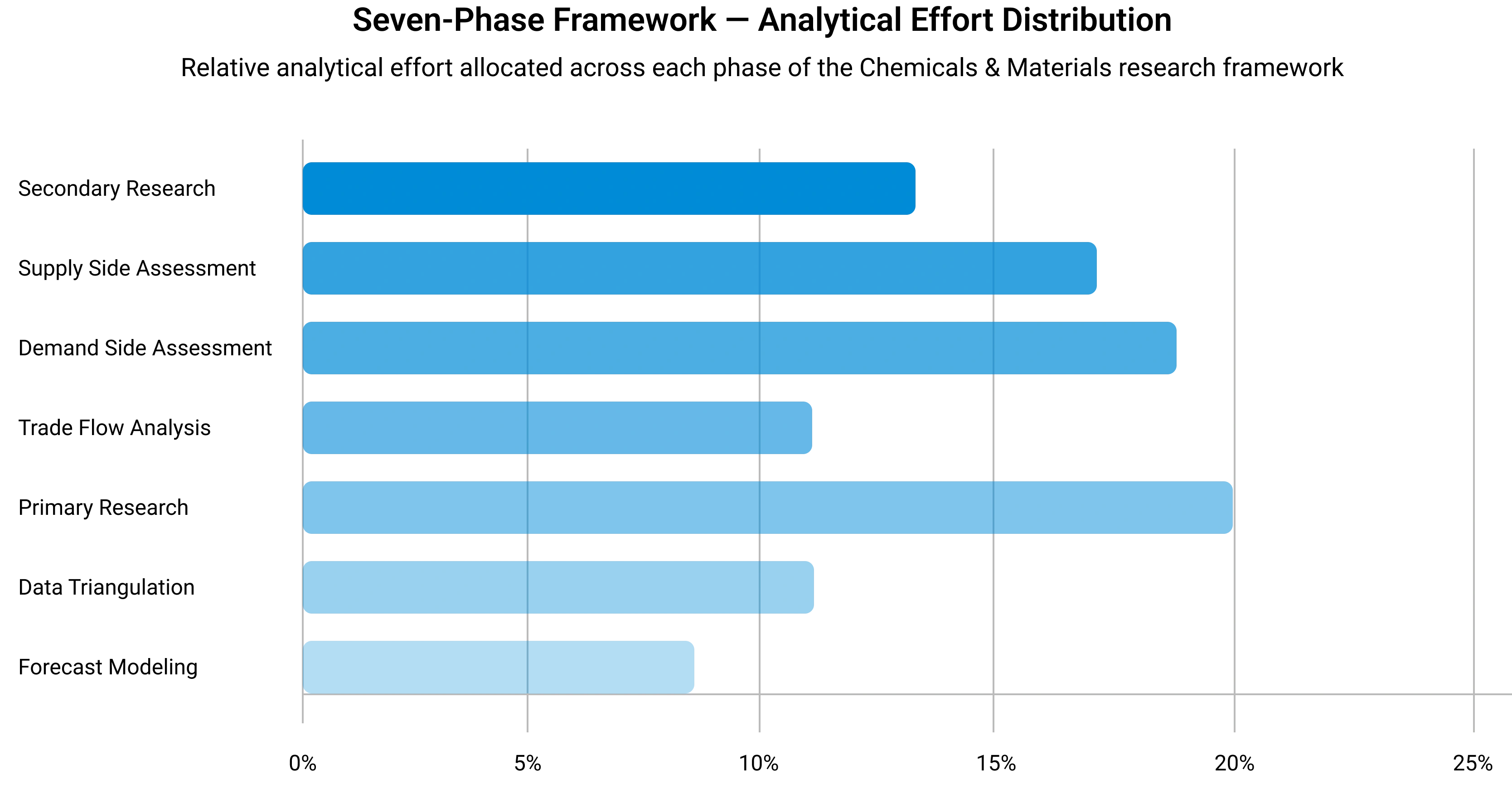
Phase 1 - Secondary Research: Establishing the Foundation
Secondary research collects and evaluates publicly available information from authoritative sources, establishing the foundational understanding of market structure, value chain dynamics, competitive landscape, and end-use demand patterns. Every source is evaluated for credibility, recency, geographic relevance, and methodological soundness before inclusion.
Industry Associations
Sources include ACC, CEFIC, ICCA, JCIA, CPCIF, and SOCMA providing production volumes, consumption trends, capacity developments, and sustainability initiatives.
Company Disclosures
Annual reports, investor presentations, earnings transcripts, and regulatory filings reveal product portfolios, manufacturing footprints, capacity expansions, and revenue segmentation.
Government Databases
National statistical offices, customs authorities, environmental agencies, and industrial production databases provide verified statistics on output, trade flows, and regulatory compliance.
Trade Databases
UN Comtrade, ITC, Eurostat, and national customs authorities enable assessment of global product movement, import dependency, and export competitiveness across regions.
Our Secondary Research Sources
- Ministry of Chemicals and Fertilizers
- European Chemicals Agency
- United States Department of Energy
- Ministry of Industry and Information Technology
- Ministry of Economy Trade and Industry
- Ministry of Trade Industry and Energy
- National Institute of Standards and Technology
- Council of Scientific and Industrial Research
- Fraunhofer Society
- National Institute for Materials Science
Phase 2 — Supply-Side Assessment: Mapping Production Capabilities
Production Capacity Analysis
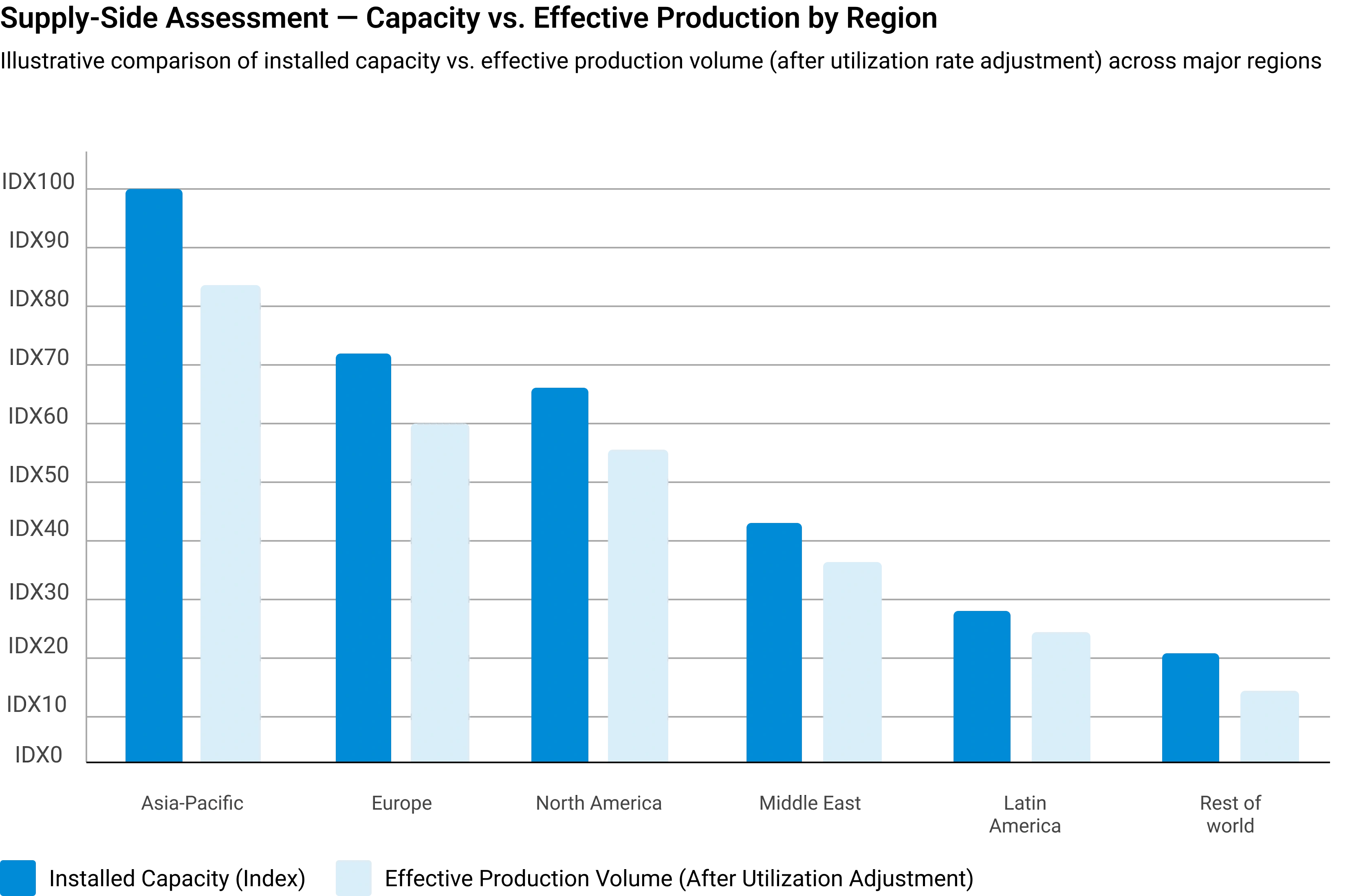
All major manufacturers are assessed for existing installed capacity, planned additions, expansions, new plant announcements, and technology adoption — mapped at global, regional, and country levels.
Capacity Utilization Adjustment
Installed capacity is adjusted using utilization rates based on demand conditions, feedstock availability, plant operating rates, maintenance schedules, and regulatory restrictions.
Manufacturer Revenue Analysis
Product-specific revenues, segment-level performance, regional distribution, average selling prices, and margin trends are evaluated to establish market value estimates.
Supply-Side Assessment — Capacity vs. Effective Production by Region
Illustrative comparison of installed capacity vs. effective production volume (after utilization rate adjustment) across major regions
Phase 3 — Demand-Side Assessment: Quantifying Chemical Consumption
Demand-side analysis quantifies chemical consumption across industries, applications, and geographies — identifying where and how chemicals are consumed throughout the value chain with precision.
End-Use Industry Analysis
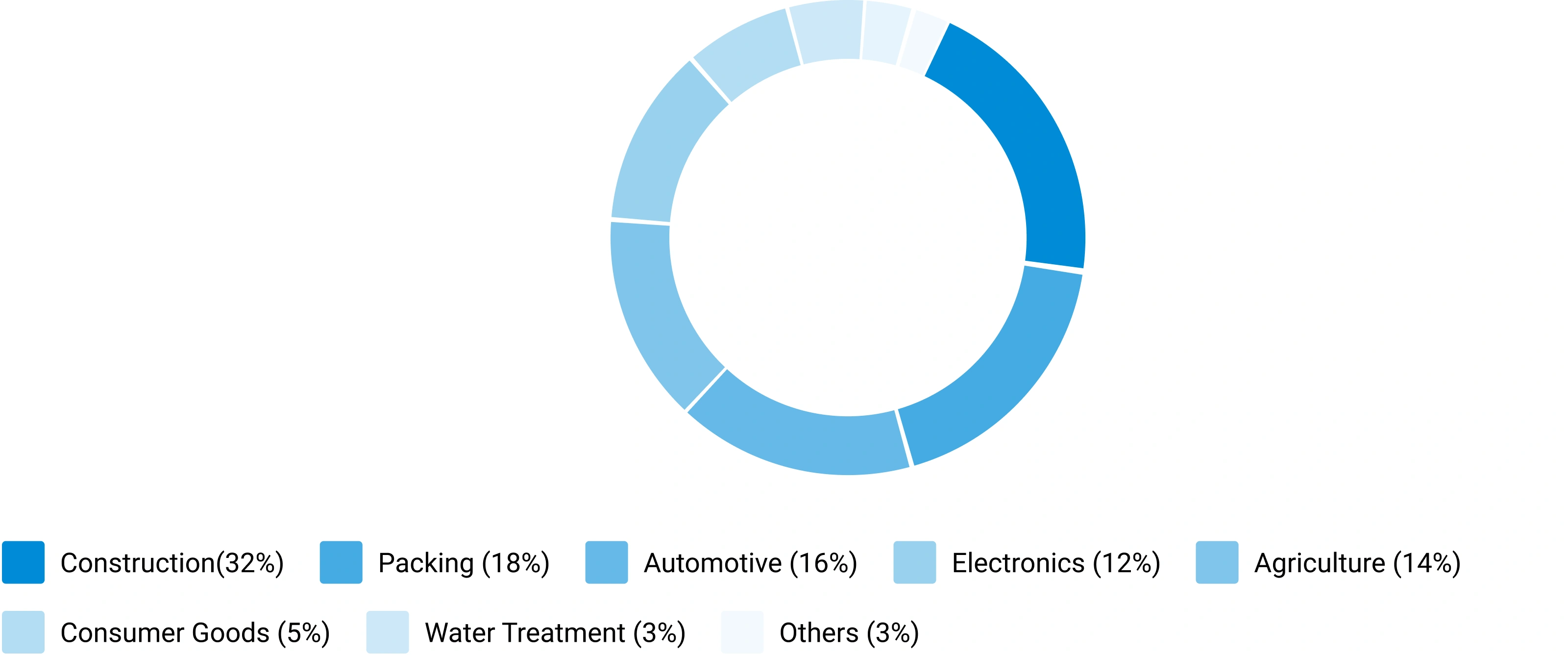
Chemical demand is evaluated across automotive, construction, packaging, electronics, agriculture, healthcare, consumer goods, industrial manufacturing, energy and utilities, and water treatment. Industry output, production trends, and consumption intensity are analyzed to determine demand patterns.
Consumption Modeling
Demand is estimated using measurable indicators: kilograms per vehicle, kilograms per square meter of construction, dosage per cubic meter of water treated, kilograms per hectare of agricultural land, and kilograms per ton of manufactured products. Consumption factors are validated through industry publications and primary interviews.
Application Analysis
The market is segmented by application area to understand product performance requirements, formulation trends, technology adoption, customer preferences, and regulatory requirements improving demand accuracy and segmentation granularity.
Demand-Side Assessment — End-Use Industry Demand Distribution
Illustrative distribution of chemical & materials demand across key end-use industries
Phase 4 - Trade Flow Analysis: Balancing Regional Supply and Demand
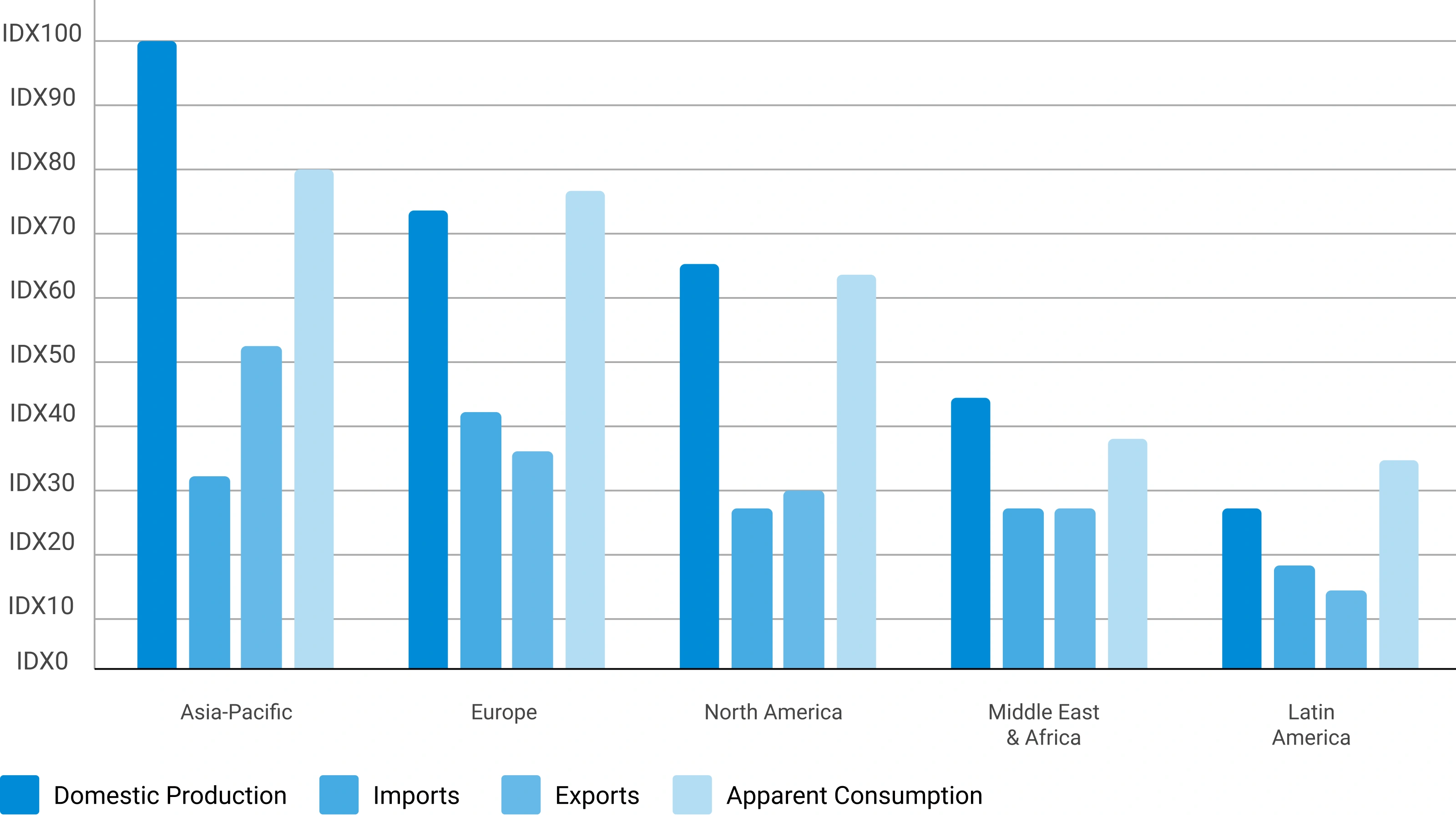
Trade flow analysis reconciles regional supply and demand estimates through import and export data, identifying net supply positions, regional dependencies, and market imbalances. It serves as an independent validation layer that tests the consistency of supply-side and demand-side estimates.
Import Analysis
Import data is evaluated to determine volumes, source countries, product dependency, regional supply gaps, and pricing trends — identifying markets that rely heavily on external supply and where domestic production is insufficient to meet demand.
Export Analysis
Export assessments reveal production surplus, export competitiveness, regional manufacturing strength, and global market participation. Export patterns also help validate domestic production estimates and identify net exporting regions.
Apparent Consumption Model
Regional consumption is assessed using the standard apparent consumption formula:
Results identify net importing regions, net exporting regions, regional deficits, and surpluses — serving as an independent validation of supply and demand estimates.
Trade Flow Analysis — Net Supply Position by Region
Illustrative apparent consumption vs. domestic production across major regions — positive gap indicates net import dependency
Phase 5 — Primary Research: The Critical Validation Layer
Primary research tests and refines findings from secondary research through direct engagement with industry participants across the supply chain, demand side, and expert community. It captures intelligence that no database or published report can provide — the real-world experience of manufacturers, buyers, and specialists operating in the market.

Supply-Side Interviews
Conversations with chemical manufacturers, raw material suppliers, contract manufacturers, technology providers, and plant operators cover production trends, capacity utilization, pricing developments, technology shifts, and competitive dynamics.

Demand-Side Interviews
Engagement with OEMs, industrial consumers, procurement managers, distributors, formulators, and end-use manufacturers focuses on consumption trends, purchasing behavior, product substitution, demand outlook, and emerging applications.

Industry Expert Consultations
Additional interviews with industry consultants, independent experts, regulatory specialists, technical professionals, and research institutions provide deeper market context and validate key analytical assumptions.
Focus Areas of Primary Research:
Market Size & Forecast Validation
Revenue estimates, volume consumption, growth rates, forecast assumptions, regional demand.Supply Chain & Value Chain Assessment
Raw material sourcing, supply chain challenges, distribution networks, procurement practices.Production & Capacity Analysis
Manufacturing capacity, utilization rates, expansion projects, plant investments.Pricing & Cost Structure Analysis
Product pricing trends, feedstock costs, energy costs, margin pressures, pricing outlook.Competitive Landscape Assessment
Volume and value estimates confirmed to be fully consistent with one another before publicationInterview Volume by Market Scope
| Study Scope | Number of Interviews |
|---|---|
| Niche Market | 20 – 30 |
| Mid-Sized Market | 30 – 50 |
| Global Market | 50 – 80 |
| Highly Fragmented Market | 80 – 120 |
Interview Details:
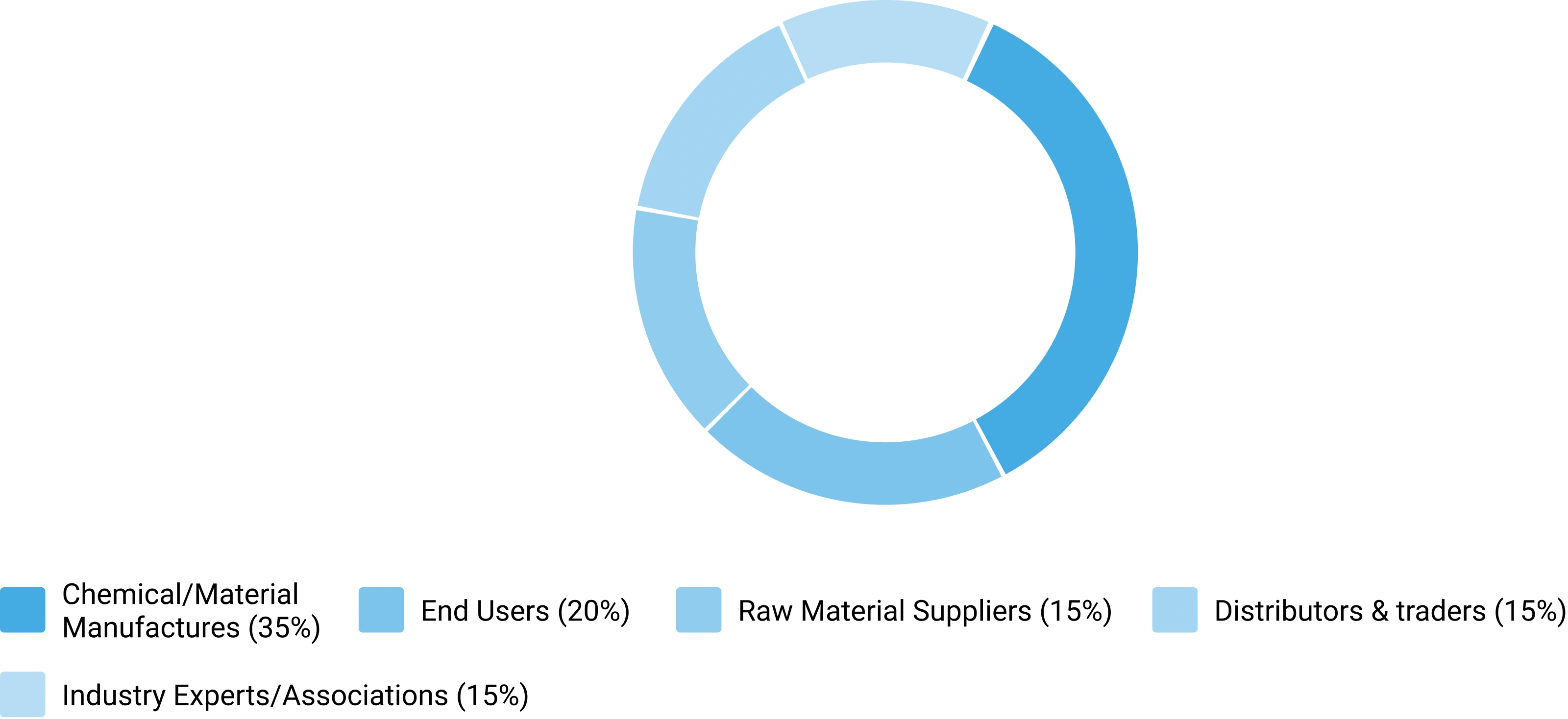
Category : Manufacturers, Suppliers, Distributors, End Users, Experts/Associations
Average Duration : 30–60 Minutes
Interview Mode : Video calls, telephonic interviews, expert consultations
Interview Format : Structured / Semi-Structured questionnaire
Focus Areas of Primary Research:
Market Size & Forecast Validation :
Revenue estimates, volume consumption, growth rates, forecast assumptions, regional demand.
Supply Chain & Value Chain Assessment :
Raw material sourcing, supply chain challenges, distribution networks, procurement practices.
Production & Capacity Analysis :
Manufacturing capacity, utilization rates, expansion projects, plant investments.
Pricing & Cost Structure Analysis :
Product pricing trends, feedstock costs, energy costs, margin pressures, pricing outlook.
Competitive Landscape Assessment :
Market share, competitor positioning, strategic initiatives, partnerships, acquisitions.
Primary Research — Stakeholder Coverage by Category
Distribution of interview respondents across stakeholder categories (% share from PPT data)
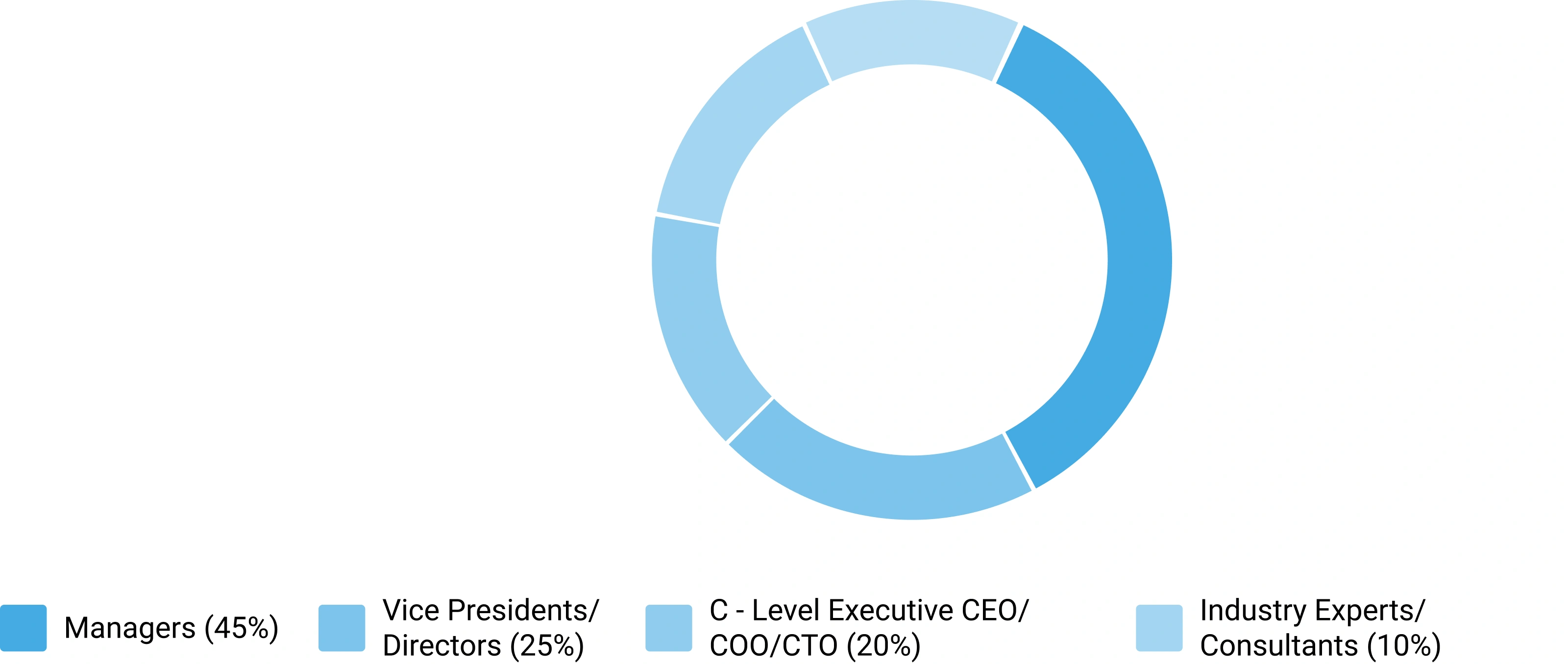
Primary Research — Respondent Designation Profile
Seniority breakdown of interview respondents (% share from PPT data)
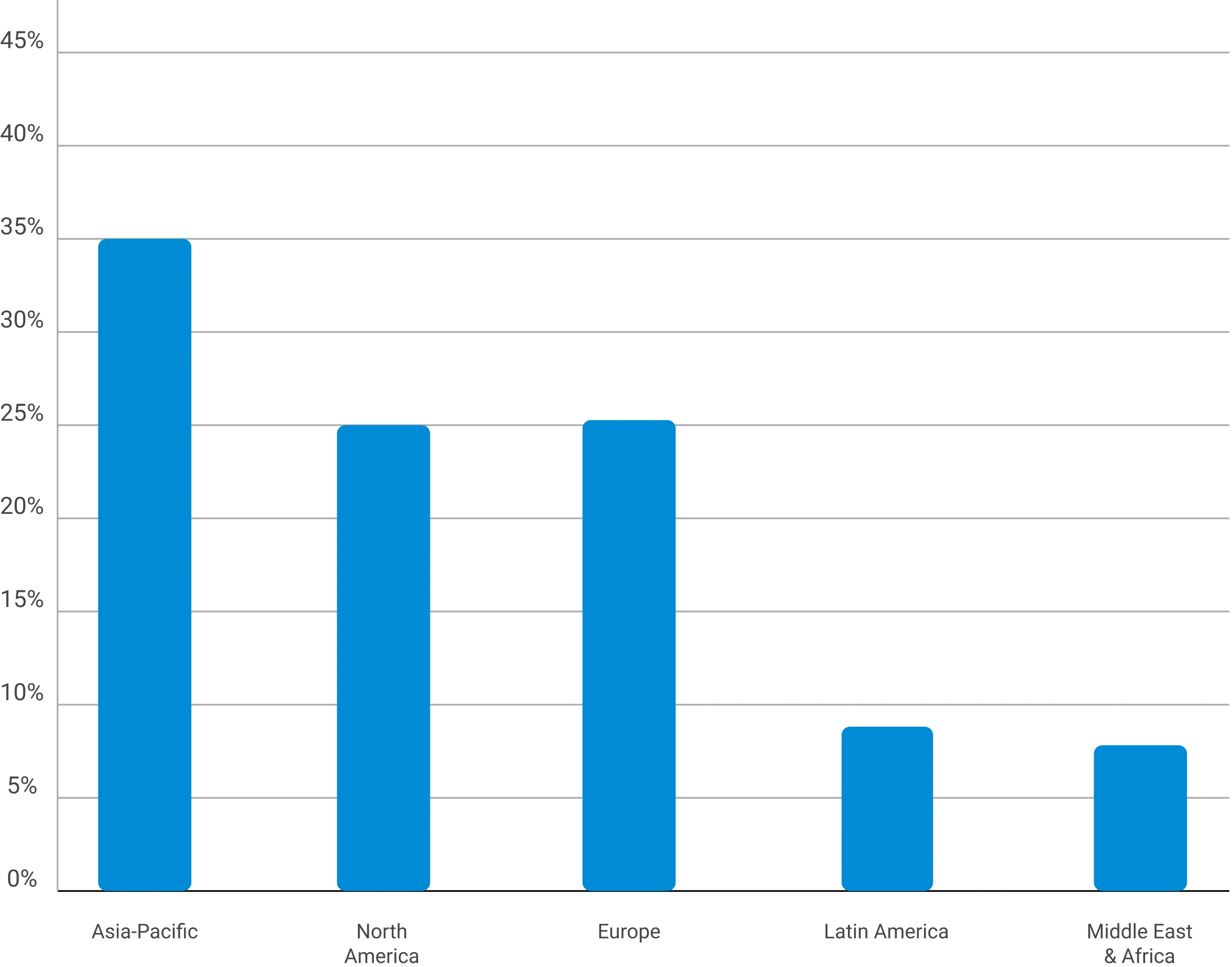
Primary Research — Geographic Coverage of Interviews
Regional distribution of primary research engagement (% share from PPT data)
Phase 6 — Data Triangulation and Market Validation
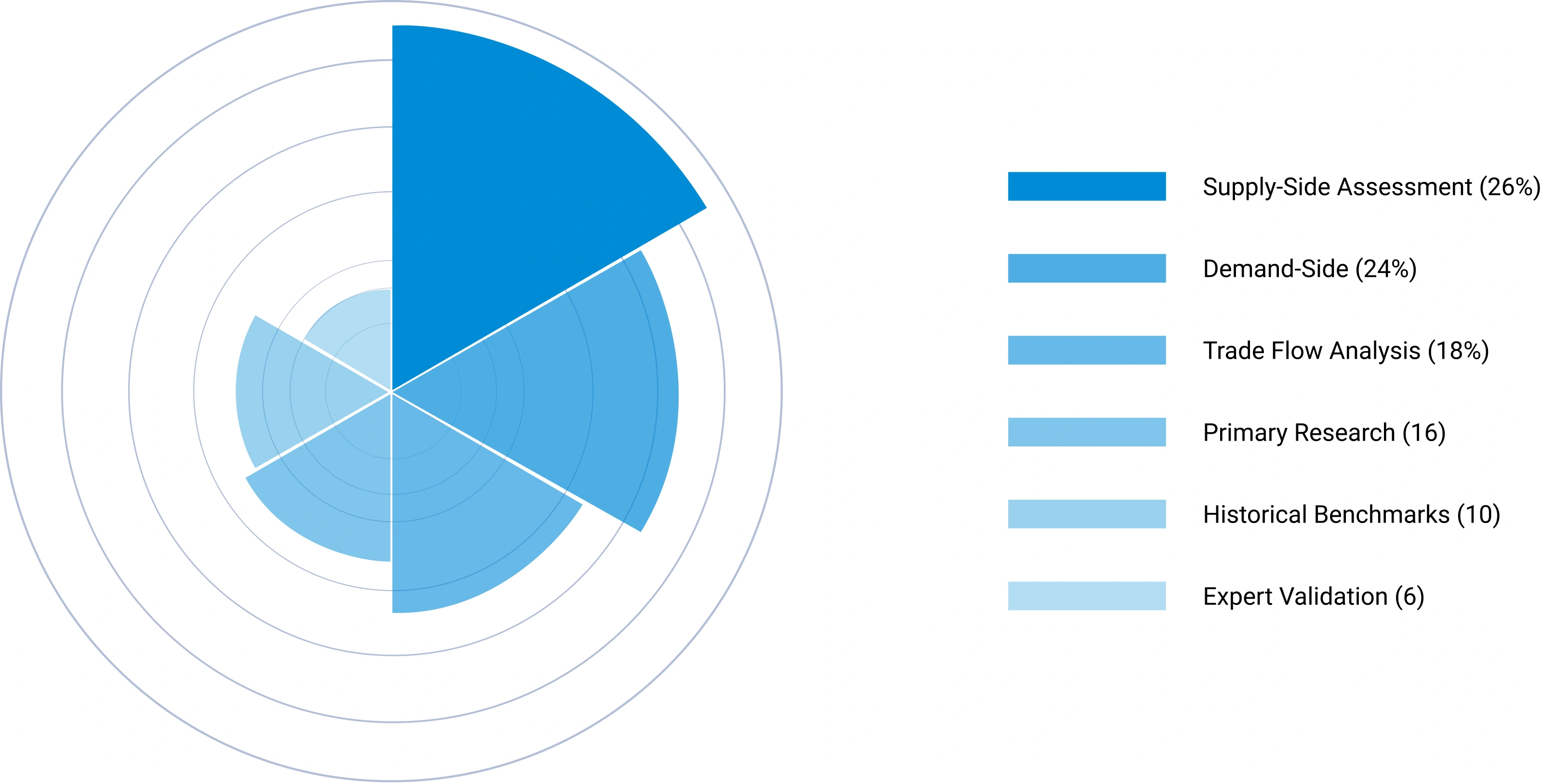
No single methodology is relied upon in isolation. Multiple independent estimation approaches are combined and reconciled to ensure consistency, accuracy, and analytical defensibility. Any material deviations between approaches are investigated and adjusted through additional validation cycles.
The final market size is derived through weighted triangulation of all validated methodologies. Any material deviations between approaches are investigated and adjusted through additional validation cycles. The outcome represents the most realistic assessment of the market based on available evidence and expert confirmation ensuring that volume and value estimates are fully consistent with one another.
Triangulation Framework — Input Contribution Weight
Relative weight each sizing input contributes to the final reconciled market estimate
Phase 7 — Forecast Modeling: Projecting Future Market Evolution
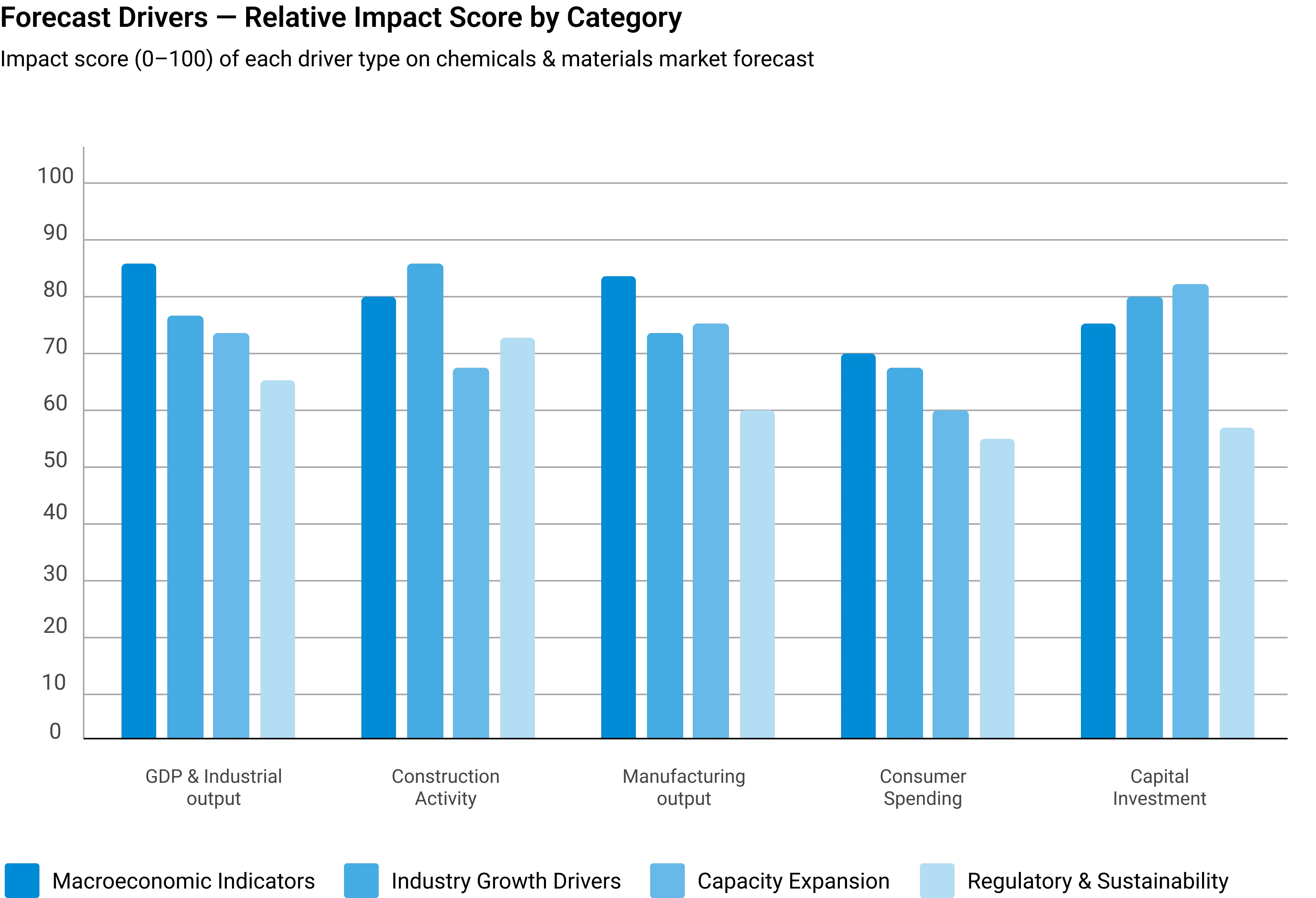
Forecasting evaluates the future trajectory of the market using a combination of quantitative indicators and qualitative assessments across economic, industry, and regulatory dimensions. Rather than simple extrapolation, each driver is independently modeled and integrated into a composite forecast.
Macroeconomic Indicators
GDP growth, industrial production, manufacturing output, construction activity, consumer spending, and capital investment form the quantitative foundation of long-term demand projections. These are applied at country, regional, and global levels.
Industry Growth Drivers
Urbanization, infrastructure development, industrialization, technological innovation, sustainability initiatives, and evolving product performance requirements are assessed at regional and industry levels — capturing both structural and cyclical demand drivers.
Capacity Expansion Analysis
Announced plant expansions, new manufacturing facilities, technology upgrades, and strategic investments are evaluated to determine future supply-demand dynamics and potential market tightness or oversupply situations.
Regulatory & Sustainability
Environmental regulations, chemical safety standards, emission reduction targets, circular economy initiatives, and sustainability requirements are incorporated as they often influence product adoption rates and market growth trajectories.
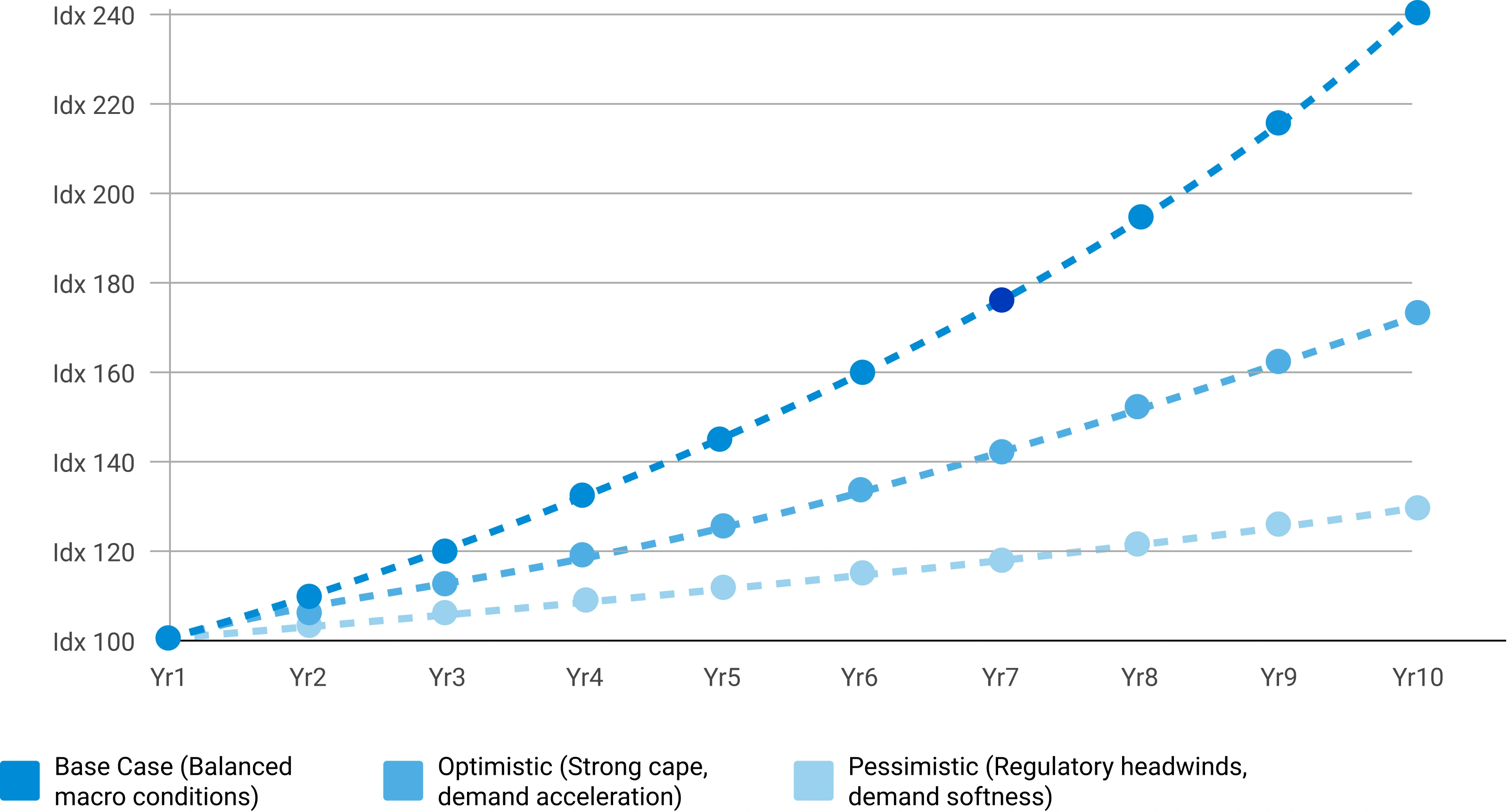
Scenario Forecast Range — Indexed Market Growth (Year 1–10)
Illustrative indexed growth trajectories across Base, Optimistic, and Pessimistic scenarios over a 10-year forecast horizon
Forecast Drivers — Relative Impact Score by Category
Impact score (0–100) of each driver type on chemicals & materials market forecast



Comments
Share your thoughts, ask a question, or provide feedback about this report.