
UV Light Stabilizers Market Size and Forecast 2026 to 2035
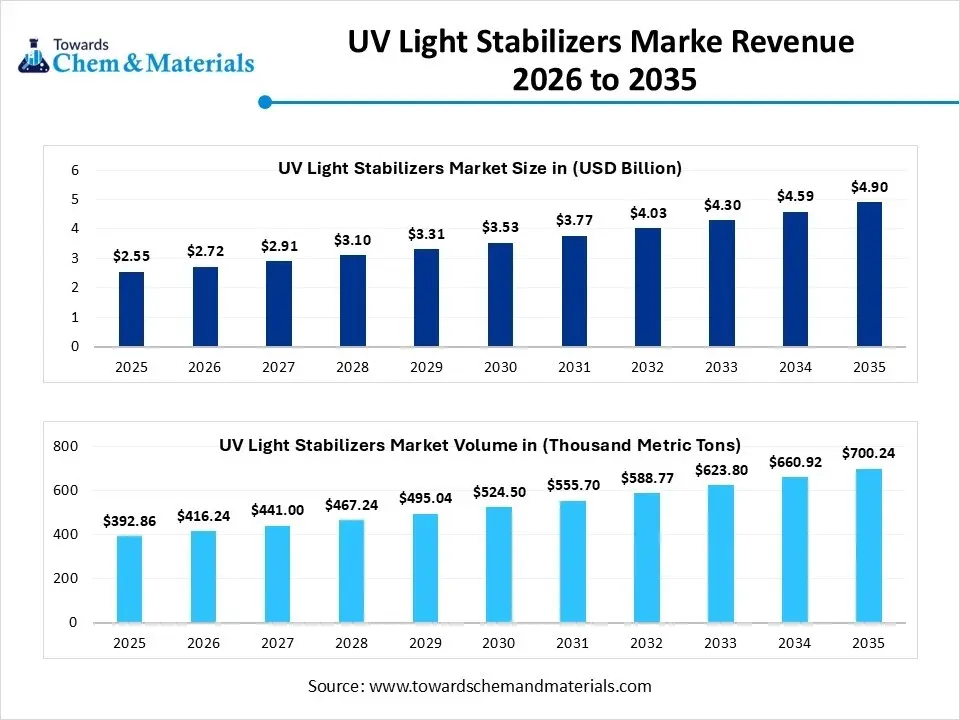
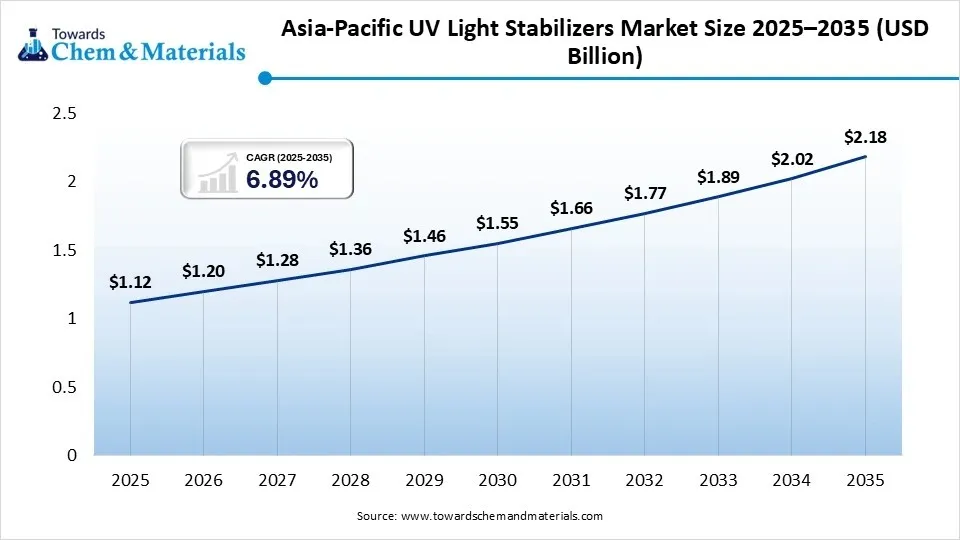
The global UV light stabilizers market size was valued at USD 2.55 billion in 2025, is estimated to reach USD 2.72 billion in 2026, and is projected to reach USD 4.90 billion by 2035, exhibiting a compound annual growth rate (CAGR) of 6.75% over the forecast period from 2026 to 2035.Asia Pacific dominated the UV light stabilizers market with the largest revenue share of 44.0% in 2025 and is expected to grow at the fastest CAGR of 6.89% during the forecast period.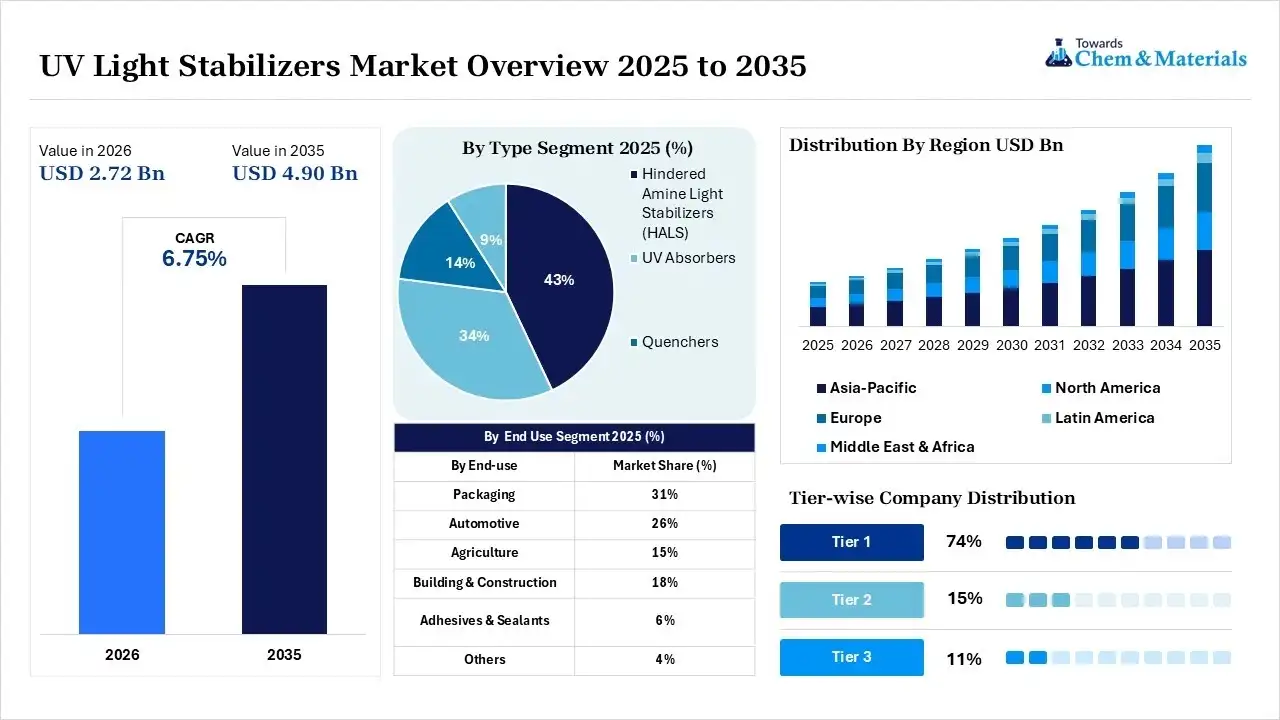
Growing dependence on durable plastic packaging is the key factor driving market growth. Also, stringent environmental regulations mandating sustainable and high-performance polymer materials coupled with the ongoing transition towards sustainable additives can fuel market growth further.
Market Highlights
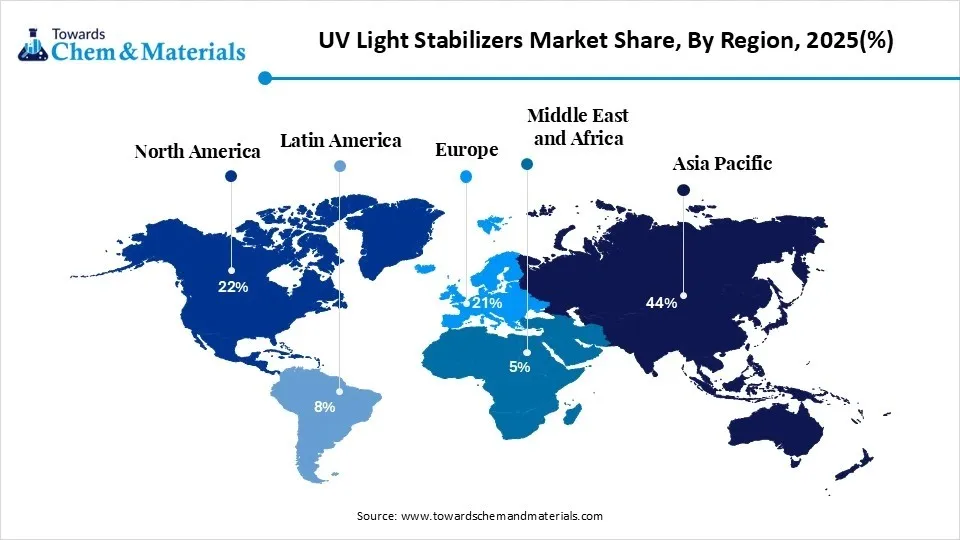
- By region, Asia Pacific dominated the market with the largest share of 44.0% in 2025. The dominance of the region can be attributed to the extensive polymer consumption and rapid regional industrialisation along with increasing demand from end-use sectors.
- By region, North America held the market share of 22.00% in 2025 and is expected to grow at the fastest CAGR of 7.5% over the forecast period. The growth of the region can be credited to the increasing need for durable building and construction materials and a strong automotive industry.
- By type, the hindered amine light stabilisers (HALS) segment dominated the market with the largest share of 43.0% in 2025 and is expected to grow at the fastest CAGR of 7.2% over the forecast period. The growth of the segment is due to increasing demand for abandoned polymer additives.
- By end-use, the packaging segment dominated the market with the largest share of 31.0% in 2025. The dominance of the segment is owing to the exponential growth of the e-commerce sector.
- By end-use, the automotive segment held the market share of 26.00% in 2025 and is expected to grow at the fastest CAGR of 7.3% during the forecast period. This growth is due to growing disposable incomes in emerging economies.
According to Towards Chemicals and Materials Analytics and Consulting, the global UV light stabilizers market volume was valued at 392.86 thousand metric tons in 2025 and is expected to surpass around 700.24 thousand metric tons by 2035, accelerating a compound annual growth rate (CAGR) of 5.95% over the forecast period from 2026 to 2035.
Market Overview
Increasing Demand from Packaging & Construction Supports Market Growth
Surged product demand from the packaging and construction industries that need UV-resistant materials to offer durability, design aesthetic, etc., is presenting crucial opportunities in the market.
- In March 2026, Univar Solutions expanded its partnership with SI Group to broaden the distribution of speciality additives for plastics and adhesives across select EMEA markets, managed through its Ingredients + Specialities division. This agreement strengthens the supply chain for key industrial sectors in the region. SI Group products, including antioxidants, stabilisers, UV light stabilisers, impact modifiers and other additives.(Source: www.indianchemicalnews.com)
UV stabilisers can improve durability to protect against UV degradation, especially when they are in the outdoor environment.
What are the Key Drivers That Help in the Growth Of The Market?
The UV light stabilizers market has seen significant growth, and the growth is driven by rising demand for durable and weather-resistant products due to increasing demand from industries to overcome harsh weather and environmental conditions. Rising awareness of UV radiation effects and demand for materials with protection against UV radiation increases the demand. Increasing use of UV stabilizers in the packaging of food and beverages for protection from degradation from UV radiation, which fuels the demand and growth.
The growing expansion of the automotive industry demands protective materials for the longevity and appearance of the vehicle, which further boosts the growth. The UV protection stabilizers are also extensively used in the construction industry for the protection of outdoor materials from sun damage and degradation, which further fuels the growth of the market. Technological advancement through research and development of more effective and efficient stabilizers further propels the growth of the market, and all these driers help in the expansion of the market.
Market Trends
- Advancement in UV stabilizers for high performance with properties like antimicrobial properties and new and innovative types of UV stabilizers fuels growth.
- Technological advancement, like the integration of nanotechnology in coating and industrial applications, further boosts the demand.
- Increasing demand from various industries like automotive, construction, and packaging for durable and weather-resistant materials drives the growth of the UV light stabilizers market.
- The UV stabilizers are in increasing demand to protect the durability and lifespan of the product, regulating environmental conditions, which fuels growth.
Repert Scope
| Report Attributes | Details |
| Market Size in 2026 | USD 2.72 Billion/ 416.24 Thousand Metric Tons |
| Market Size by 2035 | USD 4.90 Billion/ 700.24 Thousand Metric Tons |
| Growth Rate from 2025 to 2035 | CAGR 6.75% |
| Base Year of Estimation | 2025 |
| Forecast Period | 2025 - 2035 |
| High Impact Region | Asia Pacific |
| Segment Covered | By Type, By End Use, By Region |
| Key Companies Profiled | Akcros Chemicals (Valtris Specialty Chemicals), Akzo Nobel N.V, BASF, BYK-Chemie GmbH (ALTANA divisions), Chemtura Corporation (LANXESS), CLARIANT, Cytec Industries Inc. (Solvay), Everlight Chemical Industrial Co., Lycus Ltd., LLC., Mayzo, Inc. |
Supply Chain Analysis of the UV Light Stabilizers Market
Production & Processing
- It involves the synthesis of chemical additives, such as hindered amine light stabilisers (HALS) and ultraviolet (UV) absorbers, along with their subsequent compounding into polymer matrices. These specialised formulations serve to mitigate polymer degradation by enhancing the resistance of plastics and surface coatings against atmospheric weathering, discolouration, and mechanical embrittlement.
- BASF SE: The global market leader, BASF, boasts a comprehensive portfolio of light stabilisers and massive production facilities in Europe (Germany and Italy) catering to the automotive and construction sectors.
- Other Key Players: ADEKA Corporation, SABO S.p.A.
Quality Testing and Certification
- It includes regulatory standards, testing protocols, and environmental compliance frameworks that manufacturers must satisfy to validate product durability. These measures are critical because UV stabilisers, such as Hindered Amine Light Stabilisers (HALS) and UV absorbers, are chemically essential for extending the operational lifespan of polymers, coatings, and plastics.
- Rianlon Corporation: A major Chinese chemical manufacturer that dominates the Asia-Pacific region and is recognised for its robust global supply operations.
- Other Key Players: Syensqo SA/NV, SONGWON Industrial Co., Ltd.
Distribution to Industrial Users
- It involves a primary distribution channel for chemical manufacturers to supply additives directly to large-scale end-users such as automotive manufacturers, agricultural film producers, and industrial coaters by bypassing traditional third-party wholesalers.
- Evonik Industries AG: A German speciality chemicals company that provides stabilisers for high-value packaging, engineering plastics, and coatings.
- Other Key Players: Clariant AG, Evonik Industries AG
Market Opportunity
What is the Key Opportunity That Supports the Growth of the UV Light Stabilizers Market?
Key opportunity responsible for the growth of the UV light stabilizers market is the capability of the stabilizers to protect the material from damage and degradation in changing environmental conditions and harmful radiation. The changing weather conditions in many regions are a major factor that leads to instability, degradation, and breakdown, which is exacerbated by the use of UV stabilizers, a sit creates a protective layer and absorbs harmful radiations which prevent it from damage which drives the demand for the product from various industries for its application. This supports the growth and expansion of the market and creates opportunities for growth globally.
Market Challenge
The Key Challenge That Hinders the Growth of the UV Stabilizers Market is High Production Costs and Limited Raw Material Availability
The limited raw material availability remains a major challenge in the UV light stabilizers market. The production of stabilizers requires chemicals, which are costly and have fluctuating prices, like benzene, sodium nitrite, and benzoyl chloride. The fluctuation in raw material cost affects and contributes to the overall cost of production, which also adds to the cost of the final product. High capital investment and high cost of manufacturing plant setup also contribute to the challenge in the growth of the market. Limited adoption due to rising costs and less awareness is also a limitation that hinders the overall growth of the market.
Segmental Insights
Type Insights
The hindered amine light stabilizers segment dominated the UV light stabilizers market in 2025. Hindered amine light stabilizers are chemical compounds that are the chemicals which are used to protect materials from degradation and damage which is caused by UV light and radiation. They act as radical scavengers by preventing the formation of free radicals, which generally damage the material. HALS dont absorb UV radiation directly. Instead, they cycle through scavenging alkyl and peroxy radicals that form during photooxidation. This process stops polymers from degrading and helps keep their physical properties intact. They are widely used for applications in plastics, coatings, and other polymeric materials. They also offer several benefits like durability, stability, and longevity. These factors and applications drive the growth of the market and support expansion.
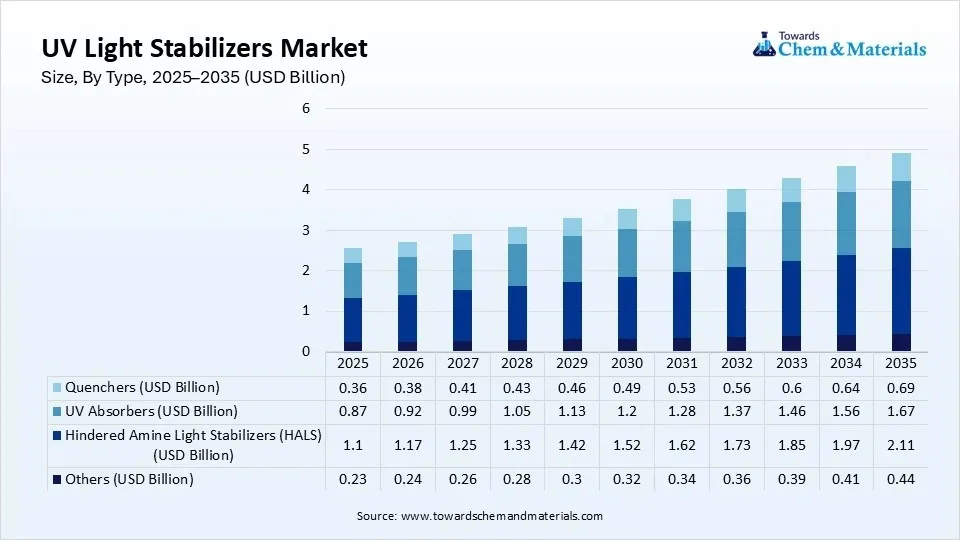
The UV absorbers segment is expected to experience significant growth in the market during the forecast period. UV absorbers also known as UV inhibitors they are the materials which protect the materials from harmful radiations and from damage and protect it. Most used UV absorbers are 2-(2-hydroxyphenyl)-benzotriazoles, 2-hydroxy-benzophenones, oxalanilides, and Hydroxyphenyl-s-triazines. The mechanism works by absorbing the harmful radiation and converting it into less harmful energy, like heat, and prevent it and protect it from damaging. They are commonly used in applications of plastics, coatings, textiles, and sunscreens for maintaining and protecting from discoloration, reducing durability, degradation, and cracking. These properties and applications drive demand for the market and help in the expansion of the market.
UV Light Stabilizers Market Share, By Type, 2025(%)
| By Type | Market Share (%) |
| Hindered Amine Light Stabilizers (HALS) | 43% |
| UV Absorbers | 34% |
| Quenchers | 14% |
| Others | 9% |
End Use Insights
The packaging segment dominated the UV light stabilizers market in 2025. The stabilizers are used for packaging to protect the material from damage and degradation, which increases the demand for stabilizers, which drives the growth. The growth is also driven to prevent the material from discoloration, fading, and degradation of the packaging, which also helps maintain product appearance and integrity of the material, which also helps for longevity. The stabilisers protect the plastics from reaching the plastic packaging and also neutralize free radicals. They are extensively used for the packaging of food to prevent degradation of food and flavor, in bottles and containers to prevent discoloration, and in film packaging. This application in packaging supports the growth of the market and helps in expansion.
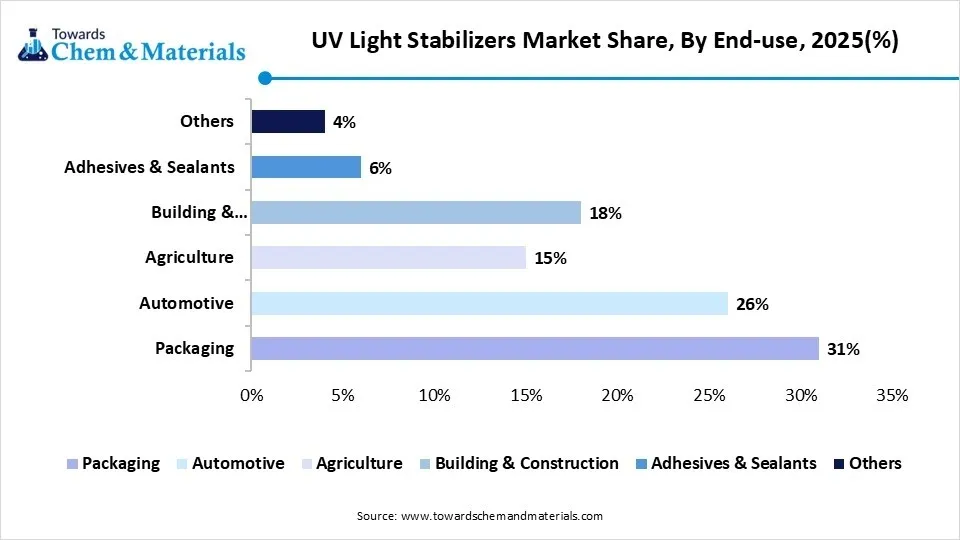
The automotive segment is expected to experience significant growth in the UV light stabilizers market during the forecast period. The growth of the segment is driven by the rising demand for stabilizers from the automotive sector to protect the appearance and discoloration of the vehicle due to harmful UV radiation and to enhance durability and performance. It also helps extend the shelf life of the automotive components by reducing the frequent replacement and maintenance of the vehicle by protecting it from damage, which fuels the growth. Protection from photo-degradation, like cracking, breakdown, loss of strength, also surges the demand for stabilizers. These applications and properties of long-term performance and enhancing durability using stabilizers boost the growth and support the expansion of the market.
UV Light Stabilizers Market Share, By End-use, 2025(%)
| By End-use | Market Share (%) |
| Packaging | 31% |
| Automotive | 26% |
| Agriculture | 15% |
| Building & Construction | 18% |
| Adhesives & Sealants | 6% |
| Others | 4% |
Regional Insights
How Did Asia Pacific dominate the UV Light Stabilizers Market in 2025?
Asia Pacific dominated the market with the largest share of 44.0% in 2025. The dominance of the region can be attributed to the extensive polymer consumption and rapid regional industrialisation along with increasing demand from end-use sectors. In addition, increasing the consumption of plastics and wood alternatives in decking, fencing, and floor coatings necessitates the integration of UV stabilisers to tackle structural degradation, discolouration, and surface chalking.
China
China is a major manufacturer of vehicles. UV stabilisers are vital for preserving the integrity, colour, and gloss of interior/exterior automotive plastics, preventing materials from chalking or cracking.Market trends are transitioning towards eco-friendly and biodegradable UV stabilisers as China implements stricter environmental regulations and companies aim for more sustainable polymer recycling.
North America held the market share of 22.00% in 2025 and was expected to grow at the fastest CAGR of 7.5% over the forecast period. The growth of the region can be credited to the increasing need for durable building and construction materials and a strong automotive industry. The increasing emphasis on energy-efficient infrastructure and contemporary architectural designs is boosting the adoption of UV stabilisers in TPO roofing membranes, vinyl siding, and solar shingles.
United States
Rapid growth of architectural/residential construction and a surge in demand for food-grade and e-commerce packaging films require robust, durable plastics that resist UV degradation.Industry standards and stringent VOC limits on wood coatings are pushing manufacturers to develop eco-friendly and biodegradable UV stabilisation agents.
Canada
The food, beverage, and consumer goods packaging industries need UV absorbers and HALS to prevent polymer brittleness and maintain product shelf-life and aesthetic appeal.Increasing consumer preference and stringent regulations regarding environmental safety are encouraging manufacturers to adopt sustainable and eco-friendly UV stabiliser solutions.
Europe held the market share of 21.00% in 2025. The growth of the region can be linked to the increasing demand for robust plastic packaging solutions and the implementation of stringent regulatory mandates favouring sustainable and recyclable polymers. The surge in exterior renovation and architectural decoration trends has amplified market demand for UV absorbers in protective coatings, which reduces material degradation, chalking, and discolouration.
Germany
German automakers set rigors quality standards, often requiring exterior plastics to retain mechanical strength and gloss for 10 years or more. The European Union and Germany enforce strict limits on volatile organic compounds (VOCs). This has accelerated the adoption of next-generation, eco-friendly additives, such as Hindered Amine Light Stabilisers (HALS.
France
Frances leading automotive original-equipment manufacturers (OEMs) demand superior exterior and interior plastics that resist UV radiation, fading, and degradation over long lifespans.
Frances push towards "green technology" and sustainable chemical manufacturing is fuelling the development of biodegradable and low-VOC (Volatile Organic Compound) stabiliser formulations.
Latin America held a market share of 8.00% in 2025. The growth of the region can be driven by growing demand for lightweight, durable and cost-effective polymer packaging along with the thriving automotive sector in emerging economies. Also, consumers increasingly seek durable, long-lasting products to minimise frequent replacements and promote overarching resource efficiency, leading to regional growth further.
Brazil
The expanding food and beverage, pharmaceutical, and e-commerce industries demand highly durable, weather-resistant plastic films and packaging to maintain product safety and shelf life.
Brazil witnesses naturally high levels of solar ultraviolet radiation, significantly increasing the rate of polymer degradation, chalking, and colour fading in plastics and coatings.
Argentina
The localised manufacturing of vehicles and automotive components drives the need for lightweight plastics, exterior paints, and interior trims.The increasing domestic consumption of packaged goods, e-commerce, and food products pushes manufacturers to use UV-stabilised polymers.
The Middle East & Africa held a market share of 5.00% in 2025. The growth of the region can be attributed to the growing local polymer industries and increasing infrastructure and automotive production across the Gulf Cooperation Council (GCC). Furthermore, the shift within the food and beverage sector towards sustainable, durable packaging relies critically on the incorporation of UV additives to prolong overall product shelf life.
Saudi Arabia
Saudi Arabias extreme heat and high solar radiation levels cause rapid degradation of polymers, which leads to fading, cracking, and loss of mechanical strength.The growth of logistics and e-commerce has heightened the need for durable polyolefin films and packaging that can withstand prolonged exposure to severe environmental conditions.
UAE
The UAEs intense UV radiation and extreme heat accelerate polymer degradation, which leads to colour fading, cracking, and loss of mechanical strength in plastics and paints.Manufacturers in the region are increasingly focusing on eco-friendly and biodegradable UV stabiliser formulations to align with corporate sustainability goals.
Recent Developments
- In April 2026, Syensqo introduced its Cyasorb Cyxtra V9800 and V9100 stabiliser series, engineered to optimise the performance of translucent polypropylene (PP) within automotive manufacturing. These advanced stabilisation solutions empower compounders and original equipment manufacturers (OEMs) to realise contemporary design aesthetics.(Source: www.plasticstoday.com)
Top Companies List
- Akcros Chemicals (Valtris Specialty Chemicals)
- Akzo Nobel N.V
- BASF
- BYK-Chemie GmbH (ALTANA divisions)
- Chemtura Corporation (LANXESS)
- CLARIANT
- Cytec Industries Inc. (Solvay)
- Everlight Chemical Industrial Co.
- Lycus Ltd., LLC.
- Mayzo, Inc.
Segments Covered in the Report
By Type
- Hindered Amine Light Stabilizers (HALS)
- Monomeric HALS
- Oligomeric HALS
- Polymeric HALS
- UV Absorbers
- Benzotriazoles
- Benzophenones
- Triazines
- Oxalanilides
- Quenchers
- Nickel-Based Quenchers
- Organometallic Quenchers
- Others
- Antioxidant-UV Stabilizer Blends
- Hydroxyphenyl Triazines
- Specialty UV Stabilizers
By End-use
- Packaging
- Food Packaging
- Industrial Packaging
- Consumer Goods Packaging
- Automotive
- Exterior Components
- Interior Components
- Under-the-Hood Parts
- Agriculture
- Greenhouse Films
- Mulch Films
- Silage Films
- Building & Construction
- Roofing Membranes
- Window Profiles
- Pipes & Fittings
- Exterior Panels
- Adhesives & Sealants
- Construction Adhesives
- Industrial Sealants
- Specialty Adhesives
- Others
- Electrical & Electronics
- Furniture
- Textile Applications
- Marine Components
By Region
- North America
- U.S.
- Canada
- Europe
- Germany
- UK
- France
- Italy
- Spain
- Sweden
- Denmark
- Norway
- Asia Pacific
- China
- Japan
- India
- South Korea
- Thailand
- Latin America
- Brazil
- Mexico
- Argentina
- Middle East and Africa (MEA)
- South Africa
- UAE
- Saudi Arabia
- Kuwait
A Seven-Phase Framework
Our methodology is designed to be universally applicable across commodity chemicals, specialty chemicals, petrochemicals, construction chemicals, coatings, electronic chemicals, industrial gases, agrochemicals, water treatment chemicals, and performance materials. Each phase builds upon the last, creating a layered validation structure that minimizes estimation error and maximizes analytical confidence.
The framework ensures comprehensive market coverage, robust cross-validation, and reliable long-term forecasting — producing market estimates that withstand scrutiny from investors, regulators, and corporate strategy teams.

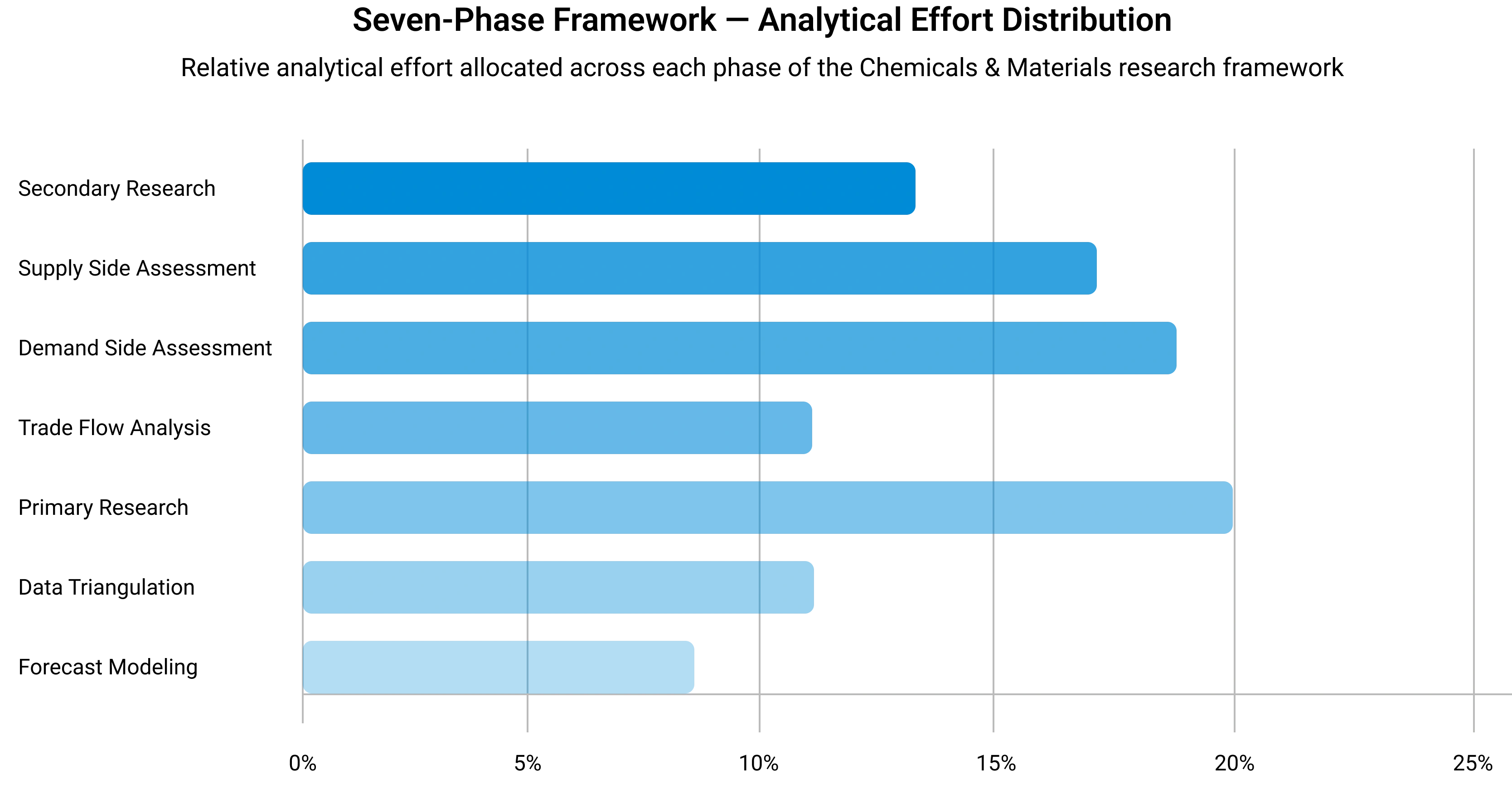
Seven-Phase Framework — Analytical Effort Distribution
Relative analytical effort allocated across each phase of the Chemicals & Materials research framework
Phase 1 - Secondary Research: Establishing the Foundation
Secondary research collects and evaluates publicly available information from authoritative sources, establishing the foundational understanding of market structure, value chain dynamics, competitive landscape, and end-use demand patterns. Every source is evaluated for credibility, recency, geographic relevance, and methodological soundness before inclusion.
Industry Associations
Sources include ACC, CEFIC, ICCA, JCIA, CPCIF, and SOCMA providing production volumes, consumption trends, capacity developments, and sustainability initiatives.
Company Disclosures
Annual reports, investor presentations, earnings transcripts, and regulatory filings reveal product portfolios, manufacturing footprints, capacity expansions, and revenue segmentation.
Government Databases
National statistical offices, customs authorities, environmental agencies, and industrial production databases provide verified statistics on output, trade flows, and regulatory compliance.
Trade Databases
UN Comtrade, ITC, Eurostat, and national customs authorities enable assessment of global product movement, import dependency, and export competitiveness across regions.
Our Secondary Research Sources
- Ministry of Chemicals and Fertilizers
- European Chemicals Agency
- United States Department of Energy
- Ministry of Industry and Information Technology
- Ministry of Economy Trade and Industry
- Ministry of Trade Industry and Energy
- National Institute of Standards and Technology
- Council of Scientific and Industrial Research
- Fraunhofer Society
- National Institute for Materials Science
Phase 2 — Supply-Side Assessment: Mapping Production Capabilities
Production Capacity Analysis
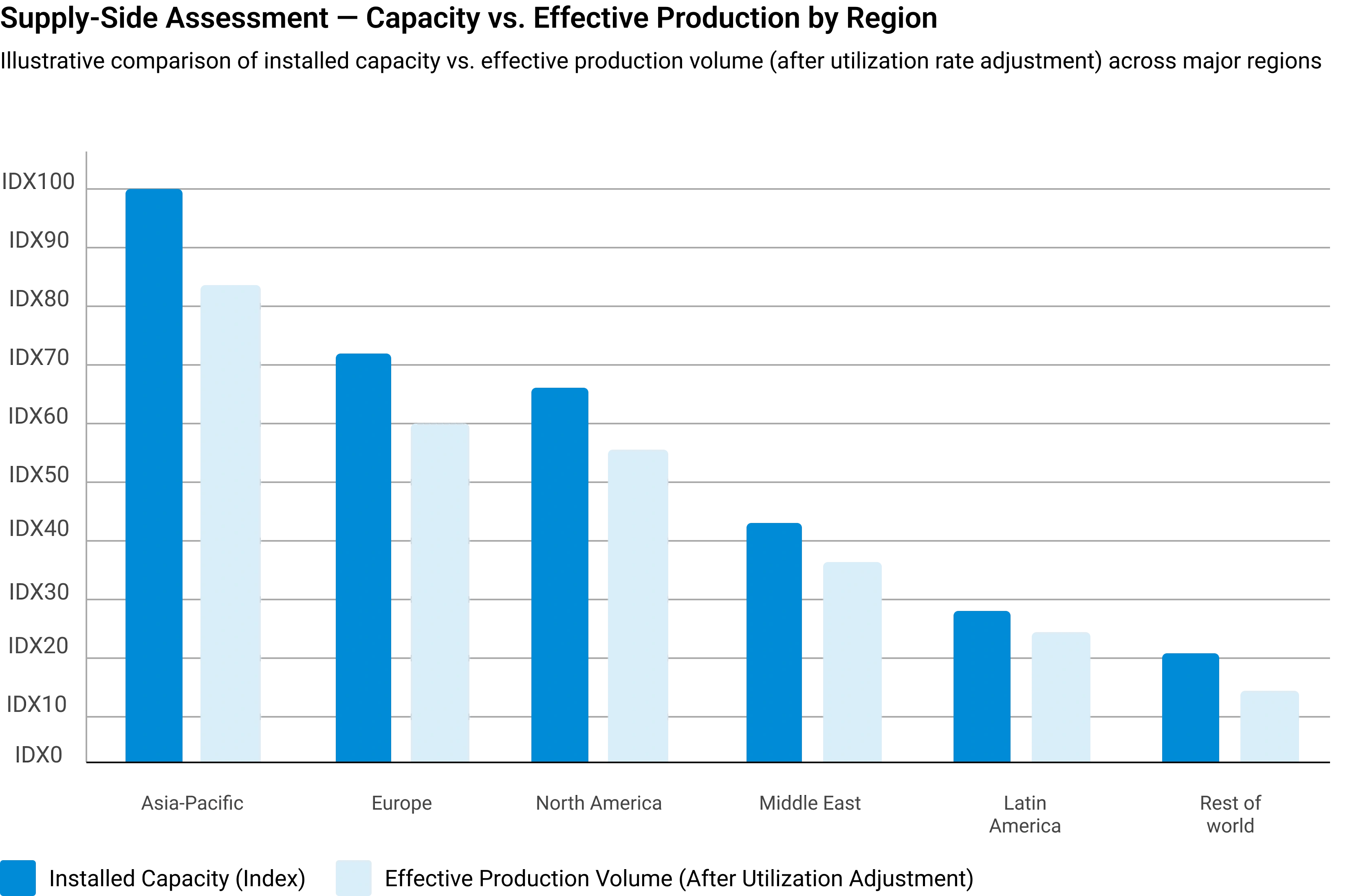
All major manufacturers are assessed for existing installed capacity, planned additions, expansions, new plant announcements, and technology adoption — mapped at global, regional, and country levels.
Capacity Utilization Adjustment
Installed capacity is adjusted using utilization rates based on demand conditions, feedstock availability, plant operating rates, maintenance schedules, and regulatory restrictions.
Manufacturer Revenue Analysis
Product-specific revenues, segment-level performance, regional distribution, average selling prices, and margin trends are evaluated to establish market value estimates.
Supply-Side Assessment — Capacity vs. Effective Production by Region
Illustrative comparison of installed capacity vs. effective production volume (after utilization rate adjustment) across major regions
Phase 3 — Demand-Side Assessment: Quantifying Chemical Consumption
Demand-side analysis quantifies chemical consumption across industries, applications, and geographies — identifying where and how chemicals are consumed throughout the value chain with precision.
End-Use Industry Analysis
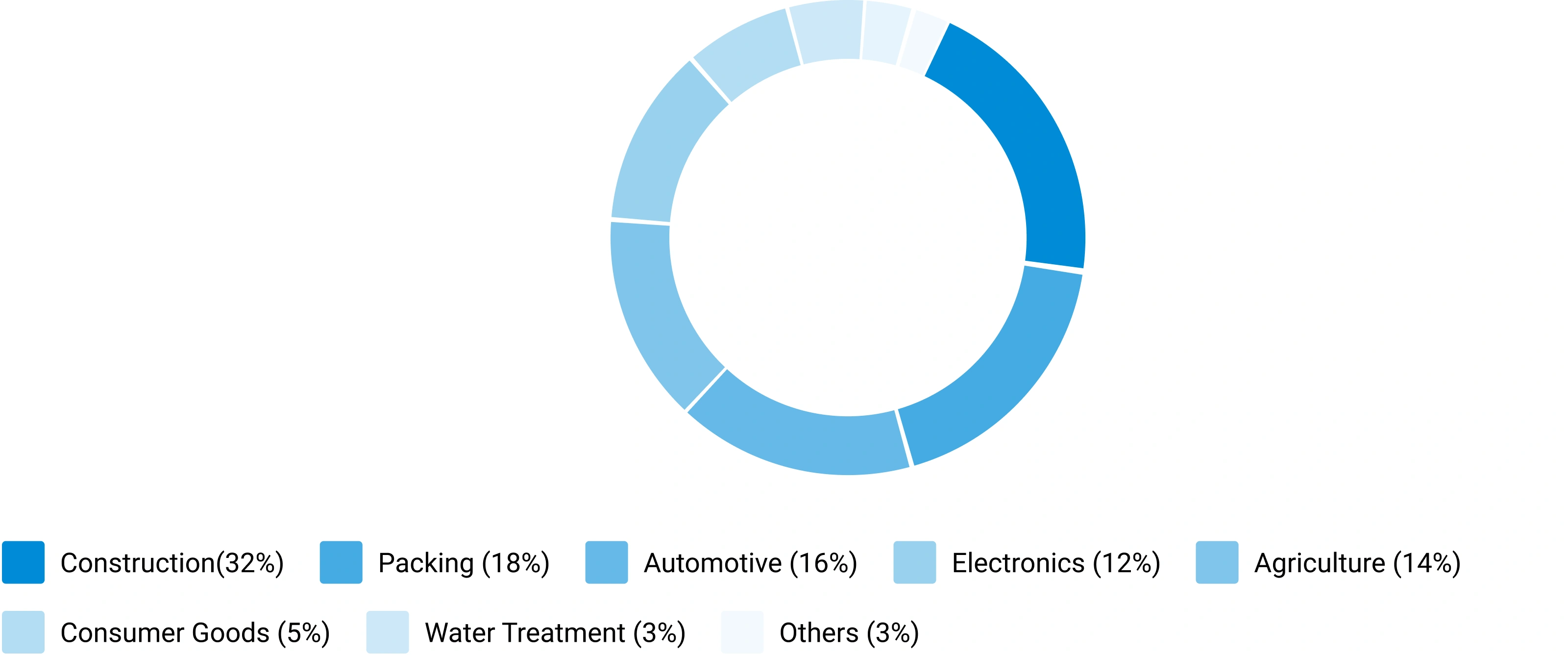
Chemical demand is evaluated across automotive, construction, packaging, electronics, agriculture, healthcare, consumer goods, industrial manufacturing, energy and utilities, and water treatment. Industry output, production trends, and consumption intensity are analyzed to determine demand patterns.
Consumption Modeling
Demand is estimated using measurable indicators: kilograms per vehicle, kilograms per square meter of construction, dosage per cubic meter of water treated, kilograms per hectare of agricultural land, and kilograms per ton of manufactured products. Consumption factors are validated through industry publications and primary interviews.
Application Analysis
The market is segmented by application area to understand product performance requirements, formulation trends, technology adoption, customer preferences, and regulatory requirements improving demand accuracy and segmentation granularity.
Demand-Side Assessment — End-Use Industry Demand Distribution
Illustrative distribution of chemical & materials demand across key end-use industries
Phase 4 - Trade Flow Analysis: Balancing Regional Supply and Demand
Trade flow analysis reconciles regional supply and demand estimates through import and export data, identifying net supply positions, regional dependencies, and market imbalances. It serves as an independent validation layer that tests the consistency of supply-side and demand-side estimates.
Import Analysis
Import data is evaluated to determine volumes, source countries, product dependency, regional supply gaps, and pricing trends — identifying markets that rely heavily on external supply and where domestic production is insufficient to meet demand.
Export Analysis
Export assessments reveal production surplus, export competitiveness, regional manufacturing strength, and global market participation. Export patterns also help validate domestic production estimates and identify net exporting regions.
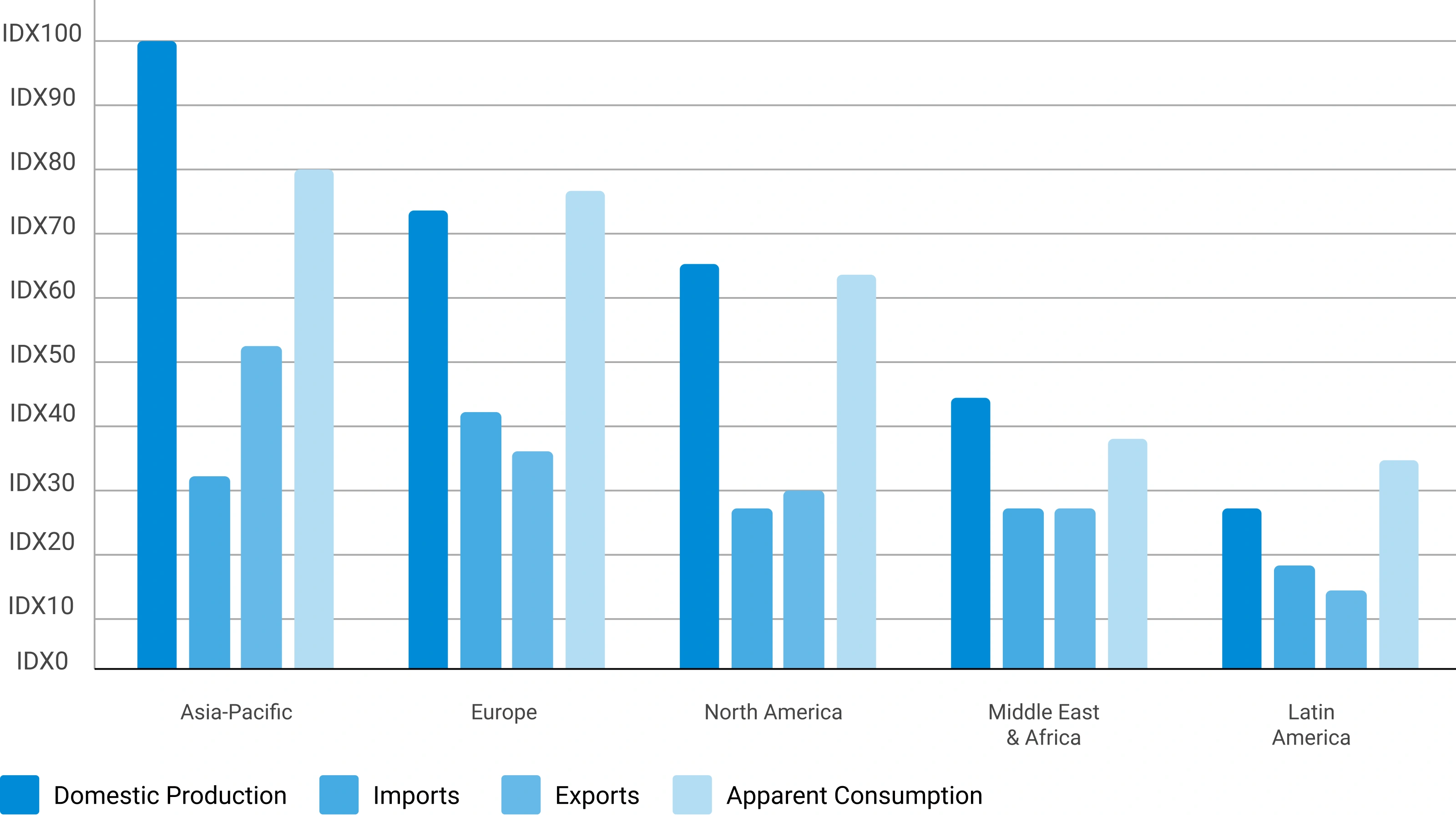
Apparent Consumption Model
Regional consumption is assessed using the standard apparent consumption formula:
Results identify net importing regions, net exporting regions, regional deficits, and surpluses — serving as an independent validation of supply and demand estimates.
Trade Flow Analysis — Net Supply Position by Region
Illustrative apparent consumption vs. domestic production across major regions — positive gap indicates net import dependency
Phase 5 — Primary Research: The Critical Validation Layer
Primary research tests and refines findings from secondary research through direct engagement with industry participants across the supply chain, demand side, and expert community. It captures intelligence that no database or published report can provide — the real-world experience of manufacturers, buyers, and specialists operating in the market.

Supply-Side Interviews
Conversations with chemical manufacturers, raw material suppliers, contract manufacturers, technology providers, and plant operators cover production trends, capacity utilization, pricing developments, technology shifts, and competitive dynamics.

Demand-Side Interviews
Engagement with OEMs, industrial consumers, procurement managers, distributors, formulators, and end-use manufacturers focuses on consumption trends, purchasing behavior, product substitution, demand outlook, and emerging applications.

Industry Expert Consultations
Additional interviews with industry consultants, independent experts, regulatory specialists, technical professionals, and research institutions provide deeper market context and validate key analytical assumptions.
Focus Areas of Primary Research:
Market Size & Forecast Validation
Revenue estimates, volume consumption, growth rates, forecast assumptions, regional demand.Supply Chain & Value Chain Assessment
Raw material sourcing, supply chain challenges, distribution networks, procurement practices.Production & Capacity Analysis
Manufacturing capacity, utilization rates, expansion projects, plant investments.Pricing & Cost Structure Analysis
Product pricing trends, feedstock costs, energy costs, margin pressures, pricing outlook.Competitive Landscape Assessment
Volume and value estimates confirmed to be fully consistent with one another before publicationInterview Volume by Market Scope
| Study Scope | Number of Interviews |
|---|---|
| Niche Market | 20 – 30 |
| Mid-Sized Market | 30 – 50 |
| Global Market | 50 – 80 |
| Highly Fragmented Market | 80 – 120 |
Interview Details:
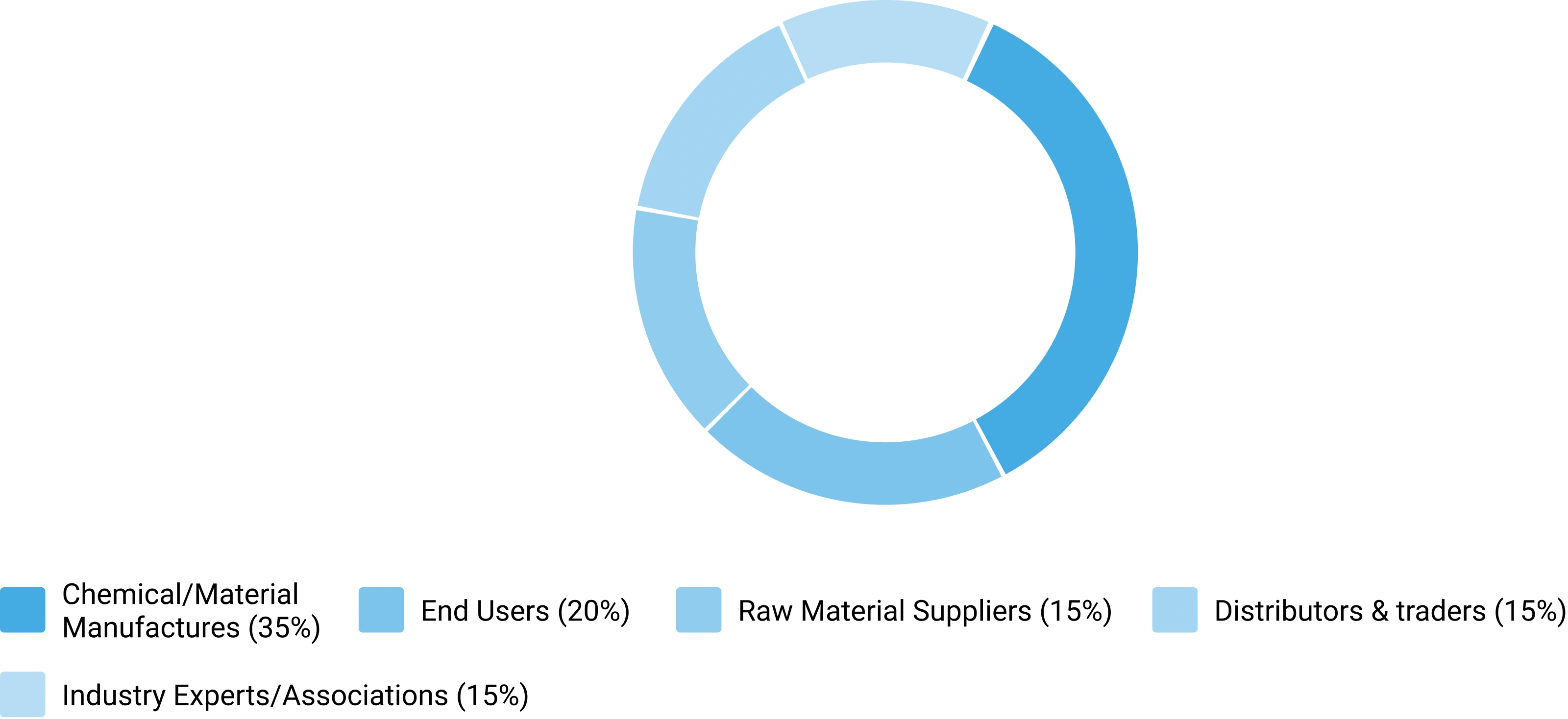
Category : Manufacturers, Suppliers, Distributors, End Users, Experts/Associations
Average Duration : 30–60 Minutes
Interview Mode : Video calls, telephonic interviews, expert consultations
Interview Format : Structured / Semi-Structured questionnaire
Focus Areas of Primary Research:
Market Size & Forecast Validation :
Revenue estimates, volume consumption, growth rates, forecast assumptions, regional demand.
Supply Chain & Value Chain Assessment :
Raw material sourcing, supply chain challenges, distribution networks, procurement practices.
Production & Capacity Analysis :
Manufacturing capacity, utilization rates, expansion projects, plant investments.
Pricing & Cost Structure Analysis :
Product pricing trends, feedstock costs, energy costs, margin pressures, pricing outlook.
Competitive Landscape Assessment :
Market share, competitor positioning, strategic initiatives, partnerships, acquisitions.
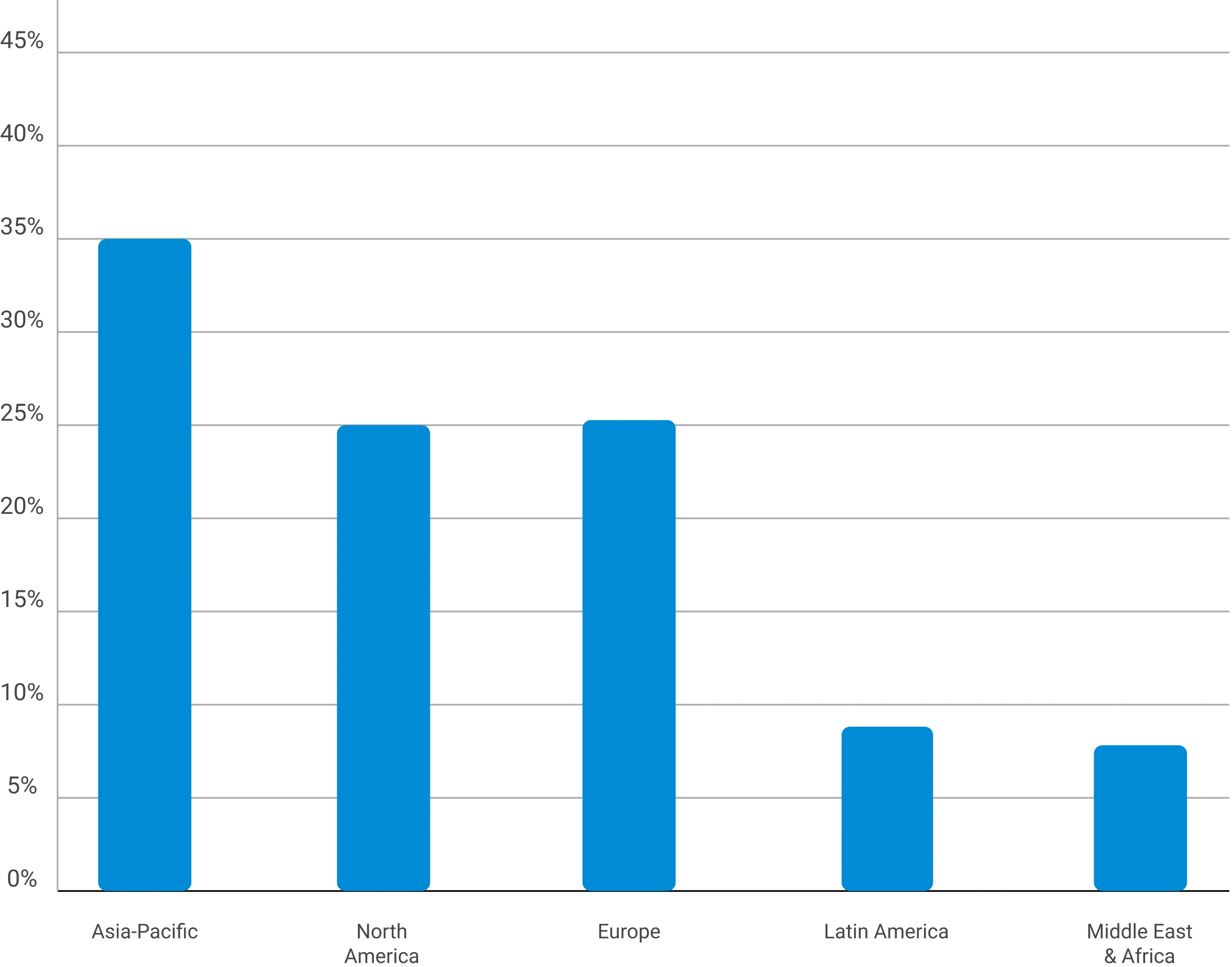
Primary Research — Stakeholder Coverage by Category
Distribution of interview respondents across stakeholder categories (% share from PPT data)
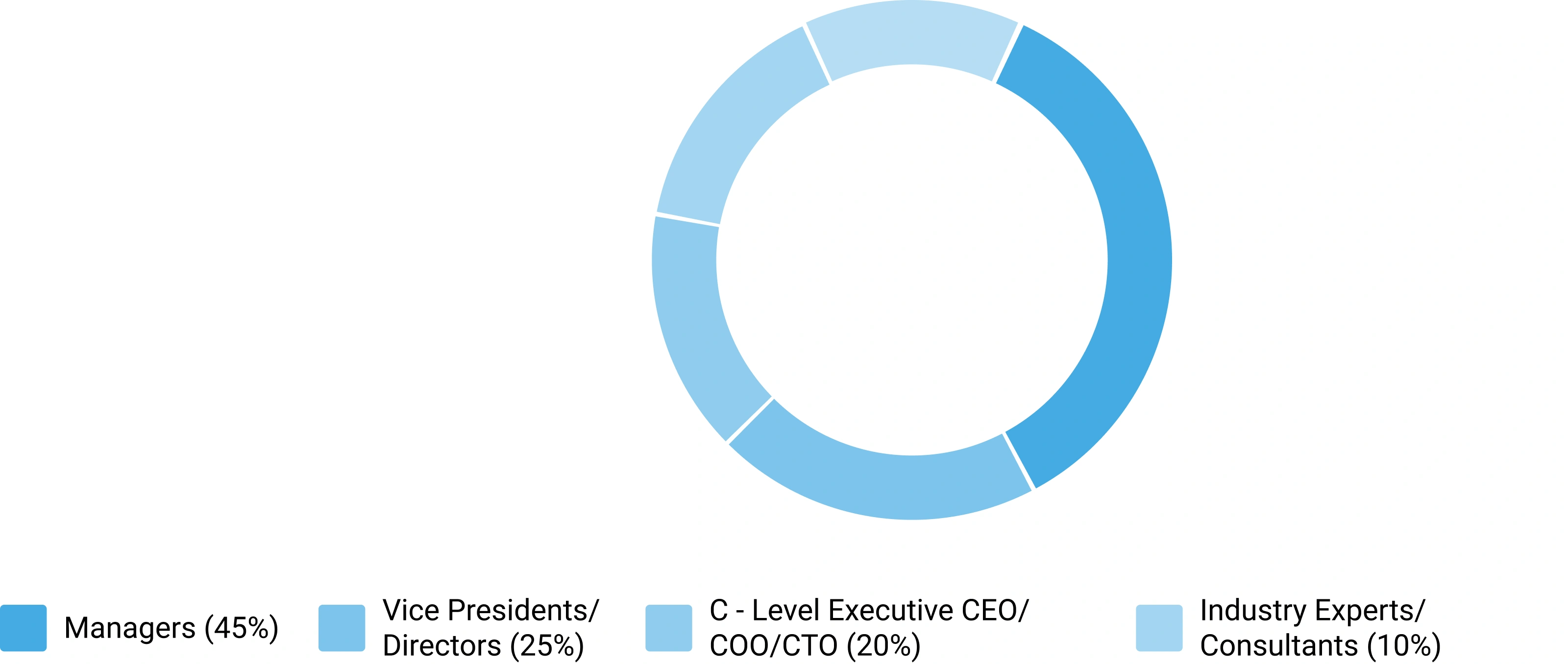
Primary Research — Respondent Designation Profile
Seniority breakdown of interview respondents (% share from PPT data)
Primary Research — Geographic Coverage of Interviews
Regional distribution of primary research engagement (% share from PPT data)
Phase 6 — Data Triangulation and Market Validation
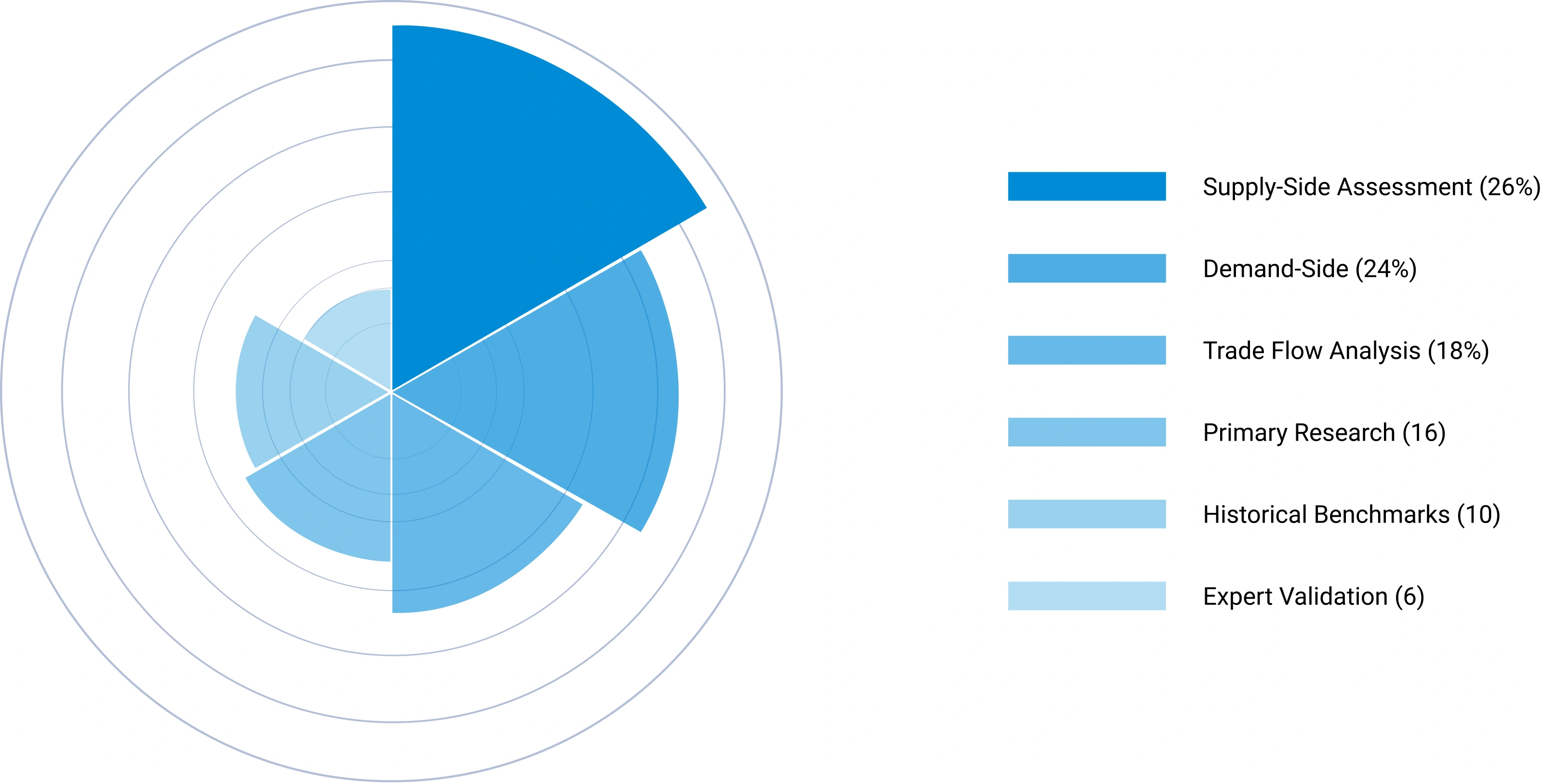
No single methodology is relied upon in isolation. Multiple independent estimation approaches are combined and reconciled to ensure consistency, accuracy, and analytical defensibility. Any material deviations between approaches are investigated and adjusted through additional validation cycles.
The final market size is derived through weighted triangulation of all validated methodologies. Any material deviations between approaches are investigated and adjusted through additional validation cycles. The outcome represents the most realistic assessment of the market based on available evidence and expert confirmation ensuring that volume and value estimates are fully consistent with one another.
Triangulation Framework — Input Contribution Weight
Relative weight each sizing input contributes to the final reconciled market estimate
Phase 7 — Forecast Modeling: Projecting Future Market Evolution
Forecasting evaluates the future trajectory of the market using a combination of quantitative indicators and qualitative assessments across economic, industry, and regulatory dimensions. Rather than simple extrapolation, each driver is independently modeled and integrated into a composite forecast.
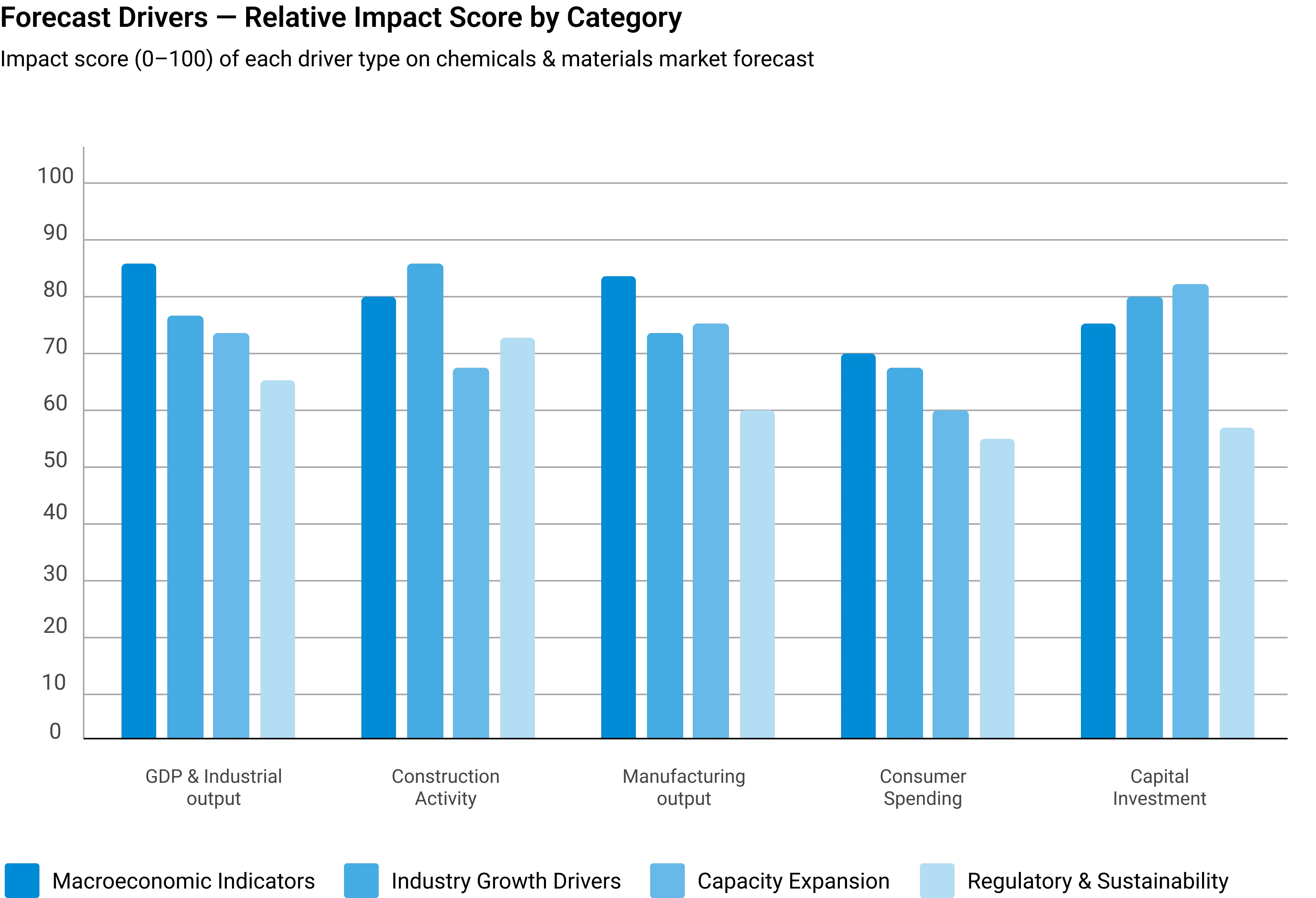
Macroeconomic Indicators
GDP growth, industrial production, manufacturing output, construction activity, consumer spending, and capital investment form the quantitative foundation of long-term demand projections. These are applied at country, regional, and global levels.
Industry Growth Drivers
Urbanization, infrastructure development, industrialization, technological innovation, sustainability initiatives, and evolving product performance requirements are assessed at regional and industry levels — capturing both structural and cyclical demand drivers.
Capacity Expansion Analysis
Announced plant expansions, new manufacturing facilities, technology upgrades, and strategic investments are evaluated to determine future supply-demand dynamics and potential market tightness or oversupply situations.
Regulatory & Sustainability
Environmental regulations, chemical safety standards, emission reduction targets, circular economy initiatives, and sustainability requirements are incorporated as they often influence product adoption rates and market growth trajectories.
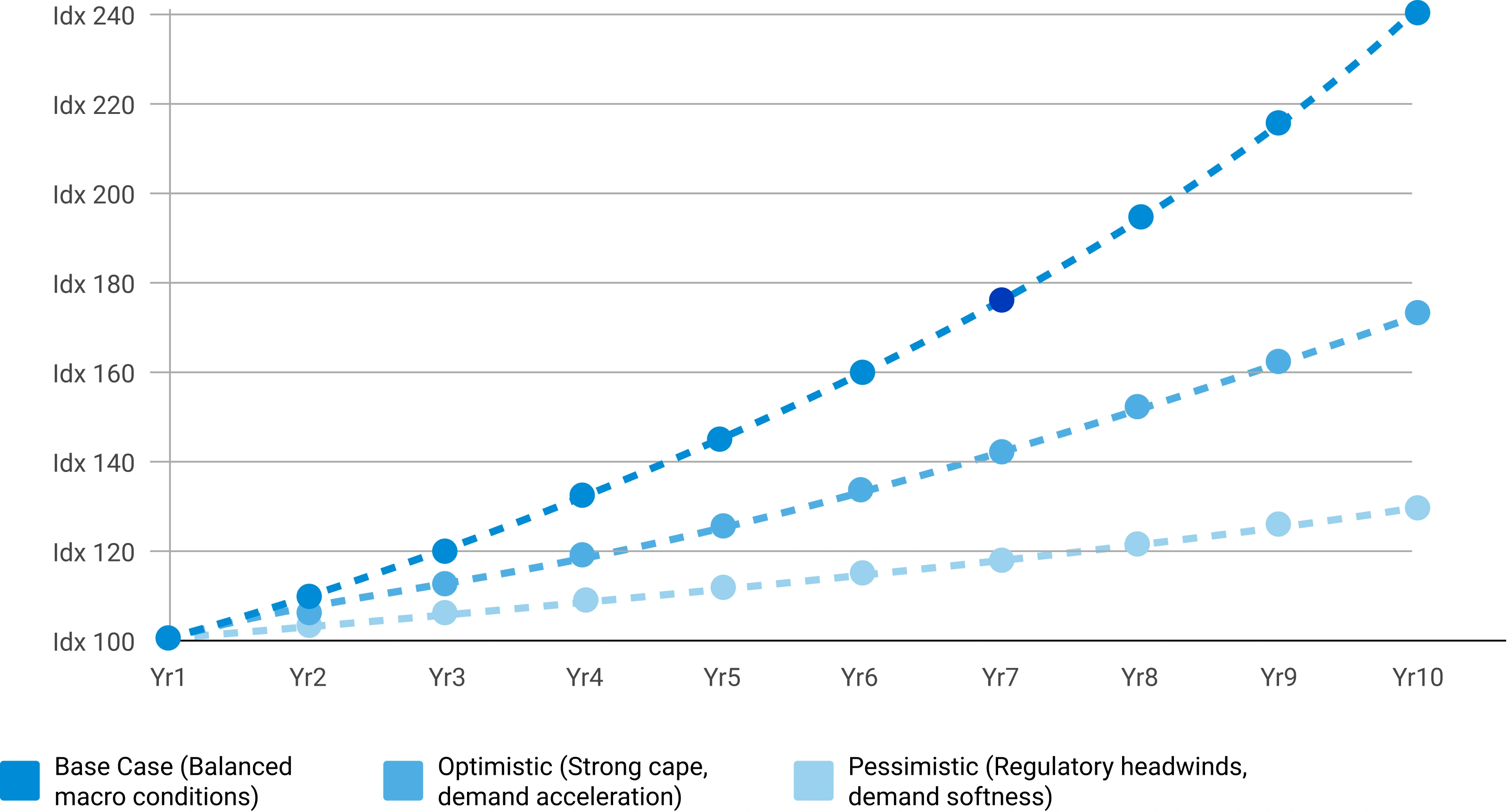
Scenario Forecast Range — Indexed Market Growth (Year 1–10)
Illustrative indexed growth trajectories across Base, Optimistic, and Pessimistic scenarios over a 10-year forecast horizon
Forecast Drivers — Relative Impact Score by Category
Impact score (0–100) of each driver type on chemicals & materials market forecast



Comments
Share your thoughts, ask a question, or provide feedback about this report.