Content
What is the Sodium Carbonate Market Size and Share?
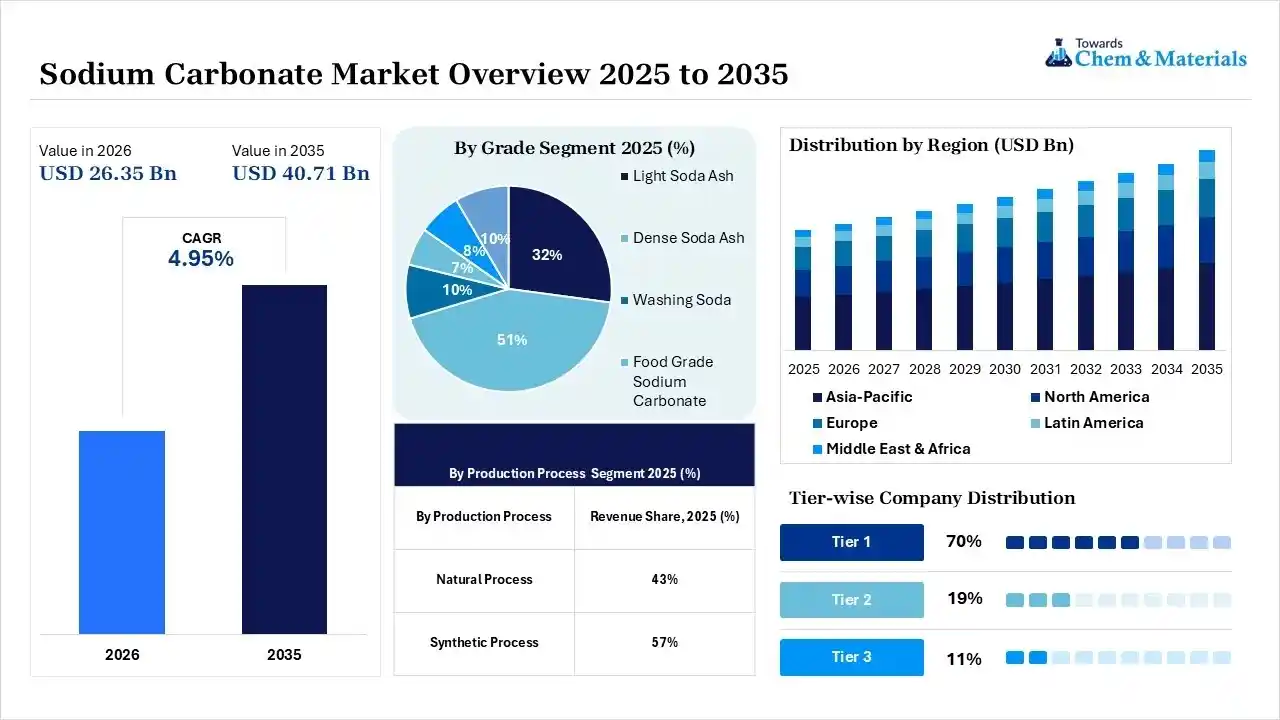
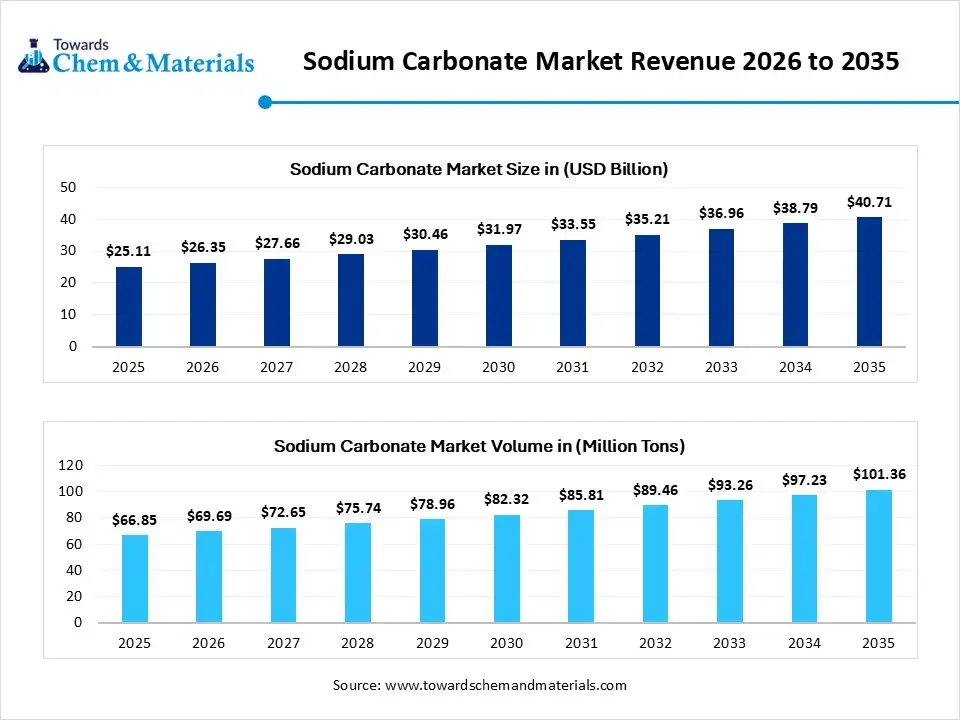
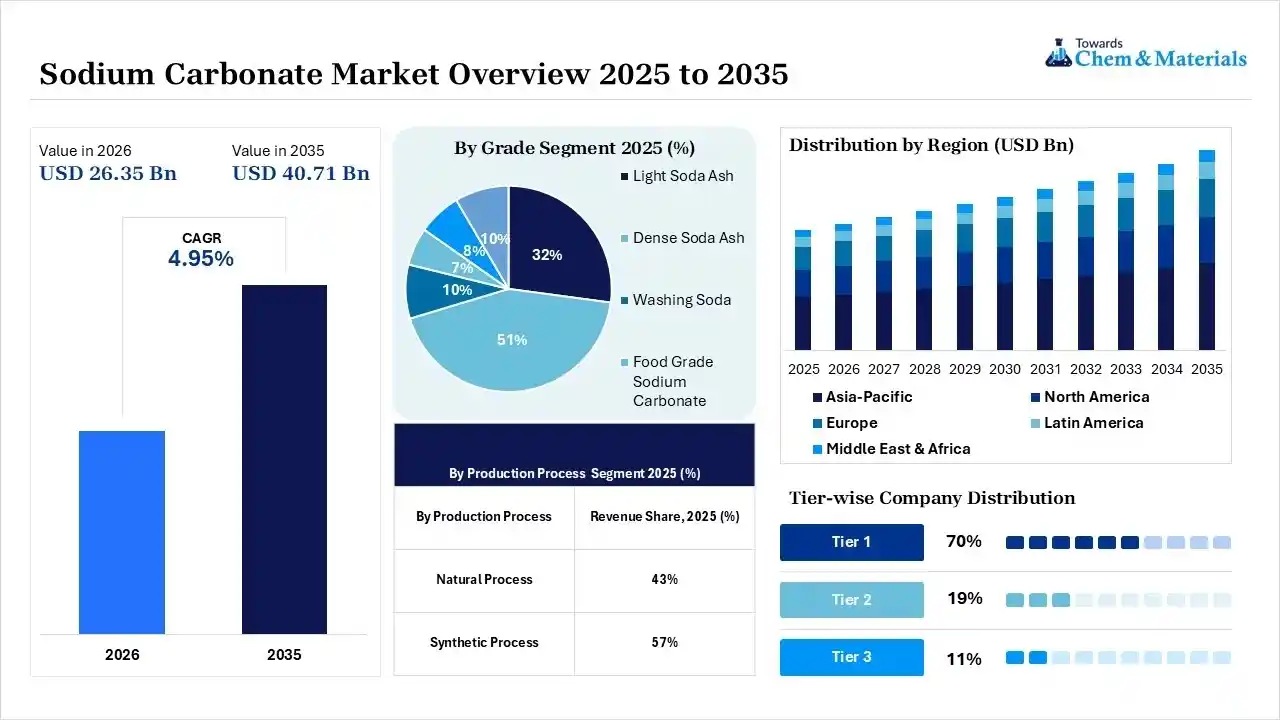
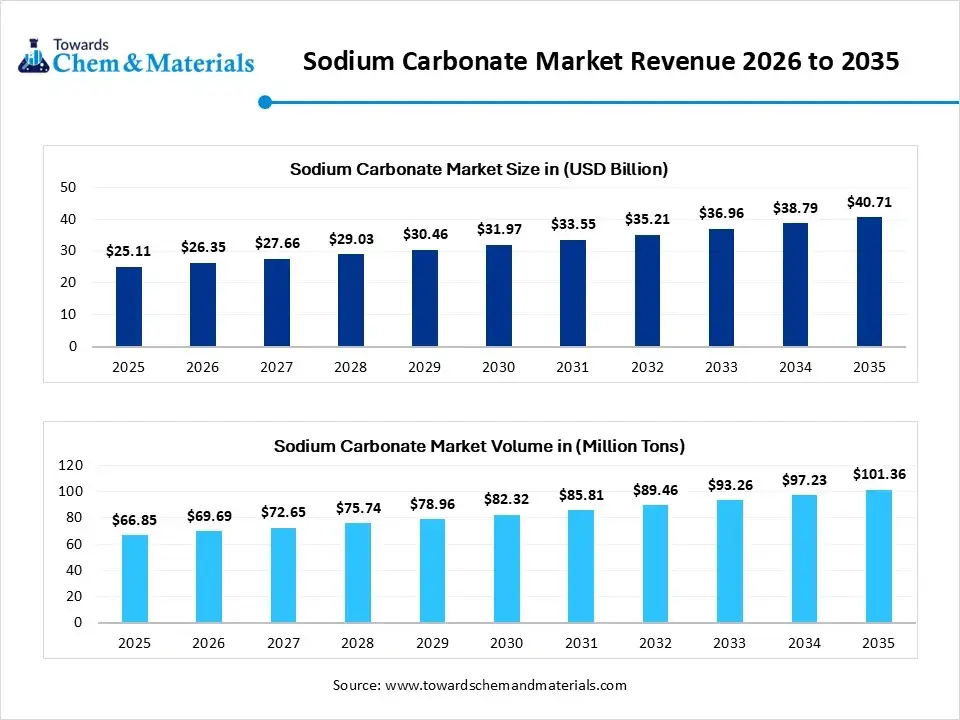
The sodium carbonate market size was valued at USD 40.71 billion in 2025, is estimated to reach USD 25.11 billion in 2026, and is projected to reach USD 26.35 billion by 2035, exhibiting a compound annual growth rate (CAGR) of 4.95% over the forecast period from 2026 to 2035.Asia Pacific dominated the sodium carbonate market with the largest revenue share of 44% in 2025 and is expected to grow at the fastest CAGR of 5.07% during the forecast period. In terms of volume, the sodium carbonate market is projected to grow from 66.85 million tons in 2025 to 101.36 million tons by 2035. growing at a CAGR of 4.25% from 2026 to 2035. Increasing demand in glass manufacturing is the key factor driving market growth. Also, increasing focus on industrial water treatment coupled with the rapid urbanization across the globe can fuel market growth further. Moreover, rising hygiene standards are shaping a positive market trajectory soon.
Market Highlights
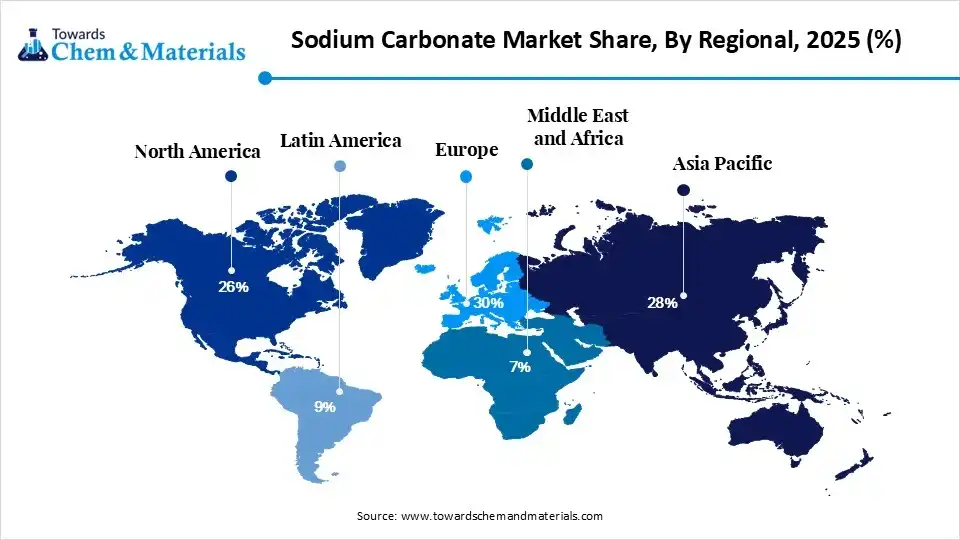
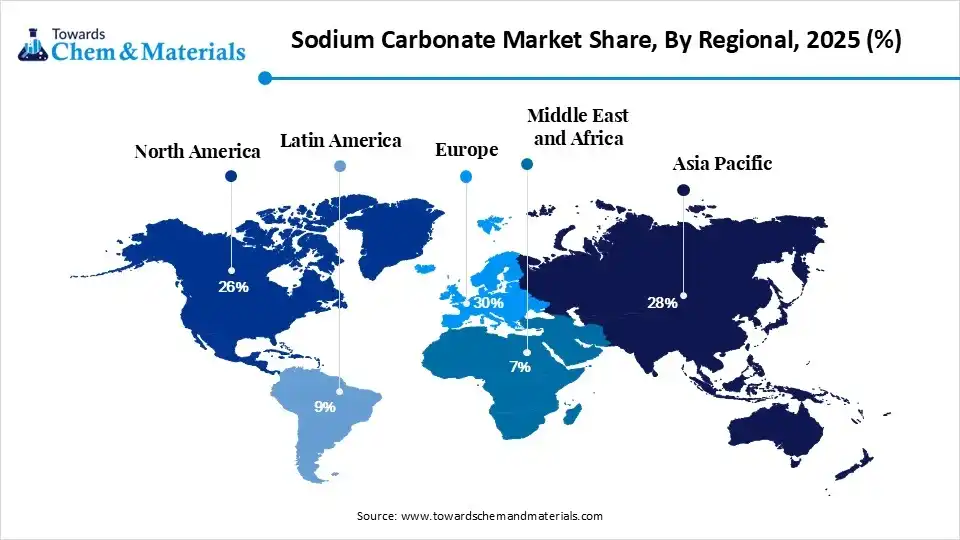
- By region, Asia Pacific dominated the market with the largest share of 44% in 2025. The dominance of the region can be attributed to the ongoing urbanization, infrastructure development, and growing consumer living standards.
- By region, North America held a market share of 23% in 2025 and was expected to grow at the fastest CAGR of 5.80% over the forecast period. The growth of the region can be credited to the ongoing expansion of soap and detergent production.
- By grade, the dense soda ash segment dominated the market with the largest share of 51% in 2025. The dense ash is increasingly preferred by the glass manufacturing sector due to its low dust profile and higher bulk density.
- By grade, the light soda ash segment held a market share of 32% in 2025 and is expected to grow at the fastest CAGR of 5.30% over the forecast period. It is mainly used in chemical processing, soap and detergent manufacturing, and water treatment.
- By production process, the synthetic process segment dominated the market with 57% share in 2025. The segment depends largely on processing expensive, raw materials to manufacture high-purity soda ash.
- By production process, the natural process segment held the 43% market share in 2025 and is expected to grow at the fastest CAGR of 5.4% over the forecast period. This segment involves mining naturally occurring sodium carbonate, mainly the mineral trona.
- By application, the glass manufacturing segment dominated the market with the largest share of 49% in 2025. Glass is a crucial raw material in soda-lime-silica glass, which acts as a flux that reduces the MP of silica.
- By application, the chemicals manufacturing segment held the market share of 17% in 2025 and is expected to grow at the fastest CAGR of 5.50% over the forecast period. It serves as a major feedstock to create downstream compounds.
- By end-use industry, the glass industry segment dominated the market with the largest share of 48% in 2025. The industry acts as a major flux, minimizing the melting point of silica sand to decrease overall manufacturing energy costs and make shaping easier.
- By end-use industry, the chemical industry segment held the market share of 18% in 2025 and is expected to grow at the fastest CAGR of 5.40% during the projected period. In the chemical industry, sodium carbonate serves as a crucial reactive feedstock.
Quick At a Glance
- Market in Size (2025): USD 25.11 Billion | CAGR (2026–2035): 4.95%
- Market Estimated size in 2026: USD 26.35 Billion
- Market Projected Size (2035): USD 40.71Billion
- Europe: largest Regional Market Revenue Share of 30% in 2025| USD 4.77 Billion
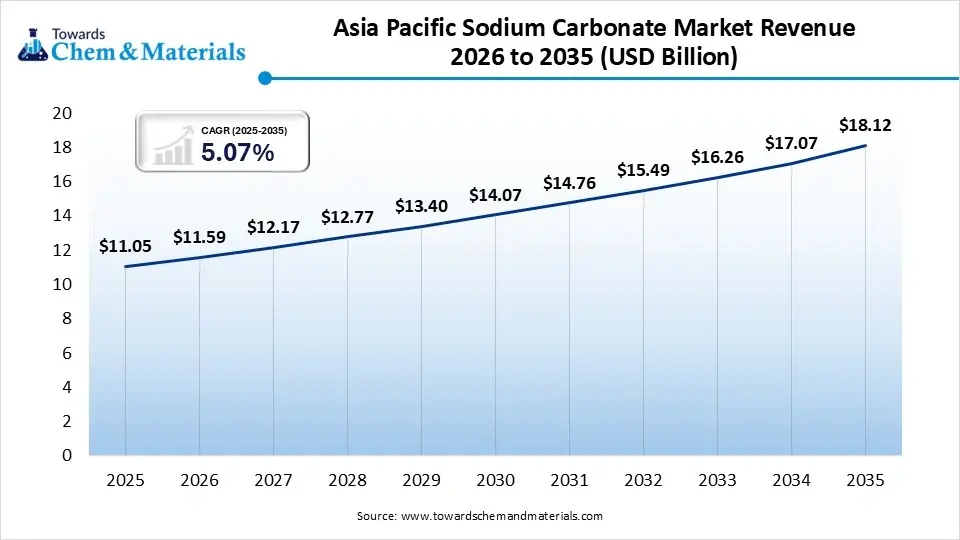
- Asia Pacific: Fastest-growing Regional Market Revenue Share of 28% in 2025| USD 11.05 Billion
- By country: The Germany held the largest market share of 24.0% in 2025
- Market in Volume (2025): 66.85 Million Tons| Volume CAGR (2026–2035): 8.75%
- Market Estimated Volume (2026): 69.69 Million Tons
- Market Projected Volume (2035): 101.36 Million Tons
- Market Pricing (2025):
- Average Manufacturing Price: USD 245/Ton
- Average Selling Price: USD 372/Ton
- Pricing CAGR (2026–2035): 1.80%
Increasing Demand from Glass Manufacturing Sector Supports Market Growth
The ongoing demand for sodium carbonate from the glass industry is a major factor creating lucrative opportunities in the market. Sodium carbonate is a necessary raw material in the manufacturing of glass. as it is utilized to lower the melting point of silica and other parts.
- In 2025, the domestic production of soda ash (sodium carbonate) in the U.S. reached an estimated total value of $1.8 billion, with output volume approximating 12 million tons. This represents a 3% increase compared to the previous year's figures. The United States soda ash industry comprises four companies operating five manufacturing facilities in Wyoming, along with a single enterprise operating one plant in California.(Source: pubs.usgs)
The market is further witnessing an ongoing growth from green technology transitions, such as the manufacturing of solar photovoltaic glass and lithium/sodium-ion batteries.It is also used in water treatment processes to adjust the pH of water and neutralize acidic compounds.
Global Investment Flow for Sodium Carbonate 2026
The global investments are increasingly shifting towards low-carbon, sustainable, and lithium-ion/sodium-ion battery raw material supply chains. The rapid development of sodium-ion batteries is drawing extensive venture capital and massive R&D, as they give cheaper alternatives to conventional lithium-ion technology.
- Tata Chemicals has announced plans to invest £60 million (~₹655 crore) to construct a pharmaceutical-grade sodium bicarbonate plant in Northwich, United Kingdom. The facility will feature a production capacity of 180,000 tonnes per annum. This strategic expansion will effectively triple the company's manufacturing capacity.(Source: www.icicidirect.com)
Major market players are heavily investing in lowering the carbon intensity of upstream inputs to secure lucrative, sustainability-focused procurement contracts.
Market Trends
- Its growing application in water treatment is the latest trend in the market shaping positive market growth. Sodium carbonate is heavily used in water treatment applications, especially in pH regulation and softening processes. As environmental regulations are increasingly becoming evident, industries are emphasizing wastewater treatment.
- Sodium carbonate is used as a precursor in the production of different chemicals, such as sodium silicate, sodium bicarbonate, and other sodium compounds. Also, in recent years this trend reflects a robust correlation with the expansion of the chemical sector.
- Technological innovations in manufacturing processes are the future trend in the market driving market growth. These advancements are likely to improve efficiency and minimize costs within the market. Developments in extraction and processing methods may enhance yield and its quality.
AI-Powered Predictive Formulations in Sodium Carbonate Market
AI-powered predictive formulations in the market are revolutionizing the B2B chemical procurement and manufacturing. By utilizing predictive maintenance and machine learning, market players are optimizing raw material inputs to optimize supply chain disruptions. Furthermore, AI-driven models monitor calcination and crystallization processes in real time, leading to market expansion soon.
Report Scope
| Report Attributes | Details |
| Market Size and Volume in 2026 | USD 20.59 Billion / 3.36 Million Tons |
| Revenue Forecast in 2035 | USD 43.44 Billion / 6.68 Million Tons |
| Growth Rate | CAGR 8.65% |
| Base Year of Estimation | 2025 |
| Forecast Period | 2025-2035 |
| Dominant Region | Asia Pacific |
| Segment Covered | By Grade, By Production Process, By Application, By End-Use Industry, By Regions |
| Key Companies Profiled | Solvay SA, Tata Chemicals Limited, Ciner Group, Nirma Limited, GHCL Limited, OCI Chemical Corporation, Shandong Haihua Group Co., Ltd., Sichuan Hebang Corporation Limited, Genesis Energy, L.P., Tokuyama Corporation, CIECH Group |
Supply Chain Analysis of the Sodium Carbonate Market
- Production & Processing:It involves extracting natural trona ore or synthesizing it via chemical reactions such as the Solvay process. It processes into different densities, and it's mainly consumed in detergent formulations, glass manufacturing, and water treatment. This stage encompasses two major manufacturing methodologies, rigid grading processes, and a highly consolidated landscape of multinational suppliers.
- Solvay S.A. (Belgium): One of the inventors and historically dominant leaders of synthetic soda ash technology. They hold a massive, diversified production footprint across Europe and North America.
- Other Key Players: Nirma Ltd., Shandong Haihua Group
- Quality Testing and Certification :It refers to the rigorous physical, chemical, and regulatory evaluations performed to ensure that products fulfill strict industry standards for density, purity, and safety. For specialized uses (like food additives or pharmaceuticals), sodium carbonate must be certified to meet Food Chemical Codex (FCC) or relevant pharmacopeial standards.
- Tata Chemicals (India): Operates massive production hubs utilizing rigorous internal testing infrastructure compliant with global standards.
- Other Key Players: Sisecam Group, CIECH S.A.
- Distribution to Industrial Users:It includes the direct supply chain and sales channels utilized to move the chemical from producers to large-scale consumers such as detergent, glass, and chemical manufacturers. Major soda ash market players supply end-users directly through long-term supply contracts. This ensures a steady, uninterrupted flow of material. As sodium carbonate is a foundational chemical commodity needed in massive quantities, its distribution framework is highly specialized to manage heavy bulk materials efficiently.
- Nirma Limited: A prominent Indian manufacturer supplying both regional and global industrial users with dense and light soda ash.
- Other Key Players: Ciner Resources (US), OCI Chemical (US).
Sodium Carbonate Market’s Regulatory Landscape: Global Regulations
| Country/Region | Key Regulations |
| United States | The U.S. Food and Drug Administration (FDA) regulates sodium carbonate under 21 CFR 184.1742. It holds Generally Recognized as Safe (GRAS) status for specific configurations, allowing its use as an antioxidant, pH control agent, and processing aid, provided it meets Food Chemicals Codex (FCC) specifications. |
| European Union | Under the CLP Regulation, it is classified as a hazardous substance due to Category 2 eye irritation (H319), mandating standardized safety data sheets and specific precautionary phrasing (P305+P351+P338). |
| China | The Ministry of Industry and Information Technology (MIIT) enforces rigid capacity swap rules to prevent market oversaturation. New facilities, like the recent plant approval in the Ningxia Hui Autonomous Region, must utilize energy-efficient technologies to pass regional carbon metrics. |
Market Dynamics
Driver
Increasing Product Demand from the Food and Beverage Sector
The growing product demand from the food and beverage sector is one of the major factors driving market growth. Sodium carbonate is used in food processing, especially in the manufacturing of certain food additives and as a pH regulator. In addition, this trend is anticipated to drive a higher demand for sodium carbonate as manufacturers prioritize product quality and safety. The sodium carbonate sector may witness a significant increase in consumption in the foreseeable future.
Restraint
Logistical and Supply Chain Hurdles
As major trona deposits are focused in specific areas such as Wyoming, US, the market depends heavily on long-haul shipping corridors, which are the major factor hindering market growth. Hurdles in global maritime freight paths largely influenced overall delivery reliability. Moreover, a shifting consumer preference toward liquid alternatives is driving a contraction in traditional markets like powder detergents. This transition compels chemical producers to retool their manufacturing operations.
Opportunity
Transition Towards Synthetic Production
There is an ongoing shift towards the synthetic manufacturing of soda ash, mainly due to its scalability and cost-effectiveness, creating lucrative opportunities in the market. Synthetic routes, such as the Solvay process, facilitate high-volume manufacturing essential for fulfilling the foundational demands of the glass and chemical sectors. Furthermore, the market is experiencing significant technological modernization aimed at enhancing operational efficiency and reducing costs through increased automation and the integration of advanced analytics.
Segmental Insights
Grade Insights
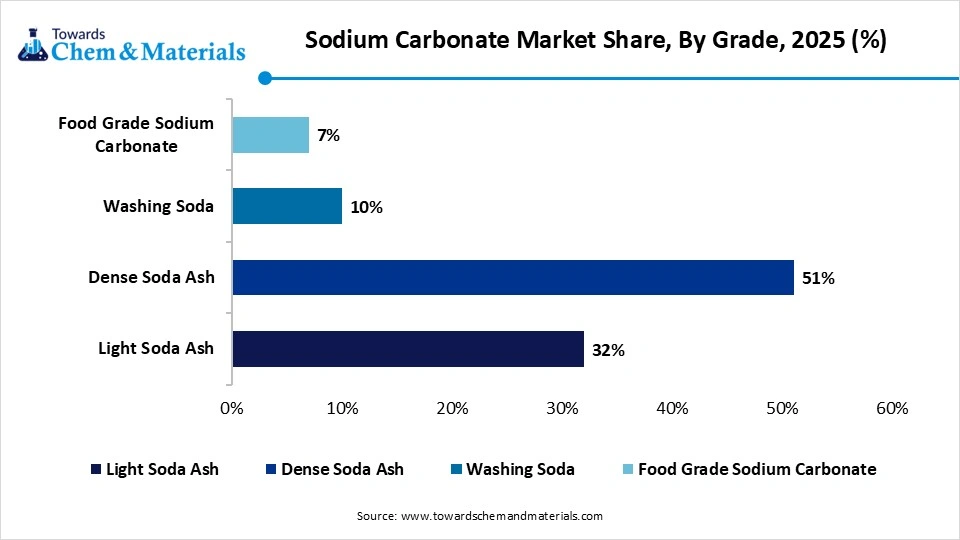
The dense soda ash segment dominated the market with the largest share of 51% in 2025. The dense ash is increasingly preferred by the glass manufacturing sector due to its low dust profile, higher bulk density, and better melting efficiency. In contrast to its lighter variants, dense soda ash exhibits a granular, non-porous structure. Its elevated bulk density facilitates superior blending with silica sand while effectively reducing dust emissions within continuous industrial furnaces. Dense soda ash functions as a fundamental raw material for specialty sodium-based chemicals, such as sodium silicates, sodium phosphates, and sodium bicarbonate. These core derivatives are majorly utilized in a variety of industries.
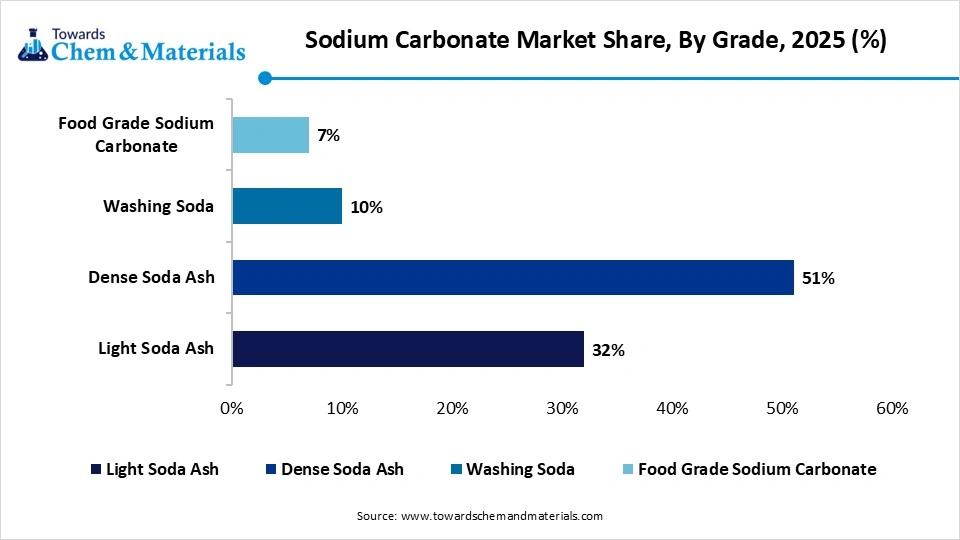 The light soda ash segment held a market share of 32% in 2025 and is expected to grow at the fastest CAGR of 5.30% over the forecast period. It is mainly used in chemical processing, soap and detergent manufacturing, and water treatment. It is used as a basic alkaline raw material to create downstream sodium derivatives, like sodium tripolyphosphate (STPP), sodium silicates, and sodium bicarbonate. Because light soda ash is fine and powdery, it easily absorbs moisture and generates dust during transport. To protect the density and quality of the product throughout the supply chain, manufacturers are increasingly using enclosed pneumatic loading systems.
Sodium Carbonate Market Share, By Grade, 2025 (%)
| By Grade | Revenue Share, 2025 (%) |
| Light Soda Ash | 32% |
| Dense Soda Ash | 51% |
| Washing Soda | 10% |
| Food Grade Sodium Carbonate | 7% |
Production Process Insights
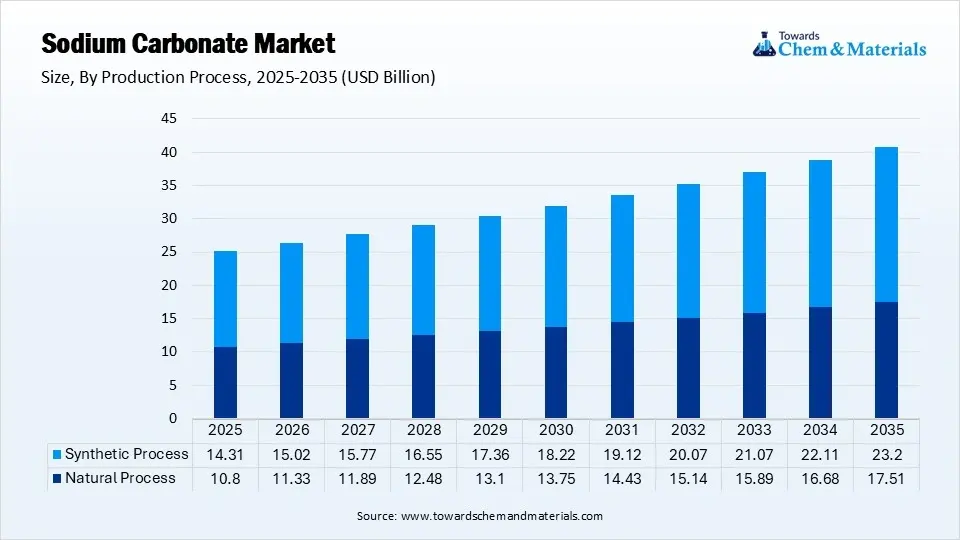
The synthetic process segment dominated the market with 57% share in 2025. The segment depends largely on processing expensive, raw materials to manufacture high-purity soda ash. Synthetic production facilities are strategically established near foundational industrial inputs, namely salt and limestone. This advantageous location enables these plants to operate much closer to domestic consumer markets than traditional operations relying on fixed, natural trona deposits. Extensive capacity expansions in industrializing hubs, particularly across China and India, rely heavily on synthetic infrastructure to sustain regional supply chains.
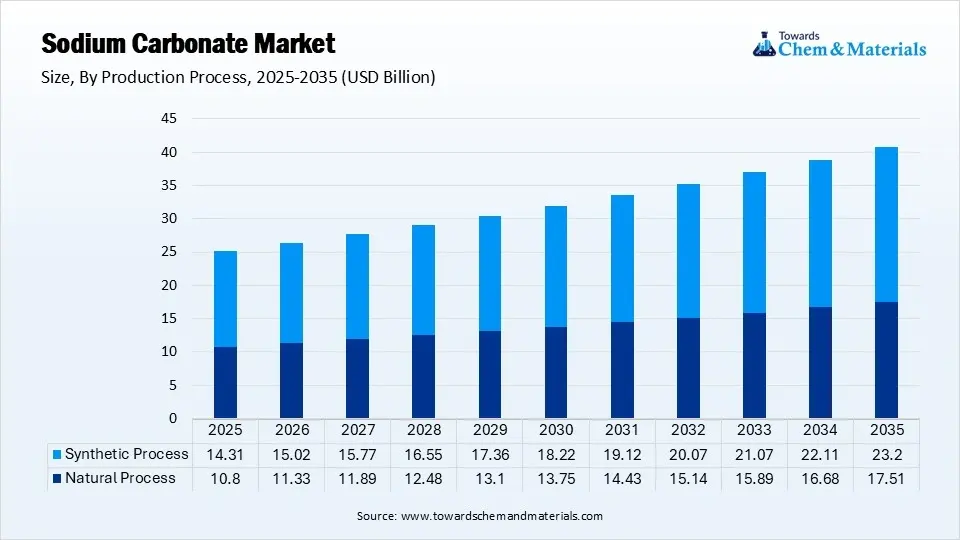 The natural process segment held the 43% market share in 2025 and is expected to grow at the fastest CAGR of 5.4% over the forecast period. This segment involves mining naturally occurring sodium carbonate, mainly the mineral trona. Most high yields are concentrated in the United States (Wyoming) and Turkey. Also, natural production requires significantly less energy, water, and chemical input than its synthetic alternatives. Because it demands minimal processing, this approach yields lower carbon emissions, establishing it as a crucial sector for industries focused on green chemistry. Sectors emphasizing environmentally conscious sourcing, including the organic detergent, pharmaceutical, cosmetic, and solar PV glass manufacturing industries, are actively shifting their procurement strategies toward natural soda ash.
Sodium Carbonate Market Share, By Production Process, 2025 (%)
| By Production Process | Revenue Share, 2025 (%) |
| Natural Process | 43% |
| Synthetic Process | 57% |
Application Insights
The Glass Manufacturing Segment Dominated the Sodium Carbonate Market with 49% of Market Share in 2025
The glass manufacturing segment dominated the market with largest share of 49% in 2025. In the production of soda-lime-silica glass, soda ash functions as an essential fluxing agent that lowers the melting temperature of silica. This thermal reduction substantially decreases furnace energy consumption while optimizing the workability of the molten material. Although demand is inherently tied to fluctuations in the consumer goods sector, it continues to serve as a foundational driver for the market.
The chemicals manufacturing segment held the market share of 17% in 2025 and is expected to grow at the fastest CAGR of 5.50% over the forecast period. It serves as a major feedstock to create downstream compounds, such as sodium bicarbonate, sodium silicates, sodium percarbonate, and sodium chromates. Soda ash is experiencing growing use as a substitute for hazardous chemical inputs, including phosphates in household cleaning products. Moreover, it functions as a primary neutralizing agent in environmentally responsible chemical processes. It serves as a critical alkaline precursor, buffering agent, and chemical intermediate across numerous industrial processes.
Sodium Carbonate Market Share, By Application, 2025 (%)
| By Application | Revenue Share, 2025 (%) |
| Glass Manufacturing | 49% |
| Soaps & Detergents | 15% |
| Chemicals Manufacturing | 17% |
| Water Treatment | 6% |
| Pulp & Paper | 4% |
| Metallurgy | 3% |
| Food & Beverage | 2% |
| Others | 4% |
End-Use Industry Insights
The glass industry segment dominated the market with the largest share of 48% in 2025. The industry acts as a major flux, minimizing the melting point of silica sand to decrease overall manufacturing energy costs and make shaping easier. The glass manufacturing industry acts as the primary consumer of dense soda ash; this material satisfies the vast majority of the sector's requirements due to its optimal granular structure and low dusting characteristics. Stricter green-building regulations necessitate the production of high-performance, energy-efficient glazing, which is fundamentally dependent on precise soda ash formulations.
The chemical industry segment held the market share of 18% in 2025 and is expected to grow at the fastest CAGR of 5.40% during the projected period. In the chemical industry, sodium carbonate serves as a crucial reactive feedstock, an alkalinity source, and a pH regulator. It acts as the foundational chemical precursor for the synthesis of downstream compounds, including sodium silicates utilized in adhesives and catalysts, sodium bicarbonate, and sodium tripolyphosphate (STPP). Chemical processing mainly favors dense soda ash over light soda ash due to its high purity, chemical stability, and lower material loss during mass transport.
Sodium Carbonate Market Share, By End-Use Industry, 2025 (%)
| By End-Use Industry | Revenue Share, 2025 (%) |
| Glass Industry | 48% |
| Chemical Industry | 18% |
| Detergent & Cleaning Industry | 14% |
| Water Treatment Industry | 7% |
| Pulp & Paper Industry | 4% |
| Metallurgical Industry | 4% |
| Food & Beverage Industry | 2% |
| Others | 3% |
Regional Analysis
How did Asia Pacific Dominate the Sodium Carbonate Market in 2025?
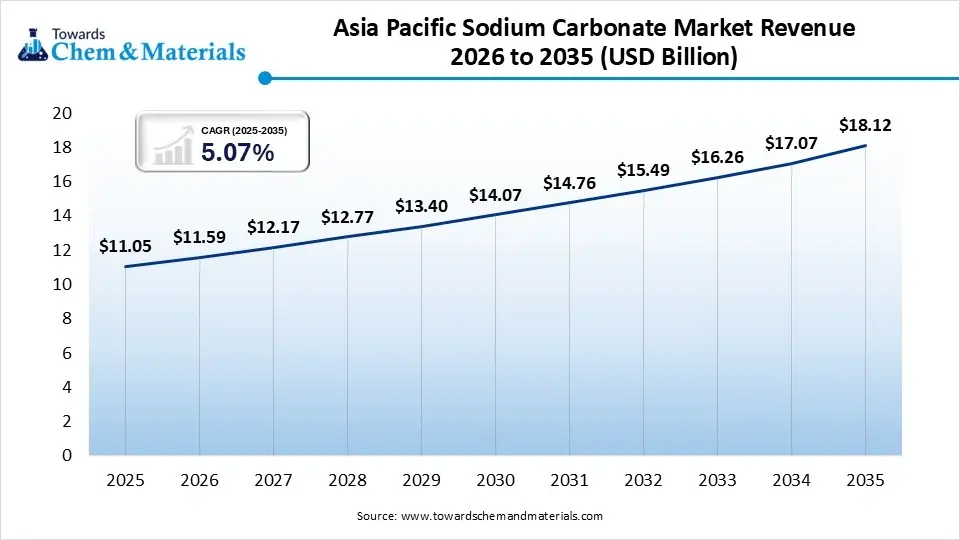
The Asia Pacific sodium carbonate market size was estimated at USD 11.05 billion in 2025 and is projected to reach USD 18.12 billion by 2035, growing at a CAGR of 5.07% from 2026 to 2035.Asia Pacific dominated the market with the largest share of 44% in 2025. The dominance of the region can be attributed to the ongoing urbanization, infrastructure development, and growing consumer living standards. In addition, soda ash serves as an essential precursor in the production of various industrial chemical derivatives, most notably sodium silicate and sodium bicarbonate. This foundational demand is sustained by the ongoing expansion of chemical manufacturing infrastructures within emerging markets.
 China
China
- Rapid urbanization and surging living standards have accelerated domestic consumption of soaps and synthetic detergents, where sodium carbonate acts as a critical builder.
- As a fundamental precursor, soda ash is heavily consumed in the production of sodium silicates, sodium bicarbonate, and various other chemical derivatives.
India
- India is a major global exporter due to highly favorable synthetic manufacturing environments and large local production capacities.
- Increasing disposable incomes have increased consumer demand for high-end detergents, where sodium carbonate is heavily used as a builder.
North America sodium carbonate market size was estimated at USD 5.78 billion in 2025 and is projected to reach USD 9.57 billion by 2035, growing at a CAGR of 5.17% from 2026 to 2035.North America held a market share of 23% in 2025 and was expected to grow at the fastest CAGR of 5.80% over the forecast period. The growth of the region can be credited to the ongoing expansion of soap and detergent production. There is an emerging emphasis on high-purity soda ash tailored for electric vehicle (EV) battery purification. Furthermore, substantial investments in renewable energy are generating a critical requirement for flat glass, a material essential for the fabrication of solar photovoltaic (PV) panels.
United States
- Surging consumer goods markets and the need for laundry and industrial cleaning products are major growth drivers.
- Growing municipal and industrial environmental regulations are driving demand for soda ash as a crucial pH regulator in water purification.
Canada
- The strong growth in Canada's automotive and residential/commercial construction sectors drives heavy demand for flat and architectural glass.
- Expanding environmental regulations and municipal infrastructure investments require effective water purification and wastewater treatment processes.
The Europe sodium carbonate market size was estimated at USD 4.77 billion in 2025 and is projected to reach USD 7.94 billion by 2035, growing at a CAGR of 5.23% from 2026 to 2035.Europe held a market share of 19% in 2025. The growth of the region can be linked to the robust demand within glass manufacturing, automotive production, and sustainability initiatives, coupled with increasing consumer and regulatory shifts toward eco-friendly packaging over plastics. The automotive sector in the region relies on sodium carbonate for manufacturing windshields and vehicle windows, leading to regional expansion soon.
Germany
- The automotive and construction sectors drive heavy demand for flat and specialty glass, where sodium carbonate serves as a critical flux to lower the melting point of silica.
- Increasing consumer health awareness and living standards fuel the demand for washing additives and detergents.
France
- Sodium carbonate remains an essential raw material for producing other industrial chemicals, such as sodium silicates and sodium bicarbonate.
- French and European regulations aimed at industrial emission reductions and resource efficiency are encouraging manufacturers to innovate and invest in greener production techniques.
The Latin America sodium carbonate market size was estimated at USD 2.01 billion in 2025 and is projected to reach USD 3.46 billion by 2035, growing at a CAGR of 5.58% from 2026 to 2035.Latin America held a market share of 8% in 2025. The growth of the region can be driven by the expansion of flat and container glass production and rising public health and hygiene standards, along with localized infrastructure initiatives. Ongoing advancements in regional sanitation standards have stimulated consistent growth in the manufacturing of household and industrial cleaning products.
Brazil
- Continuous improvements in public health and hygiene standards across Brazil have accelerated the production of soaps and heavy-duty laundry detergents.
- Brazil has a robust industrial and chemical sector. Soda ash acts as a fundamental building block to manufacture downstream industrial chemicals.
Argentina
- Upgrades in municipal and industrial water treatment systems are driving secondary growth, as sodium carbonate is utilized for pH regulation and softening.
- The domestic glass packaging sector is highly dependent on sodium carbonate as a primary raw material. Driven by strong regional exports from the wine industry.
The Middle East & Africa sodium carbonate market size was estimated at USD 1.51 billion in 2025 and is projected to reach USD 2.65 billion by 2035, growing at a CAGR of 5.79% from 2026 to 2035.The Middle East & Africa held a market share of 6% in 2025. The growth of the region can be attributed to the robust construction activity, surge in urbanization, and strategic economic diversification initiatives in nations such as Saudi Arabia and Egypt. Furthermore, substantial government investments in non-oil industrial development are simultaneously generating significant demand across the metallurgy and water treatment sectors.
 Saudi Arabia
- Government efforts to localize supply chains and shift away from total oil dependency have attracted massive capital expenditure into the domestic manufacturing and chemical sectors.
- The increasing push for renewable energy is boosting regional demand for solar glass panels, a direct growth engine for high-grade soda ash.
UAE
- The booming real estate and smart city initiatives require massive amounts of flat glass, mirrors, and fiberglass, impacting positive market growth soon.
- Government initiatives aimed at reducing oil dependence have prompted significant investments in the domestic chemical processing and manufacturing sectors.
Competitive Landscape Analysis
Tier 1 Companies
| Rank | Company Name | Headquarters | Country | Why Relevant to This Market | Key Products / Material Portfolio |
| 1 | Solvay SA | Brussels | Belgium | One of the world's largest soda ash producers with extensive global manufacturing and distribution networks | Dense soda ash, light soda ash, sodium bicarbonate, sodium carbonate derivatives |
| 2 | WE Soda Ltd. | London, England | United Kingdom | World's largest natural soda ash producer through Turkish trona operations | Natural soda ash, dense soda ash, light soda ash |
| 3 | Tata Chemicals Limited | Mumbai, Maharashtra | India | Major global soda ash producer with operations in India, Kenya, the UK, and North America | Soda ash, sodium bicarbonate, industrial sodium carbonate |
| 4 | Sisecam Chemicals Resources LLC | Atlanta, Georgia | United States | Leading global producer leveraging large-scale natural soda ash resources in the United States and Türkiye | Natural soda ash, dense soda ash, refined sodium carbonate |
| 5 | Ciner Group | Ankara | Türkiye | Major integrated natural soda ash producer and one of the largest global exporters | Natural soda ash, soda ash derivatives, industrial-grade sodium carbonate |
Tier 2 Companies
| Rank | Company Name | Headquarters | Country | Why Relevant to This Market | Key Products / Material Portfolio |
| 1 | Genesis Alkali LLC | Green River, Wyoming | United States | Major natural soda ash producer operating one of the largest trona-based facilities globally | Natural soda ash, dense soda ash, industrial sodium carbonate |
| 2 | OCI Chemical Corporation | Green River, Wyoming | United States | Significant North American producer with strong presence in glass and chemical sectors | Soda ash, sodium bicarbonate, specialty alkali products |
| 3 | Nirma Limited | Ahmedabad, Gujarat | India | Large integrated chemical manufacturer with substantial synthetic soda ash capacity | Soda ash, sodium bicarbonate, industrial chemicals |
| 4 | GHCL Limited | Noida, Uttar Pradesh | India | One of India's largest soda ash manufacturers serving detergent and glass industries | Light soda ash, dense soda ash, industrial sodium carbonate |
| 5 | Tokuyama Corporation | Shunan, Yamaguchi Prefecture | Japan | Established producer serving Asian industrial and specialty chemical markets | Soda ash, sodium carbonate derivatives, specialty chemicals |
Tier 3 Companies
| Rank | Company Name | Headquarters | Country | Why Relevant to This Market | Key Products / Material Portfolio |
| 1 | DCW Limited | Mumbai, Maharashtra | India | Regional producer supplying soda ash to detergents, chemicals, and industrial sectors | Soda ash, sodium bicarbonate, chlor-alkali products |
| 2 | Inner Mongolia Yuanxing Energy Co., Ltd. | Ordos, Inner Mongolia | China | Growing Chinese producer benefiting from expanding domestic soda ash demand | Soda ash, alkali chemicals, industrial sodium carbonate |
| 3 | Tangshan Sanyou Chemical Industries Co., Ltd. | Tangshan, Hebei | China | Major Chinese soda ash manufacturer with integrated chemical operations | Soda ash, caustic soda, chlor-alkali products |
| 4 | Shandong Haihua Group Co., Ltd. | Weifang, Shandong | China | Significant regional producer serving glass and detergent industries | Soda ash, bromine chemicals, industrial alkali products |
| 5 | Bashkir Soda Company JSC | Sterlitamak, Republic of Bashkortostan | Russia | Large regional soda ash producer with strong CIS market presence | Soda ash, sodium bicarbonate, specialty sodium compounds |
The competitive landscape is consolidated among major global players that compete on manufacturing costs, geographic footprint, and environmental compliance. Major players are intensely upgrading facilities to use natural gas and reduce carbon footprints.
- Effective in the third quarter of 2026, subject to the mandatory consultation process, Solvay will reduce the soda ash production capacity at its Torrelavega facility in Spain from 600 kilotons to 420 kilotons.
- Tata Chemicals Limited announced a significant operational milestone as its Mithapur facility in Gujarat achieved a production volume of 1 million tonnes of soda ash during the 2025–26 fiscal year.(Source : www.solvay.com)(Source: tatachemicals.com)
Recent Developments
- In January 2026, global battery leader CATL is expanding the application of its "Naxtra" sodium-ion technology through a formal entry into the passenger vehicle sector. Following its initial deployment in commercial vehicles, the advanced battery technology is now confirmed for integration into passenger cars, debuting with Changan Oshan models.(Source: carnewschina.com)
- In March 2026, BAIC Group advanced sodium-ion battery technology with the development of a prototype capable of achieving a full charge in approximately 11 minutes. This technological milestone underscores how Chinese automotive manufacturers are strategically diversifying beyond traditional lithium-ion reliance.(Source: discoveryalert.com.au)
Top Vendors in the Sodium Carbonate Market & Their Offerings
- Solvay SA: Solvay SA is a foundational, global leader in sodium carbonate (soda ash) production, operating through both traditional synthetic processes and the refining of natural trona ore. They supply Soda Solvay® dense and light grades to the glass, detergent, and chemical industries.
- Tata Chemicals Limited: Tata Chemicals Limited (NSE: TATACHEM) is the world's third-largest soda ash manufacturer. With an annual production capacity of 4.3 million tonnes across India, the US, the UK, and Kenya.
- Ciner Group: Ciner Group is the definitive global leader in the sodium carbonate (soda ash) market. Operating primarily through its chemical subsidiary, WE Soda, the Turkish industrial conglomerate controls roughly 9% to 10% of the global sodium carbonate market.
Other Key Players
- Nirma Limited
- GHCL Limited
- OCI Chemical Corporation
- Shandong Haihua Group Co., Ltd.
- Sichuan Hebang Corporation Limited
- Genesis Energy, L.P.
- Tokuyama Corporation
- CIECH Group
Segment Covered in the Report
By Grade
- Light Soda Ash
- Detergent Grade
- Chemical Processing Grade
- Dense Soda Ash
- Flat Glass Grade
- Container Glass Grade
- Specialty Glass Grade
- Washing Soda
- Household Grade
- Industrial Grade
- Food Grade Sodium Carbonate
- Food Processing Grade
- Beverage Processing Grade
By Production Process
- Natural Process
- Trona Ore Mining
- Solution Mining
- Synthetic Process
- Solvay Process
- Hou Process
By Application
- Glass Manufacturing
- Flat Glass
- Container Glass
- Fiberglass
- Specialty Glass
- Soaps & Detergents
- Household Detergents
- Industrial Cleaning Products
- Chemicals Manufacturing
- Sodium Silicates
- Sodium Bicarbonate
- Chromates
- Phosphates
- Water Treatment
- Municipal Water Treatment
- Industrial Water Treatment
- Pulp & Paper
- Pulp Processing
- Paper Manufacturing
- Metallurgy
- Non-Ferrous Metal Processing
- Steel Processing
- Food & Beverage
- Food Additives
- pH Regulation
- Others
- Textile Processing
- Pharmaceuticals
- Agriculture
By End-Use Industry
- Glass Industry
- Chemical Industry
- Detergent & Cleaning Industry
- Water Treatment Industry
- Pulp & Paper Industry
- Metallurgical Industry
- Food & Beverage Industry
- Others
By Region
- North America
- U.S.
- Canada
- Mexico
- Europe
- UK
- Germany
- France
- Italy
- Spain
- Sweden
- Denmark
- Norway
- Asia Pacific
- Japan
- China
- India
- Australia
- South Korea
- Thailand
- Latin America
- Brazil
- Argentina
- The Middle East and Africa
- South Africa
- Saudi Arabia
- UAE
- Kuwait
FAQ's




Select User License to Buy
Figures (7)




 sales@towardschemandmaterials.com
 +1 804-441-9344
 Download Sample
 Schedule a Meeting