
What is the PTFE Membrane Market Size and Share?
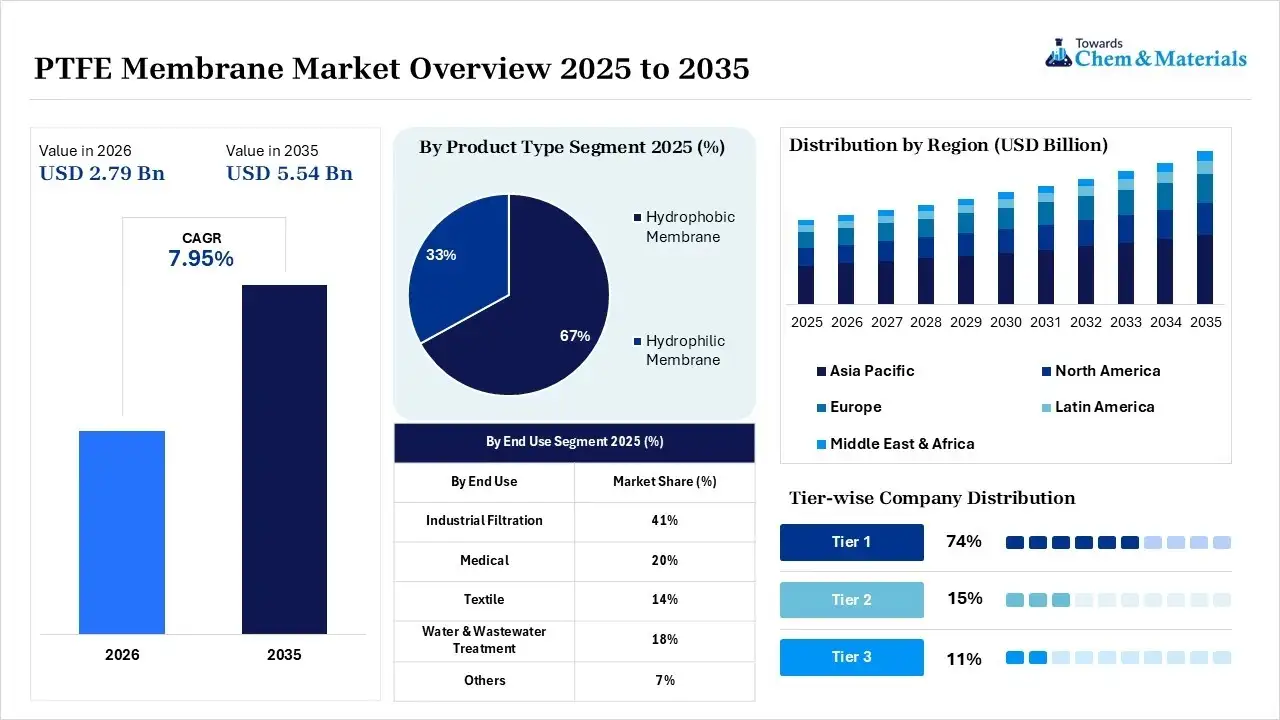
The global PTFE membrane market size was valued at USD 2.58 billion in 2025, is estimated to reach USD 2.79 billion in 2026, and is projected to reach USD 5.54 billion by 2035, exhibiting a compound annual growth rate (CAGR) of 7.95% over the forecast period from 2026 to 2035.Asia Pacific dominated the PTFE membrane market with the largest revenue share of 39.0% in 2025 and is expected to grow at the fastest CAGR of 8.05% during the forecast period. The increasing need for high-performance filtration in wastewater treatment is the key factor driving market growth. Also, ongoing growth in the automotive and electronics sectors coupled with the stringent environmental regulations can fuel market growth further.
Market Highlights
- By region, Asia Pacific dominated the market with the largest share of 39.0% in 2025. The dominance of the region can be attributed to the increasing emphasis on environmental sustainability.
- By region, North America held a market share of 24.00% in 2025 and was expected to grow at the fastest CAGR of 8.8% over the forecast period. The growth of the region can be credited to the increasing market demand across various industrial sectors.
- By product type, the hydrophobic membrane segment dominated the market with the largest share of 67.0% in 2025. The dominance is due to expanding electronics and pharmaceutical manufacturing sectors.
- By product type, the hydrophilic membrane segment held a market share of 33.0% in 2025 and is expected to grow at the fastest CAGR of 8.50% over the forecast period. The growth is attributed to growing wastewater treatment adoption.
- By end use, the industrial filtration segment dominated the market with the largest share of 41.0% in 2025. The dominance is credited to stringent emission regulations supporting continuous demand.
- By end use, the medical segment held a market share of 20.00% in 2025 and is expected to grow at the fastest CAGR of 8.9% over the forecast period. The growth of the segment is linked to growth in the medical device manufacturing sector.
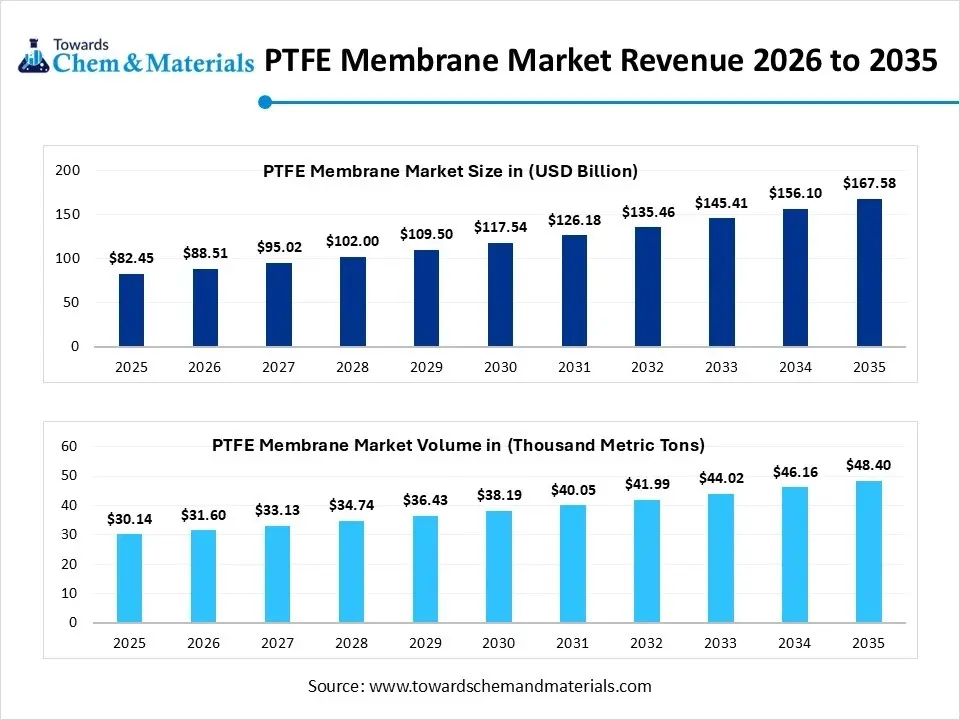
According to Towards Chemicals and Materials Analytics and Consulting, the global PTFE membrane market volume was valued at 82.45 thousand metric tons in 2025 and is expected to surpass around 167.58 thousand metric tons by 2035, accelerating a compound annual growth rate (CAGR) of 7.35% over the forecast period from 2026 to 2035.
The ongoing innovations in medical technologies, especially in the development of implants and medical devices, are presenting a lucrative opportunity in the market. PTFE membranes are extensively used in applications like wound care, drug delivery systems, and tissue engineering.
- In February 2026, Ukrainian industrial company Interpipe officially launched the commercial production of pump and compressor pipes equipped with polytetrafluoroethylene (PTFE) Teflon rings. This strategic development expands the companys Oil Country Tubular Goods (OCTG) portfolio and aims to strengthen its market position across Europe.(Source:gmk.center)
The integration of PTFE membranes in advanced medical solutions can transform overall patient care and outcomes.
Supply Chain Analysis of the PTFE Membrane Market
Production & Processing
- It includes the mechanical and chemical methods used to turn raw polytetrafluoroethylene (PTFE) into porous, high-performance membranes. This process, mainly stretching/expanding ePTFE, creates a microporous structure that delivers superior chemical inertness, thermal stability, and filtration efficiency.
- W. L. Gore & Associates: A pioneer in ePTFE technology, leading the market in medical devices, venting, and industrial filtration.
- Other Key Players: Pall Corporation, Saint-Gobain
Quality Testing and Certification
- This process ensures that membranes comply with the rigorous performance, durability, and regulatory standards mandated by sensitive industries. It verifies critical parameters, including pore size, flux rates, chemical resistance, and sterilization compatibility, hence guaranteeing alignment with FDA regulations and global authoritative bodies.
- Pall Corporation (US): A global leader in advanced filtration and biopharmaceutical separation, offering certified PTFE membranes for sterile venting and liquid filtration.
- Other Key Players: Donaldson Company, Inc.; The Chemours Company
Distribution to Industrial Users
- It refers to the specialized business-to-business (B2B) distribution network utilized to supply high-performance, porous fluoropolymer products from manufacturers to critical end-use sectors, including water treatment, pharmaceuticals, and chemicals.
- Donaldson Company, Inc.: A leading supplier of industrial air and liquid filtration systems. Donaldson heavily supplies life sciences, power generation, and heavy-duty industrial processing.
- Other Key Players: Sartorius AG, Corning Incorporated.
The primary driver of the market is the growing demand for high-performance filtration solutions across various industries, including water and wastewater treatment, pharmaceuticals, electronics, and automotive. Increasing environmental regulations and the need for clean water and air are pushing industries to adopt advanced membrane technologies like PTFE, known for its chemical resistance, thermal stability, and durability. Additionally, the rising focus on product purity in healthcare and food sectors, along with technological advancements enabling cost-effective and efficient membrane manufacturing, is further fueling market growth.
Market Trends
- Increasing demand for filtration solutions, especially in waste and wastewater treatment, is significantly growing the market.
- Technological advancement in membrane technology for efficiency and enhancing performance drives the growth of the market.
- Strict environmental regulations and high demand for waste management increase the growth of the market.
- Increasing demand from various industries like food and beverages for treatment like separation and filtration drives the growth of the market.
Report Scope
| Report Attributes | Details |
| Market Size in 2026 | USD 2.79 Billion/ 88.51 Thousand Metric Tons |
| Expected Size by 2035 | USD 5.54 Billion/ 167.58 Thousand Metric Tons |
| Growth Rate from 2025 to 2035 | CAGR 7.95% |
| Base Year of Estimation | 2025 |
| Forecast Period | 2025 - 2035 |
| High Impact Region | Asia Pacific |
| Segment Covered | By Product, By End Use, By Region |
| Key Companies Profiled | Pall Corporation, Saint Gobain, Fiberflon, Hawach Scientific Co., Ltd., Corning Incorporated, Donaldson Company, Inc, HYUNDAI MICRO Co., Ltd. Cytiva, Merck KGaA, W. L. Gore & Associates, Inc. |
Market Opportunity
What is a Key Opportunity for the Growth of the PTEF Membrane Market?
One notable opportunity in the PTFE membrane market lies in the growing demand for advanced water and wastewater treatment solutions in emerging economies, particularly in some regions. Countries are experiencing rapid industrialization and urbanization, leading to increased water pollution and scarcity concerns. PTFE membranes, known for their high chemical resistance and low fouling propensity, are increasingly being adopted in ultrafiltration, microfiltration, and reverse osmosis applications to address these challenges. The Indian market, for instance, is witnessing a surge in demand for PTFE membranes due to stringent environmental regulations and the need for efficient water treatment infrastructure. This trend presents significant growth opportunities for PTFE membrane manufacturers to expand their presence and cater to the rising needs of water purification and environmental sustainability in these developing regions.
Market Challenge
The High Production Cost Associated With PTFE Material and Membrane Fabrication Processes
One significant challenge facing the PTFE membrane market is the high production cost associated with PTFE material and membrane fabrication processes. PTFE is a complex polymer that requires specialized equipment and techniques for processing, such as stretching and sintering to form porous membranes, which increases manufacturing costs. Additionally, the environmental concerns linked to PTFE production, particularly related to the use of perfluorinated compounds (PFCs), have led to stricter regulations and added compliance costs. These factors can limit the adoption of PTFE membranes, especially in cost-sensitive applications or regions with less industrial infrastructure.
Regional Insights
How Did Asia Pacific dominate the PTFE Membrane Market in 2025?
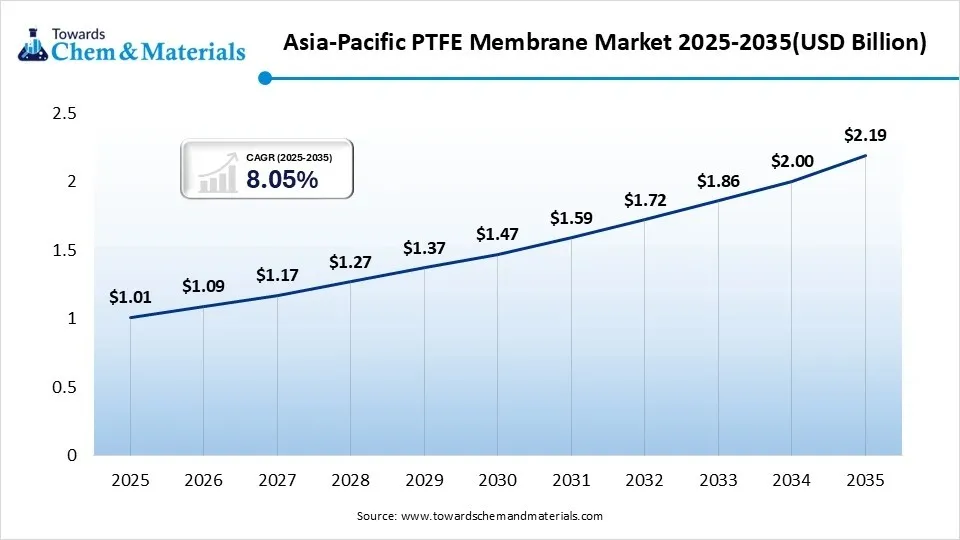
The Asia Pacific PTFE membrane market size was estimated at USD 1.01 billion in 2025 and is projected to reach USD 2.19 billion by 2035, growing at a CAGR of 8.05% from 2026 to 2035.Asia Pacific dominated the market with the largest share of 39.0% in 2025. The dominance of the region can be attributed to the increasing emphasis on environmental sustainability, rigorous product quality standards, and operational efficiency. In addition, stringent wastewater discharge regulations enforced by governments in nations such as China, India, and Japan are significantly driving the demand for PTFE membranes within water and wastewater treatment facilities.
China
- Heavy governmental investments in smart water networks, pollution control targets, and strict industrial wastewater discharge standards are driving the adoption of advanced filtration membranes.
- An expanding biopharmaceutical sector and advanced medical device market demand high-precision microporous membranes for sensitive filtration and separation processes.
India
- The increasing demand for semiconductor manufacturing and electronic devices requires pristine cleanroom environments.
- Ongoing urbanization is driving immense demand for clean, treated water. PTFE membranes are widely preferred for microfiltration and ultrafiltration due to their chemical resistance.
North America held a market share of 24.00% in 2025 and was expected to grow at the fastest CAGR of 8.8% over the forecast period. The growth of the region can be credited to the increasing market demand across various industrial sectors, boosted by a supportive regulatory framework and advanced technological capabilities. The pharmaceutical and medical device industries in the United States and Canada are experiencing rapid expansion. Within these sectors, polytetrafluoroethylene (PTFE) membranes serve as critical components, leading to market growth soon.
United States
- The Environmental Protection Agency (EPA) and state bodies mandate rigorous industrial emission and wastewater discharge limits, compelling industries to adopt high-efficiency PTFE filters.
- Expanding U.S. electronics manufacturing needs ultra-pure water and specialized venting solutions, both of which heavily rely on expanded PTFE microporous films.
Canada
- The strong Canadian medical sector has a high demand for sterile venting, drug delivery systems, and pharmaceutical manufacturing.
- The increasing demand for specialized vehicle components and battery systems drives the use of PTFE in automotive venting applications.
Europe held a market share of 22.00% in 2025. The growth of the region can be linked to the strict environmental regulations, a strong pharmaceutical base, and an ongoing push towards high-performance sustainable materials. European construction regulations promote sustainable, energy-efficient building materials; also, PTFE and ETFE membranes are increasingly adopted for lightweight, long-span structural applications and weather-resistant roofing systems.
Germany
- The German Environment Agency and the European Commission are enforcing strict air and water emission laws. This forces industries to heavily adopt PTFE membranes for advanced industrial liquid and gas filtration.
- Germany’s powerhouse auto sector utilizes PTFE membranes for battery ventilation, wire insulation, and emission control.
France
- France hosts a large pharmaceutical sector, which depends heavily on PTFE filtration membranes for sterile processing, alongside rising demand for biomedical devices.
- Market players are prioritizing sustainable and circular-economy materials, propelling the use of expanded PTFE (ePTFE) membranes in advanced medical and industrial applications.
Latin America held a market share of 8.00% in 2025. The growth of the region can be driven by ongoing urbanization, rapid industrialization, and the growing adoption of high-efficiency filtration in the regions healthcare and water treatment sectors. Moreover, expanding electronics manufacturing and chemical processing sectors in key regional hubs, such as Brazil and Mexico, are driving a surge in demand for hydrophilic membranes.
Brazil
- Growing urbanization and government initiatives to reduce industrial pollution are forcing plants to adopt advanced separation and purification technologies.
- Rising domestic demand for biologics and generic medicines is driving the need for sterile venting and liquid filtration.
Argentina
- Surged investments in regional oil & gas refineries and chemical manufacturing are accelerating the adoption of chemically inert and temperature-resistant PTFE membranes.
- The need for sterile processing, purification, and venting in food and beverage manufacturing is continually increasing.
The Middle East & Africa held a market share of 7.00% in 2025. The growth of the region can be attributed to the expanding water desalination projects and ongoing large-scale architectural developments. Furthermore, the rapid expansion of the regions oil, gas, and refining sectors necessitates highly durable, thermally stable, and corrosion-resistant materials for filtration and vending applications.

Saudi Arabia
- The surging production of active pharmaceutical ingredients (APIs) and medical manufacturing needs strict sterile environments.
- Saudi Arabia relies heavily on large-scale industrial desalination. Advanced PTFE membranes are essential for microfiltration and nanofiltration to convert seawater into safe, potable water.
UAE
- Heavy investments in downstream chemical projects by entities like ADNOC require durable, corrosion-resistant filtration and protective venting materials to withstand extreme, harsh environments.
- Stringent standards and investments in medical technology demand biocompatible medical PTFE membranes used in surgical implants, vascular grafts, and biopharma filtration.
Segmental Insights
Product Insights
The hydrophobic membrane segment dominated the PTFE membrane market in 2024. Hydrophobic PTFE membranes are specially designed to repel water while allowing gases and vapors to pass through, making them ideal for applications requiring moisture resistance. These membranes are widely used in air and gas filtration, venting of electronic devices and batteries, and protective clothing, where preventing water ingress is crucial. Their chemical inertness and high thermal stability also make them suitable for harsh industrial environments. The hydrophobic nature ensures long membrane life and low fouling rates, contributing to reliable and efficient filtration performance in sectors like automotive, pharmaceuticals, and water treatment.
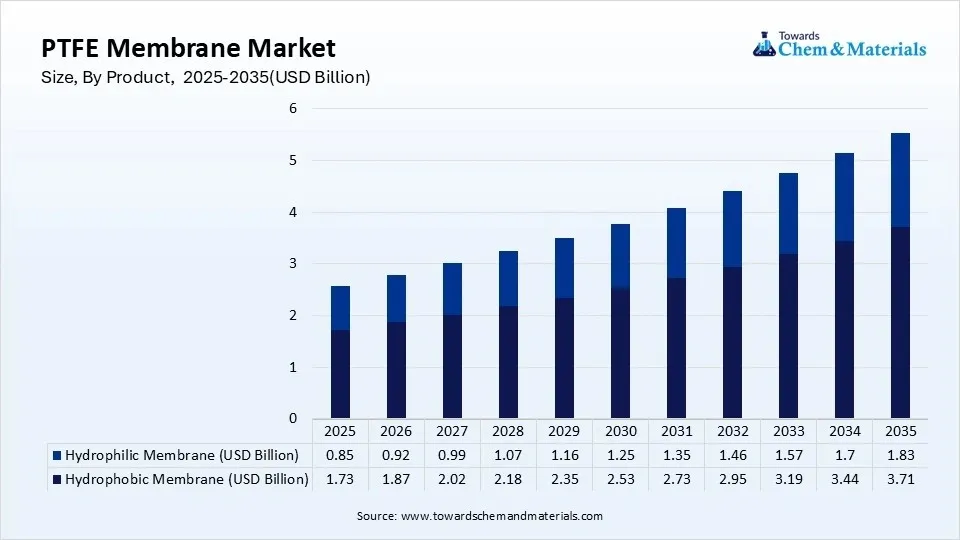 The hydrophilic membrane segment is expected to experience significant growth in the PTFE membrane market during the forecast period. Hydrophilic PTFE membranes are treated to attract and allow the passage of water, making them highly effective for applications involving liquid filtration. These membranes are commonly used in water and wastewater treatment, medical devices, and food and beverage processing, where the filtration of aqueous solutions is essential. Their ability to maintain high permeability while resisting chemical degradation and microbial growth makes them valuable for maintaining purity and safety standards. Additionally, hydrophilic PTFE membranes offer excellent durability and chemical resistance, enabling their use in demanding environments where consistent and efficient filtration of liquids is required.
PTFE Membrane Market Share, By Product Type,2025(%)
| By Product Type | Revenue Share, 2025 (%) |
| Hydrophobic Membrane | 67% |
| Hydrophilic Membrane | 33% |
End Use Insights
The industrial filtration segment dominated the PTFE membrane market in 2024. Industrial filtration using PTFE membranes plays a critical role in separating contaminants from gases and liquids in various manufacturing and processing industries. These membranes are valued for their chemical resistance, thermal stability, and durability, allowing them to operate effectively in harsh environments such as chemical processing plants, oil and gas refineries, and food production facilities. PTFE membranes help improve product quality, protect equipment, and ensure compliance with environmental regulations by efficiently filtering out particles, bacteria, and other impurities. Their versatility and reliability make them a preferred choice for industrial filtration applications where performance and longevity are essential.

The medical segment expects significant growth in the PTFE membrane market during the forecast period. In medical applications, PTFE membranes are highly valued for their biocompatibility, chemical resistance, and ability to provide sterile filtration. They are widely used in devices such as filters for intravenous lines, sterilizing-grade filters, and wound dressings, where preventing contamination and maintaining hygiene are critical. The membranes’ microporous structure allows for the removal of bacteria and other pathogens without compromising airflow or fluid transfer, making them essential in pharmaceutical manufacturing, laboratory filtration, and healthcare settings. Their durability and stability under sterilization processes further enhance their suitability for medical use.
PTFE Membrane Market Share, By End Use,2025(%)
| By End Use | Market Share (%) |
| Industrial Filtration | 41% |
| Medical | 20% |
| Textile | 14% |
| Water & Wastewater Treatment | 18% |
| Others | 7% |
Recent Developments
- In April 2026, Reflow Medical, Inc., an innovator in complex cardiovascular disease solutions, has announced the U.S. commercial launch of its next-generation Cora Flex® and Cora Force® Torqueable Microcatheters. The devices utilize Cora Tech™, a proprietary design characterized by a linerless structure with PTFE-coated coils.
(Source: www.businesswire.com)
Top Companies List
- Pall Corporation
- Saint Gobain
- Fiberflon
- Hawach Scientific Co., Ltd.
- Corning Incorporated
- Donaldson Company, Inc
- HYUNDAI MICRO Co., Ltd.
- Cytiva
- Merck KGaA
- W. L. Gore & Associates, Inc.
Segments Covered in the Report
By Product Type
- Hydrophobic Membrane
- Expanded PTFE (ePTFE)
- Laminated PTFE Membrane
- Composite PTFE Membrane
- Hydrophilic Membrane
- Modified Hydrophilic PTFE
- Composite Hydrophilic PTFE
- Microporous Hydrophilic PTFE
By End Use
- Industrial Filtration
- Chemical Processing
- Food & Beverage
- Electronics
- Pharmaceutical Manufacturing
- Air Filtration
- Medical
- Sterile Vent Filtration
- Medical Devices
- Diagnostic Equipment
- Surgical Applications
- Textile
- Protective Clothing
- Outdoor Apparel
- Sportswear
- Water & Wastewater Treatment
- Municipal Water
- Industrial Water
- Desalination
- Wastewater Recycling
- Others
- Automotive
- Aerospace
- Energy
- Laboratory Applications
By Region
- North America
- U.S.
- Canada
- Europe
- Germany
- UK
- France
- Italy
- Spain
- Sweden
- Denmark
- Norway
- Asia Pacific
- China
- Japan
- India
- South Korea
- Thailand
- Latin America
- Brazil
- Mexico
- Argentina
- Middle East and Africa (MEA)
- South Africa
- UAE
- Saudi Arabia
- Kuwait



Comments
Share your thoughts, ask a question, or provide feedback about this report.