
Point-of-use Water Treatment Systems Market Size Analysis Report 2035
The global point-of-use water treatment systems market size was valued at USD 32.87 billion in 2025, is estimated to reach USD 35.87 billion in 2026, and is projected to reach USD 78.75 billion by 2035, exhibiting a compound annual growth rate (CAGR) of 9.13% over the forecast period from 2026 to 2035.Asia Pacific dominated the point-of-use water treatment systems market with the largest revenue share of 41% in 2025 and is expected to grow at the fastest CAGR of 9.12% during the forecast period. Technological advances, such as smart IoT-enabled purification systems, small reverse osmosis technology, and advanced filtration materials, are improving the efficiency of the products and convenience. The rising issue of drinking water quality, rising populations in cities, and aging city water infrastructure contribute to market expansion. 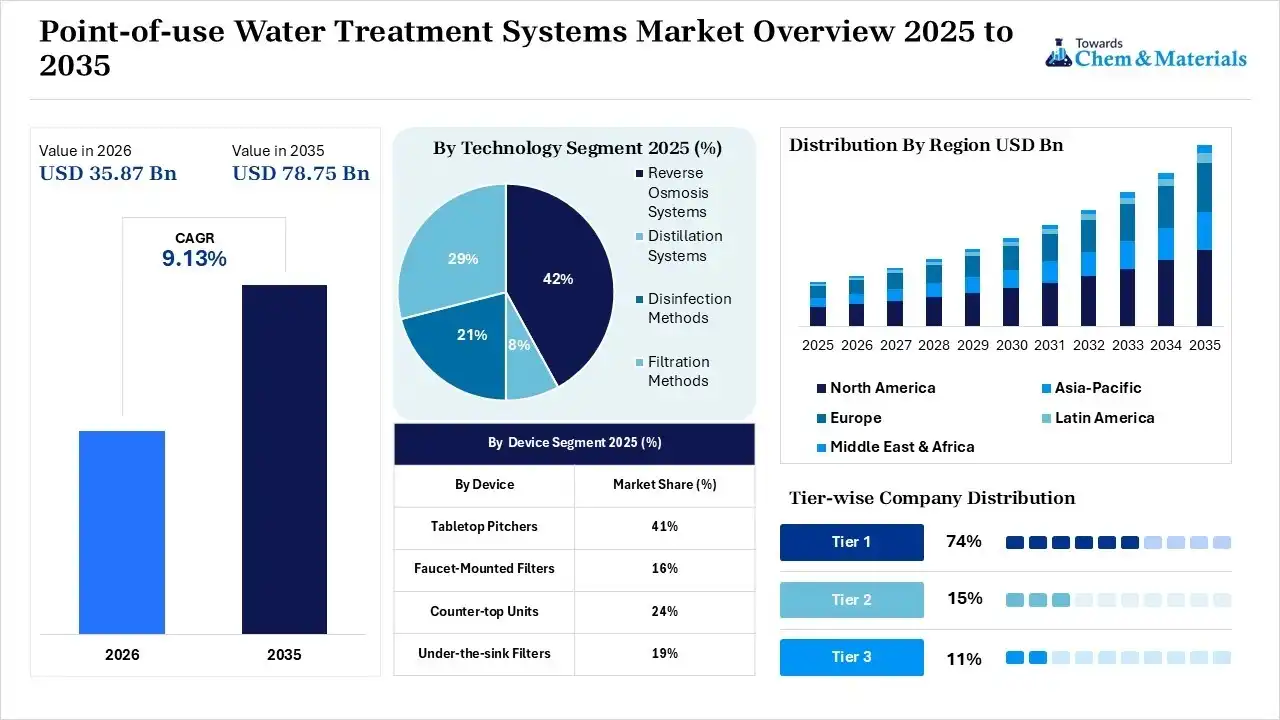
Market Highlights
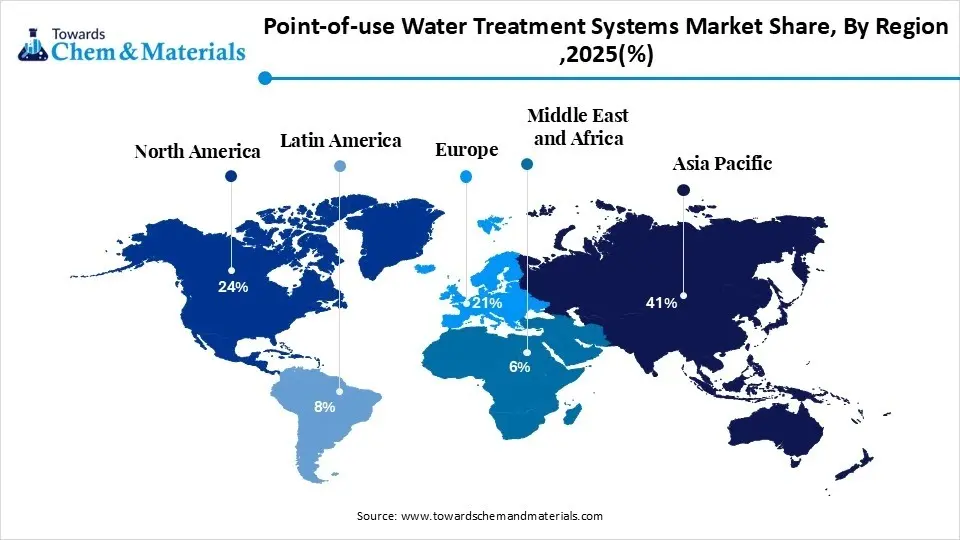
- By region, Asia Pacific dominated the point-of-use water treatment systems market by holding 41% share in 2025 and is expected to grow at a CAGR of 9.12% during the forecast period.
- By region, North America held 24% market share in 2025 and is expected to grow at the fastest with a CAGR of 9.5% during the forecast period.
- By technology, the reverse osmosis systems segment dominated the market with the largest share of 42% in 2025 and is expected to grow at a CAGR of 8.9% during the forecast period.
- By technology, the disinfection methods segment held 21% market share in 2025 and is expected to grow at the fastest CAGR of 9.2% over the forecast period.
- By device, the tabletop pitchers segment dominated the market with the largest share of 41% in 2025 and is expected to grow at a CAGR of 6.6% during the forecast period.
- By device, the under-the-sink filters segment held 19% market share in 2025 and is expected to grow at the fastest CAGR of 9.10% over the forecast period.
- By application, the residential segment dominated the market with the largest share of 64% in 2025 and is expected to grow at a CAGR of 8.10% during the forecast period.
- By application, the commercial segment held 24% market share in 2025 and is expected to grow at the fastest CAGR of 9% over the forecast period.
- By sales channel, the distributor (third-party sales) segment dominated the market with the largest share of 62% in 2025 and is expected to grow at a CAGR of 7.8 during the forecast period.
- By sales channel, the direct sales segment held 38% market share in 2025 and is expected to grow at the fastest CAGR of 9% over the forecast period.
According to Towards Chemicals and Materials Analytics and Consulting, the global point-of-use water treatment systems volume was valued at 148.77 million tons in 2025 and is expected to surpass around 322.37 million tons by 2035, accelerating a compound annual growth rate (CAGR) of 8.04% over the forecast period from 2026 to 2035.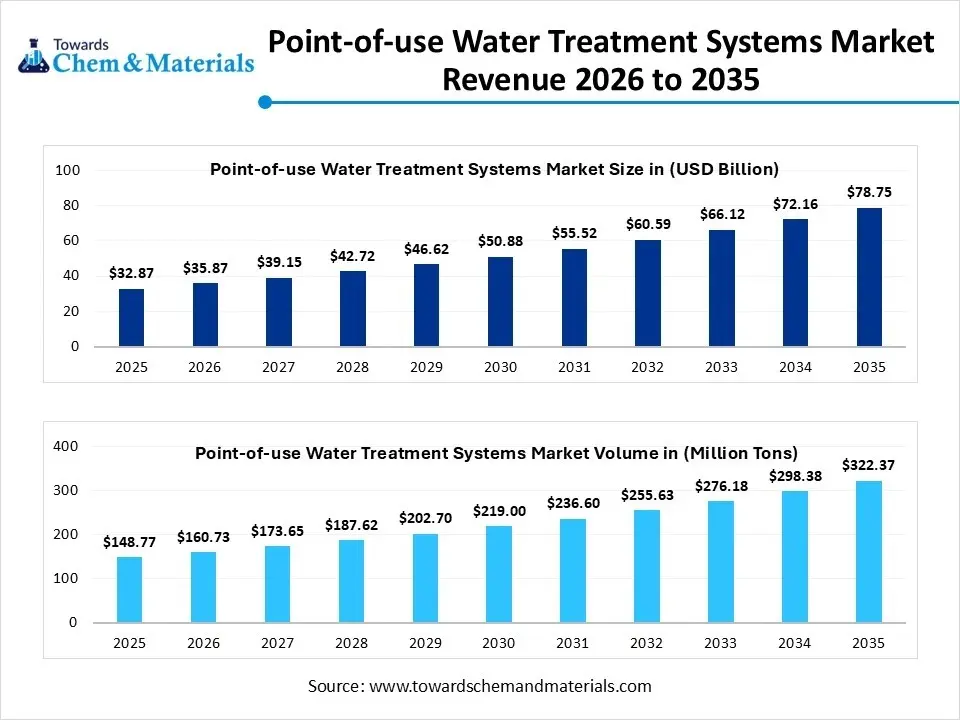
Smart integration of IoT, advanced reverse osmosis systems, capacitive deionization, UV LED disinfection, and activated carbon filtration is significantly enhancing purification efficiency and usability. Point-of-use water treatment systems are seeing steady growth, as consumers become more aware of the importance of safe and reliable drinking water. As industrial or non-point sources of pollutants continue to rise, old municipal pipelines and worries about heavy metals, pathogens, and emerging contaminants remain driving the demand for localized purification methods.
The use of filter materials that are environmentally friendly, recyclable materials, filter technologies that use lower water volumes, and special filter cartridges for the removal of permanent contaminants such as PFAS and microplastics are continuing to expand market opportunities. Residential, hospitality, healthcare, and food service growth are enticing commercial growth. Rapid urbanization and growing concerns about household water safety are expected to drive the Asia Pacific region to be the premier market, while manufacturers are continuing to enhance the innovations being introduced to address changing regulatory and consumer expectations.
Report Scope
| Report Attributes | Details |
| Market Size in 2026 | USD 35.87 Billion/ 160.73 Million Tons |
| Expected Size in 2035 | USD 78.75 Billion/ 322.37 Million Tons |
| Growth Rate | CAGR of 9.13% |
| Base Year of Estimation | 2025 |
| Forecast Period | 2025-2035 |
| Dominant Region | Asia Pacific |
| Segment Covered | By Technology, By Device, By Application, By Sales Channel, By Region |
| Key Companies Profiled | Culligan, Pentair, Toray Industries, Eureka Forbes, A. O. Smith, Honeywell, LG Electronics, Panasonic, Kent RO Systems, Best Water Technology (BWT), Watts Water Technologies, 3M, Unilever (Pureit), Coway, Whirlpool |
Global Investment Movement for Point-of-use Water Treatment Systems Market
Investments are being channelled to manufacturers to create purification systems that are connected to the internet to monitor water quality in real time, alert when filters need to be changed, and sync with a mobile app.Hybrid purification systems are gaining importance, combining reverse osmosis, ultraviolet disinfection, and ultrafiltration technologies in a single platform, which are increasingly becoming the focus of investment in investment activities.
The sophisticated designs offer superior contaminant removal capabilities, address new water quality issues, and deliver the complete solution for a variety of residential and commercial settings.Regional manufacturing strategies are beneficial in terms of reducing dependence on transportation, enhancing supply chain resilience, enabling a quicker product response time, and promoting environmentally sustainable manufacturing processes and operational sustainability.
Market Trends
- Wi-Fi connectivity, AI-powered water filter monitoring, mobile apps, and real-time water purity tracking are still some of the latest features integrated into water purification systems by manufacturers.
- As more of these persistent chemicals, such as PFAS and other emerging chemicals, have been discovered, consumers are becoming more interested in advanced filtration cartridges that can remove these.
- New multi-stage filter cartridges are coming onto the market that can filter for a longer time before they need to be changed. There is a reduction in service frequency, customer satisfaction, and overall ownership costs for residential and commercial users, which results in longer service life.
- Reverse osmosis is still the most popular purification process for effectively removing dissolved salts, heavy metals, and microscopic contaminants. With ongoing technology advancements, it has continued to gain traction in both residential and commercial water purification systems.
Key Technological Shifts and AI in the Point-of-use Water Treatment Systems Market
AI and digital technologies are reshaping the concept of point-of-use water treatment by making it more accurate, efficient, and maintenance-friendly. Additionally, IoT sensor integration allows for the real-time measurement of several parameters such as total dissolved solids, pH levels, water flow, and more, allowing users to gain insights into the performance of their water system at any time. The deployment of edge computing eliminates the need for samples to be sent to an external lab for analysis and provides faster responses to varying water quality conditions. Anomaly Detection feature uses AI to detect sudden spikes in contamination or pressure before impacting drinking water safety. Predictive analytics can reliably forecast filter replacement dates based on water hardness and usage data.
Supply Chain Analysis of the Point-of-use Water Treatment Systems Market
Feedstock Procurement
- The first link in the supply chain is the procurement of the polymers, the coconut shells needed for producing activated carbon, and the metal minerals needed for the filter components and assemblies.
Stable raw material supplies guarantee stable performance of the filters, durability of the products generated, efficient production in the manufacturing process, and continuous production of residential and commercial water treatment systems. - Pentair PLC: Pentair PLC uses the same trusted, vetted network of Tier-1 suppliers in all parts of the world to supply the highest quality plastics and activated carbon, consistently delivering dependable production and material quality for its point-of-use water treatment product range.
- Other Key Players: 3M Company, A. O. Smith Corporation
Chemical Synthesis and Processing
- At this stage, chemical precursors are transformed into high-performance polymer membranes, ion-exchange resins, and special filter materials that are efficient in separating and cleaning contaminants.
Modern point-of-use water treatment systems are determined by their durability, filtration accuracy, contaminant removal capacity, and long-term operating performance, which are all functions of advanced chemical processing. - DuPont: DuPont Water Solutions advanced reverse osmosis membrane chemistries and specialized separation resins help enhance the purification efficiency while delivering consistent removal of dissolved contaminants in various water treatment applications.
- Other Key Players: Toray Industries, The Dow Chemical Company
What are the Point-of-use Water Treatment Systems?
A point-of-use water treatment system is a water treatment system installed at the point of use, whether at a kitchen tap, counter, under-sink, showerhead, or dispenser, which purifies water at the point of consumption, such as using filtration, reverse osmosis, ultraviolet disinfection, or other purification methods.
Uses of the Point-of-use Water Treatment Systems
Enhancing Protection from Water-borne Microorganisms
- By eliminating or inactivating hazardous bacteria, viruses, and parasites like Cryptosporidium, point-of-use water treatment systems offer safer drinking water and help minimize the risk of microbiological contamination in residential and commercial settings.
Removal of Heavy Metals and Chemical Contaminants
- Advanced filtration technologies will effectively remove heavy metals like lead and arsenic, pesticides, PFAS, and other contaminants from drinking water, which will enhance water quality and help meet strict health and safety standards.
Offering Extra Protection Beyond That of the Municipality
- Such systems provide an extra filtering step after municipal water systems to reduce the potential for contamination in the system, which can be caused by old pipes, storage tanks, or local water quality issues before it reaches the customers tap.
Improving The Quality of Drinking, Food Preparation, and Cooking
- Point-of-use purification systems offer safe drinking water, infant formula, washing fruits and vegetables, and food preparation, which will promote food safety and overall household hygiene and consumer trust.
Sustainability Analysis of the Point-of-use Water Treatment Systems
Point-of-use water treatment systems encourage the use of water in a sustainable manner by providing a supply of treated water at the point of use instead of relying on a centralized system or bottled water. Reverse Osmosis (RO) systems usually produce 3-4 liters of water for every liter of water produced, while gravity-operated ceramic and biosand filters do not produce any water waste and are electric-free. Gravity filtration and chemical disinfection methods are still further energy efficient than ultraviolet lamps and reverse osmosis booster pumps to reduce household energy usage. Additionally, manufacturers are looking into new, environmentally friendly filter media, such as bamboo charcoal, ceramic clay, and recyclable filter media, instead of the traditional plastic cartridges.
Regulatory Framework: Point-of-use Water Treatment Systems Market
| Country Region | Regulatory Body | Key Regulations | Focus Areas |
| Asia Pacific | National Health Commission (NHC) | Drinking Water Sanitary Standard (GB 5749) | Safety of product materials, microbial safety, and heavy metal rejection |
| North America | NSF International | NSF/ANSI 42, 53, 58 | Aesthetic effects (chlorine/taste), health-related contaminants (lead, cysts) |
| European Union | EU Commission | EU Drinking Water Directive (2020/2184) | Microbiological and chemical parameter testing, strict limits on PFAS and microplastics |
Market Dynamics
Drivers :Growing Water Pollution and Public Health Concerns Accelerate Market Expansion
The risks of contamination by harmful chemicals, pathogens, and heavy metals are still growing from industrial discharge, urbanization, and the deterioration of the water supply system. An increase in awareness of water-borne diseases leads to increased demand for POUS systems to ensure access to safe drinking water for households and commercial enterprises. Constantly evolving reverse osmosis, activated carbon filtration, ultraviolet disinfection, and linked purification technology further add to the effectiveness of the product and enable long-term market expansion in industrialized and developing countries.
Restraints :Recurring Maintenance Requirements Increase Overall Ownership Costs
The replacement costs for the filters, reverse osmosis membranes, ultraviolet lamps, and similar parts are higher over the life of the system for residential and commercial consumers if filters are replaced regularly. However, if a unit is difficult to maintain or replacement parts and/or after-sales services are limited, price sensitivity will make the adoption of such a unit more difficult. Despite rising awareness about water safety and protection of public health, the impact of delayed servicing on operational downtime may also affect purchasing decisions, thereby influencing the purification efficiency.
Opportunities : Smart Connected Water Purification Creates Premium Growth Opportunities
The increasing demand for ‘smart’ household appliances is driving manufacturers to add AI, IoT connectivity, predictive maintenance, and live water quality monitoring capabilities to purification systems. Such intelligent features not only enhance the user experience but also contribute to optimizing the filtration process and facilitating efficient maintenance planning. The increasing market penetration into residential, hospitality, healthcare, and commercial environments offers exciting opportunities for top-tier smart purification products for improved safety, efficiency, and value for customers.
Segmental Insights
Technology Insights
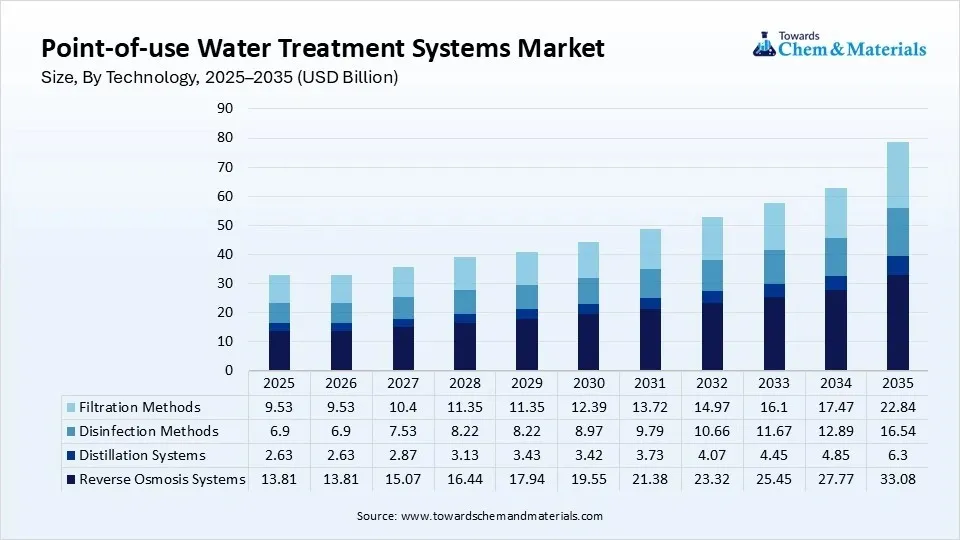
The reverse osmosis systems segment dominated the market with the largest share of 42% in 2025 and is expected to grow at a CAGR of 8.9% over the forecast period, due to their high level of contaminants rejection in drinking water treatment, including dissolved salts, heavy metals, microorganisms, and other contaminants. The continuous developments in membrane technology, the compact design of the products, and their integration in multi-stage purification systems have reinforced their use in residential and commercial applications. As they keep serving high-quality purified water consistently and have met a rigorous water quality standard, they continue to strengthen their position in the market of point-of-use water treatment systems, while also gaining consumer confidence.
- For instance, in April 2026, SUEZ and Salinity Solutions started the first Pilot Project for the reuse of treated wastewater for urban use in the South of France, to enhance treated water recovery while limiting and minimizing brine production, chemical consumption, and overall energy usage.(Source: www.suez.com)
The disinfection methods segment held the 21% market share in 2025 and is expected to grow at the fastest CAGR of 9.2% over the forecast period, owing to the rising demand for microbial protection and providing safe drinking water. Innovations in UV disinfection technologies and other non-chemical purification methods are making disinfection more effective and maintaining water quality. The demand for enhanced disinfection technologies is still growing, as awareness around waterborne diseases and the increasing demand for integrated purification systems across residential and commercial buildings continues to rise. Ongoing product innovation and growing demand for environmentally-friendly purification methods are also contributing to the growth in this technology segment.
Point-of-use Water Treatment Systems Market Share,By Technology ,2025(%)
| By Technology | Market Share (%) |
| Reverse Osmosis Systems | 42% |
| Distillation Systems | 8% |
| Disinfection Methods | 21% |
| Filtration Methods | 29% |
Device Insights
The tabletop pitchers segment dominated the market with the largest share of 41% in 2025 and is expected to grow at a CAGR of 6.6% over the forecast period, due to their low cost, mobility, and convenience. They do not need to be installed permanently like some of the other systems and are suitable for apartments, rentals, or families who want a quick and easy way to purify their water. Their ease of use, small footprint, and enhancement of the quality and flavor of the drinking water continue to make them appealing to consumers in city and suburban homes alike. Tabletop pitchers should continue to be in use for the next year or two thanks to growing demand for inexpensive, easy-to-use purification products.
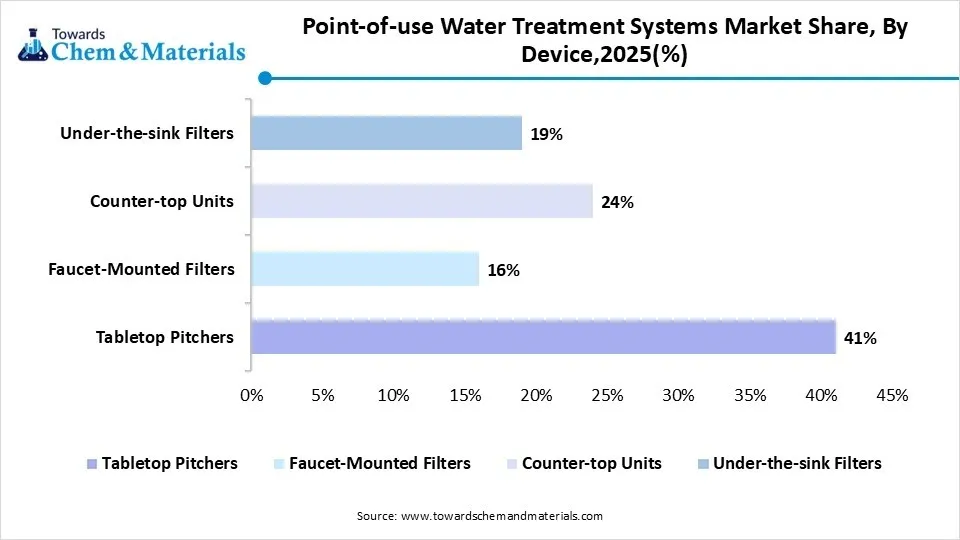
The under-the-sink filters segment held the 19% market share in 2025 and is expected to grow at the fastest CAGR of 9.1% over the forecast period, as homeowners are looking to store clean water right under their noses and dont want to take up valuable countertop space. These systems offer increased filtration sizes and combine several purification methods to achieve better water purities. The increasing demand for beauty and aesthetic appearance of kitchen designs and their durability continues to be the driver of the adoption of these filters in modern residential and commercial properties. The segment is also witnessing rapid growth owing to the growing number of activities in the home renovation sector and the increasing demand for high-quality kitchen solutions.
Point-of-use Water Treatment Systems Market Share,By Device,2025(%)
| By Device | Market Share (%) |
| Tabletop Pitchers | 41% |
| Faucet-Mounted Filters | 16% |
| Counter-top Units | 24% |
| Under-the-sink Filters | 19% |
Application Insights
The residential segment dominated the market with the largest share of 64% in 2025 and is expected to grow at a CAGR of 8.1% over the forecast period, because people were becoming more aware of the importance of drinking water and the issues concerning contaminants in their drinking water originating from municipal sources. The use of point-of-use water purification has grown among households to enhance water quality for drinking, cooking, and food preparation. Growing health awareness, convenience, and the need to decrease on bottled water have further boosted demand for residential water treatment systems in both developed and developing areas.
The commercial segment held the 24% market share in 2025 and is expected to grow at the fastest CAGR of 9% over the forecast period, due to the increasing need for trusted water purification solutions in restaurants, hotels, healthcare facilities, educational institutes, and food service providers. Regulatory requirements, hygiene standards, and quality uniformity are gaining importance, which is driving investments in commercial establishments in advanced treatment technologies. Growth in the hospitality and health care facilities also fosters the use of point-of-use water treatment systems. There are likely to be further opportunities for advanced purification technologies due to the increasing demand for safe water in high-consumption commercial settings.
Point-of-use Water Treatment Systems Market Share,By Application,2025(%)
| By Application | Market Share (%) |
| Residential | 64% |
| Commercial | 24% |
| Industrial | 12% |
Sales Cannel Insights
The distributor (third-party sales) segment dominated the market with the largest share of 62% in 2025 and is expected to grow at a CAGR of 7.8% over the forecast period, as it had a wide distribution network and a good relationship with retailers and regional suppliers. These channels not only help manufacturers increase product availability in various geographical markets, but they also offer the support and after-sales services needed for installation. The expansive reach of the markets and existing customer base continues to make a strong contribution to the accessibility of products and overall market penetration. Established distributor relationships also enable manufacturers to gain access to new markets and provide products efficiently and effectively, supported by good customer service.
The direct sales segment held the 38% market share in 2025 and is expected to grow at the fastest CAGR of 9% over the forecast period, as more companies are prioritizing their direct customer relationship by dedicating a sales team and digital platform to direct sales. Individual consultations, skilled installation, and ongoing subscription-based maintenance help to create customer satisfaction and build brand loyalty. The expansion of direct sales channels is continuing to be fueled by the business trend toward custom solutions in purification technology and complete after-sales service. The use of digital sales channels and direct customer engagement should continue to support this channel even more during the forecast period.
Point-of-use Water Treatment Systems Market Share,By Sales Channel,2025(%)
| By Sales Channel | Market Share (%) |
| Direct Sales | 38% |
| Distributor (Third-party Sales) | 62% |
Regional Insights
How Did the Asia Pacific Dominate the Point-of-use Water Treatment Systems Market In 2025?
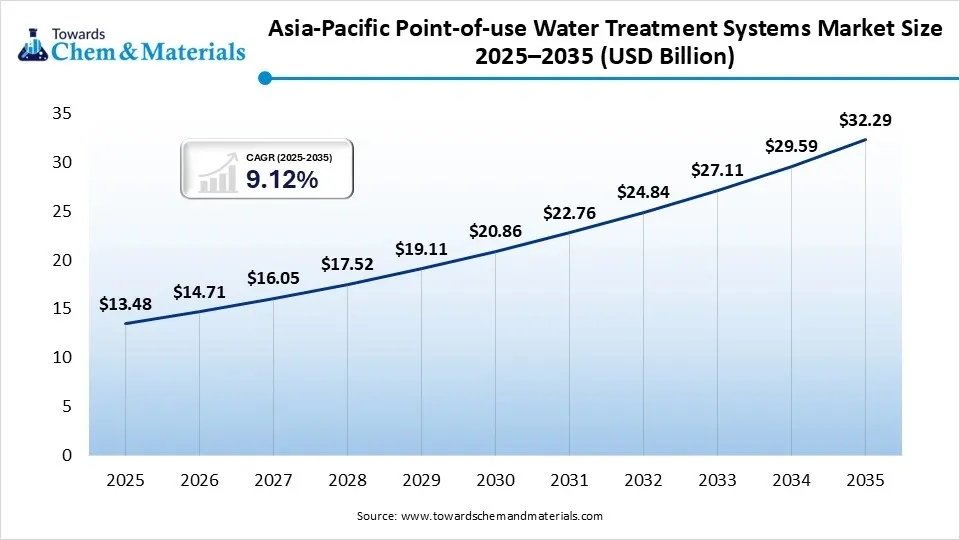
The Asia Pacific point-of-use water treatment systems market size was estimated at USD 13.5 billion in 2025 and is projected to reach USD 32.3 billion by 2035, growing at a CAGR of 9.12% from 2026 to 2035. Asia Pacific dominated the market with the largest share of 41% in 2025 and is expected to grow at a CAGR of 7.3% during the forecast period, as rising trend of urbanization, concern about water quality, and the rising preference towards household water purification systems. Consumer demand for treatment methods to get safe drinking water has grown with the increasing population and ageing municipal water supply systems. Strong manufacturing capabilities, rising health awareness, and continuous product innovation further support regional market growth. The growing importance of water quality regulations is further driving the use of more sophisticated water purification techniques in both residential and commercial buildings.
Strengthening Chinas Water Purification Industry Through Smart Manufacturing
The changing regional landscape is continued by rapid urbanization, enhanced manufacturing capacities, and higher demand for advanced home water treatment systems in China. The rising water contamination worries and the ongoing investment in smart technologies for water clean-up are helping markets to grow. Domestic manufacturers are also making efforts to increase the efficiency of the products, as well as creating advanced filtration solutions to satisfy changing consumer and regulatory demands.
Advancing Indias Household Water Treatment Adoption Through Rising Health Awareness
The market is growing robustly in India, as the number of residential purification systems used and public awareness about safe drinking water have increased. Market development is ongoing, with urbanization, the concern over water quality in cities, and the availability of new, more sophisticated filtration technologies all driving this growth. The domestic manufacturers are coming up with new purification solutions that can meet different consumer needs and enhance accessibility in urban and semi-urban areas.
North America
The North America point-of-use water treatment systems market size was estimated at USD 7.9 billion in 2025 and is projected to reach USD 18.9 billion by 2035, growing at a CAGR of 9.11% from 2026 to 2035. North America held 24% market share in 2025 and is expected to grow at the fastest CAGR of 9.5% during the forecast period due to high consumer awareness of the importance of safe drinking water and quick market penetration by technologically advanced purification systems. There is continued growth in demand for connected household appliances and smart filtration technologies, which further stimulate product innovation. Also contributing to the regional market is the widespread adoption of regulatory standards and increased investments in sustainable water treatment solutions.
Expanding the United States Smart Water Treatment Ecosystem
Advanced purification technologies and household appliances that are connected are also closely related issues that have led to increasing demand in the United States as a key market. Rising awareness about emerging contaminants, growing adoption of smart water monitoring solutions, and continuous innovations in filtration systems further drive the market growth. Manufacturers are also increasing their research and development efforts to launch high-efficiency purification technologies.
Enhancing Canadas Sustainable Water Treatment Infrastructure
In addition, Canada is continuing to prop up market growth by rising demand for safe drinking water and environmentally friendly purification technologies. In both residences and businesses, the trend toward energy-efficient filtration and sustainable water treatment practices is fostering innovation in products. The constant focus on water quality improvements also adds to the growing trend of advanced point-of-use treatment options.
Europe
Europe point-of-use water treatment systems market size was estimated at USD 6.9 billion in 2025 and is projected to reach USD 16.5 billion by 2035, growing at a CAGR of 9.11% from 2026 to 2035. Europe held 21% market share in 2025 and is expected to grow at a CAGR of 7% over the forecast period, characterised by robust environmental legislation and rising customers interest in sustainable water purification technologies. The requirement for improved filtration systems has rapidly increased as a consequence of the growing awareness of chemical contaminants and water quality. Manufacturers invest in environmentally-friendly purification solutions and innovative treatment technologies that fit the changing regulatory demands. The region also has powerful research facilities to continuously develop the products.
Strengthening Germanys Advanced Filtration Technology Development
Technological innovation and the ongoing implementation of high-performance water treatment solutions are continuing to strengthen Germanys position. Thanks to their industrial know-how and ongoing product innovation, effective purification technologies are offered in the residential and commercial sectors. The market is further expanding due to consumer inclination towards top-tier water treatment systems.
Promoting Frances Sustainable Water Treatment Solutions
In France, the use of advanced purification technologies is becoming more frequent thanks to growing environmental awareness and a focus on sustainable water management. Manufacturers are still working on new filtration methods to provide more effective filtration and have a lower environmental footprint. The continued investment in modern treatment technology further enhances the market growth in various end-use segments.
Latin America
The Latin America point-of-use water treatment systems market size was estimated at USD 2.6 billion in 2025 and is projected to reach USD 6.3 billion by 2035, growing at a CAGR of 9.25% from 2026 to 2035. Latin America held 8% market share in 2025 and is expected to grow at a CAGR of 7.6% over the forecast period, driven by the growing awareness of the importance of drinking water quality, which is leading to higher adoption of point-of-use drinking water purification. Demand for dependable household treatment technologies remains strong, driven by urbanization and the increasing need for reliable water system maintenance. Manufacturers are expanding product access and adding efficient filters that cater to the various consumer needs. Water quality improvement investments continue to grow, reinforcing the regional market development.
Strengthening Brazils Residential Water Purification Market
Brazil is helping support the regional market growth by promoting the adoption of advanced water treatment systems and the awareness of the public about the importance of drinking water. There is growing public demand for such technologies due to an increased population and the continuous boost in product availability. Manufacturers are also continuing to expand their local distribution networks to enhance market distribution capabilities.
Enhancing Chiles Water Treatment Capabilities Through Modern Filtration
Higher-tech POU systems are coming to Chile to enhance access to clean drinking water in the home and workplace. Growing awareness regarding water quality and continuous technological advancements are supporting demand for efficient filtration solutions. Manufacturers are also launching new and exciting products that will help to enhance the purification performance and long-term reliability.
Middle East & Africa
The Middle East & Africa point-of-use water treatment systems market size was estimated at USD 2.0 billion in 2025 and is projected to reach USD 4.7 billion by 2035, growing at a CAGR of 8.92% from 2026 to 2035. The Middle East & Africa held 6% market share in 2025 and is expected to grow at a CAGR of 8.2% over the forecast period. owing to the rising concern over the drinking water quality and scarcity of water. Regional market development is sustained by increased investment in modern purification technologies and the growing availability of safe household water solutions. New treatment plants from manufacturers are being developed to address the varying water quality issues in the region with greater efficiency and purification. There is also long-term market growth as a result of infrastructure development.
Advancing Saudi Arabias Modern Water Purification Infrastructure
Saudi Arabia has been investing in the latest water treatment technologies to ensure the provision of safe drinking water in residential and commercial applications. Trendy purification systems and a rising consciousness of water conservation are still driving market growth. Advanced point-of-use water treatment technologies also have the benefit of ongoing modernization of water infrastructure.
Supporting South Africas efforts for Safe Drinking Water
South Africa is moving towards the strengthening of the use of point-of-use water treatment systems as access to clean and reliable drinking water is improved. Demand for advanced purification technologies remains strong, driven by increased investment in modern water infrastructure and awareness of public health. The nation is also seeking to continue to promote sustainable solutions to improve water quality in residential and community settings.
- For instance, in July 2026, the Klipdrift Package Water Treatment Plant is set to be officially commissioned by President Cyril Ramaphosa in Hammanskraal, aiming to enhance access to safe drinking water and bolster the countrys public water treatment facilities.(Source: www.sanews.gov.za)
Recent Developments
- In July 2026, DuPont released an improved Water Application Value Engine (WAVE PRO) that allows the use of multiple technologies for the integrated design: ultrafiltration, ion exchange resin, reverse osmosis, and nanofiltration. The advancement has the potential to enhance the design flexibility of water treatment systems and to enable optimized purification solutions for various applications.(Source: www.prnewswire.com)
- In March 2026, Sydney-based purple duck water filtration announced a brand relaunch, changing its name from Water Bros to build customer trust and grow its footprint throughout Sydney and NSW. This helps to ensure the company remains relevant in the market and maintains its whole-house water filtration market dominance.
(Source: www.globenewswire.com)
Competitive Analysis
The point of use (PoU) water treatment systems market is competitive with product innovation, technological advances, and portfolio expansion as a strategy to improve the market positions of various players. To meet changing customer demands, businesses are increasingly incorporating smart IoT connectivity, high-performance reverse osmosis membranes, ultraviolet disinfection, and energy-efficient filtration methods. There is also a trend towards using sustainable filter materials, manufacturing locally, and subscription-based models to boost customer engagement and ensure a more sustainable revenue stream. Businesses can expand their geographical reach and enhance the efficiency of purifications and user convenience by implementing strategic partnerships, research and development projects, and ongoing product development.
- For instance, in August 2025, Pentair plc entered into a definitive agreement to acquire Hydra-Stop LLC, expanding its specialty valve solutions portfolio. Overall, the acquisition bolsters Pentairs municipal water system capabilities and bolsters solutions to smart water management and growing demand for sustainable water distribution systems.(Source: investors.pentair.com )
- In September 2025, Coway Co., Ltd. announced that the water purifier ‘Icon Pro’ was awarded the International Design Excellence Award 2025 (IDEA). The recognition underscores the purifiers all-in-one touch LCD screen, further demonstrating Coways commitment to user-friendly innovation and innovative point-of-use water treatment solutions.(Source: company.coway.com)
Top Players in the Market & Their Offerings
| Company | Company Type/Position | Major Headquarters | Geographic Presence | Point-of-use Water Treatment Systems Offerings | Key Strength |
| Pentair | Manufacturer / Market Leader | London, UK / Minneapolis, USA | Global | Pentair POU Filtration | Advanced X-Flow ultrafiltration |
| Eureka Forbes | Manufacturer & Direct Seller / Regional Leader | Mumbai, India | Asia-Pacific | Aquaguard | Massive direct sales force and localized service network |
| Kent RO Systems | Manufacturer / Market Player | Noida, Uttar Pradesh, India | India | Kent Grand | Proprietary mineral retention and zero water wastage technology |
Other Key Players
- Culligan
- Pentair
- Toray Industries
- Eureka Forbes
- A. O. Smith
- Honeywell
- LG Electronics
- Panasonic
- Kent RO Systems
- Best Water Technology (BWT)
- Watts Water Technologies
- 3M
- Unilever (Pureit)
- Coway
- Whirlpool
Segment Covered in the Report
By Technology
- Reverse Osmosis Systems
- Tank-based RO Systems
- Tankless RO Systems
- Multi-stage RO Systems
- Distillation Systems
- Countertop Distillers
- Automatic Distillation Systems
- Disinfection Methods
- Ultraviolet (UV)
- Ultrafiltration (UF) with UV
- Ozonation
- Filtration Methods
- Activated Carbon Filters
- Ceramic Filters
- Ultrafiltration (UF)
- Nanofiltration (NF)
- Sediment Filters
- Multi-stage Filtration
By Device
- Tabletop Pitchers
- Gravity-fed Pitchers
- Smart Filter Pitchers
- Faucet-Mounted Filters
- Direct-flow Filters
- Switchable Faucet Filters
- Counter-top Units
- RO Counter-top Systems
- UV Counter-top Systems
- Multi-stage Counter-top Units
- Under-the-sink Filters
- RO Under-sink Systems
- Carbon Under-sink Filters
- Hybrid Under-sink Systems
By Application
- Residential
- Single-family Homes
- Apartments
- Commercial
- Offices
- Hotels
- Restaurants
- Café
- Hospitals
- Schools
- Others
- Industrial
- Laboratories
- Light Manufacturing
- Food Processing Support
By Sales Channel
- Direct Sales
- Company-owned Sales
- Online Direct Sales
- Institutional Sales
- Distributor (Third-party Sales)
- Retail Stores
- Specialty Stores
- E-commerce Marketplaces
- Regional Distributors
By Regions
- North America
- Europe
- Asia Pacific
- Middle East & Africa
- Latin America



Comments
Share your thoughts, ask a question, or provide feedback about this report.