
Data Center Water and Wastewater Treatment Equipment Market Size, Competitive Landscape Analysis Report 2035
The global data center water and wastewater treatment equipment market size was valued at USD 3.76 billion in 2025, is estimated to reach USD 4.21 billion in 2026, and is projected to reach USD 11.76 billion by 2035, exhibiting a compound annual growth rate (CAGR) of 12.08% over the forecast period from 2026 to 2035. Asia Pacific dominated the data center water and wastewater treatment equipment market with the largest revenue share of 37% in 2025 and is expected to grow at the fastest CAGR of 12.24% during the forecast period.
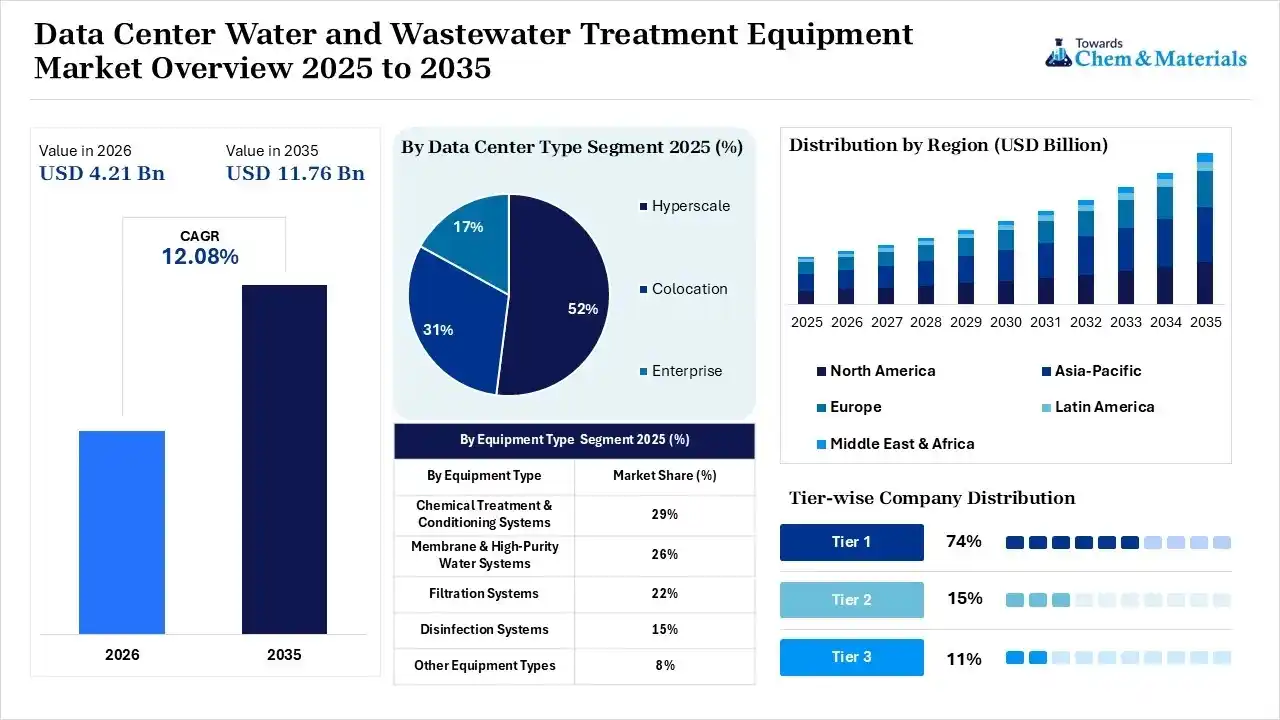
The growth of AI workloads and facilities, which require water for operations demanding heavy investments by the operators in closed-loop cooling, membrane systems, and water reuse technologies to overcome the water scarcity problem, is a major factor in the growth. Leading companies like Veolia, Ecolab, and Xylem provide AI-enabled water optimization and reclaimed water solutions to major tech operators like AWS, which will help the market grow in the coming years.
Key Takeaways
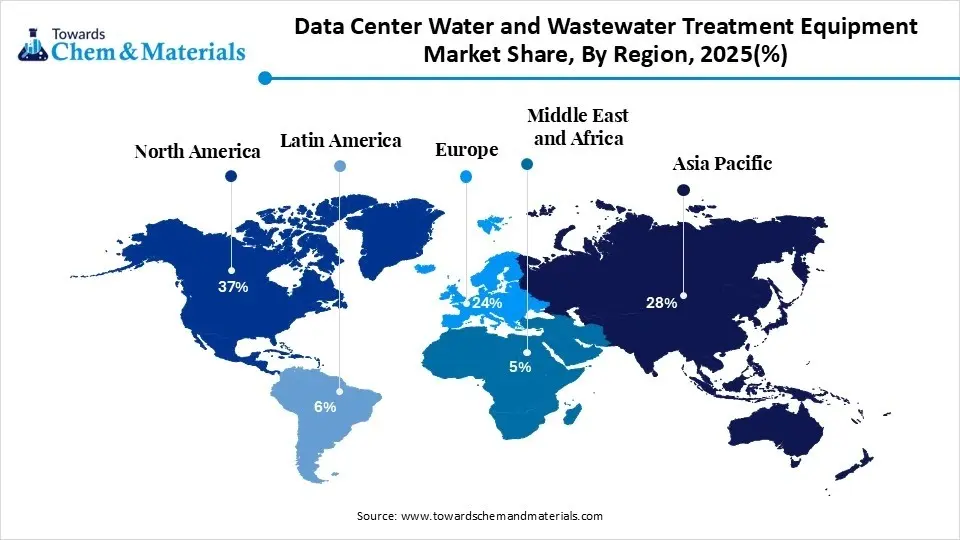
- By region, North America dominated the data center water and wastewater treatment equipment market with a share of 37% in 2025 and is expected to grow at a CAGR of 10.80% over the forecast period.
- By region, Asia Pacific held 28% of the data center water and wastewater treatment equipment market share in 2025 and is expected to experience the fastest growth with a CAGR of 14.20% in the forecast period.
- By data center type, the hyperscale segment dominated the market with a 52% share in 2025. and is expected to grow at a 12.30% CAGR over the forecast period.
- By data center type, the colocation segment held 31% market share in 2025 and is expected to have the fastest growth with a CAGR of 13.10% in the forecast period.
- By equipment type, the chemical treatment and conditioning systems segment dominated the market with a 29% share in 2025 and is expected to grow at a CAGR of 10.60% over the forecast period.
- By equipment type, the membrane and high-purity water systems segment held 26% market share in 2025 and is expected to have the fastest growth with a CAGR of 13.60% in the forecast period.
- By treatment stage, the cooling water treatment segment dominated the market with a 38% share in 2025 and is expected to grow at a CAGR of 10.90% over the forecast period.
- By treatment stage, the water reuse and recovery segment held 16% market share in 2025 and is expected to have the fastest growth with a CAGR of 14.50% in the forecast period.
Market Overview
Water Treatment: Critical Shift Towards Data Center Advancement
The data center water and wastewater treatment equipment consists of specialized filtration, recycling systems, and softening, which is especially designed to prevent corrosion, scaling, and biological growth in the treatment of wastewater and in cooling towers for safe discharge and reuse of water and wastewater. This equipment is critical for maintaining uptime and meeting strict environmental compliance mandates. The technologies and equipment that are used in the data center water cycle are pre-treatment and purification, cooling water treatment, wastewater treatment, biological and membrane systems, sludge dewatering, and containerized solutions.
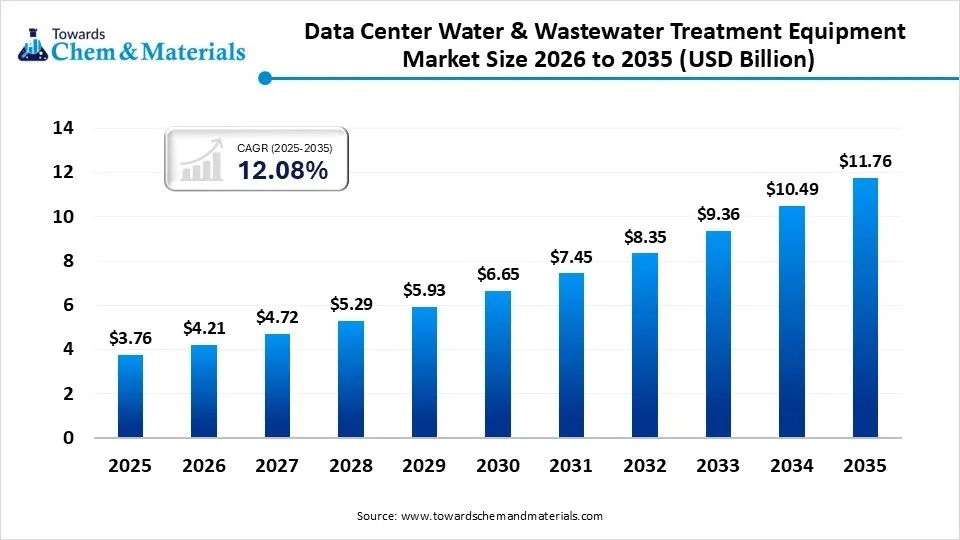 The data center water and wastewater treatment equipment is highly significant in maintaining server operations and curbing fresh water consumption, and also in preventing equipment degradation, which is useful in meeting computing demands. Water treatment is critical for data centers due to massive consumption of evaporative cooling and cooling towers; a standard facility can use up to 5 million gallons daily, and India’s data centers alone are projected to consume 358 billion liters annually by 2030. Sustainability and ESG targets for advanced treatment systems like zero liquid discharge, which enable the data centers to recycle and reuse cooling water.
- For instance, Inwatec GmbH and Co. KG has rolled out its tailored water treatment and recycling solutions for data centers, anchored by the launch of the INWATROL expert digital monitoring and automation infrastructure. The system specifically optimizes evaporative cooling configurations, which traditionally consume massive volumes of water to dissipate waste heat.(Source: www.inwatec.com)
Global Investment Flow for Data Center Water and Wastewater Treatment Equipment Market 2026
The growing investment in the market is driven by AI and severe water scarcity, and operators are investing in zero liquid discharge systems and advanced water reuse technologies to lower water usage effectiveness by government and major leading companies, booming the market growth.
- The U.S. Environmental Protection Agency (EPA) launched the PFAS OUT initiative on April 14, 2026, to distribute billions of dollars in grants and technical assistance for PFAS treatment infrastructure, which provides crucial federal funding backing for data center operators seeking to build out compliant liquid-cooling treatment configurations.
(Source: www.jdsupra.com)
Data Center Water and Wastewater Treatment Equipment Market Growth Trends:
- The AI-driven cooling demand, as high-density AI chips generate massive heat, with the adoption of advanced closed-loop cooling systems and demand for precise water treatment, is a growing trend in the market.
- The zero liquid discharge and reuse option for regional stress and municipal initiatives, and data centers adoption for recycling wastewater to minimize the environmental footprint with strict municipal regulations, drives the growth.
- The use of membrane separation techniques for separation and filtration of the wastewater and treatment of it, enabling the data centers to achieve 99.9% contaminant removal and extensive water recycling.
Data Center Water and Wastewater Treatment Equipment: Revolutionizing Operations
The AI integration in water and wastewater treatment has transformed the market. The exponential growth of high-density AI workloads is forcing a massive shift in data center cooling infrastructure. The initiatives to conserve resources by the operators are transitioning from once-through cooling towers to closed-loop liquid cooling and on-site wastewater recycling systems. Artificial Intelligence is being integrated directly into treatment equipment to optimize these systems, driving four key technological shifts: dynamic artificial intelligence-optimized chemical dosing, predictive maintenance for treatment equipment, automated membrane fouling and scaling control, closed-loop water circularity, and digital twin.
Report Scope
| Report Attributes | Details |
| Market Size in 2026 | USD 4.21 Billion |
| Expected Size in 2035 | USD 11.76 Billion |
| Growth Rate | CAGR of 12.08% |
| Base Year of Estimation | 2025 |
| Forecast Period | 2025-2035 |
| Dominant Region | North America |
| Segment Covered | By Data Center Type, By Equipment Type, By Treatment Stage, By Region |
| Key Companies Profiled | Veolia (France), Ecolab Inc. (US), Xylem (US), Solenis (US), Aquatech International LLC (US), DuPont Water Solutions (US), Kurita Water Industries (Japan), Pentair (UK), Gradiant (US), Ovivo (Canada), Evoqua Water Technologies, SUEZ (France), Danaher Corporation (US), Culligan International Company (US), Pall Corporation (US), Koch Membrane Systems (US), H2O Innovation (Canada), Lenntech B.V. (Netherlands), Thermax Limited (India), Calgon Carbon Corporation (US) |
Supply Chain Analysis of Data Center Water and Wastewater Treatment Equipment Market:
Water & Wastewater Treatment Equipment Manufacturing
- Data centre water and wastewater treatment equipment is manufactured to provide water purification, cooling water treatment, wastewater recycling, filtration, reverse osmosis, and deionization systems that improve cooling efficiency and support sustainable data centre operations.
- Veolia: Veolia provides advanced water and wastewater treatment systems for data centres, including filtration, reverse osmosis, water recycling, and cooling water management solutions that help reduce water consumption and improve operational sustainability.
- Key Players: Veolia, Xylem, Ecolab, SUEZ.
Quality Testing & Certification
- Data centre water and wastewater treatment equipment must comply with standards for water quality, environmental protection, equipment safety, energy efficiency, and wastewater discharge before deployment.
- Ecolab: Ecolab delivers water treatment chemicals, digital monitoring platforms, and cooling water management solutions that help data centres meet regulatory requirements while improving water efficiency and equipment reliability.
- Key Authorities & Standards: International Organization for Standardization, NSF International, U.S. Environmental Protection Agency, ASHRAE.
Distribution to End-Use Industries
- Data centre water and wastewater treatment equipment is supplied to hyperscale data centres, colocation facilities, cloud service providers, enterprise data centres, and telecommunication infrastructure operators to optimize cooling performance and water resource management.
- Xylem: Xylem supplies intelligent water treatment equipment, pumping systems, filtration technologies, and digital water management solutions that enable data centres to improve cooling efficiency, conserve water, and enhance operational resilience.
- Key Suppliers: Veolia, Xylem, SUEZ.
What are the Key Benefits and Uses of Data Center Water and Wastewater Treatment Equipment Products?
The data center water and wastewater treatment equipment is used for AI cooling demand. The equipment includes reverse osmosis, filtration, and chemical dosing, which help in increasing the cooling efficiency, achieving regulatory compliance, and preventing equipment degradation.
The treatment for cooling towers and recycling wastewater, reduction in freshwater consumption, and support of local environmental sustainability are the major benefits offered. The equipment comprises chemical, biological, and chemical systems which are designed to manage the condition of cooling water, manage incoming supply, and recycle blowdown.
The Key Benefits of Data Center Water and Wastewater Treatment Equipment are:
- Prevents Equipment Failure: Water that has high minerals and dissolved oxygen damages the equipment, server infrastructure, cooling towers, and piping, so the treatment equipment helps in the prevention of scale and corrosion, minimizing costly hardware downtime, which is a key benefit in preventing failure.
- Improves Energy Efficiency: The cleaning and treatment of water, like cooling towers and direct-to-chip liquid cooling, require high energy and heat transfer, which operate at high peak efficiency, which in turn improves energy consumption and efficiency, supporting growth.
- Achieves Sustainability Goals: The recycling of used water on-site significantly reduces freshwater consumption, and operators are utilizing the treatment to achieve sustainability goals, reducing the impact on water consumption.
- Ensures Regulatory Compliance: The advanced wastewater treatment is operating in alignment with the regulatory standards and also with the environmental regulations, supporting the clean water mandates and local pretreatment standards, which is a major benefit to the industry.
The Uses of Data Center Water and Wastewater Treatment Equipment Are:
- Cooling Tower Water Treatment: This treatment is used to process and manage corrosion due to high temperature and dissolved oxygen, which degrade the metals. Evaporative cooling systems consume a large amount of water, which is recycled and reused through filtration and chemical conditioning for continuous water cleaning.
- Wastewater Recycling & Reuse: Through reverse osmosis and biological treatment, water is cleaned and reused. This treatment helps in recycling it internally and is redirected to industries directly to reuse the recycled water.
- Influent Water Conditioning: The raw and unused water that is pretreated is used before it is used by or entered into a specific industry, commercial, or municipal system. By this conditioning treatment, the water is neutralized with pH management, removal of any adjuvants and other suspended solids, which is a major use.
- Zero Liquid Discharge (ZLD): To ensure that no waste or water is left or leaves the data center, this technique is used, where advanced technology is used to separate and evaporate, eliminating wastewater without any waste.
Data Center Water and Wastewater Treatment Equipment Market Regulatory Landscape
| Country / Region | Regulatory Body | Key Regulations | Focus Areas | Notable Notes |
| United States | Environmental Protection Agency; Occupational Safety and Health Administration | Clean Water Act, Safe Drinking Water Act | Industrial water treatment, wastewater discharge, water reuse | The U.S. promotes advanced water and wastewater treatment equipment for data centers to improve water efficiency and regulatory compliance. |
| European Union | European Commission; European Chemicals Agency | Water Framework Directive; Urban Wastewater Treatment Directive | Water conservation, wastewater treatment, sustainability | Europe emphasizes water-efficient cooling systems and wastewater recycling in data center operations. |
| China | Ministry of Ecology and Environment, Ministry of Water Resources | Water Pollution Prevention and Control Law; Water Resources Management Regulations | Industrial water management, water reuse | China is expanding the deployment of advanced water treatment systems to support rapidly growing data center infrastructure. |
| India | Central Pollution Control Board; Ministry of Jal Shakti | Water (Prevention and Control of Pollution) Act; Environmental Protection Act | Water recycling, industrial wastewater treatment | India is increasing investments in water treatment equipment for data centers to address water scarcity and sustainability goals. |
| Japan | Ministry of the Environment; Ministry of Economy, Trade and Industry | Water Pollution Control Act; Industrial Water Standards | Water efficiency, advanced treatment technologies | Japan focuses on high-efficiency water treatment systems to reduce water consumption in data center cooling operations. |
| Singapore | Public Utilities Board; National Environment Agency | Sewerage and Drainage Act; Water Efficiency Management Plan | Water reuse, sustainable cooling infrastructure | Singapore promotes advanced water recycling and efficient water management solutions for data centers to support sustainable digital infrastructure. |
What are the Key Product Types of Data Center Water and Wastewater Treatment Equipment Products?
The data center water and wastewater treatment equipment is used to preserve water recycling and reuse of already used water, which is important for cooling the high-energy equipment in the data centers. This recycled water is directly transferred to the centers through specific techniques where there is no wastage of water, like ZLD. There are primarily 6 product types used for maintaining the cooling system, discharging the wastewater, and purifying the untreated water.
Key Products Include:
- Filtration Systems: They are used to filter out impurities, like suspended solid particles, or remove biological debris and particulate matter, which can lead to contamination and also prevent harm to the system. Filters used in the operations are screen filters, high-efficiency sand filters, and reverse osmosis pre-filters.
- Chemical Treatment & Conditioning Systems: Chemical treatment and conditioning help in preventing the system from corrosion, biological fouling, and scaling in cooling towers through automated systems for specialized applications.
- Membrane and High-Purity Water Systems: Advanced technologies for ultrafiltration and continuous electrode ionization, which help in achieving the ultrapure water that is needed for the specific function and application.
- Disinfection Systems: systems designed to prevent bacterial or any impurity growth by sanitizing water under UV radiation, ozone generators, and on-site hypochlorisation, which prevents water infection, managing the system.
- Wastewater Treatment and Recycling Systems: to manage the usage of water, the already used water is treated, filtered, and recycled for use on-site. This is done by evaporators, crystallizers, and ZLD.
- Monitoring and Automation Equipment: The use and need of automated systems like real-time controllers and sensors to manage any error, to optimize any kind of waste, and to measure pH, chemical levels, turbidity, and conductivity to use the water efficiently is a major factor.
Market Dynamics
Drivers
Water Scarcity and Sustainability Targets
The data center water and wastewater treatment equipment market growth is driven by many factors; the major drivers are the rapid expansion of the facilities, which demand AI and the cloud, compounding which increases the thermal load and demanding water for cooling through advanced technology and automation. Water scarcity and sustainability targets towards water positivity and increased investment in reclamation equipment stress the region to reuse the water and also prioritize closed-loop systems. The stricter regulatory pressure and smart water management integration in the system are also the major growth drivers of the market.
Challenges
Strict Discharge and Environmental Regulations
The growth of the market is hindered by many challenges; first, the high capital investment and expenditure for infrastructure development and installation of new and advanced separation and filtration systems for recycling of water, which hinders the growth. The other major growth restraints in the market are regional water scarcity in various regions, strict environmental regulations and water discharge systems, complex retrofitting, and older facilities, which are a challenge in the growth of the market.
Opportunities
AI and Liquid Cooling Integration
The massive growth in the market is driven by the massive expansion of AI-driven cloud infrastructure and sustainability initiatives to reuse the wastewater, which fulfils the demand for water in the data center through closed-loop cooling of the equipment. The other major growth opportunities are AI and liquid cooling integration, ZLD systems, smart water management, and expansion of the market in different regions, which support the growth and expansion of the market.
Segmental Insights
Data Center Type Insights
The hyperscale segment dominated the market with a 52% share in 2025. It is expected to grow at a 12.30% CAGR over the forecast period, driven by the high-scale consumption of water daily for cooling of the equipment; advanced reverse osmosis, biocide-free water treatment, and electrodialysis are installed by the operators to balance out the heat that is produced by the high load. The installed equipment is used to enable the operations of closed-loop recycling and zero liquid discharge.
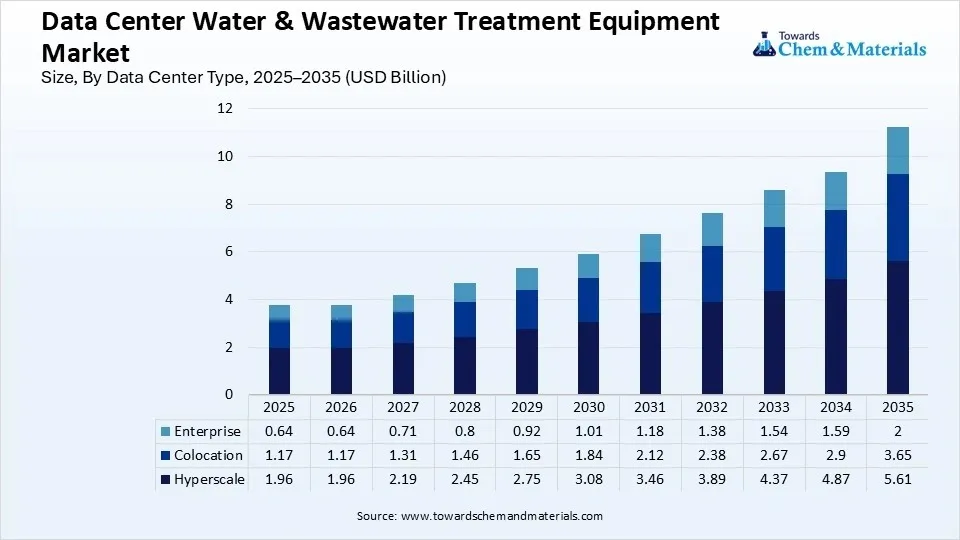 The colocation segment held 31% market share in 2025 and is expected to have the fastest growth with a CAGR of 13.10% in the forecast period, helping create sustainable and symbiotic infrastructure that helps create cooling infrastructure for heated facilities. The key advantages are energy reduction, water conservation, and space optimization, which boost growth. AI-enabled monitoring in the data center helps monitor the liquid cooling reliability.
- For instance, Tomorrow Waters Co-Flow process minimizes the environmental footprint of data centers by co-locating them directly with municipal wastewater treatment plants. This physical integration establishes an industrial circular economy, where the thermal waste from the data center and the processed output of the sanitation plant optimize each others operations.(Source: www.tomorrowwater.com)
Data Center Water & Wastewater Treatment Equipment Market Share, By Data Center Type, 2025(%)
| By Data Center Type | Market Share (%) |
| Hyperscale | 52.00% |
| Colocation | 31% |
| Enterprise | 17% |
Equipment Type Insights
The chemical treatment and conditioning systems segment dominated the market with a 29% share in 2025 and is expected to grow at a 10.60% CAGR over the forecast period. This is done to manage the water quality and water discharge for cooling towers and closed-loop cooling through conditioning and chemical treatment. The heat transfer and steam generation through the data center are major factor that requires a conditioning system that will cool down the towers efficiently, boosting growth.
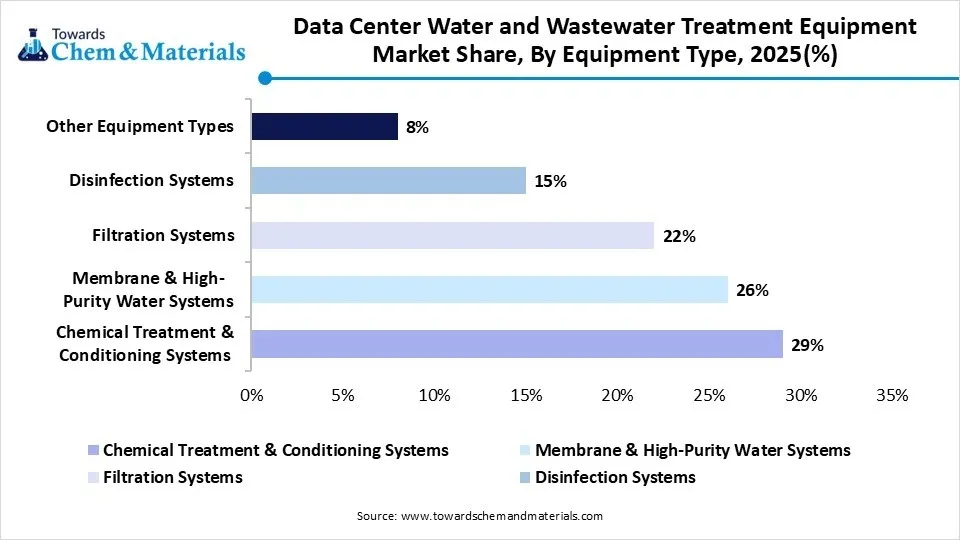
The membrane and high-purity water systems segment held 26% market share in 2025 and is expected to have the fastest growth with a CAGR of 13.60% in the forecast period. They are critical in data centers for treating wastewater by minimizing freshwater withdrawal and also implementing closed-loop cooling, aligning with the regulatory and environmental compliance and discharge limits. The membrane systems used are microfiltration, ultrafiltration, reverse osmosis, and nanofiltration.
Data Center Water & Wastewater Treatment Equipment Market Share, By Equipment Type, 2025(%)
| By Equipment Type | Market Share (%) |
| Chemical Treatment & Conditioning Systems | 29% |
| Membrane & High-Purity Water Systems | 26% |
| Filtration Systems | 22% |
| Disinfection Systems | 15% |
| Other Equipment Types | 8% |
Treatment Stage Insights
The cooling water treatment segment dominated the market with a 38% share in 2025 and is expected to grow at a 10.90% CAGR over the forecast period is a crucial part of the data center infrastructure that helps minimize heat transfer, corrosion, and biological fouling through cooling towers. The water pretreatment equipment, like filtration systems and membrane systems, helps manage heat efficiency and AI workload through advanced pretreatment and chemical dosing.
The water reuse and recovery segment held 19% market share in 2025 and is expected to have the fastest growth with a CAGR of 11.80% in the forecast period. Through this system and treatment, the water is used on-site, creating less waste and loss of water through processes like reverse osmosis and zero liquid discharge units, which recycle the wastewater. This also helps with environmental and operational benefits like cost reduction, industrial symbiosis, and real-time monitoring.
Data Center Water & Wastewater Treatment Equipment Market Share, By Treatment Stage, 2025(%)
| By Treatment Stage | Market Share (%) |
| Pretreatment & Purification | 27% |
| Cooling Water Treatment | 38.00% |
| Wastewater Treatment | 19% |
| Water Reuse & Recovery | 16% |
Regional Analysis
How did North America dominate the Data Center Water and Wastewater Treatment Equipment Market in 2025?
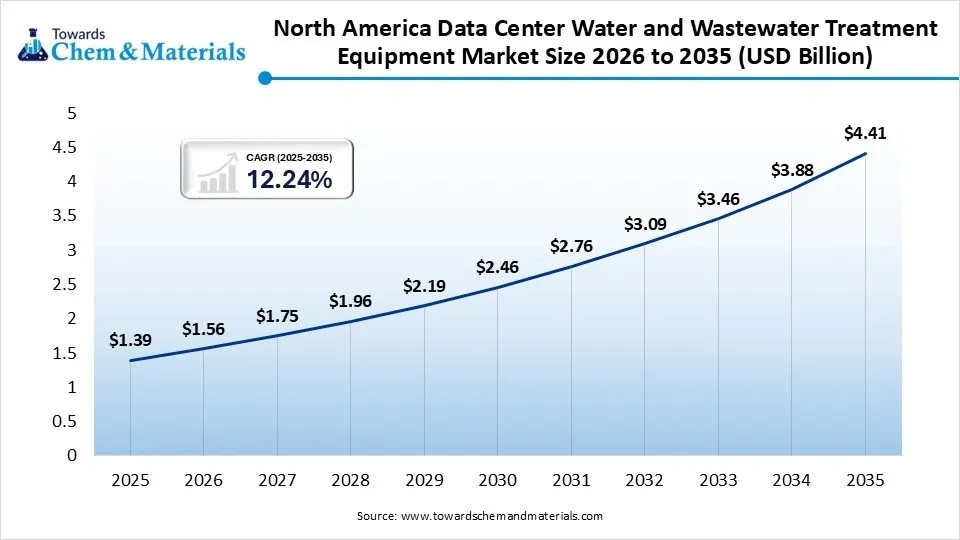
The North America data center water and wastewater treatment equipment market size was estimated at USD 1.39 billion in 2025 and is projected to reach USD 4.41 billion by 2035, growing at a CAGR of 12.24% from 2026 to 2035. North America dominated the data center water and wastewater treatment equipment market with a share of 37% in 2025 and is expected to grow at a CAGR of 10.80% over the forecast period, driven by the expansion of data facility like hyperscale facilities and hyper-scale cloud and AU investments, which drive growth, the expanding AI-driven cooling demand and investments, through massive infrastructure development by major tech giants like AWS, google, and Microsoft. The regions advanced technology adoption, especially in regions with water stresses like California and Texas, supports continuous recycling and reuse of cooling water.
- For Instance, in December 2025, KMX Technologies entered the data center water treatment market with the launch of an advanced water reuse application utilizing its proprietary Vacuum Membrane Distillation (VMD) platform. The system specifically targets liquid-cooled and high-density AI data centers to convert highly concentrated cooling tower blowdown into a reusable water source.(Source: kmxtechnologies.com)
United States Chemical Treatment and Conditioning System
The market is experiencing growth driven by the specialized filter installation in the facilities, which utilizes key equipment and systems for efficient management, boosting the growth of the market. the waste water recovery and ZLD advancement for achieving closed-loop recycling and eliminating wastewater discharge. The regional hubs and data centers that reuse and recycle water for local authorities boost the growth. Firms like Veolia and Ecolab are investing in hyperscalers like AWS, boosting the growth.
- For instance, in July 2026, DuPont officially launched WAVE PRO, an advanced online water treatment modeling platform designed to help water professionals architect highly precise multi-technology treatment infrastructure. The tool integrates multiple filtration and chemical separation modeling engines into a single, unified software workspace.(Source: www.dupont.com)
Rapid Growth Through AI in Canada
The market is experiencing rapid growth driven by the AI boom and strict regulation, aligning with the growing environmental challenges. Strict local municipal governance through wastewater discharge forces operators to adopt on-site treatment of water, increasing demand. Firms like Veolia Water Technologies provide patented dispersant technology and stress-tolerant polymers designed to maximize heat transfer and protect mission-critical equipment in high-density critical cooling racks.
- For instance, Canadian companies like PANAQUA design rugged, prefabricated water and wastewater plants optimized for remote sites and rapid facility deployment. Built specifically to withstand rugged, extreme site environments, these prefabricated modules allow facilities to combat water scarcity by recycling complex wastewater directly on-site.(Source: panaqua.ca)
Asia Pacific Data Center Water and Wastewater Treatment Equipment Market Growth Factor
The Asia Pacific data center water and wastewater treatment equipment market size was estimated at USD 1.05 billion in 2025 and is projected to reach USD 3.35 billion by 2035, growing at a CAGR of 12.30% from 2026 to 2035.Asia Pacific held 28% of the data center water and wastewater treatment equipment market share in 2025 and is expected to experience the fastest growth with a CAGR of 14.20% in the forecast period. The growth is driven by the growing implementation of chemical conditioning, filtration, membrane filtration, and disinfection systems, as it is very important in managing the cooling loops, pretreatment, and wastewater recycling, as there is a presence of facilities like colocation and hyperscale which rely on this system and advanced cooling meeting the strict regulatory mandates, which boosts the growth of the market in the region.
- For instance, Ecolab’s 3D TRASAR™ Technology has transformed data center water treatment by scaling from an industrial cooling tower management platform into a specialized, site-to-chip automation engine. Driven by the Nalco Water division, the hardware platform utilizes automated chemical dosing, smart sensors, and cloud analytics to maximize water reuse while protecting computing white spaces.(Source: www.ecolab.com)
Indias Key Technological Innovations and Equipment
The growing and expanding data center in India is driven by the adoption of advanced water and wastewater treatment to tackle the water scarcity problem. The key technologies used in the region are cooling tower water treatment, ultra-pure water systems, wastewater recovery, and STP and greywater recycling, which boost the growth of the market. Data centers are transitioning toward smart water management in localized tech hubs like Hyderabad, Pune, and Chennai to comply with stringent local environmental regulations. Major operators like STT GDC are successfully using advanced water management systems, flow sensors, and intelligent monitoring in collaboration with local providers and innovators like BIOSYNK and Navbharat Water.
China Desalination and Cutting-Edge Cooling System
China’s data center water treatment market is evolving to meet strict local water usage effectiveness (WUE) mandates. Operators utilize reverse osmosis, biological sewage treatment, and ultrafiltration. To offset rising freshwater costs, facilities are turning to treated wastewater and seawater desalination, alongside cutting-edge cooling systems. Local and national Chinese authorities enforce strict water usage limits, forcing operators to pivot to closed-loop, dry-cooling, or zero-liquid-discharge (ZLD) systems. A major local player is heavily involved in municipal and industrial wastewater reclamation projects.
Europe Data Center Water and Wastewater Treatment Equipment Market Growth Factor
The Europe data center water and wastewater treatment equipment market size was estimated at USD 0.90 billion in 2025 and is projected to reach USD 2.88 billion by 2035, growing at a CAGR of 12.33% from 2026 to 2035.Europe held a market share of 24% in 2025. European data centers face strict EU reporting mandates under the Corporate Sustainability Reporting Directive. Operators deploy equipment like direct nanofiltration, reverse osmosis, and chemical-free bio-conditioning systems to meet the regions stringent Water Usage Effectiveness limits and zero-waste-to-landfill goals. The EU Water Framework Directive and the Water Resilience Strategy aim to build a water-smart economy. These policies demand reporting on fresh water consumption and prohibit hazardous wastewater discharge.
United Kingdom Massive Development Initiative
United Kingdom data center water and wastewater treatment market is driven by the growing need for sustainable and high-efficiency cooling in the hyperscale and AI facilities, which increases the demand for the market. The UK has massive AI computational load solutions like advanced cooling systems, which help facilities in the country to reduce potable water use, meeting the stringent environmental regulations. Utilities like Anglian Water are pushing for "best practice" models like closed-loop cooling and utilizing treated sewage effluent for facility cooling to preserve local water resources.
Italy Surge in Hyperscale Data Centers
The Italian data center water and wastewater treatment equipment market is experiencing exponential growth, driven by government policies and the presence of hyperscale data centers, especially in Milan and Rome. The key operators in the country are focusing on closed-loop cooling, water reclamation, and zero-liquid discharge (ZLD) to mitigate reliance on municipal water. The major players, like Veolia and Ecolab, are investing and are dominant players in the Italian competitive landscape, which plays a major role in the market expansion.
Latin America Data Center Water and Wastewater Treatment Equipment Market Growth Factor
The Latin America data center water and wastewater treatment equipment market size was estimated at USD 0.23 billion in 2025 and is projected to reach USD 0.76 billion by 2035, growing at a CAGR of 12.70% from 2026 to 2035.Latin America held a market share of 6% in 2025 and is a rapidly growing sector driven by AI expansion and regional droughts. Essential technologies include reverse osmosis, filtration, and AI-enabled cooling systems, with Brazil acting as the dominant market and hubs like Querétaro, Mexico, leading in water reuse. For data centers, climate conditions in tropical and arid zones make evaporative cooling highly efficient but water-intensive. Because of strict regulations and community pushback, facilities now heavily invest in closed-loop systems, water recycling, and zero liquid discharge (ZLD). Centralized heavily around Querétaro. Operations require robust water conditioning systems and closed-loop setups to mitigate drought risks.
Brazil Key Suppliers Integration
Brazil’s data center water treatment market is expanding rapidly, driven by hyperscale and AI facility growth in São Paulo, Rio de Janeiro, and Fortaleza. Facilities deploy advanced reverse osmosis, mobile water treatment, and closed-loop or zero-water adiabatic cooling to mitigate high-consumption risks and local drought conditions. Global leaders like Veolia maintain massive mobile water treatment fleets and specialized membrane production sites in Cajamar and Sorocaba (São Paulo). Other prominent equipment vendors include Siemens Brasil and Endress+Hauser Brasil.
Argentinas Environmental Anchoring
Data center water treatment in Argentina relies on closed-loop cooling, reverse osmosis, and chemical dosing to manage sensitive IT environments. Local players and global engineering firms supply systems to counter high raw water hardness and meet regulatory standards in the Buenos Aires and Córdoba regions. Argentinas data center market, anchored by operators like EdgeConneX and Cirion, is shifting toward closed-loop and liquid/immersion cooling to reduce the water footprint, given the lack of specific, national data center regulations and ongoing climate concerns.
Middle East and Africa Data Center Water and Wastewater Treatment Equipment Market Growth Factor
The Middle East and Africa data center water and wastewater treatment equipment market size was estimated at USD 0.19 billion in 2025 and is projected to reach USD 0.65 billion by 2035, growing at a CAGR of 13.09% from 2026 to 2035.The Middle East and Africa accounted for 5% of the market in 2025. To combat extreme desert heat and severe water scarcity, operators are investing heavily in reverse osmosis (RO) systems, ultraviolet (UV) disinfection, nanofiltration, and closed-loop cooling/water recycling. The rapid proliferation of hyperscale facilities and mega-campuses, particularly in the UAE and Saudi Arabia, is driving demand for highly resilient water and wastewater equipment. Dominated by mega-projects. Hyperscalers here rely on partnerships with water management leaders like Veolia Middle East to integrate on-site reclaimed water systems and sustainable cooling infrastructure.
 Saudi Arabia Critical Infrastructure and Equipment
Saudi data centers require extensive water and wastewater equipment such as Reverse Osmosis (RO) systems, filtration skids, and chemical dosing systems to operate closed-loop cooling and support 96% process water recycling. Facilities partner with engineering giants like Veolia and local providers like REDA Water to build highly efficient, reuse-focused utility systems. Companies like Amazon and Microsoft have increasingly turned to reclaimed water, on-site treatment plants, and photovoltaic-powered desalination to curb water consumption.
UAE: The Treatment Plants
Data center water and wastewater treatment in the UAE, a market navigating rapid AI infrastructure growth, relies on closed-loop cooling systems, Reverse Osmosis (RO) plants, and Sewage Treatment Plants (STP). Operators like Khazna Data Centers utilize adiabatic cooling to minimize intake. Equipment requires highly customized chemistry and filtration. Because the UAE relies primarily on desalinated water, facilities use high-TDS RO systems and demineralization (DM) units to ensure the fill water meets strict quality specs for critical server components.
Recent Developments
- In June 2026, Vertiv officially launched Vertiv, PurgeRite, and NearZero, a cutting-edge fluid management service specifically engineered to reduce water waste and environmental impact during the commissioning of closed-loop hydronic cooling systems in data centers. The launch directly addresses the water scarcity and environmental challenges brought on by the massive influx of AI and high-density computing architecture.(Source: pluang.com)
- In February 2026, The expansion of the AMRUT 2.0 initiative directly accelerates circular water use within Indias industrial landscapes, providing a massive framework for data center operators seeking reliable cooling water sources. States have implemented urban infrastructure projects valued at ₹83,471 crore under the initial AMRUT phase, laying the groundwork for widespread regional utility networks.(Source: www.pib.gov.in)
Competitive Analysis
The key players like Veolia, Ecolab, WesTech, and Gradiant are the major innovators in the market, which are increasingly driving competition between the companies and elaborating collaborations.
- Veolia is actively collaborating with Amazon to implement innovative reclaimed water infrastructure for data center cooling applications. The technical deployment focuses on reducing regional freshwater stress by diverting, upcycling, and optimizing localized municipal effluent. The initiative will debut at an upcoming Amazon data center cluster in Mississippi, serving as the states very first Amazon facility to run its cooling infrastructure entirely on reclaimed wastewater.(Source: www.veoliawatertechnologies.com)
- Gradiant has officially introduced HyperSolved, its comprehensive, end-to-end cooling water solution specifically tailored for high-density artificial intelligence (AI) data centers. Concurrently, the company secured a major contract to construct a full-scale water treatment facility in Didcot, Oxfordshire, UK, for one of the worlds foremost AI and cloud infrastructure providers.(Source: datacenter.news)
Top players in the Data Center Water and Wastewater Treatment Equipment Market and Their Offerings
| Company | Company Type/Position | Major Headquarters | Geographic Presence | Data Centre Water and Wastewater Treatment Equipment Offerings | Key Offering/Strength |
| Veolia Water Technologies | Global water treatment solutions provider | Paris, France | Europe, North America, Asia Pacific, Middle East | Water purification systems, wastewater treatment equipment, reverse osmosis systems, and ultrapure water solutions for data centers | Comprehensive water management solutions with expertise in sustainable water reuse |
| Xylem Inc. | Water technology and equipment manufacturer | Washington, D.C., USA | North America, Europe, Asia Pacific, Middle East | Pumps, filtration systems, biological treatment equipment, wastewater monitoring, and reuse solutions | Advanced smart water technologies with strong digital monitoring capabilities |
| SUEZ Water Technologies and Solutions | Industrial water treatment solutions provider | Trevose, Pennsylvania, USA | North America, Europe, Asia Pacific, Middle East | Ultrapure water systems, wastewater treatment equipment, membrane filtration, water recycling solutions | Integrated water treatment technologies focus on efficiency and sustainability. |
| Evoqua Water Technologies | Industrial water treatment equipment manufacturer | Pittsburgh, Pennsylvania, USA | North America, Europe, Asia Pacific | Deionization systems, filtration equipment, reverse osmosis, wastewater treatment, and reuse systems | High-performance water purification solutions for mission-critical data center operations |
| Pentair plc | Water treatment and filtration equipment provider | London, United Kingdom | North America, Europe, Asia Pacific | Industrial filtration systems, water purification equipment, membrane filtration, water quality management solutions | Broad portfolio of energy-efficient water treatment and filtration technologies |
Other Top Players Are
- Veolia (France)
- Ecolab Inc. (US)
- Xylem (US)
- Solenis (US)
- Aquatech International LLC (US)
- DuPont Water Solutions (US)
- Kurita Water Industries (Japan)
- Pentair (UK)
- Gradiant (US)
- Ovivo (Canada)
- Evoqua Water Technologies
- SUEZ (France)
- Danaher Corporation (US)
- Culligan International Company (US)
- Pall Corporation (US)
- Koch Membrane Systems (US)
- H2O Innovation (Canada)
- Lenntech B.V. (Netherlands)
- Thermax Limited (India)
- Calgon Carbon Corporation (US)
Segments Covered
By Data Center Type
- Hyperscale
- Colocation
- Enterprise
By Equipment Type
- Chemical Treatment and Conditioning Systems
- Scale Inhibitor Dosing Systems
- Corrosion Control Systems
- pH Adjustment Systems
- Biocide Dosing Systems
- Membrane and High-Purity Water Systems
- Reverse Osmosis (RO)
- Ultrafiltration (UF)
- Electrodeionization (EDI)
- Deionization Systems
- Filtration Systems
- Multimedia Filters
- Activated Carbon Filters
- Cartridge Filters
- Sand Filters
- Disinfection Systems
- UV Disinfection
- Ozone Systems
- Chlorination Systems
- Other Equipment Types
- Monitoring and Control Systems
- Sludge Handling Equipment
- Pumping Systems
- Storage Tanks
By Treatment Stage
- Pretreatment and Purification
- Cooling Water Treatment
- Wastewater Treatment
- Water Reuse and Recovery
By Regions
- North America
- Europe
- Asia Pacific
- Middle East & Africa
- Latin America
A Seven-Phase Framework
Our methodology is designed to be universally applicable across commodity chemicals, specialty chemicals, petrochemicals, construction chemicals, coatings, electronic chemicals, industrial gases, agrochemicals, water treatment chemicals, and performance materials. Each phase builds upon the last, creating a layered validation structure that minimizes estimation error and maximizes analytical confidence.
The framework ensures comprehensive market coverage, robust cross-validation, and reliable long-term forecasting — producing market estimates that withstand scrutiny from investors, regulators, and corporate strategy teams.

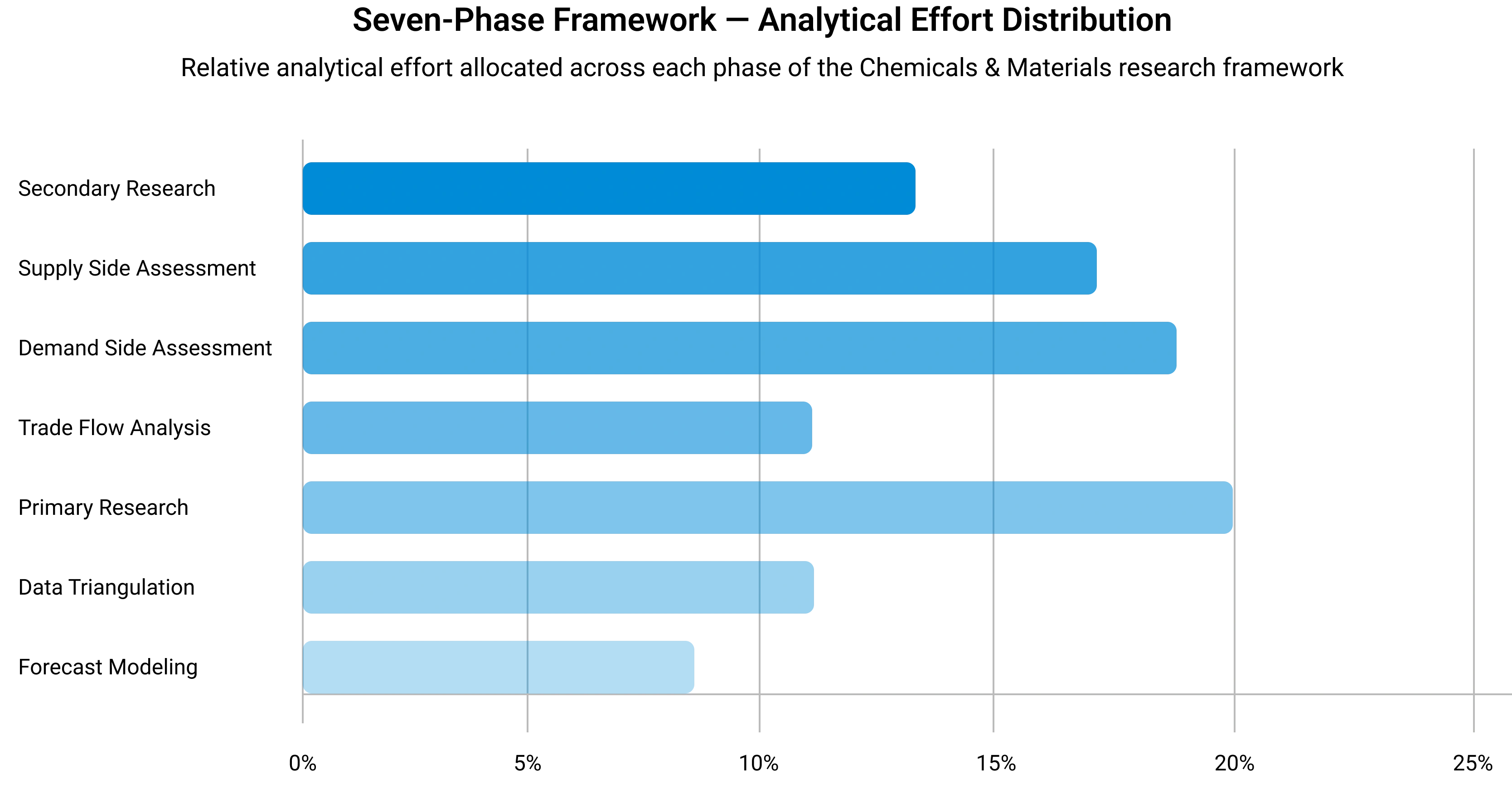
Seven-Phase Framework — Analytical Effort Distribution
Relative analytical effort allocated across each phase of the Chemicals & Materials research framework
Phase 1 - Secondary Research: Establishing the Foundation
Secondary research collects and evaluates publicly available information from authoritative sources, establishing the foundational understanding of market structure, value chain dynamics, competitive landscape, and end-use demand patterns. Every source is evaluated for credibility, recency, geographic relevance, and methodological soundness before inclusion.
Industry Associations
Sources include ACC, CEFIC, ICCA, JCIA, CPCIF, and SOCMA providing production volumes, consumption trends, capacity developments, and sustainability initiatives.
Company Disclosures
Annual reports, investor presentations, earnings transcripts, and regulatory filings reveal product portfolios, manufacturing footprints, capacity expansions, and revenue segmentation.
Government Databases
National statistical offices, customs authorities, environmental agencies, and industrial production databases provide verified statistics on output, trade flows, and regulatory compliance.
Trade Databases
UN Comtrade, ITC, Eurostat, and national customs authorities enable assessment of global product movement, import dependency, and export competitiveness across regions.
Our Secondary Research Sources
- Ministry of Chemicals and Fertilizers
- European Chemicals Agency
- United States Department of Energy
- Ministry of Industry and Information Technology
- Ministry of Economy Trade and Industry
- Ministry of Trade Industry and Energy
- National Institute of Standards and Technology
- Council of Scientific and Industrial Research
- Fraunhofer Society
- National Institute for Materials Science
Phase 2 — Supply-Side Assessment: Mapping Production Capabilities
Production Capacity Analysis
All major manufacturers are assessed for existing installed capacity, planned additions, expansions, new plant announcements, and technology adoption — mapped at global, regional, and country levels.
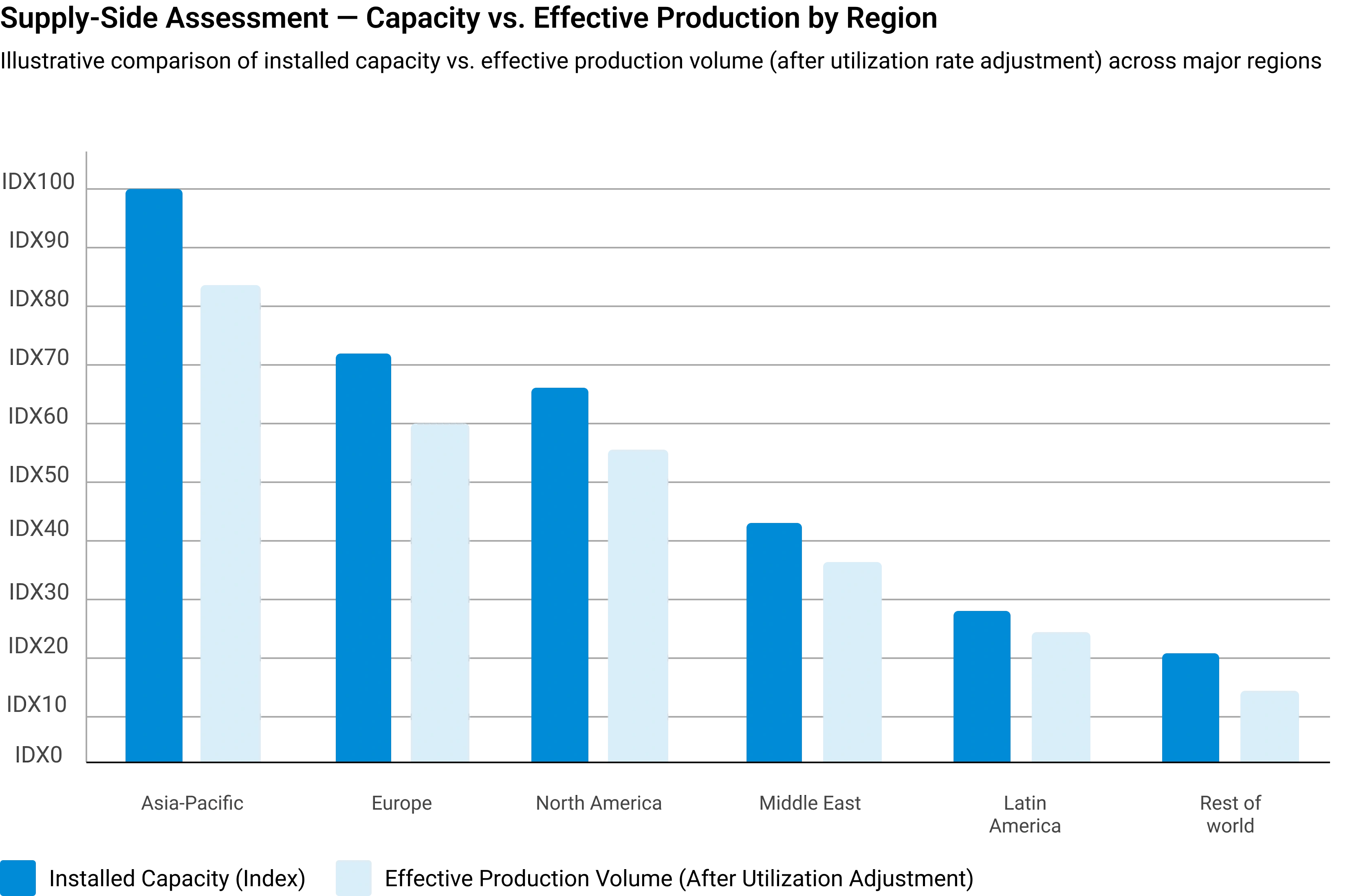
Capacity Utilization Adjustment
Installed capacity is adjusted using utilization rates based on demand conditions, feedstock availability, plant operating rates, maintenance schedules, and regulatory restrictions.
Manufacturer Revenue Analysis
Product-specific revenues, segment-level performance, regional distribution, average selling prices, and margin trends are evaluated to establish market value estimates.
Supply-Side Assessment — Capacity vs. Effective Production by Region
Illustrative comparison of installed capacity vs. effective production volume (after utilization rate adjustment) across major regions
Phase 3 — Demand-Side Assessment: Quantifying Chemical Consumption
Demand-side analysis quantifies chemical consumption across industries, applications, and geographies — identifying where and how chemicals are consumed throughout the value chain with precision.
End-Use Industry Analysis
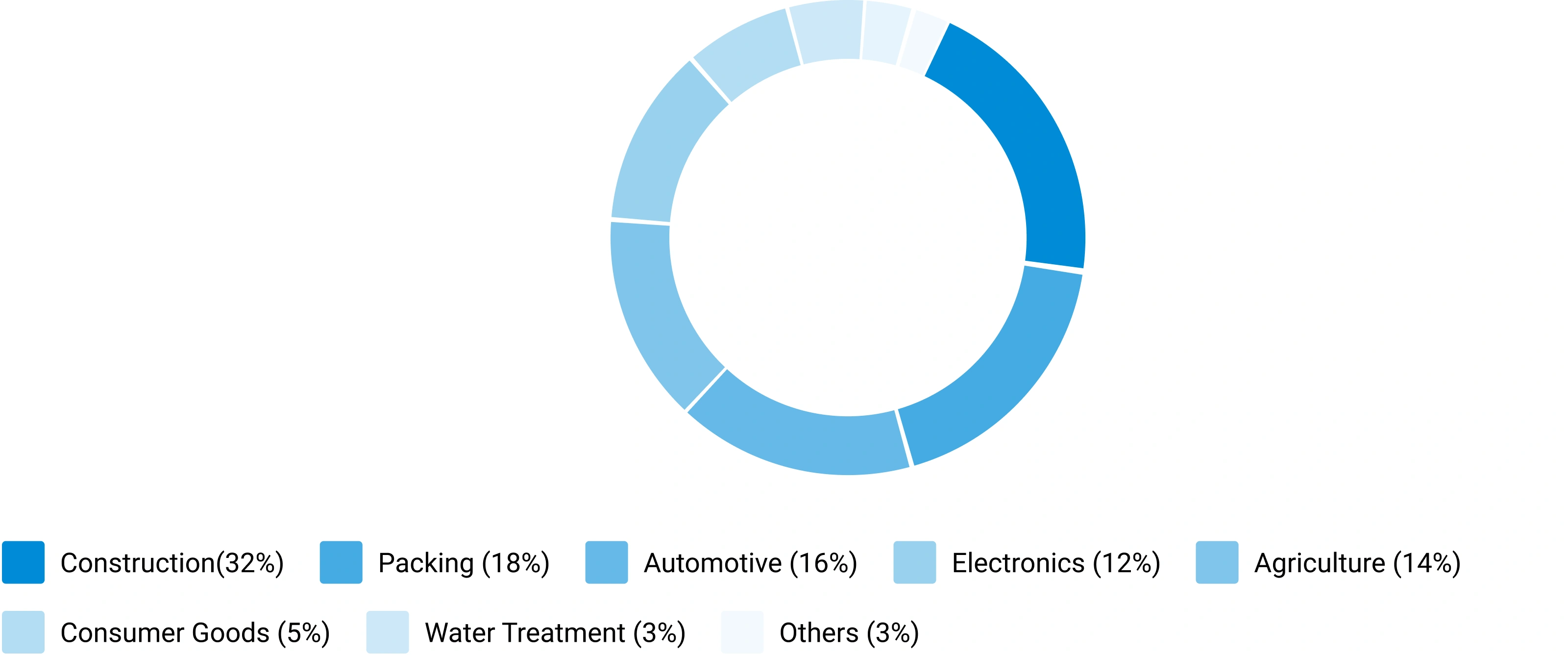
Chemical demand is evaluated across automotive, construction, packaging, electronics, agriculture, healthcare, consumer goods, industrial manufacturing, energy and utilities, and water treatment. Industry output, production trends, and consumption intensity are analyzed to determine demand patterns.
Consumption Modeling
Demand is estimated using measurable indicators: kilograms per vehicle, kilograms per square meter of construction, dosage per cubic meter of water treated, kilograms per hectare of agricultural land, and kilograms per ton of manufactured products. Consumption factors are validated through industry publications and primary interviews.
Application Analysis
The market is segmented by application area to understand product performance requirements, formulation trends, technology adoption, customer preferences, and regulatory requirements improving demand accuracy and segmentation granularity.
Demand-Side Assessment — End-Use Industry Demand Distribution
Illustrative distribution of chemical & materials demand across key end-use industries
Phase 4 - Trade Flow Analysis: Balancing Regional Supply and Demand
Trade flow analysis reconciles regional supply and demand estimates through import and export data, identifying net supply positions, regional dependencies, and market imbalances. It serves as an independent validation layer that tests the consistency of supply-side and demand-side estimates.
Import Analysis
Import data is evaluated to determine volumes, source countries, product dependency, regional supply gaps, and pricing trends — identifying markets that rely heavily on external supply and where domestic production is insufficient to meet demand.
Export Analysis
Export assessments reveal production surplus, export competitiveness, regional manufacturing strength, and global market participation. Export patterns also help validate domestic production estimates and identify net exporting regions.
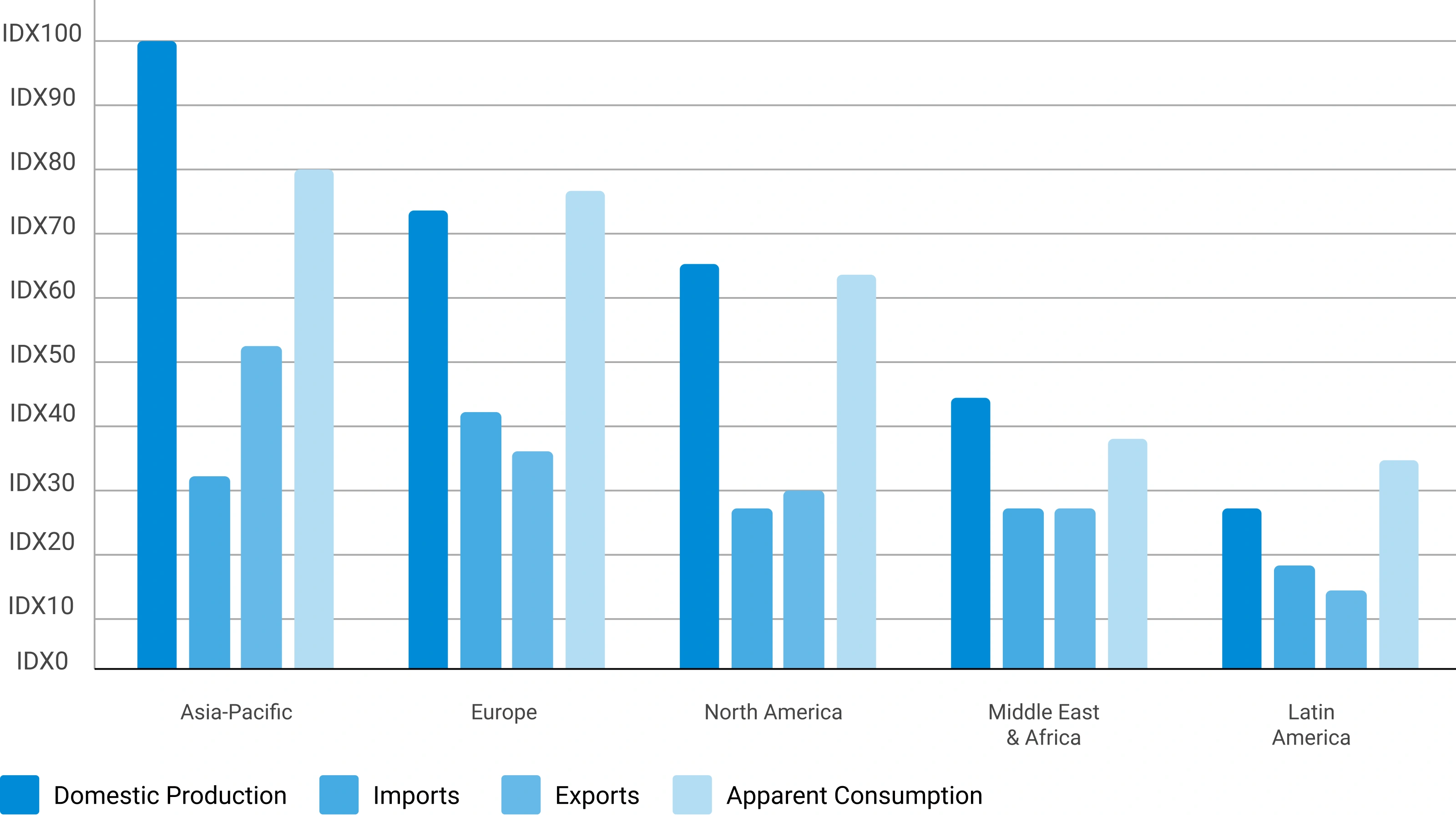
Apparent Consumption Model
Regional consumption is assessed using the standard apparent consumption formula:
Results identify net importing regions, net exporting regions, regional deficits, and surpluses — serving as an independent validation of supply and demand estimates.
Trade Flow Analysis — Net Supply Position by Region
Illustrative apparent consumption vs. domestic production across major regions — positive gap indicates net import dependency
Phase 5 — Primary Research: The Critical Validation Layer
Primary research tests and refines findings from secondary research through direct engagement with industry participants across the supply chain, demand side, and expert community. It captures intelligence that no database or published report can provide — the real-world experience of manufacturers, buyers, and specialists operating in the market.

Supply-Side Interviews
Conversations with chemical manufacturers, raw material suppliers, contract manufacturers, technology providers, and plant operators cover production trends, capacity utilization, pricing developments, technology shifts, and competitive dynamics.

Demand-Side Interviews
Engagement with OEMs, industrial consumers, procurement managers, distributors, formulators, and end-use manufacturers focuses on consumption trends, purchasing behavior, product substitution, demand outlook, and emerging applications.

Industry Expert Consultations
Additional interviews with industry consultants, independent experts, regulatory specialists, technical professionals, and research institutions provide deeper market context and validate key analytical assumptions.
Focus Areas of Primary Research:
Market Size & Forecast Validation
Revenue estimates, volume consumption, growth rates, forecast assumptions, regional demand.Supply Chain & Value Chain Assessment
Raw material sourcing, supply chain challenges, distribution networks, procurement practices.Production & Capacity Analysis
Manufacturing capacity, utilization rates, expansion projects, plant investments.Pricing & Cost Structure Analysis
Product pricing trends, feedstock costs, energy costs, margin pressures, pricing outlook.Competitive Landscape Assessment
Volume and value estimates confirmed to be fully consistent with one another before publicationInterview Volume by Market Scope
| Study Scope | Number of Interviews |
|---|---|
| Niche Market | 20 – 30 |
| Mid-Sized Market | 30 – 50 |
| Global Market | 50 – 80 |
| Highly Fragmented Market | 80 – 120 |
Interview Details:
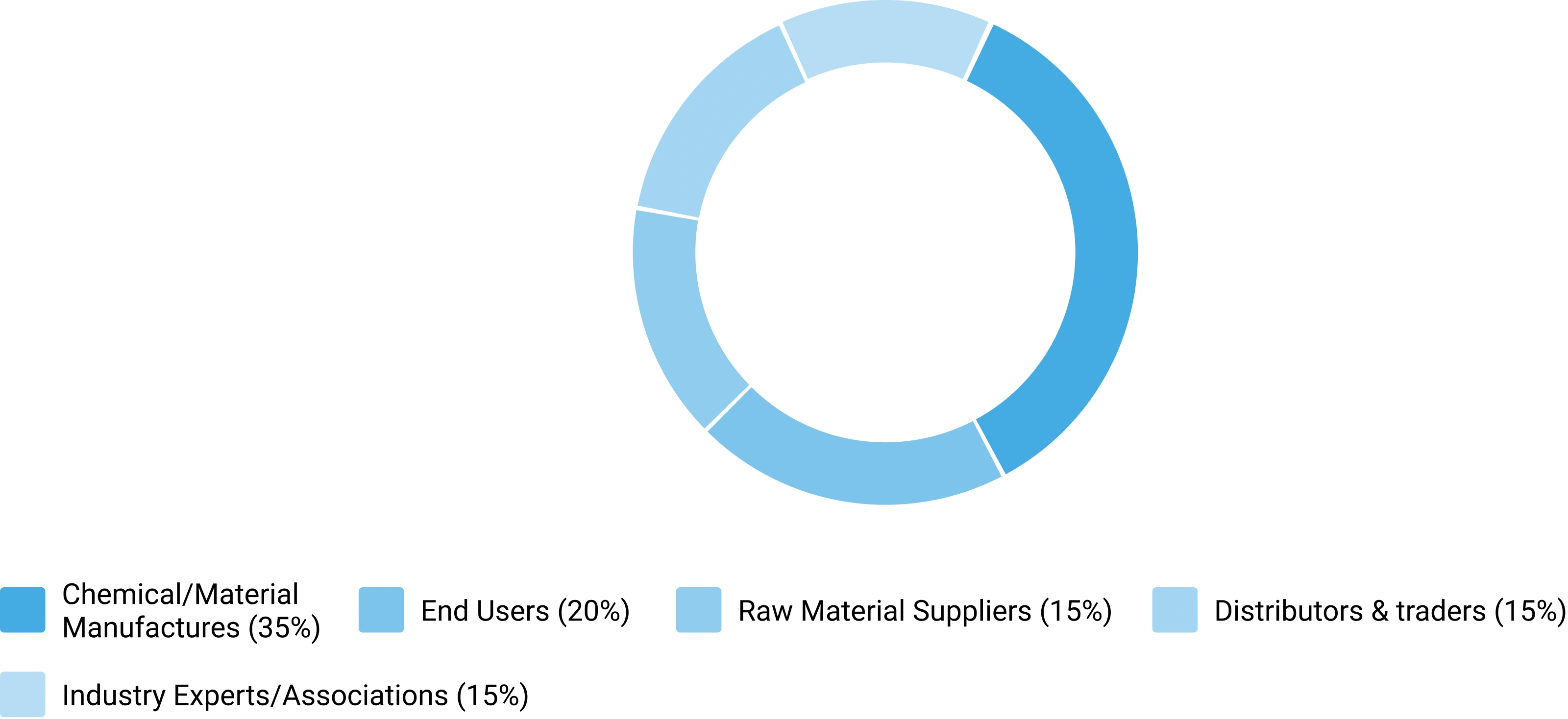
Category : Manufacturers, Suppliers, Distributors, End Users, Experts/Associations
Average Duration : 30–60 Minutes
Interview Mode : Video calls, telephonic interviews, expert consultations
Interview Format : Structured / Semi-Structured questionnaire
Focus Areas of Primary Research:
Market Size & Forecast Validation :
Revenue estimates, volume consumption, growth rates, forecast assumptions, regional demand.
Supply Chain & Value Chain Assessment :
Raw material sourcing, supply chain challenges, distribution networks, procurement practices.
Production & Capacity Analysis :
Manufacturing capacity, utilization rates, expansion projects, plant investments.
Pricing & Cost Structure Analysis :
Product pricing trends, feedstock costs, energy costs, margin pressures, pricing outlook.
Competitive Landscape Assessment :
Market share, competitor positioning, strategic initiatives, partnerships, acquisitions.
Primary Research — Stakeholder Coverage by Category
Distribution of interview respondents across stakeholder categories (% share from PPT data)
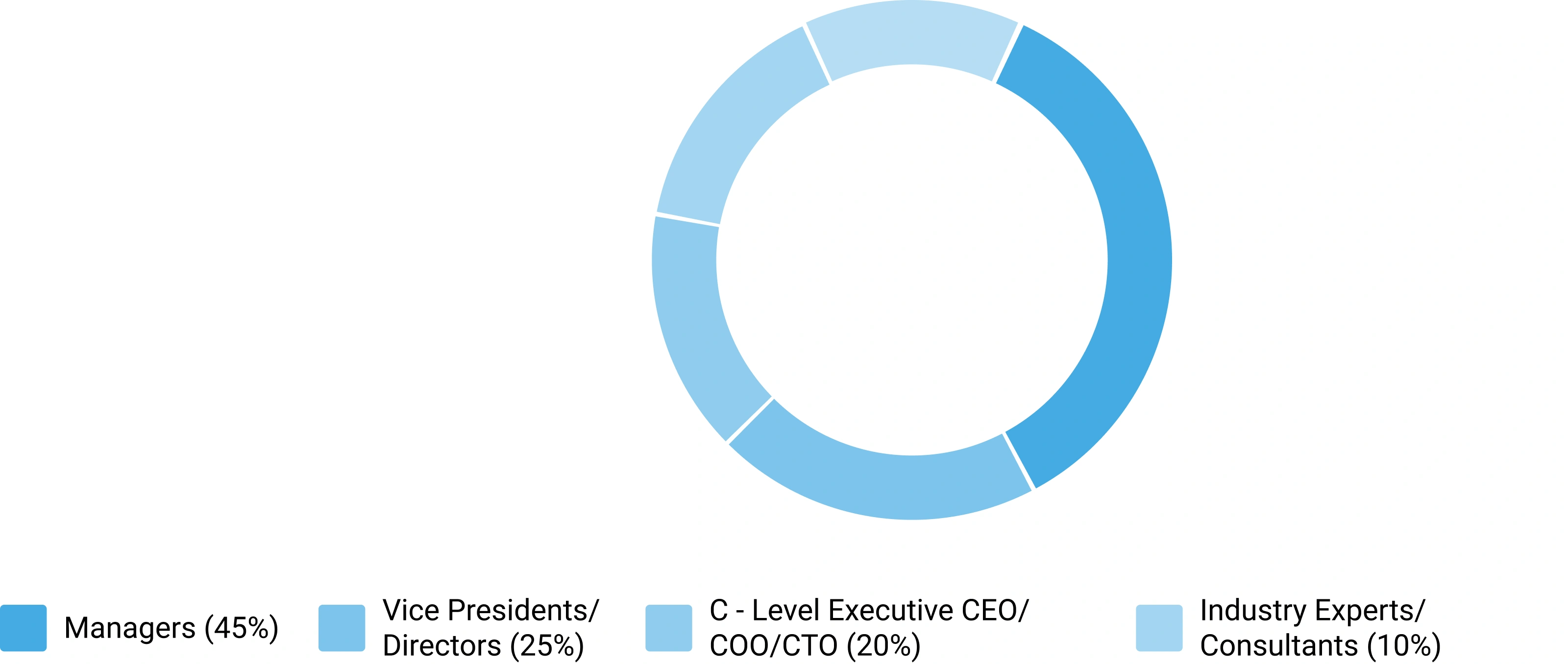
Primary Research — Respondent Designation Profile
Seniority breakdown of interview respondents (% share from PPT data)
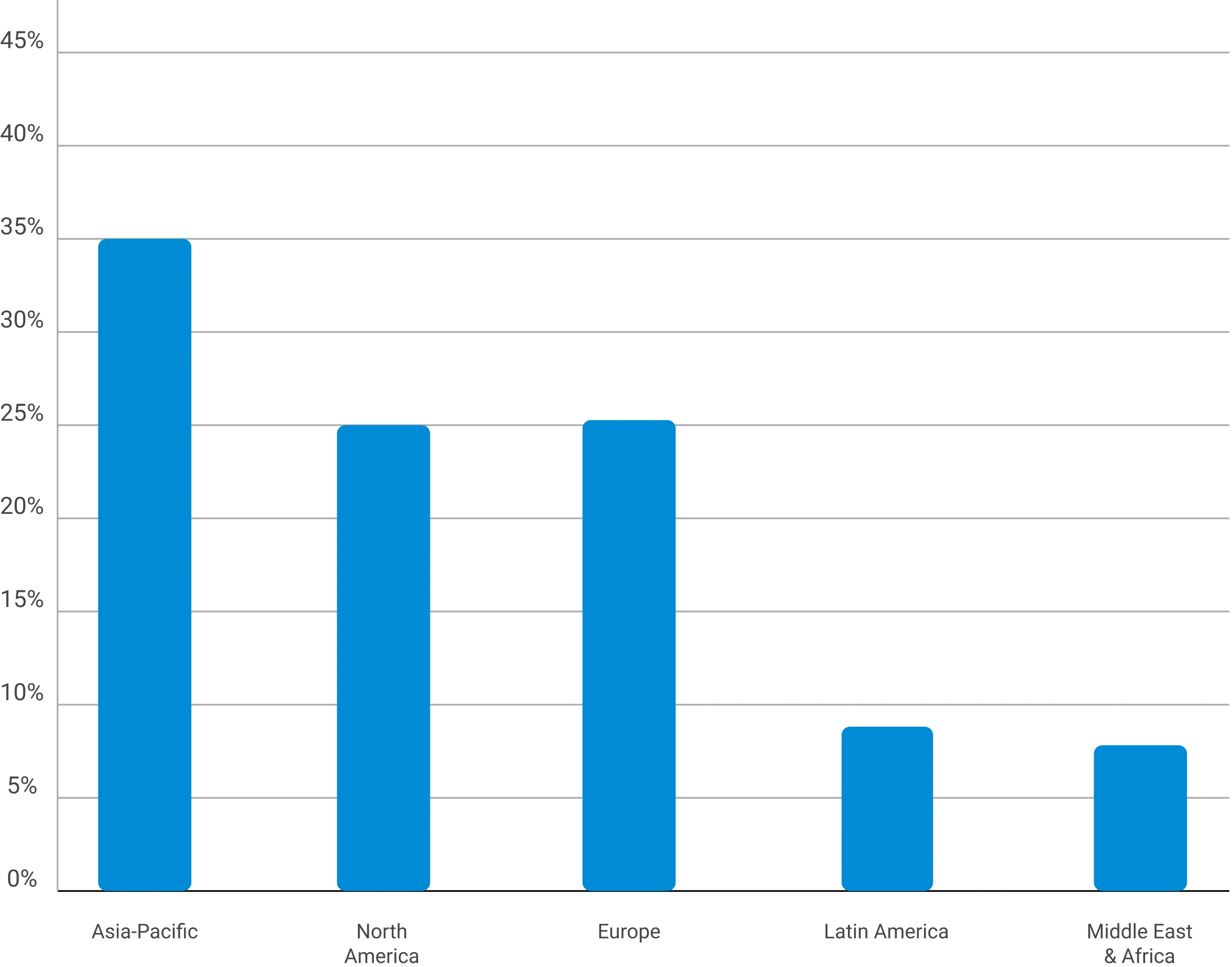
Primary Research — Geographic Coverage of Interviews
Regional distribution of primary research engagement (% share from PPT data)
Phase 6 — Data Triangulation and Market Validation
No single methodology is relied upon in isolation. Multiple independent estimation approaches are combined and reconciled to ensure consistency, accuracy, and analytical defensibility. Any material deviations between approaches are investigated and adjusted through additional validation cycles.
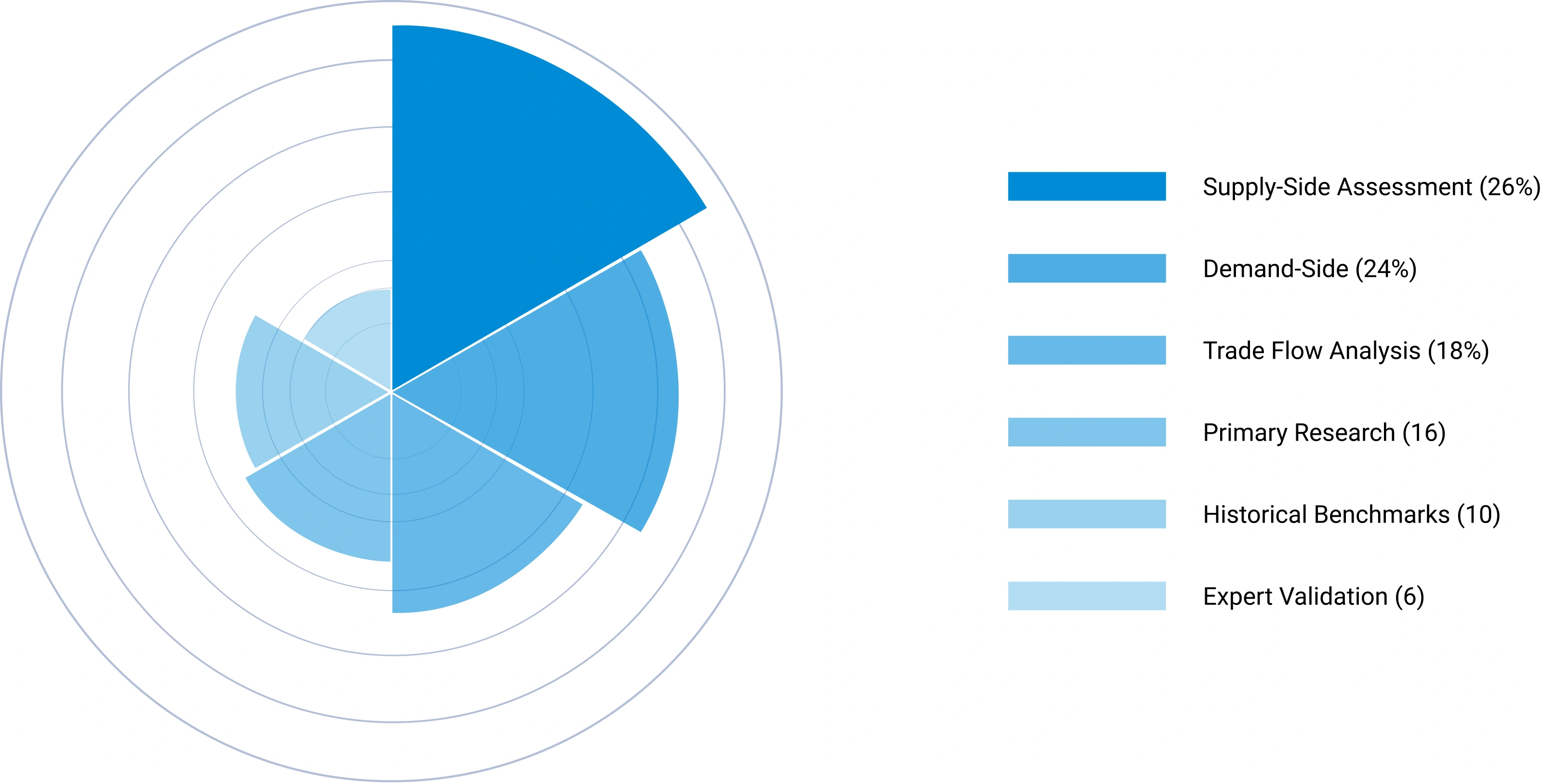
The final market size is derived through weighted triangulation of all validated methodologies. Any material deviations between approaches are investigated and adjusted through additional validation cycles. The outcome represents the most realistic assessment of the market based on available evidence and expert confirmation ensuring that volume and value estimates are fully consistent with one another.
Triangulation Framework — Input Contribution Weight
Relative weight each sizing input contributes to the final reconciled market estimate
Phase 7 — Forecast Modeling: Projecting Future Market Evolution
Forecasting evaluates the future trajectory of the market using a combination of quantitative indicators and qualitative assessments across economic, industry, and regulatory dimensions. Rather than simple extrapolation, each driver is independently modeled and integrated into a composite forecast.
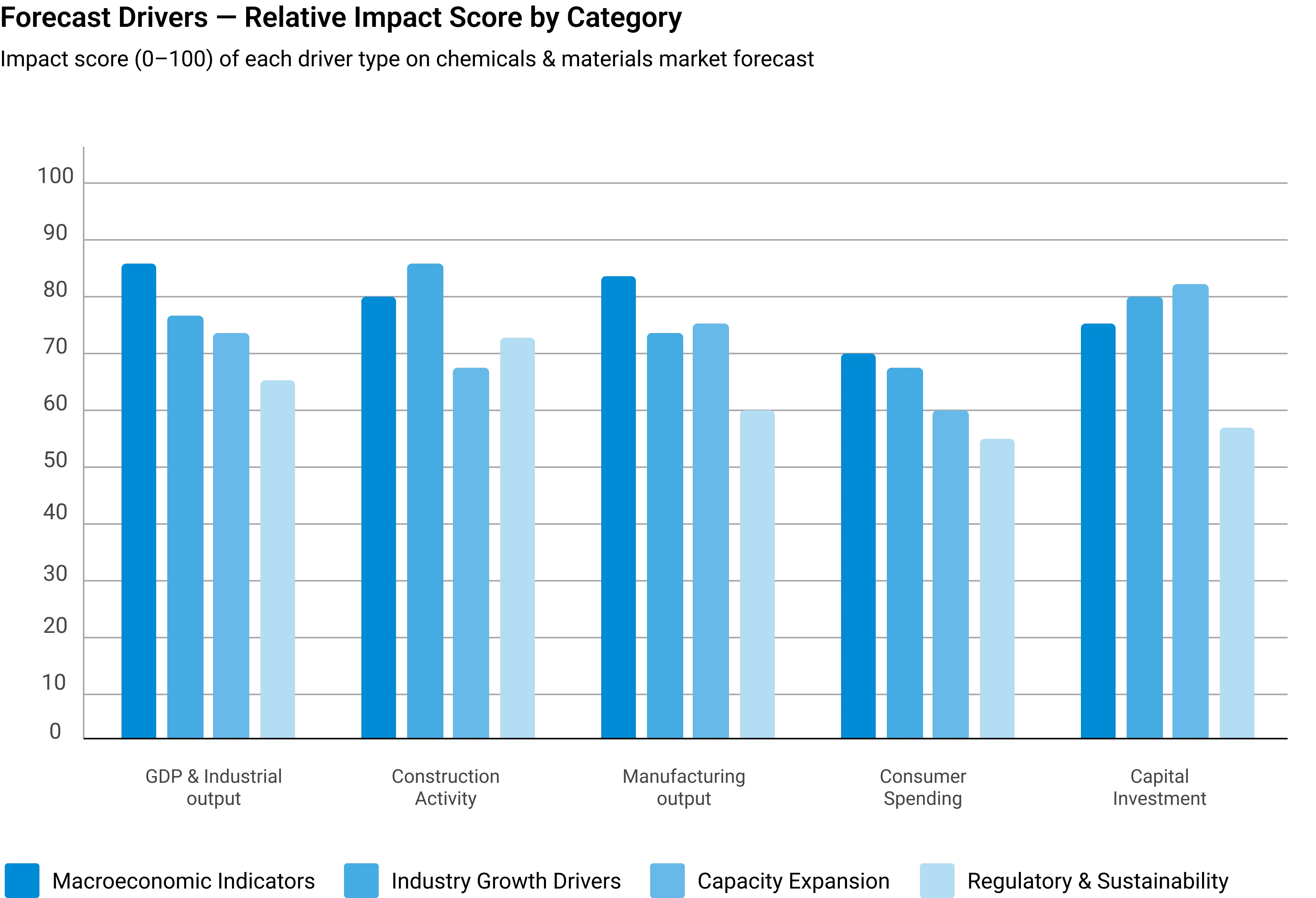
Macroeconomic Indicators
GDP growth, industrial production, manufacturing output, construction activity, consumer spending, and capital investment form the quantitative foundation of long-term demand projections. These are applied at country, regional, and global levels.
Industry Growth Drivers
Urbanization, infrastructure development, industrialization, technological innovation, sustainability initiatives, and evolving product performance requirements are assessed at regional and industry levels — capturing both structural and cyclical demand drivers.
Capacity Expansion Analysis
Announced plant expansions, new manufacturing facilities, technology upgrades, and strategic investments are evaluated to determine future supply-demand dynamics and potential market tightness or oversupply situations.
Regulatory & Sustainability
Environmental regulations, chemical safety standards, emission reduction targets, circular economy initiatives, and sustainability requirements are incorporated as they often influence product adoption rates and market growth trajectories.
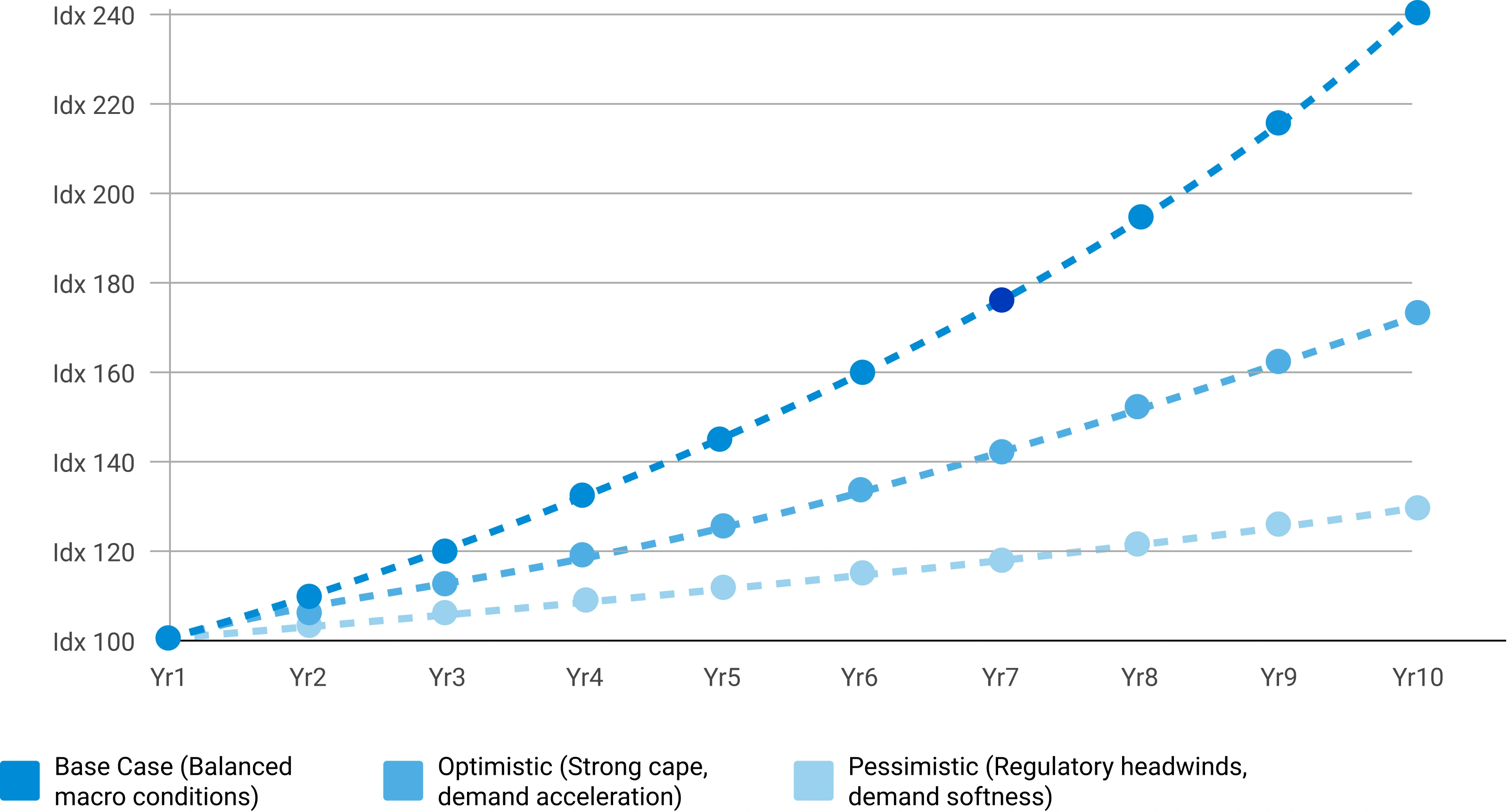
Scenario Forecast Range — Indexed Market Growth (Year 1–10)
Illustrative indexed growth trajectories across Base, Optimistic, and Pessimistic scenarios over a 10-year forecast horizon
Forecast Drivers — Relative Impact Score by Category
Impact score (0–100) of each driver type on chemicals & materials market forecast



Comments
Share your thoughts, ask a question, or provide feedback about this report.