
Polymer Modified Bitumen Market Size Analysis Report 2035
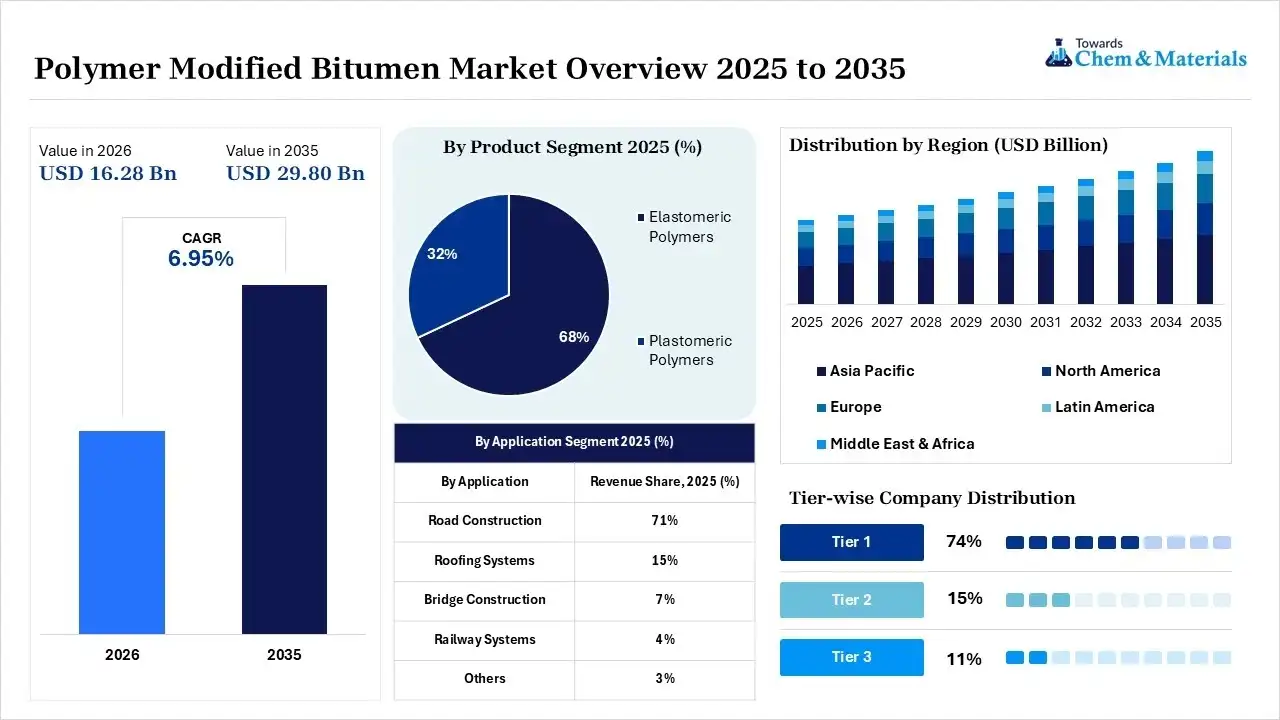
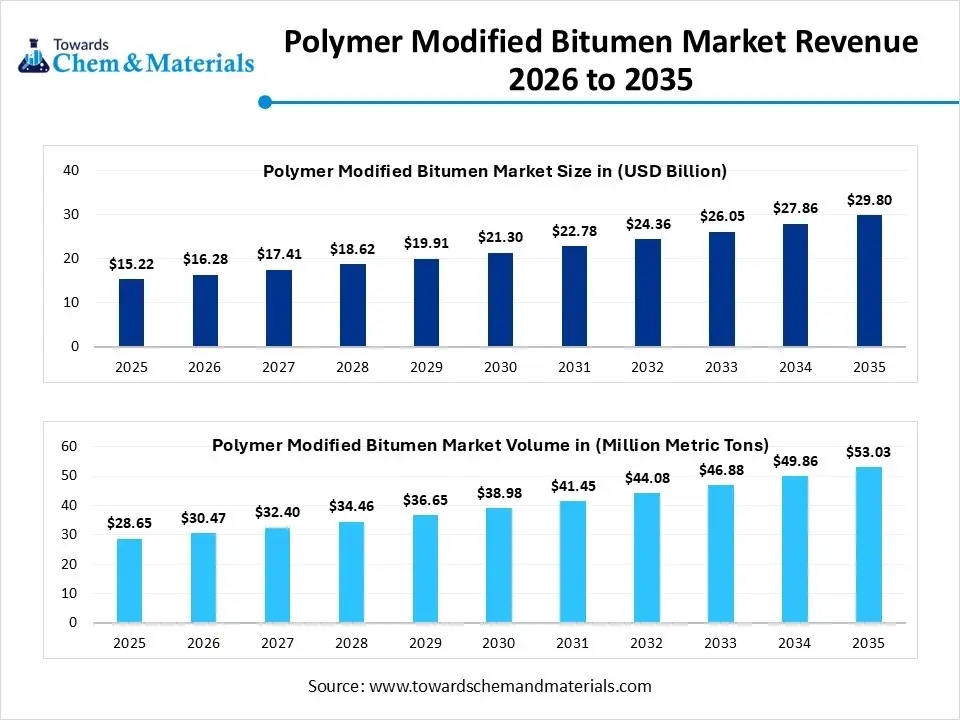
The global polymer modified bitumen market size was valued at USD 15.22 billion in 2025, is estimated to reach USD 16.28 billion in 2026, and is projected to reach USD 29.80 billion by 2035, exhibiting a compound annual growth rate (CAGR) of 6.95% over the forecast period from 2026 to 2035.Asia Pacific dominated the polymer modified bitumen market with the largest revenue share of 46% in 2025 and is expected to grow at the fastest CAGR of 7.07% during the forecast period. Growing infrastructure investments and rapid urbanization are the key factors driving market growth. Also, increasing demand for durable and weather-resistant construction and paving materials can fuel market growth further.
Market Highlights
- By region, Asia Pacific dominated the market with the largest share of 46.00% in 2025. The dominance of the region can be attributed to the ongoing expansion of road infrastructure that has created a heightened demand for Polymer Modified Bitumen (PMB).
- By region, North America held a market share of 18.00% in 2025 and was expected to grow at the fastest CAGR of 7.8% over the forecast period. The growth of the region can be credited to the surge in federal infrastructure spending.
- By product, the elastomeric polymers segment dominated the market with the largest share of 68.00% in 2025. The dominance is due to growing demand for durable road infrastructure.
- By product, the plastomeric polymers segment held the market share of 32.00% in 2025 and is expected to grow at the fastest CAGR of 7.40% over the forecast period. The growth is owing to increasing waterproofing demand.
- By grade, the PMB 70 segment dominated the market with the largest share of 47.00% in 2025. The dominance is due to its surge in use on highways and expressways.
- By grade, the PMB 40 segment held the market share of 24.00% in 2025 and is expected to grow at the fastest CAGR of 7.90% during the forecast period. The growth is credited to ongoing municipal road rehabilitation.
- By application, the road construction segment dominated the market with the largest share of 71.00% in 2025. The dominance is due to rapid highway and road expansion.
- By application, the bridge construction segment held the market share of 7.00% in 2025 and is expected to grow at the fastest CAGR of 7.8% during the study period. The growth is due to rising bridge maintenance initiatives.
According to Towards Chemicals and Materials Analytics and Consulting, the global polymer modified bitumen market volume was valued at 28.65 million metric tons in 2025 and is expected to surpass around 53.03 million metric tons by 2035, accelerating a compound annual growth rate (CAGR) of 6.35% over the forecast period from 2026 to 2035.
The increasing focus on sustainable construction materials is a crucial factor, presenting lucrative opportunities in the market by fueling demand for polymer-modified bitumen. It gives environmental benefits like a lower carbon footprint and enhanced recyclability.
- In December 2025, IndianOil Total Private Limited (ITPL), a joint venture between Indian Oil Corporation and TotalEnergies Marketing Services SAS, officially commissioned its new greenfield Bitumen Derivatives Plant in Gummidipoondi, near Chennai. This newly operational facility significantly enhances the domestic supply of specialized materials required for road construction and infrastructure development.(Source: itpl.net)
Its superior properties make it a favored choice over conventional bitumen in various applications, such as road construction, roofing, and waterproofing.
Growing Infrastructure Development Drives Market Growth
The growing urbanization in developing & developed countries increases demand for infrastructure development. The rapid growth in infrastructure development, like highways, roads, bridges, and other construction projects, increases demand for PMB. The governments strong focus on sustainable road construction increases demand for PMB. It provides better resistance to weathering, rutting, and cracking. The growing population increases demand for robust transportation infrastructure, fueling demand for PMB materials.
The strong government investment in infrastructure projects like bridge & road construction increases demand for PMB for its superior performance. The growing demand for the construction of new roads and bridges, and highways due to heavy traffic increases demand for high-quality materials like PMB. The growing development of pavements increases the utilization of PMB to enhance longevity and performance. The rapid growth in infrastructure development is a key driver for the growth of polymer modified bitumen market.
Supply Chain Analysis of the Polymer Modified Bitumen Market
Production & Processing
- The process involves a highly controlled mechanical and chemical sequence to ensure uniform dissolution and cross-linking of polymer chains into a three-dimensional molecular matrix within the petroleum-derived bitumen base.
- Shell plc: The market pioneer via its Shell Bitumen division. Operates world-scale blending assets focused heavily on airport runways, high-stress highways, and signature infrastructure projects.
- Other Key Players: ExxonMobil Corporation, TotalEnergies SE
Quality Testing and Certification
- It includes binders formulated with synthetic polymers (such as SBS) or recycled materials (like crumb rubber) to guarantee adherence to rigorous structural standards, providing the elasticity, rutting resistance, and thermal durability essential for heavy-duty roadways and airport infrastructure.
- TotalEnergies SE: Commands a major market share in Europe and Asia-Pacific. They lead technical rollouts in green roofing technologies and warm-mix PMB deployment to lower on-site carbon emissions.
- Other Key Players: Gazprom Neft, Indian Oil Corporation Limited (IOCL)
Distribution to Industrial Users
- It involves manufacturers supplying premium, custom-blended asphalt directly to large-scale commercial enterprises and government entities. In contrast to standard commodity bitumen distributed by third parties, this approach requires specialized handling, precise hot-transport logistics, and dedicated technical application support.
- Gazprom Neft: A major supplier in Europe and emerging markets with advanced PMB production capabilities.
- Other Key Players: Nynas AB, Sika AG
Market Trends
- Strong focus on high-performance pavements: The growing urbanization and infrastructure developments increase demand for the development of high-performance pavements. The growing demand for high-performance pavements to withstand harsh weather and heavy traffic increases demand for PMB.
- Growing adoption of sustainable materials: The growing focus towards sustainable developments of roads and other infrastructure projects utilizes recycled materials. The growing utilization of recycled materials like rubber from tires and recycled asphalt pavement in PMB formulations supports sustainable development.
- Increasing investments: The growing governments, municipalities, and private companies investment in infrastructure projects like bridge, highway, and road construction increases demand for long-lasting & durable materials like PMB.
Report Scope
| Report Attributes | Details |
| Market Volume on 2026 | USD 16.28 Million Tons/ 30.47 Million Metric Tons |
| Expected Volume by 2035 | USD 29.80 Million Tons/ 53.03 Million Metric Tons |
| Growth Rate from 2025 to 2035 | CAGR 6.95% |
| Base Year of Estimation | 2025 |
| Forecast Period | 2025 - 2035 |
| Dominant Region | Asia Pacific |
| Segment Covered | By Product, By Grade, By Application, By Region |
| Key Companies Profiled | Benzene International Pte Ltd, NYNAS AB Exxon Mobil Corporation, Sika AG,Oil India Limited, Lagan Asphalt Group, Shell plc, Gazprom |
Market Opportunity
Technological Advancements Create Opportunities for Market Growth
The growing technological advancements in PMB technology enhance performance and create innovative polymer blends. Technological advancement focuses on enhancing environmental sustainability, improving durability, and reducing costs. Technological advancements like the use of nano additives to enhance bitumen properties like temperature sensitivity, fatigue resistance, and tensile strength. Advancements like the development of high elasticity bitumen and, functionalization of polymers enhance PMB properties. The utilization of waste plastic in PMB helps to achieve sustainable road construction and the development of infrastructure projects.
The utilization of the sulfur vulcanization process to improve the storage stability of PMB. Companies strong focus on the development of eco-friendly and sustainable PMB formulations to reduce environmental impact helps in market growth. The growing advancements, like the development of eco-friendly solutions and the development of PMB technology, create opportunities for polymer modified bitumen market.
Market Challenge
High Production Cost
Despite several benefits of polymer-modified bitumen, high production cost restricts the market growth. The production cost depends on various factors like the requirement for precise control, the need for specialized equipment, and the high price of raw materials. The modification process of polymer requires an advanced technique and specialized equipment, like heat treatment and precise mixing leads to higher production costs.
The cost of raw materials, like ethylene vinyl acetate and styrene butadiene rubber, is high. The modification process requires specialized techniques, precise temperature, and time control, which increases demand for skilled labor, leading to higher costs. The fluctuations in the costs of raw materials due to various factors like feedstock prices, climate change, and many more increase the overall cost. The high production cost hampers the growth of the polymer modified bitumen market.
Regional Insights
How Did Asia Pacific dominate the Polymer Modified Bitumen Market in 2025?
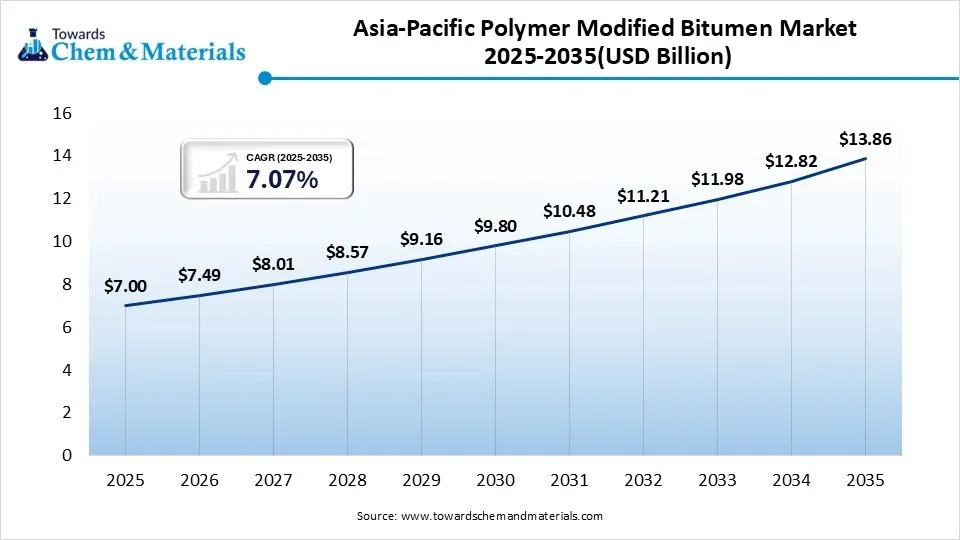
The Asia Pacific polymer modified bitumen market size was estimated at USD 7.00 billion in 2025 and is projected to reach USD 13.86 billion by 2035, growing at a CAGR of 7.07% from 2026 to 2035.Asia Pacific dominated the market with the largest share of 46.00% in 2025. The dominance of the region can be attributed to the ongoing expansion of road infrastructure, which has created a heightened demand for Polymer Modified Bitumen (PMB). This material is leveraged to tackle structural deterioration and minimize life-cycle repair costs. In addition, the construction of resilient, high-performance transportation and industrial infrastructure requires the use of paving materials engineered to withstand substantial traffic volumes and severe climatic conditions.
China
- Extensive government investments in transnational corridors (the Belt and Road Initiative), high-speed rail networks, airports, and smart city projects continuously drive bulk consumption.
- Modified bitumen offers high flexibility, fatigue resistance, and temperature stability, which makes it ideal for the varying and extreme climate conditions.
India
- Heavy government spending on the expansion of national highways, expressways, and airport runways is the major driver of the market in the country.
- Increasing environmental awareness is accelerating the adoption of green modifiers, such as crumb rubber from recycled tires, into the bitumen mix.
North America held a market share of 18.00% in 2025 and was expected to grow at the fastest CAGR of 7.8% over the forecast period. The growth of the region can be credited to the surge in federal infrastructure spending and robust demand for durable commercial roofing. Stringent regional mandates encourage the adoption of sustainable additives, recycled rubber modifiers, and durable, energy-efficient materials to reduce the lifecycle carbon footprint of infrastructure projects.
United States
- Significant federal and state funding for road modernization, bridge rehabilitation, and long-life asphalt solutions are major market drivers.
- Regional vulnerability to harsh weather events requires construction materials that can withstand deep temperature drops and intense heat, boosting demand across the U.S.
Canada
- There is an increase in the construction of large warehouses, logistics centers, and industrial facilities. Modified bitumen membranes are the standard choice for commercial roofing.
- Canadian winters feature severe freeze-thaw cycles and heavy snow. Modified bitumen, specifically Styrene-Butadiene-Styrene (SBS)-modified asphalt—provides low-temperature flexibility.
Europe held a market share of 24.00% in 2025. The growth of the region can be linked to the growing demand for long-lasting infrastructure and ongoing investments in transport networks such as the EUs TEN-T initiative. European Union regulations and green building standards mandate the use of energy-efficient construction materials. Hence, priority is given to products that tackle the urban heat island effect or incorporate recycled waste materials, such as crumb rubber.
Germany
- Stringent German environmental regulations mandate low-carbon, energy-efficient construction, aligning with green building standards.
- PMB is increasingly replacing conventional roofing materials because of its superior temperature resistance, flexibility, and waterproofing capabilities.
France
- Polymer-modified mixtures are increasingly used in highway resurfacing. These materials provide superior resistance to heavy traffic, temperature fluctuations, and rutting.
- Stronger environmental policies across Europe are pushing the market toward eco-friendly asphalt and roofing technologies.
Latin America held the market share of 7.00% in 2025 and is expected to grow at the fastest CAGR of 6.70% over the projected period. The growth of the region can be driven by the growing need for durable waterproofing and the rise in commercial and industrial roofing projects. Also, enhanced public-private partnerships within urban transportation corridors facilitate the procurement of long-term contracts for advanced paving materials.
Brazil
- Brazils heavy emphasis on developing and modernizing its road networks, highways, bridges, and ports to improve regional connectivity is the major growth driver.
- Stringent environmental regulations are pushing the industry toward eco-friendly, recyclable, and low-energy bituminous formulations, leading to market growth soon.
Argentina
- Argentina’s rich natural resources and substantial oil reserves offer a reliable supply chain for domestic bitumen production.
- Ongoing population growth has increased residential and commercial construction, increasing the use of modified bitumen in waterproof roofing membranes.
The Middle East & Africa held a market share of 5.00% in 2025. The growth of the region can be attributed to the growing demand for climate-resilient paving and roofing materials coupled with the increase in foreign investments. Furthermore, the expansion of transport networks, including logistics hubs and pan-African road projects, is attracting substantial international investment, such as China’s Belt and Road Initiative, which stimulates consumer demand soon.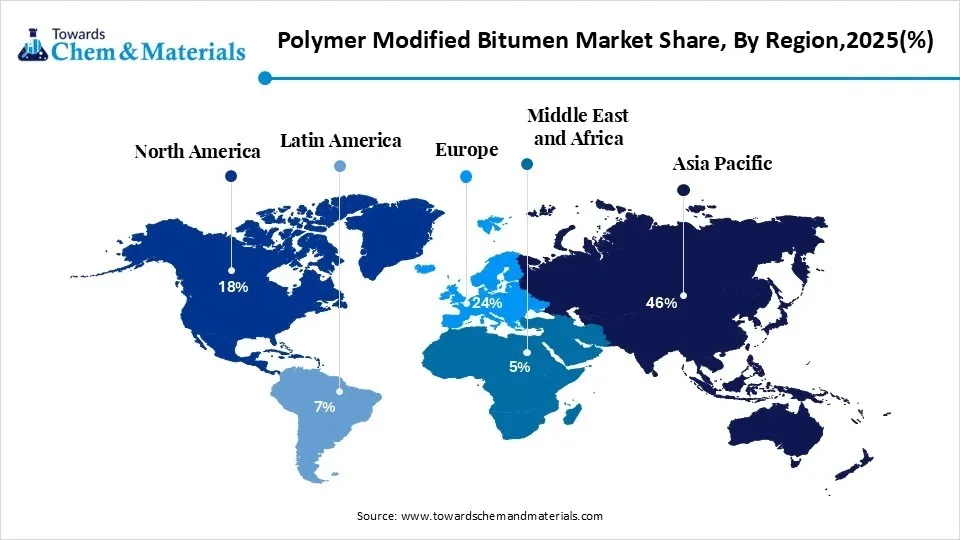
Saudi Arabia
- Because of Saudi Arabias intense summer heat, government bodies mandate the use of high-performance PMB to prevent road deformation and reduce long-term maintenance frequency.
- Major global specialty chemical and construction companies are actively targeting the Kingdom to capitalize on this demand.
UAE
- The UAE government strictly mandates adherence to international testing benchmarks (such as ASTM and EN), pushing contractors toward premium modified products.
- Polymer-Modified Bitumen (PMB) is heavily favored because it offers greater elasticity and rutting resistance and prevents thermal cracking.
Segmental Insights
Product Insights
The elastomeric polymers segment dominated polymer modified bitumen market share 68% in 2025. The growing road construction increases demand for elastomeric polymers for their load-bearing capacity. Elastomeric polymers are suitable for road construction in heavy-duty applications and high-traffic areas. Elastomeric polymers, such as styrene butadiene rubber, consist of a high degree of elasticity in the bitumen. The growing demand for long-lasting and durable options for roofing and road paving increases demand for elastomeric polymers. The growing demand for durable and waterproof roof materials drives the overall growth of the market.
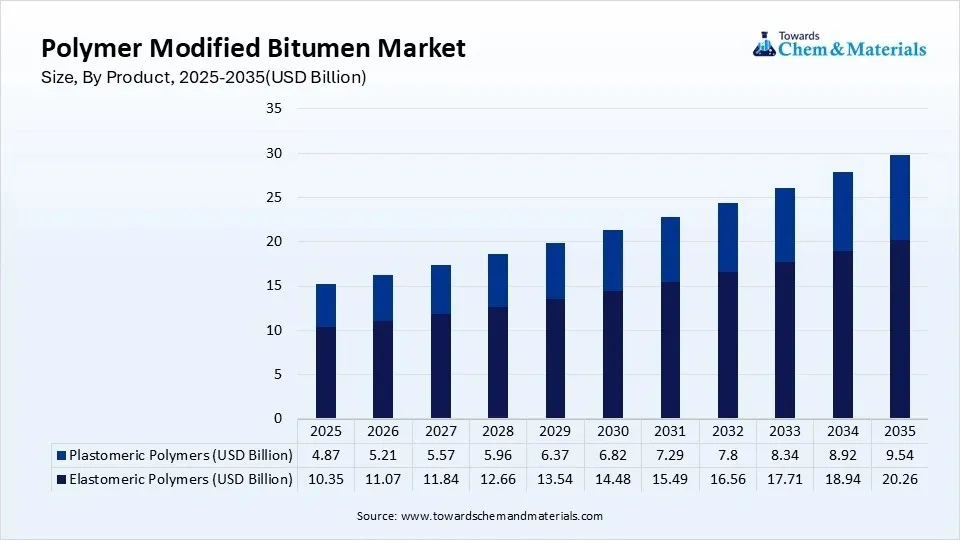
The plastomeric polymers segment is the fastest growing in the market during the forecast period. The growing demand for enhanced resistance to aging, rutting, and cracking increases demand for plastomeric polymers, which helps in the market growth. It enhances the adhesion of bitumen to aggregates and increases the elasticity of bitumen. The plastomers, such as polypropylene and polyethylene, improve the thermal stability of PMB. The growing demand for a cost-effective option increases demand for plastomeric polymers. The increasing demand for lowering the maintenance needs of roads helps in the market growth. The growing demand for durable and stronger road surfaces increases demand for plastomeric polymers. The growing rate of pavement damage and increasing demand for road construction contribute to the market growth.
Polymer Modified Bitumen Market Share, By Product,2025(%)
| By Product | Revenue Share, 2025 (%) |
| Elastomeric Polymers | 68% |
| Plastomeric Polymers | 32% |
Grade Insights
The PMB 70 grade segment held the largest share of the polymer modified bitumen market share 47% in 2025. The growing demand from various applications like airports, urban roads, bridges, runways, and high-traffic roads increases demand for PMB 70, helping in the market growth. PMB 70 consists of better resistance to cracking and cutting under extreme weather conditions & heavy traffic, and has a longer lifespan. It lowers the risk of cracking in cold climates and pitting in hot climates, and also reduces the risk of peeling & chipping in pavements. The growing development of airfields, highways, bus lanes, main roads, and roundabouts increases demand for PMB 70. The growing demand for sustainable and durable infrastructure in various regions increases demand for PMB 70, supporting the overall market growth.
The PMB 40 grade segment experiences the fastest growth in the market during the forecast period. The growing demand for waterproofing roofing systems increases demand for PMB 40. It offers a more stable and stronger surface to cracking & aging. It withstands extreme cold & hot temperatures and lowers the need for frequent repairs. PMB 40 is cost cost-effective option for various construction projects and provides superior performance. The growing urbanization increases demand for roads, which helps in the market growth. The growing development of highways, expressways, bridge decks, surface dressing, base course, and bond coats increases demand for PMB 70. The growing adoption of sustainable infrastructure development drives the overall market growth.
Polymer Modified Bitumen Market Share, By Grade,2025(%)
| By Grade | Revenue Share, 2025 (%) |
| PMB 40 | 24% |
| PMB 70 | 47% |
| PMB 120 | 29% |
Application Insights
The road construction segment dominated polymer modified bitumen market in 2025. The growing urbanization increases demand for better transportation networks, fueling demand for road construction. PMB improves the resistance, elasticity, and adhesion of the road in various conditions like traffic & heat. It reduces the requirement of frequent repairs & maintenance and enhances the lifespan of road pavements. The growth in infrastructure development increases demand for better-quality road construction, fueling demand for PMB. The growing adoption of sustainable practices in road construction and the growing high-traffic areas increases the utilization of PMB. Additionally, strong government investment in road infrastructure development supports the overall market growth.
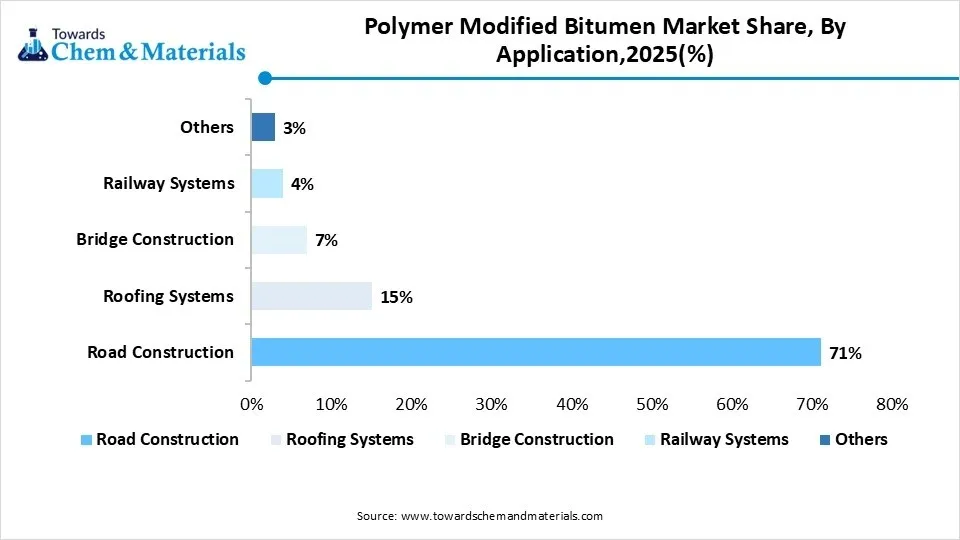
The bridge construction segment is the fastest growing in the market during the forecast period. The growing population increases the demand for bridges for transportation, fueling demand for bridge construction. The growing demand to connect different parts of the city increases the construction of bridges. PMB offers resistance to deformation and cracking to maintain the structural integrity of bridges. PMB sustains in adverse weather conditions and prevents the cracking of the bridges. The significant government investment in the development of infrastructure, like bridge construction, in many countries, drives the market growth. The growing technological advancements in bridge construction technologies like 3D printing and prefabrication increase demand for PMB, supporting the overall market growth.
Polymer Modified Bitumen Market Share, By Application,2025(%)
| By Application | Revenue Share, 2025 (%) |
| Road Construction | 71% |
| Roofing Systems | 15% |
| Bridge Construction | 7% |
| Railway Systems | 4% |
| Others | 3% |
Recent Developments
- In November 2025, Siplast launched TeraPROOF, an extensive portfolio of high-performance materials tailored for below-grade applications. This comprehensive system is engineered to deliver robust waterproofing for commercial structures, advancing the organizations strategic objective of serving as a comprehensive building enclosure protection provider.(Source: www.roofingcontractor.com)
Top Companies List
- Benzene International Pte Ltd
- NYNAS AB
- Exxon Mobil Corporation
- Sika AG
- Oil India Limited
- Lagan Asphalt Group
- Shell plc
- Gazprom
Segments Covered in the Report
By Product
- Elastomeric Polymers
- SBS (Styrene-Butadiene-Styrene)
- SIS (Styrene-Isoprene-Styrene)
- Natural Rubber
- Crumb Rubber Modified Bitumen (CRMB)
- Plastomeric Polymers
- APP (Atactic Polypropylene)
- PE (Polyethylene)
- EVA (Ethylene Vinyl Acetate)
- Polyolefin Blends
By Grade
- PMB 40
- Heavy Traffic Roads
- Urban Roads
- PMB 70
- Highways
- Expressways
- PMB 120
- Airports
- Bridges
- Industrial Pavements
By Application
- Road Construction
- National Highways
- Urban Roads
- Rural Roads
- Expressways
- Roofing Systems
- Residential Roofing
- Commercial Roofing
- Industrial Roofing
- Bridge Construction
- Bridge Deck Waterproofing
- Expansion Joints
- Railway Systems
- Ballast Protection
- Track Waterproofing
- Others
- Airport Runways
- Parking Areas
- Hydraulic Structures
By Region
- North America
- U.S.
- Canada
- Europe
- Germany
- UK
- France
- Italy
- Spain
- Sweden
- Denmark
- Norway
- Asia Pacific
- China
- Japan
- India
- South Korea
- Thailand
- Latin America
- Brazil
- Mexico
- Argentina
- Middle East & Africa
- South Africa
- UAE
- Saudi Arabia
- Kuwait
A Seven-Phase Framework
Our methodology is designed to be universally applicable across commodity chemicals, specialty chemicals, petrochemicals, construction chemicals, coatings, electronic chemicals, industrial gases, agrochemicals, water treatment chemicals, and performance materials. Each phase builds upon the last, creating a layered validation structure that minimizes estimation error and maximizes analytical confidence.
The framework ensures comprehensive market coverage, robust cross-validation, and reliable long-term forecasting — producing market estimates that withstand scrutiny from investors, regulators, and corporate strategy teams.

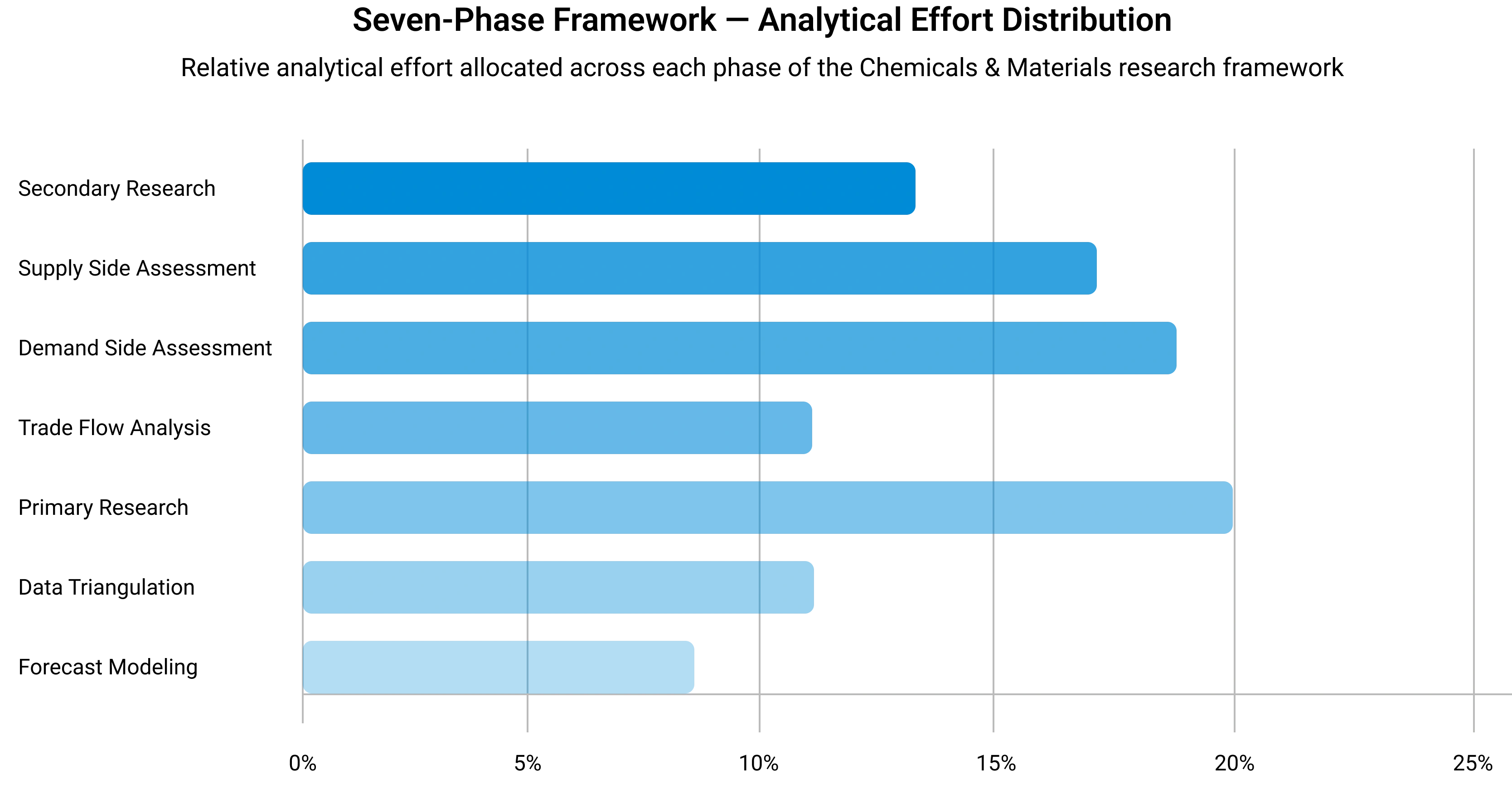
Seven-Phase Framework — Analytical Effort Distribution
Relative analytical effort allocated across each phase of the Chemicals & Materials research framework
Phase 1 - Secondary Research: Establishing the Foundation
Secondary research collects and evaluates publicly available information from authoritative sources, establishing the foundational understanding of market structure, value chain dynamics, competitive landscape, and end-use demand patterns. Every source is evaluated for credibility, recency, geographic relevance, and methodological soundness before inclusion.
Industry Associations
Sources include ACC, CEFIC, ICCA, JCIA, CPCIF, and SOCMA providing production volumes, consumption trends, capacity developments, and sustainability initiatives.
Company Disclosures
Annual reports, investor presentations, earnings transcripts, and regulatory filings reveal product portfolios, manufacturing footprints, capacity expansions, and revenue segmentation.
Government Databases
National statistical offices, customs authorities, environmental agencies, and industrial production databases provide verified statistics on output, trade flows, and regulatory compliance.
Trade Databases
UN Comtrade, ITC, Eurostat, and national customs authorities enable assessment of global product movement, import dependency, and export competitiveness across regions.
Our Secondary Research Sources
- Ministry of Chemicals and Fertilizers
- European Chemicals Agency
- United States Department of Energy
- Ministry of Industry and Information Technology
- Ministry of Economy Trade and Industry
- Ministry of Trade Industry and Energy
- National Institute of Standards and Technology
- Council of Scientific and Industrial Research
- Fraunhofer Society
- National Institute for Materials Science
Phase 2 — Supply-Side Assessment: Mapping Production Capabilities
Production Capacity Analysis
All major manufacturers are assessed for existing installed capacity, planned additions, expansions, new plant announcements, and technology adoption — mapped at global, regional, and country levels.
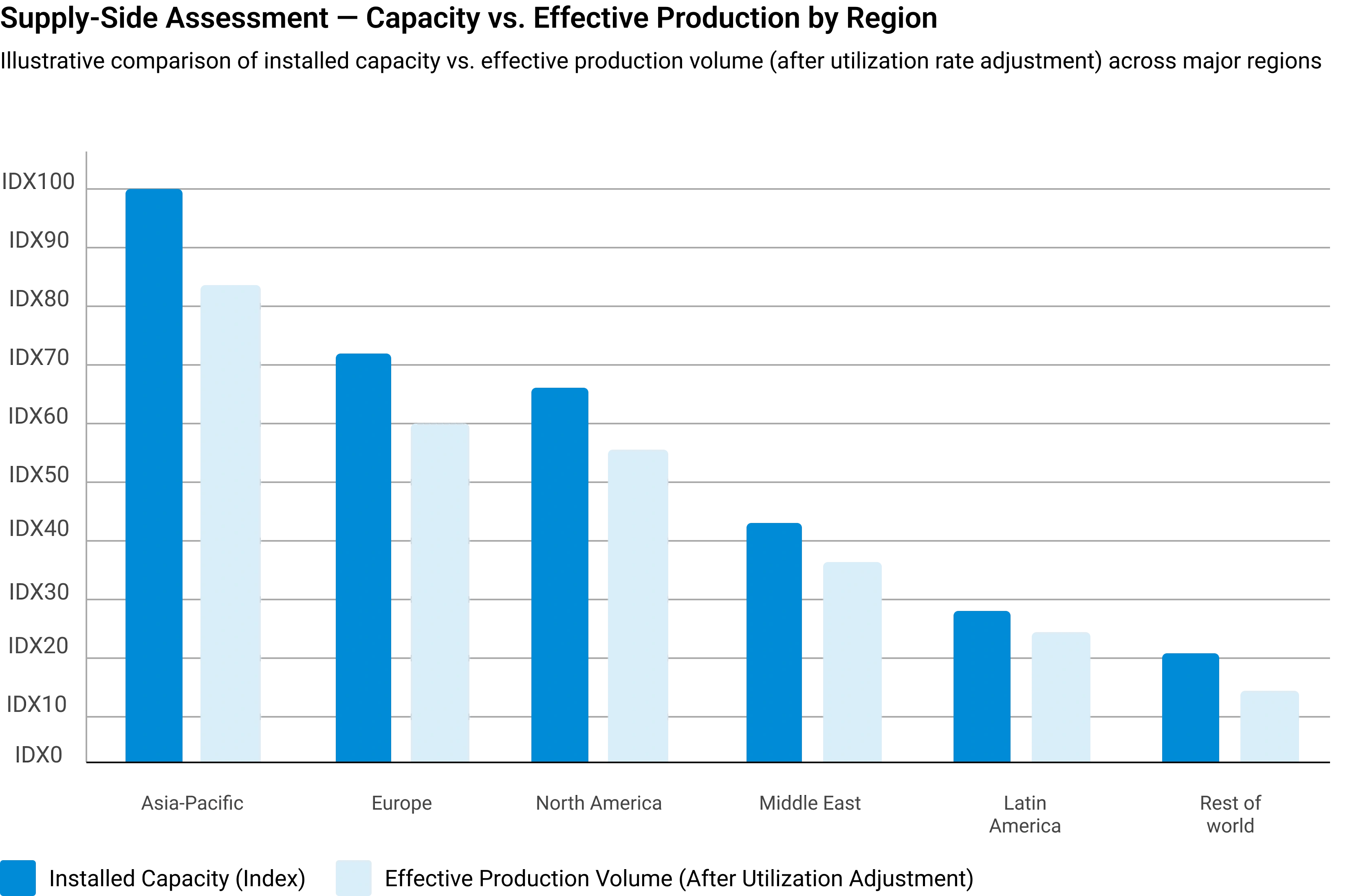
Capacity Utilization Adjustment
Installed capacity is adjusted using utilization rates based on demand conditions, feedstock availability, plant operating rates, maintenance schedules, and regulatory restrictions.
Manufacturer Revenue Analysis
Product-specific revenues, segment-level performance, regional distribution, average selling prices, and margin trends are evaluated to establish market value estimates.
Supply-Side Assessment — Capacity vs. Effective Production by Region
Illustrative comparison of installed capacity vs. effective production volume (after utilization rate adjustment) across major regions
Phase 3 — Demand-Side Assessment: Quantifying Chemical Consumption
Demand-side analysis quantifies chemical consumption across industries, applications, and geographies — identifying where and how chemicals are consumed throughout the value chain with precision.
End-Use Industry Analysis
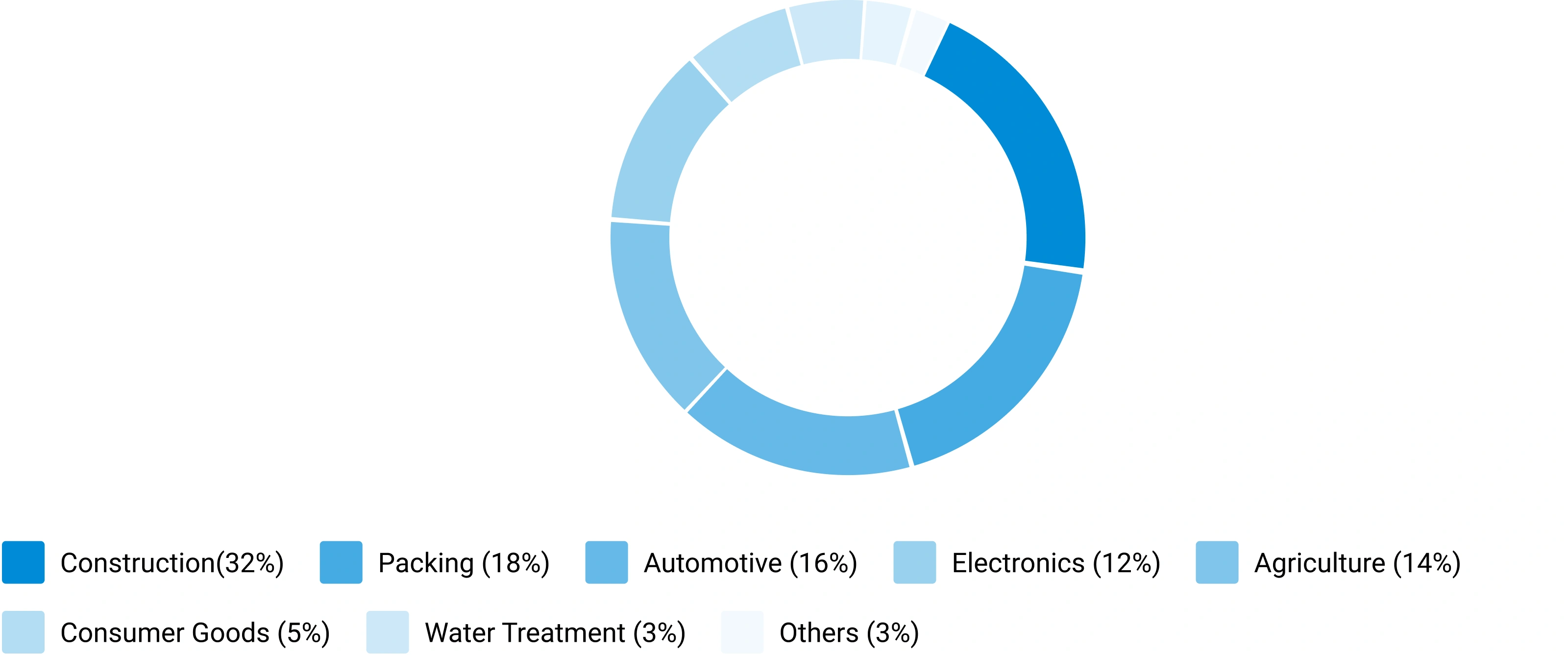
Chemical demand is evaluated across automotive, construction, packaging, electronics, agriculture, healthcare, consumer goods, industrial manufacturing, energy and utilities, and water treatment. Industry output, production trends, and consumption intensity are analyzed to determine demand patterns.
Consumption Modeling
Demand is estimated using measurable indicators: kilograms per vehicle, kilograms per square meter of construction, dosage per cubic meter of water treated, kilograms per hectare of agricultural land, and kilograms per ton of manufactured products. Consumption factors are validated through industry publications and primary interviews.
Application Analysis
The market is segmented by application area to understand product performance requirements, formulation trends, technology adoption, customer preferences, and regulatory requirements improving demand accuracy and segmentation granularity.
Demand-Side Assessment — End-Use Industry Demand Distribution
Illustrative distribution of chemical & materials demand across key end-use industries
Phase 4 - Trade Flow Analysis: Balancing Regional Supply and Demand
Trade flow analysis reconciles regional supply and demand estimates through import and export data, identifying net supply positions, regional dependencies, and market imbalances. It serves as an independent validation layer that tests the consistency of supply-side and demand-side estimates.
Import Analysis
Import data is evaluated to determine volumes, source countries, product dependency, regional supply gaps, and pricing trends — identifying markets that rely heavily on external supply and where domestic production is insufficient to meet demand.
Export Analysis
Export assessments reveal production surplus, export competitiveness, regional manufacturing strength, and global market participation. Export patterns also help validate domestic production estimates and identify net exporting regions.
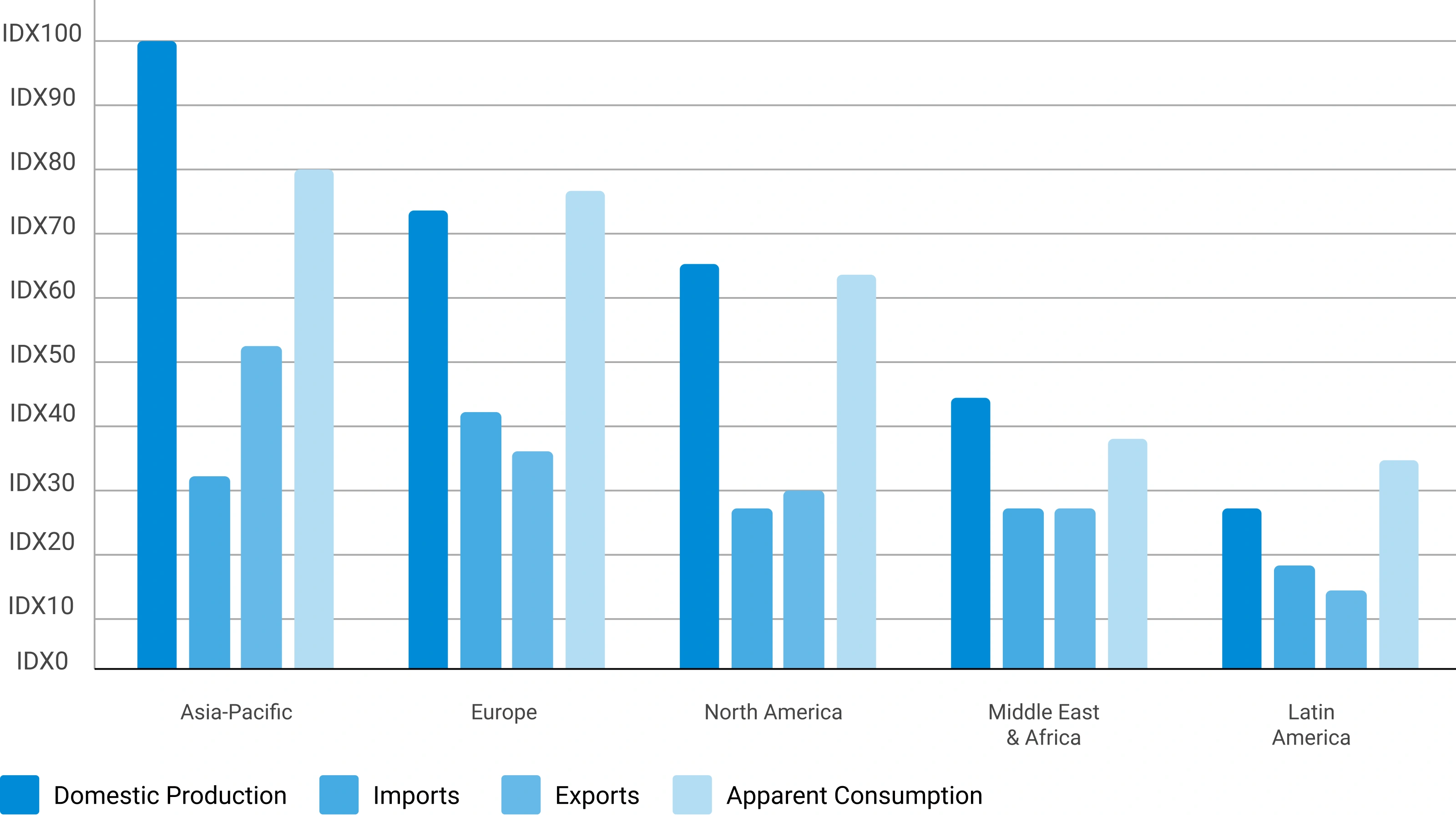
Apparent Consumption Model
Regional consumption is assessed using the standard apparent consumption formula:
Results identify net importing regions, net exporting regions, regional deficits, and surpluses — serving as an independent validation of supply and demand estimates.
Trade Flow Analysis — Net Supply Position by Region
Illustrative apparent consumption vs. domestic production across major regions — positive gap indicates net import dependency
Phase 5 — Primary Research: The Critical Validation Layer
Primary research tests and refines findings from secondary research through direct engagement with industry participants across the supply chain, demand side, and expert community. It captures intelligence that no database or published report can provide — the real-world experience of manufacturers, buyers, and specialists operating in the market.

Supply-Side Interviews
Conversations with chemical manufacturers, raw material suppliers, contract manufacturers, technology providers, and plant operators cover production trends, capacity utilization, pricing developments, technology shifts, and competitive dynamics.

Demand-Side Interviews
Engagement with OEMs, industrial consumers, procurement managers, distributors, formulators, and end-use manufacturers focuses on consumption trends, purchasing behavior, product substitution, demand outlook, and emerging applications.

Industry Expert Consultations
Additional interviews with industry consultants, independent experts, regulatory specialists, technical professionals, and research institutions provide deeper market context and validate key analytical assumptions.
Focus Areas of Primary Research:
Market Size & Forecast Validation
Revenue estimates, volume consumption, growth rates, forecast assumptions, regional demand.Supply Chain & Value Chain Assessment
Raw material sourcing, supply chain challenges, distribution networks, procurement practices.Production & Capacity Analysis
Manufacturing capacity, utilization rates, expansion projects, plant investments.Pricing & Cost Structure Analysis
Product pricing trends, feedstock costs, energy costs, margin pressures, pricing outlook.Competitive Landscape Assessment
Volume and value estimates confirmed to be fully consistent with one another before publicationInterview Volume by Market Scope
| Study Scope | Number of Interviews |
|---|---|
| Niche Market | 20 – 30 |
| Mid-Sized Market | 30 – 50 |
| Global Market | 50 – 80 |
| Highly Fragmented Market | 80 – 120 |
Interview Details:
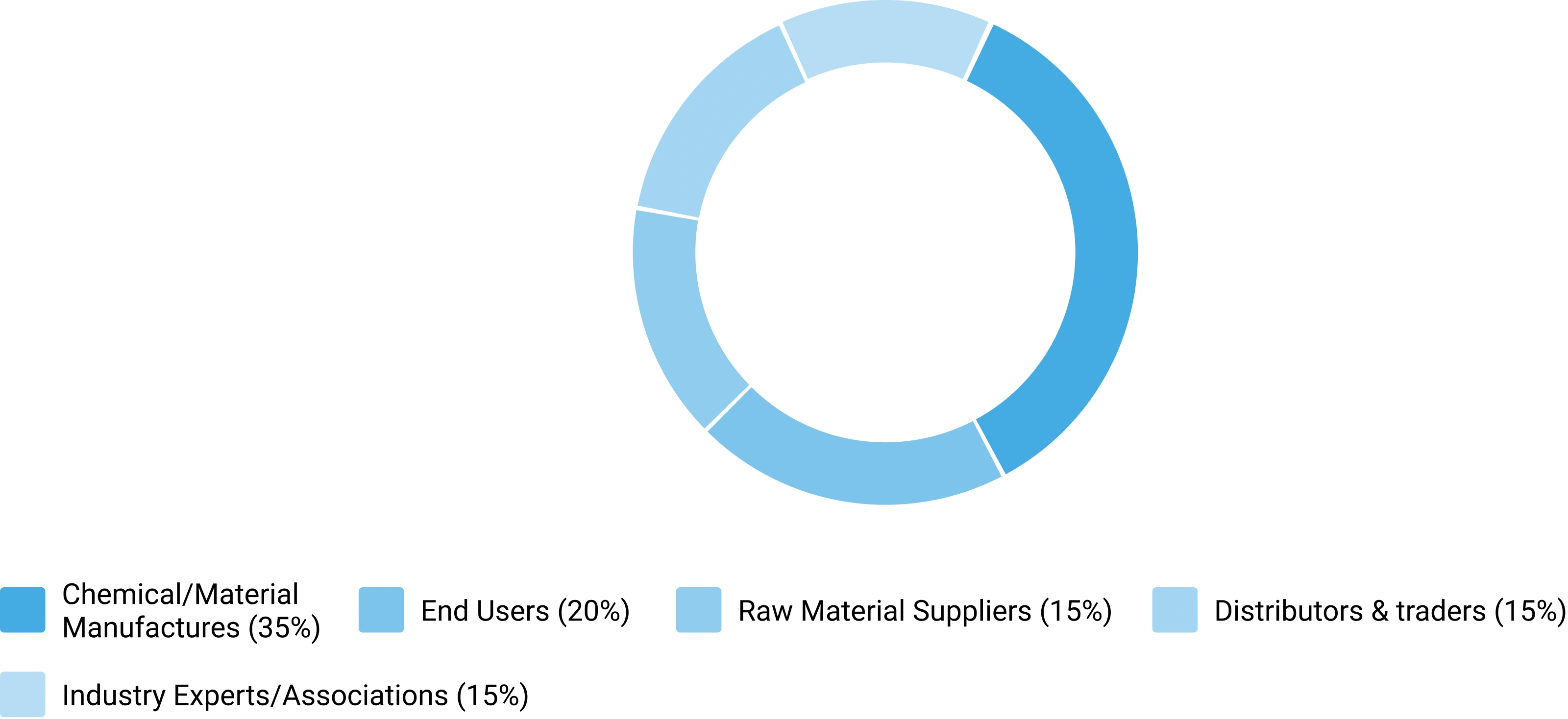
Category : Manufacturers, Suppliers, Distributors, End Users, Experts/Associations
Average Duration : 30–60 Minutes
Interview Mode : Video calls, telephonic interviews, expert consultations
Interview Format : Structured / Semi-Structured questionnaire
Focus Areas of Primary Research:
Market Size & Forecast Validation :
Revenue estimates, volume consumption, growth rates, forecast assumptions, regional demand.
Supply Chain & Value Chain Assessment :
Raw material sourcing, supply chain challenges, distribution networks, procurement practices.
Production & Capacity Analysis :
Manufacturing capacity, utilization rates, expansion projects, plant investments.
Pricing & Cost Structure Analysis :
Product pricing trends, feedstock costs, energy costs, margin pressures, pricing outlook.
Competitive Landscape Assessment :
Market share, competitor positioning, strategic initiatives, partnerships, acquisitions.
Primary Research — Stakeholder Coverage by Category
Distribution of interview respondents across stakeholder categories (% share from PPT data)
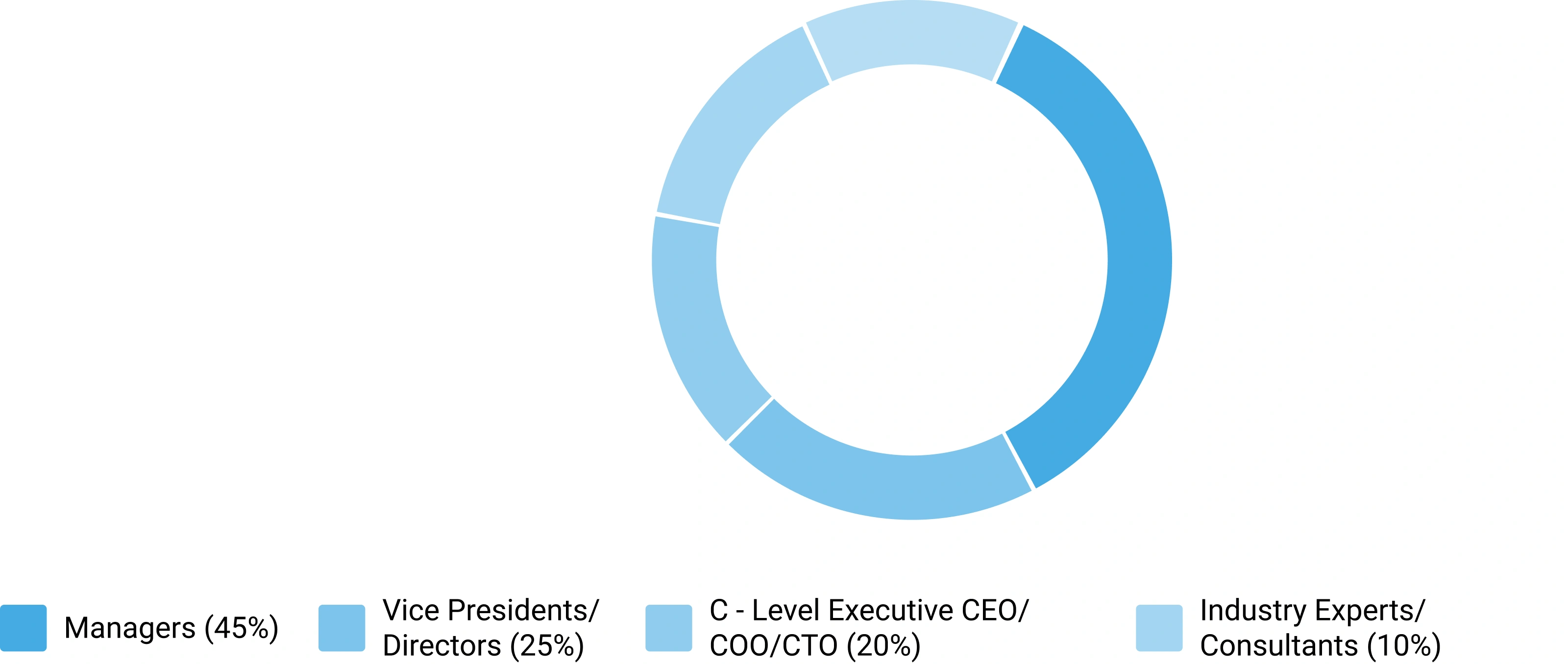
Primary Research — Respondent Designation Profile
Seniority breakdown of interview respondents (% share from PPT data)
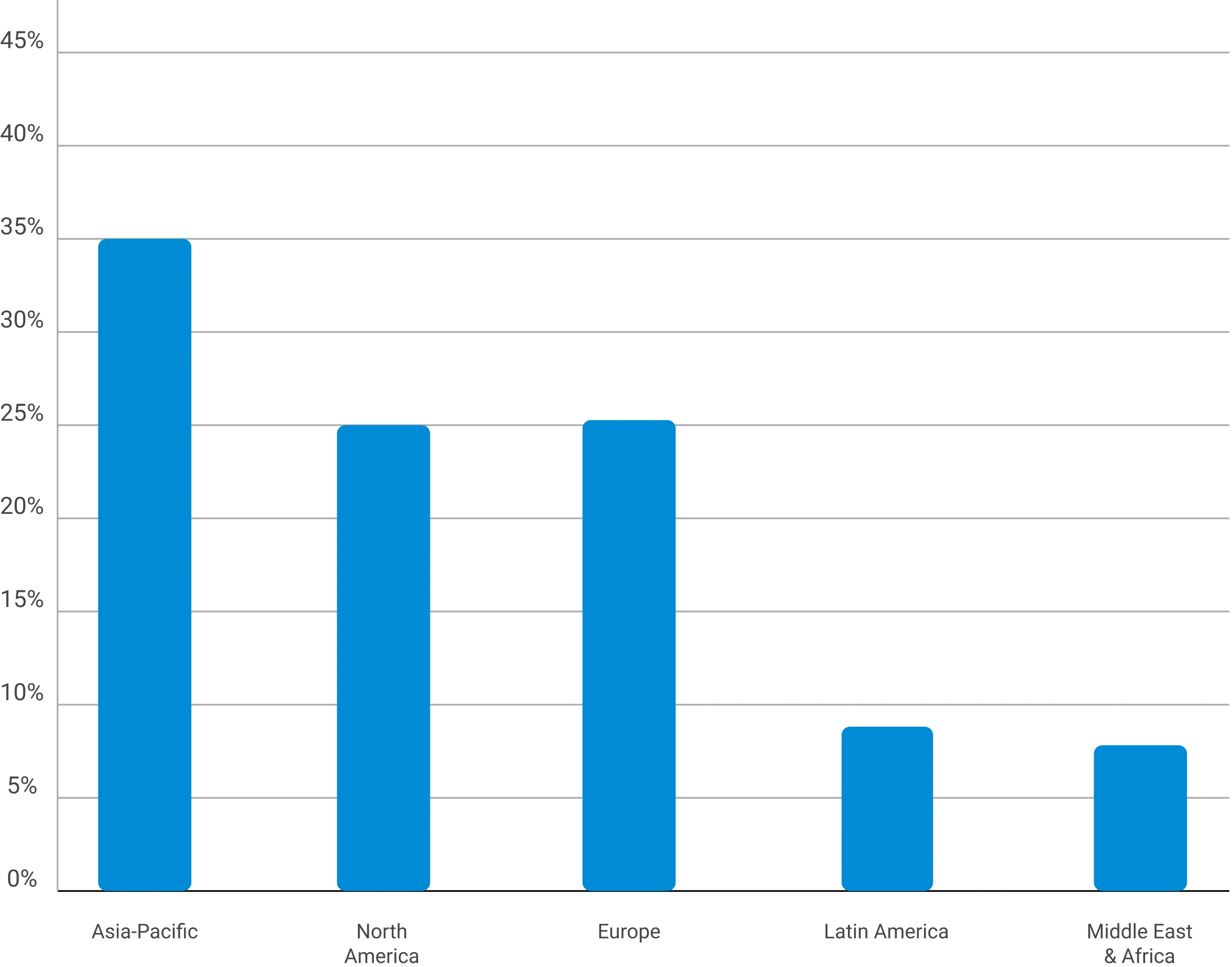
Primary Research — Geographic Coverage of Interviews
Regional distribution of primary research engagement (% share from PPT data)
Phase 6 — Data Triangulation and Market Validation
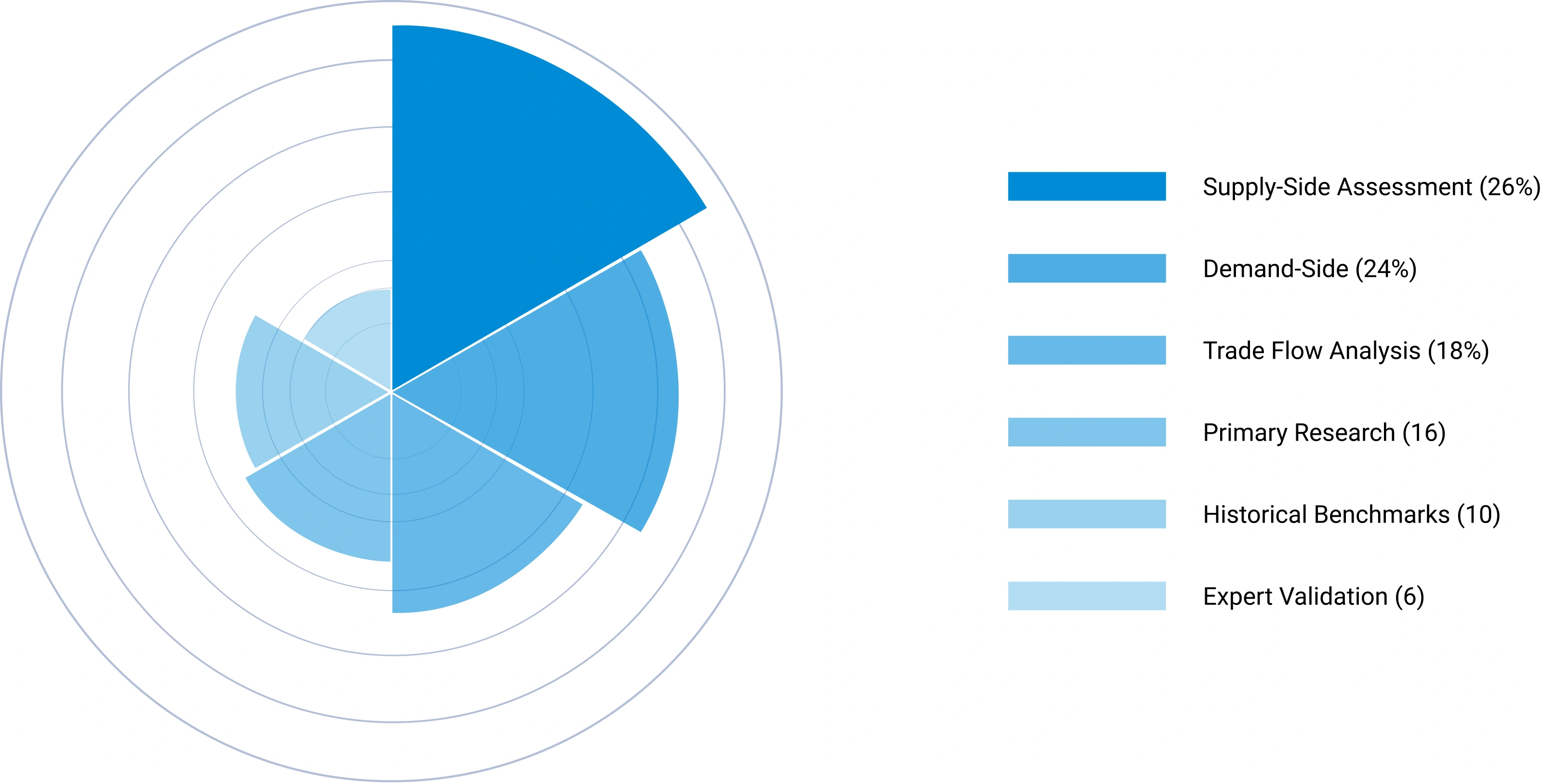
No single methodology is relied upon in isolation. Multiple independent estimation approaches are combined and reconciled to ensure consistency, accuracy, and analytical defensibility. Any material deviations between approaches are investigated and adjusted through additional validation cycles.
The final market size is derived through weighted triangulation of all validated methodologies. Any material deviations between approaches are investigated and adjusted through additional validation cycles. The outcome represents the most realistic assessment of the market based on available evidence and expert confirmation ensuring that volume and value estimates are fully consistent with one another.
Triangulation Framework — Input Contribution Weight
Relative weight each sizing input contributes to the final reconciled market estimate
Phase 7 — Forecast Modeling: Projecting Future Market Evolution
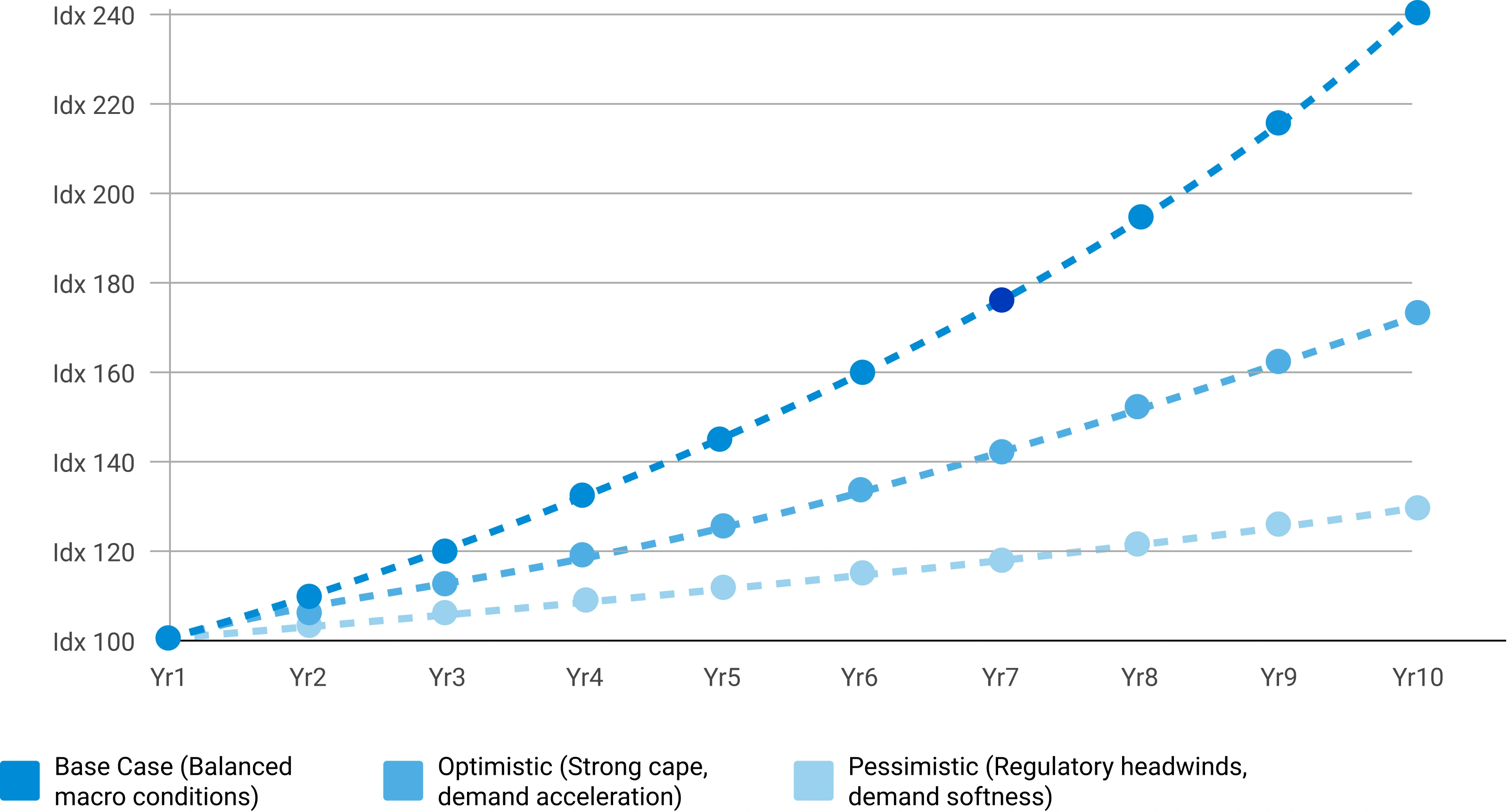
Forecasting evaluates the future trajectory of the market using a combination of quantitative indicators and qualitative assessments across economic, industry, and regulatory dimensions. Rather than simple extrapolation, each driver is independently modeled and integrated into a composite forecast.
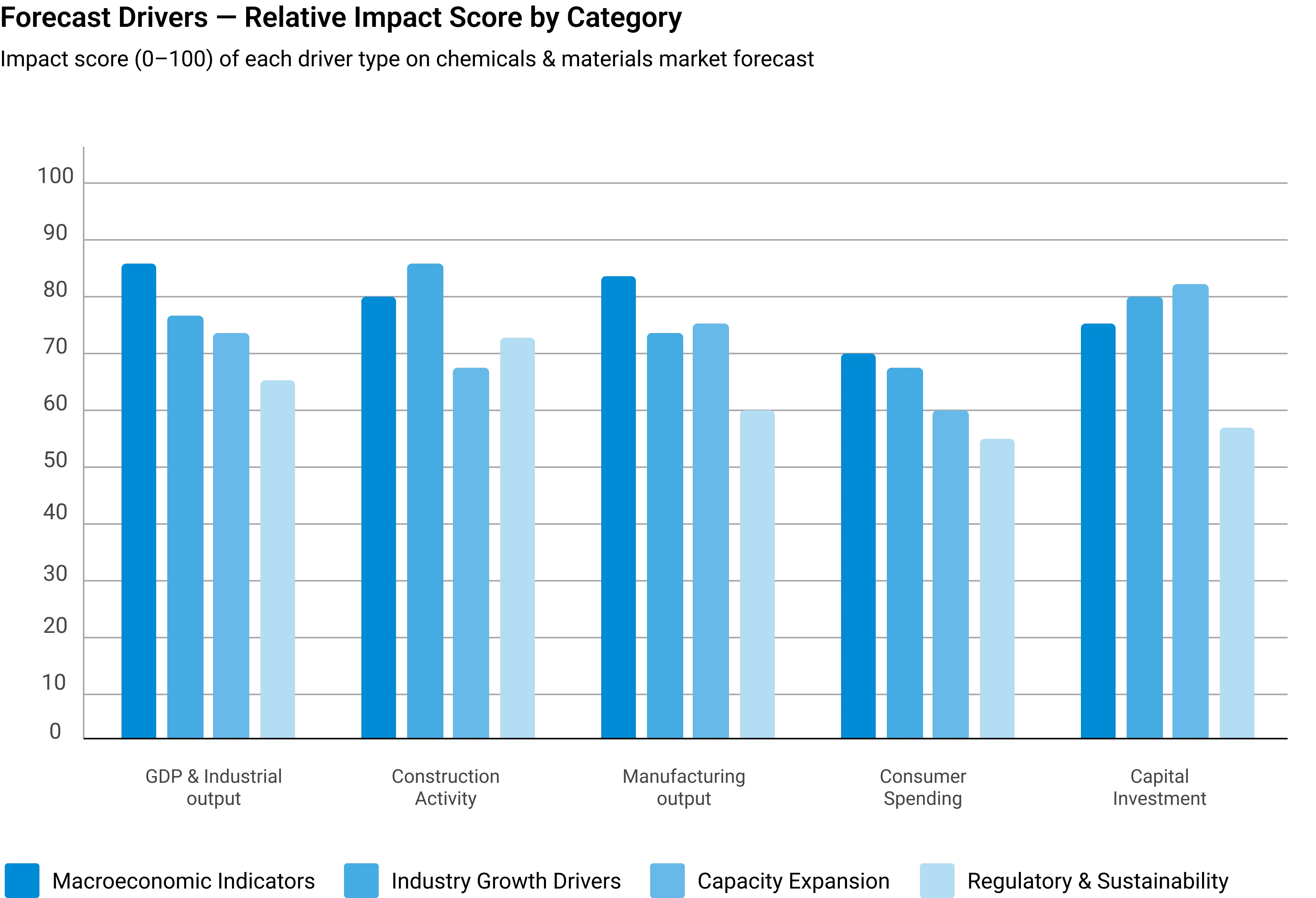
Macroeconomic Indicators
GDP growth, industrial production, manufacturing output, construction activity, consumer spending, and capital investment form the quantitative foundation of long-term demand projections. These are applied at country, regional, and global levels.
Industry Growth Drivers
Urbanization, infrastructure development, industrialization, technological innovation, sustainability initiatives, and evolving product performance requirements are assessed at regional and industry levels — capturing both structural and cyclical demand drivers.
Capacity Expansion Analysis
Announced plant expansions, new manufacturing facilities, technology upgrades, and strategic investments are evaluated to determine future supply-demand dynamics and potential market tightness or oversupply situations.
Regulatory & Sustainability
Environmental regulations, chemical safety standards, emission reduction targets, circular economy initiatives, and sustainability requirements are incorporated as they often influence product adoption rates and market growth trajectories.
Scenario Forecast Range — Indexed Market Growth (Year 1–10)
Illustrative indexed growth trajectories across Base, Optimistic, and Pessimistic scenarios over a 10-year forecast horizon
Forecast Drivers — Relative Impact Score by Category
Impact score (0–100) of each driver type on chemicals & materials market forecast



Comments
Share your thoughts, ask a question, or provide feedback about this report.