
Nanocoatings Market Size, Competitive Landscape Analysis Report 2035
The global nanocoatings market size was USD 20.10 billion in 2025 and is predicted to increase from USD 23.41 billion in 2026 and is expected to be worth around USD 92.17 billion by 2035, growing at a CAGR of 16.45% from 2026 to 2035. North America dominated the nanocoatings market with the largest revenue share of 42.08% in 2025. the rising demand for nano-coatings from various industries like automotive, electronics, construction, healthcare, and food & packaging drives the growth of the market.
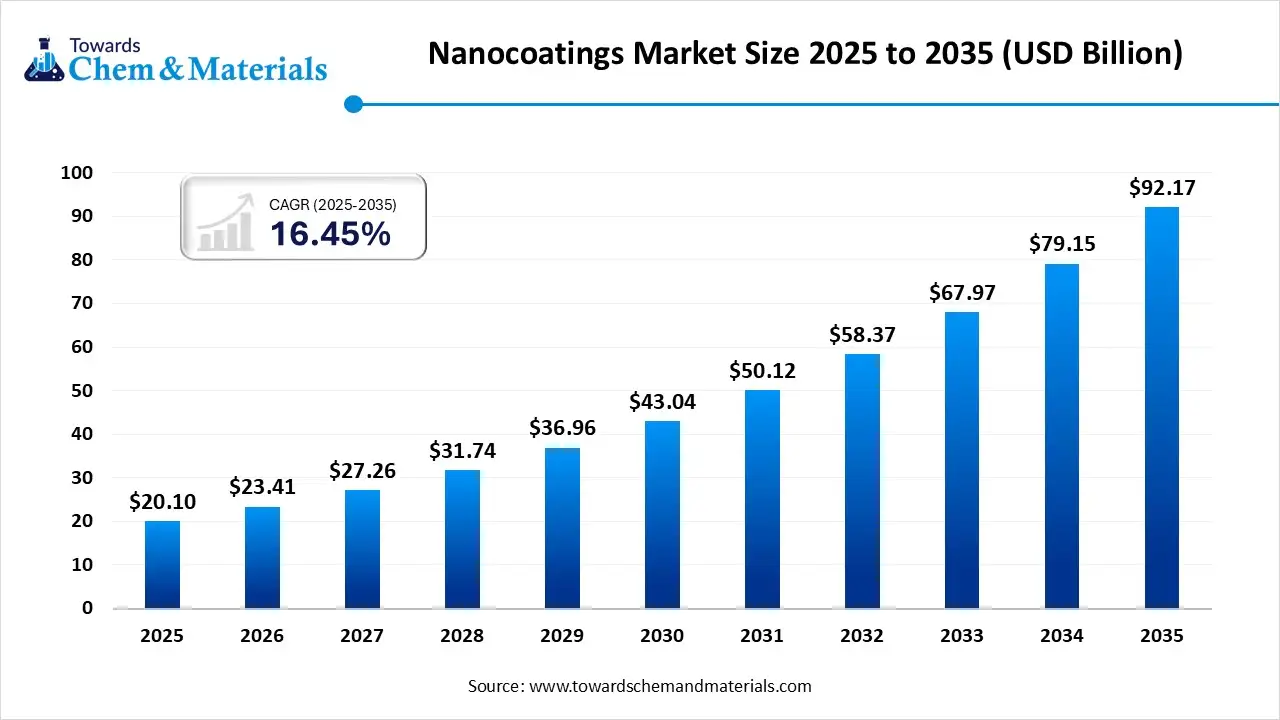
Market Highlights
- The North America dominated the nanocoatings market with the largest revenue share of 42.08% in 2025.
- The nanocoatings market in Asia Pacific is expected to grow at a substantial CAGR of 7.98% from 2026 to 2035.
- The Europe tempered glass market segment accounted for the major revenue share of 18.00% in 2025.
- By product, the anti-microbial product segment dominated the market and accounted for the largest revenue share of 32.02% in 2025.
- By product, the anti-fingerprint product segment is expected to grow at the fastest CAGR of 17.49% from 2026 to 2035 in terms of volume.
- By substrate, the metals substrate segment led the market with the largest revenue revenue share of 58.22% in 2025.
- By application, the medical & healthcare application segment dominated the market and accounted for the largest revenue share of 18.31% in 2025.
Nanocoatings Market Overview
Nano-coating is a protective coating that consists of an ultra-thin layer of materials applied to the surface to enhance qualities like durability, water-repellent, and scratch-repellent. It protects surfaces from dust, damage, dirt, and corrosion. These coatings are used in various industries like automotive, healthcare, packaging, construction, and textile to enhance product qualities. There are various types of nano-coating available, such as anti-corrosion, waterproof, antibacterial, thermal barrier, anti-fingerprint, and many more. The rising demand for high-performance coating is responsible for the growth of the market. Continuous technological advancement in nanotechnology and industries' preference for sustainability are key factors for the growth of the nano-coatings market. Nano-coating revolutionizing the construction sector.
The growing demand of construction uses nano-coating to improve durability, sustainability, and performance of construction materials. They build a protective layer on construction materials such as concrete, steel, and glass and extend the lifespan of the material. It consists of features like dirt resistance, water resistance, corrosion resistance, and pollution resistance. It helps to improve the insulation and energy efficiency of materials. In concrete, cement nano-coating helps to improve the durability and resistance of the material. It protects steel and metal from corrosion.
Nano-coating reduces the need for cleaning by providing self-cleaning and water-repellent surfaces on windows and glass. It is useful in various construction materials such as wood, brick, and plastic and drives market growth. Rising environmental concerns and preference for sustainability help in market growth. All these factors are responsible for reducing maintenance costs, which raises demand for nano-coatings in the construction and building sector.
- For Instance, In July 2023, HeatCure launched a glass coating product. That blocks heat from glass doors, windows, and facades. It protects against infrared and ultraviolet rays and offers a comfortable and energy-efficient indoor environment. The company says that glass coating reduces solar heat gain by 4 to 10 degrees Celsius, and the lifecycle of the material is 15 to 20 years.
Market Trends
- Energy conservation: Nano-coating materials applications such as thermal-cleaning and self-cleaning help to improve energy efficiency.
- Low maintenance cost: Nano-coating material surfaces are highly resistant to water, dirt, pollution, and other contaminants, which reduces the cost of cleaning. This factor helps in lowering maintenance costs.
- Technological innovations: Continuous technological innovations in nano-coating material enhance its functionality which helps in nano-coatings market expansion.
- Environment-friendly: Nano-coatings reduce the need for harmful chemicals, making them an environmentally friendly choice. It consists of a longer lifespan that helps in reducing waste material.
- Rising industrial adoption: Nano-coatings are widely used in various industries such as electronics, healthcare, aerospace, automotive, and construction, driving the growth of the nano-coatings market.
- Rising demand from the electronic sector: Consumers are using electronic products in daily life, such as smartphones, wearables, smart watches, tablets, laptops, and many more, which increases the demand for nano-coating materials due to their longer lifespan. In circuit boards, electronic components, and displays, these coatings are applied to prevent them from dirt, moisture, and wear and tear.
Report Scope
| Report Metric | Details |
| Market Size in 2026 | USD 23.41 billion |
| Expected market size in 2035 | USD 92.17 billion |
| Growth rate | CAGR of 16.45% |
| Base year | 2025 |
| Forecast period | 2026-2035 |
| Dominant region | North America |
| Segment covered | Product, substrate,coating methods,raw materials,application,region |
| Key companies profiled | Tesla NanoCoatings, Inc.; Nanovere Technologies, LLC.; P2i Ltd.; PPG Industries, Inc.; Nano Gate; Nanophase Technologies Corporation.; actnano; Forge Nano Inc.; Nanofilm. |
Market Opportunity
Rising demand from healthcare sector
Nano-coatings are widely used in the healthcare sector due to their improved biocompatibility, antimicrobial capabilities, and technological advancements in medical devices. It helps to prevent microbial growth, bacterial growth, and biofilm formation on medical devices due to this infection risks reduces. It helps improve the durability and resistance of medical devices. Materials made using nano-coating don’t cause any harm to the body due to their biocompatibility. They can be used in diagnostic tools and imaging agents. In healthcare, nano-coating is used in medical implants like stents, catheters, and prosthetic devices to reduce the risk of infections. Companies like 3M Healthcare, Bio-Gate AG, Smith & Nephew plc, and many more support the growth of the market in the sector.
Market Challenge
Complex manufacturing process of nano-coating production.
Despite the several benefits of nano-coating, the complex manufacturing process is restricting the growth of the market. Manufacturing nano-coating materials requires intricate processes, specialized equipment, and expertise in technology. These materials are made up of thin coatings that require techniques like physical vapor deposition, chemical vapor deposition, and electroplating. These properties enhance the hydrophobicity and corrosion resistance of materials. Some nano-coating processes are sensitive to conditions such as temperature and air quality, which hampers the manufacturing process. This complex process creates problems in maintaining the quality of coating which results in the limitation in the nano-coatings market expansion.
Value Chain Analysis
Research & Development (R&D)
- This focuses on developing advanced nanotechnology materials and optimizing molecular structures for superior properties.
- Key Players: PPG Industries, BASF, AkzoNobel, 3M, Nanophase Technologies Corporation, and Tesla NanoCoatings Inc.
Regulatory Approval and Standardization
- This focuses on safety, toxicity, and environmental impact, requiring certifications for specific industries like food packaging and medical devices.
- Key Players: Regulatory bodies like the EPA, EU directives on VOCs, and NABL.
Raw Material Sourcing and Manufacturing
- This involves high-precision, complex production processes (vapor-phase deposition, liquid-phase deposition, sol-gel) to create nano-scale layers.
- Key Players: Bio-Gate AG, Buhler PARTEC GmbH, Nanogate SE, Nanofilm Technologies International, actnano, and Forge Nano.
Logistics and Distribution
- This involves specialized, secure, and often temperature-controlled transport for raw materials and finished specialized coatings.
- Key Players: 3M, PPG, and BASF.
Application and Commercialization
- This involves applying the coating onto end-use products and selling the final product to consumers or industrial clients.
- Key Players: P2i Ltd., actnano, Tesla NanoCoatings, Tesla, Hyundai, and Samsung.
Market Segmental Insights
By Product
The anti-microbial segment dominated the nano-coatings market in 2025. The rising demand for long-term protection against microbial contamination and pathogens to prevent infections drives the growth of the market. Rising awareness about hygiene and cleanliness in industries like healthcare and food packaging fuels the market growth. It protects the surface from microbial growth and maintains hygiene. The increasing demand from the textile industry to avoid bacterial growth and prevent odour propels the market growth.
The anti-fingerprint segment expects the fastest growth in the nano-coatings market during the forecast period. Increasing demand for anti-smudging and anti-adhesive properties from industries like automotive and electronics drives the growth of the market. This coating provides a clean & sleek appearance. These types of coatings are important for touch-based technology to maintain cleanliness, and they reduce maintenance costs. Sectors like stainless steel, consumer goods, automotive, building, and construction increase demand for anti-fingerprint coatings and drive market growth.
By Application
The medical & healthcare segment dominated the nano-coatings market in 2025. The growing awareness about hygiene fuels the market growth. Rising demand from the medical industry to improve the durability and biocompatibility of medical devices and equipment drives the market growth. To reduce the growth of microorganisms and infection, the healthcare industry requires nano-coatings. These coatings enhance lifespan and protect medical devices from corrosion & damage. In the healthcare industry, medical devices, surgical tools, diagnostic equipment, and therapeutic devices use nano-coating materials and drive market growth.
The energy application segment expects a significant growth in the nano-coatings market during the forecast period. The growing consumer demand for renewable energy sources helps in the market growth. In solar energy, by reducing light reflection and enhancing light absorption, nano-coating increases the efficiency of solar panels. It used to manufacture advanced batteries. Rising energy production and minimized energy consumption drive the market growth. Stringent environmental policies and innovations in technology foster the growth of the market.
Regional Insights
North America dominated the nano-coating market in 2025. Rising demand from industries like healthcare, automotive, electronics, and construction helps in the growth of the market. A well-developed technological infrastructure and significant investment in research and development fuel market growth in the region. A strong demand for environment-friendly and sustainable choices increases demands for nano-coatings. The presence of key manufacturers in the region helps in the growth of the market. Strong government subsidies, policies, and interest rates increased the adoption of nano-coatings. The growing utilization of premium vehicles in the region drives the growth of the market.
The United States dominates the nano-coating market. A well-developed technological infrastructure and strong investment in research and development drive the market growth. In the United States, automotive, electronics, aerospace, and construction are key users of nano-coating material. Rising preference for sustainability and awareness about environmental concerns demand eco-friendly nano-coatings material. The United States consists of key manufacturers of nano-coating material that further fuels market growth.
Asia-Pacific expecting the fastest growth in the nano-coatings market during the forecast period. The growing civilization and industrialization in the region drive the growth of the market. Countries like China, India, and Japan demand advanced coating materials, which fuels the market growth. The automotive and electronics sector experiences growth in the region, driving demand for nanocoating material. The construction industry is booming in the region, which raises demands for decorative and protective coating. The government is investing in infrastructure development, and growing innovations are driving the growth of the market. Additionally, rapid economic growth and rising disposable income in the region propel the market growth.
China experiences rapid growth in the nano-coating market.The growing automotive industry and increased government support are fueling the market growth. Rising demand from various industries like construction, electronics, and healthcare drives the market growth. The rising industrialization and civilization demanded advanced materials that supported the market growth.
- For instance,In March 2025, Koala paper launched an AI-driven nano-coated inkjet label for sustainable packaging. It is an eco-friendly labeling solution and is used in industries like food and beverage, medicine, and healthcare. Labels are coated with nano-coating material that improves the adhesion of ink and enhances ink resistance from environmental factors like moisture, UV rays, and extreme temperature.
How will Europe be considered notable region in the Nanocoatings Market?
Europe is a notably growing region in the global market, characterized by rigorous environmental regulations, a robust, established industrial manufacturing base, and significant investments in R&D. The EU's focus on sustainability, exemplified by the European Green Deal, drives demand for eco-friendly, low-VOC, and sustainable nanocoatings. The strong manufacturing sectors in countries like Germany, Italy, and France require high-performance, lightweight, and anticorrosion coatings for automotive, aerospace, and marine applications, thereby improving efficiency and reducing maintenance costs.
Germany Nanocoatings Market Trends
Germany is a key player in the global market, largely due to its strong automotive, aerospace, and medical technology sectors, which create high demand for abrasion-resistant and antimicrobial coatings. Companies such as Evonik Industries and Nano-Care AG are actively developing and applying nanotechnology products. The region’s emphasis on low-VOC and sustainable materials, fueled by EU regulations, further drives the market toward eco-friendly solutions.
Emergence of Latin America in the Nanocoatings Market
Latin America is an emerging region in the global market, primarily due to rapid industrialization and increased demand from key sectors like automotive and construction. Substantial public-private partnerships in infrastructure are boosting the need for durable, corrosion-resistant, and sometimes self-cleaning nanocoatings, especially in Colombia, Peru, and Brazil. The automotive industries in Mexico and Brazil are recovering and shifting toward electric vehicle production, focusing on battery packs, fire protection, and thermal management for advanced coatings in manufacturing corridors.
Brazil Nanocoatings Market Trends
Brazil has emerged as a significant market within the region, driven by extensive infrastructure developments and a recovering automotive sector. The expansion of the construction sector and the need for infrastructure repair are fueling this growth. Additionally, there is increasing investment in nanotechnology for textiles, medical, and aerospace applications. Major companies like WEG and PPG are investing in expanding capacity for industrial liquid paints and powder coatings in Brazil.
How will the Middle East and Africa contribute to the Nanocoatings Market?
The Middle East and Africa region is also a key contributor to the global market. This region's growth is largely driven by the urgent demand for advanced, durable, and self-cleaning protective coatings suitable for extreme climates. Rapid urbanization and Vision initiatives in the Gulf Cooperation Council countries necessitate high-performance, long-lasting coatings for skyscrapers, bridges, and smart cities. The growing adoption of green building certifications mandates the use of energy-efficient materials, increasing the demand for solar-reflective and heat-insulating nanocoatings.
The UAE Nanocoatings Market Trends
The UAE stands out as a mature market within this region, leveraging its strategic position to focus on high-performance coatings, particularly in the oil and gas, marine, and construction sectors. Major players like Jotun UAE Ltd. and National Paints have established large, technologically advanced manufacturing bases in the area, positioning the UAE as a testbed for advanced, high-performance, and sustainable coatings, often driven by intense environmental conditions.
Recent Developments
- In March 2025, the Plasmalex company launched PlasmaGuard X, a 100% PFAS-free conformal barrier coating. It offers protection to medical devices, consumer electronics, PCBAS, and various non-woven or non-fiber material. It consists of high-barrier and corrosion protection properties. It is an environment-friendly and cost-effective solution.
- In June 2024, Hyundai launched nanocoating film to reduce in-car temperature in Pakistan. Hyundai India said this initiative will also be launched in Indian vehicles. The nano coating film reduces cabin temperature up to 10.98 degrees and 12.33 degrees Celsius. Hyundai says that nanocoating film with a regular window increases the cooling effect.
- In July 2024, Hong Kong builder Chinachem group, Nano and Advanced Material Institute collaborated to launch a sustainable protective window coating. It uses green technology to reduce construction waste and enhance construction quality. Nanocoating enhances cost-effectiveness. Nanocoating eliminates the need for additional board wrapping, and it is easily removable and reusable.
Top Companies List
- Cima NanoTech Inc.
- Buhler PARTECH GmbH
- Bio-Gate AG
- NanoShine Ltd
- Tesla NanoCoatings
- Nanovere Technologies, LLC
- P2i Ltd.
- Nano gate
- PPG Industries, Inc.
- Nanophase Technologies Corporation
- actnano
- Forge Nano Inc.
- Nanofilm
- Evonic Industries AG
- NanoMech
- Nanova Care Coat
Segments Covered In The Report
By Product
- Anti-Microbial
- Anti-Fingerprint
- Anti-Fouling & Easy-To-Clean
- Self-Cleaning
- Others
By Substrate
- Metals
- Glass
- Plastics
- Ceramics
- Wood
- Others
By Coating Methods
- Cvd
- Pvd
By Raw Material
- Al2 O3
- Ti O2
By Application
- Medical & Healthcare
- Energy
- Packaging
- Food Manufacturing
- Marine
- Water Treatment
- Electronics
- Buildings & Construction
- Automotive
- Aerospace & defense
- Others
By Regional
- North America
- Asia Pacific
- Europe
- Latin America
- Middle East and Africa
A Seven-Phase Framework
Our methodology is designed to be universally applicable across commodity chemicals, specialty chemicals, petrochemicals, construction chemicals, coatings, electronic chemicals, industrial gases, agrochemicals, water treatment chemicals, and performance materials. Each phase builds upon the last, creating a layered validation structure that minimizes estimation error and maximizes analytical confidence.
The framework ensures comprehensive market coverage, robust cross-validation, and reliable long-term forecasting — producing market estimates that withstand scrutiny from investors, regulators, and corporate strategy teams.

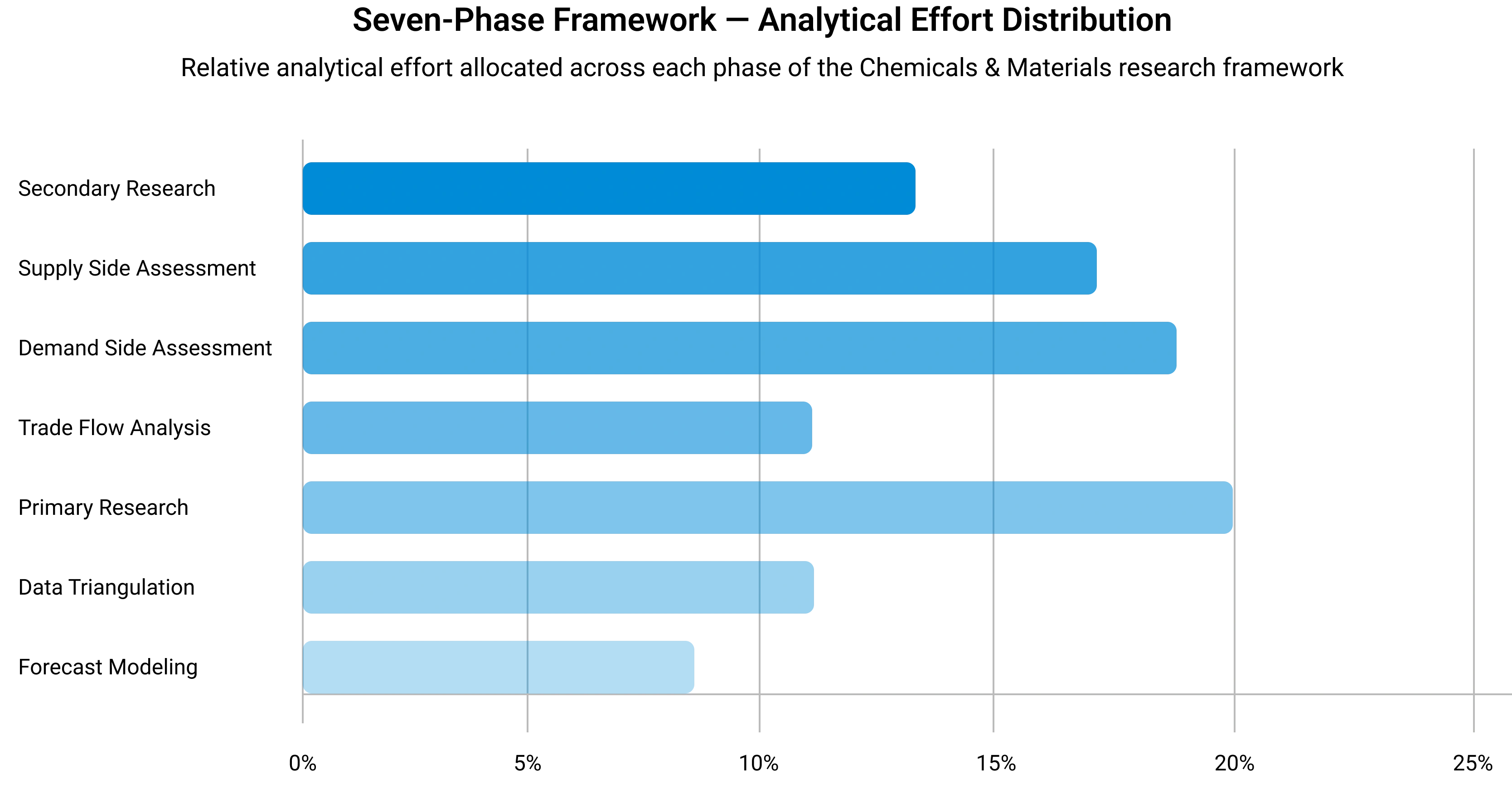
Seven-Phase Framework — Analytical Effort Distribution
Relative analytical effort allocated across each phase of the Chemicals & Materials research framework
Phase 1 - Secondary Research: Establishing the Foundation
Secondary research collects and evaluates publicly available information from authoritative sources, establishing the foundational understanding of market structure, value chain dynamics, competitive landscape, and end-use demand patterns. Every source is evaluated for credibility, recency, geographic relevance, and methodological soundness before inclusion.
Industry Associations
Sources include ACC, CEFIC, ICCA, JCIA, CPCIF, and SOCMA providing production volumes, consumption trends, capacity developments, and sustainability initiatives.
Company Disclosures
Annual reports, investor presentations, earnings transcripts, and regulatory filings reveal product portfolios, manufacturing footprints, capacity expansions, and revenue segmentation.
Government Databases
National statistical offices, customs authorities, environmental agencies, and industrial production databases provide verified statistics on output, trade flows, and regulatory compliance.
Trade Databases
UN Comtrade, ITC, Eurostat, and national customs authorities enable assessment of global product movement, import dependency, and export competitiveness across regions.
Our Secondary Research Sources
- Ministry of Chemicals and Fertilizers
- European Chemicals Agency
- United States Department of Energy
- Ministry of Industry and Information Technology
- Ministry of Economy Trade and Industry
- Ministry of Trade Industry and Energy
- National Institute of Standards and Technology
- Council of Scientific and Industrial Research
- Fraunhofer Society
- National Institute for Materials Science
Phase 2 — Supply-Side Assessment: Mapping Production Capabilities
Production Capacity Analysis
All major manufacturers are assessed for existing installed capacity, planned additions, expansions, new plant announcements, and technology adoption — mapped at global, regional, and country levels.
Capacity Utilization Adjustment
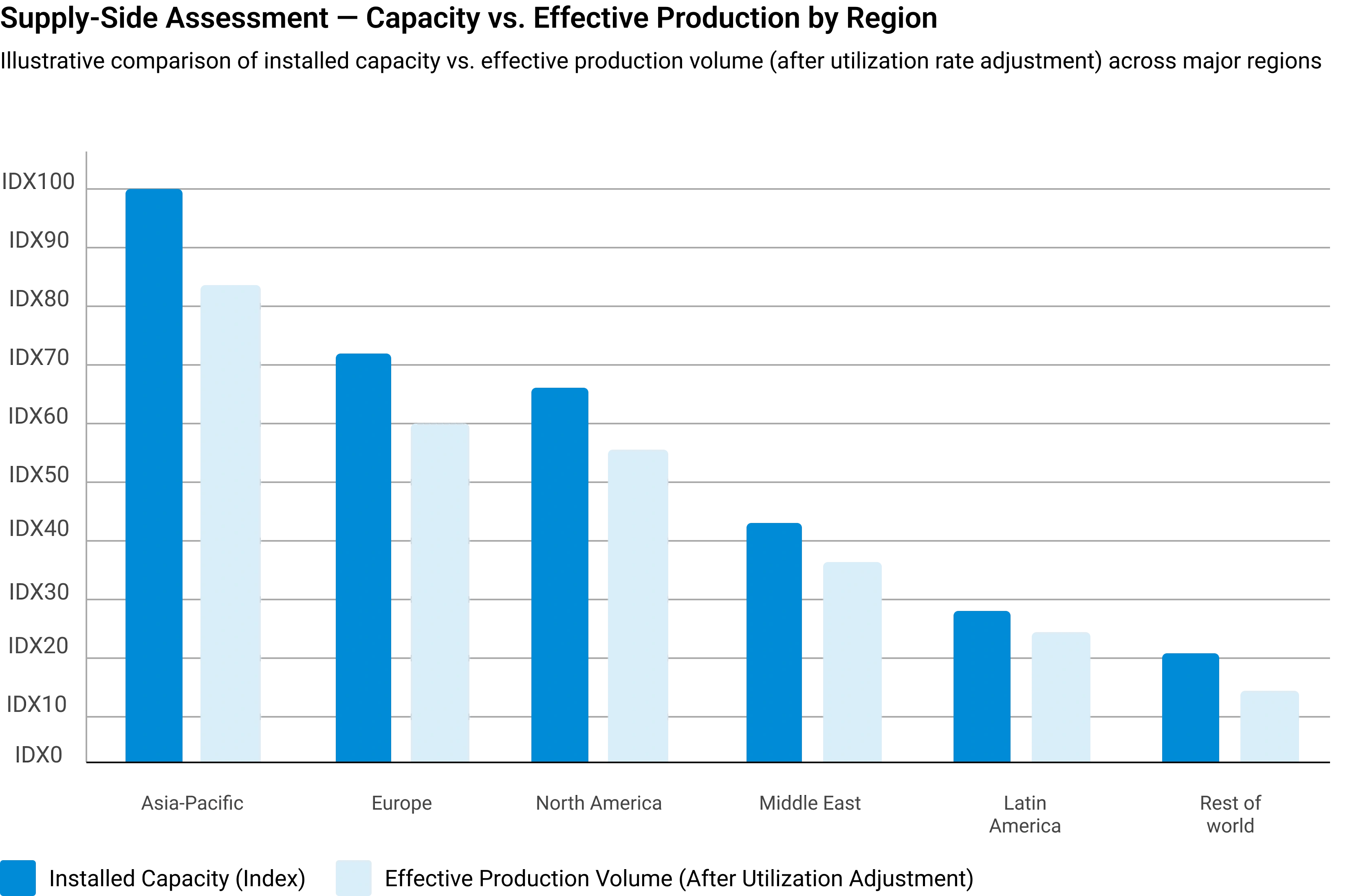
Installed capacity is adjusted using utilization rates based on demand conditions, feedstock availability, plant operating rates, maintenance schedules, and regulatory restrictions.
Manufacturer Revenue Analysis
Product-specific revenues, segment-level performance, regional distribution, average selling prices, and margin trends are evaluated to establish market value estimates.
Supply-Side Assessment — Capacity vs. Effective Production by Region
Illustrative comparison of installed capacity vs. effective production volume (after utilization rate adjustment) across major regions
Phase 3 — Demand-Side Assessment: Quantifying Chemical Consumption
Demand-side analysis quantifies chemical consumption across industries, applications, and geographies — identifying where and how chemicals are consumed throughout the value chain with precision.
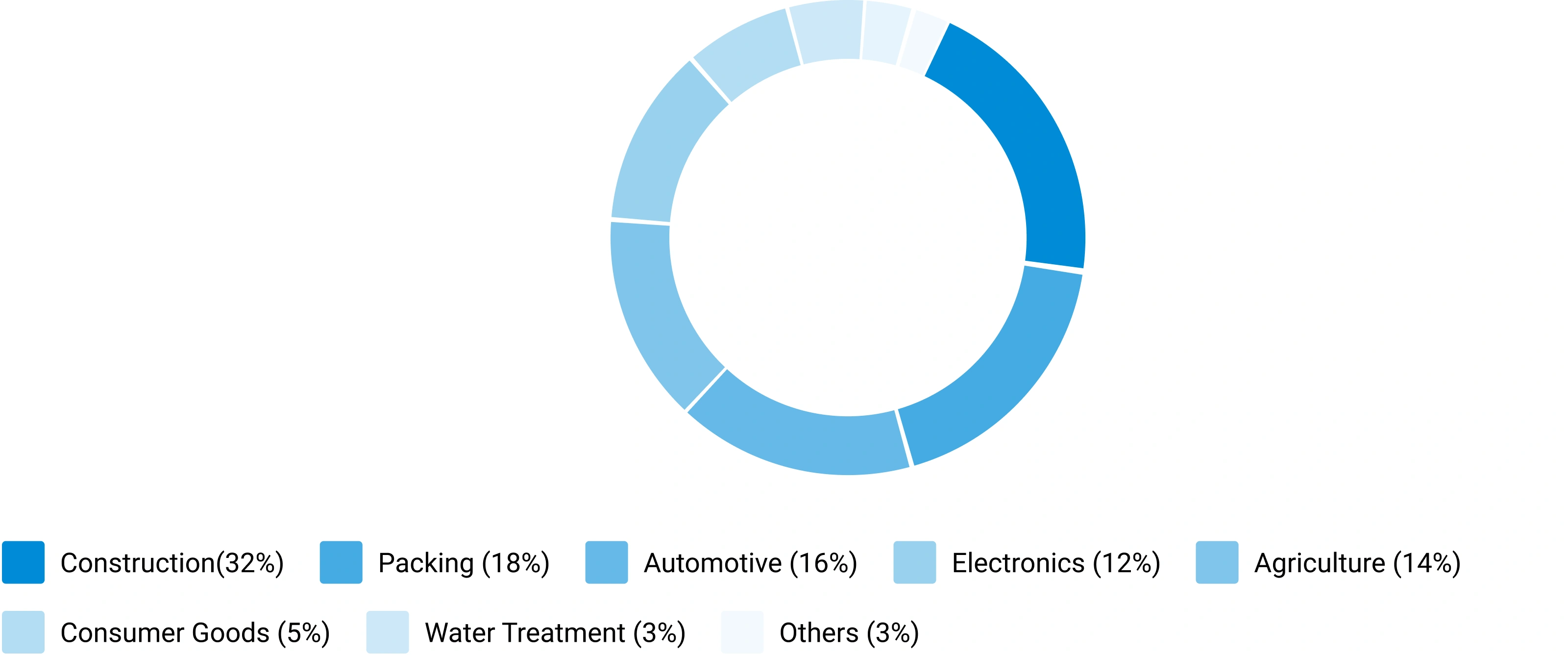
End-Use Industry Analysis
Chemical demand is evaluated across automotive, construction, packaging, electronics, agriculture, healthcare, consumer goods, industrial manufacturing, energy and utilities, and water treatment. Industry output, production trends, and consumption intensity are analyzed to determine demand patterns.
Consumption Modeling
Demand is estimated using measurable indicators: kilograms per vehicle, kilograms per square meter of construction, dosage per cubic meter of water treated, kilograms per hectare of agricultural land, and kilograms per ton of manufactured products. Consumption factors are validated through industry publications and primary interviews.
Application Analysis
The market is segmented by application area to understand product performance requirements, formulation trends, technology adoption, customer preferences, and regulatory requirements improving demand accuracy and segmentation granularity.
Demand-Side Assessment — End-Use Industry Demand Distribution
Illustrative distribution of chemical & materials demand across key end-use industries
Phase 4 - Trade Flow Analysis: Balancing Regional Supply and Demand
Trade flow analysis reconciles regional supply and demand estimates through import and export data, identifying net supply positions, regional dependencies, and market imbalances. It serves as an independent validation layer that tests the consistency of supply-side and demand-side estimates.
Import Analysis
Import data is evaluated to determine volumes, source countries, product dependency, regional supply gaps, and pricing trends — identifying markets that rely heavily on external supply and where domestic production is insufficient to meet demand.
Export Analysis
Export assessments reveal production surplus, export competitiveness, regional manufacturing strength, and global market participation. Export patterns also help validate domestic production estimates and identify net exporting regions.
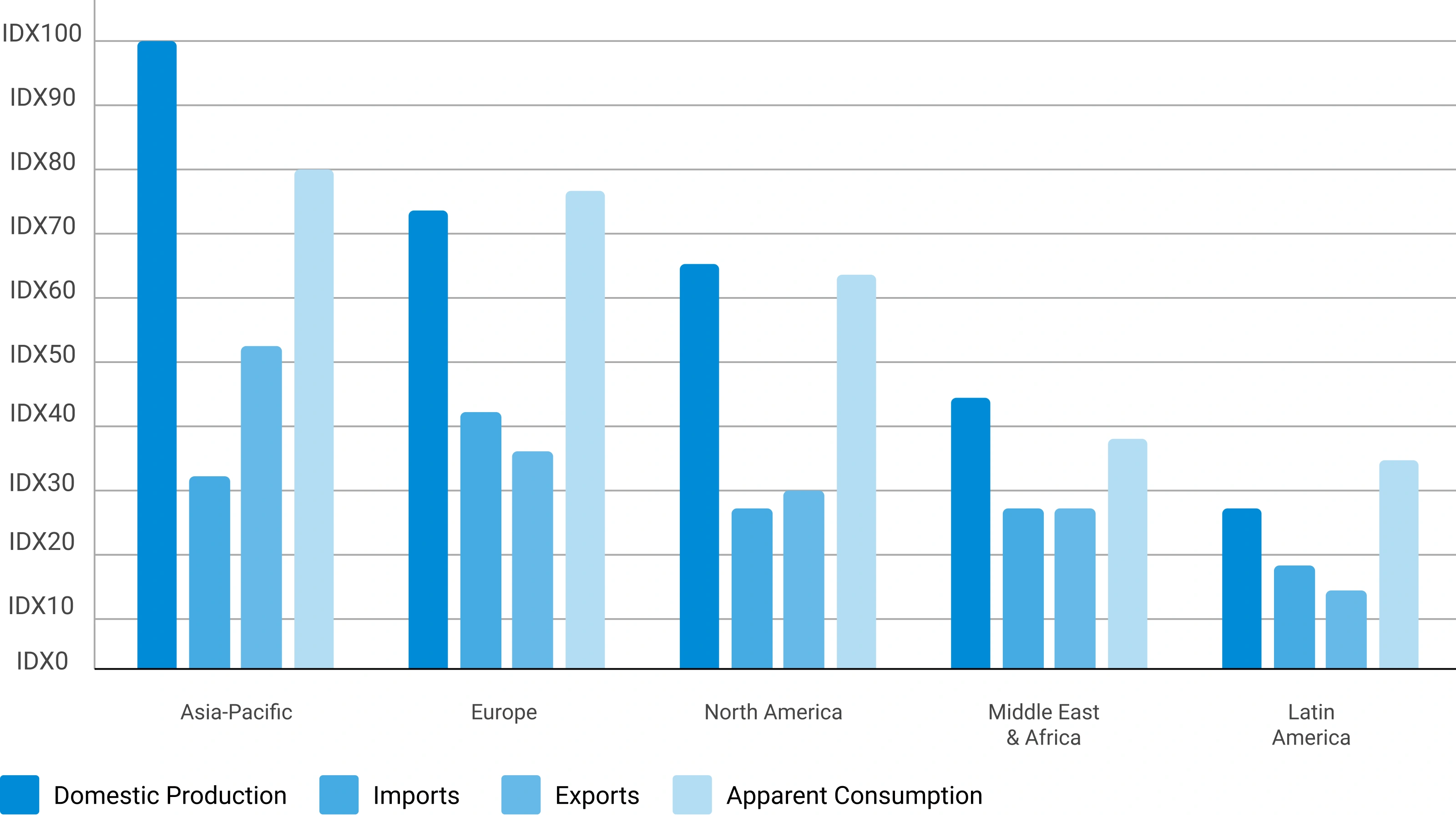
Apparent Consumption Model
Regional consumption is assessed using the standard apparent consumption formula:
Results identify net importing regions, net exporting regions, regional deficits, and surpluses — serving as an independent validation of supply and demand estimates.
Trade Flow Analysis — Net Supply Position by Region
Illustrative apparent consumption vs. domestic production across major regions — positive gap indicates net import dependency
Phase 5 — Primary Research: The Critical Validation Layer
Primary research tests and refines findings from secondary research through direct engagement with industry participants across the supply chain, demand side, and expert community. It captures intelligence that no database or published report can provide — the real-world experience of manufacturers, buyers, and specialists operating in the market.

Supply-Side Interviews
Conversations with chemical manufacturers, raw material suppliers, contract manufacturers, technology providers, and plant operators cover production trends, capacity utilization, pricing developments, technology shifts, and competitive dynamics.

Demand-Side Interviews
Engagement with OEMs, industrial consumers, procurement managers, distributors, formulators, and end-use manufacturers focuses on consumption trends, purchasing behavior, product substitution, demand outlook, and emerging applications.

Industry Expert Consultations
Additional interviews with industry consultants, independent experts, regulatory specialists, technical professionals, and research institutions provide deeper market context and validate key analytical assumptions.
Focus Areas of Primary Research:
Market Size & Forecast Validation
Revenue estimates, volume consumption, growth rates, forecast assumptions, regional demand.Supply Chain & Value Chain Assessment
Raw material sourcing, supply chain challenges, distribution networks, procurement practices.Production & Capacity Analysis
Manufacturing capacity, utilization rates, expansion projects, plant investments.Pricing & Cost Structure Analysis
Product pricing trends, feedstock costs, energy costs, margin pressures, pricing outlook.Competitive Landscape Assessment
Volume and value estimates confirmed to be fully consistent with one another before publicationInterview Volume by Market Scope
| Study Scope | Number of Interviews |
|---|---|
| Niche Market | 20 – 30 |
| Mid-Sized Market | 30 – 50 |
| Global Market | 50 – 80 |
| Highly Fragmented Market | 80 – 120 |
Interview Details:
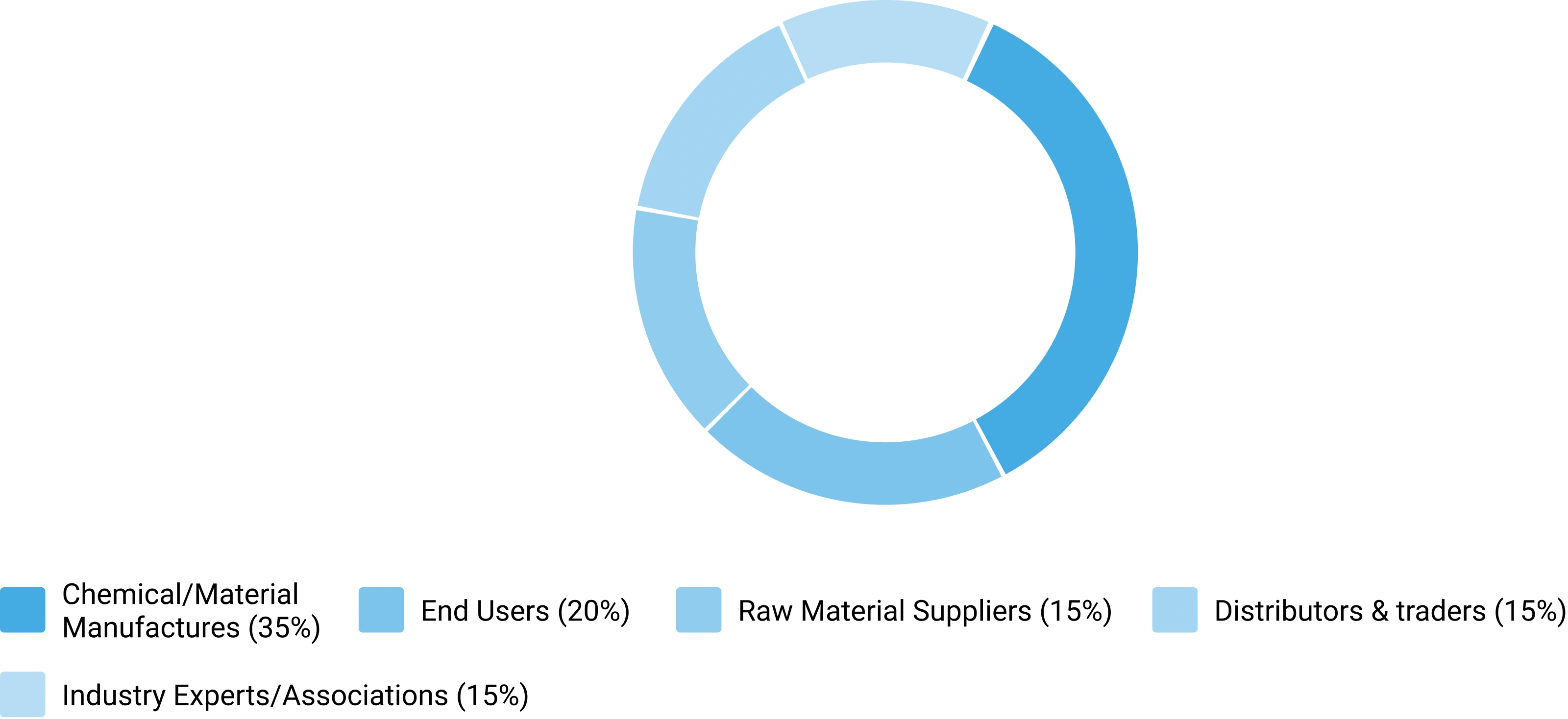
Category : Manufacturers, Suppliers, Distributors, End Users, Experts/Associations
Average Duration : 30–60 Minutes
Interview Mode : Video calls, telephonic interviews, expert consultations
Interview Format : Structured / Semi-Structured questionnaire
Focus Areas of Primary Research:
Market Size & Forecast Validation :
Revenue estimates, volume consumption, growth rates, forecast assumptions, regional demand.
Supply Chain & Value Chain Assessment :
Raw material sourcing, supply chain challenges, distribution networks, procurement practices.
Production & Capacity Analysis :
Manufacturing capacity, utilization rates, expansion projects, plant investments.
Pricing & Cost Structure Analysis :
Product pricing trends, feedstock costs, energy costs, margin pressures, pricing outlook.
Competitive Landscape Assessment :
Market share, competitor positioning, strategic initiatives, partnerships, acquisitions.
Primary Research — Stakeholder Coverage by Category
Distribution of interview respondents across stakeholder categories (% share from PPT data)
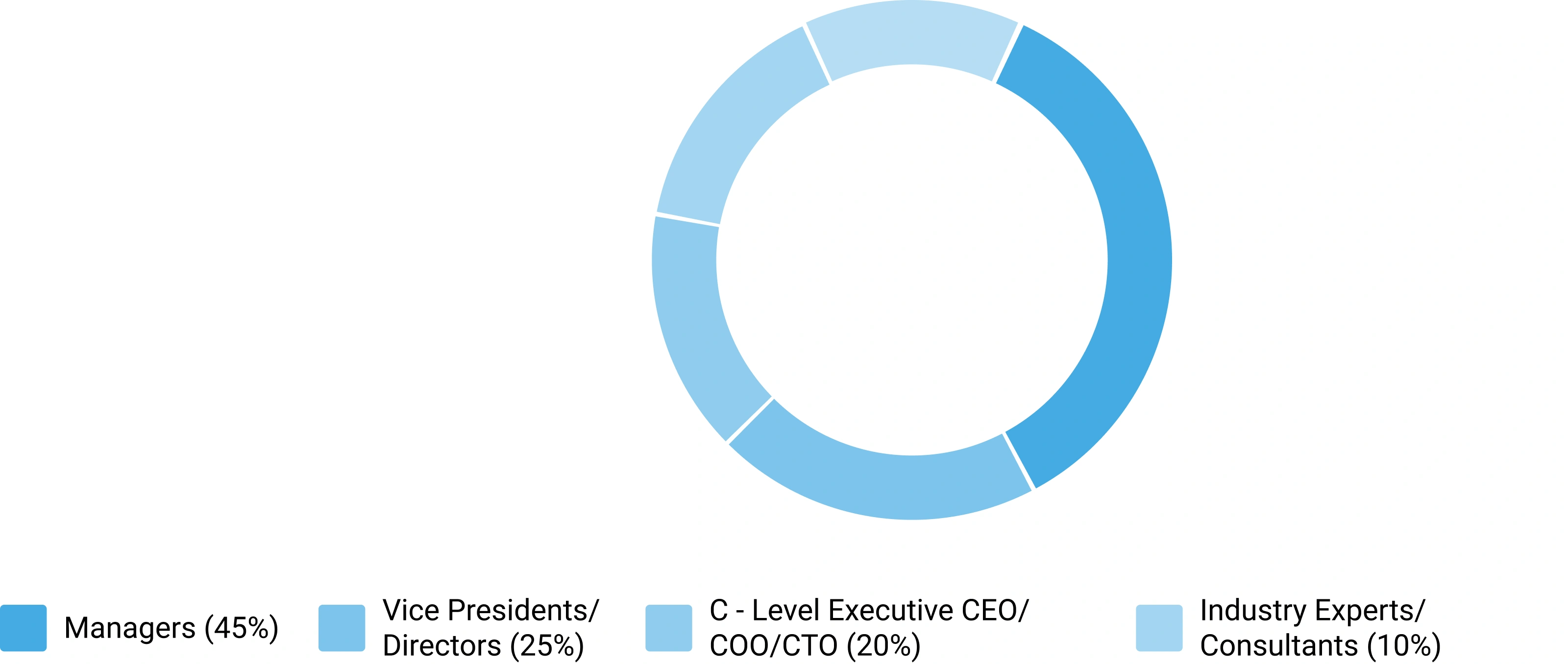
Primary Research — Respondent Designation Profile
Seniority breakdown of interview respondents (% share from PPT data)
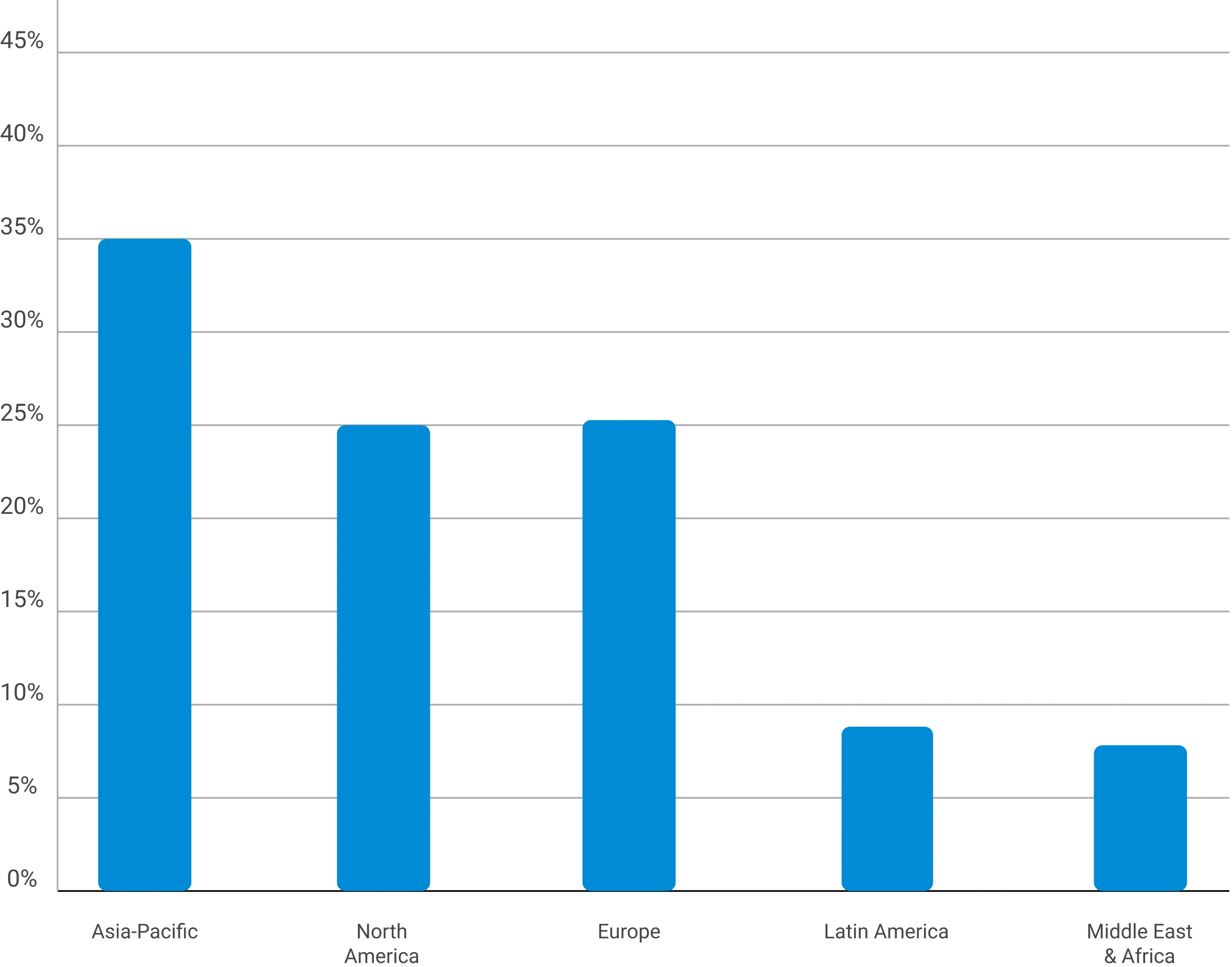
Primary Research — Geographic Coverage of Interviews
Regional distribution of primary research engagement (% share from PPT data)
Phase 6 — Data Triangulation and Market Validation
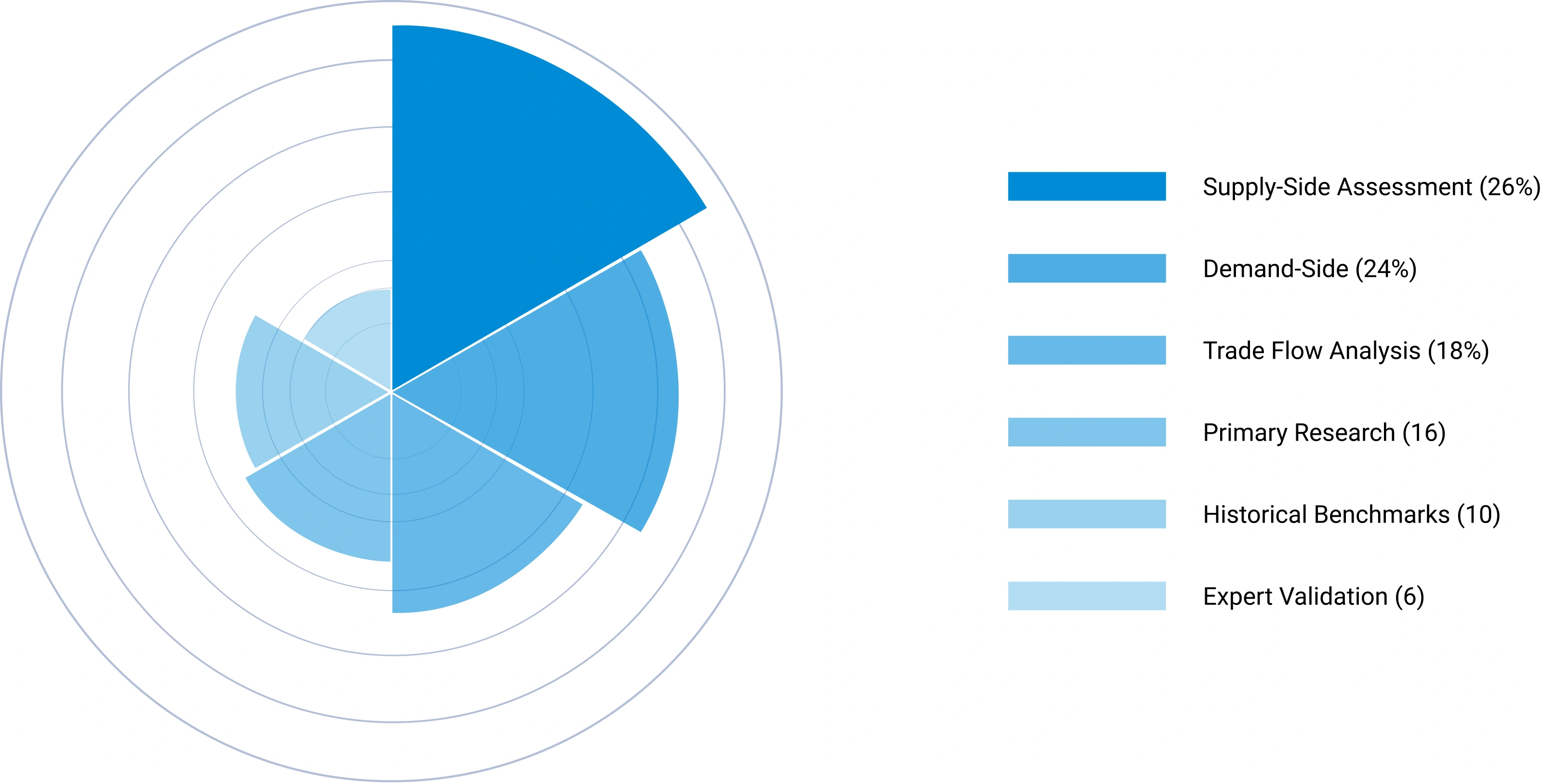
No single methodology is relied upon in isolation. Multiple independent estimation approaches are combined and reconciled to ensure consistency, accuracy, and analytical defensibility. Any material deviations between approaches are investigated and adjusted through additional validation cycles.
The final market size is derived through weighted triangulation of all validated methodologies. Any material deviations between approaches are investigated and adjusted through additional validation cycles. The outcome represents the most realistic assessment of the market based on available evidence and expert confirmation ensuring that volume and value estimates are fully consistent with one another.
Triangulation Framework — Input Contribution Weight
Relative weight each sizing input contributes to the final reconciled market estimate
Phase 7 — Forecast Modeling: Projecting Future Market Evolution
Forecasting evaluates the future trajectory of the market using a combination of quantitative indicators and qualitative assessments across economic, industry, and regulatory dimensions. Rather than simple extrapolation, each driver is independently modeled and integrated into a composite forecast.
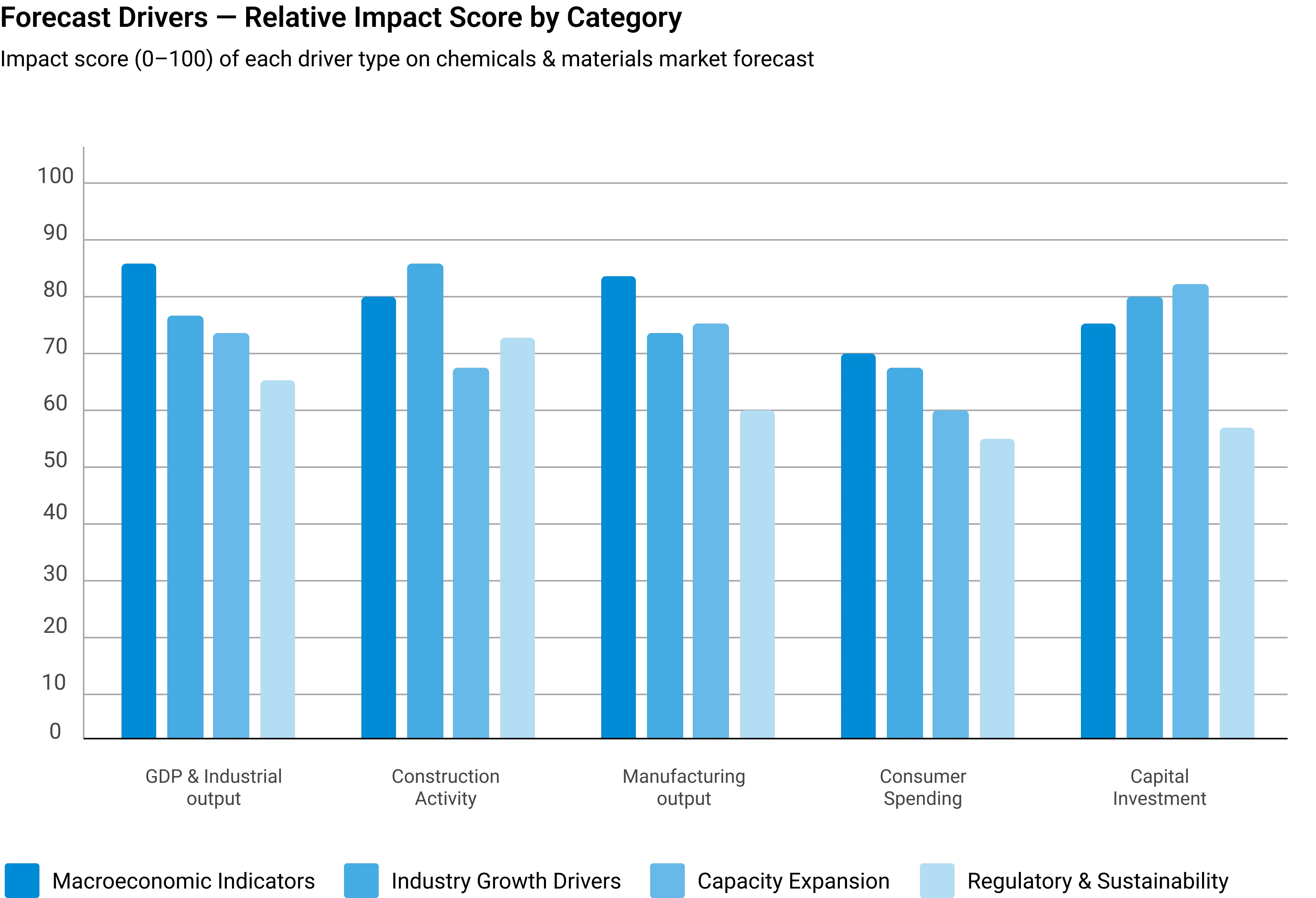
Macroeconomic Indicators
GDP growth, industrial production, manufacturing output, construction activity, consumer spending, and capital investment form the quantitative foundation of long-term demand projections. These are applied at country, regional, and global levels.
Industry Growth Drivers
Urbanization, infrastructure development, industrialization, technological innovation, sustainability initiatives, and evolving product performance requirements are assessed at regional and industry levels — capturing both structural and cyclical demand drivers.
Capacity Expansion Analysis
Announced plant expansions, new manufacturing facilities, technology upgrades, and strategic investments are evaluated to determine future supply-demand dynamics and potential market tightness or oversupply situations.
Regulatory & Sustainability
Environmental regulations, chemical safety standards, emission reduction targets, circular economy initiatives, and sustainability requirements are incorporated as they often influence product adoption rates and market growth trajectories.
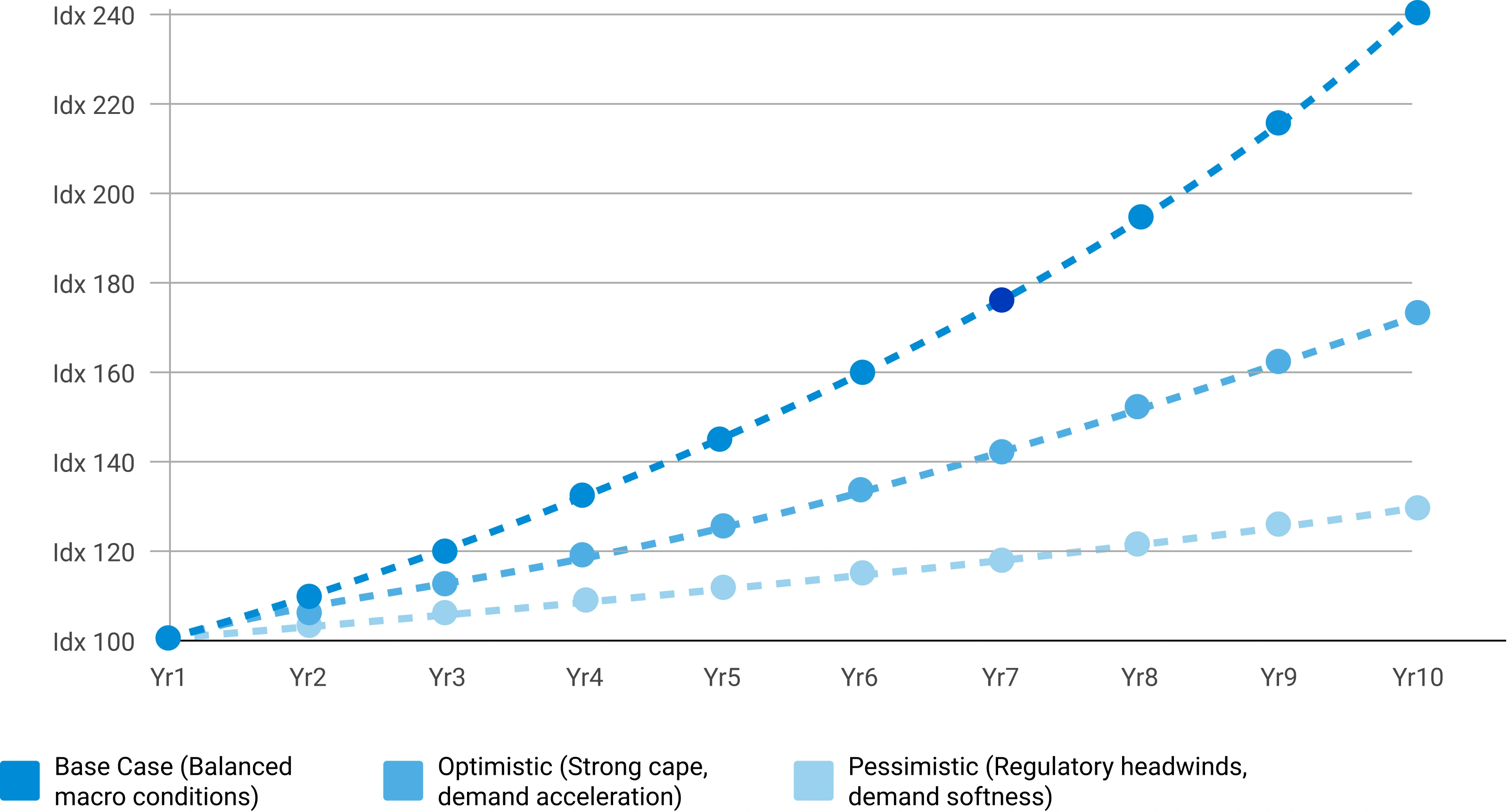
Scenario Forecast Range — Indexed Market Growth (Year 1–10)
Illustrative indexed growth trajectories across Base, Optimistic, and Pessimistic scenarios over a 10-year forecast horizon
Forecast Drivers — Relative Impact Score by Category
Impact score (0–100) of each driver type on chemicals & materials market forecast


Comments
Share your thoughts, ask a question, or provide feedback about this report.