
What is the Asia Pacific Aluminum Refractory Materials Market Size and Share?
The Asia Pacific aluminum refractory materials market size was valued at USD 1.95 billion in 2025 and is projected to grow from USD 2.04 billion in 2026 to USD 3.10 billion by 2035, exhibiting a CAGR of 4.75% during the forecast period. China dominated the aluminum refractory materials industry with a 51% share in 2025. Growth is facilitated by the incre`ase in smelting capacity and secondary aluminum recycling, as well as industrial modernization. Indonesia, Vietnam, India, and China are developing new production centers, which add more refractory needs. The high energy-saving targets are driving high-performance thermal insulation and new lining systems. Low-cement castables, fast-drying formulations, special alumina-silicon-carbide castables, and digital monitoring technologies are changing the game of refractory performance.

Market Highlights
- China dominated the Asia Pacific Aluminum Refractory Materials market by holding a 51% share in 2025 and is expected to grow at a CAGR of 4.92% during the forecast period.
- India held a 13% market share in 2025 and is expected to grow the fastest with a CAGR of 5.32% during the forecast period.
- By production stage, the primary aluminum production segment dominated the market with the largest share of 58% in 2025 and is expected to grow at a CAGR of 4.4% during the forecast period.
- By production stage, the secondary aluminum production segment held 27% market share in 2025 and is expected to grow at the fastest CAGR of 5.9% over the forecast period.
- By product, the shaped refractories segment dominated the market with the largest share of 54% in 2025 and is expected to grow at a CAGR of 4.3% during the forecast period.
- Byproduct: The Monolithic Refractories segment held 39% market share in 2025 and is expected to grow at the fastest CAGR of 5.5% over the forecast period.
- By material, the alumina-based segment dominated the market with the largest share of 63% in 2025 and is expected to grow at a CAGR of 4.4% during the forecast period.
- By material, the silicon carbide segment held 19% market share in 2025 and is expected to grow at the fastest CAGR of 6.1% over the forecast period.
- By application, the electrolytic/reduction cells segment dominated the market with the largest share of 31% in 2025 and is expected to grow at a CAGR of 4.3% during the forecast period.
- By application, the casting equipment segment held 11% market share in 2025 and is expected to grow at the fastest CAGR of 5.8% over the forecast period.
Market Overview
According to Towards Chemicals and Materials Analytics and Consulting, the Asia Pacific aluminum refractory materials market volume was valued at 1.09 million tons in 2025 and is expected to surpass around 1.73 million tons by 2035, accelerating a compound annual growth rate (CAGR) of 4.71% over the forecast period from 2026 to 2035.

The Asia Pacific aluminum refractory materials market is one of the major markets in the region, supported by the growth of aluminum production in the region. Heat-resistant protection in furnaces, electrolytic cells, and equipment for processing molten metal is offered by refractory materials. New smelting projects, secondary aluminum recycling, furnace optimization, and industrial capacity development all provide support to regional demand. China is still the top market, and India is the fastest-growing. Indonesia and Vietnam are growing their smelting capacity, providing opportunities for local refractory supply. Facing environmental pressures at the same time, cleaner production, energy-efficient insulation, and advanced refractory technology are promoted.
Investment Movement for the Asia Pacific Aluminum Refractory Materials Market
Remelting and secondary aluminum recycling facilities are growing in the Asia Pacific region. Advanced chemical-resistant refractories are needed for these operations, as the recycled aluminum will contain impurities and aggressive fluxes and will be subjected to repeated thermal cycling conditions. Investments in new greenfield and brownfield smelting projects are coming into Indonesia and Vietnam. India is also working on bringing manufacturing to its shores to lessen its reliance on imports and to promote its automotive, electric vehicle, and solar infrastructure. Technologies, such as low-cement, no-cement, colloidal-bonded, and fast-dry monolithic refractories, are becoming an investment priority. These solutions provide for faster installation, less downtime, better structural integrity, and increased furnace operating efficiency.
Report Scope
| Report Attributes | Details |
| Market Size in 2026 | USD 2.04 Billion/1.14 Million Tons |
| Expected Size in 2035 | USD 3.10 Billion/1.73 Million Tons |
| Growth Rate | CAGR of 4.75% |
| Base Year of Estimation | 2025 |
| Forecast Period | 2025-2035 |
| Segment Covered | By Production Stage, By Material, By Application |
| Key Companies Profiled | RHI Magnesita, Vesuvius plc, Calderys, Shinagawa Refractories Co., Ltd., Krosaki Harima Corporation, AGC Inc., Puyang Refractories Group Co., Ltd., Chosun Refractories Co., Ltd., POSCO Future M Co., Ltd., Saint-Gobain SEFPRO, Carborundum Universal Limited (CUMI), IFGL Refractories Limited |
Market Trends
- Alumina-based materials continue to meet refractory demand due to their thermal stability and ability to resist extreme environments in the industry.
- The use of shaped refractory products is still significant due to their known performance for furnace applications.
- Electrolytic reduction cells are still a significant refractory use due to the need for materials that are able to withstand the extreme thermal and chemical environment of the aluminum production process.
- Specialized linings provide operational stability and equipment longevity.
- Growing demand for refractories in new greenfield smelters and expansions of existing brownfield smelters are driving a growing need for refractories throughout the region.
- There is also a rising importance of local manufacturing, which is driven by the need of producers for reliable availability and less reliance on imports.
Key Technological Shifts and AI in the Asia Pacific Aluminum Refractory Materials Market
Artificial intelligence is now becoming the technology of choice, both for formulation and for monitoring and industrial maintenance. Historical composition data for raw materials can be used in a machine learning application to find formulations appropriate for specific processing conditions in the aluminum industry. Predictive models can be used to assess thermal shock, mechanical stress, and chemical interactions prior to physical testing. Digital monitoring can be used to monitor refractory wear and to help schedule production equipment maintenance based on prediction. In addition, advanced monolithics are increasingly being used in place of traditional shaped brick applications for their ability to install quickly and to provide continuous linings that offer operational benefits.
Supply Chain Analysis of the Asia Pacific Aluminum Refractory Materials Market
Feedstock Procurement
- In feedstock procurement, bauxite, andalusite, raw calcined alumina, and other minerals needed for making refractories are obtained.
- The availability of good raw material is important to maintain refractory performance and production continuity.
- Almatis acquires high-purity tabular alumina and specialty aluminas for high-quality refractory feedstock needs in Asia Pacific.
- Other key players: Puyang Refractories Group, Imerys, and Carborundum Universal Limited.
Chemicals from synthesis and processing
- Thermal treatment, sintering, purification, and transformation of raw materials to get specialized refractory compounds.
- Advanced processing results in purer materials, higher thermal stability, enhanced chemical resistance, and performance in challenging aluminum production applications.
- Advanced chemical engineering and electrofusing technologies developed in Japan for zirconia- and alumina-based chemical matrices are applied in Japan by AGC Inc.
- Other key players: Shinagawa Refractories, Dongkuk Industries, and TYK Corporation.
Compound Formulation and Blending
- Formulation is the process of mixing minerals that have been processed with various binders, aggregates, and anti-wetting agents to produce specialized refractory products.
- Precise formulation is used to control resistance to molten aluminum, corrosion resistance, thermal cycling, abrasion resistance, and corundum formation.
- The RHI Magnesita custom non-wetting monolithic castables and shaped refractory matrices are developed for aluminum holding furnace applications.
- Other Key Players: Calderys, Krosaki Harima Corporation, Allied Mineral Products.
Sustainability Analysis:
Efficient use of resources and circular production is becoming a critical requirement for sustainability in the Asia Pacific refractory manufacturing sector. Bauxite, alumina, and magnesite mining put pressure on the local environment, and the production of these materials at high temperatures demands a lot of energy. Environmental regulations have become tighter, and clean manufacturing methods are being promoted. Secondary aluminum production can also consume less energy than primary production and generate a demand for special refractory systems.
What are aluminum refractory materials?
Aluminum refractory materials are ceramic lining materials with high resistance to high temperatures and are used in the production equipment of aluminum. They are resistant to high temperatures, molten metal contact, chemical attack, thermal cycling, and penetration.
Uses of Aluminum Refractory Materials
- Electrolytic and reduction cells are coated with refractory linings to prevent the cells from being subjected to high temperatures and corrosive environments. They provide stable aluminum production and prevent the equipment from degrading and interrupting the operation.
- In high-temperature anode baking furnaces, refractory materials are used for thermal protection. Appropriate linings provide thermal stability, safeguard furnace structures, and ensure stable production cycles.
- Specialized refractories are used to shield melting and holding furnaces from molten aluminum penetration, corrosion, thermal shock, and mechanical wear. Non-wetting formulations also contribute to keeping the metal clean and the furnace available.
Pricing Analysis for the Asia Pacific Aluminum Refractory Materials Market
The pricing varies across the Asia Pacific region due to availability of raw materials, energy needs, production complexity, and environmental costs. The cost factors that continue to be important are bauxite, tabular alumina, fused alumina, and silicon carbide. Firing, sintering, and calcination are energy-intensive processes that affect production economics. Impurities in secondary aluminum processing are aggressive, and thermal cycling can be involved; specialized non-wetting material can have premium prices. There is also a changing preference for engineered, monolithic, and fast-dry solutions.
Asia Pacific Aluminum Refractory Materials Market: Global Trade Analysis
Asia Pacific is one of the leading aluminum refractory materials hubs as a result of the large industrial production and growing smelting activities in the region. The region acts as a vital source of bauxite, tabular alumina, fused alumina, and specialized refractory feedstocks. Local demand is growing, supported by new smelting capacity in Indonesia, Vietnam, China, and India. Stricter environmental controls have been spurring cleaner production technologies, and global suppliers are increasingly turning to local distribution and manufacturing options.
Segmental Insights
Production Stage Insights
The primary aluminum production segment dominated the market with the largest share of 58% in 2025 and is expected to grow at a CAGR of 4.4% over the forecast period, as existing smelting plants and growing infrastructure for aluminum production are driving the market. These are all applications where refractory materials play a vital role, such as in electrolytic cells, anode baking furnaces, melting facilities, and the related processing units. Ongoing investment in primary aluminum capacity is maintaining the demand for long-lasting linings that are resistant to extreme temperatures, chemical exposure, and molten metal conditions.
The secondary aluminum production segment held a 27% market share in 2025 and is expected to grow at the fastest CAGR of 5.9% over the forecast period, as the recyclability of aluminum causes the addition of impurities, high melt rates, and thermal cycling, which require the use of special refractory systems. In the past, alumina-silicon carbide formulations were not used because they were wetting, but as recycling facilities are upgrading their processing systems and making the most of their furnace space, it is becoming a more important part of the system.
Product Insights
The shaped refractories segment dominated the market with the largest share of 54% in 2025 and is expected to grow at a CAGR of 4.3% over the forecast period, due to the fact that preformed refractory products have proven performance in this industry. There are various materials that help stabilize furnace walls, structural parts, and other high-temperature applications that call for dimensional stability and thermal resistance. As demands for faster installation and trouble-free furnace protection grow, however, manufacturers are pushing complementary monolithic solutions to meet the evolving aluminum processing needs.

The monolithic refractories segment held a 39% market share in 2025 and is expected to grow at the fastest CAGR of 5.5% over the forecast period, due to the seamless castable systems for industrial furnace applications. The use of low cement, no cement, fast dry, and special castable technologies is gaining in significance. These capabilities to afford customized furnace protection and minimize installation requirements are driving their use in primary aluminum, secondary aluminum, and other challenging metallurgical uses.
- In May 2025, Calderys had a successful trial of its acidic monolithic refractories line at the CAPES plant in East and South India, which helped in the commissioning of the plant. (Source: www.foundry-planet.com)
Material Insights
The alumina-based segment dominated the market with the largest share of 63% in 2025 and is expected to grow at a CAGR of 4.4% over the forecast period because it offers good thermal stability and resistance in challenging aluminum processing applications. It is used in electrolytic cells, melting furnaces, holding equipment, and other high-temperature applications. Demand is being driven by continued production of aluminum and specialized refractory requirements, which demand alumina-based formulations that can handle thermal and chemical stresses.

The silicon carbide segment held a 19% market share in 2025 and is expected to grow at the fastest CAGR of 6.1% over the forecast period, due to the rising demand from manufacturers for refractory materials with strong thermal and chemical resistance. Silicon carbide formulations can be used in special applications where durability and resistance are important. The increasing interest in advanced industrial technologies is also driving material innovation and contributing to the creation of specialized silicon carbide-based refractory solutions.
- In August 2026, Freyr Energy rolled out rooftop residential solar inverters with silicon carbide technology and digital monitoring capabilities, co-developed with Zenergize.
(Source: www.pv-magazine.com)
Application Insights
The electrolytic/reduction cells segment dominated the market with the largest share of 31% in 2025 and is expected to grow at a CAGR of 4.3% over the forecast period due to the protection needed in aluminum production against harsh thermal and chemical conditions. Refractory linings provide protection for the cell structure and assist in the stability of operations. The growing demand for special materials with high-temperature resistance is being met by continued primary aluminum production and expansion of smelting in the Asia Pacific region.
The casting equipment segment held an 11% market share in 2025 and is expected to grow at the fastest CAGR of 5.8% over the forecast period, with the modernization of the equipment and efficient production of aluminum processing factories. The refractory materials protect the metals from molten metal attack, thermal stress, chemical attack, and mechanical wear. The superior casting technologies are also opening the door to long-lasting refractory solutions that enhance equipment reliability, provide consistent operation, and require fewer maintenance activities throughout the aluminum processing plant.
- In April 2025, Metso introduced a completely electric Anode Weighing and Casting Machine, which is equipped with machine intelligence, self-diagnostics, and the Outotec Casting Control system. (Source: www.recyclingtoday.com)
Country Insights
How Did China Dominate the Asia Pacific Aluminum Refractory Materials Market in 2025?
China aluminum refractory materials market size was estimated at USD 0.99 billion in 2025 and is projected to reach USD 1.60 billion by 2035, growing at a CAGR of 4.92% from 2026 to 2035. China dominated the market with the largest share of 51% in 2025 and is expected to grow at a CAGR of 4.4% during the forecast period. China remains the top market in the Asian Pacific region due to its vast industrial activity, well-developed aluminum production facilities, and high smelting activities. Environmental needs are driving towards cleaner production technologies and energy-efficient refractory solutions. Specialized linings with aggressive impurities, thermal cycling, and demanding melt conditions are also in high demand for secondary aluminum processing.

The India aluminum refractory materials market size was estimated at USD 0.25 billion in 2025 and is projected to reach USD 0.42 billion by 2035, growing at a CAGR of 5.32% from 2026 to 2035. India held a 13% market share in 2025 and is expected to grow at the fastest CAGR of 6.8% during the forecast period. Due to the growing production of aluminum, localization of manufacturing, and expansion of the industry, India is becoming a fast-growing market for aluminum refractories. Aluminum demand is supported by emerging automotive, electric vehicle, renewable energy, and infrastructure industries. Expanding the production capacity of the countrys industries can also help decrease reliance on imports and enhance supplies of refractory products and processing technologies to regional processing centers.
- In January 2026, Runaya and ECKART recently announced the setting up of a joint venture facility, producing green spherical gas atomized aluminum powders, in the city of Jharsuguda in Odisha. (Source: www.alcircle.com )
The Australia aluminum refractory materials market size was estimated at USD 0.18 billion in 2025 and is projected to reach USD 0.29 billion by 2035, growing at a CAGR of 4.88% from 2026 to 2035. Australia held 9% market share in 2025 and is expected to grow at a CAGR of 3.7% over the forecast period. Australias existing mineral and industrial competencies provide it with a significant role within the regional aluminum sector. Special needs for refractory materials are generated in high-temperature applications related to the processing of aluminum. The requirement for durable linings, thermal protection, and special refractory products is continuous, and industrial infrastructure and resource-linked activities provide support for these needs throughout the countrys production of aluminum.
The Indonesia aluminum refractory materials market size was estimated at USD 0.12 billion in 2025 and is projected to reach USD 0.20 billion by 2035, growing at a CAGR of 5.24% from 2026 to 2035. Indonesia held a 6% market share in 2025 and is expected to grow at a CAGR of 6.4% over the forecast period. The importance of Indonesia in the Asia Pacific aluminum industry is increasing as the regions aluminum production capability is enhanced by new smelting projects and industrial investments. The growing facilities develop demands for materials for electrolytic cells, furnace refractories, insulation systems, and special materials. The growth of the smelting sector is thus providing new market opportunities for suppliers of refractories to develop their own localized manufacturing and distribution facilities and technical support.
The Japan aluminum refractory materials market size was estimated at USD 0.10 billion in 2025 and is projected to reach USD 0.17 billion by 2035, growing at a CAGR of 5.45% from 2026 to 2035. Japan held a 5% market share in 2025 and is expected to grow at a CAGR of 3.3% over the forecast period. The Japanese refractory industry is well developed, with advanced manufacturing skills and know-how and specialized material development. Domestic refractory manufacturers are involved in various chemical processing, formulation technologies, and high-performance refractory materials. Specialized refractory solutions for aluminum production, non-ferrous metallurgy, and other demanding high-temperature industrial applications continue to be emphasized through continued focus on technological advancement.
Recent Developments
- In February 2025, Calderys introduced its new fast-drying refractory range for industrial furnaces, CALDE® FD. The technology has also been expanded to ALKON® FD solutions for use with aluminum contact applications, enabling faster furnace dry-out and fewer downtime hours. (Source: www.foundry-planet.com )
Competitive Analysis
Product performance, localized production, technical support, and novel formulations are the key areas of competition in the Asia Pacific Aluminum Refractory Materials Market. The competitors of RHI Magnesita are Vesuvius, Calderys, Saint-Gobain, and Shinagawa Refractories, based on their regional distribution capabilities and specific refractory technologies. Monolithic products, non-wetting formulations, new bonding systems, and digital monitoring are more and more highlighted. In-house manufacturing is a good way to enhance supply reliability and to meet customer-specific needs. Thermal performance, installation efficiency, operational durability, and technical services in primary aluminum, secondary aluminum, and foundry sectors are the key factors for competitive differentiation.
- For instance, in May 2025, Shinagawa Refractories invested in the acquisition of 60% of the shares of Reframax Engenharia Ltd, enhancing its full refractory engineering and installation capacity for industrial applications. (Source: hl.com)
- For instance, Vesuvius India started Alumina-Silica and Basic Monolithic manufacturing plants in VISAKHAPATNAM to promote localized manufacturing and rising demand for refractories in the industrial sectors of India. (Source: www.business-standard.com)
Top Players in the Market & Their Offerings
| Company | Company Type/Position | Major Headquarters | Geographic Presence | Asia Pacific Aluminum Refractory Materials Offerings | Key Strength |
| TRL Krosaki Refractories / Krosaki Harima Corporation | Leading Regional Powerhouse | Kitakyushu, Japan & Odisha, India | Dominant presence in East Asia and South Asia | High-alumina aggregates | Maintains heavily localized technical service |
| Shinagawa Refractories Co., Ltd. | Leading Industrial Innovator | Tokyo, Japan | Heavy direct presence in Japan, China, Southeast Asia | Low-cement & ultra-low-cement castables | Unrivaled R&D capabilities in nano-bonded and fast-dry castable technologies |
Other Key Players
- RHI Magnesita
- Vesuvius plc
- Calderys
- Shinagawa Refractories Co., Ltd.
- Krosaki Harima Corporation
- AGC Inc.
- Puyang Refractories Group Co., Ltd.
- Chosun Refractories Co., Ltd.
- POSCO Future M Co., Ltd.
- Saint-Gobain SEFPRO
- Carborundum Universal Limited (CUMI)
- IFGL Refractories Limited
Segment Covered in the Report
By Production Stage
- Primary Aluminum Production
- Alumina Reduction
- Electrolytic Cell Lining
- Anode Baking
- Secondary Aluminum Production
- Scrap Melting
- Rotary & Reverberatory Furnaces
- Induction Melting
- Cast House Operations
- Melting
- Holding
- Metal Transfer
- Billet & Slab Casting
By Product Type
- Shaped Refractories
- Bricks
- Blocks
- Precast Shapes
- Crucibles
- Monolithic Refractories
- Castables
- Ramming Masses
- Mortars
- Gunning Mixes
- Plastic Refractories
- Other Product Types
- Refractory Coatings
- Repair Materials
- Insulating Refractories
- Refractory Composites
By Material
- Alumina-based
- High-Alumina
- Tabular Alumina
- Calcined Alumina
- Silicon Carbide
- Nitride-Bonded SiC
- Oxide-Bonded SiC
- Alumina-SiC
- Alumina-SiC-C
- Alumina-SiC Composite
- Other Materials
- Mullite
- Zirconia
- Magnesia
- Carbon-based Materials
By Application
- Electrolytic/Reduction Cells
- Cell Sidewalls
- Cathode Blocks
- Pot Bottoms
- Insulating Linings
- Melting Furnaces
- Reverberatory Furnaces
- Rotary Furnaces
- Induction Furnaces
- Holding Furnaces
- Stationary Holding Furnaces
- Tilting Holding Furnaces
- Transfer & Launder Systems
- Launders
- Troughs
- Runners
- Transfer Channels
- Casting Equipment
- Billet Casting
- Slab Casting
- Ingot Casting
- Anode Baking Furnaces
- Furnace Linings
- Burner Systems
- Thermal Insulation
- Other Applications
- Crucibles
- Skimming Systems
- Repair & Maintenance
- Auxiliary Thermal Equipment
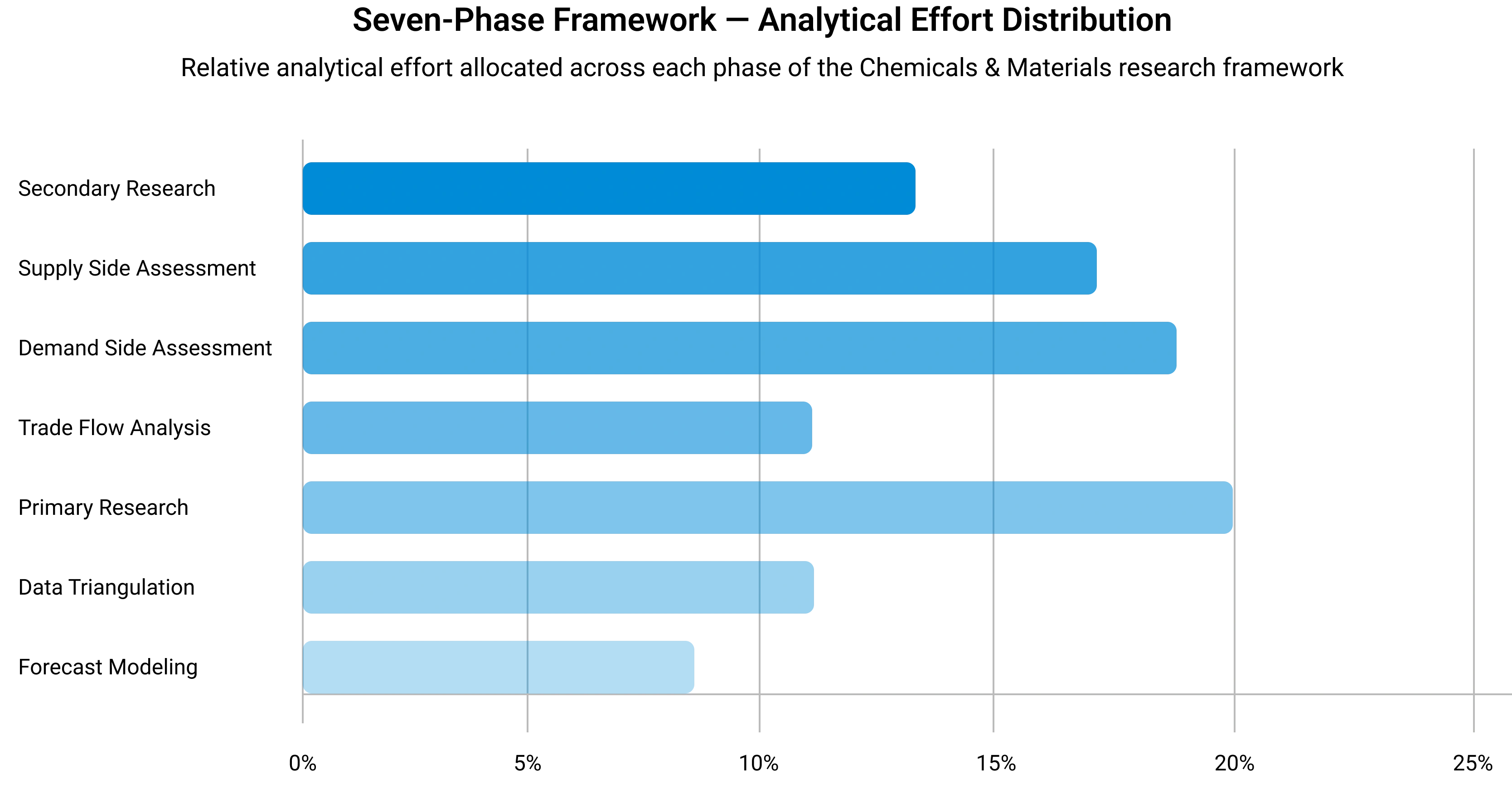
A Seven-Phase Framework
Our methodology is designed to be universally applicable across commodity chemicals, specialty chemicals, petrochemicals, construction chemicals, coatings, electronic chemicals, industrial gases, agrochemicals, water treatment chemicals, and performance materials. Each phase builds upon the last, creating a layered validation structure that minimizes estimation error and maximizes analytical confidence.
The framework ensures comprehensive market coverage, robust cross-validation, and reliable long-term forecasting — producing market estimates that withstand scrutiny from investors, regulators, and corporate strategy teams.

Seven-Phase Framework — Analytical Effort Distribution
Relative analytical effort allocated across each phase of the Chemicals & Materials research framework
Phase 1 - Secondary Research: Establishing the Foundation
Secondary research collects and evaluates publicly available information from authoritative sources, establishing the foundational understanding of market structure, value chain dynamics, competitive landscape, and end-use demand patterns. Every source is evaluated for credibility, recency, geographic relevance, and methodological soundness before inclusion.
Industry Associations
Sources include ACC, CEFIC, ICCA, JCIA, CPCIF, and SOCMA providing production volumes, consumption trends, capacity developments, and sustainability initiatives.
Company Disclosures
Annual reports, investor presentations, earnings transcripts, and regulatory filings reveal product portfolios, manufacturing footprints, capacity expansions, and revenue segmentation.
Government Databases
National statistical offices, customs authorities, environmental agencies, and industrial production databases provide verified statistics on output, trade flows, and regulatory compliance.
Trade Databases
UN Comtrade, ITC, Eurostat, and national customs authorities enable assessment of global product movement, import dependency, and export competitiveness across regions.
Our Secondary Research Sources
- Ministry of Chemicals and Fertilizers
- European Chemicals Agency
- United States Department of Energy
- Ministry of Industry and Information Technology
- Ministry of Economy Trade and Industry
- Ministry of Trade Industry and Energy
- National Institute of Standards and Technology
- Council of Scientific and Industrial Research
- Fraunhofer Society
- National Institute for Materials Science
Phase 2 — Supply-Side Assessment: Mapping Production Capabilities
Production Capacity Analysis
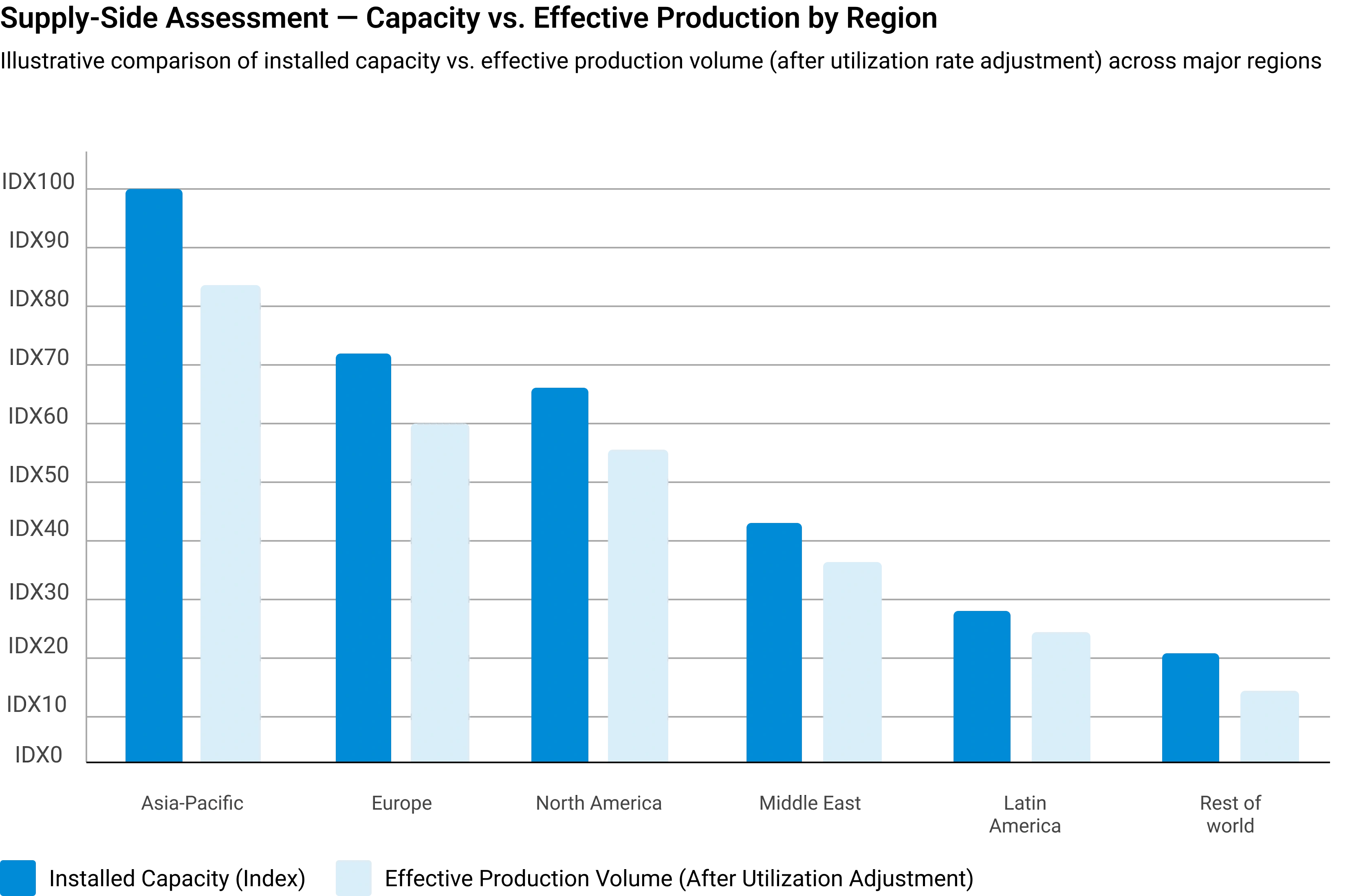
All major manufacturers are assessed for existing installed capacity, planned additions, expansions, new plant announcements, and technology adoption — mapped at global, regional, and country levels.
Capacity Utilization Adjustment
Installed capacity is adjusted using utilization rates based on demand conditions, feedstock availability, plant operating rates, maintenance schedules, and regulatory restrictions.
Manufacturer Revenue Analysis
Product-specific revenues, segment-level performance, regional distribution, average selling prices, and margin trends are evaluated to establish market value estimates.
Supply-Side Assessment — Capacity vs. Effective Production by Region
Illustrative comparison of installed capacity vs. effective production volume (after utilization rate adjustment) across major regions
Phase 3 — Demand-Side Assessment: Quantifying Chemical Consumption
Demand-side analysis quantifies chemical consumption across industries, applications, and geographies — identifying where and how chemicals are consumed throughout the value chain with precision.
End-Use Industry Analysis
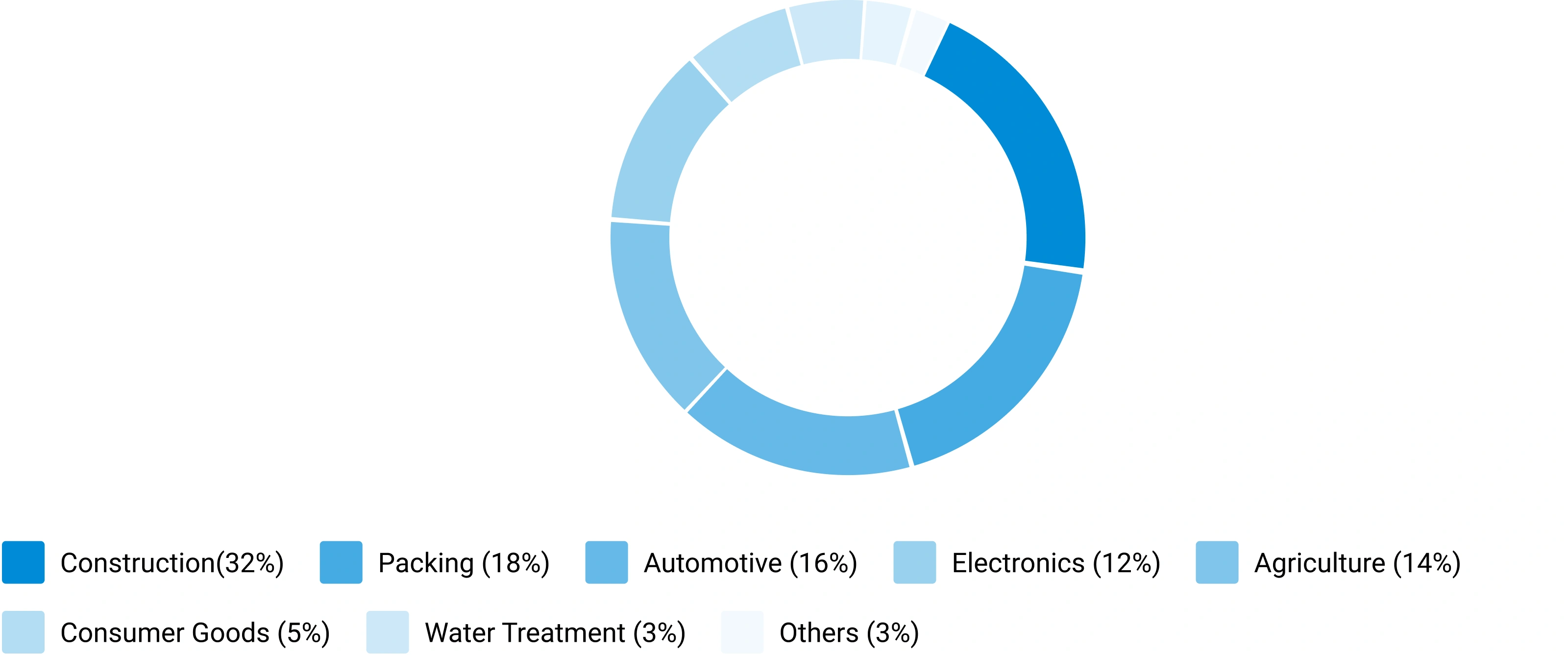
Chemical demand is evaluated across automotive, construction, packaging, electronics, agriculture, healthcare, consumer goods, industrial manufacturing, energy and utilities, and water treatment. Industry output, production trends, and consumption intensity are analyzed to determine demand patterns.
Consumption Modeling
Demand is estimated using measurable indicators: kilograms per vehicle, kilograms per square meter of construction, dosage per cubic meter of water treated, kilograms per hectare of agricultural land, and kilograms per ton of manufactured products. Consumption factors are validated through industry publications and primary interviews.
Application Analysis
The market is segmented by application area to understand product performance requirements, formulation trends, technology adoption, customer preferences, and regulatory requirements improving demand accuracy and segmentation granularity.
Demand-Side Assessment — End-Use Industry Demand Distribution
Illustrative distribution of chemical & materials demand across key end-use industries
Phase 4 - Trade Flow Analysis: Balancing Regional Supply and Demand
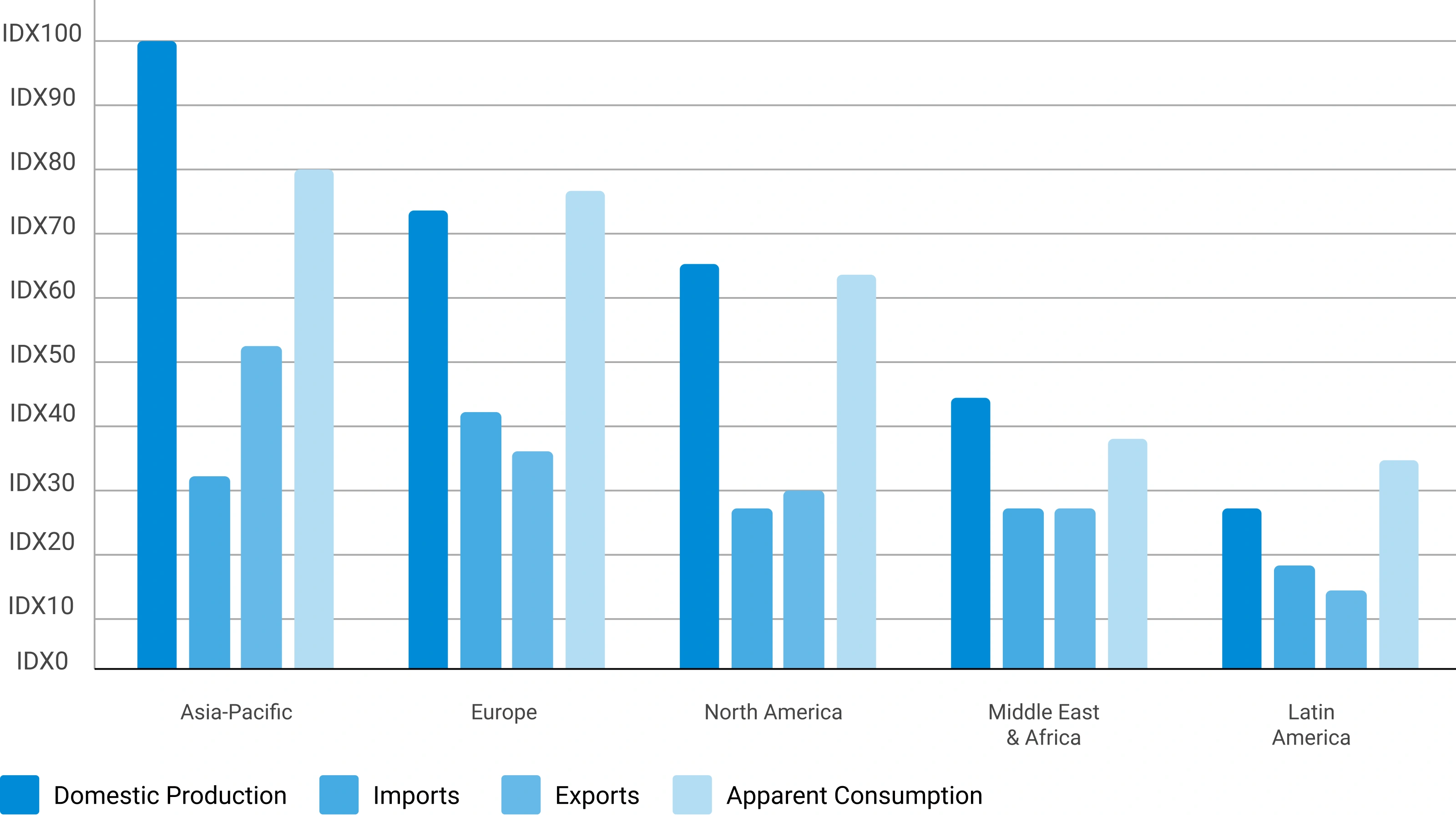
Trade flow analysis reconciles regional supply and demand estimates through import and export data, identifying net supply positions, regional dependencies, and market imbalances. It serves as an independent validation layer that tests the consistency of supply-side and demand-side estimates.
Import Analysis
Import data is evaluated to determine volumes, source countries, product dependency, regional supply gaps, and pricing trends — identifying markets that rely heavily on external supply and where domestic production is insufficient to meet demand.
Export Analysis
Export assessments reveal production surplus, export competitiveness, regional manufacturing strength, and global market participation. Export patterns also help validate domestic production estimates and identify net exporting regions.
Apparent Consumption Model
Regional consumption is assessed using the standard apparent consumption formula:
Results identify net importing regions, net exporting regions, regional deficits, and surpluses — serving as an independent validation of supply and demand estimates.
Trade Flow Analysis — Net Supply Position by Region
Illustrative apparent consumption vs. domestic production across major regions — positive gap indicates net import dependency
Phase 5 — Primary Research: The Critical Validation Layer
Primary research tests and refines findings from secondary research through direct engagement with industry participants across the supply chain, demand side, and expert community. It captures intelligence that no database or published report can provide — the real-world experience of manufacturers, buyers, and specialists operating in the market.

Supply-Side Interviews
Conversations with chemical manufacturers, raw material suppliers, contract manufacturers, technology providers, and plant operators cover production trends, capacity utilization, pricing developments, technology shifts, and competitive dynamics.

Demand-Side Interviews
Engagement with OEMs, industrial consumers, procurement managers, distributors, formulators, and end-use manufacturers focuses on consumption trends, purchasing behavior, product substitution, demand outlook, and emerging applications.

Industry Expert Consultations
Additional interviews with industry consultants, independent experts, regulatory specialists, technical professionals, and research institutions provide deeper market context and validate key analytical assumptions.
Focus Areas of Primary Research:
Market Size & Forecast Validation
Revenue estimates, volume consumption, growth rates, forecast assumptions, regional demand.Supply Chain & Value Chain Assessment
Raw material sourcing, supply chain challenges, distribution networks, procurement practices.Production & Capacity Analysis
Manufacturing capacity, utilization rates, expansion projects, plant investments.Pricing & Cost Structure Analysis
Product pricing trends, feedstock costs, energy costs, margin pressures, pricing outlook.Competitive Landscape Assessment
Volume and value estimates confirmed to be fully consistent with one another before publicationInterview Volume by Market Scope
| Study Scope | Number of Interviews |
|---|---|
| Niche Market | 20 – 30 |
| Mid-Sized Market | 30 – 50 |
| Global Market | 50 – 80 |
| Highly Fragmented Market | 80 – 120 |
Interview Details:
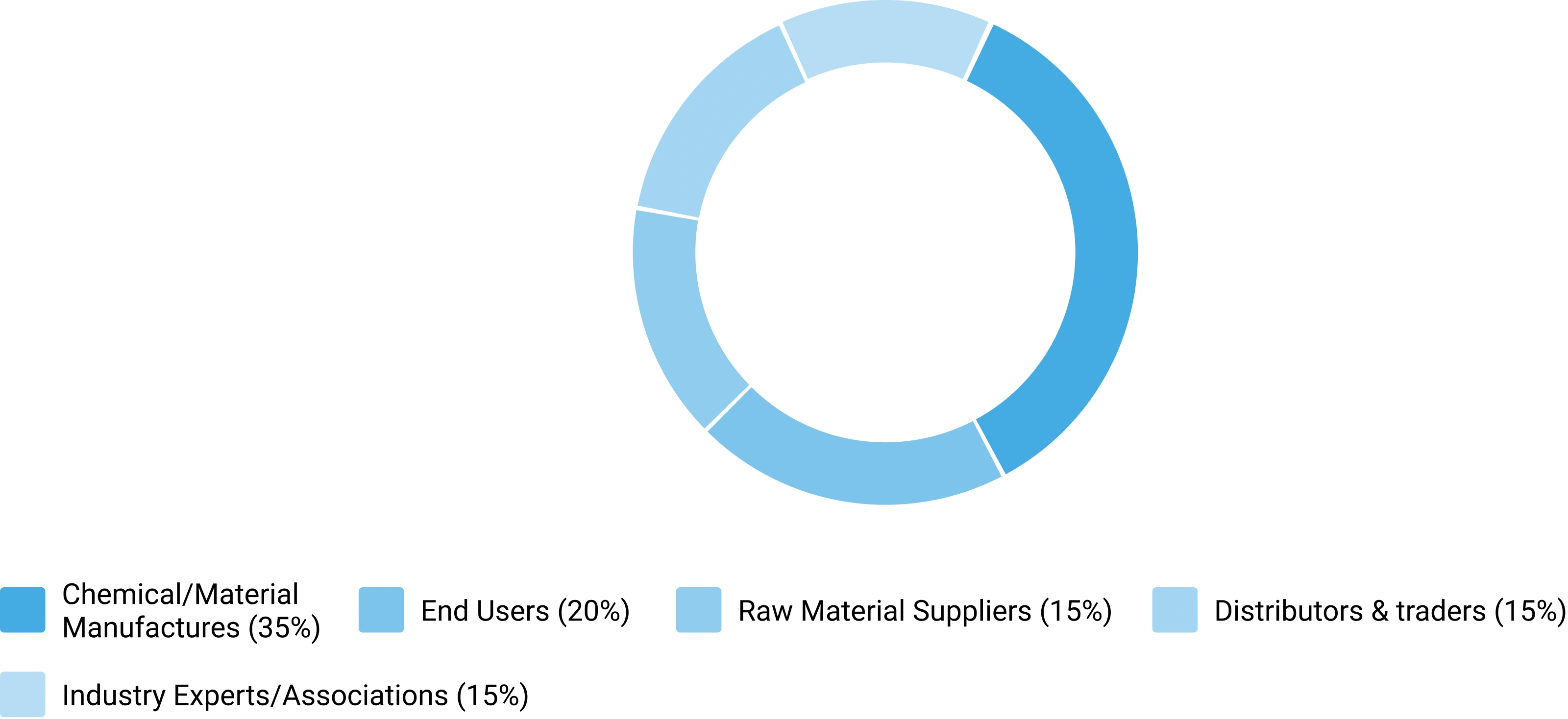
Category : Manufacturers, Suppliers, Distributors, End Users, Experts/Associations
Average Duration : 30–60 Minutes
Interview Mode : Video calls, telephonic interviews, expert consultations
Interview Format : Structured / Semi-Structured questionnaire
Focus Areas of Primary Research:
Market Size & Forecast Validation :
Revenue estimates, volume consumption, growth rates, forecast assumptions, regional demand.
Supply Chain & Value Chain Assessment :
Raw material sourcing, supply chain challenges, distribution networks, procurement practices.
Production & Capacity Analysis :
Manufacturing capacity, utilization rates, expansion projects, plant investments.
Pricing & Cost Structure Analysis :
Product pricing trends, feedstock costs, energy costs, margin pressures, pricing outlook.
Competitive Landscape Assessment :
Market share, competitor positioning, strategic initiatives, partnerships, acquisitions.
Primary Research — Stakeholder Coverage by Category
Distribution of interview respondents across stakeholder categories (% share from PPT data)
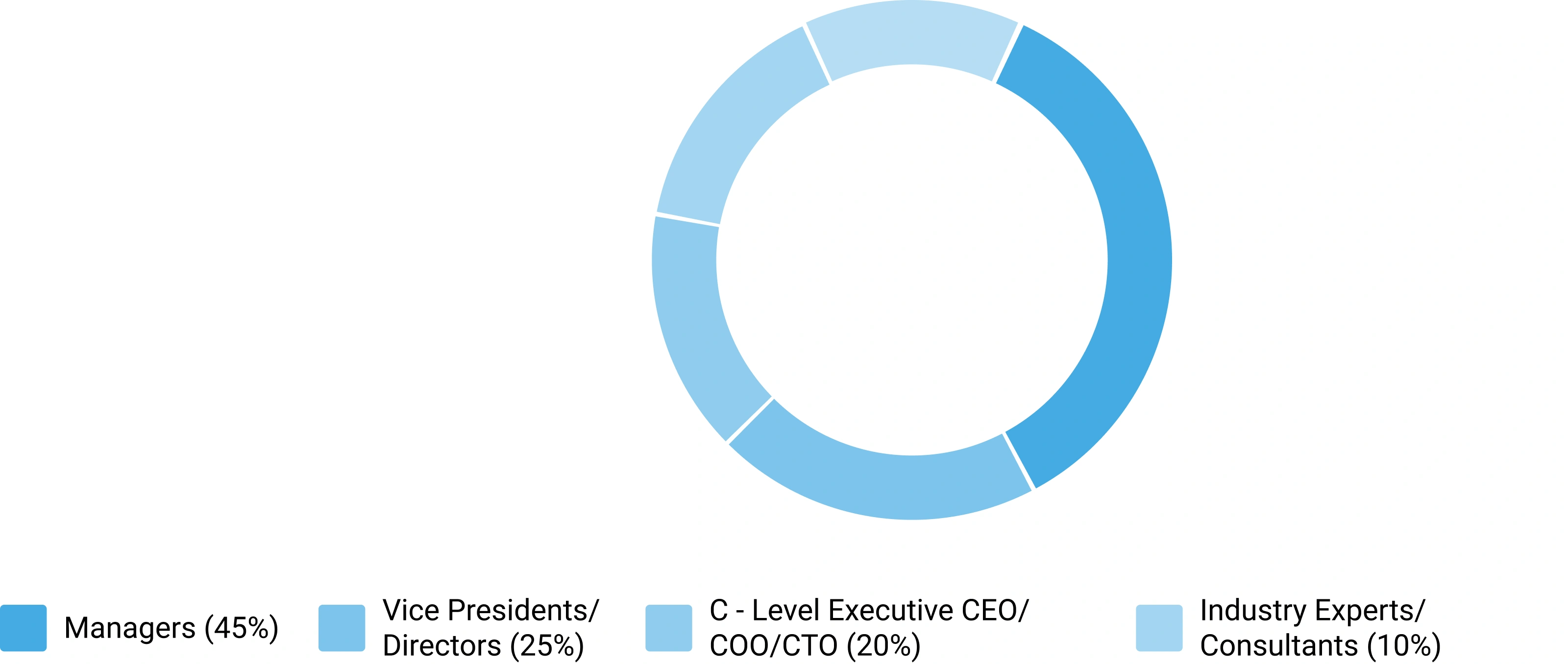
Primary Research — Respondent Designation Profile
Seniority breakdown of interview respondents (% share from PPT data)
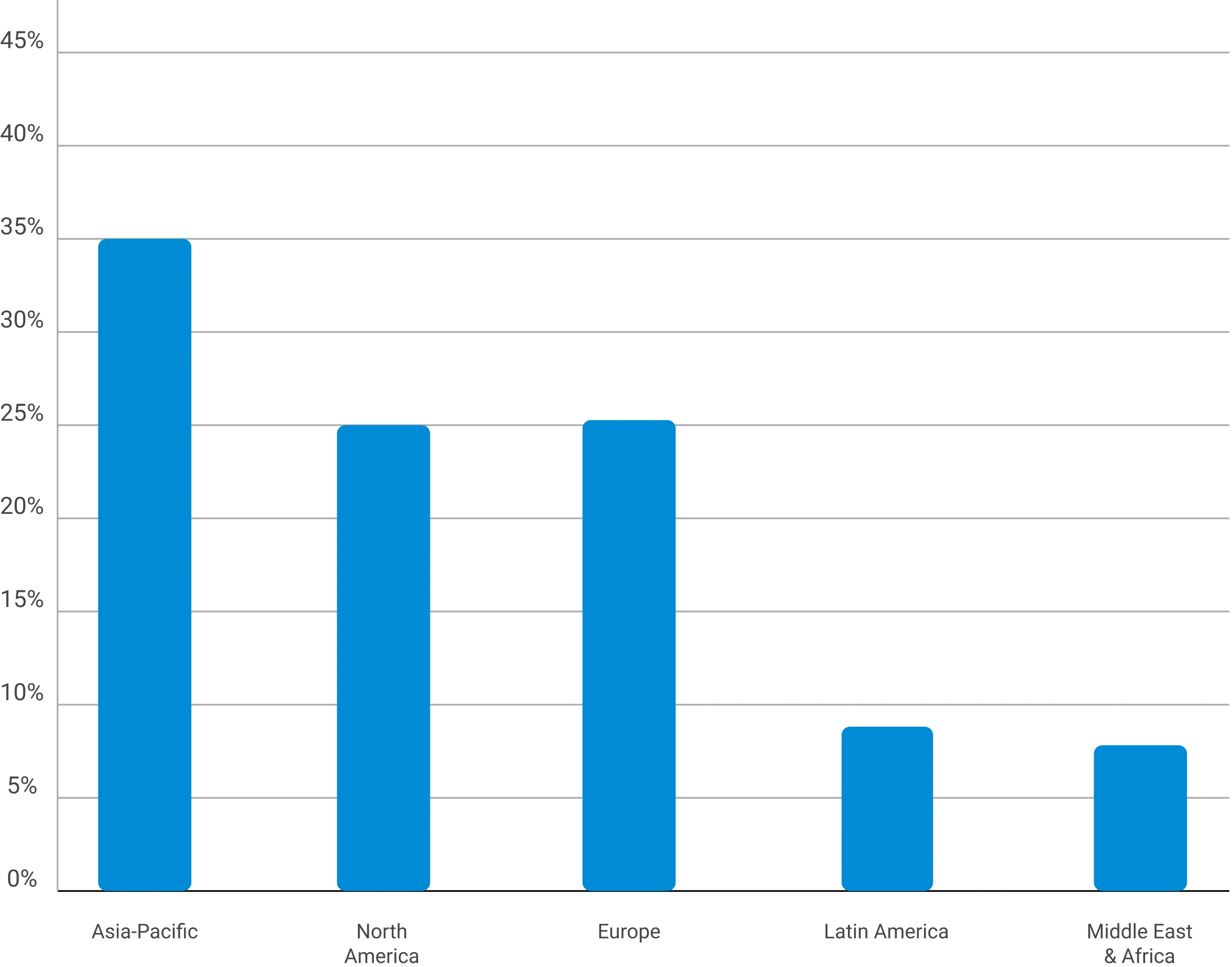
Primary Research — Geographic Coverage of Interviews
Regional distribution of primary research engagement (% share from PPT data)
Phase 6 — Data Triangulation and Market Validation
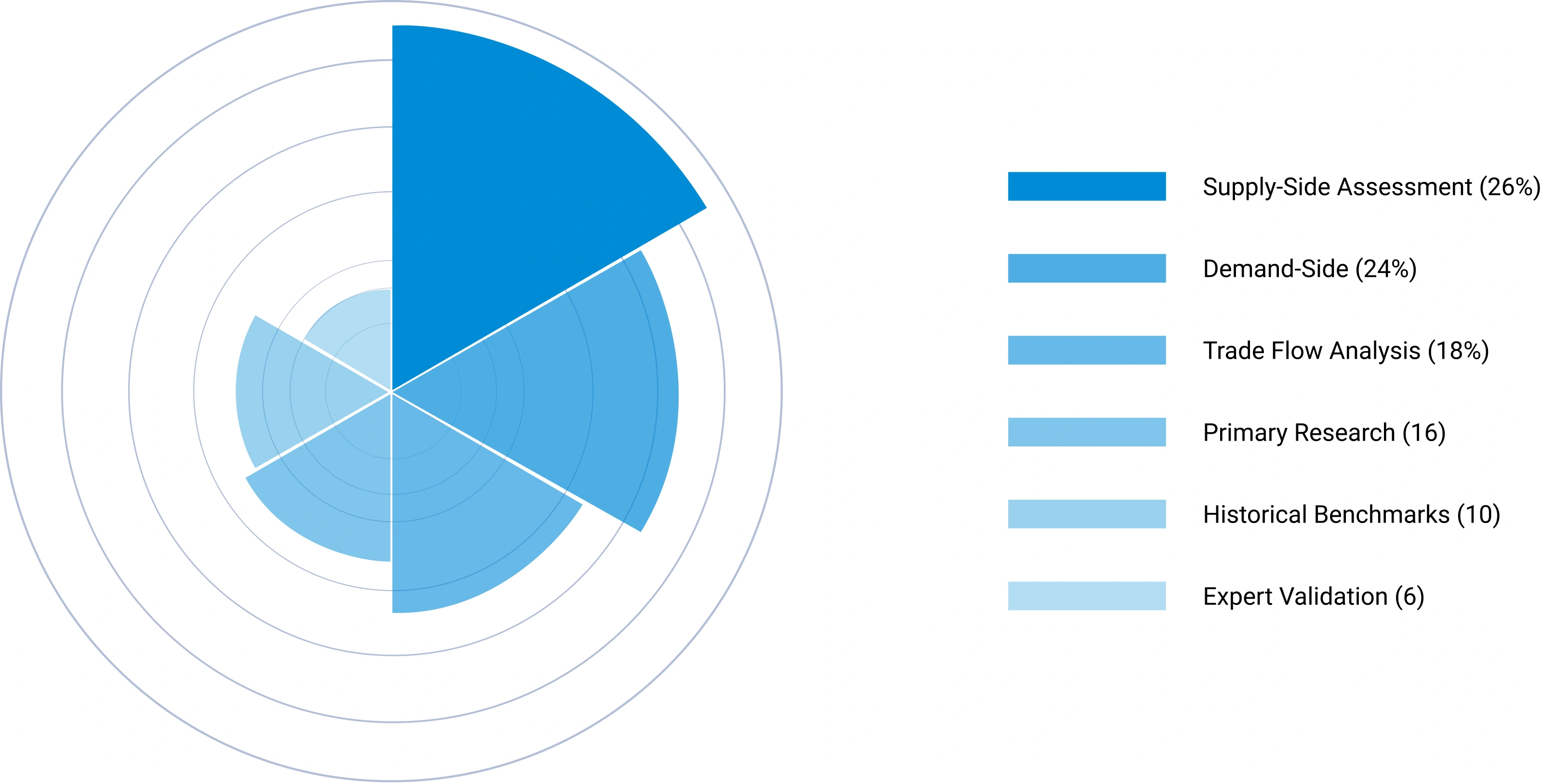
No single methodology is relied upon in isolation. Multiple independent estimation approaches are combined and reconciled to ensure consistency, accuracy, and analytical defensibility. Any material deviations between approaches are investigated and adjusted through additional validation cycles.
The final market size is derived through weighted triangulation of all validated methodologies. Any material deviations between approaches are investigated and adjusted through additional validation cycles. The outcome represents the most realistic assessment of the market based on available evidence and expert confirmation ensuring that volume and value estimates are fully consistent with one another.
Triangulation Framework — Input Contribution Weight
Relative weight each sizing input contributes to the final reconciled market estimate
Phase 7 — Forecast Modeling: Projecting Future Market Evolution
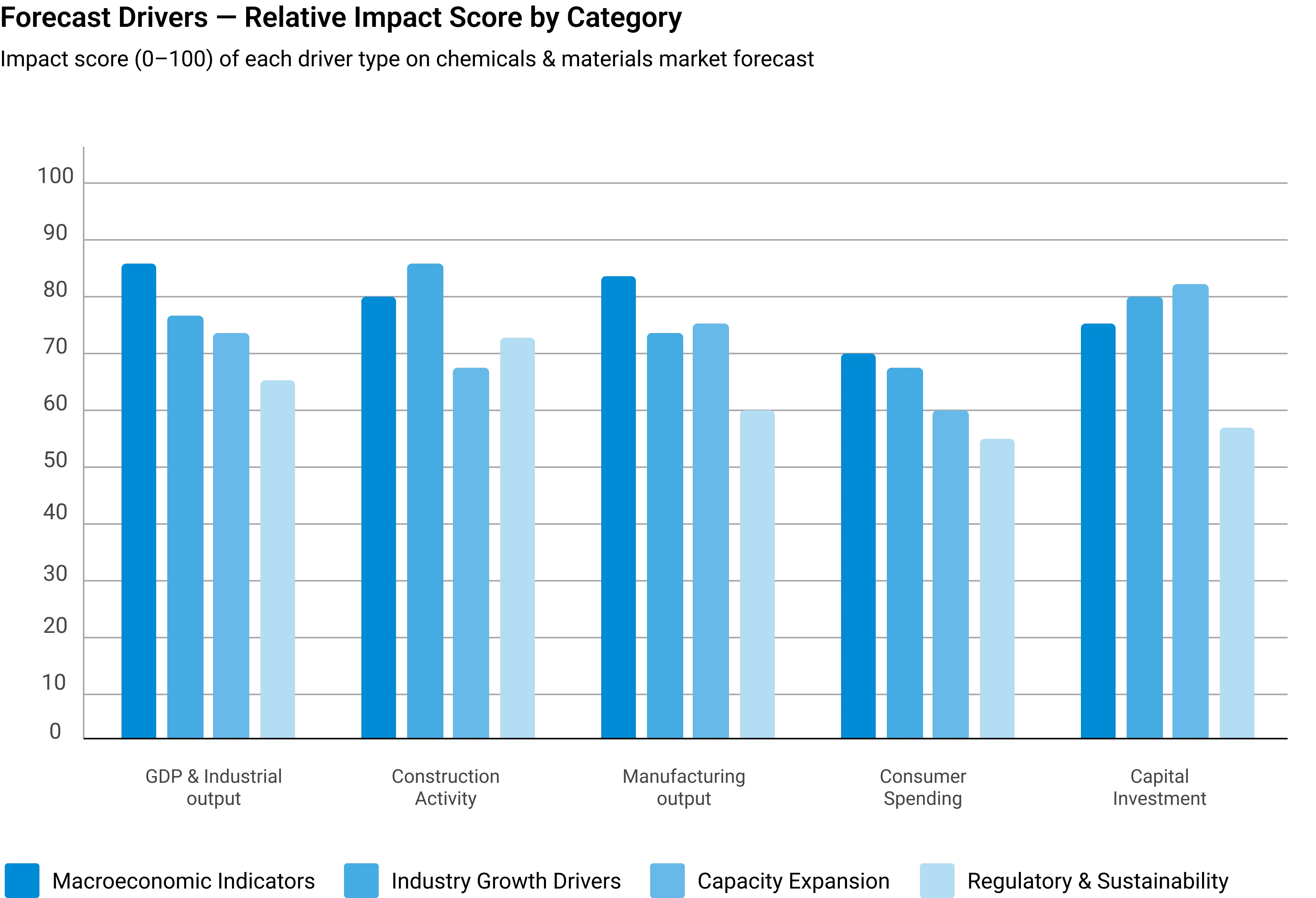
Forecasting evaluates the future trajectory of the market using a combination of quantitative indicators and qualitative assessments across economic, industry, and regulatory dimensions. Rather than simple extrapolation, each driver is independently modeled and integrated into a composite forecast.
Macroeconomic Indicators
GDP growth, industrial production, manufacturing output, construction activity, consumer spending, and capital investment form the quantitative foundation of long-term demand projections. These are applied at country, regional, and global levels.
Industry Growth Drivers
Urbanization, infrastructure development, industrialization, technological innovation, sustainability initiatives, and evolving product performance requirements are assessed at regional and industry levels — capturing both structural and cyclical demand drivers.
Capacity Expansion Analysis
Announced plant expansions, new manufacturing facilities, technology upgrades, and strategic investments are evaluated to determine future supply-demand dynamics and potential market tightness or oversupply situations.
Regulatory & Sustainability
Environmental regulations, chemical safety standards, emission reduction targets, circular economy initiatives, and sustainability requirements are incorporated as they often influence product adoption rates and market growth trajectories.
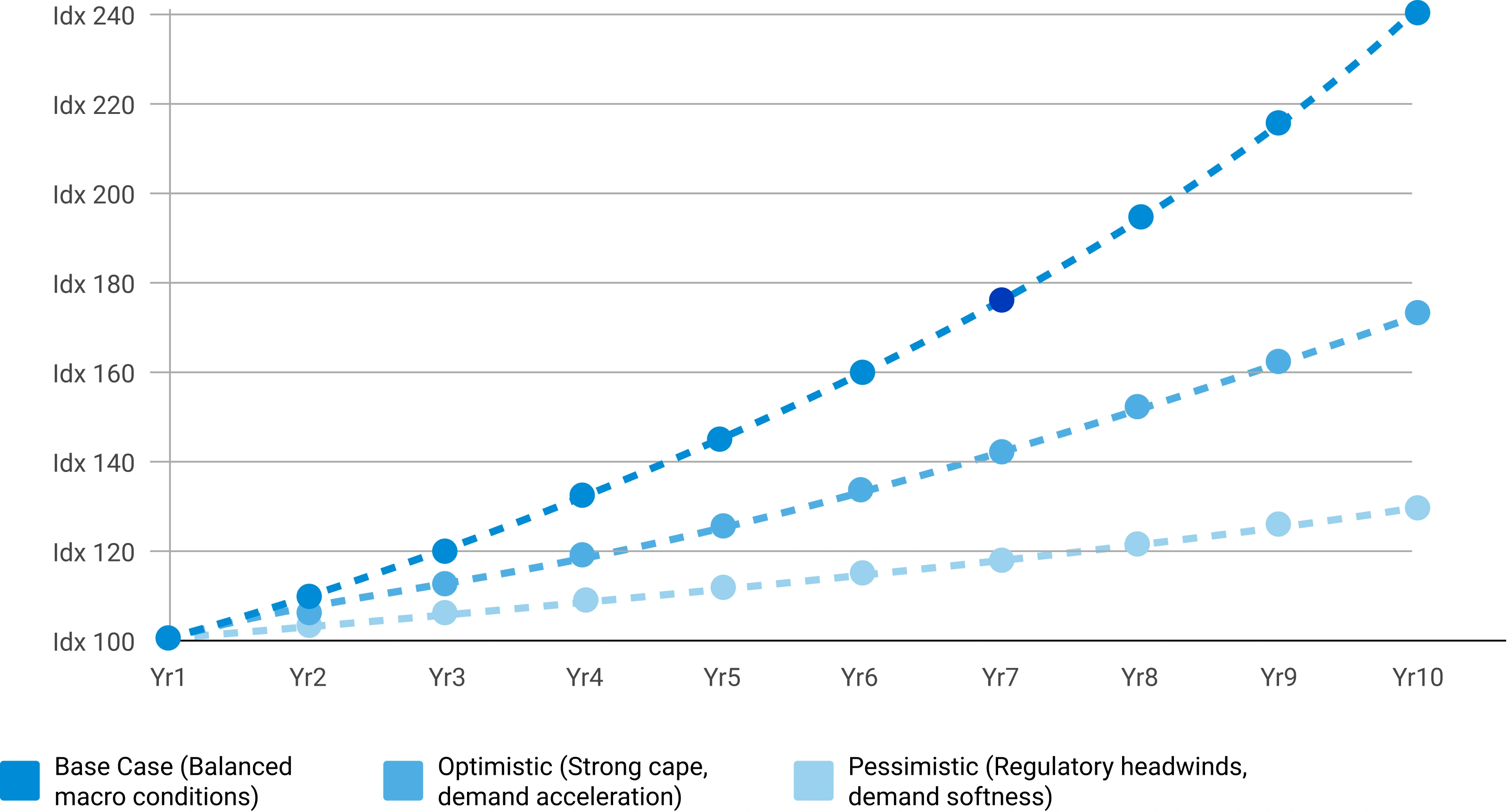
Scenario Forecast Range — Indexed Market Growth (Year 1–10)
Illustrative indexed growth trajectories across Base, Optimistic, and Pessimistic scenarios over a 10-year forecast horizon
Forecast Drivers — Relative Impact Score by Category
Impact score (0–100) of each driver type on chemicals & materials market forecast



Comments
Share your thoughts, ask a question, or provide feedback about this report.